FUNGI
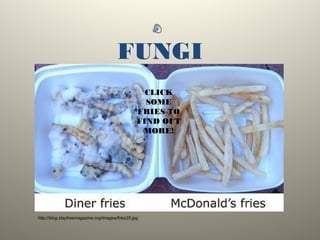
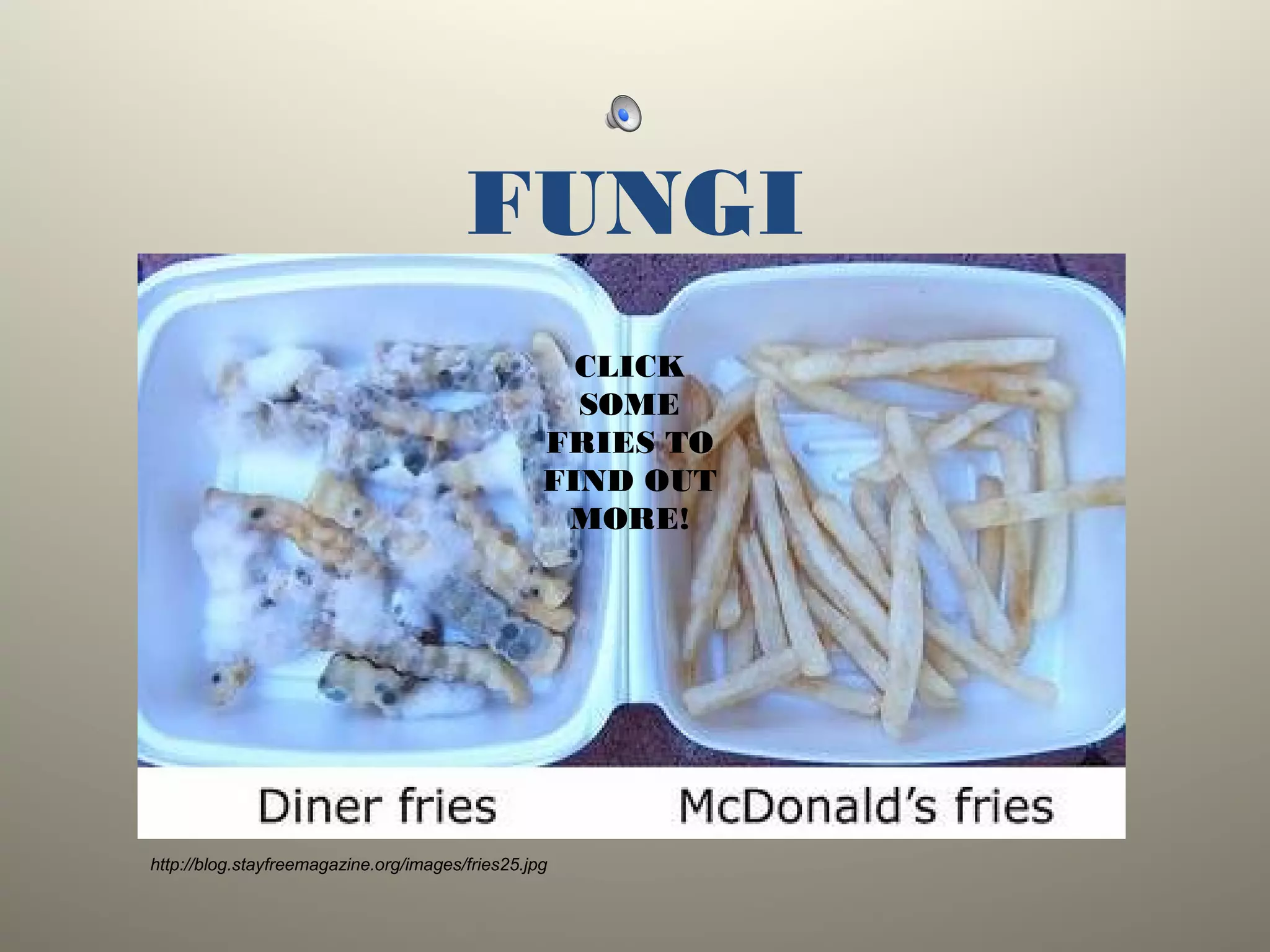
http://blog.stayfreemagazine.org/images/fries25.jpg
CLICK
SOME
FRIES TO
FIND OUT
MORE!
C
H
A
R
A
C
T
E
R
I
S
T
I
C
S
S
T
R
U
C
T
U
R
E
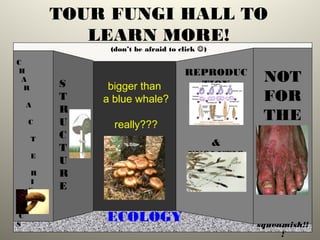
bigger than
a blue whale?
really???
REPRODUC
TION
&
EVOLUTIO
N
NOT
FOR
THE
…
squeamish!!
!
TOUR FUNGI HALL TO
LEARN MORE!
(don’t be afraid to click )
ECOLOGY
CHARACTERISTICS OF
FUNGI
• eukaryotic
• heterotrophic – secrete enzymes into
food and absorb digested materials
through cell walls
– most are saprophytic – absorb organic
materials from dead organisms, “nature’s
recycler”
• many are microscopic
BACK TO FUNGI HALL
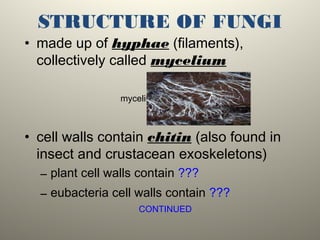
STRUCTURE OF FUNGI
• made up of hyphae (filaments),
collectively called mycelium
mycelium 
• cell walls contain chitin (also found in
insect and crustacean exoskeletons)
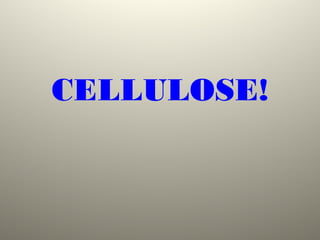
– plant cell walls contain ???
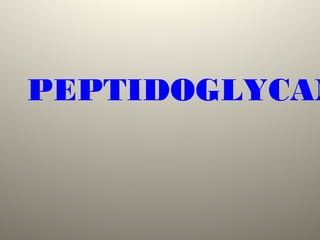
– eubacteria cell walls contain ???
CONTINUED
CELLULOSE!
PEPTIDOGLYCAN
STRUCTURE OF FUNGI
• cells can be coenocytic – have many nuclei or
have separated by septa – “walls”
• range in size from microscopic (yeast) to the
largest organism in the world (Armillaria – 3.1
mi2
)
• some are dimorphic – can change form
based on environmental conditions, can grow as
mycelium in soil or as unicellular organisms in
humans (Histoplasma)
BACK TO FUNGI HALL
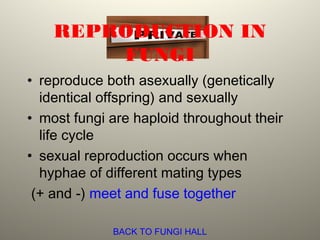
REPRODUCTION IN
FUNGI
• reproduce both asexually (genetically
identical offspring) and sexually
• most fungi are haploid throughout their
life cycle
• sexual reproduction occurs when
hyphae of different mating types
(+ and -) meet and fuse together
BACK TO FUNGI HALL
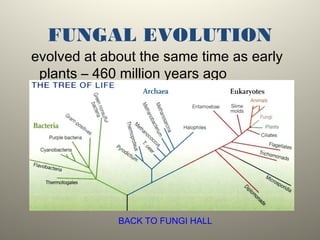
FUNGAL EVOLUTION
evolved at about the same time as early
plants – 460 million years ago
BACK TO FUNGI HALL
THE
FUNGAL
PHYLA
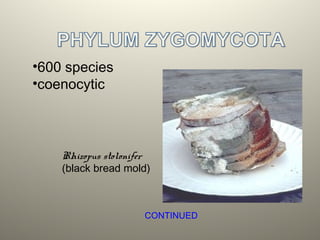
Rhizopus stolonifer
(black bread mold)
•600 species
•coenocytic
CONTINUED
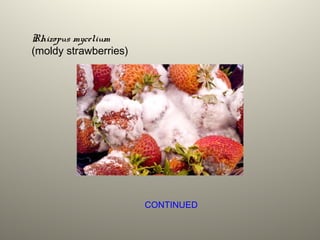
Rhizopus mycelium
(moldy strawberries)
CONTINUED
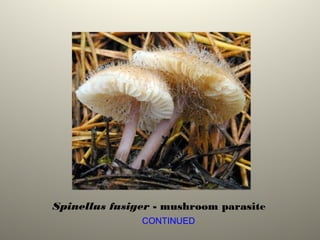
Spinellus fusiger - mushroom parasite
CONTINUED
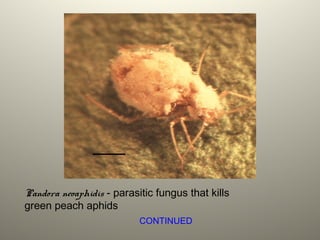
Pandora neoaphidis - parasitic fungus that kills
green peach aphids
CONTINUED
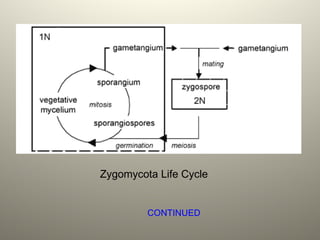
Zygomycota Life Cycle
CONTINUED
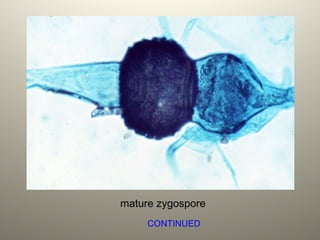
mature zygospore
CONTINUED
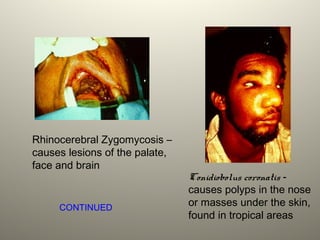
Rhinocerebral Zygomycosis –
causes lesions of the palate,
face and brain
Conidiobolus coronatis -
causes polyps in the nose
or masses under the skin,
found in tropical areas
CONTINUED
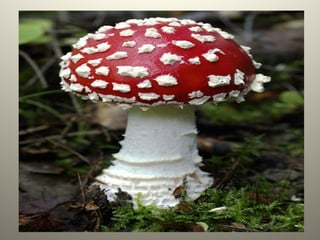
•25,000 species
•form a basidiocarp, a reproductive
structure also known as a mushroom!
CONTINUED
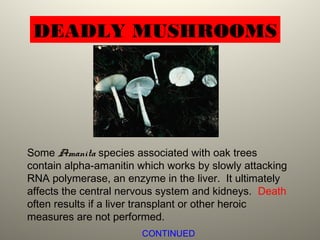
DEADLY MUSHROOMS
Some Amanita species associated with oak trees
contain alpha-amanitin which works by slowly attacking
RNA polymerase, an enzyme in the liver. It ultimately
affects the central nervous system and kidneys. Death
often results if a liver transplant or other heroic
measures are not performed.
CONTINUED
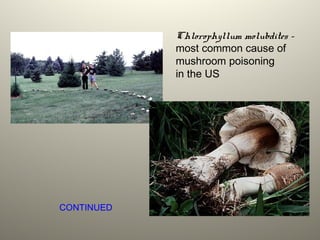
Chlorophyllum molubdites -
most common cause of
mushroom poisoning
in the US
CONTINUED
Omphallotis olearius dine on rotting tree stumps, yum!!!
CONTINUED
BACK TO FUNGI CHARACTERISTICS
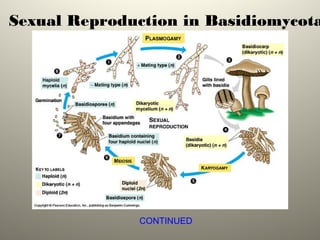
Sexual Reproduction in Basidiomycota
CONTINUED
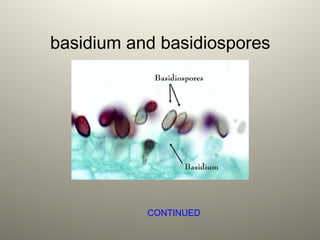
basidium and basidiospores
CONTINUED
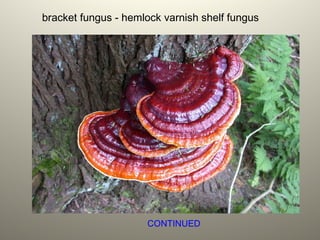
bracket fungus - hemlock varnish shelf fungus
CONTINUED
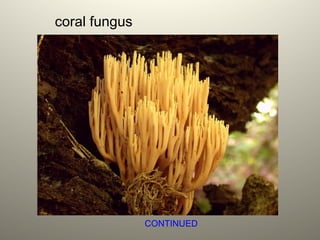
coral fungus
CONTINUED
•30,000 species
•believed to have evolved most
recently
•live in salt, freshwater and terrestrial
habitats
•phyla includes morels, powdery
mildews, yeasts and cup fungi
CONTINUED
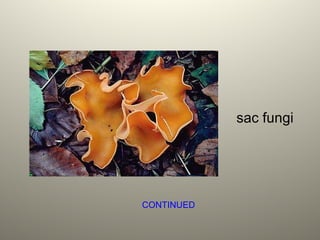
sac fungi
CONTINUED
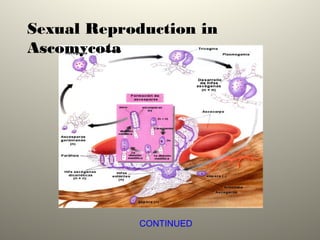
Sexual Reproduction in
Ascomycota
•hyphae of 2 mating strains form gametangia
female - ascogonium male -
antheridium
•gametangia fuse and move into ascogonium, nuclei pair but
do not fuse
•cells divide mitotically, each heterokaryotic hyphae grows
and intertwines to form an ascocarp (reproductive body)
•asci form on the surface of the ascocarp, near the tips of
some hyphae
•each ascus has 2 nuclei that fuse
•each diploid nucleus undergoes meiosis to produce 4 haploid
nuclei
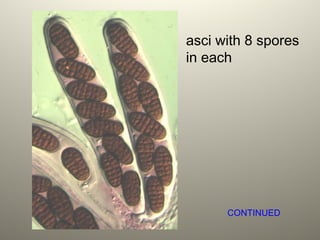
•haploid nuclei divide once by mitosis so that each ascus ends
up with 8 haploid ascospores
•ascus ruptures to release ascospores that germinate
CONTINUED – yes, there is a diagram!
CONTINUED
Sexual Reproduction in
Ascomycota
asci with 8 spores
in each
CONTINUED
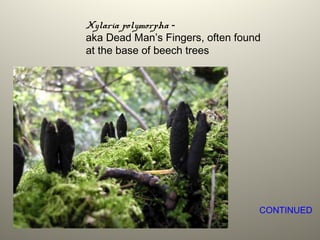
Xylaria polymorpha -
aka Dead Man’s Fingers, often found
at the base of beech trees
CONTINUED
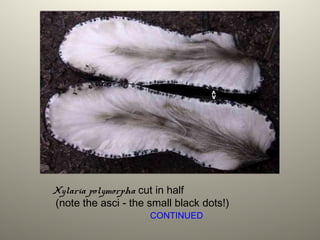
Xylaria polymorpha cut in half
(note the asci - the small black dots!)
CONTINUED
•10,000 species
•no sexual reproductive phase has been
discovered
•many are similar to ascomycetes
CONTINUED
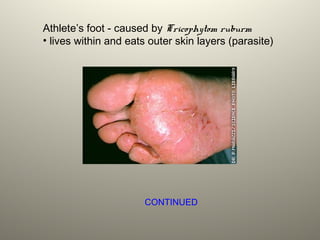
Athlete’s foot - caused by Tricophytom ruburm
• lives within and eats outer skin layers (parasite)
CONTINUED
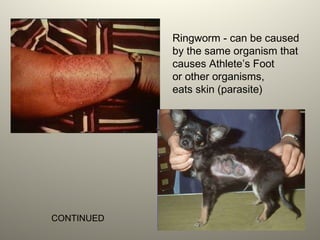
Ringworm - can be caused
by the same organism that
causes Athlete’s Foot
or other organisms,
eats skin (parasite)
CONTINUED
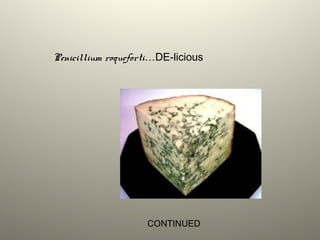
Penicillium roqueforti…DE-licious
CONTINUED
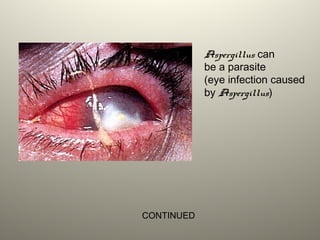
Aspergillus can
be a parasite
(eye infection caused
by Aspergillus)
CONTINUED
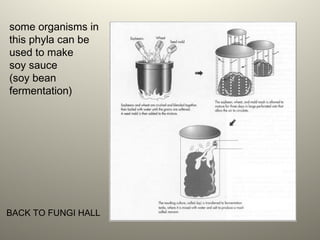
some organisms in
this phyla can be
used to make
soy sauce
(soy bean
fermentation)
BACK TO FUNGI HALL
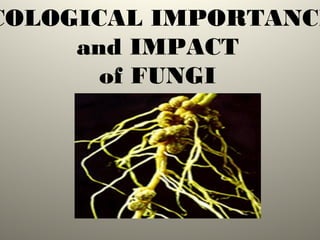
COLOGICAL IMPORTANCE
and IMPACT
of FUNGI
•may have helped early plants obtain
nutrients through a symbiotic relationship
•played an important role in plant evolution
460 million years ago
•many fungi are plant parasites responsible
for 15-20% of crop loss yearly
CONTINUED
•play an essential role in maintaining
equilibrium in every ecosystem (even the
human body) by recycling nutrients,
breaking down wastes and keeping other
populations in check
•replace essential nutrients that
plants remove from the soil
BACK TO FUNGI HALL
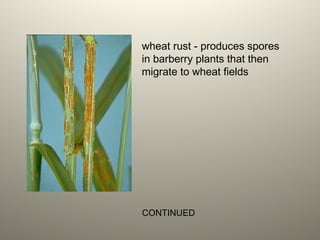
wheat rust - produces spores
in barberry plants that then
migrate to wheat fields
CONTINUED
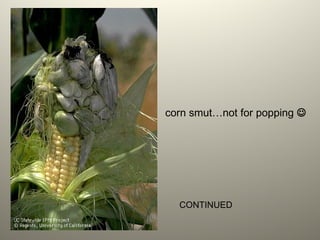
corn smut…not for popping 
CONTINUED
SYMBIOSIS
•lichens and mycorrhizea
•fungus is usually an ascomycete
(can be a basidiomycete)
•photosynthetic organism is green
algae or cyanobacteria
CONTINUED
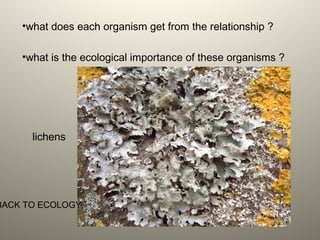
•what does each organism get from the relationship ?
•what is the ecological importance of these organisms ?
lichens
BACK TO ECOLOGY
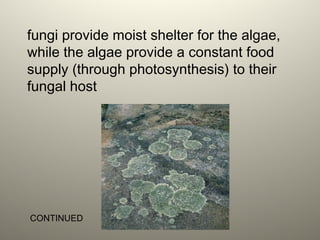
fungi provide moist shelter for the algae,
while the algae provide a constant food
supply (through photosynthesis) to their
fungal host
CONTINUED
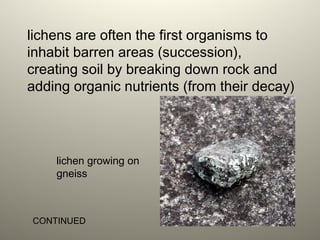
lichens are often the first organisms to
inhabit barren areas (succession),
creating soil by breaking down rock and
adding organic nutrients (from their decay)
lichen growing on
gneiss
CONTINUED
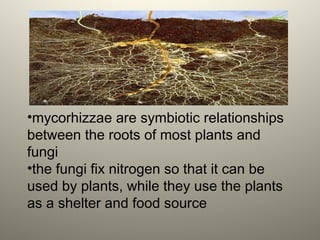
•mycorhizzae are symbiotic relationships
between the roots of most plants and
fungi
•the fungi fix nitrogen so that it can be
used by plants, while they use the plants
as a shelter and food source

FUNGi POWER POINT