Chapter 25 Section 1 
• Analyze different methods that businesses 
used to increase their profits. 
• Describe the public debate over the impact 
of big business. 
• Explain how the government took steps to 
block abuses of corporate power. 
The Cold War Begins 
13 2 
The Rise of Big Business 
Objectives
Chapter 25 Section 1 
The Cold War Begins 
13 2 
The Rise of Big Business 
Terms and People 
• corporation – a form of group ownership in which 
a number of people share the ownership of a 
business 
• monopoly – complete control of a product or 
service 
• cartel – an arrangement in which businesses 
making the same product agree to limit production 
to keep prices high 
• John D. Rockefeller – an oil tycoon who made 
deals with railroads to increase his profits
Chapter 25 Section 1 
Terms and People (continued) 
• horizontal integration – a system of 
consolidating many firms in the same business to 
lower production costs 
• trust – a situation in which companies assign their 
stock to a board of trustees, who combine them 
into a new organization 
• Andrew Carnegie – a steel tycoon who used 
vertical integration to increase his power 
• vertical integration – the practice of gaining 
control of many different businesses that make up 
all phases of a product’s development 
The Cold War Begins 
13 2 
The Rise of Big Business
Chapter 25 Section 1 
Terms and People (continued) 
• Social Darwinism – an application of Charles 
Darwin’s work which held that wealth was a 
measure of one’s inherent value and those who 
had it were the most “fit” 
• ICC – the Interstate Commerce Commission, a 
government body set up to oversee railroad 
operations 
• Sherman Antitrust Act – a bill passed in 1890 
which outlawed any trust that operated “in 
restraint of trade or commerce among the several 
states” 
The Cold War Begins 
13 2 
The Rise of Big Business
Chapter 25 Section 1 
How did big business shape the 
American economy in the late 1800s 
and early 1900s? 
1. The growth of big business in the late 1800s 
changed American society. The rise of business 
empires turned the United States into an 
economically powerful nation. 
The Cold War Begins 
13 2 
The Rise of Big Business
Chapter 25 Section 1 
Industrialization changed how businesses 
were run. 
• Business leaders combined funds and resources. 
• Investors formed corporations that protected 
them from losing more than original investment. 
• A corporation could operate in different regions. 
The Cold War Begins 
13 2 
The Rise of Big Business
Chapter 25 Section 1 
The Cold War Begins 
13 2 
The Rise of Big Business 
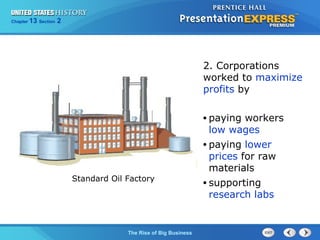
2. Corporations 
worked to maximize 
profits by 
• paying workers 
low wages 
• paying lower 
prices for raw 
materials 
• supporting 
research labs 
Standard Oil Factory
Chapter 25 Section 1 
Corporations used strategies to eliminate 
competition and decrease costs. 
The Cold War Begins 
13 2 
The Rise of Big Business 
• monopolies 
• cartels 
Competitors forced 
out of business 
• horizontal integration 
• vertical integration 
Better control of 
production and 
costs reduced
Chapter 25 Section 1 
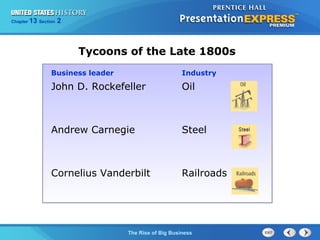
Tycoons of the Late 1800s 
Business leader Industry 
John D. Rockefeller Oil 
Andrew Carnegie Steel 
Cornelius Vanderbilt Railroads 
The Cold War Begins 
13 2 
The Rise of Big Business
Chapter 25 Section 1 
The Cold War Begins 
13 2 
The Rise of Big Business 
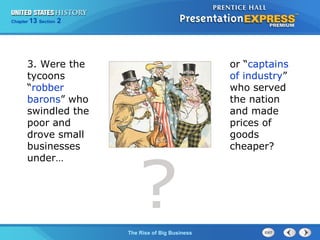
or “captains 
of industry” 
who served 
the nation 
and made 
prices of 
goods 
cheaper? 
3. Were the 
tycoons 
“robber 
barons” who 
swindled the 
poor and 
drove small 
businesses 
under…
Chapter 25 Section 1 
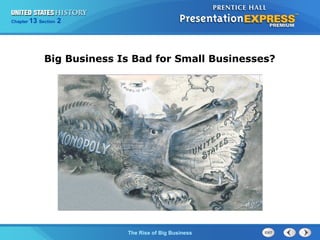
Big Business Is Bad for Small Businesses? 
The Cold War Begins 
13 2 
The Rise of Big Business
Chapter 25 Section 1 
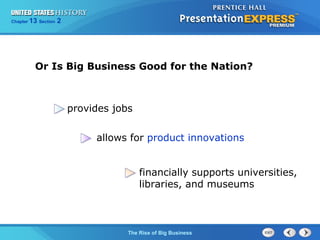
Or Is Big Business Good for the Nation? 
provides jobs 
allows for product innovations 
financially supports universities, 
libraries, and museums 
The Cold War Begins 
13 2 
The Rise of Big Business
Chapter 25 Section 1 
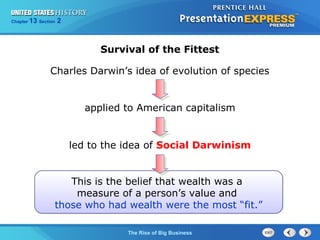
Survival of the Fittest 
Charles Darwin’s idea of evolution of species 
applied to American capitalism 
led to the idea of Social Darwinism 
This is the belief that wealth was a 
measure of a person’s value and 
those who had wealth were the most “fit.” 
The Cold War Begins 
13 2 
The Rise of Big Business
Chapter 25 Section 1 
The Cold War Begins 
13 2 
The Rise of Big Business 
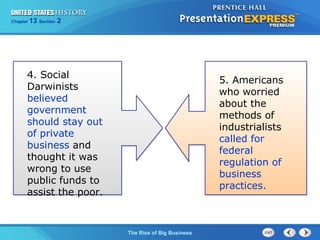
4. Social 
Darwinists 
believed 
government 
should stay out 
of private 
business and 
thought it was 
wrong to use 
public funds to 
assist the poor. 
5. Americans 
who worried 
about the 
methods of 
industrialists 
called for 
federal 
regulation of 
business 
practices.
Chapter 25 Section 1 
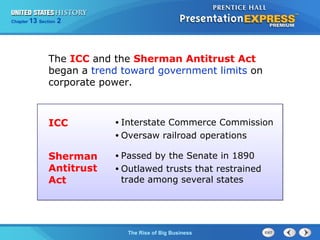
The ICC and the Sherman Antitrust Act 
began a trend toward government limits on 
corporate power. 
ICC • Interstate Commerce Commission 
• Oversaw railroad operations 
The Cold War Begins 
13 2 
The Rise of Big Business 
Sherman 
Antitrust 
Act 
• Passed by the Senate in 1890 
• Outlawed trusts that restrained 
trade among several states
Chapter 25 Section 1 
The Cold War Begins 
13 2 
The Rise of Big Business 
Section Review 
QuickTake Quiz Know It, Show It Quiz

US History Ch. 4 Section 2 Notes

  • 1.
    Chapter 25 Section1 • Analyze different methods that businesses used to increase their profits. • Describe the public debate over the impact of big business. • Explain how the government took steps to block abuses of corporate power. The Cold War Begins 13 2 The Rise of Big Business Objectives
  • 2.
    Chapter 25 Section1 The Cold War Begins 13 2 The Rise of Big Business Terms and People • corporation – a form of group ownership in which a number of people share the ownership of a business • monopoly – complete control of a product or service • cartel – an arrangement in which businesses making the same product agree to limit production to keep prices high • John D. Rockefeller – an oil tycoon who made deals with railroads to increase his profits
  • 3.
    Chapter 25 Section1 Terms and People (continued) • horizontal integration – a system of consolidating many firms in the same business to lower production costs • trust – a situation in which companies assign their stock to a board of trustees, who combine them into a new organization • Andrew Carnegie – a steel tycoon who used vertical integration to increase his power • vertical integration – the practice of gaining control of many different businesses that make up all phases of a product’s development The Cold War Begins 13 2 The Rise of Big Business
  • 4.
    Chapter 25 Section1 Terms and People (continued) • Social Darwinism – an application of Charles Darwin’s work which held that wealth was a measure of one’s inherent value and those who had it were the most “fit” • ICC – the Interstate Commerce Commission, a government body set up to oversee railroad operations • Sherman Antitrust Act – a bill passed in 1890 which outlawed any trust that operated “in restraint of trade or commerce among the several states” The Cold War Begins 13 2 The Rise of Big Business
  • 5.
    Chapter 25 Section1 How did big business shape the American economy in the late 1800s and early 1900s? 1. The growth of big business in the late 1800s changed American society. The rise of business empires turned the United States into an economically powerful nation. The Cold War Begins 13 2 The Rise of Big Business
  • 6.
    Chapter 25 Section1 Industrialization changed how businesses were run. • Business leaders combined funds and resources. • Investors formed corporations that protected them from losing more than original investment. • A corporation could operate in different regions. The Cold War Begins 13 2 The Rise of Big Business
  • 7.
    Chapter 25 Section1 The Cold War Begins 13 2 The Rise of Big Business 2. Corporations worked to maximize profits by • paying workers low wages • paying lower prices for raw materials • supporting research labs Standard Oil Factory
  • 8.
    Chapter 25 Section1 Corporations used strategies to eliminate competition and decrease costs. The Cold War Begins 13 2 The Rise of Big Business • monopolies • cartels Competitors forced out of business • horizontal integration • vertical integration Better control of production and costs reduced
  • 9.
    Chapter 25 Section1 Tycoons of the Late 1800s Business leader Industry John D. Rockefeller Oil Andrew Carnegie Steel Cornelius Vanderbilt Railroads The Cold War Begins 13 2 The Rise of Big Business
  • 10.
    Chapter 25 Section1 The Cold War Begins 13 2 The Rise of Big Business or “captains of industry” who served the nation and made prices of goods cheaper? 3. Were the tycoons “robber barons” who swindled the poor and drove small businesses under…
  • 11.
    Chapter 25 Section1 Big Business Is Bad for Small Businesses? The Cold War Begins 13 2 The Rise of Big Business
  • 12.
    Chapter 25 Section1 Or Is Big Business Good for the Nation? provides jobs allows for product innovations financially supports universities, libraries, and museums The Cold War Begins 13 2 The Rise of Big Business
  • 13.
    Chapter 25 Section1 Survival of the Fittest Charles Darwin’s idea of evolution of species applied to American capitalism led to the idea of Social Darwinism This is the belief that wealth was a measure of a person’s value and those who had wealth were the most “fit.” The Cold War Begins 13 2 The Rise of Big Business
  • 14.
    Chapter 25 Section1 The Cold War Begins 13 2 The Rise of Big Business 4. Social Darwinists believed government should stay out of private business and thought it was wrong to use public funds to assist the poor. 5. Americans who worried about the methods of industrialists called for federal regulation of business practices.
  • 15.
    Chapter 25 Section1 The ICC and the Sherman Antitrust Act began a trend toward government limits on corporate power. ICC • Interstate Commerce Commission • Oversaw railroad operations The Cold War Begins 13 2 The Rise of Big Business Sherman Antitrust Act • Passed by the Senate in 1890 • Outlawed trusts that restrained trade among several states
  • 16.
    Chapter 25 Section1 The Cold War Begins 13 2 The Rise of Big Business Section Review QuickTake Quiz Know It, Show It Quiz