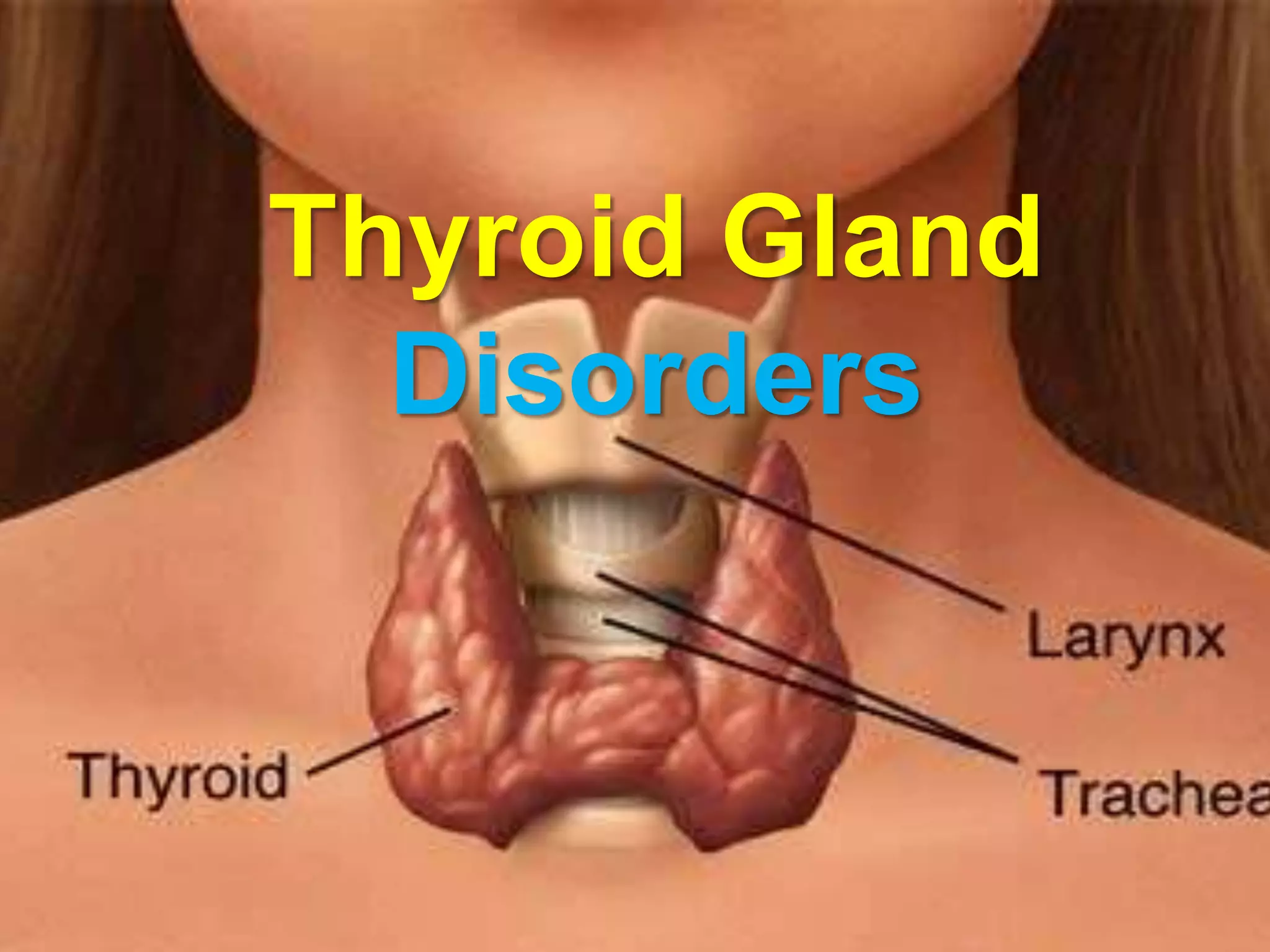
Thyroid Gland
Disorders
Thyroid Gland: Introduction
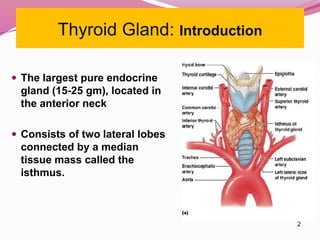
 The largest pure endocrine
gland (15-25 gm), located in
the anterior neck
 Consists of two lateral lobes
connected by a median
tissue mass called the
isthmus.
2
Thyroid Gland: introduction
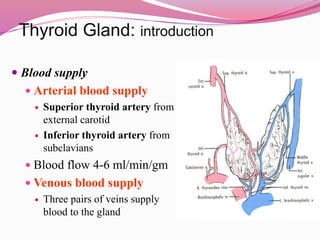
 Blood supply
 Arterial blood supply
 Superior thyroid artery from
external carotid
 Inferior thyroid artery from
subclavians
 Blood flow 4-6 ml/min/gm
 Venous blood supply
 Three pairs of veins supply
blood to the gland
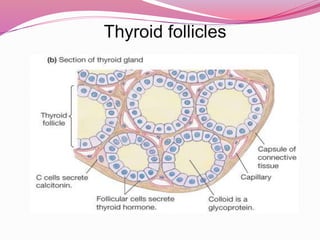
 The thyroid gland is made up of closely packed sacs called
thyroid follicles.
 The structural and functional unit of thyroid gland.
 Cyst-like structure
 0.2 – 0.9 mm in diameter
 Simple cuboidal epithelial (follicular cells) surrounding a lumen
filled with colloid.
 T4 and T3 present in colloid bound to a large protein called
thyroglobulin.
Thyroid Gland: introduction
Thyroid follicles
Development
 from the floor of the primitive pharynx during the third
week of gestation
 developing gland migrates along the thyroglossal duct to
reach its final location in the neck
 rare ectopic location of thyroid tissue at the base of the
tongue (lingual thyroid)
 occurrence of thyroglossal duct cysts along this
developmental tract
 Thyroid gland secret 3 hormones
 Thyroxin or (T4)
 Tri-iodotyronine or (T3)
 Main hormones secreted by thyroid gland
 Secreted by follicular cells
 Amino acid derivatives (tyrosine)
 Calcitonin
 Produced by parafollicular cells – C cells
Thyroid Gland: Introduction
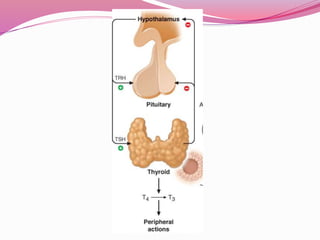
Regulation of Thyroid Axis
 TSH –
 Thyrotrope cells of ant. Pituitary
 31 kDa hormone α and β subunits
 α subunit similar to LH, FSH and hCG
 Stimulated by TRH
 TSH, TRH supressed by Thyroxine
Actions of Thyroid Hormones
 Increase the body’s overall basal metabolic rate
 Increase oxygen consumption
 Essential for normal growth
 Mental development
 Sexual maturation
 Increase the sensitivity of CVS and CNS to
catecholamines (↑COP and HR)
Thyroid disorders
 Hypothyroidism
 Underactive thyroid
 Hyperthyroidism
 Overactive thyroid
 Goiter
 Thyroid enlargement
12
Hypothyroidism
Definition
 A clinical and biochemical syndrome that results
from a deficiency in thyroid hormone secretion
from thyroid gland or in the action
13
Hypothyroidism
Prevalence
 It is a common disorder with prevalence
ranges from 2-15% population
 ♀ > ♂
 Female to male ratio = 10:1
 ↑ with age; ♀ = ♂
 Mean age at diagnosis is 60 years
 Iodine deficiency remains the most common cause
of hypothyroidism worldwide
 areas of iodine sufficiency, autoimmune disease
(Hashimoto's thyroiditis) and iatrogenic causes
(treatment of hyperthyroidism) are most common
 Primary Hypothyroidism
 Disease of the thyroid gland
 Secondary Hypothyroidism
 Hypothalamic-pituitary diseases (reduced
TSH)
Hypothyroidism
Causes of Hypothyroidism
PRIMARY
 Congenital
 Agenesis
 Ectopic thyroid remnants
 Defects of hormone synthesis
 Iodine deficiency
 Dyshormonogenesis
 Antithyroid drugs
 Other drugs (e.g. lithium, amiodarone, interferon)
Causes of Hypothyroidism
 Autoimmune
 Atrophic thyroiditis
 Hashimoto's thyroiditis
 Postpartum thyroiditis
 Infective
 Post-subacute thyroiditis
Causes of Hypothyroidism
 Iatrogenic
 Radioactive iodine therapy
 External neck irradiation
 post-surgery
 Infiltration
 amyloidosis, sarcoidosis, hemochromatosis,
scleroderma
SECONDARY
 Hypopituitarism: tumors, pituitary surgery or irradiation,
infiltrative disorders, Sheehan's syndrome, trauma,
genetic forms of combined pituitary hormone deficiencies
 Isolated TSH deficiency or inactivity
 Hypothalamic disease: tumors, trauma, infiltrative
disorders, idiopathic
HASHIMOTO THYROIDITIS
 Most common cause of hypothyroidism
 Autoimmune, non-Mendelian inheritance
 45-65 years, F:M = 10-20:1
 Painless symmetrical enlargement
 Risk of developing
 B-cell non-Hodgkin’s lymphoma
 Other concomitant autoimmune diseases
 Endocrine and non-endocrine
Hashimoto Thyroiditis
Pathogenesis
 Immune systems reacts against a variety of thyroid
antigens
 Progressive depletion of thyroid epithelial cells which
are gradually replaced by mononuclear cells →
fibrosis
 Immune mechanisms may includes:
 CD8+ cytotoxic T cell-mediated cell death
 Cytokine-mediated cell death
 Binding of antithyroid antibodies → antibody dependent
cell-mediated cytotoxicity
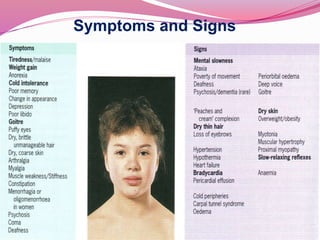
Symptoms and Signs
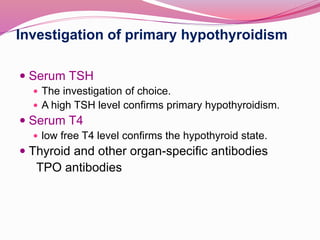
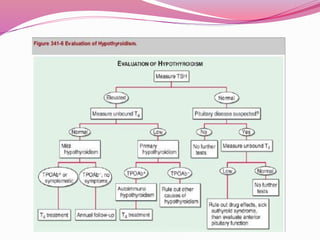
Investigation of primary hypothyroidism
 Serum TSH
 The investigation of choice.
 A high TSH level confirms primary hypothyroidism.
 Serum T4
 low free T4 level confirms the hypothyroid state.
 Thyroid and other organ-specific antibodies
TPO antibodies
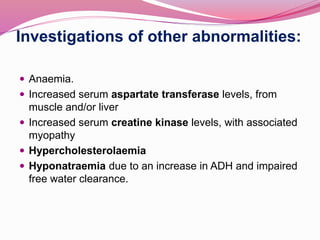
Investigations of other abnormalities:
 Anaemia.
 Increased serum aspartate transferase levels, from
muscle and/or liver
 Increased serum creatine kinase levels, with associated
myopathy
 Hypercholesterolaemia
 Hyponatraemia due to an increase in ADH and impaired
free water clearance.
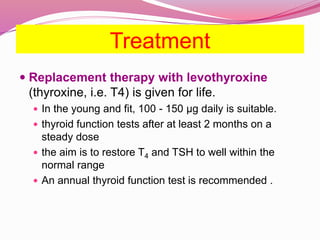
Treatment
 Replacement therapy with levothyroxine
(thyroxine, i.e. T4) is given for life.
 In the young and fit, 100 - 150 μg daily is suitable.
 thyroid function tests after at least 2 months on a
steady dose
 the aim is to restore T4 and TSH to well within the
normal range
 An annual thyroid function test is recommended .
Subclinical Hypothyroidism
 biochemical evidence of thyroid hormone deficiency
in patients who have few or no apparent clinical
features of hypothyroidism
 guidelines do not recommend routine treatment
when TSH levels are below 10 mU/L
 low dose of levothyroxine (25–50 g/d) with the goal
of normalizing TSH
Myxoedema coma
 Severe hypothyroidism, associated with:
- confusion or even coma.
- hypothermia.
- severe cardiac failure.
- Hypoventilation.
- Hypoglycaemia.
- hyponatraemia.
 patients require full intensive care.
 occurs in the elderly
 usually precipitated by factors that impair respiration
 drugs (especially sedatives, anesthetics,
antidepressants)
 pneumonia, congestive heart failure, myocardial
infarction
 gastrointestinal bleeding
 cerebrovascular accidents
 Sepsis
Myxoedema coma
 Treatment:
 Levothyroxine as a single IV bolus of 500 g, which
serves as a loading dose-50–100 ug/d
 oxygen (by ventilation if necessary)
 monitoring of cardiac output and pressures
 gradual rewarming
 hydrocortisone 100 mg i.v. 8-hourly
 glucose infusion to prevent hypoglycaemia.
 Thyrotoxicosis - as the state of thyroid hormone
excess
 Hyperthyroidism - result of excessive thyroid function
 major etiologies of thyrotoxicosis are hyperthyroidism
caused by Graves' disease, toxic MNG, and toxic
adenomas
Causes of hyperthyroidism
Common
 Graves' disease (autoimmune)
 Toxic multinodular goitre
 Solitary toxic nodule/adenoma
Causes of Thyrotoxicosis
Primary hyperthyroidism
 Graves' disease
 Toxic multinodular goiter
 Toxic adenoma
 Functioning thyroid carcinoma metastases
 Struma ovarii
 Drugs: iodine excess (Jod-Basedow phenomenon)
Thyrotoxicosis without hyperthyroidism
 Subacute thyroiditis
 Silent thyroiditis
 Other causes of thyroid destruction: amiodarone,
radiation, infarction of adenoma
 Ingestion of excess thyroid hormone (thyrotoxicosis
factitia) or thyroid tissue
Secondary hyperthyroidism
 TSH-secreting pituitary adenoma
 Chorionic gonadotropin-secreting tumorsa
 Gestational thyrotoxicosisa
Graves' disease
 The most common cause of hyperthyrodism
 It is an autoimmune disorder. where the thyroid is
overactive, producing an excessive amount of thyroid
hormones
 More common in adults -between 20 and 50 years
 Can be familial and associated with other autoimmune
diseases
 Characterized by hyperthyroidism, ophthalmopathy with
exophthalmos and dermopathy (pretibial myxedema)
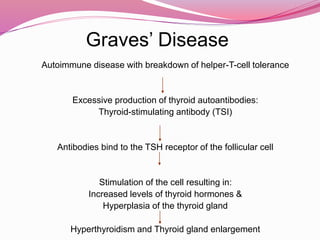
Graves’ Disease
Autoimmune disease with breakdown of helper-T-cell tolerance
Excessive production of thyroid autoantibodies:
Thyroid-stimulating antibody (TSI)
Antibodies bind to the TSH receptor of the follicular cell
Stimulation of the cell resulting in:
Increased levels of thyroid hormones &
Hyperplasia of the thyroid gland
Hyperthyroidism and Thyroid gland enlargement
Hyperthyrodism
 Clinical features: due to
 Hypermetabolic state
 Overactivity of sympathetic nervous system
Symptoms
 Weight loss
 Increased appetite
 Irritability
 Tremor
 Goiter
 Restlessness
 Stiffness
 Muscle weakness
 Breathlessness
 Palpitation
 Heat intolerance
 Excessive sweating
 Itching
 Thirst
 Vomiting
 Diarrhoea
 Oligomenorrhoea
 Loss of libido
Signs
 Tremor
 Irritability
 Psychosis
 Tachycardia or atrial fibrillation
 Warm peripheries
 Systolic hypertension
 Cardiac failure
Signs
 Lid lag
 Proximal myopathy
 Proximal muscle
wasting
 Onycholysis
 Palmar erythema
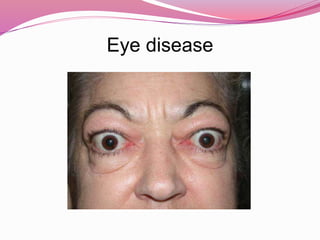
Eye disease
Graves' Ophthalmopathy
 earliest manifestations - sensation of grittiness, eye
discomfort, and excess tearing
 most serious manifestation is compression of the
optic nerve at the apex of the orbit, leading to
papilledema; peripheral field defects; and, if left
untreated, permanent loss of vision
 0 = No signs or symptoms
 1 = Only signs (lid retraction or lag), no symptoms
 2 = Soft-tissue involvement (periorbital edema)
 3 = Proptosis (>22 mm)
 4 = Extraocular-muscle involvement (diplopia)
 5 = Corneal involvement
 6 = Sight loss
 Thyroid dermopathy/pretibial myxedema - most
frequent over the anterior and lateral aspects of the
lower leg
 Thyroid acropachy - clubbing found in <1% of
patients with Graves' disease
Investigation
 Thyroid function test:
 Serum TSH is suppressed in hyperthyroidism .
 Diagnosis is confirmed with a raised free T4 or T3
 . Measurement of TPO antibodies or TBII may be
useful if the diagnosis is unclear clinically
Treatment
Antithyroid drugs:
1. Carbimazole.
2. Propylthiouracil.
 These drugs inhibit the formation of thyroid hormones
 common side effects - rash, urticaria, fever, and
arthralgia
 Rare but major side effects include hepatitis; an
SLE-like syndrome; and, most important,
agranulocytosis
Treatment
 Radioactive iodine
 RAI accumulates in the thyroid and destroys the gland
by local radiation.
 It takes several months to be fully effective.
Treatment
 Surgery:
 subtotal thyroidectomy
 Only in patient who have previously been rendered
euthyroid.
Goiter
 Goiter refers to an enlarged thyroid gland
 Biosynthetic defects, iodine deficiency, autoimmune
disease, and nodular diseases can each lead to
goiter
 diffuse nontoxic goiter - diffuse enlargement of the
thyroid occurs in the absence of nodules and
hyperthyroidism
 Worldwide, diffuse goiter is most commonly caused
by iodine deficiency and is termed endemic goiter
Congenital Thyroid Diseases
 Agenesis /Aplasia
 Hypoplasia
 Accessory or aberrant thyroid glands
 Thyroglossal duct cyst
Thyroglossal Duct Cyst
 A thyroglossal duct cyst is a neck mass or lump that
develops from cells and tissues remaining after the
formation of the thyroid gland during embryonic
development.
 Children
 Failure of regression
 Neck, medial
 Squamous or columnar lining
 often appears after an upper respiratory infection when it
enlarges and becomes painful.
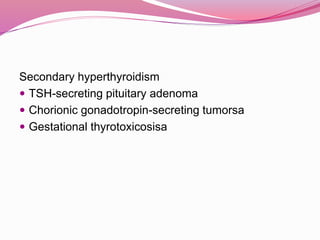
 Complications: inflammation,
sinus tracts

Thank you

Thyroid disorders

  • 1.
  • 2.
    Thyroid Gland: Introduction The largest pure endocrine gland (15-25 gm), located in the anterior neck  Consists of two lateral lobes connected by a median tissue mass called the isthmus. 2
  • 3.
    Thyroid Gland: introduction Blood supply  Arterial blood supply  Superior thyroid artery from external carotid  Inferior thyroid artery from subclavians  Blood flow 4-6 ml/min/gm  Venous blood supply  Three pairs of veins supply blood to the gland
  • 4.
     The thyroidgland is made up of closely packed sacs called thyroid follicles.  The structural and functional unit of thyroid gland.  Cyst-like structure  0.2 – 0.9 mm in diameter  Simple cuboidal epithelial (follicular cells) surrounding a lumen filled with colloid.  T4 and T3 present in colloid bound to a large protein called thyroglobulin. Thyroid Gland: introduction
  • 5.
  • 6.
    Development  from thefloor of the primitive pharynx during the third week of gestation  developing gland migrates along the thyroglossal duct to reach its final location in the neck  rare ectopic location of thyroid tissue at the base of the tongue (lingual thyroid)  occurrence of thyroglossal duct cysts along this developmental tract
  • 7.
     Thyroid glandsecret 3 hormones  Thyroxin or (T4)  Tri-iodotyronine or (T3)  Main hormones secreted by thyroid gland  Secreted by follicular cells  Amino acid derivatives (tyrosine)  Calcitonin  Produced by parafollicular cells – C cells Thyroid Gland: Introduction
  • 8.
    Regulation of ThyroidAxis  TSH –  Thyrotrope cells of ant. Pituitary  31 kDa hormone α and β subunits  α subunit similar to LH, FSH and hCG  Stimulated by TRH  TSH, TRH supressed by Thyroxine
  • 10.
    Actions of ThyroidHormones  Increase the body’s overall basal metabolic rate  Increase oxygen consumption  Essential for normal growth  Mental development  Sexual maturation  Increase the sensitivity of CVS and CNS to catecholamines (↑COP and HR)
  • 11.
    Thyroid disorders  Hypothyroidism Underactive thyroid  Hyperthyroidism  Overactive thyroid  Goiter  Thyroid enlargement
  • 12.
    12 Hypothyroidism Definition  A clinicaland biochemical syndrome that results from a deficiency in thyroid hormone secretion from thyroid gland or in the action
  • 13.
    13 Hypothyroidism Prevalence  It isa common disorder with prevalence ranges from 2-15% population  ♀ > ♂  Female to male ratio = 10:1  ↑ with age; ♀ = ♂  Mean age at diagnosis is 60 years
  • 14.
     Iodine deficiencyremains the most common cause of hypothyroidism worldwide  areas of iodine sufficiency, autoimmune disease (Hashimoto's thyroiditis) and iatrogenic causes (treatment of hyperthyroidism) are most common
  • 15.
     Primary Hypothyroidism Disease of the thyroid gland  Secondary Hypothyroidism  Hypothalamic-pituitary diseases (reduced TSH) Hypothyroidism
  • 16.
    Causes of Hypothyroidism PRIMARY Congenital  Agenesis  Ectopic thyroid remnants  Defects of hormone synthesis  Iodine deficiency  Dyshormonogenesis  Antithyroid drugs  Other drugs (e.g. lithium, amiodarone, interferon)
  • 17.
    Causes of Hypothyroidism Autoimmune  Atrophic thyroiditis  Hashimoto's thyroiditis  Postpartum thyroiditis  Infective  Post-subacute thyroiditis
  • 18.
    Causes of Hypothyroidism Iatrogenic  Radioactive iodine therapy  External neck irradiation  post-surgery  Infiltration  amyloidosis, sarcoidosis, hemochromatosis, scleroderma
  • 19.
    SECONDARY  Hypopituitarism: tumors,pituitary surgery or irradiation, infiltrative disorders, Sheehan's syndrome, trauma, genetic forms of combined pituitary hormone deficiencies  Isolated TSH deficiency or inactivity  Hypothalamic disease: tumors, trauma, infiltrative disorders, idiopathic
  • 20.
    HASHIMOTO THYROIDITIS  Mostcommon cause of hypothyroidism  Autoimmune, non-Mendelian inheritance  45-65 years, F:M = 10-20:1  Painless symmetrical enlargement  Risk of developing  B-cell non-Hodgkin’s lymphoma  Other concomitant autoimmune diseases  Endocrine and non-endocrine
  • 21.
    Hashimoto Thyroiditis Pathogenesis  Immunesystems reacts against a variety of thyroid antigens  Progressive depletion of thyroid epithelial cells which are gradually replaced by mononuclear cells → fibrosis  Immune mechanisms may includes:  CD8+ cytotoxic T cell-mediated cell death  Cytokine-mediated cell death  Binding of antithyroid antibodies → antibody dependent cell-mediated cytotoxicity
  • 22.
  • 23.
    Investigation of primaryhypothyroidism  Serum TSH  The investigation of choice.  A high TSH level confirms primary hypothyroidism.  Serum T4  low free T4 level confirms the hypothyroid state.  Thyroid and other organ-specific antibodies TPO antibodies
  • 24.
    Investigations of otherabnormalities:  Anaemia.  Increased serum aspartate transferase levels, from muscle and/or liver  Increased serum creatine kinase levels, with associated myopathy  Hypercholesterolaemia  Hyponatraemia due to an increase in ADH and impaired free water clearance.
  • 25.
    Treatment  Replacement therapywith levothyroxine (thyroxine, i.e. T4) is given for life.  In the young and fit, 100 - 150 μg daily is suitable.  thyroid function tests after at least 2 months on a steady dose  the aim is to restore T4 and TSH to well within the normal range  An annual thyroid function test is recommended .
  • 26.
    Subclinical Hypothyroidism  biochemicalevidence of thyroid hormone deficiency in patients who have few or no apparent clinical features of hypothyroidism  guidelines do not recommend routine treatment when TSH levels are below 10 mU/L  low dose of levothyroxine (25–50 g/d) with the goal of normalizing TSH
  • 28.
    Myxoedema coma  Severehypothyroidism, associated with: - confusion or even coma. - hypothermia. - severe cardiac failure. - Hypoventilation. - Hypoglycaemia. - hyponatraemia.  patients require full intensive care.
  • 29.
     occurs inthe elderly  usually precipitated by factors that impair respiration  drugs (especially sedatives, anesthetics, antidepressants)  pneumonia, congestive heart failure, myocardial infarction  gastrointestinal bleeding  cerebrovascular accidents  Sepsis
  • 30.
    Myxoedema coma  Treatment: Levothyroxine as a single IV bolus of 500 g, which serves as a loading dose-50–100 ug/d  oxygen (by ventilation if necessary)  monitoring of cardiac output and pressures  gradual rewarming  hydrocortisone 100 mg i.v. 8-hourly  glucose infusion to prevent hypoglycaemia.
  • 32.
     Thyrotoxicosis -as the state of thyroid hormone excess  Hyperthyroidism - result of excessive thyroid function  major etiologies of thyrotoxicosis are hyperthyroidism caused by Graves' disease, toxic MNG, and toxic adenomas
  • 33.
    Causes of hyperthyroidism Common Graves' disease (autoimmune)  Toxic multinodular goitre  Solitary toxic nodule/adenoma
  • 34.
    Causes of Thyrotoxicosis Primaryhyperthyroidism  Graves' disease  Toxic multinodular goiter  Toxic adenoma  Functioning thyroid carcinoma metastases  Struma ovarii  Drugs: iodine excess (Jod-Basedow phenomenon)
  • 35.
    Thyrotoxicosis without hyperthyroidism Subacute thyroiditis  Silent thyroiditis  Other causes of thyroid destruction: amiodarone, radiation, infarction of adenoma  Ingestion of excess thyroid hormone (thyrotoxicosis factitia) or thyroid tissue
  • 36.
    Secondary hyperthyroidism  TSH-secretingpituitary adenoma  Chorionic gonadotropin-secreting tumorsa  Gestational thyrotoxicosisa
  • 37.
    Graves' disease  Themost common cause of hyperthyrodism  It is an autoimmune disorder. where the thyroid is overactive, producing an excessive amount of thyroid hormones  More common in adults -between 20 and 50 years  Can be familial and associated with other autoimmune diseases  Characterized by hyperthyroidism, ophthalmopathy with exophthalmos and dermopathy (pretibial myxedema)
  • 38.
    Graves’ Disease Autoimmune diseasewith breakdown of helper-T-cell tolerance Excessive production of thyroid autoantibodies: Thyroid-stimulating antibody (TSI) Antibodies bind to the TSH receptor of the follicular cell Stimulation of the cell resulting in: Increased levels of thyroid hormones & Hyperplasia of the thyroid gland Hyperthyroidism and Thyroid gland enlargement
  • 39.
    Hyperthyrodism  Clinical features:due to  Hypermetabolic state  Overactivity of sympathetic nervous system
  • 40.
    Symptoms  Weight loss Increased appetite  Irritability  Tremor  Goiter  Restlessness  Stiffness  Muscle weakness  Breathlessness  Palpitation  Heat intolerance  Excessive sweating  Itching  Thirst  Vomiting  Diarrhoea  Oligomenorrhoea  Loss of libido
  • 41.
    Signs  Tremor  Irritability Psychosis  Tachycardia or atrial fibrillation  Warm peripheries  Systolic hypertension  Cardiac failure
  • 42.
    Signs  Lid lag Proximal myopathy  Proximal muscle wasting  Onycholysis  Palmar erythema
  • 43.
  • 44.
    Graves' Ophthalmopathy  earliestmanifestations - sensation of grittiness, eye discomfort, and excess tearing  most serious manifestation is compression of the optic nerve at the apex of the orbit, leading to papilledema; peripheral field defects; and, if left untreated, permanent loss of vision
  • 45.
     0 =No signs or symptoms  1 = Only signs (lid retraction or lag), no symptoms  2 = Soft-tissue involvement (periorbital edema)  3 = Proptosis (>22 mm)  4 = Extraocular-muscle involvement (diplopia)  5 = Corneal involvement  6 = Sight loss
  • 46.
     Thyroid dermopathy/pretibialmyxedema - most frequent over the anterior and lateral aspects of the lower leg  Thyroid acropachy - clubbing found in <1% of patients with Graves' disease
  • 48.
    Investigation  Thyroid functiontest:  Serum TSH is suppressed in hyperthyroidism .  Diagnosis is confirmed with a raised free T4 or T3  . Measurement of TPO antibodies or TBII may be useful if the diagnosis is unclear clinically
  • 50.
    Treatment Antithyroid drugs: 1. Carbimazole. 2.Propylthiouracil.  These drugs inhibit the formation of thyroid hormones  common side effects - rash, urticaria, fever, and arthralgia  Rare but major side effects include hepatitis; an SLE-like syndrome; and, most important, agranulocytosis
  • 51.
    Treatment  Radioactive iodine RAI accumulates in the thyroid and destroys the gland by local radiation.  It takes several months to be fully effective.
  • 52.
    Treatment  Surgery:  subtotalthyroidectomy  Only in patient who have previously been rendered euthyroid.
  • 53.
    Goiter  Goiter refersto an enlarged thyroid gland  Biosynthetic defects, iodine deficiency, autoimmune disease, and nodular diseases can each lead to goiter  diffuse nontoxic goiter - diffuse enlargement of the thyroid occurs in the absence of nodules and hyperthyroidism  Worldwide, diffuse goiter is most commonly caused by iodine deficiency and is termed endemic goiter
  • 54.
    Congenital Thyroid Diseases Agenesis /Aplasia  Hypoplasia  Accessory or aberrant thyroid glands  Thyroglossal duct cyst
  • 55.
    Thyroglossal Duct Cyst A thyroglossal duct cyst is a neck mass or lump that develops from cells and tissues remaining after the formation of the thyroid gland during embryonic development.  Children  Failure of regression  Neck, medial  Squamous or columnar lining  often appears after an upper respiratory infection when it enlarges and becomes painful.  Complications: inflammation, sinus tracts
  • 56.