MEDICAL AND PSYCHIATRIC 
MANIFESTATIONS OF 
THYROID DYSFUNCTION 
Gibson george 
First year msc nursing
INTRODUCTION 
- The largest endocrine gland 
- 20-25 g (adults) 
- purple brown, two lateral lobes, isthmus 
- lies in front upper trachea (2nd/3rd rings) 
- Posterior – 2 pairs of parathyroid glands
3 
The Thyroxines 
Tri Iodo Thyronine – T3 
Tetra Iodo Thyronine – T4
Actions of thyroid Hormones 
- Increase BMR ( oxygen consumption & 
heat production – body temperature) 
- Growth/development= all tissues 
- Carbohydrate metabolism= hyperglycemia. 
Increase glycogenolysis, gluconeogenesis 
- Fat metabolism= enhance lipolysis, increase 
plasma FFA, decrease serum cholesterol.
Actions of thyroid Hormones 
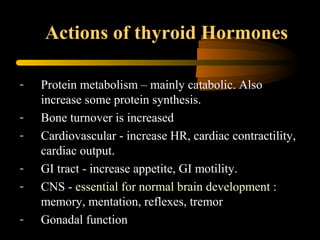
- Protein metabolism – mainly catabolic. Also 
increase some protein synthesis. 
- Bone turnover is increased 
- Cardiovascular - increase HR, cardiac contractility, 
cardiac output. 
- GI tract - increase appetite, GI motility. 
- CNS - essential for normal brain development : 
memory, mentation, reflexes, tremor 
- Gonadal function
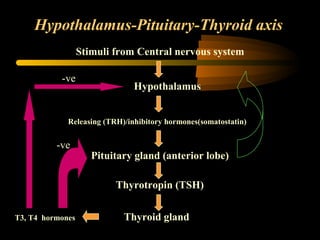
Hypothalamus-Pituitary-Thyroid axis 
Stimuli from Central nervous system 
Hypothalamus 
-ve 
Releasing (TRH)/inhibitory hormones(somatostatin) 
Pituitary gland (anterior lobe) 
Thyrotropin (TSH) 
-ve 
T3, T4 hormones Thyroid gland
7 
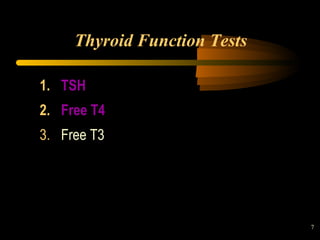
Thyroid Function Tests 
1. TSH 
2. Free T4 
3. Free T3
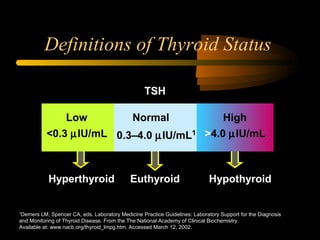
Definitions of Thyroid Status 
TTSSHH 
Low Normal High 
<0.3 mIU/mL 0.3–4.0 mIU/mL1 >4.0 mIU/mL 
HHyyppeerrtthhyyrrooiidd EEuutthhyyrrooiidd HHyyppootthhyyrrooiidd 
11Demers Demers LM, Spencer CA, eds. Laboratory Medicine Practice Guidelines: Laboratory Support for tthhee DDiiaaggnnoossiiss 
aanndd MMoonniittoorriinngg ooff TThhyyrrooiidd DDiisseeaassee.. FFrroomm tthhee TThhee NNaattiioonnaall AAccaaddeemmyy ooff CClliinniiccaall BBiioocchheemmiissttrryy.. 
AAvvaaiillaabbllee aatt:: wwwwww..nnaaccbb..oorrgg//tthhyyrrooiidd__llmmppgg..hhttmm.. AAcccceesssseedd MMaarrcchh 1122,, 22000022..
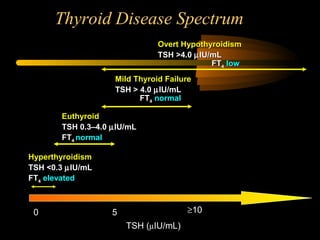
Thyroid Disease Spectrum 
OOvveerrtt HHyyppootthhyyrrooiiddiissmm 
TTSSHH >>44..00 mIIUU//mmLL 
MMiilldd TThhyyrrooiidd FFaaiilluurree 
TTSSHH >> 44..00 mIIUU//mmLL 
FFTT44 nnoorrmmaall 
00 55 ³1100 
TTSSHH ((mIIUU//mmLL)) 
FFTT44 llooww 
EEuutthhyyrrooiidd 
TTSSHH 00..33––44..00 mIIUU//mmLL 
FFTT44 nnoorrmmaall 
HHyyppeerrtthhyyrrooiiddiissmm 
TTSSHH <<00..33 mIIUU//mmLL 
FFTT44 eelleevvaatteedd
HYPOTHYROIDISM
Hypothyroidism 
Hypothyroidism is a disorder of diverse causes in 
which the thyroid fails to secrete an adequate 
amount of thyroid hormone.
Hypothyroidism 
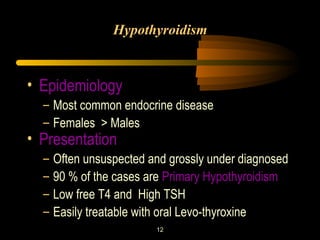
• Epidemiology 
– Most common endocrine disease 
– Females > Males 
• Presentation 
– Often unsuspected and grossly under diagnosed 
– 90 % of the cases are Primary Hypothyroidism 
– Low free T4 and High TSH 
– Easily treatable with oral Levo-thyroxine 
12
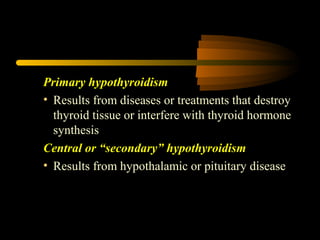
Primary hypothyroidism 
• Results from diseases or treatments that destroy 
thyroid tissue or interfere with thyroid hormone 
synthesis 
Central or “secondary” hypothyroidism 
• Results from hypothalamic or pituitary disease
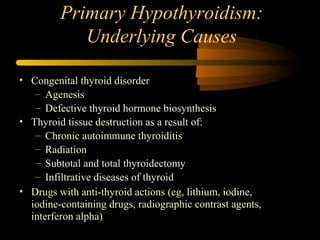
Primary Hypothyroidism: 
Underlying Causes 
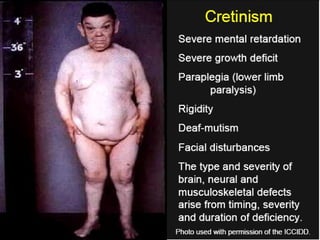
• Congenital thyroid disorder 
– Agenesis 
– Defective thyroid hormone biosynthesis 
• Thyroid tissue destruction as a result of: 
– Chronic autoimmune thyroiditis 
– Radiation 
– Subtotal and total thyroidectomy 
– Infiltrative diseases of thyroid 
• Drugs with anti-thyroid actions (eg, lithium, iodine, 
iodine-containing drugs, radiographic contrast agents, 
interferon alpha)
15 
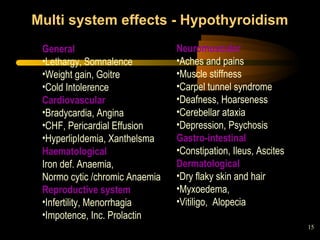
Multi system effects - Hypothyroidism 
General 
Neuromuscular 
•Lethargy, Somnalence 
•Aches and pains 
•Weight gain, Goitre 
•Muscle stiffness 
•Cold Intolerence 
•Carpel tunnel syndrome 
Cardiovascular 
•Deafness, Hoarseness 
•Bradycardia, Angina 
•Cerebellar ataxia 
•CHF, Pericardial Effusion 
•Depression, Psychosis 
•HyperlipIdemia, Xanthelsma 
Gastro-intestinal 
Haematological 
•Constipation, Ileus, Ascites 
Iron def. Anaemia, 
Dermatological 
Normo cytic /chromic Anaemia 
•Dry flaky skin and hair 
Reproductive system 
•Myxoedema, 
•Infertility, Menorrhagia 
•Vitiligo, Alopecia 
•Impotence, Inc. Prolactin
16 
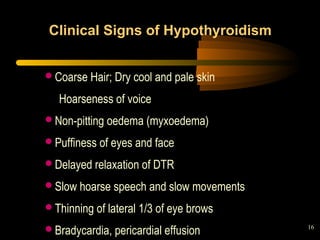
Clinical Signs of Hypothyroidism 
Coarse Hair; Dry cool and pale skin 
Hoarseness of voice 
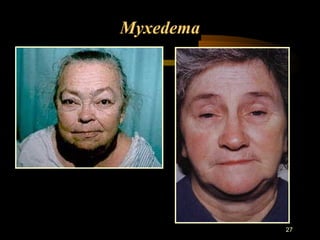
Non-pitting oedema (myxoedema) 
Puffiness of eyes and face 
Delayed relaxation of DTR 
Slow hoarse speech and slow movements 
Thinning of lateral 1/3 of eye brows 
Bradycardia, pericardial effusion
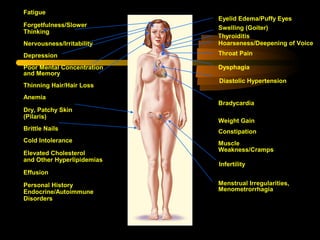
Fatigue 
Forgetfulness/Slower 
Thinking 
Nervousness/Irritability 
Depression 
Poor Mental Concentration 
and Memory 
Thinning Hair/Hair Loss 
Anemia 
Dry, Patchy Skin 
(Pilaris) 
Brittle Nails 
Cold Intolerance 
Elevated Cholesterol 
and Other Hyperlipidemias 
Effusion 
Personal History 
Endocrine/Autoimmune 
Disorders 
Eyelid Edema/Puffy Eyes 
Swelling (Goiter) 
Thyroiditis 
Throat Pain 
Dysphagia 
Diastolic Hypertension 
Hoarseness/Deepening of Voice 
Bradycardia 
Weight Gain 
Constipation 
Muscle 
Weakness/Cramps 
Infertility 
Menstrual Irregularities, 
Menometrorrhagia
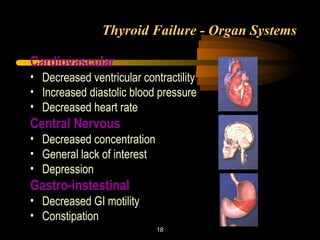
Thyroid Failure - Organ Systems 
Cardiovascular 
• Decreased ventricular contractility 
• Increased diastolic blood pressure 
• Decreased heart rate 
Central Nervous 
• Decreased concentration 
• General lack of interest 
• Depression 
Gastro-instestinal 
• Decreased GI motility 
• Constipation 
18
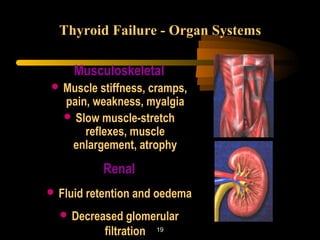
Thyroid Failure - Organ Systems 
Musculoskeletal 
Muscle stiffness, cramps, 
pain, weakness, myalgia 
Slow muscle-stretch 
reflexes, muscle 
enlargement, atrophy 
19 
Renal 
Fluid retention and oedema 
Decreased glomerular 
filtration
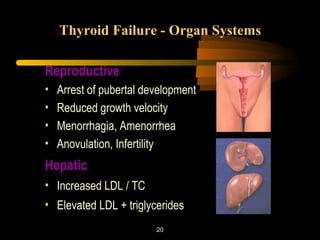
Thyroid Failure - Organ Systems 
Reproductive 
• Arrest of pubertal development 
• Reduced growth velocity 
• Menorrhagia, Amenorrhea 
• Anovulation, Infertility 
Hepatic 
• Increased LDL / TC 
• Elevated LDL + triglycerides 
20
Thyroid Failure - Organ Systems 
21 
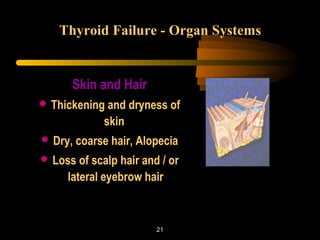
Skin and Hair 
Thickening and dryness of 
skin 
Dry, coarse hair, Alopecia 
Loss of scalp hair and / or 
lateral eyebrow hair
22 
Order for TSH alone as a screen 
• Psychiatric patients 
• Elderly women / men 
• Hypercholesterolemia 
• Lithium, 
• Postpartum women 
Other Autoimmune disease 
Rx. Grave’s Ophthalmopathy 
Family H/o thyroid disease 
Neck irradiation therapy 
Previous Rx for thyrotoxicosis 
Autoimmune Thyroiditis
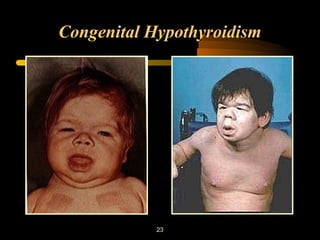
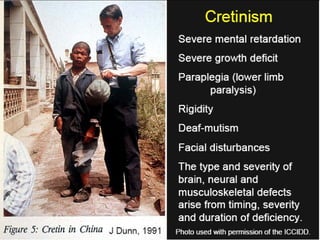
Congenital Hypothyroidism 
23
www.drsarma.in 24
www.drsarma.in 25
26 
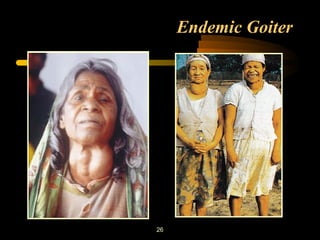
Endemic Goiter
27 
Myxedema
Myxedema 
28
Xanthomata 
29 
Xanthelasma 
Tuberous Xanthoma
HYPERTHYROIDISM
• Thyrotoxicosis is defined as the state of thyroid 
hormone excess and is not synonymous with 
hyperthyroidism, which is the result of 
excessive thyroid function. 
• The major etiologies of thyrotoxicosis are 
hyperthyroidism caused by Graves' disease, toxic 
MNG, and toxic adenomas. 
• Subclinical hyperthyroidism describes a 
condition in which circulating thyroid hormone 
concentrations are normal but the TSH response to 
TRH is blunted or absent. Patients may experience 
symptoms of hyperthyroidism such as 
nervousness, irritability, fatigue, and tachycardia. 
Subclinical hyperthyroidism may progress to overt 
hyperthyroidism.
PREVALENCE 
.5% 
annual incidence 1-10 per 1000 
Women to men 4 : 1 
Peak age 4th-5th decade
CAUSES 
Graves’ disease (60-85%) 
Hashimoto’s thyroiditis 
Solitary toxic adenoma (2-10%)
Thyrotoxicosis without hyperthyroidism 
• Subacute thyroiditis 
• Silent thyroiditis 
• Other causes of thyroid destruction: 
amiodarone, radiation, infarction of 
adenoma 
• Ingestion of excess thyroid hormone 
(thyrotoxicosis factitia) or thyroid tissue
CLINICAL MANIFESTATIONS OF 
HYPERTHYROIDISM: 
Symptoms 
• Nervousness 
• Increased 
sweating 
• Heat intolerance 
• palpitations 
• Dyspnea 
• Fatigue/weakness 
• Weight loss 
• Hyperactivity 
• Irritability 
• Polyuria 
• Oligomenorrhea 
• Loss of libido 
• Increased appetite 
• Diarrhoea
CLINICAL MANIFESTATIONS OF 
HYPERTHYROIDISM: 
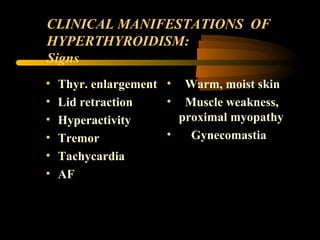
Signs 
• Thyr. enlargement 
• Lid retraction 
• Hyperactivity 
• Tremor 
• Tachycardia 
• AF 
• Warm, moist skin 
• Muscle weakness, 
proximal myopathy 
• Gynecomastia
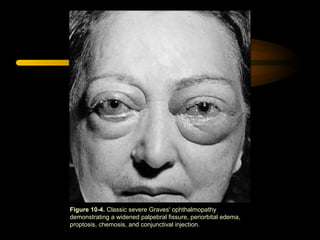
Figure 10-4. Classic severe Graves' ophthalmopathy 
demonstrating a widened palpebral fissure, periorbital edema, 
proptosis, chemosis, and conjunctival injection.
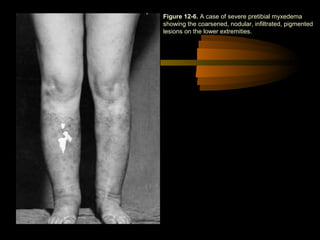
Figure 12-6. A case of severe pretibial myxedema 
showing the coarsened, nodular, infiltrated, pigmented 
lesions on the lower extremities.
Thyroid Dysfunction and 
Mental Disorders
The relationship between psychiatry and 
thyroid dysfunction has attracted a good deal 
of attention for the following reasons: 
1. Thyroid disorders, such as hyperthyroidism or 
hypothyroidism, can be accompanied by prominent 
mental abnormalities. 
2. Thyroid hormones have been used in the treatment 
of certain psychiatric conditions. 
3. Some drugs used for the treatment of mental illness 
can have an effect on the thyroid gland.
PSYCHIATRIC 
MANIFESTATIONS OF 
HYPOTHYROIDISM
• Patients diagnosed with mental illnesses 
(especially those with a mood component) are 
more likely to have involvement of a thyroid 
hormone imbalance than the general population. 
• Symptoms of hypothyroidism can mimic, or be 
intertwined with, schizophrenia, bipolar disorder, 
anxiety and depression. Treating an underlying 
thyroid problem is critical to alleviating the 
associated psychiatric symptoms.
Patients with thyroid disturbance and psychiatric 
symptoms are most often diagnosed with one of the 
following: 
• atypical depression (which may present as dysthymia) 
• bipolar spectrum syndrome (including manic-depression, 
mixed mania, bipolar depression, rapid-cycling 
bipolar disorder, cyclothymia, and premenstrual 
syndromes) 
• borderline personality disorder 
• psychotic disorder (typically paranoid psychosis)
Psychiatric symptoms of 
hypothyroidism include 
• depression 
• mood instability 
• Mania 
• Psychosis 
• Anxiety 
• Delirium 
• hypersomnia 
• apathy 
• anergia 
• impaired memory 
• psychomotor slowing 
• attentional problems 
• dementia
Other symptoms (such as hypersomnia 
and lethargy), as well as laboratory 
findings such as hypercholesterolemia, 
galactorrhea, hyperprolactinemia, 
menstrual irregularities, and sexual 
dysfunction could be misconstrued as 
resulting from the psychotropic 
medications being given to alleviate 
the psychiatric symptoms.
Hypothyroidism and Depression 
• Depressive symptoms are common in 
hypothyroidism 
• Many hypothyroid patients fulfill DSM-IV 
criteria for a depressive disorder 
• Depressed patients may be more likely than 
normal individuals to be hypothyroid 
• All depressed patients should be evaluated 
for thyroid dysfunction 
46
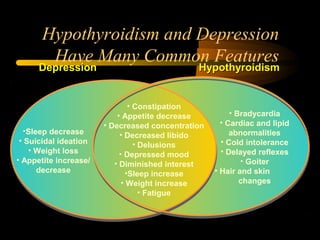
Hypothyroidism and Depression 
Have Many Common Features 
DDeepprreessssiioonn HHyyppootthhyyrrooiiddiissmm 
•Sleep decrease 
• Suicidal ideation 
• Weight loss 
• Appetite increase/ 
decrease 
• Bradycardia 
• Cardiac and lipid 
abnormalities 
• Cold intolerance 
• Delayed reflexes 
• Goiter 
• Hair and skin 
changes 
• Constipation 
• Appetite decrease 
• Decreased concentration 
• Decreased libido 
• Delusions 
• Depressed mood 
• Diminished interest 
•Sleep increase 
• Weight increase 
• Fatigue
Hypothyroidism, Depression, and Older 
Patients 
• Hypothyroidism can mimic or coexist with 
depression at any age 
• Older patients are at increased risk for 
hypothyroidism as well as for depression 
• TSH analysis is warranted in at-risk patients: 
– Women 
– Patients with history of: 
• Autoimmune thyroid disease (including a family history of 
disease) 
• Goiter 
• Bipolar disorder treated with lithium 
• Dementia
Thyroxine in Depression 
1. Thyroxine therapy is recommended for 
patients with depression who have 
persistently elevated serum TSH 
2. Antidepressants may be less effective if 
thyroid function not normalized 
49
• Anxiety disorders occur in between 30% 
and 40% of patients developing acute 
hypothyroidism. 
• The most characteristic picture of patients 
with rapidly developing myxedema is one 
of progressive anxiety with generalized 
agitation.
• Patients may experience a progressive 
disorientation, persecutory delusions, 
hallucinations, and bouts of lethargy 
alternating with periods of extreme 
restlessness. 
• They are often extremely irritable, 
delusional, and paranoid and may complain 
of auditory and visual hallucinations. 
• Hypersexuality, irritability, suspicion, 
delusions, inability to concentrate, and 
failing memory are all conspicuous signs of 
rapidly developing thyroid disease.
• A psychotic syndrome of auditory 
hallucinations and paranoia, named 
“myxedema madness,” has been described 
in some patients. Patients with severe cases 
may exhibit diminished cerebral blood flow, 
with subsequent coma or death. 
• Slowly progressive changes in thyroid 
hormone levels are more likely to be 
associated with a picture of chronic anxiety, 
increased fatiguability and psychomotor 
slowing.
Hypothyroidism and dementia 
• One of most important treatable and 
reversible cause of dementia. 
• Accounts for less than 1% of dementias. 
• Prompt identification and treatment can 
reverse the dementing process.
PSYCHIATRIC 
MANIFESTATIONS OF 
HYPERTHYROIDISM
• Between 1% and 20% of hyperthyroid 
patients have been reported to present with 
psychosis. 
• Between 30% and 40% present with 
conspicuous complaints of anxiety, 
nervousness, apprehension, dread, 
depression, restlessness, diminished 
concentration, forced thinking, emotional 
lability, and hyperkinesia.
Psychological disturbances common 
with Hyperthyroidism include: 
• marked anxiety and tension 
• emotional lability 
• irritability and impatience 
• distractible overactivity 
• exaggerated sensitivity to noise 
• fluctuating depression
• Speech may be pressured, and patients may 
demonstrate a heightened activity level. 
• Cognitive symptoms include a short 
attention span, impaired recent memory, 
and an exaggerated startle response. 
• Patients with severe cases may exhibit 
visual hallucinations, paranoid ideation, and 
delirium. 
• While some symptoms of hyperthyroidism 
resemble those of a manic episode, an 
association between hyperthyroidism and 
mania has rarely been observed.
• More serious mental disturbances which 
used to accompany "thyroid crisis", such as 
acute psychotic episodes, delirium and 
fever are rarely seen these days as a result 
of the improved detection of the illness and 
availability of effective treatment.
Effects of Psychiatric Drugs 
on the Thyroid Gland
LITHIUM 
• The “antithyroid” effect of lithium is one of the 
most common side effects. 
• This underscores the importance of regular 
monitoring of thyroid function during long-term 
lithium therapy.
• Lithium inhibits the secretion of T4 and T3 
• Lithium induced hypothyroidism usually 
responds well to replacement therapy and 
lithium therapy can continue with 
thyroxine.
• One of the most common abnormality in 
thyroid function test findings in acute 
psychiatric admissions is an elevation of 
FTI (7-9% of patients). 
• This is secondary to a transient increase in 
T4, which is rare in other diseases. Elevated 
total T4 and FTI normalize after treatment.
THANK YOU

Thyroid dysfunction psych aspects

  • 1.
    MEDICAL AND PSYCHIATRIC MANIFESTATIONS OF THYROID DYSFUNCTION Gibson george First year msc nursing
  • 2.
    INTRODUCTION - Thelargest endocrine gland - 20-25 g (adults) - purple brown, two lateral lobes, isthmus - lies in front upper trachea (2nd/3rd rings) - Posterior – 2 pairs of parathyroid glands
  • 3.
    3 The Thyroxines Tri Iodo Thyronine – T3 Tetra Iodo Thyronine – T4
  • 4.
    Actions of thyroidHormones - Increase BMR ( oxygen consumption & heat production – body temperature) - Growth/development= all tissues - Carbohydrate metabolism= hyperglycemia. Increase glycogenolysis, gluconeogenesis - Fat metabolism= enhance lipolysis, increase plasma FFA, decrease serum cholesterol.
  • 5.
    Actions of thyroidHormones - Protein metabolism – mainly catabolic. Also increase some protein synthesis. - Bone turnover is increased - Cardiovascular - increase HR, cardiac contractility, cardiac output. - GI tract - increase appetite, GI motility. - CNS - essential for normal brain development : memory, mentation, reflexes, tremor - Gonadal function
  • 6.
    Hypothalamus-Pituitary-Thyroid axis Stimulifrom Central nervous system Hypothalamus -ve Releasing (TRH)/inhibitory hormones(somatostatin) Pituitary gland (anterior lobe) Thyrotropin (TSH) -ve T3, T4 hormones Thyroid gland
  • 7.
    7 Thyroid FunctionTests 1. TSH 2. Free T4 3. Free T3
  • 8.
    Definitions of ThyroidStatus TTSSHH Low Normal High <0.3 mIU/mL 0.3–4.0 mIU/mL1 >4.0 mIU/mL HHyyppeerrtthhyyrrooiidd EEuutthhyyrrooiidd HHyyppootthhyyrrooiidd 11Demers Demers LM, Spencer CA, eds. Laboratory Medicine Practice Guidelines: Laboratory Support for tthhee DDiiaaggnnoossiiss aanndd MMoonniittoorriinngg ooff TThhyyrrooiidd DDiisseeaassee.. FFrroomm tthhee TThhee NNaattiioonnaall AAccaaddeemmyy ooff CClliinniiccaall BBiioocchheemmiissttrryy.. AAvvaaiillaabbllee aatt:: wwwwww..nnaaccbb..oorrgg//tthhyyrrooiidd__llmmppgg..hhttmm.. AAcccceesssseedd MMaarrcchh 1122,, 22000022..
  • 9.
    Thyroid Disease Spectrum OOvveerrtt HHyyppootthhyyrrooiiddiissmm TTSSHH >>44..00 mIIUU//mmLL MMiilldd TThhyyrrooiidd FFaaiilluurree TTSSHH >> 44..00 mIIUU//mmLL FFTT44 nnoorrmmaall 00 55 ³1100 TTSSHH ((mIIUU//mmLL)) FFTT44 llooww EEuutthhyyrrooiidd TTSSHH 00..33––44..00 mIIUU//mmLL FFTT44 nnoorrmmaall HHyyppeerrtthhyyrrooiiddiissmm TTSSHH <<00..33 mIIUU//mmLL FFTT44 eelleevvaatteedd
  • 10.
  • 11.
    Hypothyroidism Hypothyroidism isa disorder of diverse causes in which the thyroid fails to secrete an adequate amount of thyroid hormone.
  • 12.
    Hypothyroidism • Epidemiology – Most common endocrine disease – Females > Males • Presentation – Often unsuspected and grossly under diagnosed – 90 % of the cases are Primary Hypothyroidism – Low free T4 and High TSH – Easily treatable with oral Levo-thyroxine 12
  • 13.
    Primary hypothyroidism •Results from diseases or treatments that destroy thyroid tissue or interfere with thyroid hormone synthesis Central or “secondary” hypothyroidism • Results from hypothalamic or pituitary disease
  • 14.
    Primary Hypothyroidism: UnderlyingCauses • Congenital thyroid disorder – Agenesis – Defective thyroid hormone biosynthesis • Thyroid tissue destruction as a result of: – Chronic autoimmune thyroiditis – Radiation – Subtotal and total thyroidectomy – Infiltrative diseases of thyroid • Drugs with anti-thyroid actions (eg, lithium, iodine, iodine-containing drugs, radiographic contrast agents, interferon alpha)
  • 15.
    15 Multi systemeffects - Hypothyroidism General Neuromuscular •Lethargy, Somnalence •Aches and pains •Weight gain, Goitre •Muscle stiffness •Cold Intolerence •Carpel tunnel syndrome Cardiovascular •Deafness, Hoarseness •Bradycardia, Angina •Cerebellar ataxia •CHF, Pericardial Effusion •Depression, Psychosis •HyperlipIdemia, Xanthelsma Gastro-intestinal Haematological •Constipation, Ileus, Ascites Iron def. Anaemia, Dermatological Normo cytic /chromic Anaemia •Dry flaky skin and hair Reproductive system •Myxoedema, •Infertility, Menorrhagia •Vitiligo, Alopecia •Impotence, Inc. Prolactin
  • 16.
    16 Clinical Signsof Hypothyroidism Coarse Hair; Dry cool and pale skin Hoarseness of voice Non-pitting oedema (myxoedema) Puffiness of eyes and face Delayed relaxation of DTR Slow hoarse speech and slow movements Thinning of lateral 1/3 of eye brows Bradycardia, pericardial effusion
  • 17.
    Fatigue Forgetfulness/Slower Thinking Nervousness/Irritability Depression Poor Mental Concentration and Memory Thinning Hair/Hair Loss Anemia Dry, Patchy Skin (Pilaris) Brittle Nails Cold Intolerance Elevated Cholesterol and Other Hyperlipidemias Effusion Personal History Endocrine/Autoimmune Disorders Eyelid Edema/Puffy Eyes Swelling (Goiter) Thyroiditis Throat Pain Dysphagia Diastolic Hypertension Hoarseness/Deepening of Voice Bradycardia Weight Gain Constipation Muscle Weakness/Cramps Infertility Menstrual Irregularities, Menometrorrhagia
  • 18.
    Thyroid Failure -Organ Systems Cardiovascular • Decreased ventricular contractility • Increased diastolic blood pressure • Decreased heart rate Central Nervous • Decreased concentration • General lack of interest • Depression Gastro-instestinal • Decreased GI motility • Constipation 18
  • 19.
    Thyroid Failure -Organ Systems Musculoskeletal Muscle stiffness, cramps, pain, weakness, myalgia Slow muscle-stretch reflexes, muscle enlargement, atrophy 19 Renal Fluid retention and oedema Decreased glomerular filtration
  • 20.
    Thyroid Failure -Organ Systems Reproductive • Arrest of pubertal development • Reduced growth velocity • Menorrhagia, Amenorrhea • Anovulation, Infertility Hepatic • Increased LDL / TC • Elevated LDL + triglycerides 20
  • 21.
    Thyroid Failure -Organ Systems 21 Skin and Hair Thickening and dryness of skin Dry, coarse hair, Alopecia Loss of scalp hair and / or lateral eyebrow hair
  • 22.
    22 Order forTSH alone as a screen • Psychiatric patients • Elderly women / men • Hypercholesterolemia • Lithium, • Postpartum women Other Autoimmune disease Rx. Grave’s Ophthalmopathy Family H/o thyroid disease Neck irradiation therapy Previous Rx for thyrotoxicosis Autoimmune Thyroiditis
  • 23.
  • 24.
  • 25.
  • 26.
  • 27.
  • 28.
  • 29.
    Xanthomata 29 Xanthelasma Tuberous Xanthoma
  • 30.
  • 31.
    • Thyrotoxicosis isdefined as the state of thyroid hormone excess and is not synonymous with hyperthyroidism, which is the result of excessive thyroid function. • The major etiologies of thyrotoxicosis are hyperthyroidism caused by Graves' disease, toxic MNG, and toxic adenomas. • Subclinical hyperthyroidism describes a condition in which circulating thyroid hormone concentrations are normal but the TSH response to TRH is blunted or absent. Patients may experience symptoms of hyperthyroidism such as nervousness, irritability, fatigue, and tachycardia. Subclinical hyperthyroidism may progress to overt hyperthyroidism.
  • 32.
    PREVALENCE .5% annualincidence 1-10 per 1000 Women to men 4 : 1 Peak age 4th-5th decade
  • 33.
    CAUSES Graves’ disease(60-85%) Hashimoto’s thyroiditis Solitary toxic adenoma (2-10%)
  • 34.
    Thyrotoxicosis without hyperthyroidism • Subacute thyroiditis • Silent thyroiditis • Other causes of thyroid destruction: amiodarone, radiation, infarction of adenoma • Ingestion of excess thyroid hormone (thyrotoxicosis factitia) or thyroid tissue
  • 35.
    CLINICAL MANIFESTATIONS OF HYPERTHYROIDISM: Symptoms • Nervousness • Increased sweating • Heat intolerance • palpitations • Dyspnea • Fatigue/weakness • Weight loss • Hyperactivity • Irritability • Polyuria • Oligomenorrhea • Loss of libido • Increased appetite • Diarrhoea
  • 36.
    CLINICAL MANIFESTATIONS OF HYPERTHYROIDISM: Signs • Thyr. enlargement • Lid retraction • Hyperactivity • Tremor • Tachycardia • AF • Warm, moist skin • Muscle weakness, proximal myopathy • Gynecomastia
  • 37.
    Figure 10-4. Classicsevere Graves' ophthalmopathy demonstrating a widened palpebral fissure, periorbital edema, proptosis, chemosis, and conjunctival injection.
  • 38.
    Figure 12-6. Acase of severe pretibial myxedema showing the coarsened, nodular, infiltrated, pigmented lesions on the lower extremities.
  • 39.
    Thyroid Dysfunction and Mental Disorders
  • 40.
    The relationship betweenpsychiatry and thyroid dysfunction has attracted a good deal of attention for the following reasons: 1. Thyroid disorders, such as hyperthyroidism or hypothyroidism, can be accompanied by prominent mental abnormalities. 2. Thyroid hormones have been used in the treatment of certain psychiatric conditions. 3. Some drugs used for the treatment of mental illness can have an effect on the thyroid gland.
  • 41.
  • 42.
    • Patients diagnosedwith mental illnesses (especially those with a mood component) are more likely to have involvement of a thyroid hormone imbalance than the general population. • Symptoms of hypothyroidism can mimic, or be intertwined with, schizophrenia, bipolar disorder, anxiety and depression. Treating an underlying thyroid problem is critical to alleviating the associated psychiatric symptoms.
  • 43.
    Patients with thyroiddisturbance and psychiatric symptoms are most often diagnosed with one of the following: • atypical depression (which may present as dysthymia) • bipolar spectrum syndrome (including manic-depression, mixed mania, bipolar depression, rapid-cycling bipolar disorder, cyclothymia, and premenstrual syndromes) • borderline personality disorder • psychotic disorder (typically paranoid psychosis)
  • 44.
    Psychiatric symptoms of hypothyroidism include • depression • mood instability • Mania • Psychosis • Anxiety • Delirium • hypersomnia • apathy • anergia • impaired memory • psychomotor slowing • attentional problems • dementia
  • 45.
    Other symptoms (suchas hypersomnia and lethargy), as well as laboratory findings such as hypercholesterolemia, galactorrhea, hyperprolactinemia, menstrual irregularities, and sexual dysfunction could be misconstrued as resulting from the psychotropic medications being given to alleviate the psychiatric symptoms.
  • 46.
    Hypothyroidism and Depression • Depressive symptoms are common in hypothyroidism • Many hypothyroid patients fulfill DSM-IV criteria for a depressive disorder • Depressed patients may be more likely than normal individuals to be hypothyroid • All depressed patients should be evaluated for thyroid dysfunction 46
  • 47.
    Hypothyroidism and Depression Have Many Common Features DDeepprreessssiioonn HHyyppootthhyyrrooiiddiissmm •Sleep decrease • Suicidal ideation • Weight loss • Appetite increase/ decrease • Bradycardia • Cardiac and lipid abnormalities • Cold intolerance • Delayed reflexes • Goiter • Hair and skin changes • Constipation • Appetite decrease • Decreased concentration • Decreased libido • Delusions • Depressed mood • Diminished interest •Sleep increase • Weight increase • Fatigue
  • 48.
    Hypothyroidism, Depression, andOlder Patients • Hypothyroidism can mimic or coexist with depression at any age • Older patients are at increased risk for hypothyroidism as well as for depression • TSH analysis is warranted in at-risk patients: – Women – Patients with history of: • Autoimmune thyroid disease (including a family history of disease) • Goiter • Bipolar disorder treated with lithium • Dementia
  • 49.
    Thyroxine in Depression 1. Thyroxine therapy is recommended for patients with depression who have persistently elevated serum TSH 2. Antidepressants may be less effective if thyroid function not normalized 49
  • 50.
    • Anxiety disordersoccur in between 30% and 40% of patients developing acute hypothyroidism. • The most characteristic picture of patients with rapidly developing myxedema is one of progressive anxiety with generalized agitation.
  • 51.
    • Patients mayexperience a progressive disorientation, persecutory delusions, hallucinations, and bouts of lethargy alternating with periods of extreme restlessness. • They are often extremely irritable, delusional, and paranoid and may complain of auditory and visual hallucinations. • Hypersexuality, irritability, suspicion, delusions, inability to concentrate, and failing memory are all conspicuous signs of rapidly developing thyroid disease.
  • 52.
    • A psychoticsyndrome of auditory hallucinations and paranoia, named “myxedema madness,” has been described in some patients. Patients with severe cases may exhibit diminished cerebral blood flow, with subsequent coma or death. • Slowly progressive changes in thyroid hormone levels are more likely to be associated with a picture of chronic anxiety, increased fatiguability and psychomotor slowing.
  • 53.
    Hypothyroidism and dementia • One of most important treatable and reversible cause of dementia. • Accounts for less than 1% of dementias. • Prompt identification and treatment can reverse the dementing process.
  • 54.
  • 55.
    • Between 1%and 20% of hyperthyroid patients have been reported to present with psychosis. • Between 30% and 40% present with conspicuous complaints of anxiety, nervousness, apprehension, dread, depression, restlessness, diminished concentration, forced thinking, emotional lability, and hyperkinesia.
  • 56.
    Psychological disturbances common with Hyperthyroidism include: • marked anxiety and tension • emotional lability • irritability and impatience • distractible overactivity • exaggerated sensitivity to noise • fluctuating depression
  • 57.
    • Speech maybe pressured, and patients may demonstrate a heightened activity level. • Cognitive symptoms include a short attention span, impaired recent memory, and an exaggerated startle response. • Patients with severe cases may exhibit visual hallucinations, paranoid ideation, and delirium. • While some symptoms of hyperthyroidism resemble those of a manic episode, an association between hyperthyroidism and mania has rarely been observed.
  • 58.
    • More seriousmental disturbances which used to accompany "thyroid crisis", such as acute psychotic episodes, delirium and fever are rarely seen these days as a result of the improved detection of the illness and availability of effective treatment.
  • 59.
    Effects of PsychiatricDrugs on the Thyroid Gland
  • 60.
    LITHIUM • The“antithyroid” effect of lithium is one of the most common side effects. • This underscores the importance of regular monitoring of thyroid function during long-term lithium therapy.
  • 61.
    • Lithium inhibitsthe secretion of T4 and T3 • Lithium induced hypothyroidism usually responds well to replacement therapy and lithium therapy can continue with thyroxine.
  • 62.
    • One ofthe most common abnormality in thyroid function test findings in acute psychiatric admissions is an elevation of FTI (7-9% of patients). • This is secondary to a transient increase in T4, which is rare in other diseases. Elevated total T4 and FTI normalize after treatment.
  • 63.

Editor's Notes

  • #7 Slide 1. The probability that a patient has GH deficiency (GHD) increases with the number of other pituitary hormone deficiencies.
  • #9 The most current guideline1 for the definition of thyroid status has changed the recommended serum TSH cutoff between euthyroid and hypothyroid from 5.1 IU/mL to 4.0 IU/mL. This change is an acknowledgment of the growing database showing that elevated serum TSH values are associated with health consequences. Reference Demers LM, Spencer CA, eds. Laboratory Medicine Practice Guidelines: Laboratory Support for the Diagnosis and Monitoring of Thyroid Disease. From the The National Academy of Clinical Biochemistry Available at: www.nacb.org/thyroid_lmpg.htm. Accessed March 12, 2002.
  • #10 Hyperthyroidism corresponds with sustained increases in thyroid hormone biosynthesis and secretion. On the other end of the spectrum, hypothyroidism is associated with decreases in thyroid hormone production and is associated with a wide range of clinical manifestations. Overt hypothyroidism is defined as the triad of classical signs and symptoms of hypothyroidism, elevated serum thyroid-stimulating hormone (TSH), and abnormally low free thyroxine (T4). Mild thyroid failure is less often associated with the classical signs and symptoms of hypothyroidism. Serum TSH levels are elevated, but to a lesser extent than with overt hypothyroidism. Unlike overt disease, the serum free T4 concentration is typically in the normal range. The focus on mild thyroid failure throughout this series of slides is for two reasons: (1) mild thyroid failure is associated with health consequences (eg, unhealthy changes in lipid profiles)2 and (2) untreated, 35% of patients with mild thyroid failure progress to overt disease.1-3 References Canaris GJ, Manowitz NR, Mayor G, Ridgway EC. The Colorado thyroid disease prevalence study. Arch Intern Med. 2000;160:526-534. Bemben DA, Hamm RM, Morgan L, Winn P, Davis A, Barton E. Thyroid disease in the elderly. Part 2. Predictability of subclinical hypothyroidism. J Fam Pract. 1994;38:583-588. Vanderpump MP, Tunbridge WM, French JM, et al. The incidence of thyroid disorders in the community: a twenty-year follow-up of the Whickham Survey. Clin Endocrinol (Oxf). 1995;43:55-68.
  • #12 Most cases of hypothyroidism fall under the category of primary hypothyroidism with only 5% or less classified as central (formerly called secondary).1 Despite the low prevalence, central hypothyroidism should be ruled out because treatment approaches will differ. From a clinical standpoint, it is important to recognize central hypothyroidism because it is often associated with defects of other pituitary hormones.2 When central hypothyroidism is present, thyroid replacement therapy alone can precipitate acute adrenal insufficiency. References Braverman LE, Utiger RD. Introduction to hypothyroidism. In: Braverman LE, Utiger RD, eds. Werner &amp; Ingbar&amp;apos;s The Thyroid: A Fundamental and Clinical Text. 8th ed. Philadelphia, Pa: Lippincott Williams &amp; Wiklins; 2000:719-720. Martino E, Bartalena L, Pinchera A. Central hypothyroidism. In: Braverman LE, Utiger RE, eds. Werner &amp; Ingbar&amp;apos;s The Thyroid. 8th ed. Philadelphia, Pa: Lippincott Williams &amp; Wilkins; 2000:763-773.
  • #15 The underlying causes of hypothyroidism are listed in this slide.1-4 In 70% to 80% of cases of congenital thyroid disorder, some form of developmental abnormality is involved.1 The underlying causes of hypothyroidism that are of the greatest importance in adults (probably representing 95% of the cases) fall under the category of thyroid tissue destruction. In a small percentage of cases, primary hypothyroidism results from actions that interfere with thyroid hormone biosynthesis.4 Primary hypothyroidism has also been implicated as a side effect of a number of drugs (eg, lithium, anti-thyroid drugs used to treat hyperthyroidism, iodine-containing drugs, some radiographic contrast agents, and interferon alpha).4 References Vijlder JJM, Vulsma T. Causes of hypothyroidism: hereditary metaboalic disorders causing hypothyroidism. In: Braverman LE, Utiger RD, eds. Werner &amp; Ingbar&amp;apos;s The Thyroid: A Fundamental and Clinical Text. 8th ed. Philadephia, Pa: Lippincott Williams &amp; Wilkins; 2000:733-742. Weetman AP. Causes of hypothyroidism: chronic autoimmune thyroiditis. In: Braverman LE, Utiger RD, eds. Werner &amp; Ingbar&amp;apos;s The Thyroid: A Fundamental and Clinical Text. 8th ed. Philadelphia, Pa: Lippincott Williams &amp; Wilkins; 2000:721-732. Delance FM. Endemic cretinism. In: Braverman LE, Utiger RD, eds. Werner &amp; Ingbar&amp;apos;s The Thyroid: A Fundamental and Clinical Text. 8th ed. Philadephia, Pa: Lippincott Williams &amp; Wilkins; 2000:743-754. Singer PA. Primary hypothyroidism due to other causes. In: Braverman LE, Utiger RD, eds. Werner &amp; Ingbar&amp;apos;s The Thyroid: A Fundamental and Clinical Text. 8th ed. Philadelphia, Pa: Lippincott Williams &amp; Wilkins; 2000:755-761.
  • #18 The extensive list of signs and symptoms associated with hypothyroidism are shown above. Although the graphic depicts a female figure, hypothyroidism is not limited to women. Hypothyroidism may be less prevalent in young and middle-aged men, but its occurrence increases after the age of 60 years and becomes almost equivalent.1-4 References Tunbridge WM, Evered DC, Hall R, et al. The spectrum of thyroid disease in a community: the Whickham survey. Clin Endocrinol (Oxf). 1977;7:481-493. Vanderpump MP, Tunbridge WM, French JM, et al. The incidence of thyroid disorders in the community: a twenty-year follow-up of the Whickham Survey. Clin Endocrinol (Oxf). 1995;43:55-68. Canaris GJ, Manowitz NR, Mayor G, Ridgway EC. The Colorado thyroid disease prevalence study. Arch Intern Med. 2000;160:526-534. Hollowell JG, Staehling NW, Flanders WD, et al. Serum TSH, T(4), and thyroid antibodies in the United States population (1988 to 1994): National Health and Nutrition Examination Survey (NHANES III). J Clin Endocrinol Metab. 2002;87:489-499.
  • #48 Overlap between major depression and thyroid disease has been recognized for a long time based on three major findings1: Patients with thyroid disease, particularly primary hypothyroidism, frequently exhibit prominent depressive symptoms, and many actually fulfill criteria for major depression. Many patients with affective disorders, specifically depression, have demonstrable abnormalities in thyroid function. Thyroid hormones have been successfully used to treat depression and to accelerate and/or potentiate the effects of the tricyclic antidepressants. In a review of the topic, Charles Nemeroff, describes the overlapping signs and symptoms shown above.1 Dr. Nemeroff, in agreement with others who have studied the relationship between hypothyroidism and depression,2 recommends that all patients being considered for antidepressant therapy should first be checked for thyroid function. References Nemeroff CB. Clinical significance of psychoneuroendocrinology in psychiatry: focus on the thyroid and adrenal. J Clin Psychiatry. 1989;50(suppl):13-20. Gold MS, Pottash A, Extein I. Hypothyroidism and depression: evidence from complete thyroid evaluation. JAMA. 1981;245:1919-1921.
  • #49 The symptoms of depression and hypothyroidism can mimic one another or coexist at any age. Older patients are at increased risks for both disorders, which should heighten awareness for either potential diagnosis. Therefore, to facilitate the differential diagnosis of patients at risk for either depression or hypothyroidism, TSH measurements are crucial.
  • #64 THANK YOU