Lung Cancer: Artificial Intelligence,
Synergetics, Complex System
Analysis, Statistics and Simulation
of Alive Supersystems for Optimal
Management.
Kshivets Oleg, MD, PhD
Bagrationovsk Hospital, Kaliningrad, Russia
No Disclosures
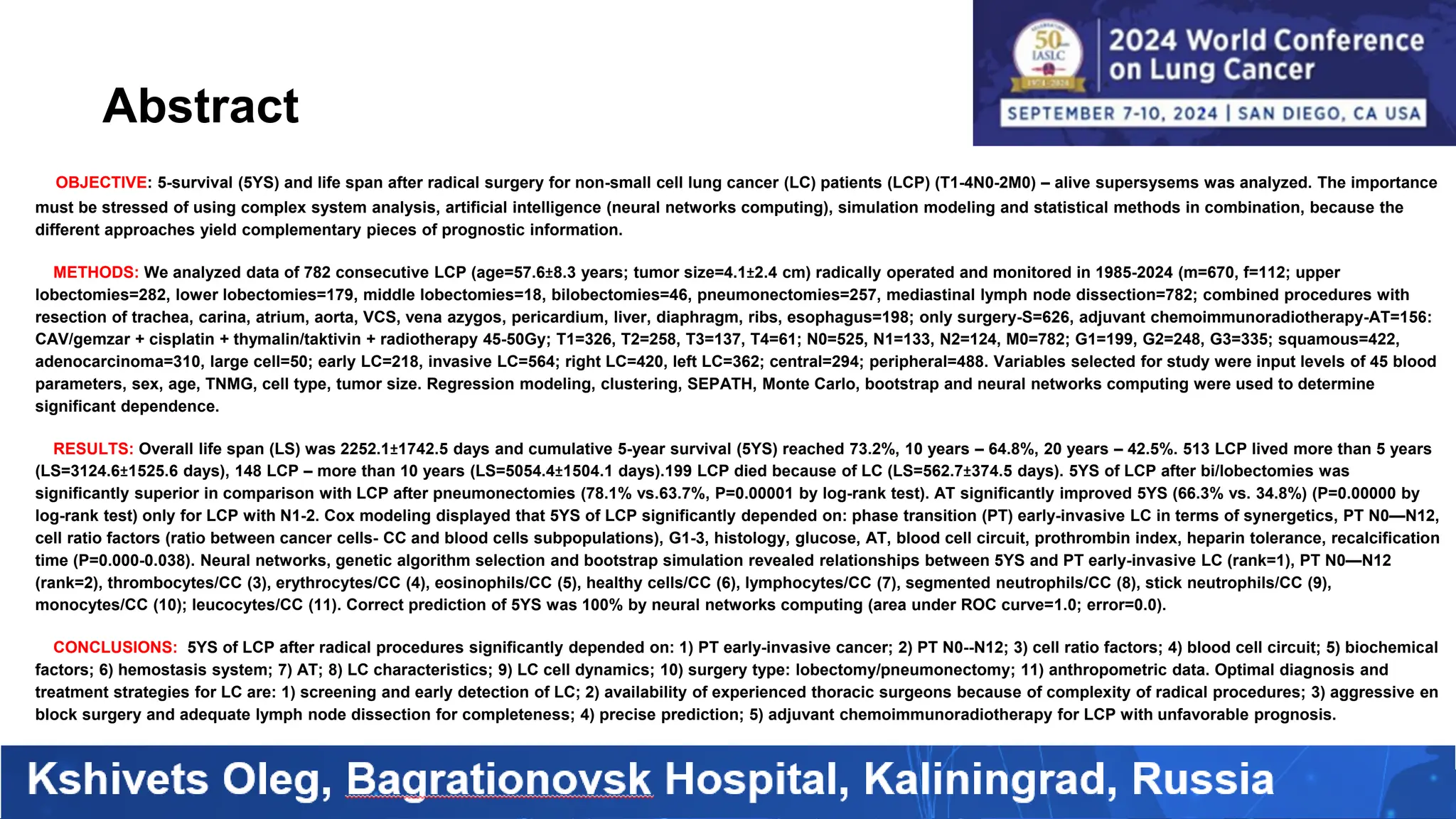
OBJECTIVE: 5-survival (5YS) and life span after radical surgery for non-small cell lung cancer (LC) patients (LCP) (T1-4N0-2M0) – alive supersysems was analyzed. The importance
must be stressed of using complex system analysis, artificial intelligence (neural networks computing), simulation modeling and statistical methods in combination, because the
different approaches yield complementary pieces of prognostic information.
METHODS: We analyzed data of 782 consecutive LCP (age=57.6±8.3 years; tumor size=4.1±2.4 cm) radically operated and monitored in 1985-2024 (m=670, f=112; upper
lobectomies=282, lower lobectomies=179, middle lobectomies=18, bilobectomies=46, pneumonectomies=257, mediastinal lymph node dissection=782; combined procedures with
resection of trachea, carina, atrium, aorta, VCS, vena azygos, pericardium, liver, diaphragm, ribs, esophagus=198; only surgery-S=626, adjuvant chemoimmunoradiotherapy-AT=156:
CAV/gemzar + cisplatin + thymalin/taktivin + radiotherapy 45-50Gy; T1=326, T2=258, T3=137, T4=61; N0=525, N1=133, N2=124, M0=782; G1=199, G2=248, G3=335; squamous=422,
adenocarcinoma=310, large cell=50; early LC=218, invasive LC=564; right LC=420, left LC=362; central=294; peripheral=488. Variables selected for study were input levels of 45 blood
parameters, sex, age, TNMG, cell type, tumor size. Regression modeling, clustering, SEPATH, Monte Carlo, bootstrap and neural networks computing were used to determine
significant dependence.
RESULTS: Overall life span (LS) was 2252.1±1742.5 days and cumulative 5-year survival (5YS) reached 73.2%, 10 years – 64.8%, 20 years – 42.5%. 513 LCP lived more than 5 years
(LS=3124.6±1525.6 days), 148 LCP – more than 10 years (LS=5054.4±1504.1 days).199 LCP died because of LC (LS=562.7±374.5 days). 5YS of LCP after bi/lobectomies was
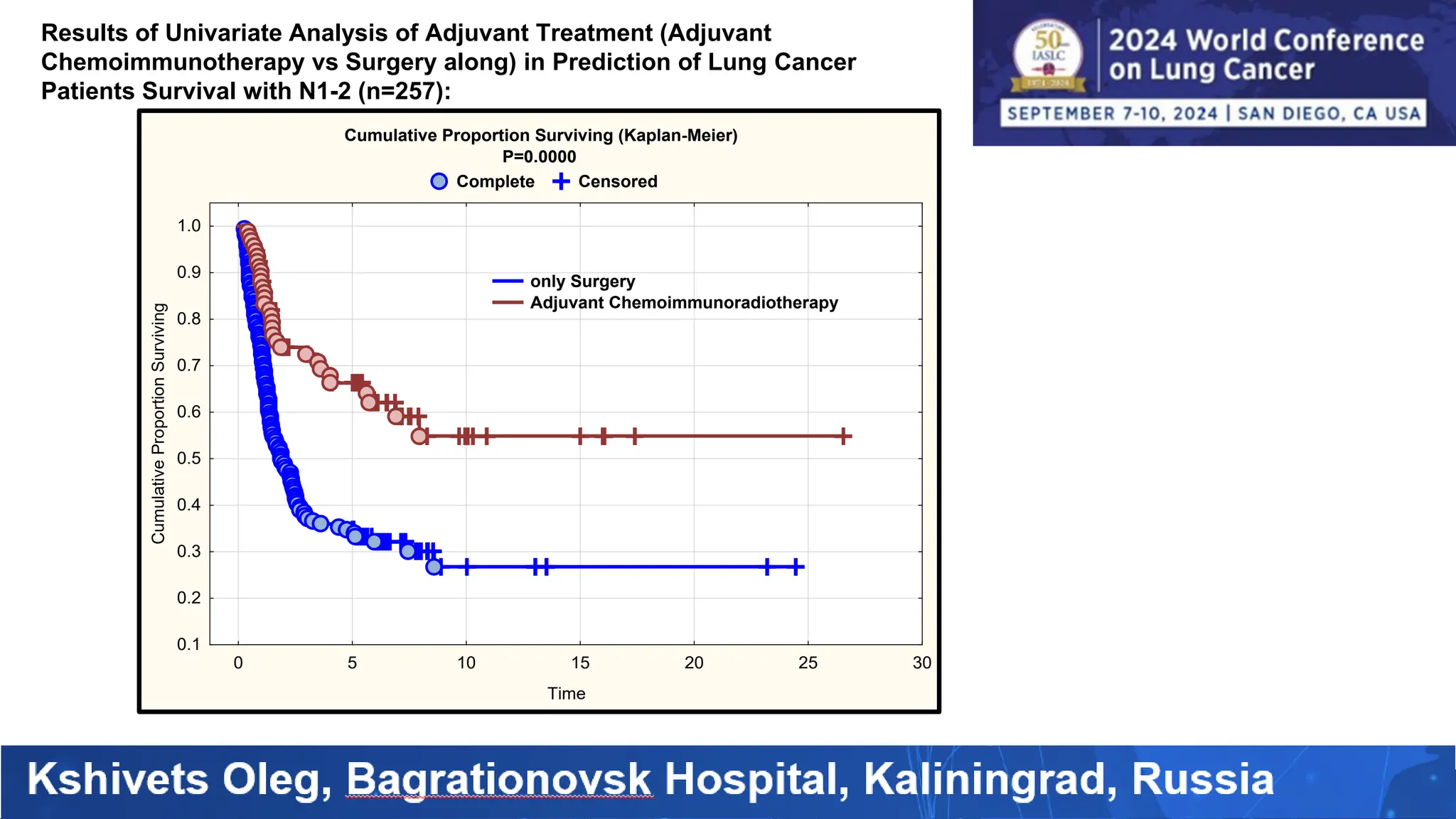
significantly superior in comparison with LCP after pneumonectomies (78.1% vs.63.7%, P=0.00001 by log-rank test). AT significantly improved 5YS (66.3% vs. 34.8%) (P=0.00000 by
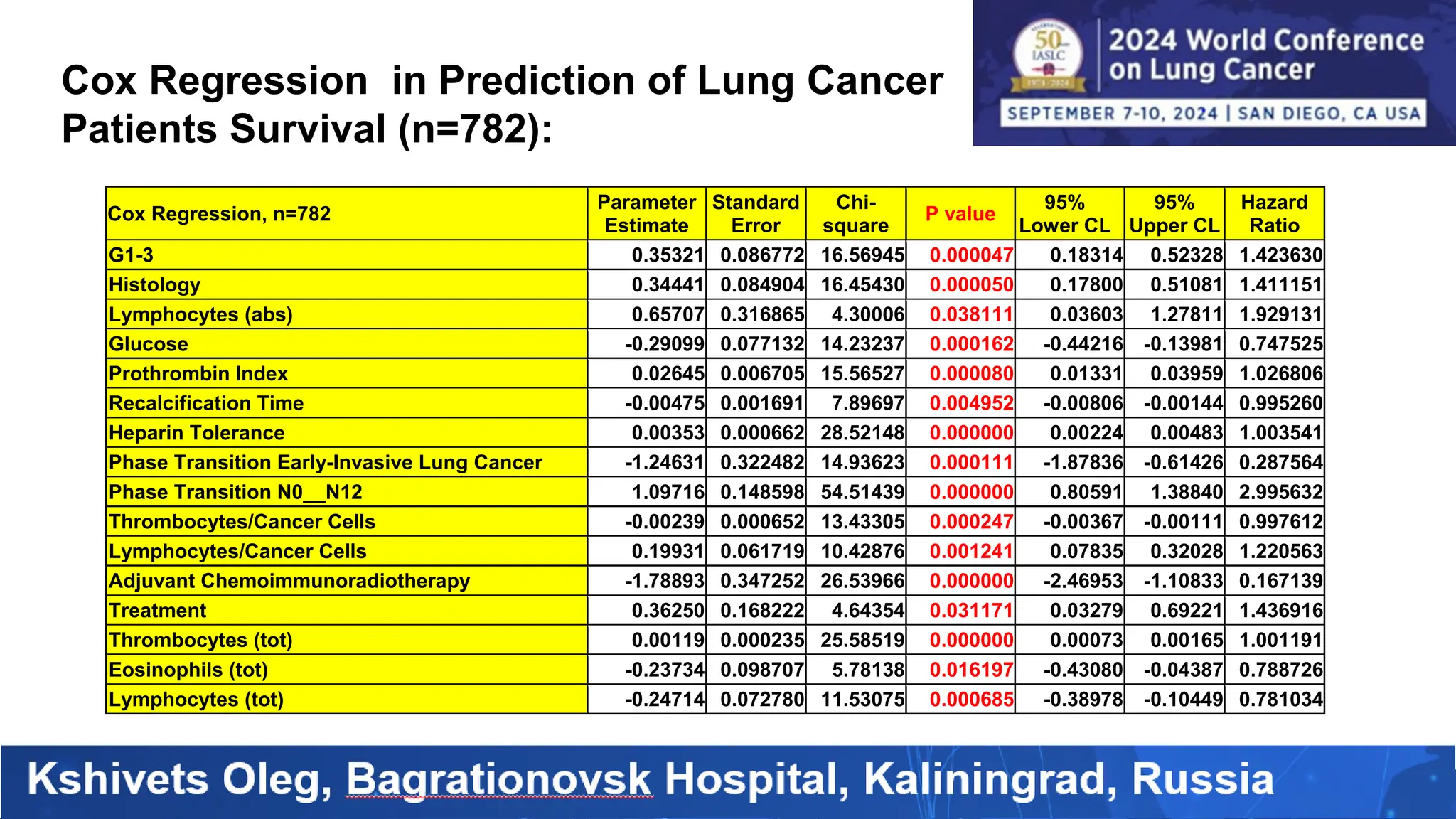
log-rank test) only for LCP with N1-2. Cox modeling displayed that 5YS of LCP significantly depended on: phase transition (PT) early-invasive LC in terms of synergetics, PT N0—N12,
cell ratio factors (ratio between cancer cells- CC and blood cells subpopulations), G1-3, histology, glucose, AT, blood cell circuit, prothrombin index, heparin tolerance, recalcification
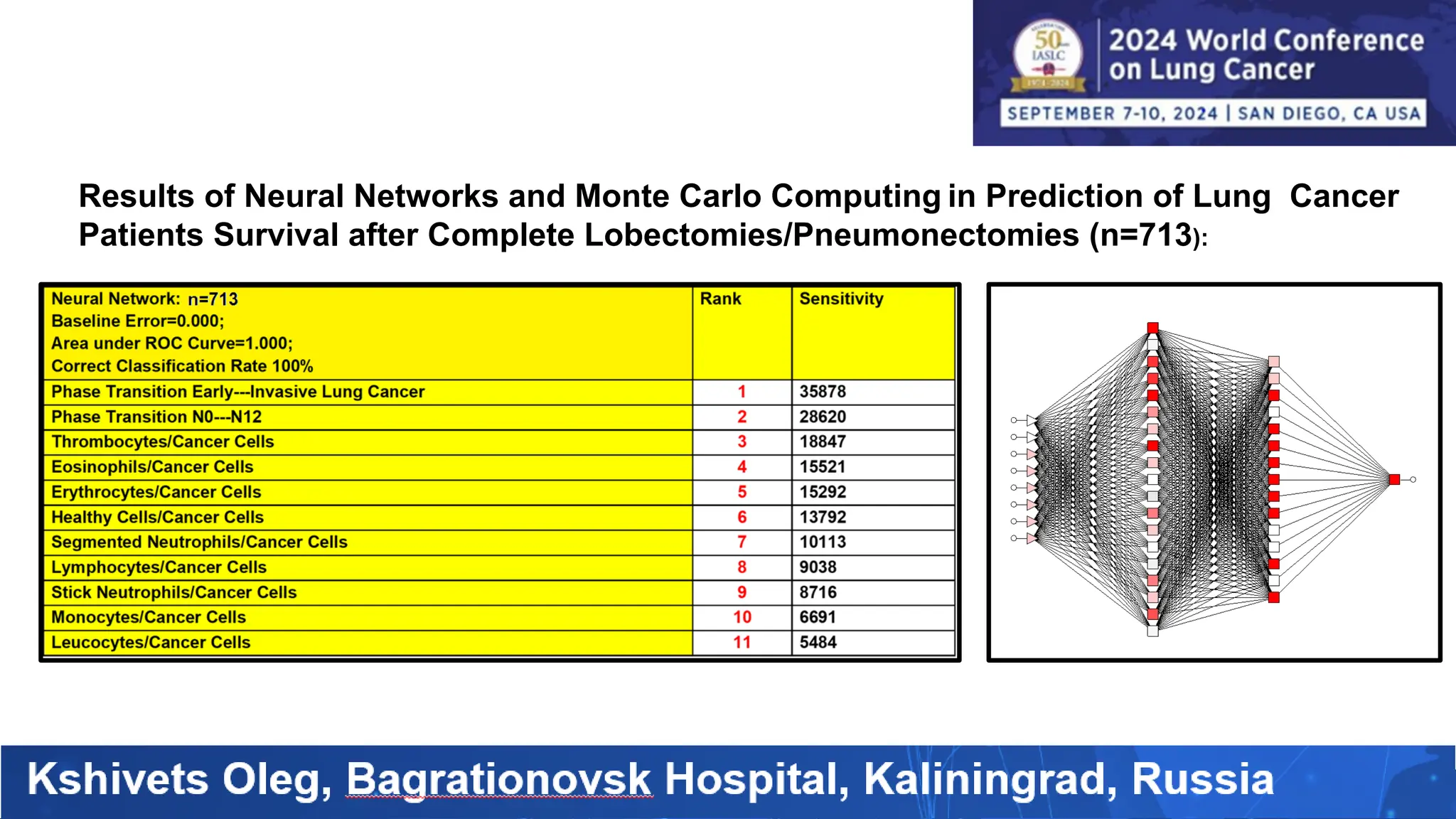
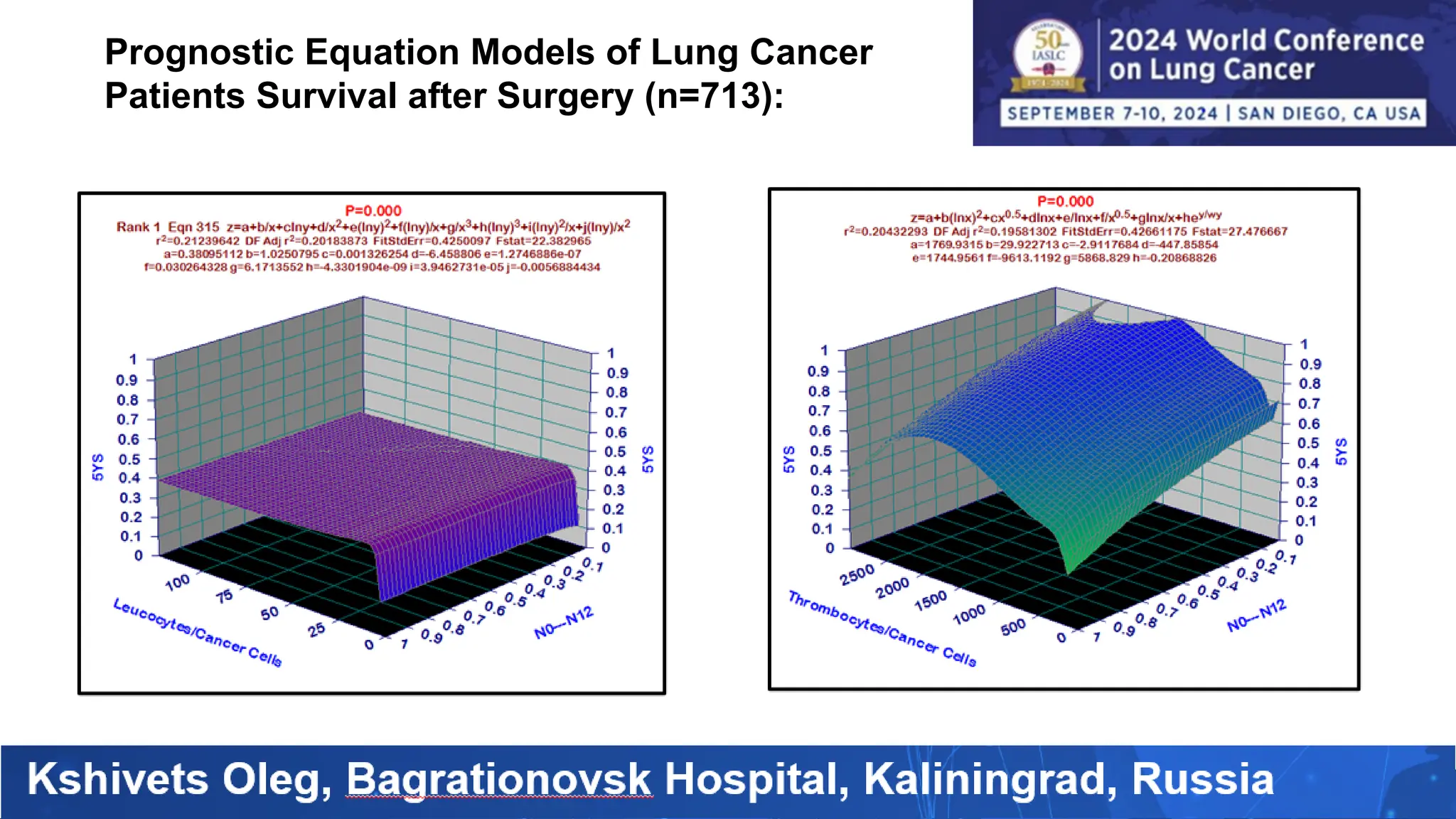
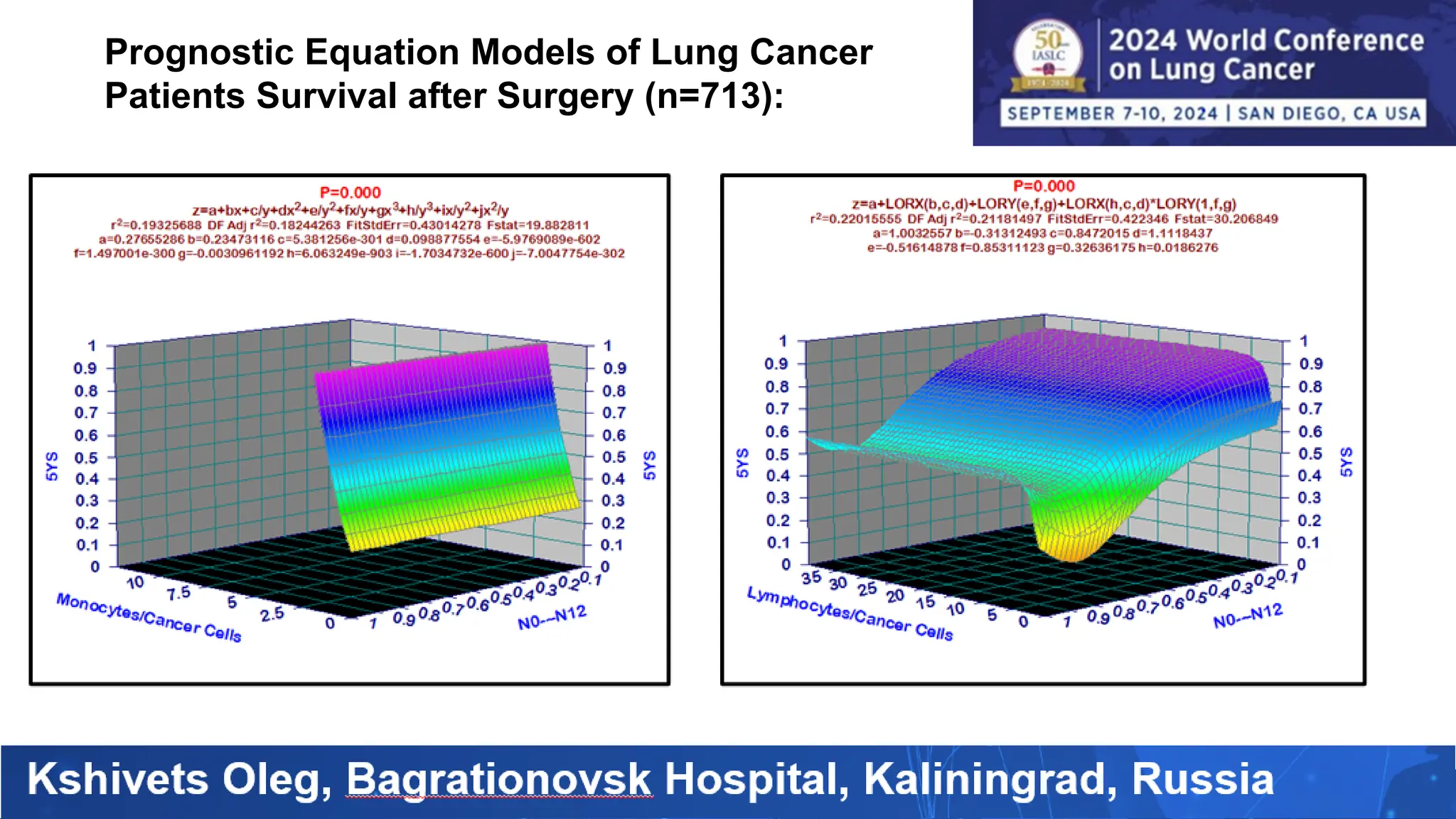
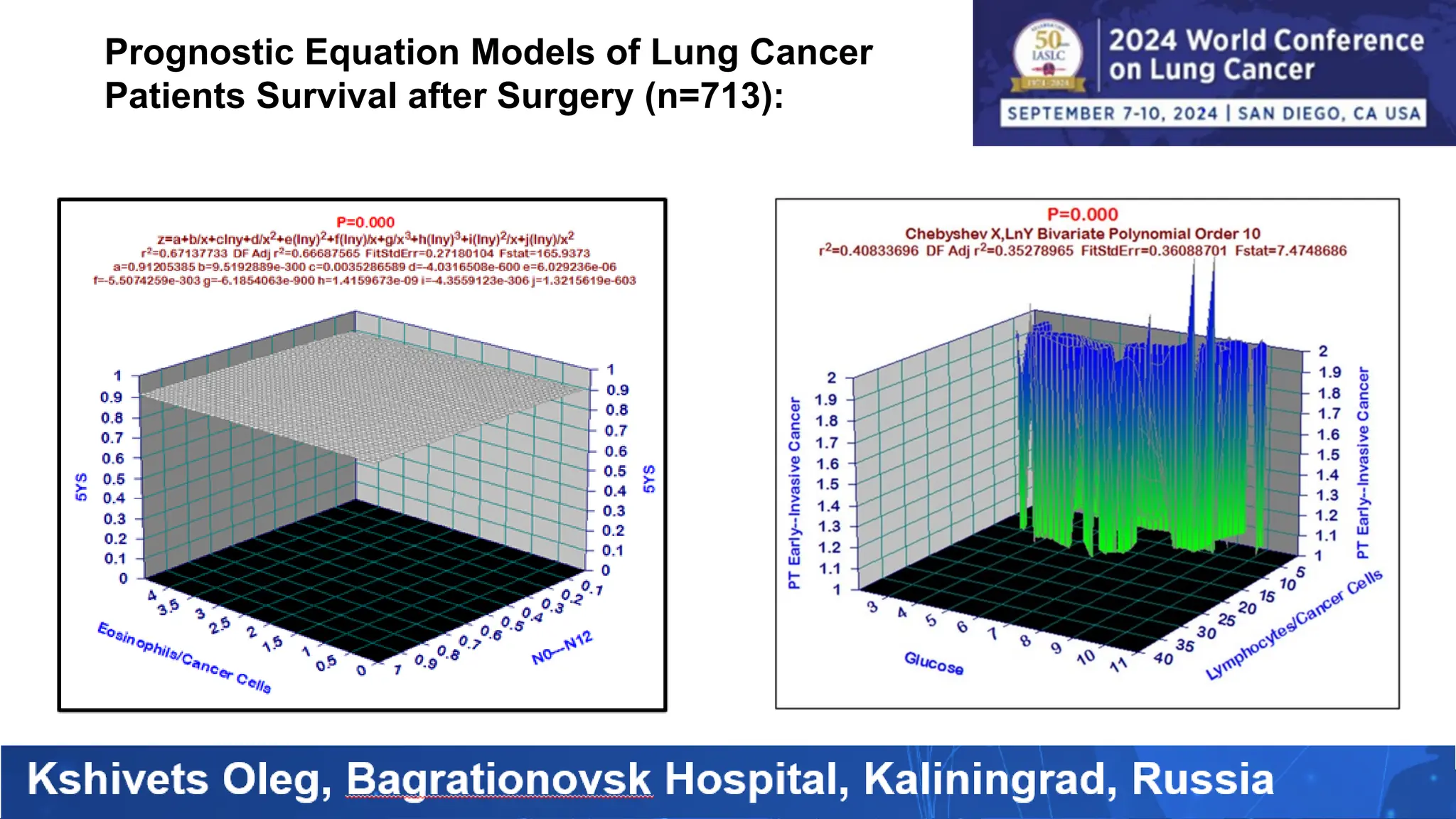
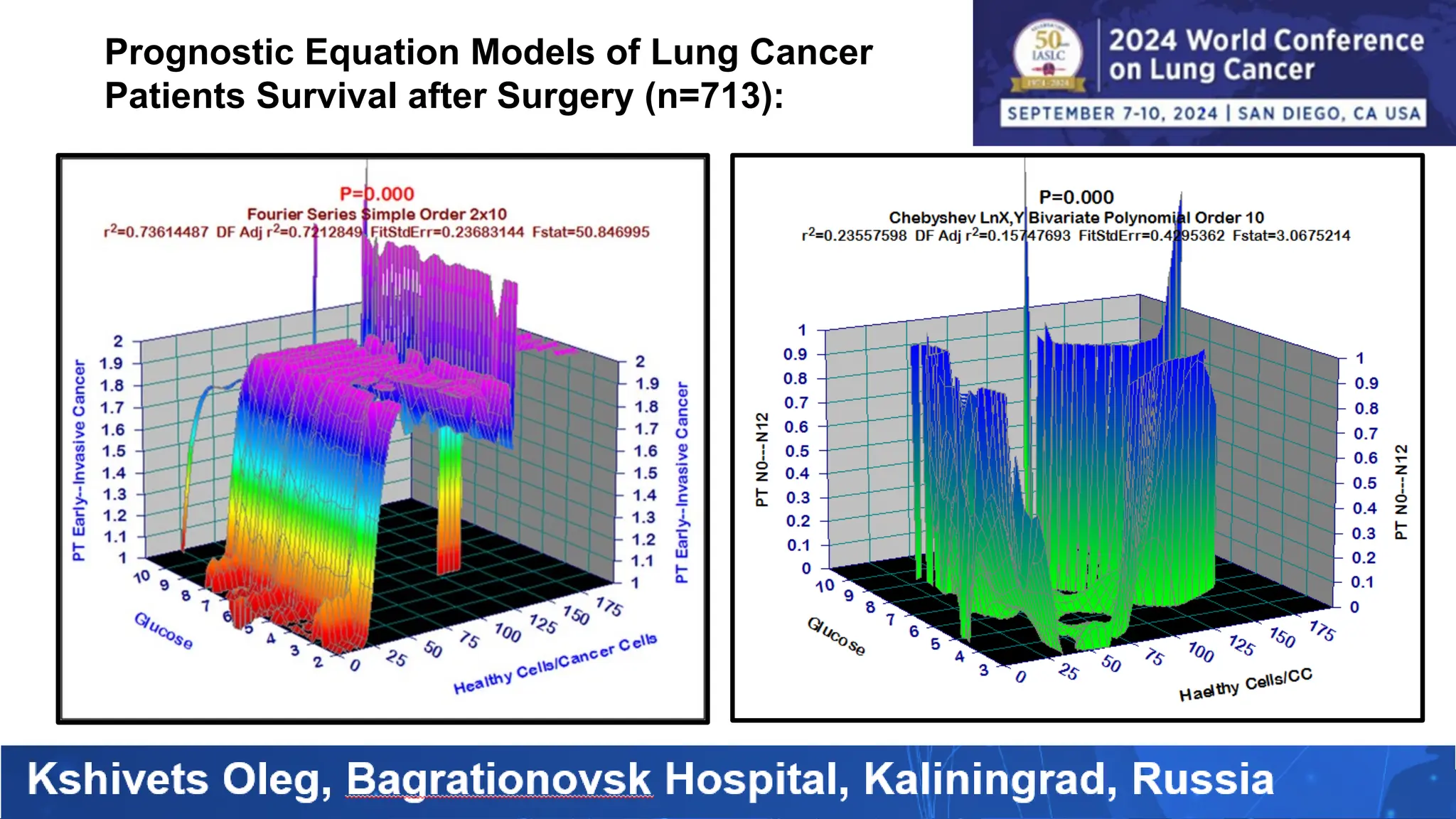
time (P=0.000-0.038). Neural networks, genetic algorithm selection and bootstrap simulation revealed relationships between 5YS and PT early-invasive LC (rank=1), PT N0—N12
(rank=2), thrombocytes/CC (3), erythrocytes/CC (4), eosinophils/CC (5), healthy cells/CC (6), lymphocytes/CC (7), segmented neutrophils/CC (8), stick neutrophils/CC (9),
monocytes/CC (10); leucocytes/CC (11). Correct prediction of 5YS was 100% by neural networks computing (area under ROC curve=1.0; error=0.0).
CONCLUSIONS: 5YS of LCP after radical procedures significantly depended on: 1) PT early-invasive cancer; 2) PT N0--N12; 3) cell ratio factors; 4) blood cell circuit; 5) biochemical
factors; 6) hemostasis system; 7) AT; 8) LC characteristics; 9) LC cell dynamics; 10) surgery type: lobectomy/pneumonectomy; 11) anthropometric data. Optimal diagnosis and
treatment strategies for LC are: 1) screening and early detection of LC; 2) availability of experienced thoracic surgeons because of complexity of radical procedures; 3) aggressive en
block surgery and adequate lymph node dissection for completeness; 4) precise prediction; 5) adjuvant chemoimmunoradiotherapy for LCP with unfavorable prognosis.
Abstract
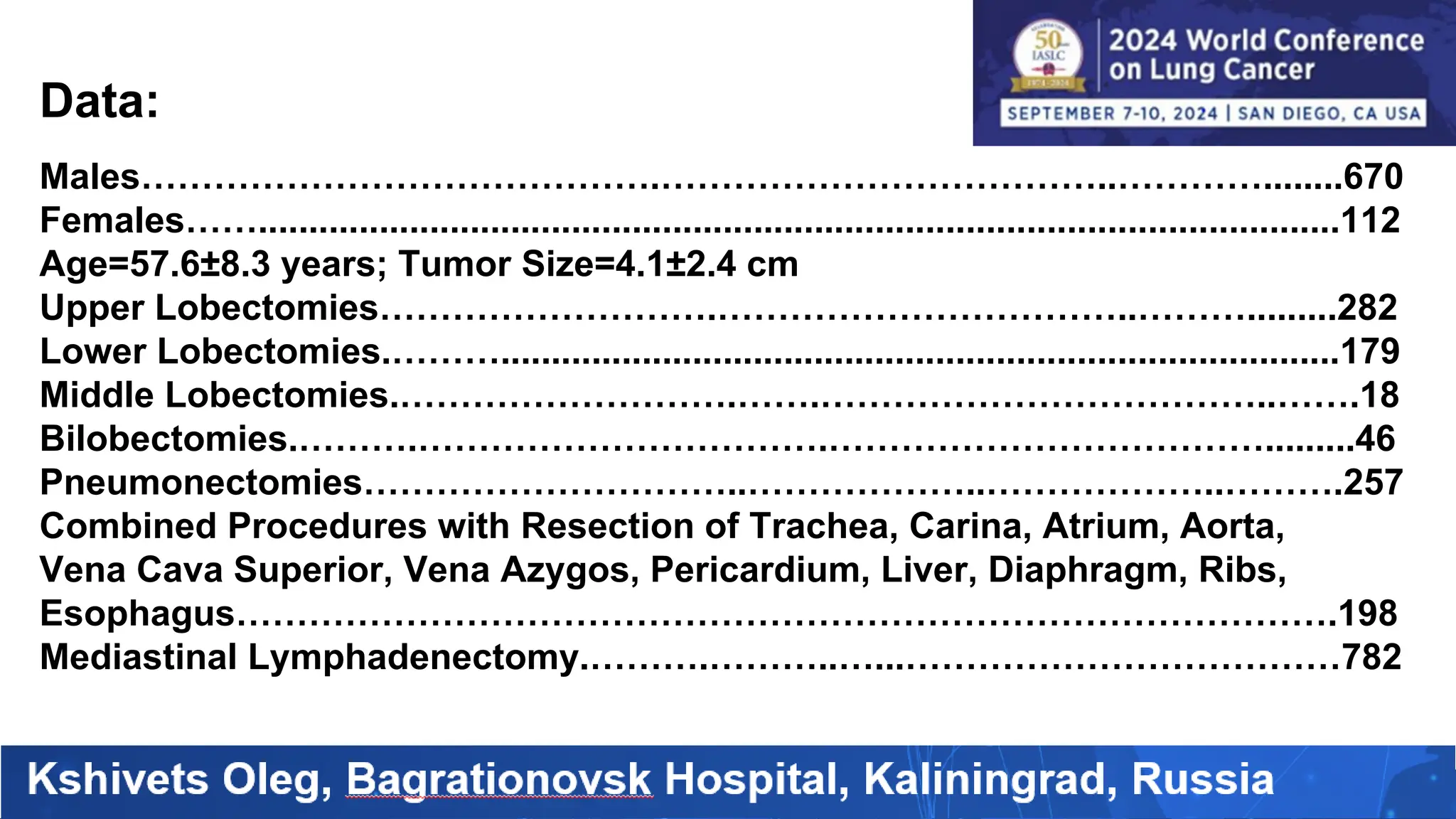
Data:
Males…………………………………….………………………………..…………........670
Females……...........................................................................................................112
Age=57.6±8.3 years; Tumor Size=4.1±2.4 cm
Upper Lobectomies……………………….……………………………..……….........282
Lower Lobectomies.………...................................................................................179
Middle Lobectomies.……………………….…….………………………………..…….18
Bilobectomies.……….…………………………….……………………………….........46
Pneumonectomies…………………………..………………..………………..……….257
Combined Procedures with Resection of Trachea, Carina, Atrium, Aorta,
Vena Cava Superior, Vena Azygos, Pericardium, Liver, Diaphragm, Ribs,
Esophagus……………………………………………………………………………….198
Mediastinal Lymphadenectomy.……….………..…...………………………………782
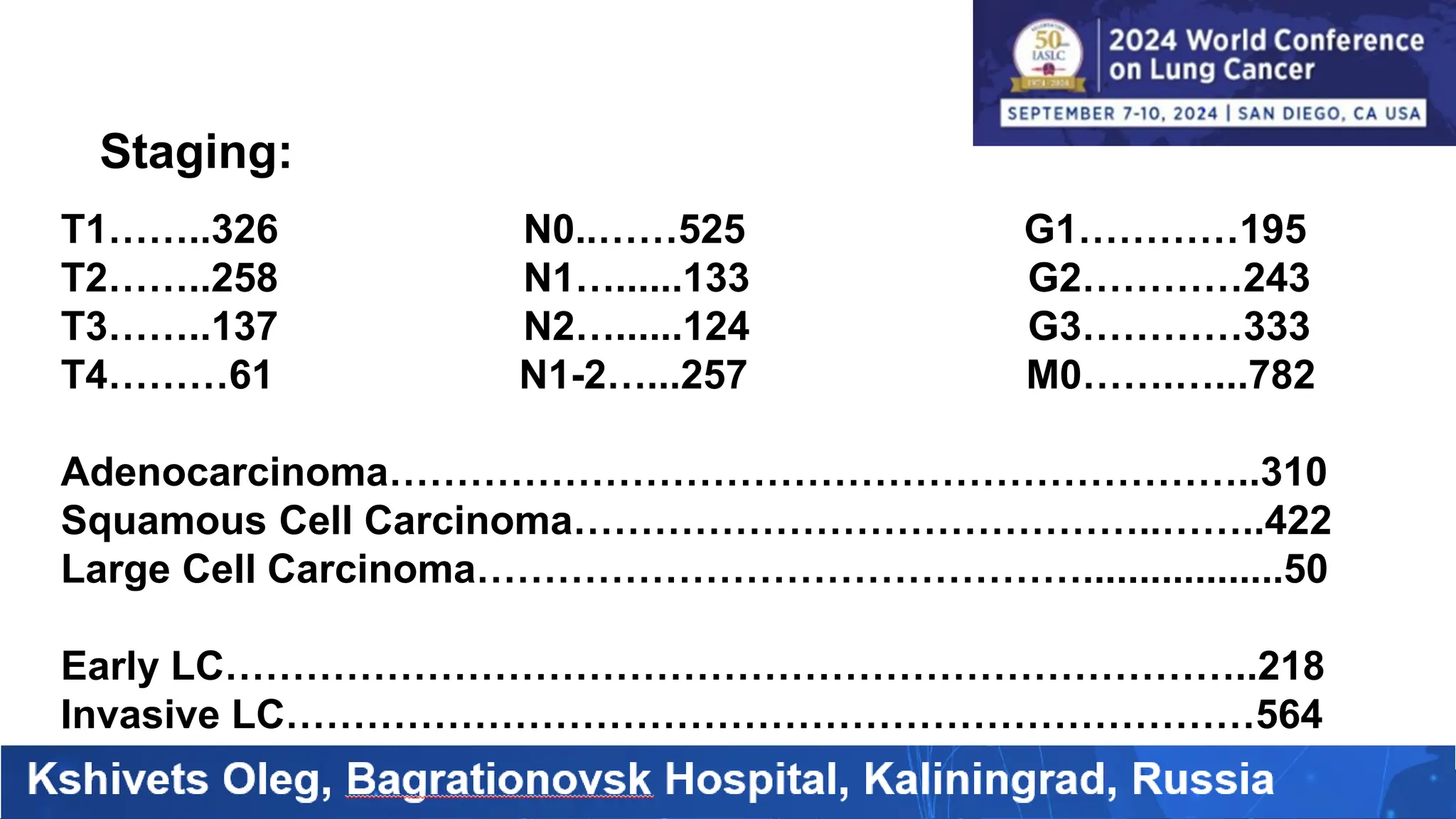
T1……..326 N0..……525 G1…………195
T2……..258 N1…......133 G2…………243
T3……..137 N2…......124 G3…………333
T4………61 N1-2…...257 M0…….…...782
Adenocarcinoma………………………………………………………..310
Squamous Cell Carcinoma……………………………………..……..422
Large Cell Carcinoma………………………………………..................50
Early LC…………………………………………………………………..218
Invasive LC………………………………………………………………564
Staging:
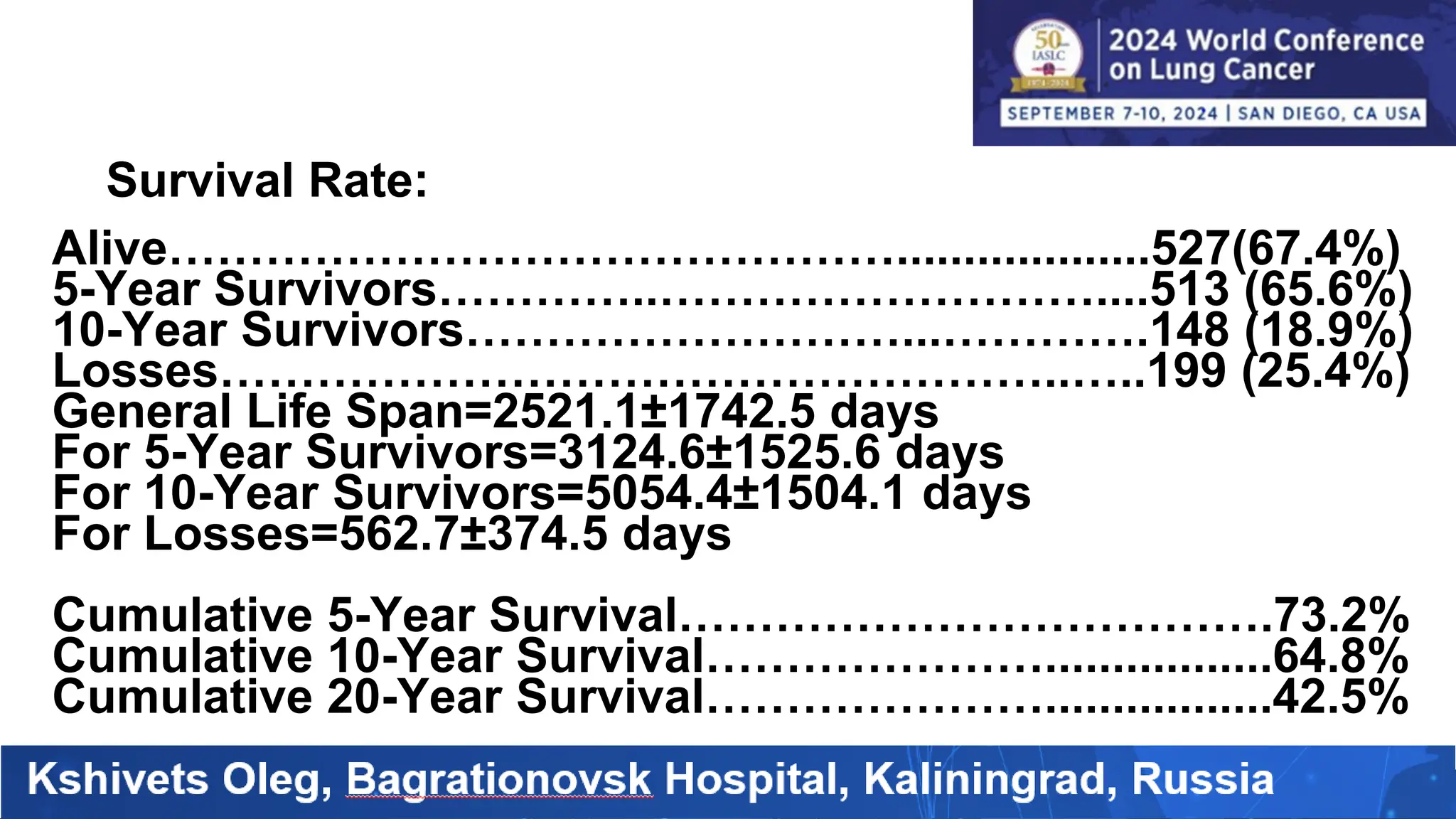
Alive………………………………………...................527(67.4%)
5-Year Survivors…………..………………………....513 (65.6%)
10-Year Survivors………………………...………….148 (18.9%)
Losses……………………………………………..…..199 (25.4%)
General Life Span=2521.1±1742.5 days
For 5-Year Survivors=3124.6±1525.6 days
For 10-Year Survivors=5054.4±1504.1 days
For Losses=562.7±374.5 days
Cumulative 5-Year Survival……………………………….73.2%
Cumulative 10-Year Survival………………….................64.8%
Cumulative 20-Year Survival………………….................42.5%
Survival Rate:
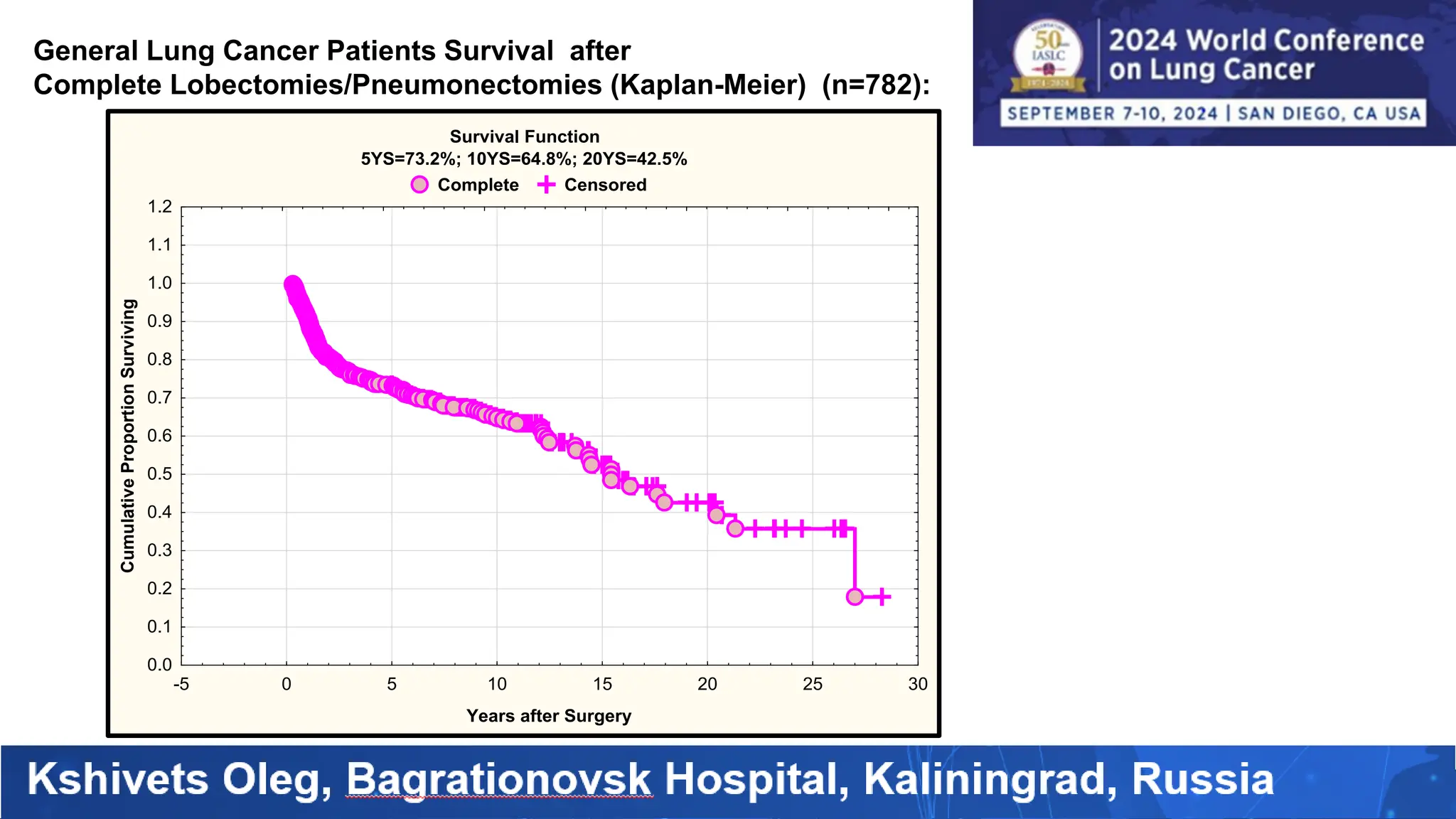
General Lung Cancer Patients Survival after
Complete Lobectomies/Pneumonectomies (Kaplan-Meier) (n=782):
Survival Function
5YS=73.2%; 10YS=64.8%; 20YS=42.5%
Complete Censored
-5 0 5 10 15 20 25 30
Years after Surgery
0.0
0.1
0.2
0.3
0.4
0.5
0.6
0.7
0.8
0.9
1.0
1.1
1.2
Cumulative
Proportion
Surviving
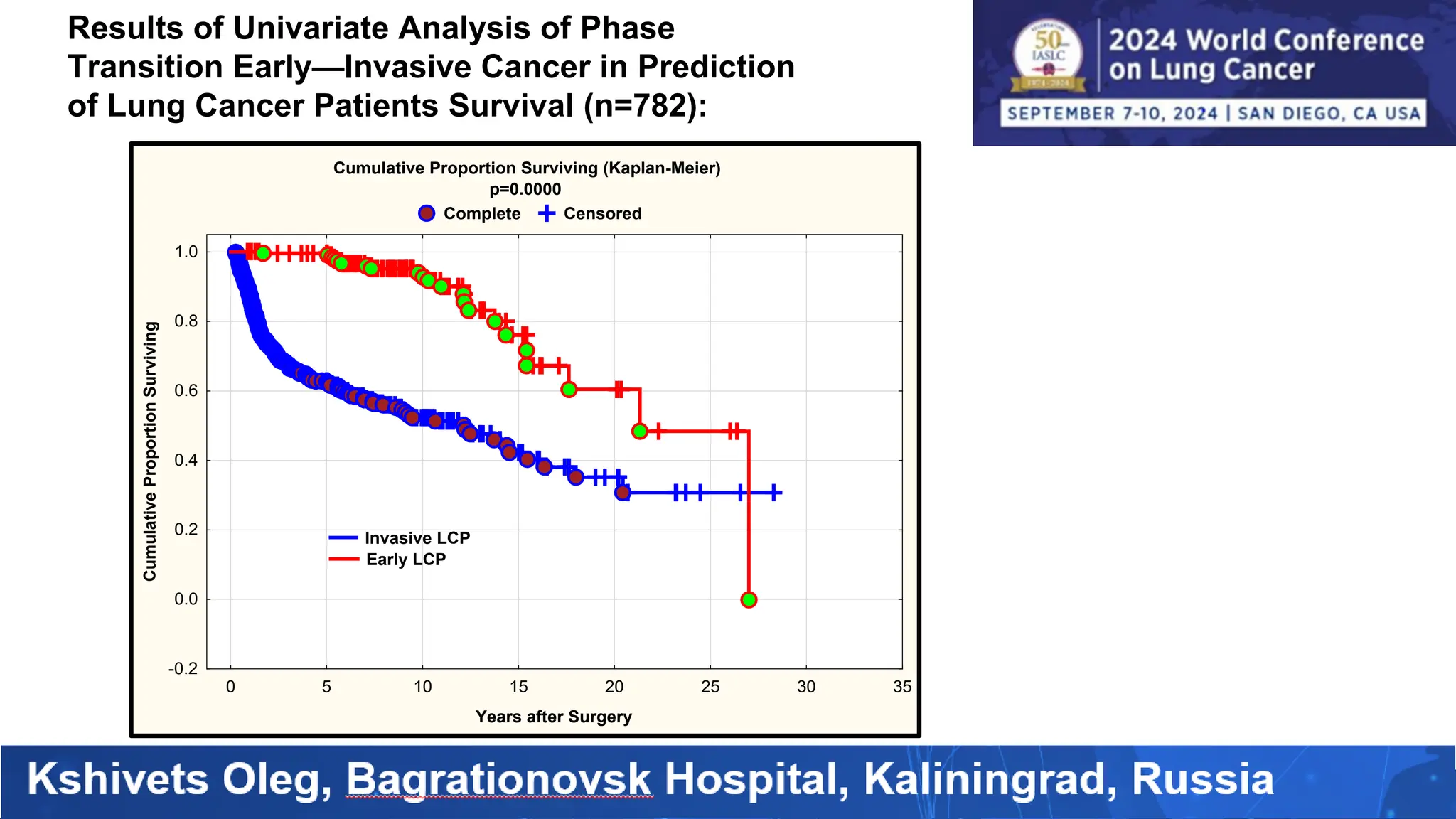
Cumulative Proportion Surviving (Kaplan-Meier)
p=0.0000
Complete Censored
0 5 10 15 20 25 30 35
Years after Surgery
-0.2
0.0
0.2
0.4
0.6
0.8
1.0
Cumulative
Proportion
Surviving
Invasive LCP
Early LCP
Results of Univariate Analysis of Phase
Transition Early—Invasive Cancer in Prediction
of Lung Cancer Patients Survival (n=782):
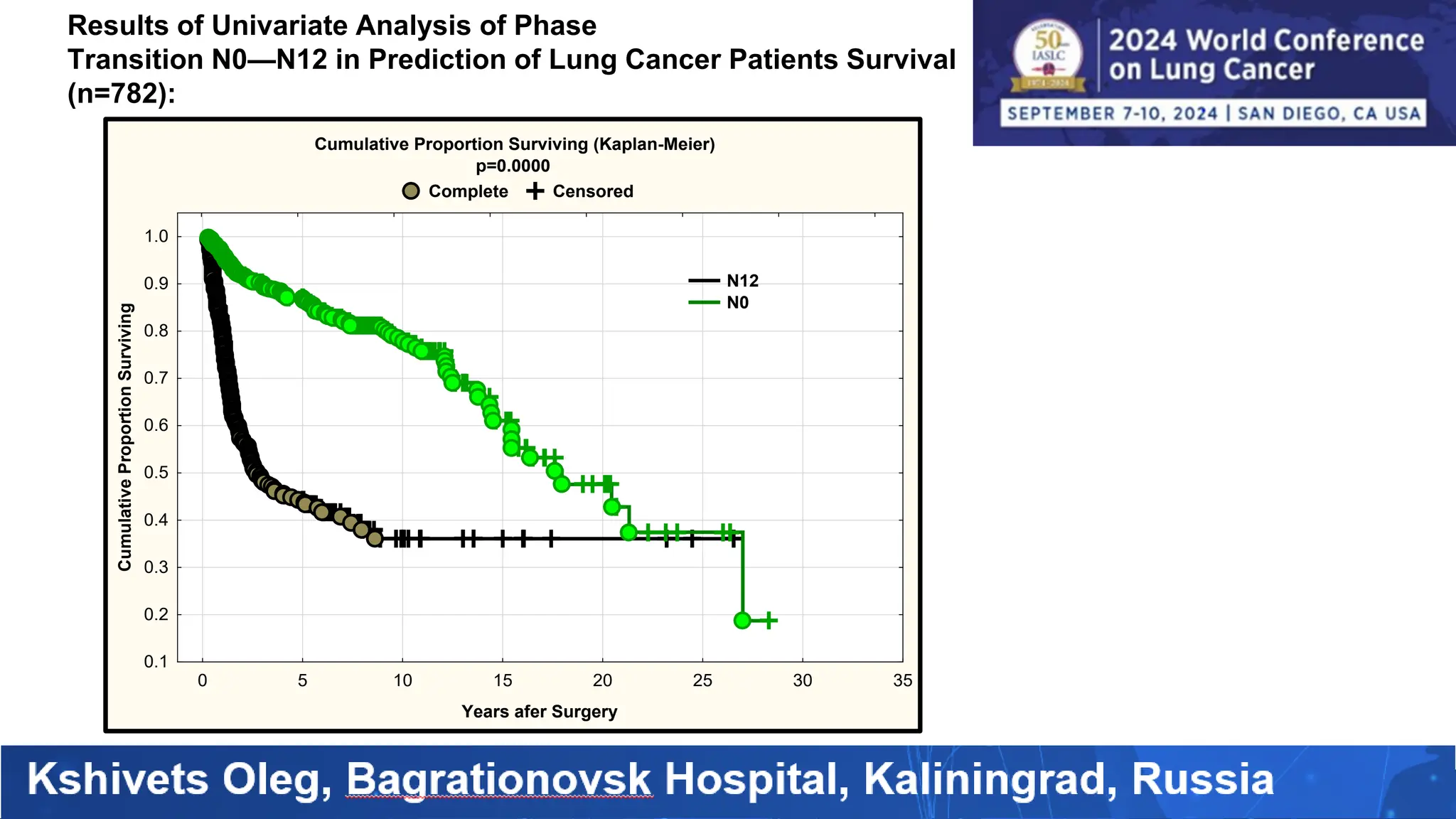
Results of Univariate Analysis of Phase
Transition N0—N12 in Prediction of Lung Cancer Patients Survival
(n=782):
Cumulative Proportion Surviving (Kaplan-Meier)
p=0.0000
Complete Censored
0 5 10 15 20 25 30 35
Years afer Surgery
0.1
0.2
0.3
0.4
0.5
0.6
0.7
0.8
0.9
1.0
Cumulative
Proportion
Surviving
N12
N0
Results of Univariate Analysis of Adjuvant Treatment (Adjuvant
Chemoimmunotherapy vs Surgery along) in Prediction of Lung Cancer
Patients Survival with N1-2 (n=257):
Cumulative Proportion Surviving (Kaplan-Meier)
P=0.0000
Complete Censored
0 5 10 15 20 25 30
Time
0.1
0.2
0.3
0.4
0.5
0.6
0.7
0.8
0.9
1.0
Cumulative
Proportion
Surviving
only Surgery
Adjuvant Chemoimmunoradiotherapy
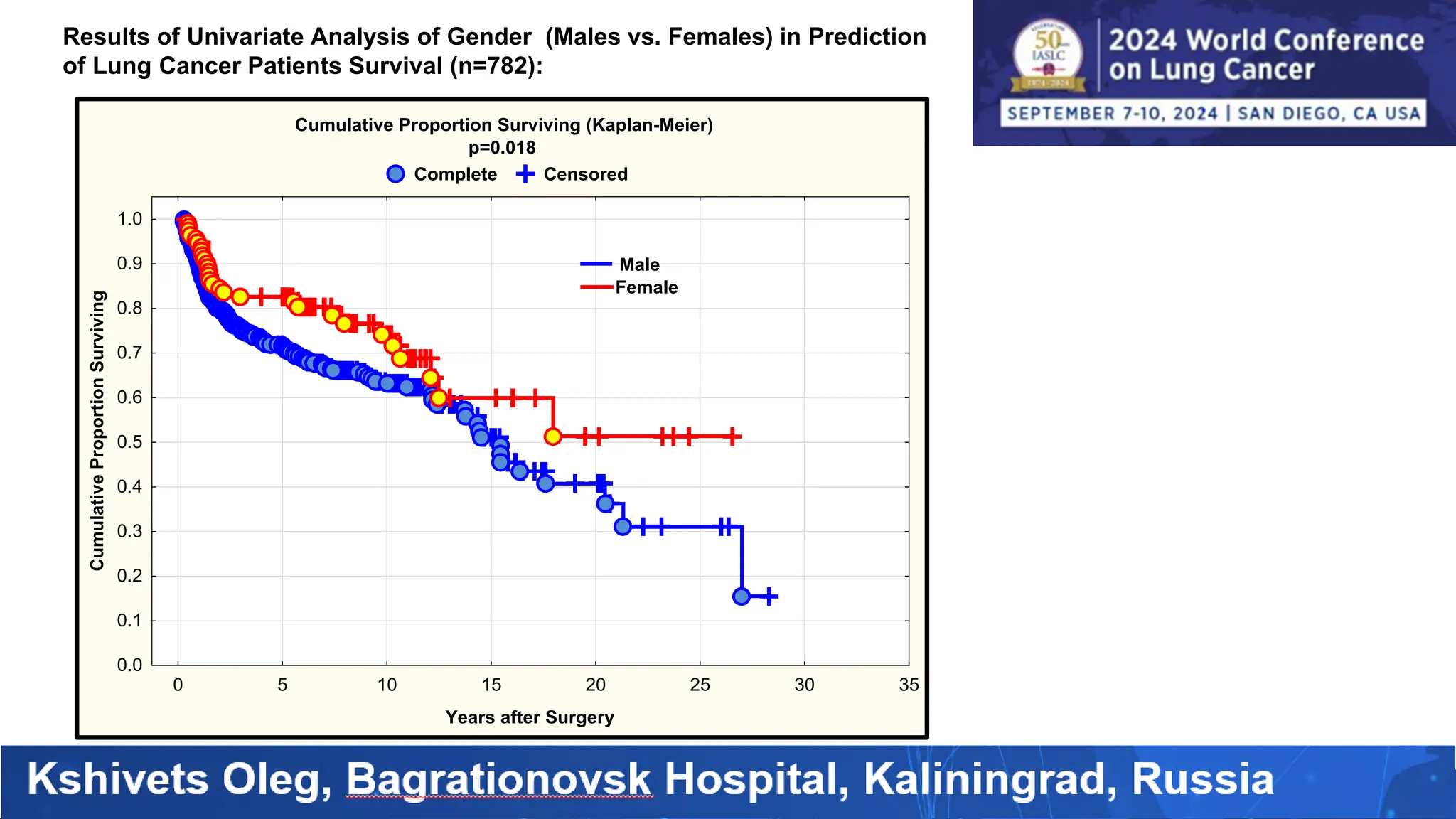
Results of Univariate Analysis of Gender (Males vs. Females) in Prediction
of Lung Cancer Patients Survival (n=782):
Cumulative Proportion Surviving (Kaplan-Meier)
p=0.018
Complete Censored
0 5 10 15 20 25 30 35
Years after Surgery
0.0
0.1
0.2
0.3
0.4
0.5
0.6
0.7
0.8
0.9
1.0
Cumulative
Proportion
Surviving
Male
Female
Cox Regression, n=782
Parameter
Estimate
Standard
Error
Chi-
square
P value
95%
Lower CL
95%
Upper CL
Hazard
Ratio
G1-3 0.35321 0.086772 16.56945 0.000047 0.18314 0.52328 1.423630
Histology 0.34441 0.084904 16.45430 0.000050 0.17800 0.51081 1.411151
Lymphocytes (abs) 0.65707 0.316865 4.30006 0.038111 0.03603 1.27811 1.929131
Glucose -0.29099 0.077132 14.23237 0.000162 -0.44216 -0.13981 0.747525
Prothrombin Index 0.02645 0.006705 15.56527 0.000080 0.01331 0.03959 1.026806
Recalcification Time -0.00475 0.001691 7.89697 0.004952 -0.00806 -0.00144 0.995260
Heparin Tolerance 0.00353 0.000662 28.52148 0.000000 0.00224 0.00483 1.003541
Phase Transition Early-Invasive Lung Cancer -1.24631 0.322482 14.93623 0.000111 -1.87836 -0.61426 0.287564
Phase Transition N0__N12 1.09716 0.148598 54.51439 0.000000 0.80591 1.38840 2.995632
Thrombocytes/Cancer Cells -0.00239 0.000652 13.43305 0.000247 -0.00367 -0.00111 0.997612
Lymphocytes/Cancer Cells 0.19931 0.061719 10.42876 0.001241 0.07835 0.32028 1.220563
Adjuvant Chemoimmunoradiotherapy -1.78893 0.347252 26.53966 0.000000 -2.46953 -1.10833 0.167139
Treatment 0.36250 0.168222 4.64354 0.031171 0.03279 0.69221 1.436916
Thrombocytes (tot) 0.00119 0.000235 25.58519 0.000000 0.00073 0.00165 1.001191
Eosinophils (tot) -0.23734 0.098707 5.78138 0.016197 -0.43080 -0.04387 0.788726
Lymphocytes (tot) -0.24714 0.072780 11.53075 0.000685 -0.38978 -0.10449 0.781034
Cox Regression in Prediction of Lung Cancer
Patients Survival (n=782):
Results of Neural Networks and Monte Carlo Computing in Prediction of Lung Cancer
Patients Survival after Complete Lobectomies/Pneumonectomies (n=713):
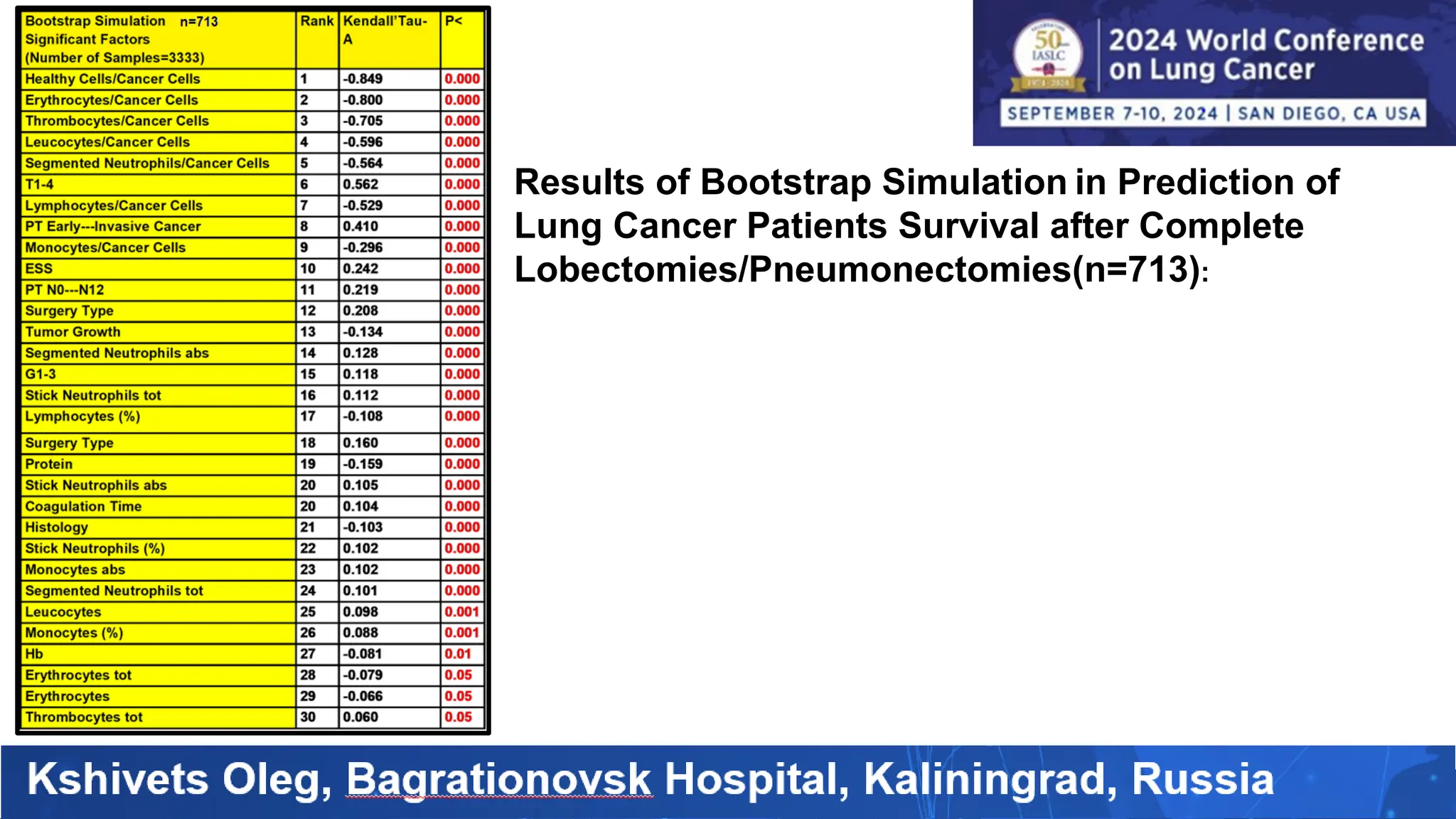
Results of Bootstrap Simulation in Prediction of
Lung Cancer Patients Survival after Complete
Lobectomies/Pneumonectomies(n=713):
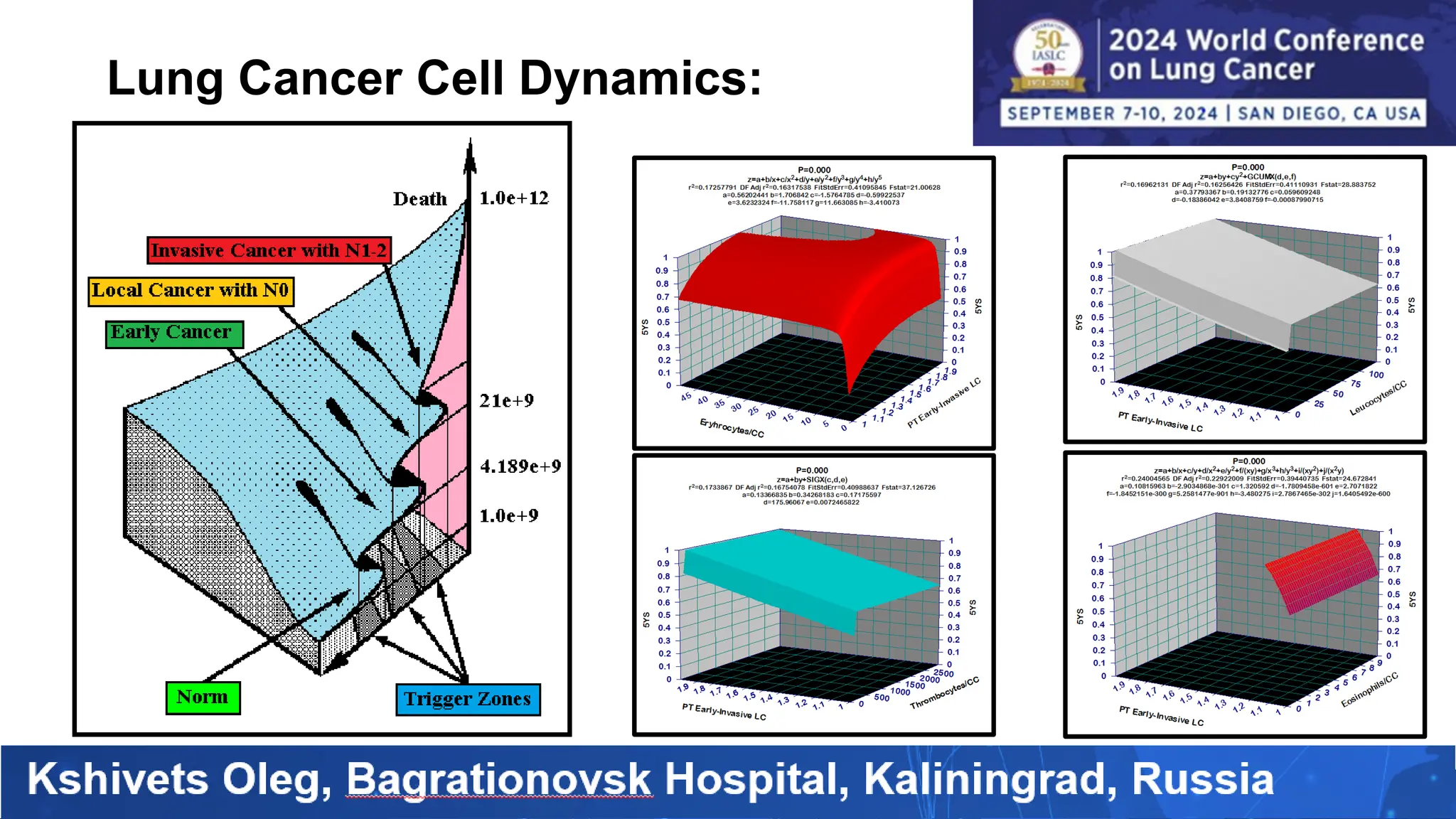
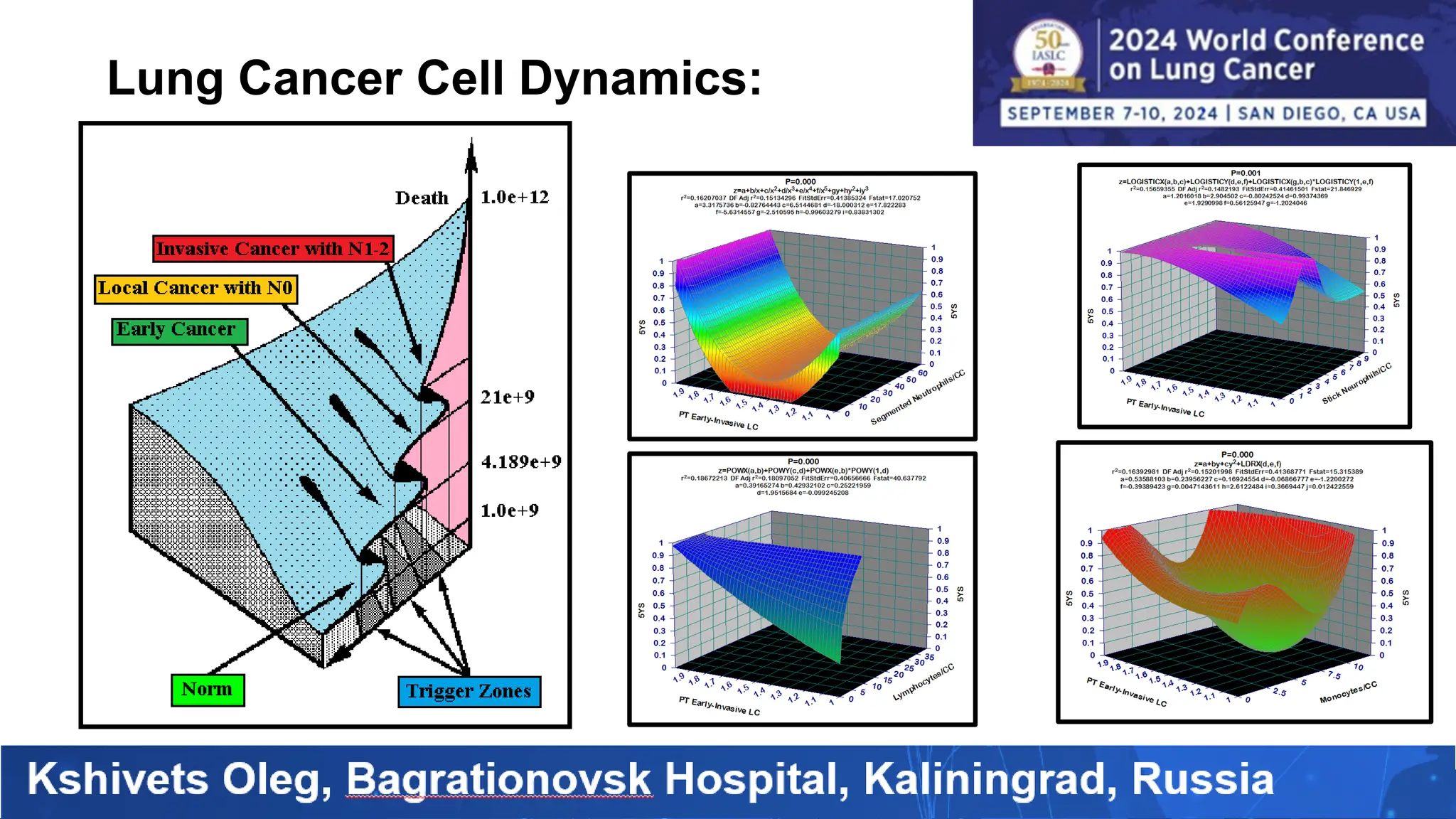
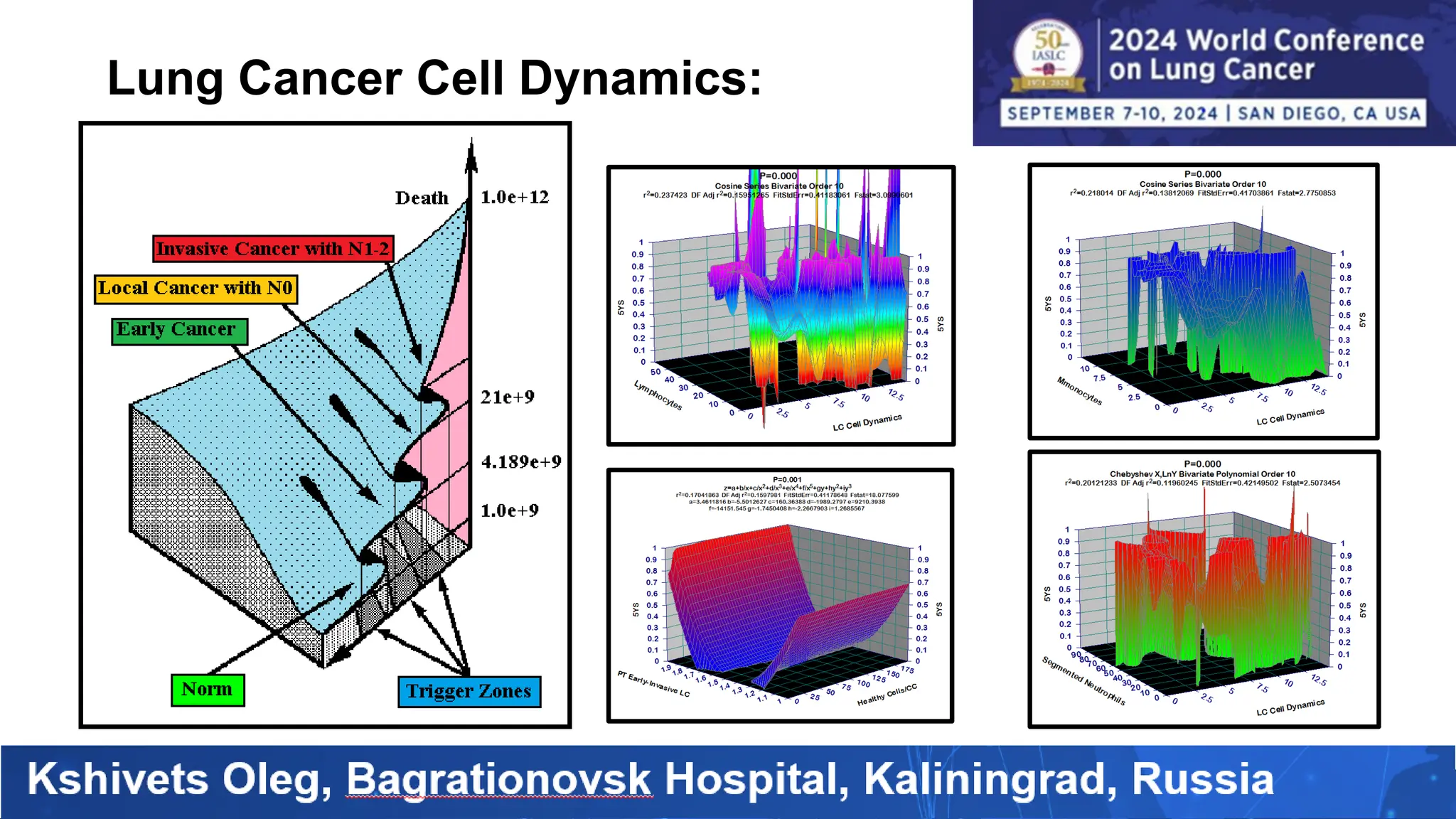
Lung Cancer Cell Dynamics:
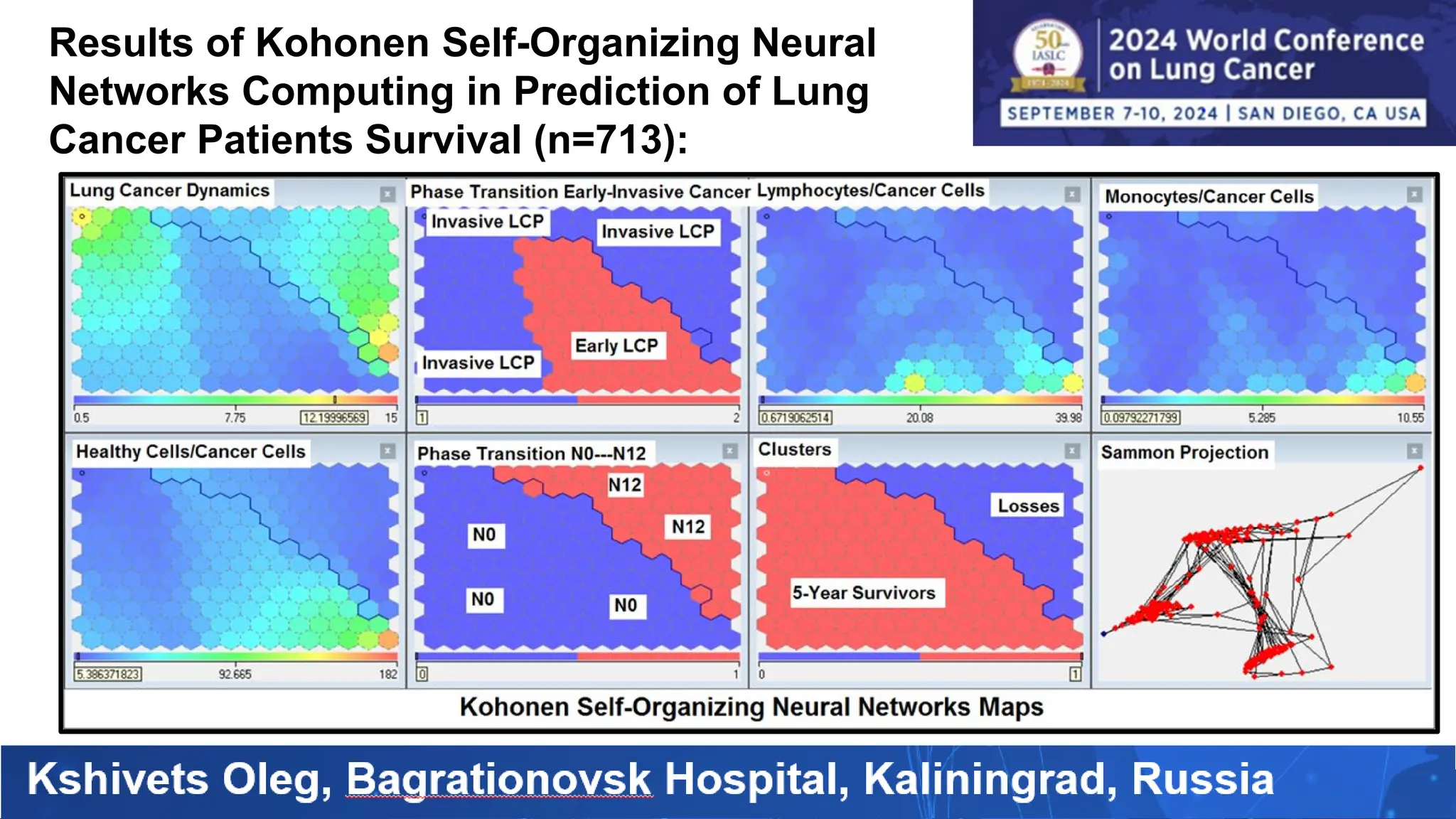
Results of Kohonen Self-Organizing Neural
Networks Computing in Prediction of Lung
Cancer Patients Survival (n=713):
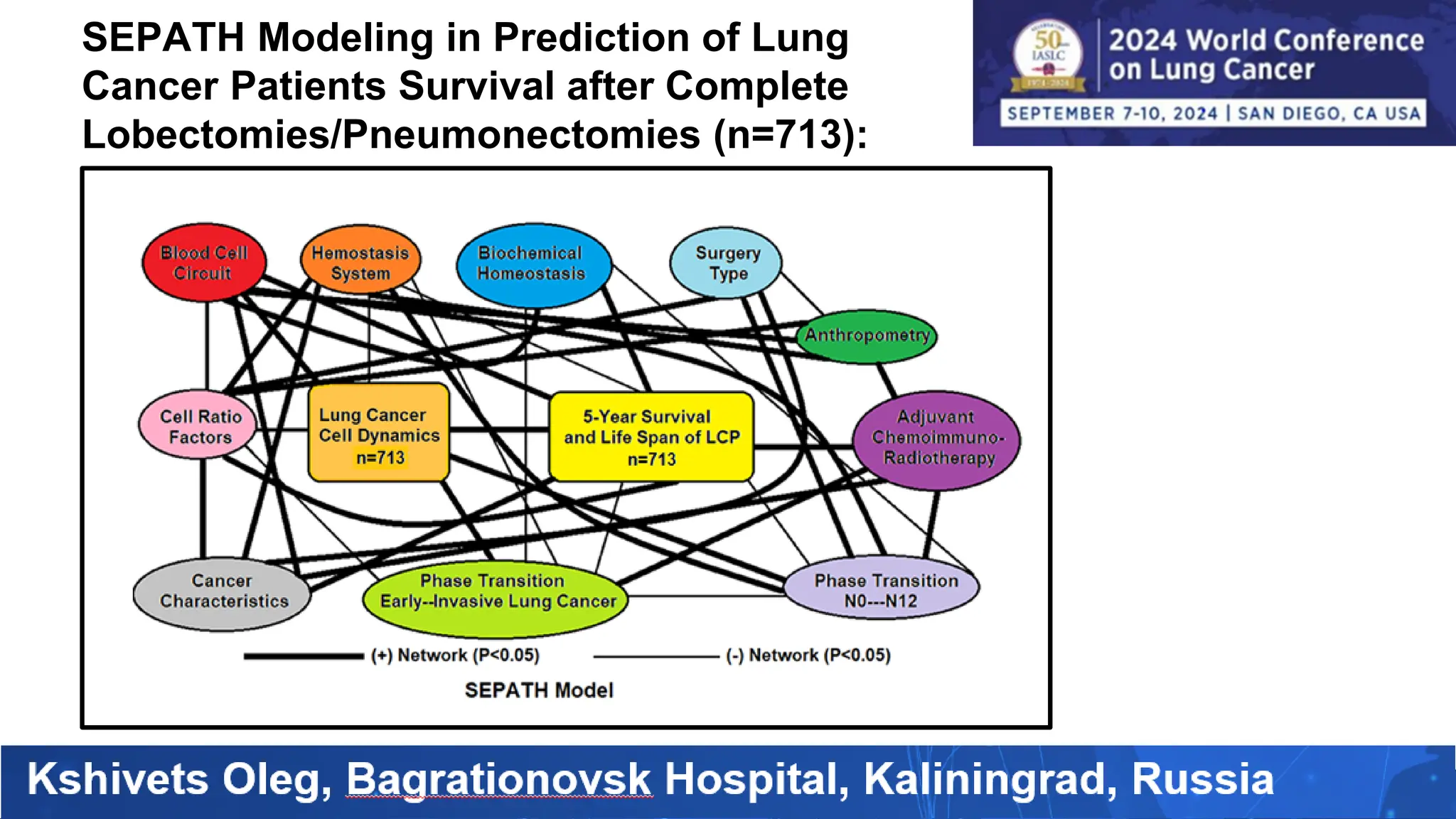
SEPATH Modeling in Prediction of Lung
Cancer Patients Survival after Complete
Lobectomies/Pneumonectomies (n=713):
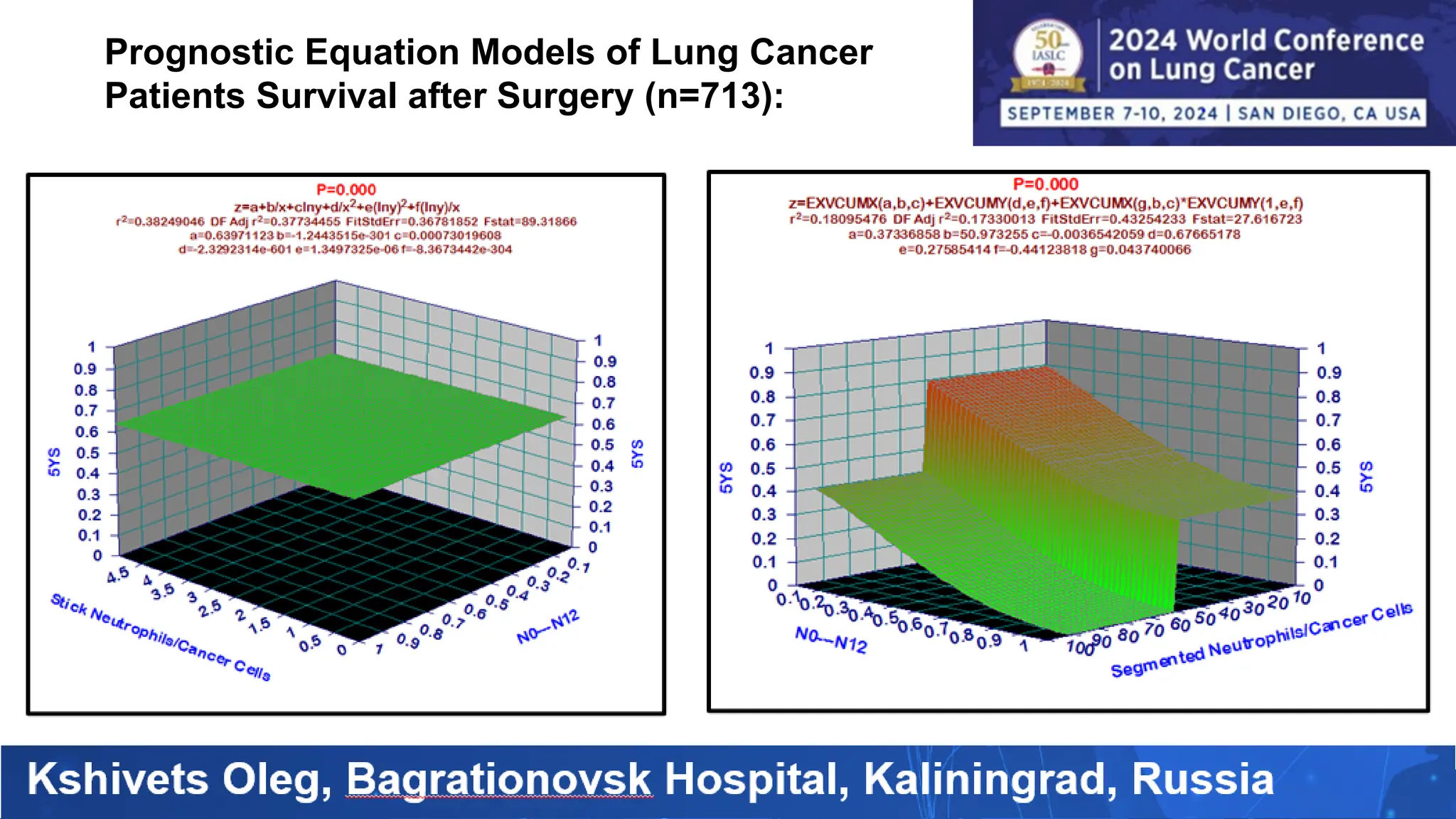
Prognostic Equation Models of Lung Cancer
Patients Survival after Surgery (n=713):
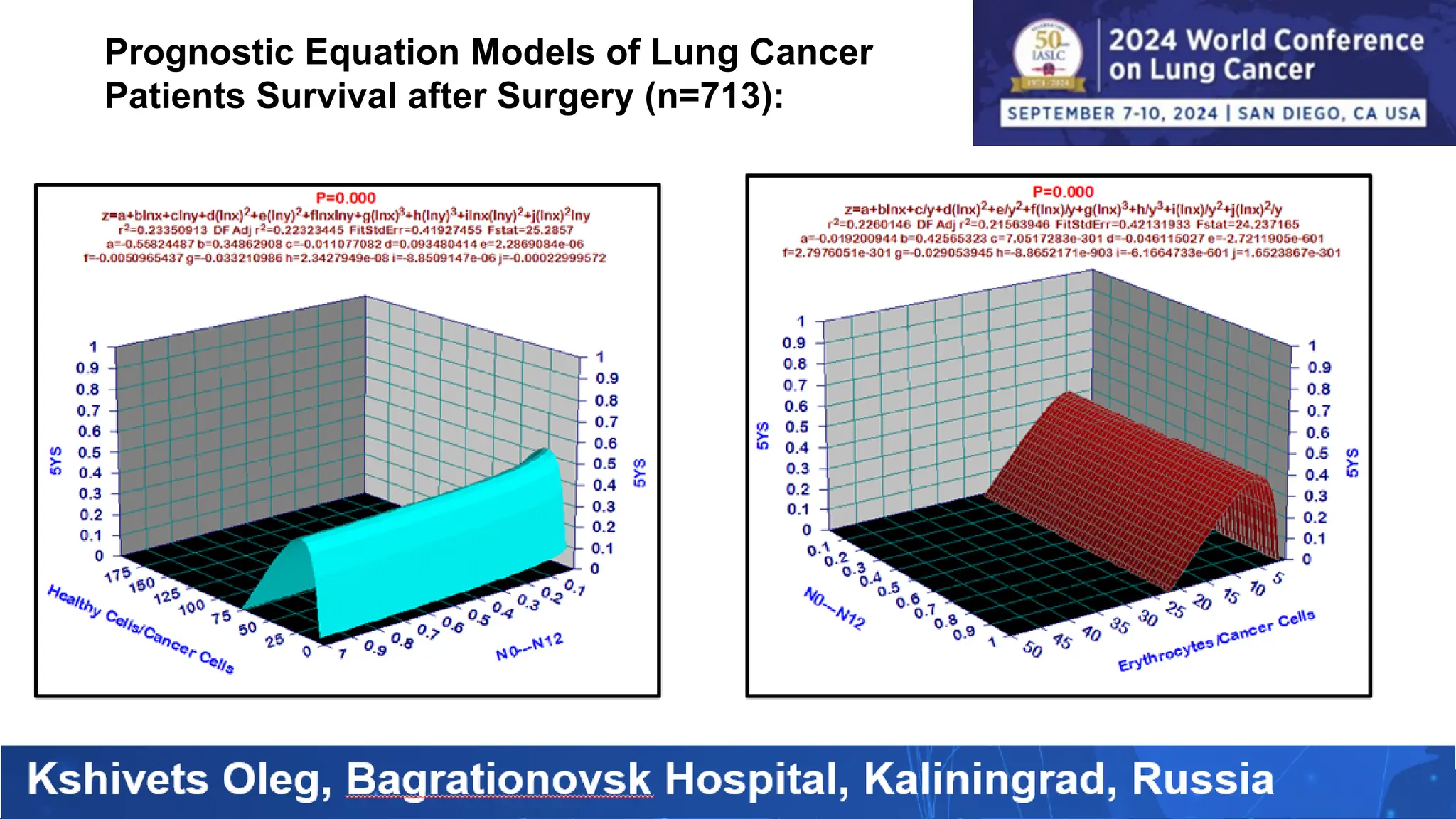
Prognostic Equation Models of Lung Cancer
Patients Survival after Surgery (n=713):
Prognostic Equation Models of Lung Cancer
Patients Survival after Surgery (n=713):
Prognostic Equation Models of Lung Cancer
Patients Survival after Surgery (n=713):
Prognostic Equation Models of Lung Cancer
Patients Survival after Surgery (n=713):
Prognostic Equation Models of Lung Cancer
Patients Survival after Surgery (n=713):
Conclusion:
5-YEAR SUVIVAL OF NON-SMALL CELL LUNG
CANCER PATIENTS AFTER RADICAL
PROCEDURES (R0) SIGNIFICANTLY DEPENDED
ON:
1) PHASE TRANSITION EARLY-INVASIVE LUNG
CANCER;
2) PHASE TRANSITION N0---N12;
3) CELL RATIO FACTORS;
4) BLOOD CELL CIRCUIT;
5) BIOCHEMICAL FACTORS;
6) HEMOSTASIS SYSTEM;
7) ADJUVANT CHEMOIMMUNORADIOTHERAPY;
8) LUNG CANCER CHARACTERISTICS;
9) LUNG CANCER CELL DYNAMICS;
10) SURGERY TYPE
(LOBECTOMY/PNEUMONECTOMY);
11) ANTHROPOMETRIC DATA.
Conclusion:
BEST MANAGEMENT FOR LCP IS:
1) SCREENING AND EARLY DETECTION OF
LC;
2) THE PRESENCE OF A SUFFICIENT
NUMBER OF OF EXPERIENCED THORACIC
SURGEONS BECAUSE OF COMPLEXITY OF
RADICAL PROCEDURES ESPECIALLY WITH
LOCALLY ADVANCED LC;
3) AGGRESSIVE EN BLOCK SURGERY AND
ADEQUATE LYMPH NODE DISSECTION FOR
COMPLETENESS;
4) PRECISE PREDICTION;
5) ADJUVANT
CHEMOIMMUNORADIOTHERAPY FOR LCP
WITH UNFAVORABLE PROGNOSIS.
e-mail: okshivets@yahoo.com
skype: olegks001
Address:
Oleg Kshivets, M.D., Ph.D.
Consultant Thoracic,
Abdominal, General Surgeon &
Surgical Oncologist

Lung Cancer: Artificial Intelligence, Synergetics, Complex System Analysis, Statistics and Simulation of Alive Supersystem for Optimal Management.

  • 1.
    Lung Cancer: ArtificialIntelligence, Synergetics, Complex System Analysis, Statistics and Simulation of Alive Supersystems for Optimal Management. Kshivets Oleg, MD, PhD Bagrationovsk Hospital, Kaliningrad, Russia No Disclosures
  • 2.
    OBJECTIVE: 5-survival (5YS)and life span after radical surgery for non-small cell lung cancer (LC) patients (LCP) (T1-4N0-2M0) – alive supersysems was analyzed. The importance must be stressed of using complex system analysis, artificial intelligence (neural networks computing), simulation modeling and statistical methods in combination, because the different approaches yield complementary pieces of prognostic information. METHODS: We analyzed data of 782 consecutive LCP (age=57.6±8.3 years; tumor size=4.1±2.4 cm) radically operated and monitored in 1985-2024 (m=670, f=112; upper lobectomies=282, lower lobectomies=179, middle lobectomies=18, bilobectomies=46, pneumonectomies=257, mediastinal lymph node dissection=782; combined procedures with resection of trachea, carina, atrium, aorta, VCS, vena azygos, pericardium, liver, diaphragm, ribs, esophagus=198; only surgery-S=626, adjuvant chemoimmunoradiotherapy-AT=156: CAV/gemzar + cisplatin + thymalin/taktivin + radiotherapy 45-50Gy; T1=326, T2=258, T3=137, T4=61; N0=525, N1=133, N2=124, M0=782; G1=199, G2=248, G3=335; squamous=422, adenocarcinoma=310, large cell=50; early LC=218, invasive LC=564; right LC=420, left LC=362; central=294; peripheral=488. Variables selected for study were input levels of 45 blood parameters, sex, age, TNMG, cell type, tumor size. Regression modeling, clustering, SEPATH, Monte Carlo, bootstrap and neural networks computing were used to determine significant dependence. RESULTS: Overall life span (LS) was 2252.1±1742.5 days and cumulative 5-year survival (5YS) reached 73.2%, 10 years – 64.8%, 20 years – 42.5%. 513 LCP lived more than 5 years (LS=3124.6±1525.6 days), 148 LCP – more than 10 years (LS=5054.4±1504.1 days).199 LCP died because of LC (LS=562.7±374.5 days). 5YS of LCP after bi/lobectomies was significantly superior in comparison with LCP after pneumonectomies (78.1% vs.63.7%, P=0.00001 by log-rank test). AT significantly improved 5YS (66.3% vs. 34.8%) (P=0.00000 by log-rank test) only for LCP with N1-2. Cox modeling displayed that 5YS of LCP significantly depended on: phase transition (PT) early-invasive LC in terms of synergetics, PT N0—N12, cell ratio factors (ratio between cancer cells- CC and blood cells subpopulations), G1-3, histology, glucose, AT, blood cell circuit, prothrombin index, heparin tolerance, recalcification time (P=0.000-0.038). Neural networks, genetic algorithm selection and bootstrap simulation revealed relationships between 5YS and PT early-invasive LC (rank=1), PT N0—N12 (rank=2), thrombocytes/CC (3), erythrocytes/CC (4), eosinophils/CC (5), healthy cells/CC (6), lymphocytes/CC (7), segmented neutrophils/CC (8), stick neutrophils/CC (9), monocytes/CC (10); leucocytes/CC (11). Correct prediction of 5YS was 100% by neural networks computing (area under ROC curve=1.0; error=0.0). CONCLUSIONS: 5YS of LCP after radical procedures significantly depended on: 1) PT early-invasive cancer; 2) PT N0--N12; 3) cell ratio factors; 4) blood cell circuit; 5) biochemical factors; 6) hemostasis system; 7) AT; 8) LC characteristics; 9) LC cell dynamics; 10) surgery type: lobectomy/pneumonectomy; 11) anthropometric data. Optimal diagnosis and treatment strategies for LC are: 1) screening and early detection of LC; 2) availability of experienced thoracic surgeons because of complexity of radical procedures; 3) aggressive en block surgery and adequate lymph node dissection for completeness; 4) precise prediction; 5) adjuvant chemoimmunoradiotherapy for LCP with unfavorable prognosis. Abstract
  • 3.
    Data: Males…………………………………….………………………………..…………........670 Females……...........................................................................................................112 Age=57.6±8.3 years; TumorSize=4.1±2.4 cm Upper Lobectomies……………………….……………………………..……….........282 Lower Lobectomies.………...................................................................................179 Middle Lobectomies.……………………….…….………………………………..…….18 Bilobectomies.……….…………………………….……………………………….........46 Pneumonectomies…………………………..………………..………………..……….257 Combined Procedures with Resection of Trachea, Carina, Atrium, Aorta, Vena Cava Superior, Vena Azygos, Pericardium, Liver, Diaphragm, Ribs, Esophagus……………………………………………………………………………….198 Mediastinal Lymphadenectomy.……….………..…...………………………………782
  • 4.
    T1……..326 N0..……525 G1…………195 T2……..258N1…......133 G2…………243 T3……..137 N2…......124 G3…………333 T4………61 N1-2…...257 M0…….…...782 Adenocarcinoma………………………………………………………..310 Squamous Cell Carcinoma……………………………………..……..422 Large Cell Carcinoma………………………………………..................50 Early LC…………………………………………………………………..218 Invasive LC………………………………………………………………564 Staging:
  • 5.
    Alive………………………………………...................527(67.4%) 5-Year Survivors…………..………………………....513 (65.6%) 10-YearSurvivors………………………...………….148 (18.9%) Losses……………………………………………..…..199 (25.4%) General Life Span=2521.1±1742.5 days For 5-Year Survivors=3124.6±1525.6 days For 10-Year Survivors=5054.4±1504.1 days For Losses=562.7±374.5 days Cumulative 5-Year Survival……………………………….73.2% Cumulative 10-Year Survival………………….................64.8% Cumulative 20-Year Survival………………….................42.5% Survival Rate:
  • 6.
    General Lung CancerPatients Survival after Complete Lobectomies/Pneumonectomies (Kaplan-Meier) (n=782): Survival Function 5YS=73.2%; 10YS=64.8%; 20YS=42.5% Complete Censored -5 0 5 10 15 20 25 30 Years after Surgery 0.0 0.1 0.2 0.3 0.4 0.5 0.6 0.7 0.8 0.9 1.0 1.1 1.2 Cumulative Proportion Surviving
  • 7.
    Cumulative Proportion Surviving(Kaplan-Meier) p=0.0000 Complete Censored 0 5 10 15 20 25 30 35 Years after Surgery -0.2 0.0 0.2 0.4 0.6 0.8 1.0 Cumulative Proportion Surviving Invasive LCP Early LCP Results of Univariate Analysis of Phase Transition Early—Invasive Cancer in Prediction of Lung Cancer Patients Survival (n=782):
  • 8.
    Results of UnivariateAnalysis of Phase Transition N0—N12 in Prediction of Lung Cancer Patients Survival (n=782): Cumulative Proportion Surviving (Kaplan-Meier) p=0.0000 Complete Censored 0 5 10 15 20 25 30 35 Years afer Surgery 0.1 0.2 0.3 0.4 0.5 0.6 0.7 0.8 0.9 1.0 Cumulative Proportion Surviving N12 N0
  • 9.
    Results of UnivariateAnalysis of Adjuvant Treatment (Adjuvant Chemoimmunotherapy vs Surgery along) in Prediction of Lung Cancer Patients Survival with N1-2 (n=257): Cumulative Proportion Surviving (Kaplan-Meier) P=0.0000 Complete Censored 0 5 10 15 20 25 30 Time 0.1 0.2 0.3 0.4 0.5 0.6 0.7 0.8 0.9 1.0 Cumulative Proportion Surviving only Surgery Adjuvant Chemoimmunoradiotherapy
  • 10.
    Results of UnivariateAnalysis of Gender (Males vs. Females) in Prediction of Lung Cancer Patients Survival (n=782): Cumulative Proportion Surviving (Kaplan-Meier) p=0.018 Complete Censored 0 5 10 15 20 25 30 35 Years after Surgery 0.0 0.1 0.2 0.3 0.4 0.5 0.6 0.7 0.8 0.9 1.0 Cumulative Proportion Surviving Male Female
  • 11.
    Cox Regression, n=782 Parameter Estimate Standard Error Chi- square Pvalue 95% Lower CL 95% Upper CL Hazard Ratio G1-3 0.35321 0.086772 16.56945 0.000047 0.18314 0.52328 1.423630 Histology 0.34441 0.084904 16.45430 0.000050 0.17800 0.51081 1.411151 Lymphocytes (abs) 0.65707 0.316865 4.30006 0.038111 0.03603 1.27811 1.929131 Glucose -0.29099 0.077132 14.23237 0.000162 -0.44216 -0.13981 0.747525 Prothrombin Index 0.02645 0.006705 15.56527 0.000080 0.01331 0.03959 1.026806 Recalcification Time -0.00475 0.001691 7.89697 0.004952 -0.00806 -0.00144 0.995260 Heparin Tolerance 0.00353 0.000662 28.52148 0.000000 0.00224 0.00483 1.003541 Phase Transition Early-Invasive Lung Cancer -1.24631 0.322482 14.93623 0.000111 -1.87836 -0.61426 0.287564 Phase Transition N0__N12 1.09716 0.148598 54.51439 0.000000 0.80591 1.38840 2.995632 Thrombocytes/Cancer Cells -0.00239 0.000652 13.43305 0.000247 -0.00367 -0.00111 0.997612 Lymphocytes/Cancer Cells 0.19931 0.061719 10.42876 0.001241 0.07835 0.32028 1.220563 Adjuvant Chemoimmunoradiotherapy -1.78893 0.347252 26.53966 0.000000 -2.46953 -1.10833 0.167139 Treatment 0.36250 0.168222 4.64354 0.031171 0.03279 0.69221 1.436916 Thrombocytes (tot) 0.00119 0.000235 25.58519 0.000000 0.00073 0.00165 1.001191 Eosinophils (tot) -0.23734 0.098707 5.78138 0.016197 -0.43080 -0.04387 0.788726 Lymphocytes (tot) -0.24714 0.072780 11.53075 0.000685 -0.38978 -0.10449 0.781034 Cox Regression in Prediction of Lung Cancer Patients Survival (n=782):
  • 12.
    Results of NeuralNetworks and Monte Carlo Computing in Prediction of Lung Cancer Patients Survival after Complete Lobectomies/Pneumonectomies (n=713):
  • 13.
    Results of BootstrapSimulation in Prediction of Lung Cancer Patients Survival after Complete Lobectomies/Pneumonectomies(n=713):
  • 14.
  • 15.
  • 16.
  • 17.
    Results of KohonenSelf-Organizing Neural Networks Computing in Prediction of Lung Cancer Patients Survival (n=713):
  • 18.
    SEPATH Modeling inPrediction of Lung Cancer Patients Survival after Complete Lobectomies/Pneumonectomies (n=713):
  • 19.
    Prognostic Equation Modelsof Lung Cancer Patients Survival after Surgery (n=713):
  • 20.
    Prognostic Equation Modelsof Lung Cancer Patients Survival after Surgery (n=713):
  • 21.
    Prognostic Equation Modelsof Lung Cancer Patients Survival after Surgery (n=713):
  • 22.
    Prognostic Equation Modelsof Lung Cancer Patients Survival after Surgery (n=713):
  • 23.
    Prognostic Equation Modelsof Lung Cancer Patients Survival after Surgery (n=713):
  • 24.
    Prognostic Equation Modelsof Lung Cancer Patients Survival after Surgery (n=713):
  • 25.
    Conclusion: 5-YEAR SUVIVAL OFNON-SMALL CELL LUNG CANCER PATIENTS AFTER RADICAL PROCEDURES (R0) SIGNIFICANTLY DEPENDED ON: 1) PHASE TRANSITION EARLY-INVASIVE LUNG CANCER; 2) PHASE TRANSITION N0---N12; 3) CELL RATIO FACTORS; 4) BLOOD CELL CIRCUIT; 5) BIOCHEMICAL FACTORS; 6) HEMOSTASIS SYSTEM; 7) ADJUVANT CHEMOIMMUNORADIOTHERAPY; 8) LUNG CANCER CHARACTERISTICS; 9) LUNG CANCER CELL DYNAMICS; 10) SURGERY TYPE (LOBECTOMY/PNEUMONECTOMY); 11) ANTHROPOMETRIC DATA.
  • 26.
    Conclusion: BEST MANAGEMENT FORLCP IS: 1) SCREENING AND EARLY DETECTION OF LC; 2) THE PRESENCE OF A SUFFICIENT NUMBER OF OF EXPERIENCED THORACIC SURGEONS BECAUSE OF COMPLEXITY OF RADICAL PROCEDURES ESPECIALLY WITH LOCALLY ADVANCED LC; 3) AGGRESSIVE EN BLOCK SURGERY AND ADEQUATE LYMPH NODE DISSECTION FOR COMPLETENESS; 4) PRECISE PREDICTION; 5) ADJUVANT CHEMOIMMUNORADIOTHERAPY FOR LCP WITH UNFAVORABLE PROGNOSIS.
  • 27.
    e-mail: okshivets@yahoo.com skype: olegks001 Address: OlegKshivets, M.D., Ph.D. Consultant Thoracic, Abdominal, General Surgeon & Surgical Oncologist