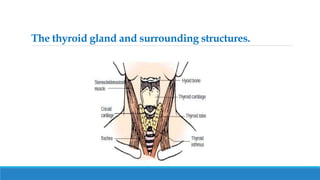
The thyroid gland and surrounding structures.
Management of Patients With Thyroid Disorders
 The thyroid gland is a butterfly-shaped organ located in the lower
neck anterior to the trachea.
 It consists of two lateral lobes connected by an isthmus.
 The gland is about 5 cm long and 3 cm wide and weighs about 30 g.
 The blood flow to the thyroid is very high (about 5 mL/min per gram
of thyroid tissue), about five times the blood flow to the liver.
 This reflects the high metabolic activity of the thyroid gland. The
thyroid gland produces three hormones: thyroxine (T4),
triiodothyronine (T3), and calcitonin.
 Thyroxine and triiodothyronine are referred to collectively as thyroid
hormone.
Hyperthyroidism
 Hyperthyroidism is the second most prevalent endocrine disorder,
after diabetes mellitus.
 Graves’ disease, the most common type of hyperthyroidism, results
from an excessive output of thyroid hormones caused by abnormal
stimulation of the thyroid gland by circulating immunoglobulins.
 It may appear after an emotional shock, stress, or an infection.
 Graves' disease is an autoimmune disorder that can cause
hyperthyroidism, or overactive thyroid.
 Patients with well-developed hyperthyroidism exhibit a characteristic
group of signs and symptoms
(sometimes referred to as Thyrotoxicosis).
 The presenting symptom is often nervousness.
 These patients are often emotionally hyperexcitable, irritable, and
apprehensive; they cannot sit quietly; they suffer from palpitations;
and their pulse is abnormally rapid at rest as well as on exertion.
 They tolerate heat poorly and perspire unusually freely.
 The skin is flushed continuously, with a characteristic salmon color,
and is likely to be warm, soft, and moist.
 (Salmon is a range of pinkish-orange to light pink colors)
 Elderly patients, however, may report dry skin and diffuse pruritus.
 A fine tremor of the hands may be observed.
 Patients may exhibit exophthalmos (bulging eyes), which produces a
startled facial expression.
 Other manifestations include an increased appetite and dietary intake,
progressive weight loss, abnormal muscular fatigability and weakness
(difficulty in climbing stairs and rising from a chair), amenorrhea, and
changes in bowel function.
 The pulse rate ranges constantly between 90 and 160 beats/min; the
systolic, but characteristically not the diastolic, blood pressure is
elevated; atrial fibrillation may occur; and cardiac decompensation in
the form of heart failure is common, especially in elderly patients.
 Osteoporosis and fracture are also associated with hyperthyroidism.
 Atrial fibrillation-Atrial fibrillation is a heart condition that causes
an irregular and often abnormally fast heart rate.
 Cardiac effects may include sinus tachycardia or dysrhythmias,
increased pulse pressure, and palpitations
 Myocardial hypertrophy and heart failure may occur
 Symptoms of hyperthyroidism may occur with the release of excessive
amounts of thyroid hormone
 Long-standing use of thyroid hormone in the absence of close
monitoring
 It may result in premature osteoporosis
Assessment and Diagnostic Findings
 The thyroid gland invariably is enlarged to some extent.
 It is soft and may pulsate; a thrill often can be palpated, and a bruit is
heard over the thyroid arteries.
 In advanced cases, the diagnosis is made on the basis of the symptoms
and an increase in serum T4 and an increased 123I or 125I uptake by
the thyroid in excess of 50%.
Medical Management
 Treatment of hyperthyroidism is directed toward reducing thyroid
hyperactivity to relieve symptoms and remove the cause of important
complications.
 PHARMACOLOGIC THERAPY
 Two forms of pharmacotherapy are available for treating hyperthyroidism
and controlling excessive thyroid activity:
 (1) use of irradiation (exposure to radiation) by administration of the
radioisotope 123I or 131I for destructive effects on the thyroid gland and
 (2) Antithyroid medications that interfere with the synthesis of thyroid
hormones and other agents that control manifestations of hyperthyroidism.
Radioactive Iodine Therapy.
 The goal of radioactive iodine therapy (123I or 131I) is to destroy the
overactive thyroid cells.
 Use of radioactive iodine is the most common treatment in elderly
patients.
 The patient is observed for signs of thyroid storm; propranolol is
useful in controlling these symptoms.
 Thyroid hormone replacement is necessary; small doses are usually
prescribed, with the dose gradually increased over a period of months
(up to about 1 year) until the FT4 and TSH levels stabilize within
normal ranges.
 Thyroid storm, also referred to as thyrotoxic crisis, is an acute, life-
threatening, hypermetabolic state induced by excessive release of
thyroid hormones (THs) in individuals with thyrotoxicosis.
 Cretinism, a congenital disease due to absence or deficiency of
normal thyroid secretion.
 Exophthalmic goiter, enlargement of the thyroid gland accompanied
by exophthalmos, usually due to hyperthyroidism.
 Antithyroid medications are contraindicated in late pregnancy because
they may produce goiter and cretinism in the fetus.
 Thyroid hormone is occasionally administered with antithyroid
medications to put the thyroid gland at rest.
 Thyroid hormone is available as thyroglobulin (Proloid) and
levothyroxine sodium (Synthroid).
SURGICAL MANAGEMENT
 Surgery to remove thyroid tissue was once the primary method of
treating hyperthyroidism
 Surgery for treatment of hyperthyroidism is performed soon after the
thyroid function has returned to normal (4 to 6 weeks).
 The surgical removal of about five sixths of the thyroid tissue (subtotal
thyroidectomy) practically ensures a prolonged remission in most
patients with Exophthalmic goiter.
 Before surgery, propylthiouracil is administered until signs of
hyperthyroidism have disappeared.
 A beta-adrenergic blocking agent (propranolol) may be used to reduce the
heart rate and other signs and symptoms of hyperthyroidism
 Patients receiving iodine medication must be monitored for evidence of
iodine toxicity (iodism), which requires immediate withdrawal of the
medication.
 Symptoms of iodism include swelling of the buccal mucosa, excessive
salivation, coryza, and skin eruptions.
 Thanking you.

Hyperthyroidism.pptx

  • 2.
    The thyroid glandand surrounding structures.
  • 3.
    Management of PatientsWith Thyroid Disorders  The thyroid gland is a butterfly-shaped organ located in the lower neck anterior to the trachea.  It consists of two lateral lobes connected by an isthmus.  The gland is about 5 cm long and 3 cm wide and weighs about 30 g.  The blood flow to the thyroid is very high (about 5 mL/min per gram of thyroid tissue), about five times the blood flow to the liver.
  • 4.
     This reflectsthe high metabolic activity of the thyroid gland. The thyroid gland produces three hormones: thyroxine (T4), triiodothyronine (T3), and calcitonin.  Thyroxine and triiodothyronine are referred to collectively as thyroid hormone.
  • 5.
    Hyperthyroidism  Hyperthyroidism isthe second most prevalent endocrine disorder, after diabetes mellitus.  Graves’ disease, the most common type of hyperthyroidism, results from an excessive output of thyroid hormones caused by abnormal stimulation of the thyroid gland by circulating immunoglobulins.  It may appear after an emotional shock, stress, or an infection.  Graves' disease is an autoimmune disorder that can cause hyperthyroidism, or overactive thyroid.
  • 6.
     Patients withwell-developed hyperthyroidism exhibit a characteristic group of signs and symptoms (sometimes referred to as Thyrotoxicosis).  The presenting symptom is often nervousness.  These patients are often emotionally hyperexcitable, irritable, and apprehensive; they cannot sit quietly; they suffer from palpitations; and their pulse is abnormally rapid at rest as well as on exertion.
  • 7.
     They tolerateheat poorly and perspire unusually freely.  The skin is flushed continuously, with a characteristic salmon color, and is likely to be warm, soft, and moist.  (Salmon is a range of pinkish-orange to light pink colors)  Elderly patients, however, may report dry skin and diffuse pruritus.  A fine tremor of the hands may be observed.  Patients may exhibit exophthalmos (bulging eyes), which produces a startled facial expression.
  • 8.
     Other manifestationsinclude an increased appetite and dietary intake, progressive weight loss, abnormal muscular fatigability and weakness (difficulty in climbing stairs and rising from a chair), amenorrhea, and changes in bowel function.
  • 9.
     The pulserate ranges constantly between 90 and 160 beats/min; the systolic, but characteristically not the diastolic, blood pressure is elevated; atrial fibrillation may occur; and cardiac decompensation in the form of heart failure is common, especially in elderly patients.  Osteoporosis and fracture are also associated with hyperthyroidism.  Atrial fibrillation-Atrial fibrillation is a heart condition that causes an irregular and often abnormally fast heart rate.
  • 10.
     Cardiac effectsmay include sinus tachycardia or dysrhythmias, increased pulse pressure, and palpitations  Myocardial hypertrophy and heart failure may occur  Symptoms of hyperthyroidism may occur with the release of excessive amounts of thyroid hormone  Long-standing use of thyroid hormone in the absence of close monitoring  It may result in premature osteoporosis
  • 11.
    Assessment and DiagnosticFindings  The thyroid gland invariably is enlarged to some extent.  It is soft and may pulsate; a thrill often can be palpated, and a bruit is heard over the thyroid arteries.  In advanced cases, the diagnosis is made on the basis of the symptoms and an increase in serum T4 and an increased 123I or 125I uptake by the thyroid in excess of 50%.
  • 12.
    Medical Management  Treatmentof hyperthyroidism is directed toward reducing thyroid hyperactivity to relieve symptoms and remove the cause of important complications.  PHARMACOLOGIC THERAPY  Two forms of pharmacotherapy are available for treating hyperthyroidism and controlling excessive thyroid activity:  (1) use of irradiation (exposure to radiation) by administration of the radioisotope 123I or 131I for destructive effects on the thyroid gland and  (2) Antithyroid medications that interfere with the synthesis of thyroid hormones and other agents that control manifestations of hyperthyroidism.
  • 13.
    Radioactive Iodine Therapy. The goal of radioactive iodine therapy (123I or 131I) is to destroy the overactive thyroid cells.  Use of radioactive iodine is the most common treatment in elderly patients.  The patient is observed for signs of thyroid storm; propranolol is useful in controlling these symptoms.  Thyroid hormone replacement is necessary; small doses are usually prescribed, with the dose gradually increased over a period of months (up to about 1 year) until the FT4 and TSH levels stabilize within normal ranges.
  • 14.
     Thyroid storm,also referred to as thyrotoxic crisis, is an acute, life- threatening, hypermetabolic state induced by excessive release of thyroid hormones (THs) in individuals with thyrotoxicosis.  Cretinism, a congenital disease due to absence or deficiency of normal thyroid secretion.  Exophthalmic goiter, enlargement of the thyroid gland accompanied by exophthalmos, usually due to hyperthyroidism.
  • 15.
     Antithyroid medicationsare contraindicated in late pregnancy because they may produce goiter and cretinism in the fetus.  Thyroid hormone is occasionally administered with antithyroid medications to put the thyroid gland at rest.  Thyroid hormone is available as thyroglobulin (Proloid) and levothyroxine sodium (Synthroid).
  • 16.
    SURGICAL MANAGEMENT  Surgeryto remove thyroid tissue was once the primary method of treating hyperthyroidism  Surgery for treatment of hyperthyroidism is performed soon after the thyroid function has returned to normal (4 to 6 weeks).  The surgical removal of about five sixths of the thyroid tissue (subtotal thyroidectomy) practically ensures a prolonged remission in most patients with Exophthalmic goiter.
  • 17.
     Before surgery,propylthiouracil is administered until signs of hyperthyroidism have disappeared.  A beta-adrenergic blocking agent (propranolol) may be used to reduce the heart rate and other signs and symptoms of hyperthyroidism  Patients receiving iodine medication must be monitored for evidence of iodine toxicity (iodism), which requires immediate withdrawal of the medication.  Symptoms of iodism include swelling of the buccal mucosa, excessive salivation, coryza, and skin eruptions.  Thanking you.