 Gram-negative rods
 Glucose is fermented with strong acid
formation and often gas
 Cytochrome oxidase activity is negative
 Nitrate is reduced to nitrite
www.drjayeshpatidar.blogspot.in
 Crystal violet binds to cell wall
peptidoglycan with Gram’s iodine as a
mordant
 Safranin or basic fuchsin counterstains
bacterial cells decolorized by alcohol-
acetone
www.drjayeshpatidar.blogspot.in
 Thick cell-wall peptidoglycan layer of gram-
positive bacteria strongly binds crystal
violet and resists decolorization by alcohol-
acetone
 Thin cell-wall peptidoglycan layer of gram-
negative bacteria located beneath a thick
lipid-rich outer membrane weakly binds
crystal violet that is readily removed by
alcohol-acetone decolorization
www.drjayeshpatidar.blogspot.in
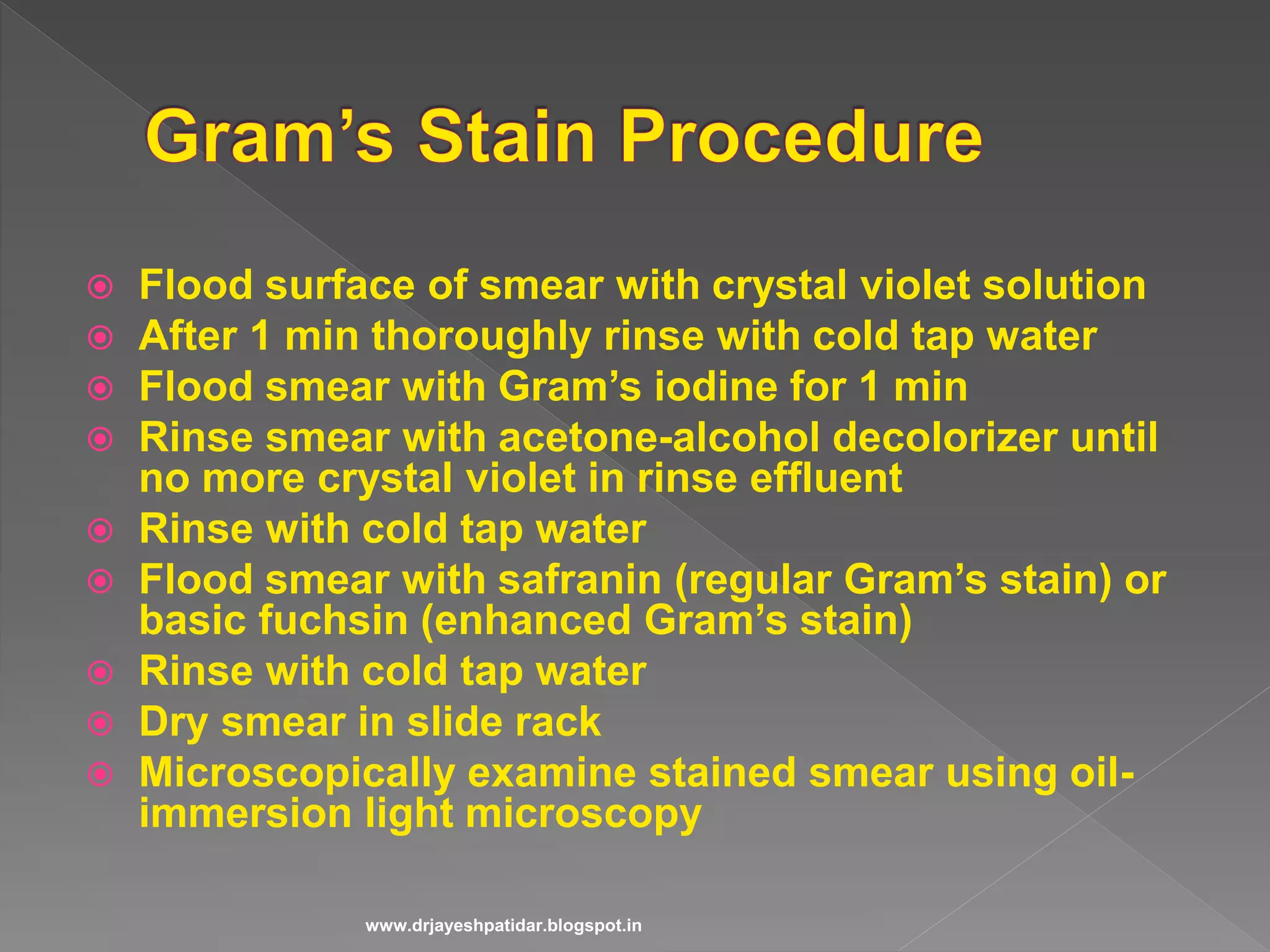
 Flood surface of smear with crystal violet solution
 After 1 min thoroughly rinse with cold tap water
 Flood smear with Gram’s iodine for 1 min
 Rinse smear with acetone-alcohol decolorizer until
no more crystal violet in rinse effluent
 Rinse with cold tap water
 Flood smear with safranin (regular Gram’s stain) or
basic fuchsin (enhanced Gram’s stain)
 Rinse with cold tap water
 Dry smear in slide rack
 Microscopically examine stained smear using oil-
immersion light microscopy
www.drjayeshpatidar.blogspot.in
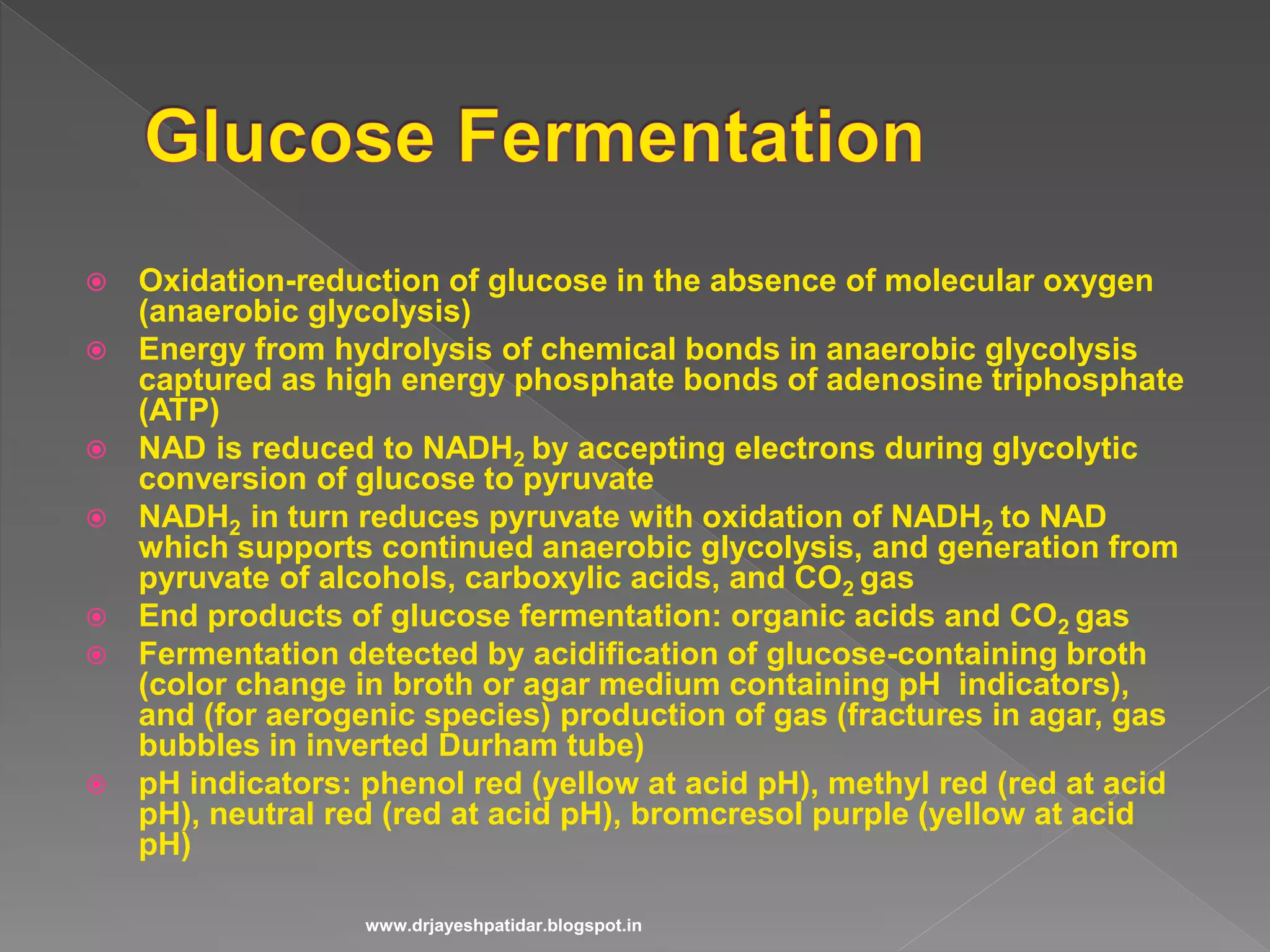
 Oxidation-reduction of glucose in the absence of molecular oxygen
(anaerobic glycolysis)
 Energy from hydrolysis of chemical bonds in anaerobic glycolysis
captured as high energy phosphate bonds of adenosine triphosphate
(ATP)
 NAD is reduced to NADH2 by accepting electrons during glycolytic
conversion of glucose to pyruvate
 NADH2 in turn reduces pyruvate with oxidation of NADH2 to NAD
which supports continued anaerobic glycolysis, and generation from
pyruvate of alcohols, carboxylic acids, and CO2 gas
 End products of glucose fermentation: organic acids and CO2 gas
 Fermentation detected by acidification of glucose-containing broth
(color change in broth or agar medium containing pH indicators),
and (for aerogenic species) production of gas (fractures in agar, gas
bubbles in inverted Durham tube)
 pH indicators: phenol red (yellow at acid pH), methyl red (red at acid
pH), neutral red (red at acid pH), bromcresol purple (yellow at acid
pH)
www.drjayeshpatidar.blogspot.in
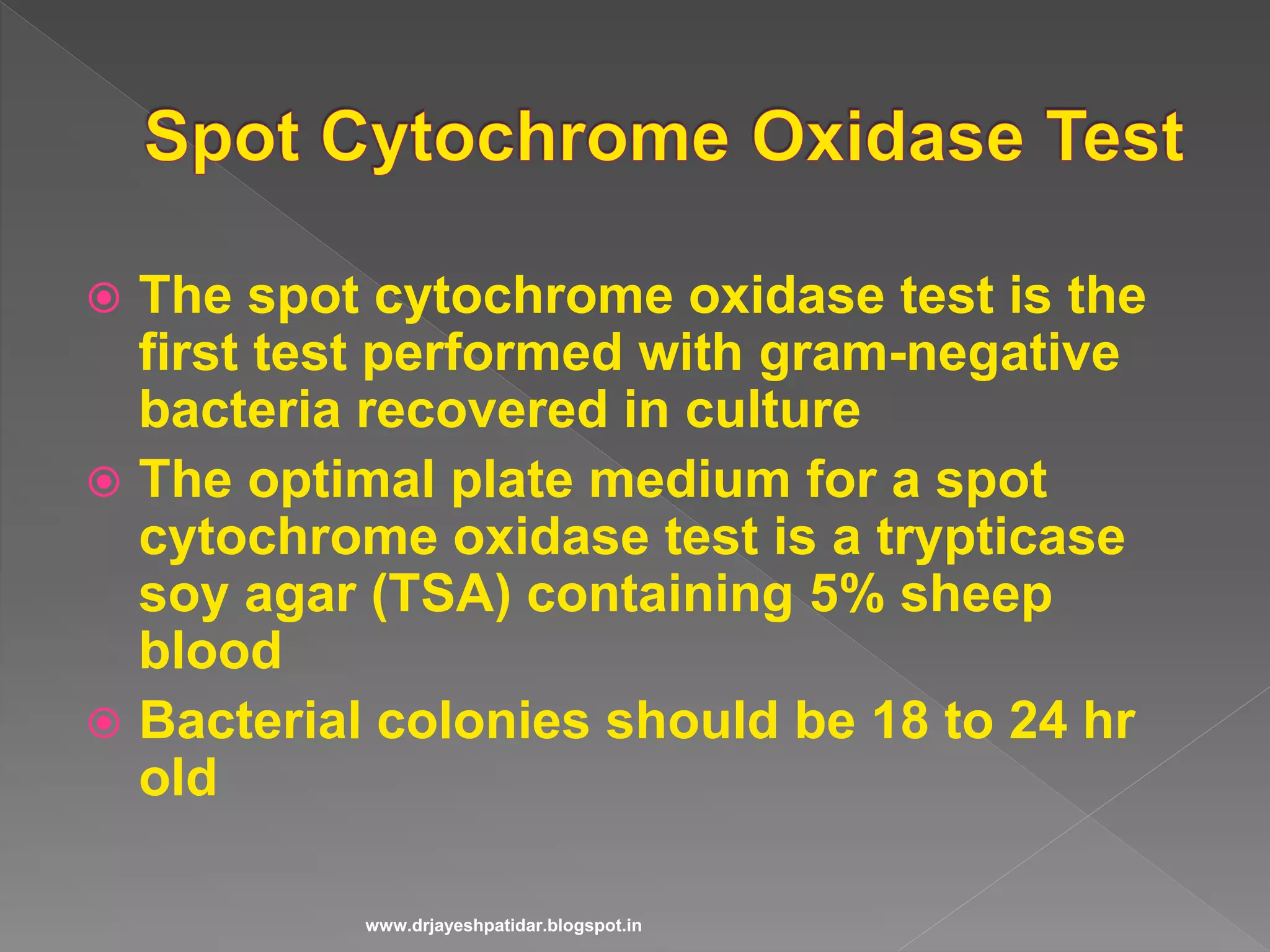
 The spot cytochrome oxidase test is the
first test performed with gram-negative
bacteria recovered in culture
 The optimal plate medium for a spot
cytochrome oxidase test is a trypticase
soy agar (TSA) containing 5% sheep
blood
 Bacterial colonies should be 18 to 24 hr
old
www.drjayeshpatidar.blogspot.in
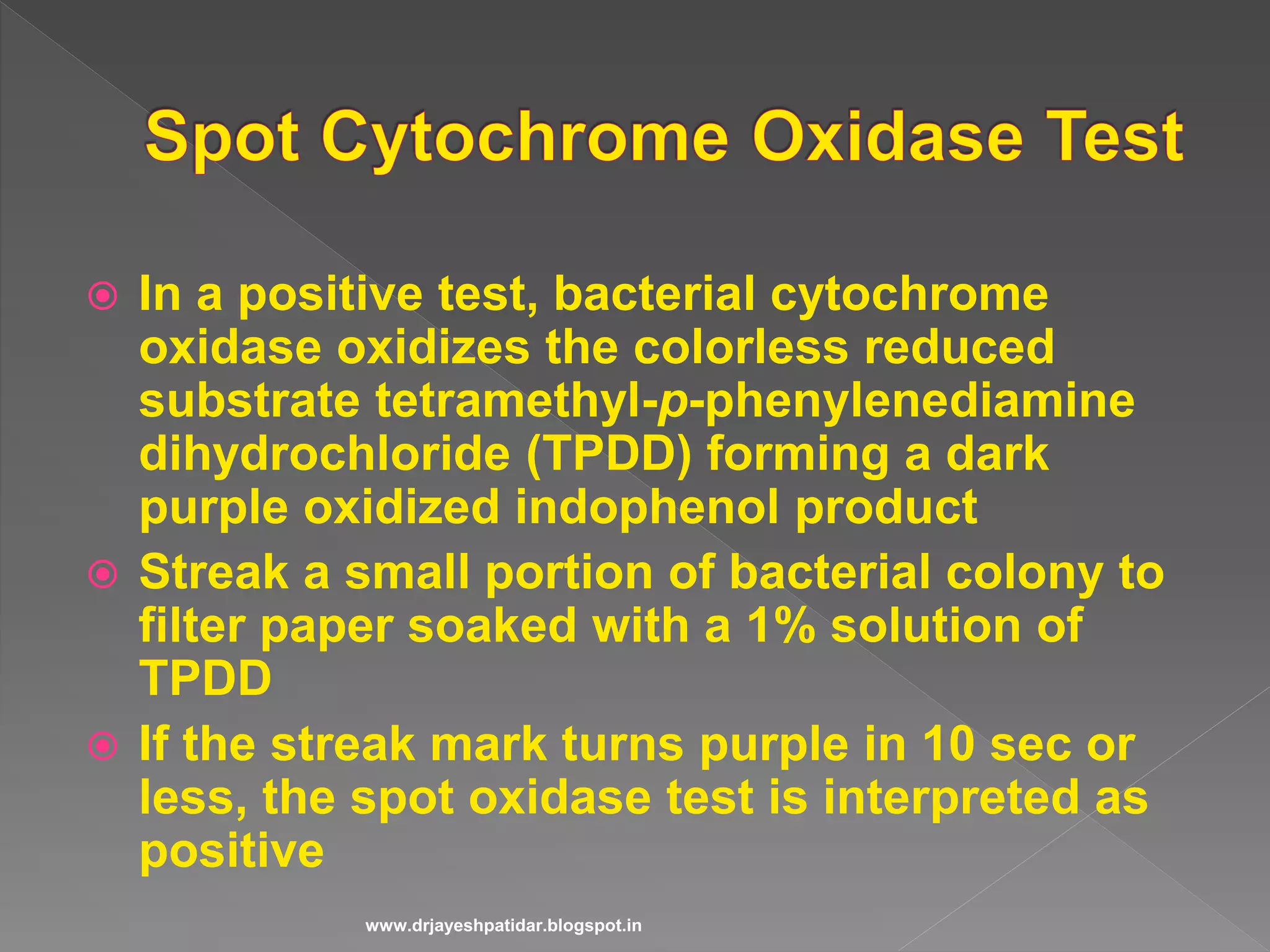
 In a positive test, bacterial cytochrome
oxidase oxidizes the colorless reduced
substrate tetramethyl-p-phenylenediamine
dihydrochloride (TPDD) forming a dark
purple oxidized indophenol product
 Streak a small portion of bacterial colony to
filter paper soaked with a 1% solution of
TPDD
 If the streak mark turns purple in 10 sec or
less, the spot oxidase test is interpreted as
positive
www.drjayeshpatidar.blogspot.in
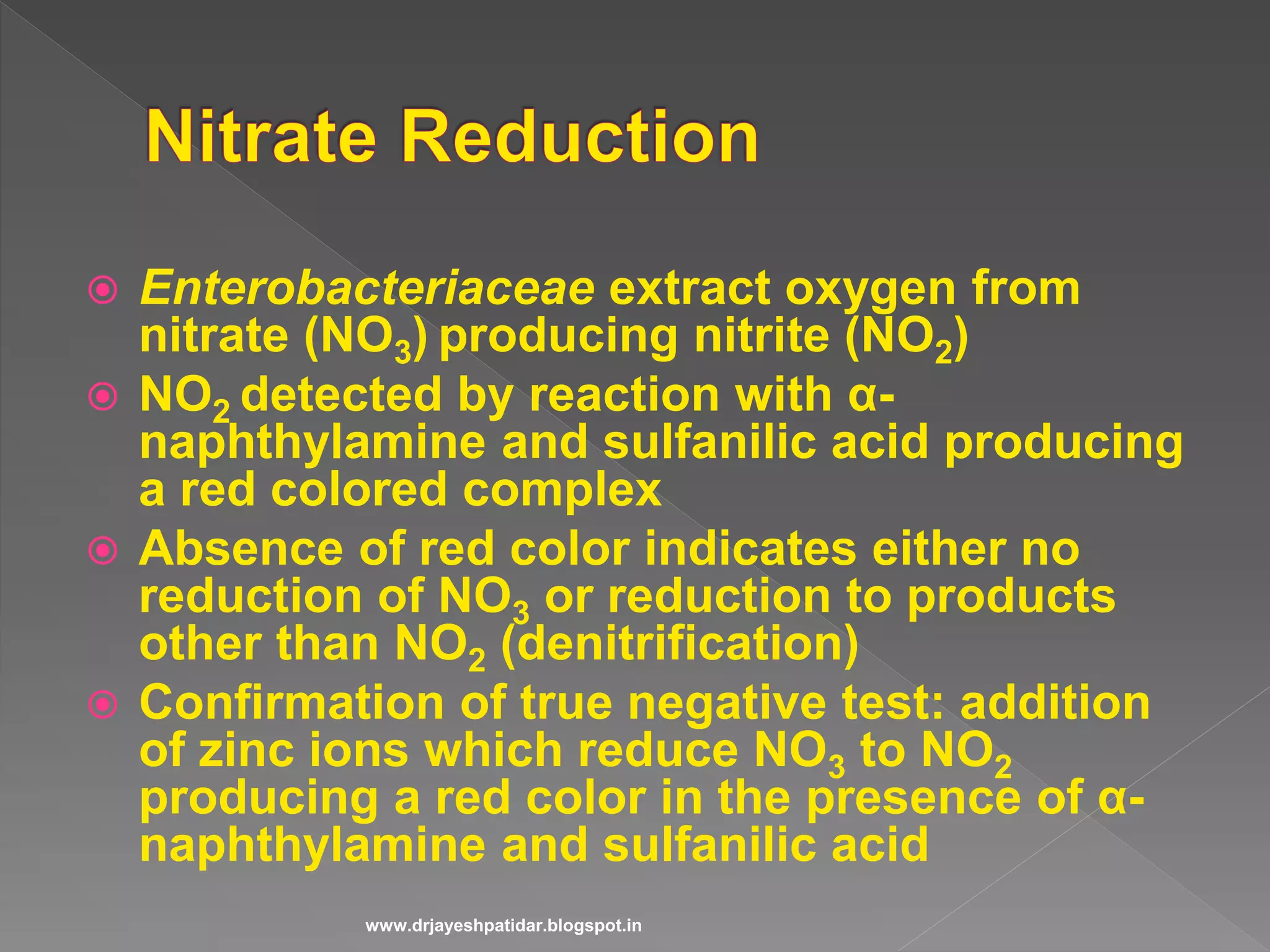
 Enterobacteriaceae extract oxygen from
nitrate (NO3) producing nitrite (NO2)
 NO2 detected by reaction with α-
naphthylamine and sulfanilic acid producing
a red colored complex
 Absence of red color indicates either no
reduction of NO3 or reduction to products
other than NO2 (denitrification)
 Confirmation of true negative test: addition
of zinc ions which reduce NO3 to NO2
producing a red color in the presence of α-
naphthylamine and sulfanilic acid
www.drjayeshpatidar.blogspot.in
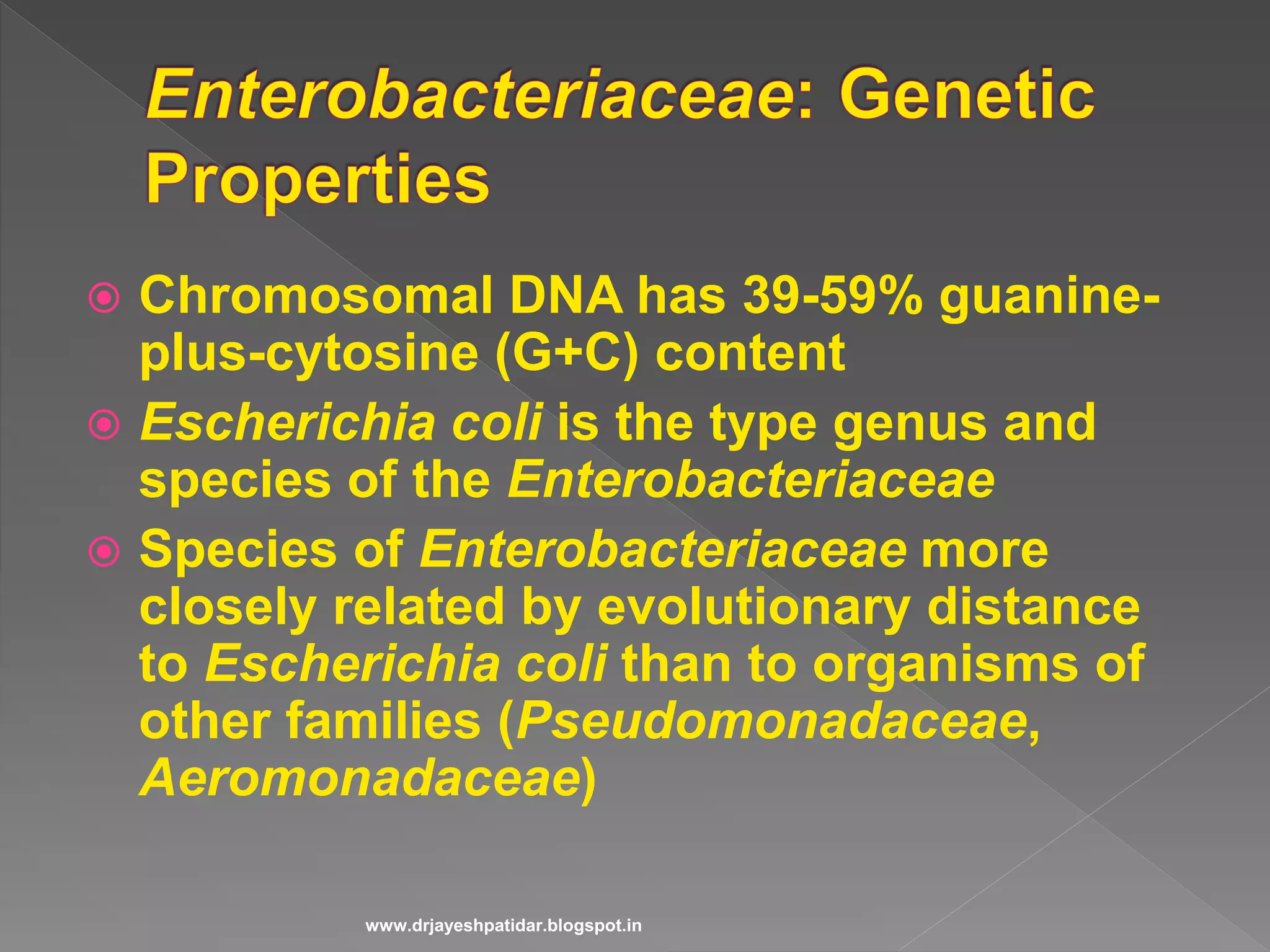
 Chromosomal DNA has 39-59% guanine-
plus-cytosine (G+C) content
 Escherichia coli is the type genus and
species of the Enterobacteriaceae
 Species of Enterobacteriaceae more
closely related by evolutionary distance
to Escherichia coli than to organisms of
other families (Pseudomonadaceae,
Aeromonadaceae)
www.drjayeshpatidar.blogspot.in
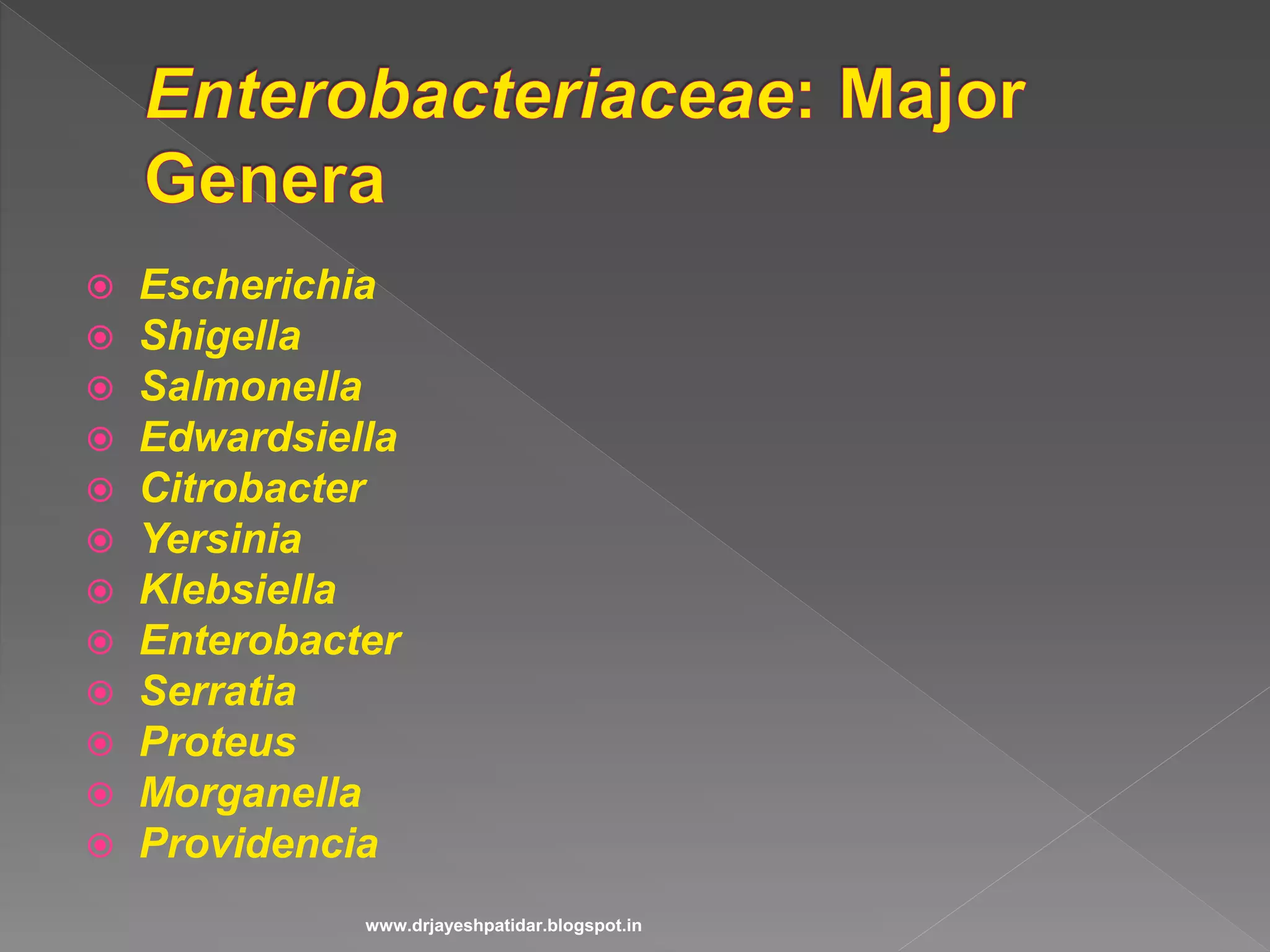
 Escherichia
 Shigella
 Salmonella
 Edwardsiella
 Citrobacter
 Yersinia
 Klebsiella
 Enterobacter
 Serratia
 Proteus
 Morganella
 Providencia
www.drjayeshpatidar.blogspot.in
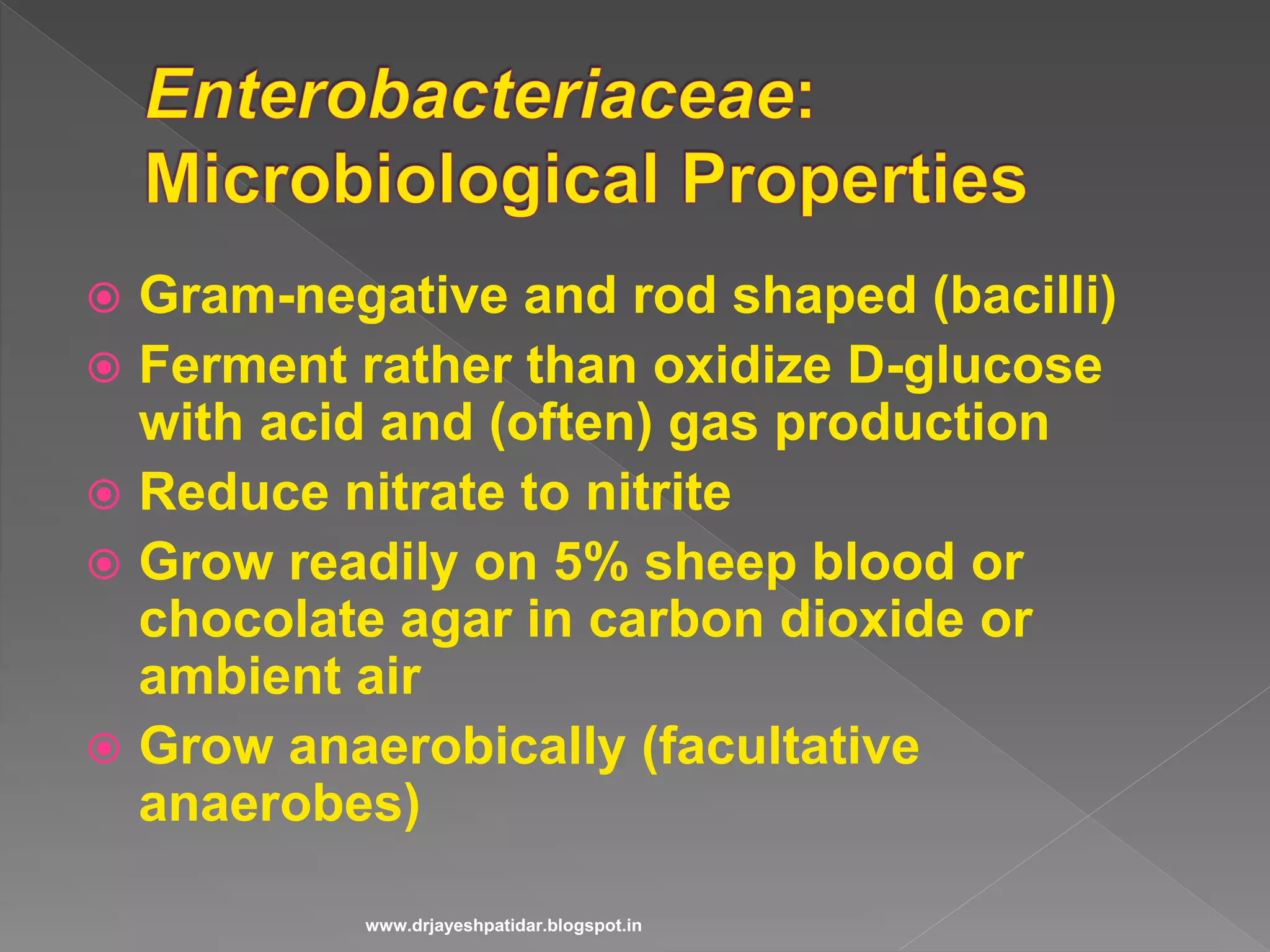
 Gram-negative and rod shaped (bacilli)
 Ferment rather than oxidize D-glucose
with acid and (often) gas production
 Reduce nitrate to nitrite
 Grow readily on 5% sheep blood or
chocolate agar in carbon dioxide or
ambient air
 Grow anaerobically (facultative
anaerobes)
www.drjayeshpatidar.blogspot.in
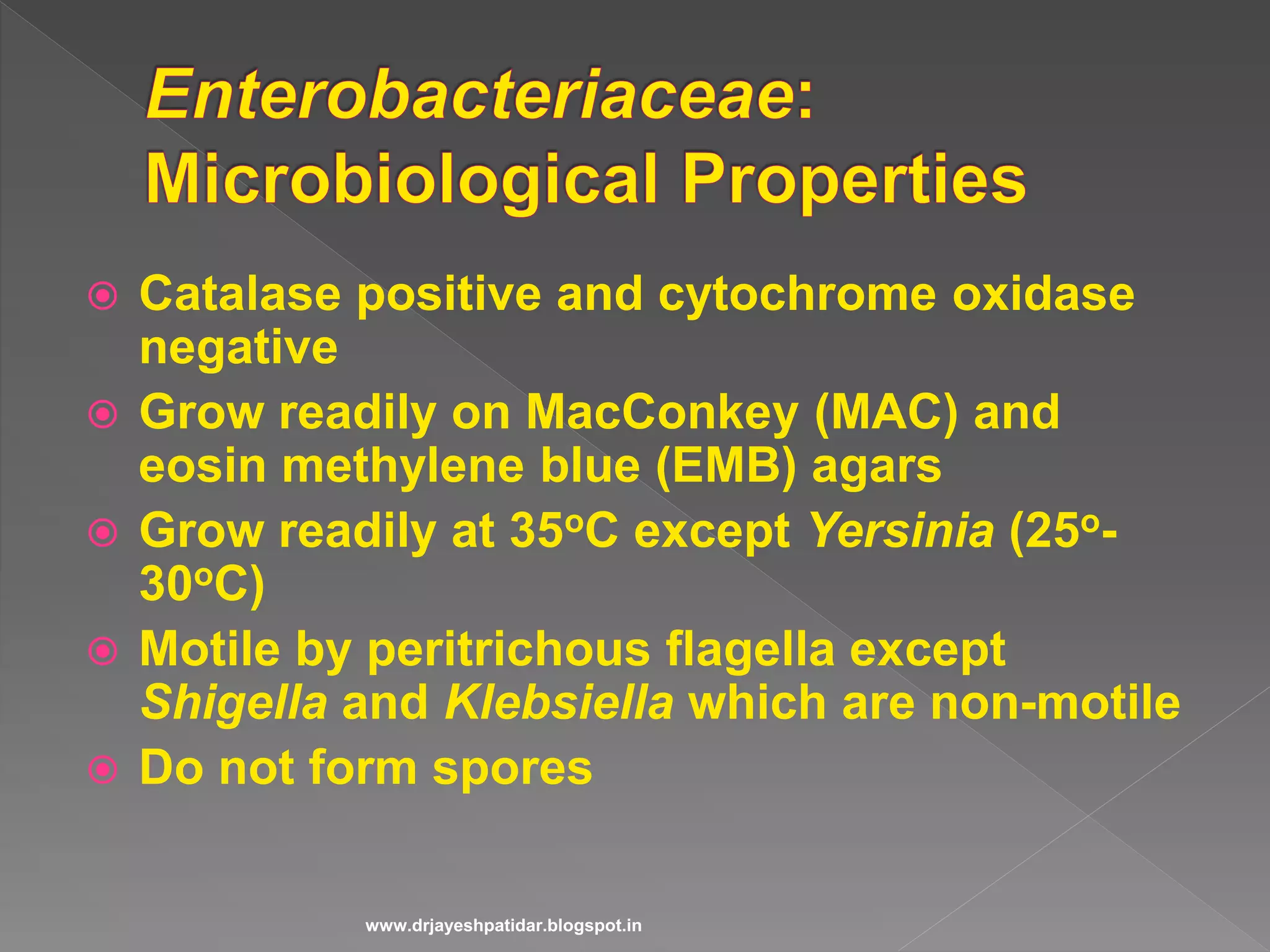
 Catalase positive and cytochrome oxidase
negative
 Grow readily on MacConkey (MAC) and
eosin methylene blue (EMB) agars
 Grow readily at 35oC except Yersinia (25o-
30oC)
 Motile by peritrichous flagella except
Shigella and Klebsiella which are non-motile
 Do not form spores
www.drjayeshpatidar.blogspot.in
 Environmental sites (soil, water, and
plants)
 Intestines of humans and animals
www.drjayeshpatidar.blogspot.in
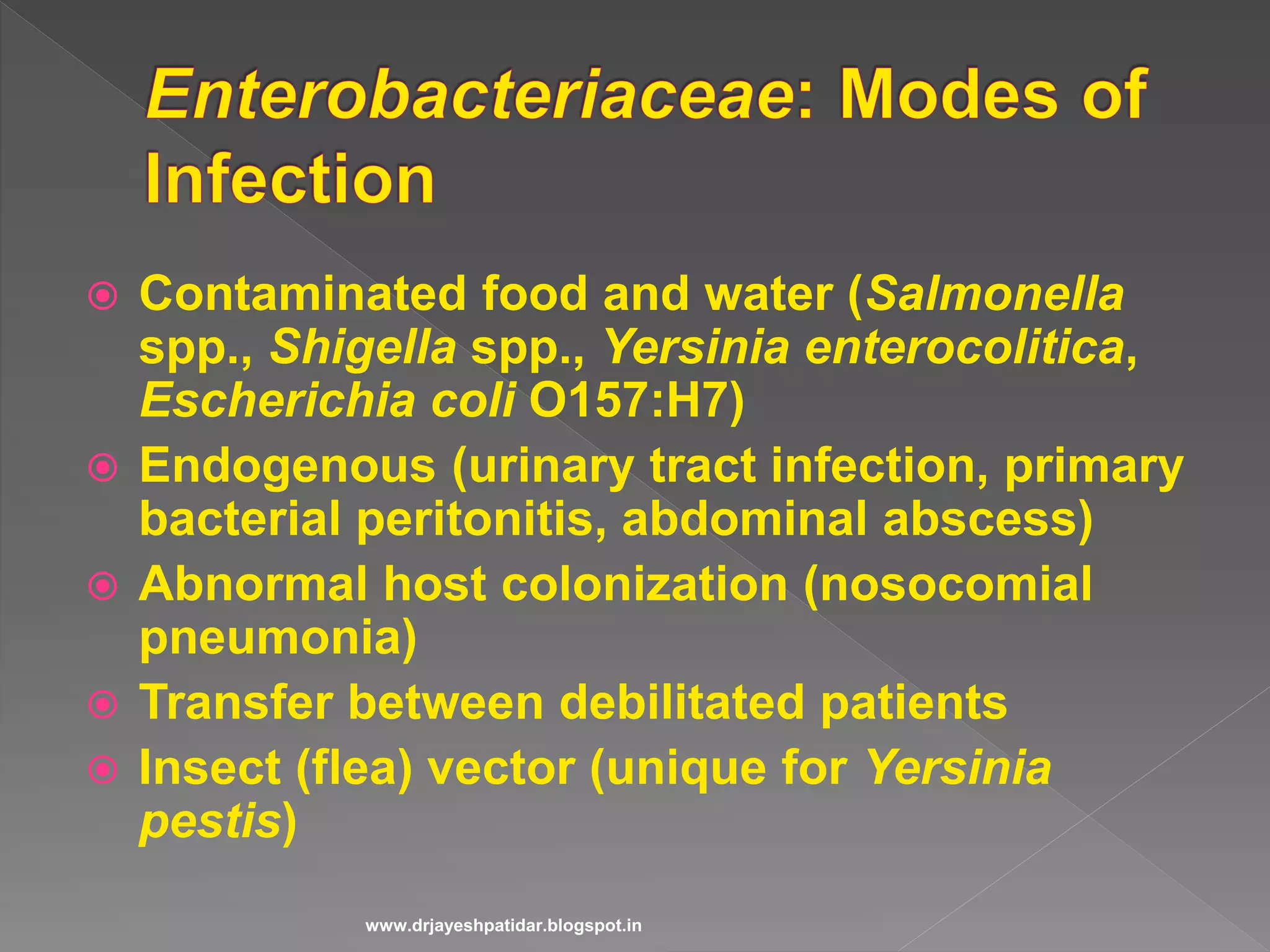
 Contaminated food and water (Salmonella
spp., Shigella spp., Yersinia enterocolitica,
Escherichia coli O157:H7)
 Endogenous (urinary tract infection, primary
bacterial peritonitis, abdominal abscess)
 Abnormal host colonization (nosocomial
pneumonia)
 Transfer between debilitated patients
 Insect (flea) vector (unique for Yersinia
pestis)
www.drjayeshpatidar.blogspot.in
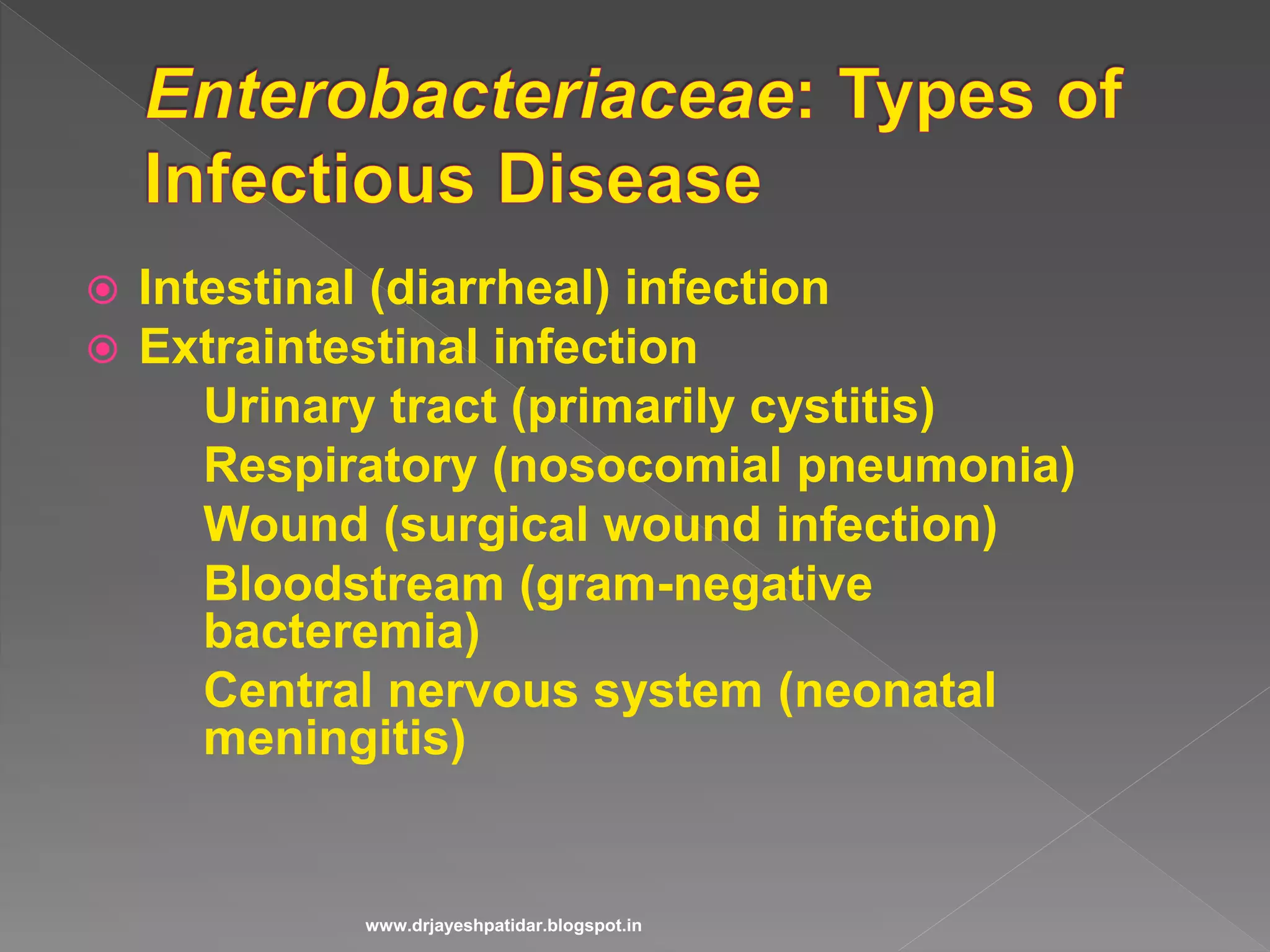
 Intestinal (diarrheal) infection
 Extraintestinal infection
Urinary tract (primarily cystitis)
Respiratory (nosocomial pneumonia)
Wound (surgical wound infection)
Bloodstream (gram-negative
bacteremia)
Central nervous system (neonatal
meningitis)
www.drjayeshpatidar.blogspot.in
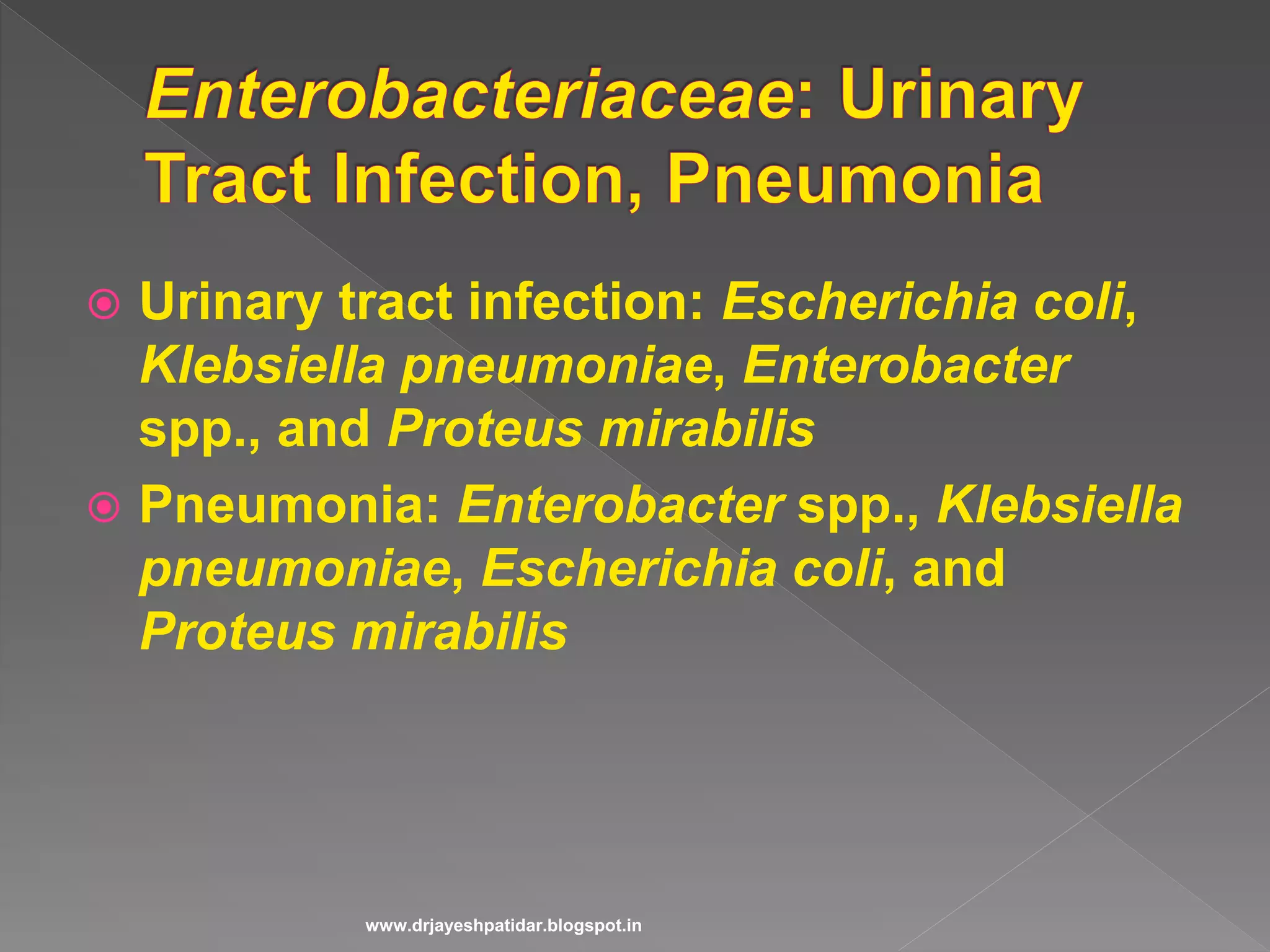
 Urinary tract infection: Escherichia coli,
Klebsiella pneumoniae, Enterobacter
spp., and Proteus mirabilis
 Pneumonia: Enterobacter spp., Klebsiella
pneumoniae, Escherichia coli, and
Proteus mirabilis
www.drjayeshpatidar.blogspot.in
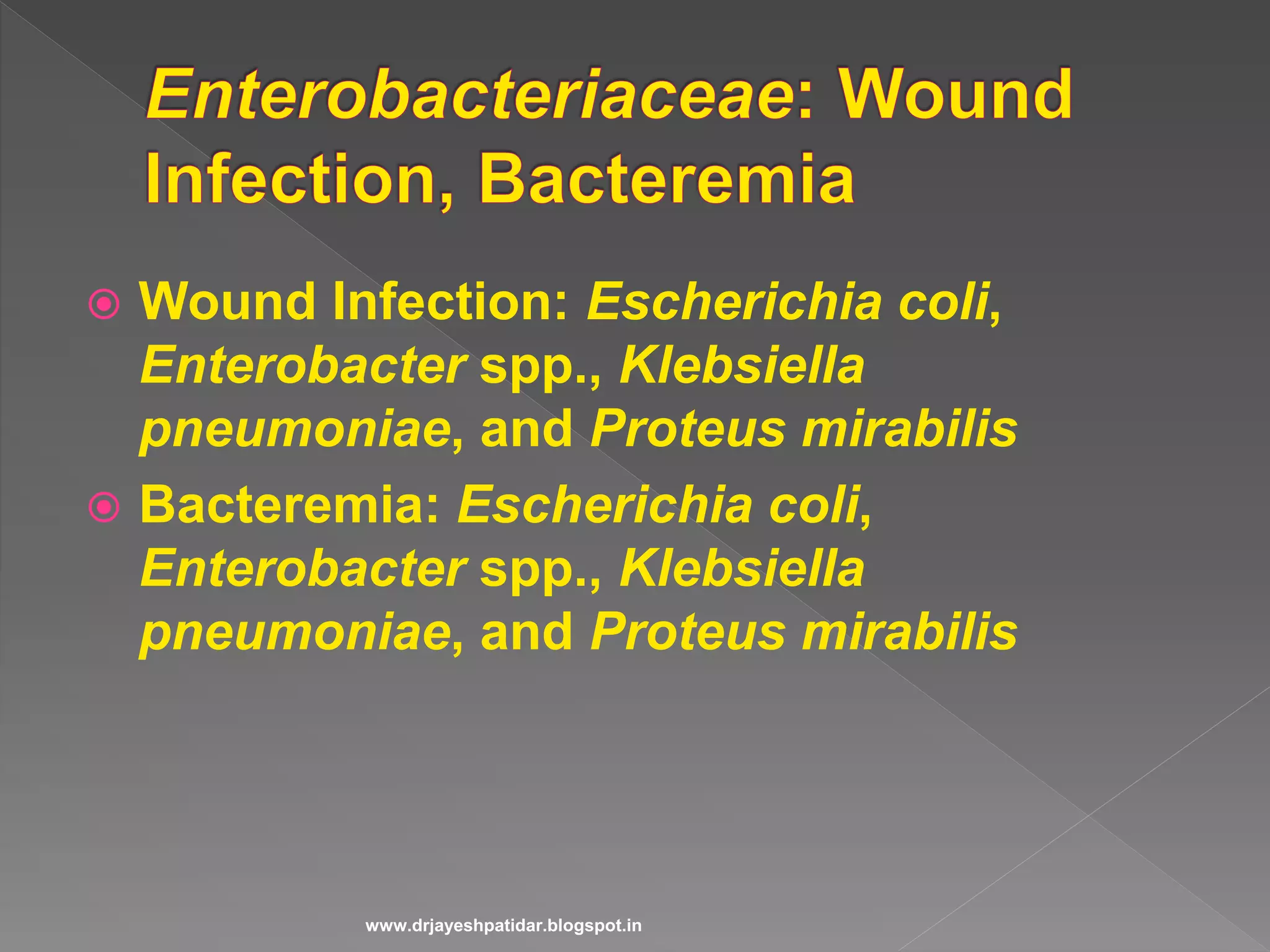
 Wound Infection: Escherichia coli,
Enterobacter spp., Klebsiella
pneumoniae, and Proteus mirabilis
 Bacteremia: Escherichia coli,
Enterobacter spp., Klebsiella
pneumoniae, and Proteus mirabilis
www.drjayeshpatidar.blogspot.in
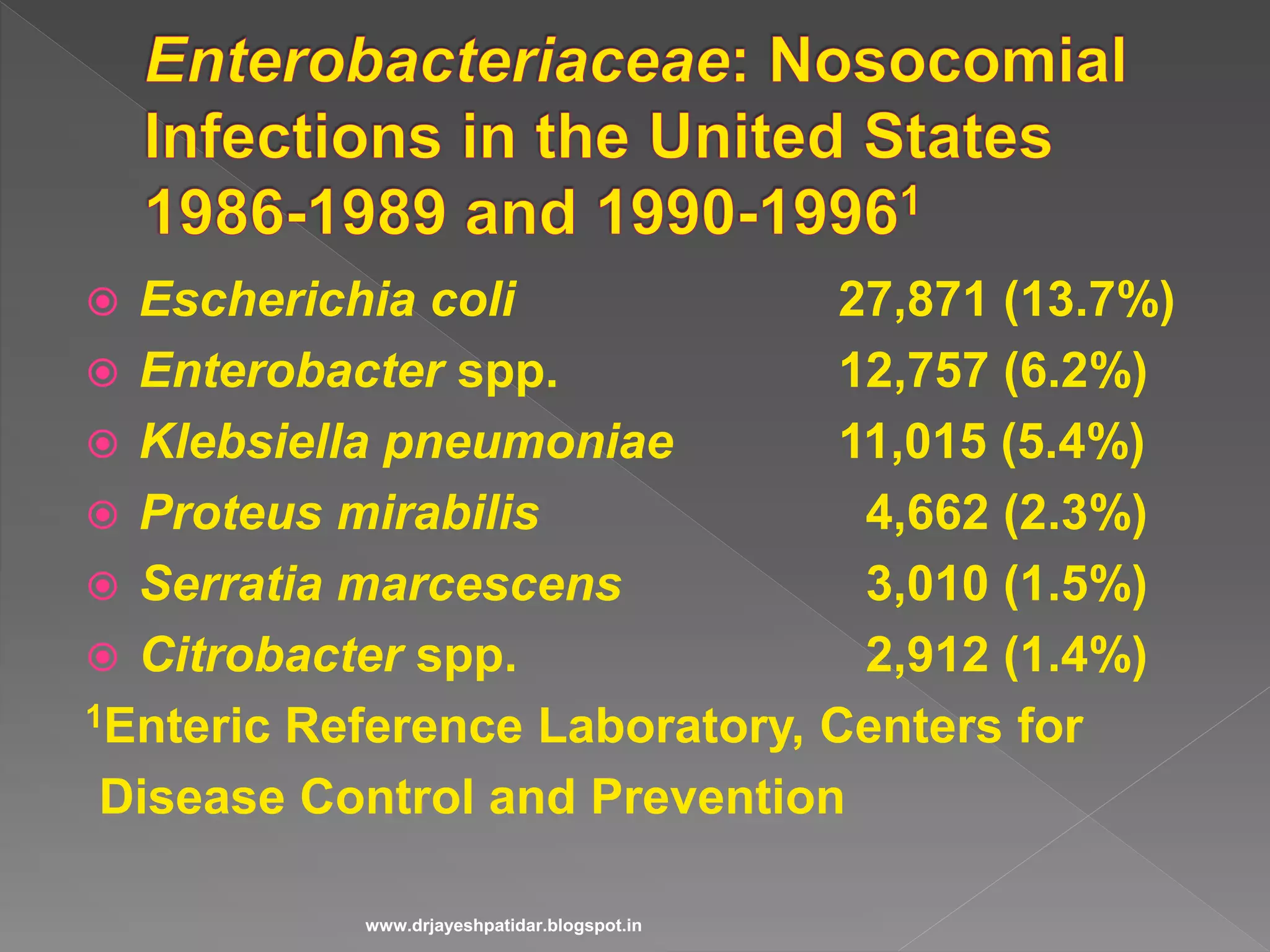
 Escherichia coli 27,871 (13.7%)
 Enterobacter spp. 12,757 (6.2%)
 Klebsiella pneumoniae 11,015 (5.4%)
 Proteus mirabilis 4,662 (2.3%)
 Serratia marcescens 3,010 (1.5%)
 Citrobacter spp. 2,912 (1.4%)
1Enteric Reference Laboratory, Centers for
Disease Control and Prevention
www.drjayeshpatidar.blogspot.in
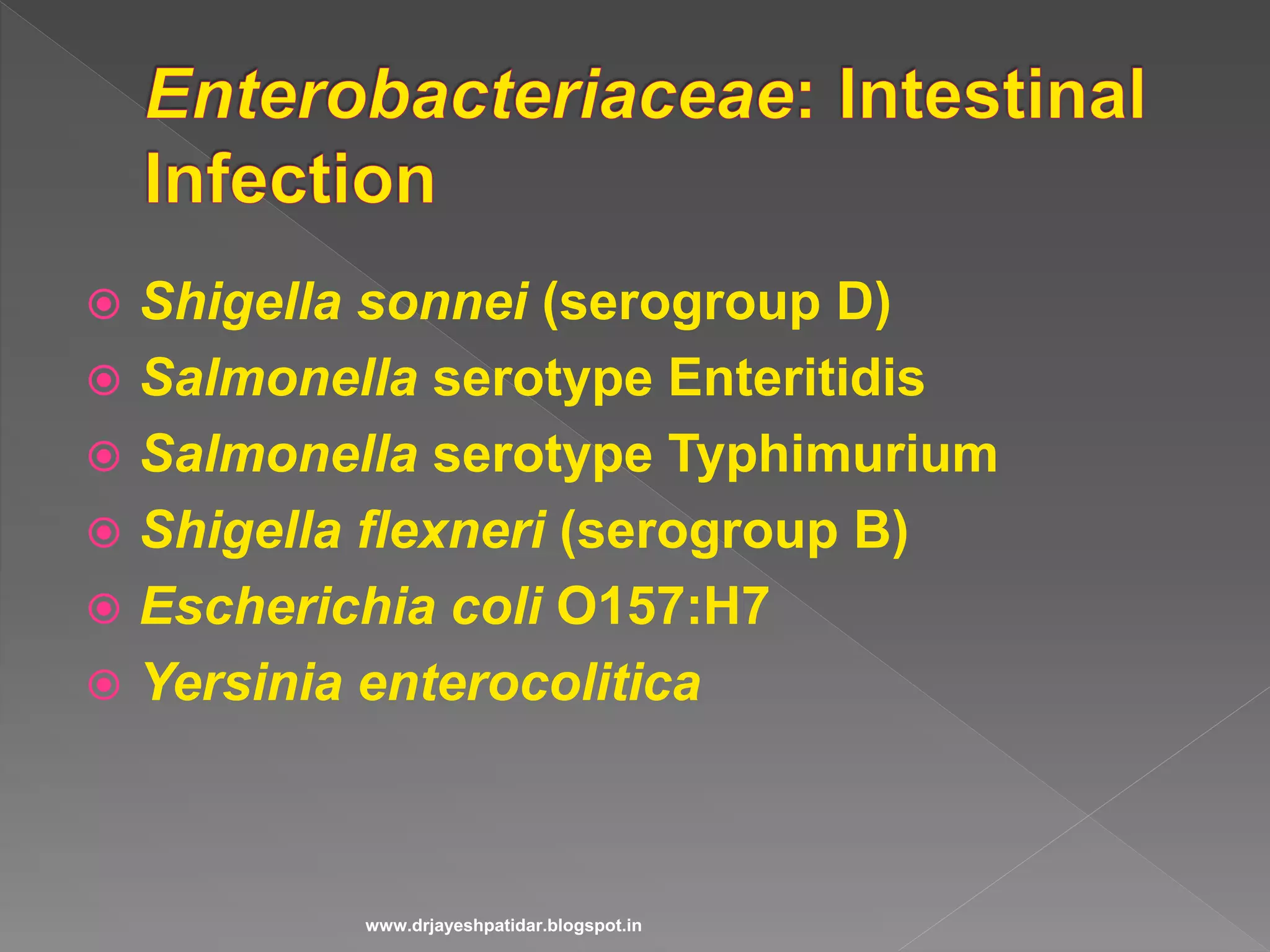
 Shigella sonnei (serogroup D)
 Salmonella serotype Enteritidis
 Salmonella serotype Typhimurium
 Shigella flexneri (serogroup B)
 Escherichia coli O157:H7
 Yersinia enterocolitica
www.drjayeshpatidar.blogspot.in
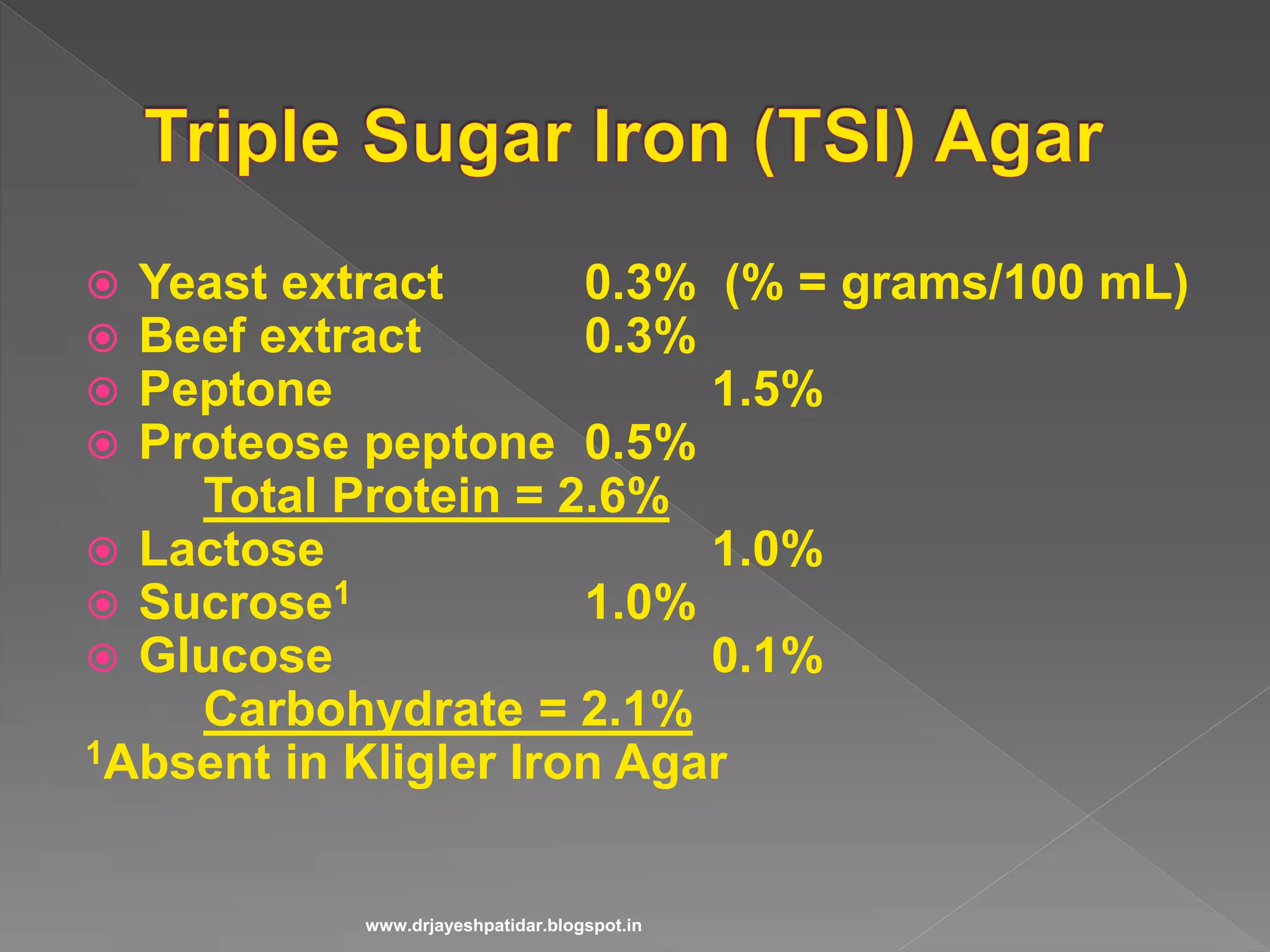
 Yeast extract 0.3% (% = grams/100 mL)
 Beef extract 0.3%
 Peptone 1.5%
 Proteose peptone 0.5%
Total Protein = 2.6%
 Lactose 1.0%
 Sucrose1 1.0%
 Glucose 0.1%
Carbohydrate = 2.1%
1Absent in Kligler Iron Agar
www.drjayeshpatidar.blogspot.in
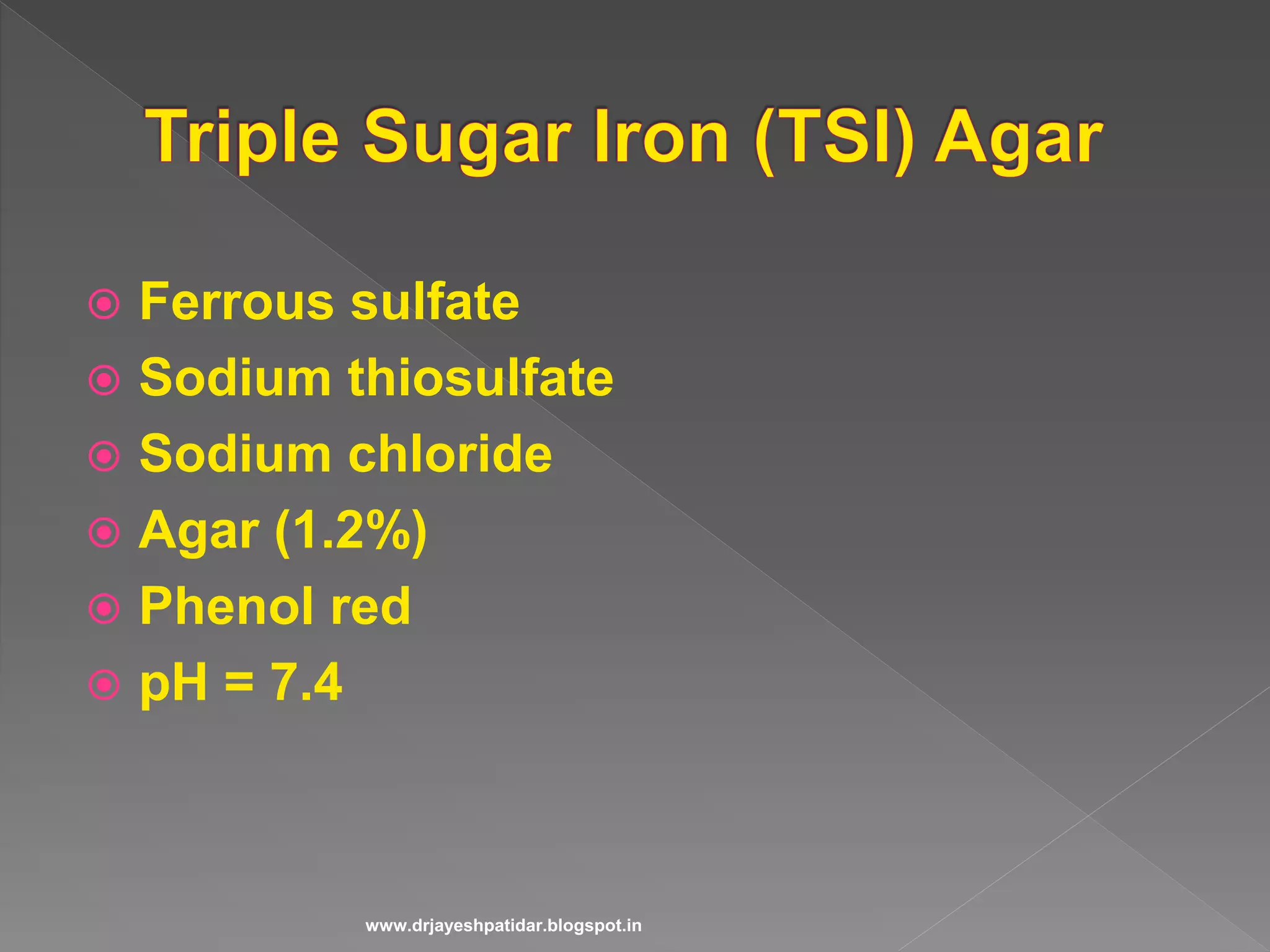
 Ferrous sulfate
 Sodium thiosulfate
 Sodium chloride
 Agar (1.2%)
 Phenol red
 pH = 7.4
www.drjayeshpatidar.blogspot.in
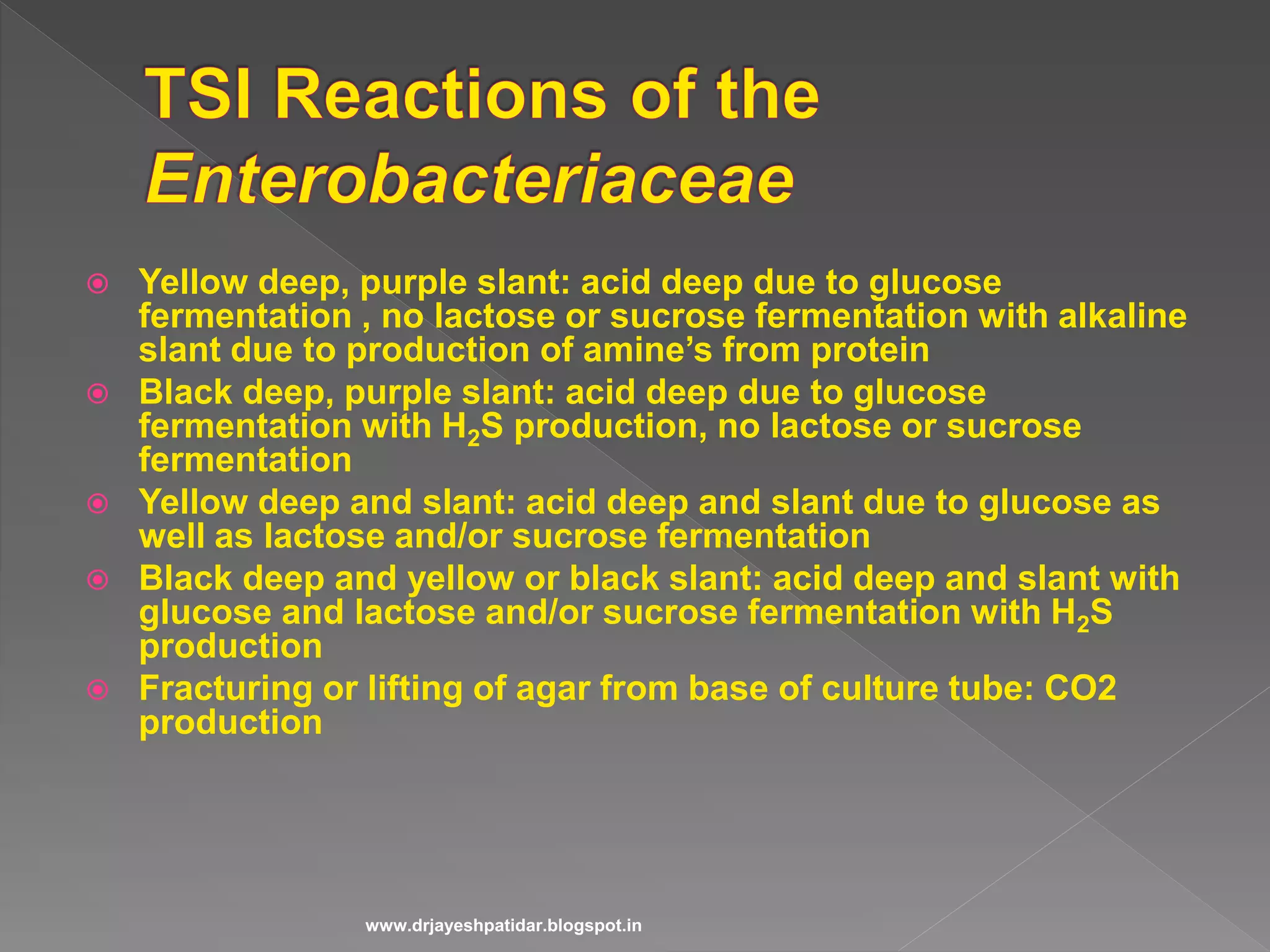
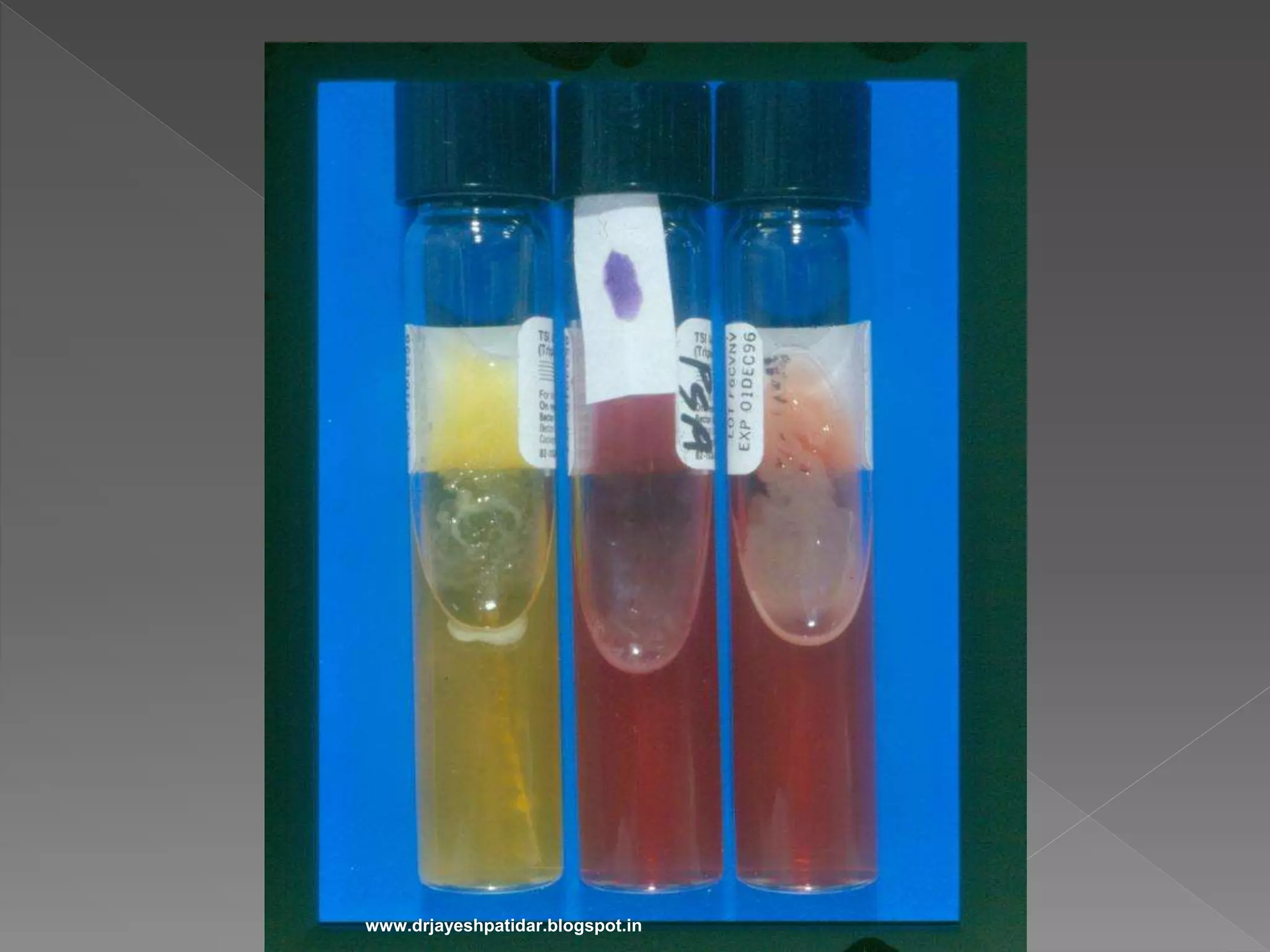
 Yellow deep, purple slant: acid deep due to glucose
fermentation , no lactose or sucrose fermentation with alkaline
slant due to production of amine’s from protein
 Black deep, purple slant: acid deep due to glucose
fermentation with H2S production, no lactose or sucrose
fermentation
 Yellow deep and slant: acid deep and slant due to glucose as
well as lactose and/or sucrose fermentation
 Black deep and yellow or black slant: acid deep and slant with
glucose and lactose and/or sucrose fermentation with H2S
production
 Fracturing or lifting of agar from base of culture tube: CO2
production
www.drjayeshpatidar.blogspot.in
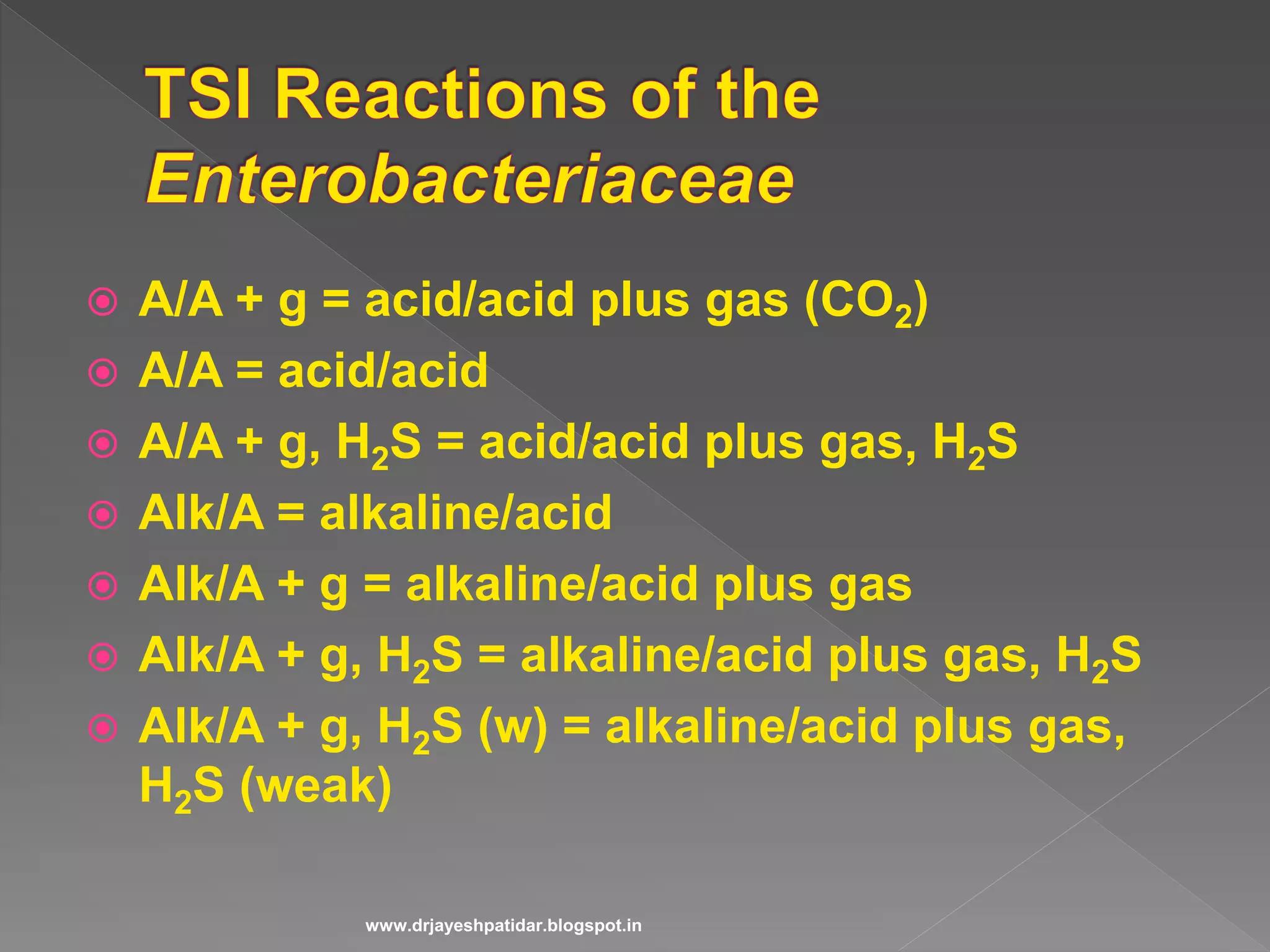
 A/A + g = acid/acid plus gas (CO2)
 A/A = acid/acid
 A/A + g, H2S = acid/acid plus gas, H2S
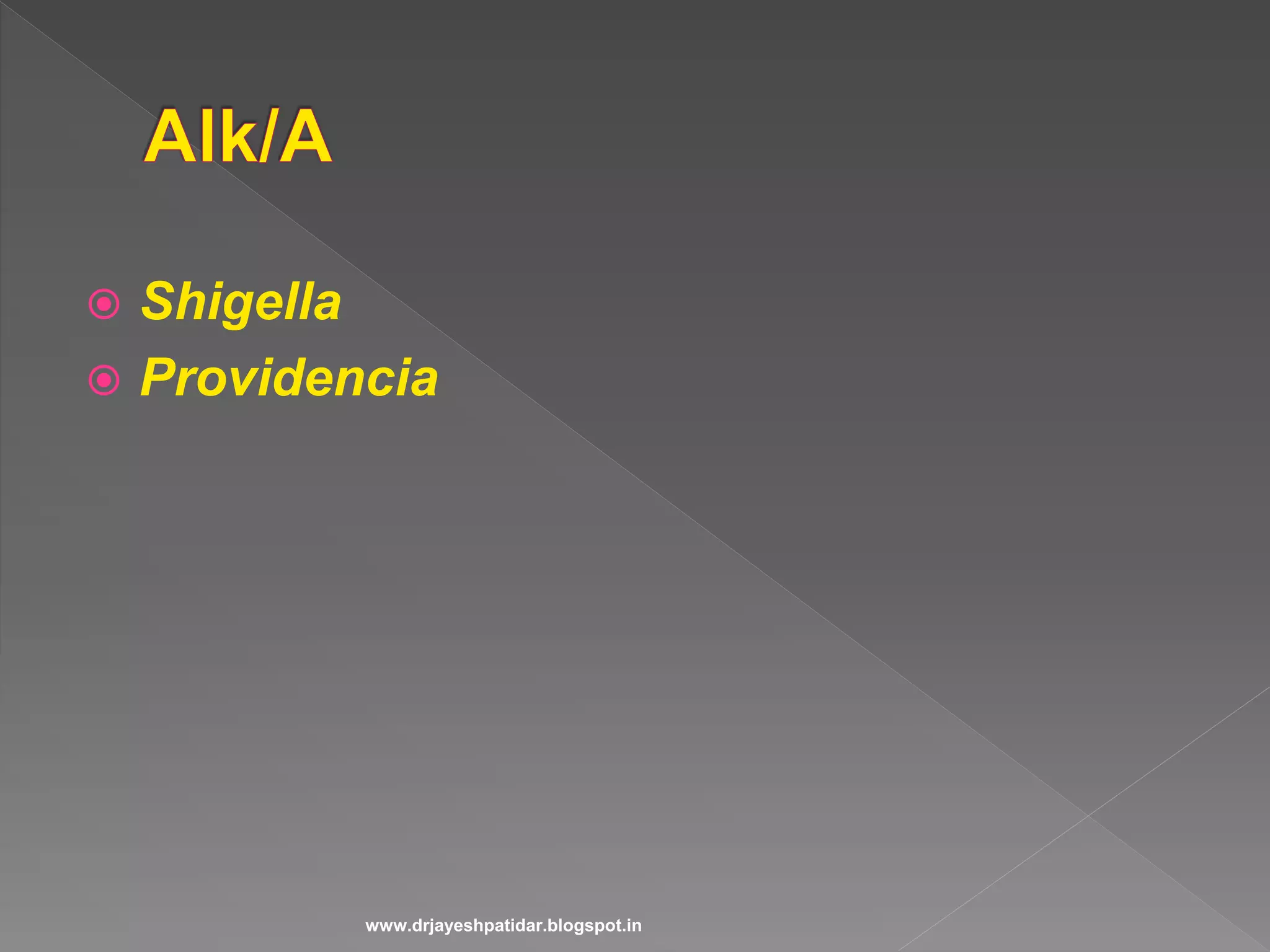
 Alk/A = alkaline/acid
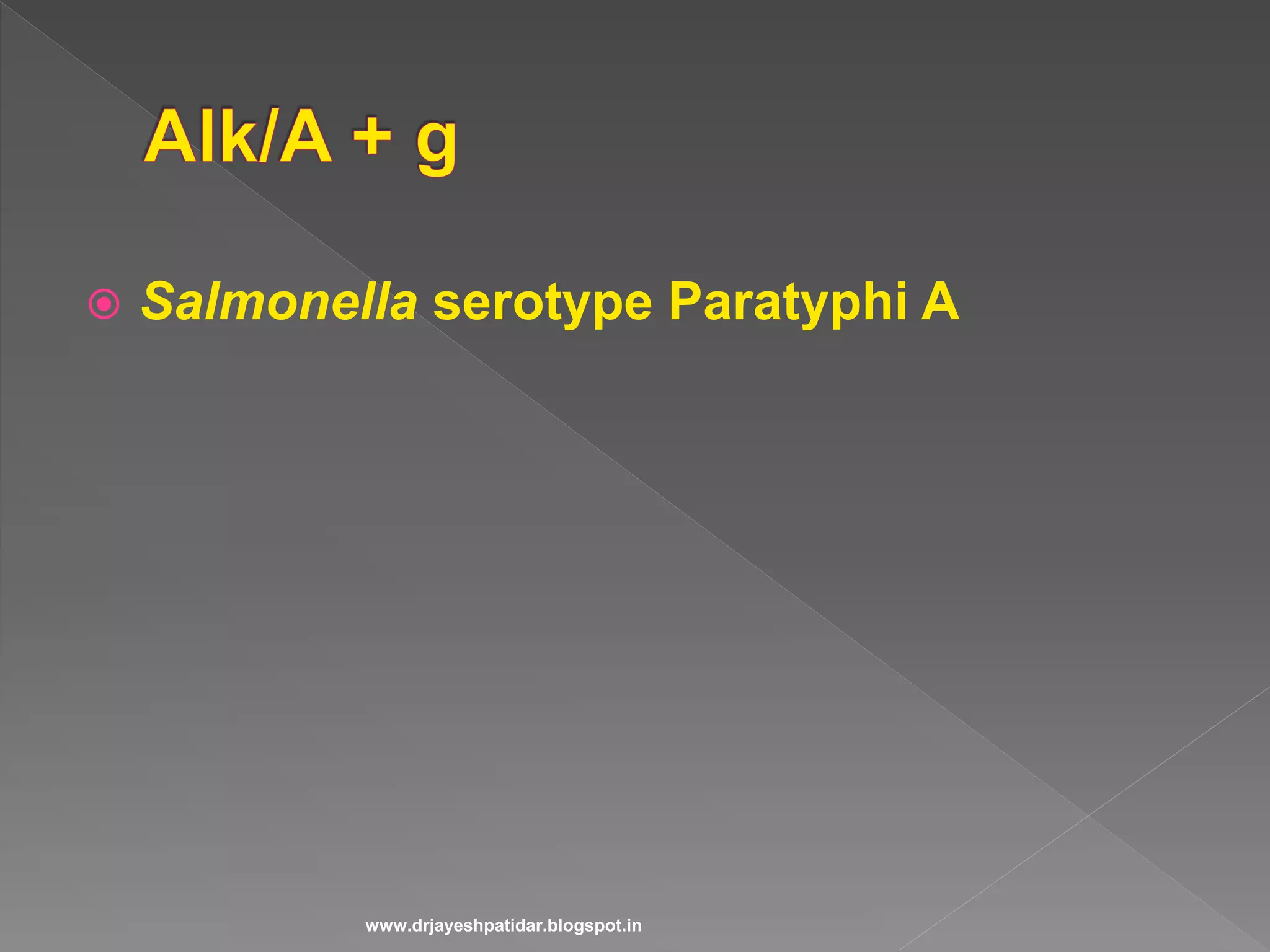
 Alk/A + g = alkaline/acid plus gas
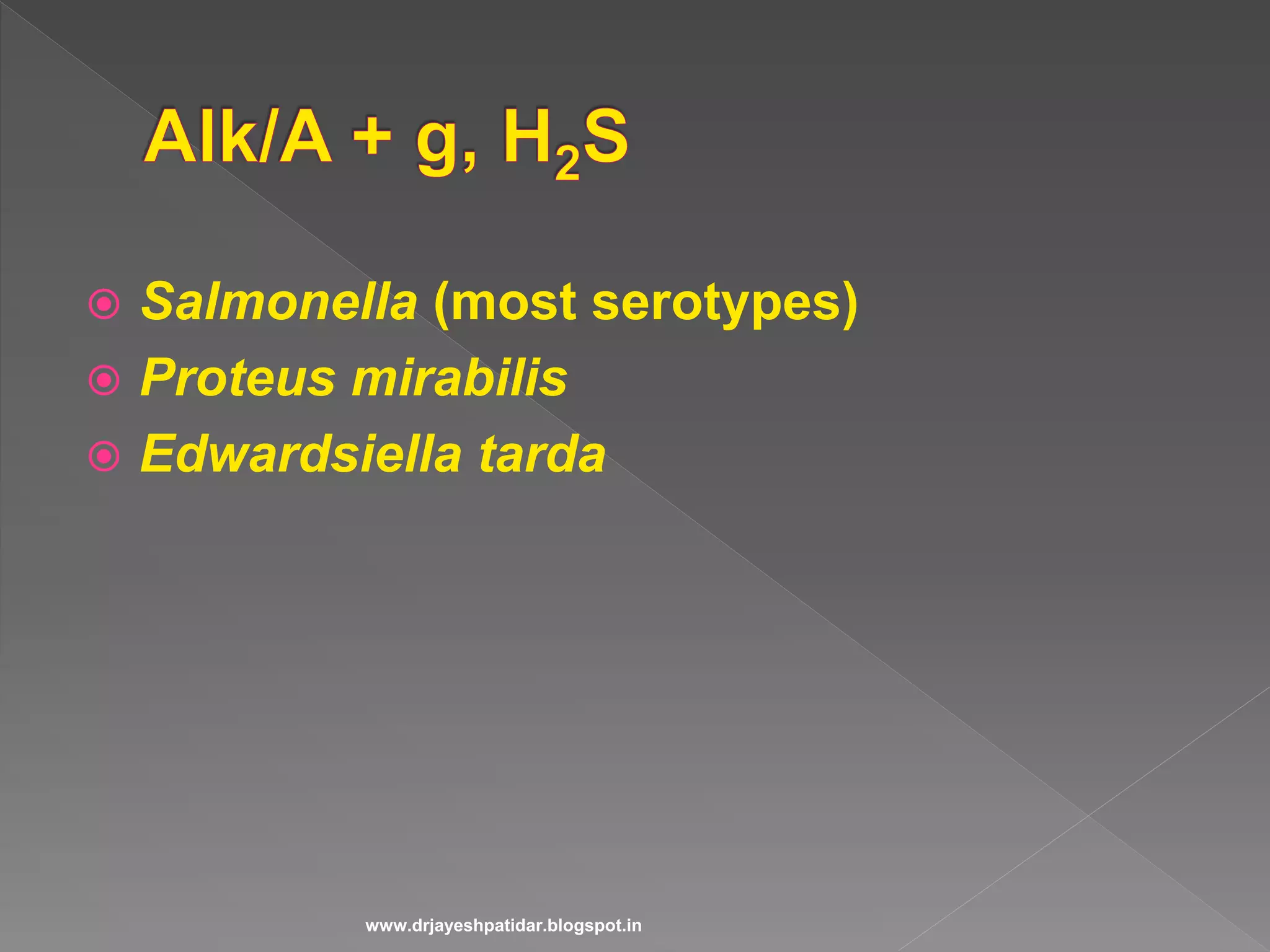
 Alk/A + g, H2S = alkaline/acid plus gas, H2S
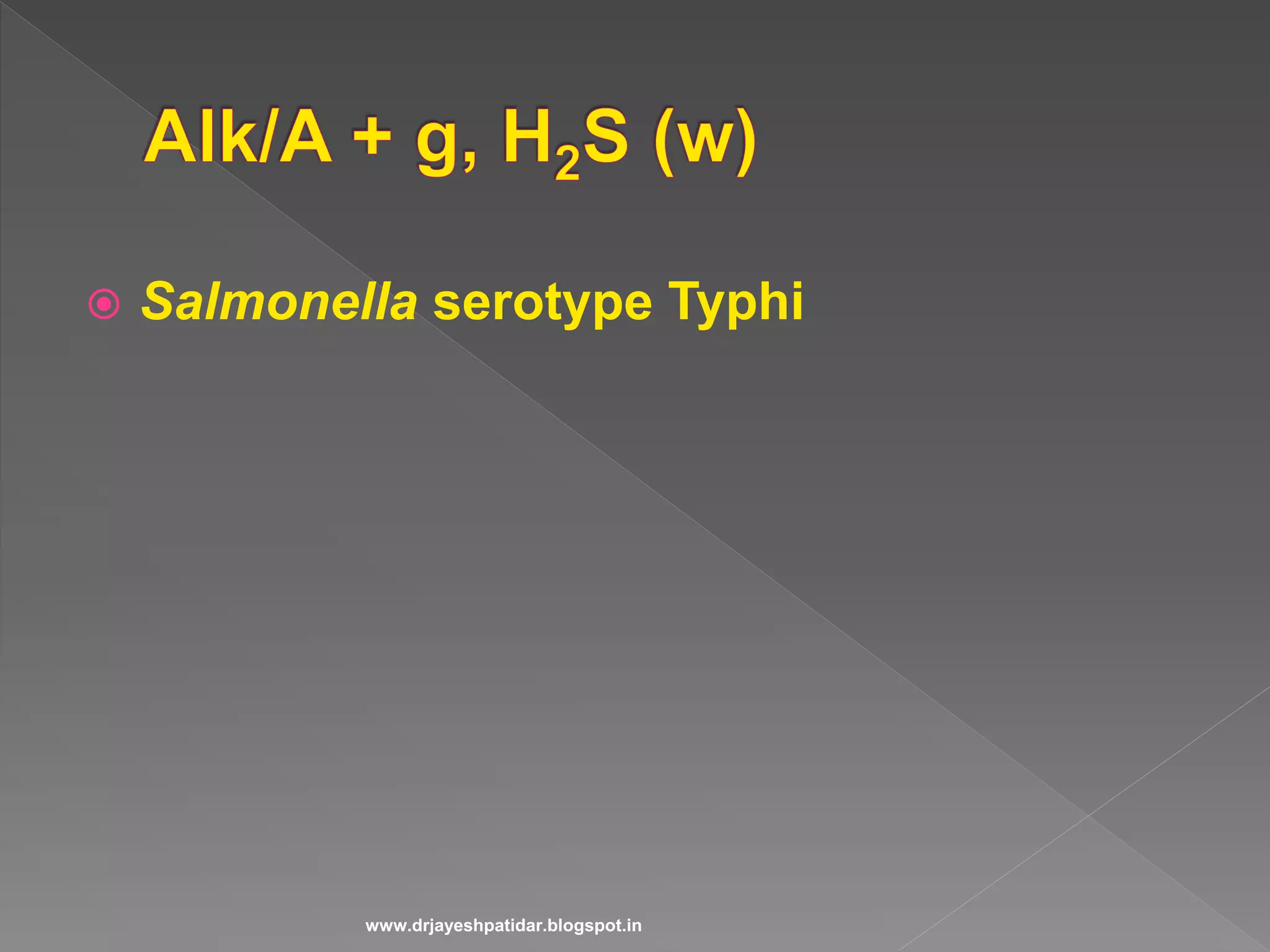
 Alk/A + g, H2S (w) = alkaline/acid plus gas,
H2S (weak)
www.drjayeshpatidar.blogspot.in
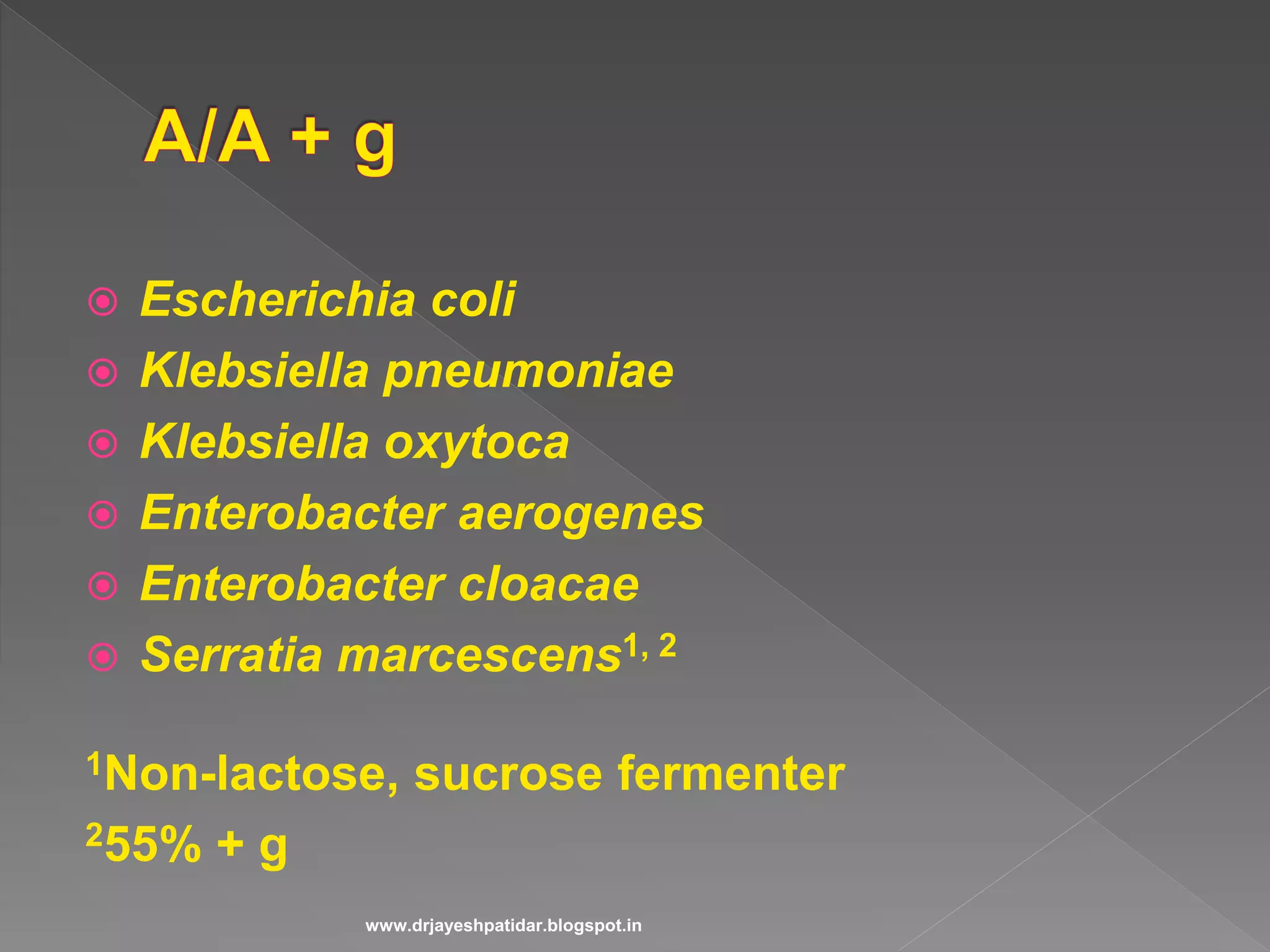
 Escherichia coli
 Klebsiella pneumoniae
 Klebsiella oxytoca
 Enterobacter aerogenes
 Enterobacter cloacae
 Serratia marcescens1, 2
1Non-lactose, sucrose fermenter
255% + g
www.drjayeshpatidar.blogspot.in
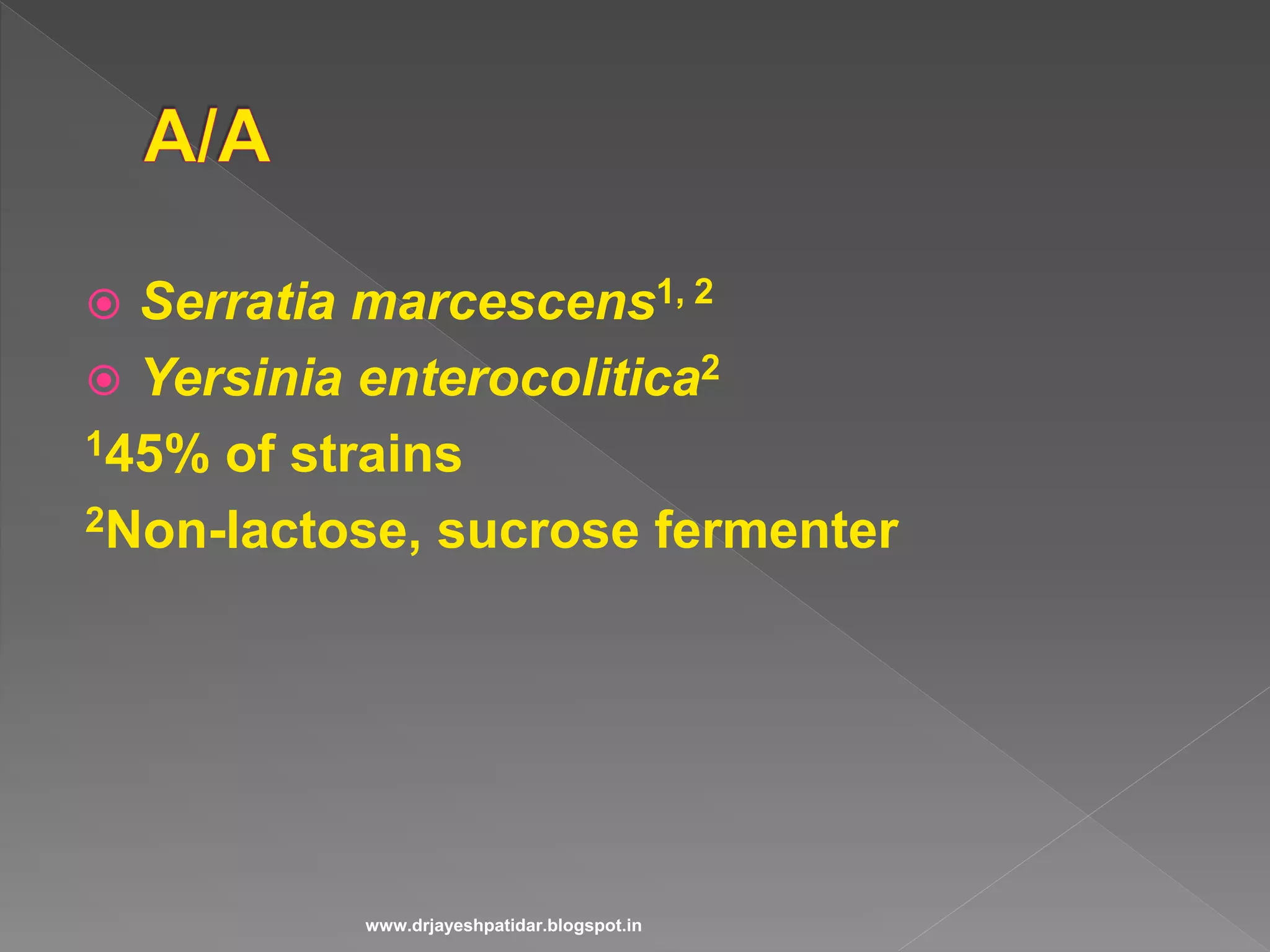
 Serratia marcescens1, 2
 Yersinia enterocolitica2
145% of strains
2Non-lactose, sucrose fermenter
www.drjayeshpatidar.blogspot.in
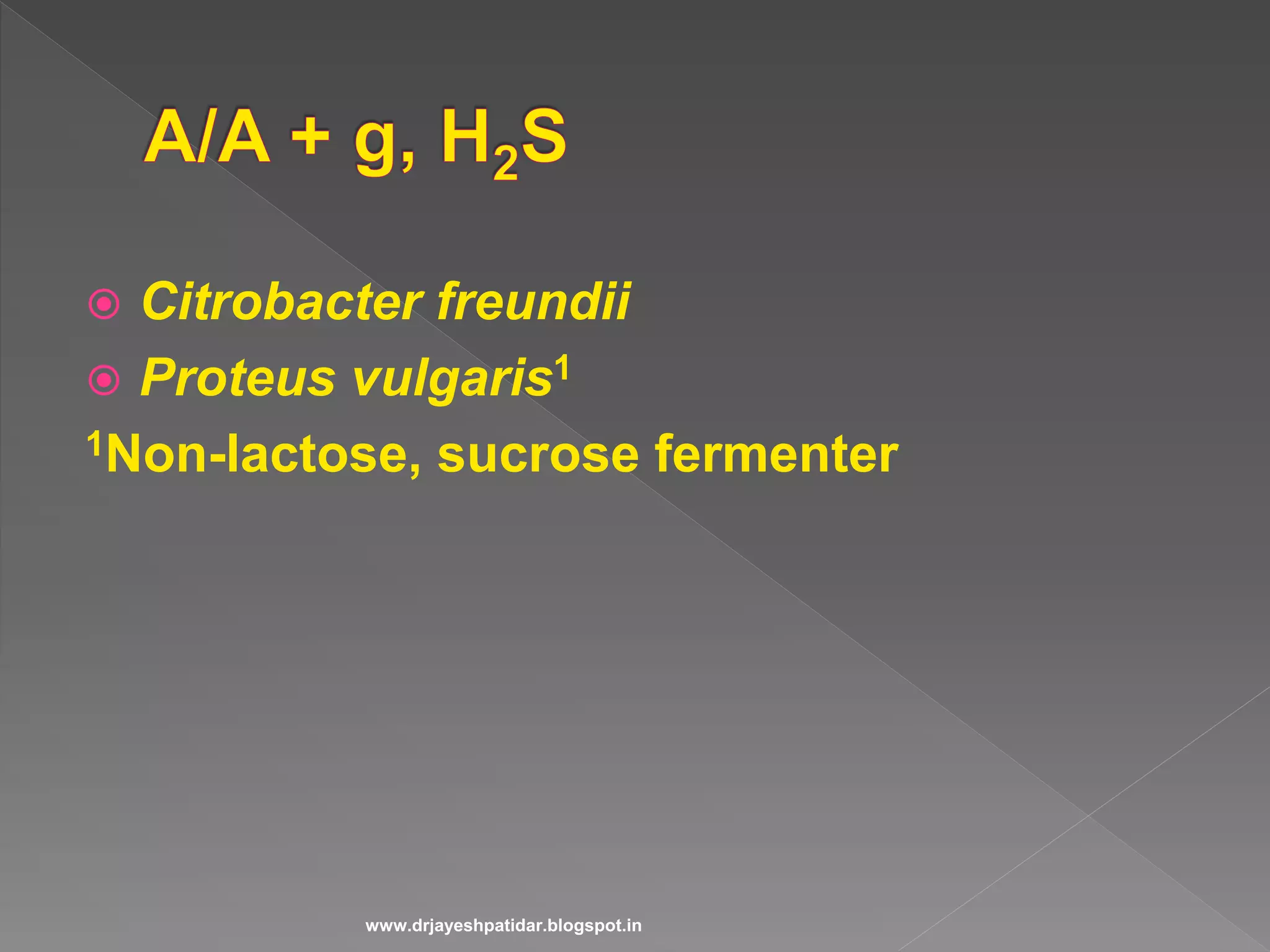
 Citrobacter freundii
 Proteus vulgaris1
1Non-lactose, sucrose fermenter
www.drjayeshpatidar.blogspot.in
 Shigella
 Providencia
www.drjayeshpatidar.blogspot.in
 Salmonella serotype Paratyphi A
www.drjayeshpatidar.blogspot.in
 Salmonella (most serotypes)
 Proteus mirabilis
 Edwardsiella tarda
www.drjayeshpatidar.blogspot.in
 Salmonella serotype Typhi
www.drjayeshpatidar.blogspot.in
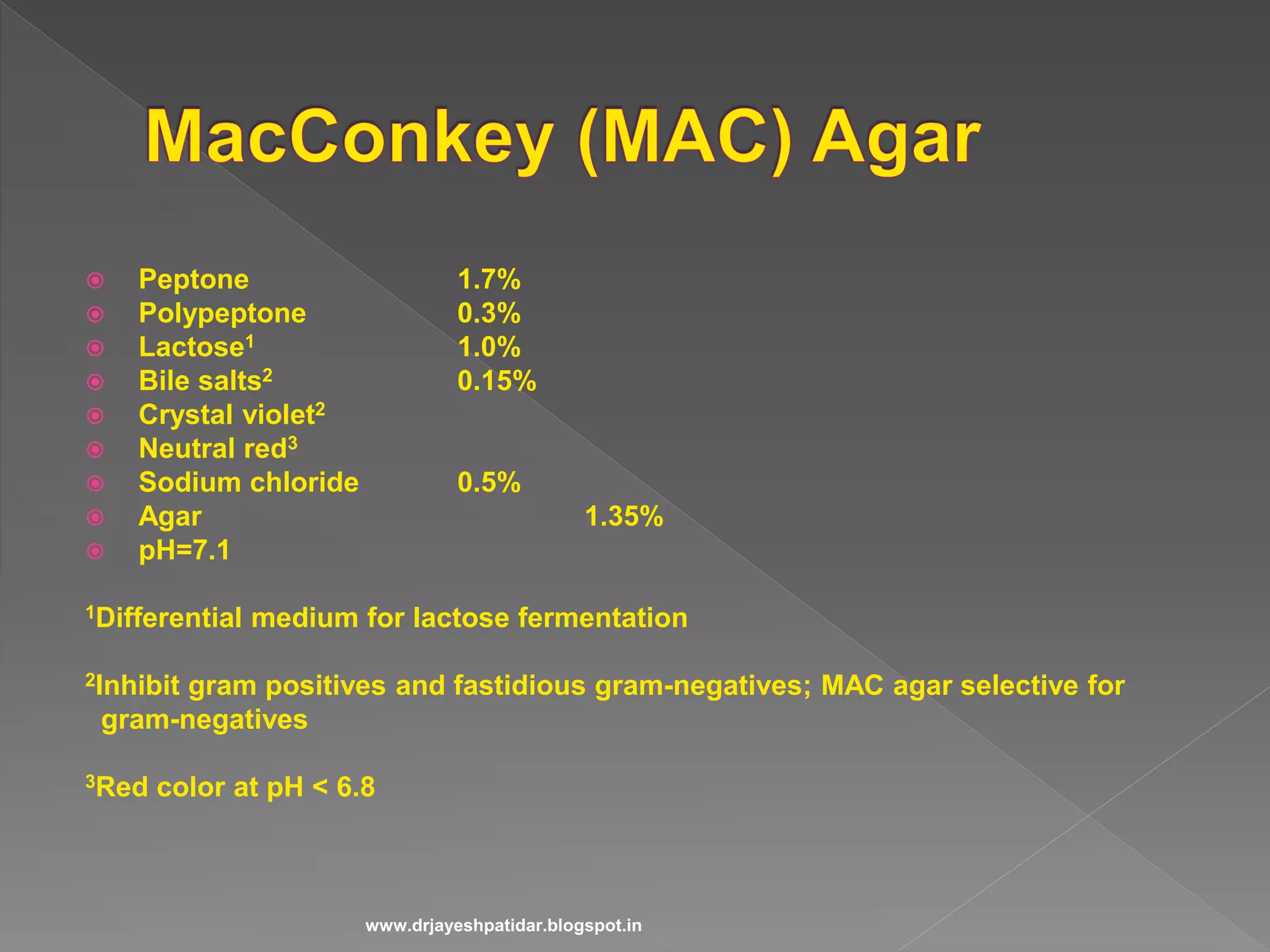
 Peptone 1.7%
 Polypeptone 0.3%
 Lactose1 1.0%
 Bile salts2 0.15%
 Crystal violet2
 Neutral red3
 Sodium chloride 0.5%
 Agar 1.35%
 pH=7.1
1Differential medium for lactose fermentation
2Inhibit gram positives and fastidious gram-negatives; MAC agar selective for
gram-negatives
3Red color at pH < 6.8
www.drjayeshpatidar.blogspot.in
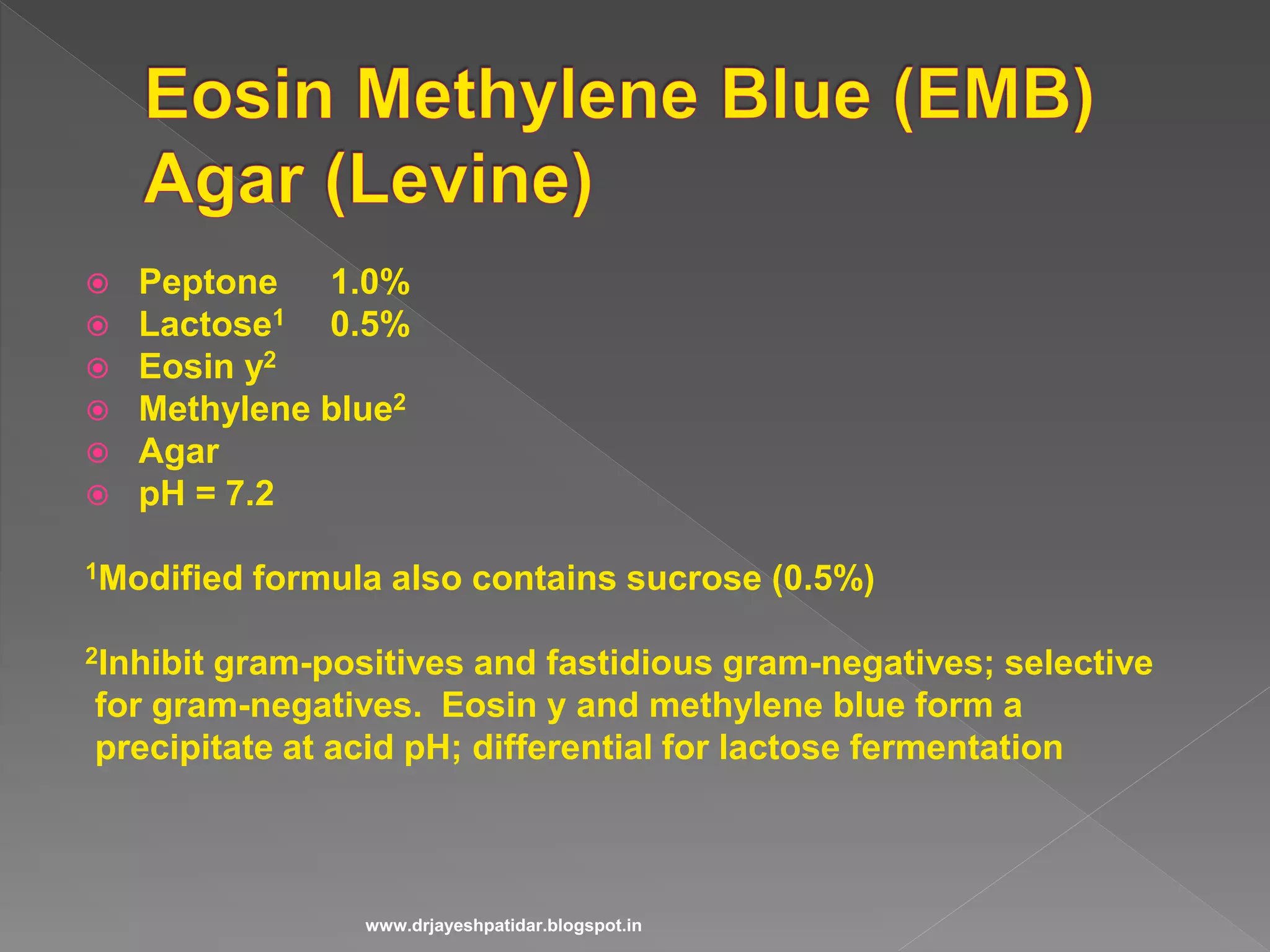
 Peptone 1.0%
 Lactose1 0.5%
 Eosin y2
 Methylene blue2
 Agar
 pH = 7.2
1Modified formula also contains sucrose (0.5%)
2Inhibit gram-positives and fastidious gram-negatives; selective
for gram-negatives. Eosin y and methylene blue form a
precipitate at acid pH; differential for lactose fermentation
www.drjayeshpatidar.blogspot.in
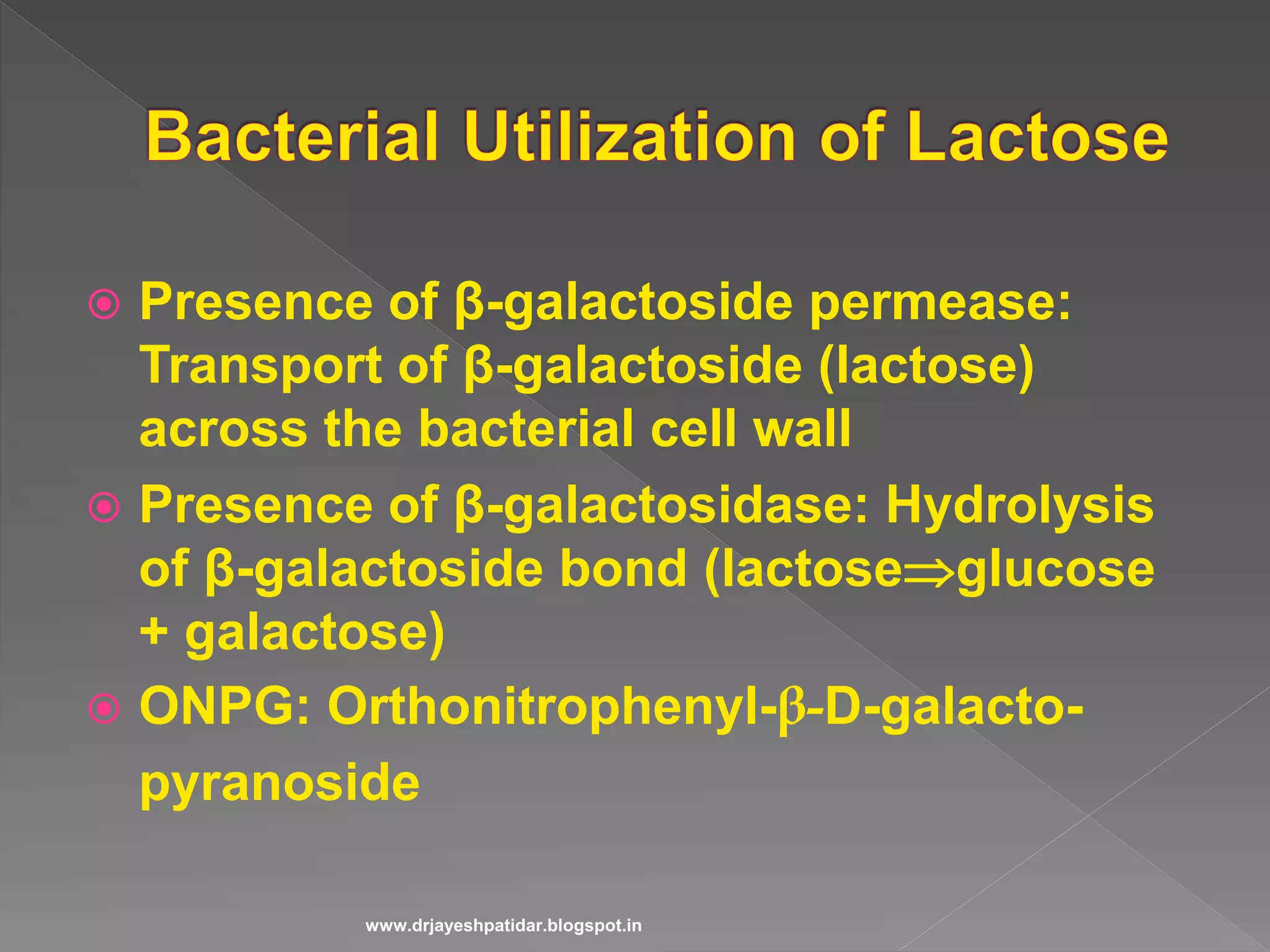
 Presence of β-galactoside permease:
Transport of β-galactoside (lactose)
across the bacterial cell wall
 Presence of β-galactosidase: Hydrolysis
of β-galactoside bond (lactoseglucose
+ galactose)
 ONPG: Orthonitrophenyl-β-D-galacto-
pyranoside
www.drjayeshpatidar.blogspot.in
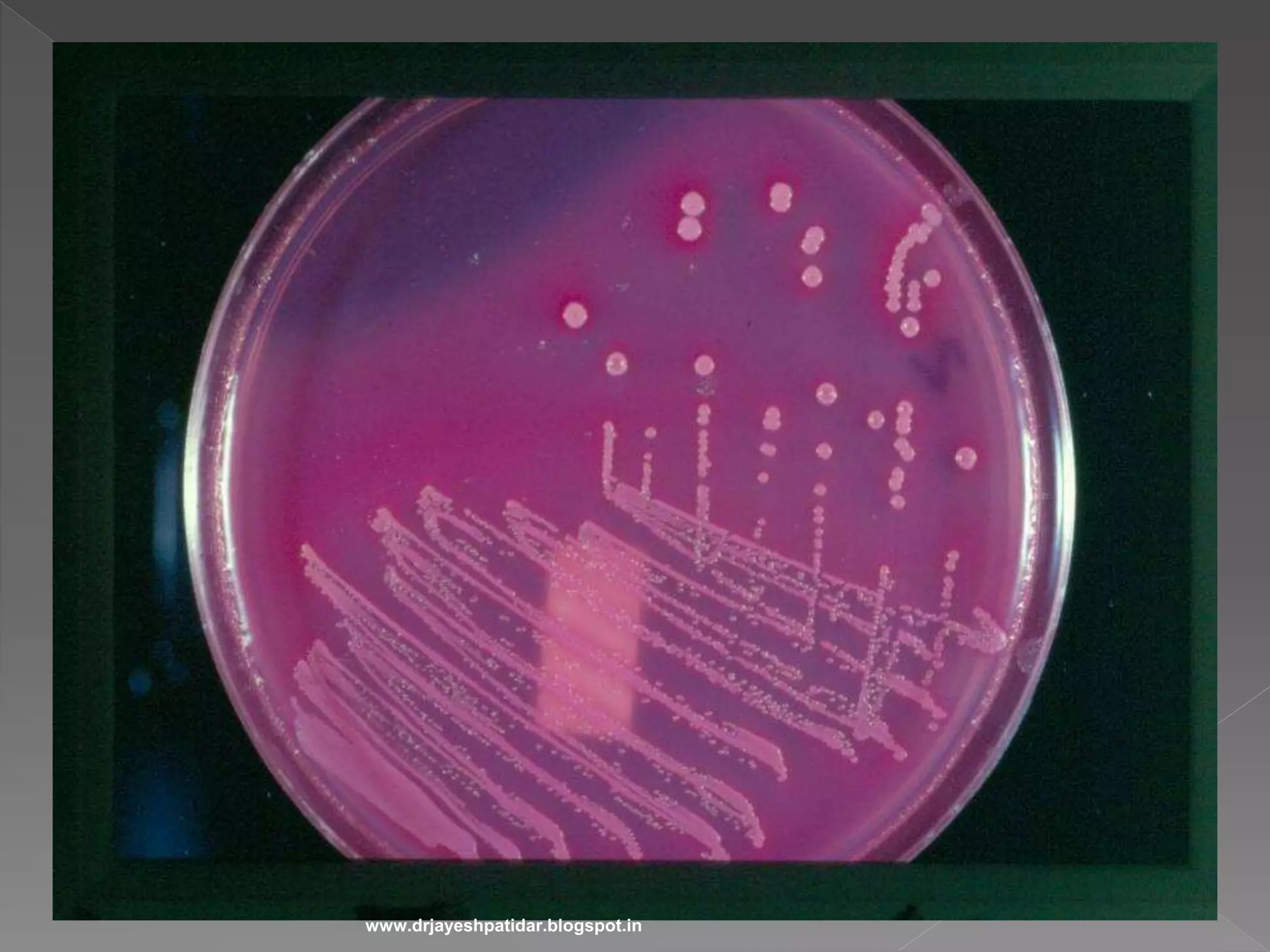
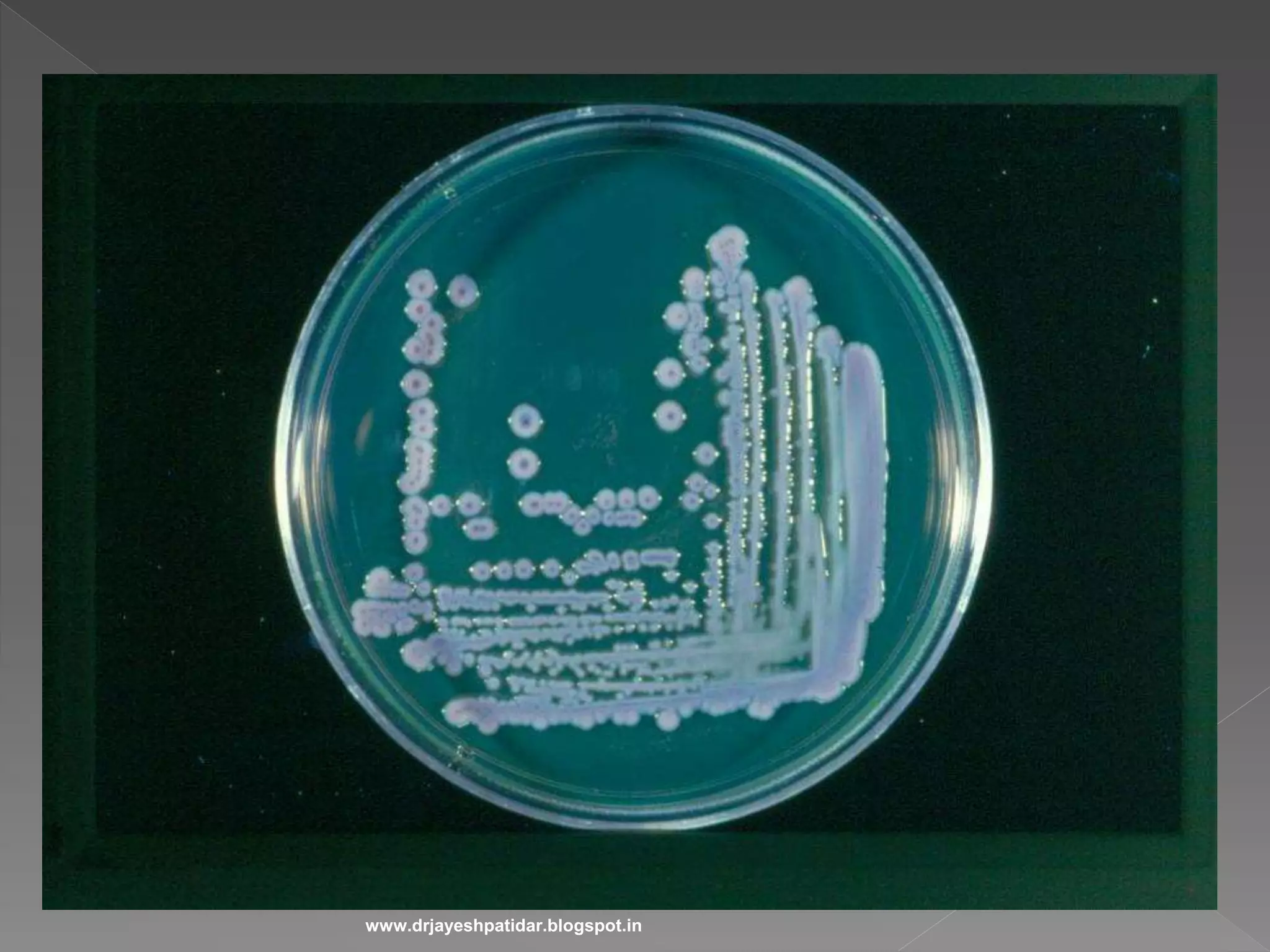
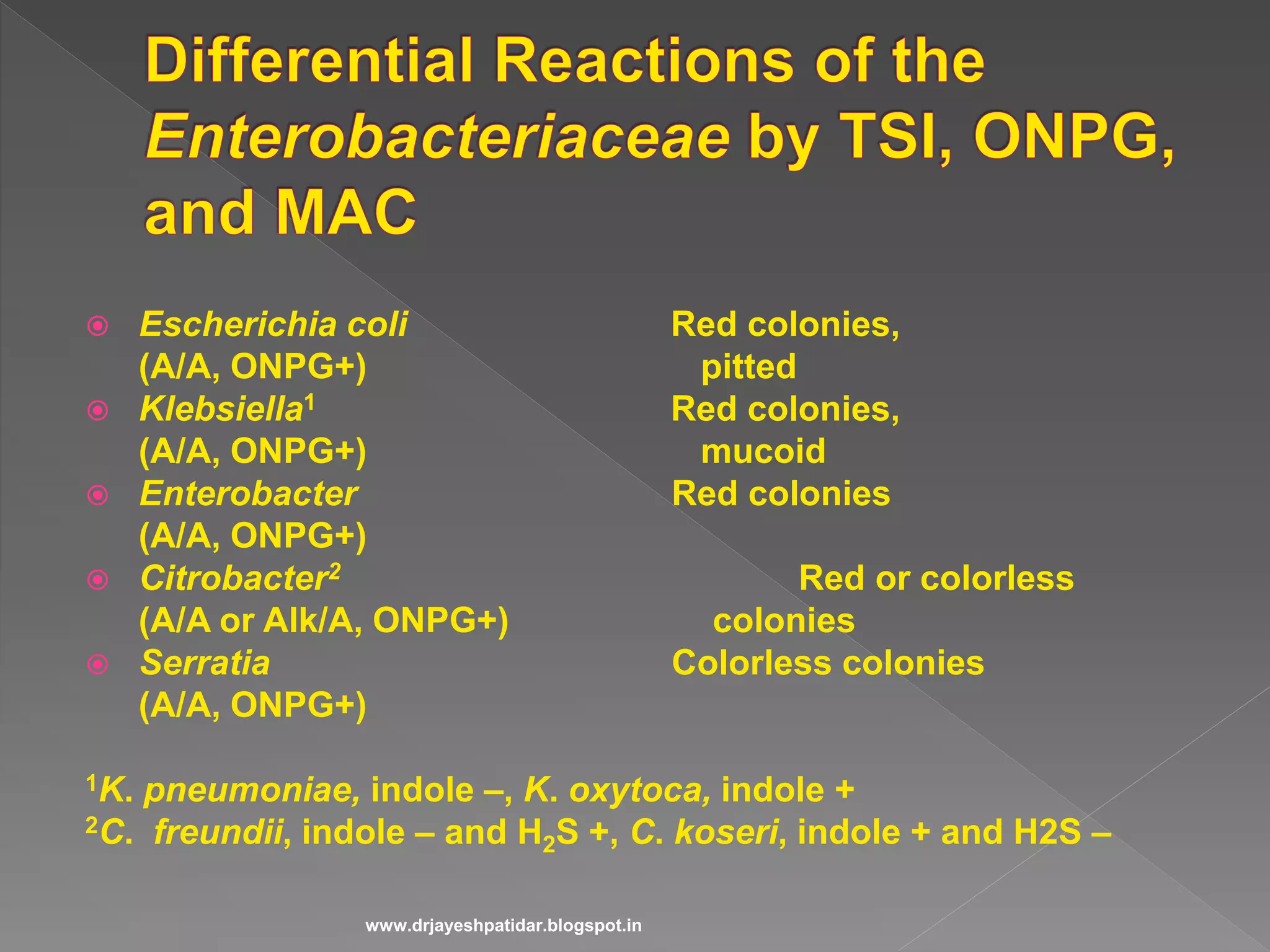
 Escherichia coli Red colonies,
(A/A, ONPG+) pitted
 Klebsiella1 Red colonies,
(A/A, ONPG+) mucoid
 Enterobacter Red colonies
(A/A, ONPG+)
 Citrobacter2 Red or colorless
(A/A or Alk/A, ONPG+) colonies
 Serratia Colorless colonies
(A/A, ONPG+)
1K. pneumoniae, indole –, K. oxytoca, indole +
2C. freundii, indole – and H2S +, C. koseri, indole + and H2S –
www.drjayeshpatidar.blogspot.in
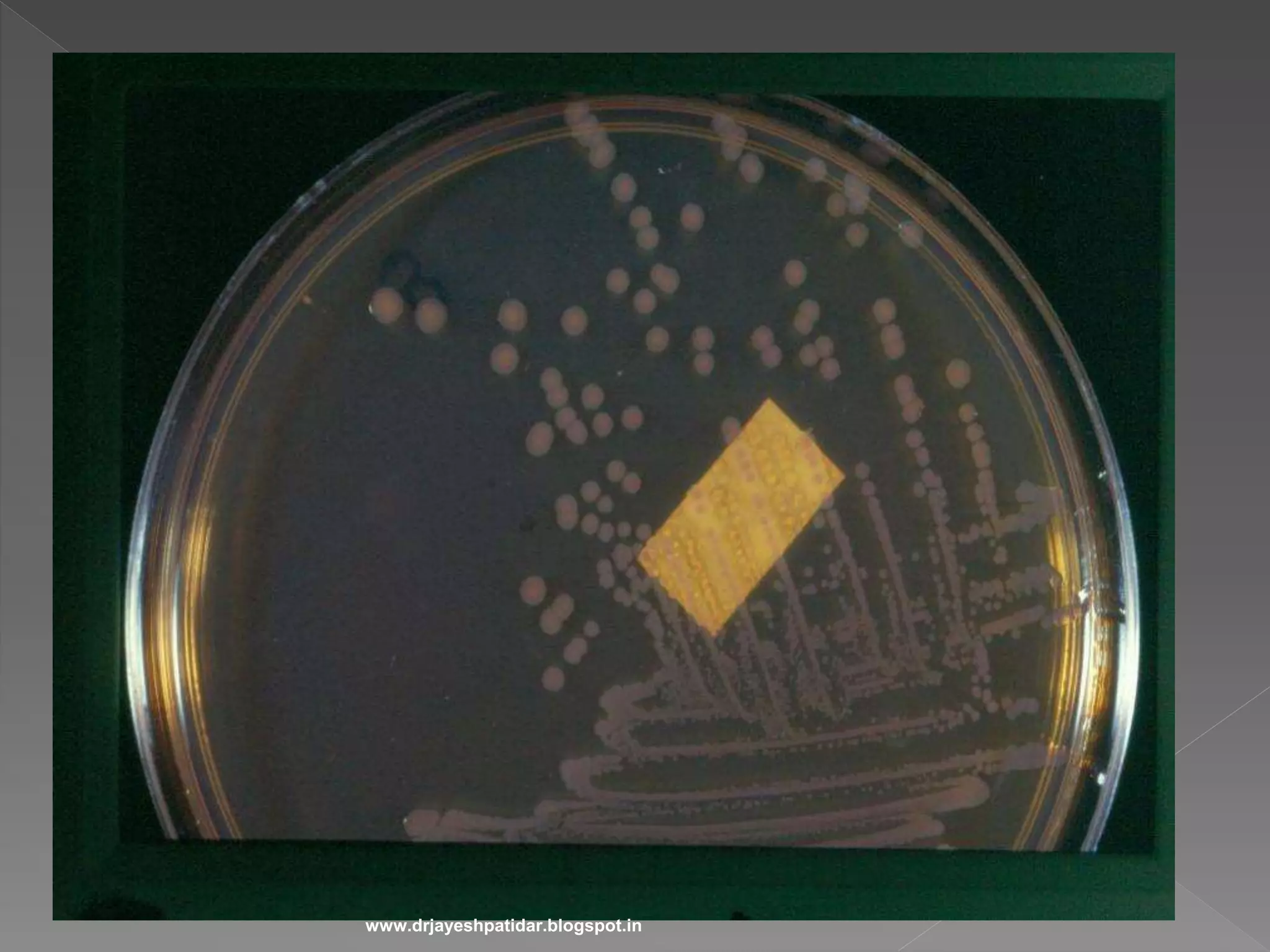
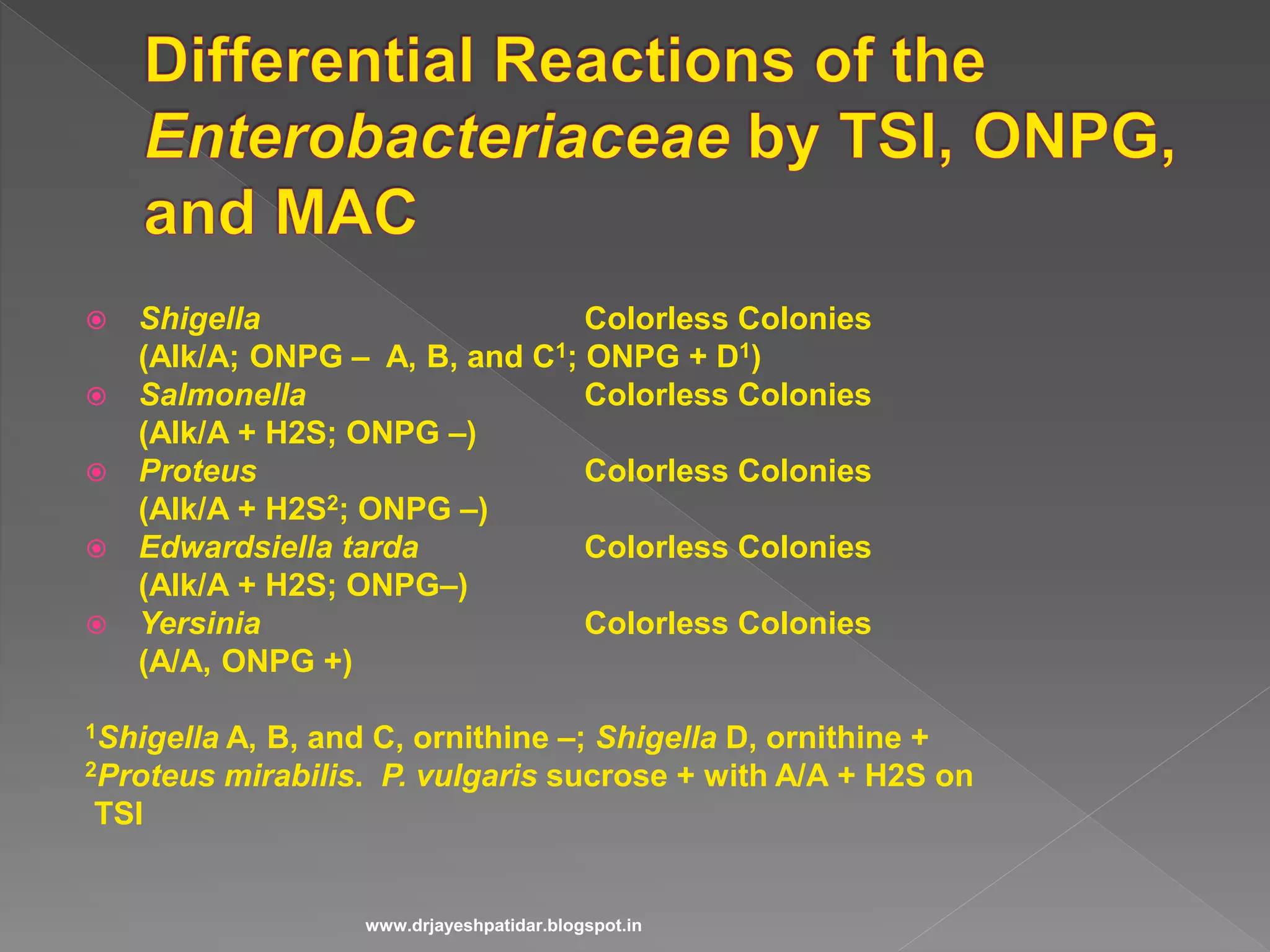
 Shigella Colorless Colonies
(Alk/A; ONPG – A, B, and C1; ONPG + D1)
 Salmonella Colorless Colonies
(Alk/A + H2S; ONPG –)
 Proteus Colorless Colonies
(Alk/A + H2S2; ONPG –)
 Edwardsiella tarda Colorless Colonies
(Alk/A + H2S; ONPG–)
 Yersinia Colorless Colonies
(A/A, ONPG +)
1Shigella A, B, and C, ornithine –; Shigella D, ornithine +
2Proteus mirabilis. P. vulgaris sucrose + with A/A + H2S on
TSI
www.drjayeshpatidar.blogspot.in
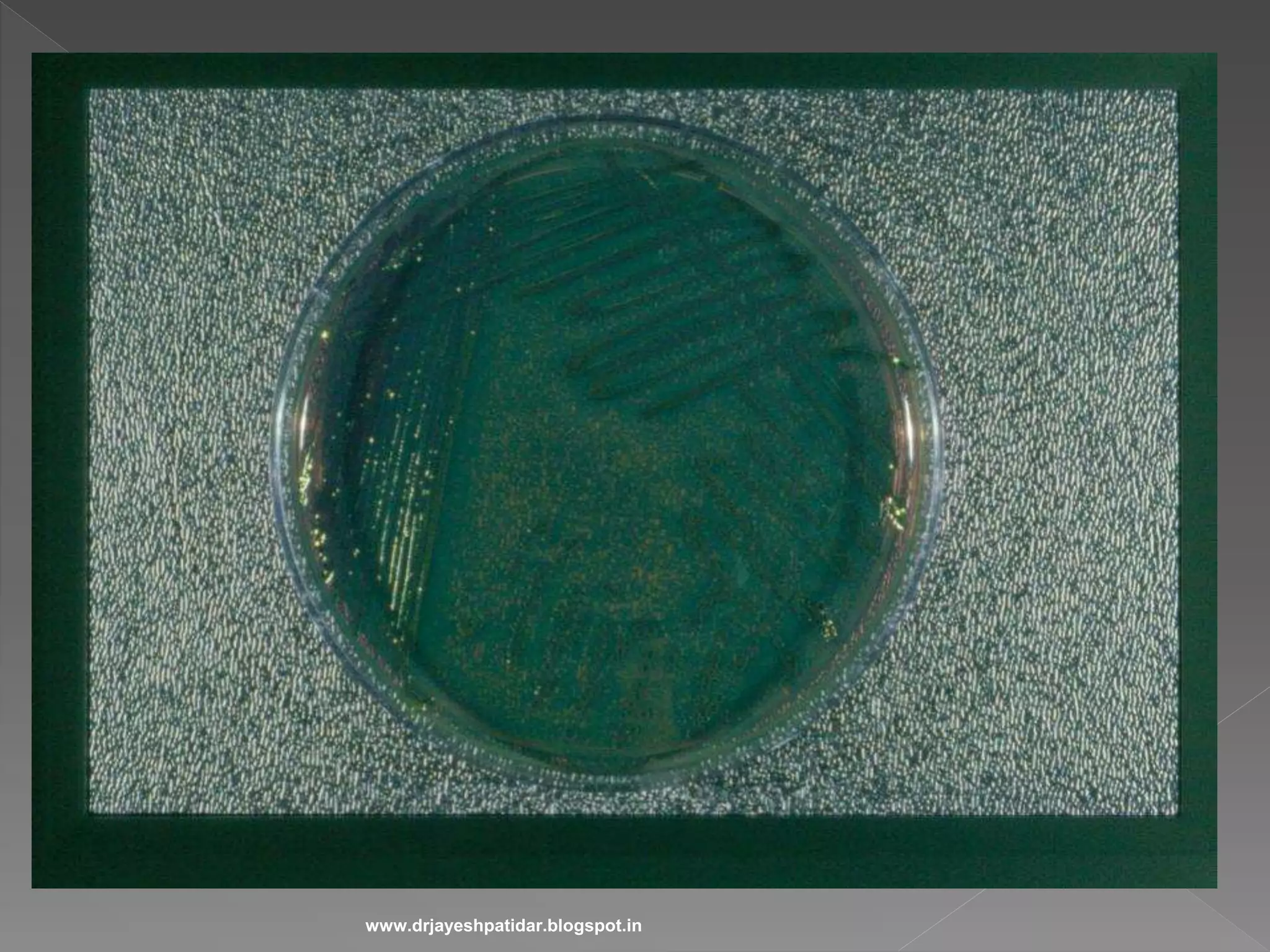
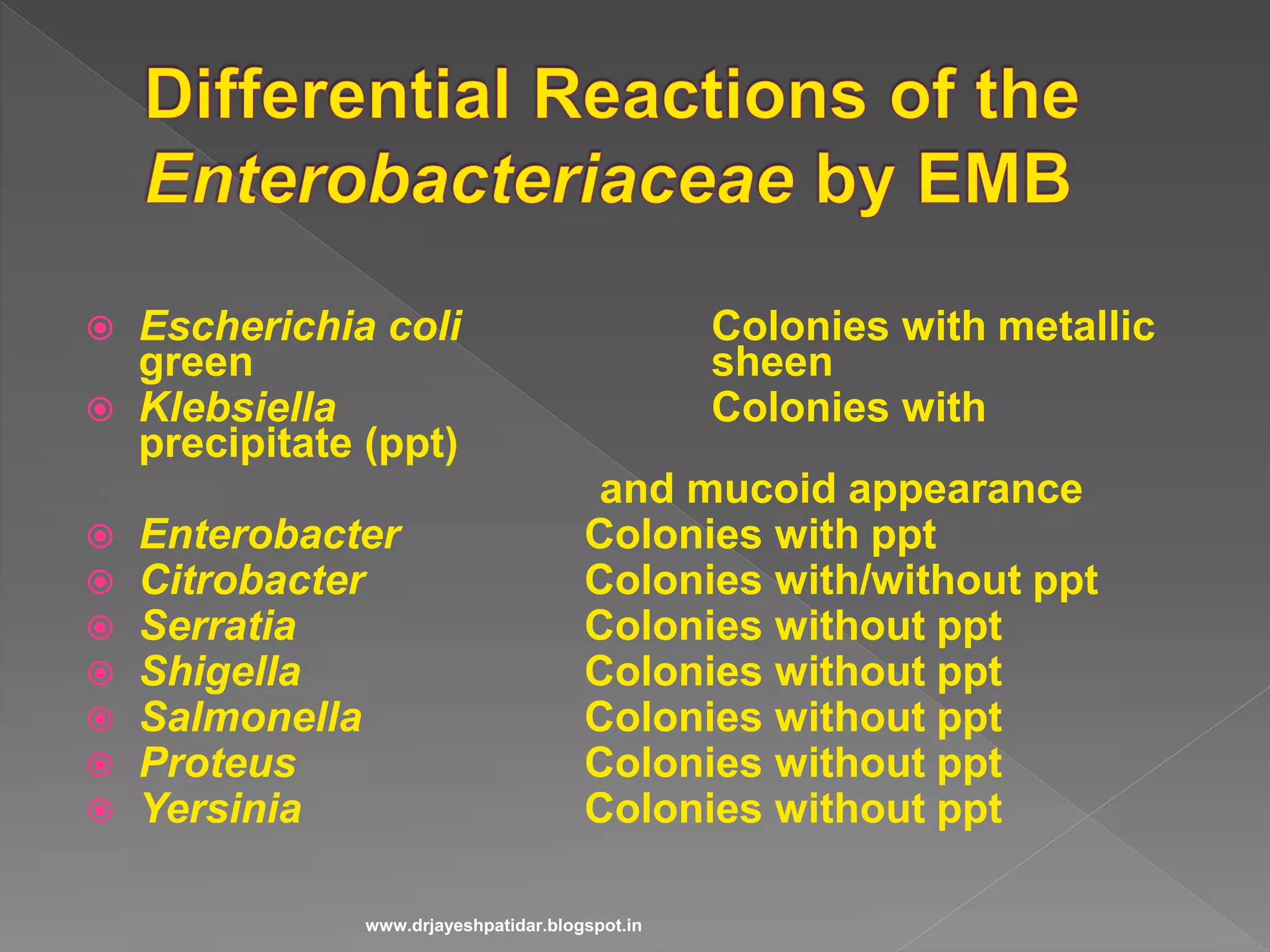
 Escherichia coli Colonies with metallic
green sheen
 Klebsiella Colonies with
precipitate (ppt)
and mucoid appearance
 Enterobacter Colonies with ppt
 Citrobacter Colonies with/without ppt
 Serratia Colonies without ppt
 Shigella Colonies without ppt
 Salmonella Colonies without ppt
 Proteus Colonies without ppt
 Yersinia Colonies without ppt
www.drjayeshpatidar.blogspot.in
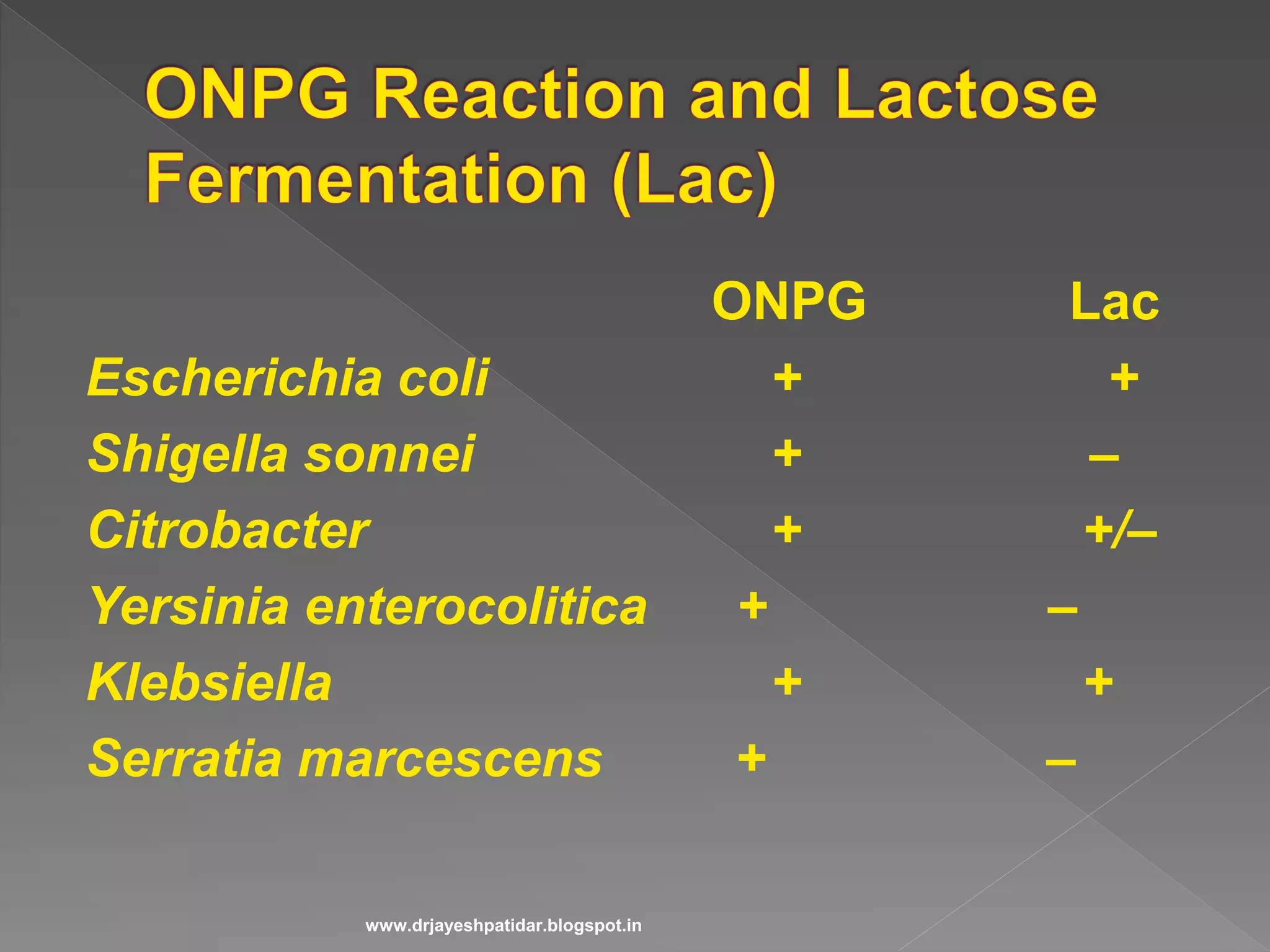
ONPG Lac
Escherichia coli + +
Shigella sonnei + –
Citrobacter + +/–
Yersinia enterocolitica + –
Klebsiella + +
Serratia marcescens + –
www.drjayeshpatidar.blogspot.in
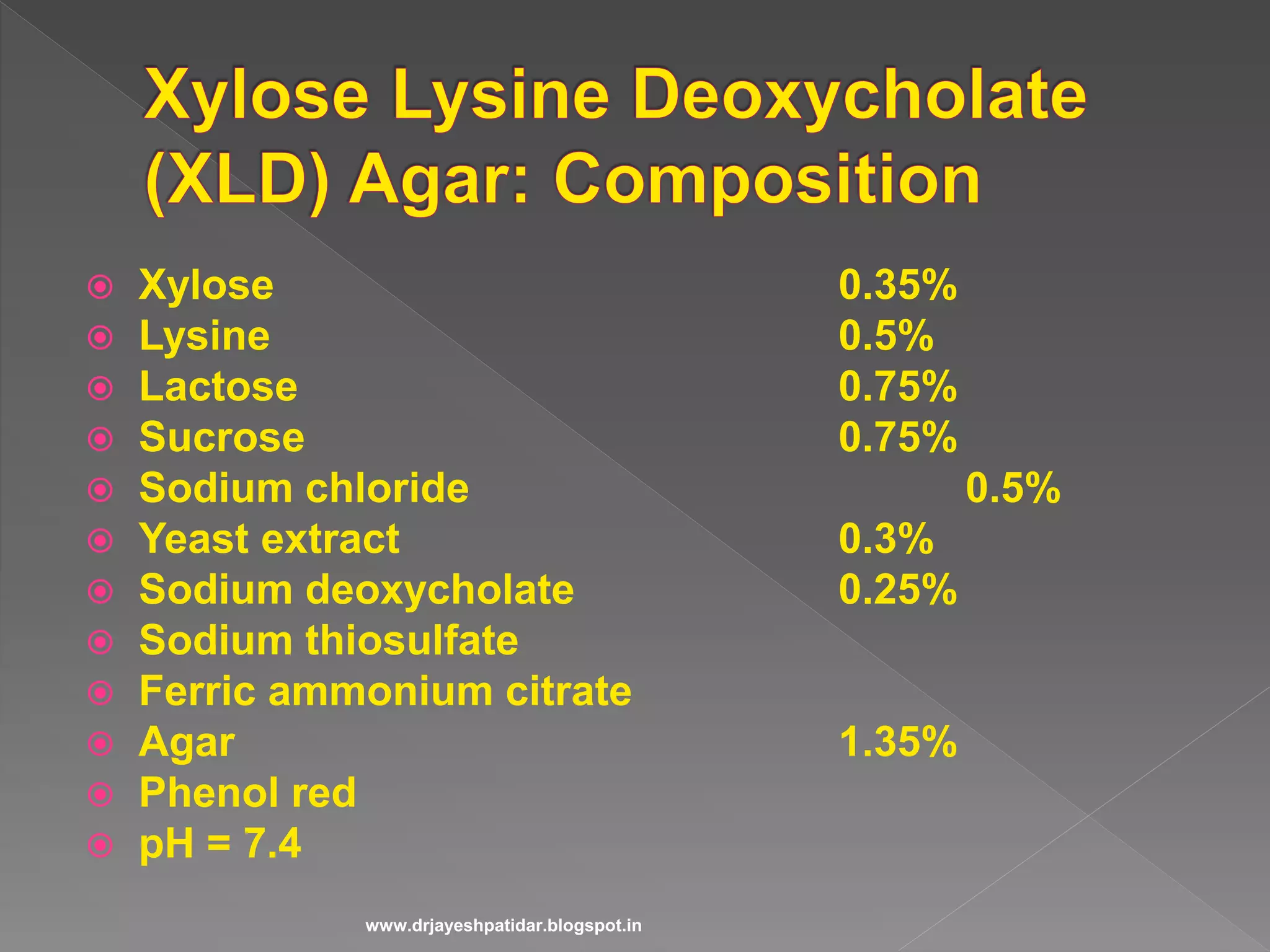
 Xylose 0.35%
 Lysine 0.5%
 Lactose 0.75%
 Sucrose 0.75%
 Sodium chloride 0.5%
 Yeast extract 0.3%
 Sodium deoxycholate 0.25%
 Sodium thiosulfate
 Ferric ammonium citrate
 Agar 1.35%
 Phenol red
 pH = 7.4
www.drjayeshpatidar.blogspot.in
 Salmonella selective due to bile salt.
 Xylose fermentation (except Salmonella
serotype Paratyphi A) acidifies agar
activating lysine decarboxylase. With
xylose depletion fermentation ceases,
and colonies of Salmonella (except S.
Paratyphi A) alkalinize the agar due to
amines from lysine decarboxylation.
 Xylose fermentation provides H+ for H2S
production (except S. Paratyphi A).
www.drjayeshpatidar.blogspot.in
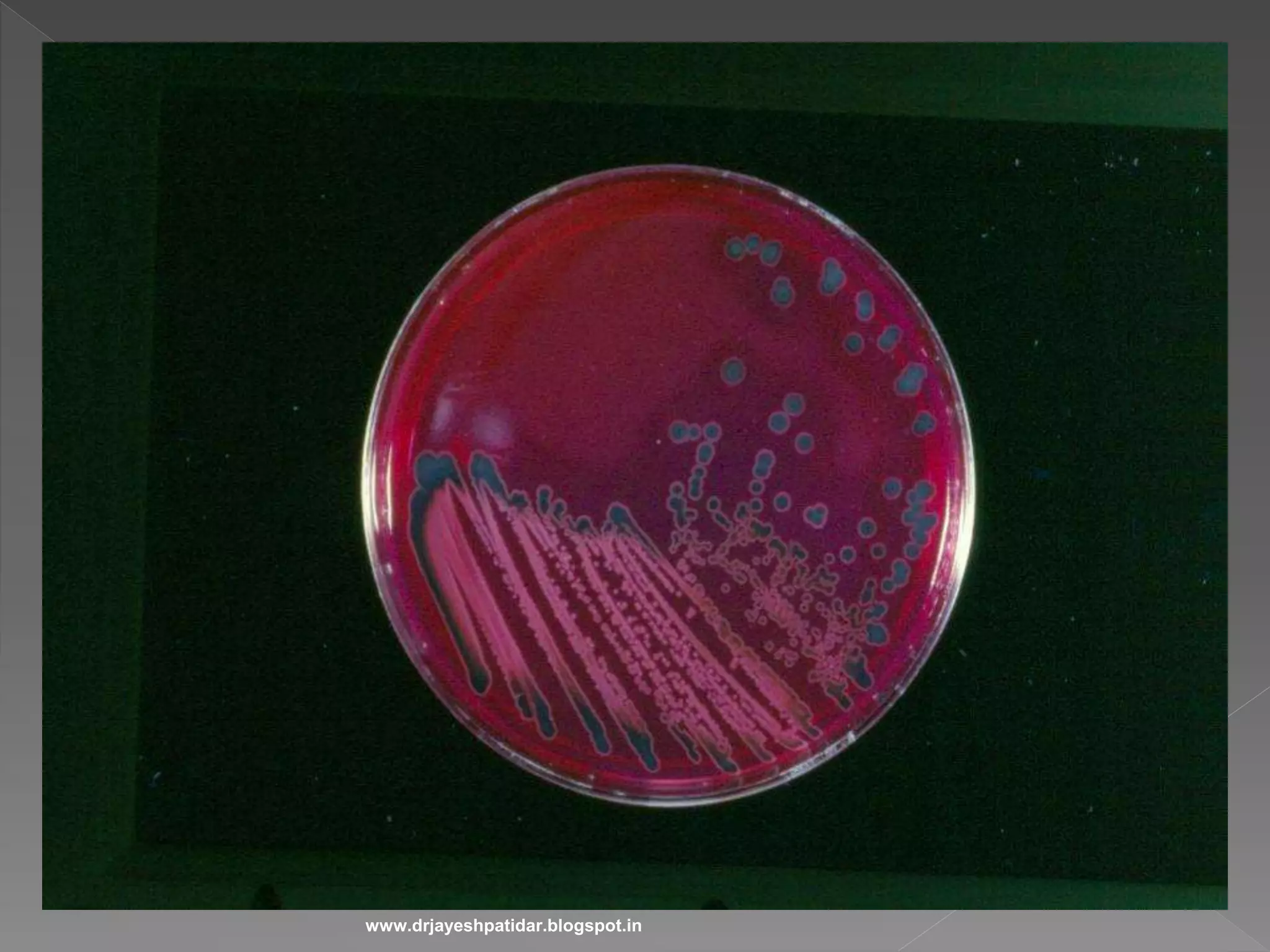
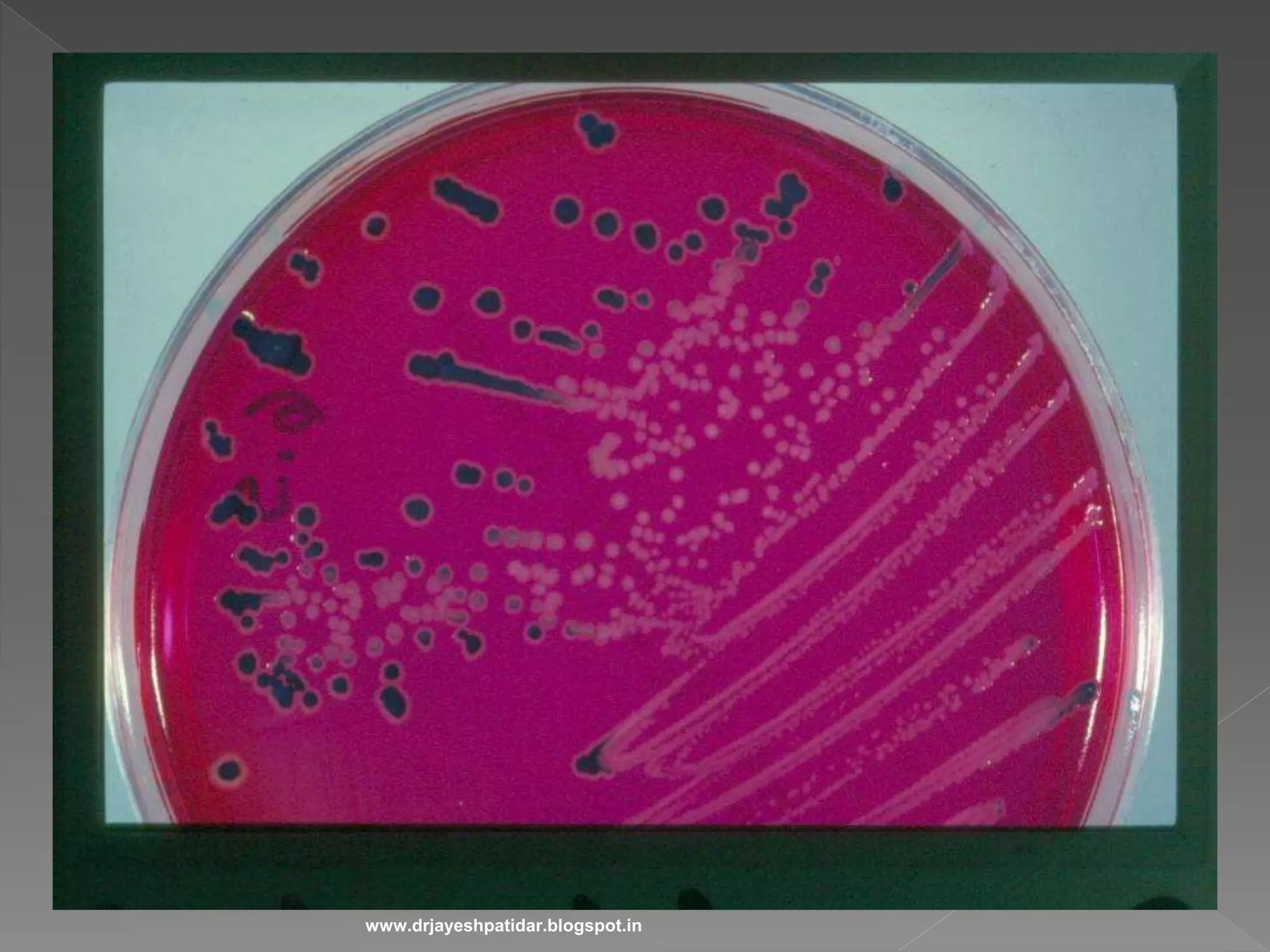
 Ferric ammonium citrate present in XLD
agar reacts with H2S gas and forms black
precipitates within colonies of
Salmonella.
 Agar becomes red-purple due to alkaline
pH produced by amines.
 Back colonies growing on red-purple
agar-presumptive for Salmonella.
www.drjayeshpatidar.blogspot.in
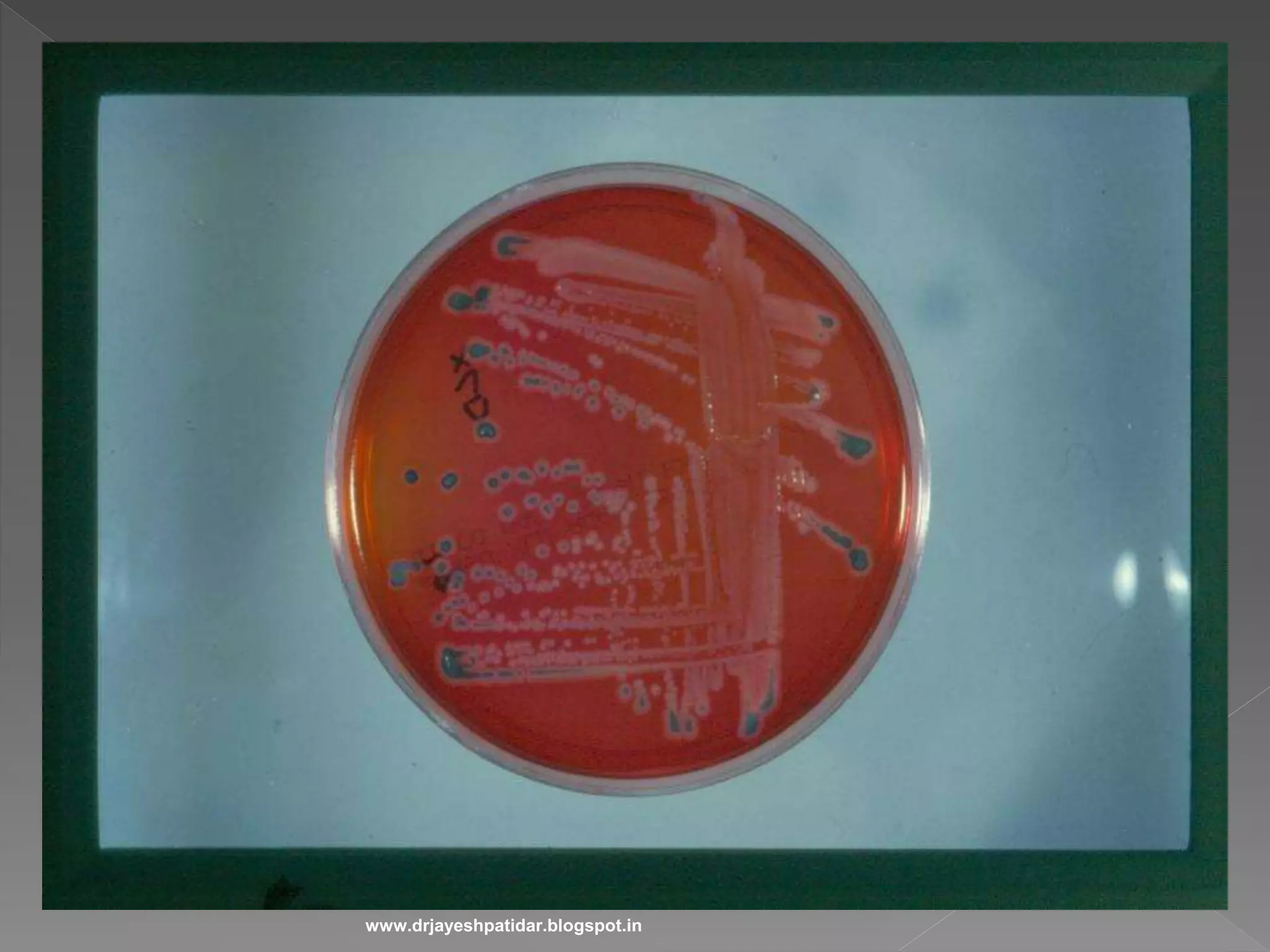
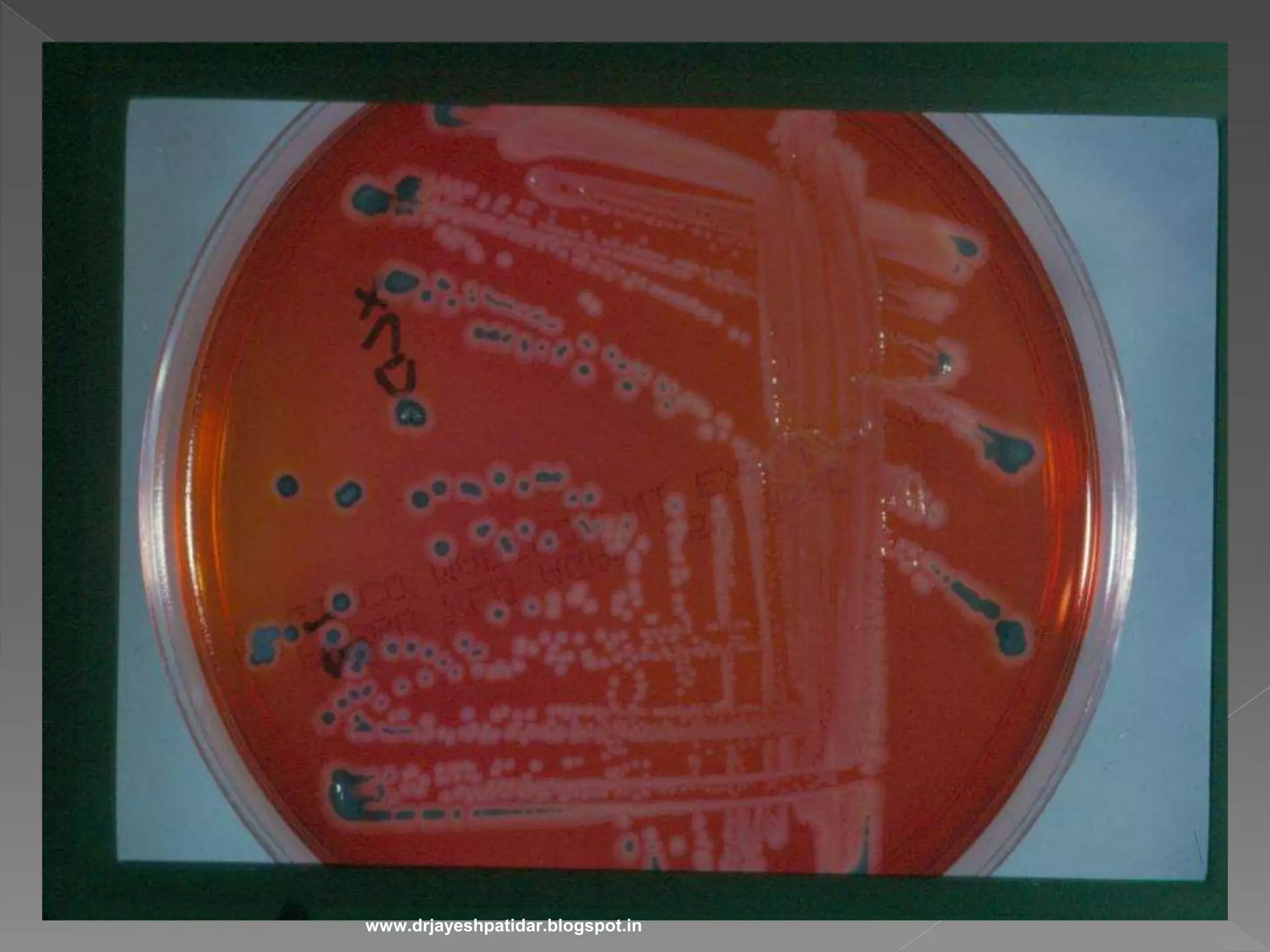
Escherichia coli and Klebsiella pneumoniae
are
lysine-positive coliforms that are also lactose
and sucrose fermenters. The high lactose and
sucrose concentrations result in strong acid
production, which quenches amines produced
by lysine decarboxylation. Colonies and agar
appear bright yellow. Neither Escherichia coli
nor Klebsiella pneumoniae produce H2S.
www.drjayeshpatidar.blogspot.in
 Shigella species do not ferment xylose,
lactose, and sucrose, do not decarboxylate
lysine, and do not produce H2S. Colonies
appear colorless.
 Proteus mirabilis ferments xylose, and
thereby provides H+ for H2S production.
Colonies appear black on an agar
unchanged in color (Proteus deaminates
rather than decarboxylates amino acids).
Proteus vulgaris ferments sucrose, and
colonies appear black on a yellow agar.
www.drjayeshpatidar.blogspot.in
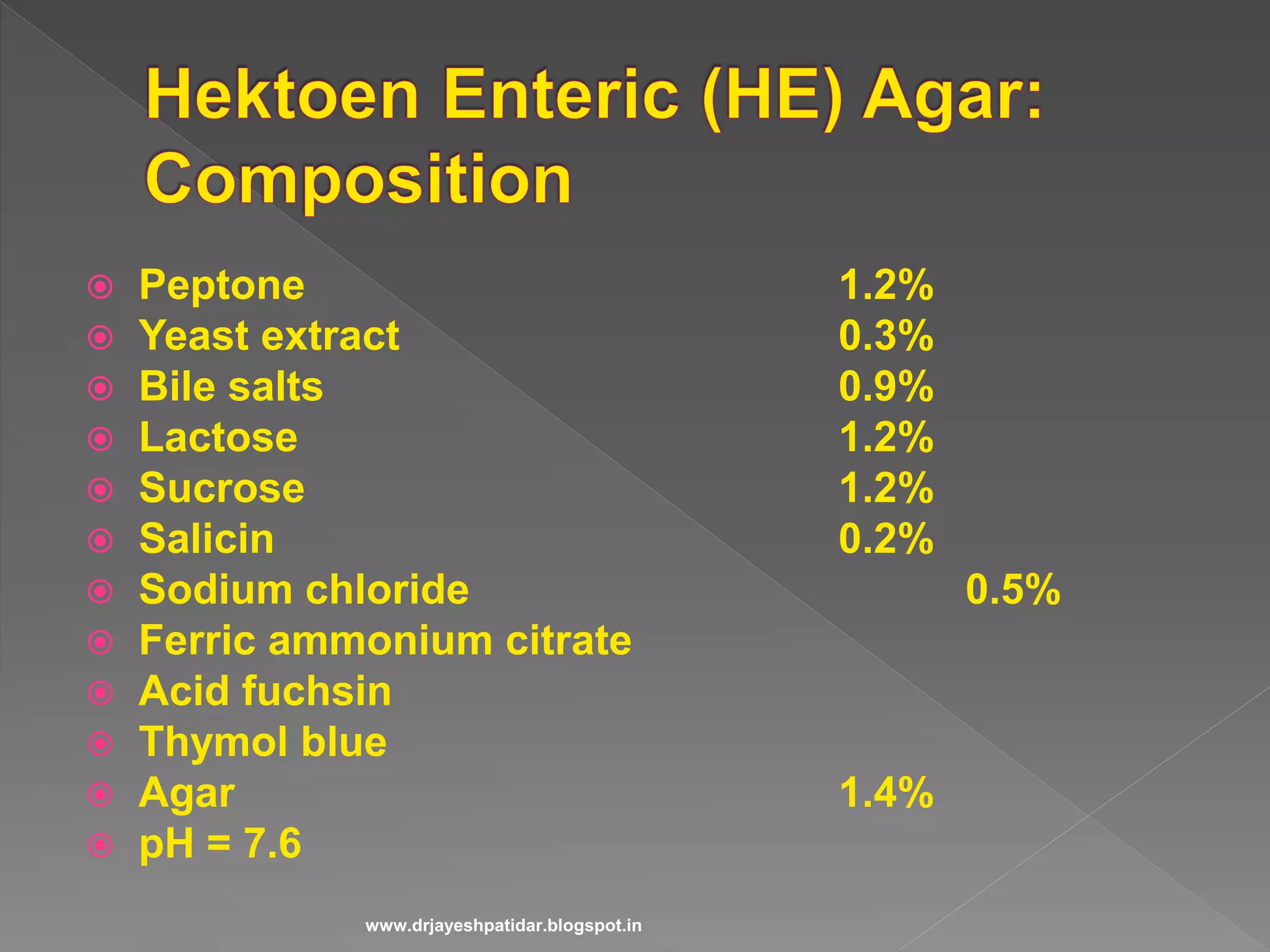
 Peptone 1.2%
 Yeast extract 0.3%
 Bile salts 0.9%
 Lactose 1.2%
 Sucrose 1.2%
 Salicin 0.2%
 Sodium chloride 0.5%
 Ferric ammonium citrate
 Acid fuchsin
 Thymol blue
 Agar 1.4%
 pH = 7.6
www.drjayeshpatidar.blogspot.in
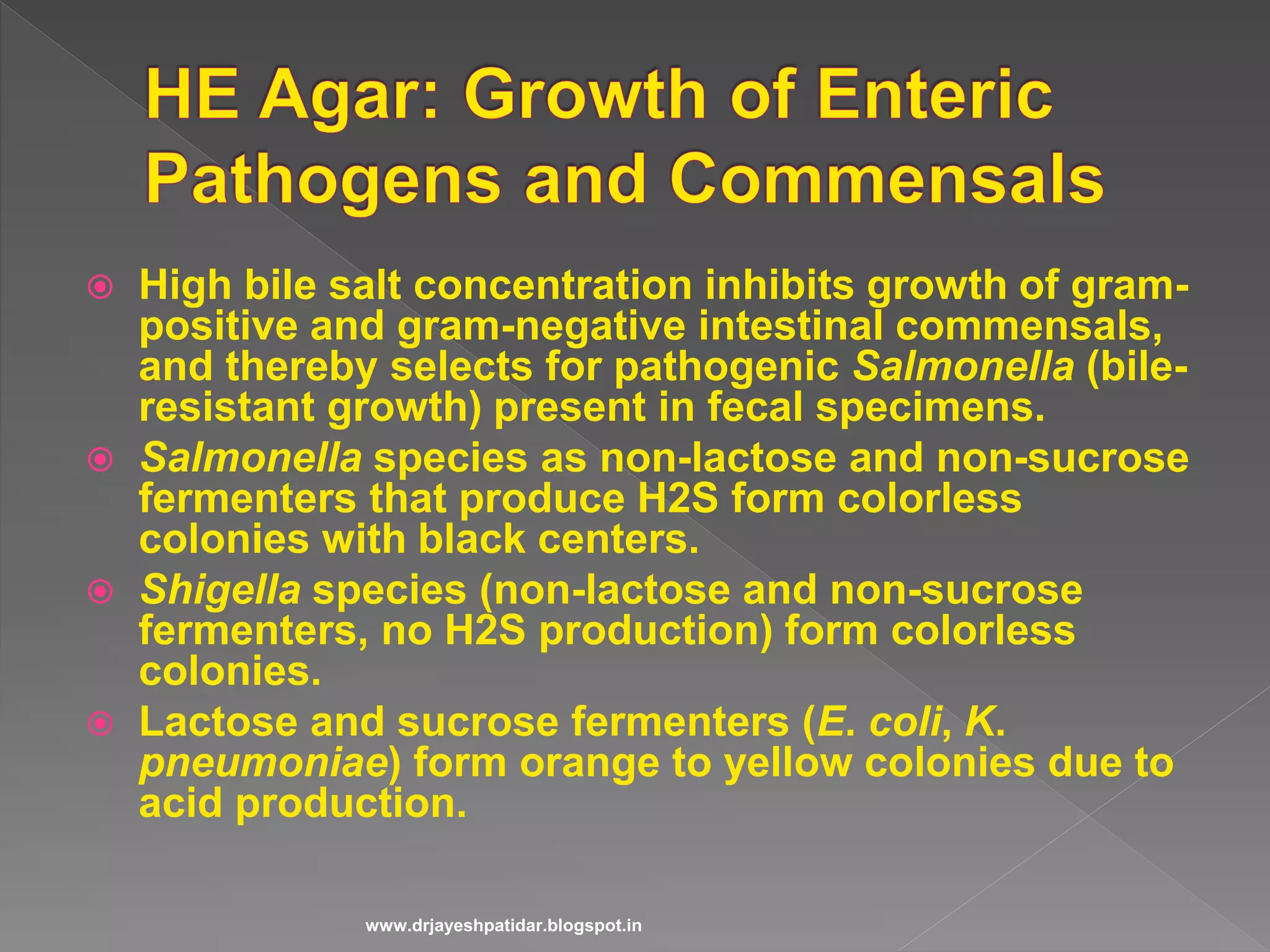
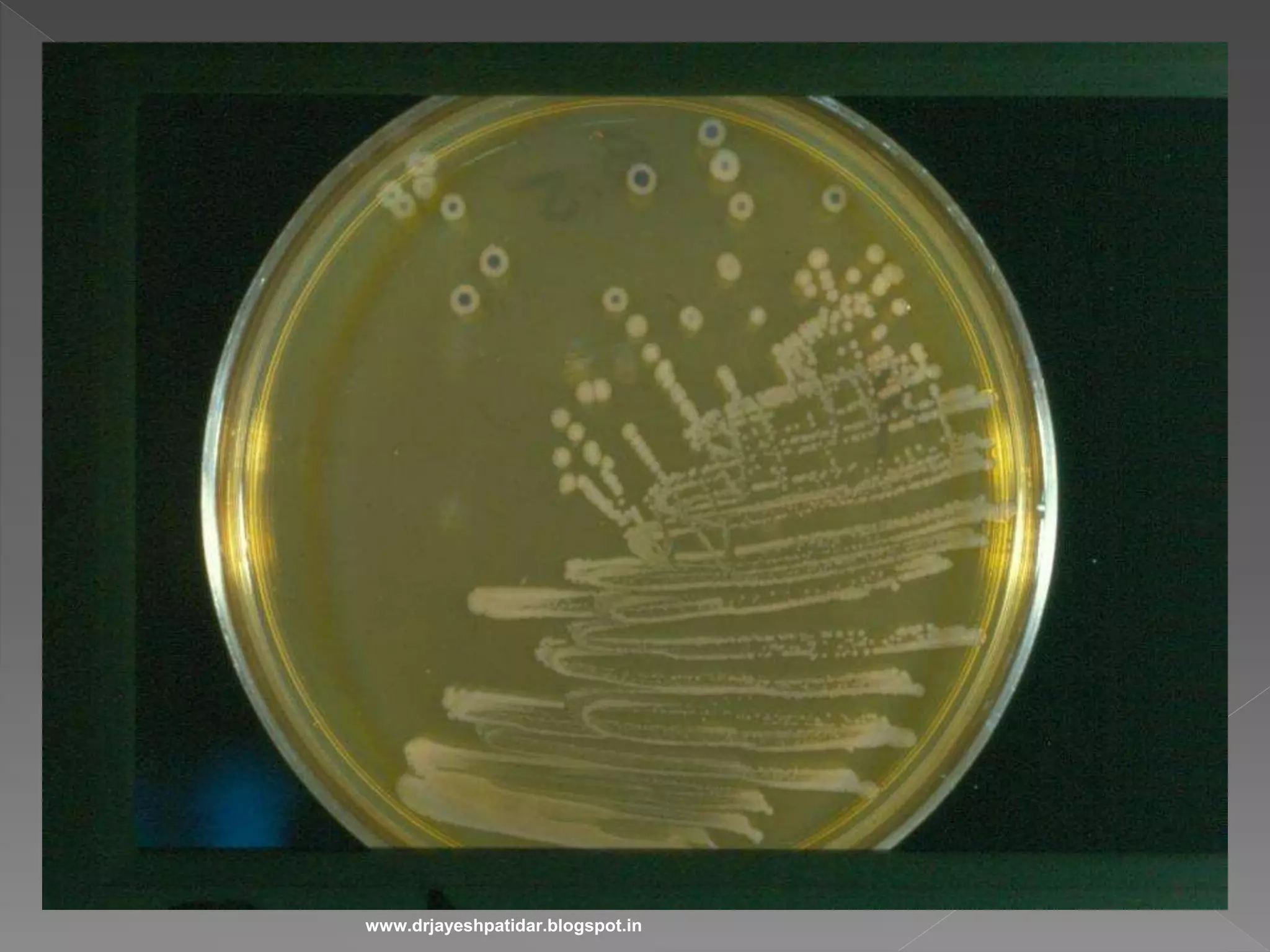
 High bile salt concentration inhibits growth of gram-
positive and gram-negative intestinal commensals,
and thereby selects for pathogenic Salmonella (bile-
resistant growth) present in fecal specimens.
 Salmonella species as non-lactose and non-sucrose
fermenters that produce H2S form colorless
colonies with black centers.
 Shigella species (non-lactose and non-sucrose
fermenters, no H2S production) form colorless
colonies.
 Lactose and sucrose fermenters (E. coli, K.
pneumoniae) form orange to yellow colonies due to
acid production.
www.drjayeshpatidar.blogspot.in
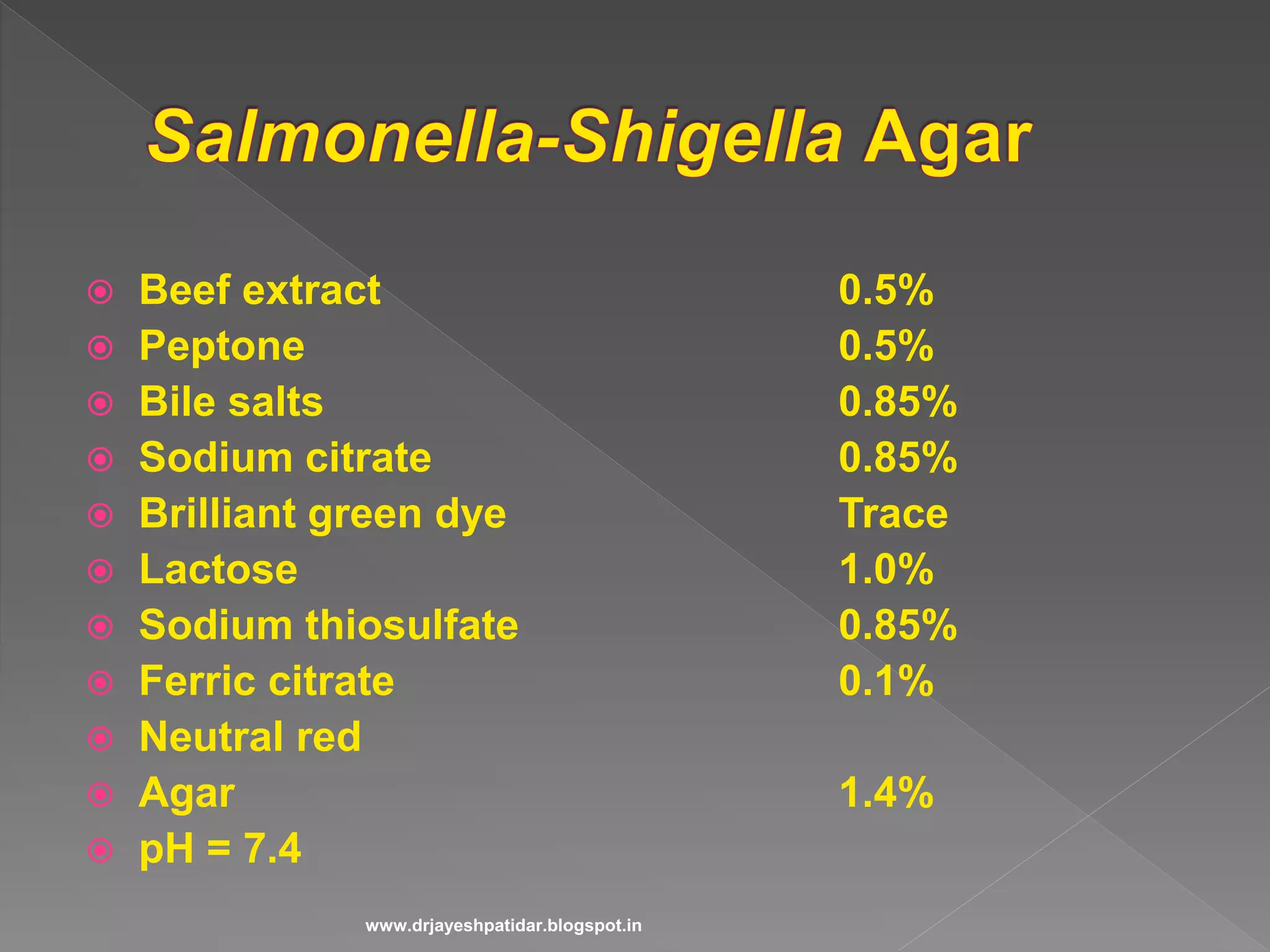
 Beef extract 0.5%
 Peptone 0.5%
 Bile salts 0.85%
 Sodium citrate 0.85%
 Brilliant green dye Trace
 Lactose 1.0%
 Sodium thiosulfate 0.85%
 Ferric citrate 0.1%
 Neutral red
 Agar 1.4%
 pH = 7.4
www.drjayeshpatidar.blogspot.in
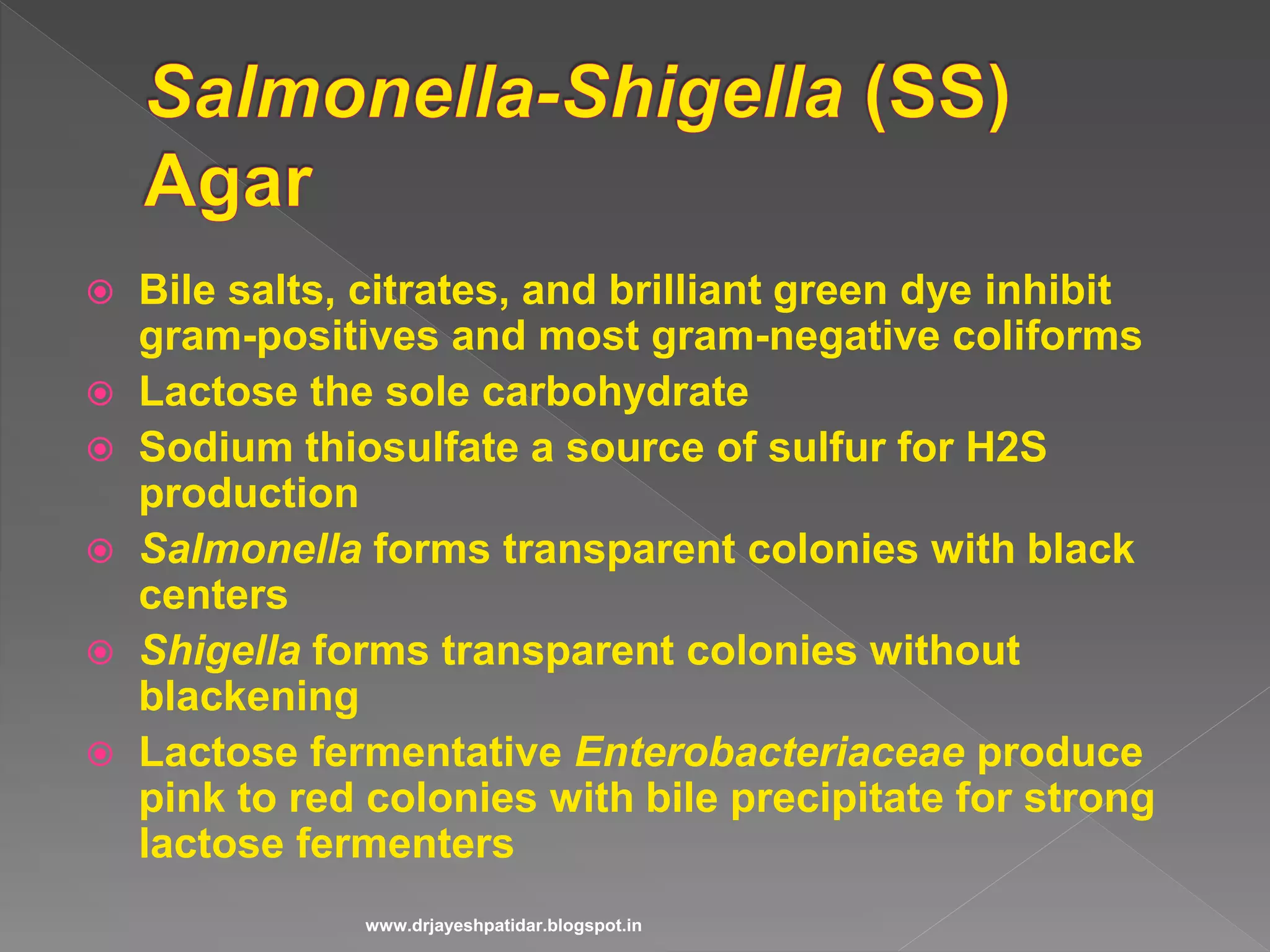
 Bile salts, citrates, and brilliant green dye inhibit
gram-positives and most gram-negative coliforms
 Lactose the sole carbohydrate
 Sodium thiosulfate a source of sulfur for H2S
production
 Salmonella forms transparent colonies with black
centers
 Shigella forms transparent colonies without
blackening
 Lactose fermentative Enterobacteriaceae produce
pink to red colonies with bile precipitate for strong
lactose fermenters
www.drjayeshpatidar.blogspot.in
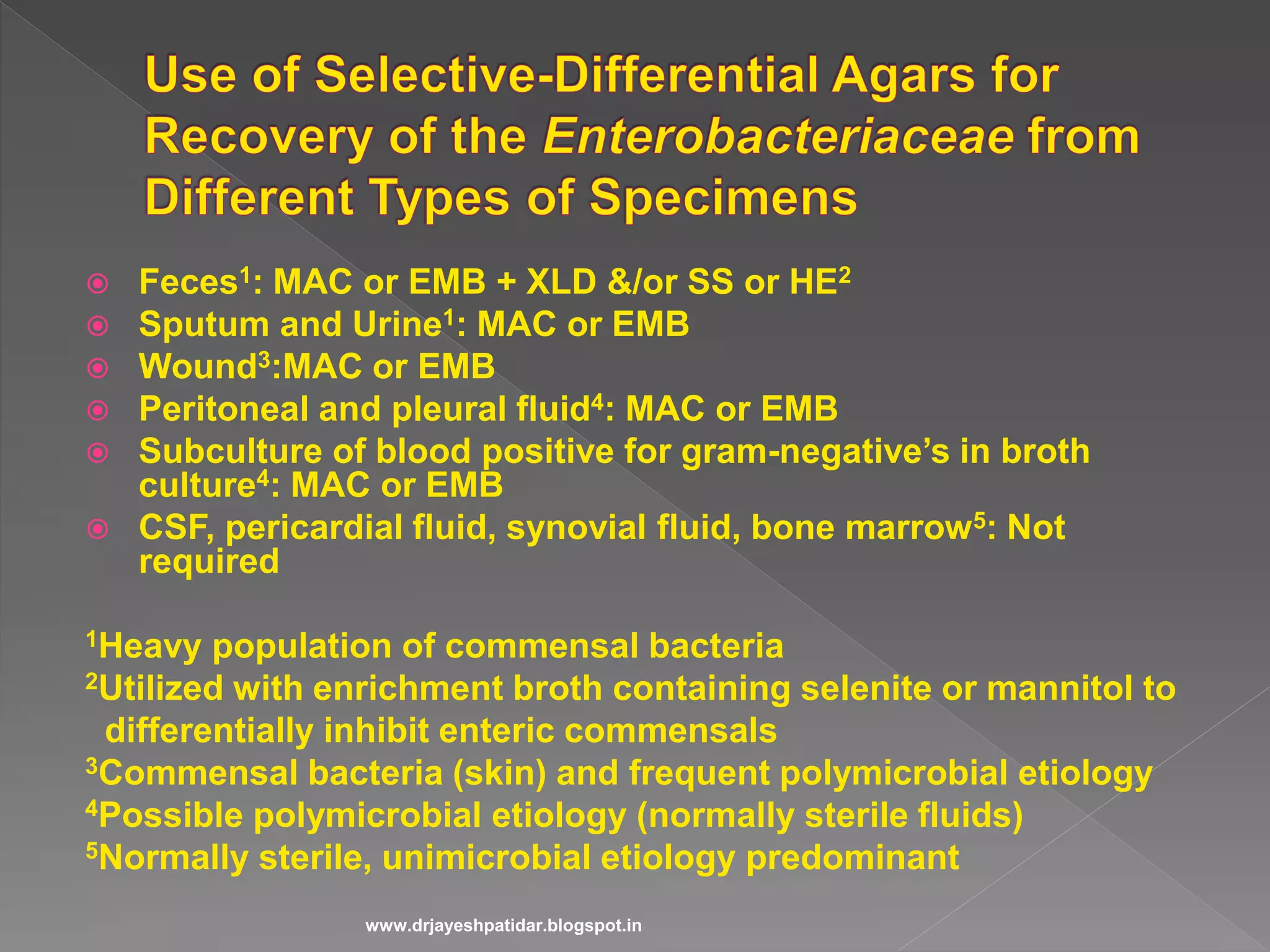
 Feces1: MAC or EMB + XLD &/or SS or HE2
 Sputum and Urine1: MAC or EMB
 Wound3:MAC or EMB
 Peritoneal and pleural fluid4: MAC or EMB
 Subculture of blood positive for gram-negative’s in broth
culture4: MAC or EMB
 CSF, pericardial fluid, synovial fluid, bone marrow5: Not
required
1Heavy population of commensal bacteria
2Utilized with enrichment broth containing selenite or mannitol to
differentially inhibit enteric commensals
3Commensal bacteria (skin) and frequent polymicrobial etiology
4Possible polymicrobial etiology (normally sterile fluids)
5Normally sterile, unimicrobial etiology predominant
www.drjayeshpatidar.blogspot.in
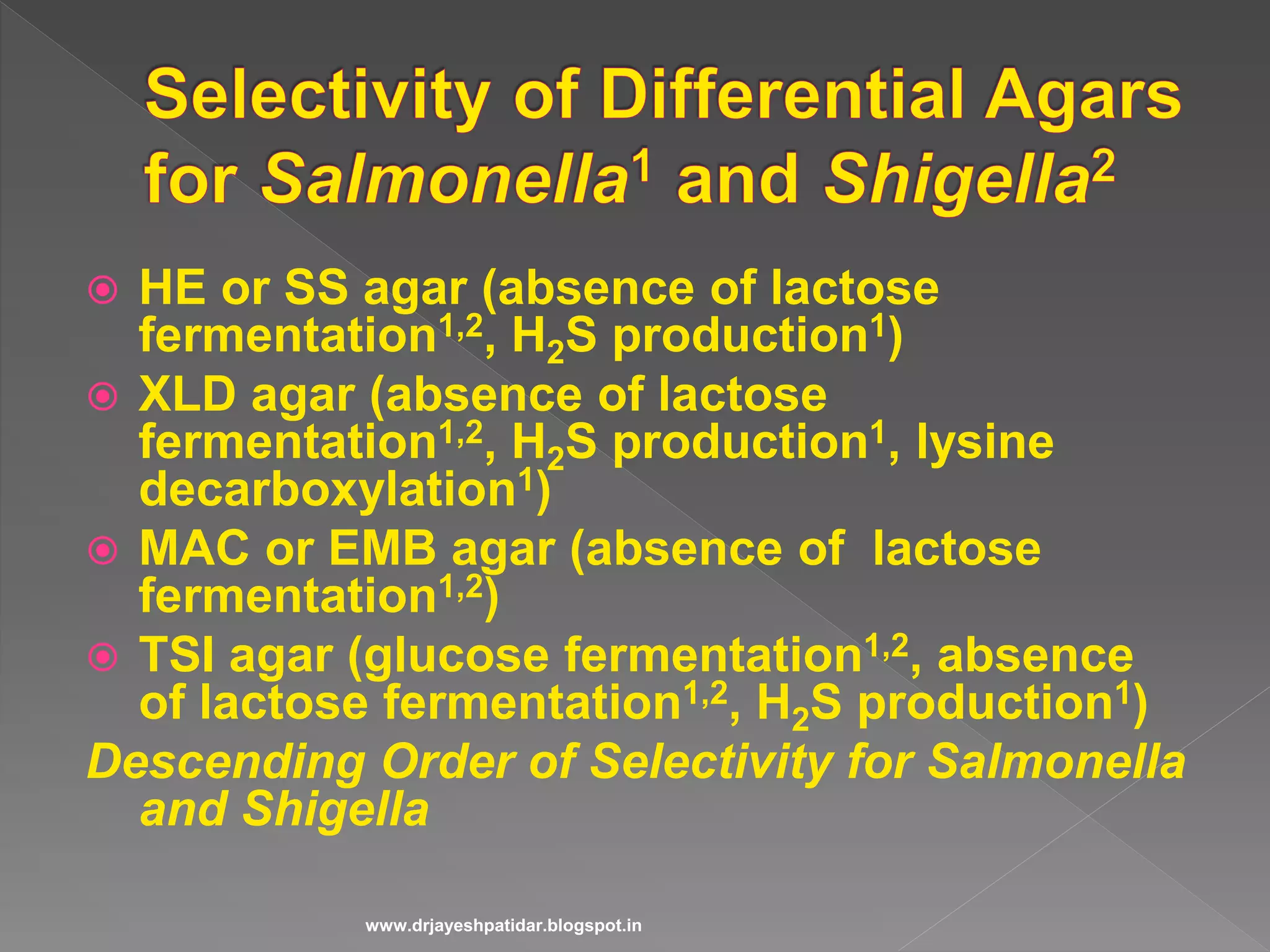
 HE or SS agar (absence of lactose
fermentation1,2, H2S production1)
 XLD agar (absence of lactose
fermentation1,2, H2S production1, lysine
decarboxylation1)
 MAC or EMB agar (absence of lactose
fermentation1,2)
 TSI agar (glucose fermentation1,2, absence
of lactose fermentation1,2, H2S production1)
Descending Order of Selectivity for Salmonella
and Shigella
www.drjayeshpatidar.blogspot.in
Winn, W., Jr., Allen, S., Janda, W., Koneman, E.,
Procop, G., Schrenckenberger, P., Woods, G.
Koneman’s Color Atlas and Textbook of
Diagnostic Microbiology, Sixth Edition,
Lippincott Williams & Wilkins, 2006:
 Chapter 5. Medical Bacteriology: Taxonomy,
Morphology, Physiology, and Virulence.
 Chapter 6. The Enterobacteriaceae.
www.drjayeshpatidar.blogspot.in
Murray, P., Baron, E., Jorgensen, J., Landry,
M., Pfaller, M.
Manual of Clinical Microbiology, 9th
Edition, ASM Press, 2007:
 Farmer, J.J., III, Boatwright, K.D., and Janda
J.M. Chapter 42. Enterobacteriaceae:
Introduction and Identification
www.drjayeshpatidar.blogspot.in

The enterobacteriaceae basic properties.ppsx x

  • 2.
     Gram-negative rods Glucose is fermented with strong acid formation and often gas  Cytochrome oxidase activity is negative  Nitrate is reduced to nitrite www.drjayeshpatidar.blogspot.in
  • 3.
     Crystal violetbinds to cell wall peptidoglycan with Gram’s iodine as a mordant  Safranin or basic fuchsin counterstains bacterial cells decolorized by alcohol- acetone www.drjayeshpatidar.blogspot.in
  • 4.
     Thick cell-wallpeptidoglycan layer of gram- positive bacteria strongly binds crystal violet and resists decolorization by alcohol- acetone  Thin cell-wall peptidoglycan layer of gram- negative bacteria located beneath a thick lipid-rich outer membrane weakly binds crystal violet that is readily removed by alcohol-acetone decolorization www.drjayeshpatidar.blogspot.in
  • 5.
     Flood surfaceof smear with crystal violet solution  After 1 min thoroughly rinse with cold tap water  Flood smear with Gram’s iodine for 1 min  Rinse smear with acetone-alcohol decolorizer until no more crystal violet in rinse effluent  Rinse with cold tap water  Flood smear with safranin (regular Gram’s stain) or basic fuchsin (enhanced Gram’s stain)  Rinse with cold tap water  Dry smear in slide rack  Microscopically examine stained smear using oil- immersion light microscopy www.drjayeshpatidar.blogspot.in
  • 6.
     Oxidation-reduction ofglucose in the absence of molecular oxygen (anaerobic glycolysis)  Energy from hydrolysis of chemical bonds in anaerobic glycolysis captured as high energy phosphate bonds of adenosine triphosphate (ATP)  NAD is reduced to NADH2 by accepting electrons during glycolytic conversion of glucose to pyruvate  NADH2 in turn reduces pyruvate with oxidation of NADH2 to NAD which supports continued anaerobic glycolysis, and generation from pyruvate of alcohols, carboxylic acids, and CO2 gas  End products of glucose fermentation: organic acids and CO2 gas  Fermentation detected by acidification of glucose-containing broth (color change in broth or agar medium containing pH indicators), and (for aerogenic species) production of gas (fractures in agar, gas bubbles in inverted Durham tube)  pH indicators: phenol red (yellow at acid pH), methyl red (red at acid pH), neutral red (red at acid pH), bromcresol purple (yellow at acid pH) www.drjayeshpatidar.blogspot.in
  • 7.
     The spotcytochrome oxidase test is the first test performed with gram-negative bacteria recovered in culture  The optimal plate medium for a spot cytochrome oxidase test is a trypticase soy agar (TSA) containing 5% sheep blood  Bacterial colonies should be 18 to 24 hr old www.drjayeshpatidar.blogspot.in
  • 8.
     In apositive test, bacterial cytochrome oxidase oxidizes the colorless reduced substrate tetramethyl-p-phenylenediamine dihydrochloride (TPDD) forming a dark purple oxidized indophenol product  Streak a small portion of bacterial colony to filter paper soaked with a 1% solution of TPDD  If the streak mark turns purple in 10 sec or less, the spot oxidase test is interpreted as positive www.drjayeshpatidar.blogspot.in
  • 9.
     Enterobacteriaceae extractoxygen from nitrate (NO3) producing nitrite (NO2)  NO2 detected by reaction with α- naphthylamine and sulfanilic acid producing a red colored complex  Absence of red color indicates either no reduction of NO3 or reduction to products other than NO2 (denitrification)  Confirmation of true negative test: addition of zinc ions which reduce NO3 to NO2 producing a red color in the presence of α- naphthylamine and sulfanilic acid www.drjayeshpatidar.blogspot.in
  • 10.
     Chromosomal DNAhas 39-59% guanine- plus-cytosine (G+C) content  Escherichia coli is the type genus and species of the Enterobacteriaceae  Species of Enterobacteriaceae more closely related by evolutionary distance to Escherichia coli than to organisms of other families (Pseudomonadaceae, Aeromonadaceae) www.drjayeshpatidar.blogspot.in
  • 11.
     Escherichia  Shigella Salmonella  Edwardsiella  Citrobacter  Yersinia  Klebsiella  Enterobacter  Serratia  Proteus  Morganella  Providencia www.drjayeshpatidar.blogspot.in
  • 12.
     Gram-negative androd shaped (bacilli)  Ferment rather than oxidize D-glucose with acid and (often) gas production  Reduce nitrate to nitrite  Grow readily on 5% sheep blood or chocolate agar in carbon dioxide or ambient air  Grow anaerobically (facultative anaerobes) www.drjayeshpatidar.blogspot.in
  • 13.
     Catalase positiveand cytochrome oxidase negative  Grow readily on MacConkey (MAC) and eosin methylene blue (EMB) agars  Grow readily at 35oC except Yersinia (25o- 30oC)  Motile by peritrichous flagella except Shigella and Klebsiella which are non-motile  Do not form spores www.drjayeshpatidar.blogspot.in
  • 14.
     Environmental sites(soil, water, and plants)  Intestines of humans and animals www.drjayeshpatidar.blogspot.in
  • 15.
     Contaminated foodand water (Salmonella spp., Shigella spp., Yersinia enterocolitica, Escherichia coli O157:H7)  Endogenous (urinary tract infection, primary bacterial peritonitis, abdominal abscess)  Abnormal host colonization (nosocomial pneumonia)  Transfer between debilitated patients  Insect (flea) vector (unique for Yersinia pestis) www.drjayeshpatidar.blogspot.in
  • 16.
     Intestinal (diarrheal)infection  Extraintestinal infection Urinary tract (primarily cystitis) Respiratory (nosocomial pneumonia) Wound (surgical wound infection) Bloodstream (gram-negative bacteremia) Central nervous system (neonatal meningitis) www.drjayeshpatidar.blogspot.in
  • 17.
     Urinary tractinfection: Escherichia coli, Klebsiella pneumoniae, Enterobacter spp., and Proteus mirabilis  Pneumonia: Enterobacter spp., Klebsiella pneumoniae, Escherichia coli, and Proteus mirabilis www.drjayeshpatidar.blogspot.in
  • 18.
     Wound Infection:Escherichia coli, Enterobacter spp., Klebsiella pneumoniae, and Proteus mirabilis  Bacteremia: Escherichia coli, Enterobacter spp., Klebsiella pneumoniae, and Proteus mirabilis www.drjayeshpatidar.blogspot.in
  • 19.
     Escherichia coli27,871 (13.7%)  Enterobacter spp. 12,757 (6.2%)  Klebsiella pneumoniae 11,015 (5.4%)  Proteus mirabilis 4,662 (2.3%)  Serratia marcescens 3,010 (1.5%)  Citrobacter spp. 2,912 (1.4%) 1Enteric Reference Laboratory, Centers for Disease Control and Prevention www.drjayeshpatidar.blogspot.in
  • 20.
     Shigella sonnei(serogroup D)  Salmonella serotype Enteritidis  Salmonella serotype Typhimurium  Shigella flexneri (serogroup B)  Escherichia coli O157:H7  Yersinia enterocolitica www.drjayeshpatidar.blogspot.in
  • 21.
     Yeast extract0.3% (% = grams/100 mL)  Beef extract 0.3%  Peptone 1.5%  Proteose peptone 0.5% Total Protein = 2.6%  Lactose 1.0%  Sucrose1 1.0%  Glucose 0.1% Carbohydrate = 2.1% 1Absent in Kligler Iron Agar www.drjayeshpatidar.blogspot.in
  • 22.
     Ferrous sulfate Sodium thiosulfate  Sodium chloride  Agar (1.2%)  Phenol red  pH = 7.4 www.drjayeshpatidar.blogspot.in
  • 23.
     Yellow deep,purple slant: acid deep due to glucose fermentation , no lactose or sucrose fermentation with alkaline slant due to production of amine’s from protein  Black deep, purple slant: acid deep due to glucose fermentation with H2S production, no lactose or sucrose fermentation  Yellow deep and slant: acid deep and slant due to glucose as well as lactose and/or sucrose fermentation  Black deep and yellow or black slant: acid deep and slant with glucose and lactose and/or sucrose fermentation with H2S production  Fracturing or lifting of agar from base of culture tube: CO2 production www.drjayeshpatidar.blogspot.in
  • 24.
  • 25.
     A/A +g = acid/acid plus gas (CO2)  A/A = acid/acid  A/A + g, H2S = acid/acid plus gas, H2S  Alk/A = alkaline/acid  Alk/A + g = alkaline/acid plus gas  Alk/A + g, H2S = alkaline/acid plus gas, H2S  Alk/A + g, H2S (w) = alkaline/acid plus gas, H2S (weak) www.drjayeshpatidar.blogspot.in
  • 26.
     Escherichia coli Klebsiella pneumoniae  Klebsiella oxytoca  Enterobacter aerogenes  Enterobacter cloacae  Serratia marcescens1, 2 1Non-lactose, sucrose fermenter 255% + g www.drjayeshpatidar.blogspot.in
  • 27.
     Serratia marcescens1,2  Yersinia enterocolitica2 145% of strains 2Non-lactose, sucrose fermenter www.drjayeshpatidar.blogspot.in
  • 28.
     Citrobacter freundii Proteus vulgaris1 1Non-lactose, sucrose fermenter www.drjayeshpatidar.blogspot.in
  • 29.
  • 30.
     Salmonella serotypeParatyphi A www.drjayeshpatidar.blogspot.in
  • 31.
     Salmonella (mostserotypes)  Proteus mirabilis  Edwardsiella tarda www.drjayeshpatidar.blogspot.in
  • 32.
     Salmonella serotypeTyphi www.drjayeshpatidar.blogspot.in
  • 33.
     Peptone 1.7% Polypeptone 0.3%  Lactose1 1.0%  Bile salts2 0.15%  Crystal violet2  Neutral red3  Sodium chloride 0.5%  Agar 1.35%  pH=7.1 1Differential medium for lactose fermentation 2Inhibit gram positives and fastidious gram-negatives; MAC agar selective for gram-negatives 3Red color at pH < 6.8 www.drjayeshpatidar.blogspot.in
  • 34.
  • 35.
  • 36.
     Peptone 1.0% Lactose1 0.5%  Eosin y2  Methylene blue2  Agar  pH = 7.2 1Modified formula also contains sucrose (0.5%) 2Inhibit gram-positives and fastidious gram-negatives; selective for gram-negatives. Eosin y and methylene blue form a precipitate at acid pH; differential for lactose fermentation www.drjayeshpatidar.blogspot.in
  • 37.
  • 38.
  • 39.
     Presence ofβ-galactoside permease: Transport of β-galactoside (lactose) across the bacterial cell wall  Presence of β-galactosidase: Hydrolysis of β-galactoside bond (lactoseglucose + galactose)  ONPG: Orthonitrophenyl-β-D-galacto- pyranoside www.drjayeshpatidar.blogspot.in
  • 40.
     Escherichia coliRed colonies, (A/A, ONPG+) pitted  Klebsiella1 Red colonies, (A/A, ONPG+) mucoid  Enterobacter Red colonies (A/A, ONPG+)  Citrobacter2 Red or colorless (A/A or Alk/A, ONPG+) colonies  Serratia Colorless colonies (A/A, ONPG+) 1K. pneumoniae, indole –, K. oxytoca, indole + 2C. freundii, indole – and H2S +, C. koseri, indole + and H2S – www.drjayeshpatidar.blogspot.in
  • 41.
     Shigella ColorlessColonies (Alk/A; ONPG – A, B, and C1; ONPG + D1)  Salmonella Colorless Colonies (Alk/A + H2S; ONPG –)  Proteus Colorless Colonies (Alk/A + H2S2; ONPG –)  Edwardsiella tarda Colorless Colonies (Alk/A + H2S; ONPG–)  Yersinia Colorless Colonies (A/A, ONPG +) 1Shigella A, B, and C, ornithine –; Shigella D, ornithine + 2Proteus mirabilis. P. vulgaris sucrose + with A/A + H2S on TSI www.drjayeshpatidar.blogspot.in
  • 42.
     Escherichia coliColonies with metallic green sheen  Klebsiella Colonies with precipitate (ppt) and mucoid appearance  Enterobacter Colonies with ppt  Citrobacter Colonies with/without ppt  Serratia Colonies without ppt  Shigella Colonies without ppt  Salmonella Colonies without ppt  Proteus Colonies without ppt  Yersinia Colonies without ppt www.drjayeshpatidar.blogspot.in
  • 43.
    ONPG Lac Escherichia coli+ + Shigella sonnei + – Citrobacter + +/– Yersinia enterocolitica + – Klebsiella + + Serratia marcescens + – www.drjayeshpatidar.blogspot.in
  • 44.
     Xylose 0.35% Lysine 0.5%  Lactose 0.75%  Sucrose 0.75%  Sodium chloride 0.5%  Yeast extract 0.3%  Sodium deoxycholate 0.25%  Sodium thiosulfate  Ferric ammonium citrate  Agar 1.35%  Phenol red  pH = 7.4 www.drjayeshpatidar.blogspot.in
  • 45.
     Salmonella selectivedue to bile salt.  Xylose fermentation (except Salmonella serotype Paratyphi A) acidifies agar activating lysine decarboxylase. With xylose depletion fermentation ceases, and colonies of Salmonella (except S. Paratyphi A) alkalinize the agar due to amines from lysine decarboxylation.  Xylose fermentation provides H+ for H2S production (except S. Paratyphi A). www.drjayeshpatidar.blogspot.in
  • 46.
     Ferric ammoniumcitrate present in XLD agar reacts with H2S gas and forms black precipitates within colonies of Salmonella.  Agar becomes red-purple due to alkaline pH produced by amines.  Back colonies growing on red-purple agar-presumptive for Salmonella. www.drjayeshpatidar.blogspot.in
  • 47.
  • 48.
  • 49.
    Escherichia coli andKlebsiella pneumoniae are lysine-positive coliforms that are also lactose and sucrose fermenters. The high lactose and sucrose concentrations result in strong acid production, which quenches amines produced by lysine decarboxylation. Colonies and agar appear bright yellow. Neither Escherichia coli nor Klebsiella pneumoniae produce H2S. www.drjayeshpatidar.blogspot.in
  • 50.
     Shigella speciesdo not ferment xylose, lactose, and sucrose, do not decarboxylate lysine, and do not produce H2S. Colonies appear colorless.  Proteus mirabilis ferments xylose, and thereby provides H+ for H2S production. Colonies appear black on an agar unchanged in color (Proteus deaminates rather than decarboxylates amino acids). Proteus vulgaris ferments sucrose, and colonies appear black on a yellow agar. www.drjayeshpatidar.blogspot.in
  • 51.
  • 52.
  • 53.
     Peptone 1.2% Yeast extract 0.3%  Bile salts 0.9%  Lactose 1.2%  Sucrose 1.2%  Salicin 0.2%  Sodium chloride 0.5%  Ferric ammonium citrate  Acid fuchsin  Thymol blue  Agar 1.4%  pH = 7.6 www.drjayeshpatidar.blogspot.in
  • 54.
     High bilesalt concentration inhibits growth of gram- positive and gram-negative intestinal commensals, and thereby selects for pathogenic Salmonella (bile- resistant growth) present in fecal specimens.  Salmonella species as non-lactose and non-sucrose fermenters that produce H2S form colorless colonies with black centers.  Shigella species (non-lactose and non-sucrose fermenters, no H2S production) form colorless colonies.  Lactose and sucrose fermenters (E. coli, K. pneumoniae) form orange to yellow colonies due to acid production. www.drjayeshpatidar.blogspot.in
  • 55.
  • 56.
     Beef extract0.5%  Peptone 0.5%  Bile salts 0.85%  Sodium citrate 0.85%  Brilliant green dye Trace  Lactose 1.0%  Sodium thiosulfate 0.85%  Ferric citrate 0.1%  Neutral red  Agar 1.4%  pH = 7.4 www.drjayeshpatidar.blogspot.in
  • 57.
     Bile salts,citrates, and brilliant green dye inhibit gram-positives and most gram-negative coliforms  Lactose the sole carbohydrate  Sodium thiosulfate a source of sulfur for H2S production  Salmonella forms transparent colonies with black centers  Shigella forms transparent colonies without blackening  Lactose fermentative Enterobacteriaceae produce pink to red colonies with bile precipitate for strong lactose fermenters www.drjayeshpatidar.blogspot.in
  • 58.
     Feces1: MACor EMB + XLD &/or SS or HE2  Sputum and Urine1: MAC or EMB  Wound3:MAC or EMB  Peritoneal and pleural fluid4: MAC or EMB  Subculture of blood positive for gram-negative’s in broth culture4: MAC or EMB  CSF, pericardial fluid, synovial fluid, bone marrow5: Not required 1Heavy population of commensal bacteria 2Utilized with enrichment broth containing selenite or mannitol to differentially inhibit enteric commensals 3Commensal bacteria (skin) and frequent polymicrobial etiology 4Possible polymicrobial etiology (normally sterile fluids) 5Normally sterile, unimicrobial etiology predominant www.drjayeshpatidar.blogspot.in
  • 59.
     HE orSS agar (absence of lactose fermentation1,2, H2S production1)  XLD agar (absence of lactose fermentation1,2, H2S production1, lysine decarboxylation1)  MAC or EMB agar (absence of lactose fermentation1,2)  TSI agar (glucose fermentation1,2, absence of lactose fermentation1,2, H2S production1) Descending Order of Selectivity for Salmonella and Shigella www.drjayeshpatidar.blogspot.in
  • 60.
    Winn, W., Jr.,Allen, S., Janda, W., Koneman, E., Procop, G., Schrenckenberger, P., Woods, G. Koneman’s Color Atlas and Textbook of Diagnostic Microbiology, Sixth Edition, Lippincott Williams & Wilkins, 2006:  Chapter 5. Medical Bacteriology: Taxonomy, Morphology, Physiology, and Virulence.  Chapter 6. The Enterobacteriaceae. www.drjayeshpatidar.blogspot.in
  • 61.
    Murray, P., Baron,E., Jorgensen, J., Landry, M., Pfaller, M. Manual of Clinical Microbiology, 9th Edition, ASM Press, 2007:  Farmer, J.J., III, Boatwright, K.D., and Janda J.M. Chapter 42. Enterobacteriaceae: Introduction and Identification www.drjayeshpatidar.blogspot.in
  • 62.