By
Mr. K. K. Zambare
HOD, Pharmacology
SBSPM B. Pharmacy College, Ambajogai
Prof. K. K. Zambare
Definition
 Syphilis is sexually transmitted disease caused due to
Treponema pallidum.
 T. pallidim is spirochete bacterium
Prof. K. K. Zambare
Mode of transmission
 Direct contact with infected patient
 Sexual transmission
 Vertical trasmission: From infected mother to foetus
 Blood transfussion
Prof. K. K. Zambare
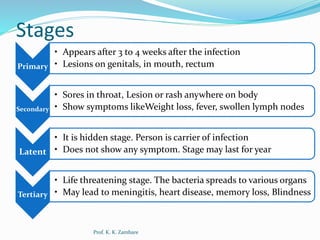
Stages
Prof. K. K. Zambare
Primary
• Appears after 3 to 4 weeks after the infection
• Lesions on genitals, in mouth, rectum
Secondary
• Sores in throat, Lesion or rash anywhere on body
• Show symptoms likeWeight loss, fever, swollen lymph nodes
Latent
• It is hidden stage. Person is carrier of infection
• Does not show any symptom. Stage may last for year
Tertiary
• Life threatening stage. The bacteria spreads to various organs
• May lead to meningitis, heart disease, memory loss, Blindness
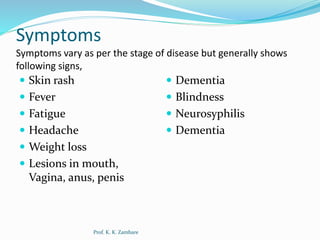
Symptoms
Symptoms vary as per the stage of disease but generally shows
following signs,
 Skin rash
 Fever
 Fatigue
 Headache
 Weight loss
 Lesions in mouth,
Vagina, anus, penis
 Dementia
 Blindness
 Neurosyphilis
 Dementia
Prof. K. K. Zambare
Diagnosis
 Physical examination: Physician may check
symptoms of disease physically.
 Microscopic test: Lymph from lesion is collected and
observed under microscope.
 Serological test:
 Radiological examination
Prof. K. K. Zambare
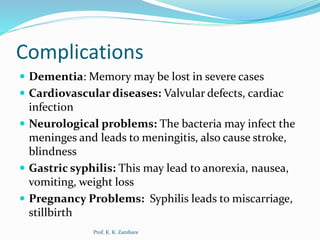
Complications
 Dementia: Memory may be lost in severe cases
 Cardiovascular diseases: Valvular defects, cardiac
infection
 Neurological problems: The bacteria may infect the
meninges and leads to meningitis, also cause stroke,
blindness
 Gastric syphilis: This may lead to anorexia, nausea,
vomiting, weight loss
 Pregnancy Problems: Syphilis leads to miscarriage,
stillbirth
Prof. K. K. Zambare

Syphilis

  • 1.
    By Mr. K. K.Zambare HOD, Pharmacology SBSPM B. Pharmacy College, Ambajogai Prof. K. K. Zambare
  • 2.
    Definition  Syphilis issexually transmitted disease caused due to Treponema pallidum.  T. pallidim is spirochete bacterium Prof. K. K. Zambare
  • 3.
    Mode of transmission Direct contact with infected patient  Sexual transmission  Vertical trasmission: From infected mother to foetus  Blood transfussion Prof. K. K. Zambare
  • 4.
    Stages Prof. K. K.Zambare Primary • Appears after 3 to 4 weeks after the infection • Lesions on genitals, in mouth, rectum Secondary • Sores in throat, Lesion or rash anywhere on body • Show symptoms likeWeight loss, fever, swollen lymph nodes Latent • It is hidden stage. Person is carrier of infection • Does not show any symptom. Stage may last for year Tertiary • Life threatening stage. The bacteria spreads to various organs • May lead to meningitis, heart disease, memory loss, Blindness
  • 5.
    Symptoms Symptoms vary asper the stage of disease but generally shows following signs,  Skin rash  Fever  Fatigue  Headache  Weight loss  Lesions in mouth, Vagina, anus, penis  Dementia  Blindness  Neurosyphilis  Dementia Prof. K. K. Zambare
  • 6.
    Diagnosis  Physical examination:Physician may check symptoms of disease physically.  Microscopic test: Lymph from lesion is collected and observed under microscope.  Serological test:  Radiological examination Prof. K. K. Zambare
  • 7.
    Complications  Dementia: Memorymay be lost in severe cases  Cardiovascular diseases: Valvular defects, cardiac infection  Neurological problems: The bacteria may infect the meninges and leads to meningitis, also cause stroke, blindness  Gastric syphilis: This may lead to anorexia, nausea, vomiting, weight loss  Pregnancy Problems: Syphilis leads to miscarriage, stillbirth Prof. K. K. Zambare