1
PRESENTED BY:
CHALLA.ANITHA, Pharm-D student
Vignan Pharmacy College, Vadlamudi, Guntur
OVERVIEWOVERVIEW
 History
 Morphology
 Culture
 Epidemiology
 Pathogenesis
 Signs and symptoms
 Diagnostic Tests
 Prophylaxis
 Treatment
2
The exact origin of syphilis is disputed , one of the two
primary hypothesis proposes that syphilis was carried from
the American’s to Europe by the returning crewmen from
christoper columbus voyage to the america’s
The causative organism , Treponema pallidum was first
identified by Fritz schaudinn and Erich Hoffmann in 1905.
The first effective treatment was developed in 1910 by Paul
enrich, which was followed by trials of penicillin and
confirmation of its effectiveness in 1943.
3
HISTORY
MORPHOLOGY
 It is a thin,Corkscrew-shaped, microaerophilic
bacterium,with tappering ends & Cannot be cultured in
vitro
 Its body is about 10 µ long and 0.1 to 0.2 µ wide, made up
of 10 sharp, rigid, regular spirals.
 It is motile and exhibits all three types of locomotion. The
organism appears rosy red when stained with giemsa stain.
 Under a light microscope it can be seen by negative
staining with Indian ink.
4
CULTURE
 Treponema pallidum has not been cultured so far on artificial
media or in tissue culture.
 A pathogenic strain of treponema pallidum known as
Nichol’s strain has been maintained in the rabbit testis for a
very long time and is used as a control in many diagnostic
and research experiments.
 A saprophytic strain of Treponema known as “ Reiter strain”
grows well in thioglycollate medium containing serum.
5
RESISTANCE TO PHYSICAL AND CHEMICAL
STRUCTURE
 Inactivated by drying or by heating at 41-42˚c for 1 hr
 It is killed in 1-3 days at refrigerator temperature.
 It can be stored for a long time at -70˚c in 10% glycerol or in
liquid nitrogen.
ANTIGEN STRUCTURE:
 Three types of antigens are seen in treponema
 A lipid hapten known as “Cardiolipin”present on T.pallidum.
6
EPIDEMIOLOGY:
 It affects between 700,000 - 1.6 million pregnancies a
year , resulting in spontaneous abortions ,stillbirths &
congenital syphilis.
 During 2010 it caused about 113,000 deaths down from
202,000 in 1990.Rates are proportionally higher among
i.v drug users, those who are infected with HIV, and
men who have sex with other men.
7
Syphilis is majorly classified in to two types namely:
 Veneral syphilis.
 Non-veneral syphilis.
VENERAL SYPHILIS:
The disease falls in to 3 stages namely:
 Primary stage.
 Secondary stage.
 Tertiary stage.
8
CLASSIFICATION
PRIMARY SYPHILIS:
 Primary lesion or "chancre" develops at the site of
inoculation.
 Chancre:
◦ Progresses from macule to papule & then to ulcer.
◦ Typically painless, indurated, and has a clean base.
◦ Highly infectious.
◦ Heals spontaneously within 1 to 6 weeks.
 Regional lymphadenopathy: classically rubbery,
painless, bilateral.
9
 Serologic tests may not be positive during early primary
syphilis
10
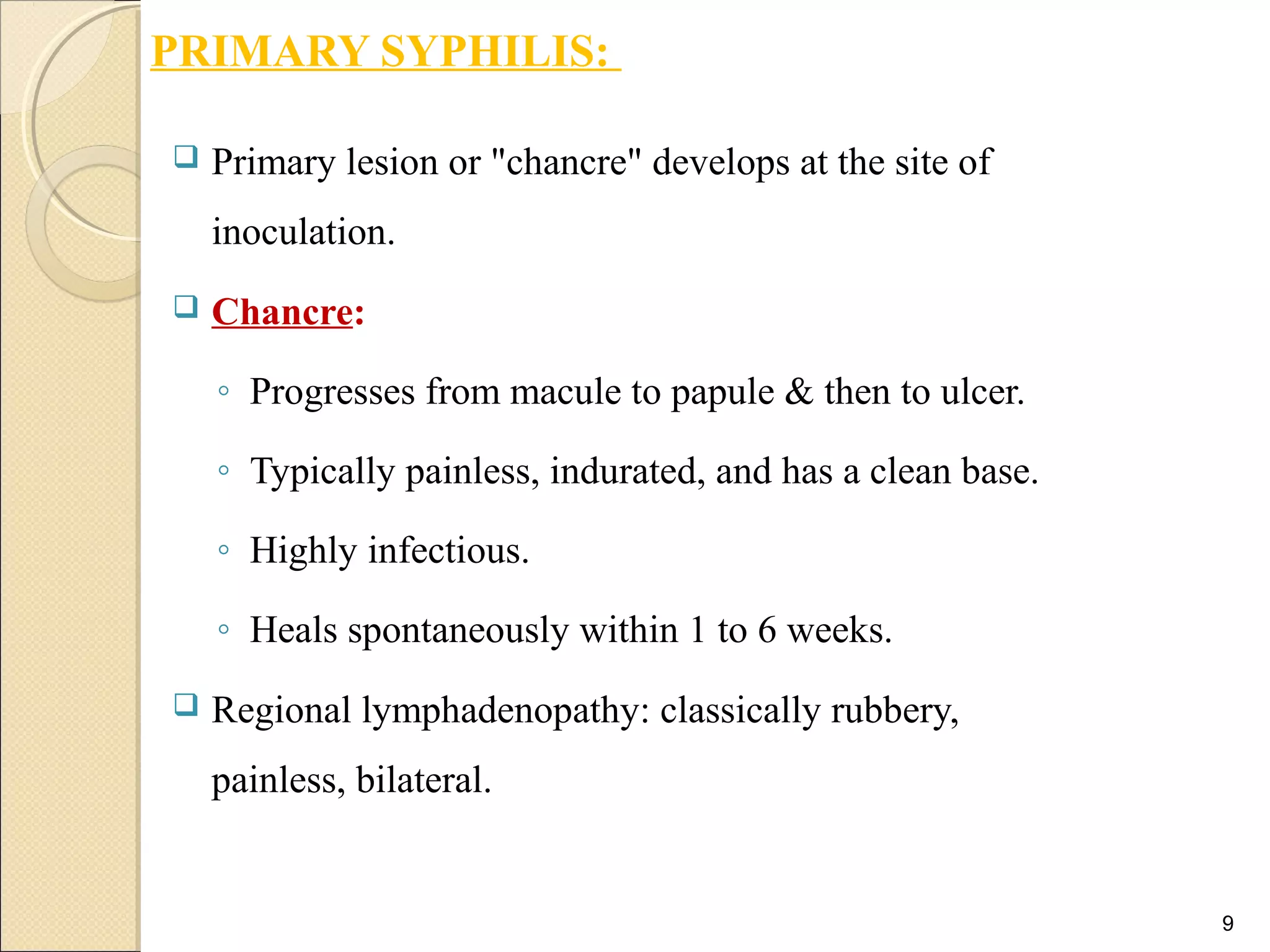
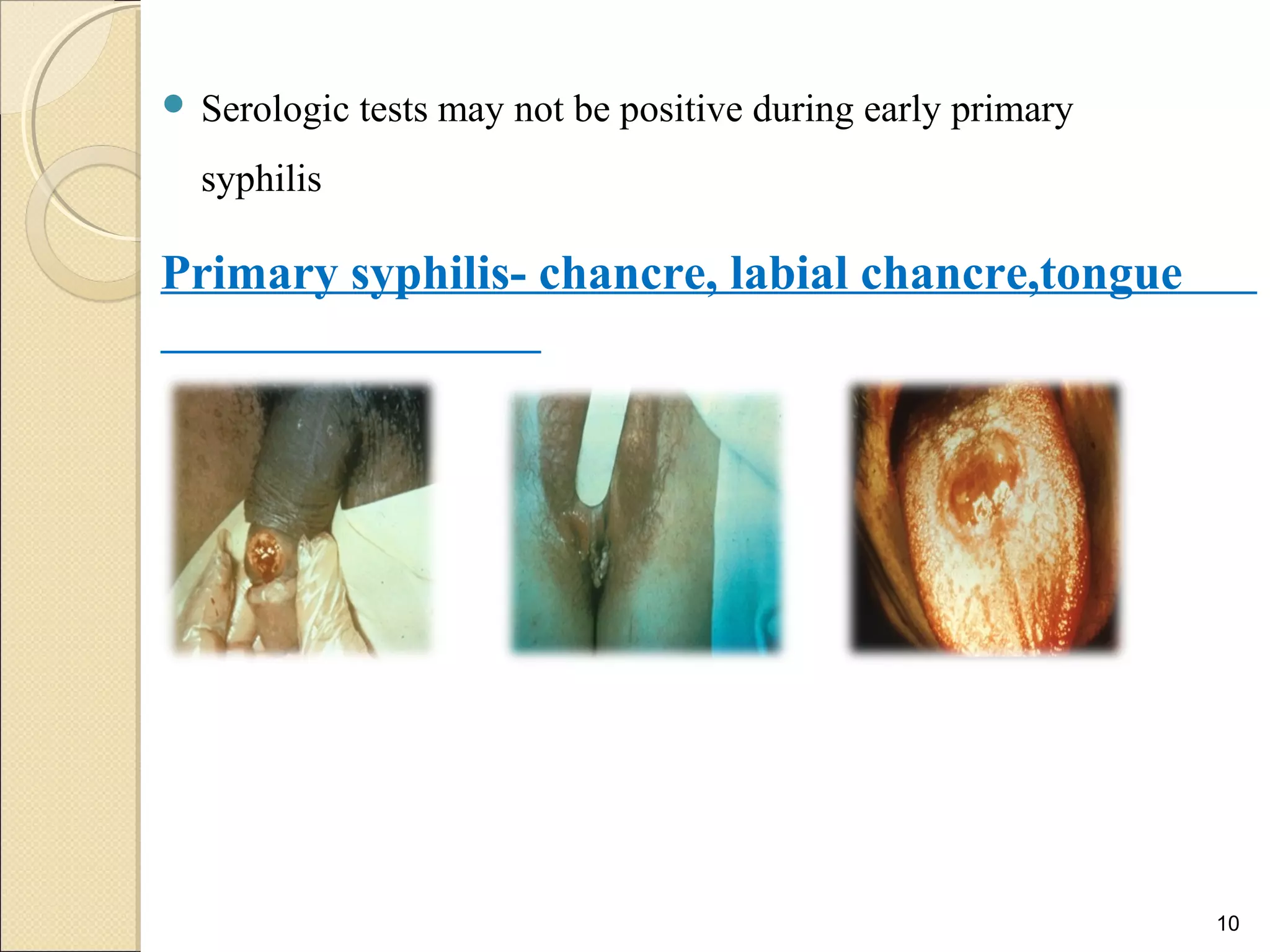
Primary syphilis- chancre, labial chancre,tongue
SECONDARY SYPHILIS:
 Secondary lesions occur 3 to 6 weeks after the primary
chancre appears; may persist for weeks to months
 Mucocutaneous lesions are most common
 Manifestations:
◦ Rash (75%-100%)
◦ Lymphadenopathy (50%-86%)
◦ Mucous patches (6%-30%)
◦ Alopecia (5%)
 Serologic tests are usually highest in titer during this stage
11
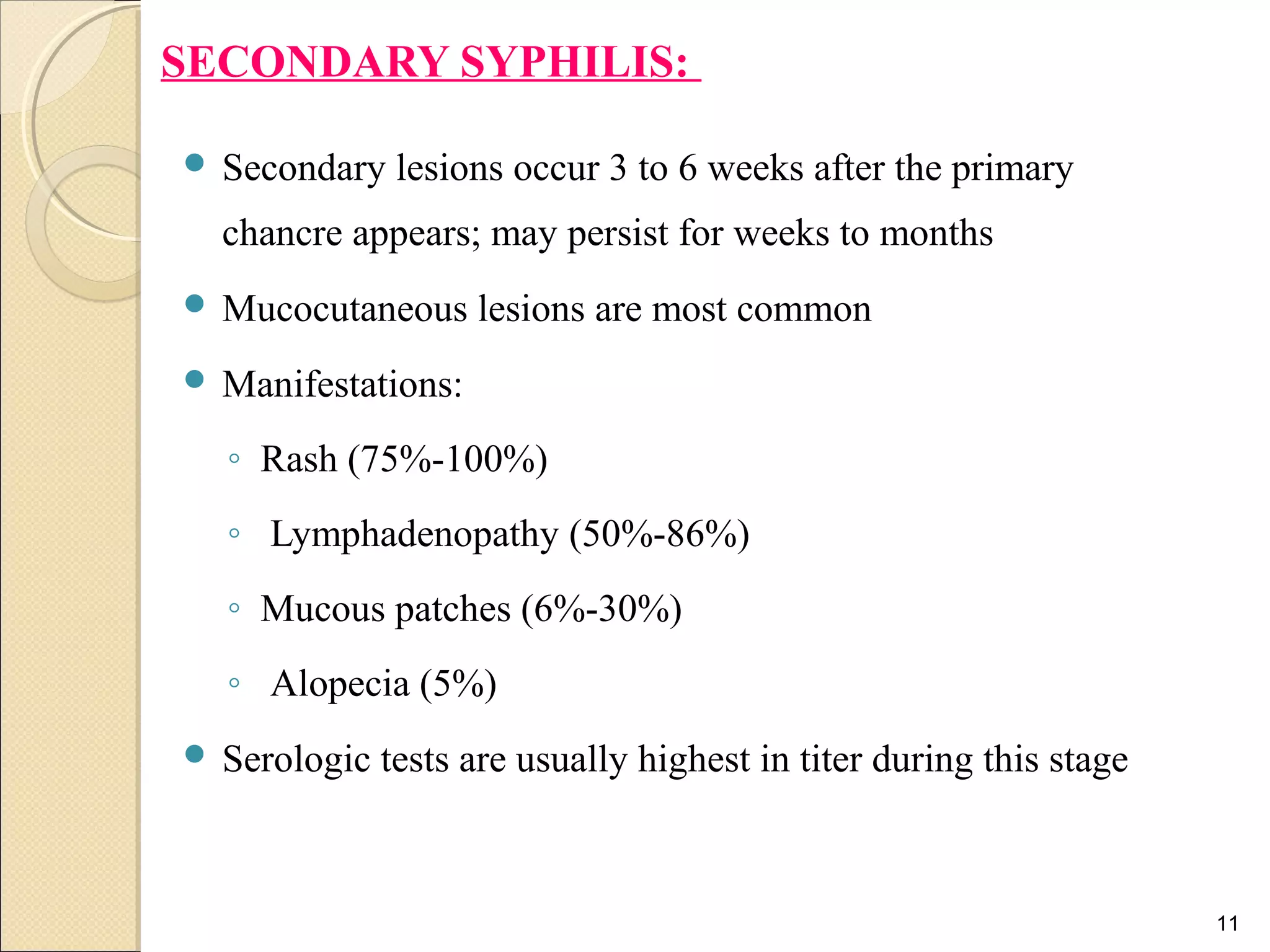
Secondary Syphilis:Palmar/Plantar,generalised body rashSecondary Syphilis:Palmar/Plantar,generalised body rash
12
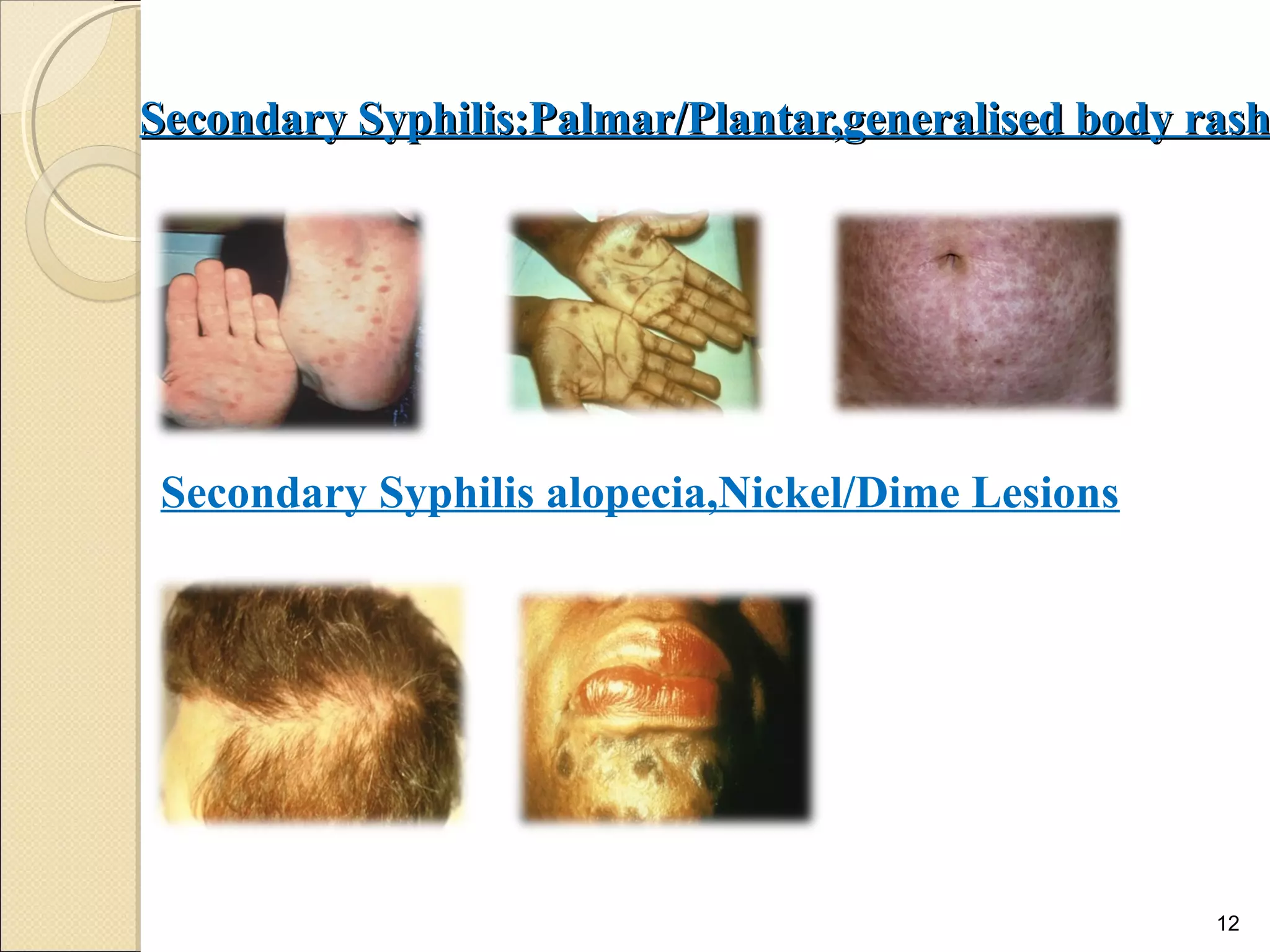
Secondary Syphilis alopecia,Nickel/Dime Lesions
Latent Syphilis
 Host suppresses the infection enough so that no lesions
are clinically apparent
 Only evidence is positive serologic test for syphilis
 May occur between primary and secondary stages,
between secondary relapses, and after secondary stage
 Categories:
◦ Early latent: <1 year duration
◦ Late latent: ≥1 year duration
13
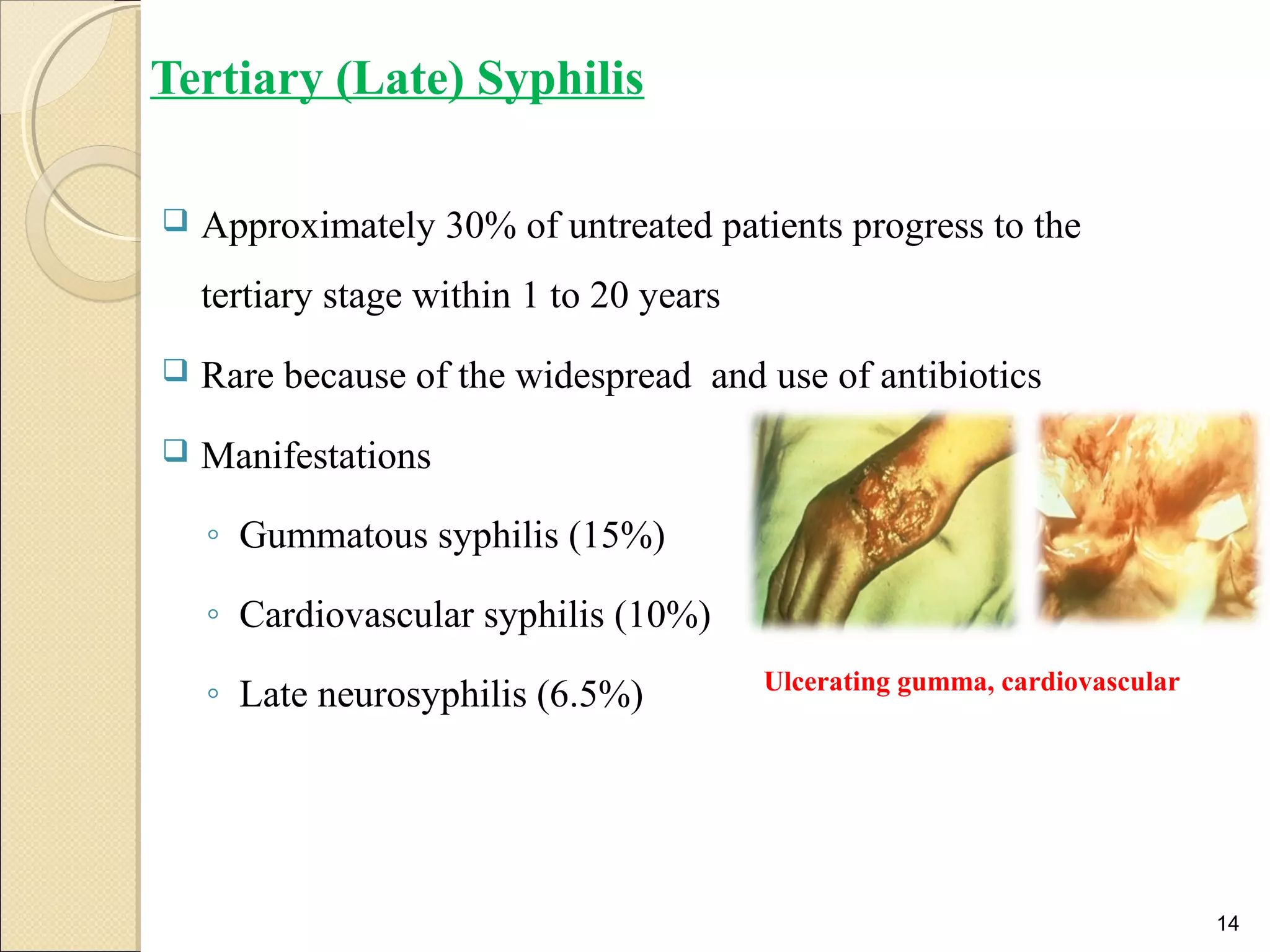
Tertiary (Late) Syphilis
 Approximately 30% of untreated patients progress to the
tertiary stage within 1 to 20 years
 Rare because of the widespread and use of antibiotics
 Manifestations
◦ Gummatous syphilis (15%)
◦ Cardiovascular syphilis (10%)
◦ Late neurosyphilis (6.5%)
14
Ulcerating gumma, cardiovascular
Congenital Syphilis
 Occurs when T. pallidum is transmitted from a pregnant
woman with syphilis to her foetus
 May lead to stillbirth, neonatal death, and infant disorders
such as deafness, neurologic impairment, and bone
deformities
 The risk is much higher during primary and secondary syphilis
15
Wide spectrum of severity exists;
 Early lesions (most common): Infants <2 years old; usually
inflammatory
 Late lesions: Children >2 years old; tend to be immunologic
& destructive
 Congenital Syphilis - Hutchinson’s Teeth ,perforation of
Palate
16
Signs & Symptoms
 Signs & symptoms of syphilis vary depending in which of the
four stages (primary, secondary, tertiary, latent) it is present:
Common symptoms are:
 Fever, Malaise, Sore throat, Rashes, Head ache
 Lymphadenopathy
 Mucous patches, Perforation of palate.
 Alopecia, Weight loss
 In severe conditions it causes mental retardation, shuffle walk
e.t.c.
17
Laboratory Diagnosis
 Identification of Treponema pallidum in lesions
◦ Darkfield microscopy
◦ Direct fluorescent antibody - T. pallidum (DFA-TP)
 Serologic tests
◦ Nontreponemal tests (qualitative and quantitative)
◦ Treponemal tests (qualitative)
18
Darkfield MicroscopyDarkfield Microscopy
What to look for:
T. pallidum morphology and motility
Advantage:
Definitive immediate diagnosis
Disadvantages:
Requires specialized equipment and an experienced
microscopist
Possible confusion with other pathogenic and nonpathogenic
spirochetes
Must be performed immediately
Generally not recommended on oral lesions
19
Syphilis Serology
Non-treponemal tests
◦ VDRL (Venereal
Disease Research
Laboratory)
◦ RPR (Rapid Plasma
Reagin)
◦ TRUST (Toluidine Red
Unheated Serum Test)
◦ USR (Unheated Serum
Reagin)
Treponemal tests
◦ TP-PA (Treponema Pallidum
Particle Agglutination)
◦ FTA-abs (Fluorescent
Treponemal Antibody
-Absorbed)
◦ EIA (Enzyme Immunoassay)
20
Nontreponemal Serologic Tests
Principles
Measure antibody directed against a cardiolipin-lecithin-
cholesterol antigen
Not specific for T. pallidum
Titers usually correlate with disease activity and results are reported
quantitatively, may be reactive in life
Treponemal Serologic Tests
Principles
Measure antibody directed against T. pallidum antigens
Qualitative, usually reactive in life
21
VDRL:(Veneral Disease Research Laboratory)
 0.5ml of the patient’s inactivated serum is placed on a special
slide with ring.
 1 drop of cardiolipin antigen is added & the slide rotated for
about 4 minutes.
 The reaction is observed under a low power microscope.
 Cardiolipin will form clumps with the regain antibody, if
present , presence of clumps indicates a positive reaction.
 Serial dilutions of the positive serum are tested to determine the
antibody titre.
22
TREPONEMA PALLIDUM
AGGLUTINATINATION (TPA) TEST:
 In this test, formalin killed T.pallidum is used as an antigen.
 It is mixed with patients serum & incubated.
 After incubation it is examined under dark ground microscope.
 Agglutination indicates positive test.
TREPONEMA PALLIDUM IMMOBILISATION (TPI)
TEST:
 Patients serum is incubated anaerobically with treponemal
suspension.
23
 Examined under dark ground microscope.
 If antibodies are present ,treponemes are immobilised ,that is,
they loose their motility this indicates positive test.
 TPI is a highly specific test for the diagnosis of syphilis.
Because of its technical complexity it is not used as a routine
diagnostic test.
24
PROPHYLAXIS:
 There is no vaccine against syphilis. The disease can be
prevented by:
 The use of mechanical barriers, like condoms.
 Avoidance of sexual contact with infected persons.
 While the WHO recommends all women to be tested at
the 1st
antenatal visit & again in the 3rd
trimester.
25
Therapy for Primary, Secondary, and Early
Latent Syphilis
Benzathine penicillin G 2.4 million units IM in a single dose
If penicillin allergic:
Doxycycline 100 mg orally twice daily for 14 days
Tetracycline 500 mg orally 4 times daily for 14 days
Therapy for Tertiary Syphilis without Neurologic
Involvement
Benzathine penicillin G 7.2 million units total, administered as
3 doses of 2.4 million units IM each at 1-week intervals
26
Penicillin allergic:
◦ Doxycycline 100 mg orally twice daily for 28 days
◦ Tetracycline 500 mg orally 4 times daily for 28 days
Therapy for Syphilis in Pregnancy
 Treat with penicillin according to stage of infection.
 Erythromycin is no longer an acceptable alternative drug
in penicillin-allergic patients.
27
Jarisch-Herxheimer Reaction
In some cases penicillin treatment induces ‘Jarich-Herxheimer’
reaction.This is characterised by:
Fever, malaise, nausea/vomiting; may be associated with chills and
exacerbation of secondary rash
Occurs within 24 hours after therapy
It is frequent but harmless in early syphilis but rare & dangerous in
gummatous, cardiovascular or neurosyphilis
This reaction is believed to be due to the liberation of toxic
products from the destruction of treponemas or due to
hypersensitivity.
28
NON-VENERAL SYPHILIS
 Causative organism is T.endemicum.
 The disease is called by different names in different parts of the
world & is more common in children of poor hygiene.
 Clinical manifestations include mucous patches in the mouth &
skin eruptions,may progress to gummatous lesions on skin
,bone & nasopharynx.
 Congenital syphilis are not common.
 Laboratory diagnosis & treatment of endemic syphilis are
similar to those of veneral syphilis.
29
REFERENCES
1.Ananthanarayan & Paniker’s, Text book of microbiology-7th
edition, pg.no: 377-385
2.R.Vasantha kumari,Text book of microbiology- 1st
edition, pg.no:
249-299
3.Tortora , Funke , Case, Introduction of microbiology-
9th
edition, pg.no:794-797
4. Wikipedia
30
31
THANK YOU

Syphilis

  • 1.
    1 PRESENTED BY: CHALLA.ANITHA, Pharm-Dstudent Vignan Pharmacy College, Vadlamudi, Guntur
  • 2.
    OVERVIEWOVERVIEW  History  Morphology Culture  Epidemiology  Pathogenesis  Signs and symptoms  Diagnostic Tests  Prophylaxis  Treatment 2
  • 3.
    The exact originof syphilis is disputed , one of the two primary hypothesis proposes that syphilis was carried from the American’s to Europe by the returning crewmen from christoper columbus voyage to the america’s The causative organism , Treponema pallidum was first identified by Fritz schaudinn and Erich Hoffmann in 1905. The first effective treatment was developed in 1910 by Paul enrich, which was followed by trials of penicillin and confirmation of its effectiveness in 1943. 3 HISTORY
  • 4.
    MORPHOLOGY  It isa thin,Corkscrew-shaped, microaerophilic bacterium,with tappering ends & Cannot be cultured in vitro  Its body is about 10 µ long and 0.1 to 0.2 µ wide, made up of 10 sharp, rigid, regular spirals.  It is motile and exhibits all three types of locomotion. The organism appears rosy red when stained with giemsa stain.  Under a light microscope it can be seen by negative staining with Indian ink. 4
  • 5.
    CULTURE  Treponema pallidumhas not been cultured so far on artificial media or in tissue culture.  A pathogenic strain of treponema pallidum known as Nichol’s strain has been maintained in the rabbit testis for a very long time and is used as a control in many diagnostic and research experiments.  A saprophytic strain of Treponema known as “ Reiter strain” grows well in thioglycollate medium containing serum. 5
  • 6.
    RESISTANCE TO PHYSICALAND CHEMICAL STRUCTURE  Inactivated by drying or by heating at 41-42˚c for 1 hr  It is killed in 1-3 days at refrigerator temperature.  It can be stored for a long time at -70˚c in 10% glycerol or in liquid nitrogen. ANTIGEN STRUCTURE:  Three types of antigens are seen in treponema  A lipid hapten known as “Cardiolipin”present on T.pallidum. 6
  • 7.
    EPIDEMIOLOGY:  It affectsbetween 700,000 - 1.6 million pregnancies a year , resulting in spontaneous abortions ,stillbirths & congenital syphilis.  During 2010 it caused about 113,000 deaths down from 202,000 in 1990.Rates are proportionally higher among i.v drug users, those who are infected with HIV, and men who have sex with other men. 7
  • 8.
    Syphilis is majorlyclassified in to two types namely:  Veneral syphilis.  Non-veneral syphilis. VENERAL SYPHILIS: The disease falls in to 3 stages namely:  Primary stage.  Secondary stage.  Tertiary stage. 8 CLASSIFICATION
  • 9.
    PRIMARY SYPHILIS:  Primarylesion or "chancre" develops at the site of inoculation.  Chancre: ◦ Progresses from macule to papule & then to ulcer. ◦ Typically painless, indurated, and has a clean base. ◦ Highly infectious. ◦ Heals spontaneously within 1 to 6 weeks.  Regional lymphadenopathy: classically rubbery, painless, bilateral. 9
  • 10.
     Serologic testsmay not be positive during early primary syphilis 10 Primary syphilis- chancre, labial chancre,tongue
  • 11.
    SECONDARY SYPHILIS:  Secondarylesions occur 3 to 6 weeks after the primary chancre appears; may persist for weeks to months  Mucocutaneous lesions are most common  Manifestations: ◦ Rash (75%-100%) ◦ Lymphadenopathy (50%-86%) ◦ Mucous patches (6%-30%) ◦ Alopecia (5%)  Serologic tests are usually highest in titer during this stage 11
  • 12.
    Secondary Syphilis:Palmar/Plantar,generalised bodyrashSecondary Syphilis:Palmar/Plantar,generalised body rash 12 Secondary Syphilis alopecia,Nickel/Dime Lesions
  • 13.
    Latent Syphilis  Hostsuppresses the infection enough so that no lesions are clinically apparent  Only evidence is positive serologic test for syphilis  May occur between primary and secondary stages, between secondary relapses, and after secondary stage  Categories: ◦ Early latent: <1 year duration ◦ Late latent: ≥1 year duration 13
  • 14.
    Tertiary (Late) Syphilis Approximately 30% of untreated patients progress to the tertiary stage within 1 to 20 years  Rare because of the widespread and use of antibiotics  Manifestations ◦ Gummatous syphilis (15%) ◦ Cardiovascular syphilis (10%) ◦ Late neurosyphilis (6.5%) 14 Ulcerating gumma, cardiovascular
  • 15.
    Congenital Syphilis  Occurswhen T. pallidum is transmitted from a pregnant woman with syphilis to her foetus  May lead to stillbirth, neonatal death, and infant disorders such as deafness, neurologic impairment, and bone deformities  The risk is much higher during primary and secondary syphilis 15
  • 16.
    Wide spectrum ofseverity exists;  Early lesions (most common): Infants <2 years old; usually inflammatory  Late lesions: Children >2 years old; tend to be immunologic & destructive  Congenital Syphilis - Hutchinson’s Teeth ,perforation of Palate 16
  • 17.
    Signs & Symptoms Signs & symptoms of syphilis vary depending in which of the four stages (primary, secondary, tertiary, latent) it is present: Common symptoms are:  Fever, Malaise, Sore throat, Rashes, Head ache  Lymphadenopathy  Mucous patches, Perforation of palate.  Alopecia, Weight loss  In severe conditions it causes mental retardation, shuffle walk e.t.c. 17
  • 18.
    Laboratory Diagnosis  Identificationof Treponema pallidum in lesions ◦ Darkfield microscopy ◦ Direct fluorescent antibody - T. pallidum (DFA-TP)  Serologic tests ◦ Nontreponemal tests (qualitative and quantitative) ◦ Treponemal tests (qualitative) 18
  • 19.
    Darkfield MicroscopyDarkfield Microscopy Whatto look for: T. pallidum morphology and motility Advantage: Definitive immediate diagnosis Disadvantages: Requires specialized equipment and an experienced microscopist Possible confusion with other pathogenic and nonpathogenic spirochetes Must be performed immediately Generally not recommended on oral lesions 19
  • 20.
    Syphilis Serology Non-treponemal tests ◦VDRL (Venereal Disease Research Laboratory) ◦ RPR (Rapid Plasma Reagin) ◦ TRUST (Toluidine Red Unheated Serum Test) ◦ USR (Unheated Serum Reagin) Treponemal tests ◦ TP-PA (Treponema Pallidum Particle Agglutination) ◦ FTA-abs (Fluorescent Treponemal Antibody -Absorbed) ◦ EIA (Enzyme Immunoassay) 20
  • 21.
    Nontreponemal Serologic Tests Principles Measureantibody directed against a cardiolipin-lecithin- cholesterol antigen Not specific for T. pallidum Titers usually correlate with disease activity and results are reported quantitatively, may be reactive in life Treponemal Serologic Tests Principles Measure antibody directed against T. pallidum antigens Qualitative, usually reactive in life 21
  • 22.
    VDRL:(Veneral Disease ResearchLaboratory)  0.5ml of the patient’s inactivated serum is placed on a special slide with ring.  1 drop of cardiolipin antigen is added & the slide rotated for about 4 minutes.  The reaction is observed under a low power microscope.  Cardiolipin will form clumps with the regain antibody, if present , presence of clumps indicates a positive reaction.  Serial dilutions of the positive serum are tested to determine the antibody titre. 22
  • 23.
    TREPONEMA PALLIDUM AGGLUTINATINATION (TPA)TEST:  In this test, formalin killed T.pallidum is used as an antigen.  It is mixed with patients serum & incubated.  After incubation it is examined under dark ground microscope.  Agglutination indicates positive test. TREPONEMA PALLIDUM IMMOBILISATION (TPI) TEST:  Patients serum is incubated anaerobically with treponemal suspension. 23
  • 24.
     Examined underdark ground microscope.  If antibodies are present ,treponemes are immobilised ,that is, they loose their motility this indicates positive test.  TPI is a highly specific test for the diagnosis of syphilis. Because of its technical complexity it is not used as a routine diagnostic test. 24
  • 25.
    PROPHYLAXIS:  There isno vaccine against syphilis. The disease can be prevented by:  The use of mechanical barriers, like condoms.  Avoidance of sexual contact with infected persons.  While the WHO recommends all women to be tested at the 1st antenatal visit & again in the 3rd trimester. 25
  • 26.
    Therapy for Primary,Secondary, and Early Latent Syphilis Benzathine penicillin G 2.4 million units IM in a single dose If penicillin allergic: Doxycycline 100 mg orally twice daily for 14 days Tetracycline 500 mg orally 4 times daily for 14 days Therapy for Tertiary Syphilis without Neurologic Involvement Benzathine penicillin G 7.2 million units total, administered as 3 doses of 2.4 million units IM each at 1-week intervals 26
  • 27.
    Penicillin allergic: ◦ Doxycycline100 mg orally twice daily for 28 days ◦ Tetracycline 500 mg orally 4 times daily for 28 days Therapy for Syphilis in Pregnancy  Treat with penicillin according to stage of infection.  Erythromycin is no longer an acceptable alternative drug in penicillin-allergic patients. 27
  • 28.
    Jarisch-Herxheimer Reaction In somecases penicillin treatment induces ‘Jarich-Herxheimer’ reaction.This is characterised by: Fever, malaise, nausea/vomiting; may be associated with chills and exacerbation of secondary rash Occurs within 24 hours after therapy It is frequent but harmless in early syphilis but rare & dangerous in gummatous, cardiovascular or neurosyphilis This reaction is believed to be due to the liberation of toxic products from the destruction of treponemas or due to hypersensitivity. 28
  • 29.
    NON-VENERAL SYPHILIS  Causativeorganism is T.endemicum.  The disease is called by different names in different parts of the world & is more common in children of poor hygiene.  Clinical manifestations include mucous patches in the mouth & skin eruptions,may progress to gummatous lesions on skin ,bone & nasopharynx.  Congenital syphilis are not common.  Laboratory diagnosis & treatment of endemic syphilis are similar to those of veneral syphilis. 29
  • 30.
    REFERENCES 1.Ananthanarayan & Paniker’s,Text book of microbiology-7th edition, pg.no: 377-385 2.R.Vasantha kumari,Text book of microbiology- 1st edition, pg.no: 249-299 3.Tortora , Funke , Case, Introduction of microbiology- 9th edition, pg.no:794-797 4. Wikipedia 30
  • 31.