Here are some possible responses to the questions:
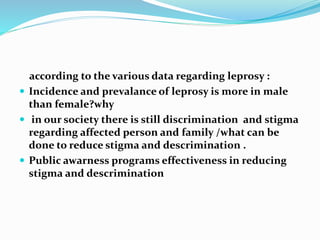
1. The higher incidence and prevalence of leprosy in males compared to females could be due to various socio-cultural factors. Males may have greater exposure and mobility which increases their risk of contracting the disease. There could also be under-reporting of cases in females due to lack of access to healthcare and social stigma.
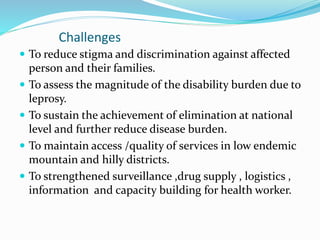
2. To reduce stigma and discrimination against leprosy affected persons and their families, sustained awareness programs targeting the general public as well as affected communities are needed. Educating people about the modes of transmission and that leprosy is curable can help reduce misconceptions. Involving affected persons in advocacy can also help normalize the condition and empower those