SUBCUTANEOUS MYCOSES

              grow on soil or on decaying vegetation

              must be introduced into subcutaneous tissue in
              order to produce disease

              GENERALLY : lesions spread slowly from the area
              of implantation

                    extension via lymphatics draining the lesion is
                    slow (except in sporotrichosis)

Thursday, January 19, 2012
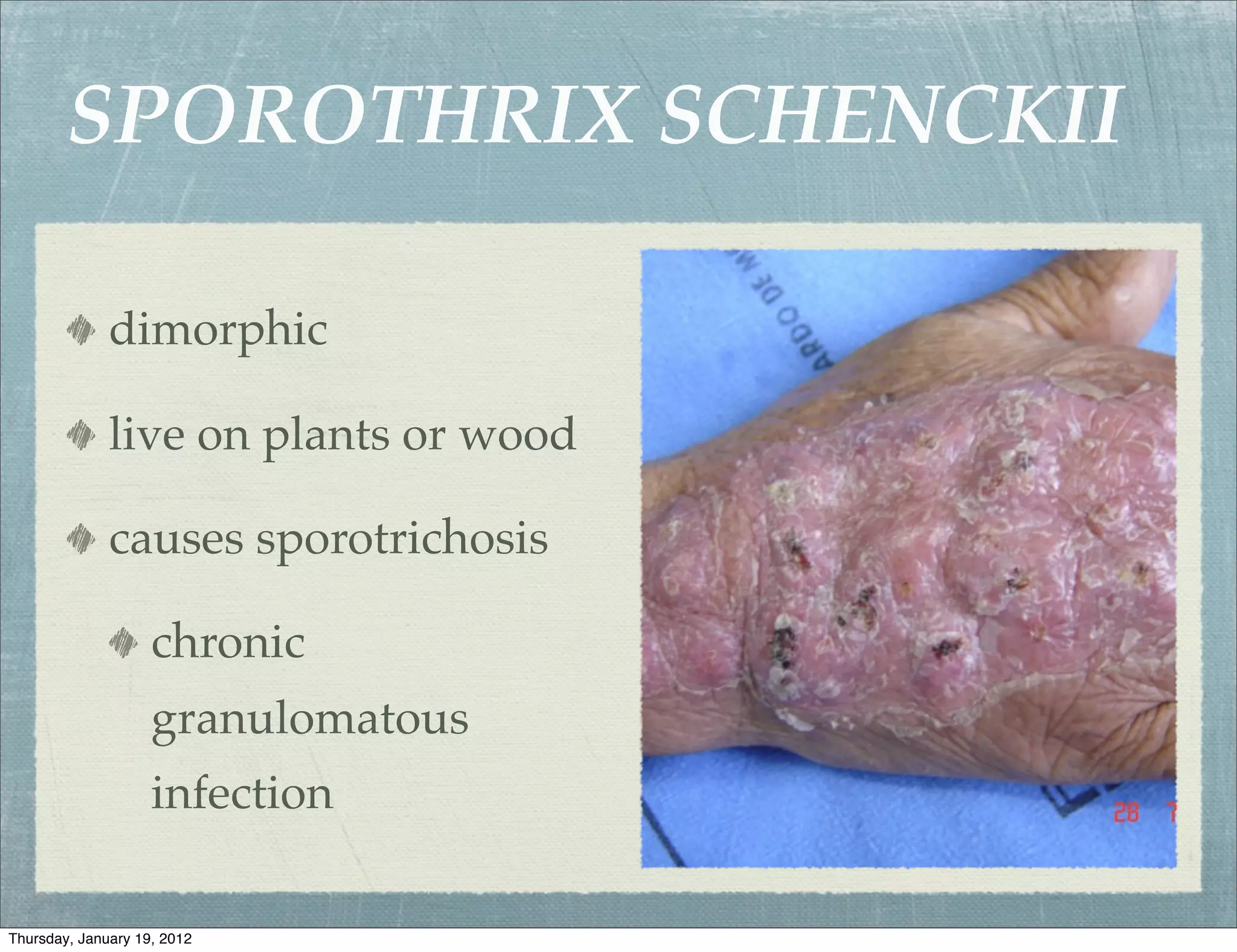
SPOROTHRIX SCHENCKII

              dimorphic

              live on plants or wood

              causes sporotrichosis

                    chronic
                    granulomatous
                    infection

Thursday, January 19, 2012
SPOROTHRIX SCHENCKII
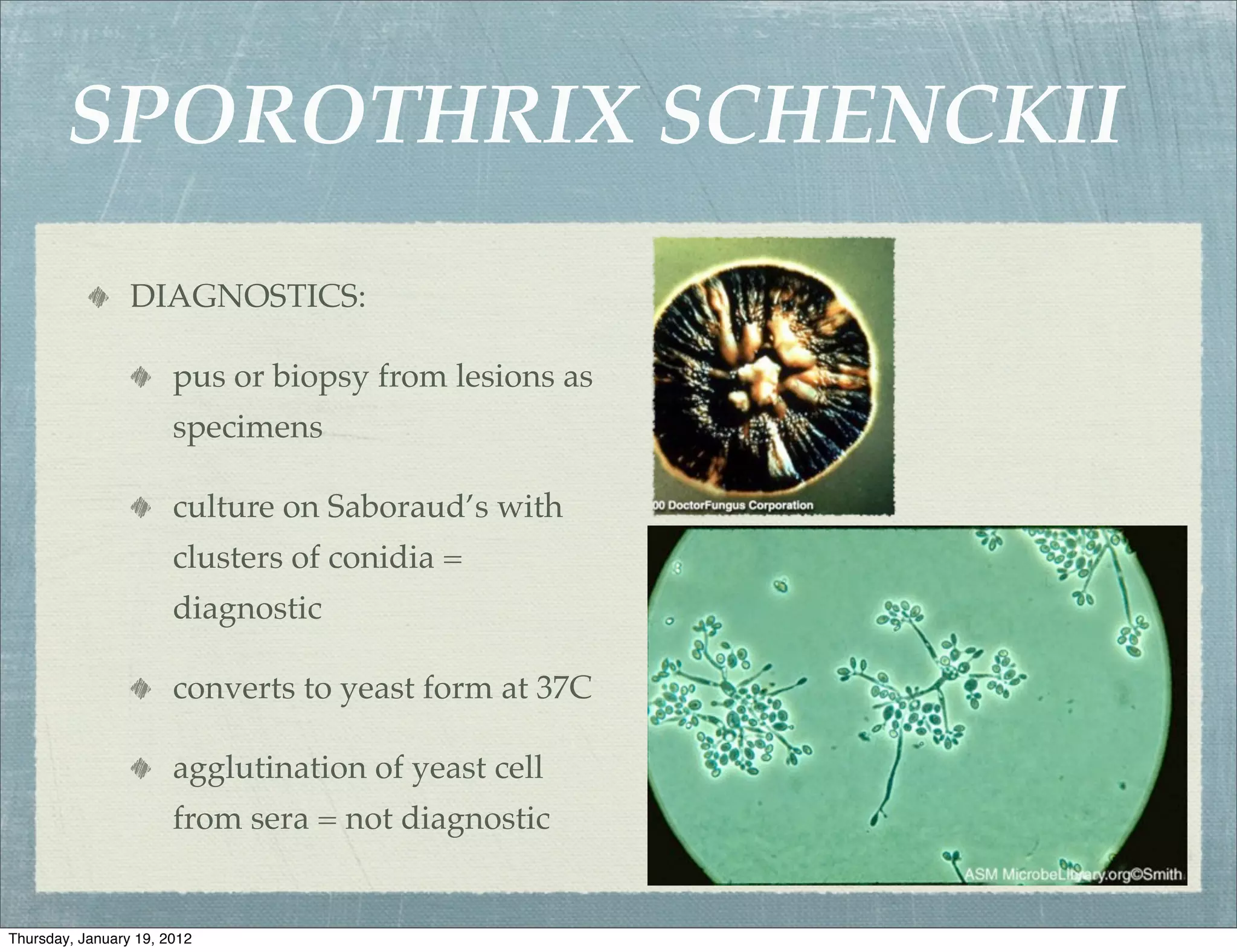
                 DIAGNOSTICS:

                       pus or biopsy from lesions as
                       specimens

                       culture on Saboraud’s with
                       clusters of conidia =
                       diagnostic

                       converts to yeast form at 37C

                       agglutination of yeast cell
                       from sera = not diagnostic


Thursday, January 19, 2012
SPOROTHRIX SCHENCKII
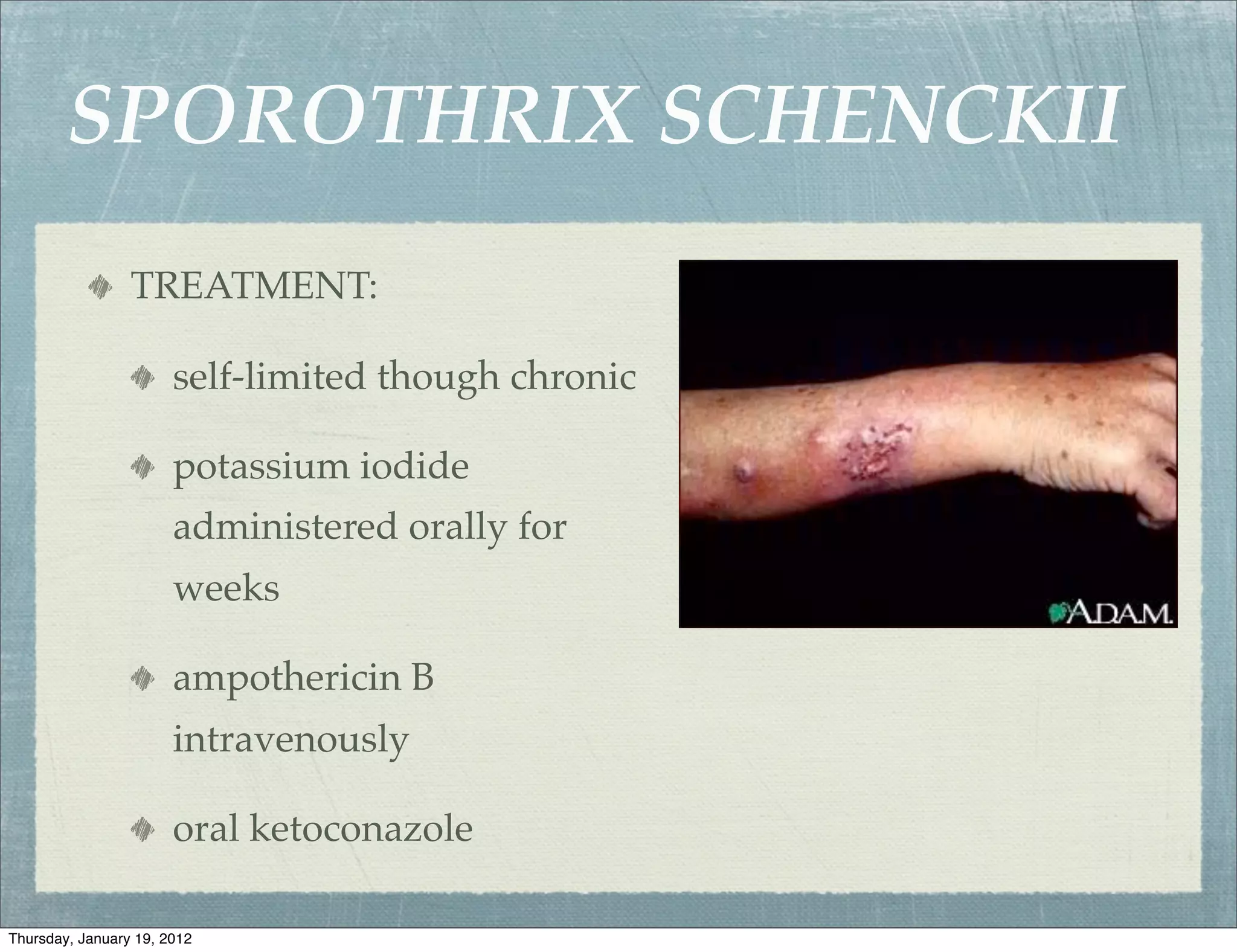
                 TREATMENT:

                       self-limited though chronic

                       potassium iodide
                       administered orally for
                       weeks

                       ampothericin B
                       intravenously

                       oral ketoconazole

Thursday, January 19, 2012
CHROMOBLASTOMYCOSIS
        (Chomomycosis)

                    slowly progressive granulomatous
                    infection of skin

                    caused by black molds

                    Phialophora verrucosa, Fonsecaea pedrosoi,
                    Rhinocladiella aquaspersa, Cladosporium
                    carrionii

Thursday, January 19, 2012
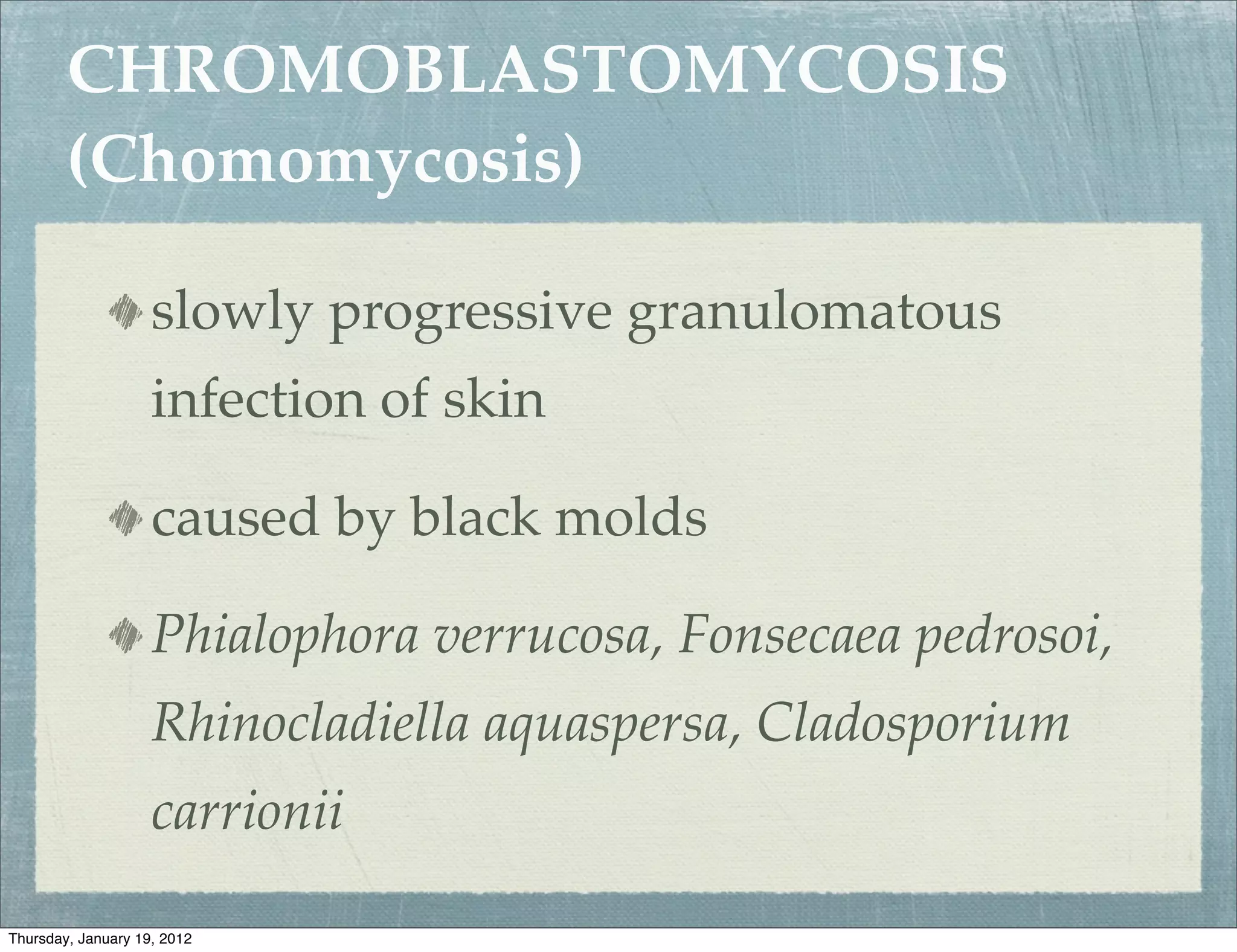
Phialophora verrucosa


Thursday, January 19, 2012
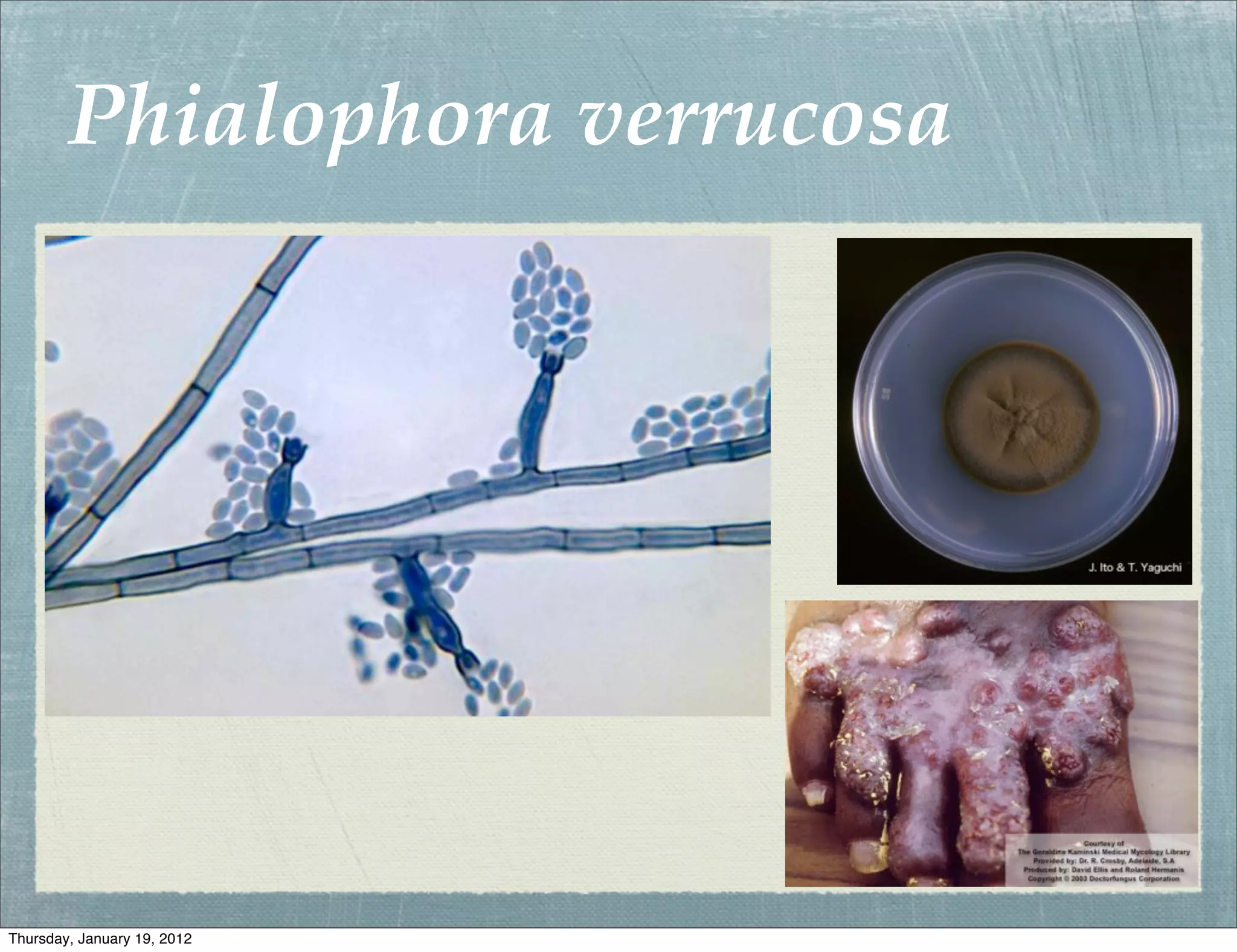
Fonsecaea pedrosoi


Thursday, January 19, 2012
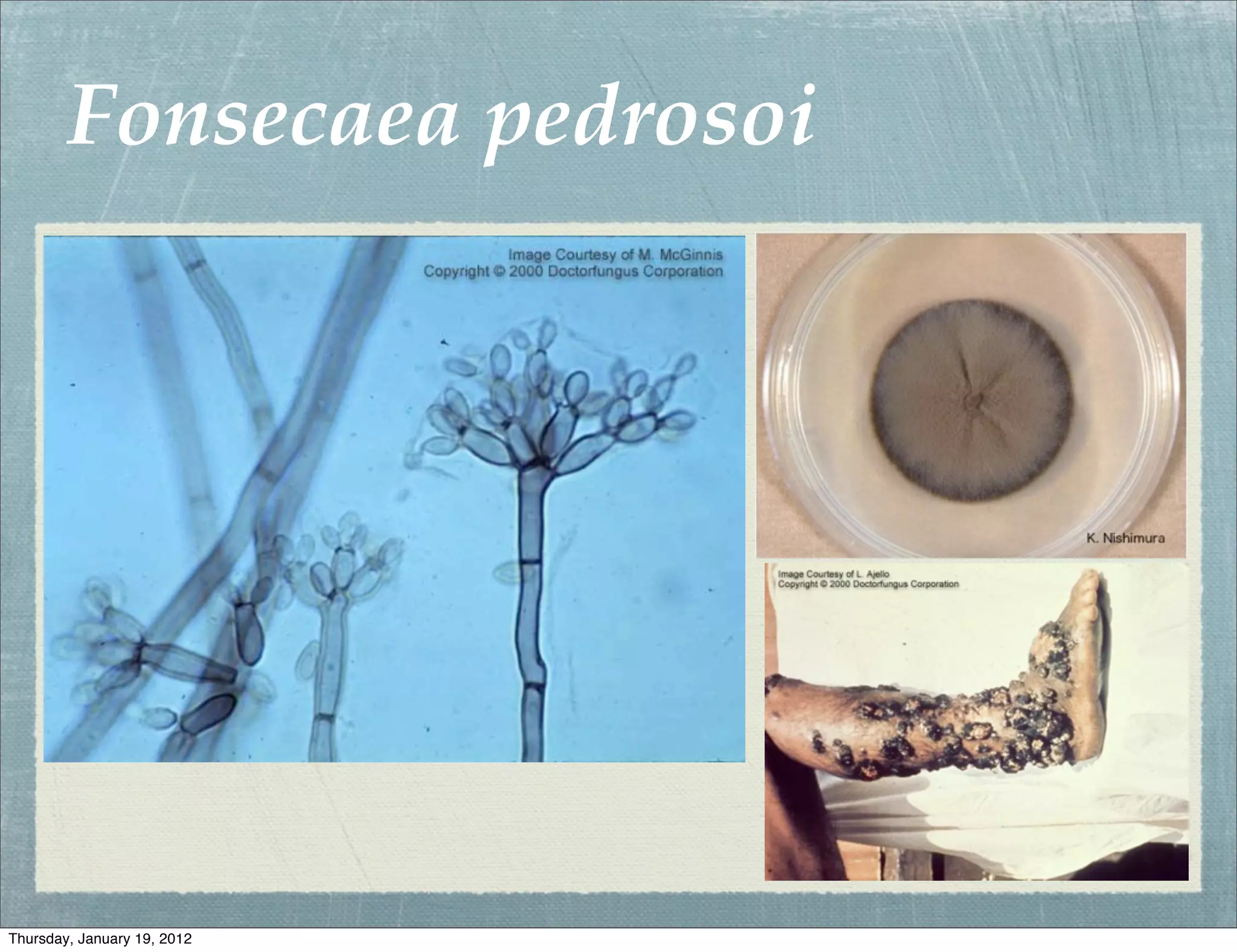
Rhinocladiella aquaspersa


Thursday, January 19, 2012
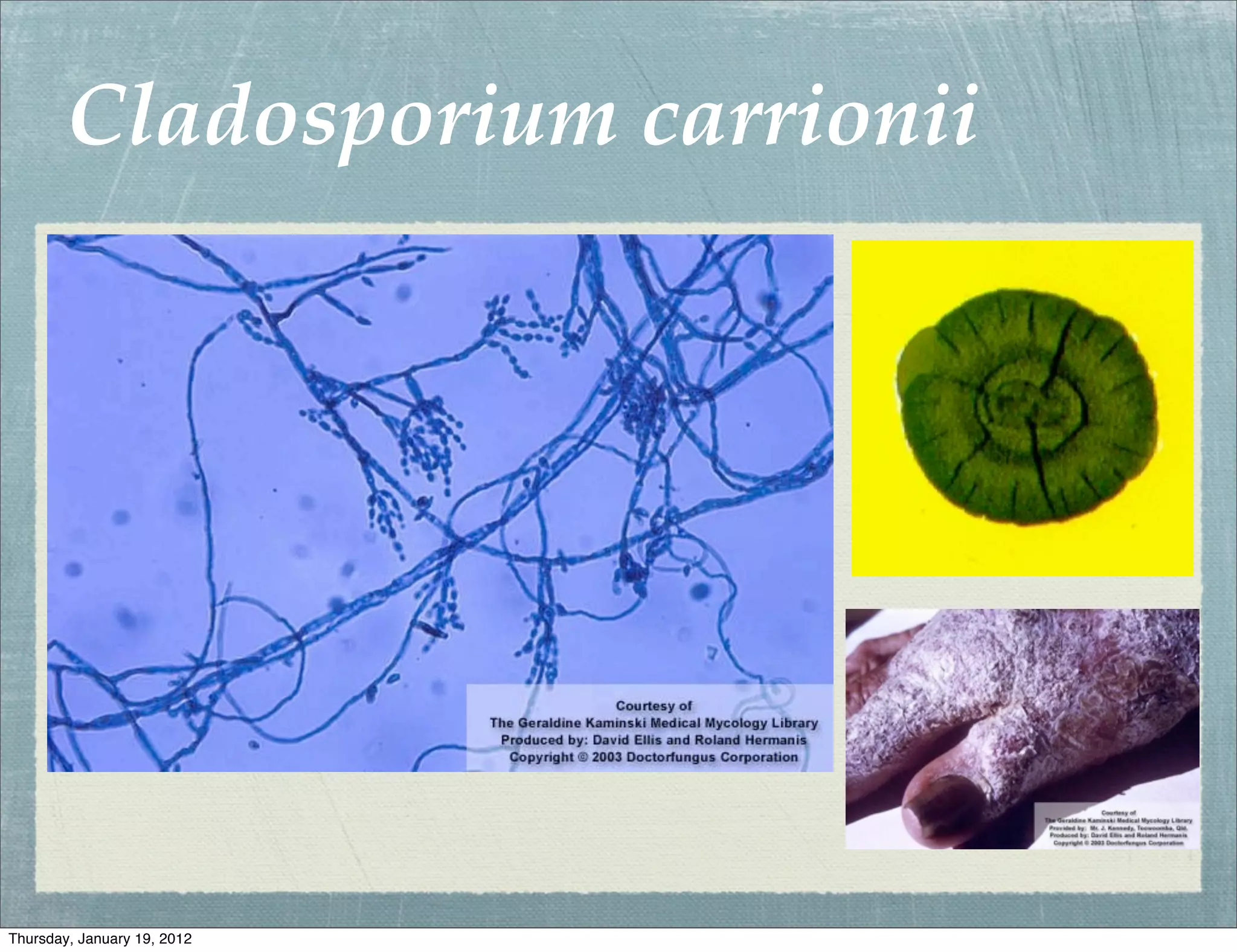
Cladosporium carrionii


Thursday, January 19, 2012
CHROMOBLASTOMYCOSIS
        (Chomomycosis)

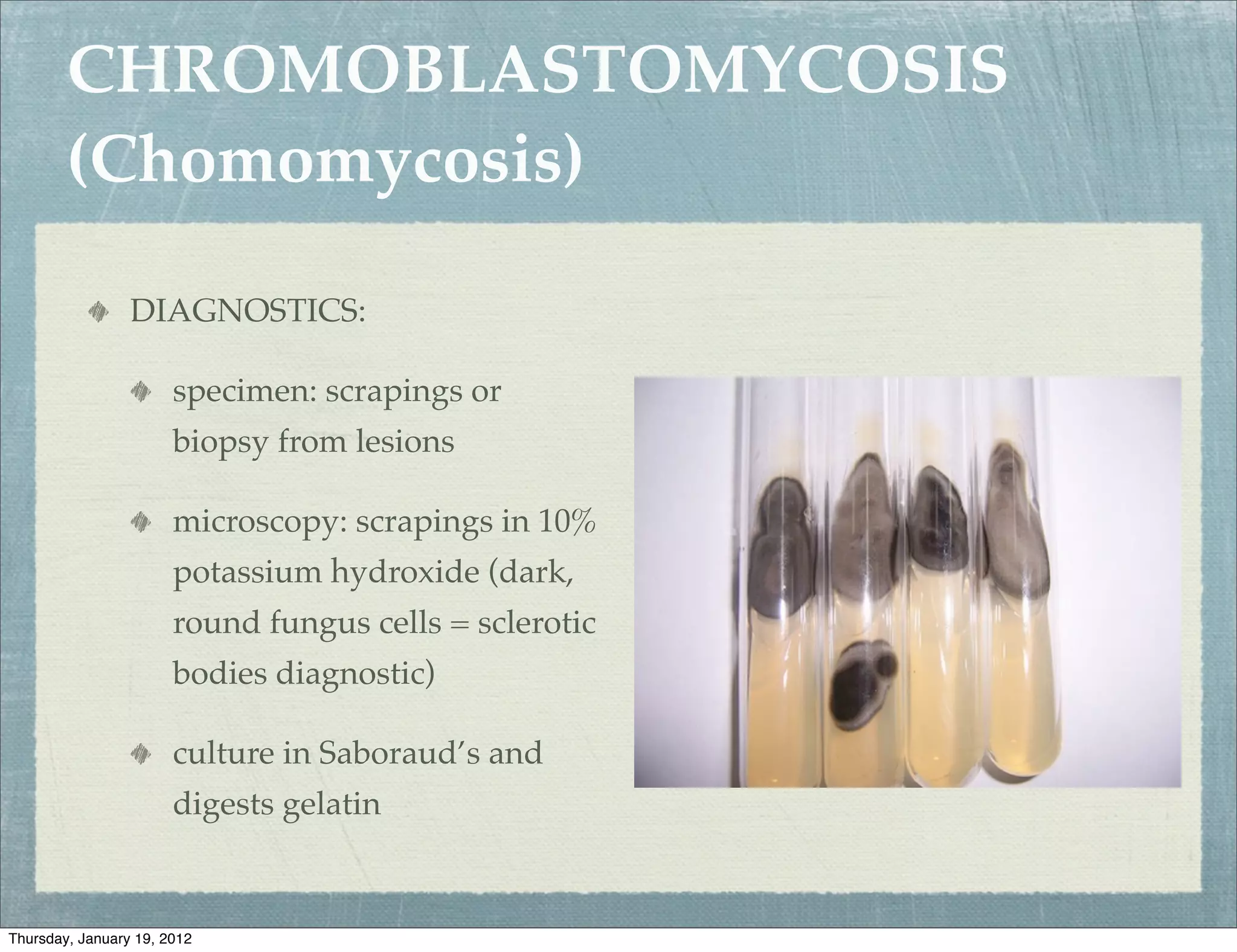
                 DIAGNOSTICS:

                       specimen: scrapings or
                       biopsy from lesions

                       microscopy: scrapings in 10%
                       potassium hydroxide (dark,
                       round fungus cells = sclerotic
                       bodies diagnostic)

                       culture in Saboraud’s and
                       digests gelatin


Thursday, January 19, 2012
CHROMOBLASTOMYCOSIS
        (Chomomycosis)
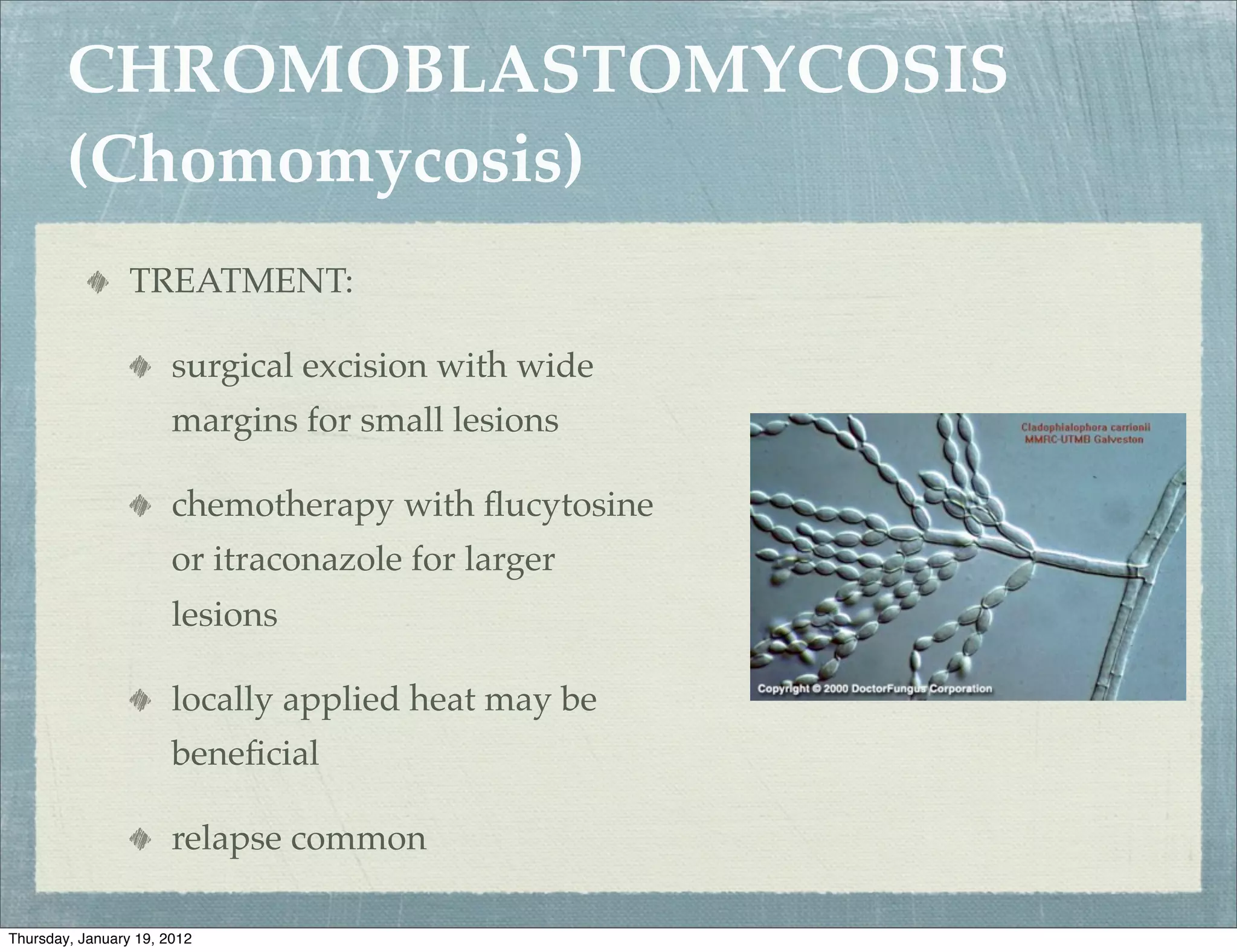
                 TREATMENT:

                       surgical excision with wide
                       margins for small lesions

                       chemotherapy with flucytosine
                       or itraconazole for larger
                       lesions

                       locally applied heat may be
                       beneficial

                       relapse common

Thursday, January 19, 2012

Subcutaneous mycoses

  • 1.
    SUBCUTANEOUS MYCOSES grow on soil or on decaying vegetation must be introduced into subcutaneous tissue in order to produce disease GENERALLY : lesions spread slowly from the area of implantation extension via lymphatics draining the lesion is slow (except in sporotrichosis) Thursday, January 19, 2012
  • 2.
    SPOROTHRIX SCHENCKII dimorphic live on plants or wood causes sporotrichosis chronic granulomatous infection Thursday, January 19, 2012
  • 3.
    SPOROTHRIX SCHENCKII DIAGNOSTICS: pus or biopsy from lesions as specimens culture on Saboraud’s with clusters of conidia = diagnostic converts to yeast form at 37C agglutination of yeast cell from sera = not diagnostic Thursday, January 19, 2012
  • 4.
    SPOROTHRIX SCHENCKII TREATMENT: self-limited though chronic potassium iodide administered orally for weeks ampothericin B intravenously oral ketoconazole Thursday, January 19, 2012
  • 5.
    CHROMOBLASTOMYCOSIS (Chomomycosis) slowly progressive granulomatous infection of skin caused by black molds Phialophora verrucosa, Fonsecaea pedrosoi, Rhinocladiella aquaspersa, Cladosporium carrionii Thursday, January 19, 2012
  • 6.
  • 7.
  • 8.
  • 9.
  • 10.
    CHROMOBLASTOMYCOSIS (Chomomycosis) DIAGNOSTICS: specimen: scrapings or biopsy from lesions microscopy: scrapings in 10% potassium hydroxide (dark, round fungus cells = sclerotic bodies diagnostic) culture in Saboraud’s and digests gelatin Thursday, January 19, 2012
  • 11.
    CHROMOBLASTOMYCOSIS (Chomomycosis) TREATMENT: surgical excision with wide margins for small lesions chemotherapy with flucytosine or itraconazole for larger lesions locally applied heat may be beneficial relapse common Thursday, January 19, 2012