Stress Ulcer Tianjin medical university general hospital Songtao shou
sex :male  age:  75y  chief complaints :  cough,gasp and spitting for 10 days,fever for 3 days. lethargy  for 1 day . past history  :  COPD for 10 years. After admission to ICU,we found his stools were dark stools. ( no history of peptic ulcer.) Symptoms :cough, expectoration, gasp and fever,without abdominal pain . laboratory examination : ABG:pH  7.40,PaO 2   50mmHg ,PaCO 2   80mmHg Chest x-ray : Diagnosis :  COPD , respiratory failure, pneumonia
lung markings
What should we do next?
laboratory examination 1. BRT:WBC  15×10 9 /L,N 90%,Hb140g/L,PLT 300×10 9  /L . 2.ABG:pH  7.40,PaO 2   50mmHg ,PaCO 2   80mmHg 3.stool :OB(++++),  WBC(-),RBC(3/hp)  the occult blood is positive after admission  for 24 hours.
Diagnosis ? 1.Respairatory failure 2.Bleeding of gastrointestinal Peptic ulcer Acute bacillary dysentery Stress ulcer syndrome
Therapy? 1 . positively  correct the primary disease. 2. Antiacides(Omeprazole)  3.  Cytoprotection( Sucralfate) 4. H 2  recepter antagonist(cimetidine) 5. enteral feeding
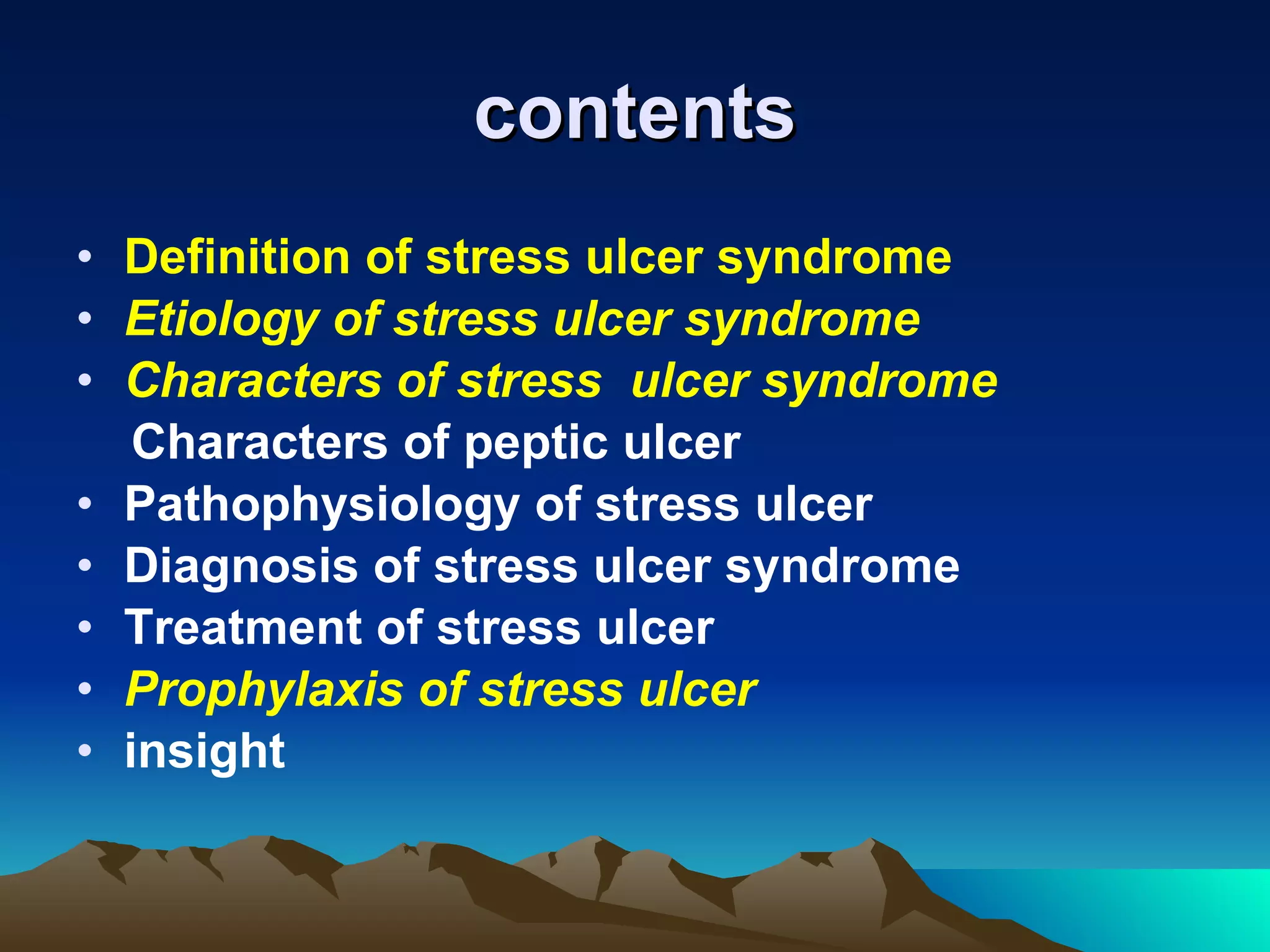
contents Definition of stress ulcer syndrome Etiology of stress ulcer syndrome Characters of stress  ulcer syndrome Characters of peptic ulcer Pathophysiology of stress ulcer Diagnosis of stress ulcer syndrome Treatment of stress ulcer Prophylaxis of stress ulcer insight
Stress? To subject to physical or mental pressure, tension, or strain. In medicine,stress refers  to physical or psychological trauma.
fight or  flight
LC-sympathetic nerve-adrenal medullar Stress neuroendocrine Cell fluid H-P-A system Other hormones AP HSP Cytokine enzyme
diseases  stress neuroendocrine Cell,body fluid hypermetabolism Cell , tissue , organ  and  system dysfunction
Change from gene  to whole body Clinical expression of  stress reaction
LC cerebrum brainstem Spinal cord adrenal kidney LC-Sympathetic-adrenal gland medullar
LC
Main effects CNS   —— Brain Adr-N stressor PVN CRH excite 、 alert ;  nervous 、 anxious Active HPA axis ② ①
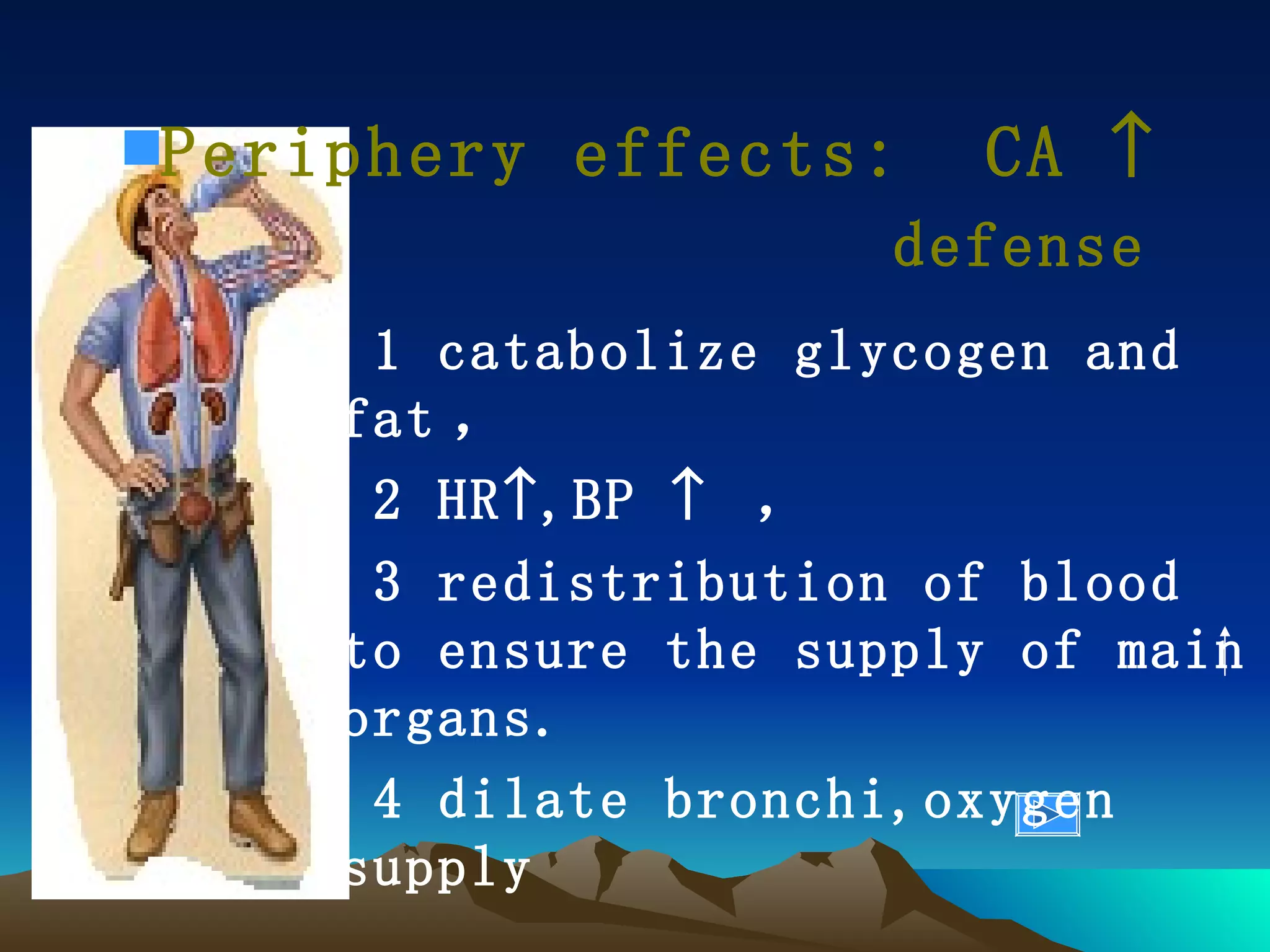
1 catabolize glycogen and fat , 2 HR  ,BP     , 3 redistribution of blood to ensure the supply of main organs. 4 dilate bronchi,oxygen supply Periphery effects:  CA   defense
1.organ ischemia 2.hypertension 3.thrombosis 4.oxygen expenditure  Adverse effects
stressor CRH↑ ACTH↑ GC↑ Cerebral cortex and limbic system 、 amygdaloid body 、 hippocamp Hypothalamus-pituitary-adrenal
Main effects (1)CNS stressor PVN CRH ↑ ACTH↑ control behaviour  and feeling——  eustress:euphoria distress:anxious 、 depression hypoxia Amygdaloid body endorphin  ↑ LC-NE  axis
(2)Periphery effects GC ↑ >25~37mg/d  1.Blood glucose ↑ 2.Sustain reactivity of circular system to catecholamine. 3.anti-inflammation,anti-sensitivity 、 stable lysosome membrane
Adverse effects of GC↑ 1.inhibit immunity 2.inhibit develope 3.behavior abnormal 4.inhibit sex axis and thyroid axis 5.change metabolism
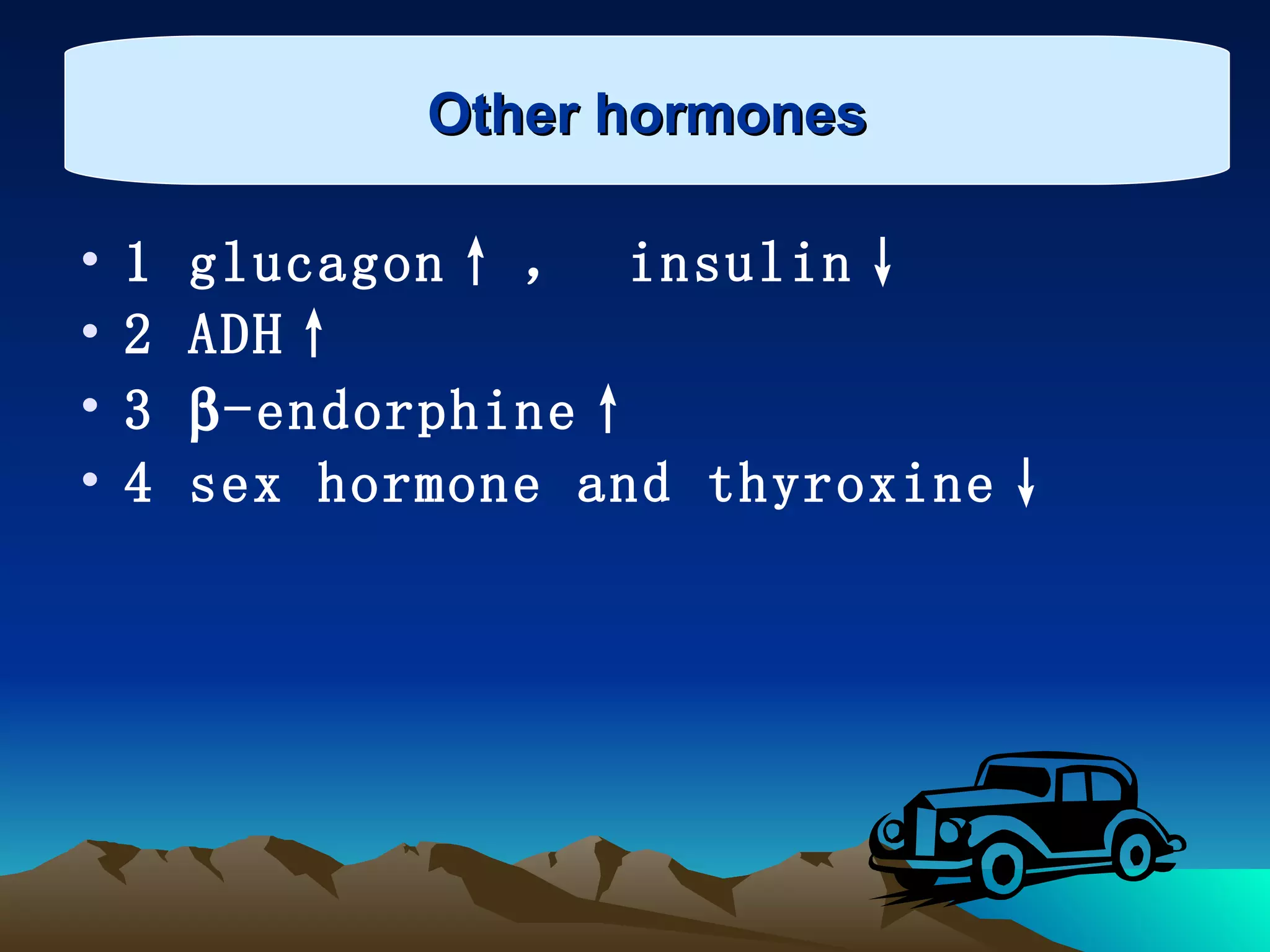
Other hormones 1 glucagon↑ ,  insulin↓ 2 ADH↑ 3   -endorphine↑ 4 sex hormone and thyroxine↓ Other hormones
Reaction of cell and body fluid Cell AP HSP Some enzymes Some cytokines stressors                          
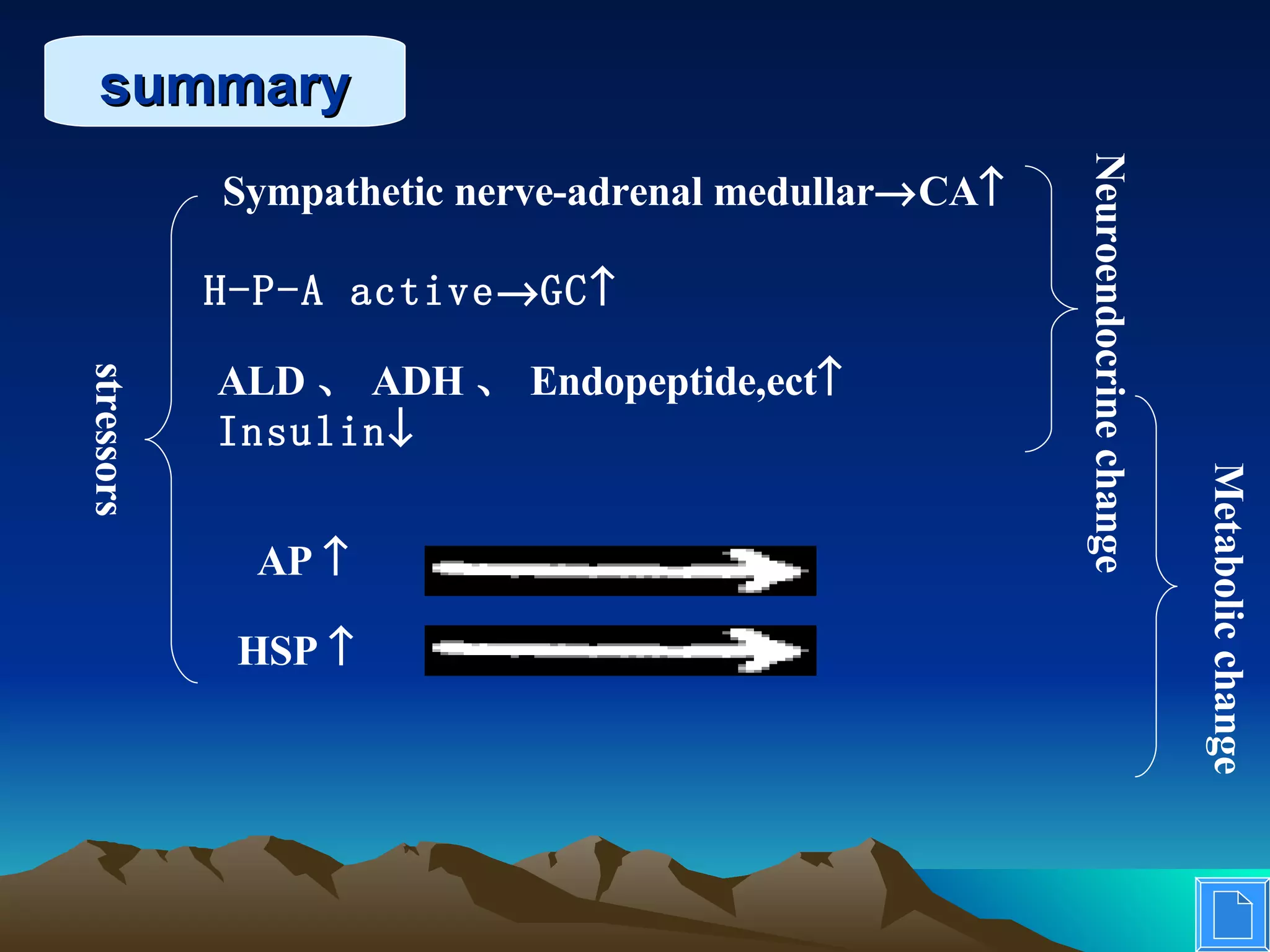
stressors Sympathetic nerve-adrenal medullar  CA  H-P-A active  GC  ALD 、 ADH 、 Endopeptide,ect  Insulin  Neuroendocrine change AP   HSP   Metabolic change summary
Several concepts 1. stress disease   The disease is caused all by stress.eg:stress ulcer 2. stress related disease the disease is related to stress.eg:CAD 、 PH or asthma
Stress ulcer
Ulcer? A lesion of the mucous membrane that is accompanied by edema and necrosis of surrounding tissue, usually resulting from inflammation. It achieves to the muscularis mucosa.
What is stress ulceration?   Stress ulceration is a gastrointestinal mucosal injury related to critical illness.  The ulceration may vary from diffuse superficial injuries to deep hemorrhaging ulcerations.
Why is it important? There is a relationship between severity of disease and incidence of ulceration  A GI bleed may be a marker of the patient’s condition
Stress  ulcer syndrome(SUS) It is the acute changes confined to the gastric mucosa under the condition of physiologic or psychological stress.the mucosal lesion and associated clinical bleeding or perforation have been termed  SUS.
sus It was introduced by Hans Selye in 1936 to describe the association between psychosomatic illness and peptic ulcer. The incidence of stress ulcer ranges from 20% to 100% in ICU (Intensive care unit)  patients.
What causes it?   Ulceration is caused by  ischemic injury  to the gastric mucosa, loss of cytoprotectants and assault by gastric acid. The mucosa is injured and cannot repair itself sufficiently well to ward off  aggressive factors  present in the gut lumen   (these aggressors include gastric acid, bile and digestive enzymes. )
Stress Ulceration Risk Factors   The major risk factors are  respiratory failure, coagulopathy, sepsis, hypotension and hepatic and renal failure. there is a good relationship between severity of illness (as determined by, for example, APACHE II scores) and incidence of ulceration.  Moreover, the longer a patient in ICU, the more likely they are to have a GI bleed . Patients who are likely to have a number of these risk factors – burns patients for example (ventilated, hypotensive, coagulopathic), are more likely to have ulceration and bleeding.
Pathogenesis of stress ulcer stress ulcer  syndrome appears to be  mucosa ischemia  resulting form splanchnic hypofusion in the setting of physiologic stress and an acid
( 1 )  mucosa  ischemia  ( 2 ) H +  diffuse to intramucosa ( 3 ) others : acidosis CA  Mucosa  barrier  H +  diffuse to intramucosa Blood flow  H + pump out  ulcer GC   stressor Mucosa ischemia
Gastric mucosal circulation Disproportionate vasoconstrictor response to  stress Neural  nor-adrenaline  and circulating  adrenaline  have similar effects on vasoconstriction in gastric mucosal and systemic vascular beds  Renin-angiotensin  system and to a lesser degree vasopressin are responsible for the disproportionate response.
The mucosa is compromised by ischemia and attacked (mostly) by acid. It is injured, and, due to the presence of acid, cannot repair itself (hostile environment). The use of external agents to neutralize acid resolves this problem.
Diagnosis of sus Symptom   most patients have no symptoms. Abdominal pain  and perforation are  rare. Body signs Lab test   Positive occult  blood in both vomitus and melena,these lesions have been found with endosocopy as early as 5h after ICU admission and most will be evident within 72h.  Endoscopy:Commonly mucosal erosions are found in the fundus or acid secreting parts of the stomach .
Important sources of OB error False –positive Cimetidine pH=2~4 Red meat  Horseradish Raw turnips  Apple,orange,banana False –negative Antacids pH<2 Vitamine C
characters    acute    multi , superficial     easy  to heal  ; bleeding and perforation are seldom
Differences between PU and SU Endoscopic barium meal and endoscope diagnose Abdominal pain,  Bleeding and  Perforation are unusual Abdominal pain,perforation and bleeding Signs and symptoms Multiple Single or two Ulceration cardia ,fundus and body antrum Location acute chronic Attack SU PU
The mucosa plica in the gastric body is smooth.
Before making gastroscope,we have to fulfill the stomach with enough air,so under  gastroscope the mucosa is very smooth.pylorus is round and always in contraction.
Mucus lake
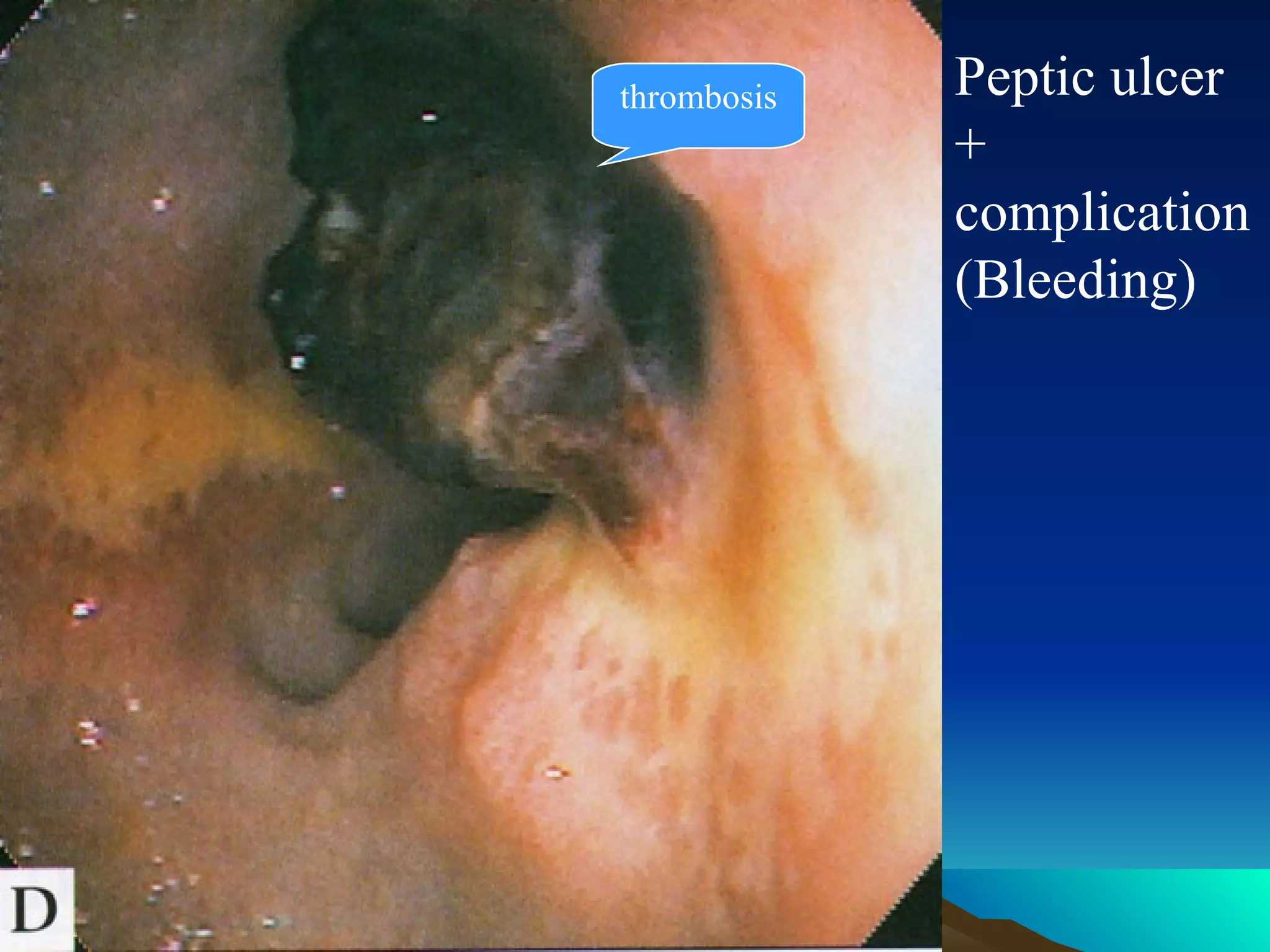
thrombosis Peptic ulcer + complication (Bleeding)
Minal clot
petechia
Treatment Strategy   Patients who do not have one of the six major risk factors do not require treatment. Patients in shock, sepsis, respiratory, hepatic or renal failure, or who have a coagulopathy, who are admitted to intensive care, should all be given stress ulcer prophylaxis.
The goal of therapy Stress ulcers  are not deep craters like those seen in peptic ulcer disease,but are superficial erosions confined to the surface of the mucosa.Therefore, the goal of therapy is not so much to prevent their appearance but to limit the incidence of troublesome bleeding.
Da huang
Principle of Treatment Cytoprotection(Sucralfate) H 2  recepter antagonist(cimetidine) Antiacides(losec) Surgery therapy Enteral feeding
Ranitidine and sucralfate are the most effective agents. Ranitidine is associated with a lower incidence of clinically significant bleeding, sucralfate with a lower incidence of pneumonia.
Principle  of  enteral feeding 1. To neutralize gastric pH(to dilute the relatively acid enviroment) 2. To provide the cells of the gastric mucosa with a nutrient.the cells may use luminal nutrients as a source of energy to produce the protective surface lining. 3. It solves the problems of nutrition and stress ulcer prophylaxis.
Prophylaxis of stress ulcer Enteral feedings Control of the gastric PH  Cytoprotection Hemodynamatic  management Oxygen supplement
Prophylaxis  prophylaxis for SUS should be confined to carefully selected at-risk patients Stress ulcers are often present within hours of admission to an intensive care unit.So,to a certain extent ,it is more important to prophylaxis stress ulcers than to treat them.
Importants Etiology and risk factors of sus Characters of sus Prophylaxis of sus
SUS are often viewed as a primary illness instead  of  a signal for  mucosal ischemia . The misconception has created some confusion about the appropriate therapy  for stress ulcers and specifically about the role of gastric acid suppression  therapy.through the chapter ,we know stress ulcers are a manifestation of mucosa ischemia  and  NOT  a manifestation of gastric hyperacidity.
insight Ulcer achieves to the muscularis mucosa Stress ulcers are confined the gastric mucosa So ,stress ulcers are not the real ulcers
 
THANK YOU


Stress Ulcer(2009)

  • 1.
    Stress Ulcer Tianjinmedical university general hospital Songtao shou
  • 2.
    sex :male age: 75y chief complaints : cough,gasp and spitting for 10 days,fever for 3 days. lethargy for 1 day . past history : COPD for 10 years. After admission to ICU,we found his stools were dark stools. ( no history of peptic ulcer.) Symptoms :cough, expectoration, gasp and fever,without abdominal pain . laboratory examination : ABG:pH 7.40,PaO 2 50mmHg ,PaCO 2 80mmHg Chest x-ray : Diagnosis : COPD , respiratory failure, pneumonia
  • 3.
  • 4.
  • 5.
    laboratory examination 1.BRT:WBC 15×10 9 /L,N 90%,Hb140g/L,PLT 300×10 9 /L . 2.ABG:pH 7.40,PaO 2 50mmHg ,PaCO 2 80mmHg 3.stool :OB(++++), WBC(-),RBC(3/hp) the occult blood is positive after admission for 24 hours.
  • 6.
    Diagnosis ? 1.Respairatoryfailure 2.Bleeding of gastrointestinal Peptic ulcer Acute bacillary dysentery Stress ulcer syndrome
  • 7.
    Therapy? 1 .positively correct the primary disease. 2. Antiacides(Omeprazole) 3. Cytoprotection( Sucralfate) 4. H 2 recepter antagonist(cimetidine) 5. enteral feeding
  • 8.
    contents Definition ofstress ulcer syndrome Etiology of stress ulcer syndrome Characters of stress ulcer syndrome Characters of peptic ulcer Pathophysiology of stress ulcer Diagnosis of stress ulcer syndrome Treatment of stress ulcer Prophylaxis of stress ulcer insight
  • 9.
    Stress? To subjectto physical or mental pressure, tension, or strain. In medicine,stress refers to physical or psychological trauma.
  • 10.
    fight or flight
  • 11.
    LC-sympathetic nerve-adrenal medullarStress neuroendocrine Cell fluid H-P-A system Other hormones AP HSP Cytokine enzyme
  • 12.
    diseases stressneuroendocrine Cell,body fluid hypermetabolism Cell , tissue , organ and system dysfunction
  • 13.
    Change from gene to whole body Clinical expression of stress reaction
  • 14.
    LC cerebrum brainstemSpinal cord adrenal kidney LC-Sympathetic-adrenal gland medullar
  • 15.
  • 16.
    Main effects CNS —— Brain Adr-N stressor PVN CRH excite 、 alert ; nervous 、 anxious Active HPA axis ② ①
  • 17.
    1 catabolize glycogenand fat , 2 HR  ,BP  , 3 redistribution of blood to ensure the supply of main organs. 4 dilate bronchi,oxygen supply Periphery effects: CA  defense
  • 18.
    1.organ ischemia 2.hypertension3.thrombosis 4.oxygen expenditure Adverse effects
  • 19.
    stressor CRH↑ ACTH↑GC↑ Cerebral cortex and limbic system 、 amygdaloid body 、 hippocamp Hypothalamus-pituitary-adrenal
  • 20.
    Main effects (1)CNSstressor PVN CRH ↑ ACTH↑ control behaviour and feeling—— eustress:euphoria distress:anxious 、 depression hypoxia Amygdaloid body endorphin ↑ LC-NE axis
  • 21.
    (2)Periphery effects GC↑ >25~37mg/d 1.Blood glucose ↑ 2.Sustain reactivity of circular system to catecholamine. 3.anti-inflammation,anti-sensitivity 、 stable lysosome membrane
  • 22.
    Adverse effects ofGC↑ 1.inhibit immunity 2.inhibit develope 3.behavior abnormal 4.inhibit sex axis and thyroid axis 5.change metabolism
  • 23.
    Other hormones 1glucagon↑ , insulin↓ 2 ADH↑ 3  -endorphine↑ 4 sex hormone and thyroxine↓ Other hormones
  • 24.
    Reaction of celland body fluid Cell AP HSP Some enzymes Some cytokines stressors                          
  • 25.
    stressors Sympathetic nerve-adrenalmedullar  CA  H-P-A active  GC  ALD 、 ADH 、 Endopeptide,ect  Insulin  Neuroendocrine change AP  HSP  Metabolic change summary
  • 26.
    Several concepts 1.stress disease The disease is caused all by stress.eg:stress ulcer 2. stress related disease the disease is related to stress.eg:CAD 、 PH or asthma
  • 27.
  • 28.
    Ulcer? A lesionof the mucous membrane that is accompanied by edema and necrosis of surrounding tissue, usually resulting from inflammation. It achieves to the muscularis mucosa.
  • 29.
    What is stressulceration? Stress ulceration is a gastrointestinal mucosal injury related to critical illness. The ulceration may vary from diffuse superficial injuries to deep hemorrhaging ulcerations.
  • 30.
    Why is itimportant? There is a relationship between severity of disease and incidence of ulceration A GI bleed may be a marker of the patient’s condition
  • 31.
    Stress ulcersyndrome(SUS) It is the acute changes confined to the gastric mucosa under the condition of physiologic or psychological stress.the mucosal lesion and associated clinical bleeding or perforation have been termed SUS.
  • 32.
    sus It wasintroduced by Hans Selye in 1936 to describe the association between psychosomatic illness and peptic ulcer. The incidence of stress ulcer ranges from 20% to 100% in ICU (Intensive care unit) patients.
  • 33.
    What causes it? Ulceration is caused by ischemic injury to the gastric mucosa, loss of cytoprotectants and assault by gastric acid. The mucosa is injured and cannot repair itself sufficiently well to ward off aggressive factors present in the gut lumen (these aggressors include gastric acid, bile and digestive enzymes. )
  • 34.
    Stress Ulceration RiskFactors The major risk factors are respiratory failure, coagulopathy, sepsis, hypotension and hepatic and renal failure. there is a good relationship between severity of illness (as determined by, for example, APACHE II scores) and incidence of ulceration. Moreover, the longer a patient in ICU, the more likely they are to have a GI bleed . Patients who are likely to have a number of these risk factors – burns patients for example (ventilated, hypotensive, coagulopathic), are more likely to have ulceration and bleeding.
  • 35.
    Pathogenesis of stressulcer stress ulcer syndrome appears to be mucosa ischemia resulting form splanchnic hypofusion in the setting of physiologic stress and an acid
  • 36.
    ( 1 ) mucosa ischemia ( 2 ) H + diffuse to intramucosa ( 3 ) others : acidosis CA  Mucosa barrier  H + diffuse to intramucosa Blood flow  H + pump out  ulcer GC  stressor Mucosa ischemia
  • 37.
    Gastric mucosal circulationDisproportionate vasoconstrictor response to stress Neural nor-adrenaline and circulating adrenaline have similar effects on vasoconstriction in gastric mucosal and systemic vascular beds Renin-angiotensin system and to a lesser degree vasopressin are responsible for the disproportionate response.
  • 38.
    The mucosa iscompromised by ischemia and attacked (mostly) by acid. It is injured, and, due to the presence of acid, cannot repair itself (hostile environment). The use of external agents to neutralize acid resolves this problem.
  • 39.
    Diagnosis of susSymptom most patients have no symptoms. Abdominal pain and perforation are rare. Body signs Lab test Positive occult blood in both vomitus and melena,these lesions have been found with endosocopy as early as 5h after ICU admission and most will be evident within 72h. Endoscopy:Commonly mucosal erosions are found in the fundus or acid secreting parts of the stomach .
  • 40.
    Important sources ofOB error False –positive Cimetidine pH=2~4 Red meat Horseradish Raw turnips Apple,orange,banana False –negative Antacids pH<2 Vitamine C
  • 41.
    characters  acute  multi , superficial  easy to heal ; bleeding and perforation are seldom
  • 42.
    Differences between PUand SU Endoscopic barium meal and endoscope diagnose Abdominal pain, Bleeding and Perforation are unusual Abdominal pain,perforation and bleeding Signs and symptoms Multiple Single or two Ulceration cardia ,fundus and body antrum Location acute chronic Attack SU PU
  • 43.
    The mucosa plicain the gastric body is smooth.
  • 44.
    Before making gastroscope,wehave to fulfill the stomach with enough air,so under gastroscope the mucosa is very smooth.pylorus is round and always in contraction.
  • 45.
  • 46.
    thrombosis Peptic ulcer+ complication (Bleeding)
  • 47.
  • 48.
  • 49.
    Treatment Strategy Patients who do not have one of the six major risk factors do not require treatment. Patients in shock, sepsis, respiratory, hepatic or renal failure, or who have a coagulopathy, who are admitted to intensive care, should all be given stress ulcer prophylaxis.
  • 50.
    The goal oftherapy Stress ulcers are not deep craters like those seen in peptic ulcer disease,but are superficial erosions confined to the surface of the mucosa.Therefore, the goal of therapy is not so much to prevent their appearance but to limit the incidence of troublesome bleeding.
  • 51.
  • 52.
    Principle of TreatmentCytoprotection(Sucralfate) H 2 recepter antagonist(cimetidine) Antiacides(losec) Surgery therapy Enteral feeding
  • 53.
    Ranitidine and sucralfateare the most effective agents. Ranitidine is associated with a lower incidence of clinically significant bleeding, sucralfate with a lower incidence of pneumonia.
  • 54.
    Principle of enteral feeding 1. To neutralize gastric pH(to dilute the relatively acid enviroment) 2. To provide the cells of the gastric mucosa with a nutrient.the cells may use luminal nutrients as a source of energy to produce the protective surface lining. 3. It solves the problems of nutrition and stress ulcer prophylaxis.
  • 55.
    Prophylaxis of stressulcer Enteral feedings Control of the gastric PH Cytoprotection Hemodynamatic management Oxygen supplement
  • 56.
    Prophylaxis prophylaxisfor SUS should be confined to carefully selected at-risk patients Stress ulcers are often present within hours of admission to an intensive care unit.So,to a certain extent ,it is more important to prophylaxis stress ulcers than to treat them.
  • 57.
    Importants Etiology andrisk factors of sus Characters of sus Prophylaxis of sus
  • 58.
    SUS are oftenviewed as a primary illness instead of a signal for mucosal ischemia . The misconception has created some confusion about the appropriate therapy for stress ulcers and specifically about the role of gastric acid suppression therapy.through the chapter ,we know stress ulcers are a manifestation of mucosa ischemia and NOT a manifestation of gastric hyperacidity.
  • 59.
    insight Ulcer achievesto the muscularis mucosa Stress ulcers are confined the gastric mucosa So ,stress ulcers are not the real ulcers
  • 60.
  • 61.
  • 62.
  • 63.