Peptic Ulcer Disease Ramona Carter-Burdine M.D. UTMB Galveston, Tx
Learning Objectives On completion of this lecture participants will be able to: Recognize the typical clinical presentation  and risk factors for peptic ulcer disease Understand pathophysiology of PUD focusing on H. pylori Describe an appropriate diagnostic plan based on individual risk factors Prescribe an appropriate therapeutic regimen
Disease Prevalence Lifetime Prevalence = 10% of Americans develop PUD 10% of  ER patients with abdominal pain  diagnosed with PUD Prevalence decreasing over last 30yrs  Male-to-female ratio of gastritis = 1:1 Male-to-female ratio of PUD = 2:1
Definition Peptic ulcer disease (PUD) = Mucosal defect in the gastrointestinal tract (gastric or duodenal) exposed to acid and pepsin secretion Gastritis is the precursor to PUD and it is clinically difficult to differentiate the two
Differentiating gastric from peptic  ulcer disease Duodenal ulcers - age 25-75 years. Gastric ulcer - age 55-65 years Pain awakening patient from sleep between 12-3 a.m. present in  2/3  duodenal ulcer patients and 1/3 gastric ulcer patients
Case Presentation Mr. Jones is a 45 year old male who  presents to your clinic with epigastric  abdominal pain x 2 weeks.  What is your initial differential diagnosis at this point given the limited information?
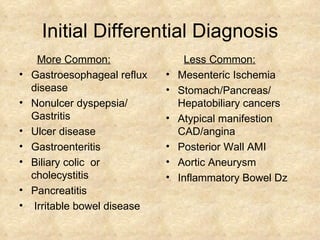
Initial Differential Diagnosis More Common: Gastroesophageal reflux disease Nonulcer dyspepsia/ Gastritis Ulcer disease Gastroenteritis Biliary colic  or cholecystitis Pancreatitis Irritable bowel disease Less Common: Mesenteric Ischemia Stomach/Pancreas/ Hepatobiliary cancers Atypical manifestion CAD/angina Posterior Wall AMI Aortic Aneurysm Inflammatory Bowel Dz
Mr. Jones HPI Mr. Jones is a 45 year old male who presents to your clinic with epigastric abdominal pain x 2 weeks. He describes it as a burning pain which is non-radiating and is worse after he eats. He has frequent belching with bloating sensation but denies nausea, vomiting, diarrhea, constipation, or weight loss. He has tried rolaids which do help a little. Which symptoms support the possible diagnosis of PUD?
Signs and Symptoms of PUD Epigastric pain is most common symptom Pain described as gnawing or burning May radiate to the back (consider penetration) Occurs 1-3 hours after meals or at night Relieved by food, antacids (duodenal), or vomiting (gastric) Dyspepsia including belching/ bloating Hematemesis or melena with GI bleeding
Clinical Pearls NSAID-induced gastritis or ulcers are frequently “silent” Dyspeptic sx’s are non-specific –  approx 20-25% of patients with sx’s will have peptic ulcer on further workup
Mr Jones History PMH: HTN stable, Osteoarthritis in knees, treated for an ulcer 3 years ago Meds: Hydrochlorothiazide, ibuprofen prn Soc HX: Married, employed as bank manager, smokes 1ppd x 20years, drinks 2 beers per day, and 2-4 cups coffee per day What risk factors can you identify for PUD?
Common Risk Factors for Gastric Mucosal Disruption H.pylori NSAIDs/ASA (even at low dose)  Coffee/Caffeine Ethanol Tobacco Severe physiologic stress (Burns, CNS trauma, Surgery, Severe medical illness) Steroids
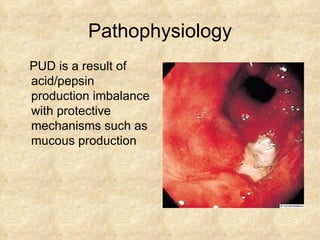
Pathophysiology PUD is a result of acid/pepsin production imbalance with protective mechanisms such as mucous production
NSAIDs Approximately 15% of patients on long-term NSAID develop PUD  NSAIDs/ASA  -  ↓ prostaglandin (PG)  by inhibiting the cyclooxygenase (COX) enzymes Three isoenzymes COX-1, COX-2, COX-3 COX-1  ->  PG production in gastric mucosa COX-2 specific NSAIDs reduce GI side effects –  cardiovascular side effects have limited use
Individual NSAID Risk High Risk Piroxicam/Feldene ® Ketorolac/Toradol ® Indomethacin/ Indocin ®   Lower Risk COX-2 specific - Celebrex ® Ibuprofen (< 1500mg/d)  Relatively selective COX-2 nabumetone/Relafen ®  etodolac/Lodine ®  meloxicam/Mobic ®
History of Ulcer Treatment Early 20 th  Century – ulcers believed to be caused by stress and dietary factors 1982 -   Dr’s Warren and Marshall identify  link between  H. pylori  and ulcers - medical community is slow to accept  1994 - NIH concludes a strong association between  H. pylori  and ulcer disease - recommends antibiotic treatment
History of Ulcer Treatment Cont’d 1995 - 75 percent of patients treated with antisecretory medications- only 5 percent receive antibiotic therapy  1996- FDA approves first antibiotic for treatment of ulcer disease  1997 - CDC launches national education campaign to inform health care providers about link between  H. pylori  and ulcers http://www.cdc.gov/ulcer/history.htm
Discovery of Helicobacter pylori “Two Australian physicians won the 2005 Nobel Prize in Medicine or Physiology for showing - at least partly by accident -- that many ulcers are the result of a bacterial infection.”  “Robin Warren and Barry Marshall's work on ulcers was pioneering”  Story from BBC NEWS: http://news.bbc.co.uk/go/pr/fr/-/2/hi/asia-pacific/4307826.stm Published: 2005/10/04 10:39:09 GMT © BBC MMVII
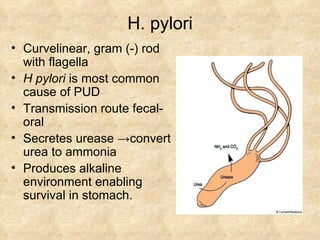
H. pylori Curvelinear, gram (-) rod with flagella H pylori  is most common cause of PUD Transmission route fecal-oral Secretes urease   -> convert urea to ammonia Produces alkaline environment enabling survival in stomach.
H. pylori Higher prevalence in Low SES In US more common in Hispanics/Blacks Estimated 60% of Americans older than 60  H pylori (+) Almost all duodenal and 2/3 gastric ulcer pt’s infected with HP Asymptomatic in approx 70% of those who are H pylori (+) Considered class 1 carcinogen  ->  gastric cancer
Differentiating between H. pylori and NSAID-induced ulcer  Ulcers associated with   H. pylori more often in duodenum often superficial less severe GI bleeding Ulcers associated with   NSAIDs more often in stomach often deep more severe GI bleeding sometimes asymptomatic
Other Disease Conditions Associated with PUD Hypersecretory states: Gastrinoma (Zollinger-Ellison syndrome) or multiple endocrine neoplasia (MEN-I) Diseases assoc. with  increased  risk of PUD: cirrhosis, chronic pulmonary disease, renal failure
Mr. Jones Physical Exam  VS: BP 137/82, HR 85, afeb, RR 14 HEENT: conjunctiva pink, OP MMM Heart: RRR no M/R/G ABD: Soft, NABS, mild-moderate epigastric TTP, no HSM or masses, no acute abd signs Skin: no pallor Rectal: stool brown, heme (-), no masses What are typical PE findings in PUD?
Physical Exam Findings In uncomplicated PUD exam findings few and non-specific: Epigastric tenderness - usually mild. Bowel sounds - normal. Rectal exam may show melena/guaiac+ stool from occult blood loss Signs of peritonitis with perforation
If Mr. Jones Hemoccult is Positive  What PE findings do you want to specifically document if Mr. Jones is Heme (+) indicating a possible active GI bleed? Look for signs of volume depletion: tachycardia, hypotension, orthostatics, skin turgor, MM appearance Look for signs of anemia: conjunctiva or skin pallor, new heart murmur
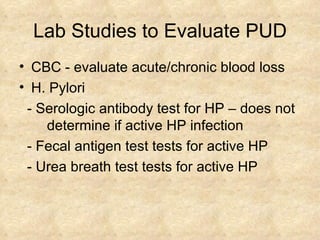
Lab Studies to Evaluate PUD CBC - evaluate acute/chronic blood loss H. Pylori - Serologic antibody test for HP – does not  determine if active HP infection  - Fecal antigen test tests for active HP - Urea breath test tests for active HP
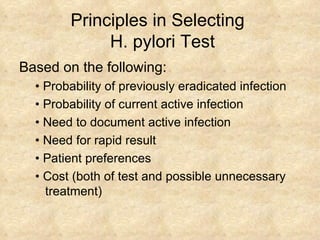
Principles in Selecting   H. pylori Test Based on the following: • Probability of previously eradicated infection  • Probability of current active infection  • Need to document active infection  • Need for rapid result  • Patient preferences  • Cost (both of test and possible unnecessary treatment)
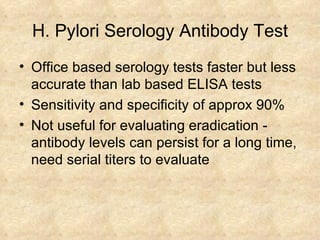
H. Pylori Serology Antibody Test Office based serology tests faster but less accurate than lab based ELISA tests Sensitivity and specificity of approx 90% Not useful for evaluating eradication - antibody levels can persist for a long time, need serial titers to evaluate
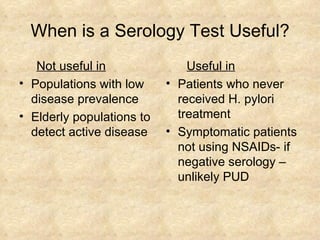
When is a Serology Test Useful? Not useful in Populations with low disease prevalence Elderly populations to detect active disease Useful in   Patients who never received H. pylori treatment Symptomatic patients not using NSAIDs- if negative serology – unlikely PUD
H. Pylori Stool Antigen (HpSa) Test Useful in initial diagnosis + confirmation of eradication Sensitivity of 91% and a specificity of 92%* Test requires collection of stool sample- size of an acorn  Performed in lab or newer POCT available Requires little preparation, however patients may not be compliant with collecting sample *Gisbert JP, Pajares JM.  Stool antigen test for the diagnosis of  Helicobacter pylori  infection: a systematic review. Helicobacter 2004;9(4):347-68
Urea Breath Test Useful for initial diagnosis + confirmation of eradication  Sensitivity and specificity over 90%* Urease activity is present in the stomach in those infected with  H pylori Ingest urea labeled with radioactive carbon  Hydrolysis of urea  ->  labeled carbon dioxide (CO2) Rapidly absorbed into bloodstream and within a few minutes, appears in breath *Gatta L, Vakil N, Ricci C, et al.  A rapid, low-dose, 13C-urea tablet for the detection of  Helicobacter pylori  infection before and after treatment. Aliment Pharmacol Ther 2003;17(6):793-8
Breath Test Compared to HpSa Requires more patient preparation  More expensive Number of drugs can adversely affect accuracy  Antibiotics and bismuth  ->  stop for 4 weeks Proton pump inhibitors  ->  stop for 7 days Patients need to fast for at least 6 hours.  Breath test cannot be used in pregnant women
Imaging Studies Chest x-ray if perforation is suspected to detect free abdominal air Upper gastrointestinal series Performed by experienced radiologist is close to diagnostic accuracy of endoscopy Not as sensitive as endoscopy in diagnosis of small ulcers (<0.5 cm) Unable to obtain biopsy to rule out malignancy
Endoscopy Endoscopy indicated in following high risk patients: >50 years old with new-onset dyspepsia Dyspepsia with dysphasia and/or weight loss Evidence of GI bleeding Failed appropriate trial of empiric therapy Using NSAIDs or other high risk meds Signs of UGI tract obstruction (early satiety, vomiting) Ethnic background assoc. with increased risk UGI malignancies  Excerpts from Guidelines prepared by The Standards of Practice Committee of the American Society for Gastrointestinal Endoscopy
Rapid Urease Test and Histopathology Gastric mucosal biopsy obtained during endoscopy: Rapid urease tests (CLOtest, Hpfast, Pyloritek)  bacterial urease converts urea substrate in kit to ammonia  ->  changes pH producing color change. Histopathology often considered gold standard for  diagnosis
Mr. Jones Prior Ulcer History On further questioning Mr. Jones states he had similar abdominal pain three years ago and was told by his physician at that time that it was most likely due to an ulcer. He took “the purple pill” for a month and his symptoms resolved. He had no definitive diagnostic tests done at that time. What would you do at this time?
Answer H. pylori serology - many patients with history of “ulcer” have not undergone eradication therapy  Test for H. pylori antibody and treat if (+) Endoscopy if serology negative or if fails to improve with treatment
Moving on to Treatment Options……….
Over The Counter Remedies Aluminum and magnesium hydroxide salt (Maalox ® , Mylanta ® )  Neutralizes gastric acidity.  Aluminum side effect = constipation Magnesium side effect = diarrhea Magnesium and aluminum mixtures used to avoid side effects
Over the Counter Remedies cont’d Calcium Carbonate (Tums ®, Rolaids®) – calcium salt neutralizes acid Bismuth subsalicylate (Peptobismol ®) – binds to ulcer base forming a protective coat, has anti-inflammatory and bacteriocidal properties
H2-Blockers Selectively block H2-receptors on parietal cells reducing acid secretion  Used primarily in ulcer disease not associated with  H pylori   Treatment duration is 6-8 wk.
Side Effects of Cimetidine/Tagamet ® Elderly patients – confusion Young males - impotence +/- gynecomastia May alter levels of other drug - warfarin, TCA’s, triamterene, phenytoin, propranolol, metronidazole, antiarrythmics May alter renal function requiring lower doses
Proton Pump Inhibitors Decreases gastric acid secretion by inhibiting the parietal cell H+/K+ ATP pump Relieve pain and heal peptic ulcers more rapidly than H2 blockers  Drugs in this class are equally effective  Four weeks to treat active PUD Eight weeks to treat erosive esophagitis
Other Pharmacotherapy Agents Sucralfate (Carafate ® )  Binds proteins in exudates and forms a viscous adhesive that protects GI lining  Misoprostol (Cytotec ® ) Prostaglandin analog- protects lining of GI tract by replacing depleted prostaglandin E1.  Prevents peptic ulcers in patients taking NSAIDs
H. Pylori Triple Therapy Treatment Triple therapy for 14 days is treatment of choice  Two forms of triple therapy: PPI–based and bismuth-based  PPI based = PPI + 2 antibiotics for 2 wk, cont PPI for additional 2 weeks.  Bismuth-based = bismuth subsalicylate and 2 antibiotics, for 2 weeks with addition of  H2- blocker to optimize ulcer healing.
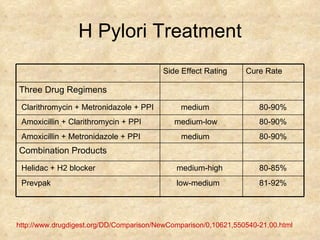
H Pylori Treatment http://www.drugdigest.org/DD/Comparison/NewComparison/0,10621,550540-21,00.html Cure Rate Side Effect Rating 81-92% low-medium Prevpak 80-85% medium-high Helidac + H2 blocker Combination Products 80-90% medium Amoxicillin + Metronidazole + PPI 80-90% medium-low Amoxicillin + Clarithromycin + PPI 80-90% medium Clarithromycin + Metronidazole + PPI Three Drug Regimens
H. Pylori Therapy cont’d Successful eradication of H. pylori reduces PUD recurrence rates from 90% to less than 10% per year. Patients no longer require ongoing chronic acid suppression.  If symptoms return after treatment of PUD, then testing for recurrence should be pursued
PUD Complications Hemorrhagic shock/peritonitis from a perforated ulcer Symptomatic relief with PPI may mask symptoms of gastric malignancy  Gastritis may present as bleeding, more likely in elderly Symptoms of anemia (fatigue, dyspnea)
Initial Treatment Plan in the Absence of High Risk Symptoms Based on current evidence, no single strategy has been demonstrated to be more medically effective than any other. Empiric therapy with acid suppression  Empiric  H pylori  testing and treating strategy Early endoscopy  Excerpts from Guidelines prepared by The Standards of Practice Committee of the American Society for Gastrointestinal Endoscopy
Final Recommendations Alarm symptoms = endoscopy. No alarm symptoms = medical management favored approach Studies still in progress to evaluate if medical management versus vs endoscopy is both medically and cost effective in long-term Lack of response or the recurrence of symptoms warrants endoscopy
Medical Legal Pitfalls Failure to consider non-GI cause of epigastric pain (AMI/AAA) Failure to consider GI bleed in absence of abdominal pain (especially in elderly) Lack of follow-up care resulting in failure to diagnose gastric cancer Failure to  recommend endoscopy early in high risk patients Failure to obtain a history regarding NSAID use
Alternate Scenarios of  Mr. Jones Case  Mr Jones is a 63 yo male presenting with previously noted epigastric symptoms and PMH.  On physical exam he is noted to have heme (+) stool.  What evaluation would you do next?
Alternate Scenarios to Mr. Jones Case Mr Jones is a 63 yo male presenting with previously noted epigastric symptoms and PMH. On review of his prior ulcer history he was tested and had a positive H. pylori serology test. He was treated with triple therapy (PPI and 2 antibiotics) and symptoms resolved. What would you do next? Would you recheck H. pylori serology? Repeat triple therapy?
Summary H. pylori is the most common cause of PUD and is a risk factor for gastric cancer H Pylori eradication reduces risk of disease recurrence Test-and-Treat strategy is recommended for patients with undifferentiated dyspepsia Intial evaluation with endoscopy is recommended for those with alarm symptoms or those failing treatment Optimum treatment regimens are 14d multidrug with antibiotics and acid suppressants
References http://www.emedicine.com/med/topic1776.htm http://www.mcg.edu/som/pathology/GraduateEducation/Evidence%20Base%20Path/hpsa1.ppt   http://www.acg.gi.org/physicians/guidelines/ManagementofHpylori.pdf http:// www.cdc.gov/ncidod/dbmd/diseaseinfo/hpylori_t.htm http://courses.ahc.umn.edu/pharmacy/5880/LectureSlides/Peptic%20Ulcer%20Disease%20(PUD)_files/frame.htm http:// www.cdc.gov/ulcer/history.htm http://www.drugdigest.org/DD/Comparison/NewComparison/0,10621,550540-21,00.html
References cont’d Fendrick M, Forsch R etal.  Peptic Ulcer Disease Guidleines for Clinical Care.  University of Michigan Health System May 2005 American Gastroenterological Association medical position statement: evaluation of dyspepsia. Gastroenterology 1998;114:579-81. Krogfelt K, Lehours P, Mégraud F.  Diagnosis of  Helicobacter pylori  Infection . Helicobacter 2005 10:s1 5 Meurer L, Bower D.  Management of  Helicobacter pylori  Infection . American Family Physician Vol 65, No. 7, 2002 pp 1327-1336 Standards of Practice Committee of the American Society for Gastrointestinal Endoscopy;  The role of endoscopy in dyspepsia . Gastrointestinal Endoscopy Vol 54, No. 6, 2001 pp 815-817 Vaira D, Gatta L, Ricci C, et al . Peptic ulcer and  Helicobacter pylori:  update on testing and treatment. Postgrad Med 2005;117(6):17-22, 46

Peptic Ulcer Disease.Ppt.Fmdrl

  • 1.
    Peptic Ulcer DiseaseRamona Carter-Burdine M.D. UTMB Galveston, Tx
  • 2.
    Learning Objectives Oncompletion of this lecture participants will be able to: Recognize the typical clinical presentation and risk factors for peptic ulcer disease Understand pathophysiology of PUD focusing on H. pylori Describe an appropriate diagnostic plan based on individual risk factors Prescribe an appropriate therapeutic regimen
  • 3.
    Disease Prevalence LifetimePrevalence = 10% of Americans develop PUD 10% of ER patients with abdominal pain diagnosed with PUD Prevalence decreasing over last 30yrs Male-to-female ratio of gastritis = 1:1 Male-to-female ratio of PUD = 2:1
  • 4.
    Definition Peptic ulcerdisease (PUD) = Mucosal defect in the gastrointestinal tract (gastric or duodenal) exposed to acid and pepsin secretion Gastritis is the precursor to PUD and it is clinically difficult to differentiate the two
  • 5.
    Differentiating gastric frompeptic ulcer disease Duodenal ulcers - age 25-75 years. Gastric ulcer - age 55-65 years Pain awakening patient from sleep between 12-3 a.m. present in 2/3 duodenal ulcer patients and 1/3 gastric ulcer patients
  • 6.
    Case Presentation Mr.Jones is a 45 year old male who presents to your clinic with epigastric abdominal pain x 2 weeks. What is your initial differential diagnosis at this point given the limited information?
  • 7.
    Initial Differential DiagnosisMore Common: Gastroesophageal reflux disease Nonulcer dyspepsia/ Gastritis Ulcer disease Gastroenteritis Biliary colic or cholecystitis Pancreatitis Irritable bowel disease Less Common: Mesenteric Ischemia Stomach/Pancreas/ Hepatobiliary cancers Atypical manifestion CAD/angina Posterior Wall AMI Aortic Aneurysm Inflammatory Bowel Dz
  • 8.
    Mr. Jones HPIMr. Jones is a 45 year old male who presents to your clinic with epigastric abdominal pain x 2 weeks. He describes it as a burning pain which is non-radiating and is worse after he eats. He has frequent belching with bloating sensation but denies nausea, vomiting, diarrhea, constipation, or weight loss. He has tried rolaids which do help a little. Which symptoms support the possible diagnosis of PUD?
  • 9.
    Signs and Symptomsof PUD Epigastric pain is most common symptom Pain described as gnawing or burning May radiate to the back (consider penetration) Occurs 1-3 hours after meals or at night Relieved by food, antacids (duodenal), or vomiting (gastric) Dyspepsia including belching/ bloating Hematemesis or melena with GI bleeding
  • 10.
    Clinical Pearls NSAID-inducedgastritis or ulcers are frequently “silent” Dyspeptic sx’s are non-specific – approx 20-25% of patients with sx’s will have peptic ulcer on further workup
  • 11.
    Mr Jones HistoryPMH: HTN stable, Osteoarthritis in knees, treated for an ulcer 3 years ago Meds: Hydrochlorothiazide, ibuprofen prn Soc HX: Married, employed as bank manager, smokes 1ppd x 20years, drinks 2 beers per day, and 2-4 cups coffee per day What risk factors can you identify for PUD?
  • 12.
    Common Risk Factorsfor Gastric Mucosal Disruption H.pylori NSAIDs/ASA (even at low dose) Coffee/Caffeine Ethanol Tobacco Severe physiologic stress (Burns, CNS trauma, Surgery, Severe medical illness) Steroids
  • 13.
    Pathophysiology PUD isa result of acid/pepsin production imbalance with protective mechanisms such as mucous production
  • 14.
    NSAIDs Approximately 15%of patients on long-term NSAID develop PUD NSAIDs/ASA - ↓ prostaglandin (PG) by inhibiting the cyclooxygenase (COX) enzymes Three isoenzymes COX-1, COX-2, COX-3 COX-1 -> PG production in gastric mucosa COX-2 specific NSAIDs reduce GI side effects – cardiovascular side effects have limited use
  • 15.
    Individual NSAID RiskHigh Risk Piroxicam/Feldene ® Ketorolac/Toradol ® Indomethacin/ Indocin ® Lower Risk COX-2 specific - Celebrex ® Ibuprofen (< 1500mg/d) Relatively selective COX-2 nabumetone/Relafen ® etodolac/Lodine ® meloxicam/Mobic ®
  • 16.
    History of UlcerTreatment Early 20 th Century – ulcers believed to be caused by stress and dietary factors 1982 - Dr’s Warren and Marshall identify link between H. pylori and ulcers - medical community is slow to accept 1994 - NIH concludes a strong association between H. pylori and ulcer disease - recommends antibiotic treatment
  • 17.
    History of UlcerTreatment Cont’d 1995 - 75 percent of patients treated with antisecretory medications- only 5 percent receive antibiotic therapy 1996- FDA approves first antibiotic for treatment of ulcer disease 1997 - CDC launches national education campaign to inform health care providers about link between H. pylori and ulcers http://www.cdc.gov/ulcer/history.htm
  • 18.
    Discovery of Helicobacterpylori “Two Australian physicians won the 2005 Nobel Prize in Medicine or Physiology for showing - at least partly by accident -- that many ulcers are the result of a bacterial infection.” “Robin Warren and Barry Marshall's work on ulcers was pioneering” Story from BBC NEWS: http://news.bbc.co.uk/go/pr/fr/-/2/hi/asia-pacific/4307826.stm Published: 2005/10/04 10:39:09 GMT © BBC MMVII
  • 19.
    H. pylori Curvelinear,gram (-) rod with flagella H pylori is most common cause of PUD Transmission route fecal-oral Secretes urease -> convert urea to ammonia Produces alkaline environment enabling survival in stomach.
  • 20.
    H. pylori Higherprevalence in Low SES In US more common in Hispanics/Blacks Estimated 60% of Americans older than 60 H pylori (+) Almost all duodenal and 2/3 gastric ulcer pt’s infected with HP Asymptomatic in approx 70% of those who are H pylori (+) Considered class 1 carcinogen -> gastric cancer
  • 21.
    Differentiating between H.pylori and NSAID-induced ulcer Ulcers associated with H. pylori more often in duodenum often superficial less severe GI bleeding Ulcers associated with NSAIDs more often in stomach often deep more severe GI bleeding sometimes asymptomatic
  • 22.
    Other Disease ConditionsAssociated with PUD Hypersecretory states: Gastrinoma (Zollinger-Ellison syndrome) or multiple endocrine neoplasia (MEN-I) Diseases assoc. with increased risk of PUD: cirrhosis, chronic pulmonary disease, renal failure
  • 23.
    Mr. Jones PhysicalExam VS: BP 137/82, HR 85, afeb, RR 14 HEENT: conjunctiva pink, OP MMM Heart: RRR no M/R/G ABD: Soft, NABS, mild-moderate epigastric TTP, no HSM or masses, no acute abd signs Skin: no pallor Rectal: stool brown, heme (-), no masses What are typical PE findings in PUD?
  • 24.
    Physical Exam FindingsIn uncomplicated PUD exam findings few and non-specific: Epigastric tenderness - usually mild. Bowel sounds - normal. Rectal exam may show melena/guaiac+ stool from occult blood loss Signs of peritonitis with perforation
  • 25.
    If Mr. JonesHemoccult is Positive What PE findings do you want to specifically document if Mr. Jones is Heme (+) indicating a possible active GI bleed? Look for signs of volume depletion: tachycardia, hypotension, orthostatics, skin turgor, MM appearance Look for signs of anemia: conjunctiva or skin pallor, new heart murmur
  • 26.
    Lab Studies toEvaluate PUD CBC - evaluate acute/chronic blood loss H. Pylori - Serologic antibody test for HP – does not determine if active HP infection - Fecal antigen test tests for active HP - Urea breath test tests for active HP
  • 27.
    Principles in Selecting H. pylori Test Based on the following: • Probability of previously eradicated infection • Probability of current active infection • Need to document active infection • Need for rapid result • Patient preferences • Cost (both of test and possible unnecessary treatment)
  • 28.
    H. Pylori SerologyAntibody Test Office based serology tests faster but less accurate than lab based ELISA tests Sensitivity and specificity of approx 90% Not useful for evaluating eradication - antibody levels can persist for a long time, need serial titers to evaluate
  • 29.
    When is aSerology Test Useful? Not useful in Populations with low disease prevalence Elderly populations to detect active disease Useful in Patients who never received H. pylori treatment Symptomatic patients not using NSAIDs- if negative serology – unlikely PUD
  • 30.
    H. Pylori StoolAntigen (HpSa) Test Useful in initial diagnosis + confirmation of eradication Sensitivity of 91% and a specificity of 92%* Test requires collection of stool sample- size of an acorn Performed in lab or newer POCT available Requires little preparation, however patients may not be compliant with collecting sample *Gisbert JP, Pajares JM. Stool antigen test for the diagnosis of Helicobacter pylori infection: a systematic review. Helicobacter 2004;9(4):347-68
  • 31.
    Urea Breath TestUseful for initial diagnosis + confirmation of eradication Sensitivity and specificity over 90%* Urease activity is present in the stomach in those infected with H pylori Ingest urea labeled with radioactive carbon Hydrolysis of urea -> labeled carbon dioxide (CO2) Rapidly absorbed into bloodstream and within a few minutes, appears in breath *Gatta L, Vakil N, Ricci C, et al. A rapid, low-dose, 13C-urea tablet for the detection of Helicobacter pylori infection before and after treatment. Aliment Pharmacol Ther 2003;17(6):793-8
  • 32.
    Breath Test Comparedto HpSa Requires more patient preparation More expensive Number of drugs can adversely affect accuracy Antibiotics and bismuth -> stop for 4 weeks Proton pump inhibitors -> stop for 7 days Patients need to fast for at least 6 hours. Breath test cannot be used in pregnant women
  • 33.
    Imaging Studies Chestx-ray if perforation is suspected to detect free abdominal air Upper gastrointestinal series Performed by experienced radiologist is close to diagnostic accuracy of endoscopy Not as sensitive as endoscopy in diagnosis of small ulcers (<0.5 cm) Unable to obtain biopsy to rule out malignancy
  • 34.
    Endoscopy Endoscopy indicatedin following high risk patients: >50 years old with new-onset dyspepsia Dyspepsia with dysphasia and/or weight loss Evidence of GI bleeding Failed appropriate trial of empiric therapy Using NSAIDs or other high risk meds Signs of UGI tract obstruction (early satiety, vomiting) Ethnic background assoc. with increased risk UGI malignancies Excerpts from Guidelines prepared by The Standards of Practice Committee of the American Society for Gastrointestinal Endoscopy
  • 35.
    Rapid Urease Testand Histopathology Gastric mucosal biopsy obtained during endoscopy: Rapid urease tests (CLOtest, Hpfast, Pyloritek) bacterial urease converts urea substrate in kit to ammonia -> changes pH producing color change. Histopathology often considered gold standard for diagnosis
  • 36.
    Mr. Jones PriorUlcer History On further questioning Mr. Jones states he had similar abdominal pain three years ago and was told by his physician at that time that it was most likely due to an ulcer. He took “the purple pill” for a month and his symptoms resolved. He had no definitive diagnostic tests done at that time. What would you do at this time?
  • 37.
    Answer H. pyloriserology - many patients with history of “ulcer” have not undergone eradication therapy Test for H. pylori antibody and treat if (+) Endoscopy if serology negative or if fails to improve with treatment
  • 38.
    Moving on toTreatment Options……….
  • 39.
    Over The CounterRemedies Aluminum and magnesium hydroxide salt (Maalox ® , Mylanta ® ) Neutralizes gastric acidity. Aluminum side effect = constipation Magnesium side effect = diarrhea Magnesium and aluminum mixtures used to avoid side effects
  • 40.
    Over the CounterRemedies cont’d Calcium Carbonate (Tums ®, Rolaids®) – calcium salt neutralizes acid Bismuth subsalicylate (Peptobismol ®) – binds to ulcer base forming a protective coat, has anti-inflammatory and bacteriocidal properties
  • 41.
    H2-Blockers Selectively blockH2-receptors on parietal cells reducing acid secretion Used primarily in ulcer disease not associated with H pylori Treatment duration is 6-8 wk.
  • 42.
    Side Effects ofCimetidine/Tagamet ® Elderly patients – confusion Young males - impotence +/- gynecomastia May alter levels of other drug - warfarin, TCA’s, triamterene, phenytoin, propranolol, metronidazole, antiarrythmics May alter renal function requiring lower doses
  • 43.
    Proton Pump InhibitorsDecreases gastric acid secretion by inhibiting the parietal cell H+/K+ ATP pump Relieve pain and heal peptic ulcers more rapidly than H2 blockers Drugs in this class are equally effective Four weeks to treat active PUD Eight weeks to treat erosive esophagitis
  • 44.
    Other Pharmacotherapy AgentsSucralfate (Carafate ® ) Binds proteins in exudates and forms a viscous adhesive that protects GI lining Misoprostol (Cytotec ® ) Prostaglandin analog- protects lining of GI tract by replacing depleted prostaglandin E1. Prevents peptic ulcers in patients taking NSAIDs
  • 45.
    H. Pylori TripleTherapy Treatment Triple therapy for 14 days is treatment of choice Two forms of triple therapy: PPI–based and bismuth-based PPI based = PPI + 2 antibiotics for 2 wk, cont PPI for additional 2 weeks. Bismuth-based = bismuth subsalicylate and 2 antibiotics, for 2 weeks with addition of H2- blocker to optimize ulcer healing.
  • 46.
    H Pylori Treatmenthttp://www.drugdigest.org/DD/Comparison/NewComparison/0,10621,550540-21,00.html Cure Rate Side Effect Rating 81-92% low-medium Prevpak 80-85% medium-high Helidac + H2 blocker Combination Products 80-90% medium Amoxicillin + Metronidazole + PPI 80-90% medium-low Amoxicillin + Clarithromycin + PPI 80-90% medium Clarithromycin + Metronidazole + PPI Three Drug Regimens
  • 47.
    H. Pylori Therapycont’d Successful eradication of H. pylori reduces PUD recurrence rates from 90% to less than 10% per year. Patients no longer require ongoing chronic acid suppression. If symptoms return after treatment of PUD, then testing for recurrence should be pursued
  • 48.
    PUD Complications Hemorrhagicshock/peritonitis from a perforated ulcer Symptomatic relief with PPI may mask symptoms of gastric malignancy Gastritis may present as bleeding, more likely in elderly Symptoms of anemia (fatigue, dyspnea)
  • 49.
    Initial Treatment Planin the Absence of High Risk Symptoms Based on current evidence, no single strategy has been demonstrated to be more medically effective than any other. Empiric therapy with acid suppression Empiric H pylori testing and treating strategy Early endoscopy Excerpts from Guidelines prepared by The Standards of Practice Committee of the American Society for Gastrointestinal Endoscopy
  • 50.
    Final Recommendations Alarmsymptoms = endoscopy. No alarm symptoms = medical management favored approach Studies still in progress to evaluate if medical management versus vs endoscopy is both medically and cost effective in long-term Lack of response or the recurrence of symptoms warrants endoscopy
  • 51.
    Medical Legal PitfallsFailure to consider non-GI cause of epigastric pain (AMI/AAA) Failure to consider GI bleed in absence of abdominal pain (especially in elderly) Lack of follow-up care resulting in failure to diagnose gastric cancer Failure to recommend endoscopy early in high risk patients Failure to obtain a history regarding NSAID use
  • 52.
    Alternate Scenarios of Mr. Jones Case Mr Jones is a 63 yo male presenting with previously noted epigastric symptoms and PMH. On physical exam he is noted to have heme (+) stool. What evaluation would you do next?
  • 53.
    Alternate Scenarios toMr. Jones Case Mr Jones is a 63 yo male presenting with previously noted epigastric symptoms and PMH. On review of his prior ulcer history he was tested and had a positive H. pylori serology test. He was treated with triple therapy (PPI and 2 antibiotics) and symptoms resolved. What would you do next? Would you recheck H. pylori serology? Repeat triple therapy?
  • 54.
    Summary H. pyloriis the most common cause of PUD and is a risk factor for gastric cancer H Pylori eradication reduces risk of disease recurrence Test-and-Treat strategy is recommended for patients with undifferentiated dyspepsia Intial evaluation with endoscopy is recommended for those with alarm symptoms or those failing treatment Optimum treatment regimens are 14d multidrug with antibiotics and acid suppressants
  • 55.
    References http://www.emedicine.com/med/topic1776.htm http://www.mcg.edu/som/pathology/GraduateEducation/Evidence%20Base%20Path/hpsa1.ppt http://www.acg.gi.org/physicians/guidelines/ManagementofHpylori.pdf http:// www.cdc.gov/ncidod/dbmd/diseaseinfo/hpylori_t.htm http://courses.ahc.umn.edu/pharmacy/5880/LectureSlides/Peptic%20Ulcer%20Disease%20(PUD)_files/frame.htm http:// www.cdc.gov/ulcer/history.htm http://www.drugdigest.org/DD/Comparison/NewComparison/0,10621,550540-21,00.html
  • 56.
    References cont’d FendrickM, Forsch R etal. Peptic Ulcer Disease Guidleines for Clinical Care. University of Michigan Health System May 2005 American Gastroenterological Association medical position statement: evaluation of dyspepsia. Gastroenterology 1998;114:579-81. Krogfelt K, Lehours P, Mégraud F. Diagnosis of Helicobacter pylori Infection . Helicobacter 2005 10:s1 5 Meurer L, Bower D. Management of Helicobacter pylori Infection . American Family Physician Vol 65, No. 7, 2002 pp 1327-1336 Standards of Practice Committee of the American Society for Gastrointestinal Endoscopy; The role of endoscopy in dyspepsia . Gastrointestinal Endoscopy Vol 54, No. 6, 2001 pp 815-817 Vaira D, Gatta L, Ricci C, et al . Peptic ulcer and Helicobacter pylori: update on testing and treatment. Postgrad Med 2005;117(6):17-22, 46