ZOLLINGER – ELLISON
SYNDROME
RODNISHWAR PRASAD
INTRODUCTION
 Definition - Severe peptic ulcer diathesis secondary to gastric acid hyper secretion
due to unregulated gastrin release from a non-ß cell endocrine tumor (gastrinoma).
 Incidence of ZES varies from 0.1-1% of individuals presenting with PUD.
 Males are more commonly affected than females.
 Majority of patients are diagnosed between ages 30 and 50.
PATHOPHSIOLOGY
 The gastrinoma secretes gastrin, which in turn stimulates acid secretion through
gastrin receptors on parietal cells and by inducing histamine release from ECL cells.
 Acid output may be so great that it reaches the upper small intestine
 Pancreatic lipase is inactivated and bile acids are precipitated
 90% of tumours occur in the pancreatic head or proximal duodenal wall
 Gastrinomas can develop in the presence of MEN 1 syndrome in ~25% of patients.
 This autosomal dominant disorder involves primarily three organ sites: the
parathyroid glands (80-90%), pancreas (40-80%), and pituitary gland (30-60%).
TUMOR DISTRIBUTION
 Majority of gastrinomas occurred within the pancreas, a significant number of these lesions are
extrapancreatic.
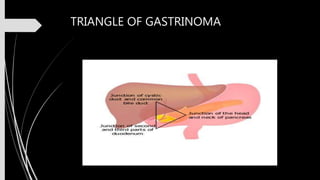
 Over 80% of these tumors are found within the hypothetical gastrinoma triangle.
 Duodenal tumors constitute the most common nonpancreatic lesion, between 50 and 75% of
gastrinomas.
 Duodenal tumors are smaller, slower growing, and less likely to metastasize than pancreatic
lesions.
 Less common extrapancreatic sites include stomach, bones, ovaries, heart, liver, and Iymph
nodes.
 60% of tumors are considered malignant, with up to 30-50% of patients having multiple lesions
or metastatic disease at presentation.
TRIANGLE OF GASTRINOMA
CLINICAL MANIFESTATIONS
 Severe and often multiple peptic ulcers in unusual sites, such as the post-bulbar
duodenum, jejunum or oesophagus
 Poor response to standard ulcer therapy
 Bleeding and perforations are common
 Diarrhoea and steatorrhoea
 Abdominal pain
 Nausea and vomiting
 Weight loss and decreased appetite.
DIAGNOSIS
 Biochemical test
1. Fasting gastrin levels obtained using a dependable assay are usually <150 pg/mL.
2. . A pH can be measured on gastric fluid obtained either during endoscopy or through
nasogastric aspiration; a pH <3 is suggestive of a gastrinoma.
3. A BAO > 15 meq/h in the presence of hypergastrinemia is considered pa出ogno monic
of ZES
4. BAO/MAO ratio >0.6 being highly suggestive of ZES.
5. An increase in gastrin of <120 pg within 15 min of secretin injection has a sensitivity and
specificity of >90% for ZES
DIAGNOSIS
 Imaging
1. An abdominal CT scan or MRI to exclude metastatic disease
2. Endoscopic ultrasound (EUS) permits imaging of the pancreas with a high degree of
resolution.
TREATMENT
1. PPls are the treatment of choice and have decreased the need for total
gastrectomy.
 Initial PPI doses tend to be higher than those used for treatment of GERD or PUD
 Dosage = 60 mg in divided doses in a 24-h period
2. Somatostatin analogue has inhibitory effects on gastrin release from receptor-
bearing tumors and inhibits gastric acid secretion to some extent
3. Ultimate goal of surgery would be to provide a definitive cure
 cure rates as high as 60% with 10 - year disease-free intervals as high as 34% in sporadic
gastrinoma.
PEPTIC ULCER DISEASE: DIAGNOSTIC
AND TREATMENT
PUD DIAGNOSIS
1. History
2. Physical examination
3. Barium studies of the proximal GI tract are occasionally used as a first test for
documenting an ulcer with a detection rate as high as 90%.
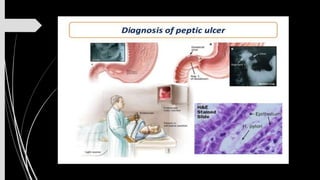
4. Endoscopy provides the most sensitive and specific approach for examining the
upper GI tract because it provides photographic documentation of a mucosal
defect and tissue biopsy.
5. Non invasive test for C-urea breath test (H. pylori etiology)
PUD DIAGNOSIS
6. Fecal H. pylori (Hp) antigen test.
7. Urinary Hp antigen test, as well as a refined monoclonal antibody stool antigen
test.
8. Patient with refractory or recurrent peptic ulcer may have underlying H. pylori
infection, histopathology investigation may be required.
9. Serologic test for detecting H. pylori (levels of IgG and IgA via ELISA test)
PUD TREATMENT
1. Antacids eg. Mylanta, Maalox, Tums, Gaviscon (100-140 meq/L 1 and 3 h after
meals )
2. Triple therapy is the first line treatment - PPI taken simultaneously with two
antibiotics (from amoxicillin, clarithromycin and metronidazole) for 7 or 14 days.
3. 10-14 days of bismuth quadruple therapy(bismuth, proton pump inhibitor [PPI],
tetracycline, and a nitroimidazole).
4. Surgical interventions.
Thank you

Zollinger – ellison syndrome

  • 1.
  • 2.
    INTRODUCTION  Definition -Severe peptic ulcer diathesis secondary to gastric acid hyper secretion due to unregulated gastrin release from a non-ß cell endocrine tumor (gastrinoma).  Incidence of ZES varies from 0.1-1% of individuals presenting with PUD.  Males are more commonly affected than females.  Majority of patients are diagnosed between ages 30 and 50.
  • 3.
    PATHOPHSIOLOGY  The gastrinomasecretes gastrin, which in turn stimulates acid secretion through gastrin receptors on parietal cells and by inducing histamine release from ECL cells.  Acid output may be so great that it reaches the upper small intestine  Pancreatic lipase is inactivated and bile acids are precipitated  90% of tumours occur in the pancreatic head or proximal duodenal wall  Gastrinomas can develop in the presence of MEN 1 syndrome in ~25% of patients.  This autosomal dominant disorder involves primarily three organ sites: the parathyroid glands (80-90%), pancreas (40-80%), and pituitary gland (30-60%).
  • 4.
    TUMOR DISTRIBUTION  Majorityof gastrinomas occurred within the pancreas, a significant number of these lesions are extrapancreatic.  Over 80% of these tumors are found within the hypothetical gastrinoma triangle.  Duodenal tumors constitute the most common nonpancreatic lesion, between 50 and 75% of gastrinomas.  Duodenal tumors are smaller, slower growing, and less likely to metastasize than pancreatic lesions.  Less common extrapancreatic sites include stomach, bones, ovaries, heart, liver, and Iymph nodes.  60% of tumors are considered malignant, with up to 30-50% of patients having multiple lesions or metastatic disease at presentation.
  • 5.
  • 6.
    CLINICAL MANIFESTATIONS  Severeand often multiple peptic ulcers in unusual sites, such as the post-bulbar duodenum, jejunum or oesophagus  Poor response to standard ulcer therapy  Bleeding and perforations are common  Diarrhoea and steatorrhoea  Abdominal pain  Nausea and vomiting  Weight loss and decreased appetite.
  • 7.
    DIAGNOSIS  Biochemical test 1.Fasting gastrin levels obtained using a dependable assay are usually <150 pg/mL. 2. . A pH can be measured on gastric fluid obtained either during endoscopy or through nasogastric aspiration; a pH <3 is suggestive of a gastrinoma. 3. A BAO > 15 meq/h in the presence of hypergastrinemia is considered pa出ogno monic of ZES 4. BAO/MAO ratio >0.6 being highly suggestive of ZES. 5. An increase in gastrin of <120 pg within 15 min of secretin injection has a sensitivity and specificity of >90% for ZES
  • 8.
    DIAGNOSIS  Imaging 1. Anabdominal CT scan or MRI to exclude metastatic disease 2. Endoscopic ultrasound (EUS) permits imaging of the pancreas with a high degree of resolution.
  • 9.
    TREATMENT 1. PPls arethe treatment of choice and have decreased the need for total gastrectomy.  Initial PPI doses tend to be higher than those used for treatment of GERD or PUD  Dosage = 60 mg in divided doses in a 24-h period 2. Somatostatin analogue has inhibitory effects on gastrin release from receptor- bearing tumors and inhibits gastric acid secretion to some extent 3. Ultimate goal of surgery would be to provide a definitive cure  cure rates as high as 60% with 10 - year disease-free intervals as high as 34% in sporadic gastrinoma.
  • 10.
    PEPTIC ULCER DISEASE:DIAGNOSTIC AND TREATMENT
  • 11.
    PUD DIAGNOSIS 1. History 2.Physical examination 3. Barium studies of the proximal GI tract are occasionally used as a first test for documenting an ulcer with a detection rate as high as 90%. 4. Endoscopy provides the most sensitive and specific approach for examining the upper GI tract because it provides photographic documentation of a mucosal defect and tissue biopsy. 5. Non invasive test for C-urea breath test (H. pylori etiology)
  • 13.
    PUD DIAGNOSIS 6. FecalH. pylori (Hp) antigen test. 7. Urinary Hp antigen test, as well as a refined monoclonal antibody stool antigen test. 8. Patient with refractory or recurrent peptic ulcer may have underlying H. pylori infection, histopathology investigation may be required. 9. Serologic test for detecting H. pylori (levels of IgG and IgA via ELISA test)
  • 14.
    PUD TREATMENT 1. Antacidseg. Mylanta, Maalox, Tums, Gaviscon (100-140 meq/L 1 and 3 h after meals ) 2. Triple therapy is the first line treatment - PPI taken simultaneously with two antibiotics (from amoxicillin, clarithromycin and metronidazole) for 7 or 14 days. 3. 10-14 days of bismuth quadruple therapy(bismuth, proton pump inhibitor [PPI], tetracycline, and a nitroimidazole). 4. Surgical interventions.
  • 15.