
Introduction

 The liver is the most metabolically complex organ. Hepatocytes (liver
 parenchymal cells) perform the liver's metabolic functions: formation and
 excretion of bile; regulation of carbohydrate homeostasis; lipid
 synthesis and secretion of plasma lipoproteins; control of cholesterol
 metabolism; formation of urea, serum albumin, clotting factors, enzymes,
 and numerous other proteins; and metabolism or detoxification of drugs
 and other foreign substances.

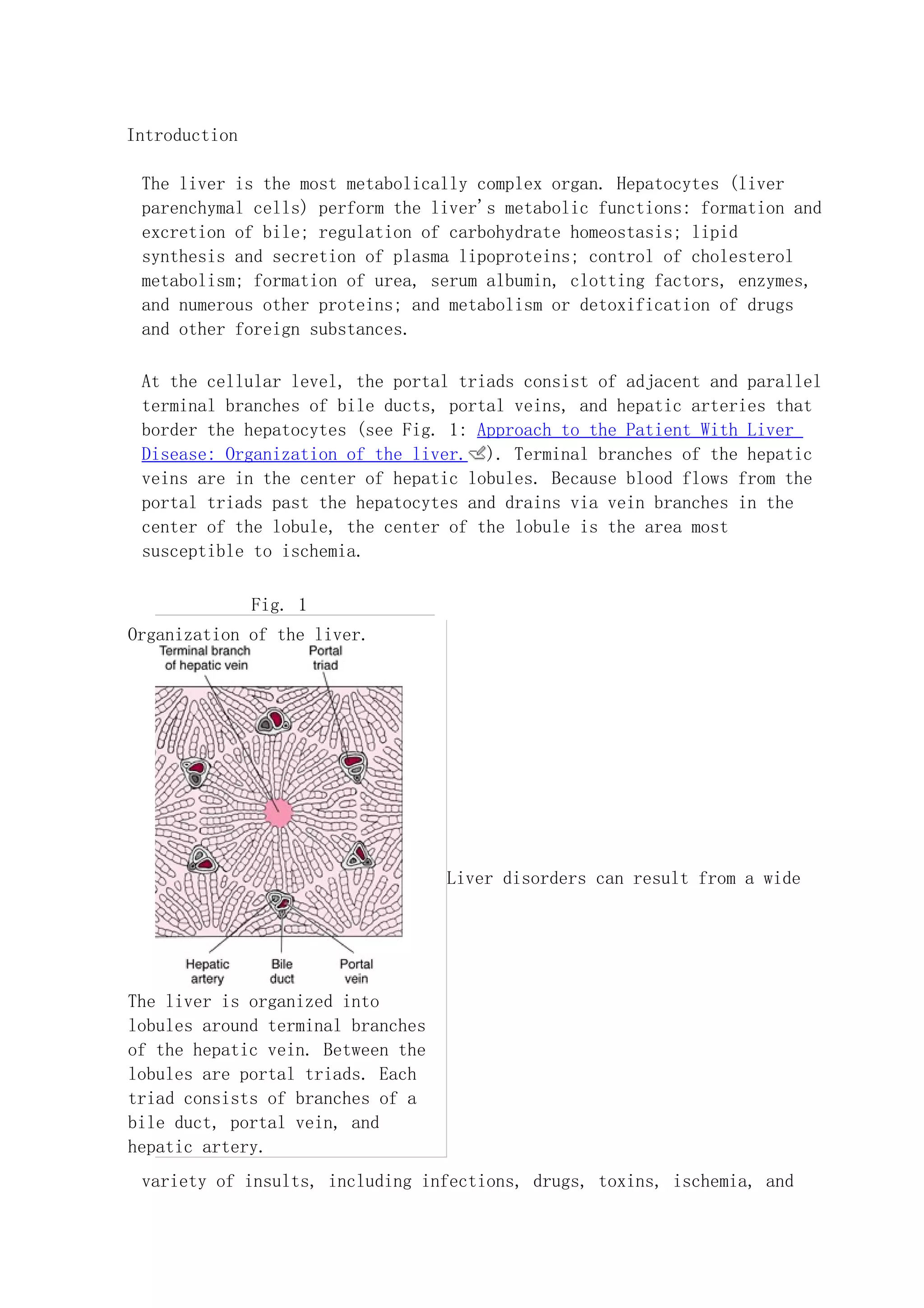
 At the cellular level, the portal triads consist of adjacent and parallel
 terminal branches of bile ducts, portal veins, and hepatic arteries that
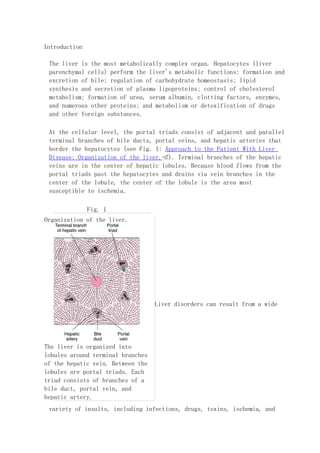
 border the hepatocytes (see Fig. 1: Approach to the Patient With Liver
 Disease: Organization of the liver. ). Terminal branches of the hepatic
 veins are in the center of hepatic lobules. Because blood flows from the
 portal triads past the hepatocytes and drains via vein branches in the
 center of the lobule, the center of the lobule is the area most
 susceptible to ischemia.

               Fig. 1
Organization of the liver.


                                   Liver disorders can result from a wide


The liver is organized into
lobules around terminal branches
of the hepatic vein. Between the
lobules are portal triads. Each
triad consists of branches of a
bile duct, portal vein, and
hepatic artery.
 variety of insults, including infections, drugs, toxins, ischemia, and
autoimmune disorders. Occasionally, liver disorders occur postoperatively
(see Sidebar 1: Approach to the Patient With Liver Disease: Postoperative
Liver Dysfunction ). Most liver disorders produce some degree of
hepatocellular injury and necrosis, resulting in various abnormal
laboratory test results and, sometimes, symptoms. Symptoms may be due to
liver disease itself (eg, jaundice due to acute hepatitis) or to
complications of liver disease (eg, acute GI bleeding due to cirrhosis
and portal hypertension).
Sidebar 1


Postoperative Liver Dysfunction
Mild liver dysfunction sometimes occurs after major surgery even
in the absence of pre-existing liver disorders. This dysfunction
usually results from hepatic ischemia or poorly understood
effects of anesthesia. Patients with pre-existing well-
compensated liver disease (eg, cirrhosis with normal liver
function) usually tolerate surgery well. However, surgery can
increase the severity of some pre-existing liver disorders; eg,
laparotomy may precipitate acute liver failure in a patient with
viral or alcoholic hepatitis.

Postoperative jaundice: Diagnosis of postoperative jaundice
requires liver laboratory tests. Timing of symptoms also aids in
diagnosis.

Multifactorial mixed hyperbilirubinemia is the most common reason
for postoperative jaundice. It is caused by increased formation
of bilirubin and decreased hepatic clearance. This most often
occurs after major surgery or trauma requiring multiple
transfusions. Hemolysis, sepsis, resorption of hematomas, and
blood transfusions can increase the bilirubin load;
simultaneously, hypoxemia, hepatic ischemia, and other poorly
understood factors impair hepatic function. This condition is
usually maximal within a few days of operation. Hepatic
insufficiency is rare, and hyperbilirubinemia typically resolves
slowly but completely. Liver laboratory tests can often
differentiate multifactorial mixed hyperbilirubinemia from        Despite
hepatitis; in multifactorial mixed hyperbilirubinemia, severe
hyperbilirubinemia with mild aminotransferase and alkaline
phosphatase elevations are common. In hepatitis, aminotransferase
levels are usually very high.

Ischemic postoperative “hepatitis” results from insufficient
liver perfusion, not inflammation. The cause is transient
perioperative hypotension or hypoxia. Typically, aminotransferase
levels increase rapidly (often > 1000 units/L), but bilirubin is
only mildly elevated. Ischemic hepatitis is usually maximal
within a few days of operation and resolves within a few days.

Halothane-related hepatitis can result from use of anesthetics
Introduction

Introduction

  • 1.
    Introduction The liveris the most metabolically complex organ. Hepatocytes (liver parenchymal cells) perform the liver's metabolic functions: formation and excretion of bile; regulation of carbohydrate homeostasis; lipid synthesis and secretion of plasma lipoproteins; control of cholesterol metabolism; formation of urea, serum albumin, clotting factors, enzymes, and numerous other proteins; and metabolism or detoxification of drugs and other foreign substances. At the cellular level, the portal triads consist of adjacent and parallel terminal branches of bile ducts, portal veins, and hepatic arteries that border the hepatocytes (see Fig. 1: Approach to the Patient With Liver Disease: Organization of the liver. ). Terminal branches of the hepatic veins are in the center of hepatic lobules. Because blood flows from the portal triads past the hepatocytes and drains via vein branches in the center of the lobule, the center of the lobule is the area most susceptible to ischemia. Fig. 1 Organization of the liver. Liver disorders can result from a wide The liver is organized into lobules around terminal branches of the hepatic vein. Between the lobules are portal triads. Each triad consists of branches of a bile duct, portal vein, and hepatic artery. variety of insults, including infections, drugs, toxins, ischemia, and
  • 2.
    autoimmune disorders. Occasionally,liver disorders occur postoperatively (see Sidebar 1: Approach to the Patient With Liver Disease: Postoperative Liver Dysfunction ). Most liver disorders produce some degree of hepatocellular injury and necrosis, resulting in various abnormal laboratory test results and, sometimes, symptoms. Symptoms may be due to liver disease itself (eg, jaundice due to acute hepatitis) or to complications of liver disease (eg, acute GI bleeding due to cirrhosis and portal hypertension).
  • 3.
    Sidebar 1 Postoperative LiverDysfunction Mild liver dysfunction sometimes occurs after major surgery even in the absence of pre-existing liver disorders. This dysfunction usually results from hepatic ischemia or poorly understood effects of anesthesia. Patients with pre-existing well- compensated liver disease (eg, cirrhosis with normal liver function) usually tolerate surgery well. However, surgery can increase the severity of some pre-existing liver disorders; eg, laparotomy may precipitate acute liver failure in a patient with viral or alcoholic hepatitis. Postoperative jaundice: Diagnosis of postoperative jaundice requires liver laboratory tests. Timing of symptoms also aids in diagnosis. Multifactorial mixed hyperbilirubinemia is the most common reason for postoperative jaundice. It is caused by increased formation of bilirubin and decreased hepatic clearance. This most often occurs after major surgery or trauma requiring multiple transfusions. Hemolysis, sepsis, resorption of hematomas, and blood transfusions can increase the bilirubin load; simultaneously, hypoxemia, hepatic ischemia, and other poorly understood factors impair hepatic function. This condition is usually maximal within a few days of operation. Hepatic insufficiency is rare, and hyperbilirubinemia typically resolves slowly but completely. Liver laboratory tests can often differentiate multifactorial mixed hyperbilirubinemia from Despite hepatitis; in multifactorial mixed hyperbilirubinemia, severe hyperbilirubinemia with mild aminotransferase and alkaline phosphatase elevations are common. In hepatitis, aminotransferase levels are usually very high. Ischemic postoperative “hepatitis” results from insufficient liver perfusion, not inflammation. The cause is transient perioperative hypotension or hypoxia. Typically, aminotransferase levels increase rapidly (often > 1000 units/L), but bilirubin is only mildly elevated. Ischemic hepatitis is usually maximal within a few days of operation and resolves within a few days. Halothane-related hepatitis can result from use of anesthetics