
A
PRESENTATION
ON

STEERING OPERATED ADAPTIVE
ILLUMINATION SYSTEM

Presented By :
B.Tech Final Year Students
GOVT. ENGINEERING COLLEGE,
AJMER
INTRODUCTION
• The highest fatal traffic accident rate occurs on
curved roads at nighttime due to the late recognition
of objects in the traffic zone.
• The static headlamp just provides certain illuminating
fields for drivers in the nighttime and is insufficient to
serve on curved roads
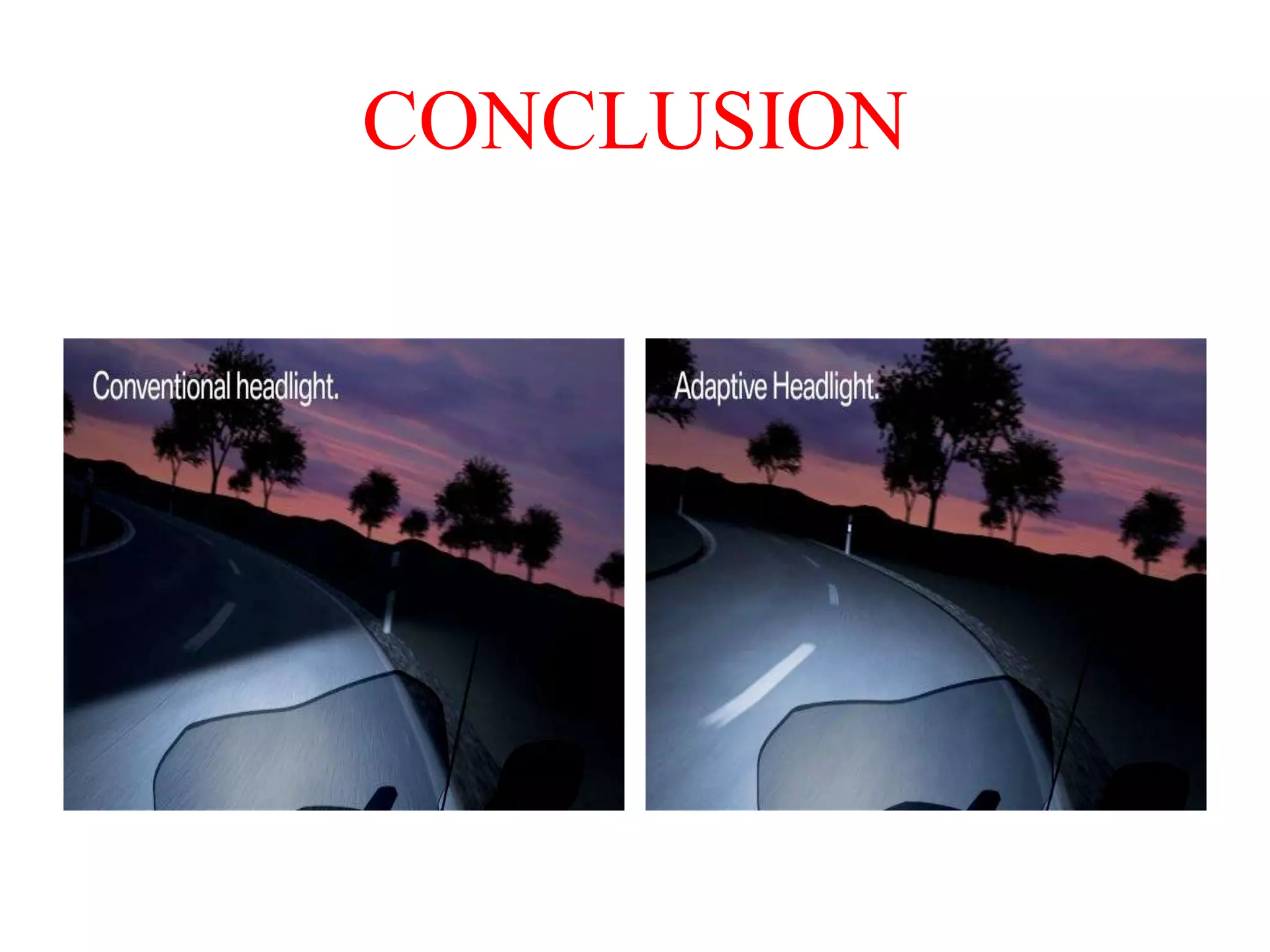
• In order to provide enhanced nighttime safety
measures this work aims to design and build a
prototype of steerable headlights by adapting a
conventional static headlamp.
OBJECTIVE
• To design and build an Adaptive Front
Lightening System prototype that will modify an
existing fixed headlamp with a very close eye on
cost and reliability.
• To improve adequate visibility at the curved
path.
• To improve driver’s comfort at night time.
• Change the vehicle’s condition static to dynamic.
• To increase road and pedestrian safety.
COMPONENTS
• STEERING SYSTEM
• SENSOR BLOCK
– Potentiometer
– Analog-Digital Convertor

• MICROCONTROLLER
• ACTUATOR BLOCK
– Servomotor
– Headlamps and Headlamp Casing
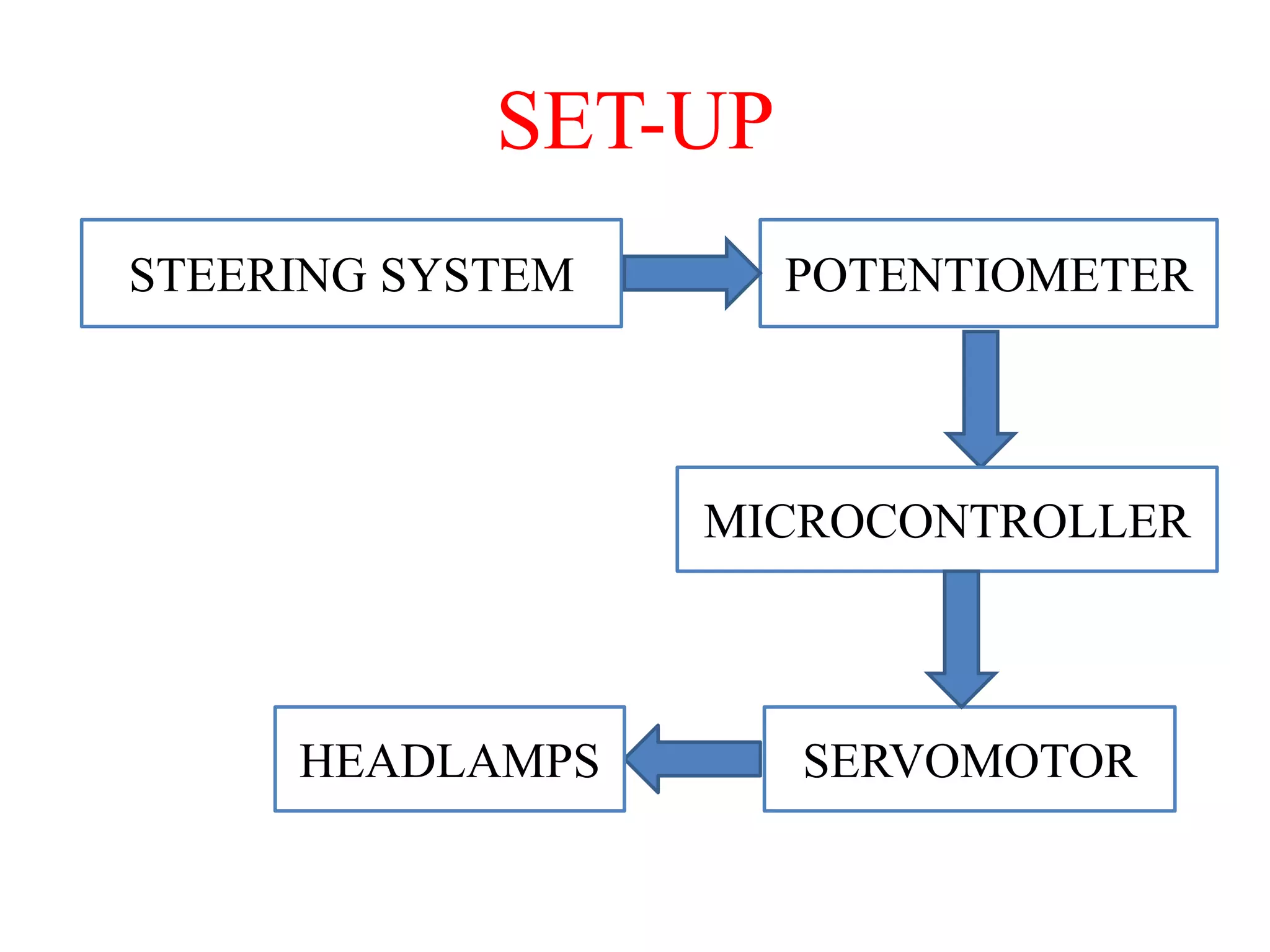
SET-UP
STEERING SYSTEM

POTENTIOMETER

MICROCONTROLLER

HEADLAMPS

SERVOMOTOR
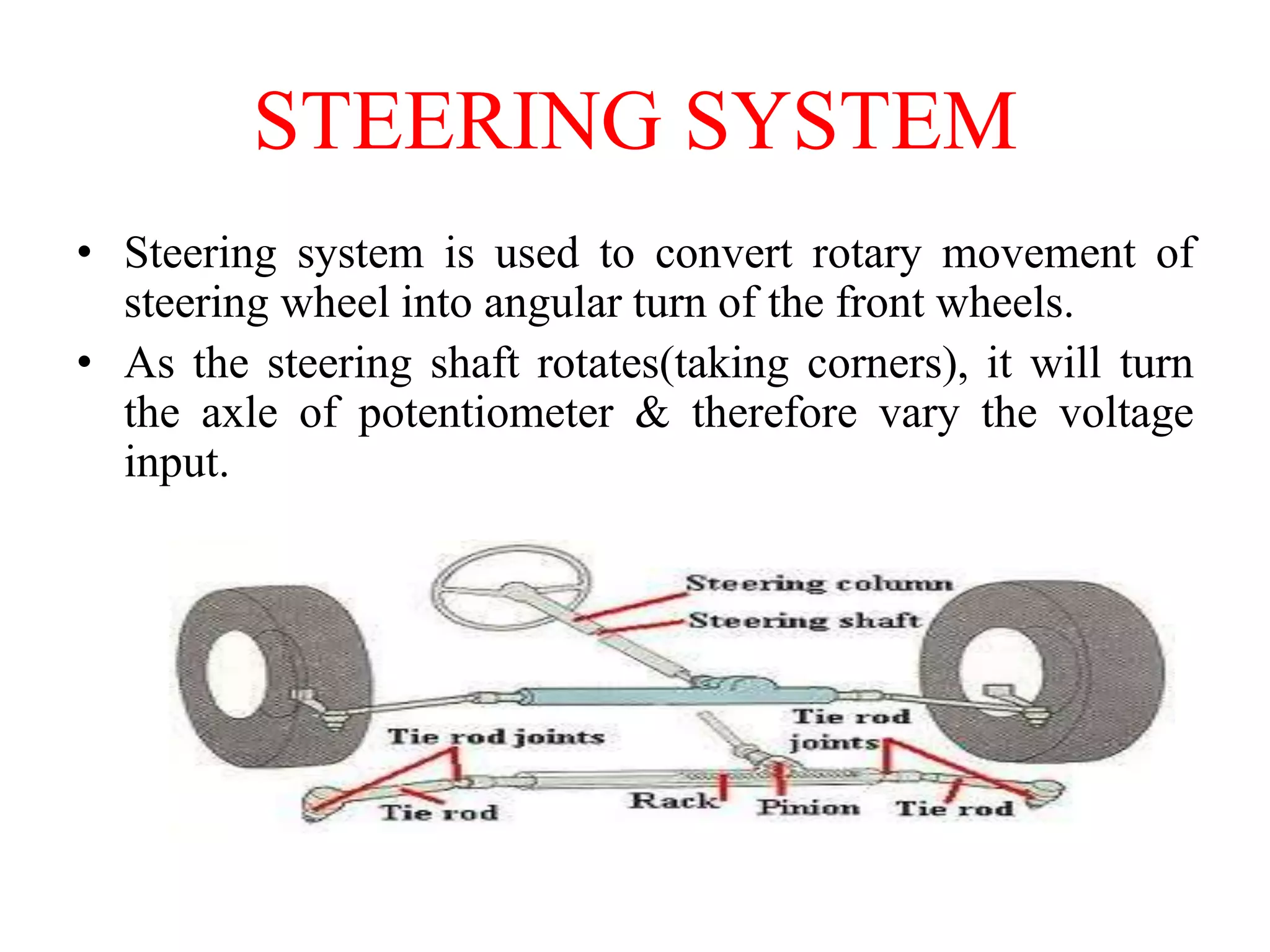
STEERING SYSTEM
• Steering system is used to convert rotary movement of
steering wheel into angular turn of the front wheels.
• As the steering shaft rotates(taking corners), it will turn
the axle of potentiometer & therefore vary the voltage
input.
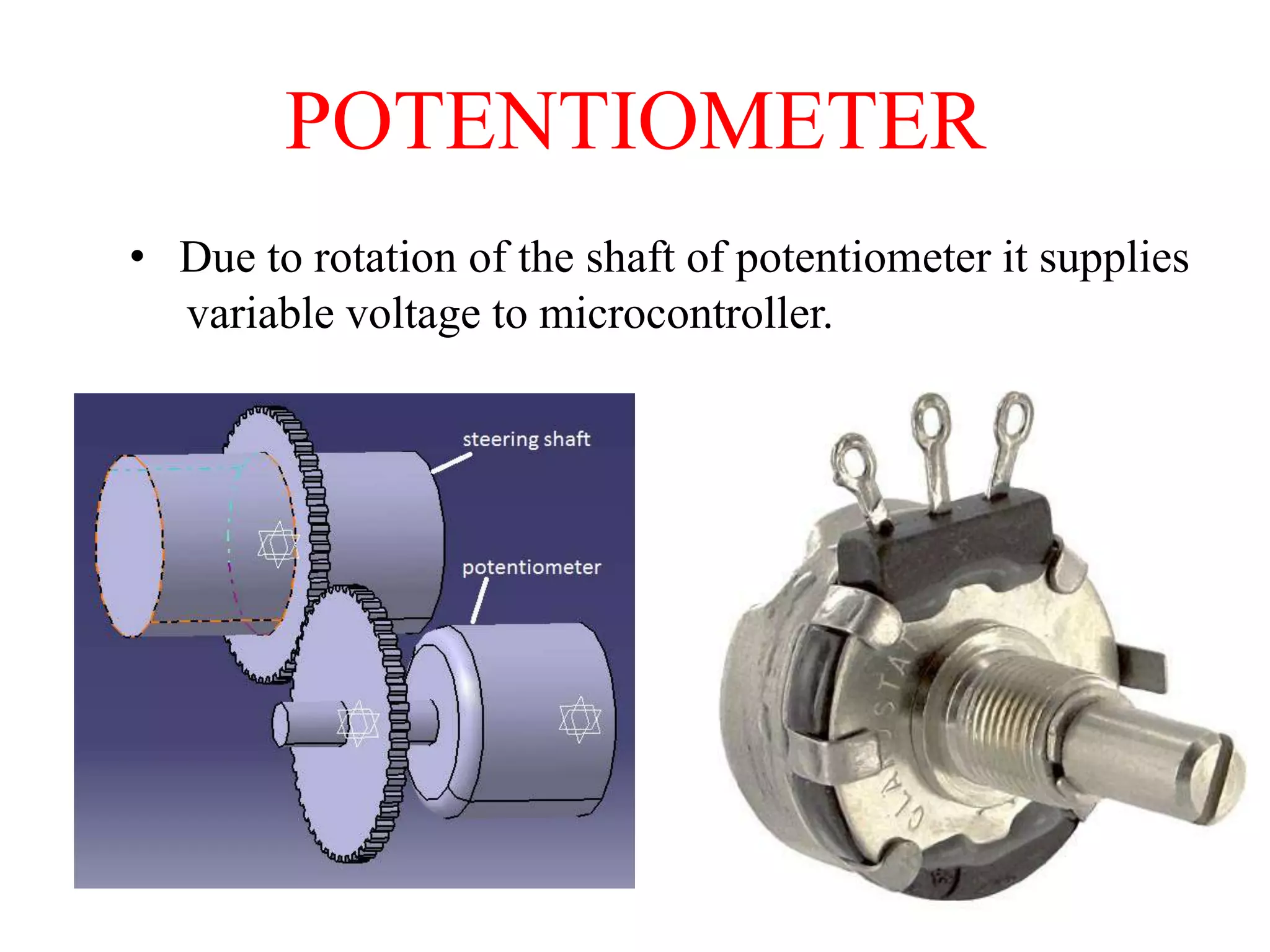
POTENTIOMETER
• Due to rotation of the shaft of potentiometer it supplies
variable voltage to microcontroller.
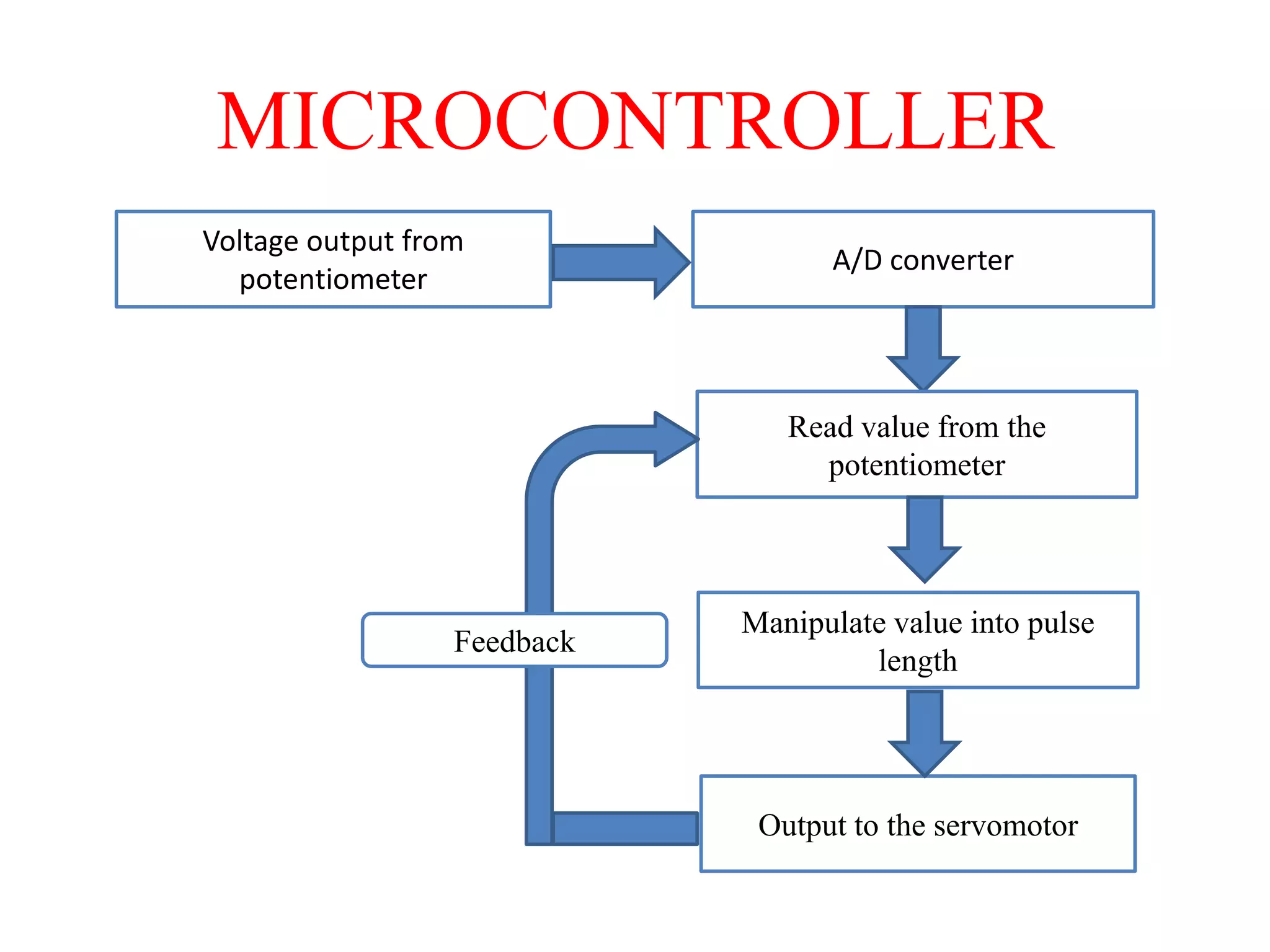
MICROCONTROLLER
Voltage output from
potentiometer

A/D converter

Read value from the
potentiometer

Feedback

Manipulate value into pulse
length

Output to the servomotor
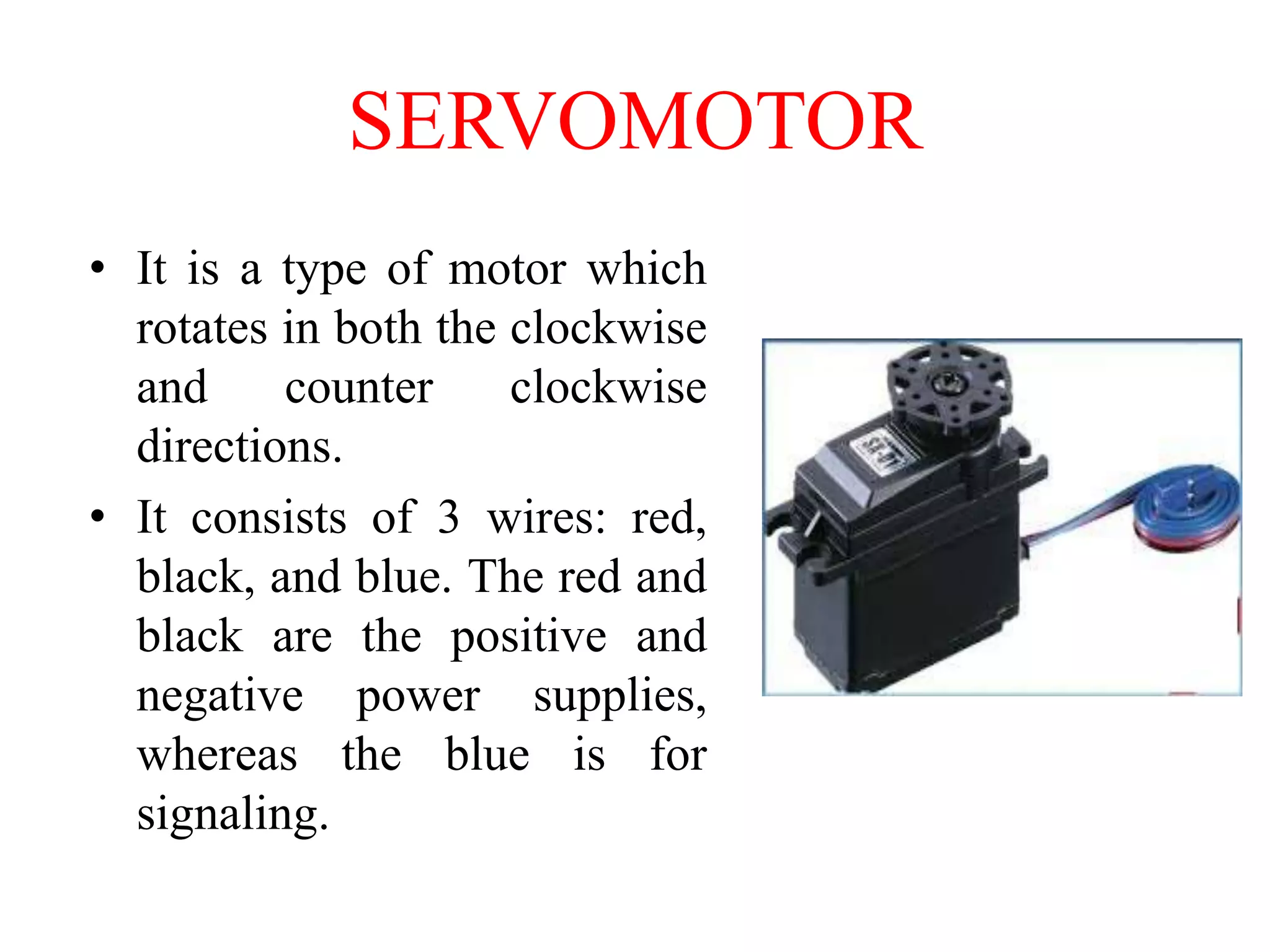
SERVOMOTOR
• It is a type of motor which
rotates in both the clockwise
and
counter
clockwise
directions.
• It consists of 3 wires: red,
black, and blue. The red and
black are the positive and
negative power supplies,
whereas the blue is for
signaling.
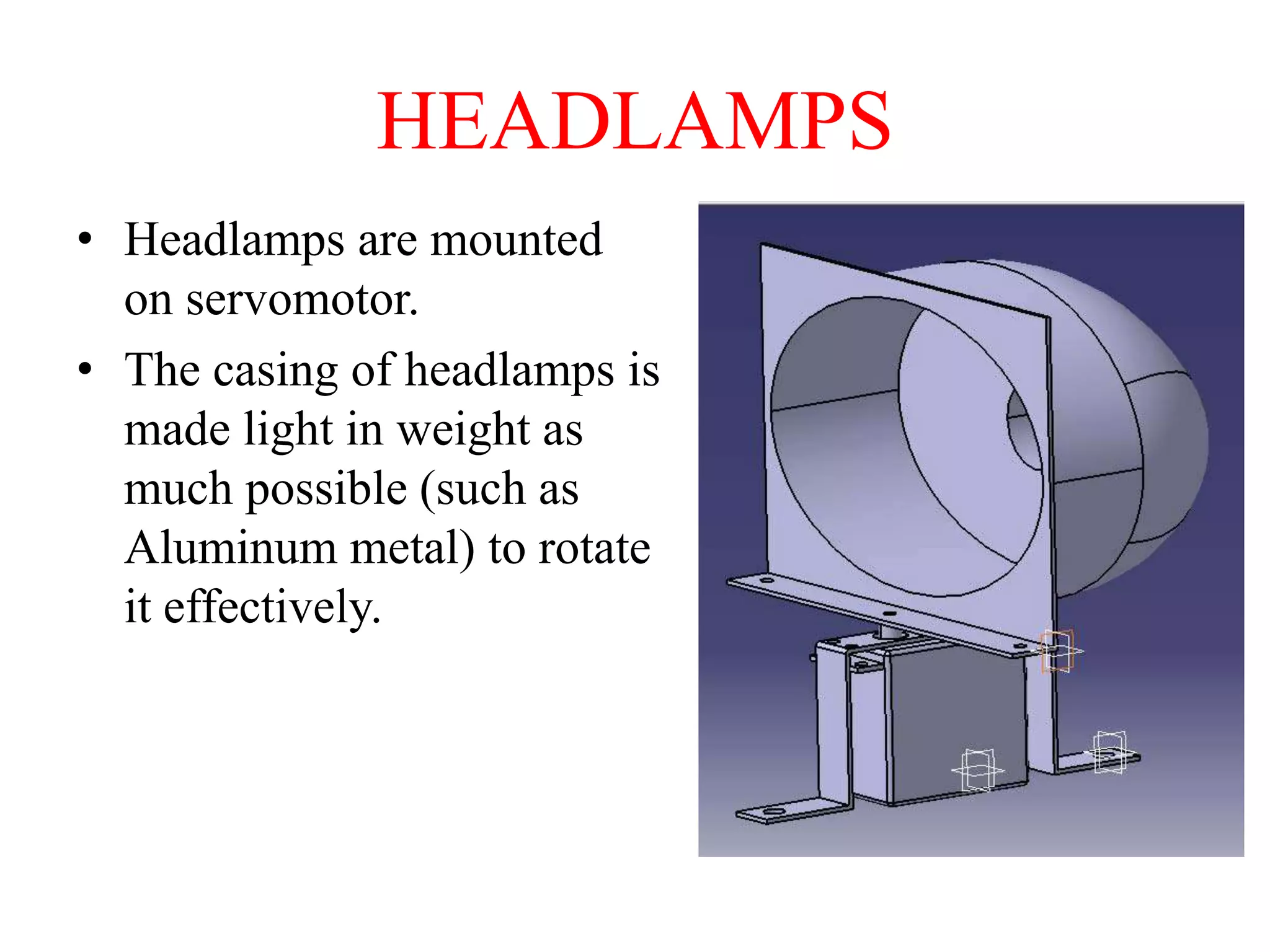
HEADLAMPS
• Headlamps are mounted
on servomotor.
• The casing of headlamps is
made light in weight as
much possible (such as
Aluminum metal) to rotate
it effectively.
ADVANTAGES
• Better visibility and identification of obstacles
on curved path
• Improved Comfort
• Ease of handling
• Components are available easily in market
FUTURE SCOPE
• In future we can add more functions to an
adaptive front light system such as to increase
the intensity of light of front headlamps in
rain, fog etc..
• Functions can be made rather simple but still
effective in there basic version and will
probably easy to sell because they are not very
well covered by the traditional vehicle
illumination system.
LIMITATIONS
• Economical and Technical Limitations
• Designing limitation such as space provided to
rotate the Headlamps
• International differences in regulations on
what the designer could and couldn’t do
• Can’t tell about customer reviews
• Lack of innovation
CONCLUSION
REFERENCES
• SAE Technical Paper Series No. 970650, Society
of Automotive Engineers, 1997.
• Dr. Kirpal Singh, Automobile Engineering vol. 1.
• Elliot, rod, Beginners Guide to Potentiometer.
• SAE Technical Paper Series No. 932868.
• International Conference on Computer and
Communication Engineering (ICCCE 2010)
• iddhien.blogspot.in/2007/06
• www.anaheimautomation.com
• www.engineersgarage.com
Steering Operated Vehicle Illumination(Head Lighting) System

Steering Operated Vehicle Illumination(Head Lighting) System

  • 1.
    A PRESENTATION ON STEERING OPERATED ADAPTIVE ILLUMINATIONSYSTEM Presented By : B.Tech Final Year Students GOVT. ENGINEERING COLLEGE, AJMER
  • 2.
    INTRODUCTION • The highestfatal traffic accident rate occurs on curved roads at nighttime due to the late recognition of objects in the traffic zone. • The static headlamp just provides certain illuminating fields for drivers in the nighttime and is insufficient to serve on curved roads • In order to provide enhanced nighttime safety measures this work aims to design and build a prototype of steerable headlights by adapting a conventional static headlamp.
  • 3.
    OBJECTIVE • To designand build an Adaptive Front Lightening System prototype that will modify an existing fixed headlamp with a very close eye on cost and reliability. • To improve adequate visibility at the curved path. • To improve driver’s comfort at night time. • Change the vehicle’s condition static to dynamic. • To increase road and pedestrian safety.
  • 4.
    COMPONENTS • STEERING SYSTEM •SENSOR BLOCK – Potentiometer – Analog-Digital Convertor • MICROCONTROLLER • ACTUATOR BLOCK – Servomotor – Headlamps and Headlamp Casing
  • 5.
  • 6.
    STEERING SYSTEM • Steeringsystem is used to convert rotary movement of steering wheel into angular turn of the front wheels. • As the steering shaft rotates(taking corners), it will turn the axle of potentiometer & therefore vary the voltage input.
  • 7.
    POTENTIOMETER • Due torotation of the shaft of potentiometer it supplies variable voltage to microcontroller.
  • 8.
    MICROCONTROLLER Voltage output from potentiometer A/Dconverter Read value from the potentiometer Feedback Manipulate value into pulse length Output to the servomotor
  • 9.
    SERVOMOTOR • It isa type of motor which rotates in both the clockwise and counter clockwise directions. • It consists of 3 wires: red, black, and blue. The red and black are the positive and negative power supplies, whereas the blue is for signaling.
  • 10.
    HEADLAMPS • Headlamps aremounted on servomotor. • The casing of headlamps is made light in weight as much possible (such as Aluminum metal) to rotate it effectively.
  • 11.
    ADVANTAGES • Better visibilityand identification of obstacles on curved path • Improved Comfort • Ease of handling • Components are available easily in market
  • 12.
    FUTURE SCOPE • Infuture we can add more functions to an adaptive front light system such as to increase the intensity of light of front headlamps in rain, fog etc.. • Functions can be made rather simple but still effective in there basic version and will probably easy to sell because they are not very well covered by the traditional vehicle illumination system.
  • 13.
    LIMITATIONS • Economical andTechnical Limitations • Designing limitation such as space provided to rotate the Headlamps • International differences in regulations on what the designer could and couldn’t do • Can’t tell about customer reviews • Lack of innovation
  • 14.
  • 15.
    REFERENCES • SAE TechnicalPaper Series No. 970650, Society of Automotive Engineers, 1997. • Dr. Kirpal Singh, Automobile Engineering vol. 1. • Elliot, rod, Beginners Guide to Potentiometer. • SAE Technical Paper Series No. 932868. • International Conference on Computer and Communication Engineering (ICCCE 2010) • iddhien.blogspot.in/2007/06 • www.anaheimautomation.com • www.engineersgarage.com