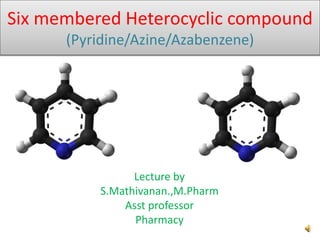
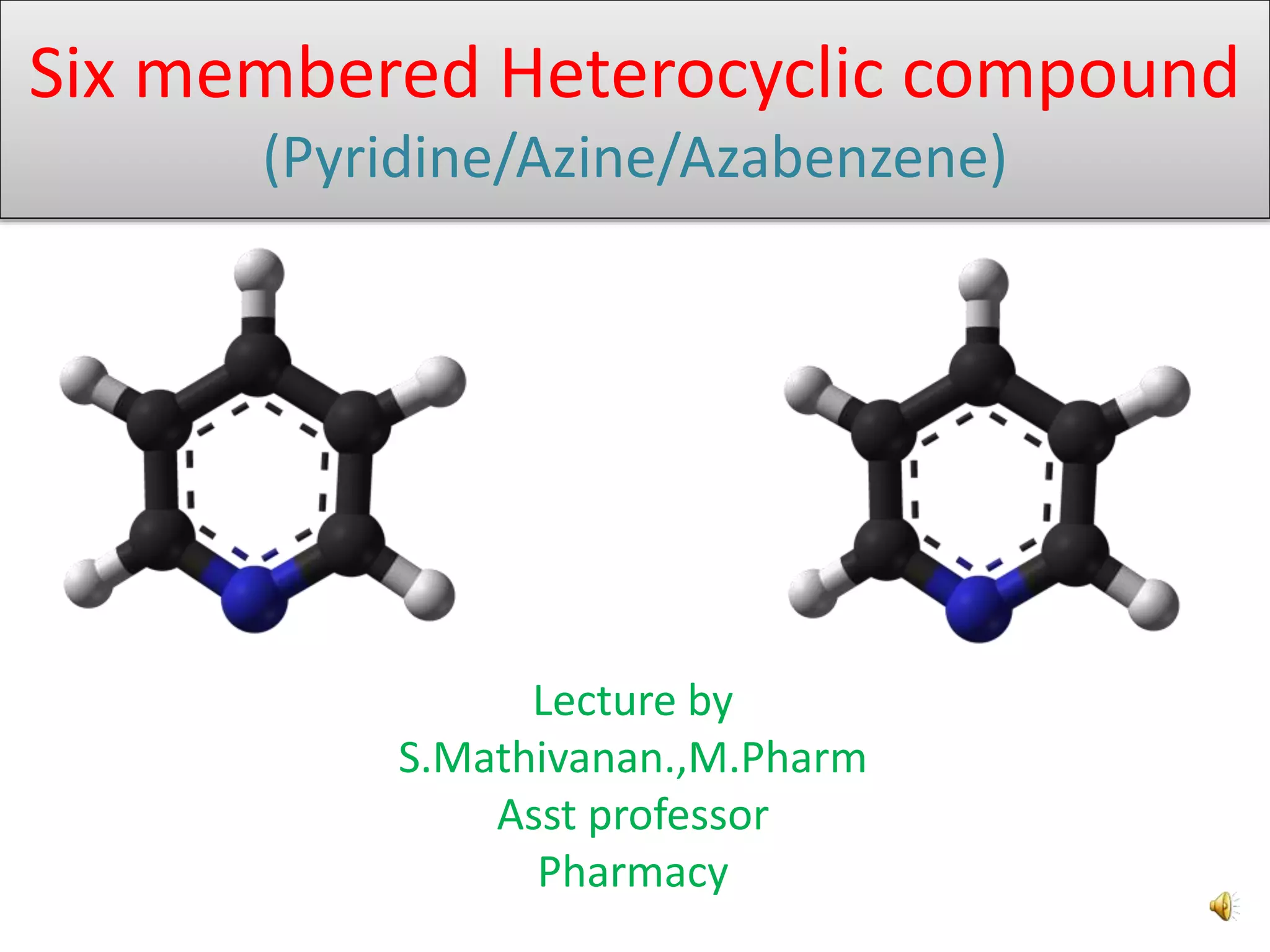
Six membered Heterocyclic compound
(Pyridine/Azine/Azabenzene)
Lecture by
S.Mathivanan.,M.Pharm
Asst professor
Pharmacy
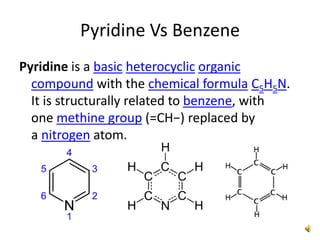
Pyridine Vs Benzene
Pyridine is a basic heterocyclic organic
compound with the chemical formula C5H5N.
It is structurally related to benzene, with
one methine group (=CH−) replaced by
a nitrogen atom.
• Impure pyridine was undoubtedly prepared by early alchemists by heating
animal bones and other organic matter.
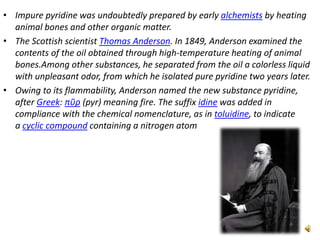
• The Scottish scientist Thomas Anderson. In 1849, Anderson examined the
contents of the oil obtained through high-temperature heating of animal
bones.Among other substances, he separated from the oil a colorless liquid
with unpleasant odor, from which he isolated pure pyridine two years later.
• Owing to its flammability, Anderson named the new substance pyridine,
after Greek: πῦρ (pyr) meaning fire. The suffix idine was added in
compliance with the chemical nomenclature, as in toluidine, to indicate
a cyclic compound containing a nitrogen atom
Occurance
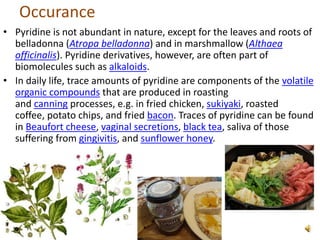
• Pyridine is not abundant in nature, except for the leaves and roots of
belladonna (Atropa belladonna) and in marshmallow (Althaea
officinalis). Pyridine derivatives, however, are often part of
biomolecules such as alkaloids.
• In daily life, trace amounts of pyridine are components of the volatile
organic compounds that are produced in roasting
and canning processes, e.g. in fried chicken, sukiyaki, roasted
coffee, potato chips, and fried bacon. Traces of pyridine can be found
in Beaufort cheese, vaginal secretions, black tea, saliva of those
suffering from gingivitis, and sunflower honey.
Isolation of Pyridine from coal tar
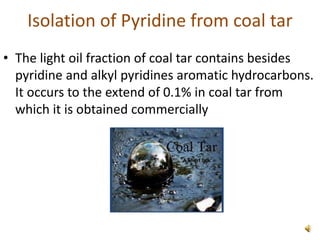
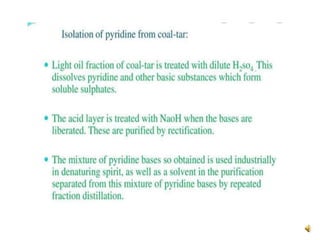
• The light oil fraction of coal tar contains besides
pyridine and alkyl pyridines aromatic hydrocarbons.
It occurs to the extend of 0.1% in coal tar from
which it is obtained commercially
Physical properties
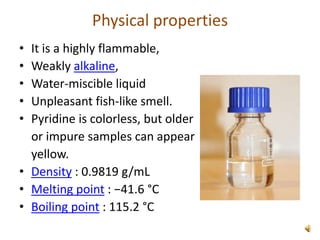
• It is a highly flammable,
• Weakly alkaline,
• Water-miscible liquid
• Unpleasant fish-like smell.
• Pyridine is colorless, but older
or impure samples can appear
yellow.
• Density : 0.9819 g/mL
• Melting point : −41.6 °C
• Boiling point : 115.2 °C
Properties
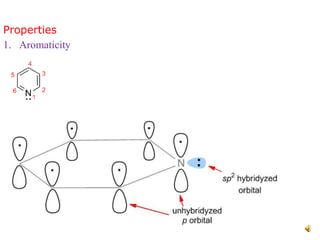
1. Aromaticity
Properties
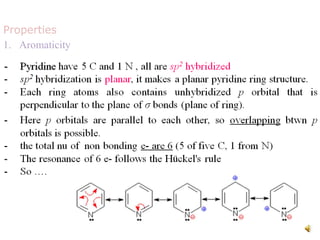
1. Aromaticity
Properties
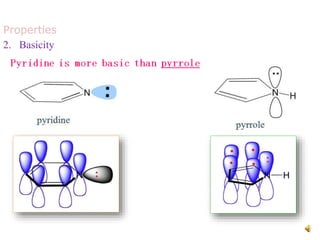
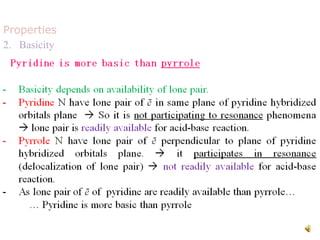
2. Basicity
Properties
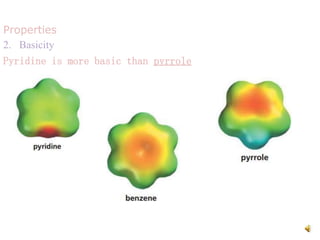
2. Basicity
Pyridine is more basic than pyrrole
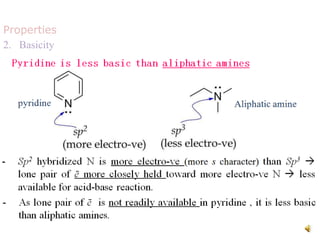
Properties
2. Basicity
Properties
2. Basicity
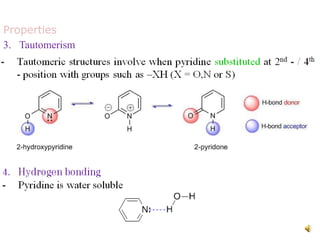
Properties
3. Tautomerism
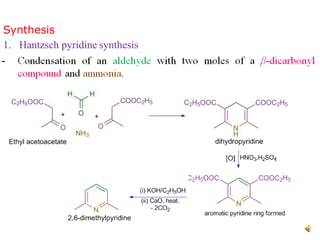
Synthesis
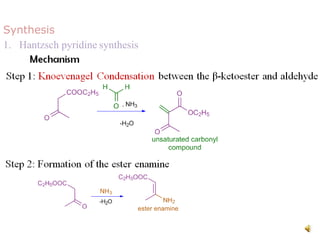
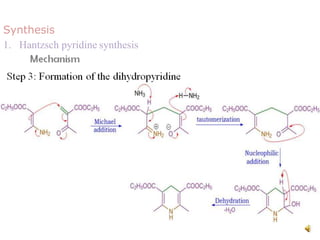
1. Hantzsch pyridine synthesis
Synthesis
1. Hantzsch pyridine synthesis
Synthesis
1. Hantzsch pyridine synthesis
Synthesis
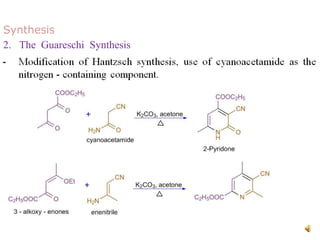
2. The Guareschi Synthesis
Synthesis
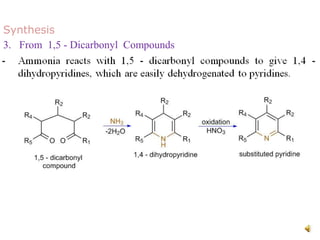
3. From 1,5 - Dicarbonyl Compounds
Synthesis
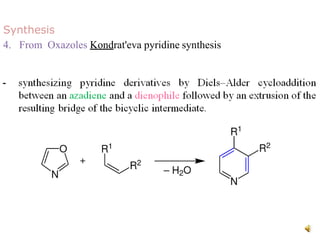
4. From Oxazoles Kondrat'eva pyridine synthesis
Reactions
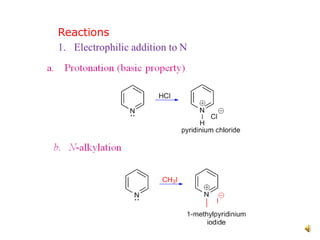
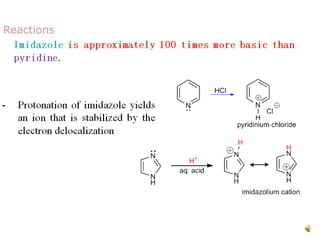
1. Electrophilic addition to N
Reactions
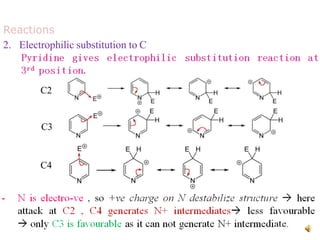
C2
C3
C4
Reactions
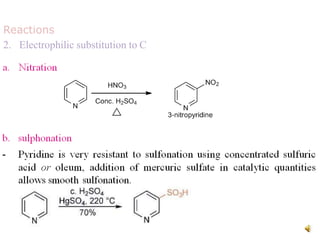
2. Electrophilic substitution to C
Reactions
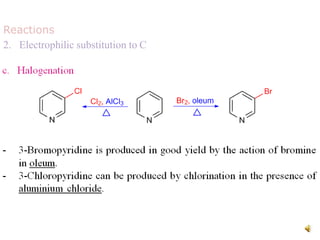
2. Electrophilic substitution to C
Reactions
2. Electrophilic substitution to C
nucleophilic substitution
Reactions
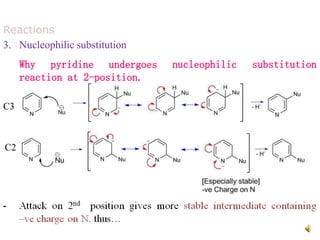
3. Nucleophilic substitution
Why pyridine undergoes
reaction at 2-position.
C3
C2
Reactions
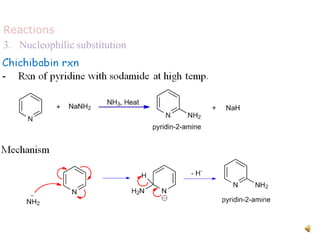
3. Nucleophilic substitution
Reactions
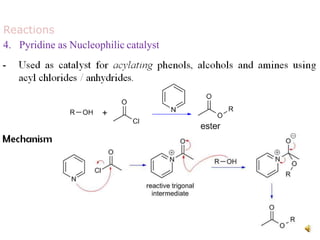
4. Pyridine as Nucleophilic catalyst
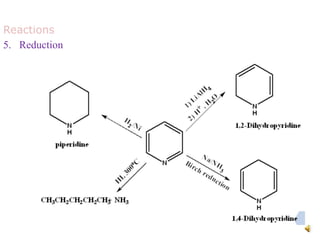
Reactions
5. Reduction
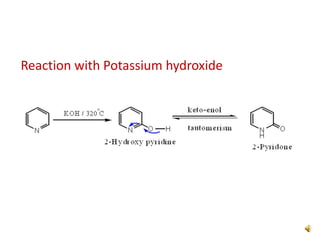
Reaction with Potassium hydroxide
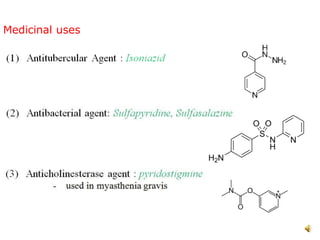
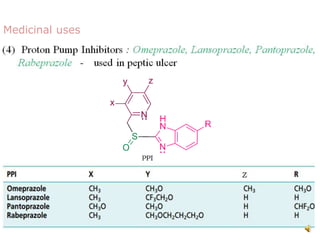
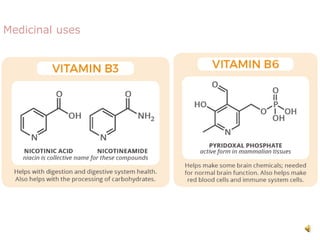
Medicinal uses
Medicinal uses
Medicinal uses
Stay home..Stay safe..!!!
Thank you all for your co-operation..!!!

Six membered heterocyclic compound pyridine