PYRIDINE
Dr. J.FELICITA FLORENCE
ASSISTANT PROFESSOR
PYRIDINE
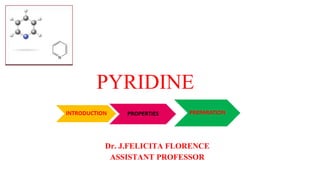
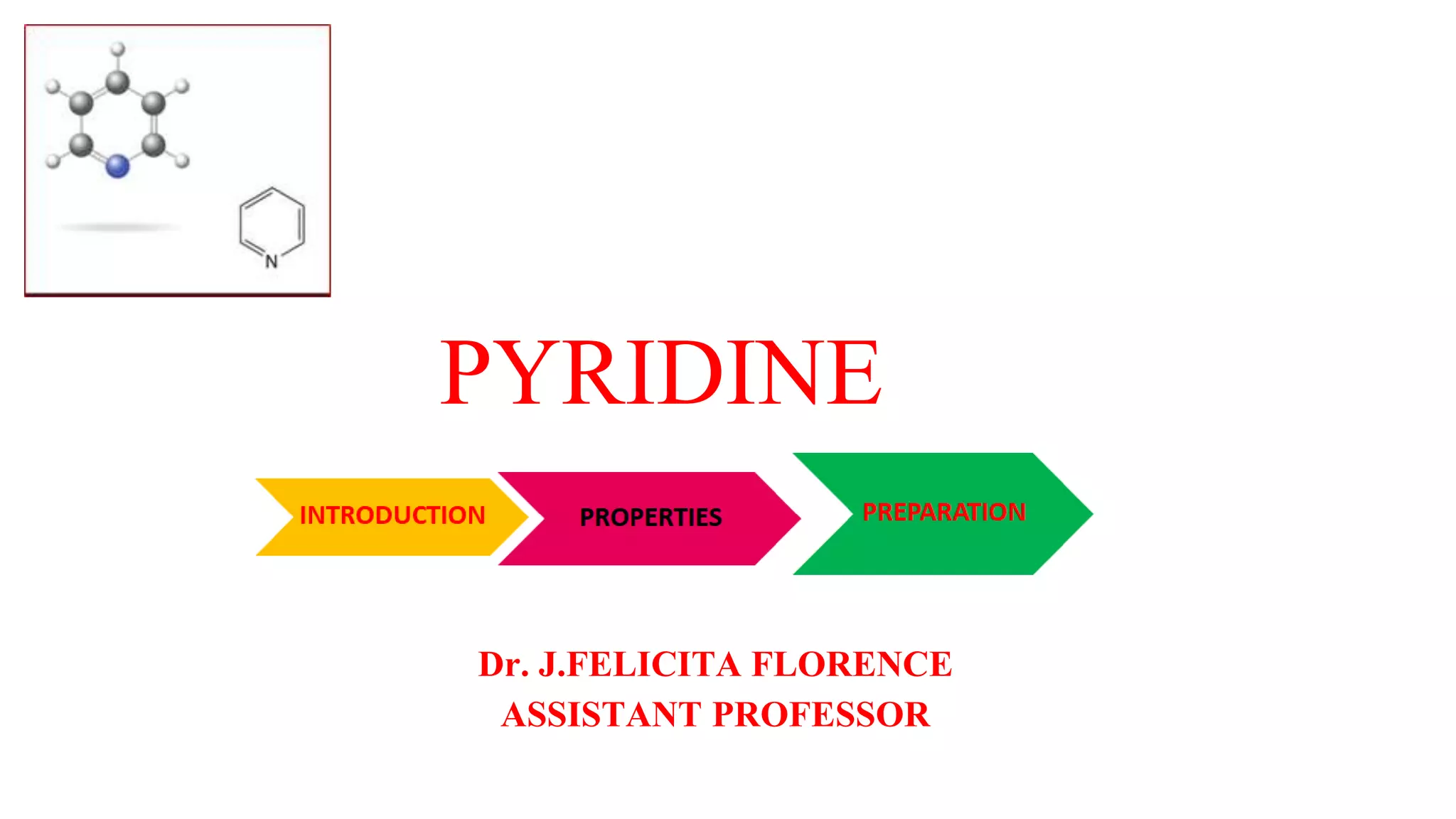
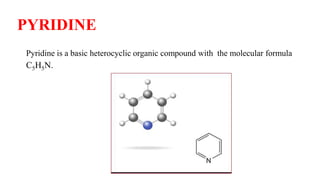
Pyridine is a basic heterocyclic organic compound with the molecular formula
C5H5N.
PROPERTIES
1. It is used in agrochemicals, pharmaceuticals and vitamins.
2. It is structurally related to benzene with one methine group
replaced by nitrogen atom.
3. Pyridine is a highly flammable ,weakly alkaline, water miscible
liquid with a defensive unpleasant smell.
4. It is colorless but older or impure samples can appear yellow.
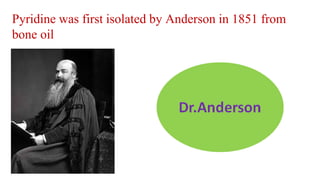
Pyridine was first isolated by Anderson in 1851 from
bone oil
PREPARATION OF PYRIDINE
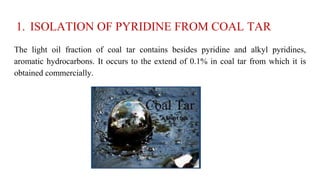
1. ISOLATION OF PYRIDINE FROM COAL TAR
The light oil fraction of coal tar contains besides pyridine and alkyl pyridines,
aromatic hydrocarbons. It occurs to the extend of 0.1% in coal tar from which it is
obtained commercially.
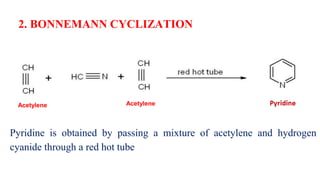
Pyridine is obtained by passing a mixture of acetylene and hydrogen
cyanide through a red hot tube
2. BONNEMANN CYCLIZATION
Acetylene Acetylene
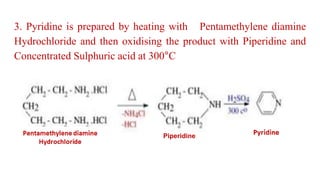
3. Pyridine is prepared by heating with Pentamethylene diamine
Hydrochloride and then oxidising the product with Piperidine and
Concentrated Sulphuric acid at 300°C
Piperidine
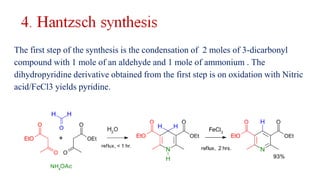
The first step of the synthesis is the condensation of 2 moles of 3-dicarbonyl
compound with 1 mole of an aldehyde and 1 mole of ammonium . The
dihydropyridine derivative obtained from the first step is on oxidation with Nitric
acid/FeCl3 yields pyridine.
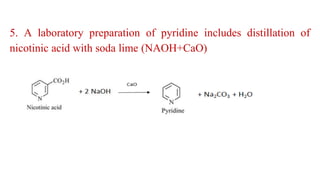
5. A laboratory preparation of pyridine includes distillation of
nicotinic acid with soda lime (NAOH+CaO)
REFERENCES
1.Organic Chemistry by D.S. Tewari.
2. Modern Organic Chemistry by M.K.Jain and S.C. Sharma.
Pyridine - Preparation and Properties

Pyridine - Preparation and Properties

  • 1.
  • 2.
    PYRIDINE Pyridine is abasic heterocyclic organic compound with the molecular formula C5H5N.
  • 3.
    PROPERTIES 1. It isused in agrochemicals, pharmaceuticals and vitamins. 2. It is structurally related to benzene with one methine group replaced by nitrogen atom. 3. Pyridine is a highly flammable ,weakly alkaline, water miscible liquid with a defensive unpleasant smell. 4. It is colorless but older or impure samples can appear yellow.
  • 4.
    Pyridine was firstisolated by Anderson in 1851 from bone oil
  • 5.
  • 6.
    1. ISOLATION OFPYRIDINE FROM COAL TAR The light oil fraction of coal tar contains besides pyridine and alkyl pyridines, aromatic hydrocarbons. It occurs to the extend of 0.1% in coal tar from which it is obtained commercially.
  • 8.
    Pyridine is obtainedby passing a mixture of acetylene and hydrogen cyanide through a red hot tube 2. BONNEMANN CYCLIZATION Acetylene Acetylene
  • 9.
    3. Pyridine isprepared by heating with Pentamethylene diamine Hydrochloride and then oxidising the product with Piperidine and Concentrated Sulphuric acid at 300°C Piperidine
  • 10.
    The first stepof the synthesis is the condensation of 2 moles of 3-dicarbonyl compound with 1 mole of an aldehyde and 1 mole of ammonium . The dihydropyridine derivative obtained from the first step is on oxidation with Nitric acid/FeCl3 yields pyridine.
  • 11.
    5. A laboratorypreparation of pyridine includes distillation of nicotinic acid with soda lime (NAOH+CaO)
  • 12.
    REFERENCES 1.Organic Chemistry byD.S. Tewari. 2. Modern Organic Chemistry by M.K.Jain and S.C. Sharma.