BAEYER - VILLIGER OXIDATION
• Presented By:
• Gandham Malasree
• M Pharmacy
• Regd no: 620209502002
• Dept of Pharmaceutical
Chemistry
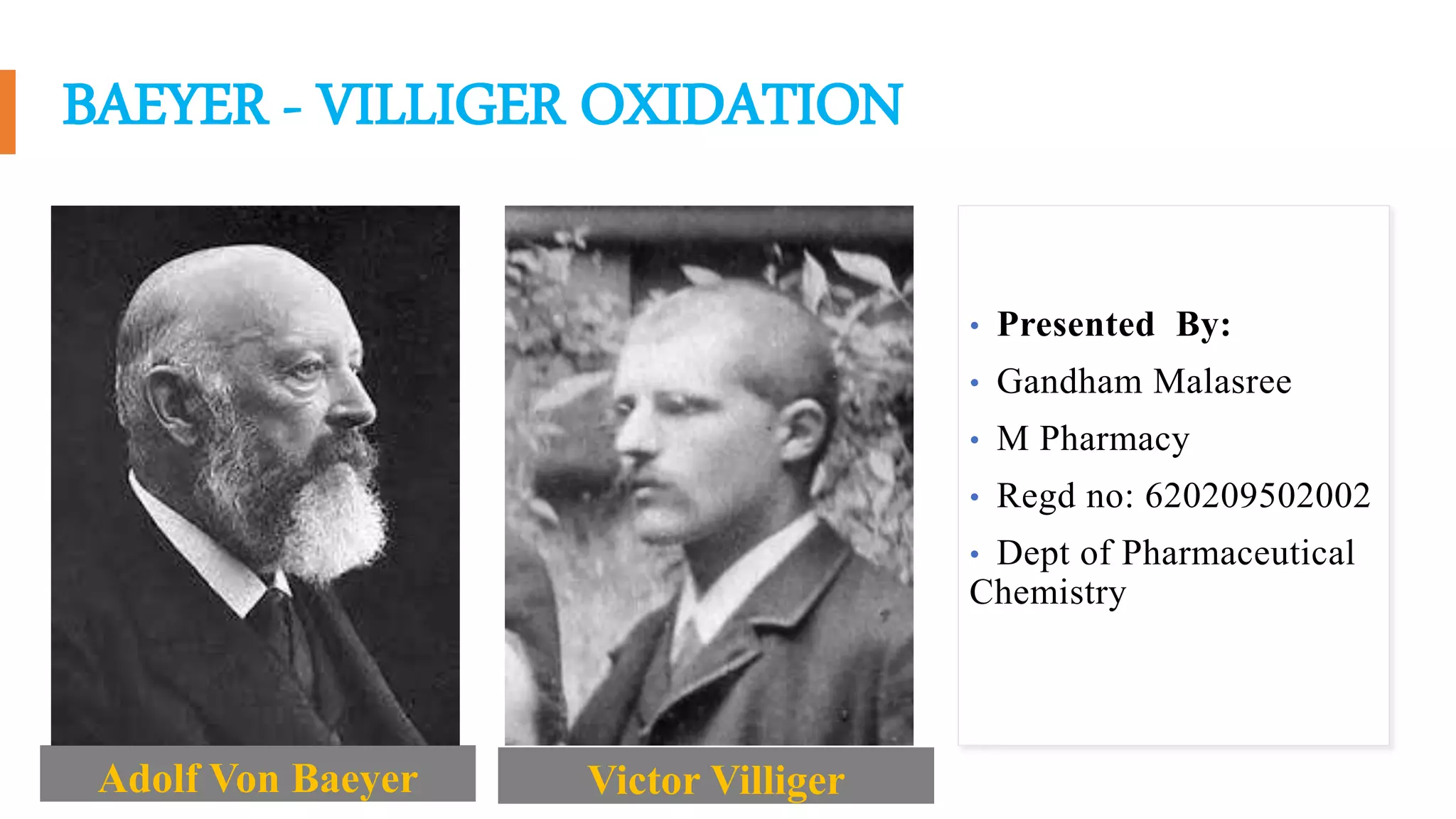
Victor Villiger
Adolf Von Baeyer
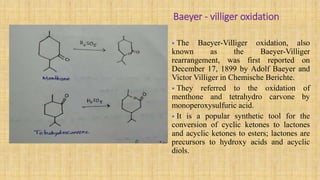
Baeyer - villiger oxidation
• The Baeyer-Villiger oxidation, also
known as the Baeyer-Villiger
rearrangement, was first reported on
December 17, 1899 by Adolf Baeyer and
Victor Villiger in Chemische Berichte.
• They referred to the oxidation of
menthone and tetrahydro carvone by
monoperoxysulfuric acid.
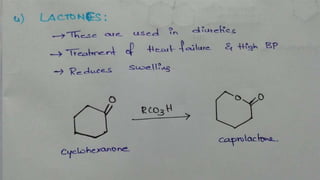
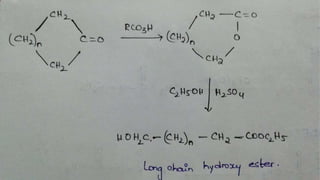
• It is a popular synthetic tool for the
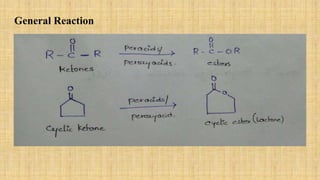
conversion of cyclic ketones to lactones
and acyclic ketones to esters; lactones are
precursors to hydroxy acids and acyclic
diols.
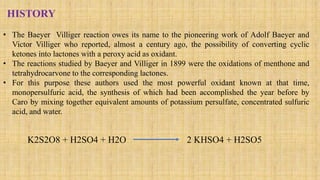
• The Baeyer Villiger reaction owes its name to the pioneering work of Adolf Baeyer and
Victor Villiger who reported, almost a century ago, the possibility of converting cyclic
ketones into lactones with a peroxy acid as oxidant.
• The reactions studied by Baeyer and Villiger in 1899 were the oxidations of menthone and
tetrahydrocarvone to the corresponding lactones.
• For this purpose these authors used the most powerful oxidant known at that time,
monopersulfuric acid, the synthesis of which had been accomplished the year before by
Caro by mixing together equivalent amounts of potassium persulfate, concentrated sulfuric
acid, and water.
K2S2O8 + H2SO4 + H2O 2 KHSO4 + H2SO5
HISTORY
General Reaction
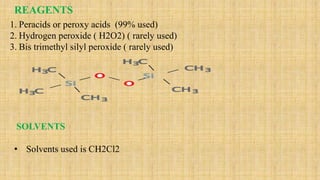
REAGENTS
1. Peracids or peroxy acids (99% used)
2. Hydrogen peroxide ( H2O2) ( rarely used)
3. Bis trimethyl silyl peroxide ( rarely used)
SOLVENTS
• Solvents used is CH2Cl2
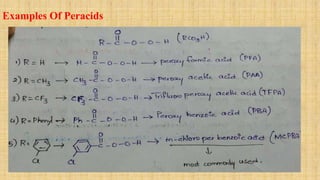
Examples Of Peracids
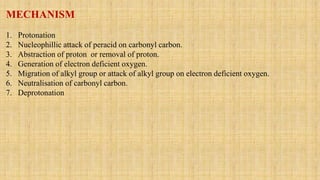
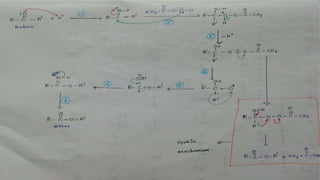
MECHANISM
1. Protonation
2. Nucleophillic attack of peracid on carbonyl carbon.
3. Abstraction of proton or removal of proton.
4. Generation of electron deficient oxygen.
5. Migration of alkyl group or attack of alkyl group on electron deficient oxygen.
6. Neutralisation of carbonyl carbon.
7. Deprotonation
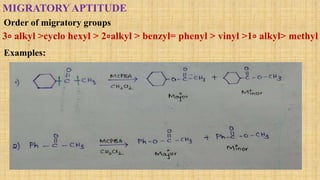
MIGRATORY APTITUDE
Order of migratory groups
3∘ alkyl >cyclo hexyl > 2∘alkyl > benzyl= phenyl > vinyl >1∘ alkyl> methyl
Examples:
MODIFICATIONS
Catalytic Baeyer villiger oxidation
• The use of hydrogen peroxide as an oxidant would be advantageous, making the
reaction more environmentally friendly as the sole byproduct is water.
• Benzeneseleninic acid derivatives as catalysts have been reported to give high
selectivity with hydrogen peroxide as the oxidant.
• Another class of catalysts which show high selectivity with hydrogen peroxide as the
oxidant are solid Lewis acid catalysts such as stannosilicates.
• Among stannosilicates, particularly the zeotype Sn-beta and the amorphous Sn-MCM-
41 show promising activity and close to full selectivity towards the desired product.
Asymmetric Baeyer-Villiger oxidation
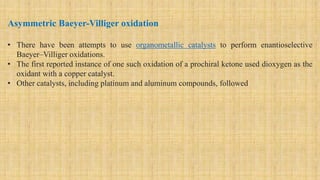
• There have been attempts to use organometallic catalysts to perform enantioselective
Baeyer–Villiger oxidations.
• The first reported instance of one such oxidation of a prochiral ketone used dioxygen as the
oxidant with a copper catalyst.
• Other catalysts, including platinum and aluminum compounds, followed
Limitations
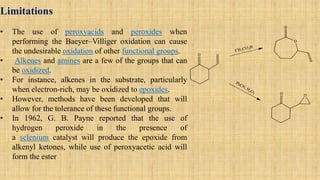
• The use of peroxyacids and peroxides when
performing the Baeyer–Villiger oxidation can cause
the undesirable oxidation of other functional groups.
• Alkenes and amines are a few of the groups that can
be oxidized.
• For instance, alkenes in the substrate, particularly
when electron-rich, may be oxidized to epoxides.
• However, methods have been developed that will
allow for the tolerance of these functional groups.
• In 1962, G. B. Payne reported that the use of
hydrogen peroxide in the presence of
a selenium catalyst will produce the epoxide from
alkenyl ketones, while use of peroxyacetic acid will
form the ester
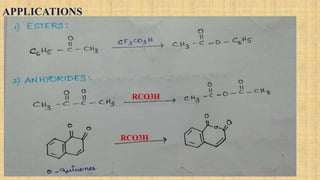
APPLICATIONS
RCO3H
RCO3H
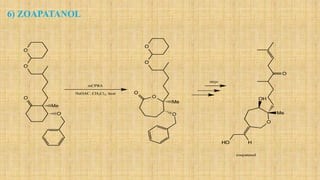
6) ZOAPATANOL
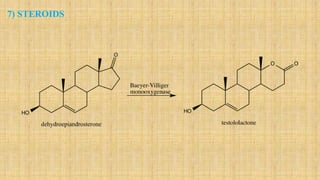
7) STEROIDS
• Synthesis of 3-hydroxyindole-2-carboxylates.
• Conversion of non-activated [18F]fluorobenzaldehydes to [18F]fluorophenols with
high radiochemical yield.
• Synthesis of dibenzo-18-crown-6, dibenzo-21-crown-7, and dihydroxydibenzo-18-
crown-6.
• One-pot chemoenzymatic synthesis of g-butyrolactones.
• Metal-free synthesis of vinyl acetates.
• Silica-supported tricobalt tetraoxide (Co3O4/SiO2) catalysts have been employed for
the Baeyer–Villiger oxidation of cyclohexanone under Mukaiyama conditions
• Chemoenzymatic Baeyer–Villiger oxidation of cyclic ketones catalyzed
by Candida antarctica lipase B or Novozyme-435 suspended in an ionic liquid has
been studied.
• Kinetic resolution of racemic 2-substituted cyclopentanones has been achieved via
highly regio- and enantioselective Baeyer–Villiger oxidation.
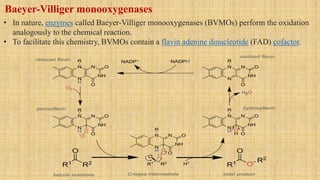
Baeyer-Villiger monooxygenases
• In nature, enzymes called Baeyer-Villiger monooxygenases (BVMOs) perform the oxidation
analogously to the chemical reaction.
• To facilitate this chemistry, BVMOs contain a flavin adenine dinucleotide (FAD) cofactor.
• In the catalytic cycle the cellular redox equivalent NADPH first reduces the cofactor, which
allows it subsequently to react with molecular oxygen.
• The resulting peroxyflavin is the catalytic entity oxygenating the substrate, and theoretical
studies suggest that the reaction proceeds through the same Criegee intermediate as observed in
the chemical reaction.
• After the rearrangement step forming the ester product, a hydroxyflavin remains, which
spontaneously eliminates water to form oxidized flavin, thereby closing the catalytic cycle.
• BVMOs are closely related to the flavin-containing monooxygenases (FMOs), enzymes that
also occur in the human body, functioning within the frontline metabolic detoxification system
of the liver along the cytochrome P450 monooxygenases.
• Human FMOs was in fact shown to be able to catalyse Baeyer-Villiger reactions, indicating
that the reaction may occur in the human body as well.
• BVMOs have been widely studied due to their potential as biocatalysts, that is, for an
application in organic synthesis.
• BVMOs in particular are interesting for application because they fulfil a range of criteria
typically sought for in biocatalysis: besides their ability to catalyse a synthetically useful
reaction, some natural homologs were found to have a very large substrate scope (i.e. their
reactivity was not restricted to a single compound, as often assumed in enzyme
catalysis) they can be easily produced on a large scale, and because the three-dimensional
structure of many BVMOs has been determined, enzyme engineering could be applied to
produce variants with improved thermostability and/or reactivity.
• Another advantage of using enzymes for the reaction is their frequently observed regio- and
enantioselectivity, owed to the steric control of substrate orientation during catalysis within
the enzyme’s active site.
STEREOCHEMISTRY
• It is stereoretentive because the migration does not change the sterechemsitry of the
migrating group.
Baeyer villiger oxidation

Baeyer villiger oxidation

  • 1.
    BAEYER - VILLIGEROXIDATION • Presented By: • Gandham Malasree • M Pharmacy • Regd no: 620209502002 • Dept of Pharmaceutical Chemistry Victor Villiger Adolf Von Baeyer
  • 2.
    Baeyer - villigeroxidation • The Baeyer-Villiger oxidation, also known as the Baeyer-Villiger rearrangement, was first reported on December 17, 1899 by Adolf Baeyer and Victor Villiger in Chemische Berichte. • They referred to the oxidation of menthone and tetrahydro carvone by monoperoxysulfuric acid. • It is a popular synthetic tool for the conversion of cyclic ketones to lactones and acyclic ketones to esters; lactones are precursors to hydroxy acids and acyclic diols.
  • 3.
    • The BaeyerVilliger reaction owes its name to the pioneering work of Adolf Baeyer and Victor Villiger who reported, almost a century ago, the possibility of converting cyclic ketones into lactones with a peroxy acid as oxidant. • The reactions studied by Baeyer and Villiger in 1899 were the oxidations of menthone and tetrahydrocarvone to the corresponding lactones. • For this purpose these authors used the most powerful oxidant known at that time, monopersulfuric acid, the synthesis of which had been accomplished the year before by Caro by mixing together equivalent amounts of potassium persulfate, concentrated sulfuric acid, and water. K2S2O8 + H2SO4 + H2O 2 KHSO4 + H2SO5 HISTORY
  • 4.
  • 5.
    REAGENTS 1. Peracids orperoxy acids (99% used) 2. Hydrogen peroxide ( H2O2) ( rarely used) 3. Bis trimethyl silyl peroxide ( rarely used) SOLVENTS • Solvents used is CH2Cl2
  • 6.
  • 7.
    MECHANISM 1. Protonation 2. Nucleophillicattack of peracid on carbonyl carbon. 3. Abstraction of proton or removal of proton. 4. Generation of electron deficient oxygen. 5. Migration of alkyl group or attack of alkyl group on electron deficient oxygen. 6. Neutralisation of carbonyl carbon. 7. Deprotonation
  • 9.
    MIGRATORY APTITUDE Order ofmigratory groups 3∘ alkyl >cyclo hexyl > 2∘alkyl > benzyl= phenyl > vinyl >1∘ alkyl> methyl Examples:
  • 11.
    MODIFICATIONS Catalytic Baeyer villigeroxidation • The use of hydrogen peroxide as an oxidant would be advantageous, making the reaction more environmentally friendly as the sole byproduct is water. • Benzeneseleninic acid derivatives as catalysts have been reported to give high selectivity with hydrogen peroxide as the oxidant. • Another class of catalysts which show high selectivity with hydrogen peroxide as the oxidant are solid Lewis acid catalysts such as stannosilicates. • Among stannosilicates, particularly the zeotype Sn-beta and the amorphous Sn-MCM- 41 show promising activity and close to full selectivity towards the desired product.
  • 12.
    Asymmetric Baeyer-Villiger oxidation •There have been attempts to use organometallic catalysts to perform enantioselective Baeyer–Villiger oxidations. • The first reported instance of one such oxidation of a prochiral ketone used dioxygen as the oxidant with a copper catalyst. • Other catalysts, including platinum and aluminum compounds, followed
  • 13.
    Limitations • The useof peroxyacids and peroxides when performing the Baeyer–Villiger oxidation can cause the undesirable oxidation of other functional groups. • Alkenes and amines are a few of the groups that can be oxidized. • For instance, alkenes in the substrate, particularly when electron-rich, may be oxidized to epoxides. • However, methods have been developed that will allow for the tolerance of these functional groups. • In 1962, G. B. Payne reported that the use of hydrogen peroxide in the presence of a selenium catalyst will produce the epoxide from alkenyl ketones, while use of peroxyacetic acid will form the ester
  • 14.
  • 18.
  • 19.
  • 20.
    • Synthesis of3-hydroxyindole-2-carboxylates. • Conversion of non-activated [18F]fluorobenzaldehydes to [18F]fluorophenols with high radiochemical yield. • Synthesis of dibenzo-18-crown-6, dibenzo-21-crown-7, and dihydroxydibenzo-18- crown-6. • One-pot chemoenzymatic synthesis of g-butyrolactones. • Metal-free synthesis of vinyl acetates. • Silica-supported tricobalt tetraoxide (Co3O4/SiO2) catalysts have been employed for the Baeyer–Villiger oxidation of cyclohexanone under Mukaiyama conditions • Chemoenzymatic Baeyer–Villiger oxidation of cyclic ketones catalyzed by Candida antarctica lipase B or Novozyme-435 suspended in an ionic liquid has been studied. • Kinetic resolution of racemic 2-substituted cyclopentanones has been achieved via highly regio- and enantioselective Baeyer–Villiger oxidation.
  • 21.
    Baeyer-Villiger monooxygenases • Innature, enzymes called Baeyer-Villiger monooxygenases (BVMOs) perform the oxidation analogously to the chemical reaction. • To facilitate this chemistry, BVMOs contain a flavin adenine dinucleotide (FAD) cofactor.
  • 22.
    • In thecatalytic cycle the cellular redox equivalent NADPH first reduces the cofactor, which allows it subsequently to react with molecular oxygen. • The resulting peroxyflavin is the catalytic entity oxygenating the substrate, and theoretical studies suggest that the reaction proceeds through the same Criegee intermediate as observed in the chemical reaction. • After the rearrangement step forming the ester product, a hydroxyflavin remains, which spontaneously eliminates water to form oxidized flavin, thereby closing the catalytic cycle. • BVMOs are closely related to the flavin-containing monooxygenases (FMOs), enzymes that also occur in the human body, functioning within the frontline metabolic detoxification system of the liver along the cytochrome P450 monooxygenases. • Human FMOs was in fact shown to be able to catalyse Baeyer-Villiger reactions, indicating that the reaction may occur in the human body as well. • BVMOs have been widely studied due to their potential as biocatalysts, that is, for an application in organic synthesis.
  • 23.
    • BVMOs inparticular are interesting for application because they fulfil a range of criteria typically sought for in biocatalysis: besides their ability to catalyse a synthetically useful reaction, some natural homologs were found to have a very large substrate scope (i.e. their reactivity was not restricted to a single compound, as often assumed in enzyme catalysis) they can be easily produced on a large scale, and because the three-dimensional structure of many BVMOs has been determined, enzyme engineering could be applied to produce variants with improved thermostability and/or reactivity. • Another advantage of using enzymes for the reaction is their frequently observed regio- and enantioselectivity, owed to the steric control of substrate orientation during catalysis within the enzyme’s active site. STEREOCHEMISTRY • It is stereoretentive because the migration does not change the sterechemsitry of the migrating group.