SIMPLE EUTECTIC SYSTEM
AND
ENZYME CATALYSIS
By-ANEETTA DAVIS
M15NT01
SIMPLE EUTECTIC SYSTEM
(PB AND AG SYSTEM)
SIMPLE EUTECTIC SYSTEM
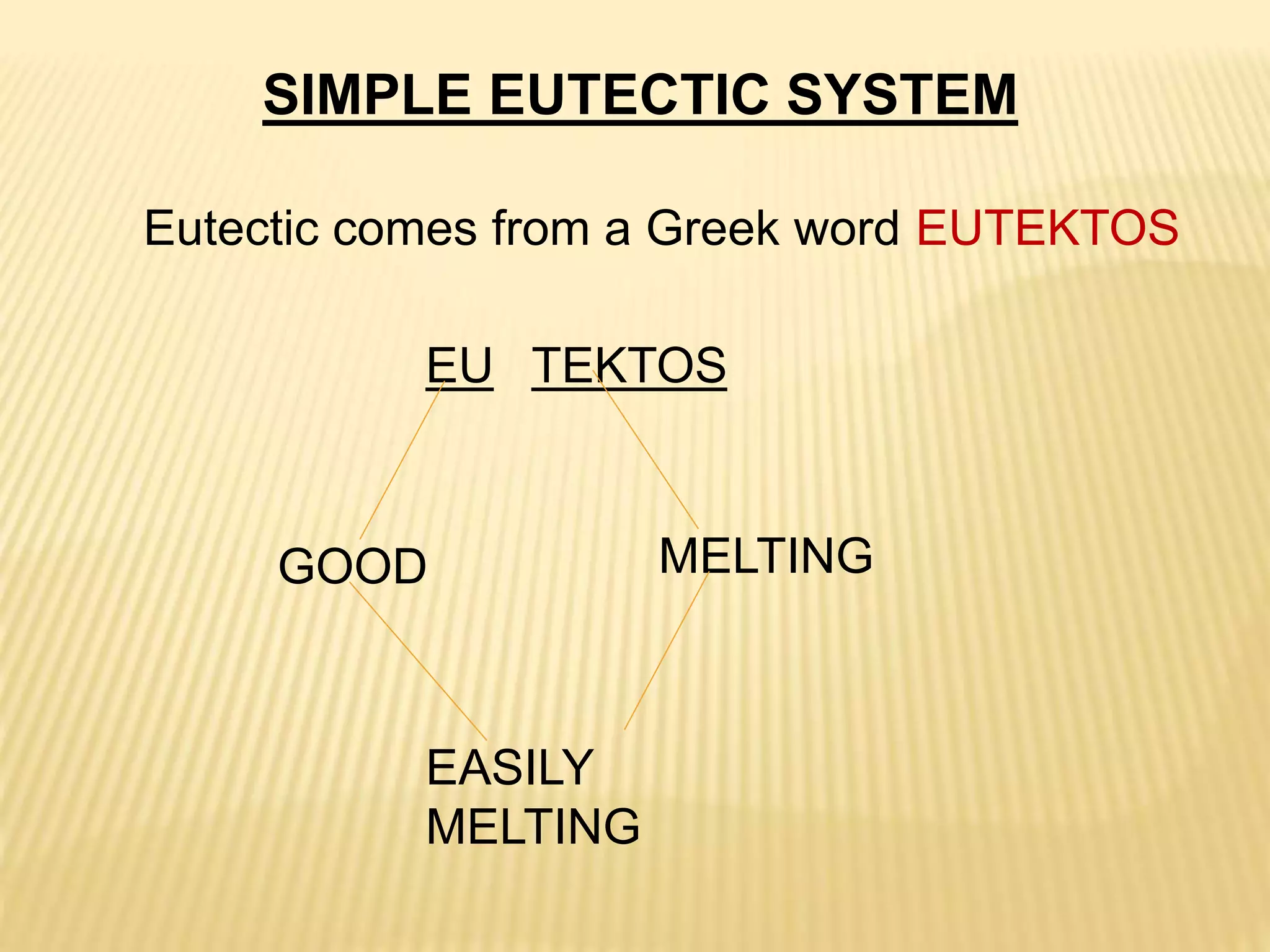
Eutectic comes from a Greek word EUTEKTOS
EU TEKTOS
GOOD MELTING
EASILY
MELTING
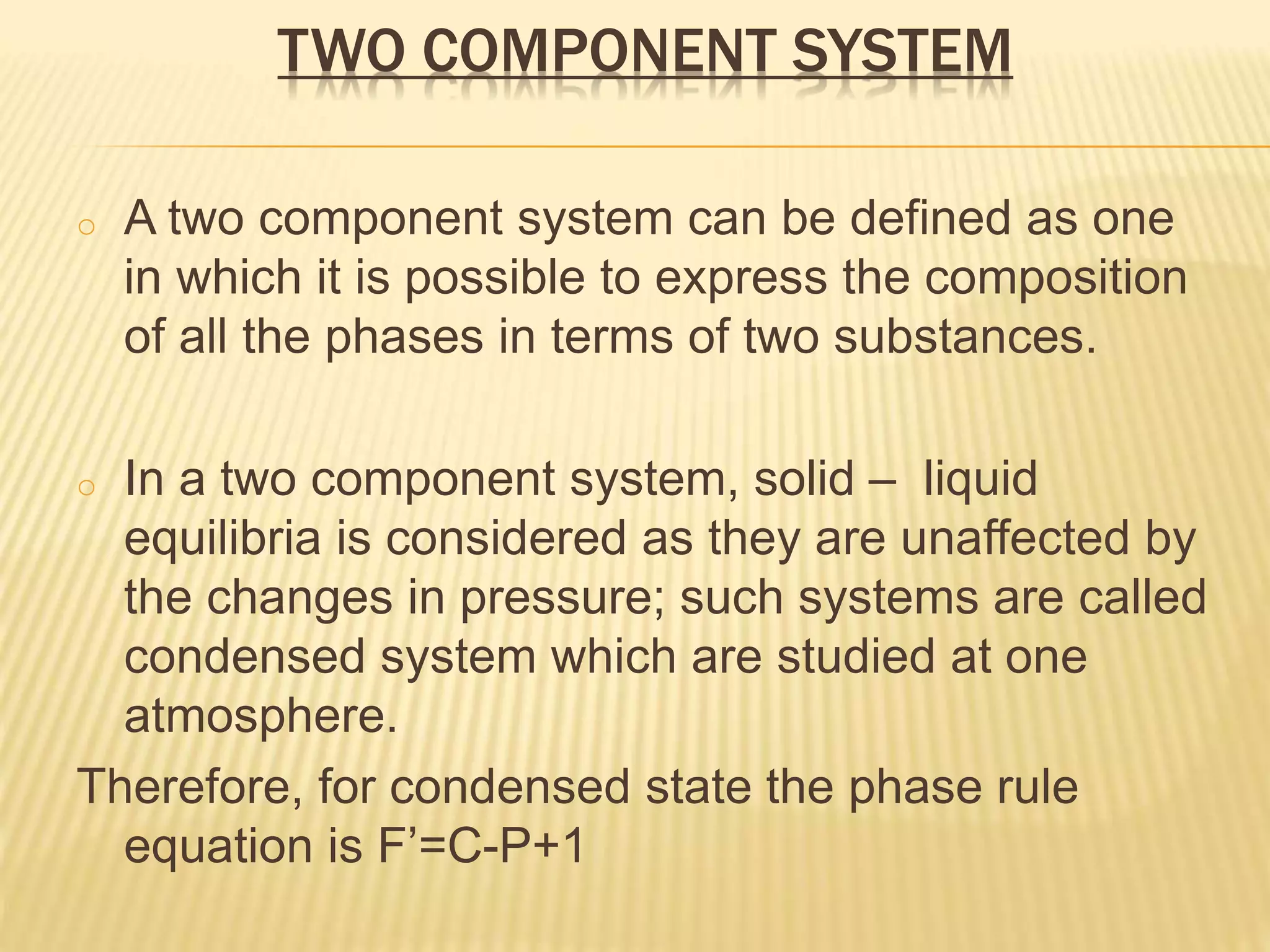
TWO COMPONENT SYSTEM
o A two component system can be defined as one
in which it is possible to express the composition
of all the phases in terms of two substances.
o In a two component system, solid – liquid
equilibria is considered as they are unaffected by
the changes in pressure; such systems are called
condensed system which are studied at one
atmosphere.
Therefore, for condensed state the phase rule
equation is F’=C-P+1
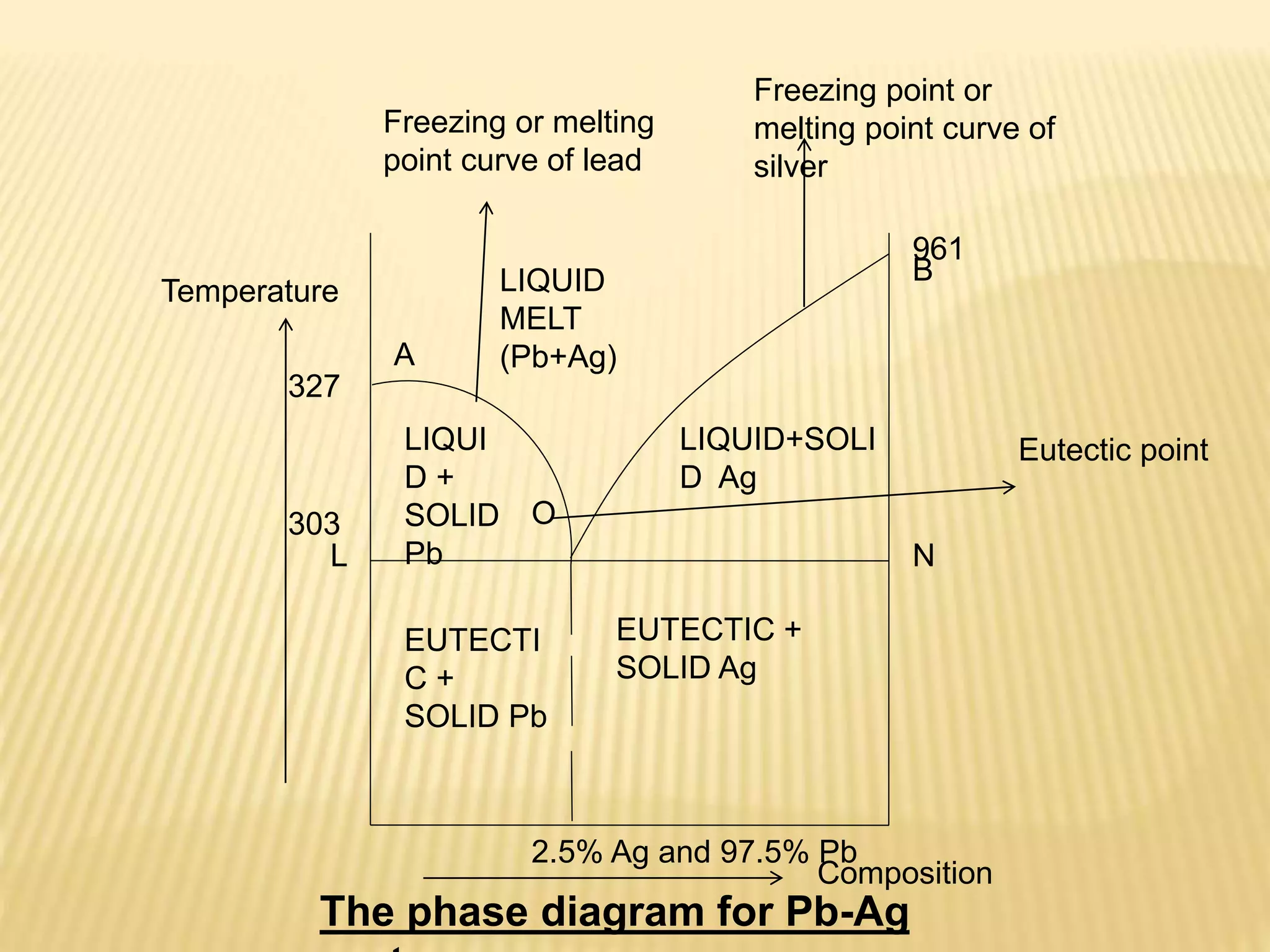
oIf two substances are completely miscible in liquid
state but immiscible in solid state forms a simple
eutectic system.
The mixture that has the lowest melting point is called
eutectic mixture and the temperature at which it
crystallizes as a whole is called eutectic temperature.
LEAD AND SILVER SYSTEM
o Lead and silver are completely miscible in
liquid state.
o Molten Pb and Ag are miscible in all
proportion a homogenous solution is
produced. The four possible phases are:
 Solid Ag
 Solid Pb
 Solution(Ag + Pb)
 Vapor
A
O
B
L N
LIQUID
MELT
(Pb+Ag)
LIQUID+SOLI
D Ag
LIQUI
D +
SOLID
Pb
EUTECTI
C +
SOLID Pb
EUTECTIC +
SOLID Ag
Composition
Temperature
327
303
Freezing or melting
point curve of lead
961
Freezing point or
melting point curve of
silver
Eutectic point
2.5% Ag and 97.5% Pb
The phase diagram for Pb-Ag
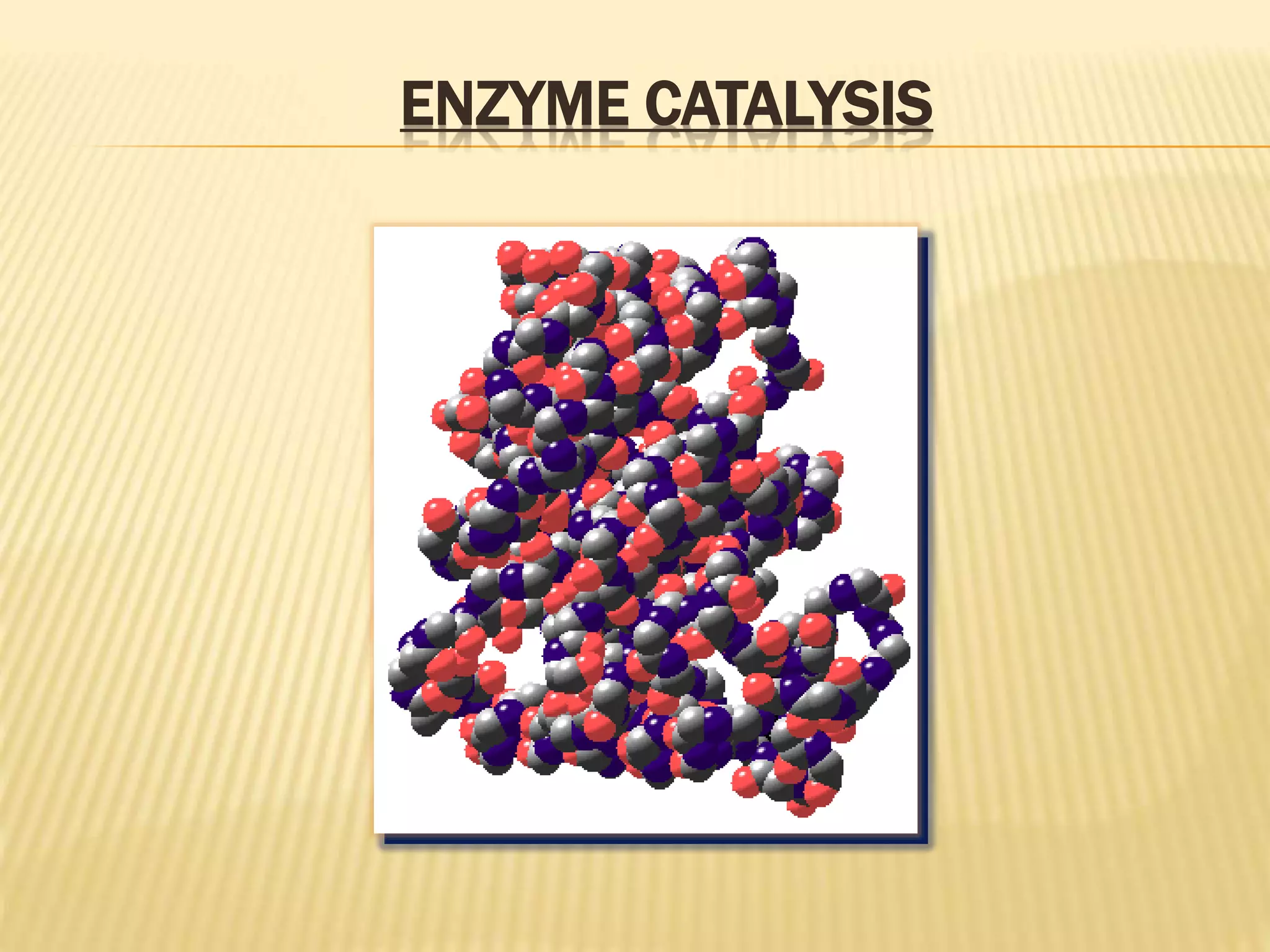
ENZYME CATALYSIS
Catalysts Catalysis
The substance that can alter The phenomenon
or
the rate of a reaction. process is
called
catalysis.
PROPERTIES OF CATALYSTS
 It alters the rate of reaction.
 It remains unchanged in mass and
chemical composition after the completion
of the reaction.
 A small amount is enough to bring about a
reaction between large reactants.
 It is very specific.
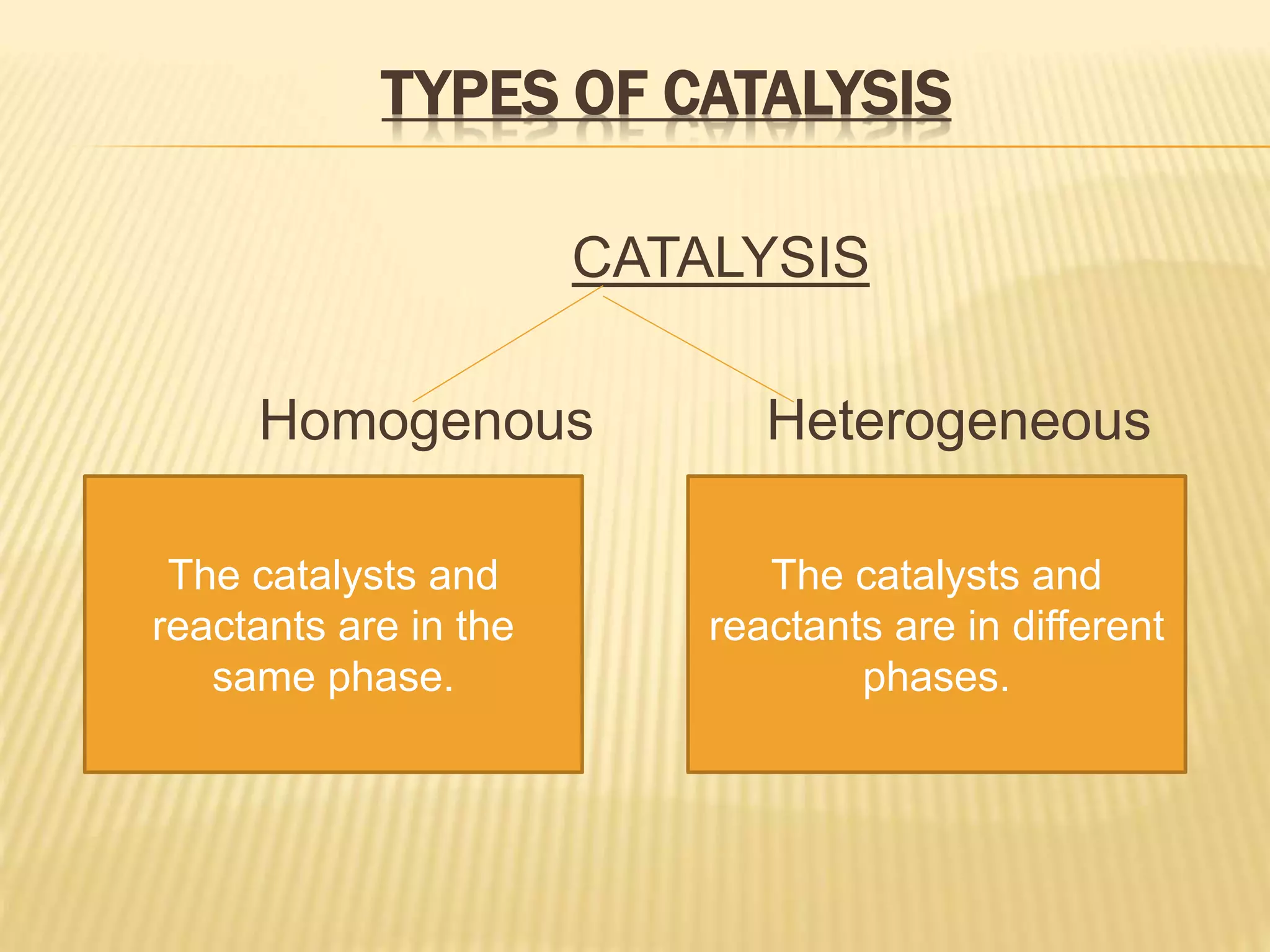
TYPES OF CATALYSIS
CATALYSIS
Homogenous Heterogeneous
The catalysts and
reactants are in the
same phase.
The catalysts and
reactants are in different
phases.
ENZYME CATALYSIS
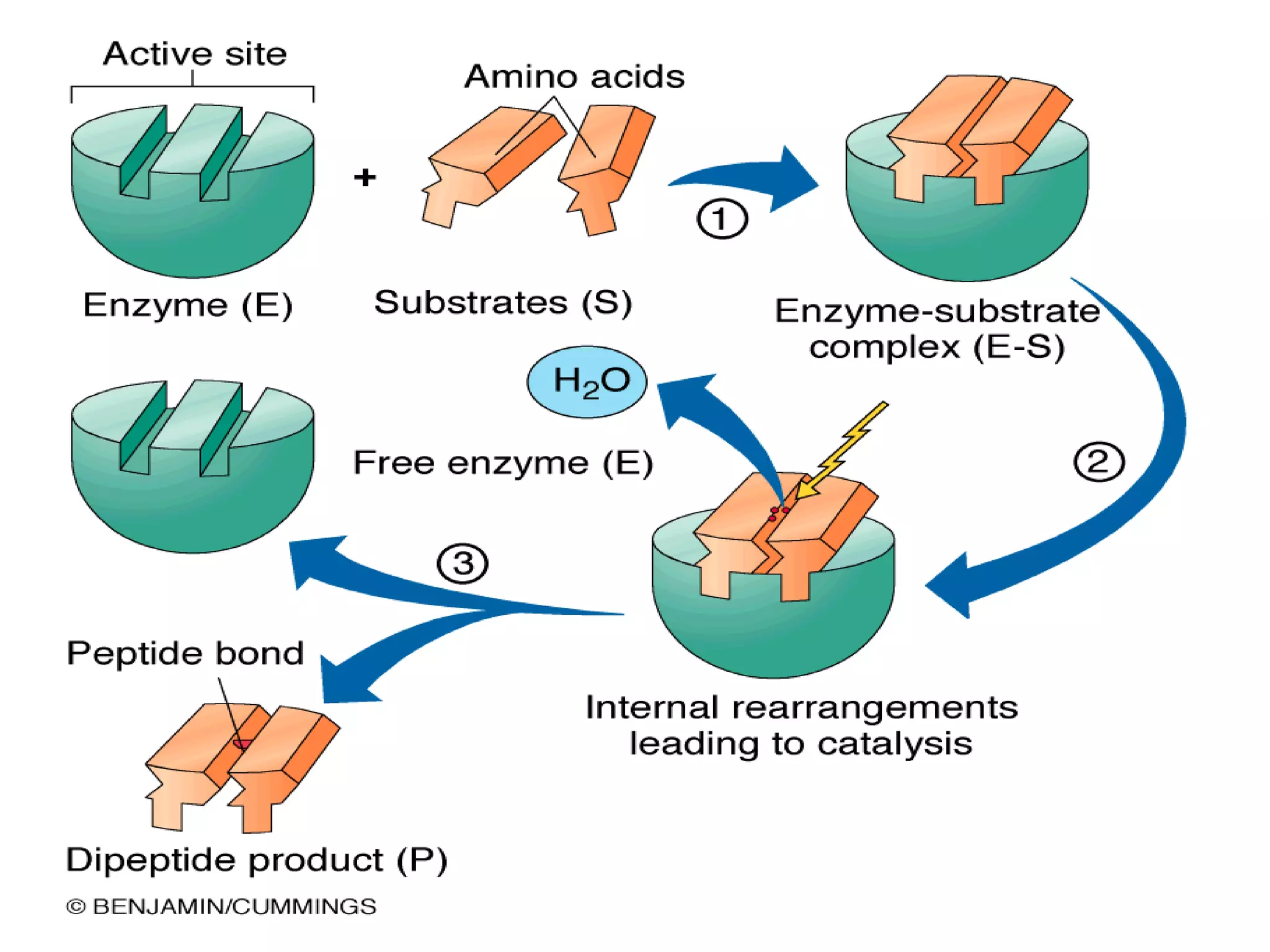
 Enzyme is a biological catalyst which is a
protein.
 The increase in the rate of a chemical
reaction by the active site of a protein is
called enzyme catalysis.
THE ACTIVE SITE
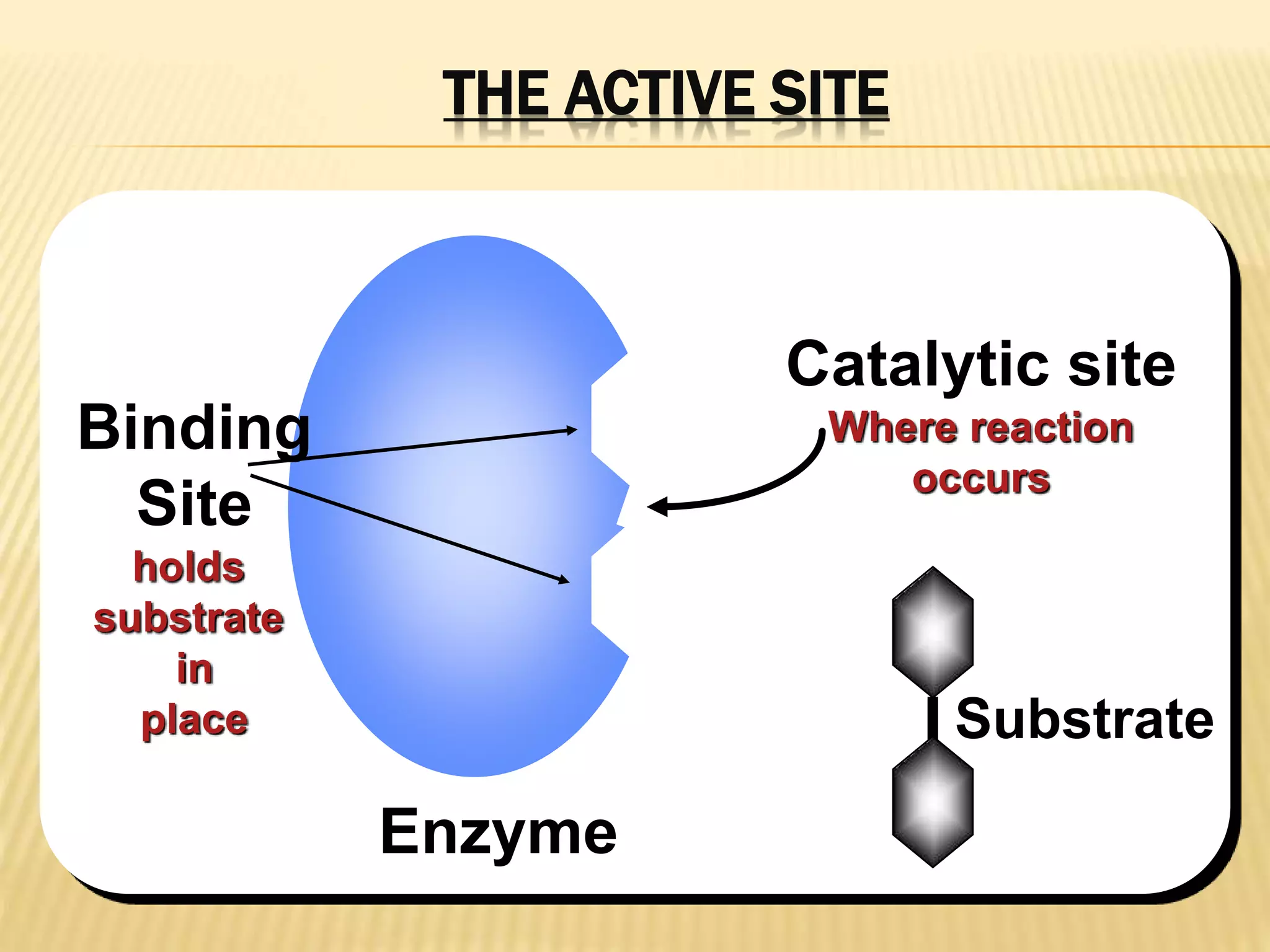
o Enzymes are typically HUGE proteins, yet
only a small part are actually involved in
reaction.
o The active site has two basic components.
 catalytic site
 binding site
Catalytic site
Where reaction
occurs
Binding
Site
holds
substrate
in
place Substrate
Enzyme
THE ACTIVE SITE
CATALYTIC POISONING
o It is the substance that reduces the
effectiveness of a catalyst in a chemical
reaction.
Example:
 Carbon on silica-alumina catalyst in the
cracking of petroleum
AUTOCATALYSIS
o If one of the reaction products is also a
reactant and therefore a catalyst in the same
reaction then the chemical reaction is said to
be autocatalytic.
THEORIES OF CATALYSIS
o The two main theories of catalysis are;
 Intermediate compound formation theory
 Adsorption theory
INTERMEDIATE COMPOUND FORMATION
THEORY
A + [CATALYST] [INTERMEDIATE]
[INTERMEDIATE] + B PRODUCT +
CATALYST
2SO2 + O2
[NO]
2SO3
Example:
2NO + O2 2NO2
NO2 + SO2 SO3 + NO
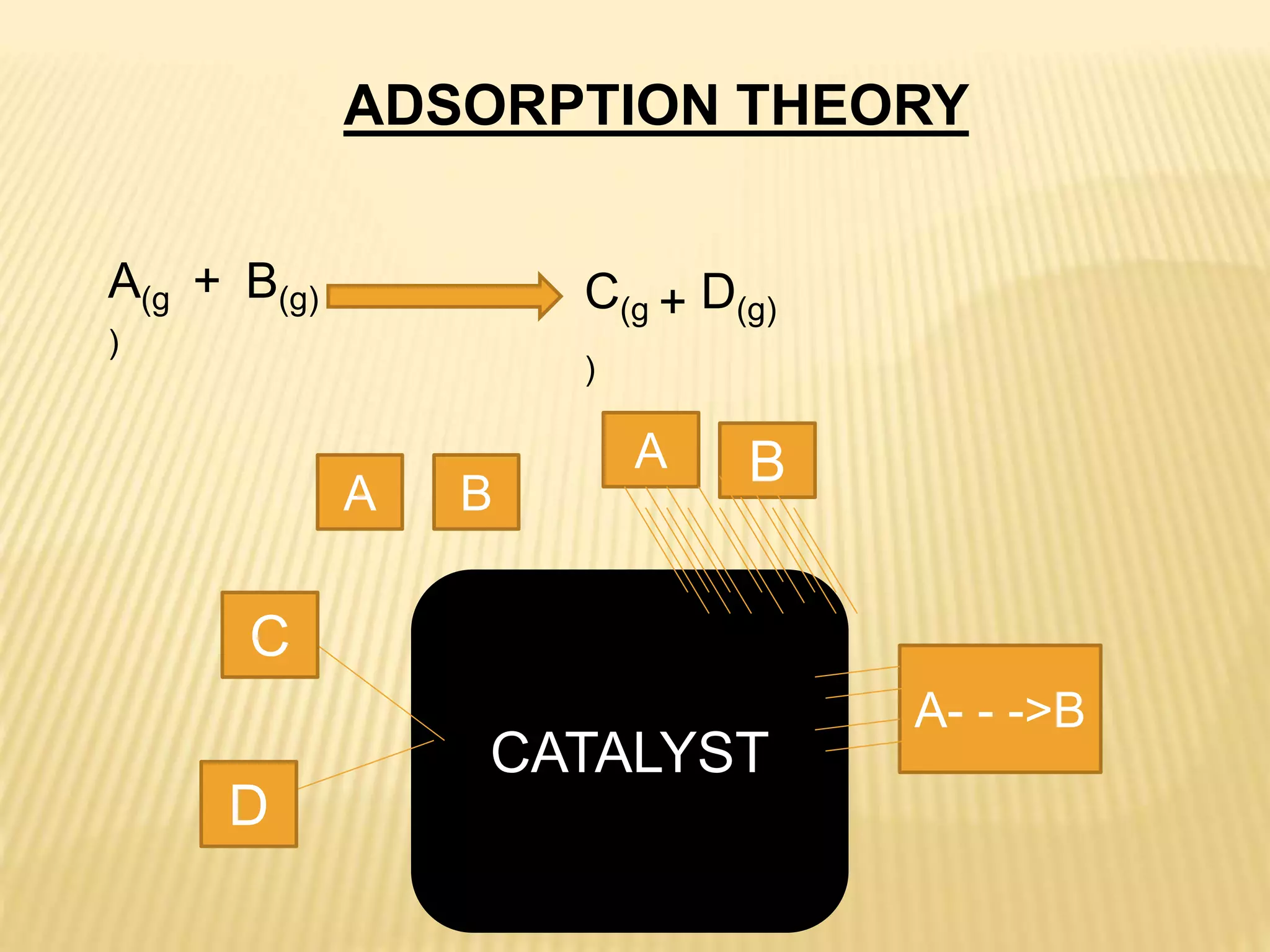
ADSORPTION THEORY
A(g
)
+ B(g) C(g
)
+ D(g)
CATALYST
BA
A B
A- - ->B
C
D
THEORIES OF ENZYME CATALYSIS
o The two main theories of enzyme catalysis
are:
 Lock and key model
 Induced fit model
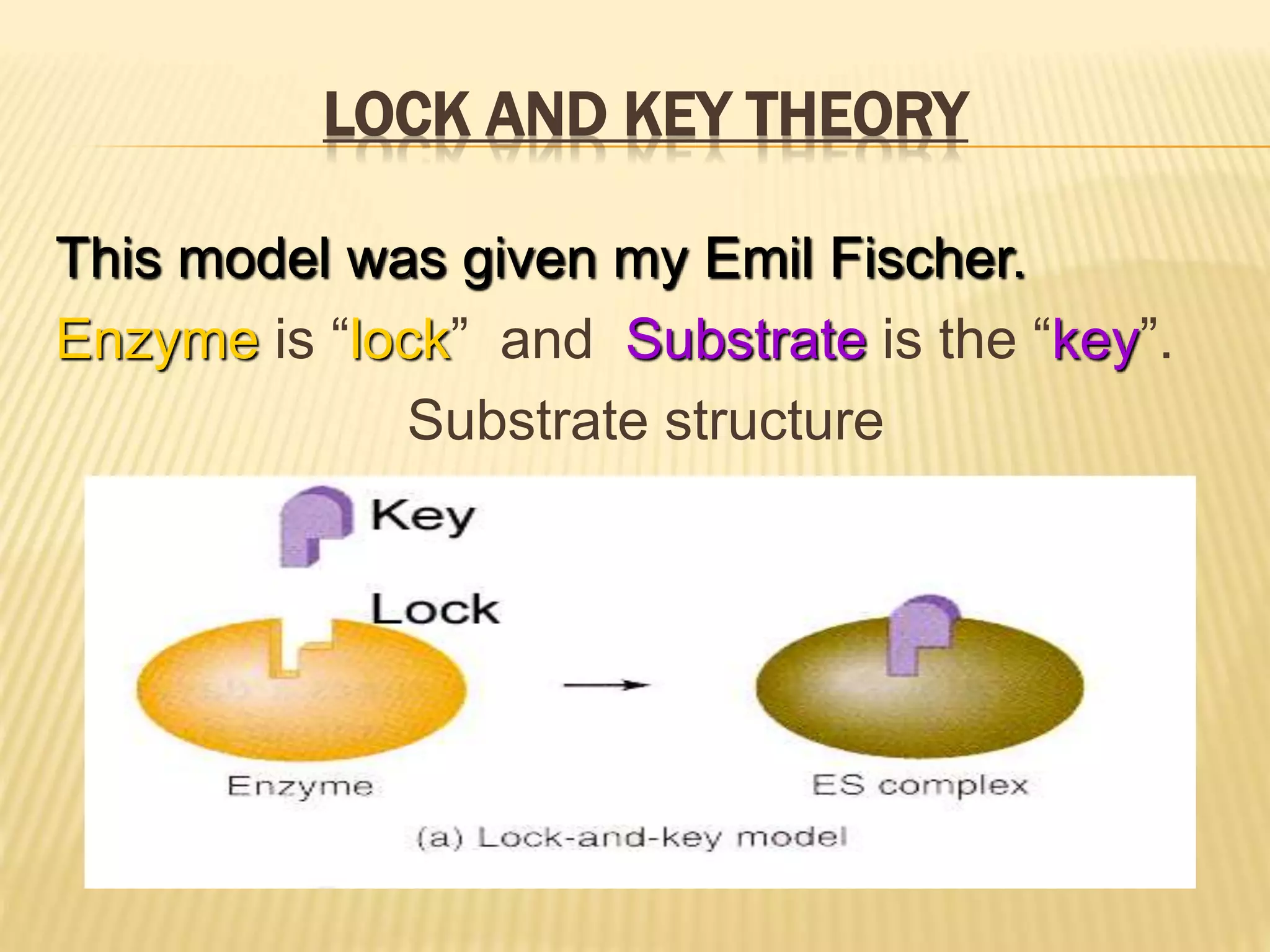
LOCK AND KEY THEORY
This model was given my Emil Fischer.
Enzyme is “lock” and Substrate is the “key”.
Substrate structure
must fit into enzyme’s structure.
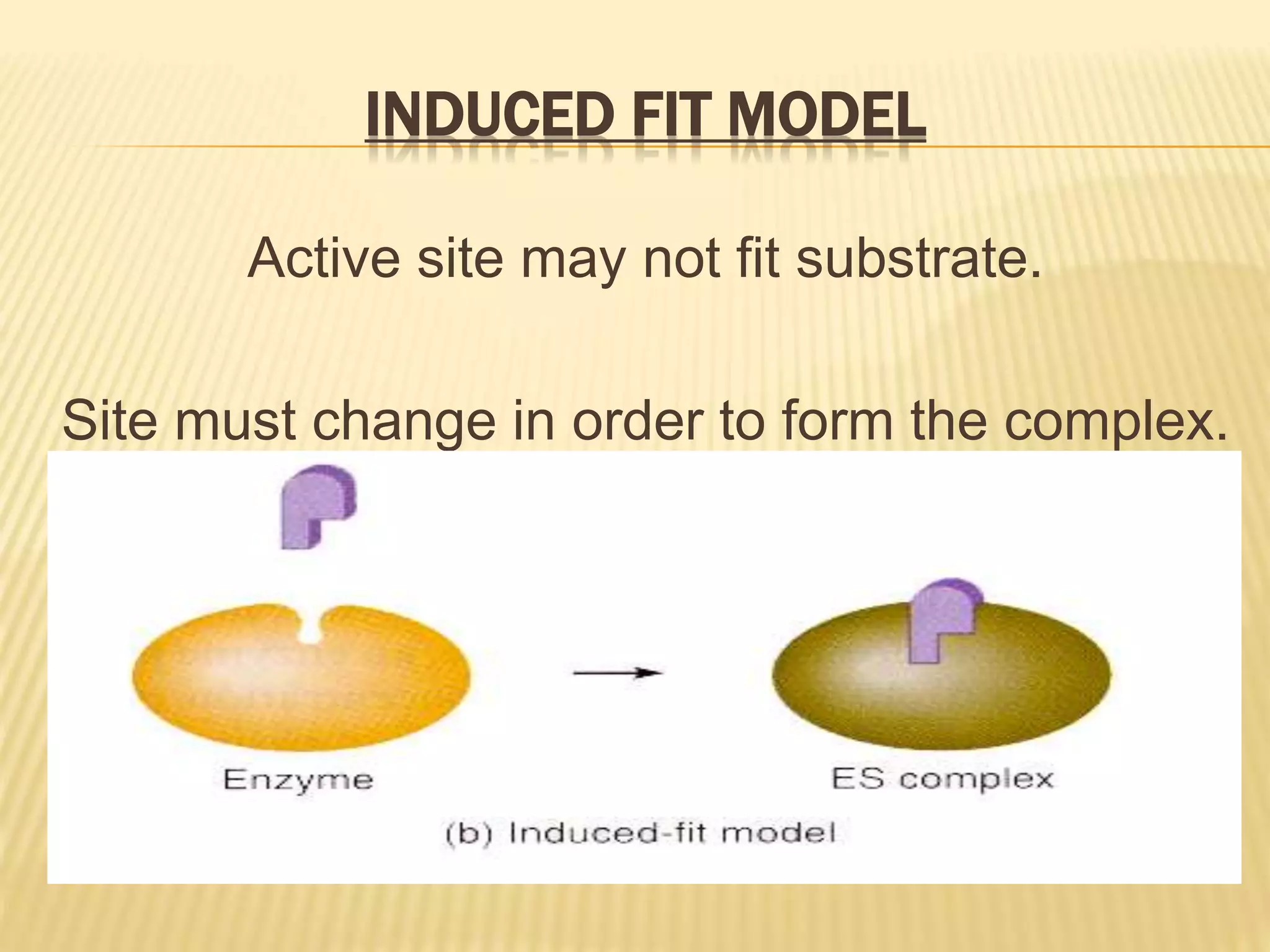
INDUCED FIT MODEL
Active site may not fit substrate.
Site must change in order to form the complex.

Simple eutectic system(pb ag)

  • 1.
    SIMPLE EUTECTIC SYSTEM AND ENZYMECATALYSIS By-ANEETTA DAVIS M15NT01
  • 2.
  • 3.
    SIMPLE EUTECTIC SYSTEM Eutecticcomes from a Greek word EUTEKTOS EU TEKTOS GOOD MELTING EASILY MELTING
  • 4.
    TWO COMPONENT SYSTEM oA two component system can be defined as one in which it is possible to express the composition of all the phases in terms of two substances. o In a two component system, solid – liquid equilibria is considered as they are unaffected by the changes in pressure; such systems are called condensed system which are studied at one atmosphere. Therefore, for condensed state the phase rule equation is F’=C-P+1
  • 5.
    oIf two substancesare completely miscible in liquid state but immiscible in solid state forms a simple eutectic system. The mixture that has the lowest melting point is called eutectic mixture and the temperature at which it crystallizes as a whole is called eutectic temperature.
  • 6.
    LEAD AND SILVERSYSTEM o Lead and silver are completely miscible in liquid state. o Molten Pb and Ag are miscible in all proportion a homogenous solution is produced. The four possible phases are:  Solid Ag  Solid Pb  Solution(Ag + Pb)  Vapor
  • 7.
    A O B L N LIQUID MELT (Pb+Ag) LIQUID+SOLI D Ag LIQUI D+ SOLID Pb EUTECTI C + SOLID Pb EUTECTIC + SOLID Ag Composition Temperature 327 303 Freezing or melting point curve of lead 961 Freezing point or melting point curve of silver Eutectic point 2.5% Ag and 97.5% Pb The phase diagram for Pb-Ag
  • 8.
  • 9.
    Catalysts Catalysis The substancethat can alter The phenomenon or the rate of a reaction. process is called catalysis.
  • 10.
    PROPERTIES OF CATALYSTS It alters the rate of reaction.  It remains unchanged in mass and chemical composition after the completion of the reaction.  A small amount is enough to bring about a reaction between large reactants.  It is very specific.
  • 11.
    TYPES OF CATALYSIS CATALYSIS HomogenousHeterogeneous The catalysts and reactants are in the same phase. The catalysts and reactants are in different phases.
  • 12.
    ENZYME CATALYSIS  Enzymeis a biological catalyst which is a protein.  The increase in the rate of a chemical reaction by the active site of a protein is called enzyme catalysis.
  • 13.
    THE ACTIVE SITE oEnzymes are typically HUGE proteins, yet only a small part are actually involved in reaction. o The active site has two basic components.  catalytic site  binding site
  • 14.
  • 16.
    CATALYTIC POISONING o Itis the substance that reduces the effectiveness of a catalyst in a chemical reaction. Example:  Carbon on silica-alumina catalyst in the cracking of petroleum
  • 17.
    AUTOCATALYSIS o If oneof the reaction products is also a reactant and therefore a catalyst in the same reaction then the chemical reaction is said to be autocatalytic.
  • 18.
    THEORIES OF CATALYSIS oThe two main theories of catalysis are;  Intermediate compound formation theory  Adsorption theory
  • 19.
    INTERMEDIATE COMPOUND FORMATION THEORY A+ [CATALYST] [INTERMEDIATE] [INTERMEDIATE] + B PRODUCT + CATALYST 2SO2 + O2 [NO] 2SO3 Example: 2NO + O2 2NO2 NO2 + SO2 SO3 + NO
  • 20.
    ADSORPTION THEORY A(g ) + B(g)C(g ) + D(g) CATALYST BA A B A- - ->B C D
  • 21.
    THEORIES OF ENZYMECATALYSIS o The two main theories of enzyme catalysis are:  Lock and key model  Induced fit model
  • 22.
    LOCK AND KEYTHEORY This model was given my Emil Fischer. Enzyme is “lock” and Substrate is the “key”. Substrate structure must fit into enzyme’s structure.
  • 23.
    INDUCED FIT MODEL Activesite may not fit substrate. Site must change in order to form the complex.

Editor's Notes

  • #15 Catalytic site = Where the reaction actually occurs. Binding site = Area that holds substrate in proper place. Enzymes uses weak, non-covalent interactions to hold the substrate in place based on R groups of amino acids. Shape is complementary to the substrate and determines the specificity of the enzyme. Sites are pockets or clefts on the enzyme surface.