Guided by Presented by
Dr.Laxmi Tantuvay Gayatri Muchhala
PHASE
COMPENT
DEGREE OF FREEDOM
 any homogeneous distinct part of a system
which is mechanically separable and
bounded by a definite
surface
 example:-ice (s)=H2O
 water(l)=H2O
 Vapour(g)=H2O
The smallest number of independently
variable constituent by means of which the
composition of each can be represent by
means of a chemical equation
 Ex.. In water vapour and ice system .there is
only one component present in this because
H and O can not varied independently so it is
a one component system
 The number of variable factor such as
temperature pressure or concentration
which must be arbitraly fixed in order to
define the system completely
 Example:-a gases mixture of two gases C02
and N2 in equilibrium to defined this
system three variable viz, composition
(35%co and 65% N2)temp. 40degree and
pressure 760mm are required to be
arbitrarily fixed hence the system has three
degree of freedom
 One component system
 Two component system
 Three component system
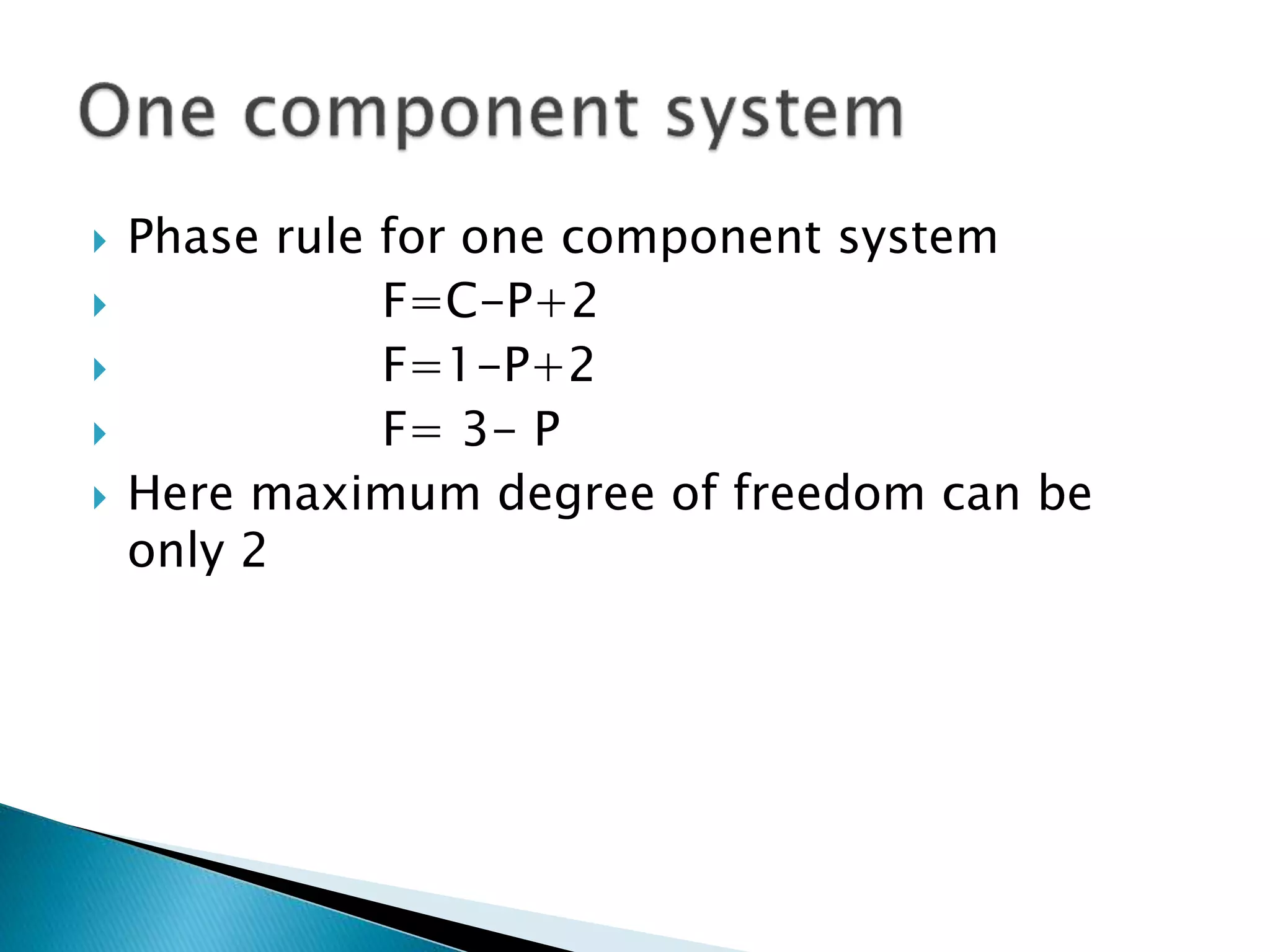
 Phase rule for one component system
 F=C-P+2
 F=1-P+2
 F= 3- P
 Here maximum degree of freedom can be
only 2
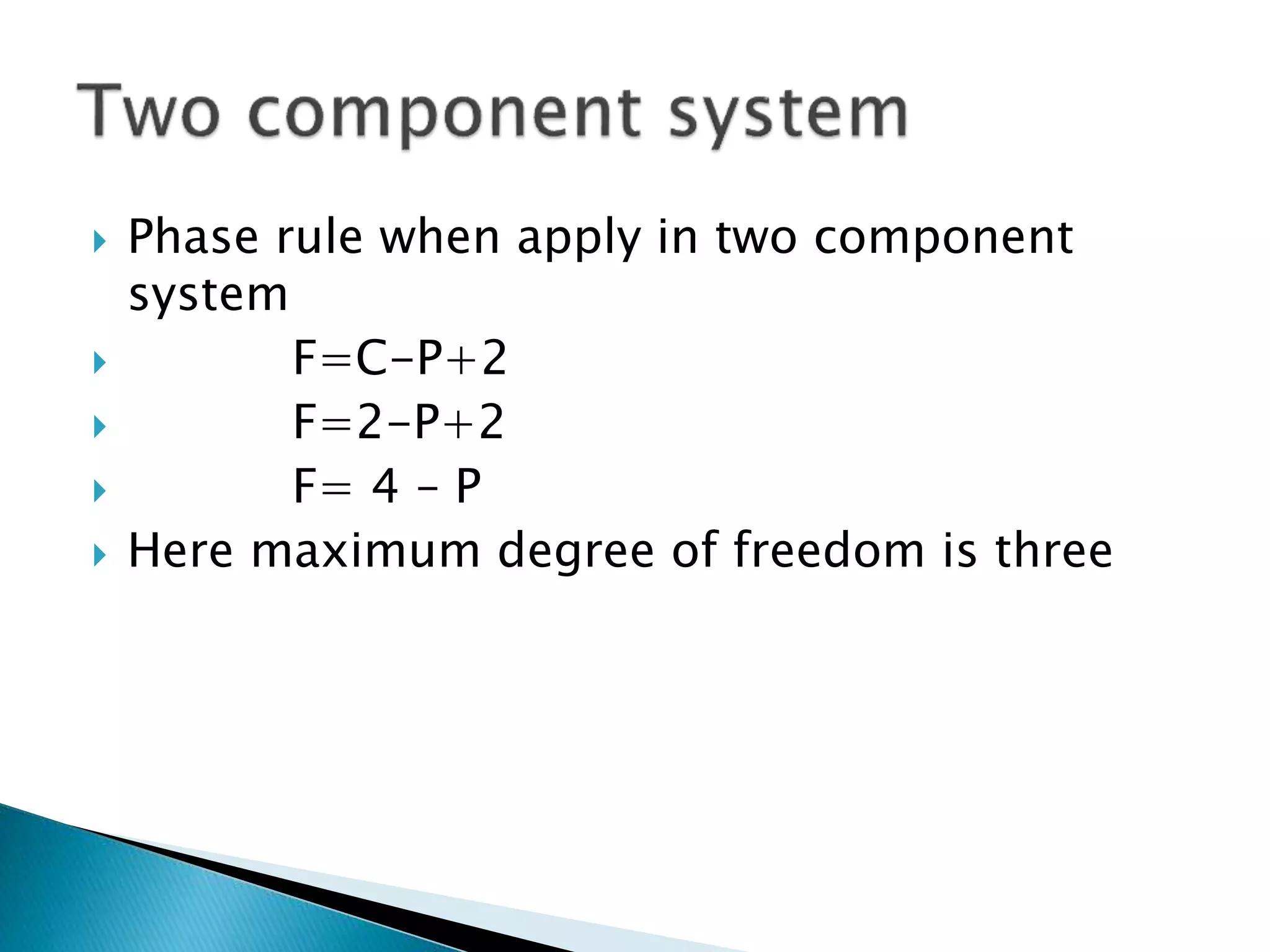
 Phase rule when apply in two component
system
 F=C-P+2
 F=2-P+2
 F= 4 – P
 Here maximum degree of freedom is three
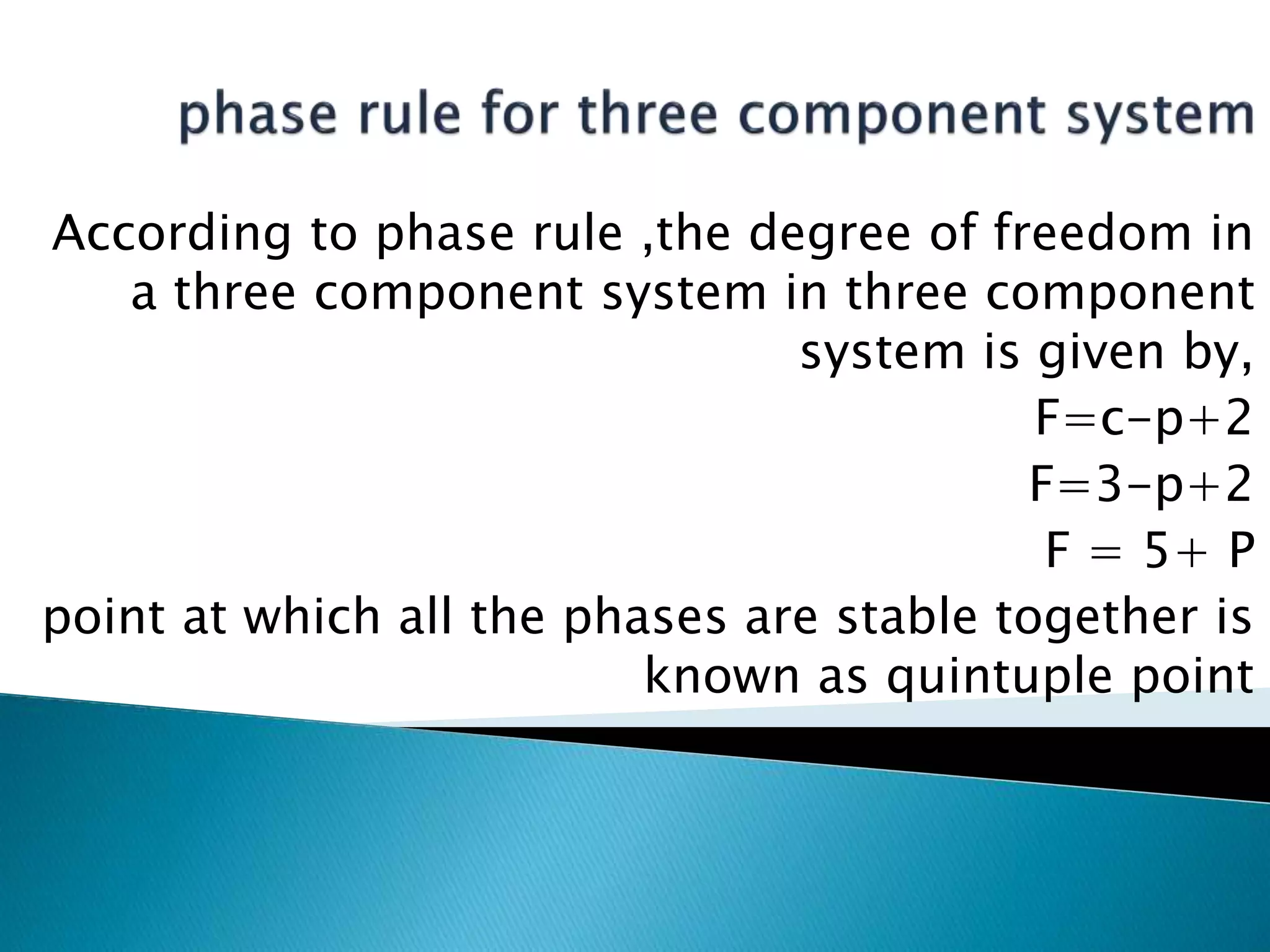
According to phase rule ,the degree of freedom in
a three component system in three component
system is given by,
F=c-p+2
F=3-p+2
F = 5+ P
point at which all the phases are stable together is
known as quintuple point
 The variation in concentration of the three
component mixture is expressed by means of
triangular diagram The representation of
compositions in a three-component
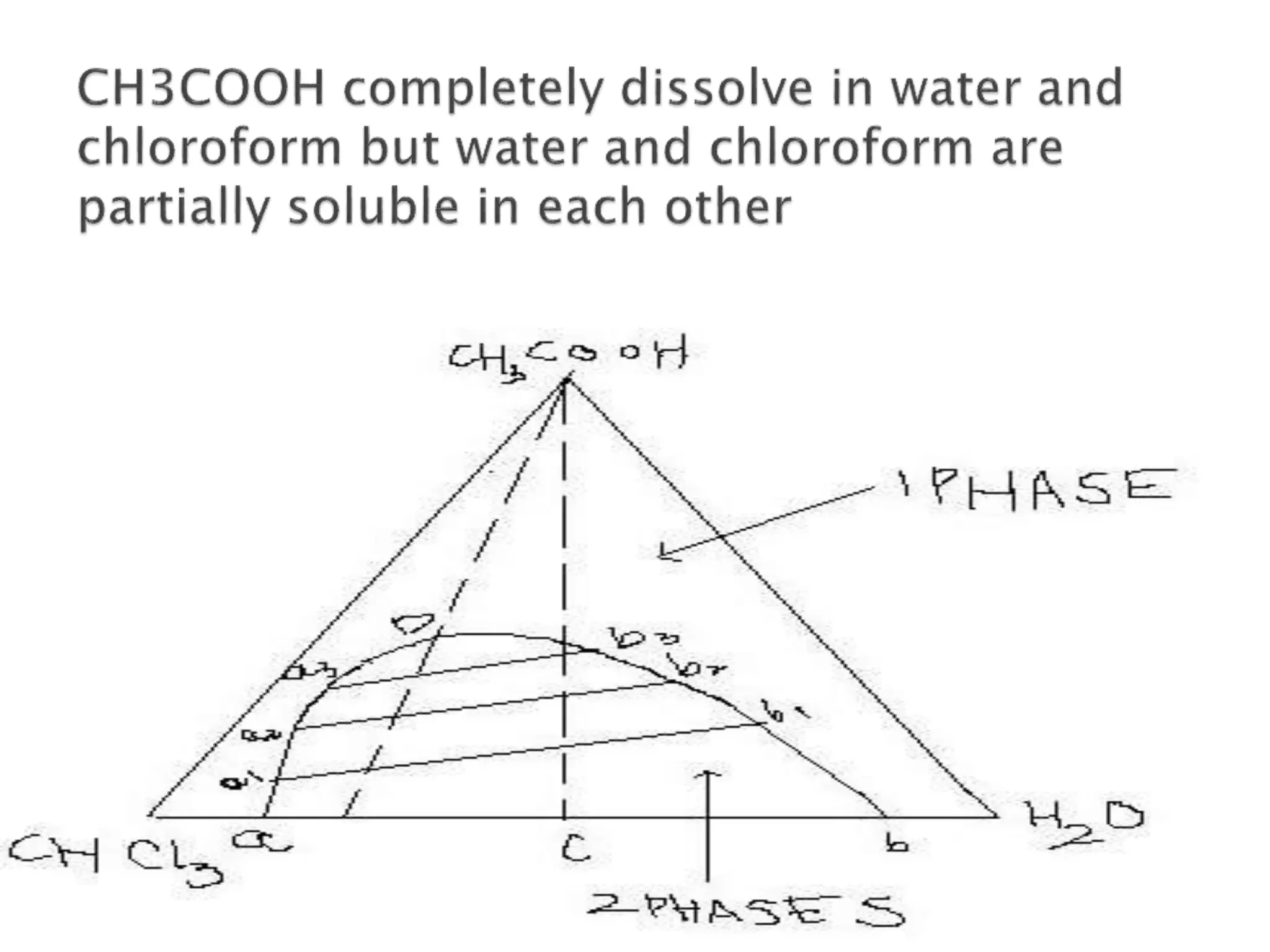
 Formation of one pair of partially miscible
liquids.
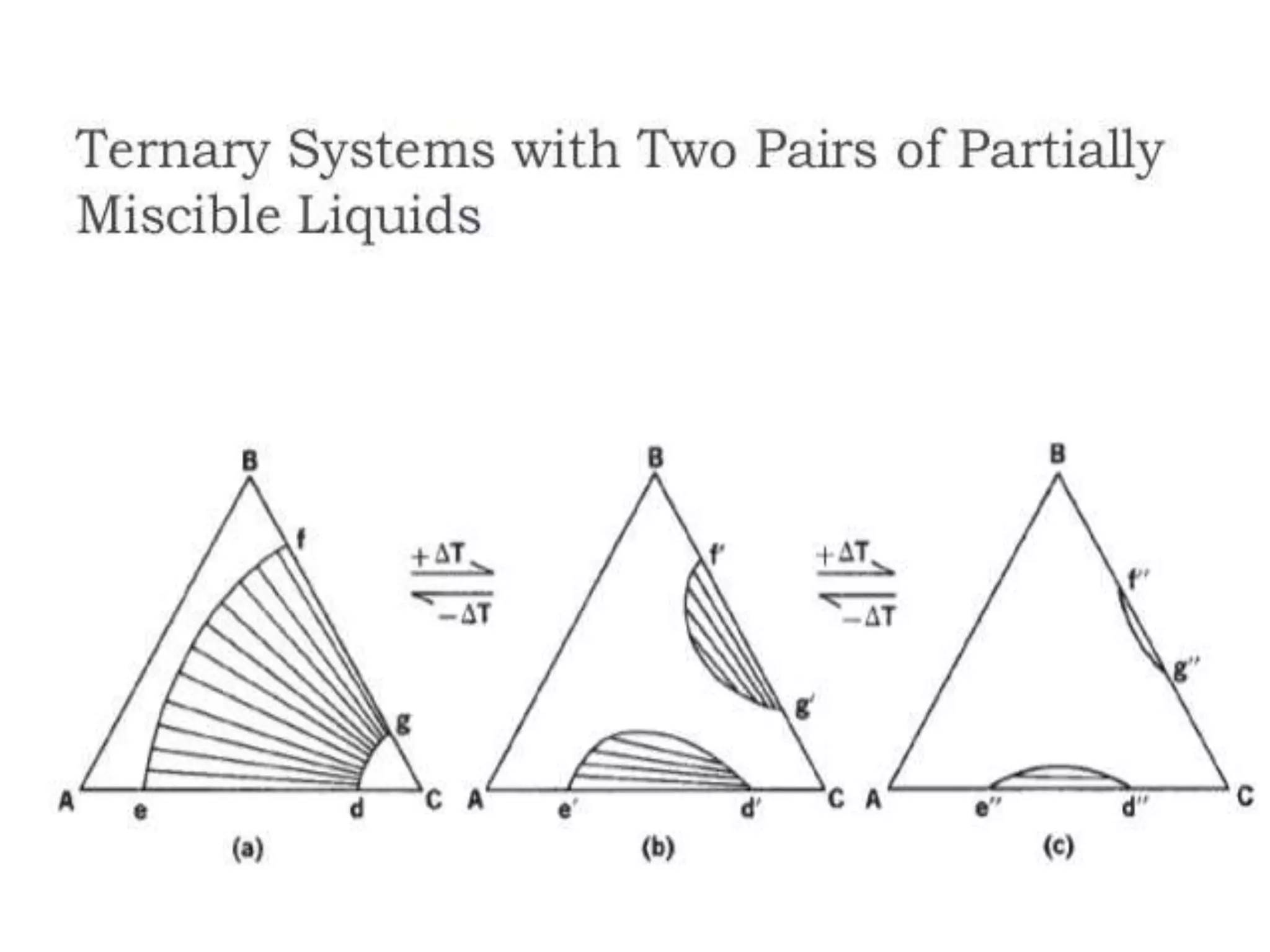
 Formation of two pairs of partially miscible
liquid
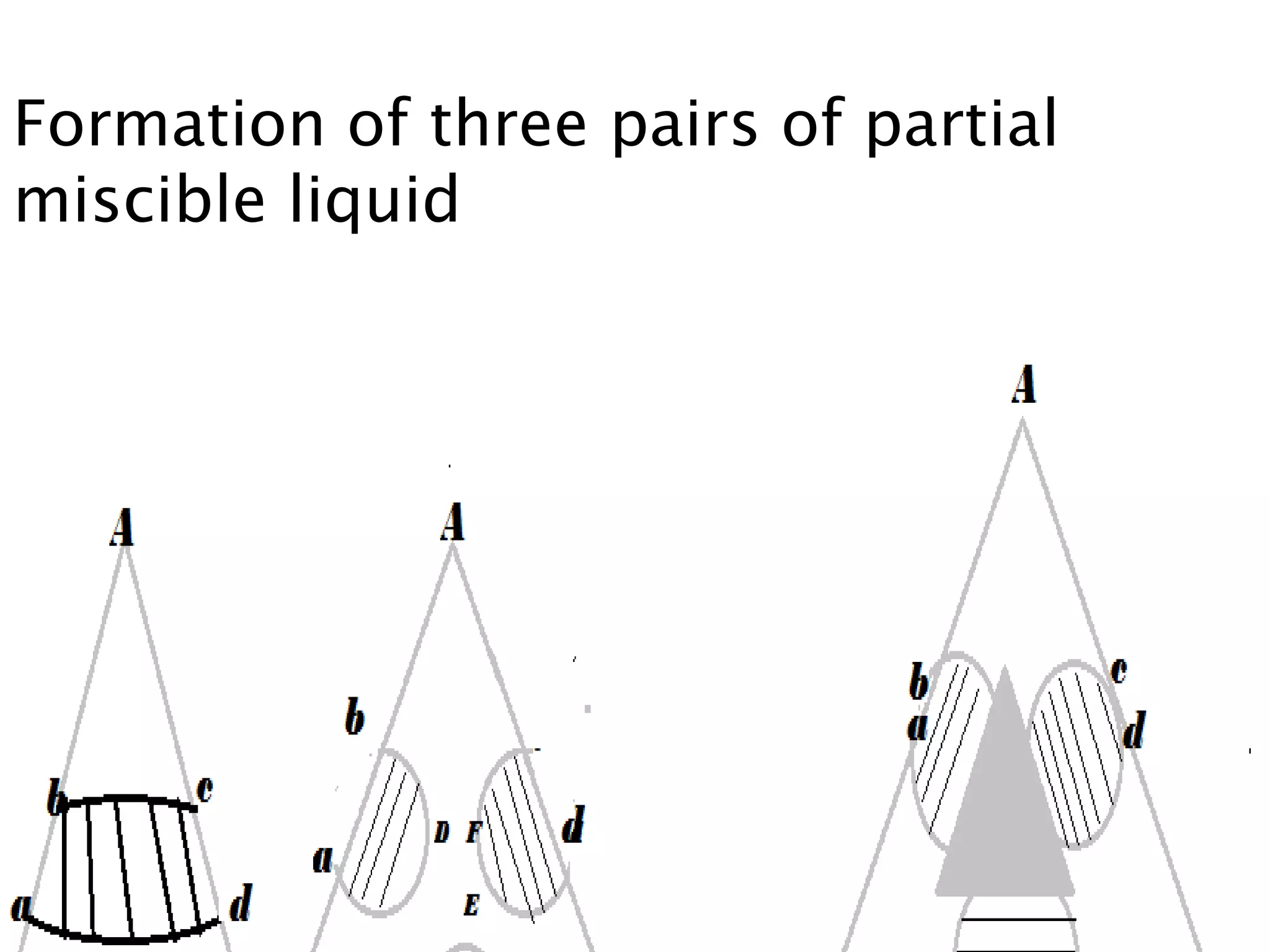
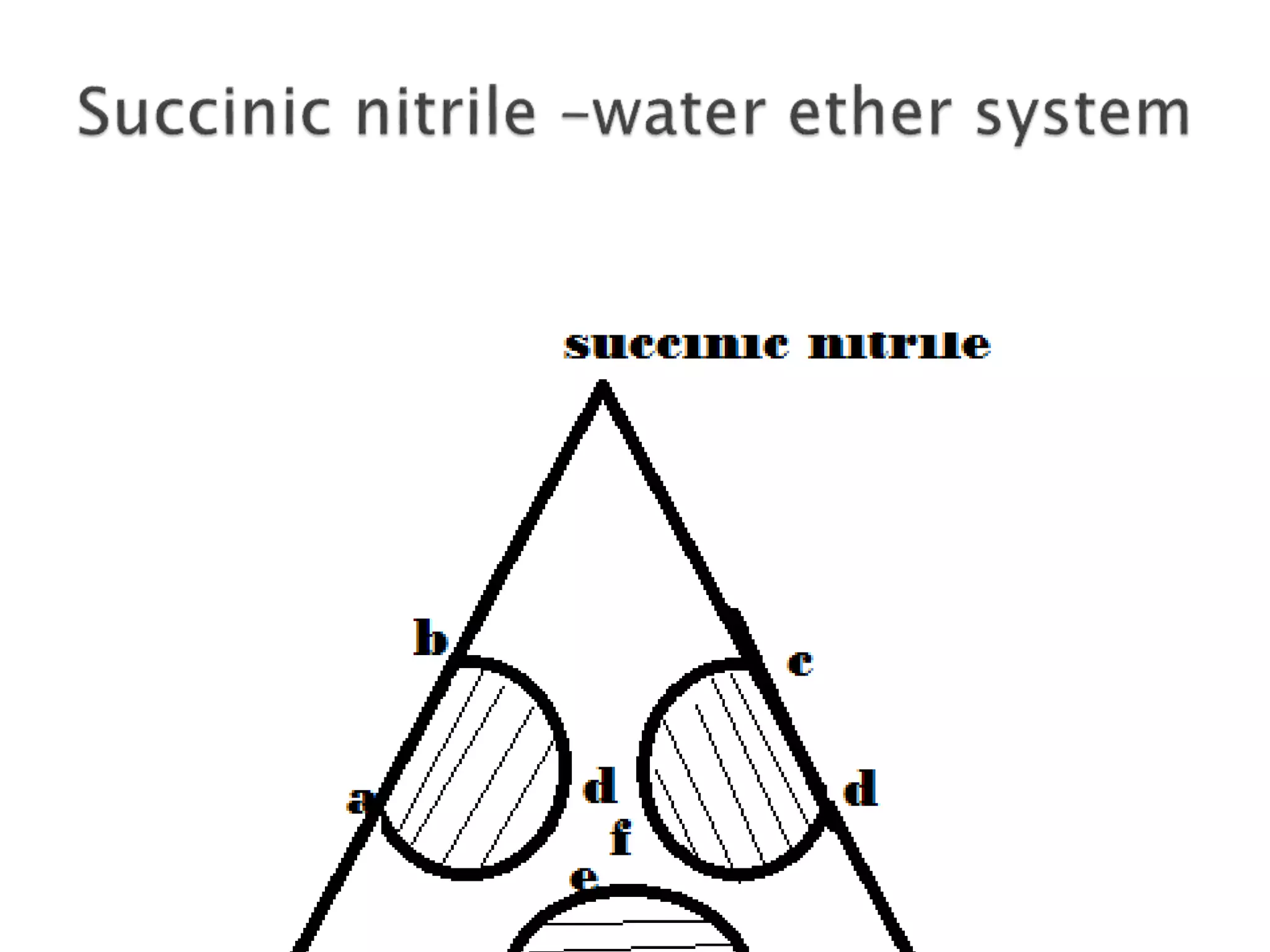
 Formation of three pairs of partially miscible
liquids
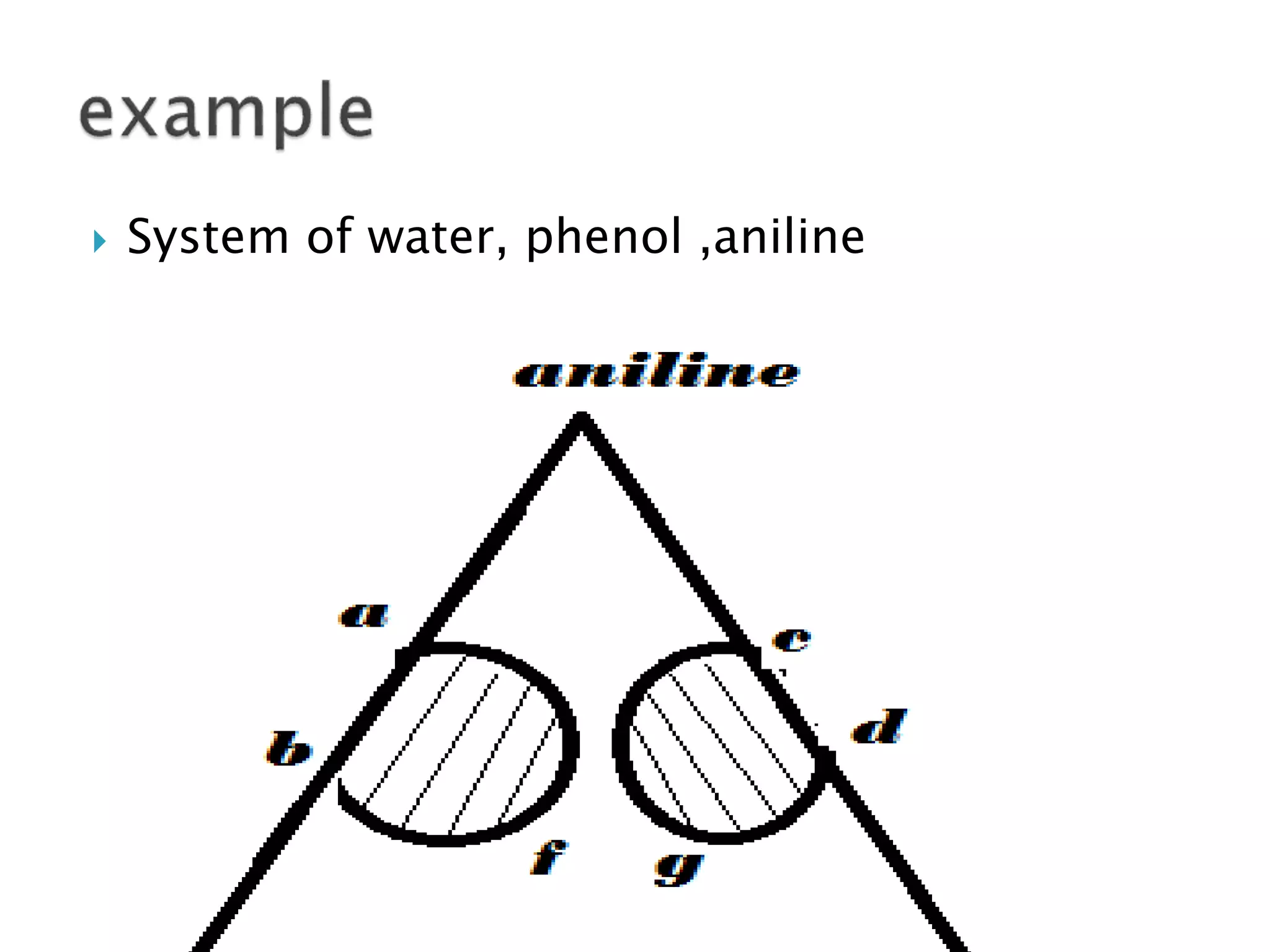
 System of water, phenol ,aniline
Formation of three pairs of partial
miscible liquid
Application of phase rule to three component system

Application of phase rule to three component system

  • 1.
    Guided by Presentedby Dr.Laxmi Tantuvay Gayatri Muchhala
  • 3.
  • 4.
     any homogeneousdistinct part of a system which is mechanically separable and bounded by a definite surface  example:-ice (s)=H2O  water(l)=H2O  Vapour(g)=H2O
  • 5.
    The smallest numberof independently variable constituent by means of which the composition of each can be represent by means of a chemical equation  Ex.. In water vapour and ice system .there is only one component present in this because H and O can not varied independently so it is a one component system
  • 6.
     The numberof variable factor such as temperature pressure or concentration which must be arbitraly fixed in order to define the system completely  Example:-a gases mixture of two gases C02 and N2 in equilibrium to defined this system three variable viz, composition (35%co and 65% N2)temp. 40degree and pressure 760mm are required to be arbitrarily fixed hence the system has three degree of freedom
  • 7.
     One componentsystem  Two component system  Three component system
  • 8.
     Phase rulefor one component system  F=C-P+2  F=1-P+2  F= 3- P  Here maximum degree of freedom can be only 2
  • 9.
     Phase rulewhen apply in two component system  F=C-P+2  F=2-P+2  F= 4 – P  Here maximum degree of freedom is three
  • 10.
    According to phaserule ,the degree of freedom in a three component system in three component system is given by, F=c-p+2 F=3-p+2 F = 5+ P point at which all the phases are stable together is known as quintuple point
  • 11.
     The variationin concentration of the three component mixture is expressed by means of triangular diagram The representation of compositions in a three-component
  • 13.
     Formation ofone pair of partially miscible liquids.  Formation of two pairs of partially miscible liquid  Formation of three pairs of partially miscible liquids
  • 17.
     System ofwater, phenol ,aniline
  • 18.
    Formation of threepairs of partial miscible liquid