Hydrogenation
Rana Awais Hassan khan
16103123-001
Contents
• Hydrogenation
• Hydrogenation of alkene
• Hydrogenation of alkyne
• Hydrogenation of benzene
Hydrogenation:
To treat with hydrogen – is a chemical reaction between
molecular hydrogen (H2) and another compound or element, usually in
the presence of a catalyst such as nickel, palladium or platinum. The
process is commonly employed to reduce or saturate organic compounds.
Hydrogenation of alkene:
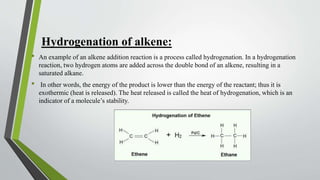
• An example of an alkene addition reaction is a process called hydrogenation. In a hydrogenation
reaction, two hydrogen atoms are added across the double bond of an alkene, resulting in a
saturated alkane.
• In other words, the energy of the product is lower than the energy of the reactant; thus it is
exothermic (heat is released). The heat released is called the heat of hydrogenation, which is an
indicator of a molecule’s stability.
Mechanism:
• Step 1:
Hydrogen molecules react with the metal atoms at the catalyst surface.
The relatively strong H-H sigma bond is broken and replaced with two weak metal-h bonds.
• Step 2:
The pi bond of the alkene interacts with the metal catalyst weakening the bond.
A hydrogen atom is transferred from the catalyst surface to one of the carbons of the double
bond.
Continue……
Step 3:
• The pi bond of the alkene interacts with the metal catalyst weakening the bond.
A second hydrogen atom is transferred from the catalyst surface forming the alkane. The
alkane is released from the catalyst's surface allowing the catalyst to accept additional
hydrogen and alkene molecules.
Hydrogenation of alkyne:
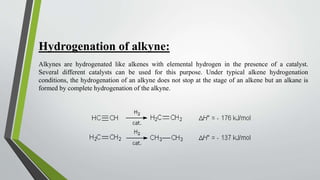
Alkynes are hydrogenated like alkenes with elemental hydrogen in the presence of a catalyst.
Several different catalysts can be used for this purpose. Under typical alkene hydrogenation
conditions, the hydrogenation of an alkyne does not stop at the stage of an alkene but an alkane is
formed by complete hydrogenation of the alkyne.
Mechanism:
Hydrogenation of alkynes follows the same principle as that of alkenes with platinum. Hydrogen and
alkyne are bound to the surface of the catalyst and H atoms are being added cis-specific by insertion
into the C metal bond.
The selective reduction of triple bonds is the result of stronger bonding to the metal surface but not
higher reactivity of the bond. As long as the reaction mixture contains alkyne molecules, available
active metal centers will be occupieded by alkyne. Only after all alkyne is reduced to alkene, further
hydrogenation of the alkene can take place. As a rule, reduction to the alkane is faster than formation
of the alkene. Therefore, it is very important to stop the reaction after uptake of one equivalent of H2.
Hydrogenation of benzene:
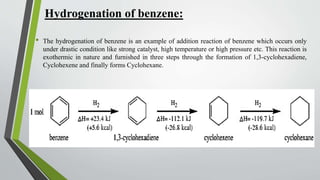
• The hydrogenation of benzene is an example of addition reaction of benzene which occurs only
under drastic condition like strong catalyst, high temperature or high pressure etc. This reaction is
exothermic in nature and furnished in three steps through the formation of 1,3-cyclohexadiene,
Cyclohexene and finally forms Cyclohexane.
Mechanism:
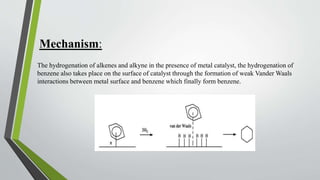
The hydrogenation of alkenes and alkyne in the presence of metal catalyst, the hydrogenation of
benzene also takes place on the surface of catalyst through the formation of weak Vander Waals
interactions between metal surface and benzene which finally form benzene.
Continue……
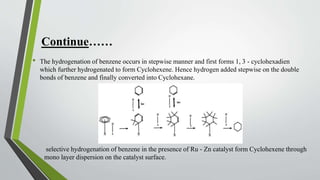
• The hydrogenation of benzene occurs in stepwise manner and first forms 1, 3 - cyclohexadien
which further hydrogenated to form Cyclohexene. Hence hydrogen added stepwise on the double
bonds of benzene and finally converted into Cyclohexane.
selective hydrogenation of benzene in the presence of Ru - Zn catalyst form Cyclohexene through
mono layer dispersion on the catalyst surface.
Thanks………

Hydrogenation

  • 1.
  • 2.
    Contents • Hydrogenation • Hydrogenationof alkene • Hydrogenation of alkyne • Hydrogenation of benzene
  • 3.
    Hydrogenation: To treat withhydrogen – is a chemical reaction between molecular hydrogen (H2) and another compound or element, usually in the presence of a catalyst such as nickel, palladium or platinum. The process is commonly employed to reduce or saturate organic compounds.
  • 4.
    Hydrogenation of alkene: •An example of an alkene addition reaction is a process called hydrogenation. In a hydrogenation reaction, two hydrogen atoms are added across the double bond of an alkene, resulting in a saturated alkane. • In other words, the energy of the product is lower than the energy of the reactant; thus it is exothermic (heat is released). The heat released is called the heat of hydrogenation, which is an indicator of a molecule’s stability.
  • 5.
    Mechanism: • Step 1: Hydrogenmolecules react with the metal atoms at the catalyst surface. The relatively strong H-H sigma bond is broken and replaced with two weak metal-h bonds. • Step 2: The pi bond of the alkene interacts with the metal catalyst weakening the bond. A hydrogen atom is transferred from the catalyst surface to one of the carbons of the double bond.
  • 6.
    Continue…… Step 3: • Thepi bond of the alkene interacts with the metal catalyst weakening the bond. A second hydrogen atom is transferred from the catalyst surface forming the alkane. The alkane is released from the catalyst's surface allowing the catalyst to accept additional hydrogen and alkene molecules.
  • 7.
    Hydrogenation of alkyne: Alkynesare hydrogenated like alkenes with elemental hydrogen in the presence of a catalyst. Several different catalysts can be used for this purpose. Under typical alkene hydrogenation conditions, the hydrogenation of an alkyne does not stop at the stage of an alkene but an alkane is formed by complete hydrogenation of the alkyne.
  • 8.
    Mechanism: Hydrogenation of alkynesfollows the same principle as that of alkenes with platinum. Hydrogen and alkyne are bound to the surface of the catalyst and H atoms are being added cis-specific by insertion into the C metal bond. The selective reduction of triple bonds is the result of stronger bonding to the metal surface but not higher reactivity of the bond. As long as the reaction mixture contains alkyne molecules, available active metal centers will be occupieded by alkyne. Only after all alkyne is reduced to alkene, further hydrogenation of the alkene can take place. As a rule, reduction to the alkane is faster than formation of the alkene. Therefore, it is very important to stop the reaction after uptake of one equivalent of H2.
  • 9.
    Hydrogenation of benzene: •The hydrogenation of benzene is an example of addition reaction of benzene which occurs only under drastic condition like strong catalyst, high temperature or high pressure etc. This reaction is exothermic in nature and furnished in three steps through the formation of 1,3-cyclohexadiene, Cyclohexene and finally forms Cyclohexane.
  • 10.
    Mechanism: The hydrogenation ofalkenes and alkyne in the presence of metal catalyst, the hydrogenation of benzene also takes place on the surface of catalyst through the formation of weak Vander Waals interactions between metal surface and benzene which finally form benzene.
  • 11.
    Continue…… • The hydrogenationof benzene occurs in stepwise manner and first forms 1, 3 - cyclohexadien which further hydrogenated to form Cyclohexene. Hence hydrogen added stepwise on the double bonds of benzene and finally converted into Cyclohexane. selective hydrogenation of benzene in the presence of Ru - Zn catalyst form Cyclohexene through mono layer dispersion on the catalyst surface.
  • 12.