Organizational Behavior

        Session 13
Personality
What is personality?
   Personality refers to a person’s whole
    psychological system rather than looking at
    parts of the person.

   Personality traits are relatively stable
    characteristics that are exhibited in a large
    number of situations.

   However, there are several human factors
    that are not personality traits.
Main influential factors
   Heredity

   Environment
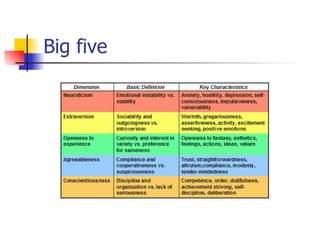
Big five
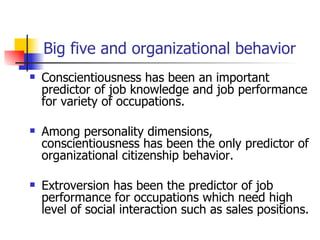
Big five and organizational behavior
   Conscientiousness has been an important
    predictor of job knowledge and job performance
    for variety of occupations.

   Among personality dimensions,
    conscientiousness has been the only predictor of
    organizational citizenship behavior.

   Extroversion has been the predictor of job
    performance for occupations which need high
    level of social interaction such as sales positions.
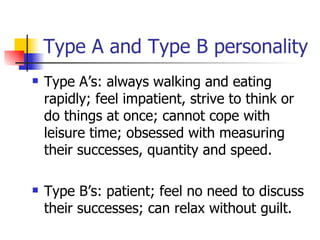
Type A and Type B personality
   Type A’s: always walking and eating
    rapidly; feel impatient, strive to think or
    do things at once; cannot cope with
    leisure time; obsessed with measuring
    their successes, quantity and speed.

   Type B’s: patient; feel no need to discuss
    their successes; can relax without guilt.
Attribution theory (Weiner)

   The main assumption of this theory is
    that when we observe a behavior, we
    attempt to identify its causes, which is
    called attribution.
Dimension of attribution

2.   Locus of control: Internal (e.g., effort, ability) or
     external (chance, luck, destiny, powerful people);

4.   Stability: whether causes change over time or not;

6.   Controllability: contrasts causes one can control, such
     as skill/efficacy, from causes one cannot control,
     such as aptitude, mood, others' actions, and luck.
Attribution theory (continued)

   Research has shown that people who tend to use
    internal attribution are more likely to put effort
    persistently into their activities and to be
    responsible for their actions than people with
    external attribution.

   When failure is attributed to controllable events,
    additional effort can be expected in the future. In
    contrast, when failure is attributed to
    uncontrollable events, future effort will diminish.
"God grant me the serenity to accept
 the things I cannot change, the courage
 to change the things I can, and the
 wisdom to know the difference"
Attribution errors

 Self-serving bias:
A tendency to attribute our own successes to
  internal factors and our failure to external
  factors

 Fundamental attribution error:
A tendency to underestimate the external
  factors and overestimate internal factors
  when making judgment about other people
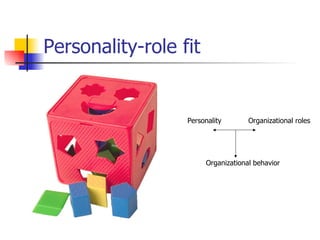
Personality-role fit


                  Personality       Organizational roles


                       Organizational behavior
Example
   Please have a look at the following link
    and identify personality traits that have
    been identified for some specific jobs.

        www.resourceassociates.com
Extra activities
   Please assess your personality using the
    scales provided in the self-assessment
    library CD.

   Think about different jobs that might be
    consistent with your personality.
Reading
   Please read page 98 to 124 of the text
    book.
Assignment 4
   Interview with 4 individuals from three
    different organizations and identify factors that
    impact their work motivation.

   Submit a report in minimum 2000 words
    including your interview questions,
    demographic variables of interviewees, the
    factors, explanations, supporting quotes, and
    theories that possibly explain their work
    motivation.

Sess13

  • 1.
  • 2.
  • 3.
    What is personality?  Personality refers to a person’s whole psychological system rather than looking at parts of the person.  Personality traits are relatively stable characteristics that are exhibited in a large number of situations.  However, there are several human factors that are not personality traits.
  • 4.
    Main influential factors  Heredity  Environment
  • 5.
  • 6.
    Big five andorganizational behavior  Conscientiousness has been an important predictor of job knowledge and job performance for variety of occupations.  Among personality dimensions, conscientiousness has been the only predictor of organizational citizenship behavior.  Extroversion has been the predictor of job performance for occupations which need high level of social interaction such as sales positions.
  • 7.
    Type A andType B personality  Type A’s: always walking and eating rapidly; feel impatient, strive to think or do things at once; cannot cope with leisure time; obsessed with measuring their successes, quantity and speed.  Type B’s: patient; feel no need to discuss their successes; can relax without guilt.
  • 8.
    Attribution theory (Weiner)  The main assumption of this theory is that when we observe a behavior, we attempt to identify its causes, which is called attribution.
  • 9.
    Dimension of attribution 2. Locus of control: Internal (e.g., effort, ability) or external (chance, luck, destiny, powerful people); 4. Stability: whether causes change over time or not; 6. Controllability: contrasts causes one can control, such as skill/efficacy, from causes one cannot control, such as aptitude, mood, others' actions, and luck.
  • 10.
    Attribution theory (continued)  Research has shown that people who tend to use internal attribution are more likely to put effort persistently into their activities and to be responsible for their actions than people with external attribution.  When failure is attributed to controllable events, additional effort can be expected in the future. In contrast, when failure is attributed to uncontrollable events, future effort will diminish.
  • 11.
    "God grant methe serenity to accept the things I cannot change, the courage to change the things I can, and the wisdom to know the difference"
  • 12.
    Attribution errors  Self-servingbias: A tendency to attribute our own successes to internal factors and our failure to external factors  Fundamental attribution error: A tendency to underestimate the external factors and overestimate internal factors when making judgment about other people
  • 13.
    Personality-role fit Personality Organizational roles Organizational behavior
  • 14.
    Example  Please have a look at the following link and identify personality traits that have been identified for some specific jobs. www.resourceassociates.com
  • 15.
    Extra activities  Please assess your personality using the scales provided in the self-assessment library CD.  Think about different jobs that might be consistent with your personality.
  • 16.
    Reading  Please read page 98 to 124 of the text book.
  • 17.
    Assignment 4  Interview with 4 individuals from three different organizations and identify factors that impact their work motivation.  Submit a report in minimum 2000 words including your interview questions, demographic variables of interviewees, the factors, explanations, supporting quotes, and theories that possibly explain their work motivation.