
Personality and values
Chapter 5
What is personality?
 The sum of total of ways is which an individual react and intersects with other.
 The characteristic pattern of thought feeling & behaviors that makes a person
unique.
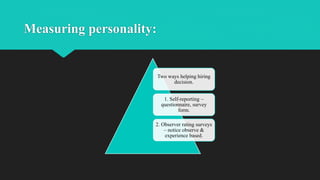
Measuring personality:
Two ways helping hiring
decision.
1. Self-reporting –
questionnaire, survey
form.
2. Observer rating surveys
– notice observe &
experience based.
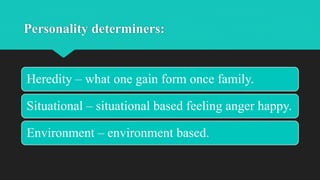
Personality determiners:
Heredity – what one gain form once family.
Situational – situational based feeling anger happy.
Environment – environment based.
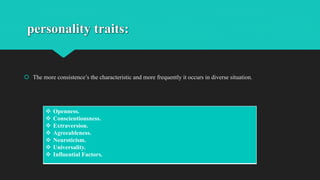
personality traits:
 The more consistence’s the characteristic and more frequently it occurs in diverse situation.
 Openness.
 Conscientiousness.
 Extraversion.
 Agreeableness.
 Neuroticism.
 Universality.
 Influential Factors.
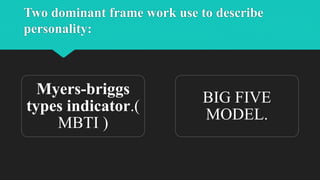
Two dominant frame work use to describe
personality:
Myers-briggs
types indicator.(
MBTI )
BIG FIVE
MODEL.
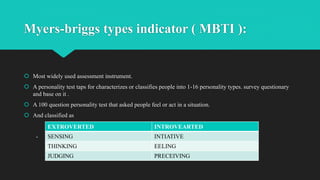
Myers-briggs types indicator ( MBTI ):
 Most widely used assessment instrument.
 A personality test taps for characterizes or classifies people into 1-16 personality types. survey questionary
and base on it .
 A 100 question personality test that asked people feel or act in a situation.
 And classified as
-
EXTROVERTED INTROVEARTED
SENSING INTIATIVE
THINKING EELING
JUDGING PRECEIVING
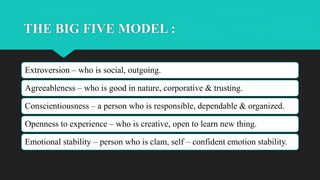
THE BIG FIVE MODEL :
Extroversion – who is social, outgoing.
Agreeableness – who is good in nature, corporative & trusting.
Conscientiousness – a person who is responsible, dependable & organized.
Openness to experience – who is creative, open to learn new thing.
Emotional stability – person who is clam, self – confident emotion stability.
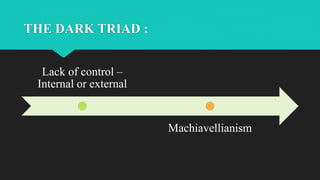
THE DARK TRIAD :
Lack of control –
Internal or external
Machiavellianism
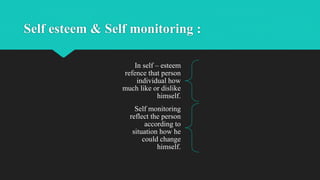
Self esteem & Self monitoring :
In self – esteem
refence that person
individual how
much like or dislike
himself.
Self monitoring
reflect the person
according to
situation how he
could change
himself.
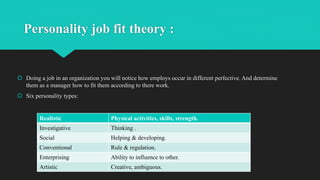
Personality job fit theory :
 Doing a job in an organization you will notice how employs occur in different perfective. And determine
them as a manager how to fit them according to there work.
 Six personality types:
Realistic Physical activities, skills, strength.
Investigative Thinking .
Social Helping & developing.
Conventional Rule & regulation.
Enterprising Ability to influence to other.
Artistic Creative, ambiguous.
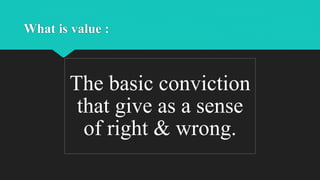
What is value :
The basic conviction
that give as a sense
of right & wrong.
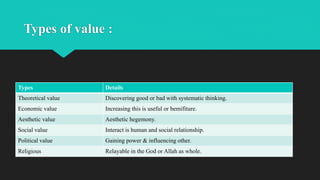
Types of value :
Types Details
Theoretical value Discovering good or bad with systematic thinking.
Economic value Increasing this is useful or bemifiture.
Aesthetic value Aesthetic hegemony.
Social value Interact is human and social relationship.
Political value Gaining power & influencing other.
Religious Relayable in the God or Allah as whole.
End of chapter 5.
Thank you
!

Personality and values chapter 5 ( organizational behavior)

  • 1.
  • 2.
    What is personality? The sum of total of ways is which an individual react and intersects with other.  The characteristic pattern of thought feeling & behaviors that makes a person unique.
  • 3.
    Measuring personality: Two wayshelping hiring decision. 1. Self-reporting – questionnaire, survey form. 2. Observer rating surveys – notice observe & experience based.
  • 4.
    Personality determiners: Heredity –what one gain form once family. Situational – situational based feeling anger happy. Environment – environment based.
  • 5.
    personality traits:  Themore consistence’s the characteristic and more frequently it occurs in diverse situation.  Openness.  Conscientiousness.  Extraversion.  Agreeableness.  Neuroticism.  Universality.  Influential Factors.
  • 6.
    Two dominant framework use to describe personality: Myers-briggs types indicator.( MBTI ) BIG FIVE MODEL.
  • 7.
    Myers-briggs types indicator( MBTI ):  Most widely used assessment instrument.  A personality test taps for characterizes or classifies people into 1-16 personality types. survey questionary and base on it .  A 100 question personality test that asked people feel or act in a situation.  And classified as - EXTROVERTED INTROVEARTED SENSING INTIATIVE THINKING EELING JUDGING PRECEIVING
  • 8.
    THE BIG FIVEMODEL : Extroversion – who is social, outgoing. Agreeableness – who is good in nature, corporative & trusting. Conscientiousness – a person who is responsible, dependable & organized. Openness to experience – who is creative, open to learn new thing. Emotional stability – person who is clam, self – confident emotion stability.
  • 9.
    THE DARK TRIAD: Lack of control – Internal or external Machiavellianism
  • 10.
    Self esteem &Self monitoring : In self – esteem refence that person individual how much like or dislike himself. Self monitoring reflect the person according to situation how he could change himself.
  • 11.
    Personality job fittheory :  Doing a job in an organization you will notice how employs occur in different perfective. And determine them as a manager how to fit them according to there work.  Six personality types: Realistic Physical activities, skills, strength. Investigative Thinking . Social Helping & developing. Conventional Rule & regulation. Enterprising Ability to influence to other. Artistic Creative, ambiguous.
  • 12.
    What is value: The basic conviction that give as a sense of right & wrong.
  • 13.
    Types of value: Types Details Theoretical value Discovering good or bad with systematic thinking. Economic value Increasing this is useful or bemifiture. Aesthetic value Aesthetic hegemony. Social value Interact is human and social relationship. Political value Gaining power & influencing other. Religious Relayable in the God or Allah as whole.
  • 14.
    End of chapter5. Thank you !