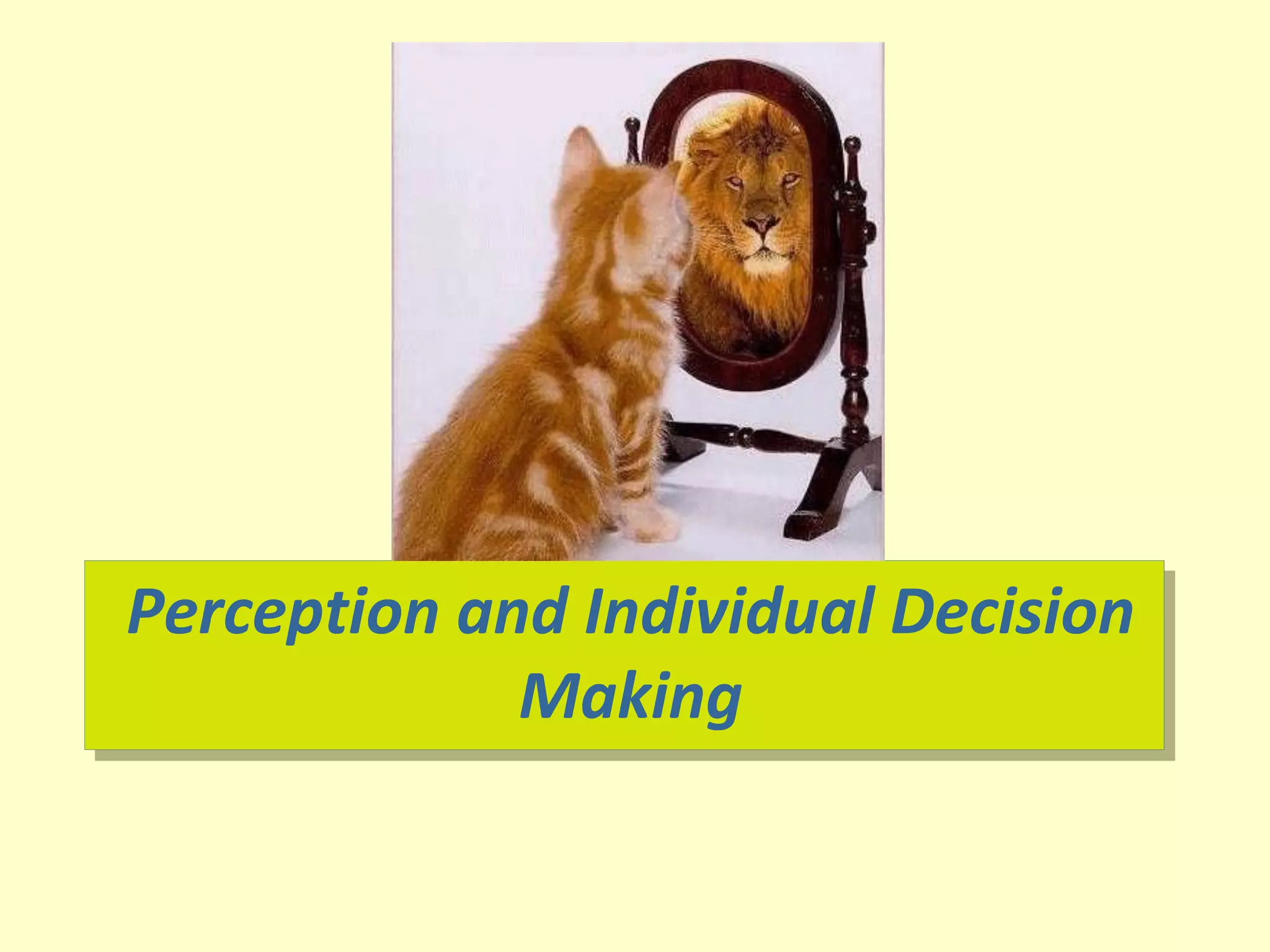
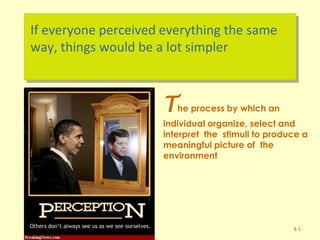
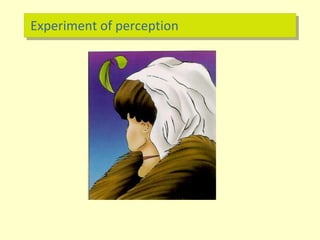
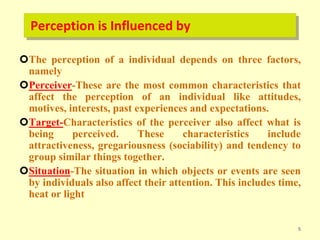
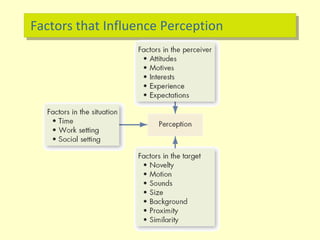
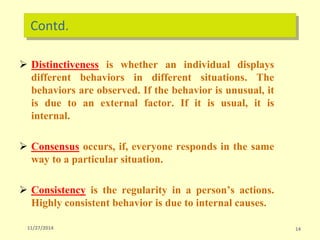
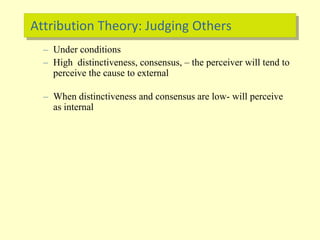
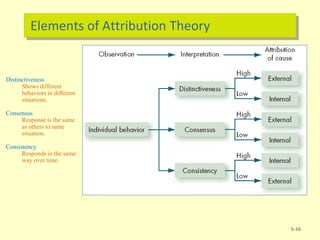
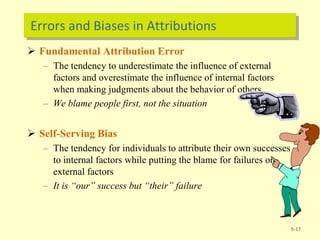
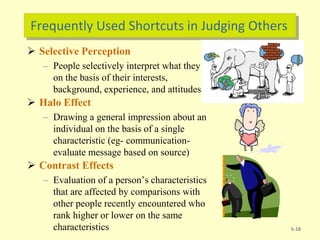
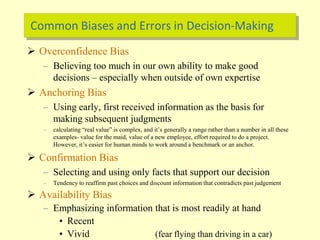
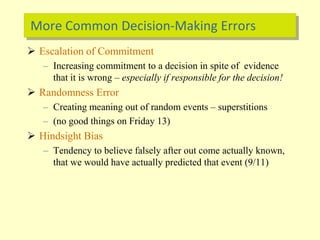
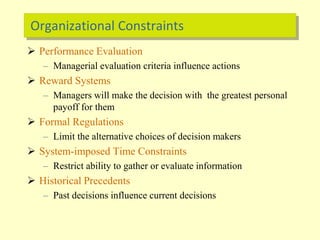
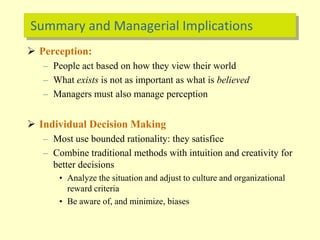
Perception and individual decision making are influenced by various factors. Perception depends on the perceiver's characteristics and attitudes, the target being perceived, and the situation. Decision making involves identifying problems, developing alternatives, and making choices that can be biased by perceptual distortions. Common biases include overconfidence, anchoring, confirmation bias, availability bias, and escalation of commitment. Managers must consider how perception and biases can influence evaluation, rewards, regulations, precedents, and decision making.