
Sensory-motor processing in planning and execution of
movement
Subhadeep Dutta Gupta
M.Phil Scholar
Department of Neurophysiology, NIMHANS
j
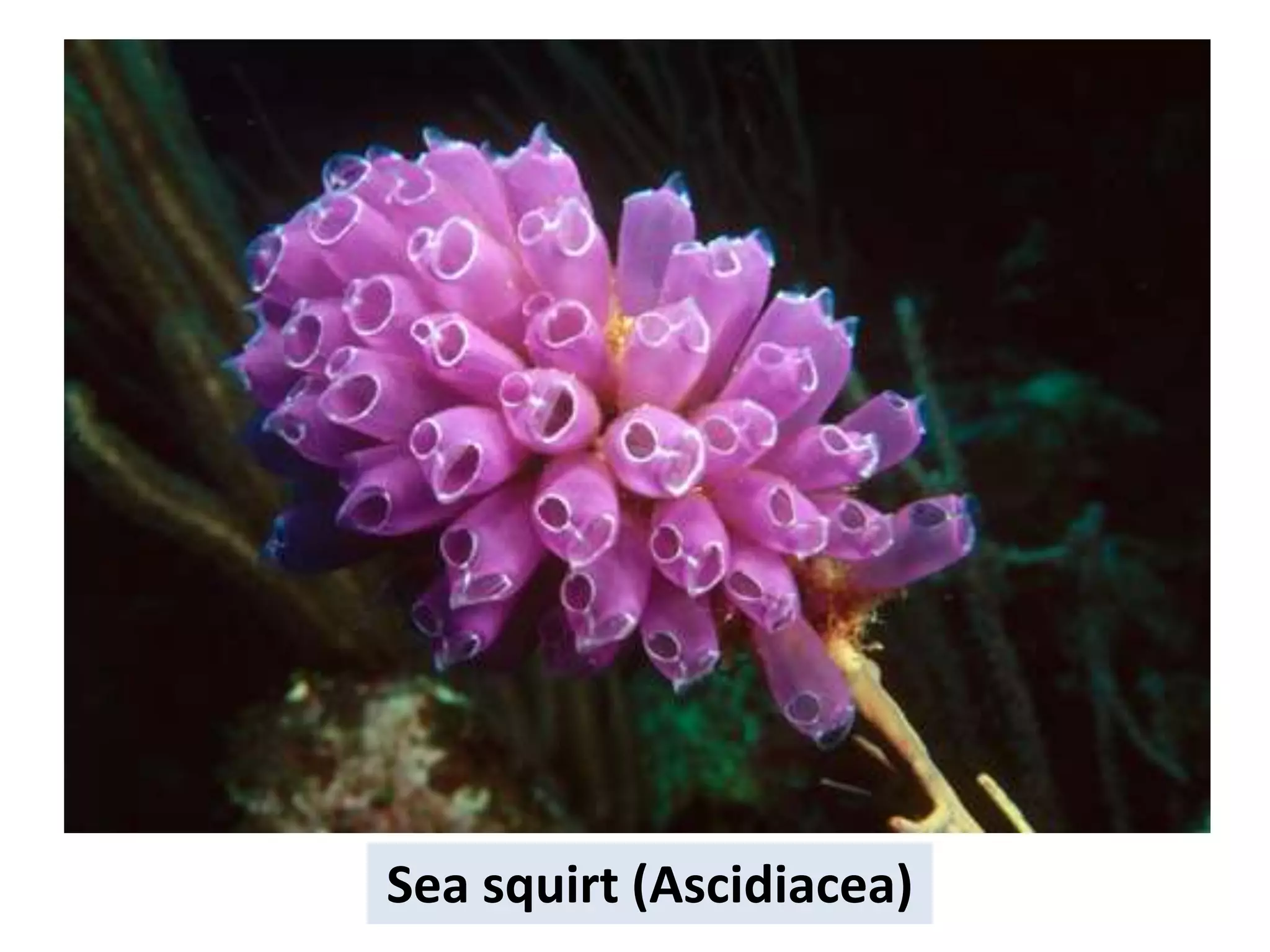
Sea squirt (Ascidiacea)
Introduction
• Movement is an important feature of living organism.
• All interaction with the surrounding world is through motor
system.
• The motor system continues to develop through maturation
of neuronal circuitry and by learning through different motor
activities during the first 15 years of life.
Hierarchy of motor control:
• Background:
 Jackson, (1889) : higher motor centers controlling simple movements.
 William James, (1890) : voluntary movement is secondary to reflexive
actions, and involves anticipatory image.
 C. Sherrington, (1906) : distinguished between upper & lower motor
neurons.
 Keele, (1968) : ordered nature of high level motor programs for feed-
forward control of movements.
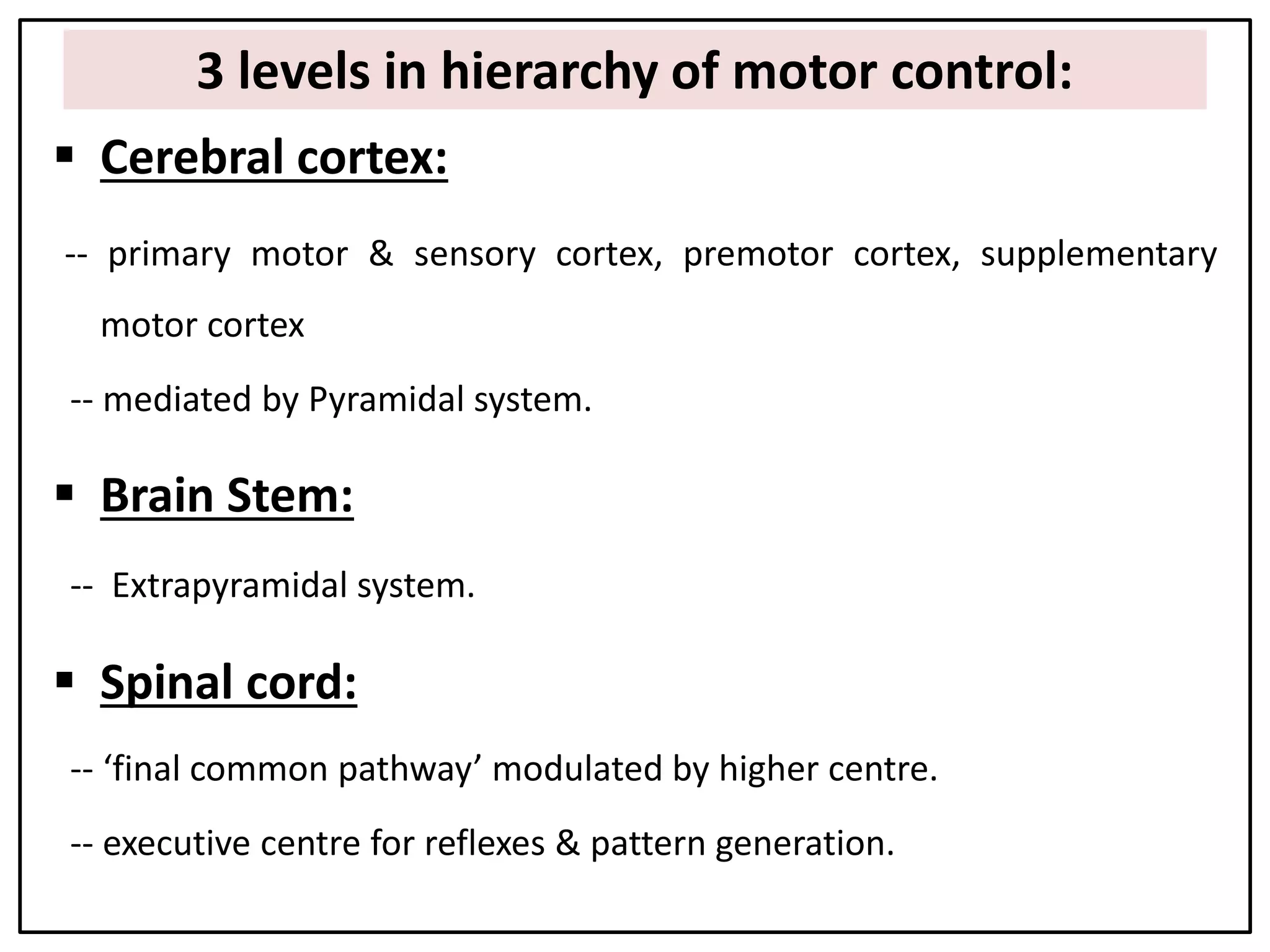
3 levels in hierarchy of motor control:
h Cerebral cortex:
-- primary motor & sensory cortex, premotor cortex, supplementary
motor cortex
-- mediated by Pyramidal system.
 Brain Stem:
-- Extrapyramidal system.
 Spinal cord:
-- ‘final common pathway’ modulated by higher centre.
-- executive centre for reflexes & pattern generation.
d
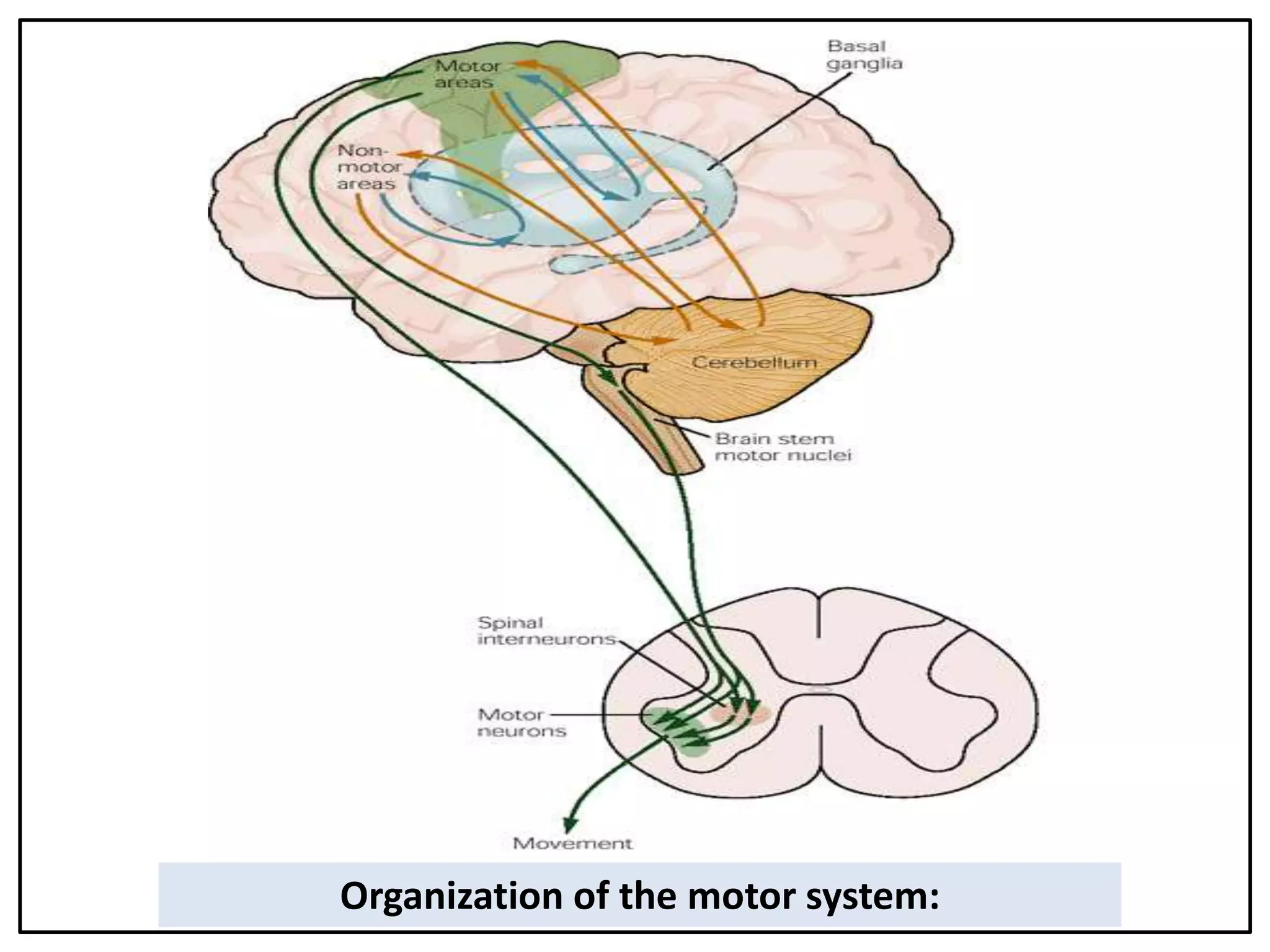
Organization of the motor system:
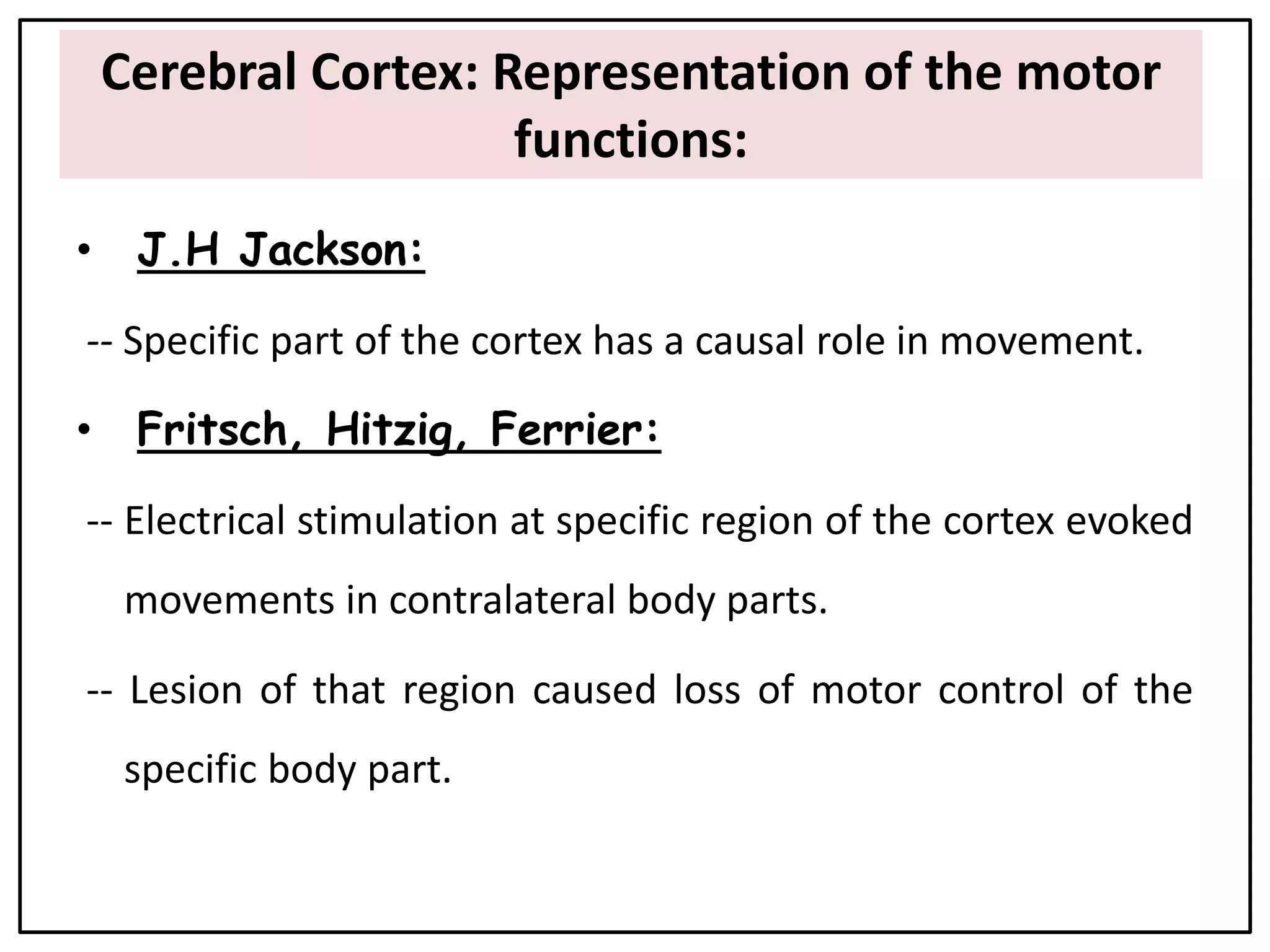
Cerebral Cortex: Representation of the motor
functions:
• J.H Jackson:
-- Specific part of the cortex has a causal role in movement.
• Fritsch, Hitzig, Ferrier:
-- Electrical stimulation at specific region of the cortex evoked
movements in contralateral body parts.
-- Lesion of that region caused loss of motor control of the
specific body part.
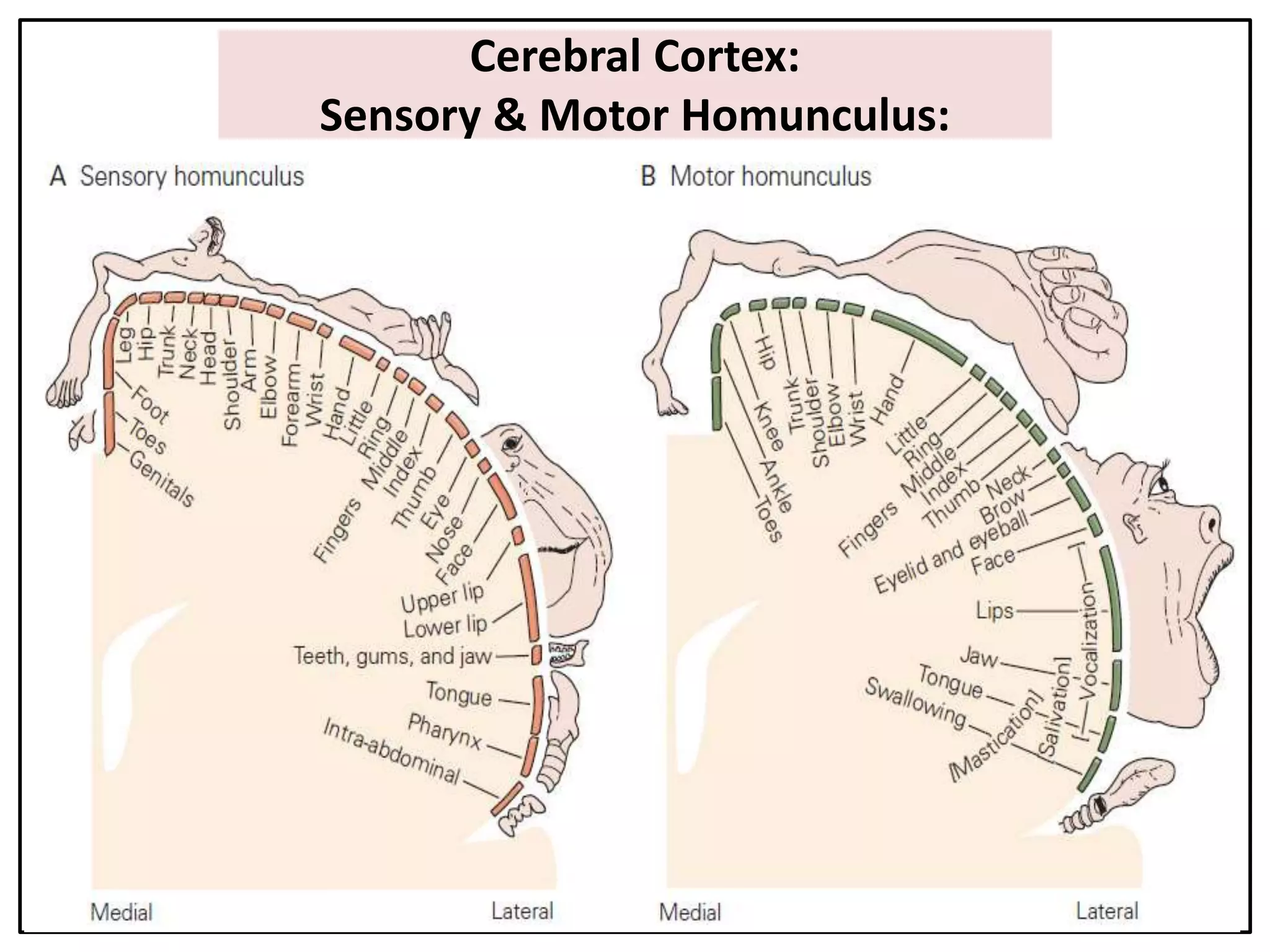
Cerebral Cortex:
Sensory & Motor Homunculus:
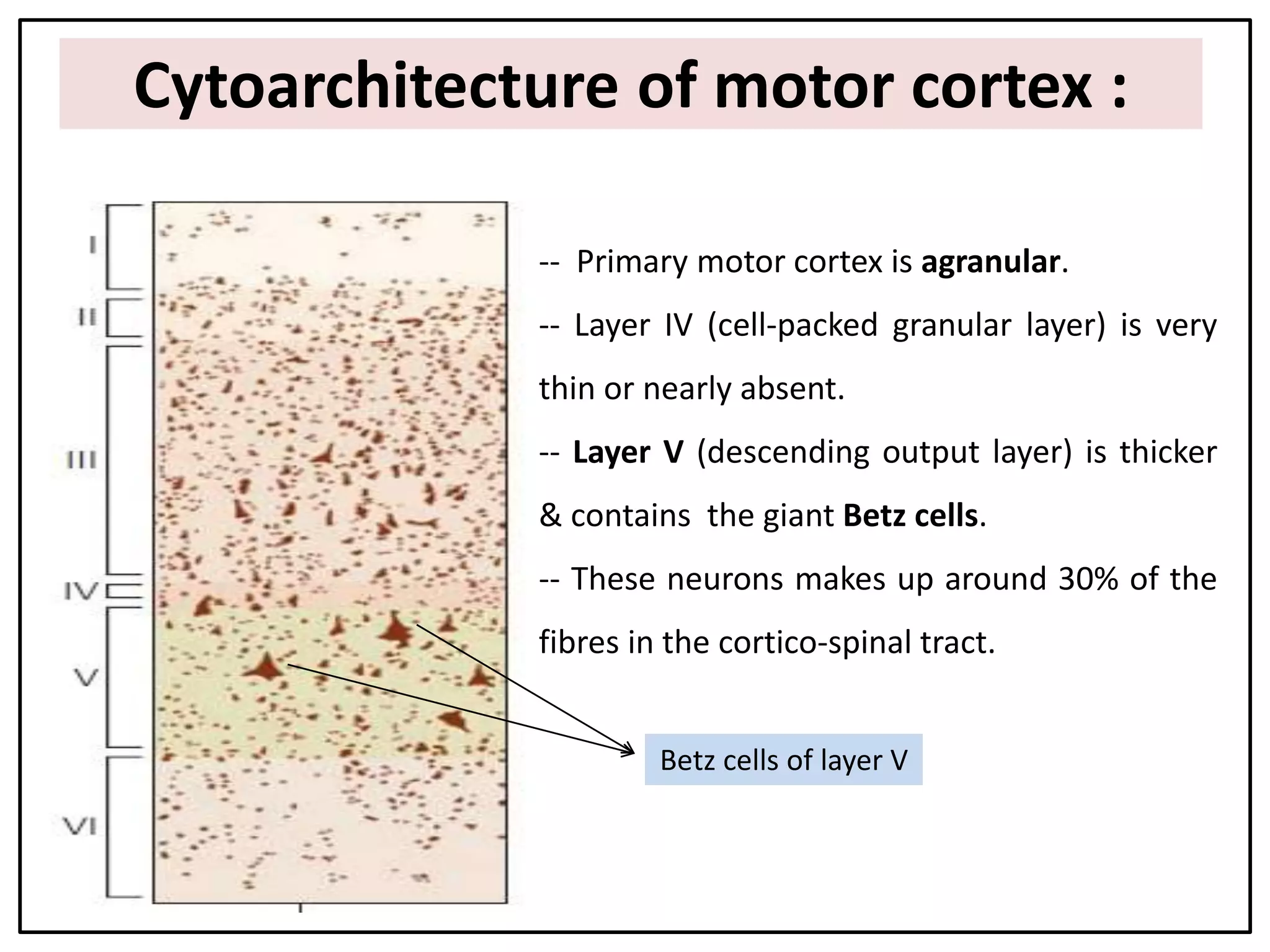
Cytoarchitecture of motor cortex :
-- Primary motor cortex is agranular.
-- Layer IV (cell-packed granular layer) is very
thin or nearly absent.
-- Layer V (descending output layer) is thicker
& contains the giant Betz cells.
-- These neurons makes up around 30% of the
fibres in the cortico-spinal tract.
Betz cells of layer V
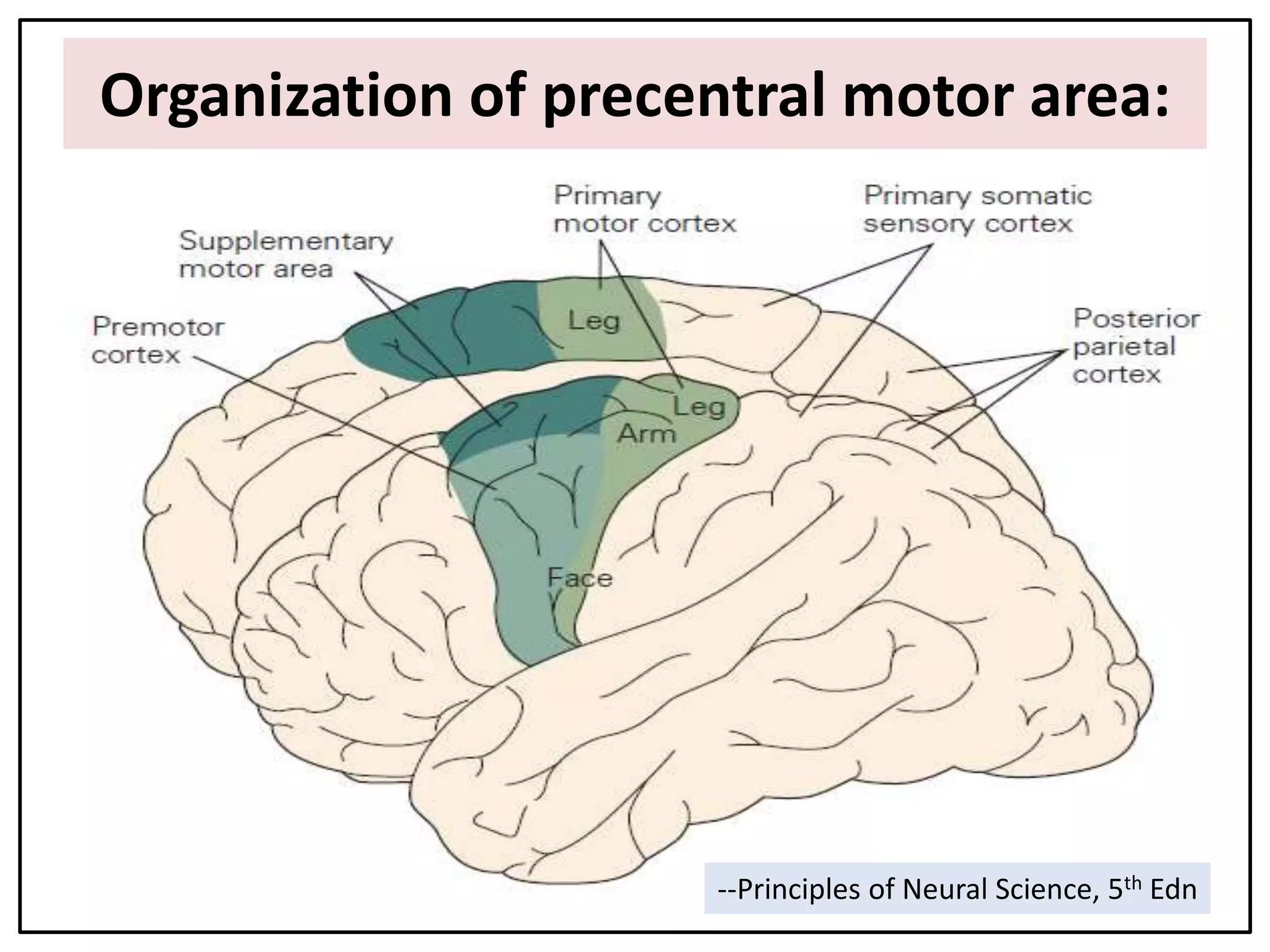
Organization of precentral motor area:
--Principles of Neural Science, 5th Edn
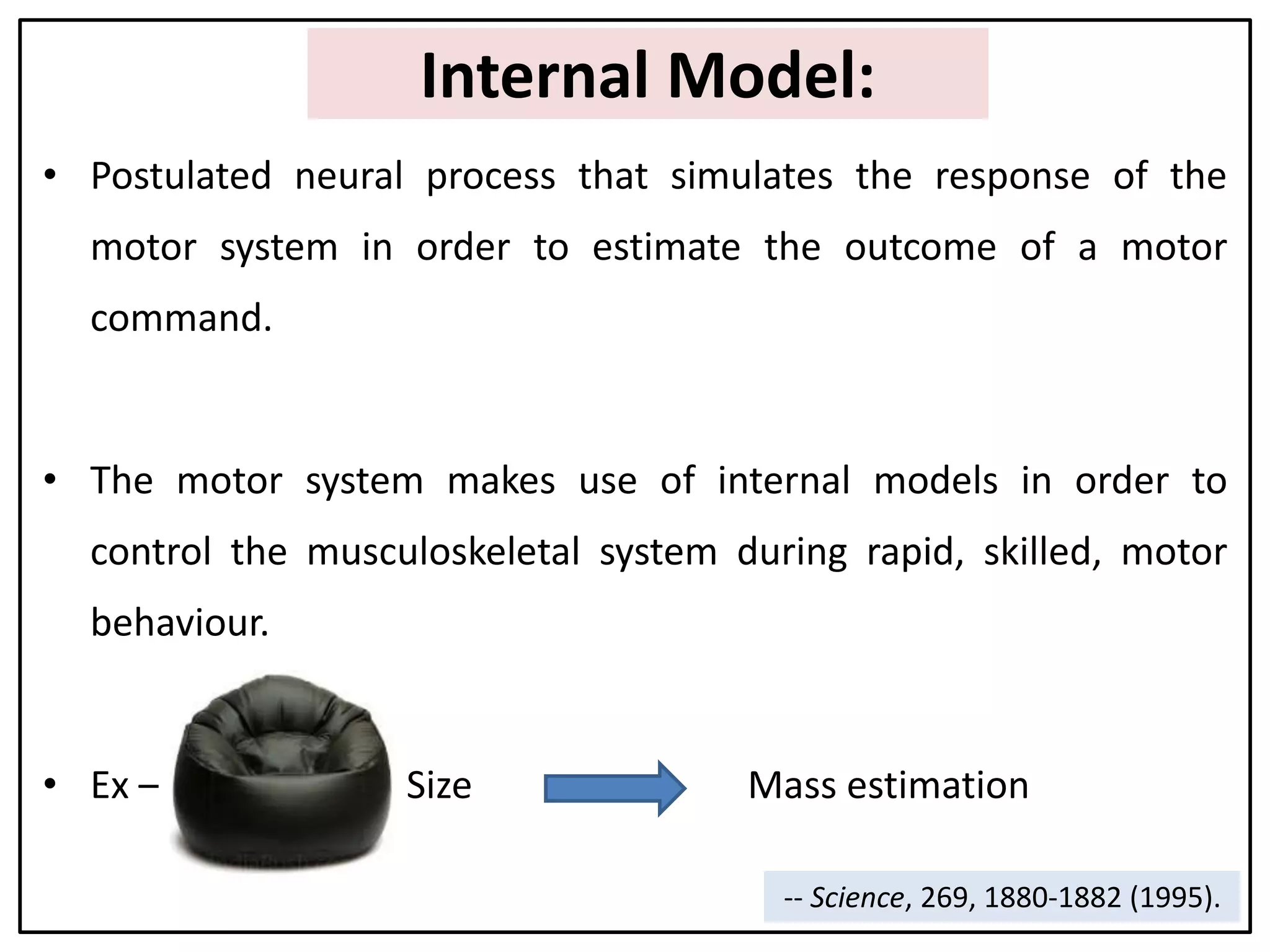
Internal Model:
• Postulated neural process that simulates the response of the
motor system in order to estimate the outcome of a motor
command.
• The motor system makes use of internal models in order to
control the musculoskeletal system during rapid, skilled, motor
behaviour.
• Ex – Size Mass estimation
-- Science, 269, 1880-1882 (1995).
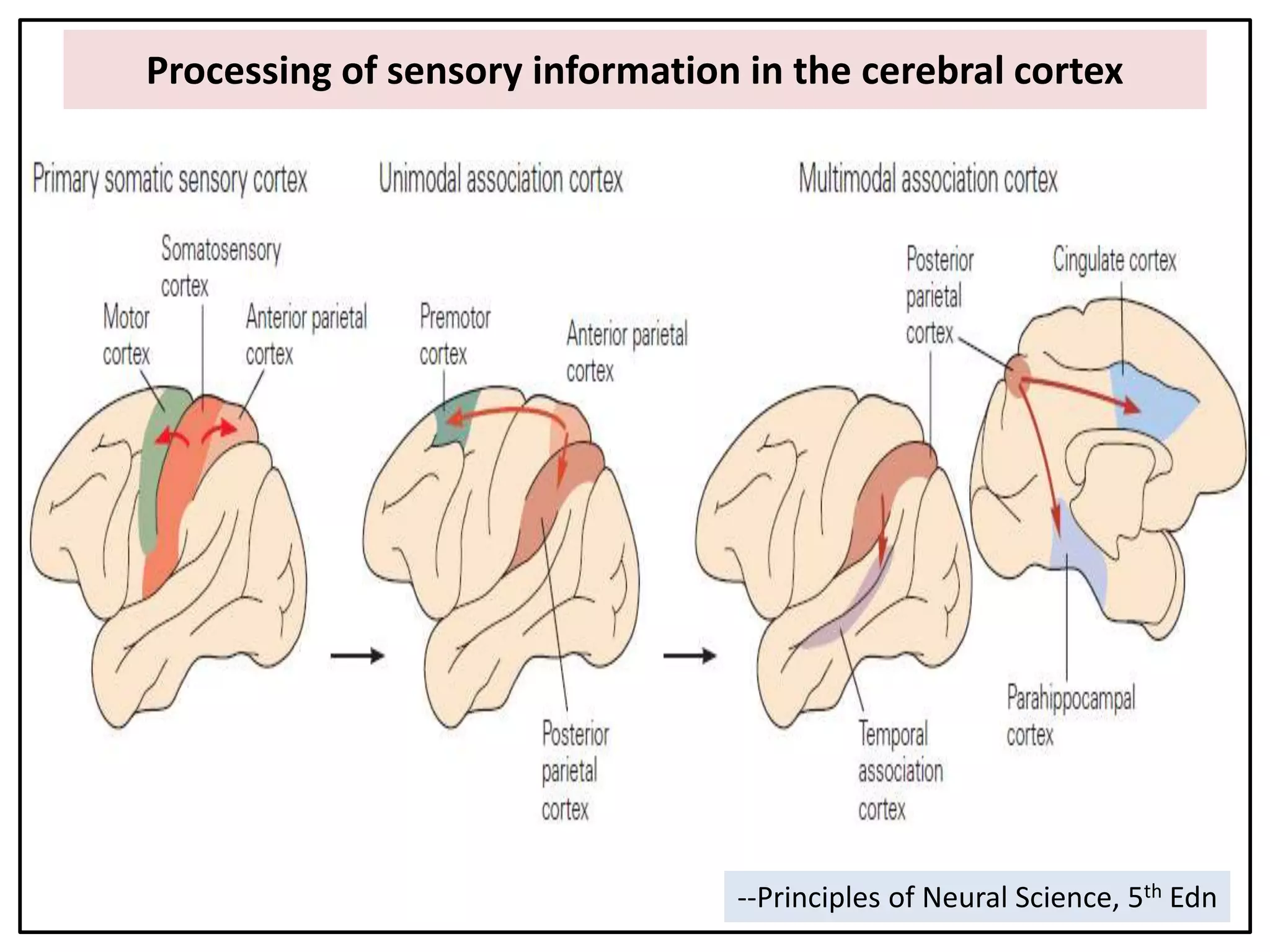
Processing of sensory information in the cerebral cortex
--Principles of Neural Science, 5th Edn
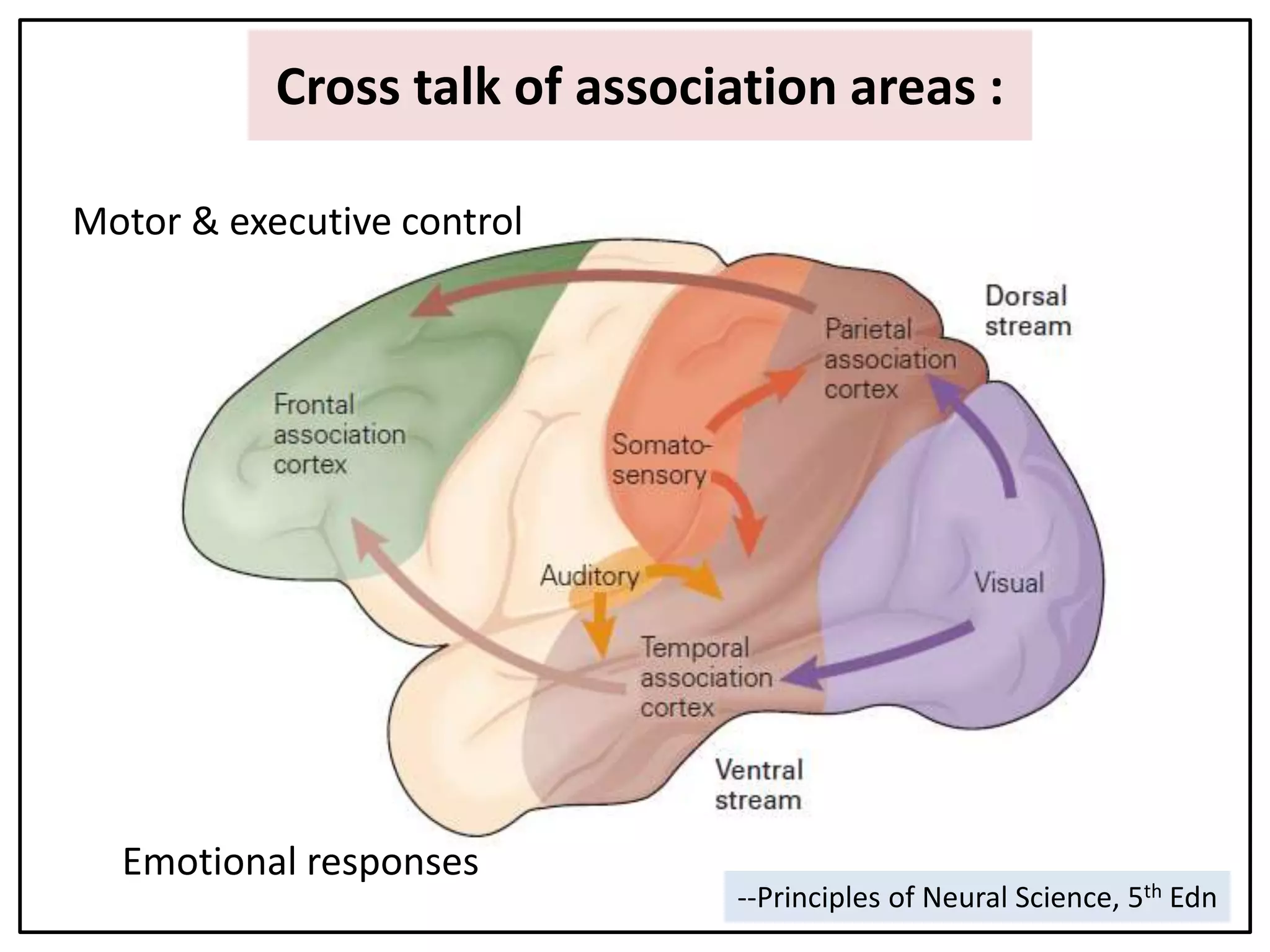
Cross talk of association areas :
--Principles of Neural Science, 5th Edn
Motor & executive control
Emotional responses
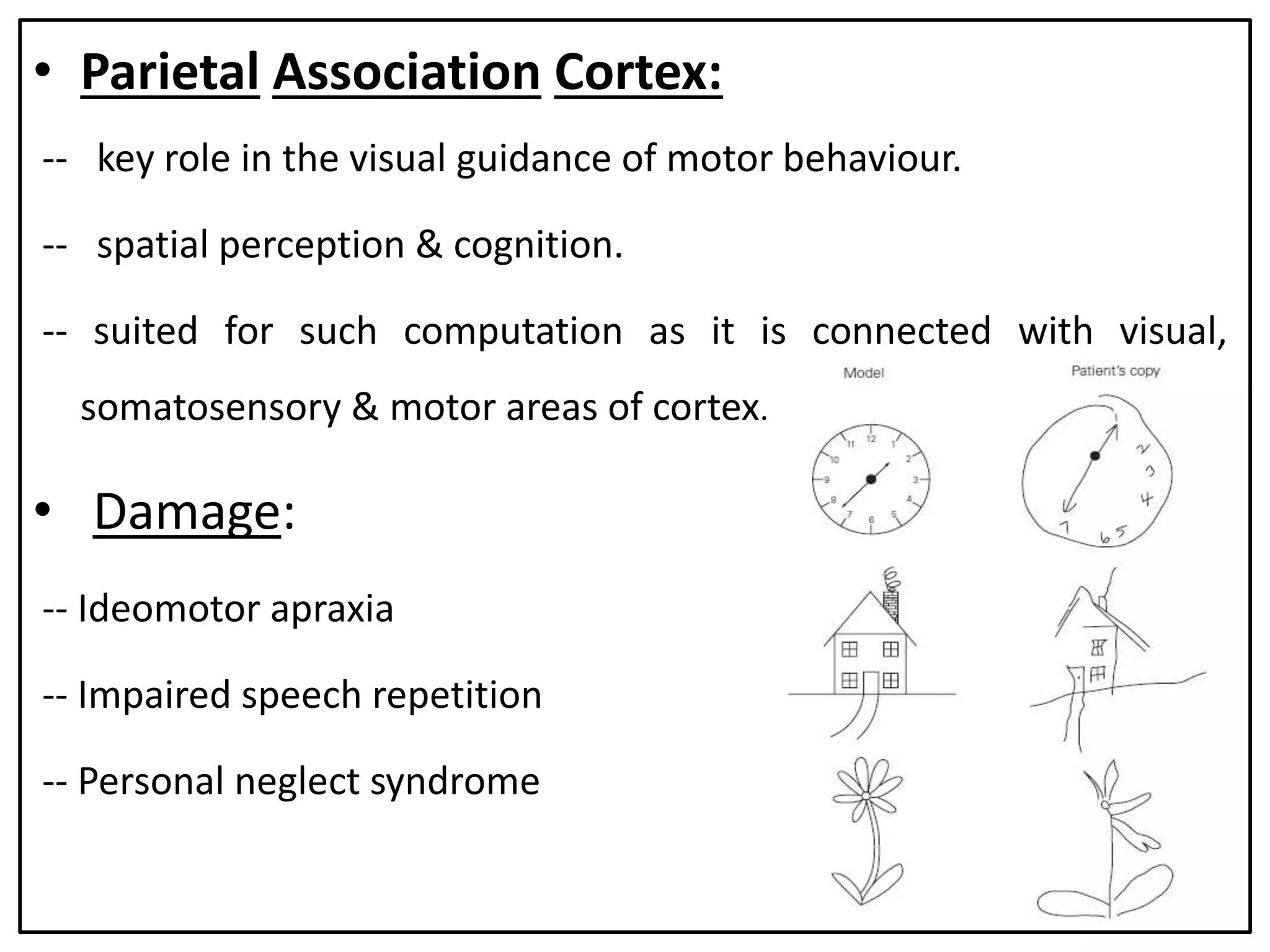
• Parietal Association Cortex:
-- key role in the visual guidance of motor behaviour.
-- spatial perception & cognition.
-- suited for such computation as it is connected with visual,
somatosensory & motor areas of cortex.
• Damage:
-- Ideomotor apraxia
-- Impaired speech repetition
-- Personal neglect syndrome
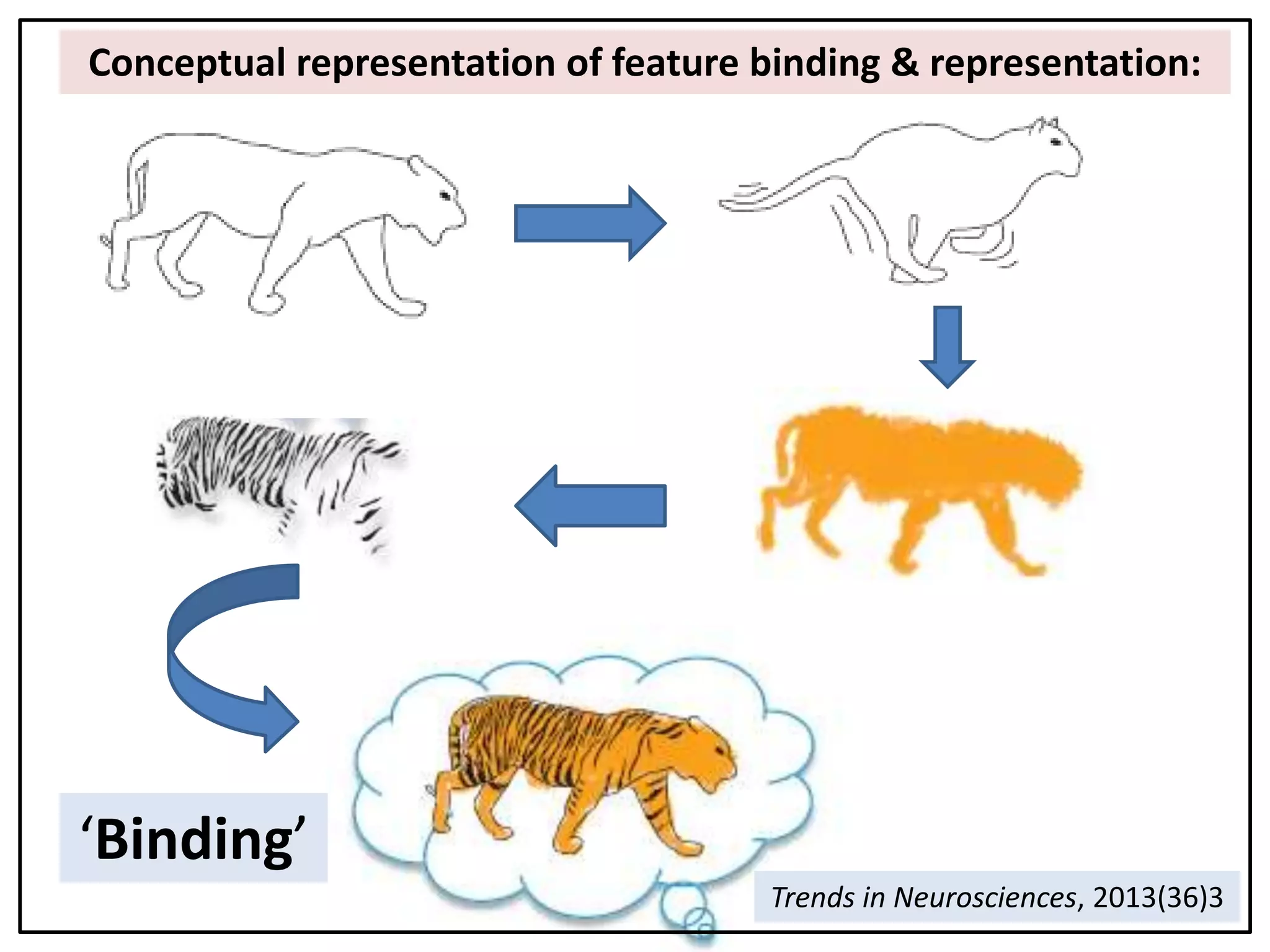
‘Binding’
Conceptual representation of feature binding & representation:
Trends in Neurosciences, 2013(36)3
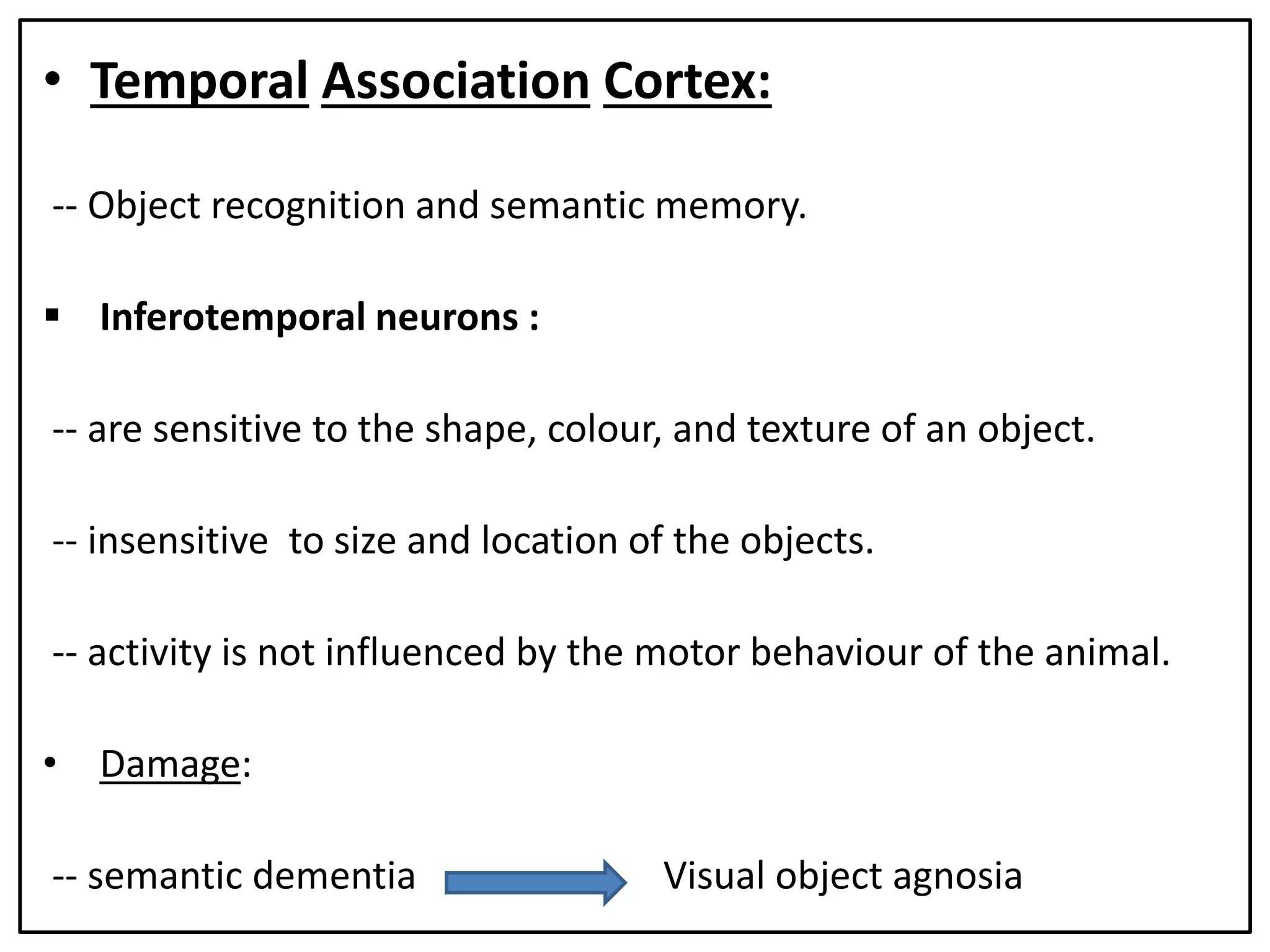
• Temporal Association Cortex:
-- Object recognition and semantic memory.
 Inferotemporal neurons :
-- are sensitive to the shape, colour, and texture of an object.
-- insensitive to size and location of the objects.
-- activity is not influenced by the motor behaviour of the animal.
• Damage:
-- semantic dementia Visual object agnosia
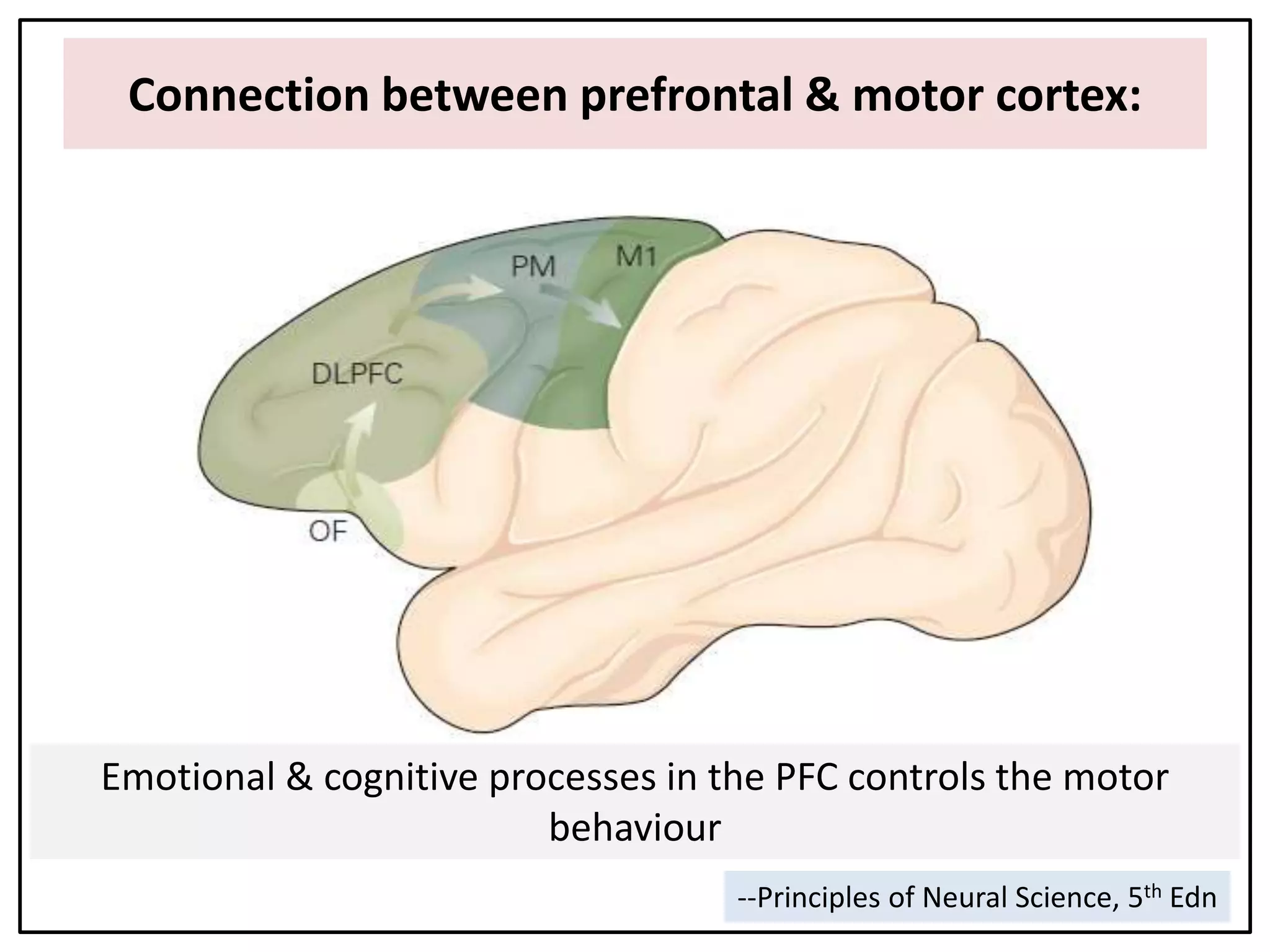
Connection between prefrontal & motor cortex:
--Principles of Neural Science, 5th Edn
Emotional & cognitive processes in the PFC controls the motor
behaviour
Primary Motor Cortex:
• Primary motor cortex neurons fire 5-100 msec before the onset of a
movement.
• Primary motor cortex encodes the force of a movement (Evarts et
al., 1968).file:///D:/Presentation%20on%20Movement/Videos/1.Force%20of%20movement.swf
• It encodes the direction of movement (Georgopoulas et al., 1982).
-- Many neurons are selective for a particular direction of
movement. file:///D:/Presentation%20on%20Movement/Videos/2.Direction%20of%20mov ement.swf
• It encodes the extent of movement.
• It also encodes the speed of movement. file:///D:/Presentation%20on%20Movement/Videos/3.Speed%20of%20movement.swf
-- Bell shaped curve
• Premotor cortex neurons signal the preparation for movement
(Weinrich and Wise,1982). file:///D:/Presentation%20on%20Movement/Videos/4.Pr eparation%20of%20movement.swf
-- Motor- set neurons ‘Go’ signal.
• Premotor cortex is sensitive to the behavioural context of a
particular movement (Iacoboni et al., 2005).file:///D:/Presentation%20on%20Movement/Videos/5..Behavior al%20context.swf
• Premotor cortex signals correct and incorrect actions.
Premotor Cortex:
g• Premotor cortex neurons signal various sensory aspects
associated with particular motor acts.
-- Some neurons fire when a subject is performing a particular
action.
-- Same neuron fires selectively when the subject sees
someone performing a particular action.
-- It also fires selectively even without a visual or motor
activity.
-- Concept of Mirror & Cannonical Neurons (Rizzolatti et al.,
1996)
Supplementary Motor Area:
• SMA is involved in the transformation of
kinematic to dynamic information.
• SMA responds to sequences of movements
and to mental rehearsal of sequences of
movements (Roland et al., 1980).file:///D:/Presentation%20on%20Movement/Videos/6.Mental%20rehearsal.swf
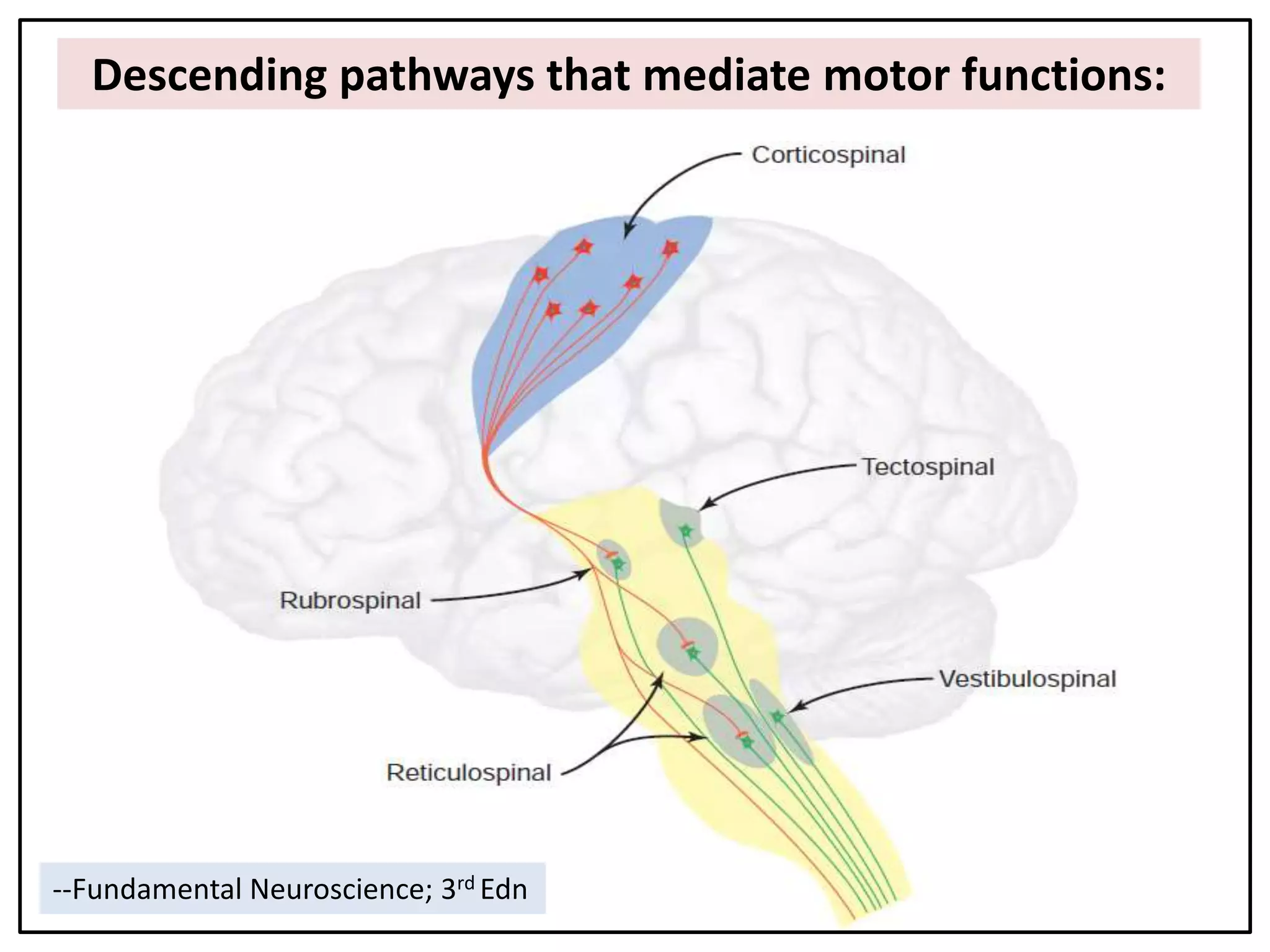
Descending pathways that mediate motor functions:
--Fundamental Neuroscience; 3rd Edn
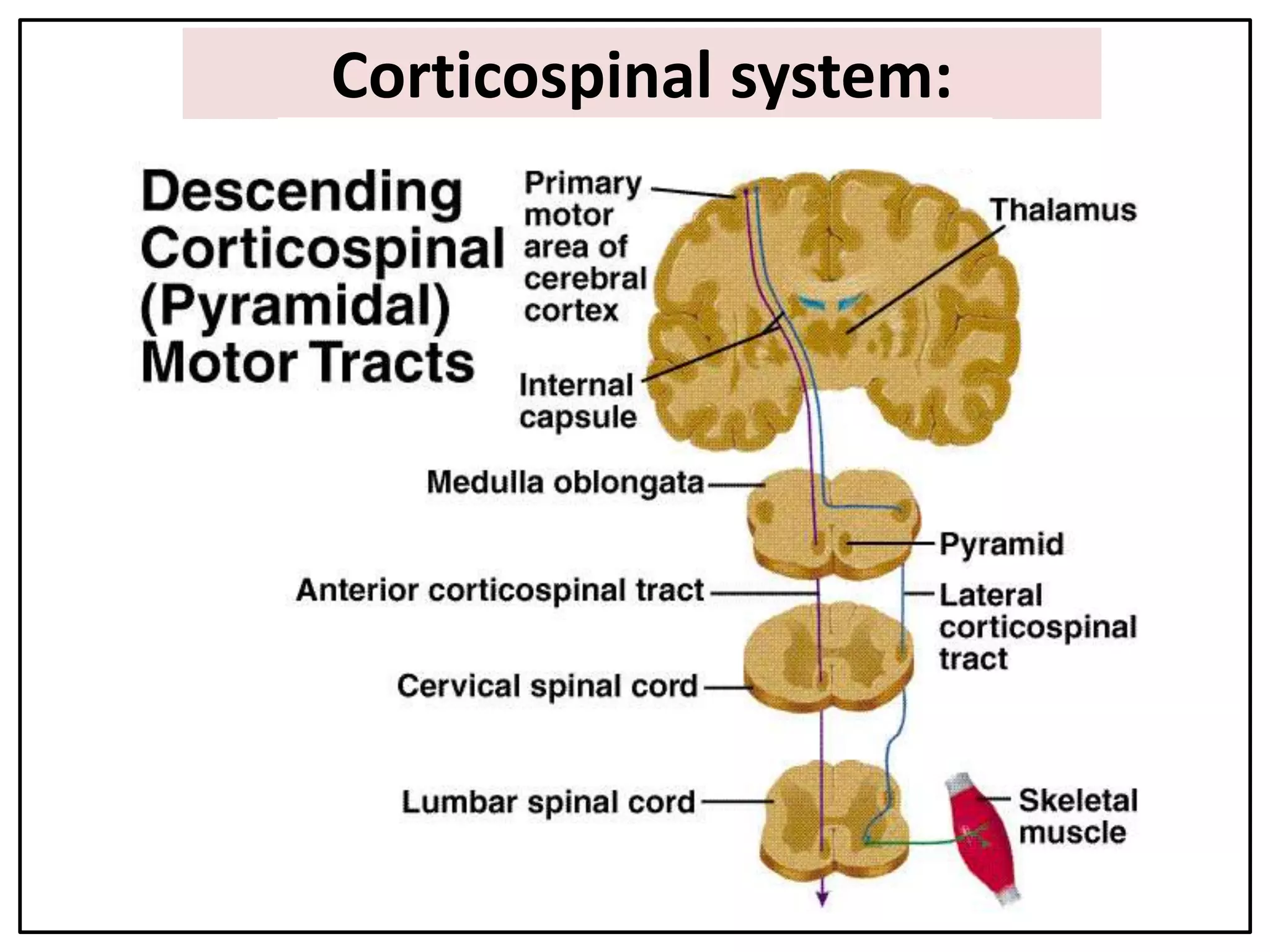
Corticospinal system:
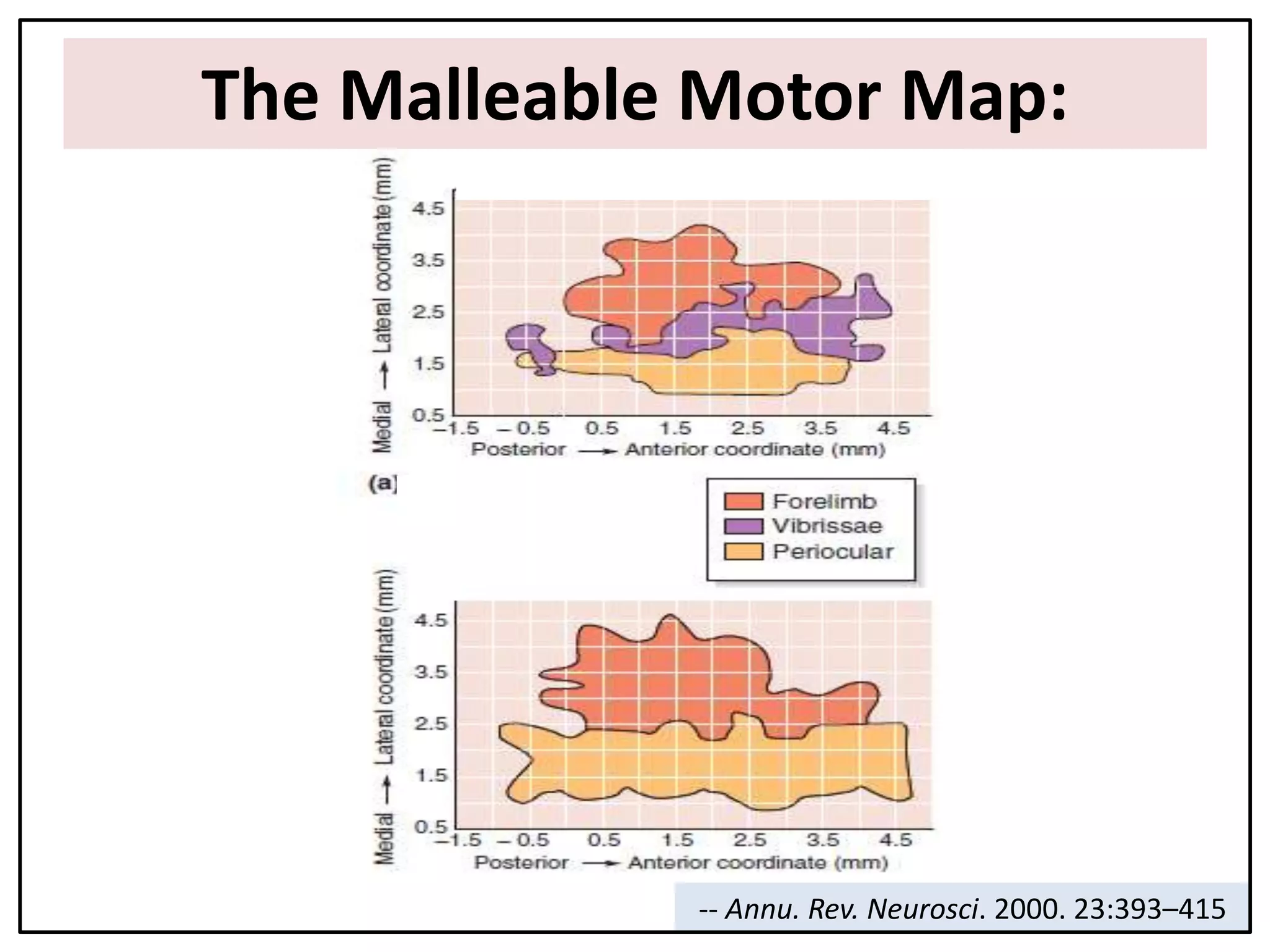
The Malleable Motor Map:
-- Annu. Rev. Neurosci. 2000. 23:393–415
Phantom Limb & Mirror Therapy:
Amputated Limb
Intact Limb
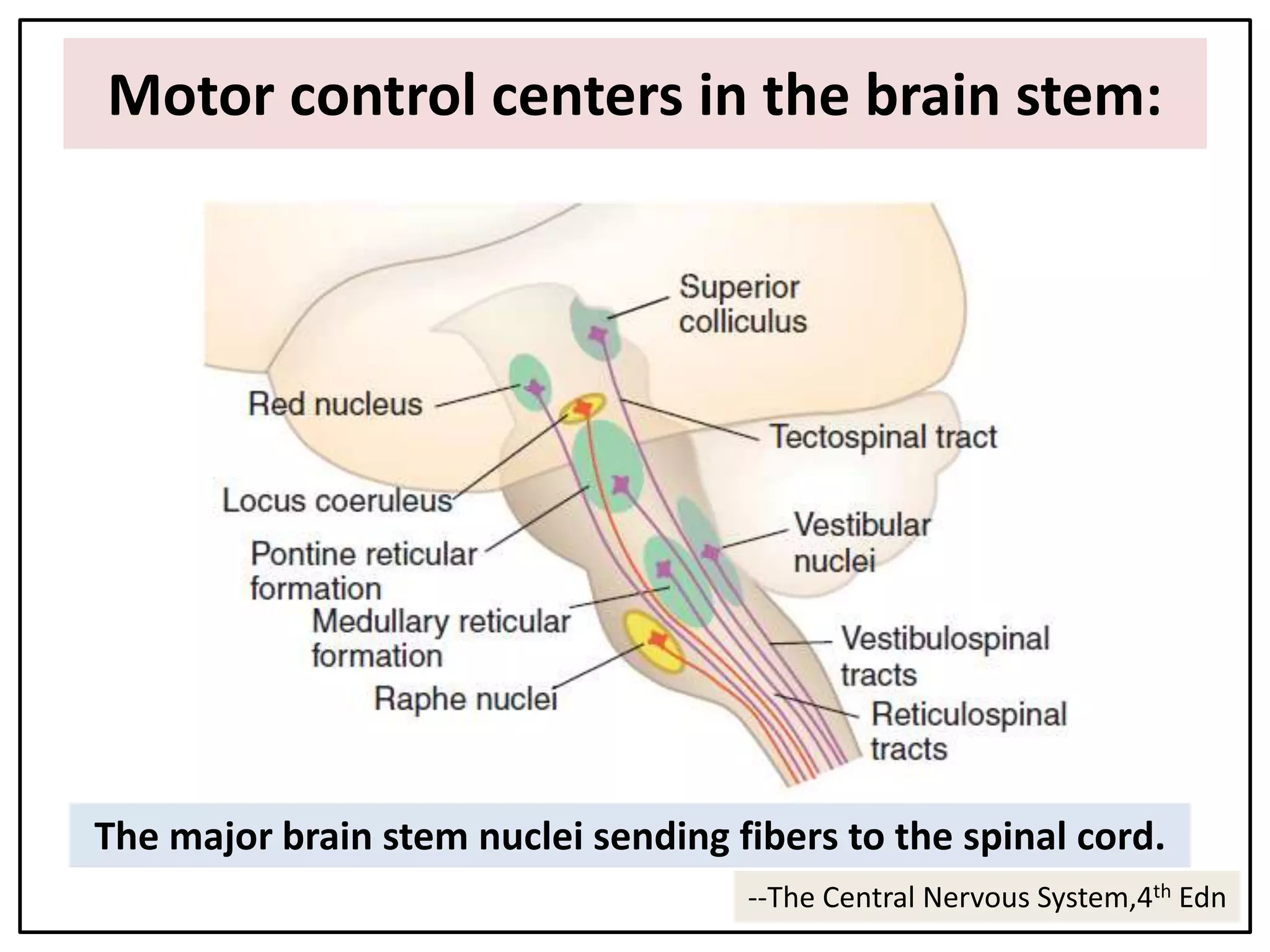
Motor control centers in the brain stem:
The major brain stem nuclei sending fibers to the spinal cord.
--The Central Nervous System,4th Edn
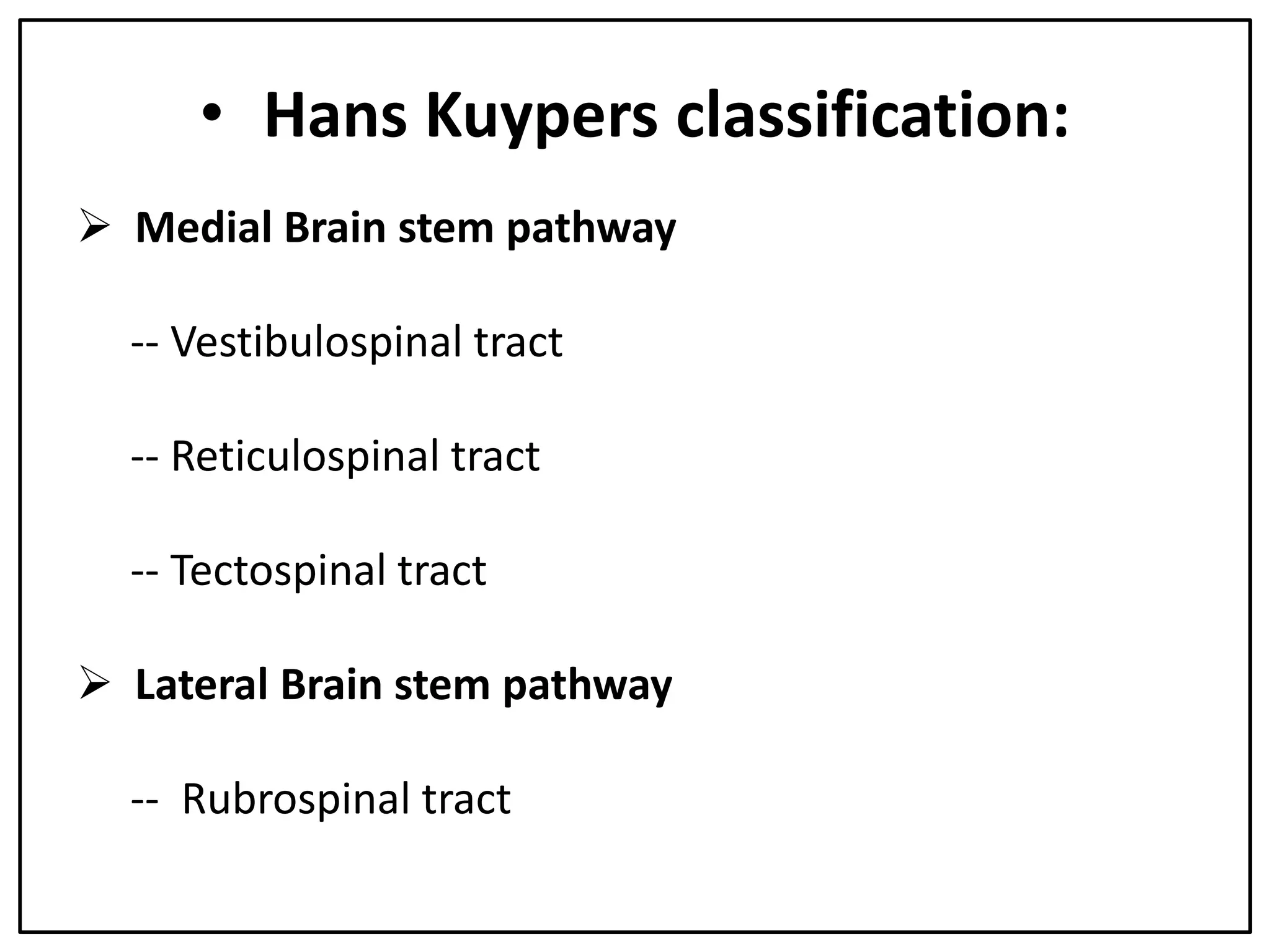
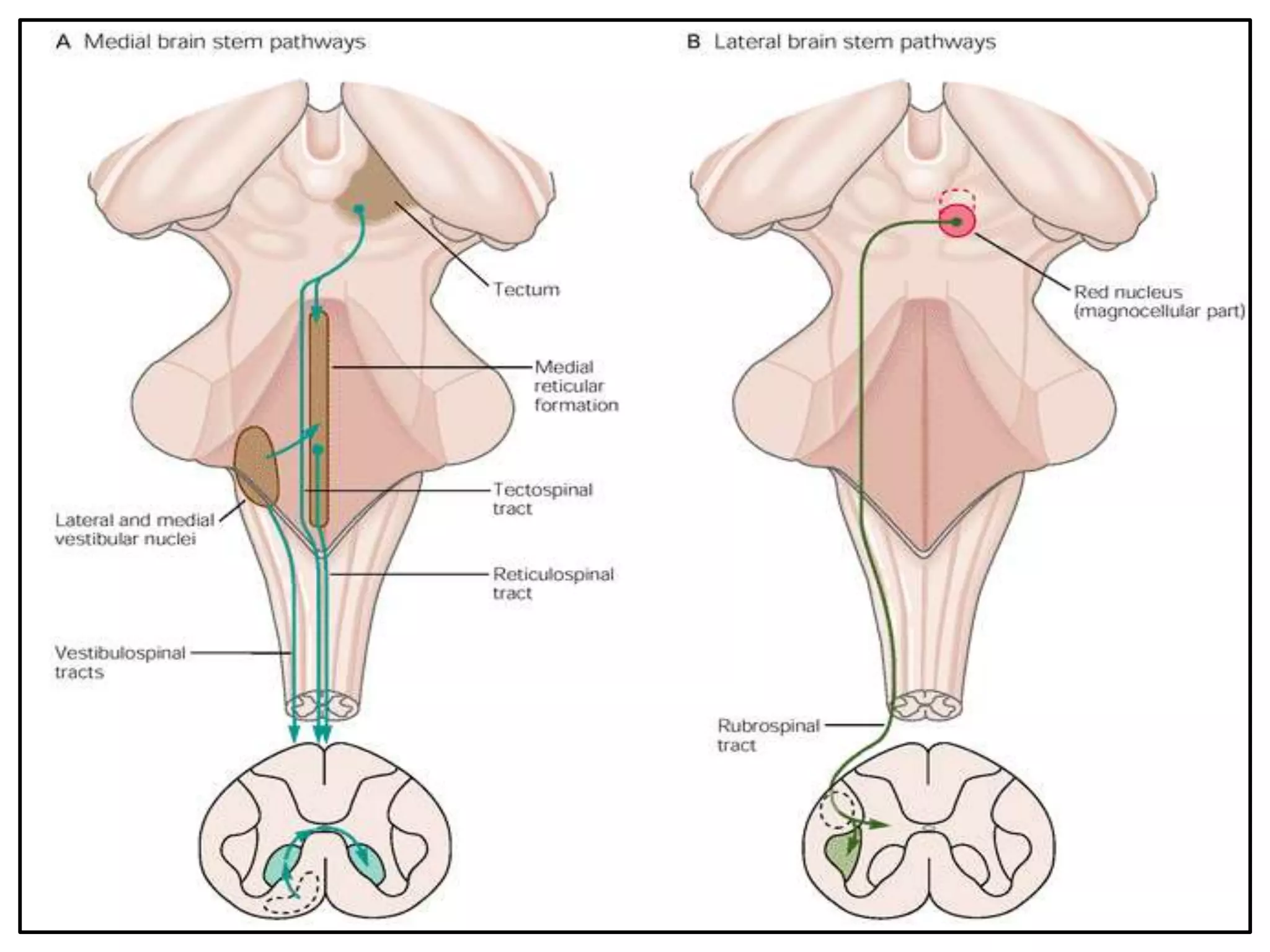
h• Hans Kuypers classification:
 Medial Brain stem pathway
-- Vestibulospinal tract
-- Reticulospinal tract
-- Tectospinal tract
 Lateral Brain stem pathway
-- Rubrospinal tract
Experimental evidence:
Transection of the direct pathway in Rhesus
monkeys (with intact Indirect pathways):
 difficulty in using the distal parts of their limbs.
 unable to reach toward & pick up food with their fingers
 they used the entire arm to sweep the food toward
them.
-- Lawrence & Kuypers, 1968
--Principles of Neural Science, 5th Edn
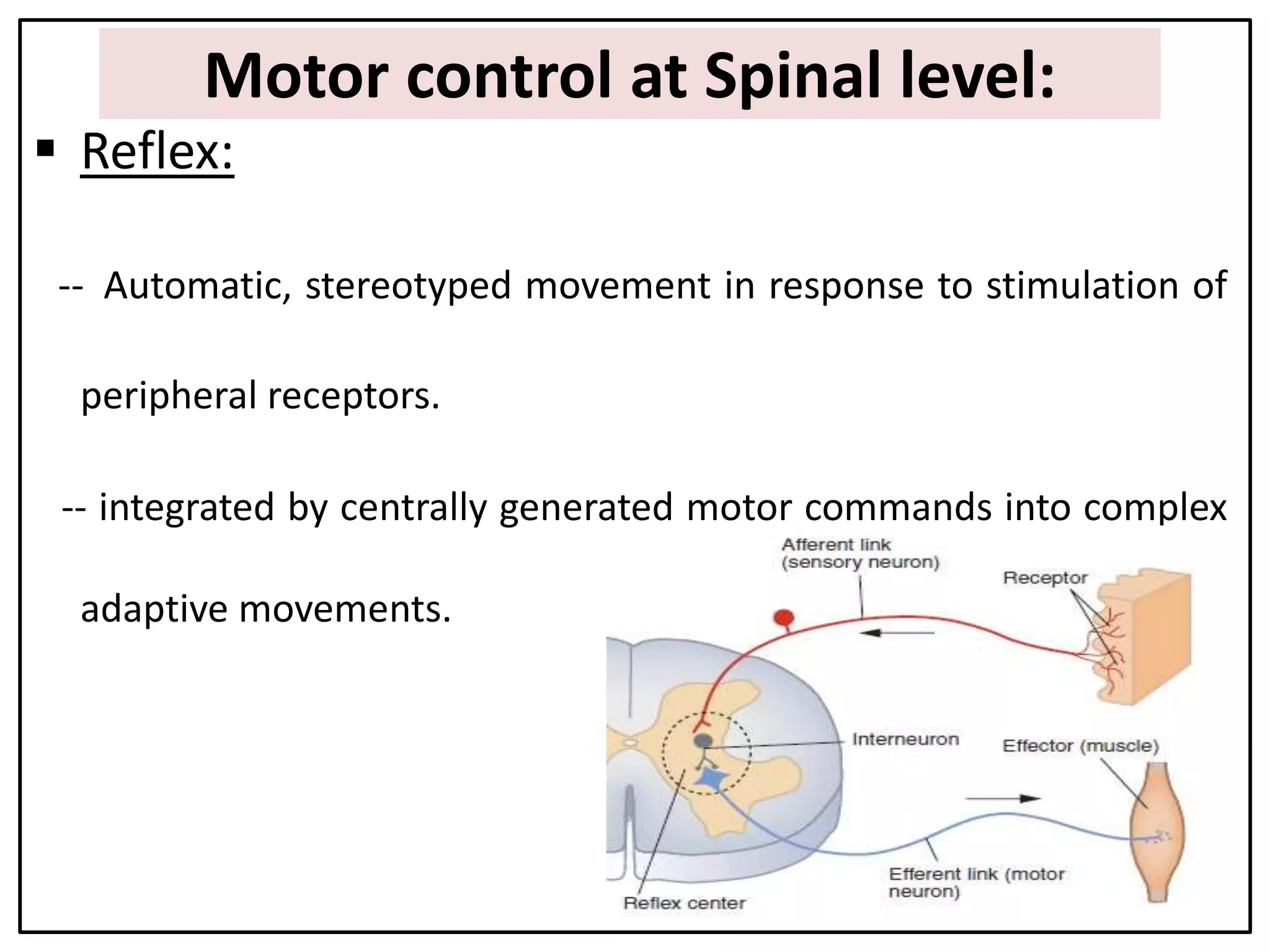
Motor control at Spinal level:
 Reflex:
-- Automatic, stereotyped movement in response to stimulation of
peripheral receptors.
-- integrated by centrally generated motor commands into complex
adaptive movements.
Central pattern generator:
• Neural network within CNS that give rise to rhythmic
motor activity independent of sensory inputs.
• Ex- Motor behavior such as respiration, walking,
feeding, swimming, flying.
• Studied extensively in lampreys, snails, leeches, flies,
frogs, chicks etc.
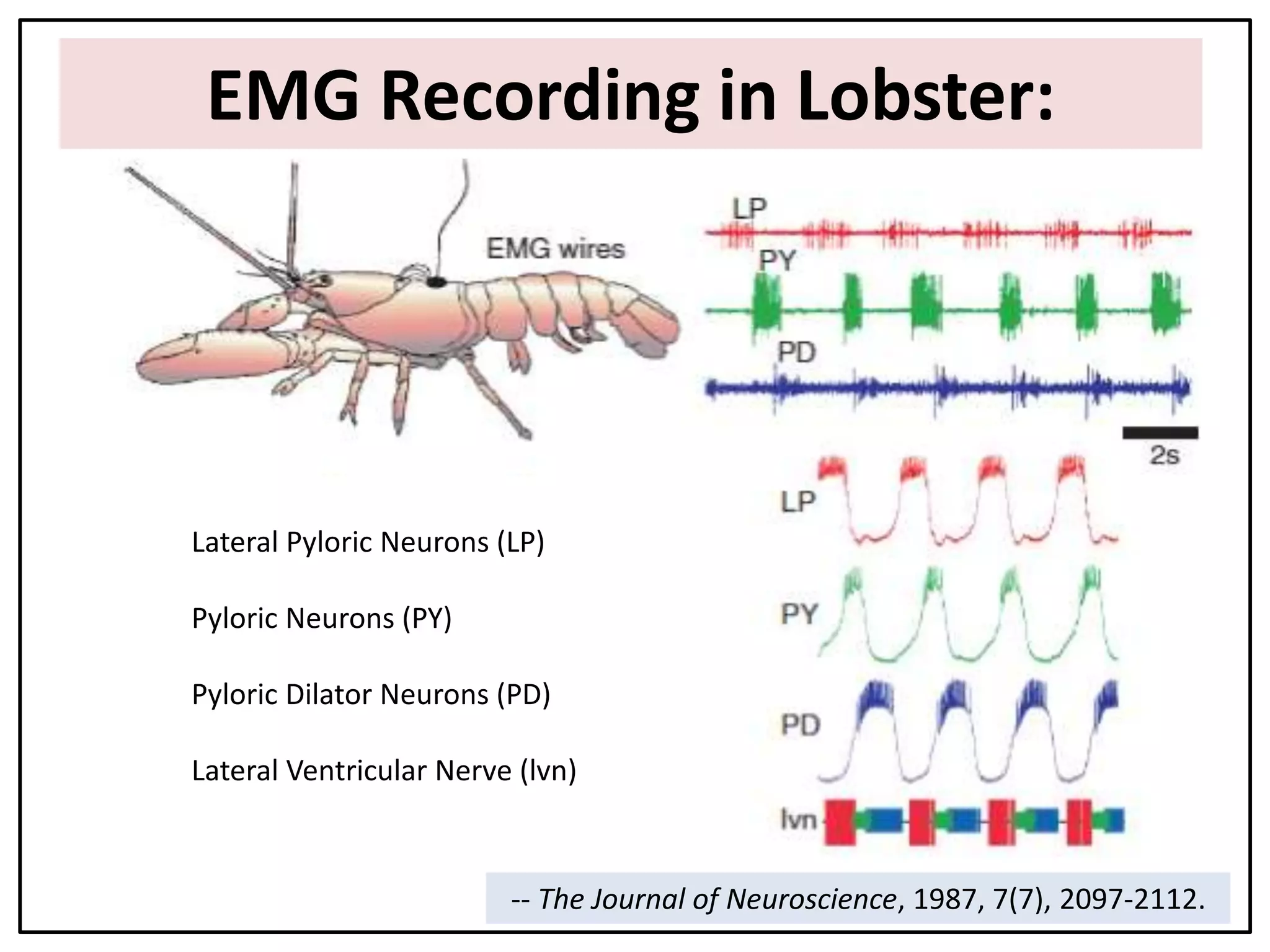
EMG Recording in Lobster:
K
K
K
K
K
k
k
H
H
H
H
H
H
H
H
H
H
-- The Journal of Neuroscience, 1987, 7(7), 2097-2112.
Lateral Pyloric Neurons (LP)
Pyloric Neurons (PY)
Pyloric Dilator Neurons (PD)
Lateral Ventricular Nerve (lvn)
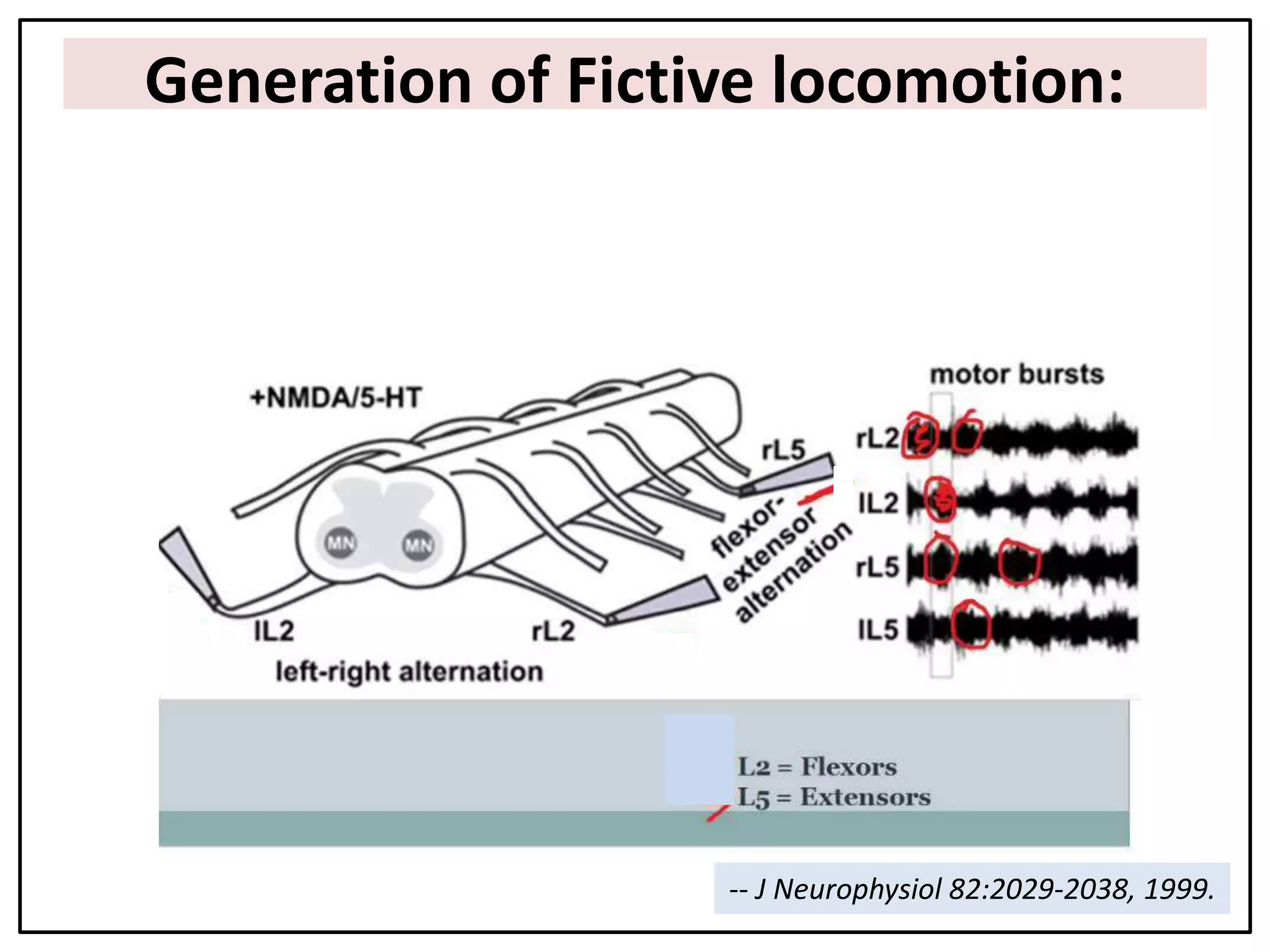
Generation of Fictive locomotion:
H
H
H
H
H
H
H
H
H
H
H
H
h
H
H
H
H
H
H
H
H
H
H
-- J Neurophysiol 82:2029-2038, 1999.
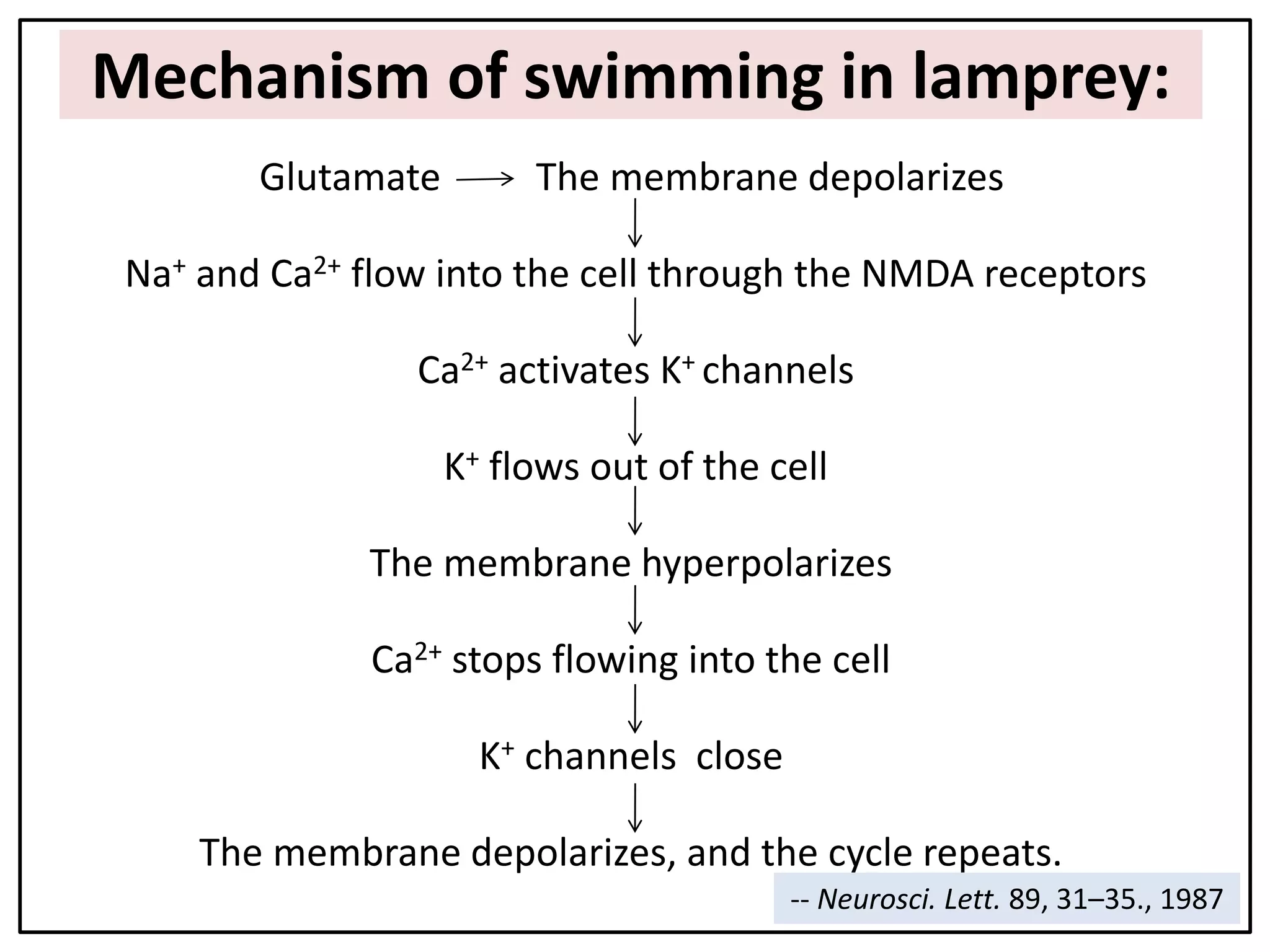
Mechanism of swimming in lamprey:
Glutamate The membrane depolarizes
Na+ and Ca2+ flow into the cell through the NMDA receptors
Ca2+ activates K+ channels
K+ flows out of the cell
The membrane hyperpolarizes
Ca2+ stops flowing into the cell
K+ channels close
The membrane depolarizes, and the cycle repeats.
-- Neurosci. Lett. 89, 31–35., 1987
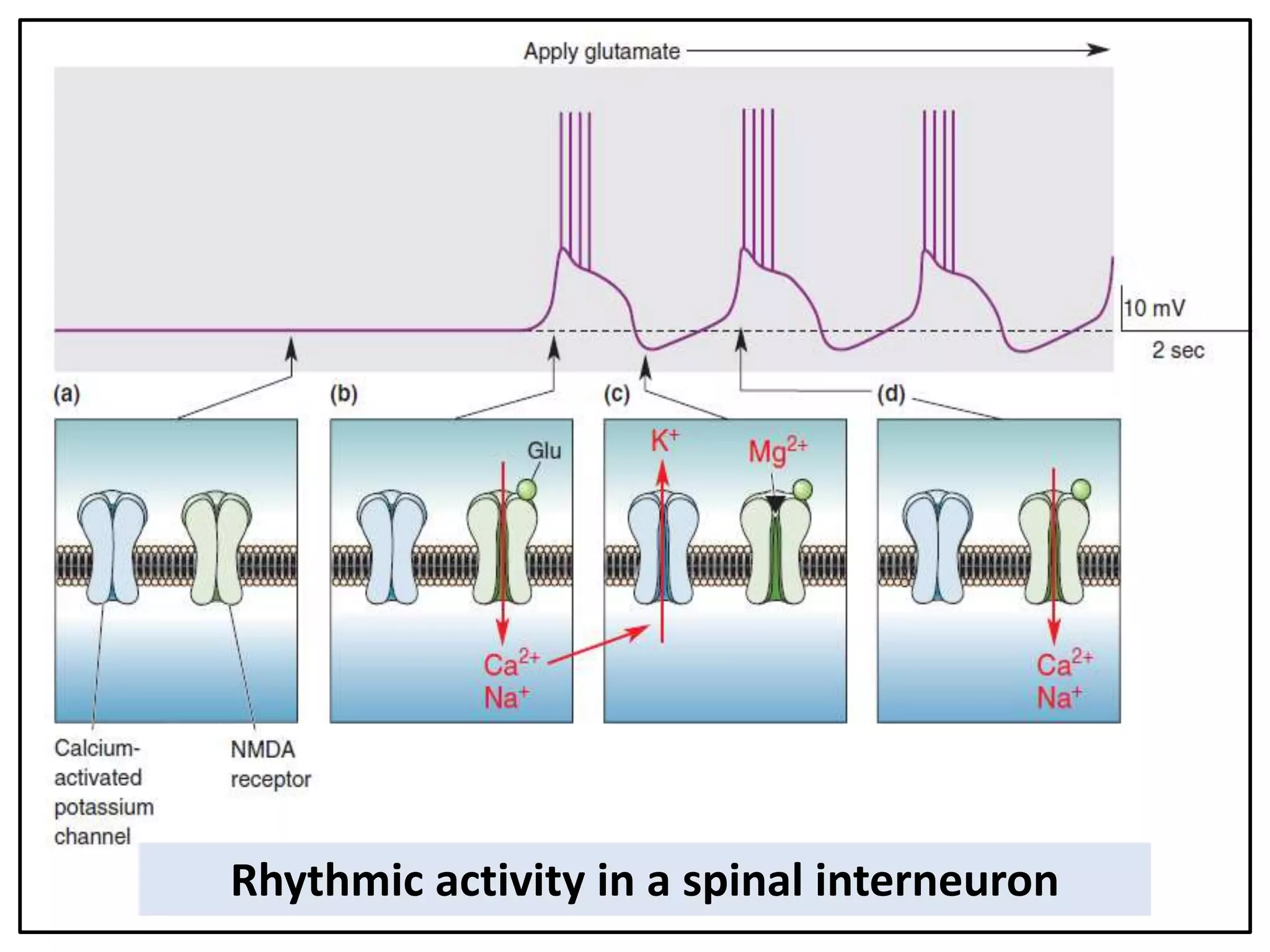
Rhythmic activity in a spinal interneuron
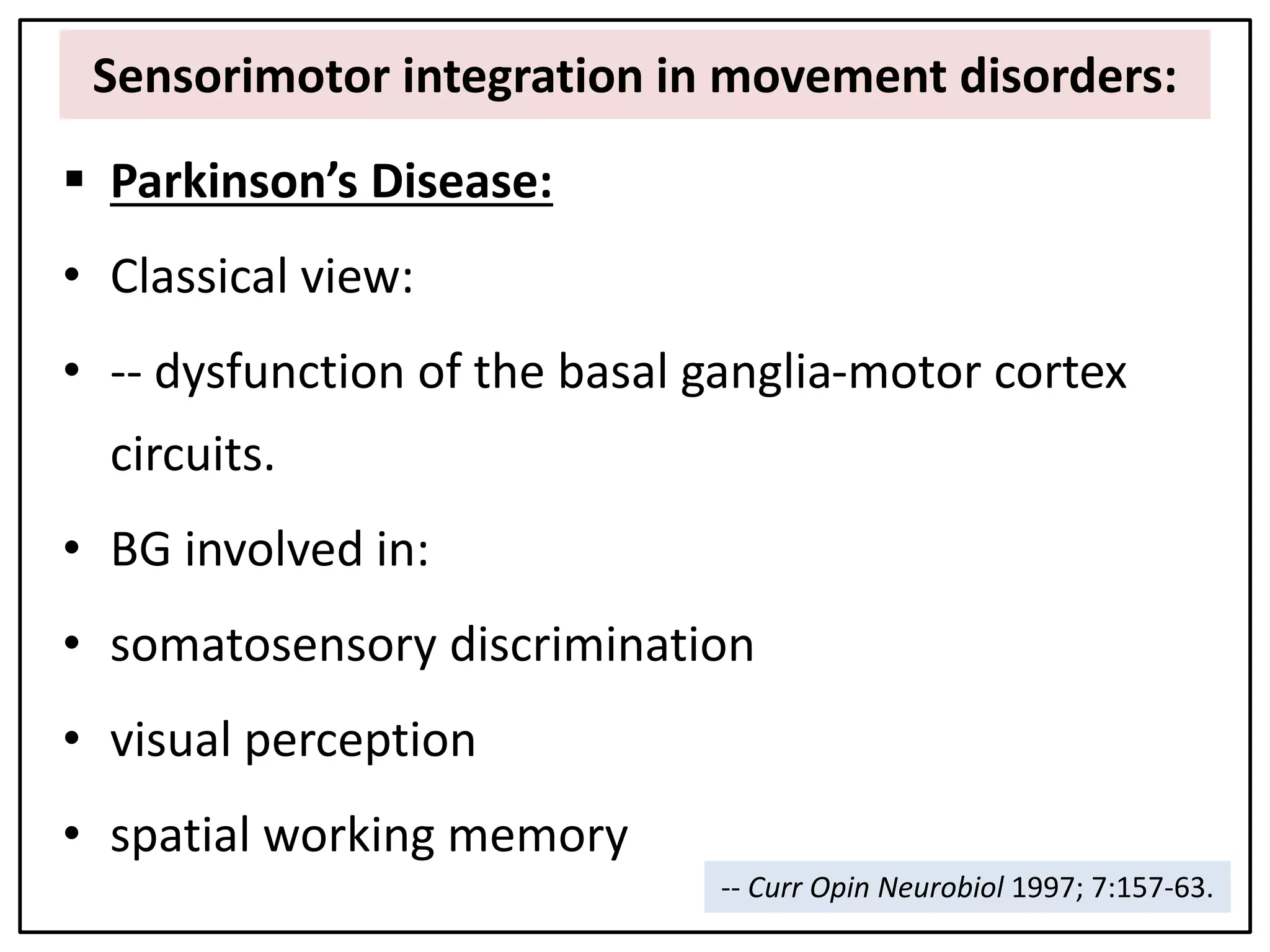
Sensorimotor integration in movement disorders:
 Parkinson’s Disease:
• Classical view:
• -- dysfunction of the basal ganglia-motor cortex
circuits.
• BG involved in:
• somatosensory discrimination
• visual perception
• spatial working memory
-- Curr Opin Neurobiol 1997; 7:157-63.
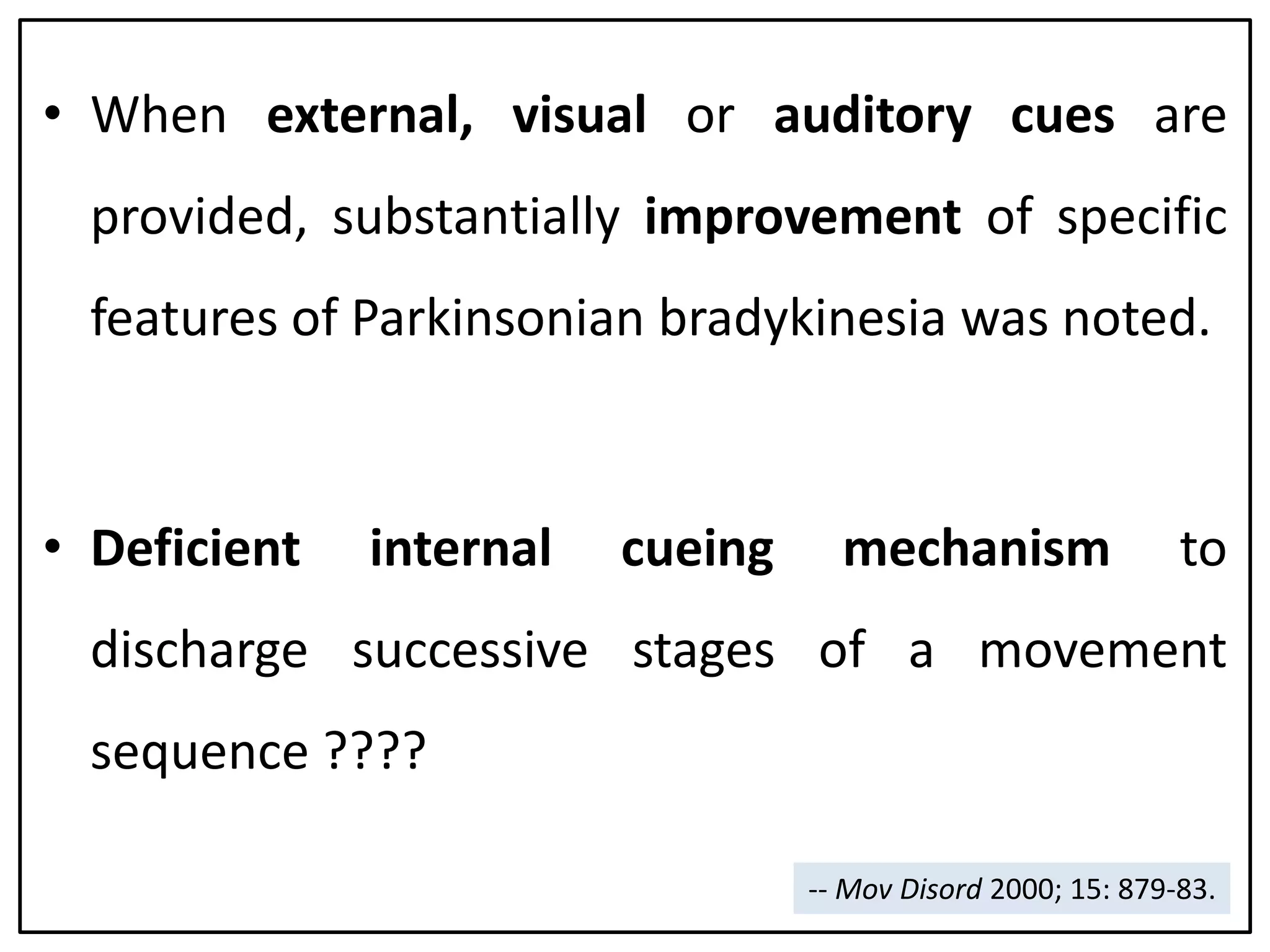
• When external, visual or auditory cues are
provided, substantially improvement of specific
features of Parkinsonian bradykinesia was noted.
• Deficient internal cueing mechanism to
discharge successive stages of a movement
sequence ????
-- Mov Disord 2000; 15: 879-83.
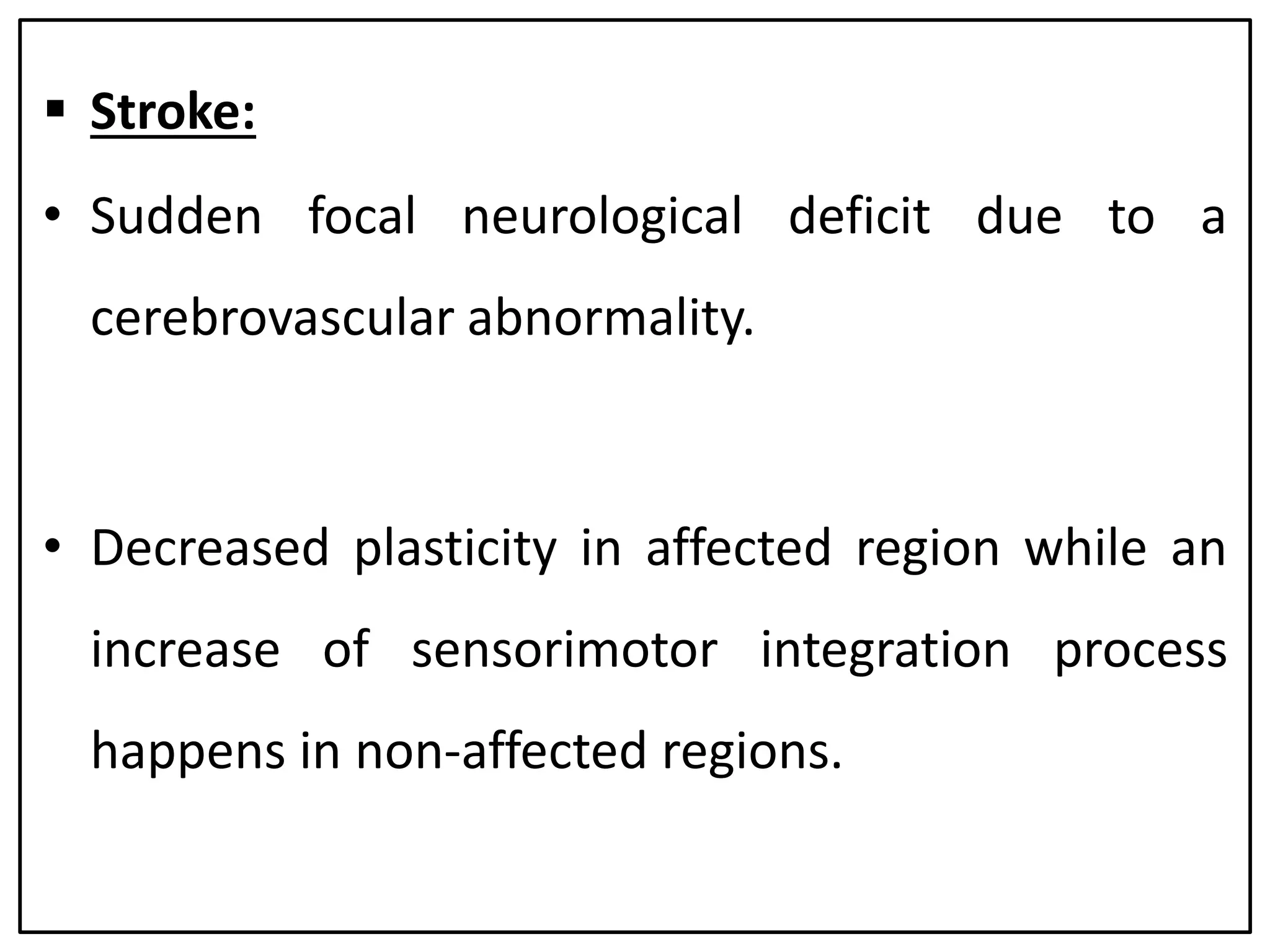
 Stroke:
• Sudden focal neurological deficit due to a
cerebrovascular abnormality.
• Decreased plasticity in affected region while an
increase of sensorimotor integration process
happens in non-affected regions.
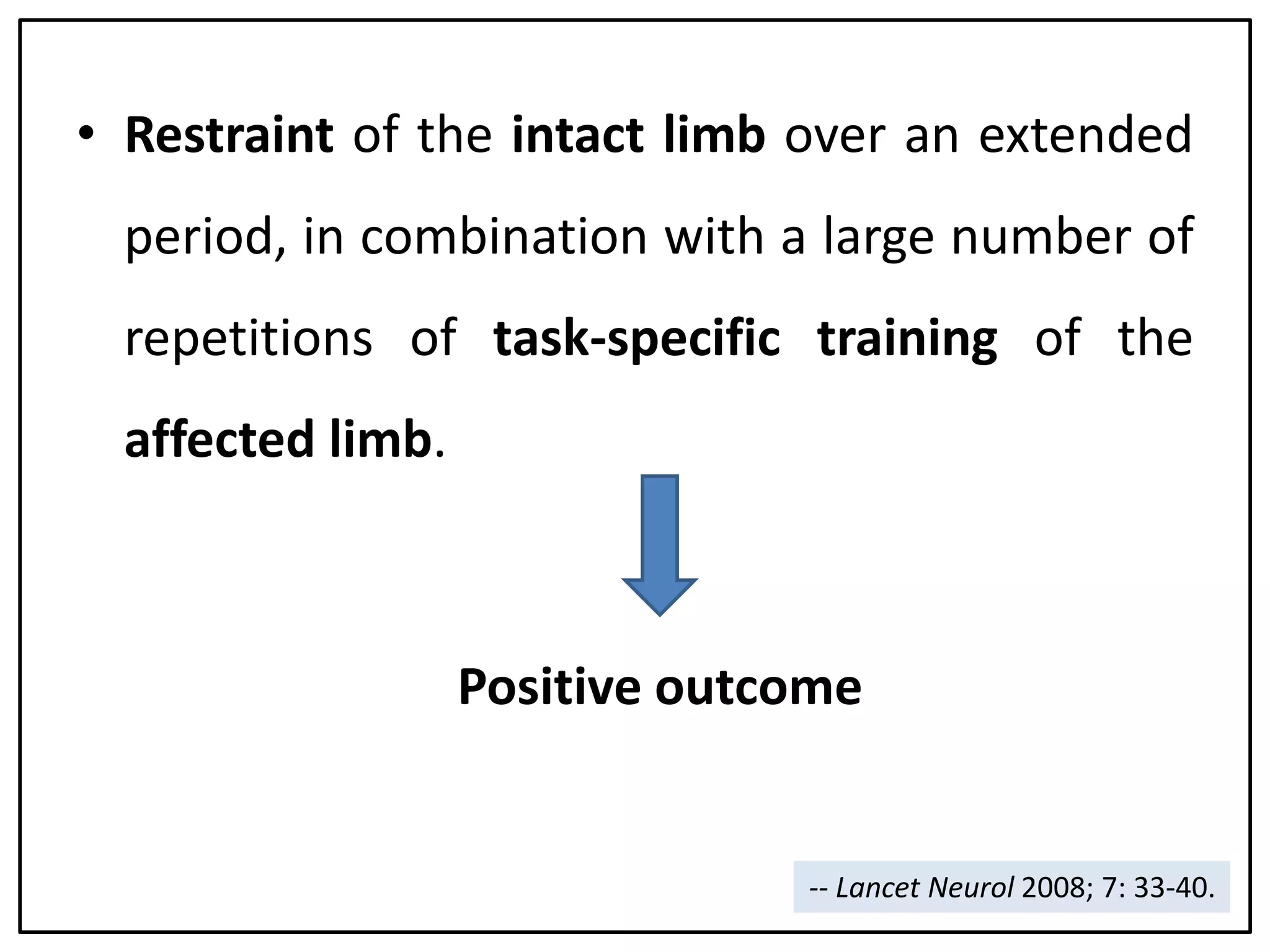
• Restraint of the intact limb over an extended
period, in combination with a large number of
repetitions of task-specific training of the
affected limb.
Positive outcome
-- Lancet Neurol 2008; 7: 33-40.
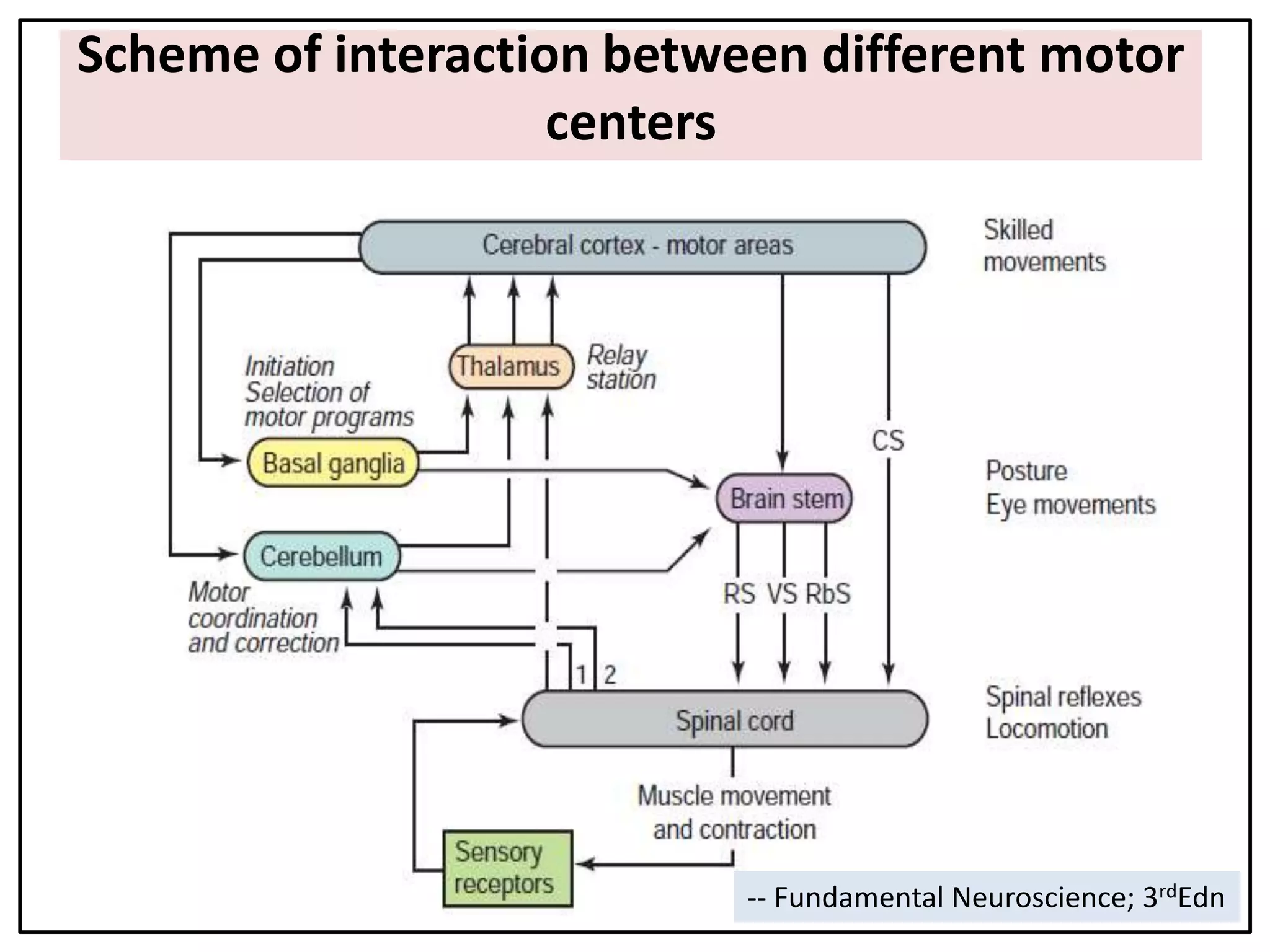
Scheme of interaction between different motor
centers
-- Fundamental Neuroscience; 3rdEdn
Bibliography:
• Principles of Neural Science, 5th Edition, Eric Kandel.
• Fundamental Neuroscience, 3rd Edition, Larry Squire
• Neuroscience, 3rd Edition, Dale Purves
• The Central Nervous System, 4th Edition, Per Brodal
• Neuroscience, 3rd Edition, Mark Bear
• Modulation of the lobster pyloric rhythm by the peptide proctolin, The Journal of
Neuroscience, 1987, 7(7), 2097-2112.
• The mammalian central pattern generator for locomotion, Brain Research Reviews,
2009 (62) 45-56.
• Interaction Between Disinhibited Bursting and Fictive Locomotor Patterns in the
Rat Isolated Spinal Cord, J Neurophysiol ,1999, (82) 2029-2038.
• Jerome N. Sanes and John P. Donoghue, Plasticity & Primary cortex, Annu. Rev.
Neurosci., 2000. (23)393–415.
• Brown LL, Schneider JS, Lidsky TI. Sensory and cognitive functions of the basal
ganglia. Curr Opin Neurobiol 1997; 7: 157-63.
• Marchese R, Diverio M, Zucchi F, Lentino C, Abbruzzese G. The role of sensory
cues in the rehabilitation of Parkinsonian patients: a comparison of two
physical therap. Mov Disord 2000; 15: 879-83.
• Wolf SL, Winstein CJ, Miller JP, Thompson PA, Taub E, Uswatte G, et al.
Retention of upper limb function in stroke survivors who have received
constraint-induced movement therapy: the EXCITE randomised trial. Lancet
Neurol 2008; 7: 33-40.
• D.M. Wolpert, Z. Ghahramani and M.I. Jordon. An internal model for
sensorimotor integration. Science, 269, 1880-1882 (1995).
• Grillner, S., Buchanan, J.T., Lansner, A., 1988. Simulation of the segmental burst
generating network for locomotion in lamprey. Neurosci. Lett. 89, 31–35.
• M. Larkum. A cellular mechanism for cortical association.Trends in
Neurosciences, March 2013, Vol. 36, No. 3.
d
“All mankind can do is to move things…
whether whispering a syllable or felling
a forest.”
--Sir Charles Scott Sherrington
h
Thank You !!!!

Sensory motor processing in planning and execution of movement

  • 1.
    Sensory-motor processing inplanning and execution of movement Subhadeep Dutta Gupta M.Phil Scholar Department of Neurophysiology, NIMHANS
  • 2.
  • 3.
    Introduction • Movement isan important feature of living organism. • All interaction with the surrounding world is through motor system. • The motor system continues to develop through maturation of neuronal circuitry and by learning through different motor activities during the first 15 years of life.
  • 4.
    Hierarchy of motorcontrol: • Background:  Jackson, (1889) : higher motor centers controlling simple movements.  William James, (1890) : voluntary movement is secondary to reflexive actions, and involves anticipatory image.  C. Sherrington, (1906) : distinguished between upper & lower motor neurons.  Keele, (1968) : ordered nature of high level motor programs for feed- forward control of movements.
  • 5.
    3 levels inhierarchy of motor control: h Cerebral cortex: -- primary motor & sensory cortex, premotor cortex, supplementary motor cortex -- mediated by Pyramidal system.  Brain Stem: -- Extrapyramidal system.  Spinal cord: -- ‘final common pathway’ modulated by higher centre. -- executive centre for reflexes & pattern generation.
  • 6.
    d Organization of themotor system:
  • 7.
    Cerebral Cortex: Representationof the motor functions: • J.H Jackson: -- Specific part of the cortex has a causal role in movement. • Fritsch, Hitzig, Ferrier: -- Electrical stimulation at specific region of the cortex evoked movements in contralateral body parts. -- Lesion of that region caused loss of motor control of the specific body part.
  • 8.
    Cerebral Cortex: Sensory &Motor Homunculus:
  • 9.
    Cytoarchitecture of motorcortex : -- Primary motor cortex is agranular. -- Layer IV (cell-packed granular layer) is very thin or nearly absent. -- Layer V (descending output layer) is thicker & contains the giant Betz cells. -- These neurons makes up around 30% of the fibres in the cortico-spinal tract. Betz cells of layer V
  • 10.
    Organization of precentralmotor area: --Principles of Neural Science, 5th Edn
  • 11.
    Internal Model: • Postulatedneural process that simulates the response of the motor system in order to estimate the outcome of a motor command. • The motor system makes use of internal models in order to control the musculoskeletal system during rapid, skilled, motor behaviour. • Ex – Size Mass estimation -- Science, 269, 1880-1882 (1995).
  • 12.
    Processing of sensoryinformation in the cerebral cortex --Principles of Neural Science, 5th Edn
  • 13.
    Cross talk ofassociation areas : --Principles of Neural Science, 5th Edn Motor & executive control Emotional responses
  • 14.
    • Parietal AssociationCortex: -- key role in the visual guidance of motor behaviour. -- spatial perception & cognition. -- suited for such computation as it is connected with visual, somatosensory & motor areas of cortex. • Damage: -- Ideomotor apraxia -- Impaired speech repetition -- Personal neglect syndrome
  • 15.
    ‘Binding’ Conceptual representation offeature binding & representation: Trends in Neurosciences, 2013(36)3
  • 16.
    • Temporal AssociationCortex: -- Object recognition and semantic memory.  Inferotemporal neurons : -- are sensitive to the shape, colour, and texture of an object. -- insensitive to size and location of the objects. -- activity is not influenced by the motor behaviour of the animal. • Damage: -- semantic dementia Visual object agnosia
  • 17.
    Connection between prefrontal& motor cortex: --Principles of Neural Science, 5th Edn Emotional & cognitive processes in the PFC controls the motor behaviour
  • 18.
    Primary Motor Cortex: •Primary motor cortex neurons fire 5-100 msec before the onset of a movement. • Primary motor cortex encodes the force of a movement (Evarts et al., 1968).file:///D:/Presentation%20on%20Movement/Videos/1.Force%20of%20movement.swf • It encodes the direction of movement (Georgopoulas et al., 1982). -- Many neurons are selective for a particular direction of movement. file:///D:/Presentation%20on%20Movement/Videos/2.Direction%20of%20mov ement.swf • It encodes the extent of movement. • It also encodes the speed of movement. file:///D:/Presentation%20on%20Movement/Videos/3.Speed%20of%20movement.swf -- Bell shaped curve
  • 19.
    • Premotor cortexneurons signal the preparation for movement (Weinrich and Wise,1982). file:///D:/Presentation%20on%20Movement/Videos/4.Pr eparation%20of%20movement.swf -- Motor- set neurons ‘Go’ signal. • Premotor cortex is sensitive to the behavioural context of a particular movement (Iacoboni et al., 2005).file:///D:/Presentation%20on%20Movement/Videos/5..Behavior al%20context.swf • Premotor cortex signals correct and incorrect actions. Premotor Cortex:
  • 20.
    g• Premotor cortexneurons signal various sensory aspects associated with particular motor acts. -- Some neurons fire when a subject is performing a particular action. -- Same neuron fires selectively when the subject sees someone performing a particular action. -- It also fires selectively even without a visual or motor activity. -- Concept of Mirror & Cannonical Neurons (Rizzolatti et al., 1996)
  • 21.
    Supplementary Motor Area: •SMA is involved in the transformation of kinematic to dynamic information. • SMA responds to sequences of movements and to mental rehearsal of sequences of movements (Roland et al., 1980).file:///D:/Presentation%20on%20Movement/Videos/6.Mental%20rehearsal.swf
  • 22.
    Descending pathways thatmediate motor functions: --Fundamental Neuroscience; 3rd Edn
  • 23.
  • 24.
    The Malleable MotorMap: -- Annu. Rev. Neurosci. 2000. 23:393–415
  • 25.
    Phantom Limb &Mirror Therapy: Amputated Limb Intact Limb
  • 26.
    Motor control centersin the brain stem: The major brain stem nuclei sending fibers to the spinal cord. --The Central Nervous System,4th Edn
  • 27.
    h• Hans Kuypersclassification:  Medial Brain stem pathway -- Vestibulospinal tract -- Reticulospinal tract -- Tectospinal tract  Lateral Brain stem pathway -- Rubrospinal tract
  • 30.
    Experimental evidence: Transection ofthe direct pathway in Rhesus monkeys (with intact Indirect pathways):  difficulty in using the distal parts of their limbs.  unable to reach toward & pick up food with their fingers  they used the entire arm to sweep the food toward them. -- Lawrence & Kuypers, 1968
  • 31.
    --Principles of NeuralScience, 5th Edn
  • 32.
    Motor control atSpinal level:  Reflex: -- Automatic, stereotyped movement in response to stimulation of peripheral receptors. -- integrated by centrally generated motor commands into complex adaptive movements.
  • 33.
    Central pattern generator: •Neural network within CNS that give rise to rhythmic motor activity independent of sensory inputs. • Ex- Motor behavior such as respiration, walking, feeding, swimming, flying. • Studied extensively in lampreys, snails, leeches, flies, frogs, chicks etc.
  • 34.
    EMG Recording inLobster: K K K K K k k H H H H H H H H H H -- The Journal of Neuroscience, 1987, 7(7), 2097-2112. Lateral Pyloric Neurons (LP) Pyloric Neurons (PY) Pyloric Dilator Neurons (PD) Lateral Ventricular Nerve (lvn)
  • 35.
    Generation of Fictivelocomotion: H H H H H H H H H H H H h H H H H H H H H H H -- J Neurophysiol 82:2029-2038, 1999.
  • 36.
    Mechanism of swimmingin lamprey: Glutamate The membrane depolarizes Na+ and Ca2+ flow into the cell through the NMDA receptors Ca2+ activates K+ channels K+ flows out of the cell The membrane hyperpolarizes Ca2+ stops flowing into the cell K+ channels close The membrane depolarizes, and the cycle repeats. -- Neurosci. Lett. 89, 31–35., 1987
  • 37.
    Rhythmic activity ina spinal interneuron
  • 38.
    Sensorimotor integration inmovement disorders:  Parkinson’s Disease: • Classical view: • -- dysfunction of the basal ganglia-motor cortex circuits. • BG involved in: • somatosensory discrimination • visual perception • spatial working memory -- Curr Opin Neurobiol 1997; 7:157-63.
  • 39.
    • When external,visual or auditory cues are provided, substantially improvement of specific features of Parkinsonian bradykinesia was noted. • Deficient internal cueing mechanism to discharge successive stages of a movement sequence ???? -- Mov Disord 2000; 15: 879-83.
  • 40.
     Stroke: • Suddenfocal neurological deficit due to a cerebrovascular abnormality. • Decreased plasticity in affected region while an increase of sensorimotor integration process happens in non-affected regions.
  • 41.
    • Restraint ofthe intact limb over an extended period, in combination with a large number of repetitions of task-specific training of the affected limb. Positive outcome -- Lancet Neurol 2008; 7: 33-40.
  • 42.
    Scheme of interactionbetween different motor centers -- Fundamental Neuroscience; 3rdEdn
  • 43.
    Bibliography: • Principles ofNeural Science, 5th Edition, Eric Kandel. • Fundamental Neuroscience, 3rd Edition, Larry Squire • Neuroscience, 3rd Edition, Dale Purves • The Central Nervous System, 4th Edition, Per Brodal • Neuroscience, 3rd Edition, Mark Bear • Modulation of the lobster pyloric rhythm by the peptide proctolin, The Journal of Neuroscience, 1987, 7(7), 2097-2112. • The mammalian central pattern generator for locomotion, Brain Research Reviews, 2009 (62) 45-56. • Interaction Between Disinhibited Bursting and Fictive Locomotor Patterns in the Rat Isolated Spinal Cord, J Neurophysiol ,1999, (82) 2029-2038. • Jerome N. Sanes and John P. Donoghue, Plasticity & Primary cortex, Annu. Rev. Neurosci., 2000. (23)393–415.
  • 44.
    • Brown LL,Schneider JS, Lidsky TI. Sensory and cognitive functions of the basal ganglia. Curr Opin Neurobiol 1997; 7: 157-63. • Marchese R, Diverio M, Zucchi F, Lentino C, Abbruzzese G. The role of sensory cues in the rehabilitation of Parkinsonian patients: a comparison of two physical therap. Mov Disord 2000; 15: 879-83. • Wolf SL, Winstein CJ, Miller JP, Thompson PA, Taub E, Uswatte G, et al. Retention of upper limb function in stroke survivors who have received constraint-induced movement therapy: the EXCITE randomised trial. Lancet Neurol 2008; 7: 33-40. • D.M. Wolpert, Z. Ghahramani and M.I. Jordon. An internal model for sensorimotor integration. Science, 269, 1880-1882 (1995). • Grillner, S., Buchanan, J.T., Lansner, A., 1988. Simulation of the segmental burst generating network for locomotion in lamprey. Neurosci. Lett. 89, 31–35. • M. Larkum. A cellular mechanism for cortical association.Trends in Neurosciences, March 2013, Vol. 36, No. 3.
  • 45.
    d “All mankind cando is to move things… whether whispering a syllable or felling a forest.” --Sir Charles Scott Sherrington
  • 46.