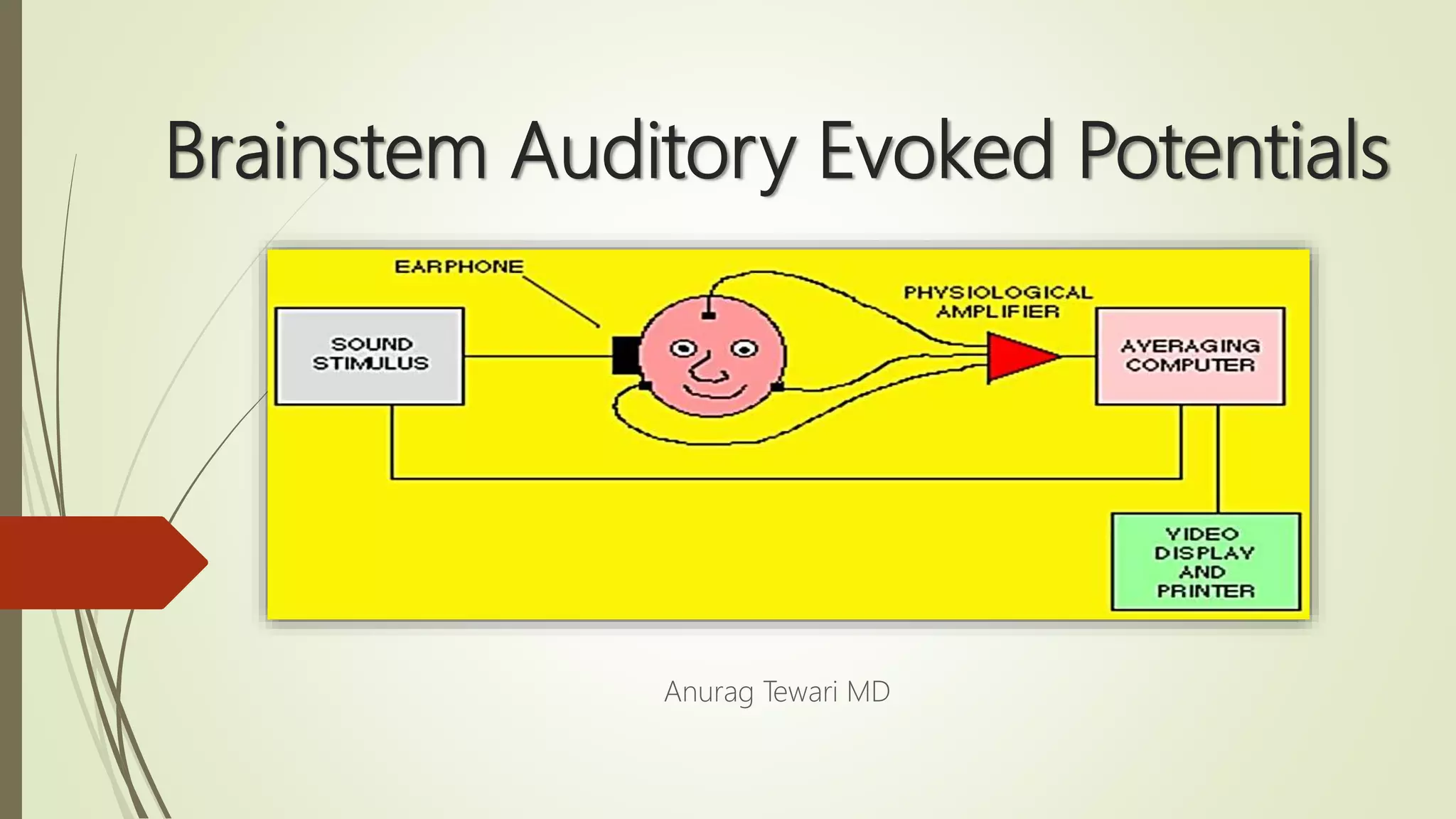
Brainstem Auditory Evoked Potentials
Anurag Tewari MD
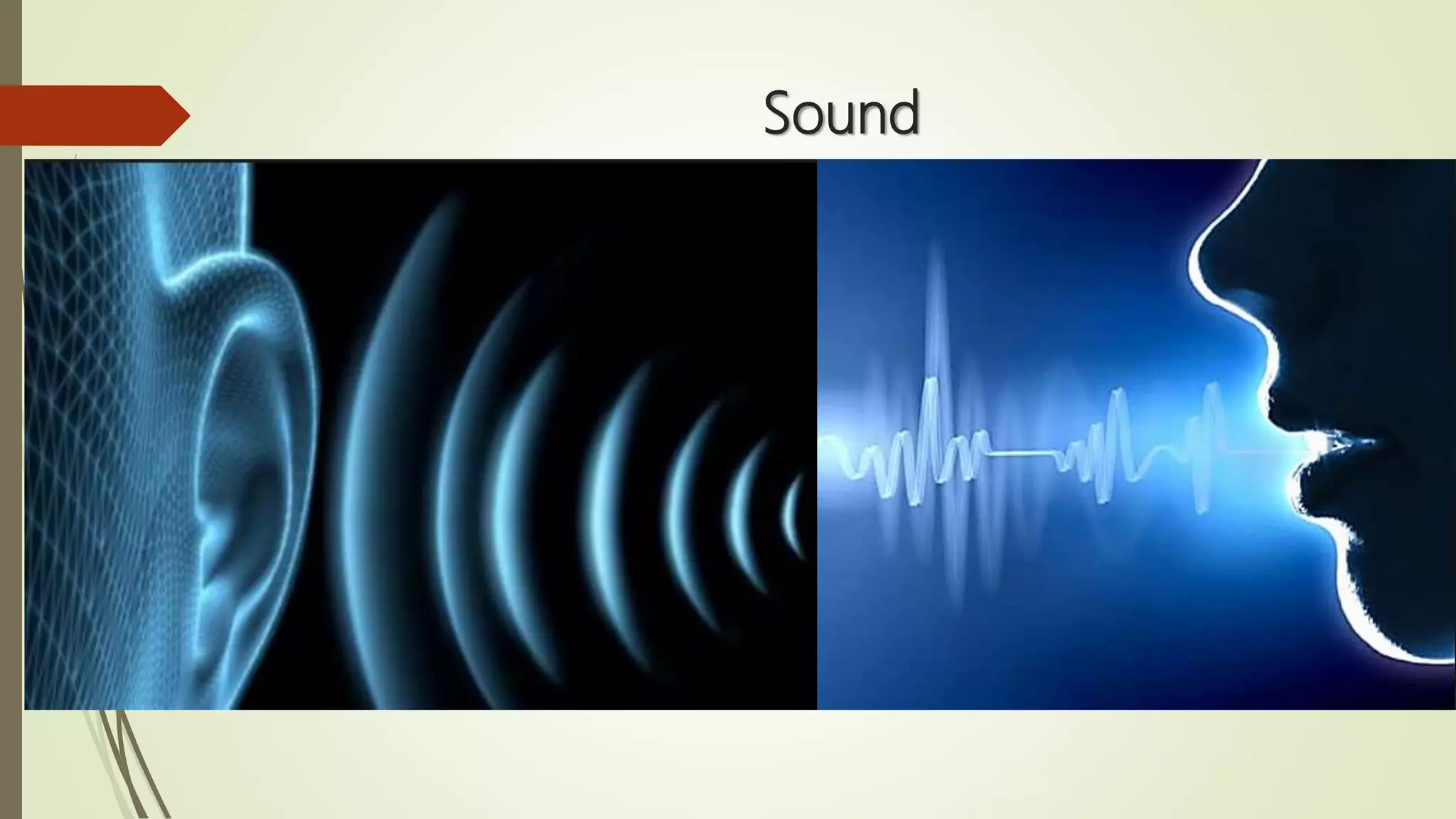
Sound
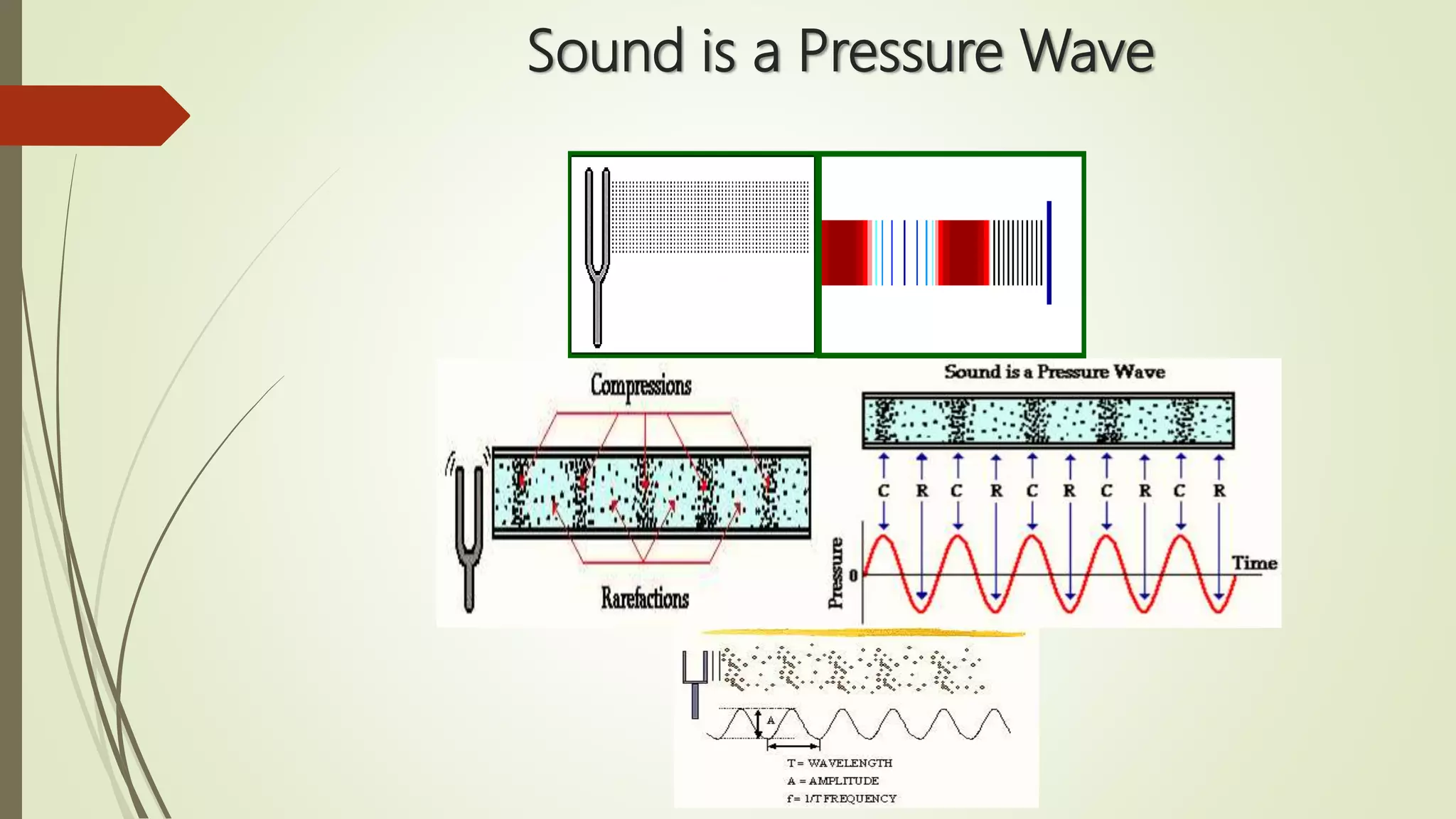
Sound is a Pressure Wave
Sound
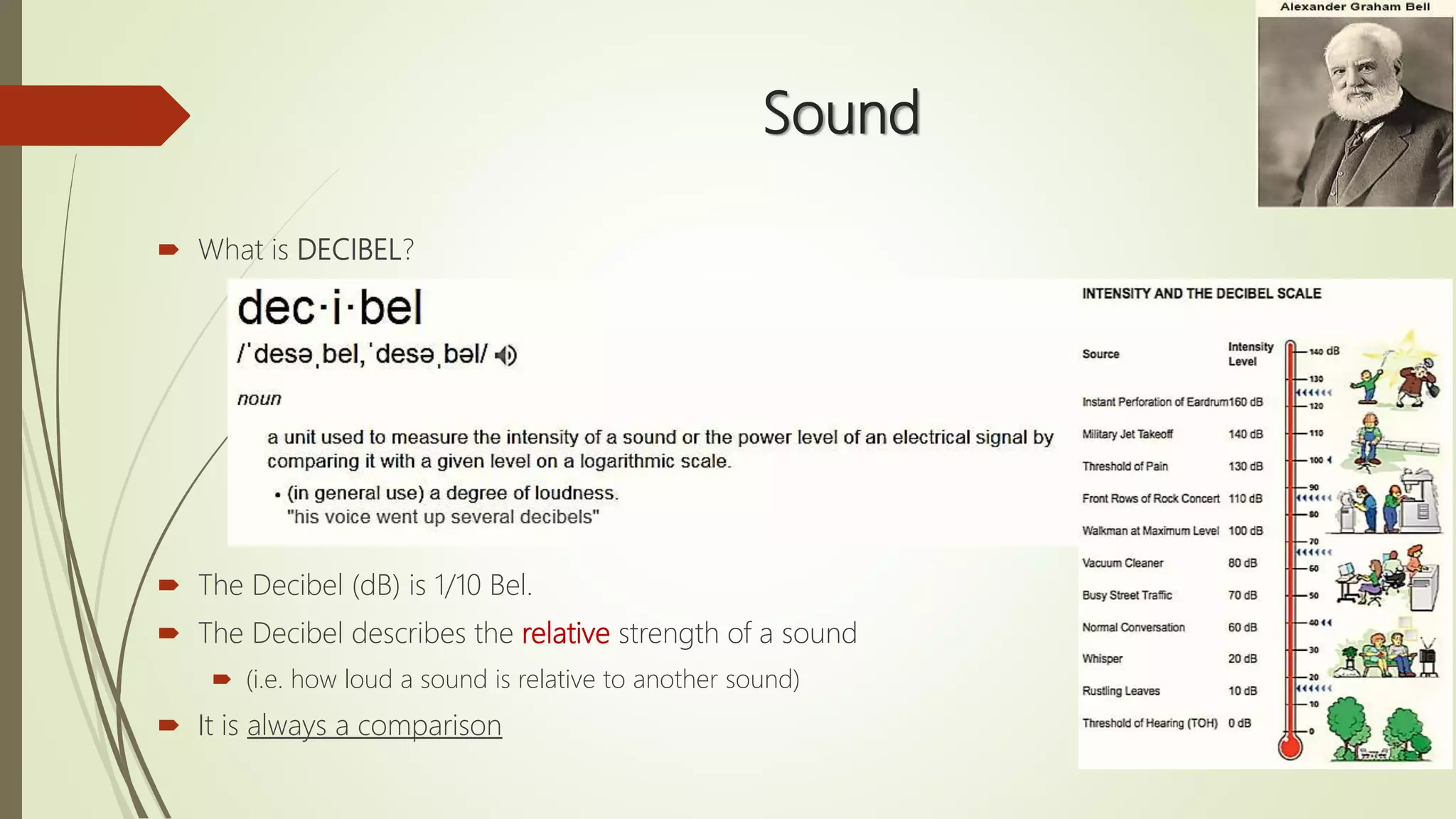
 What is DECIBEL?
 The Decibel (dB) is 1/10 Bel.
 The Decibel describes the relative strength of a sound
 (i.e. how loud a sound is relative to another sound)
 It is always a comparison
Sound
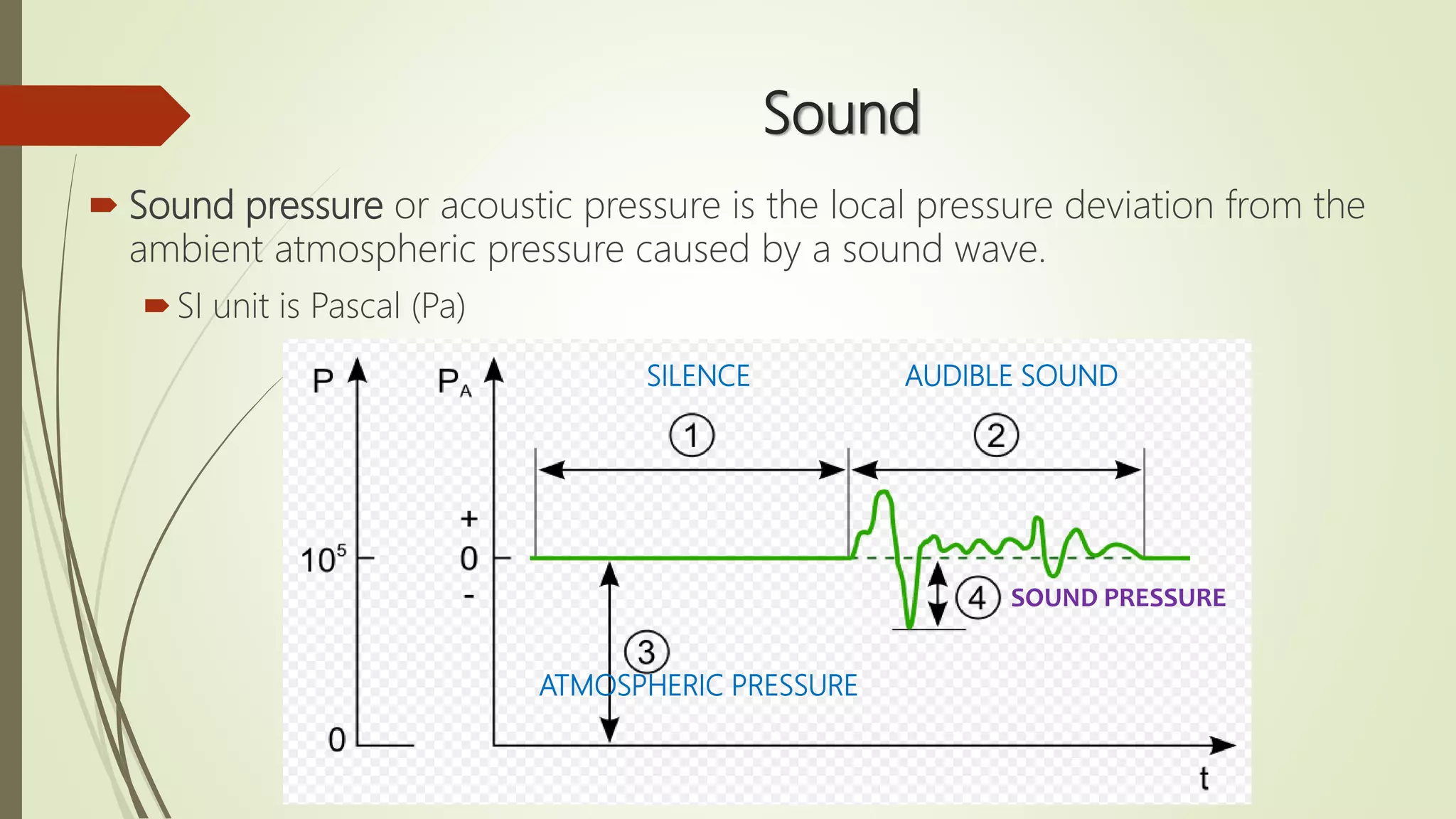
 Sound pressure or acoustic pressure is the local pressure deviation from the
ambient atmospheric pressure caused by a sound wave.
SI unit is Pascal (Pa)
SILENCE AUDIBLE SOUND
ATMOSPHERIC PRESSURE
SOUND PRESSURE
Sound
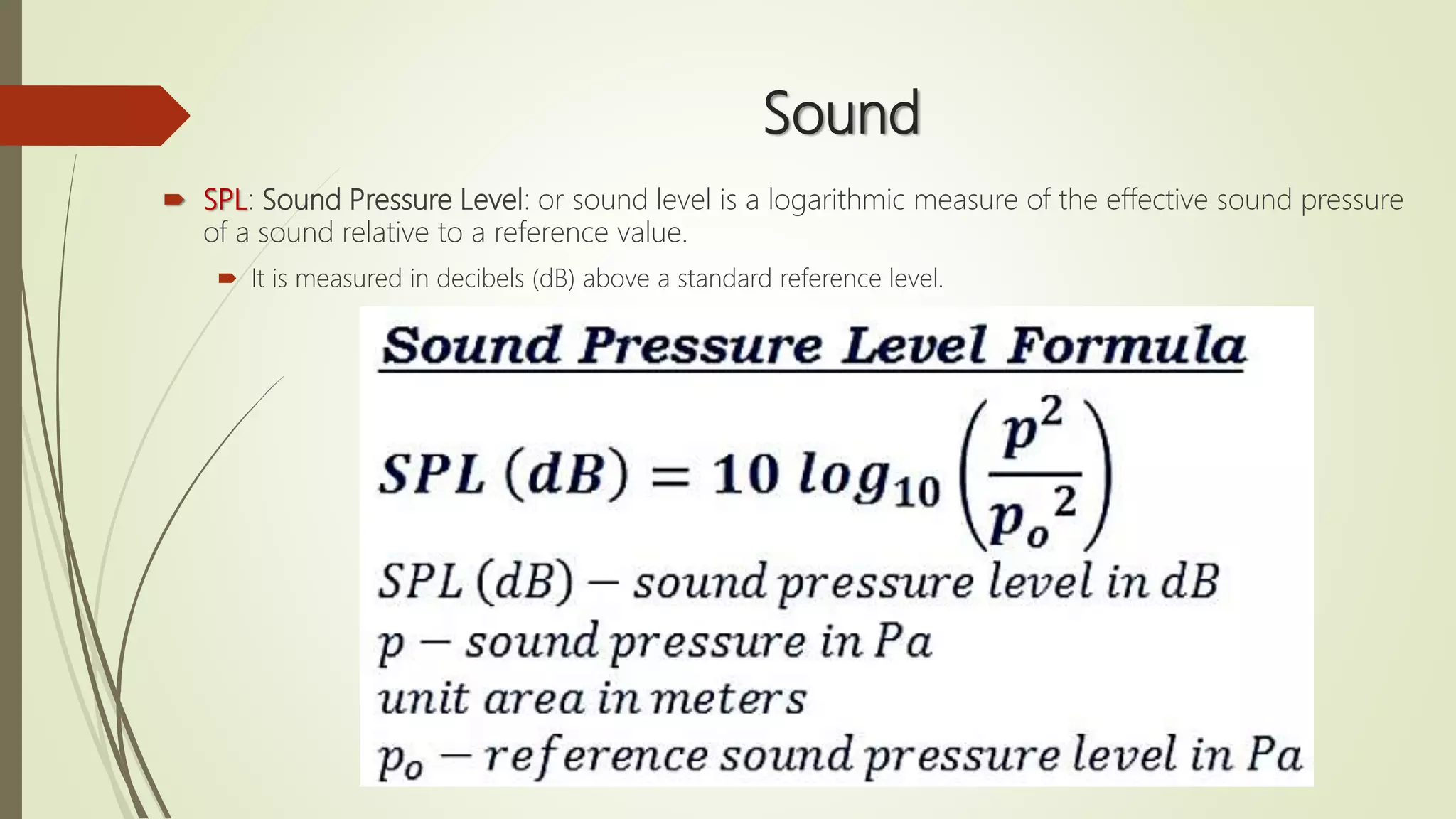
 SPL: Sound Pressure Level: or sound level is a logarithmic measure of the effective sound pressure
of a sound relative to a reference value.
 It is measured in decibels (dB) above a standard reference level.
History of BAEP
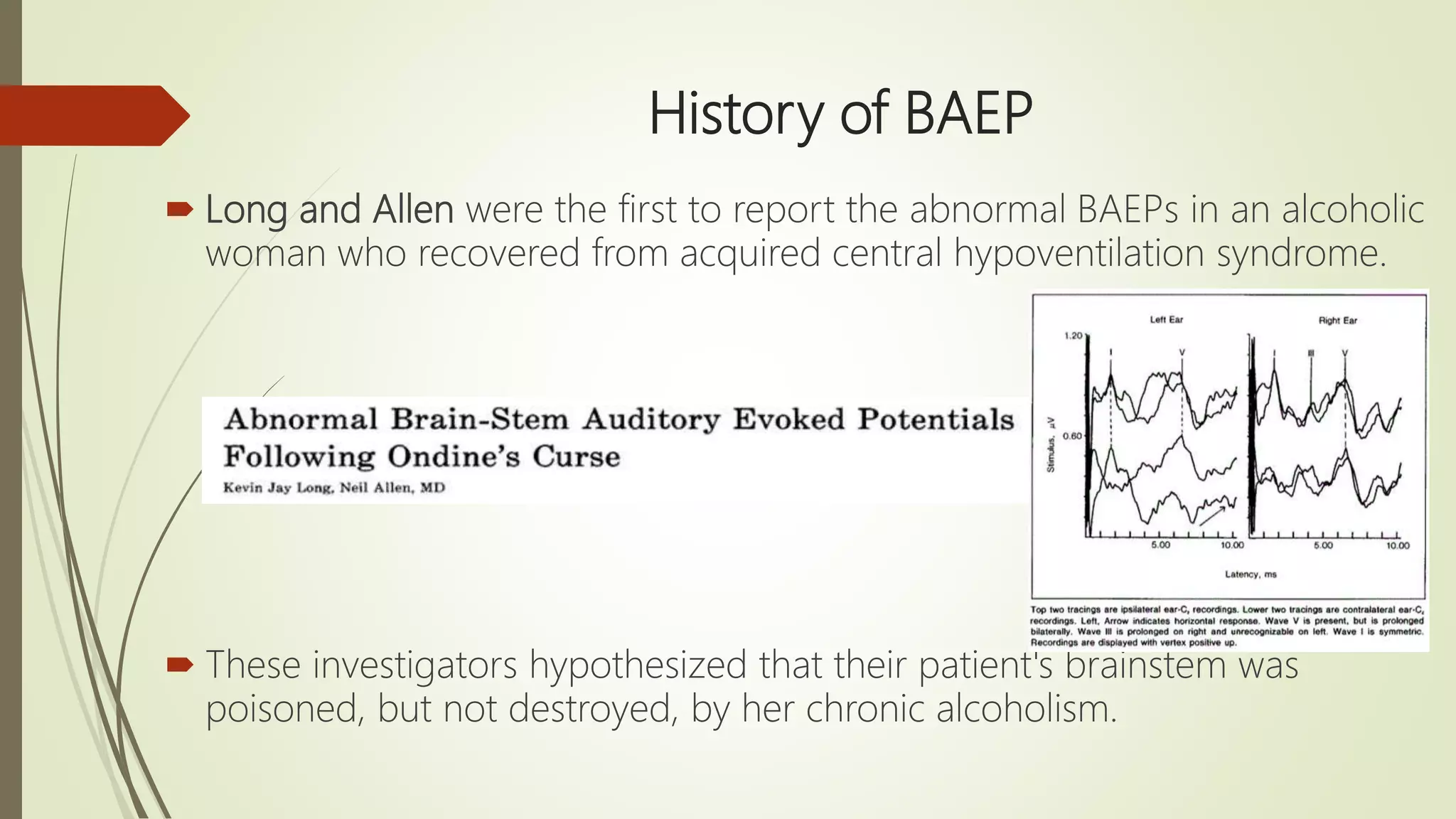
 Long and Allen were the first to report the abnormal BAEPs in an alcoholic
woman who recovered from acquired central hypoventilation syndrome.
 These investigators hypothesized that their patient's brainstem was
poisoned, but not destroyed, by her chronic alcoholism.
History of BAEP
 1967, Sohmer and Feinmesser were the first to publish ABRs recorded with
surface electrodes in humans which showed that cochlear potentials could be
obtained non-invasively.
 1971, Jewett and Williston gave a clear description of the human ABR and
correctly interpreted the later waves as arriving from the brainstem.
 1977, Selters and Brackman published landmark findings on prolonged inter-
peak latencies in tumor cases (greater than 1 cm).
 1974, Hecox and Galambos showed that the ABR could be used for threshold
estimation in adults and infants.
 1975, Starr and Achor were the first to report the effects on the ABR of CNS
pathology in the brainstem
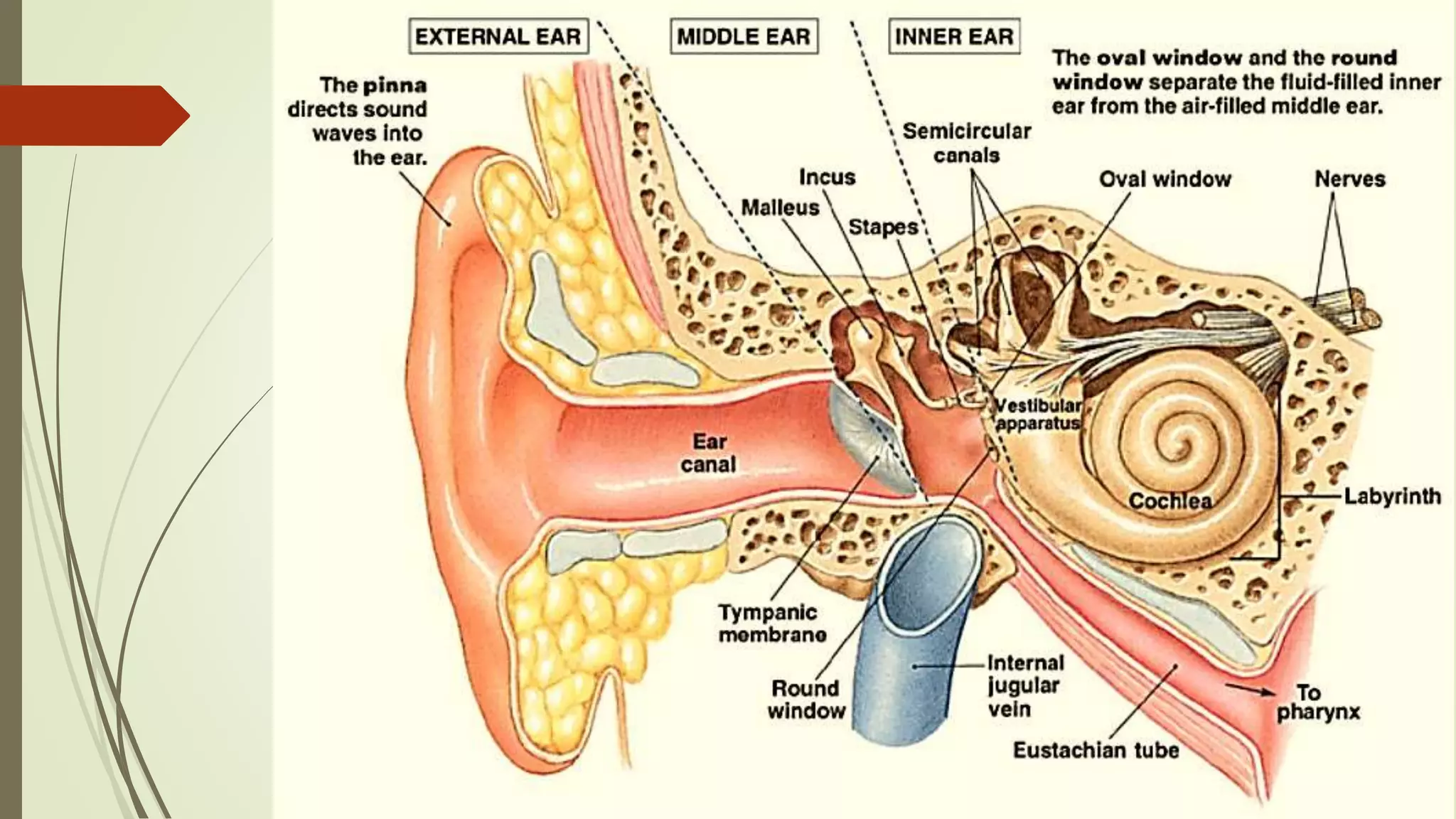
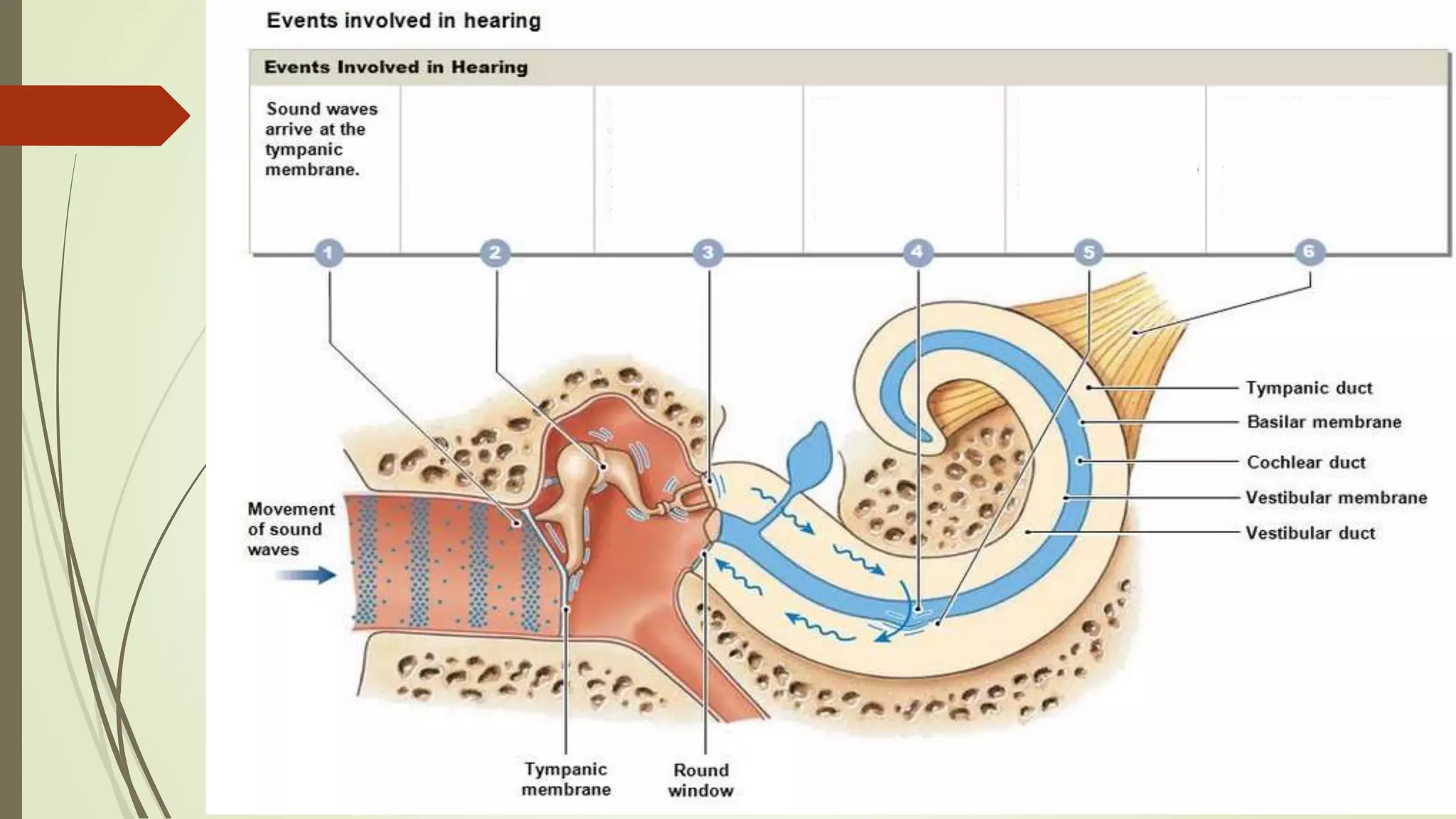
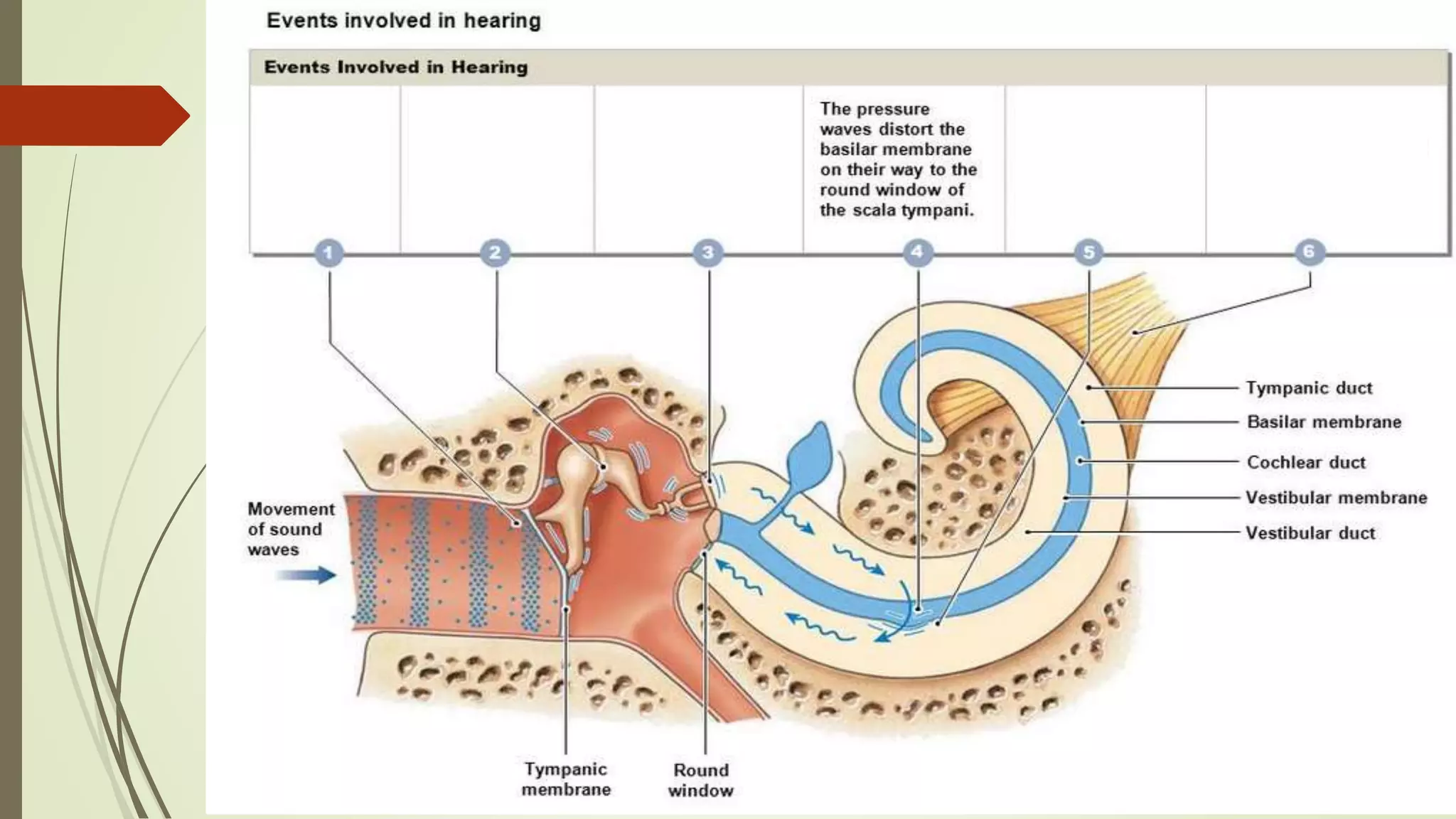
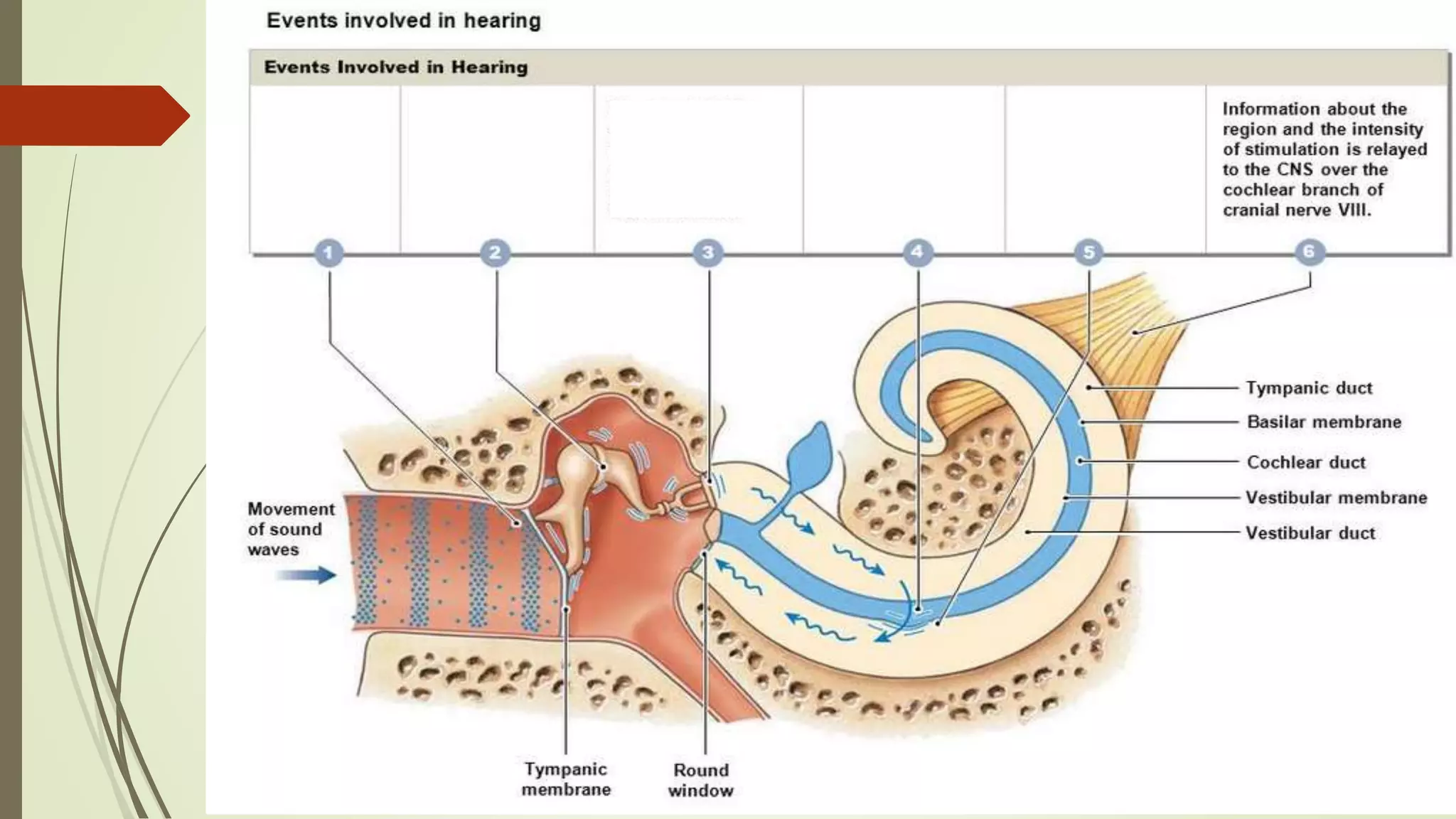
Ear
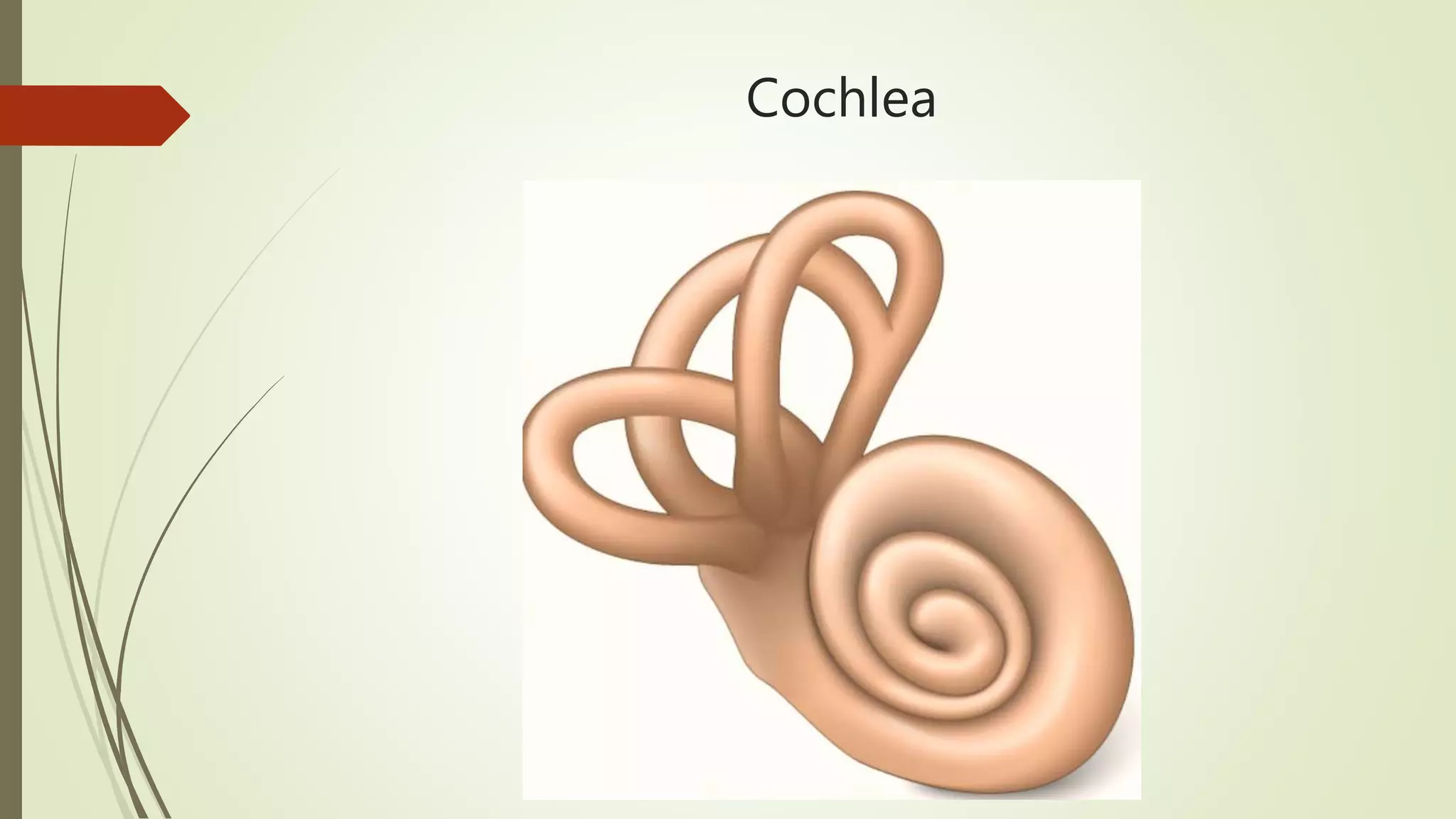
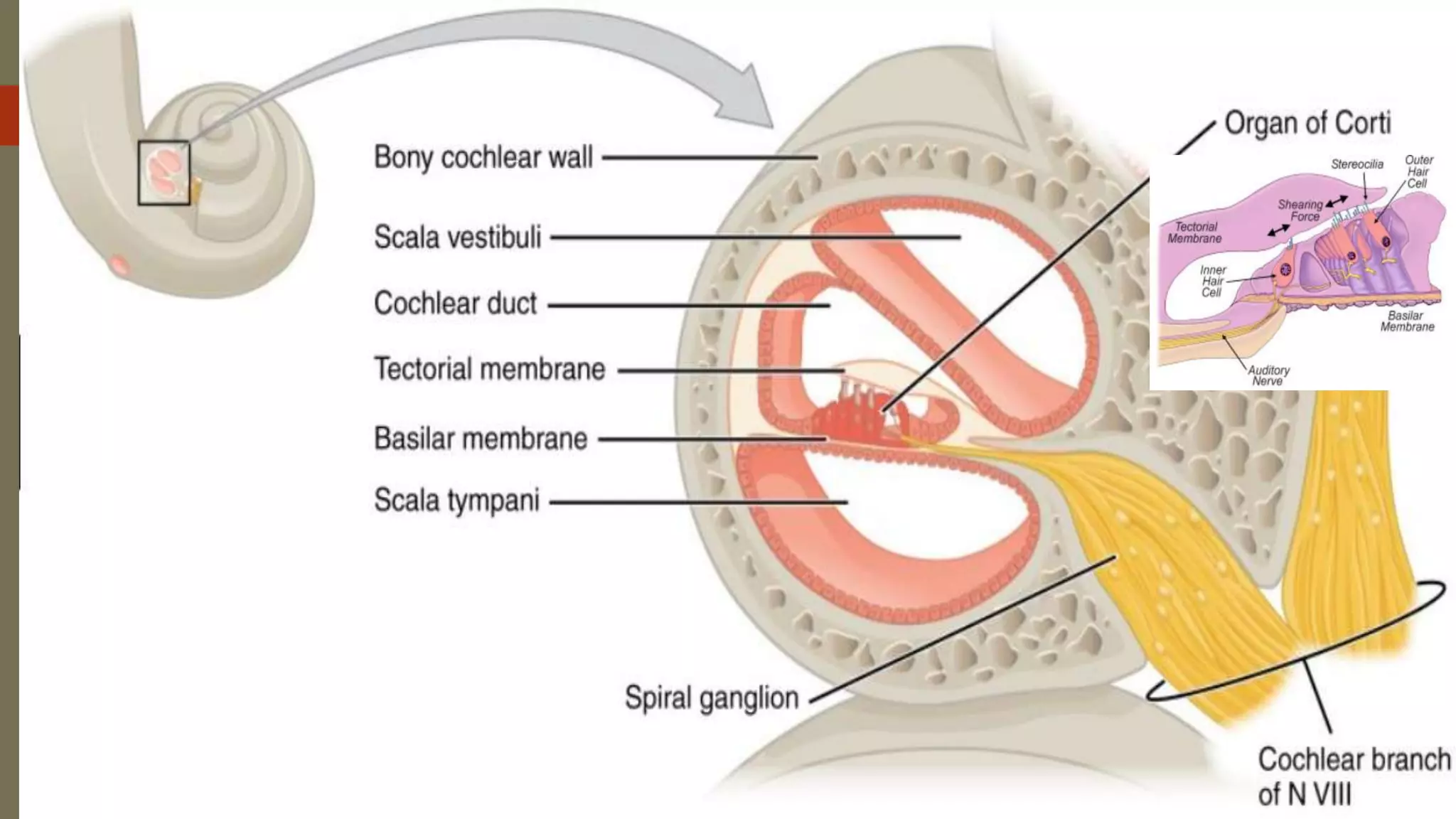
Cochlea
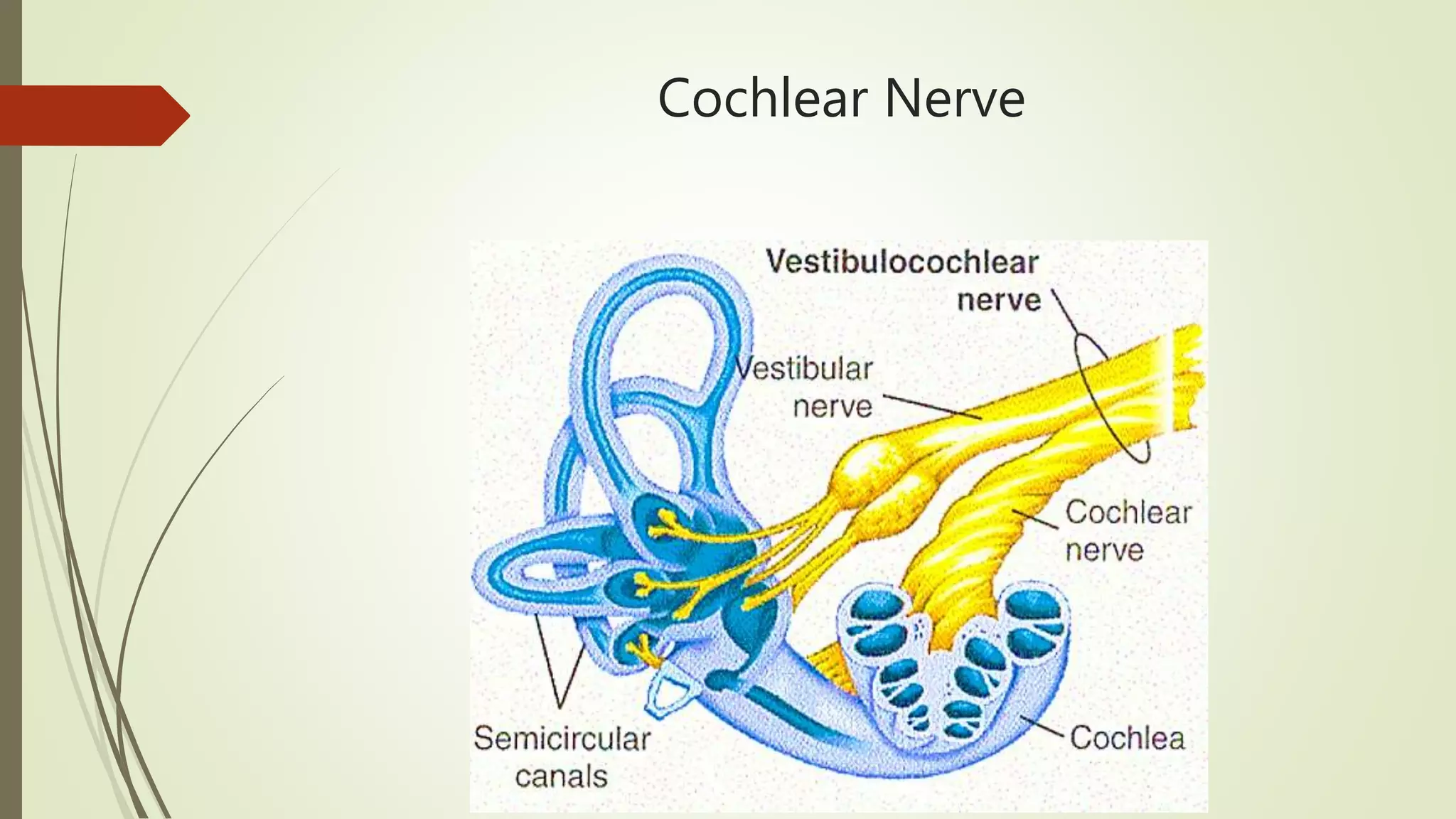
Cochlear Nerve
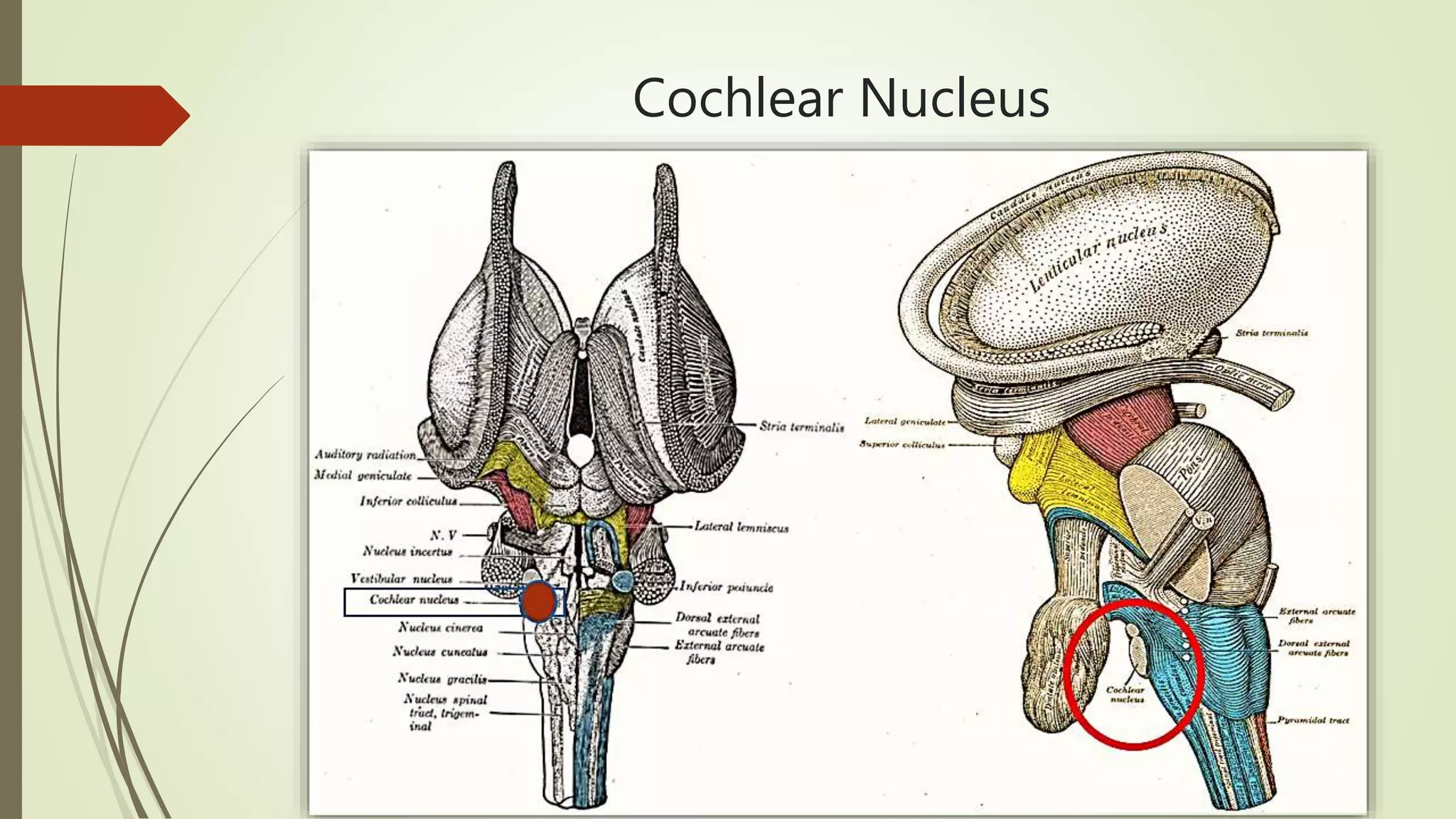
Cochlear Nucleus
BAEPs
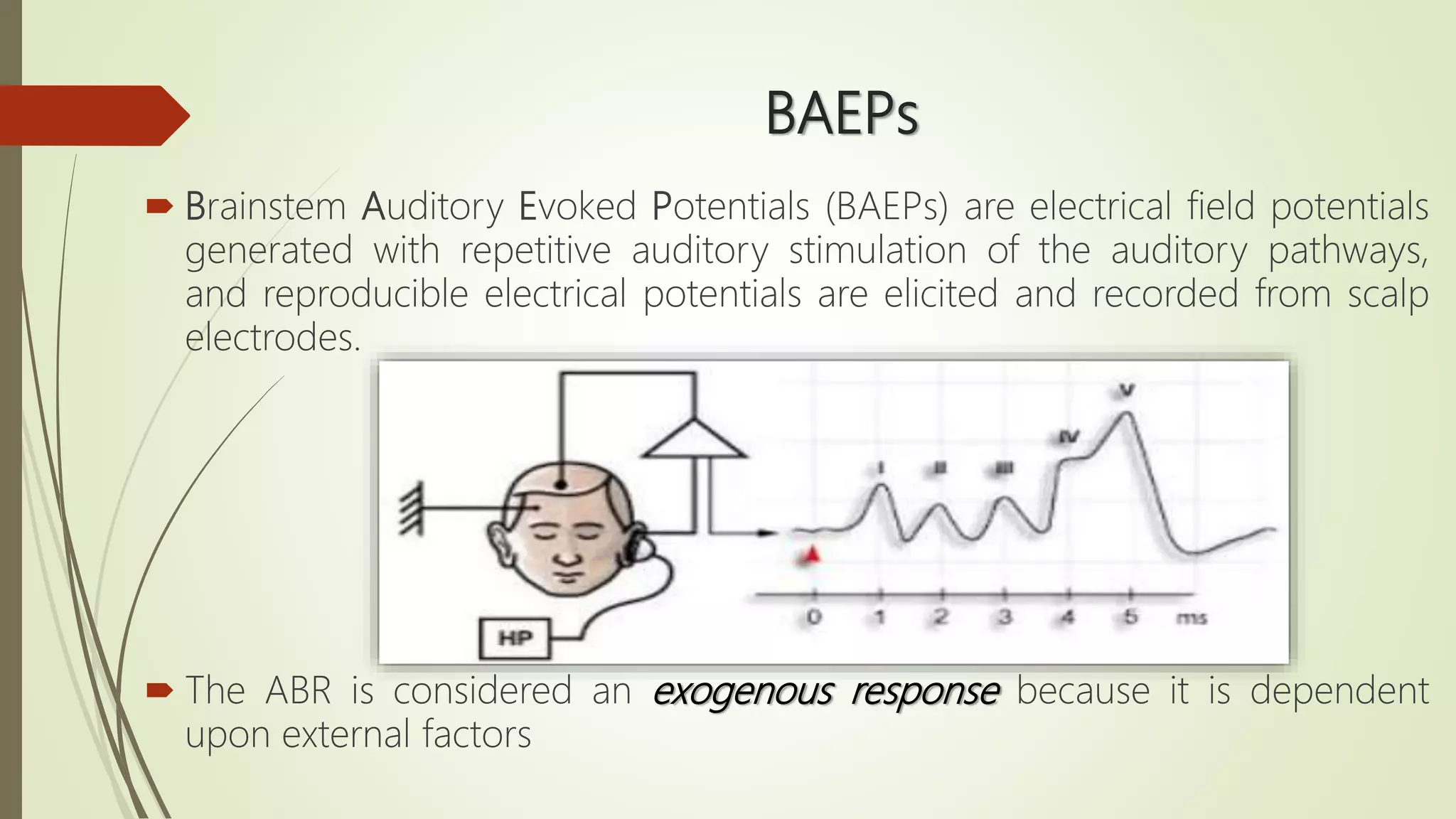
 Brainstem Auditory Evoked Potentials (BAEPs) are electrical field potentials
generated with repetitive auditory stimulation of the auditory pathways,
and reproducible electrical potentials are elicited and recorded from scalp
electrodes.
 The ABR is considered an exogenous response because it is dependent
upon external factors
BAEPs
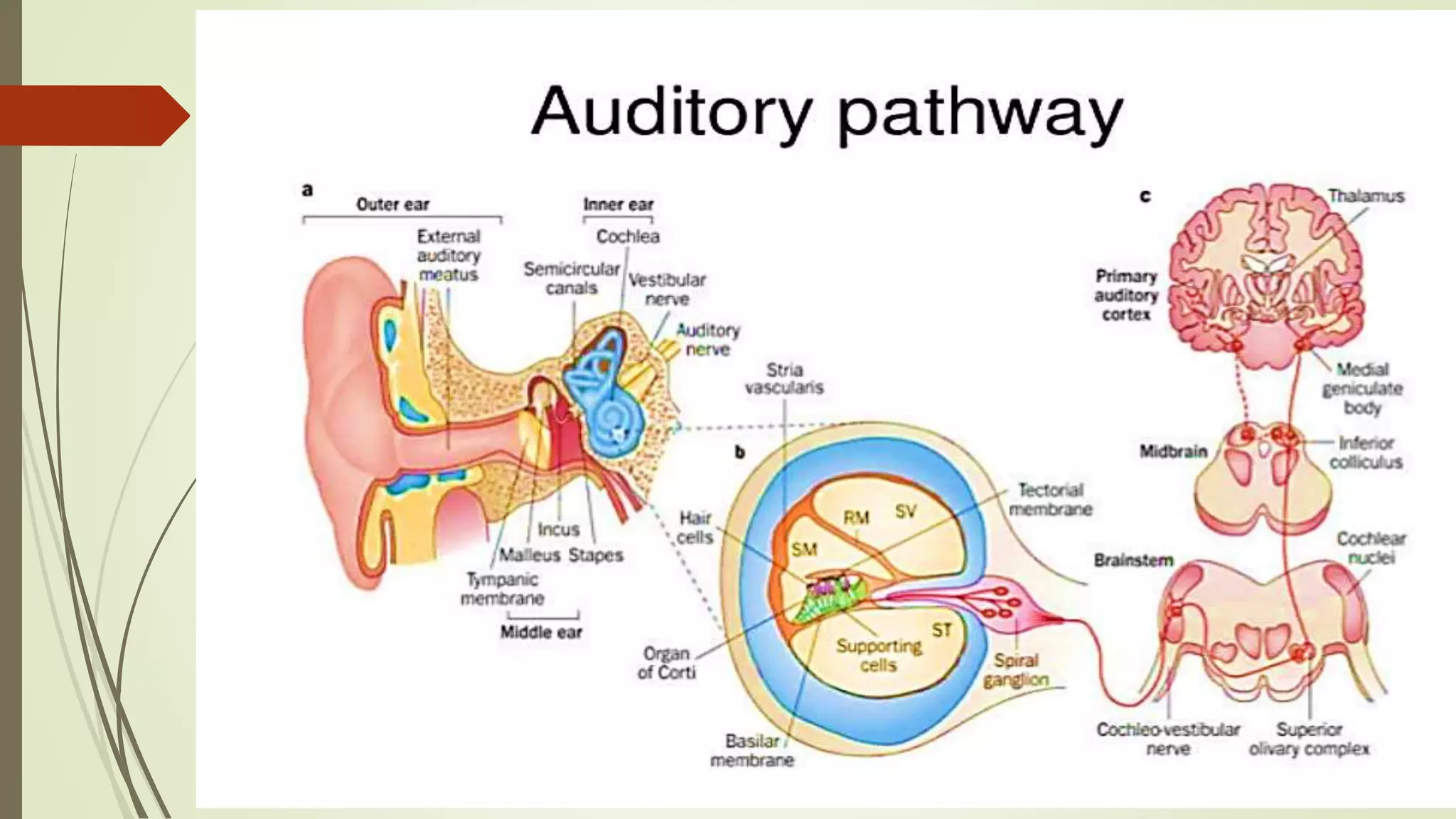
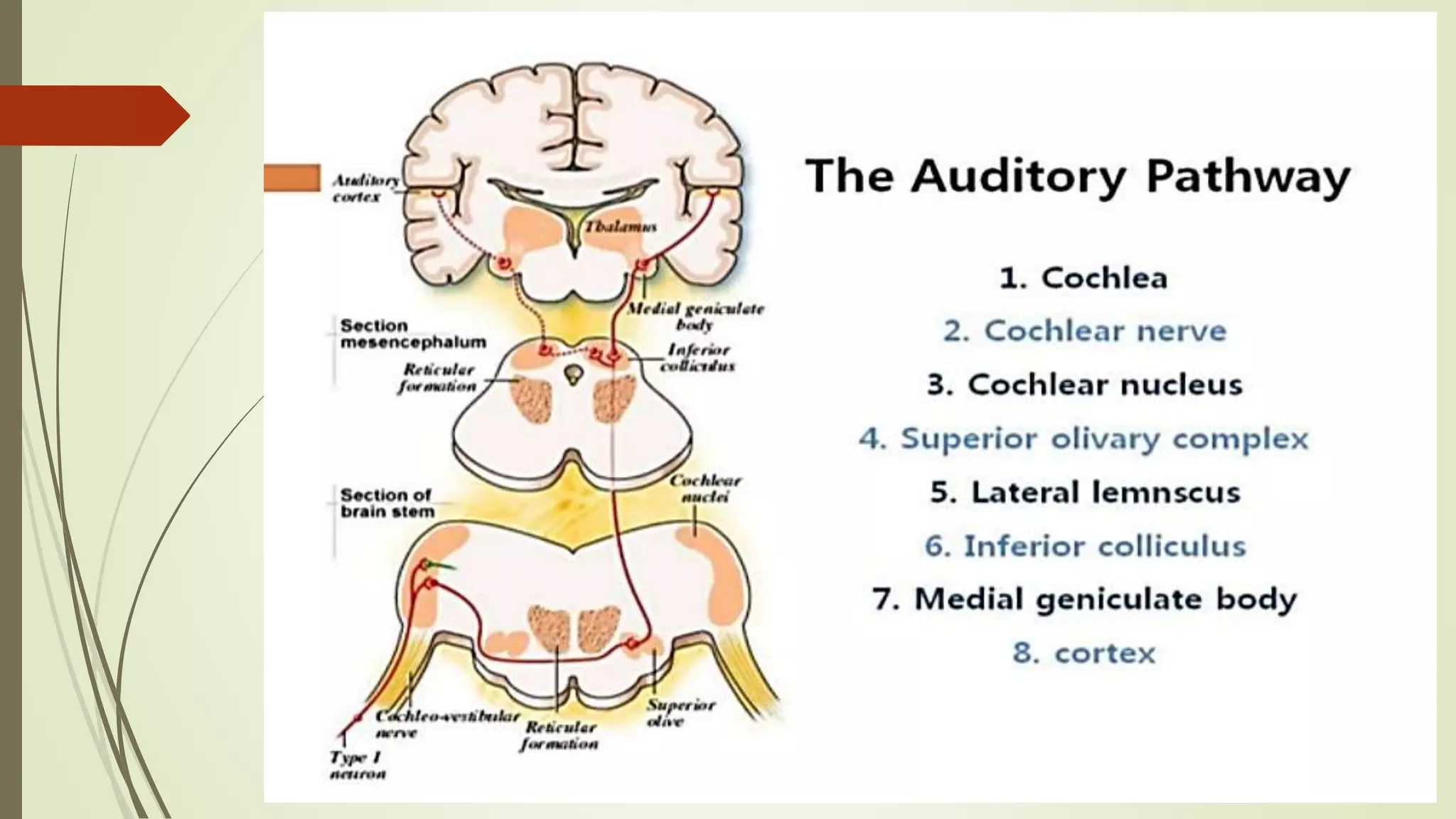
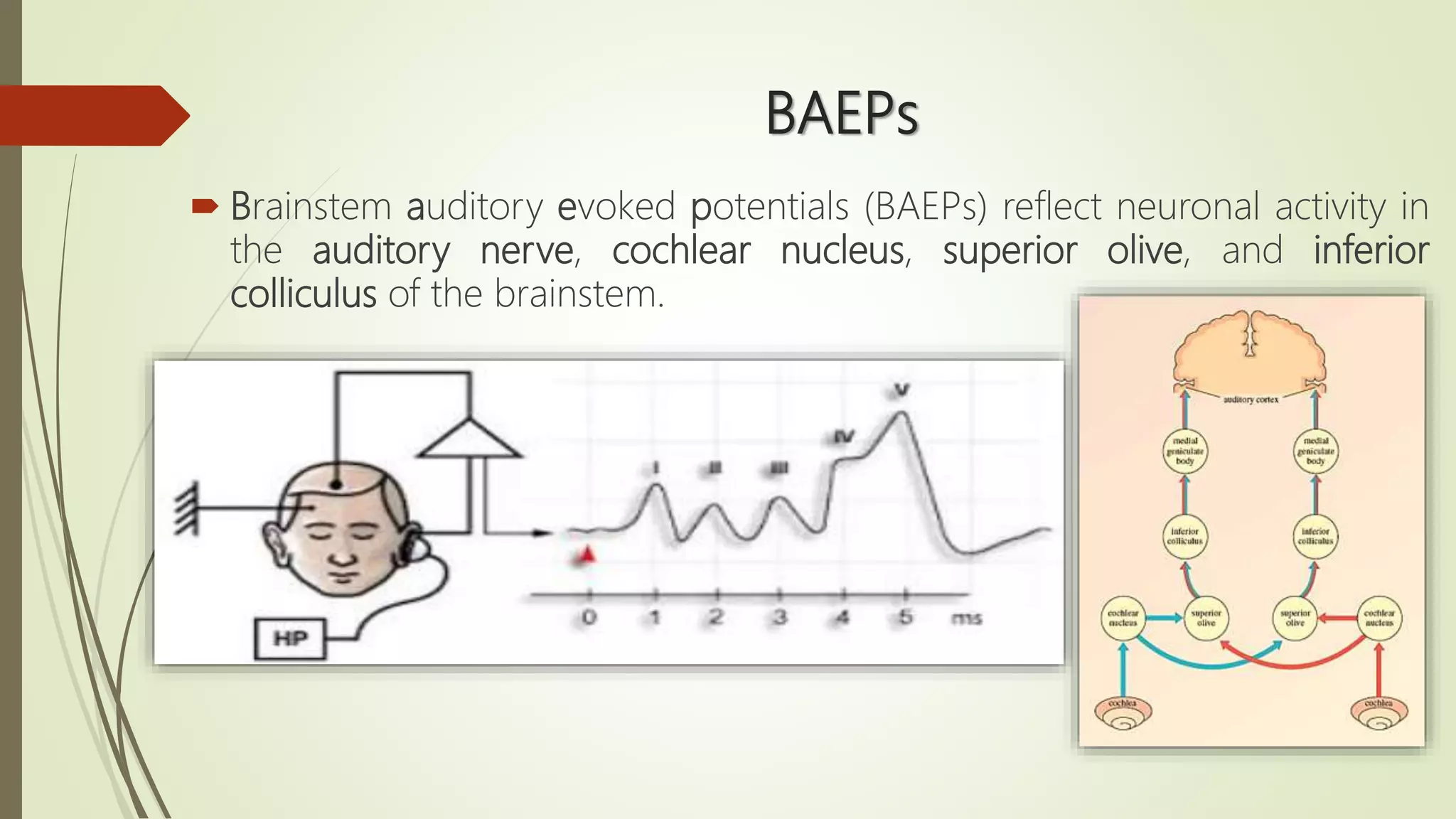
 Brainstem auditory evoked potentials (BAEPs) reflect neuronal activity in
the auditory nerve, cochlear nucleus, superior olive, and inferior
colliculus of the brainstem.
BAEPs
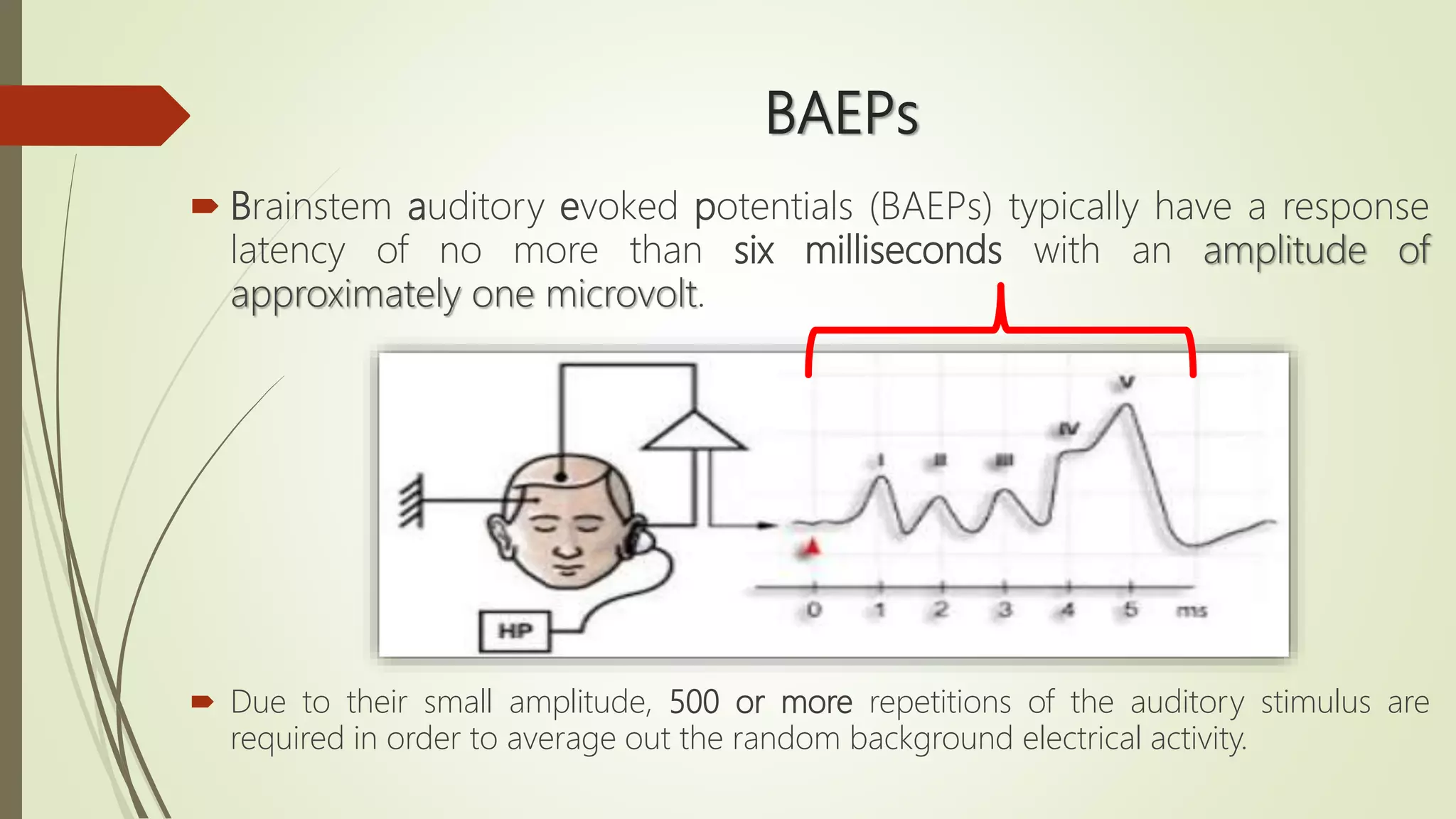
 Brainstem auditory evoked potentials (BAEPs) typically have a response
latency of no more than six milliseconds with an amplitude of
approximately one microvolt.
 Due to their small amplitude, 500 or more repetitions of the auditory stimulus are
required in order to average out the random background electrical activity.
BAEPs
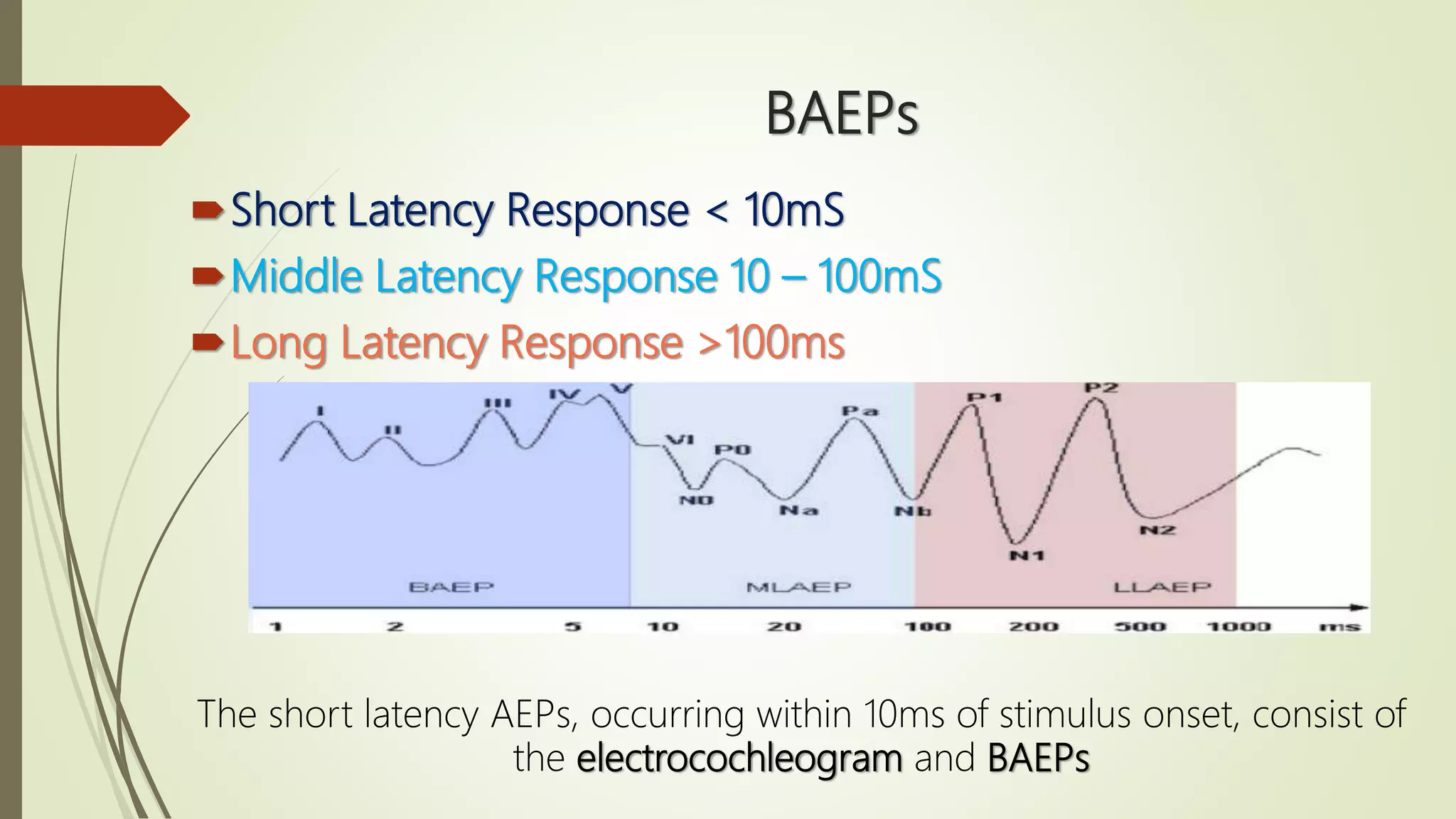
Short Latency Response < 10mS
Middle Latency Response 10 – 100mS
Long Latency Response >100ms
The short latency AEPs, occurring within 10ms of stimulus onset, consist of
the electrocochleogram and BAEPs
Interpretation of results
 When interpreting the ABR, we look at
AMPLITUDE (the number of neurons firing)
LATENCY (the speed of transmission)
INTERPEAK LATENCY (the time between peaks)
INTERAURAL LATENCY (the difference in wave V latency between ears)
Interpretation of results
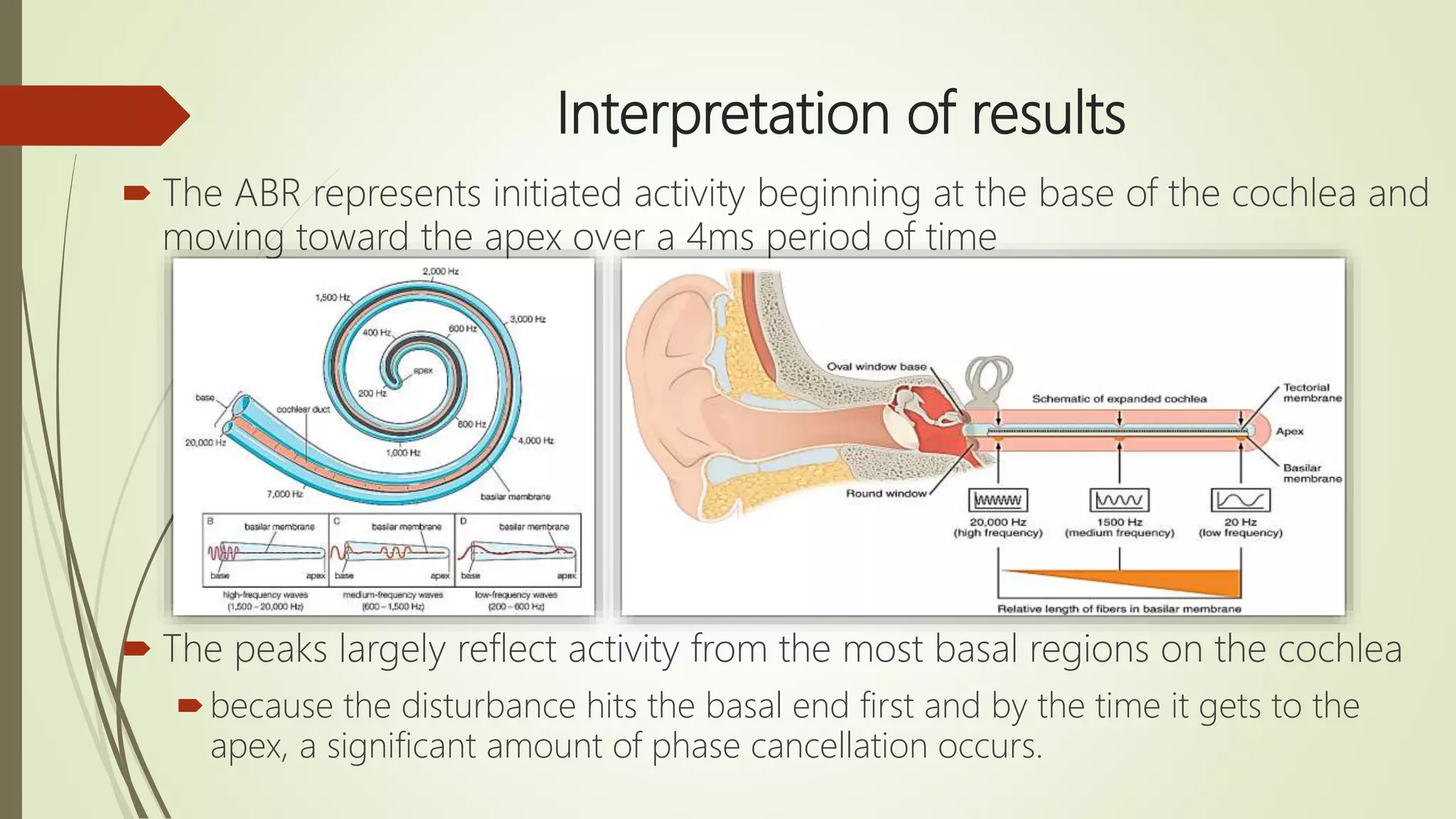
 The ABR represents initiated activity beginning at the base of the cochlea and
moving toward the apex over a 4ms period of time
 The peaks largely reflect activity from the most basal regions on the cochlea
because the disturbance hits the basal end first and by the time it gets to the
apex, a significant amount of phase cancellation occurs.
BAEP Waveform
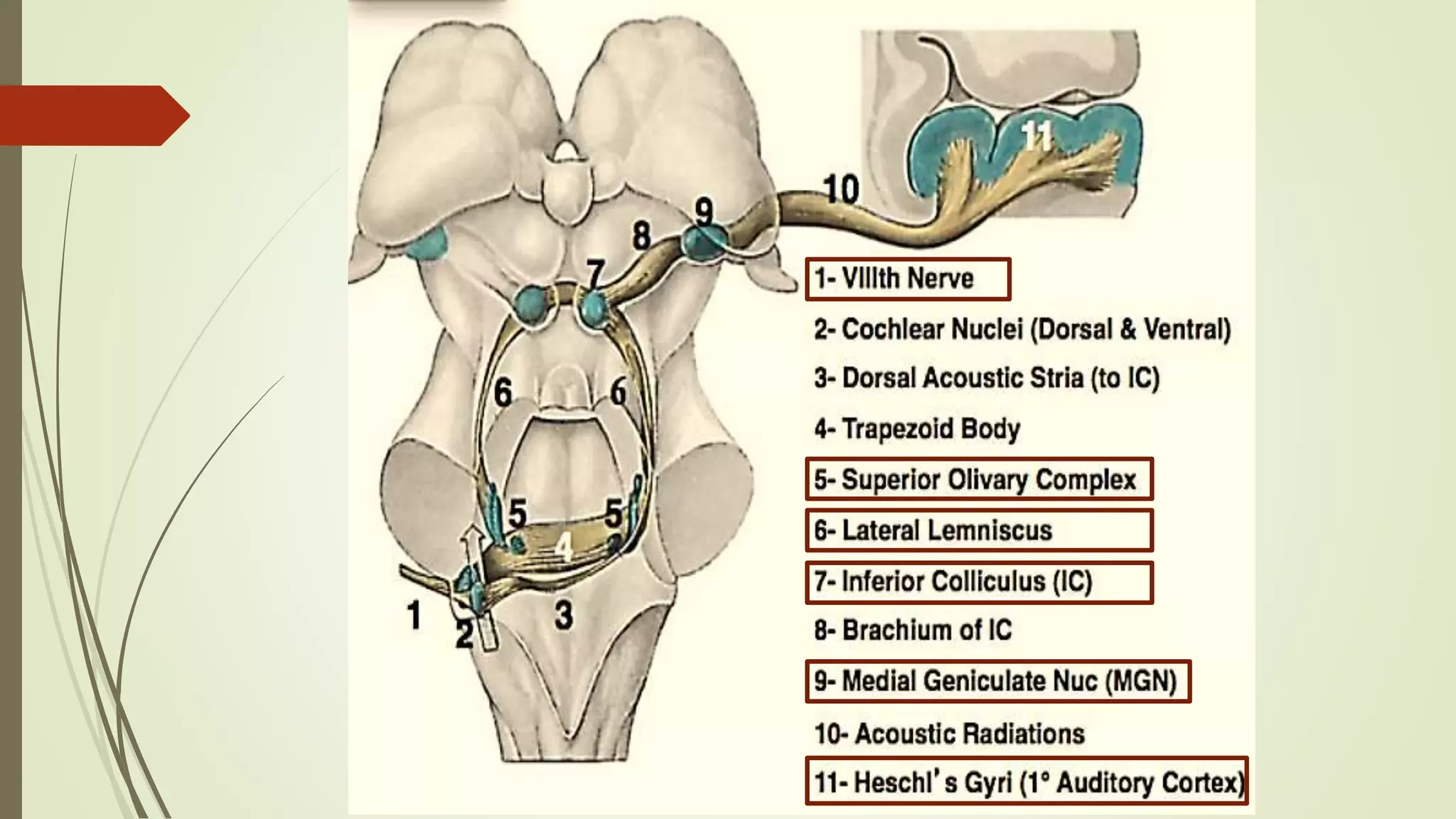
The neural pathway for ABR response
purposed by Hall, J. W., III. Handbook of auditory evoked responses. (1992)
BAEP Waveforms and its Physiological Generators
Wave Generator
I Distal acoustic nerve (segment near cochlea)
II Proximal acoustic nerve (segment near brainstem) or cochlear nuclei
III Superior olive and projections to the lateral lemniscus; medial nucleus of trapezoid body
might generate a part of wave III
IV Most likely the lateral lemniscus, but data is not definitive
V High pontine or lower midbrain structures: probably the lateral lemniscus, inferior
colliculus, or a combination thereof
VI Most likely the medial geniculate nucleus or projections from the inferior colliculus
VII Most likely the auditory radiations to primary auditory cortex
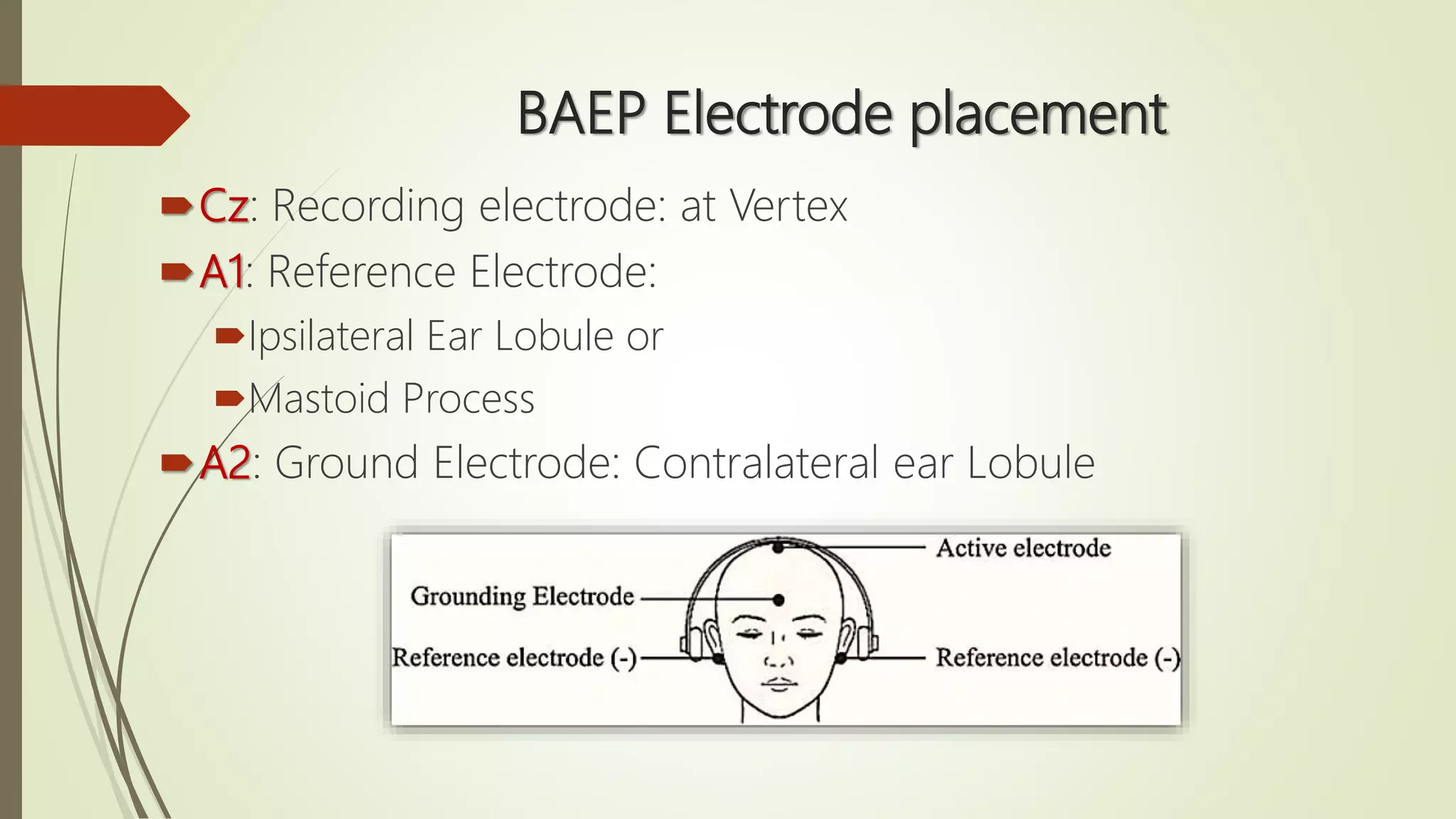
BAEP Electrode placement
Cz: Recording electrode: at Vertex
A1: Reference Electrode:
Ipsilateral Ear Lobule or
Mastoid Process
A2: Ground Electrode: Contralateral ear Lobule
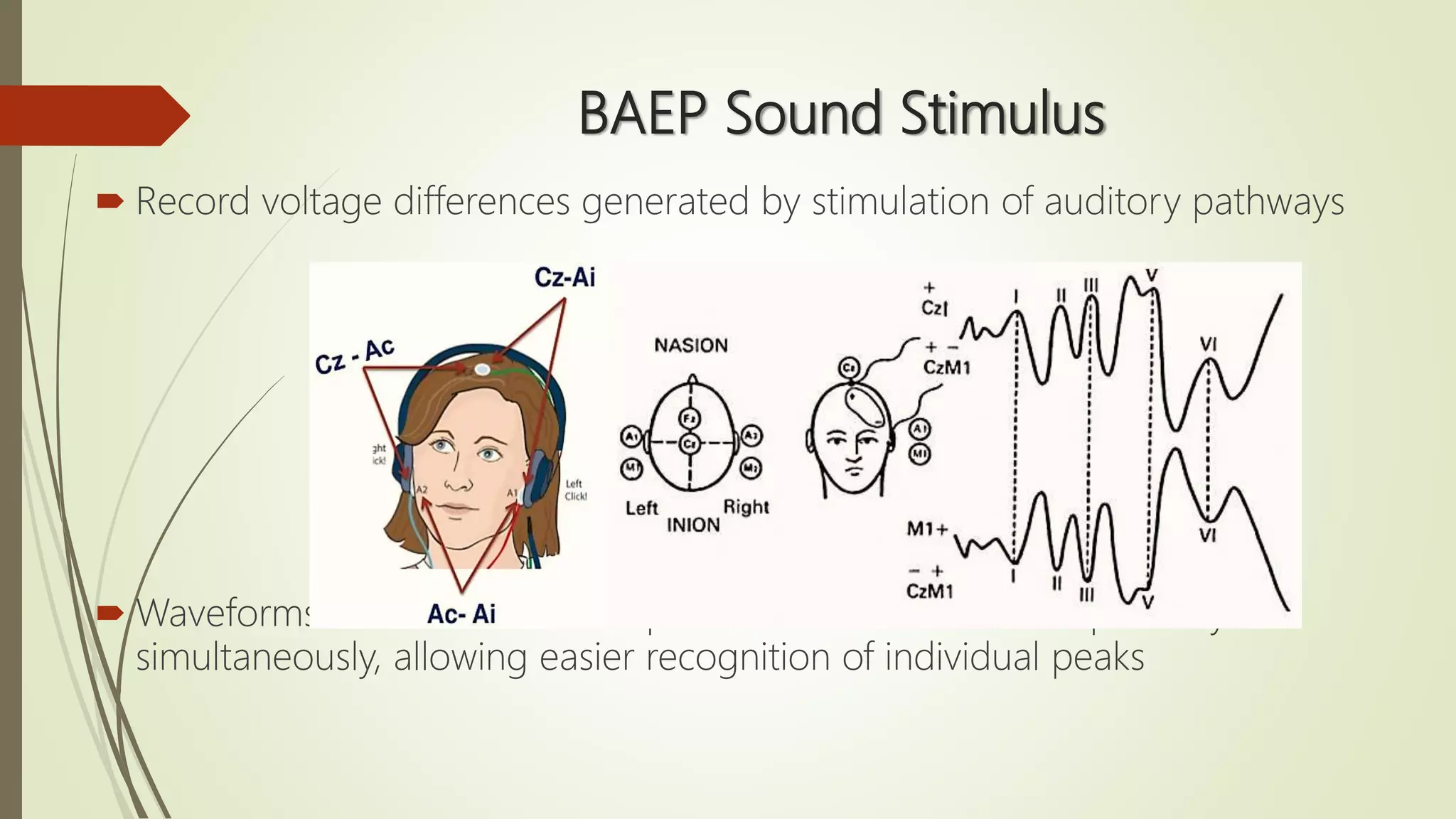
BAEP Sound Stimulus
 Record voltage differences generated by stimulation of auditory pathways
 Waveforms are recorded from ipsilateral and contralateral pathways
simultaneously, allowing easier recognition of individual peaks
BAEP Sound Stimulus
To elicit and record BAEPs, an aural stimulus is delivered to the patient via
headphones or indwelling earphones
BAEP Stimuli
Acoustic Click
 A click is used, by producing an electric pulse and sending it to a transducer
 The acoustic stimuli used in BAEP testing are broadband (wide frequency spectra) 2-ms-long
clicks, generated by a 100 μs square-wave pulse delivered to the diaphragm of the speaker
membrane
BAEP Stimuli
Acoustic Click
 Stimulus polarity can also affect BAEP waveforms.
 CONDENSATION: The movement of the speaker membrane towards the eardrum
 RAREFACTION: movement away from the eardrum.
 Most BAEPs are recorded during rarefaction, because BAEP tend to be clearer
 It is often helpful to switch polarity (record during condensation) to distinguish artifact from true
BAEP waveforms.
BAEP Stimuli
Acoustic Click
 As one ear is stimulated with clicks, the other is masked with white noise,
an equal mixture of all of the frequencies within the range of human
hearing (typically 20 Hz–20 kHz).
 This method helps to prevent the undesired coactivation of the
contralateral ear caused by bony conduction from the ipsilateral stimulated
ear.
BAEP Stimuli
Acoustic Click
 Owing to the relatively small amplitude of the evoked auditory potentials, it
is essential to average the BAEP waveforms produced by multiple
stimulations to increase the signal-to-noise ratio.
 1000 to 4000 stimuli are given and averaged
 8 to 10 stimuli are given per second
 Higher rates of frequency cause a rate-dependent reduction of amplitude,
dispersion of waveforms, and longer interpeak latencies.
BAEP Stimuli
Acoustic Click
 Click stimulus intensity is measured in units of
 DECIBEL SENSATION LEVEL (dBSL),
 DECIBEL HEARING LEVEL (dBHL), or
 DECIBEL PEAK EQUIVALENT SOUND PRESSURE LEVEL (dBpeSPL)
 Units of dB SL are used when hearing thresholds are determined for the
individual ear being examined.
 If hearing thresholds are established using a group of healthy people, dB
HL units are used.
BAEP Stimuli
Acoustic Click
 Artifact should reverse in polarity whereas BAEPs should not be altered
 Wave I is the BAEP most affected by changes in stimulus polarity, with
rarefaction producing a shorter latency.
 It may be necessary to change stimulus polarity to adequately see individual
waveforms in some patients.
 Wave V in particular may seem to be absent until stimulus polarity is reversed
BAEP Instrumentation
 Averaging: Utilized to enhance low amplitude response on the expense of
a relatively higher amplitude noise
 Principle of Averaging: The response of time locked to the stimulus, while
the noise is random and does not have any time relation to the stimulus
 With repeated measures, summing the responses will cause the noise to
average out and thus get reduced in amplitude theoretically to zero, while
response remains unchanged
BAEP Filters
 Low and high-frequency filters are set to frequencies of 10 to 3000 Hz,
respectively
 Low-frequency filters can be raised to 100 to 200 Hz if muscle or mechanical
artifact proves problematic.
 However, as the bandpass narrows, distortion of waveform morphology,
amplitude, and latency can occur because of exclusion of low-frequency
elements.
Interpretation of results
 Wave I should be observed but will only be present ipsilaterally
Interpretation of results
 Waves III and V should be detectable in all healthy individuals
Interpretation of results
 Wave III often has decreased amplitude on the side contralateral to that
being stimulated
Interpretation of results
 Waves VI and VII appear variably after wave V.
Interpretation of results
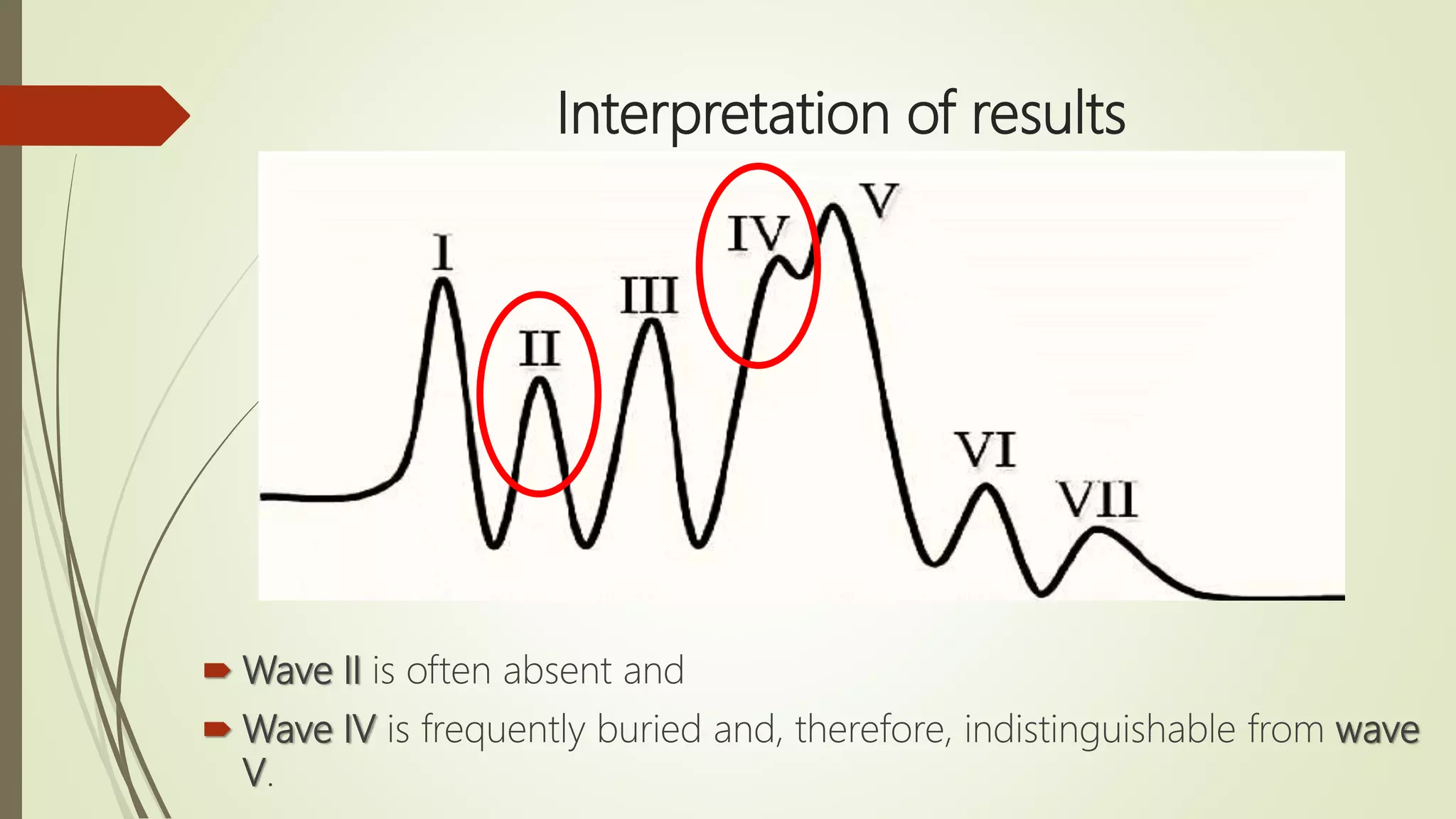
 Wave II is often absent and
 Wave IV is frequently buried and, therefore, indistinguishable from wave
V.
BAEP Waveforms and its Physiological Generators
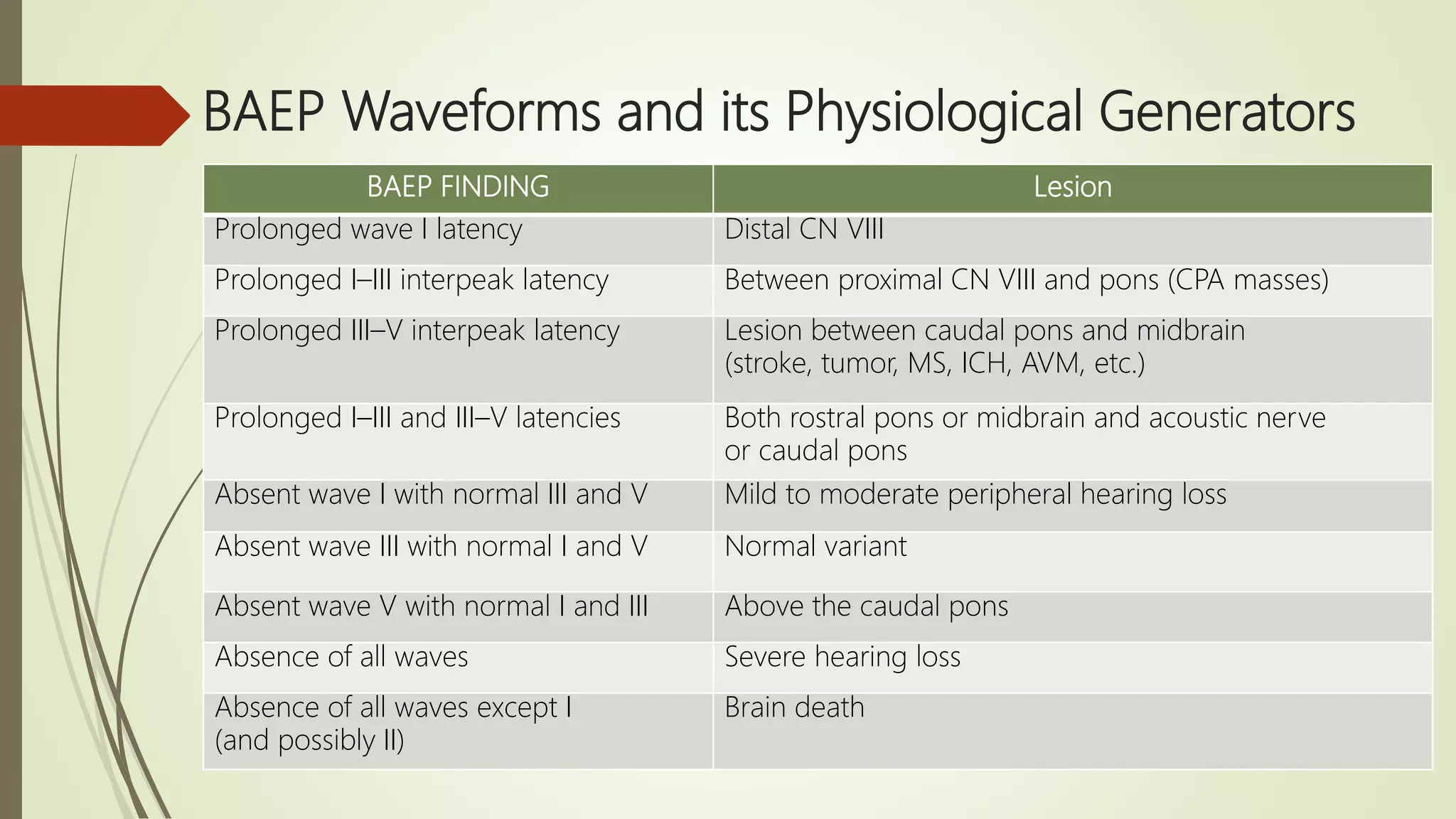
BAEP FINDING Lesion
Prolonged wave I latency Distal CN VIII
Prolonged I–III interpeak latency Between proximal CN VIII and pons (CPA masses)
Prolonged III–V interpeak latency Lesion between caudal pons and midbrain
(stroke, tumor, MS, ICH, AVM, etc.)
Prolonged I–III and III–V latencies Both rostral pons or midbrain and acoustic nerve
or caudal pons
Absent wave I with normal III and V Mild to moderate peripheral hearing loss
Absent wave III with normal I and V Normal variant
Absent wave V with normal I and III Above the caudal pons
Absence of all waves Severe hearing loss
Absence of all waves except I
(and possibly II)
Brain death
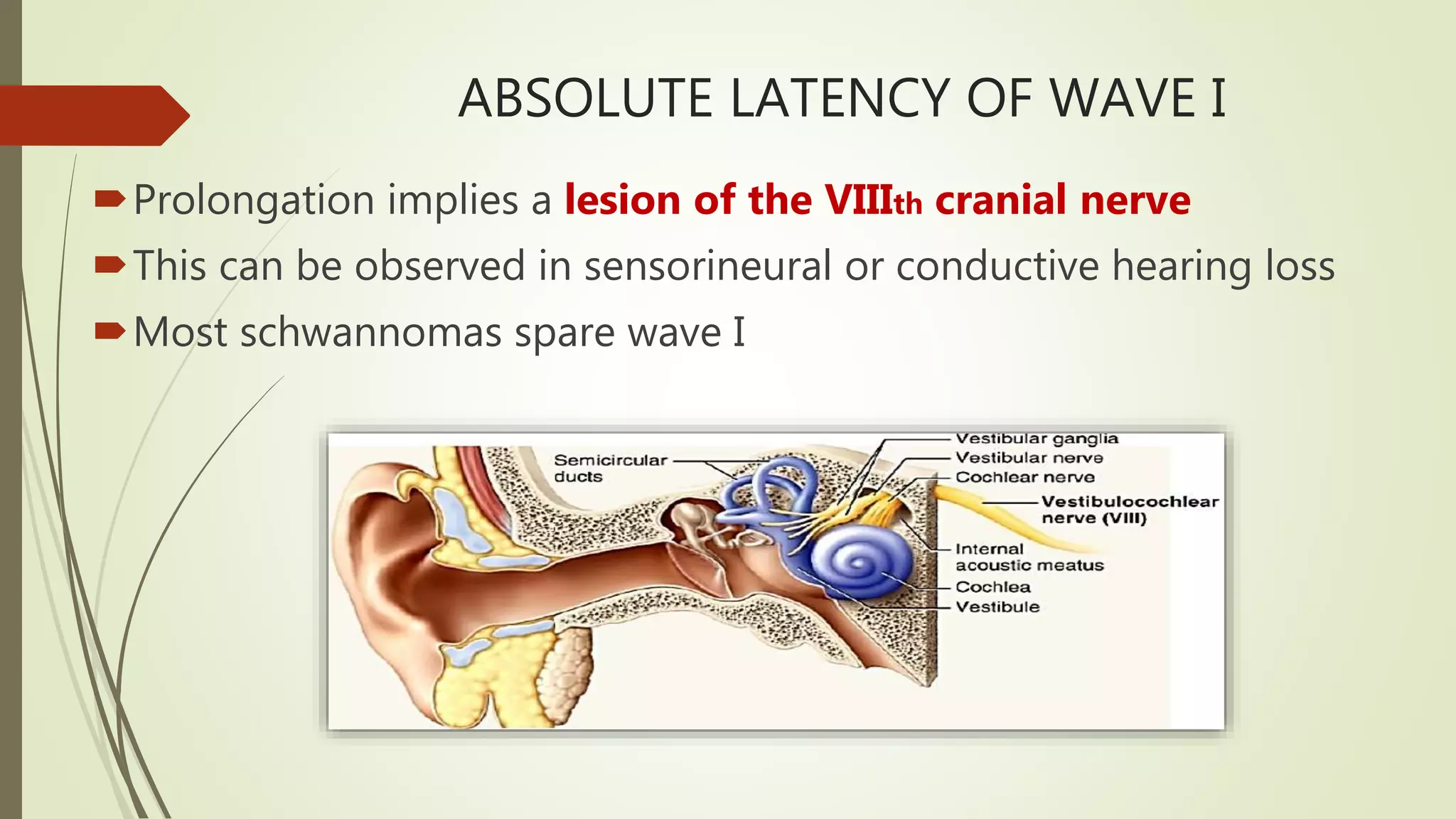
ABSOLUTE LATENCY OF WAVE I
Prolongation implies a lesion of the VIIIth cranial nerve
This can be observed in sensorineural or conductive hearing loss
Most schwannomas spare wave I
WAVE I TO III INTERPEAK LATENCY
Prolongation implies a lesion between the proximal segment of the
eighth cranial nerve and the superior olivary nucleus
Often this reflects damage to structures at the CPA
Meningiomas and schwannomas at the CPA are typical examples of
neoplasms that can cause prolonged I to III interpeak latency
WAVE III TO V INTERPEAK LATENCY
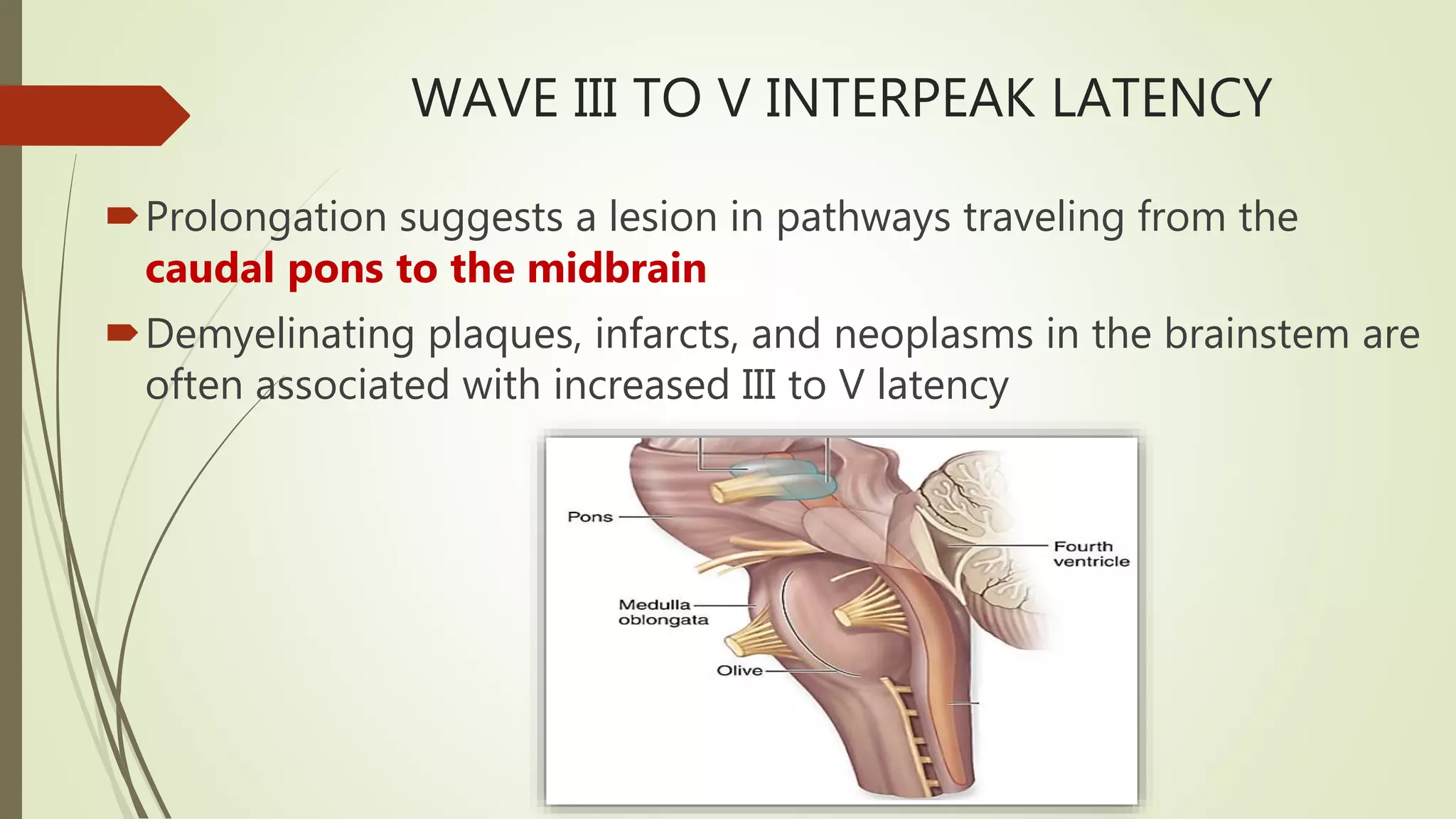
Prolongation suggests a lesion in pathways traveling from the
caudal pons to the midbrain
Demyelinating plaques, infarcts, and neoplasms in the brainstem are
often associated with increased III to V latency
PATIENT-RELATED VARIABLES AFFECTING BAEPS
 A number of patient-related factors impact the BAEP recordings, these
include
Individual’s age
Gender
Level of arousal
Body position
Temperature
Medications, and
Preexisting hearing loss
Can be adjusted to optimize results

Brainstem Auditory Evoked Potentials

  • 1.
    Brainstem Auditory EvokedPotentials Anurag Tewari MD
  • 2.
  • 3.
    Sound is aPressure Wave
  • 4.
    Sound  What isDECIBEL?  The Decibel (dB) is 1/10 Bel.  The Decibel describes the relative strength of a sound  (i.e. how loud a sound is relative to another sound)  It is always a comparison
  • 5.
    Sound  Sound pressureor acoustic pressure is the local pressure deviation from the ambient atmospheric pressure caused by a sound wave. SI unit is Pascal (Pa) SILENCE AUDIBLE SOUND ATMOSPHERIC PRESSURE SOUND PRESSURE
  • 6.
    Sound  SPL: SoundPressure Level: or sound level is a logarithmic measure of the effective sound pressure of a sound relative to a reference value.  It is measured in decibels (dB) above a standard reference level.
  • 7.
    History of BAEP Long and Allen were the first to report the abnormal BAEPs in an alcoholic woman who recovered from acquired central hypoventilation syndrome.  These investigators hypothesized that their patient's brainstem was poisoned, but not destroyed, by her chronic alcoholism.
  • 8.
    History of BAEP 1967, Sohmer and Feinmesser were the first to publish ABRs recorded with surface electrodes in humans which showed that cochlear potentials could be obtained non-invasively.  1971, Jewett and Williston gave a clear description of the human ABR and correctly interpreted the later waves as arriving from the brainstem.  1977, Selters and Brackman published landmark findings on prolonged inter- peak latencies in tumor cases (greater than 1 cm).  1974, Hecox and Galambos showed that the ABR could be used for threshold estimation in adults and infants.  1975, Starr and Achor were the first to report the effects on the ABR of CNS pathology in the brainstem
  • 9.
  • 11.
  • 12.
  • 13.
  • 23.
    BAEPs  Brainstem AuditoryEvoked Potentials (BAEPs) are electrical field potentials generated with repetitive auditory stimulation of the auditory pathways, and reproducible electrical potentials are elicited and recorded from scalp electrodes.  The ABR is considered an exogenous response because it is dependent upon external factors
  • 24.
    BAEPs  Brainstem auditoryevoked potentials (BAEPs) reflect neuronal activity in the auditory nerve, cochlear nucleus, superior olive, and inferior colliculus of the brainstem.
  • 25.
    BAEPs  Brainstem auditoryevoked potentials (BAEPs) typically have a response latency of no more than six milliseconds with an amplitude of approximately one microvolt.  Due to their small amplitude, 500 or more repetitions of the auditory stimulus are required in order to average out the random background electrical activity.
  • 26.
    BAEPs Short Latency Response< 10mS Middle Latency Response 10 – 100mS Long Latency Response >100ms The short latency AEPs, occurring within 10ms of stimulus onset, consist of the electrocochleogram and BAEPs
  • 27.
    Interpretation of results When interpreting the ABR, we look at AMPLITUDE (the number of neurons firing) LATENCY (the speed of transmission) INTERPEAK LATENCY (the time between peaks) INTERAURAL LATENCY (the difference in wave V latency between ears)
  • 28.
    Interpretation of results The ABR represents initiated activity beginning at the base of the cochlea and moving toward the apex over a 4ms period of time  The peaks largely reflect activity from the most basal regions on the cochlea because the disturbance hits the basal end first and by the time it gets to the apex, a significant amount of phase cancellation occurs.
  • 29.
  • 30.
    The neural pathwayfor ABR response purposed by Hall, J. W., III. Handbook of auditory evoked responses. (1992)
  • 31.
    BAEP Waveforms andits Physiological Generators Wave Generator I Distal acoustic nerve (segment near cochlea) II Proximal acoustic nerve (segment near brainstem) or cochlear nuclei III Superior olive and projections to the lateral lemniscus; medial nucleus of trapezoid body might generate a part of wave III IV Most likely the lateral lemniscus, but data is not definitive V High pontine or lower midbrain structures: probably the lateral lemniscus, inferior colliculus, or a combination thereof VI Most likely the medial geniculate nucleus or projections from the inferior colliculus VII Most likely the auditory radiations to primary auditory cortex
  • 32.
    BAEP Electrode placement Cz:Recording electrode: at Vertex A1: Reference Electrode: Ipsilateral Ear Lobule or Mastoid Process A2: Ground Electrode: Contralateral ear Lobule
  • 33.
    BAEP Sound Stimulus Record voltage differences generated by stimulation of auditory pathways  Waveforms are recorded from ipsilateral and contralateral pathways simultaneously, allowing easier recognition of individual peaks
  • 34.
    BAEP Sound Stimulus Toelicit and record BAEPs, an aural stimulus is delivered to the patient via headphones or indwelling earphones
  • 35.
    BAEP Stimuli Acoustic Click A click is used, by producing an electric pulse and sending it to a transducer  The acoustic stimuli used in BAEP testing are broadband (wide frequency spectra) 2-ms-long clicks, generated by a 100 μs square-wave pulse delivered to the diaphragm of the speaker membrane
  • 36.
    BAEP Stimuli Acoustic Click Stimulus polarity can also affect BAEP waveforms.  CONDENSATION: The movement of the speaker membrane towards the eardrum  RAREFACTION: movement away from the eardrum.  Most BAEPs are recorded during rarefaction, because BAEP tend to be clearer  It is often helpful to switch polarity (record during condensation) to distinguish artifact from true BAEP waveforms.
  • 37.
    BAEP Stimuli Acoustic Click As one ear is stimulated with clicks, the other is masked with white noise, an equal mixture of all of the frequencies within the range of human hearing (typically 20 Hz–20 kHz).  This method helps to prevent the undesired coactivation of the contralateral ear caused by bony conduction from the ipsilateral stimulated ear.
  • 38.
    BAEP Stimuli Acoustic Click Owing to the relatively small amplitude of the evoked auditory potentials, it is essential to average the BAEP waveforms produced by multiple stimulations to increase the signal-to-noise ratio.  1000 to 4000 stimuli are given and averaged  8 to 10 stimuli are given per second  Higher rates of frequency cause a rate-dependent reduction of amplitude, dispersion of waveforms, and longer interpeak latencies.
  • 39.
    BAEP Stimuli Acoustic Click Click stimulus intensity is measured in units of  DECIBEL SENSATION LEVEL (dBSL),  DECIBEL HEARING LEVEL (dBHL), or  DECIBEL PEAK EQUIVALENT SOUND PRESSURE LEVEL (dBpeSPL)  Units of dB SL are used when hearing thresholds are determined for the individual ear being examined.  If hearing thresholds are established using a group of healthy people, dB HL units are used.
  • 40.
    BAEP Stimuli Acoustic Click Artifact should reverse in polarity whereas BAEPs should not be altered  Wave I is the BAEP most affected by changes in stimulus polarity, with rarefaction producing a shorter latency.  It may be necessary to change stimulus polarity to adequately see individual waveforms in some patients.  Wave V in particular may seem to be absent until stimulus polarity is reversed
  • 41.
    BAEP Instrumentation  Averaging:Utilized to enhance low amplitude response on the expense of a relatively higher amplitude noise  Principle of Averaging: The response of time locked to the stimulus, while the noise is random and does not have any time relation to the stimulus  With repeated measures, summing the responses will cause the noise to average out and thus get reduced in amplitude theoretically to zero, while response remains unchanged
  • 42.
    BAEP Filters  Lowand high-frequency filters are set to frequencies of 10 to 3000 Hz, respectively  Low-frequency filters can be raised to 100 to 200 Hz if muscle or mechanical artifact proves problematic.  However, as the bandpass narrows, distortion of waveform morphology, amplitude, and latency can occur because of exclusion of low-frequency elements.
  • 43.
    Interpretation of results Wave I should be observed but will only be present ipsilaterally
  • 44.
    Interpretation of results Waves III and V should be detectable in all healthy individuals
  • 45.
    Interpretation of results Wave III often has decreased amplitude on the side contralateral to that being stimulated
  • 46.
    Interpretation of results Waves VI and VII appear variably after wave V.
  • 47.
    Interpretation of results Wave II is often absent and  Wave IV is frequently buried and, therefore, indistinguishable from wave V.
  • 48.
    BAEP Waveforms andits Physiological Generators BAEP FINDING Lesion Prolonged wave I latency Distal CN VIII Prolonged I–III interpeak latency Between proximal CN VIII and pons (CPA masses) Prolonged III–V interpeak latency Lesion between caudal pons and midbrain (stroke, tumor, MS, ICH, AVM, etc.) Prolonged I–III and III–V latencies Both rostral pons or midbrain and acoustic nerve or caudal pons Absent wave I with normal III and V Mild to moderate peripheral hearing loss Absent wave III with normal I and V Normal variant Absent wave V with normal I and III Above the caudal pons Absence of all waves Severe hearing loss Absence of all waves except I (and possibly II) Brain death
  • 49.
    ABSOLUTE LATENCY OFWAVE I Prolongation implies a lesion of the VIIIth cranial nerve This can be observed in sensorineural or conductive hearing loss Most schwannomas spare wave I
  • 50.
    WAVE I TOIII INTERPEAK LATENCY Prolongation implies a lesion between the proximal segment of the eighth cranial nerve and the superior olivary nucleus Often this reflects damage to structures at the CPA Meningiomas and schwannomas at the CPA are typical examples of neoplasms that can cause prolonged I to III interpeak latency
  • 51.
    WAVE III TOV INTERPEAK LATENCY Prolongation suggests a lesion in pathways traveling from the caudal pons to the midbrain Demyelinating plaques, infarcts, and neoplasms in the brainstem are often associated with increased III to V latency
  • 52.
    PATIENT-RELATED VARIABLES AFFECTINGBAEPS  A number of patient-related factors impact the BAEP recordings, these include Individual’s age Gender Level of arousal Body position Temperature Medications, and Preexisting hearing loss Can be adjusted to optimize results