- 1 / 79

- 2 / 79
 Most read
- 3 / 79
- 4 / 79
- 5 / 79
- 6 / 79
- 7 / 79
- 8 / 79
- 9 / 79
- 10 / 79

- 11 / 79
- 12 / 79
- 13 / 79
- 14 / 79

- 15 / 79
- 16 / 79
- 17 / 79
- 18 / 79
- 19 / 79
- 20 / 79


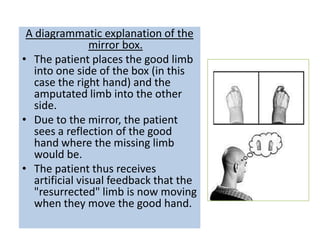




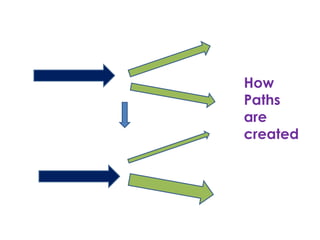
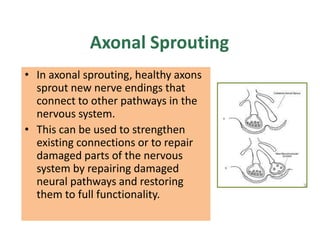
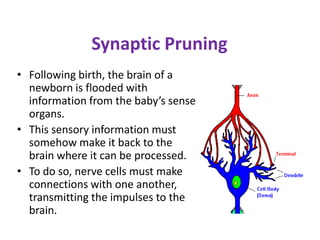
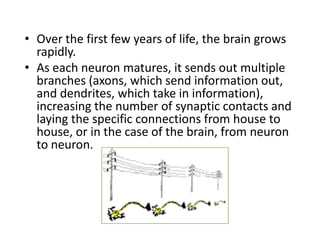
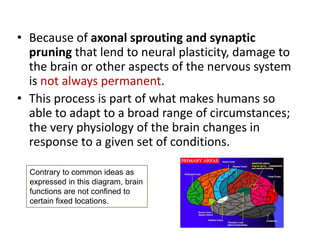
The document discusses the concept of neuroplasticity, or the brain's ability to change and adapt as a result of experiences. It describes how neural pathways are formed and strengthened through mechanisms like axonal sprouting and synaptic pruning. Experiences drive which connections are kept and which are pruned away. The brain remains plastic into adulthood, as evidenced by cases of recovery from brain damage and phantom limb pain. Thinking itself can induce neuroplastic changes, as cognitive therapies have been shown to alter brain activity patterns similarly to medications for conditions like OCD. Overall, the document outlines how learning, experiences, and even thoughts can physically change the brain's structure and connections throughout life.


