Zeeshan Qasim
Assistant Professor
Gomal University
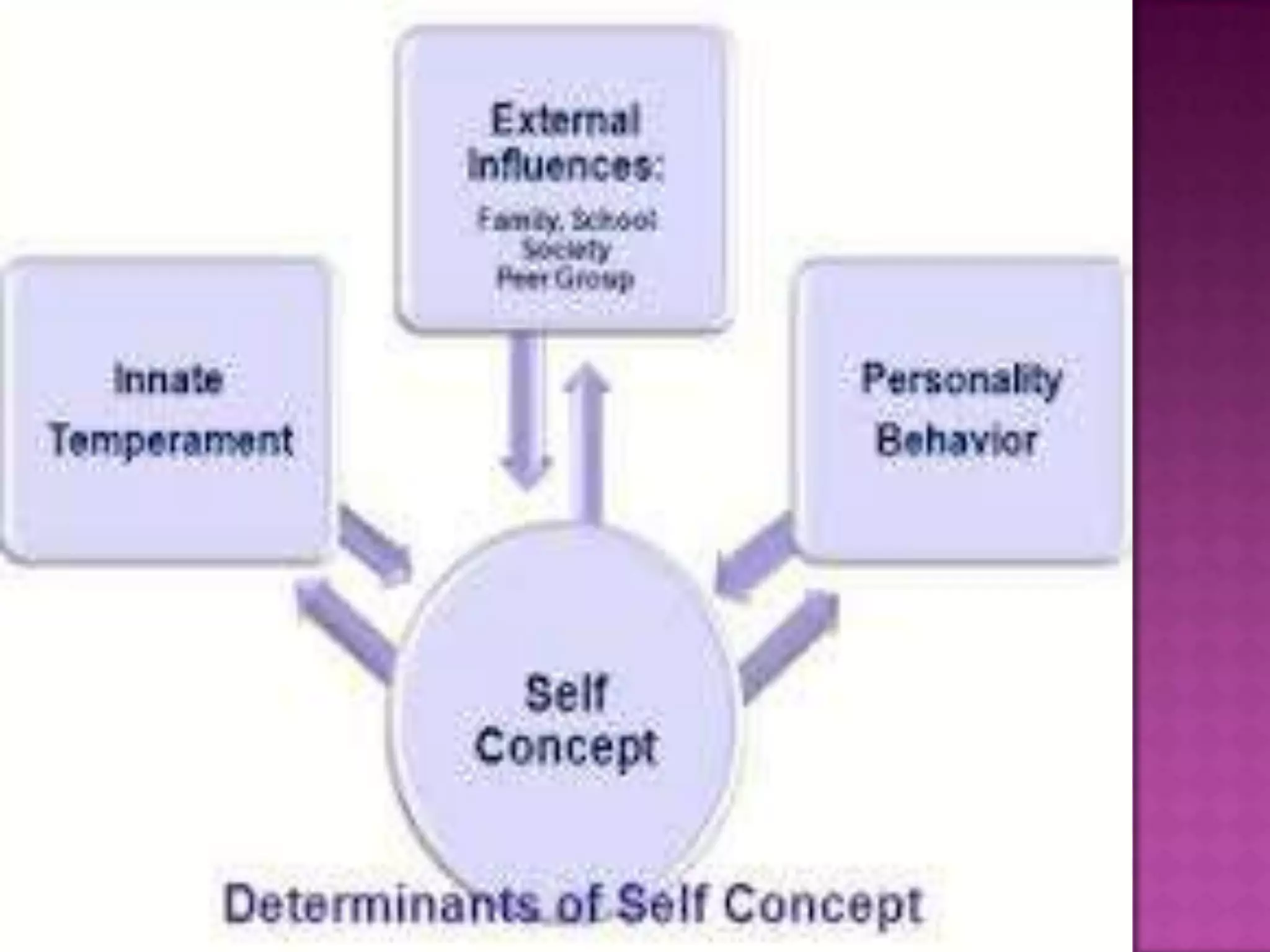
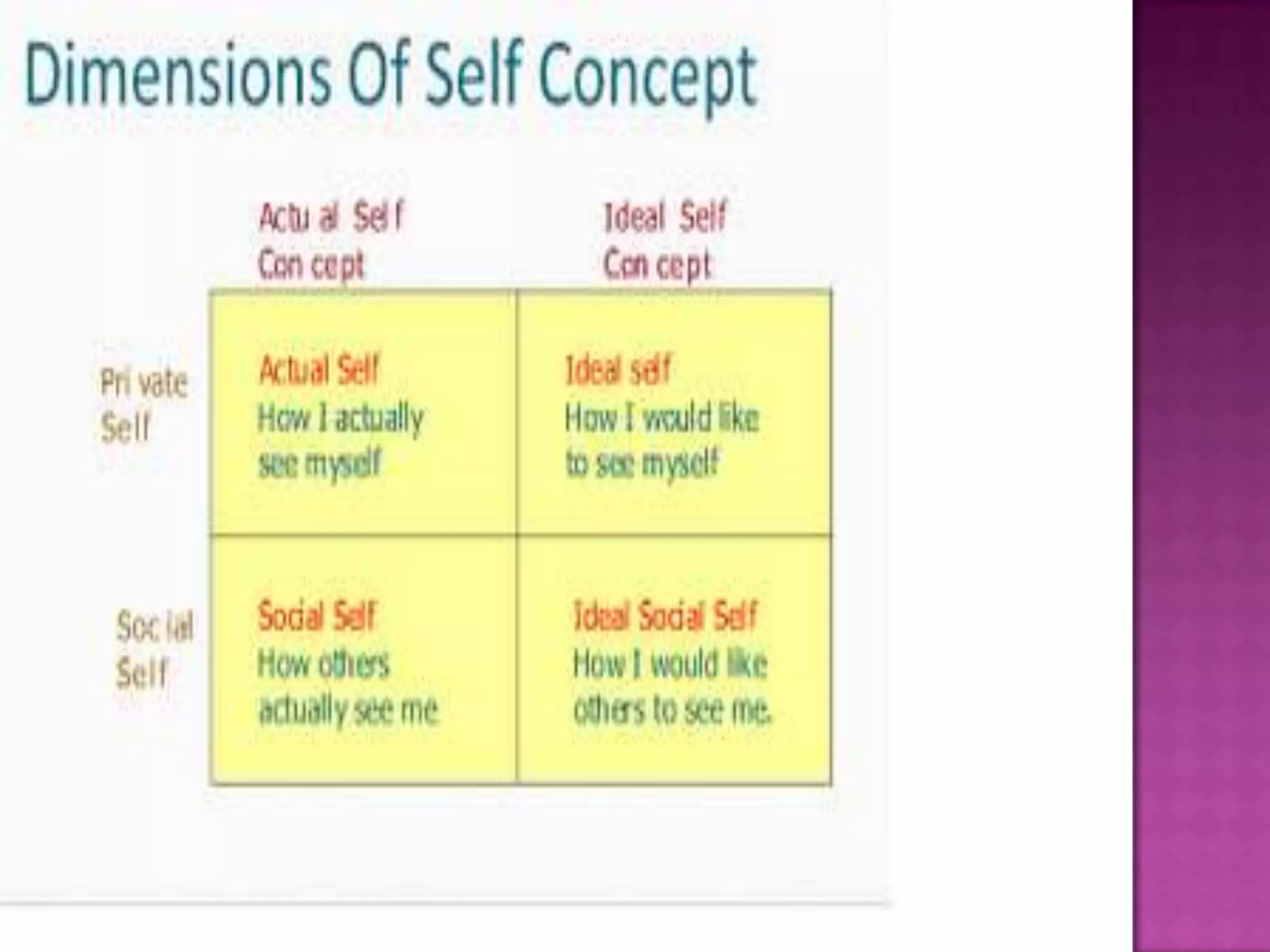
 Self-concept

refers to your subjective
description of who you think you are.

 Self-image

is your view of yourself in
particular situations
 Attitude:

a learned predisposition to respond
to a person, object, or idea in a favorable or
unfavorable way.
 Beliefs: The way in which you structure your
understanding of reality (true/false).
 Values: Enduring concepts of good and bad,
right and wrong.
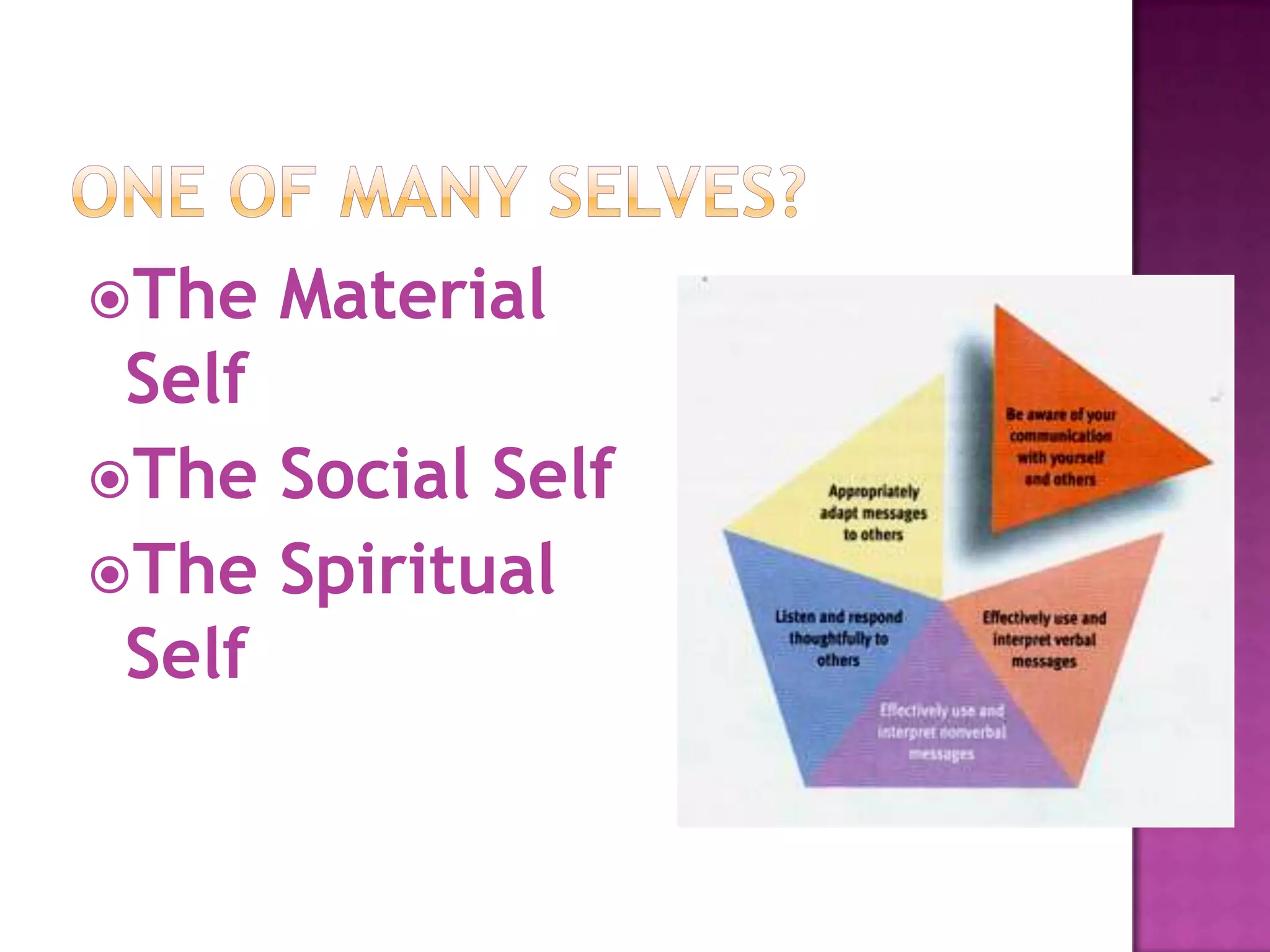
The

Material

Self
The Social Self
The Spiritual
Self
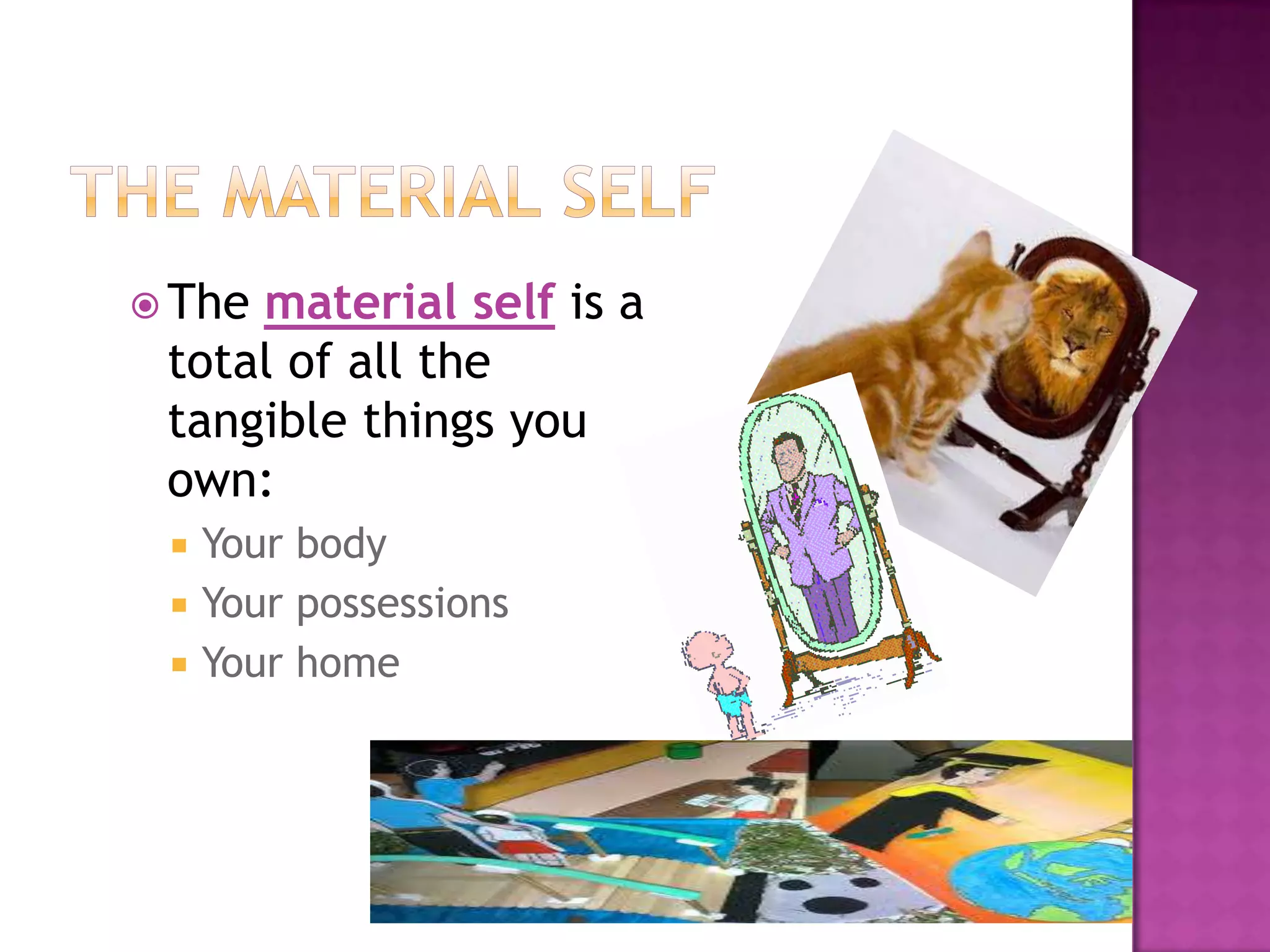
 The

material self is a
total of all the
tangible things you
own:




Your body
Your possessions
Your home
 The

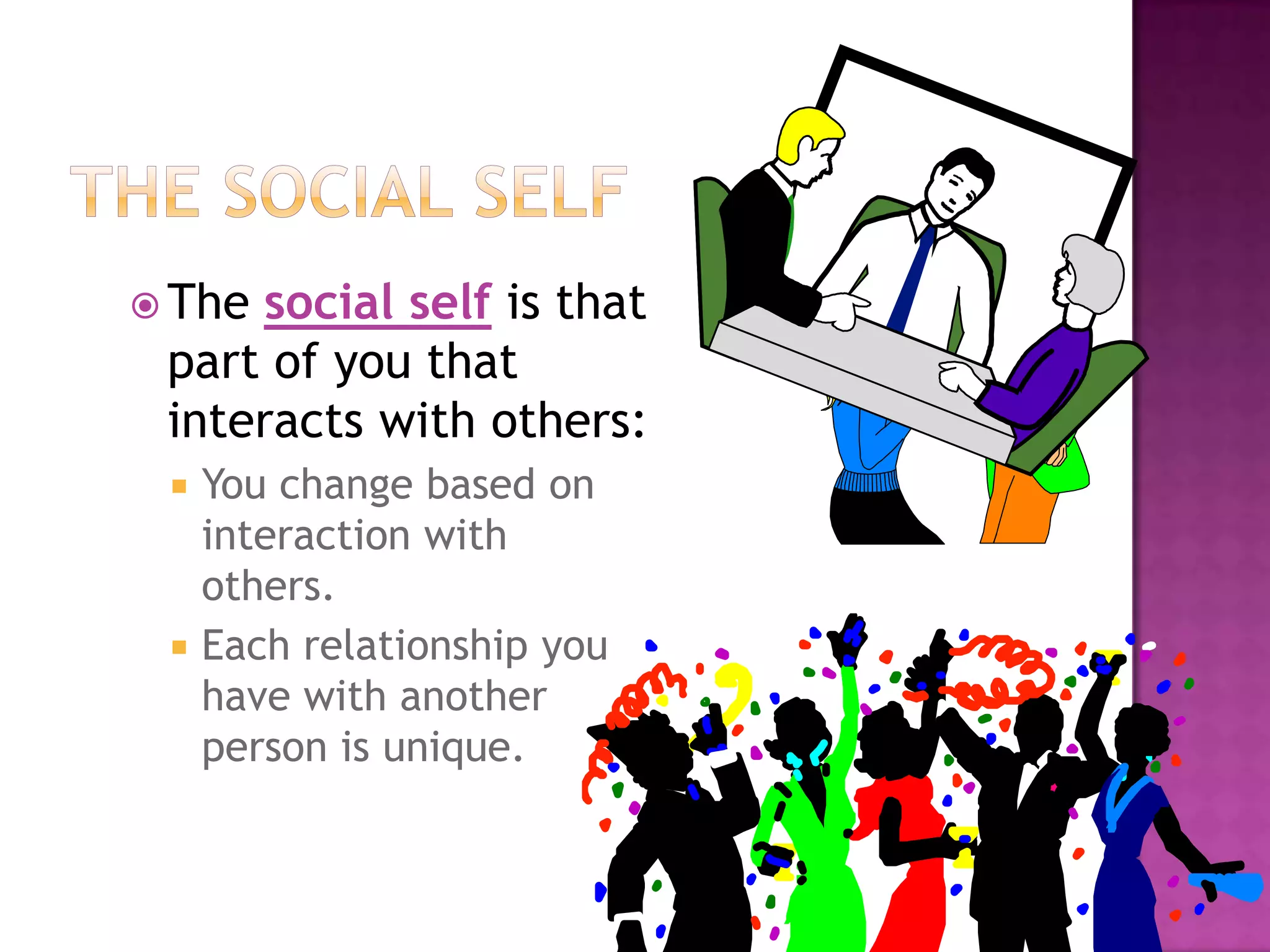
social self is that
part of you that
interacts with others:




You change based on
interaction with
others.
Each relationship you
have with another
person is unique.
 The

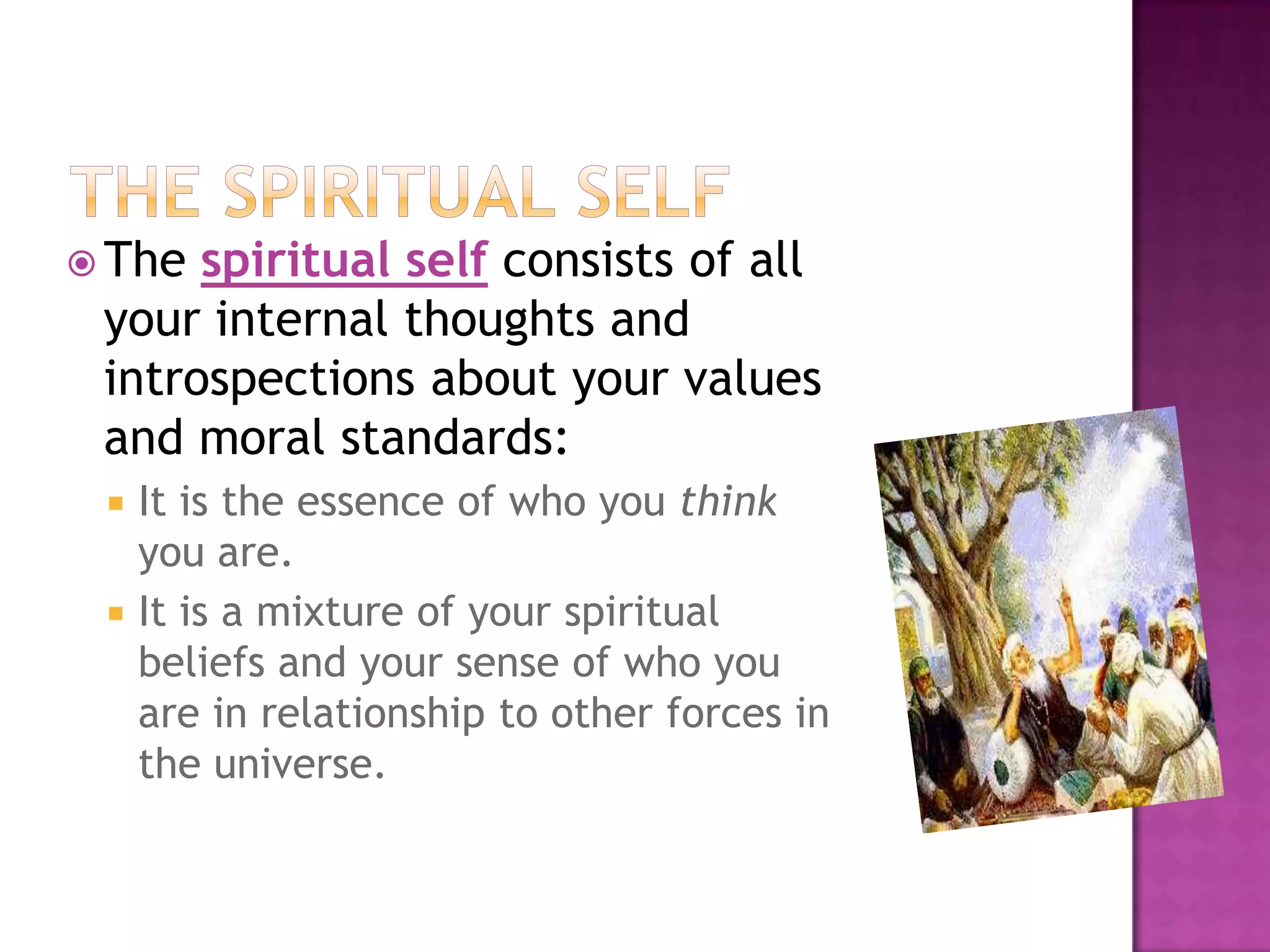
spiritual self consists of all
your internal thoughts and
introspections about your values
and moral standards:



It is the essence of who you think
you are.
It is a mixture of your spiritual
beliefs and your sense of who you
are in relationship to other forces in
the universe.
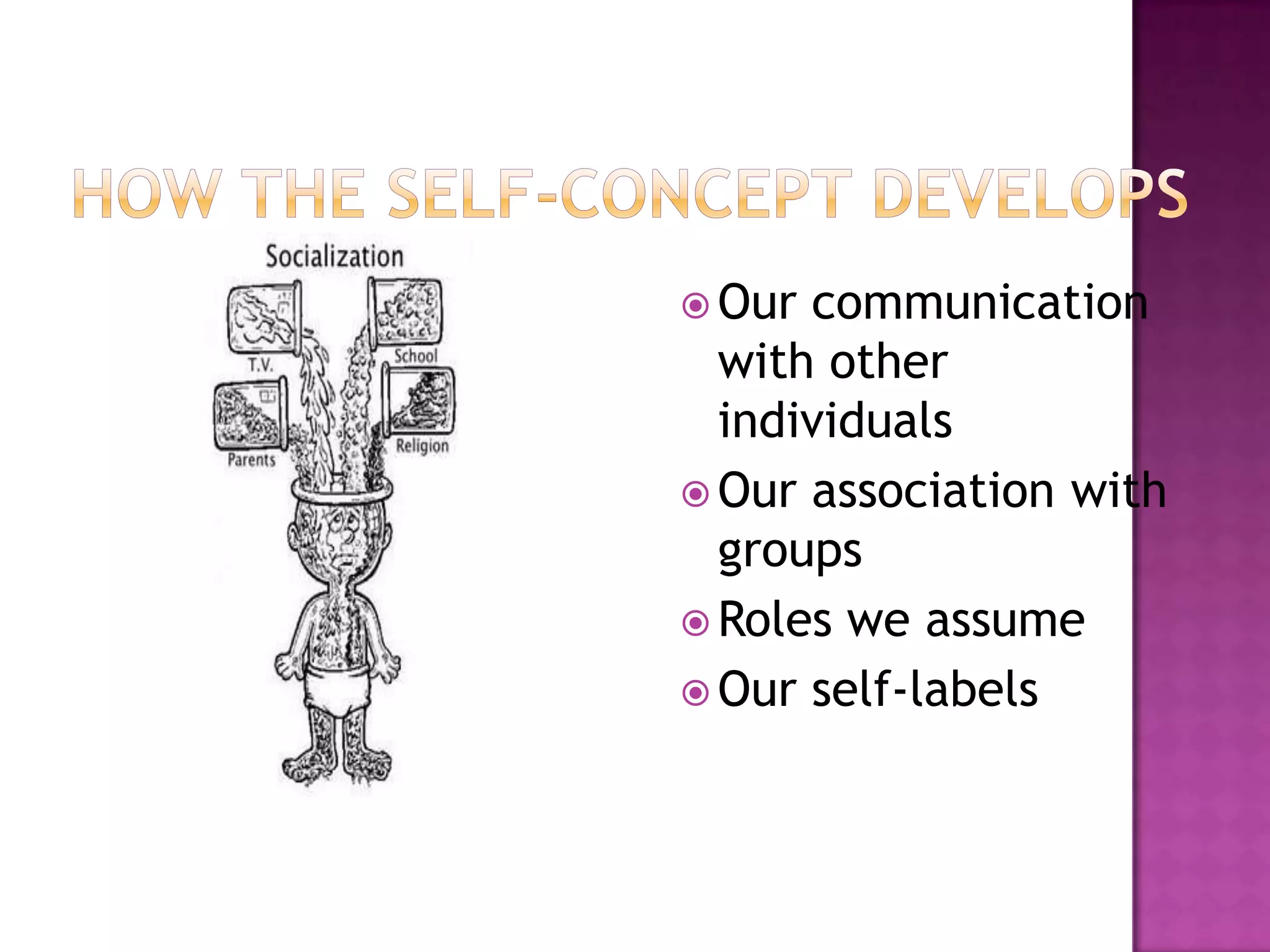
 Our

communication
with other
individuals
 Our association with
groups
 Roles we assume
 Our self-labels
 We

don’t come to know ourselves in a
vacuum.
 Charles Horton Cooley advanced the notion
of the figurative looking glass.
 Self-concept development begins at birth
 Our

awareness of who we are is often linked
to who we associate with:





Religious groups
Political groups
Ethnic groups
Social groups

 Peer

pressure is a powerful force in shaping
attitudes and behavior.
 Your

self-concept likely reflects the roles you
assume:





Mother
Brother
Teacher
Student

 Gender

asserts a powerful influence on the
self-concept from birth on.
 Self-concept

is affected by others but we are
not blank slates.
 Self-reflexiveness is the human ability to
think about what we’re doing while we’re
doing it.
 Through self-observation we discover
strengths which encourage us to assume new
labels.
 While

self-concept refers to your description
of who you are, self-esteem refers to your
evaluation of who you are.
 Your self-esteem can fluctuate and rise or
fall within the course of a day.
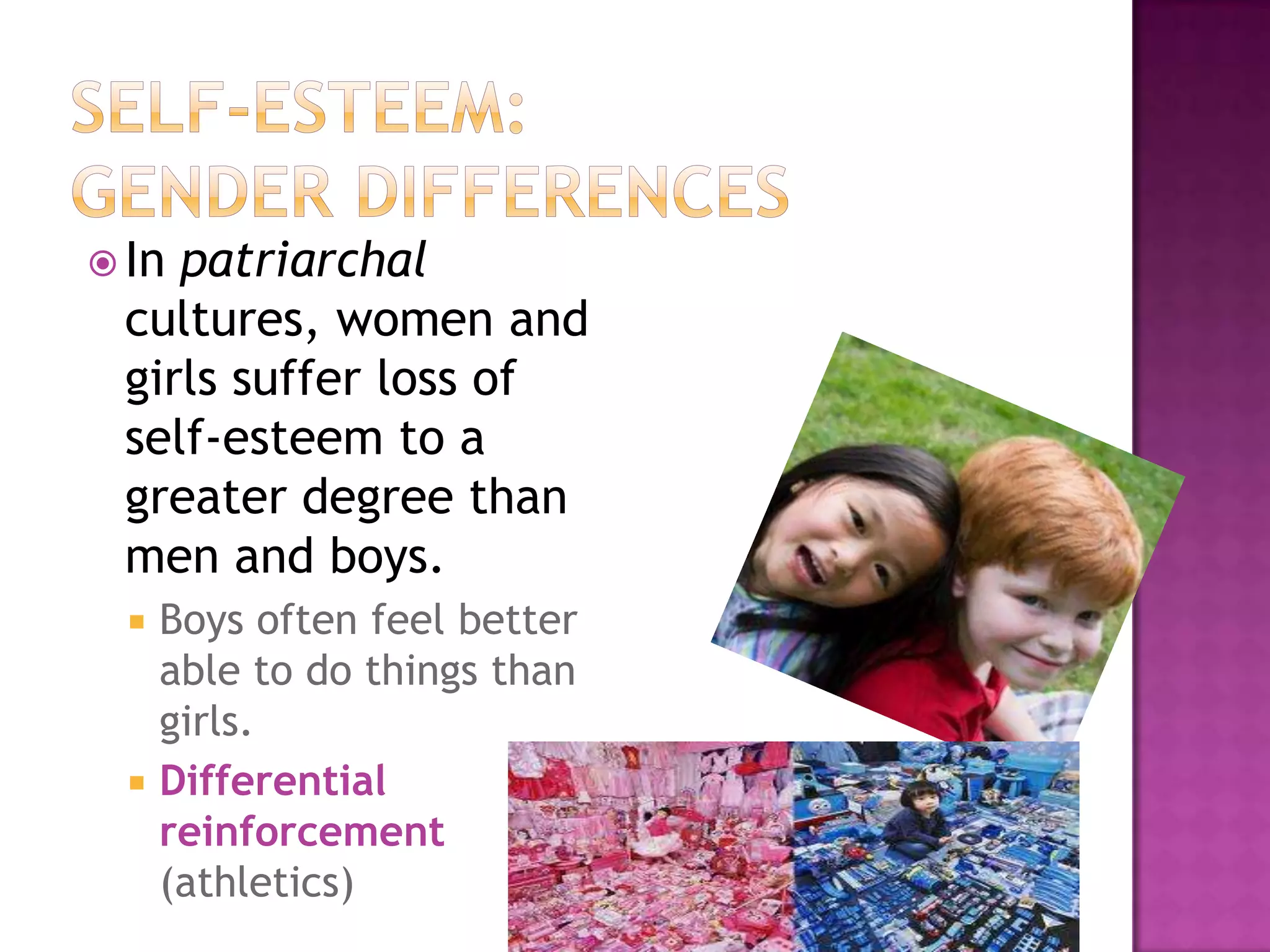
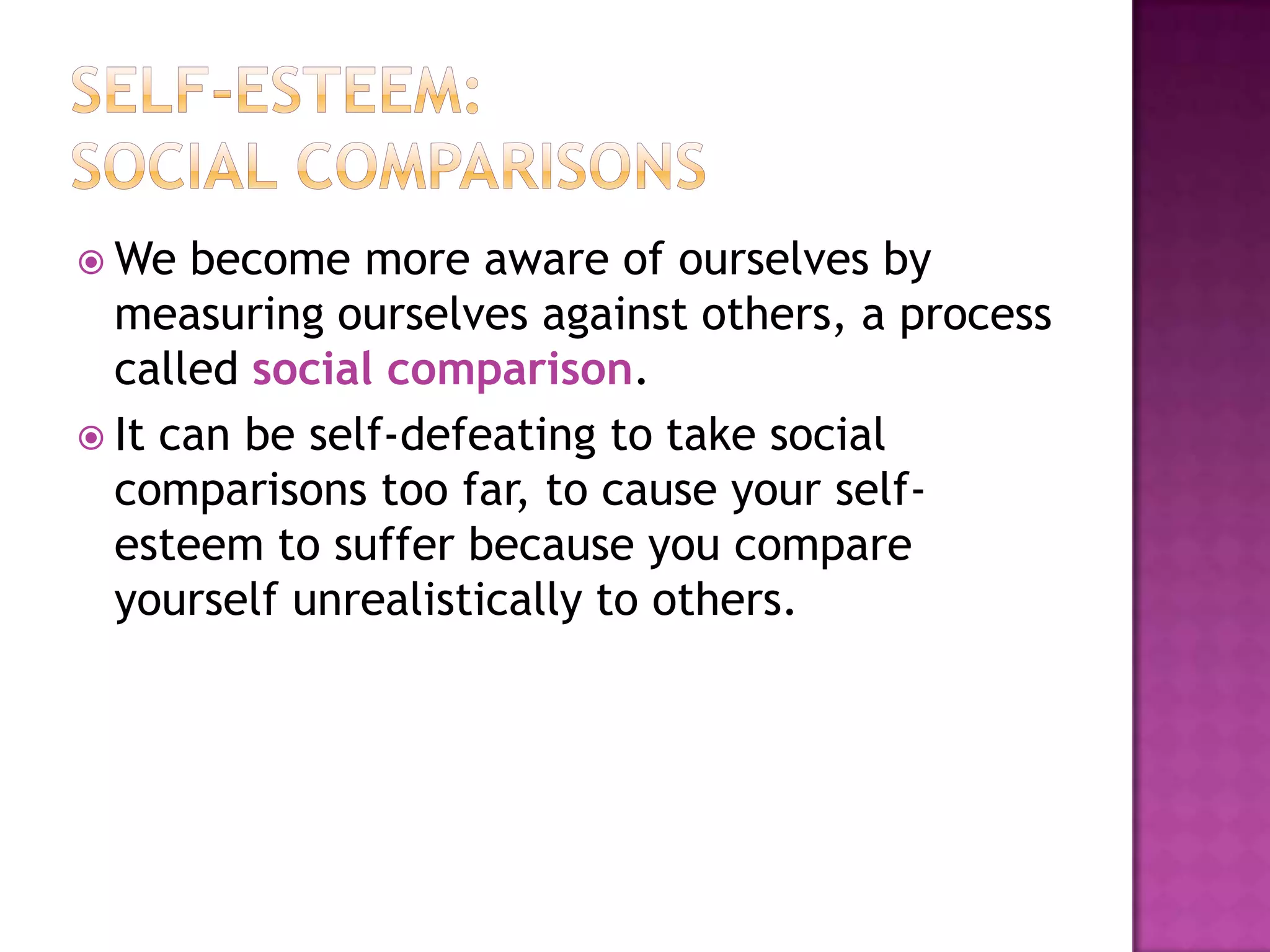
 In

patriarchal
cultures, women and
girls suffer loss of
self-esteem to a
greater degree than
men and boys.
Boys often feel better
able to do things than
girls.
 Differential
reinforcement
(athletics)

 We

become more aware of ourselves by
measuring ourselves against others, a process
called social comparison.
 It can be self-defeating to take social
comparisons too far, to cause your selfesteem to suffer because you compare
yourself unrealistically to others.
 Self-expectations

are those goals we set for

ourselves.
 Self-esteem is affected when you evaluate
how well you measure up to your own
expectations.
 Be weary of placing unrealistic demands on
yourself.
 The

self-fulfilling prophecy refers to the
idea that what you believe about yourself
often comes true because you expect it to
come true.
 Your level of self-esteem affects the kinds of
prophecies you make about yourself and
colors your interpretation of events.
 Our

feelings of low self-worth may contribute
to many of our societal problems.
 Communication is essential in the process of
building and maintaining self-esteem.
 Intrapersonal

communication involves
communication within yourself – self-talk.
 Your self-concept and self-esteem
influence the way you talk to yourself.
 Your inner dialogue also has an impact on
your self-concept and self-esteem.
 Self-talk is related to the building and
maintaining of one’s self-concept.
 Visualization

involves “seeing” yourself
exhibiting some desirable behavior.
 Apprehensive public speakers can manage
their fears by visualizing positive results:



Reduce negative self-talk
Enhances confidence and speaking skill
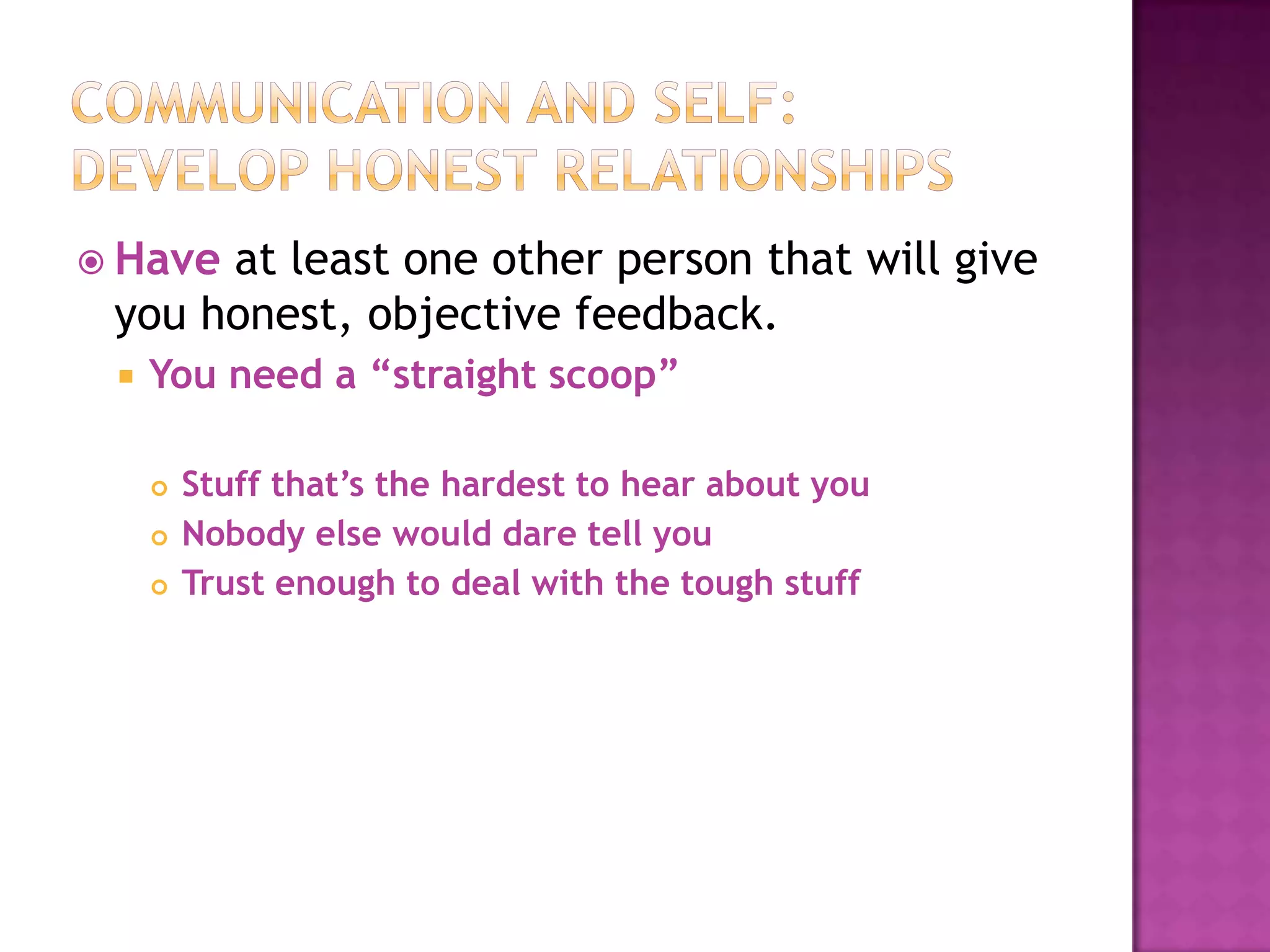
 Have

at least one other person that will give
you honest, objective feedback.


You need a “straight scoop”




Stuff that’s the hardest to hear about you
Nobody else would dare tell you
Trust enough to deal with the tough stuff
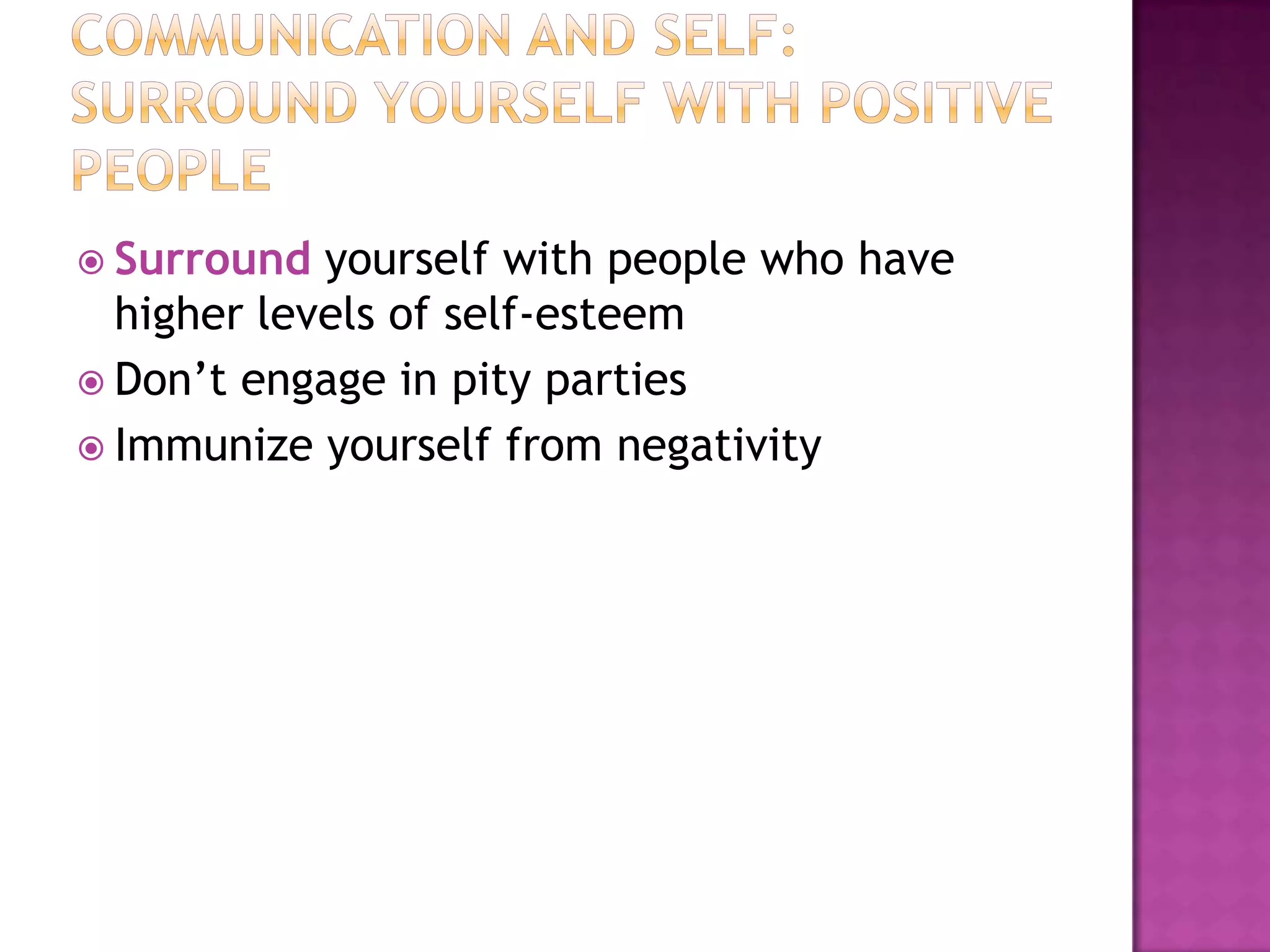
 Surround

yourself with people who have
higher levels of self-esteem
 Don’t engage in pity parties
 Immunize yourself from negativity
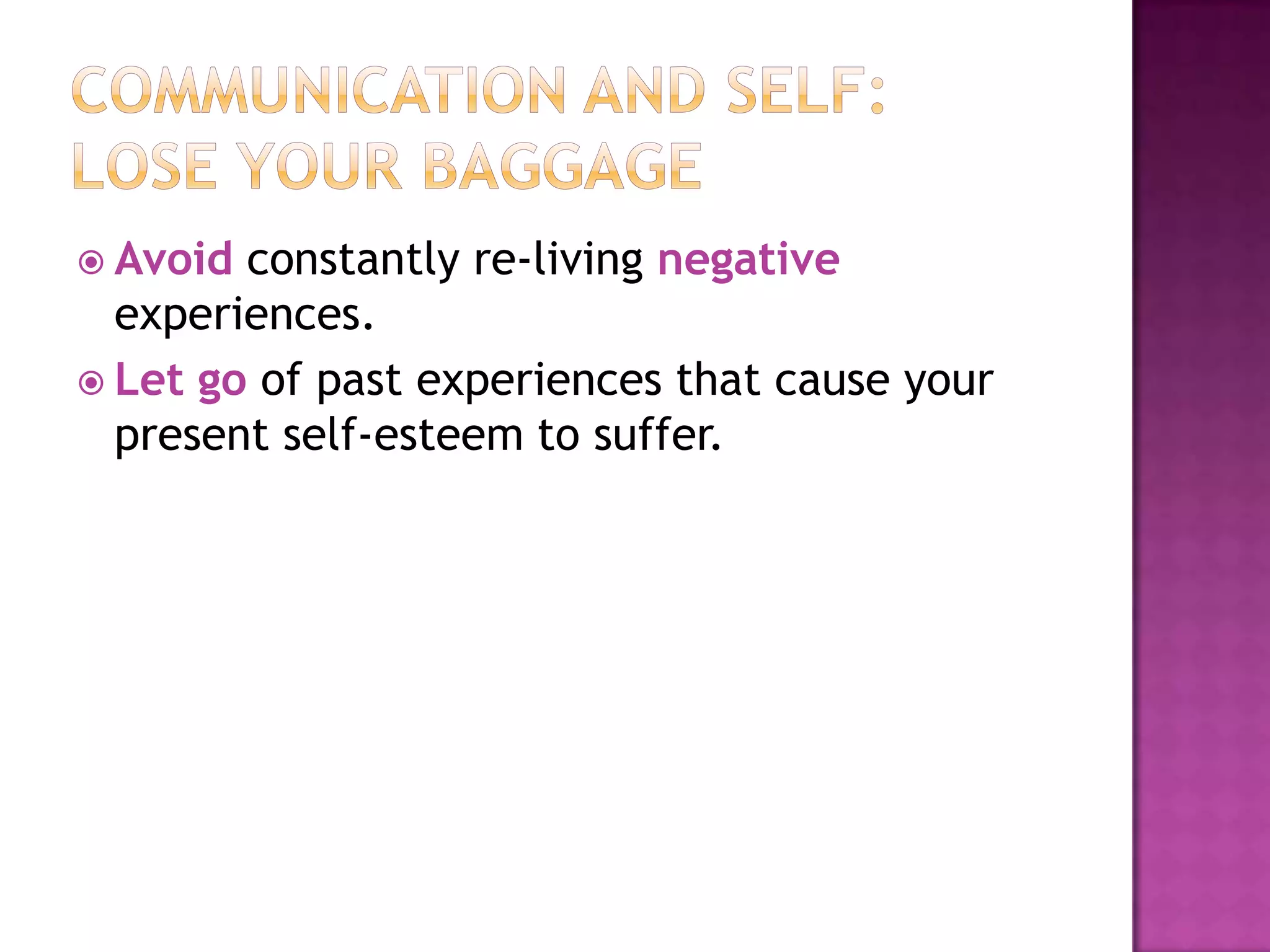
 Avoid

constantly re-living negative
experiences.
 Let go of past experiences that cause your
present self-esteem to suffer.
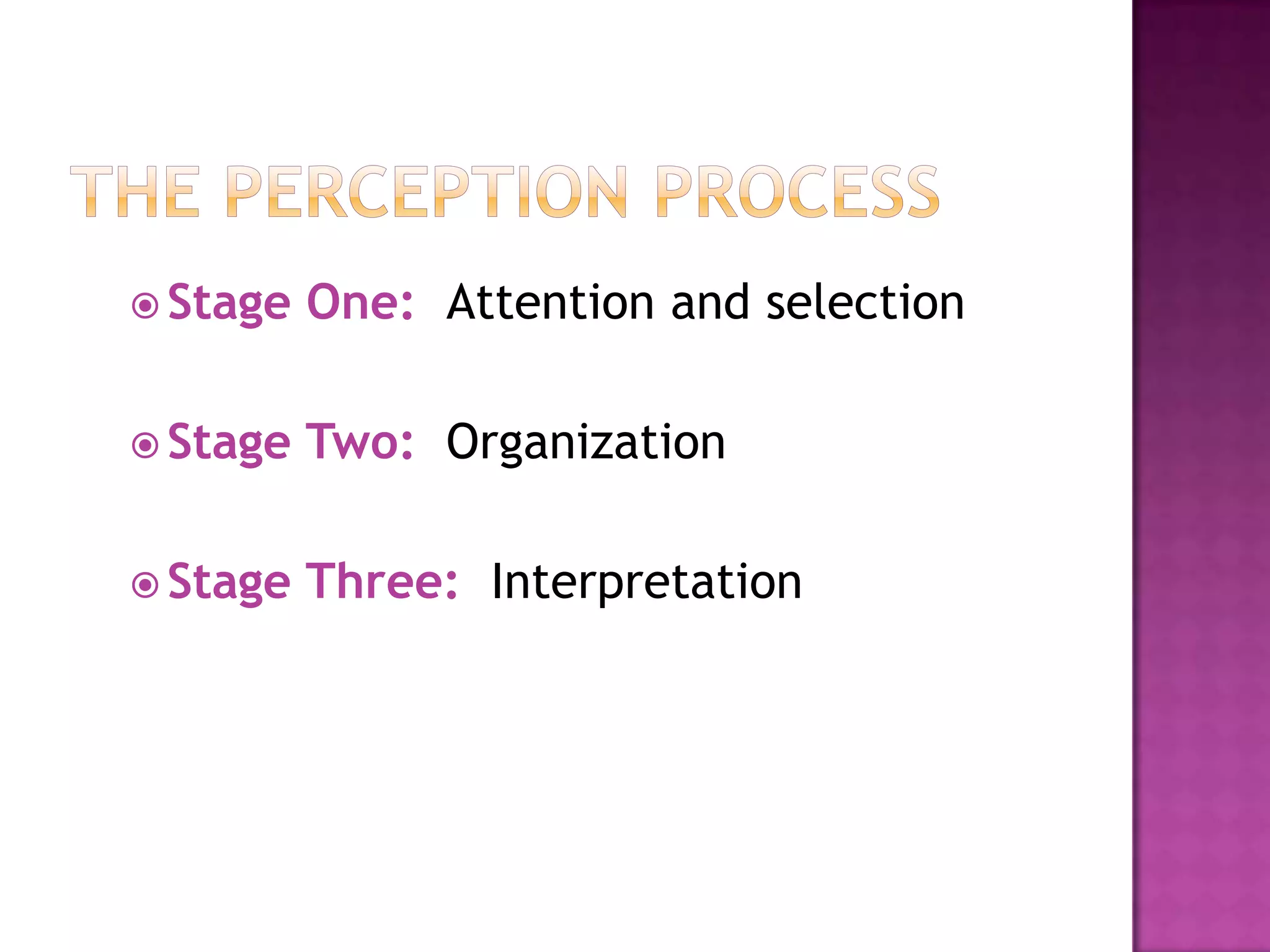
 Stage

One: Attention and selection

 Stage

Two: Organization

 Stage

Three: Interpretation
 Increase

your
awareness
 Avoid stereotypes
 Check your
perceptions



Indirect perception
checking
Direct perception
checking
ROLE OF COMMUNICATION IN SELF DEVELOPMENT

ROLE OF COMMUNICATION IN SELF DEVELOPMENT

  • 1.
  • 5.
     Self-concept refers toyour subjective description of who you think you are.  Self-image is your view of yourself in particular situations
  • 6.
     Attitude: a learnedpredisposition to respond to a person, object, or idea in a favorable or unfavorable way.  Beliefs: The way in which you structure your understanding of reality (true/false).  Values: Enduring concepts of good and bad, right and wrong.
  • 7.
  • 8.
     The material selfis a total of all the tangible things you own:    Your body Your possessions Your home
  • 9.
     The social selfis that part of you that interacts with others:   You change based on interaction with others. Each relationship you have with another person is unique.
  • 10.
     The spiritual selfconsists of all your internal thoughts and introspections about your values and moral standards:   It is the essence of who you think you are. It is a mixture of your spiritual beliefs and your sense of who you are in relationship to other forces in the universe.
  • 11.
     Our communication with other individuals Our association with groups  Roles we assume  Our self-labels
  • 13.
     We don’t cometo know ourselves in a vacuum.  Charles Horton Cooley advanced the notion of the figurative looking glass.  Self-concept development begins at birth
  • 14.
     Our awareness ofwho we are is often linked to who we associate with:     Religious groups Political groups Ethnic groups Social groups  Peer pressure is a powerful force in shaping attitudes and behavior.
  • 15.
     Your self-concept likelyreflects the roles you assume:     Mother Brother Teacher Student  Gender asserts a powerful influence on the self-concept from birth on.
  • 16.
     Self-concept is affectedby others but we are not blank slates.  Self-reflexiveness is the human ability to think about what we’re doing while we’re doing it.  Through self-observation we discover strengths which encourage us to assume new labels.
  • 17.
     While self-concept refersto your description of who you are, self-esteem refers to your evaluation of who you are.  Your self-esteem can fluctuate and rise or fall within the course of a day.
  • 18.
     In patriarchal cultures, womenand girls suffer loss of self-esteem to a greater degree than men and boys. Boys often feel better able to do things than girls.  Differential reinforcement (athletics) 
  • 19.
     We become moreaware of ourselves by measuring ourselves against others, a process called social comparison.  It can be self-defeating to take social comparisons too far, to cause your selfesteem to suffer because you compare yourself unrealistically to others.
  • 20.
     Self-expectations are thosegoals we set for ourselves.  Self-esteem is affected when you evaluate how well you measure up to your own expectations.  Be weary of placing unrealistic demands on yourself.
  • 21.
     The self-fulfilling prophecyrefers to the idea that what you believe about yourself often comes true because you expect it to come true.  Your level of self-esteem affects the kinds of prophecies you make about yourself and colors your interpretation of events.
  • 22.
     Our feelings oflow self-worth may contribute to many of our societal problems.  Communication is essential in the process of building and maintaining self-esteem.
  • 23.
     Intrapersonal communication involves communicationwithin yourself – self-talk.  Your self-concept and self-esteem influence the way you talk to yourself.  Your inner dialogue also has an impact on your self-concept and self-esteem.  Self-talk is related to the building and maintaining of one’s self-concept.
  • 24.
     Visualization involves “seeing”yourself exhibiting some desirable behavior.  Apprehensive public speakers can manage their fears by visualizing positive results:   Reduce negative self-talk Enhances confidence and speaking skill
  • 25.
     Have at leastone other person that will give you honest, objective feedback.  You need a “straight scoop”    Stuff that’s the hardest to hear about you Nobody else would dare tell you Trust enough to deal with the tough stuff
  • 26.
     Surround yourself withpeople who have higher levels of self-esteem  Don’t engage in pity parties  Immunize yourself from negativity
  • 27.
     Avoid constantly re-livingnegative experiences.  Let go of past experiences that cause your present self-esteem to suffer.
  • 28.
     Stage One: Attentionand selection  Stage Two: Organization  Stage Three: Interpretation
  • 29.
     Increase your awareness  Avoidstereotypes  Check your perceptions   Indirect perception checking Direct perception checking