


 Newspaper/ TV Advertising revenues are
down.
 A few newspapers in the world has already
closed down its print edition while continuing
the online edition.
 A media to stay!
 The history of media shows arrival of new
media changes/constrains the role of
existing media.
 Define online journalism
 History of online journalism
 Strengthens of online journalism
 Weaknesses of online journalism
 The journalistic activities primarily conducted
for disseminating information through
internet
 Online journalism is JOURNALISM
 Online simply defines the method of delivery
to the audience.
 The internet: The greatest advance for
communication since the printing press
 An important information source- as
important as traditional media
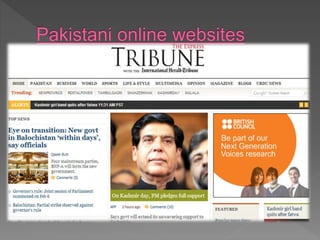
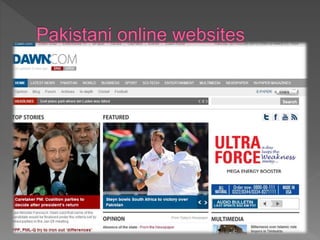
 The Friday Times
http://www.thefridaytimes.com/
 Khabrain – Urdu Khabrain, Daily Khabrain Newspaper
http://www.khabrain.com
 Bbc Urdu – BbcUrdu, Bbc Urdu News
http://www.bbc.co.uk/urdu/
 Mashriq – Daily Mashriq, Roznama Mashriq
http://www.dailymashriq.com.pk/
 Express – Daily Express, Roznama Express
http://www.express.com.pk/
 Daily Islam
http://www.dailyislam.com
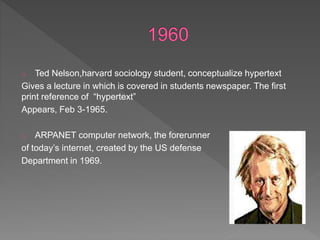
o Ted Nelson,harvard sociology student, conceptualize hypertext
Gives a lecture in which is covered in students newspaper. The first
print reference of “hypertext”
Appears, Feb 3-1965.
o ARPANET computer network, the forerunner
of today’s internet, created by the US defense
Department in 1969.
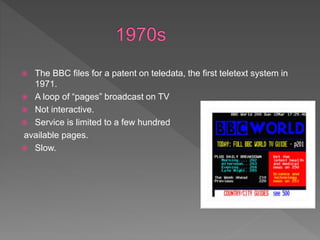
 The BBC files for a patent on teledata, the first teletext system in
1971.
 A loop of “pages” broadcast on TV
 Not interactive.
 Service is limited to a few hundred
available pages.
 Slow.
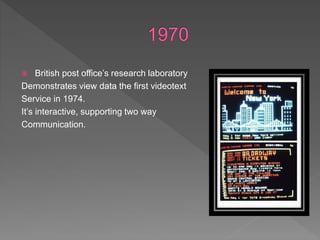
 British post office’s research laboratory
Demonstrates view data the first videotext
Service in 1974.
It’s interactive, supporting two way
Communication.
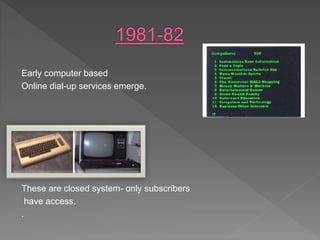
Early computer based
Online dial-up services emerge.
These are closed system- only subscribers
have access.
.
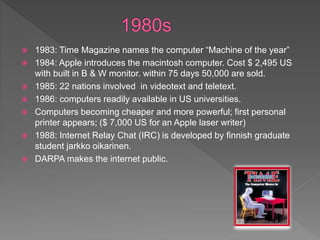
 1983: Time Magazine names the computer “Machine of the year”
 1984: Apple introduces the macintosh computer. Cost $ 2,495 US
with built in B & W monitor. within 75 days 50,000 are sold.
 1985: 22 nations involved in videotext and teletext.
 1986: computers readily available in US universities.
 Computers becoming cheaper and more powerful; first personal
printer appears; ($ 7,000 US for an Apple laser writer)
 1988: Internet Relay Chat (IRC) is developed by finnish graduate
student jarkko oikarinen.
 DARPA makes the internet public.
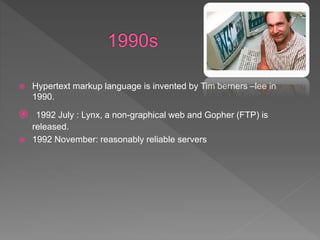
 Hypertext markup language is invented by Tim berners –lee in
1990.
 1992 July : Lynx, a non-graphical web and Gopher (FTP) is
released.
 1992 November: reasonably reliable servers
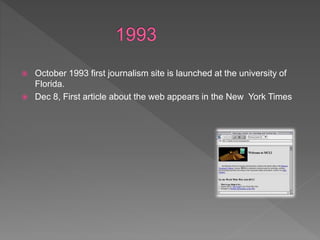
 October 1993 first journalism site is launched at the university of
Florida.
 Dec 8, First article about the web appears in the New York Times
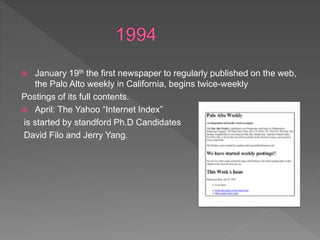
 January 19th the first newspaper to regularly published on the web,
the Palo Alto weekly in California, begins twice-weekly
Postings of its full contents.
 April: The Yahoo “Internet Index”
is started by standford Ph.D Candidates
David Filo and Jerry Yang.
 Unlimited space
 Unlike traditional media, online media do not have
space/time restraint
› Global Distribution
 Global reach is basic feature of online media
 Convergence
› multimedia-Convergence of text, graphics, audio
and video
 Hypertext
o Text that links to other content
 Interactive
o Increased ability of the public to actively participate in the
discussion and / construction/ control of content.
o Internet provides a greater level of audience participation
 Storage and retrieval
o Content are storable permanently which is easy to search
 And, most importantly, immediacy
o Publishing is quick and easy
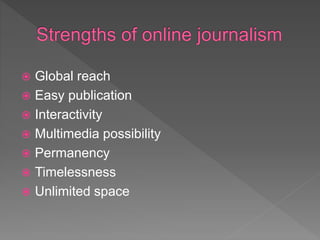
 Global reach
 Easy publication
 Interactivity
 Multimedia possibility
 Permanency
 Timelessness
 Unlimited space
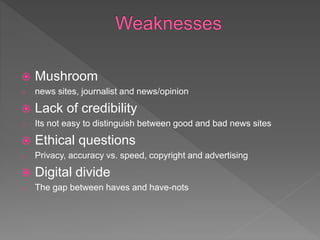
 Mushroom
o news sites, journalist and news/opinion
 Lack of credibility
o Its not easy to distinguish between good and bad news sites
 Ethical questions
o Privacy, accuracy vs. speed, copyright and advertising
 Digital divide
o The gap between haves and have-nots
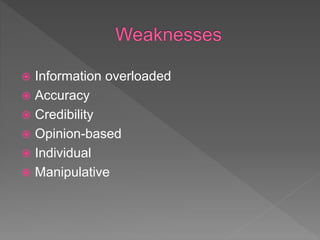
 Information overloaded
 Accuracy
 Credibility
 Opinion-based
 Individual
 Manipulative
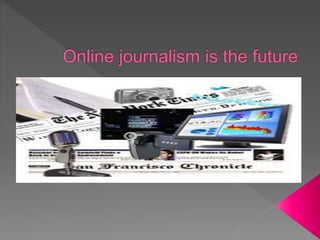
Online journalism presentation

Online journalism presentation

  • 2.
     Newspaper/ TVAdvertising revenues are down.  A few newspapers in the world has already closed down its print edition while continuing the online edition.  A media to stay!
  • 3.
     The historyof media shows arrival of new media changes/constrains the role of existing media.
  • 4.
     Define onlinejournalism  History of online journalism  Strengthens of online journalism  Weaknesses of online journalism
  • 5.
     The journalisticactivities primarily conducted for disseminating information through internet  Online journalism is JOURNALISM  Online simply defines the method of delivery to the audience.
  • 6.
     The internet:The greatest advance for communication since the printing press  An important information source- as important as traditional media
  • 7.
     The FridayTimes http://www.thefridaytimes.com/  Khabrain – Urdu Khabrain, Daily Khabrain Newspaper http://www.khabrain.com  Bbc Urdu – BbcUrdu, Bbc Urdu News http://www.bbc.co.uk/urdu/  Mashriq – Daily Mashriq, Roznama Mashriq http://www.dailymashriq.com.pk/  Express – Daily Express, Roznama Express http://www.express.com.pk/  Daily Islam http://www.dailyislam.com
  • 11.
    o Ted Nelson,harvardsociology student, conceptualize hypertext Gives a lecture in which is covered in students newspaper. The first print reference of “hypertext” Appears, Feb 3-1965. o ARPANET computer network, the forerunner of today’s internet, created by the US defense Department in 1969.
  • 12.
     The BBCfiles for a patent on teledata, the first teletext system in 1971.  A loop of “pages” broadcast on TV  Not interactive.  Service is limited to a few hundred available pages.  Slow.
  • 13.
     British postoffice’s research laboratory Demonstrates view data the first videotext Service in 1974. It’s interactive, supporting two way Communication.
  • 15.
    Early computer based Onlinedial-up services emerge. These are closed system- only subscribers have access. .
  • 16.
     1983: TimeMagazine names the computer “Machine of the year”  1984: Apple introduces the macintosh computer. Cost $ 2,495 US with built in B & W monitor. within 75 days 50,000 are sold.  1985: 22 nations involved in videotext and teletext.  1986: computers readily available in US universities.  Computers becoming cheaper and more powerful; first personal printer appears; ($ 7,000 US for an Apple laser writer)  1988: Internet Relay Chat (IRC) is developed by finnish graduate student jarkko oikarinen.  DARPA makes the internet public.
  • 17.
     Hypertext markuplanguage is invented by Tim berners –lee in 1990.  1992 July : Lynx, a non-graphical web and Gopher (FTP) is released.  1992 November: reasonably reliable servers
  • 18.
     October 1993first journalism site is launched at the university of Florida.  Dec 8, First article about the web appears in the New York Times
  • 19.
     January 19ththe first newspaper to regularly published on the web, the Palo Alto weekly in California, begins twice-weekly Postings of its full contents.  April: The Yahoo “Internet Index” is started by standford Ph.D Candidates David Filo and Jerry Yang.
  • 20.
     Unlimited space Unlike traditional media, online media do not have space/time restraint › Global Distribution  Global reach is basic feature of online media  Convergence › multimedia-Convergence of text, graphics, audio and video
  • 21.
     Hypertext o Textthat links to other content  Interactive o Increased ability of the public to actively participate in the discussion and / construction/ control of content. o Internet provides a greater level of audience participation
  • 22.
     Storage andretrieval o Content are storable permanently which is easy to search  And, most importantly, immediacy o Publishing is quick and easy
  • 23.
     Global reach Easy publication  Interactivity  Multimedia possibility  Permanency  Timelessness  Unlimited space
  • 24.
     Mushroom o newssites, journalist and news/opinion  Lack of credibility o Its not easy to distinguish between good and bad news sites  Ethical questions o Privacy, accuracy vs. speed, copyright and advertising  Digital divide o The gap between haves and have-nots
  • 25.
     Information overloaded Accuracy  Credibility  Opinion-based  Individual  Manipulative