The SocialEcological Model
A multifaceted Approach
Key Concept
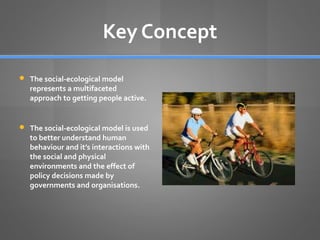
 The social-ecological model

represents a multifaceted
approach to getting people active.

 The social-ecological model is used

to better understand human
behaviour and it’s interactions with
the social and physical
environments and the effect of
policy decisions made by
governments and organisations.
Overview
 There are many factors that influence a persons

engagement with physical activity programs

 Understanding these factors allows programmers to

develop programs that better ‘fit’ the individual
Overview
 Previous models of physical activity intervention (such as

the Stages of Change model or the “Self Efficacy” model
focused solely on the individual.

 Effective physical activity interventions are

multidimensional and understand that not one factor that
influences the individual but many.
Overview
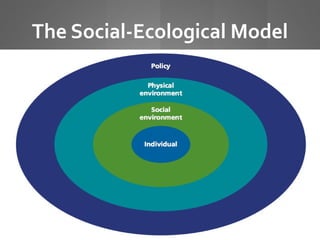
 The underlying core principles of the social-ecological model

concern the interrelationships between the different levels of
influence (of PA behaviour) on the individual.

 The social-ecological model looks at the interrelationships

between the following areas:
 The Individual domain

 The Social Environment domain
 The Physical environment domain
 The Policy domain
The Social-Ecological Model
Level 1- The Individual Domain
 Is at the center of the model as

ultimately we are trying to
affect a change in physical
activity behaviour of
individuals
Level 1- The Individual Domain
 At this level, age, gender, self-

efficacy, knowledge, values,
attitudes, beliefs and
preferences are all important
factors

 However it has to be

recognised that external
factors will also effect the
individual
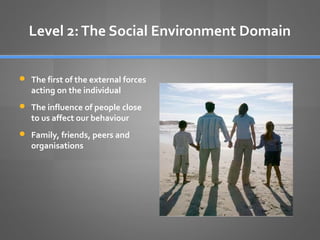
Level 2: The Social Environment Domain
 The first of the external forces

acting on the individual

 The influence of people close

to us affect our behaviour

 Family, friends, peers and

organisations
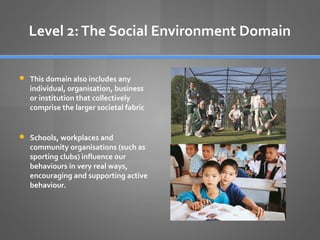
Level 2: The Social Environment Domain
 This domain also includes any

individual, organisation, business
or institution that collectively
comprise the larger societal fabric

 Schools, workplaces and

community organisations (such as
sporting clubs) influence our
behaviours in very real ways,
encouraging and supporting active
behaviour.
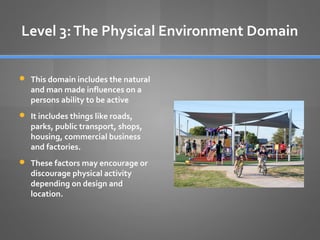
Level 3: The Physical Environment Domain
 This domain includes the natural

and man made influences on a
persons ability to be active

 It includes things like roads,

parks, public transport, shops,
housing, commercial business
and factories.

 These factors may encourage or

discourage physical activity
depending on design and
location.
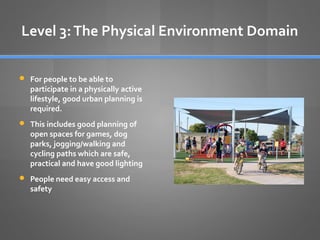
Level 3: The Physical Environment Domain
 For people to be able to

participate in a physically active
lifestyle, good urban planning is
required.

 This includes good planning of

open spaces for games, dog
parks, jogging/walking and
cycling paths which are safe,
practical and have good lighting

 People need easy access and

safety
Level 4: The Policy Domain
 Policy is defined as an

authoritative decision made by a
local, state or federal government
body.

 This domain refers to the policies,

laws and regulations by which we
live.

 These policies, laws and

regulations effect our ability to
live a healthy life

 Environmental change is included

in this domain
Level 4: The Policy Domain
 Policies of schools and workplaces that

encourage activity are important in
developing a healthy workforce and
nation

 Government policy and funding can do

the following things:

 Create physical and natural

environmental change

 Create jobs through skills and training
 Funding for sports grounds and clubs
 Change taxes for sports clubs

The social ecological model

  • 1.
    The SocialEcological Model Amultifaceted Approach
  • 2.
    Key Concept  Thesocial-ecological model represents a multifaceted approach to getting people active.  The social-ecological model is used to better understand human behaviour and it’s interactions with the social and physical environments and the effect of policy decisions made by governments and organisations.
  • 3.
    Overview  There aremany factors that influence a persons engagement with physical activity programs  Understanding these factors allows programmers to develop programs that better ‘fit’ the individual
  • 4.
    Overview  Previous modelsof physical activity intervention (such as the Stages of Change model or the “Self Efficacy” model focused solely on the individual.  Effective physical activity interventions are multidimensional and understand that not one factor that influences the individual but many.
  • 5.
    Overview  The underlyingcore principles of the social-ecological model concern the interrelationships between the different levels of influence (of PA behaviour) on the individual.  The social-ecological model looks at the interrelationships between the following areas:  The Individual domain  The Social Environment domain  The Physical environment domain  The Policy domain
  • 6.
  • 7.
    Level 1- TheIndividual Domain  Is at the center of the model as ultimately we are trying to affect a change in physical activity behaviour of individuals
  • 8.
    Level 1- TheIndividual Domain  At this level, age, gender, self- efficacy, knowledge, values, attitudes, beliefs and preferences are all important factors  However it has to be recognised that external factors will also effect the individual
  • 9.
    Level 2: TheSocial Environment Domain  The first of the external forces acting on the individual  The influence of people close to us affect our behaviour  Family, friends, peers and organisations
  • 10.
    Level 2: TheSocial Environment Domain  This domain also includes any individual, organisation, business or institution that collectively comprise the larger societal fabric  Schools, workplaces and community organisations (such as sporting clubs) influence our behaviours in very real ways, encouraging and supporting active behaviour.
  • 11.
    Level 3: ThePhysical Environment Domain  This domain includes the natural and man made influences on a persons ability to be active  It includes things like roads, parks, public transport, shops, housing, commercial business and factories.  These factors may encourage or discourage physical activity depending on design and location.
  • 12.
    Level 3: ThePhysical Environment Domain  For people to be able to participate in a physically active lifestyle, good urban planning is required.  This includes good planning of open spaces for games, dog parks, jogging/walking and cycling paths which are safe, practical and have good lighting  People need easy access and safety
  • 13.
    Level 4: ThePolicy Domain  Policy is defined as an authoritative decision made by a local, state or federal government body.  This domain refers to the policies, laws and regulations by which we live.  These policies, laws and regulations effect our ability to live a healthy life  Environmental change is included in this domain
  • 14.
    Level 4: ThePolicy Domain  Policies of schools and workplaces that encourage activity are important in developing a healthy workforce and nation  Government policy and funding can do the following things:  Create physical and natural environmental change  Create jobs through skills and training  Funding for sports grounds and clubs  Change taxes for sports clubs