SCLERITIS
            Dr.Fuad A K Niazi,
             Assistant Professor,
      Rawalpindi medical college,
   Department of Ophthalmology,
           Holy Family Hospital.
Scleritis
OBJECTIVES

•   Definition

•   Incidence

•   Classification

•   Signs & Symptoms.

•   Specific investigations.

•   Treatment
DEFINITION

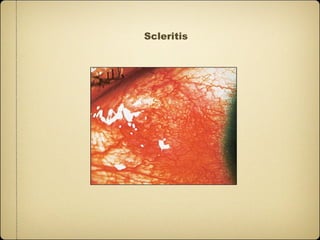
Scleritis is a granulomatous inflammation of the
                      sclera.
Scleritis
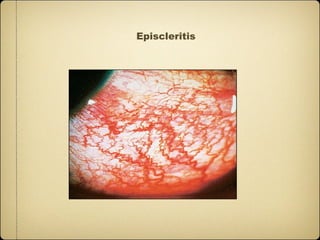
Episcleritis
Incidence

 It is much less common than episcleritis.

Women are commonly affected in the 5th and
             6th decade.

            Usually bilateral.
Pathology


•   There is dense infiltration of the scleral tissue by
    lymphocytes.
Classification


1.Anterior scleritis(95%)

           a.Non-necrotizing:diffuse or nodular

         b.Necrotizing: with or without
   inflammation

2.Posterior scleritis(5%)
Associated Systemic
         Diseases

•   45% of patients may have the following
    associated diseases:

    1.Rheumatoid arthritis

    2.Connective issue disorders

    3. Miscellaneous: relapsing polychondritis,herpes
                            zoster,gout,surgically
    induced                       scleritis etc
CLINICAL FEATURES
Anterior non-
  necrotizing scleritis
1.Presentation: Severe discomfort,tenderness and watering of eyes.

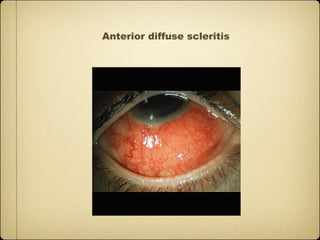
2.Signs: a)Diffuse scleritis-Widespread inflammation
                                  Distortion of vascular pattern
                                            Benign progression

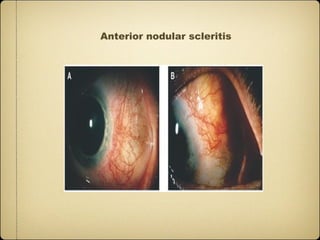
        b)Nodular Scleritis-Nodular appearance
                                 Intermediate severity
Anterior diffuse scleritis
Anterior nodular scleritis
Anterior necrotizing
          scleritis with
          inflammation

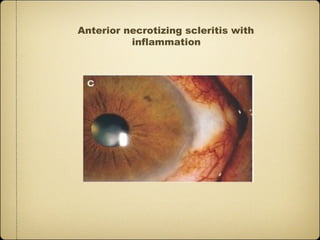
1.Presentation: Most severe form with gradual onset of pain and localized
                redness .

2. Signs: a) Distortion or occlusion of blood vessels
                              b) Development of scleral necrosis
                                       c) Gradual spread of necrosis around the
      globe                                      d) Presence of associated
      anterior uveitis indicative of very severe           disease involving
      ciliary body

Complications: corneal involvement,cataract,glaucoma.
Anterior necrotizing scleritis with
          inflammation
Anterior necrotizing
       scleritis without
         inflammation
1.   Presentation: Asymptomatic
2.   Signs: Starts with a yellow necrotic patch
            Large areas of uvea become exposed
3.   Complications: Perforation rare unless IOP elevated
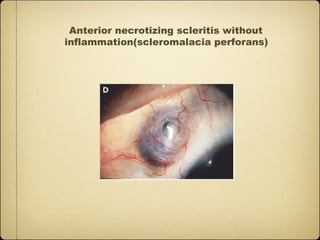
Anterior necrotizing scleritis without
inflammation(scleromalacia perforans)
Posterior scleritis

•   Presentation: Variable,pain and visual impairment

•   Signs: Eyelid oedema
           Proptosis
    Opthalmoplegia
    Associated anterior scleritis present in 40% of cases

•   Ophthalmoscopy: Disc swelling
                            Macular oedema
                            Retinal detachment
                                     Vitritis Ring
                                     Choroidal detachment
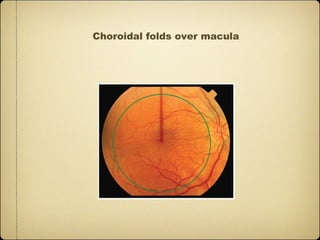
                                     Choroidal folds
                                     Subretinal mass
                                     Intraretinal white deposits
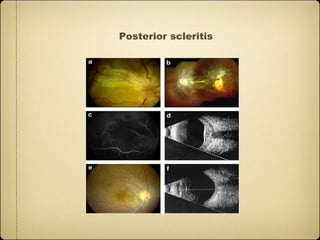
Posterior scleritis
Posterior scleritis(cont…)


•   D/D: Optic neuritis
                 Rhegmatogenous RD
                 Choroidal tumour
                 Orbital inflammatory disease or mass
                 Uveal effusion syndrome
                           Harada disease

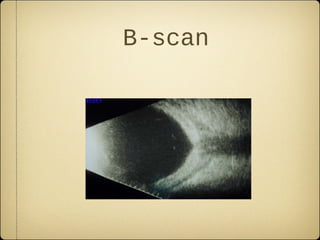
•   USG: Thickening of posterior sclera with fluid in tenon space

•   CT: Thickening of posterior sclera with fluid in tenon space
Choroidal folds over macula
B-scan
Treatment


•   ANTERIOR NON-NECROTIZING SCLERITIS:
              Oral NSAIDS(flurbiprofen 100mg x tds)
              Oral prednisolone(40-80mg x od)
                      Combination therapy of NSAIDS and lower dose
    steroids.

•   ANTERIOR NECROTIZING SCLERITIS WITH INFLAMMATION:
              Oral prednisolone(60-120mg x od tapered accordingly)
     Immunosuppressive agents
     Combined therapy with pulsed i.v methylprednsolone(500-1000mg)
     and cyclophosphamide(500mg)
Treatment(cont…)


•   ANTERIOR NECROTIZING SCLERITIS WITHOUT
    INFLAMMATION:      No effective treatment

•   POSTERIOR SCLERITIS:
      a)Elderly patients with associated systemic disease are treated in the
        same way as those with anterior necrotizing scleritis.
               b)Young patients without associated systemic disease usually
    respond      well to NSAIDS.
Surgical treatment


•   Extreme scleral thinning requires reinforcement.

•   Corneal marginal ulceration or keratolysis may require corneal grafting .
Scleritis1

Scleritis1

  • 2.
    SCLERITIS Dr.Fuad A K Niazi, Assistant Professor, Rawalpindi medical college, Department of Ophthalmology, Holy Family Hospital.
  • 3.
  • 4.
    OBJECTIVES • Definition • Incidence • Classification • Signs & Symptoms. • Specific investigations. • Treatment
  • 5.
    DEFINITION Scleritis is agranulomatous inflammation of the sclera.
  • 6.
  • 7.
  • 8.
    Incidence It ismuch less common than episcleritis. Women are commonly affected in the 5th and 6th decade. Usually bilateral.
  • 9.
    Pathology • There is dense infiltration of the scleral tissue by lymphocytes.
  • 10.
    Classification 1.Anterior scleritis(95%) a.Non-necrotizing:diffuse or nodular b.Necrotizing: with or without inflammation 2.Posterior scleritis(5%)
  • 11.
    Associated Systemic Diseases • 45% of patients may have the following associated diseases: 1.Rheumatoid arthritis 2.Connective issue disorders 3. Miscellaneous: relapsing polychondritis,herpes zoster,gout,surgically induced scleritis etc
  • 12.
  • 13.
    Anterior non- necrotizing scleritis 1.Presentation: Severe discomfort,tenderness and watering of eyes. 2.Signs: a)Diffuse scleritis-Widespread inflammation Distortion of vascular pattern Benign progression b)Nodular Scleritis-Nodular appearance Intermediate severity
  • 14.
  • 15.
  • 16.
    Anterior necrotizing scleritis with inflammation 1.Presentation: Most severe form with gradual onset of pain and localized redness . 2. Signs: a) Distortion or occlusion of blood vessels b) Development of scleral necrosis c) Gradual spread of necrosis around the globe d) Presence of associated anterior uveitis indicative of very severe disease involving ciliary body Complications: corneal involvement,cataract,glaucoma.
  • 17.
  • 18.
    Anterior necrotizing scleritis without inflammation 1. Presentation: Asymptomatic 2. Signs: Starts with a yellow necrotic patch Large areas of uvea become exposed 3. Complications: Perforation rare unless IOP elevated
  • 19.
    Anterior necrotizing scleritiswithout inflammation(scleromalacia perforans)
  • 20.
    Posterior scleritis • Presentation: Variable,pain and visual impairment • Signs: Eyelid oedema Proptosis Opthalmoplegia Associated anterior scleritis present in 40% of cases • Ophthalmoscopy: Disc swelling Macular oedema Retinal detachment Vitritis Ring Choroidal detachment Choroidal folds Subretinal mass Intraretinal white deposits
  • 21.
  • 22.
    Posterior scleritis(cont…) • D/D: Optic neuritis Rhegmatogenous RD Choroidal tumour Orbital inflammatory disease or mass Uveal effusion syndrome Harada disease • USG: Thickening of posterior sclera with fluid in tenon space • CT: Thickening of posterior sclera with fluid in tenon space
  • 23.
  • 24.
  • 25.
    Treatment • ANTERIOR NON-NECROTIZING SCLERITIS: Oral NSAIDS(flurbiprofen 100mg x tds) Oral prednisolone(40-80mg x od) Combination therapy of NSAIDS and lower dose steroids. • ANTERIOR NECROTIZING SCLERITIS WITH INFLAMMATION: Oral prednisolone(60-120mg x od tapered accordingly) Immunosuppressive agents Combined therapy with pulsed i.v methylprednsolone(500-1000mg) and cyclophosphamide(500mg)
  • 26.
    Treatment(cont…) • ANTERIOR NECROTIZING SCLERITIS WITHOUT INFLAMMATION: No effective treatment • POSTERIOR SCLERITIS: a)Elderly patients with associated systemic disease are treated in the same way as those with anterior necrotizing scleritis. b)Young patients without associated systemic disease usually respond well to NSAIDS.
  • 27.
    Surgical treatment • Extreme scleral thinning requires reinforcement. • Corneal marginal ulceration or keratolysis may require corneal grafting .