 Cataract formation is a common sequel to
blunt trauma.
Also associated with Subluxation ,dislocation
It is the most common cause of Unilateral
cataract in young individuals.
1 Penetrating trauma
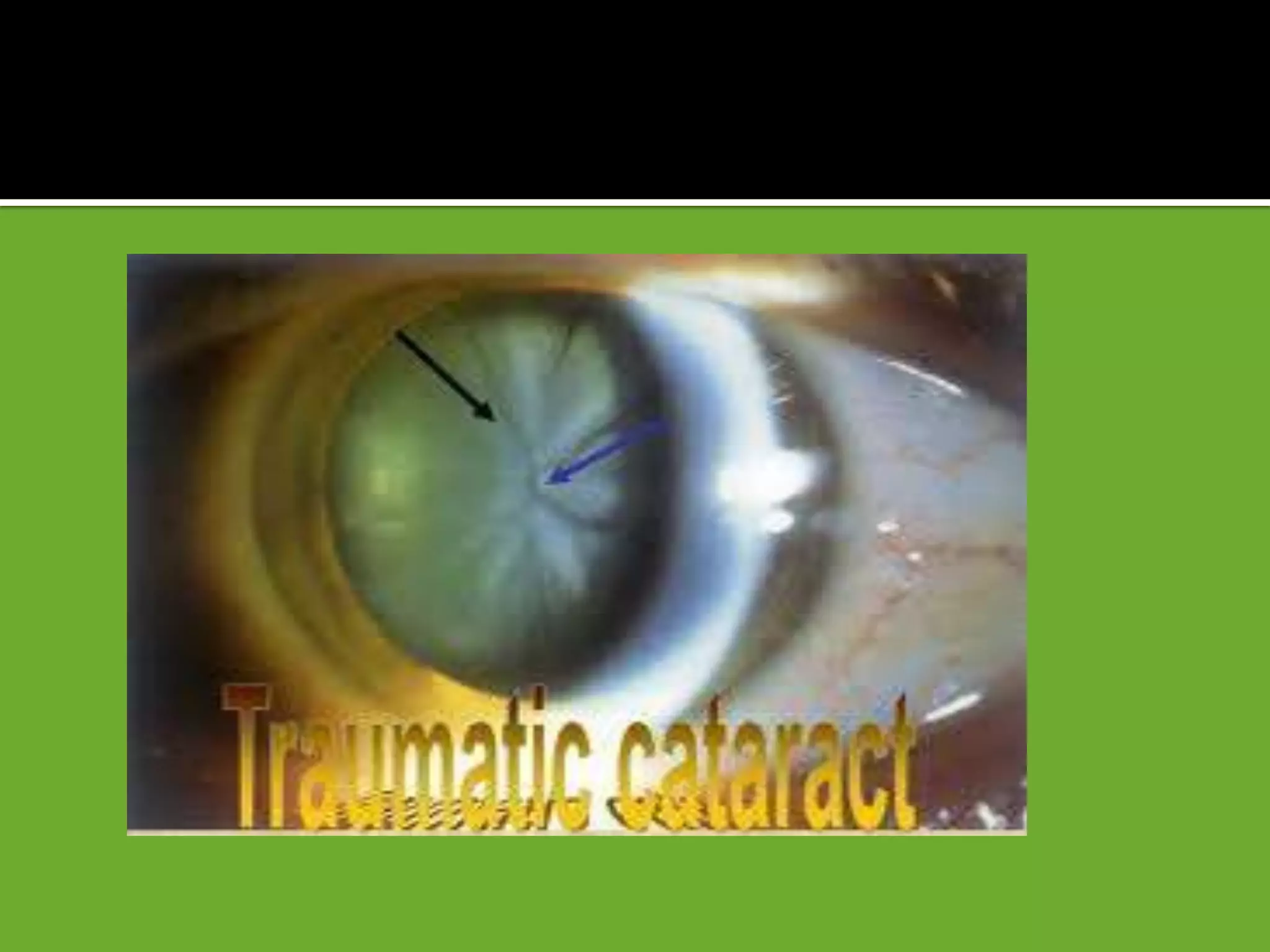
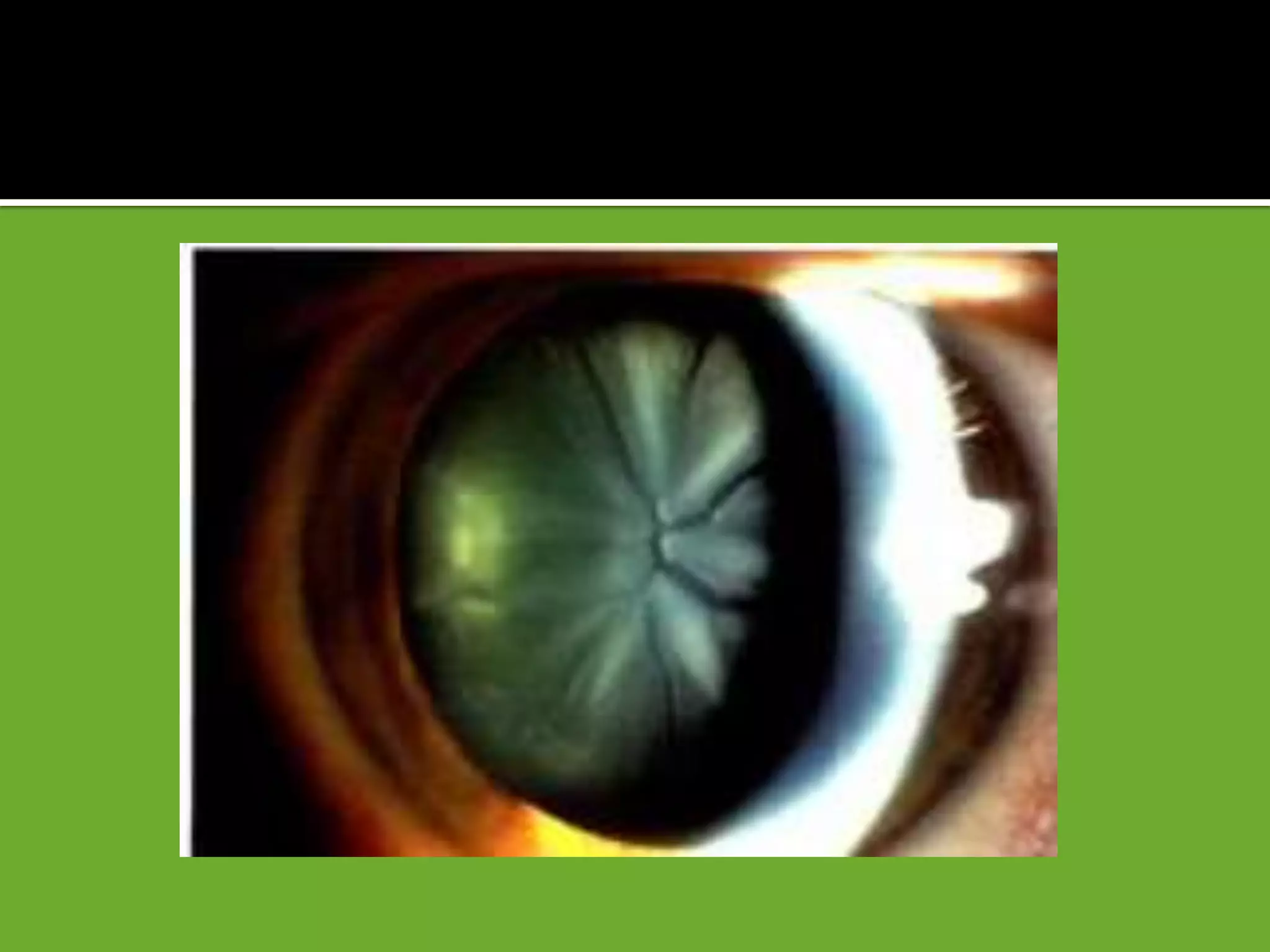
2 Blunt trauma may cause a characteristic flower-shaped
opacity
3 Electric shock and lightning strike are very rare causes
that may result in anterior and posterior iridescent
opacities that have a stellate pattern
4 Infrared radiation, if intense as in glassblowers, may
rarely cause true exfoliation of the anterior lens capsule
5 Ionizing radiation for ocular tumours may cause
posterior subcapsular opacities that may develop months
or years later.
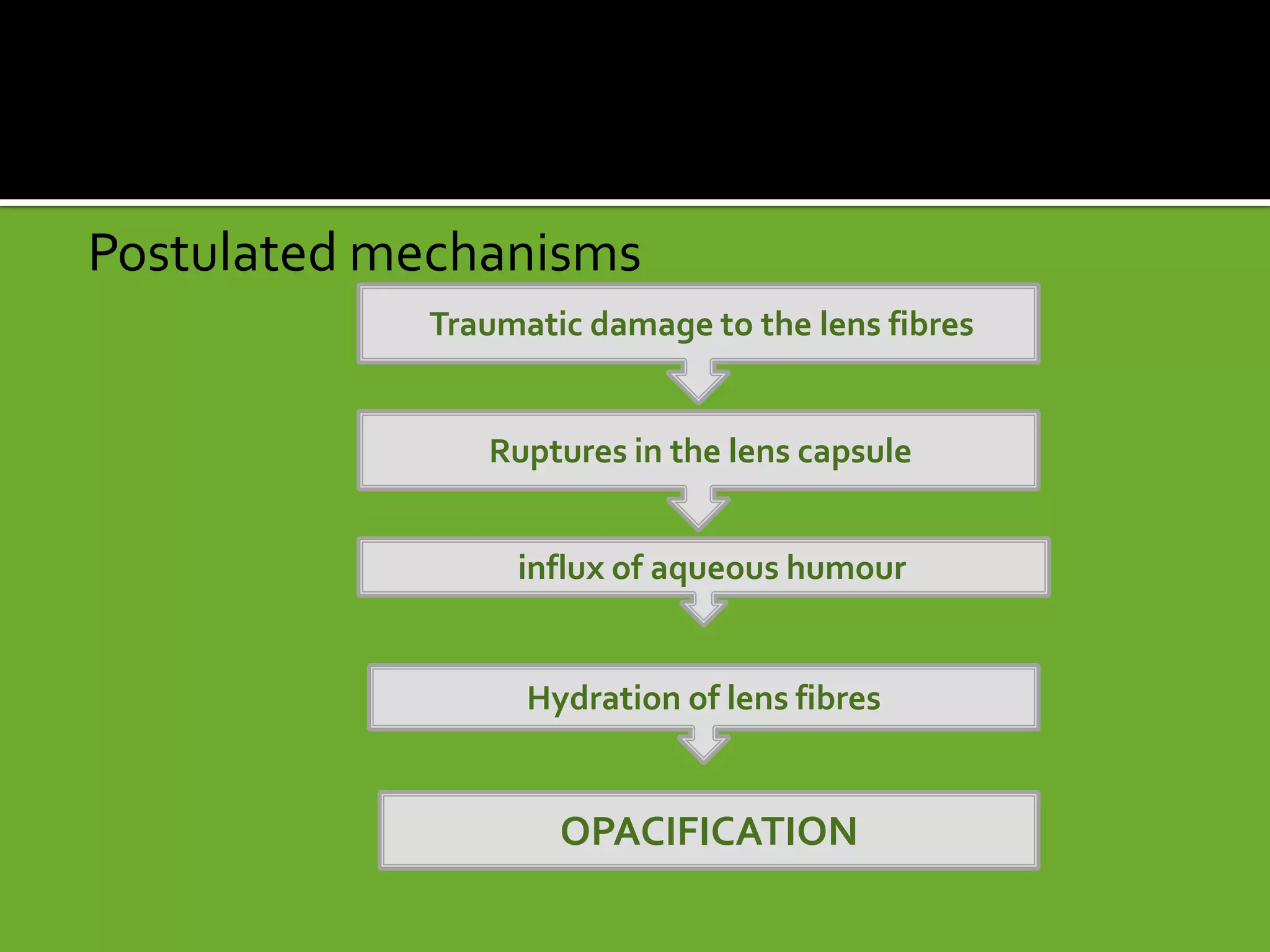
Postulated mechanisms
Traumatic damage to the lens fibres
Ruptures in the lens capsule
influx of aqueous humour
Hydration of lens fibres
OPACIFICATION
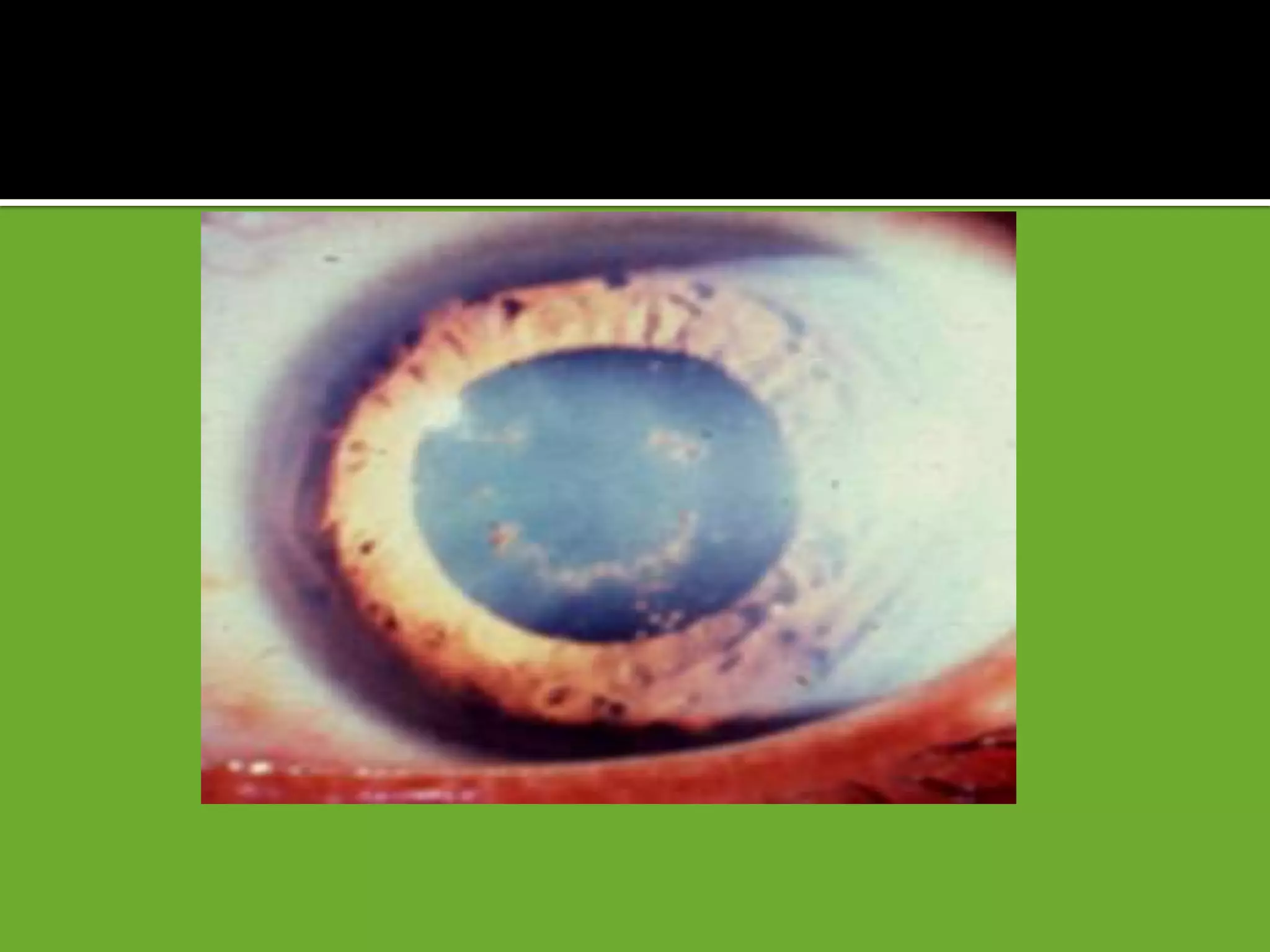
 A ring-shaped anterior subcapsular opacity may underlie a Vossius
ring [. Imprinting of iris pigment on anterior lens capsule]
 Commonly opacification occurs in the posterior subcapsular
cortex along the posterior sutures, resulting in flower -shaped opacity
[rossette] which may subsequently disappear, remain stationary or
progress to maturity.
 Cataract surgery may be necessary for visually significant opacity.
 Lens protein leak can lead to secondary Glaucoma,uveitis.
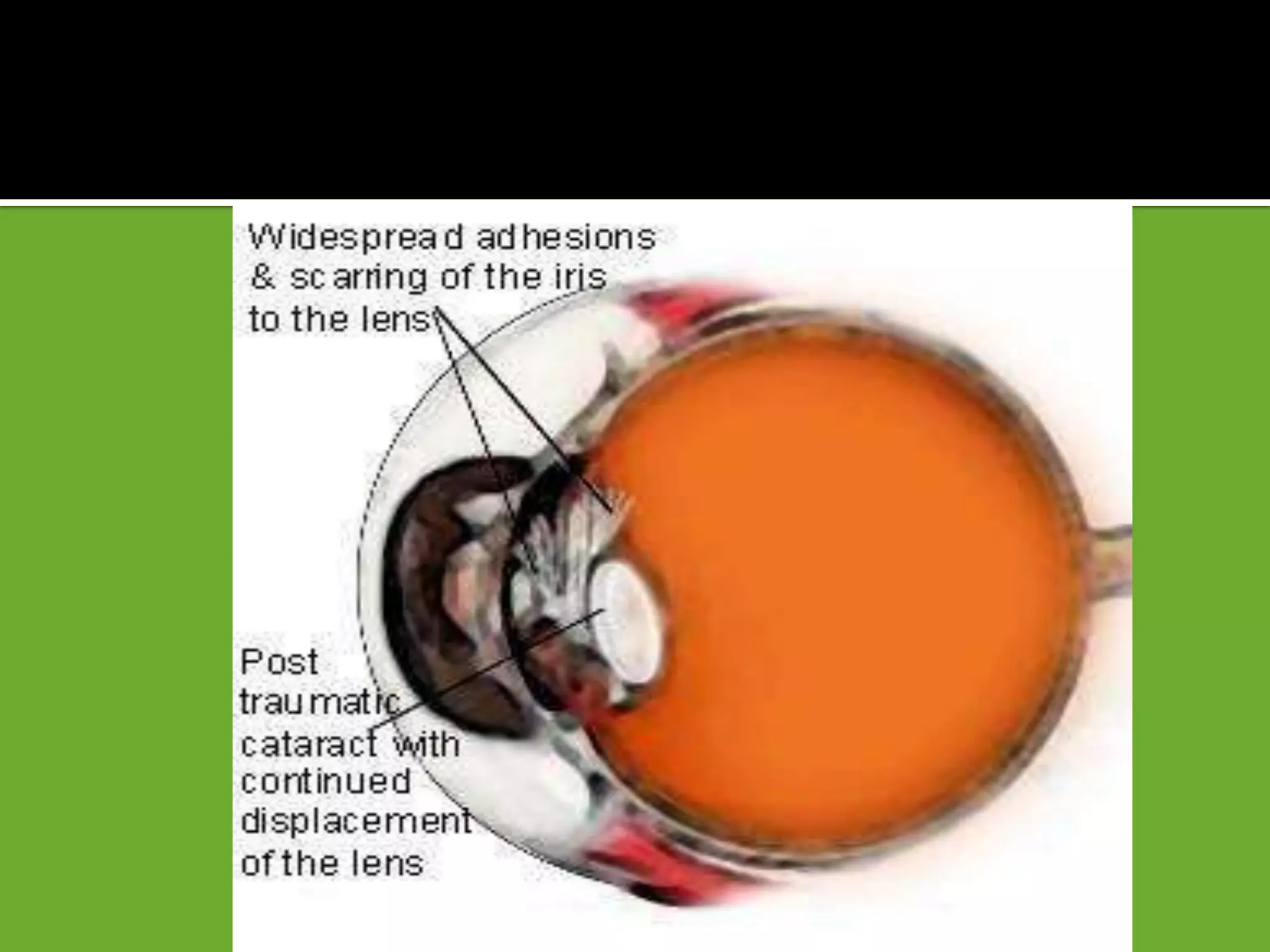
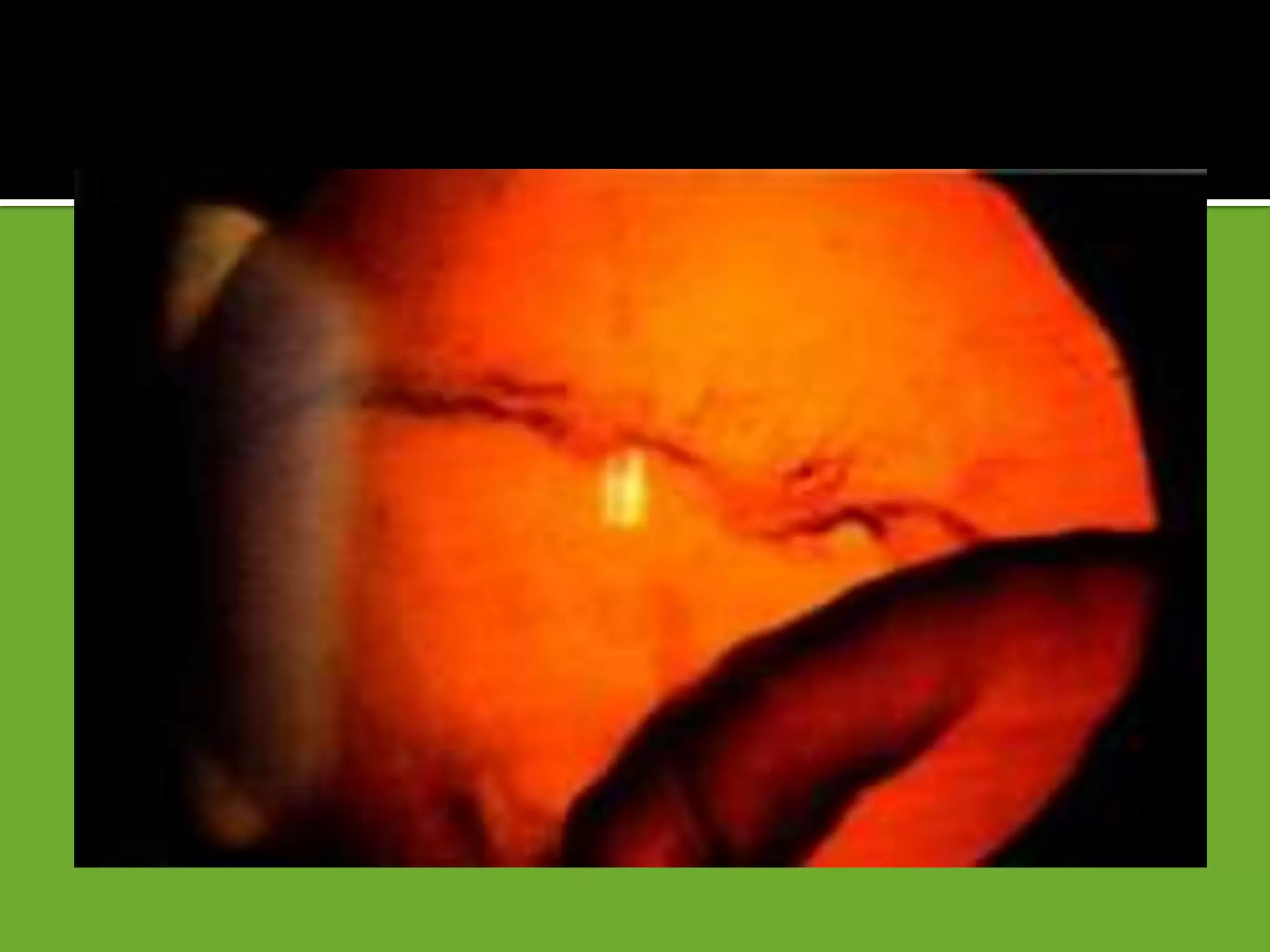
 Subluxation of the lens may occur,
 secondary to tearing of the suspensory ligament.
 A subluxated lens tends to deviate towards the meridian of intact
zonule
 the anterior chamber may deepen over the area of zonular
dehiscence, if the lens rotates posteriorly.
 The edge of a subluxated lens may be visible under mydriasis
 Trembling of the iris (iridodonesis) or lens (phakodonesis)
on ocular movement.
Subluxation to render the pupil partly aphakic may result in
Uniocular diplopia ; lenticular astigmatism due to tilting may
occur.
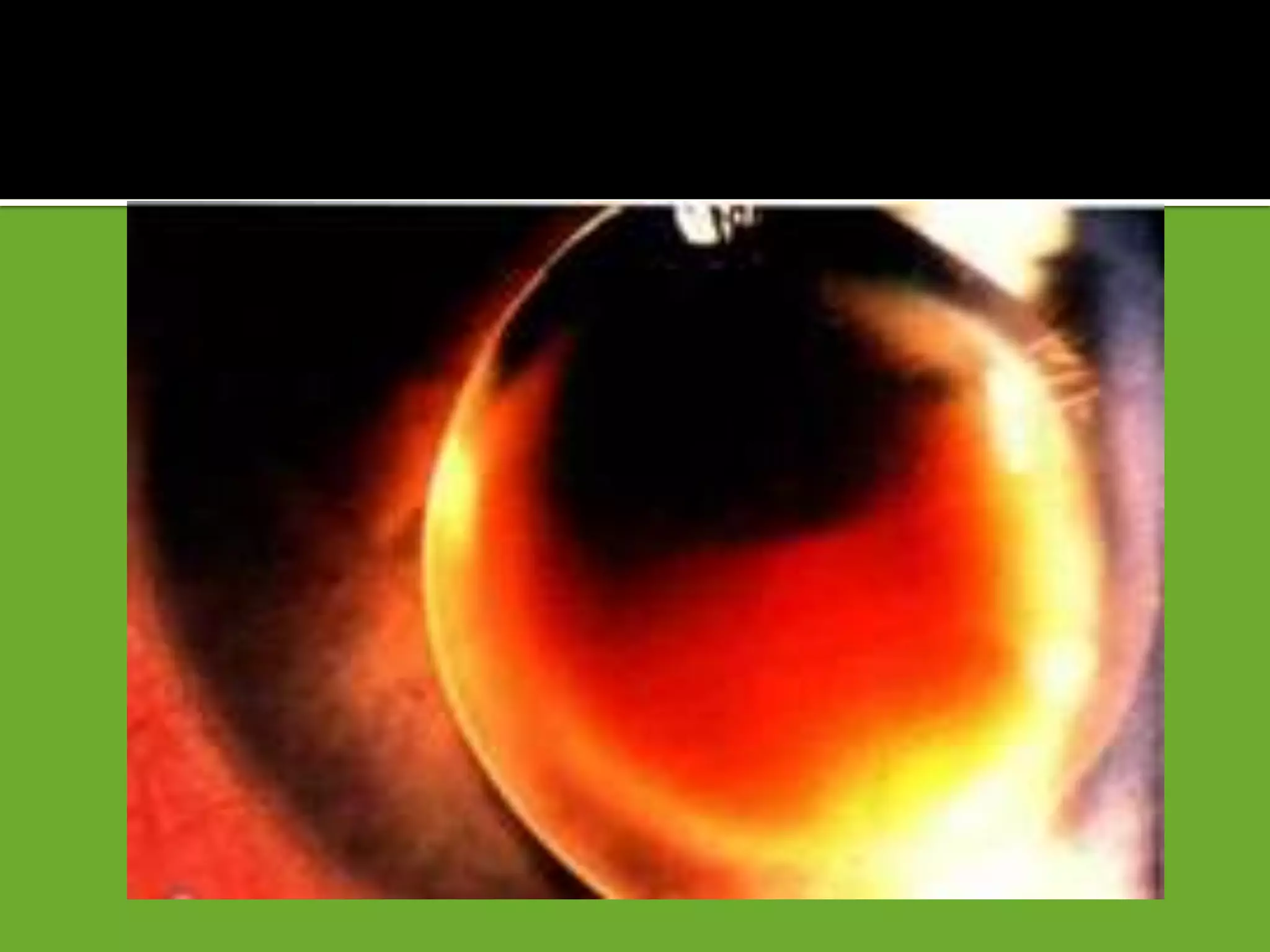
 Dislocation due to 360° rupture of the
zonular fibres is rare and may be into the
vitreous, or less commonly, into the anterior
chamber an underlying predisposing
condition should be suspected.
 A slowly progressive or stationary cataract
especially dense cataracts with a history of
ocular trauma should be removed if only visually
significant for the patient.
 Gross visual field defects,Afferent pupillary
defect, Sphincter tears,iridodialysis,elevated or
abnormal low IOP,angle anomalies ,ultrasound
evidence of posterior segment pathology should
be looked for by the surgeon.
 Visualization:
In case of corneal laceration /edema which
impairs ability to remove lens material –
Open –sky approach .
In case of Haemorrhage interfering with view
– OVDs /air is helpful
 Inflammation:
In case of synechiae,pupil seclusion,distorsion
- Gentle sweeping to dilate, pupilloplasty,
Peripheral iridectomy – to prevent pupillary
block.
- Cycloplegics , topical & oral steroid therapy.
 Primary IOL insertion when intraocular
inflammation and haemorrhage are minimal
and view of anterior segment structures is
good.
 Retained foreign matter:
Indirect ophthalmoscopy if view is clear.
Ct scan/Ultrasound if inadequate view
MRI if not metallic body.
Pars plana /anterior approach along with lens
implantation then PPV.
Irrigating solutions to dislodge foreign body
intracamerally.
 Damage to other ocular tissues:
In sphincter rupture ,distortion and
iridodialysis – Repair by suturing iris root to
scleral spur.
 Zonular dehiscence and dislocation:
- OVD tamponade of vitreous , Capsular
tension ring in capsular bag , removal of
cataract through Pars plana
- ACIOL .Transcleral fixated PCIOL
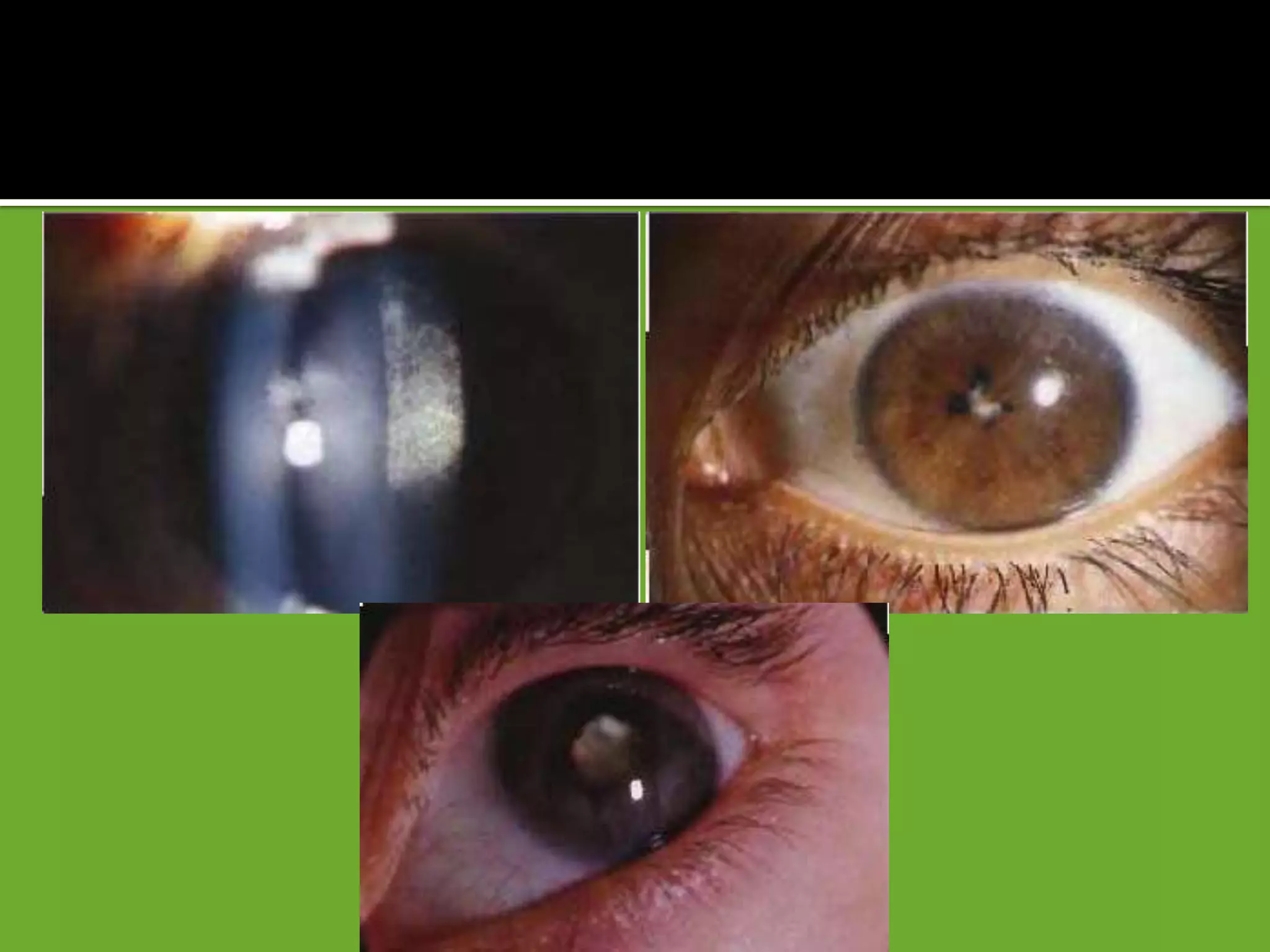
 A secondary (complicated) cataract develops as a result of some
other primary ocular disease.
 Chronic anterior uveitis
- It is the most common cause.
- Related to the duration and activity of intraocular
inflammation that results in prolonged breakdown of the
blood–aqueous and/or blood–vitreous barrier.
The use of steroids, topically and systemically, is important.
The earliest finding is a polychromatic lustre at the posterior pole
of the lens which may not progress if the uveitis is arrested. If the
inflammation persists, posterior and anterior opacities develop
that may progress to maturity.The opacities appear to progress
more rapidly in the presence of posterior synechiae.
 Acute congestive angle-closure may cause small, grey-white,
anterior, subcapsular or capsular opacities within the pupillary area
(glaukomflecken )– focal infarcts of the lens epithelium
pathognomonic of past acute angle-closure glaucoma.
 High (pathological) myopia is associated with posterior
subcapsular lens opacities and early-onset nuclear sclerosis, which
may ironically increase the myopic refractive error. Simple
myopia, however, is not associated with such cataract formation.
 Hereditary fundus dystrophies, such as retinitis pigmentosa, Leber
congenital amaurosis, gyrate atrophy and Stickler syndrome, may
be associated with posterior subcapsular lens opacities Cataract
surgery may occasionally improve visual acuity even in the
presence of severe retinal changes.
 THANKYOU.

Traumatic and complicated cataract

  • 2.
     Cataract formationis a common sequel to blunt trauma. Also associated with Subluxation ,dislocation It is the most common cause of Unilateral cataract in young individuals.
  • 3.
    1 Penetrating trauma 2Blunt trauma may cause a characteristic flower-shaped opacity 3 Electric shock and lightning strike are very rare causes that may result in anterior and posterior iridescent opacities that have a stellate pattern 4 Infrared radiation, if intense as in glassblowers, may rarely cause true exfoliation of the anterior lens capsule 5 Ionizing radiation for ocular tumours may cause posterior subcapsular opacities that may develop months or years later.
  • 7.
    Postulated mechanisms Traumatic damageto the lens fibres Ruptures in the lens capsule influx of aqueous humour Hydration of lens fibres OPACIFICATION
  • 8.
     A ring-shapedanterior subcapsular opacity may underlie a Vossius ring [. Imprinting of iris pigment on anterior lens capsule]  Commonly opacification occurs in the posterior subcapsular cortex along the posterior sutures, resulting in flower -shaped opacity [rossette] which may subsequently disappear, remain stationary or progress to maturity.  Cataract surgery may be necessary for visually significant opacity.  Lens protein leak can lead to secondary Glaucoma,uveitis.
  • 10.
     Subluxation ofthe lens may occur,  secondary to tearing of the suspensory ligament.  A subluxated lens tends to deviate towards the meridian of intact zonule  the anterior chamber may deepen over the area of zonular dehiscence, if the lens rotates posteriorly.  The edge of a subluxated lens may be visible under mydriasis  Trembling of the iris (iridodonesis) or lens (phakodonesis) on ocular movement. Subluxation to render the pupil partly aphakic may result in Uniocular diplopia ; lenticular astigmatism due to tilting may occur.
  • 11.
     Dislocation dueto 360° rupture of the zonular fibres is rare and may be into the vitreous, or less commonly, into the anterior chamber an underlying predisposing condition should be suspected.
  • 14.
     A slowlyprogressive or stationary cataract especially dense cataracts with a history of ocular trauma should be removed if only visually significant for the patient.  Gross visual field defects,Afferent pupillary defect, Sphincter tears,iridodialysis,elevated or abnormal low IOP,angle anomalies ,ultrasound evidence of posterior segment pathology should be looked for by the surgeon.
  • 15.
     Visualization: In caseof corneal laceration /edema which impairs ability to remove lens material – Open –sky approach . In case of Haemorrhage interfering with view – OVDs /air is helpful
  • 16.
     Inflammation: In caseof synechiae,pupil seclusion,distorsion - Gentle sweeping to dilate, pupilloplasty, Peripheral iridectomy – to prevent pupillary block. - Cycloplegics , topical & oral steroid therapy.
  • 17.
     Primary IOLinsertion when intraocular inflammation and haemorrhage are minimal and view of anterior segment structures is good.
  • 18.
     Retained foreignmatter: Indirect ophthalmoscopy if view is clear. Ct scan/Ultrasound if inadequate view MRI if not metallic body. Pars plana /anterior approach along with lens implantation then PPV. Irrigating solutions to dislodge foreign body intracamerally.
  • 19.
     Damage toother ocular tissues: In sphincter rupture ,distortion and iridodialysis – Repair by suturing iris root to scleral spur.
  • 20.
     Zonular dehiscenceand dislocation: - OVD tamponade of vitreous , Capsular tension ring in capsular bag , removal of cataract through Pars plana - ACIOL .Transcleral fixated PCIOL
  • 21.
     A secondary(complicated) cataract develops as a result of some other primary ocular disease.  Chronic anterior uveitis - It is the most common cause. - Related to the duration and activity of intraocular inflammation that results in prolonged breakdown of the blood–aqueous and/or blood–vitreous barrier. The use of steroids, topically and systemically, is important. The earliest finding is a polychromatic lustre at the posterior pole of the lens which may not progress if the uveitis is arrested. If the inflammation persists, posterior and anterior opacities develop that may progress to maturity.The opacities appear to progress more rapidly in the presence of posterior synechiae.
  • 23.
     Acute congestiveangle-closure may cause small, grey-white, anterior, subcapsular or capsular opacities within the pupillary area (glaukomflecken )– focal infarcts of the lens epithelium pathognomonic of past acute angle-closure glaucoma.  High (pathological) myopia is associated with posterior subcapsular lens opacities and early-onset nuclear sclerosis, which may ironically increase the myopic refractive error. Simple myopia, however, is not associated with such cataract formation.  Hereditary fundus dystrophies, such as retinitis pigmentosa, Leber congenital amaurosis, gyrate atrophy and Stickler syndrome, may be associated with posterior subcapsular lens opacities Cataract surgery may occasionally improve visual acuity even in the presence of severe retinal changes.
  • 24.