Rococo Art
(First half of 18th Century)
INTRO
• “rococo” : an aristocratic, refined, and frivolous style
– Term began to be used in the 18th century
– Had a negative connotation for a long time
• The Rococo style developed under the reign of Louis XV of
France
• Rococo art reflected the new attitude towards the life of
the aristocracy and high bourgeoisie (enlightenment
values, pleasure, comfort, and elegance) in an era of
economic prosperity.
INTRO, cont’d.
• Some consider Rococo art simply a type of Baroque art
because they share so many characteristics. However, the
function of each one is different:
– Baroque: propaganda art to show the power and grandeur of the
Monarchy and the Church
– Rococo: art that reflects the very life of an aristocratic society,
refined and hedonistic
• Mid 18th century: exhaustion from the excess of
decoration and the search for the classical, which led to
the development of the Neoclassical
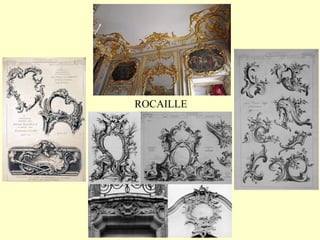
ROCAILLE
Architecture
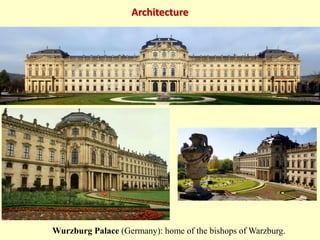
 Exterior: Baroque structures
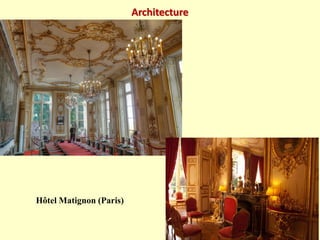
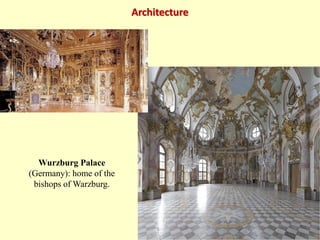
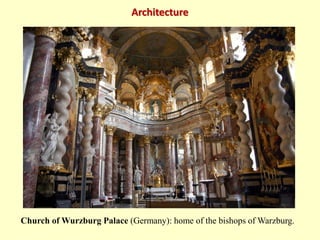
 Interior: experimentation with new style, excessive decoration
 Focus on comfort and intimacy rather than display of homeowner’s
power
- More comfort and practicality in layout
- Houses often surrounded by gardens or a natural park
- Focus on lighting
- Natural light -- use of door-windows
- Mirrors and lamps to add light
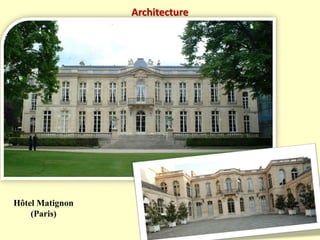
Architecture
Hôtel Matignon
(Paris)
Architecture
Hôtel Matignon (Paris)
Architecture
Wurzburg Palace (Germany): home of the bishops of Warzburg.
Architecture
Wurzburg Palace
(Germany): home of the
bishops of Warzburg.
Architecture
Church of Wurzburg Palace (Germany): home of the bishops of Warzburg.
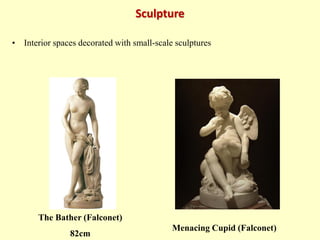
The Bather (Falconet)
82cm
Sculpture
• Interior spaces decorated with small-scale sculptures
Menacing Cupid (Falconet)
Painting
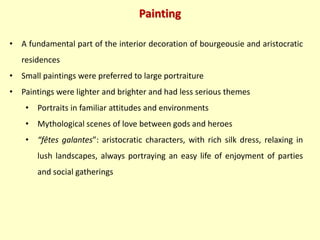
• A fundamental part of the interior decoration of bourgeousie and aristocratic
residences
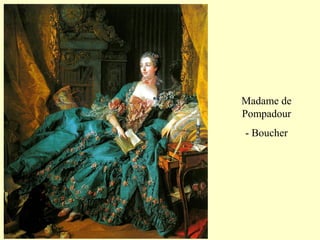
• Small paintings were preferred to large portraiture
• Paintings were lighter and brighter and had less serious themes
• Portraits in familiar attitudes and environments
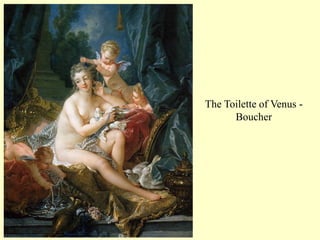
• Mythological scenes of love between gods and heroes
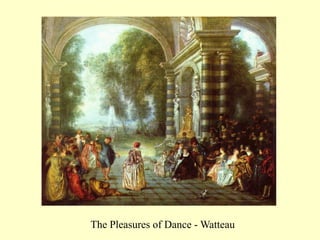
• “fêtes galantes”: aristocratic characters, with rich silk dress, relaxing in
lush landscapes, always portraying an easy life of enjoyment of parties
and social gatherings
The Embarkation for Cythera - Watteau
The Pleasures of Dance - Watteau
Madame de
Pompadour
- Boucher
The Toilette of Venus -
Boucher
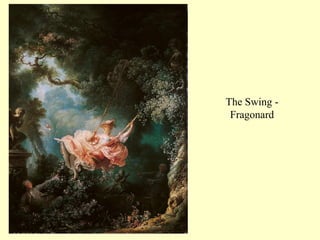
The Swing -
Fragonard

Rococo art

  • 1.
    Rococo Art (First halfof 18th Century)
  • 2.
    INTRO • “rococo” :an aristocratic, refined, and frivolous style – Term began to be used in the 18th century – Had a negative connotation for a long time • The Rococo style developed under the reign of Louis XV of France • Rococo art reflected the new attitude towards the life of the aristocracy and high bourgeoisie (enlightenment values, pleasure, comfort, and elegance) in an era of economic prosperity.
  • 3.
    INTRO, cont’d. • Someconsider Rococo art simply a type of Baroque art because they share so many characteristics. However, the function of each one is different: – Baroque: propaganda art to show the power and grandeur of the Monarchy and the Church – Rococo: art that reflects the very life of an aristocratic society, refined and hedonistic • Mid 18th century: exhaustion from the excess of decoration and the search for the classical, which led to the development of the Neoclassical
  • 4.
  • 5.
    Architecture  Exterior: Baroquestructures  Interior: experimentation with new style, excessive decoration  Focus on comfort and intimacy rather than display of homeowner’s power - More comfort and practicality in layout - Houses often surrounded by gardens or a natural park - Focus on lighting - Natural light -- use of door-windows - Mirrors and lamps to add light
  • 6.
  • 7.
  • 8.
    Architecture Wurzburg Palace (Germany):home of the bishops of Warzburg.
  • 9.
  • 10.
    Architecture Church of WurzburgPalace (Germany): home of the bishops of Warzburg.
  • 11.
    The Bather (Falconet) 82cm Sculpture •Interior spaces decorated with small-scale sculptures Menacing Cupid (Falconet)
  • 12.
    Painting • A fundamentalpart of the interior decoration of bourgeousie and aristocratic residences • Small paintings were preferred to large portraiture • Paintings were lighter and brighter and had less serious themes • Portraits in familiar attitudes and environments • Mythological scenes of love between gods and heroes • “fêtes galantes”: aristocratic characters, with rich silk dress, relaxing in lush landscapes, always portraying an easy life of enjoyment of parties and social gatherings
  • 13.
    The Embarkation forCythera - Watteau
  • 14.
    The Pleasures ofDance - Watteau
  • 15.
  • 16.
    The Toilette ofVenus - Boucher
  • 17.