Introduction
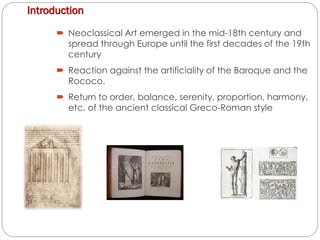
Neoclassical Artemerged in the mid-18th century and
spread through Europe until the first decades of the 19th
century
Reaction against the artificiality of the Baroque and the
Rococo.
Return to order, balance, serenity, proportion, harmony,
etc. of the ancient classical Greco-Roman style
3.
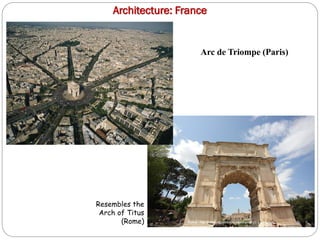
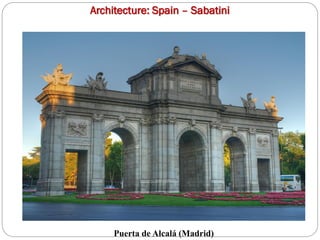
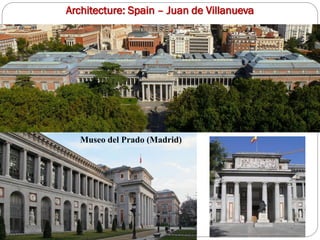
Architecture
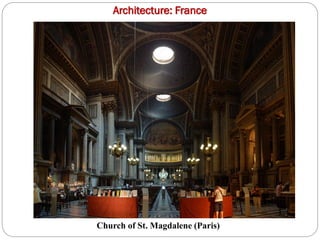
Focused onthe rational, sensible, simple, and useful
Very little decoration (as opposed to the Baroque
and Rococo)
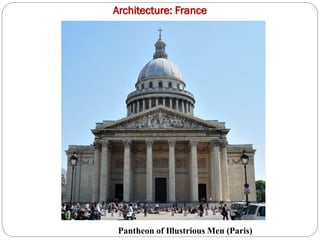
Elements of classical architecture returned:
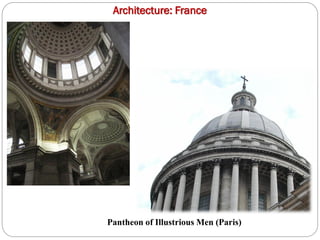
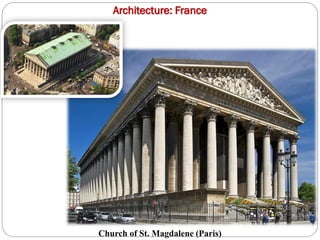
the column as an essential element
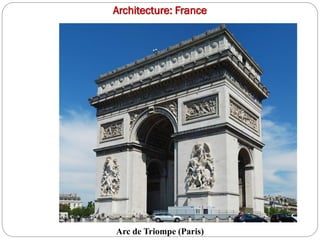
classical designs and facades
use of domes.
Sculpture
Sculpture evolvesfrom complex & dynamic Baroque styles to
calmer and more balanced compositions
Characteristics:
Modeled after Classical Greek sculpture
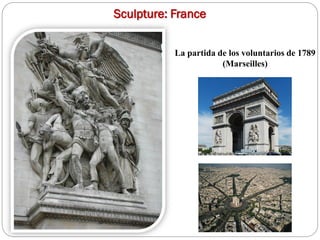
Classical traditions: mythology, portraits, commemorative
arches
Idealization of reality: search for ideal beauty, serene
expressions, etc
Use of non-polychromed marble or bronze
13.
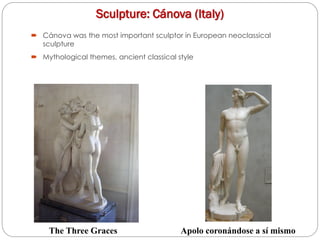
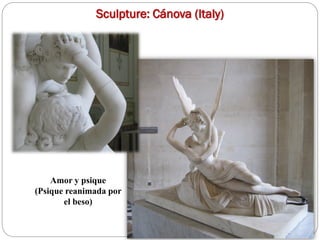
Sculpture: Cánova (Italy)
Cánova was the most important sculptor in European neoclassical
sculpture
Mythological themes, ancient classical style
The Three Graces Apolo coronándose a sí mismo
Painting
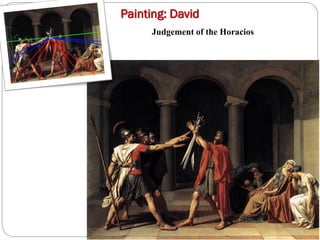
The challenge:few original Greek and Roman paintings
existed for painters to use as a model
Little interest in light and color
Coldness, excessive linearity, lack of movement
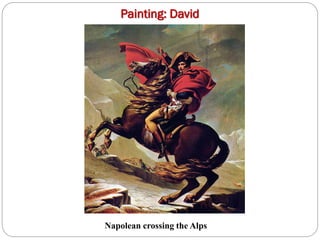
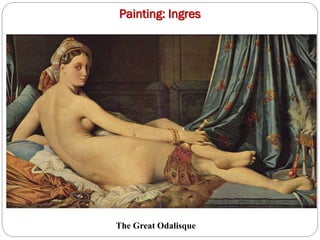
Themes: mythological, portrait, historical events
With a partner…
Do activity 3 on page 24.
Using what you have learned about the Rococo and
Neoclassical styles, comment on the characteristics of 2-3 of
the works shown on page 25. Do you like the work?
Why/why not?