Nageen Raja
Asma Javed
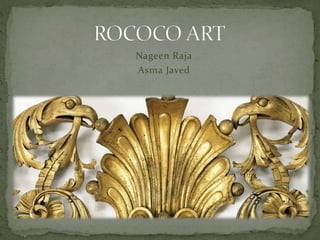
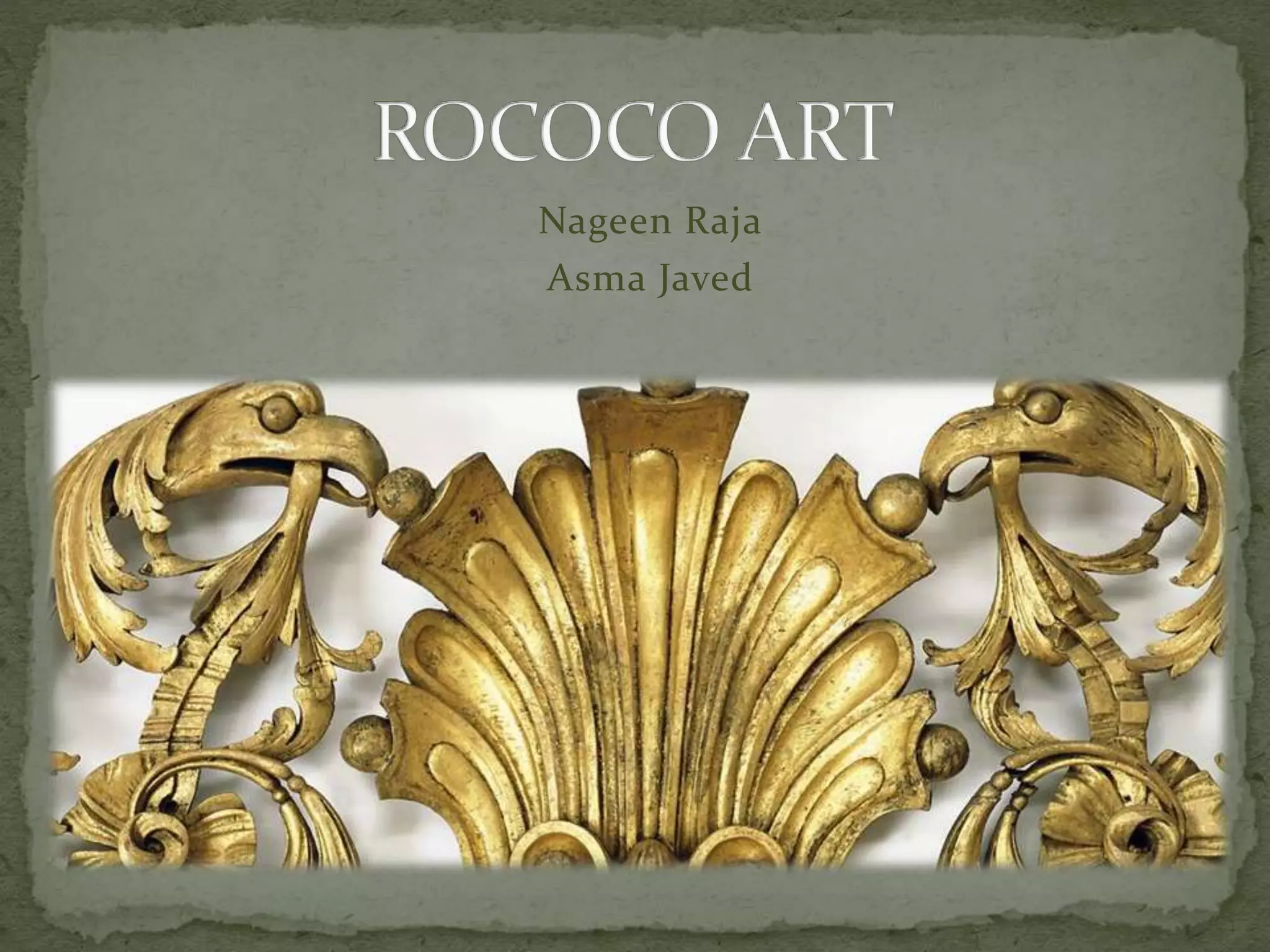
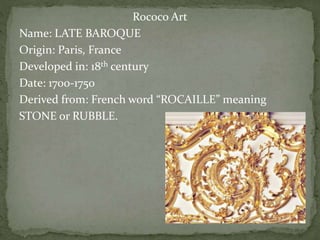
Rococo Art
Name: LATE BAROQUE
Origin: Paris, France
Developed in: 18th century
Date: 1700-1750
Derived from: French word “ROCAILLE” meaning
STONE or RUBBLE.
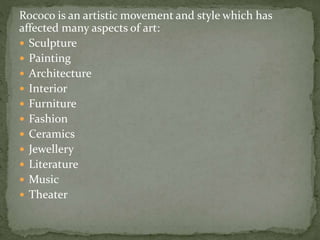
Rococo is an artistic movement and style which has
affected many aspects of art:
 Sculpture
 Painting
 Architecture
 Interior
 Furniture
 Fashion
 Ceramics
 Jewellery
 Literature
 Music
 Theater
Characteristics:
 jocular, florid and graceful approach to Baroque
 Vertical lines were avoided
 Angles were softened
 style was ornate, used light colors, asymmetrical
designs, curves and gold.
 playful and witty themes.
 produced flowing, giddy, visually spectacular carving
 elegant and ornate furniture, small sculptures,
ornamental mirrors, and tapestry complementing
architecture, reliefs, and wall paintings.
Features
 Natural motifs
 Elaborated carved forms
 Asymmetry
 S and c scrolls
 Rocaille
 Acanthus leaf
 Cabochon
 Scallop shell
 Marquetry
Furniture
 Lighthearted, visually and physically
 Ornate, graceful
 role in comfort and versatility
 Idea has evolved to a symbol of status
 Easily moved around
 Matching back
 Preferred choice due to its strength
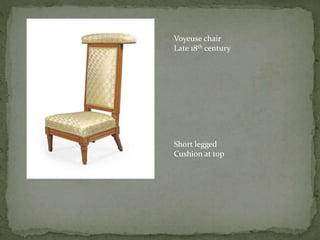
Voyeuse chair
Late 18th century
Short legged
Cushion at top
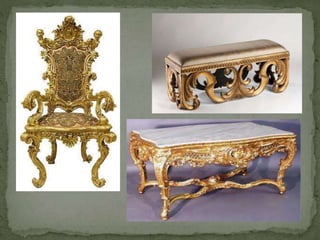
Bergere en Gondole
Closed arm chair
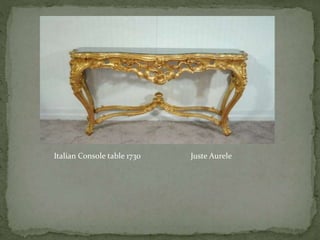
Italian Console table 1730 Juste Aurele
Sculpture
 Rococo was widely adapted
 Expressed through delicate porcelain sculpture
 Themes of love and gaiety
 Elements of nature, curving lines and asymmetry.
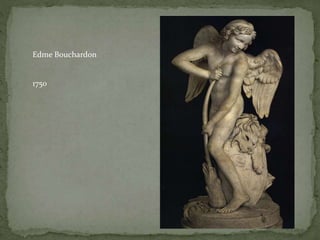
Edme Bouchardon
1750
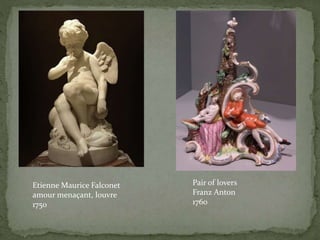
Pair of lovers
Franz Anton
1760
Etienne Maurice Falconet
amour menaçant, louvre
1750
Painting
 Decorative art style was clearly shown
 Delicate colors and curving forms
 Decorating canvas with cherubs and myths of love
 Portraits were also popular
 Some showed a sort of naughtiness or impurity in the
behavior of their subjects
 Pastoral landscapes
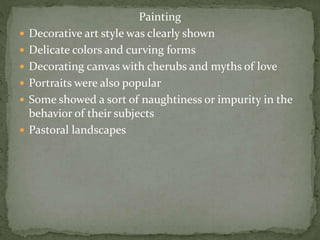
Jean-Antoine Watteau (1684–1721)
The embarktion for Cythera
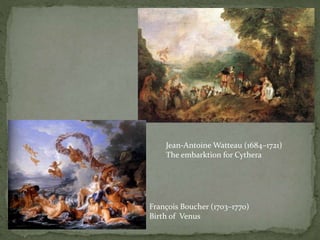
François Boucher (1703–1770)
Birth of Venus
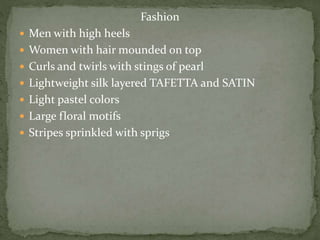
William Hogarth (1697–1764)
Painter and his Pug
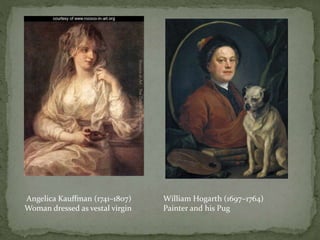
Angelica Kauffman (1741–1807)
Woman dressed as vestal virgin
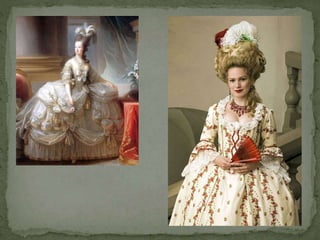
Fashion
 Men with high heels
 Women with hair mounded on top
 Curls and twirls with stings of pearl
 Lightweight silk layered TAFETTA and SATIN
 Light pastel colors
 Large floral motifs
 Stripes sprinkled with sprigs
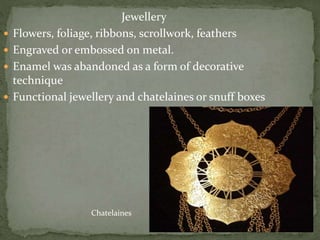
Jewellery
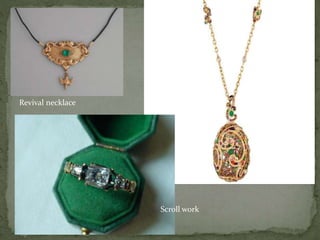
 Flowers, foliage, ribbons, scrollwork, feathers
 Engraved or embossed on metal.
 Enamel was abandoned as a form of decorative
technique
 Functional jewellery and chatelaines or snuff boxes
Chatelaines
Revival necklace
Scroll work
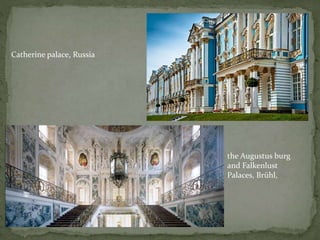
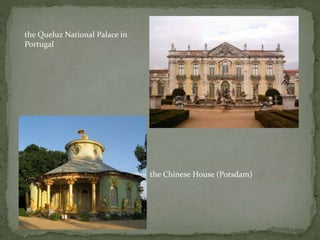
Architecture
 Lighter, more graceful
 Elaborate version of baroque architecture
 Asymmetry of forms
 Richly decorated
 Numerous curves and decorations
 Pale color
 Jocular and light hearted themes
Catherine palace, Russia
the Augustus burg
and Falkenlust
Palaces, Brühl,
the Queluz National Palace in
Portugal
the Chinese House (Potsdam)
Interior
 Fully in control, sportive, fantastic
 Sculptural forms expressed in abstract expressions
 Flaming, leafy or shell like textures in asymmetrical
sweeps, flourishes and broken curves.
 suppress architectonic divisions of architrave frieze
and cornice for picturesque.
 Rococo palette softer and paler then those of baroque
 pastel pink, lilac, blue and green
 decorative elements were rocaille, S and C shaped
scrolls, acanthus leaves, birds and flower and chubby
babies.
MUSIC:
 not as well-known as the earlier Baroque and later
Classical forms.
 characterized as light, intimate music with extremely
elaborate and refined forms of ornamentation.

Rococo art and architecture

  • 1.
  • 2.
    Rococo Art Name: LATEBAROQUE Origin: Paris, France Developed in: 18th century Date: 1700-1750 Derived from: French word “ROCAILLE” meaning STONE or RUBBLE.
  • 3.
    Rococo is anartistic movement and style which has affected many aspects of art:  Sculpture  Painting  Architecture  Interior  Furniture  Fashion  Ceramics  Jewellery  Literature  Music  Theater
  • 4.
    Characteristics:  jocular, floridand graceful approach to Baroque  Vertical lines were avoided  Angles were softened  style was ornate, used light colors, asymmetrical designs, curves and gold.  playful and witty themes.  produced flowing, giddy, visually spectacular carving  elegant and ornate furniture, small sculptures, ornamental mirrors, and tapestry complementing architecture, reliefs, and wall paintings.
  • 5.
    Features  Natural motifs Elaborated carved forms  Asymmetry  S and c scrolls  Rocaille  Acanthus leaf  Cabochon  Scallop shell  Marquetry
  • 6.
    Furniture  Lighthearted, visuallyand physically  Ornate, graceful  role in comfort and versatility  Idea has evolved to a symbol of status  Easily moved around  Matching back  Preferred choice due to its strength
  • 8.
    Voyeuse chair Late 18thcentury Short legged Cushion at top
  • 9.
  • 10.
    Italian Console table1730 Juste Aurele
  • 11.
    Sculpture  Rococo waswidely adapted  Expressed through delicate porcelain sculpture  Themes of love and gaiety  Elements of nature, curving lines and asymmetry.
  • 12.
  • 13.
    Pair of lovers FranzAnton 1760 Etienne Maurice Falconet amour menaçant, louvre 1750
  • 14.
    Painting  Decorative artstyle was clearly shown  Delicate colors and curving forms  Decorating canvas with cherubs and myths of love  Portraits were also popular  Some showed a sort of naughtiness or impurity in the behavior of their subjects  Pastoral landscapes
  • 15.
    Jean-Antoine Watteau (1684–1721) Theembarktion for Cythera François Boucher (1703–1770) Birth of Venus
  • 16.
    William Hogarth (1697–1764) Painterand his Pug Angelica Kauffman (1741–1807) Woman dressed as vestal virgin
  • 17.
    Fashion  Men withhigh heels  Women with hair mounded on top  Curls and twirls with stings of pearl  Lightweight silk layered TAFETTA and SATIN  Light pastel colors  Large floral motifs  Stripes sprinkled with sprigs
  • 20.
    Jewellery  Flowers, foliage,ribbons, scrollwork, feathers  Engraved or embossed on metal.  Enamel was abandoned as a form of decorative technique  Functional jewellery and chatelaines or snuff boxes Chatelaines
  • 21.
  • 22.
    Architecture  Lighter, moregraceful  Elaborate version of baroque architecture  Asymmetry of forms  Richly decorated  Numerous curves and decorations  Pale color  Jocular and light hearted themes
  • 23.
    Catherine palace, Russia theAugustus burg and Falkenlust Palaces, Brühl,
  • 24.
    the Queluz NationalPalace in Portugal the Chinese House (Potsdam)
  • 25.
    Interior  Fully incontrol, sportive, fantastic  Sculptural forms expressed in abstract expressions  Flaming, leafy or shell like textures in asymmetrical sweeps, flourishes and broken curves.  suppress architectonic divisions of architrave frieze and cornice for picturesque.  Rococo palette softer and paler then those of baroque  pastel pink, lilac, blue and green  decorative elements were rocaille, S and C shaped scrolls, acanthus leaves, birds and flower and chubby babies.
  • 26.
    MUSIC:  not aswell-known as the earlier Baroque and later Classical forms.  characterized as light, intimate music with extremely elaborate and refined forms of ornamentation.