Mannerism (1520-1600)
Background Late Renaissance [Pre-Baroque]. Art was at an impasse after the perfection and harmony of the Renaissance. Antithetical to the principles of the High Renaissance. From the Italian  de maneria . A work of art done in the artist’s characteristic “touch” or recognizable “manner.” First used by the German art historian, Heinrich Wölfflin in the early 20c. Influenced by Michelangelo’s later works.
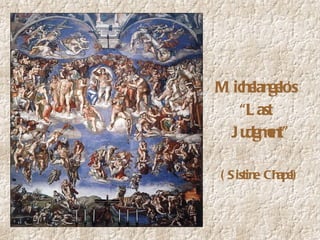
Michelangelo’s  “Last  Judgment” (Sistine Chapel)
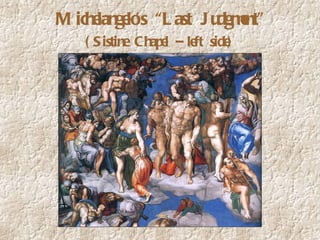
Michelangelo’s “Last Judgment” (Sistine Chapel – left side)
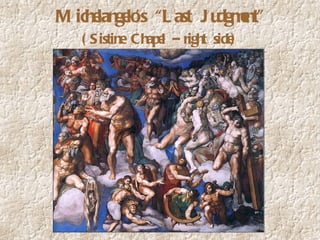
Michelangelo’s “Last Judgment” (Sistine Chapel – right side)
Features of Mannerism
Art History:  Mannerism was an art style that focused on the human form, depicted in intricate poses and in exaggerated, not always realistic settings. The term Mannerism was derived from the Italian word maniera, translated as ‘style.’ It developed in Florence and Rome between 1520 and 1600, as a style that rejected the balance of the Renaissance period in favor of a more emotional and distorted point of view. This art style reflected the tension in Europe at the time of its popularity. The movement eventually gained favor in northern Italy and most of central and northern Europe.
Paintings contained artificial color and unrealistic spatial proportions. Figures were often elongated and exaggerated, positioned in imaginative and complex poses. Works of the movement are often unsettling and strange, probably a result of the time period’s upheaval from the Reformation, the plague, and the sack of Rome. In 1600, Mannerists were accused of disrupting the unity of Renaissance classicism. However, in retrospect, the Mannerist movement supplied the link between Renaissance perfection and the emotional Baroque art that later developed in the 17th century
1. Replace Harmony   With Dissonance   & Discord “ Susanna & the Elders” Alessandro Allori Twisted bodies or “weight shift”
2. Replace Reason with Emotion “ Pietà” by Rosso Fiorentino 1530-1540
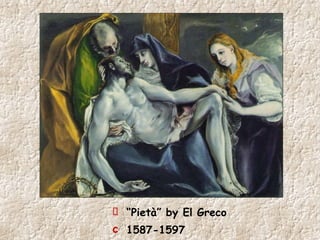
“ Pietà” by El Greco 1587-1597
3. Create Instability Instead of   Equilibrium “ The Rape of Helene” Francesco Primaticcio 1530-1539
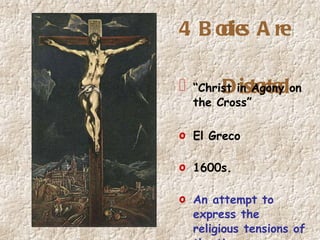
4. Bodies Are    Distorted “ Christ in Agony on the Cross” El Greco 1600s. An attempt to express the religious tensions of the times.
“ Adoration of the Name of Jesus” El Greco 1578-1580.
“ Adoration of the Name of Jesus” (details) Philip II of Spain El Greco 1578-1580
“ The Baptism of Christ” El Greco 1608-1628.
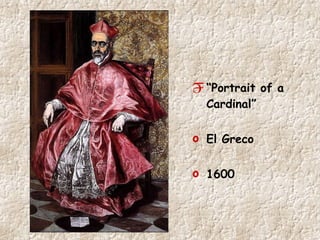
“ Portrait of a Cardinal” El Greco 1600
“ St. Jerome” by El Greco 1587-1597
5. Pictoral Space    is Crowded “ Madonna with the Long Neck” Parmagianino 1534-1540
“ Joseph in Egypt” Jacomo Pontormo
6.  Hanging Figures “ The Annunciation” Jacopo Tintoretto 1583-1587
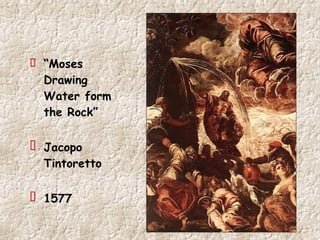
“ Moses Drawing Water form the Rock” Jacopo Tintoretto 1577
What characteristics of Mannerism can you spot? Agnolo Bronzino  The Deposition   c. 1545-50
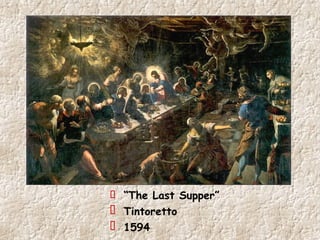
“ The Last Supper” Tintoretto 1594
Mannerist Artists Late Michaelangelo El Greco Tintoretto ***Mannerism will provide a bridge between the high Renaissance and Baroque Art.
Baroque Art & Architecture
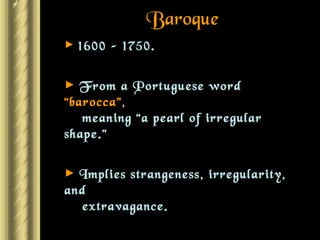
Baroque 1600 – 1750. From a Portuguese word  “barocca” ,    meaning “a pearl of irregular shape.” Implies strangeness, irregularity, and    extravagance. The more dramatic, the better!
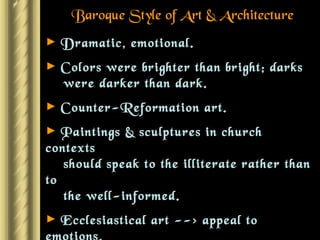
Baroque Style of Art & Architecture Dramatic, emotional. Colors were brighter than bright; darks    were darker than dark. Counter-Reformation art. Paintings & sculptures in church contexts   should speak to the illiterate rather than to   the well-informed. Ecclesiastical art --> appeal to emotions. Holland --> Real people portrayed as the   primary subjects.
St. Peter’s Basilica, Vatican City   by Gialorenzo Bernini
Church of Santiago de Compostella, Spain
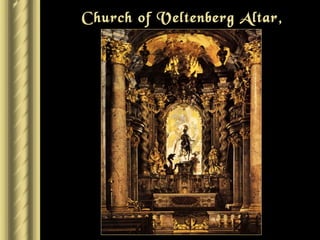
Church of Veltenberg Altar, Germany
“ St. Francis in Ecstasy” Caravaggio, 1595
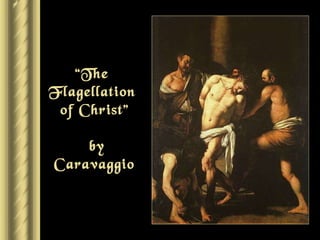
“ The  Flagellation  of Christ”  by Caravaggio
“ David and Goliath” by Caravaggio
“ Salome with the Head of the Baptist”  by Caravaggio
“ The Cardsharps” Caravaggio, 1595
“ The Dead Christ Mourned” Annibale Carracci, 1603
“ The Virgin Appearing to St. Hyacinthe” Lodovico Carracci 1594
“ Christ on the Cross” Diego Velazquez, 1632
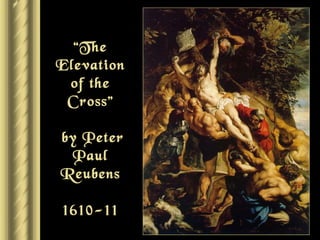
“ The Elevation of the Cross”  by Peter Paul Reubens 1610-11
“ The Lamentation”  by Peter Paul Reubens 1609-11
“ Battle of the Amazons” Peter Paul Reubens
“ The Garden of Love” Peter Paul Reubens, 1630-32
“ The Ecstasy of St. Theresa of Avila”  by Gianlorenzo Bernini 1647-52
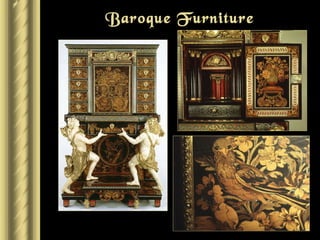
Baroque Furniture
Baroque Furniture
A Baroque Room
Baroque Music designates the style of music composed during a period that overlaps with that of Baroque art, but usually encompasses a slightly later period   Ornamentation Vivaldi’s Four Seasons, Bach’s Brandenburg Concertos, Handel’s Watermusic, and Pachebel’s Canon

Powerpoint mannerism and baroque

  • 1.
  • 2.
    Background Late Renaissance[Pre-Baroque]. Art was at an impasse after the perfection and harmony of the Renaissance. Antithetical to the principles of the High Renaissance. From the Italian de maneria . A work of art done in the artist’s characteristic “touch” or recognizable “manner.” First used by the German art historian, Heinrich Wölfflin in the early 20c. Influenced by Michelangelo’s later works.
  • 3.
    Michelangelo’s “Last Judgment” (Sistine Chapel)
  • 4.
    Michelangelo’s “Last Judgment”(Sistine Chapel – left side)
  • 5.
    Michelangelo’s “Last Judgment”(Sistine Chapel – right side)
  • 6.
  • 7.
    Art History: Mannerism was an art style that focused on the human form, depicted in intricate poses and in exaggerated, not always realistic settings. The term Mannerism was derived from the Italian word maniera, translated as ‘style.’ It developed in Florence and Rome between 1520 and 1600, as a style that rejected the balance of the Renaissance period in favor of a more emotional and distorted point of view. This art style reflected the tension in Europe at the time of its popularity. The movement eventually gained favor in northern Italy and most of central and northern Europe.
  • 8.
    Paintings contained artificialcolor and unrealistic spatial proportions. Figures were often elongated and exaggerated, positioned in imaginative and complex poses. Works of the movement are often unsettling and strange, probably a result of the time period’s upheaval from the Reformation, the plague, and the sack of Rome. In 1600, Mannerists were accused of disrupting the unity of Renaissance classicism. However, in retrospect, the Mannerist movement supplied the link between Renaissance perfection and the emotional Baroque art that later developed in the 17th century
  • 9.
    1. Replace Harmony With Dissonance & Discord “ Susanna & the Elders” Alessandro Allori Twisted bodies or “weight shift”
  • 10.
    2. Replace Reasonwith Emotion “ Pietà” by Rosso Fiorentino 1530-1540
  • 11.
    “ Pietà” byEl Greco 1587-1597
  • 12.
    3. Create InstabilityInstead of Equilibrium “ The Rape of Helene” Francesco Primaticcio 1530-1539
  • 13.
    4. Bodies Are Distorted “ Christ in Agony on the Cross” El Greco 1600s. An attempt to express the religious tensions of the times.
  • 14.
    “ Adoration ofthe Name of Jesus” El Greco 1578-1580.
  • 15.
    “ Adoration ofthe Name of Jesus” (details) Philip II of Spain El Greco 1578-1580
  • 16.
    “ The Baptismof Christ” El Greco 1608-1628.
  • 17.
    “ Portrait ofa Cardinal” El Greco 1600
  • 18.
    “ St. Jerome”by El Greco 1587-1597
  • 19.
    5. Pictoral Space is Crowded “ Madonna with the Long Neck” Parmagianino 1534-1540
  • 20.
    “ Joseph inEgypt” Jacomo Pontormo
  • 21.
    6. HangingFigures “ The Annunciation” Jacopo Tintoretto 1583-1587
  • 22.
    “ Moses DrawingWater form the Rock” Jacopo Tintoretto 1577
  • 23.
    What characteristics ofMannerism can you spot? Agnolo Bronzino The Deposition c. 1545-50
  • 24.
    “ The LastSupper” Tintoretto 1594
  • 25.
    Mannerist Artists LateMichaelangelo El Greco Tintoretto ***Mannerism will provide a bridge between the high Renaissance and Baroque Art.
  • 26.
    Baroque Art &Architecture
  • 27.
    Baroque 1600 –1750. From a Portuguese word “barocca” , meaning “a pearl of irregular shape.” Implies strangeness, irregularity, and extravagance. The more dramatic, the better!
  • 28.
    Baroque Style ofArt & Architecture Dramatic, emotional. Colors were brighter than bright; darks were darker than dark. Counter-Reformation art. Paintings & sculptures in church contexts should speak to the illiterate rather than to the well-informed. Ecclesiastical art --> appeal to emotions. Holland --> Real people portrayed as the primary subjects.
  • 29.
    St. Peter’s Basilica,Vatican City by Gialorenzo Bernini
  • 30.
    Church of Santiagode Compostella, Spain
  • 31.
    Church of VeltenbergAltar, Germany
  • 32.
    “ St. Francisin Ecstasy” Caravaggio, 1595
  • 33.
    “ The Flagellation of Christ” by Caravaggio
  • 34.
    “ David andGoliath” by Caravaggio
  • 35.
    “ Salome withthe Head of the Baptist” by Caravaggio
  • 36.
    “ The Cardsharps”Caravaggio, 1595
  • 37.
    “ The DeadChrist Mourned” Annibale Carracci, 1603
  • 38.
    “ The VirginAppearing to St. Hyacinthe” Lodovico Carracci 1594
  • 39.
    “ Christ onthe Cross” Diego Velazquez, 1632
  • 40.
    “ The Elevationof the Cross” by Peter Paul Reubens 1610-11
  • 41.
    “ The Lamentation” by Peter Paul Reubens 1609-11
  • 42.
    “ Battle ofthe Amazons” Peter Paul Reubens
  • 43.
    “ The Gardenof Love” Peter Paul Reubens, 1630-32
  • 44.
    “ The Ecstasyof St. Theresa of Avila” by Gianlorenzo Bernini 1647-52
  • 45.
  • 46.
  • 47.
  • 48.
    Baroque Music designatesthe style of music composed during a period that overlaps with that of Baroque art, but usually encompasses a slightly later period Ornamentation Vivaldi’s Four Seasons, Bach’s Brandenburg Concertos, Handel’s Watermusic, and Pachebel’s Canon