Gothic Art and Architecture
Gothic Art Lasted 200 years Began in France in mid 12 th  century By late 15 th  century, it had evolved in to Renaissance art All art was mostly made for the Church and religious purposes
Primary Mediums Most Gothic art took the forms of: Sculptures Panel Painting Stained Glass Frescos Illuminated Manuscript
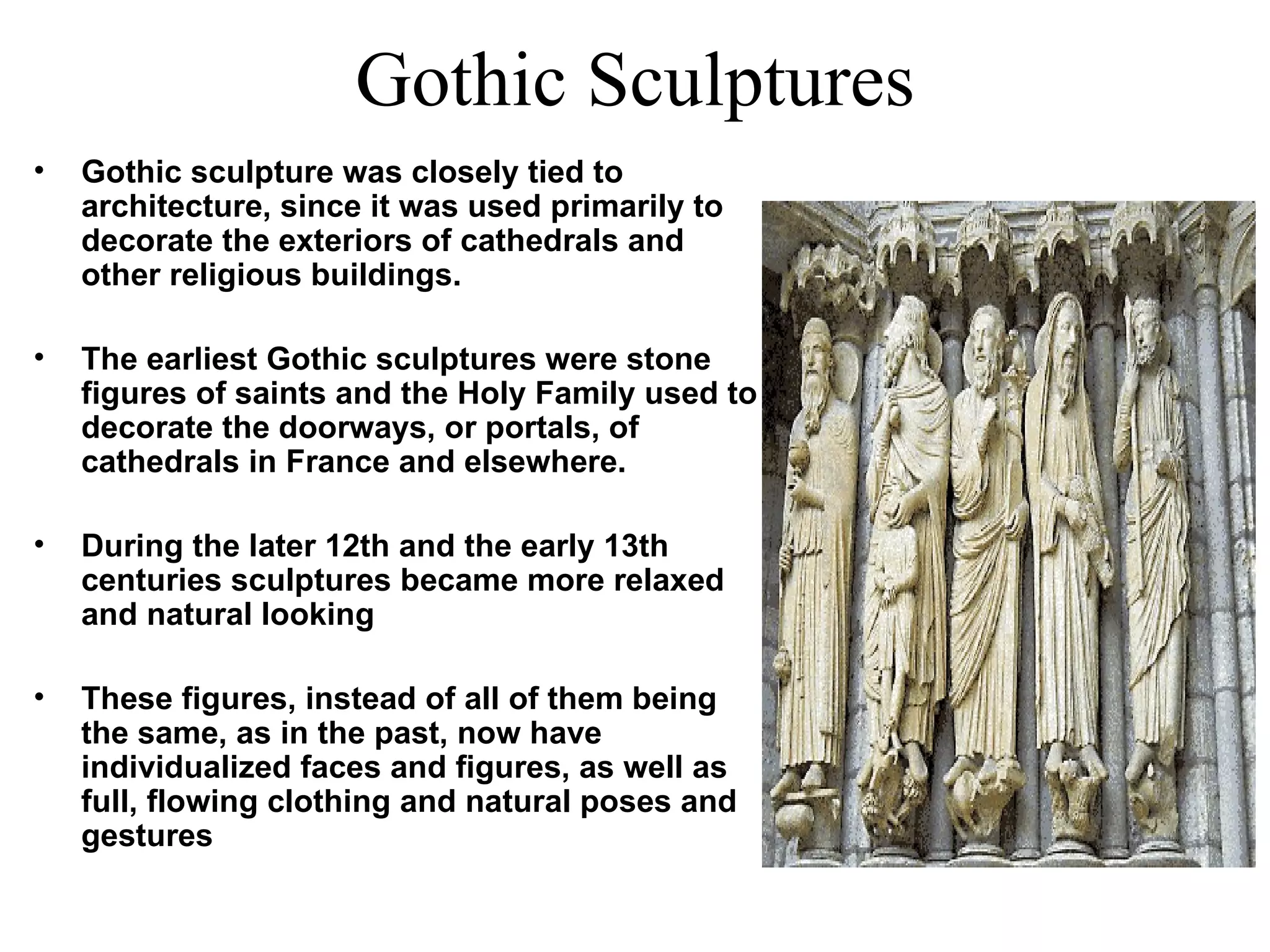
Gothic Sculptures Gothic sculpture was closely tied to architecture, since it was used primarily to decorate the exteriors of cathedrals and other religious buildings.  The earliest Gothic sculptures were stone figures of saints and the Holy Family used to decorate the doorways, or portals, of cathedrals in France and elsewhere.  During the later 12th and the early 13th centuries sculptures became more relaxed and natural looking These figures, instead of all of them being the same, as in the past, now have individualized faces and figures, as well as full, flowing clothing and natural poses and gestures
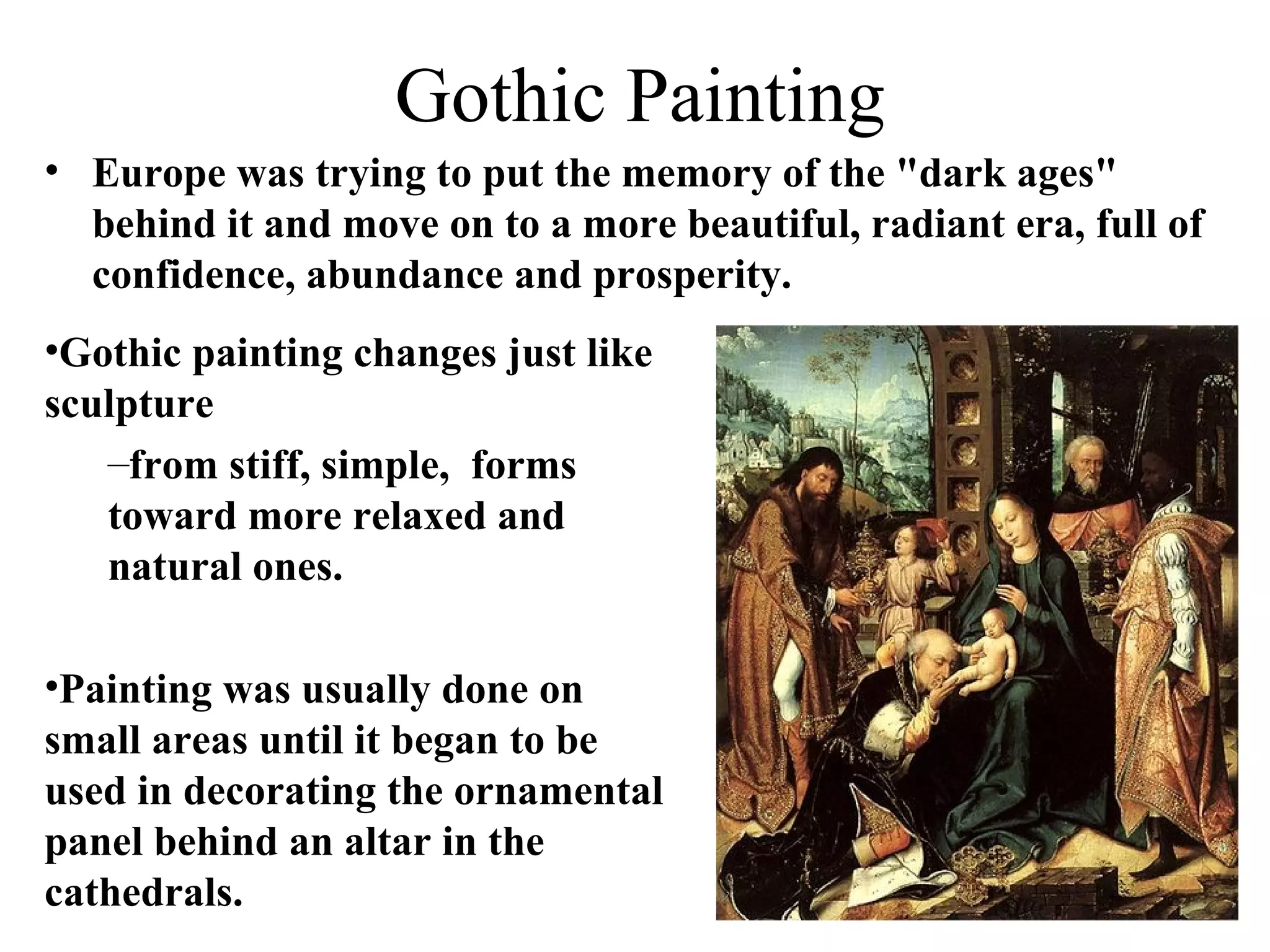
Gothic Painting Europe was trying to put the memory of the "dark ages" behind it and move on to a more beautiful, radiant era, full of confidence, abundance and prosperity. Gothic painting changes just like sculpture from stiff, simple,  forms toward more relaxed and natural ones.  Painting was usually done on small areas until it began to be used in decorating the ornamental panel behind an altar in the cathedrals.
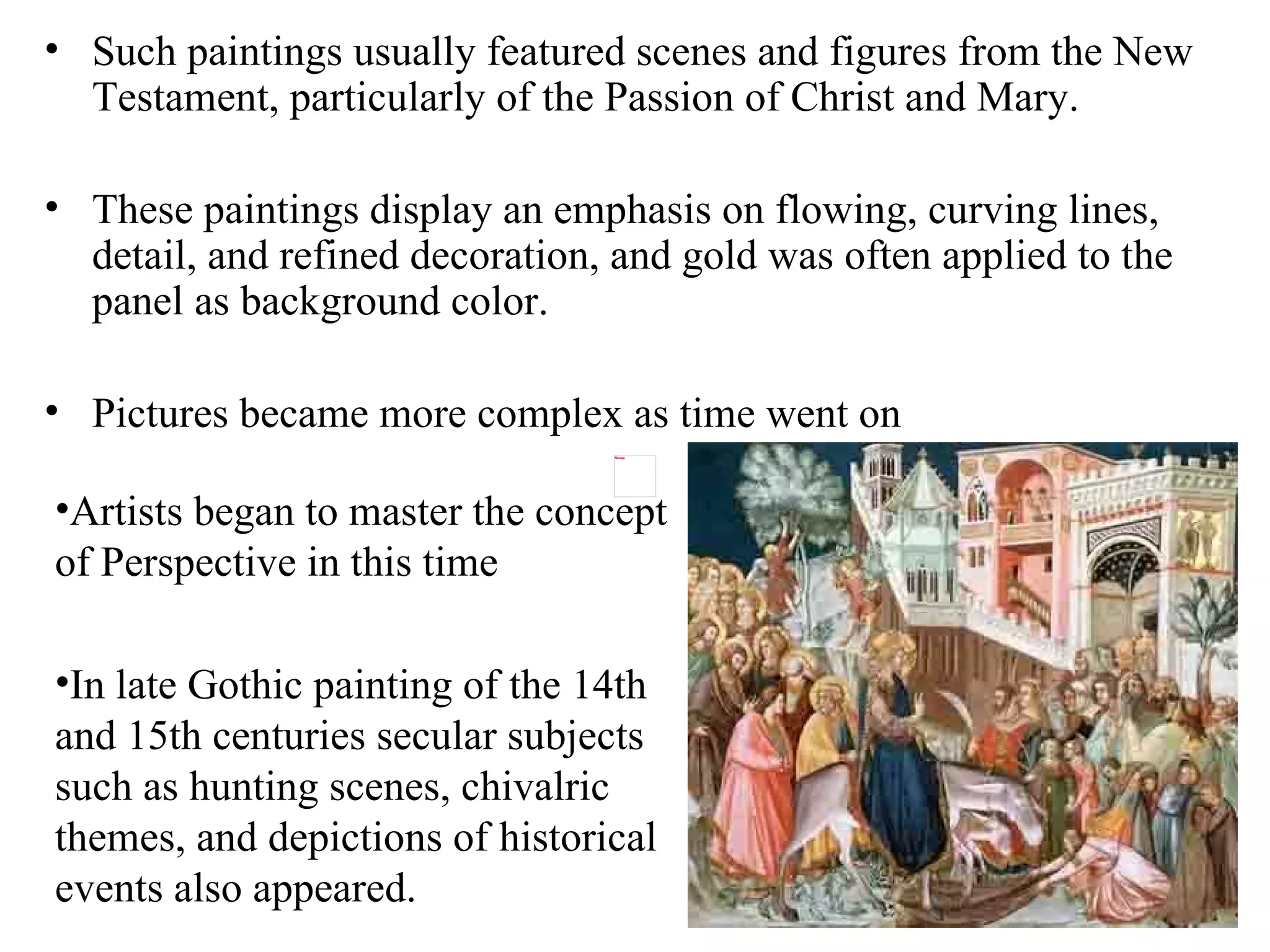
Such paintings usually featured scenes and figures from the New Testament, particularly of the Passion of Christ and Mary.  These paintings display an emphasis on flowing, curving lines, detail, and refined decoration, and gold was often applied to the panel as background color.  Pictures became more complex as time went on Artists began to master the concept of Perspective in this time In late Gothic painting of the 14th and 15th centuries secular subjects such as hunting scenes, chivalric themes, and depictions of historical events also appeared.
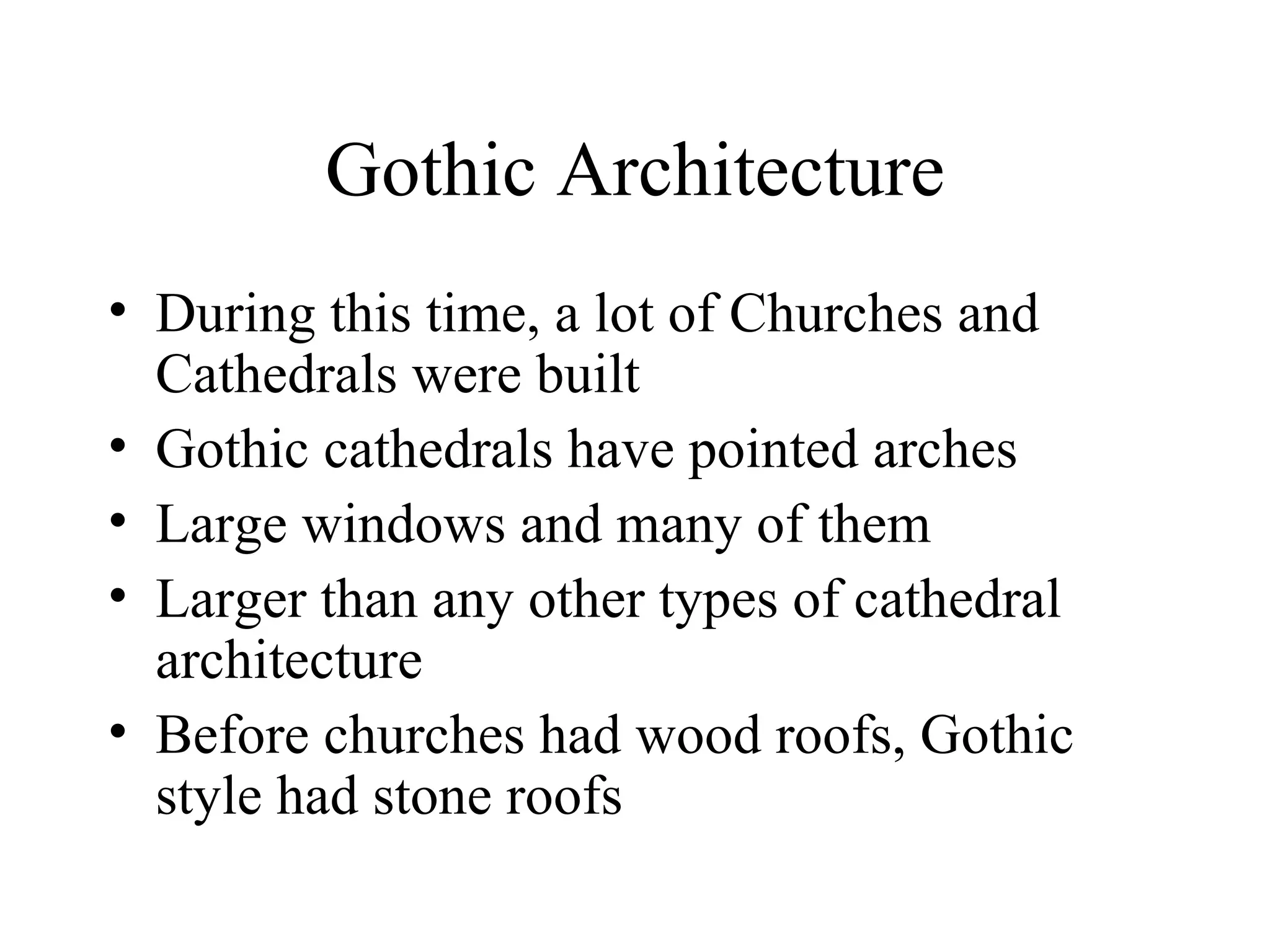
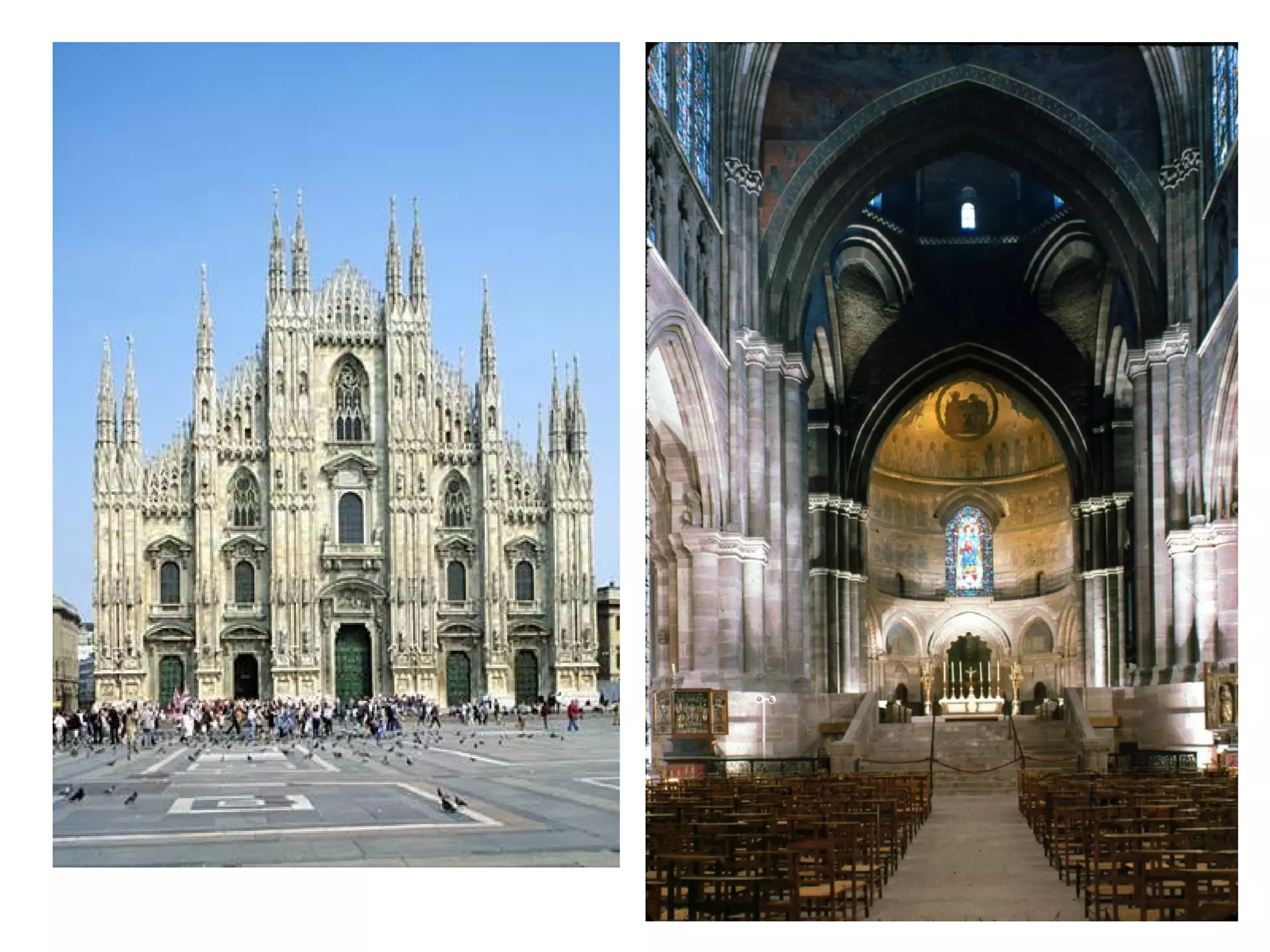
Gothic Architecture During this time, a lot of Churches and Cathedrals were built Gothic cathedrals have pointed arches Large windows and many of them Larger than any other types of cathedral architecture Before churches had wood roofs, Gothic style had stone roofs
 
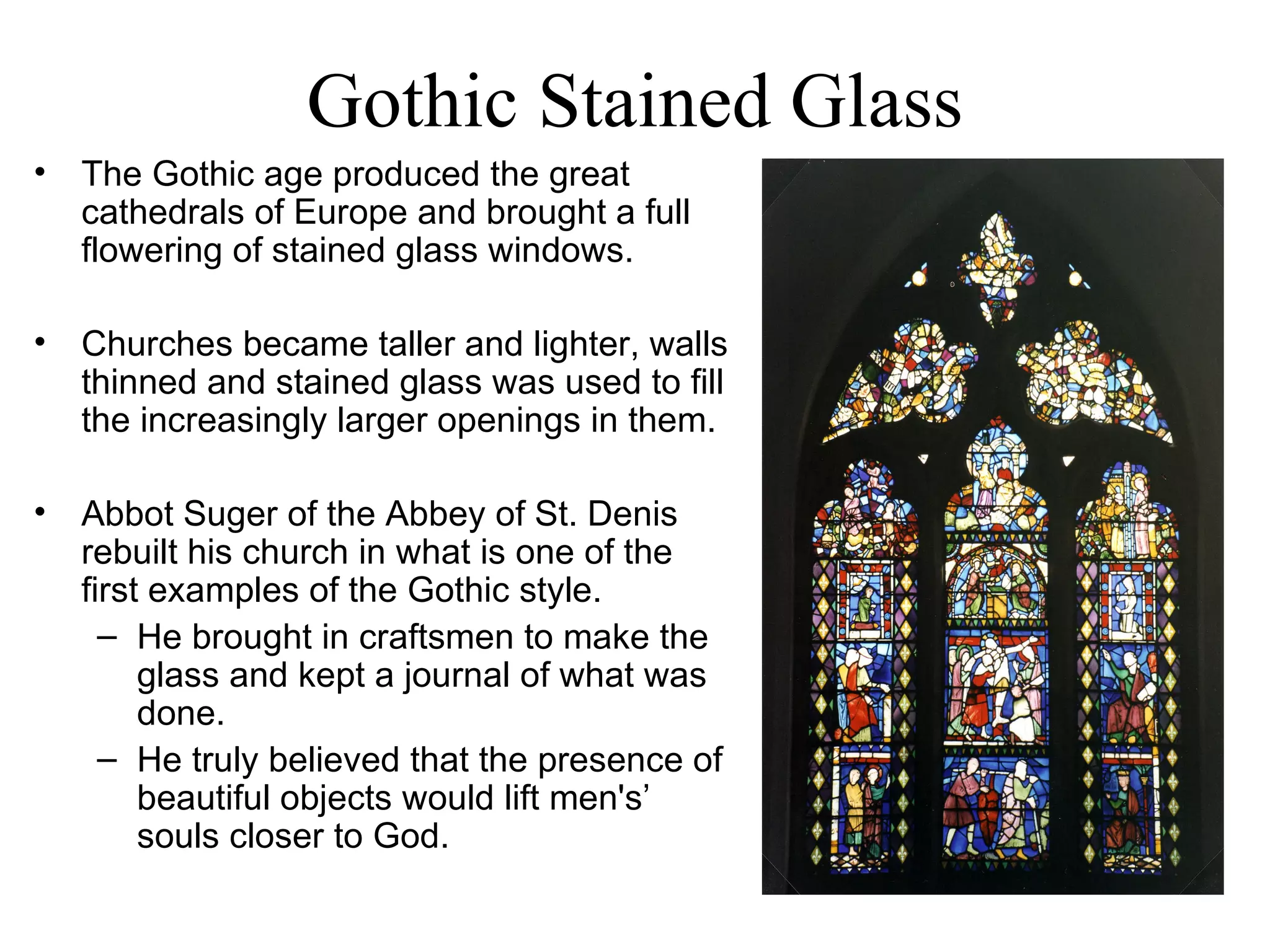
Gothic Stained Glass The Gothic age produced the great cathedrals of Europe and brought a full flowering of stained glass windows.  Churches became taller and lighter, walls thinned and stained glass was used to fill the increasingly larger openings in them.  Abbot Suger of the Abbey of St. Denis rebuilt his church in what is one of the first examples of the Gothic style.  He brought in craftsmen to make the glass and kept a journal of what was done.  He truly believed that the presence of beautiful objects would lift men's’ souls closer to God.
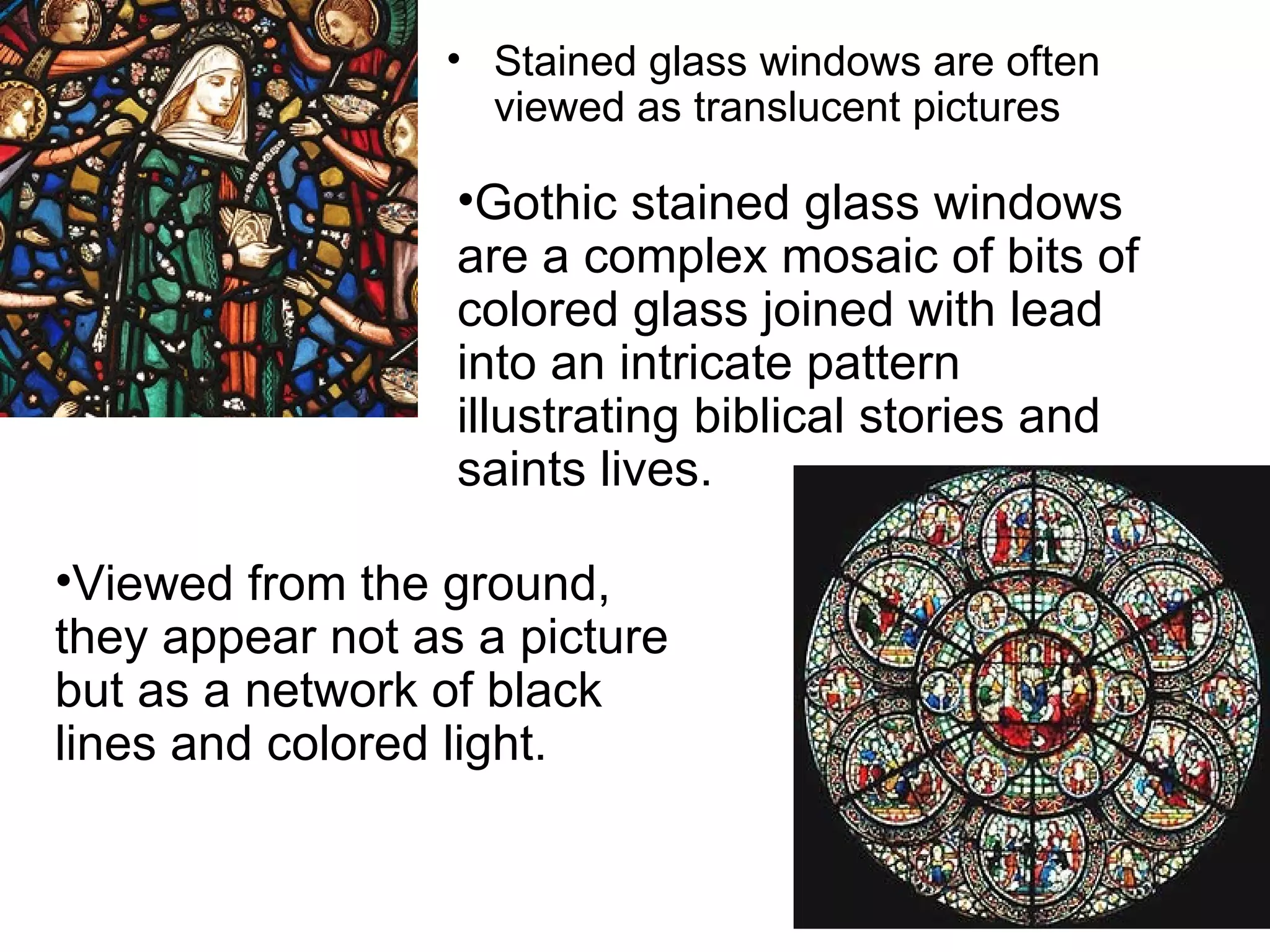
Stained glass windows are often viewed as translucent pictures Gothic stained glass windows are a complex mosaic of bits of colored glass joined with lead into an intricate pattern illustrating biblical stories and saints lives.  Viewed from the ground, they appear not as a picture but as a network of black lines and colored light.
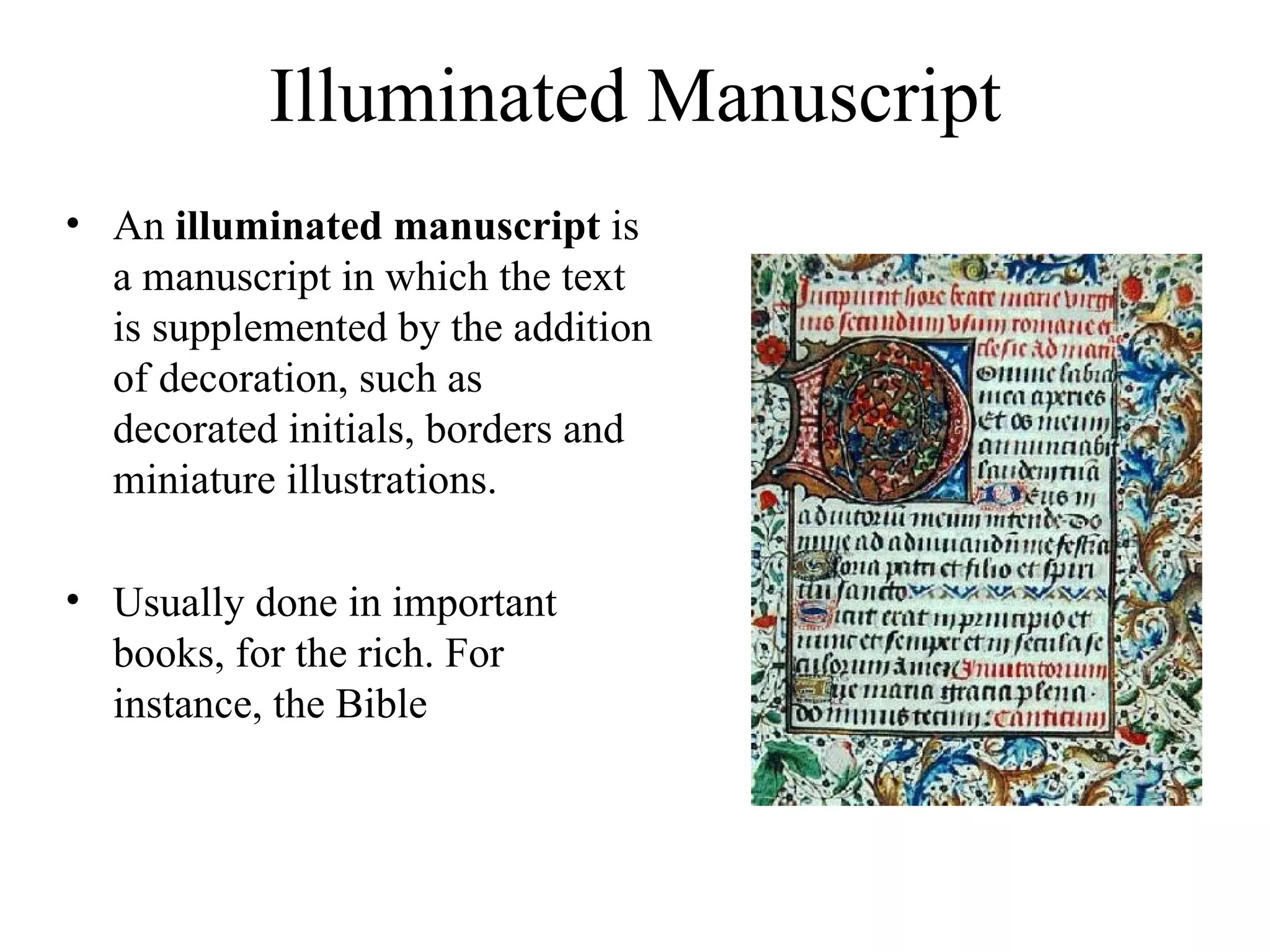
Illuminated Manuscript An  illuminated manuscript  is a manuscript in which the text is supplemented by the addition of decoration, such as decorated initials, borders and miniature illustrations. Usually done in important books, for the rich. For instance, the Bible

Gothic Art and Architecture

  • 1.
    Gothic Art andArchitecture
  • 2.
    Gothic Art Lasted200 years Began in France in mid 12 th century By late 15 th century, it had evolved in to Renaissance art All art was mostly made for the Church and religious purposes
  • 3.
    Primary Mediums MostGothic art took the forms of: Sculptures Panel Painting Stained Glass Frescos Illuminated Manuscript
  • 4.
    Gothic Sculptures Gothicsculpture was closely tied to architecture, since it was used primarily to decorate the exteriors of cathedrals and other religious buildings. The earliest Gothic sculptures were stone figures of saints and the Holy Family used to decorate the doorways, or portals, of cathedrals in France and elsewhere. During the later 12th and the early 13th centuries sculptures became more relaxed and natural looking These figures, instead of all of them being the same, as in the past, now have individualized faces and figures, as well as full, flowing clothing and natural poses and gestures
  • 5.
    Gothic Painting Europewas trying to put the memory of the "dark ages" behind it and move on to a more beautiful, radiant era, full of confidence, abundance and prosperity. Gothic painting changes just like sculpture from stiff, simple, forms toward more relaxed and natural ones. Painting was usually done on small areas until it began to be used in decorating the ornamental panel behind an altar in the cathedrals.
  • 6.
    Such paintings usuallyfeatured scenes and figures from the New Testament, particularly of the Passion of Christ and Mary. These paintings display an emphasis on flowing, curving lines, detail, and refined decoration, and gold was often applied to the panel as background color. Pictures became more complex as time went on Artists began to master the concept of Perspective in this time In late Gothic painting of the 14th and 15th centuries secular subjects such as hunting scenes, chivalric themes, and depictions of historical events also appeared.
  • 7.
    Gothic Architecture Duringthis time, a lot of Churches and Cathedrals were built Gothic cathedrals have pointed arches Large windows and many of them Larger than any other types of cathedral architecture Before churches had wood roofs, Gothic style had stone roofs
  • 8.
  • 9.
    Gothic Stained GlassThe Gothic age produced the great cathedrals of Europe and brought a full flowering of stained glass windows. Churches became taller and lighter, walls thinned and stained glass was used to fill the increasingly larger openings in them. Abbot Suger of the Abbey of St. Denis rebuilt his church in what is one of the first examples of the Gothic style. He brought in craftsmen to make the glass and kept a journal of what was done. He truly believed that the presence of beautiful objects would lift men's’ souls closer to God.
  • 10.
    Stained glass windowsare often viewed as translucent pictures Gothic stained glass windows are a complex mosaic of bits of colored glass joined with lead into an intricate pattern illustrating biblical stories and saints lives. Viewed from the ground, they appear not as a picture but as a network of black lines and colored light.
  • 11.
    Illuminated Manuscript An illuminated manuscript is a manuscript in which the text is supplemented by the addition of decoration, such as decorated initials, borders and miniature illustrations. Usually done in important books, for the rich. For instance, the Bible