Rococo
(1715 – 1774)
Upasna rana
1410418
Rococo
• Rococo is derived from the French word, Rocaille
[roh-kahy ]: a rock/shell ornamentation used in garden
architecture.
• The Rococo period followed the Baroque period and is
associated primarily with France in the 18th century
(1700s).
• 1715 – 1774
• Rococo rejected the traditional themes of heroes and
mythology and instead focused on representing the
carefree life characteristic of the aristocratic patrons
• The court of the French kings, at the palace of Versailles,
was the magnificent setting for the merry lives of the
French nobility in the 18th century.
Characteristics of Rococo period
• Elegance
• Gaiety
• Decorative
• Bright or pastel colors
• Excessive ornamentation
• a light, fanciful, feminine approach to decoration
• the preoccupation of society with a romantic view of
life, and a tendency towards eroticism and
superficiality
• In architecture, the style is mostly limited to the
exterior facade ornamentation.
Rococo
Architecture
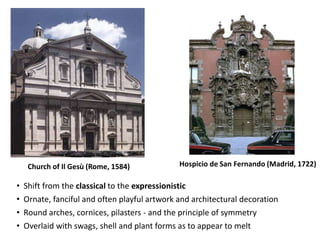
• Shift from the classical to the expressionistic
• Ornate, fanciful and often playful artwork and architectural decoration
• Round arches, cornices, pilasters - and the principle of symmetry
• Overlaid with swags, shell and plant forms as to appear to melt
Hospicio de San Fernando (Madrid, 1722)Church of Il Gesù (Rome, 1584)
The Mirror Room – Amalienburg Palace (Munich 1734)
A pavilion for Royal relaxation by François de Cuvilliers
Boiserie
[bwah-zuh-ree]:
Interior
Sculptured Wall
Paneling
(usually floor to
ceiling) as a rule
enriched by
carving, gilding,
and painting
Furniture and
Decoration
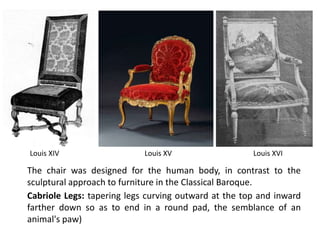
Louis XVI
Cabriole Legs: tapering legs curving outward at the top and inward
farther down so as to end in a round pad, the semblance of an
animal's paw)
The chair was designed for the human body, in contrast to the
sculptural approach to furniture in the Classical Baroque.
Louis XIV Louis XV
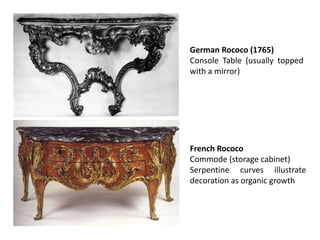
French Rococo
Commode (storage cabinet)
Serpentine curves illustrate
decoration as organic growth
German Rococo (1765)
Console Table (usually topped
with a mirror)
Paintings
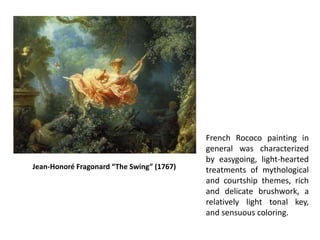
French Rococo painting in
general was characterized
by easygoing, light-hearted
treatments of mythological
and courtship themes, rich
and delicate brushwork, a
relatively light tonal key,
and sensuous coloring.
Jean-Honoré Fragonard “The Swing” (1767)
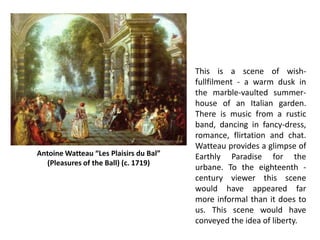
This is a scene of wish-
fullfilment - a warm dusk in
the marble-vaulted summer-
house of an Italian garden.
There is music from a rustic
band, dancing in fancy-dress,
romance, flirtation and chat.
Watteau provides a glimpse of
Earthly Paradise for the
urbane. To the eighteenth -
century viewer this scene
would have appeared far
more informal than it does to
us. This scene would have
conveyed the idea of liberty.
Antoine Watteau “Les Plaisirs du Bal”
(Pleasures of the Ball) (c. 1719)
Thank you

Rococo brief

  • 1.
  • 2.
    Rococo • Rococo isderived from the French word, Rocaille [roh-kahy ]: a rock/shell ornamentation used in garden architecture. • The Rococo period followed the Baroque period and is associated primarily with France in the 18th century (1700s). • 1715 – 1774 • Rococo rejected the traditional themes of heroes and mythology and instead focused on representing the carefree life characteristic of the aristocratic patrons • The court of the French kings, at the palace of Versailles, was the magnificent setting for the merry lives of the French nobility in the 18th century.
  • 3.
    Characteristics of Rococoperiod • Elegance • Gaiety • Decorative • Bright or pastel colors • Excessive ornamentation • a light, fanciful, feminine approach to decoration • the preoccupation of society with a romantic view of life, and a tendency towards eroticism and superficiality • In architecture, the style is mostly limited to the exterior facade ornamentation.
  • 4.
  • 5.
    • Shift fromthe classical to the expressionistic • Ornate, fanciful and often playful artwork and architectural decoration • Round arches, cornices, pilasters - and the principle of symmetry • Overlaid with swags, shell and plant forms as to appear to melt Hospicio de San Fernando (Madrid, 1722)Church of Il Gesù (Rome, 1584)
  • 6.
    The Mirror Room– Amalienburg Palace (Munich 1734) A pavilion for Royal relaxation by François de Cuvilliers Boiserie [bwah-zuh-ree]: Interior Sculptured Wall Paneling (usually floor to ceiling) as a rule enriched by carving, gilding, and painting
  • 7.
  • 8.
    Louis XVI Cabriole Legs:tapering legs curving outward at the top and inward farther down so as to end in a round pad, the semblance of an animal's paw) The chair was designed for the human body, in contrast to the sculptural approach to furniture in the Classical Baroque. Louis XIV Louis XV
  • 9.
    French Rococo Commode (storagecabinet) Serpentine curves illustrate decoration as organic growth German Rococo (1765) Console Table (usually topped with a mirror)
  • 10.
  • 11.
    French Rococo paintingin general was characterized by easygoing, light-hearted treatments of mythological and courtship themes, rich and delicate brushwork, a relatively light tonal key, and sensuous coloring. Jean-Honoré Fragonard “The Swing” (1767)
  • 12.
    This is ascene of wish- fullfilment - a warm dusk in the marble-vaulted summer- house of an Italian garden. There is music from a rustic band, dancing in fancy-dress, romance, flirtation and chat. Watteau provides a glimpse of Earthly Paradise for the urbane. To the eighteenth - century viewer this scene would have appeared far more informal than it does to us. This scene would have conveyed the idea of liberty. Antoine Watteau “Les Plaisirs du Bal” (Pleasures of the Ball) (c. 1719)
  • 13.