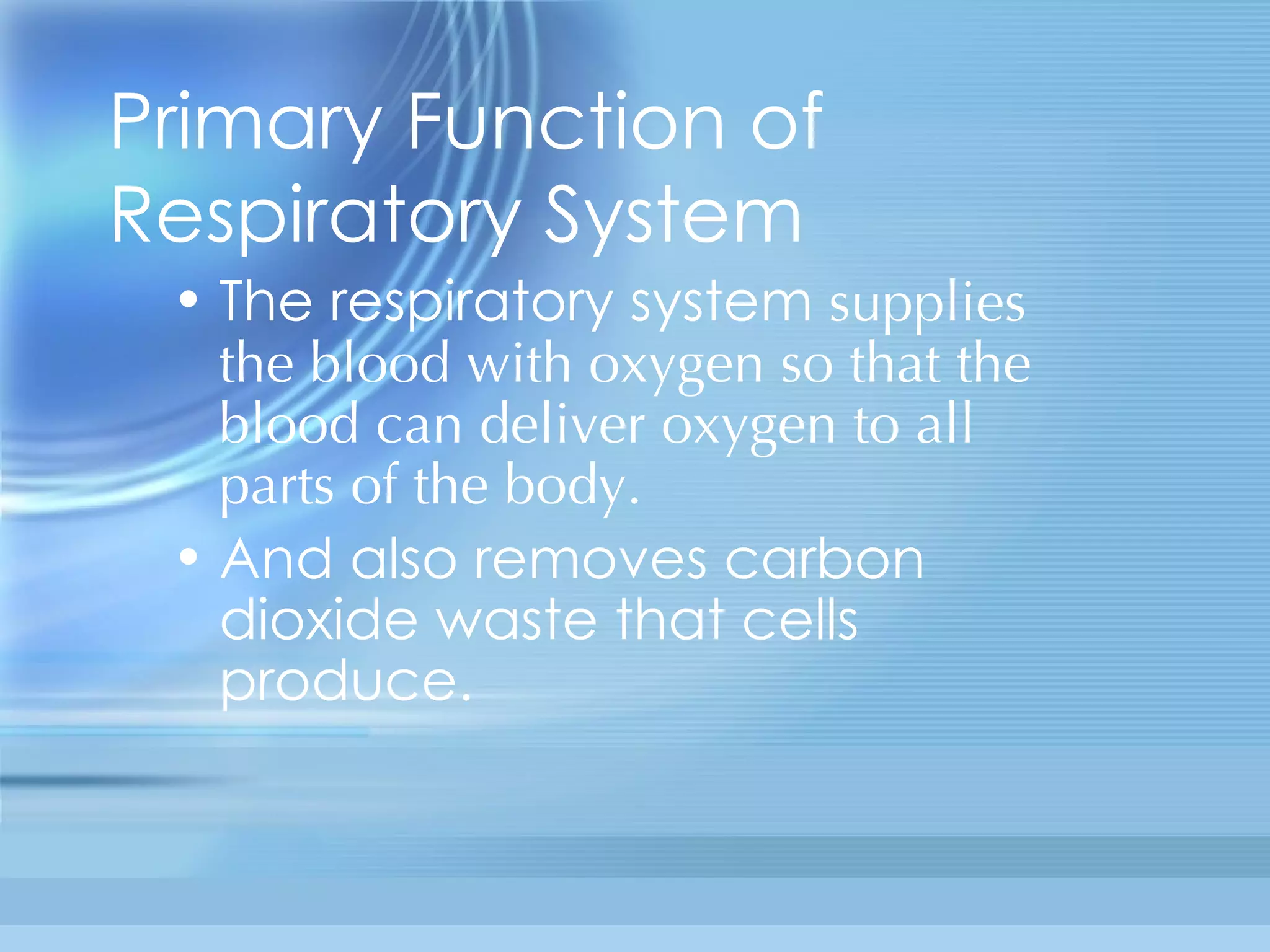
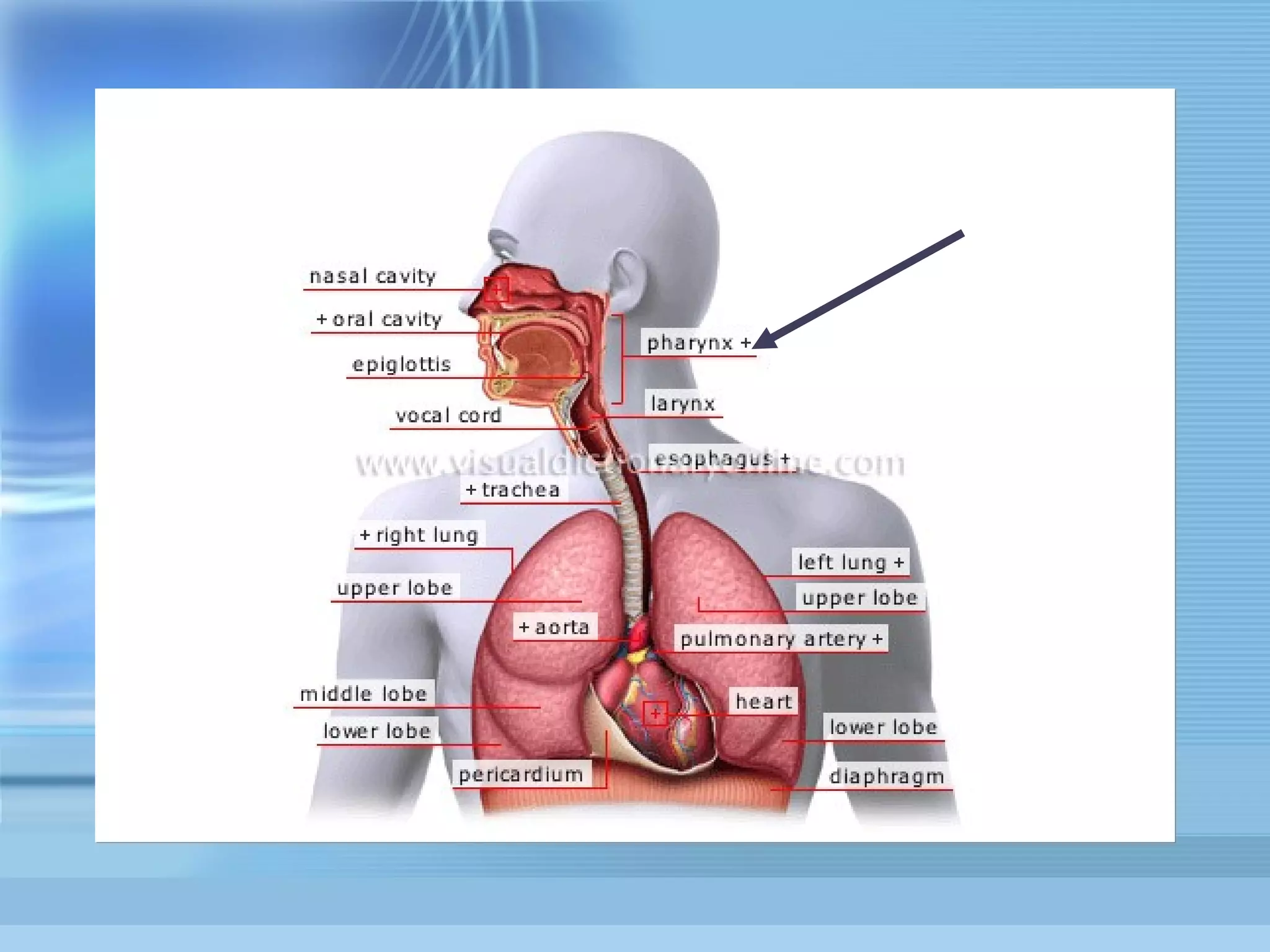
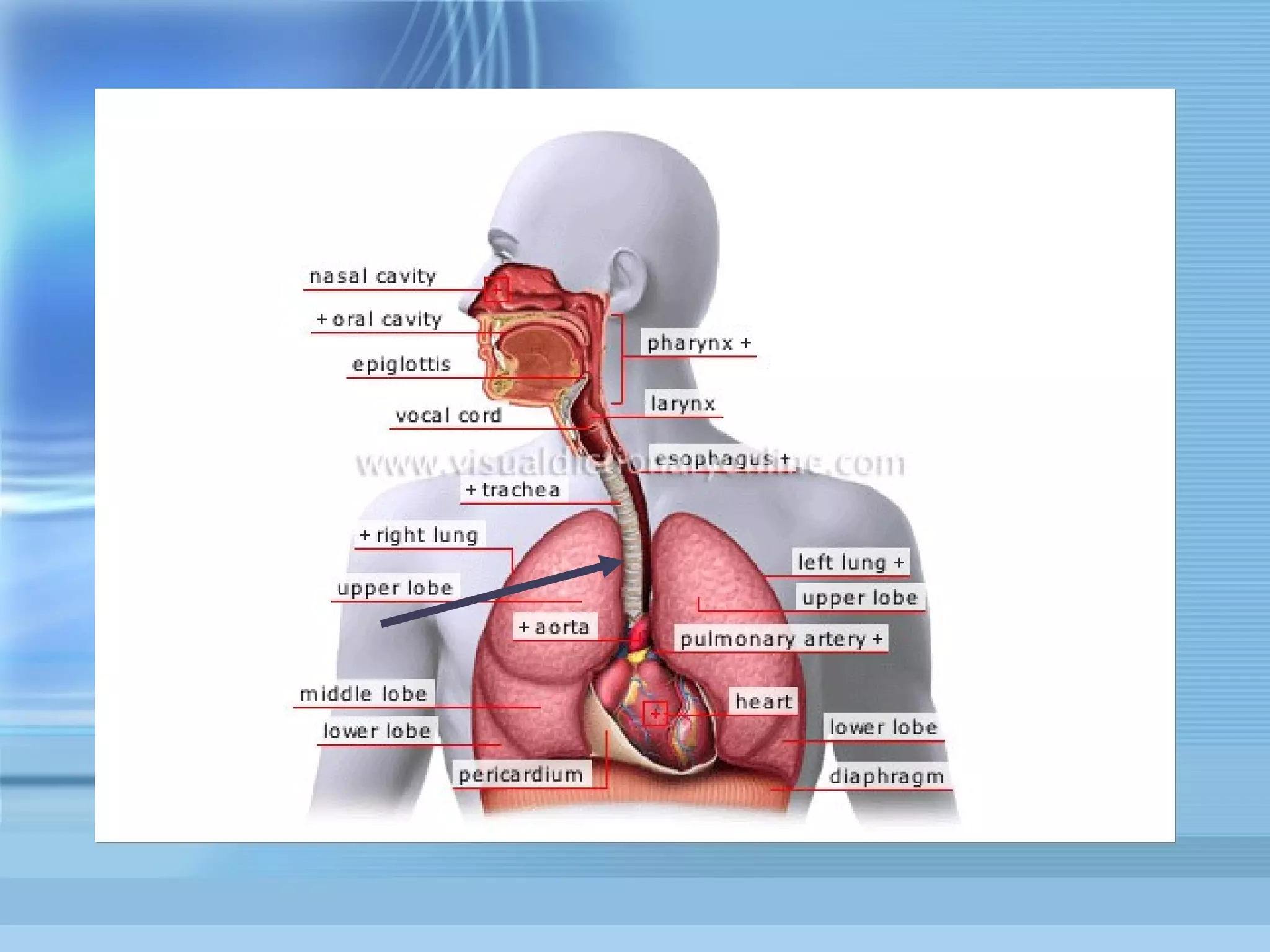
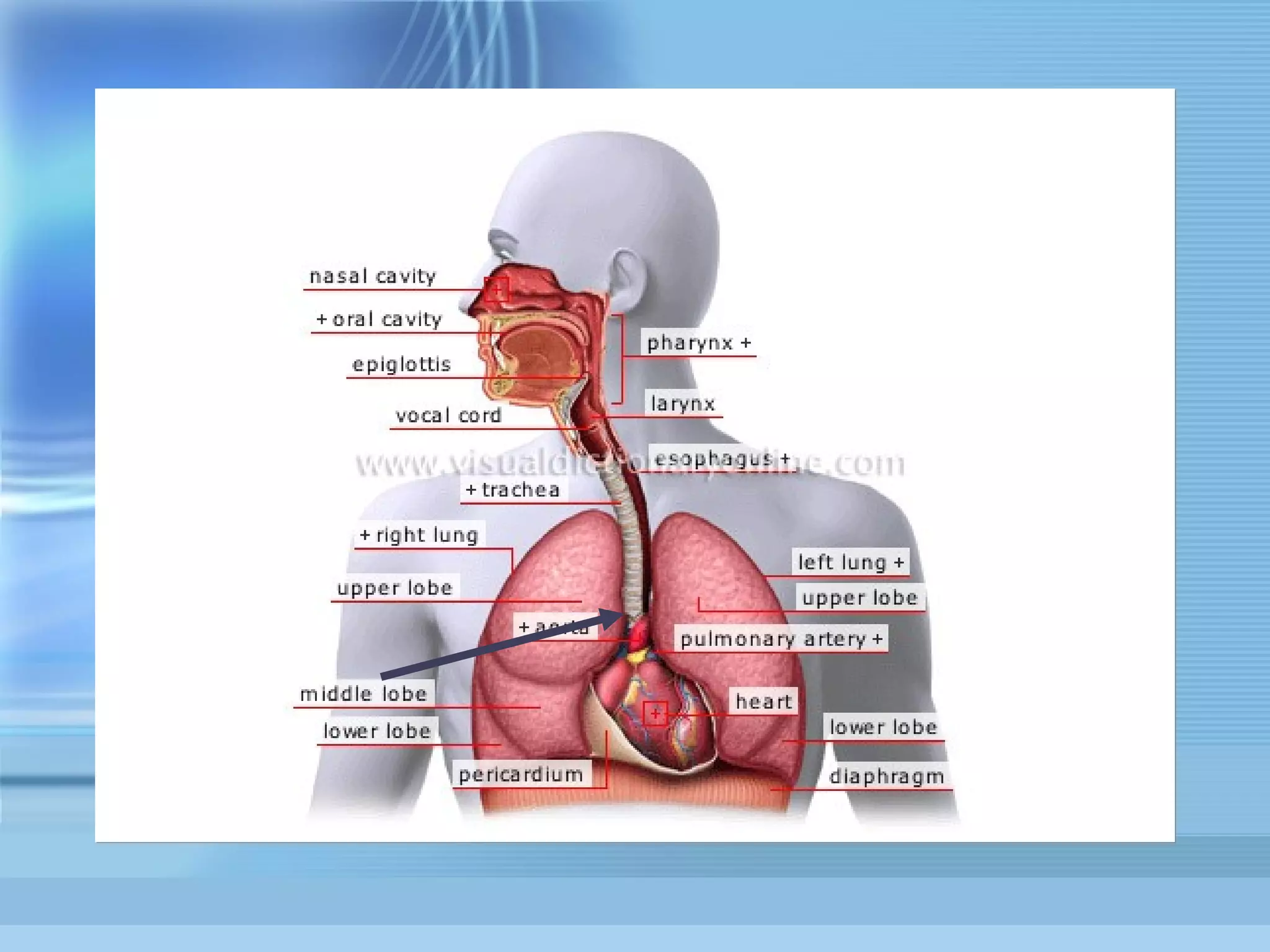
The primary function of the respiratory system is to supply blood with oxygen and remove carbon dioxide waste from cells. The respiratory system includes the nasal cavity, mouth, pharynx, trachea, lungs, bronchi, bronchioles, alveoli, and capillaries. Air enters through the nose or mouth and travels through the pharynx, trachea, bronchi, bronchioles, and into the alveoli where gas exchange occurs. Oxygen passes from the alveoli into the bloodstream and carbon dioxide passes from the bloodstream into the alveoli to be exhaled. Keeping the respiratory system healthy includes avoiding smoking, pollution, and exercising regularly.
Primary Function ofRespiratory System The respiratory system supplies the blood with oxygen so that the blood can deliver oxygen to all parts of the body. And also removes carbon dioxide waste that cells produce.
3.
4.
5.
6.
7.
8.
9.
Respiratory System StructureNasal Cavity: Passes air through nose Mouth: Passes air through Pharynx: The throat. Cone shaped passageway leading to trachea. Trachea: Windpipe. Main tube connecting nose/mouth to lungs. Epiglottis: Flap that covers the entrance to the trachea. Lungs: Main organ of the respiratory system.
10.
Respiratory System StructureBronchi: Two tubes inside of lungs that air passes through to the bronchioles. Bronchioles: Small branching out tubes divided into alveoli. Alveoli: Tiny air sacs that do the oxidation and the exhale of carbon dioxide. Capillaries: Blood vessels that are imbedded in the walls of the alveoli. While in the capillaries the blood discharges carbon dioxide into the alveoli and takes up oxygen from the air in the alveoli. Cilia: Hair like structures that remove dust and dirt from the air.
11.
How the RespiratorySystem Works Air that flows from the mouth or nasal cavity travels through the pharynx and moves down to the trachea. Then the air moves to the bronchi tubes as they enter the lungs. Once the air gets in the lungs, the air enters separate branches called the bronchiole. Carbon dioxide passes from the blood into the alveoli and is then exhaled.
12.
How the RespiratorySystem Works Once in your lungs Oxygen travels from your lungs through the bloodstream to the cells in all parts of your body. Cells use the oxygen as fuel and give off carbon dioxide as waste gas.The waste gas is carried by the bloodstream back to the lungs to be exhaled.
13.
Interesting Facts Aboutthe Respiratory System!! About half a liter of water per day is lost through breathing. Yawning brings more oxygen to the lungs. Your right lung is larger than your left. We breathe 13 pints of air every minute. People under 30 take in double the amount f oxygen in comparison to someone who's 80 years old.
14.
How to keepyour respiratory system healthy Try to Avoid: -Smoking -Being around a smoker(SecondHand) -Inhaling other chemicals and drugs. -Being around dusty or thick polluted air. What to do: - Exercise - Eat healthy - Go to annual doctor checkups
15.
Bibliography Respiratory SystemBibliography Meeks, Linda and Heit, Philip, Health and Wellness; Glencoe/ McGraw Hill Publishing, 2003, page 183. "Your Lungs and Respiratory System"; www.kidshealth.org/kid/htb w/lungs; Nemours Foundation; 2009. “ The Importance of Water- Why it is Essential to Life”; www.notesapps.unon.org/notesapps/unonbb.nsf “ Why Do I Yawn?”; www.kidshealth..org/kid/talk/qa/yawn.html; Nemours Foundation; 2009. “ Respiratory System”; www.t3.pacific.edu/teams/M043106/respiratory.html; Technology for Teachers; 2006. “ Body Systems- Respiratory System”; www.fi.edu/learn/heart/systems/respiration.html; FI; 2009. http://www.britannica.com/EBchecked/topic/455238/pharynx