PREPARED BY…
UPADHYAY RAKSHITA R.
ROLL NO : 18
CONTENTS…
 Introduction
 Wind energy conversion system
 Types of wind energy systems
 Paper 1
 Paper 2
 References
 Conclusion
INTRODUCTION
 To improve the utilization of wind energy effectively by using
power electronic converters.
 Keypoints for wind energy systems are
1. Available wind energy
2. Type of wind turbine employed
3. Type of electric generator and power
4. Electronic circuitry employed
5. Interfacing with the grid
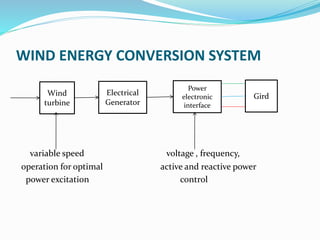
WIND ENERGY CONVERSION SYSTEM
Electrical
Generator
Wind
turbine
Power
electronic
interface
Gird
variable speed voltage , frequency,
operation for optimal active and reactive power
power excitation control
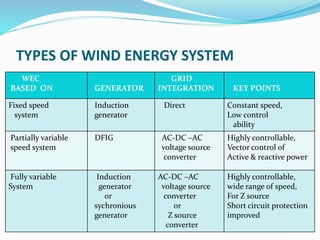
TYPES OF WIND ENERGY SYSTEM
WEC
BASED ON GENERATOR
GRID
INTEGRATION KEY POINTS
Fixed speed
system
Induction
generator
Direct Constant speed,
Low control
ability
Partially variable
speed system
DFIG AC-DC –AC
voltage source
converter
Highly controllable,
Vector control of
Active & reactive power
Fully variable
System
Induction
generator
or
sychronious
generator
AC-DC –AC
voltage source
converter
or
Z source
converter
Highly controllable,
wide range of speed,
For Z source
Short circuit protection
improved
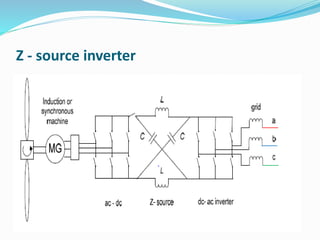
Z - source inverter
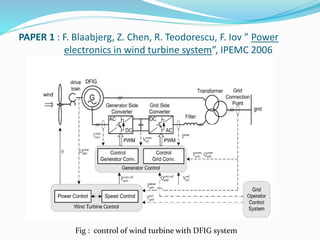
PAPER 1 : F. Blaabjerg, Z. Chen, R. Teodorescu, F. Iov ” Power
electronics in wind turbine system”, IPEMC 2006
Fig : control of wind turbine with DFIG system
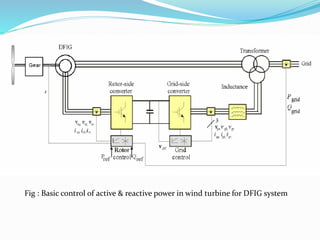
Fig : Basic control of active & reactive power in wind turbine for DFIG system
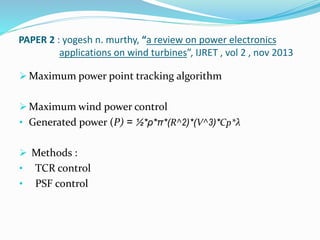
PAPER 2 : yogesh n. murthy, “a review on power electronics
applications on wind turbines”, IJRET , vol 2 , nov 2013
 Maximum power point tracking algorithm
 Maximum wind power control
• Generated power (P) = ½*ρ*π*(R^2)*(V^3)*Cp*λ
 Methods :
• TCR control
• PSF control
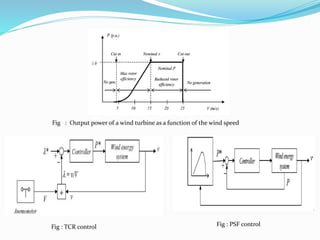
Fig : Output power of a wind turbine as a function of the wind speed
Fig : TCR control Fig : PSF control
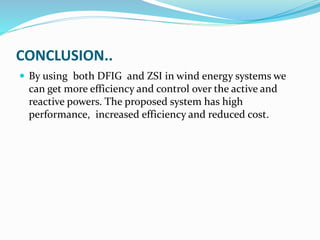
CONCLUSION..
 By using both DFIG and ZSI in wind energy systems we
can get more efficiency and control over the active and
reactive powers. The proposed system has high
performance, increased efficiency and reduced cost.
REFERENCES
 F. Blaabjerg, Z. Chen, R. Teodorescu, F. Iov ” Power
electronics in wind turbine system”, IPEMC 2006
 yogesh n. murthy, “a review on power electronics
applications on wind turbines”, IJRET , vol 2 , nov 2013
 Veda Prakash Galigekere and Marian K. Kazimierczuk “role
of power electronics for renewable energy system”, Wright
State University
 Frede Blaabjerg, Florin lov, Remus Teodorescu, Zhe Chen
“Power Electronics in Renewable Energy Systems”, EPE-
PEMC 2006
Reneable energy
Reneable energy

Reneable energy

  • 1.
  • 2.
    CONTENTS…  Introduction  Windenergy conversion system  Types of wind energy systems  Paper 1  Paper 2  References  Conclusion
  • 3.
    INTRODUCTION  To improvethe utilization of wind energy effectively by using power electronic converters.  Keypoints for wind energy systems are 1. Available wind energy 2. Type of wind turbine employed 3. Type of electric generator and power 4. Electronic circuitry employed 5. Interfacing with the grid
  • 4.
    WIND ENERGY CONVERSIONSYSTEM Electrical Generator Wind turbine Power electronic interface Gird variable speed voltage , frequency, operation for optimal active and reactive power power excitation control
  • 5.
    TYPES OF WINDENERGY SYSTEM WEC BASED ON GENERATOR GRID INTEGRATION KEY POINTS Fixed speed system Induction generator Direct Constant speed, Low control ability Partially variable speed system DFIG AC-DC –AC voltage source converter Highly controllable, Vector control of Active & reactive power Fully variable System Induction generator or sychronious generator AC-DC –AC voltage source converter or Z source converter Highly controllable, wide range of speed, For Z source Short circuit protection improved
  • 6.
    Z - sourceinverter
  • 7.
    PAPER 1 :F. Blaabjerg, Z. Chen, R. Teodorescu, F. Iov ” Power electronics in wind turbine system”, IPEMC 2006 Fig : control of wind turbine with DFIG system
  • 8.
    Fig : Basiccontrol of active & reactive power in wind turbine for DFIG system
  • 9.
    PAPER 2 :yogesh n. murthy, “a review on power electronics applications on wind turbines”, IJRET , vol 2 , nov 2013  Maximum power point tracking algorithm  Maximum wind power control • Generated power (P) = ½*ρ*π*(R^2)*(V^3)*Cp*λ  Methods : • TCR control • PSF control
  • 10.
    Fig : Outputpower of a wind turbine as a function of the wind speed Fig : TCR control Fig : PSF control
  • 11.
    CONCLUSION..  By usingboth DFIG and ZSI in wind energy systems we can get more efficiency and control over the active and reactive powers. The proposed system has high performance, increased efficiency and reduced cost.
  • 12.
    REFERENCES  F. Blaabjerg,Z. Chen, R. Teodorescu, F. Iov ” Power electronics in wind turbine system”, IPEMC 2006  yogesh n. murthy, “a review on power electronics applications on wind turbines”, IJRET , vol 2 , nov 2013  Veda Prakash Galigekere and Marian K. Kazimierczuk “role of power electronics for renewable energy system”, Wright State University  Frede Blaabjerg, Florin lov, Remus Teodorescu, Zhe Chen “Power Electronics in Renewable Energy Systems”, EPE- PEMC 2006