 Wind energy is not a constant source of energy. 
 It varies continuously and gives energy in 
sudden bursts. 
 About 50% of the entire energy is given out in 
just 15% of the operating time.
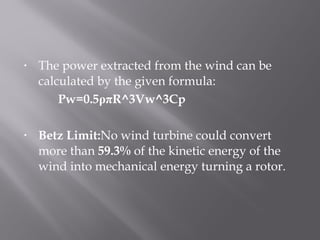
• The power extracted from the wind can be 
calculated by the given formula: 
Pw=0.5ρπR^3Vw^3Cp 
• Betz Limit:No wind turbine could convert 
more than 59.3% of the kinetic energy of the 
wind into mechanical energy turning a rotor.
 A wind turbine is a rotating machine which 
converts the kinetic energy in wind into 
mechanical energy. If the mechanical energy is 
then converted to electricity, the machine is 
called a wind turbine. 
 Classified into two types based on the axis of 
rotation.
 These have main rotor shaft and electrical 
generator. 
 Gearbox, which turns the slow rotation of the 
blades into a quicker rotation. 
 Turbine blades are made stiff to prevent the 
blades from being pushed into the tower by 
high winds.
• Variable blade pitch 
• Tall tower base 
• High efficiency
 Tall towers 
 Difficult to install 
 Massive tower construction is required 
 Yaw control mechanism.
 Main rotor shaft arranged vertically. 
 VAWTs can utilize winds from varying 
directions. 
 It is more accessible for maintenance.
 Massive tower structure is less frequently used. 
 VAWTs have lower wind startup speeds. 
 Easier to maintain the moving parts 
 Yaw control mechanism not required .
 VAWTs produce energy at only 50% of the 
efficiency of HAWTs. 
 Rotors located close to the ground.
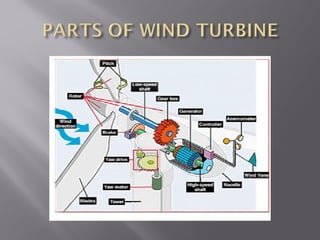
• Anemometer: Measures the wind speed and 
transmits wind speed data to the controller 
• Blades: Most turbines have either two or three 
blades. Wind blowing over the blades causes 
the blades to lift and rotate. 
• Brake: A disc brake which can be applied 
mechanically, electrically, or hydraulically to 
stop the rotor in emergencies.
 Controller: It starts the machine at wind speeds 
of 3m/s and shuts of the machine at 30m/s. 
 Rotor: The blades and the hub together are 
called the rotor. 
 Tower: Towers are made from tubular steel 
and taller towers enable turbines to capture 
more energy.
 Wind vane: Measures wind direction and 
communicates with the yaw drive to orient the 
turbine properly with respect to wind. 
 Gear box: Gears connect the low-speed shaft to 
the high-speed shaft and increase the rotational 
speed.
• Wind turbines typically have two degrees of 
freedom to optimize power generation: 
1.The ability to change compass orientation by 
turning. 
2. The pitch of the blades which can be changed to 
keep a constant rotation rate under varying 
wind speeds.
• Below rated wind speed operation 
• Around rated wind speed operation 
• Above rated wind speed operation
• Pitch control 
- blade pitch and blade angle of attack is decreased 
with wind speed greater than rated speed. 
- Wind speed and power output and are continuous 
monitored by sensors 
- Need sophisticated control mechanism 
• Stall control 
- blades are designed in such a that with increase in 
wind speed, the angle of attack increases. 
- Pressure variation at the top and bottom surface 
changes causing flow separation and vortex shedding 
- Need very sophisticated blade aerodynamic design
Voltage Problems on Wind Farms 
1. Transient voltage events created on the power grid 
that affects the performance of the wind farm. 
a) Wind turbine generators tend to be very sensitive to voltage 
transients. 
b) All turbines are susceptible to tripping due to temporary loss 
or reduction of terminal voltage. 
c) Smaller voltage transients, such as capacitor switching, can 
also adversely affect wind turbines. 
10/20/14 18
10/20/14 20
2. Transient voltage events caused by the wind farm 
that effect the performance of the power grid. 
a) Problem of voltage dips. 
b) The problem is typically associated with the start-up of 
individual turbines. 
c) Depends on the size of the turbine and the strength of the 
surrounding power system, as well as the make and model of 
the turbine. 
10/20/14 21
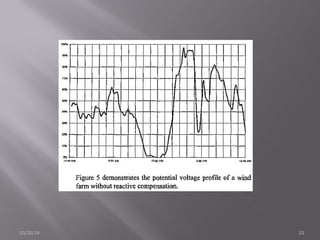
3. Local steady state voltage regulation problems 
caused by the wind farm. 
a) Voltage variation is due to the ever-varying nature of wind 
resources themselves. 
b) Problems range from reduced life span of machinery to basic 
customer complaints. 
10/20/14 22
10/20/14 23
1. Switched Shunt Capacitors 
a) Due to their low cost, Mechanically Switched Capacitors are 
often used. 
b) Since there is a limit on the size of acceptable capacitor 
bank, several banks are used. 
c) The set of switched capacitor banks is controlled by relays 
that monitor the voltage on or reactive power drawn from 
the wind farm collector bus. 
10/20/14 24
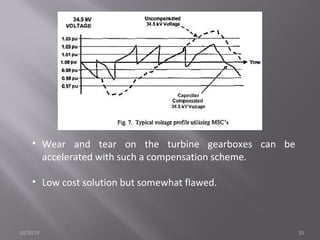
• Wear and tear on the turbine gearboxes can be 
accelerated with such a compensation scheme. 
• Low cost solution but somewhat flawed. 
10/20/14 25
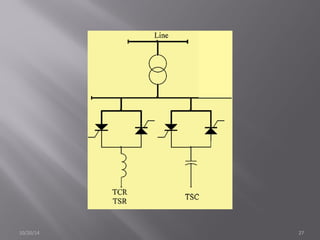
2. Static VAR Compensator 
a) Utilize thyristor controlled components, typically thyristor 
controlled reactors (TCRs) and thyristor switched capacitors 
(TSCs). 
b) The SVC will adjust its reactive output to regulate 
the system voltage. 
c) SVCs are limited by their ratings and must be sized 
appropriately if they are to address transient events. 
10/20/14 26
10/20/14 27
STATCOM 
a)Static Synchronous Compensator is a regulating device used 
on alternating current electricity transmission networks. 
b)Can act as either a source or sink of reactive AC power to an 
electricity network. 
c)Compared to SVCs, STATCOM devices tend to have faster 
response times and better performance at reduced voltages 
10/20/14 28
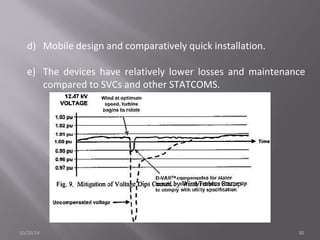
4. D-VAR (Dynamic Volt Amp Reactive) Devices 
a) The D-VAR device is a type of STATCOM 
b) One important advantage of the D-VAR is that the device 
can mitigate the sudden voltage change that results from 
the switching of the capacitors it controls. 
c) The greatest advantage of the D-VAR device is the ability of 
the equipment to operate in overload conditions. For 
example, an 8 MVA D-VAR has a steady state rating of +/- 8 
MVAR, but an overload rating of +/- 18.4 MVAR. 
10/20/14 29
d) Mobile design and comparatively quick installation. 
e) The devices have relatively lower losses and maintenance 
compared to SVCs and other STATCOMS. 
10/20/14 30

Wind as renewable source of energy

  • 2.
     Wind energyis not a constant source of energy.  It varies continuously and gives energy in sudden bursts.  About 50% of the entire energy is given out in just 15% of the operating time.
  • 3.
    • The powerextracted from the wind can be calculated by the given formula: Pw=0.5ρπR^3Vw^3Cp • Betz Limit:No wind turbine could convert more than 59.3% of the kinetic energy of the wind into mechanical energy turning a rotor.
  • 4.
     A windturbine is a rotating machine which converts the kinetic energy in wind into mechanical energy. If the mechanical energy is then converted to electricity, the machine is called a wind turbine.  Classified into two types based on the axis of rotation.
  • 5.
     These havemain rotor shaft and electrical generator.  Gearbox, which turns the slow rotation of the blades into a quicker rotation.  Turbine blades are made stiff to prevent the blades from being pushed into the tower by high winds.
  • 6.
    • Variable bladepitch • Tall tower base • High efficiency
  • 7.
     Tall towers  Difficult to install  Massive tower construction is required  Yaw control mechanism.
  • 8.
     Main rotorshaft arranged vertically.  VAWTs can utilize winds from varying directions.  It is more accessible for maintenance.
  • 9.
     Massive towerstructure is less frequently used.  VAWTs have lower wind startup speeds.  Easier to maintain the moving parts  Yaw control mechanism not required .
  • 10.
     VAWTs produceenergy at only 50% of the efficiency of HAWTs.  Rotors located close to the ground.
  • 12.
    • Anemometer: Measuresthe wind speed and transmits wind speed data to the controller • Blades: Most turbines have either two or three blades. Wind blowing over the blades causes the blades to lift and rotate. • Brake: A disc brake which can be applied mechanically, electrically, or hydraulically to stop the rotor in emergencies.
  • 13.
     Controller: Itstarts the machine at wind speeds of 3m/s and shuts of the machine at 30m/s.  Rotor: The blades and the hub together are called the rotor.  Tower: Towers are made from tubular steel and taller towers enable turbines to capture more energy.
  • 14.
     Wind vane:Measures wind direction and communicates with the yaw drive to orient the turbine properly with respect to wind.  Gear box: Gears connect the low-speed shaft to the high-speed shaft and increase the rotational speed.
  • 15.
    • Wind turbinestypically have two degrees of freedom to optimize power generation: 1.The ability to change compass orientation by turning. 2. The pitch of the blades which can be changed to keep a constant rotation rate under varying wind speeds.
  • 16.
    • Below ratedwind speed operation • Around rated wind speed operation • Above rated wind speed operation
  • 17.
    • Pitch control - blade pitch and blade angle of attack is decreased with wind speed greater than rated speed. - Wind speed and power output and are continuous monitored by sensors - Need sophisticated control mechanism • Stall control - blades are designed in such a that with increase in wind speed, the angle of attack increases. - Pressure variation at the top and bottom surface changes causing flow separation and vortex shedding - Need very sophisticated blade aerodynamic design
  • 18.
    Voltage Problems onWind Farms 1. Transient voltage events created on the power grid that affects the performance of the wind farm. a) Wind turbine generators tend to be very sensitive to voltage transients. b) All turbines are susceptible to tripping due to temporary loss or reduction of terminal voltage. c) Smaller voltage transients, such as capacitor switching, can also adversely affect wind turbines. 10/20/14 18
  • 20.
  • 21.
    2. Transient voltageevents caused by the wind farm that effect the performance of the power grid. a) Problem of voltage dips. b) The problem is typically associated with the start-up of individual turbines. c) Depends on the size of the turbine and the strength of the surrounding power system, as well as the make and model of the turbine. 10/20/14 21
  • 22.
    3. Local steadystate voltage regulation problems caused by the wind farm. a) Voltage variation is due to the ever-varying nature of wind resources themselves. b) Problems range from reduced life span of machinery to basic customer complaints. 10/20/14 22
  • 23.
  • 24.
    1. Switched ShuntCapacitors a) Due to their low cost, Mechanically Switched Capacitors are often used. b) Since there is a limit on the size of acceptable capacitor bank, several banks are used. c) The set of switched capacitor banks is controlled by relays that monitor the voltage on or reactive power drawn from the wind farm collector bus. 10/20/14 24
  • 25.
    • Wear andtear on the turbine gearboxes can be accelerated with such a compensation scheme. • Low cost solution but somewhat flawed. 10/20/14 25
  • 26.
    2. Static VARCompensator a) Utilize thyristor controlled components, typically thyristor controlled reactors (TCRs) and thyristor switched capacitors (TSCs). b) The SVC will adjust its reactive output to regulate the system voltage. c) SVCs are limited by their ratings and must be sized appropriately if they are to address transient events. 10/20/14 26
  • 27.
  • 28.
    STATCOM a)Static SynchronousCompensator is a regulating device used on alternating current electricity transmission networks. b)Can act as either a source or sink of reactive AC power to an electricity network. c)Compared to SVCs, STATCOM devices tend to have faster response times and better performance at reduced voltages 10/20/14 28
  • 29.
    4. D-VAR (DynamicVolt Amp Reactive) Devices a) The D-VAR device is a type of STATCOM b) One important advantage of the D-VAR is that the device can mitigate the sudden voltage change that results from the switching of the capacitors it controls. c) The greatest advantage of the D-VAR device is the ability of the equipment to operate in overload conditions. For example, an 8 MVA D-VAR has a steady state rating of +/- 8 MVAR, but an overload rating of +/- 18.4 MVAR. 10/20/14 29
  • 30.
    d) Mobile designand comparatively quick installation. e) The devices have relatively lower losses and maintenance compared to SVCs and other STATCOMS. 10/20/14 30