RENAL REPLACEMENT 
THERAPY 
Hamad Emad H. Dhuhayr
CONTENTS 
• SOEPEL 
• Dialysis 
• Renal transplantation 
• Reffrences
SOEPEL 
• S- O 65years old Saudi male. he complained of pain in her upper abdominal 
from 4 day with nausea, loos appetite and bone pain. 
• O- taking history and physical examination 
• E- peptic ulcer, eosophegitis, AKD 
• P- cbc, urinalysis and creatinine level in plasma 
• E- hemofiltration 
• L- renal replacement therapy
Renal replacement therapy
Types of dialysis 
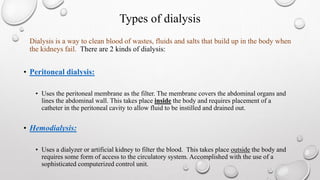
Dialysis is a way to clean blood of wastes, fluids and salts that build up in the body when 
the kidneys fail. There are 2 kinds of dialysis: 
• Peritoneal dialysis: 
• Uses the peritoneal membrane as the filter. The membrane covers the abdominal organs and 
lines the abdominal wall. This takes place inside the body and requires placement of a 
catheter in the peritoneal cavity to allow fluid to be instilled and drained out. 
• Hemodialysis: 
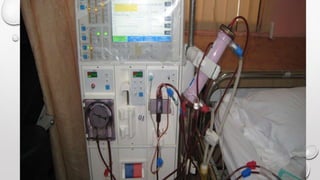
• Uses a dialyzer or artificial kidney to filter the blood. This takes place outside the body and 
requires some form of access to the circulatory system. Accomplished with the use of a 
sophisticated computerized control unit.
• Kidney transplantation: 
• To be placed on a transplant list the patient must be on some form of 
renal replacement therapy, whether it is peritoneal dialysis or 
hemodialysis 
• Once a patient is accepted for transplant, the date of start of dialysis is 
the date they are active on the list 
• If the patient has a living donor who has been accepted as healthy 
donor, it is possible to have a pre-emptive transplant, bypassing 
dialysis. 
• No treatment or palliative care
Peritoneal dialysis 
• Uses the peritoneal membrane as the filter. The membrane covers the abdominal organs and 
lines the abdominal wall. The membrane size is 1 – 2 m2 and approximates the body surface 
area. Uses the following principles: 
• Diffusion: movement of solutes across the peritoneal membrane from an area of higher 
concentration to an area of lower concentration 
• Osmosis: movement of water across the peritoneal membrane from an area of lower solute 
concentration to an area of higher solute concentration. 
• Ultrafiltration: water removal related to an osmotic pressure gradient with the use of various 
concentrations of dialysate fluid.
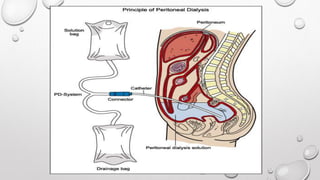
• Fluid called DIALYSATE is put into the abdomen 
through a PD catheter. This fluid is left to dwell in the 
peritoneum for several hours. 
• While in the abdomen, the fluid collects wastes that 
have been filtered through the peritoneal membrane. 
These wastes pass from the body when the fluid is 
drained.
Peritoneal dialysis 
• Performed daily, by the patient at home, more physiological 
• Allows for independence, patients can work or travel 
• Fewer fluid and dietary restrictions 
• Often fewer medications or lower doses required 
• Residual renal function preserved 
• Ministry of health funded home therapy
Peritoneal dialysis 
Patients 
• Must have a clean room to perform exchanges and a large 
enough area to store all supplies 
• No pets allowed in the room 
• Must learn to monitor their own weight and blood pressures 
• Must be able to follow important instructions to prevent 
infection in the peritoneum 
• Must also be able to determine the choice of dialysate fluid 
and when to use it
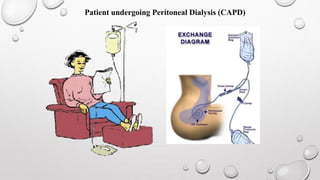
Patient undergoing Peritoneal Dialysis (CAPD)
Types of peritoneal dialysis 
CAPD ~ continuous ambulatory peritoneal dialysis 
• The blood is cleaned constantly by dialysate fluid while it is in the abdomen. 
• Capd does not require the use of a machine, the exchanges are completed manually. 
Apd ~ automated peritoneal dialysis 
• Requires the use of a machine called a cycler 
• The CYCLER is used during the night and is set to deliver the fluid in and out of the 
abdomen.
• Indications 
1. bleeding tendency 
2. Hypotension 
3. Diabetic nephropathy 
• Complications 
1. Peritonitis 
2. Injury of viscus 
3. Abdominal hernia 
4. Leakage of dialysate into pleural cavity or scrotom
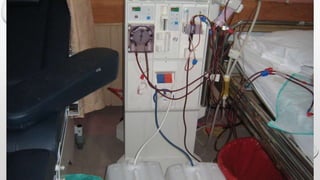
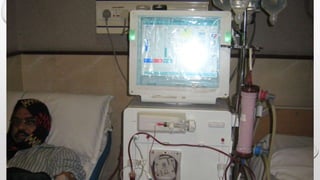
Hemodialysis 
• Blood is circulated through an artificial kidney which has two compartments: 
blood & dialysate, separated by a thin semi-permeable membrane 
• Waste and excess water pass from the blood side to the dialysate side and is 
discarded in the drain the cleaned blood is returned to the patient. 
• Usually done 3x /week ~ 4hrs m-w-f or t-th-sat
• Hemodialysis treatments every other day are not as physiological as 
peritoneal dialysis 
• Requires a trip to the hospital up to 3 times weekly 

• Patients can travel to other units but must be pre-arranged and space is 
not always available 
• Patients are more restricted in dietary and fluid intake between treatments 
• Medication requirements different than for those on peritoneal dialysis 
e.G. Require more antihypertensive meds, higher doses of erythropoietin
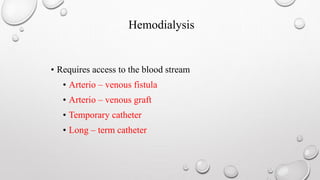
Hemodialysis 
• Requires access to the blood stream 
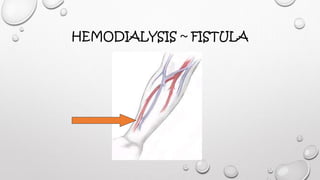
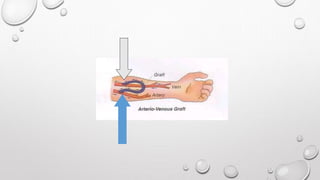
• Arterio – venous fistula 
• Arterio – venous graft 
• Temporary catheter 
• Long – term catheter
HEMODIALYSIS ~ FISTULA
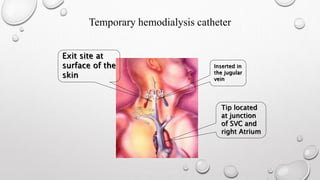
Temporary hemodialysis catheter 
Exit site at 
surface of the 
skin 
Inserted in 
the jugular 
vein 
Tip located 
at junction 
of SVC and 
right Atrium
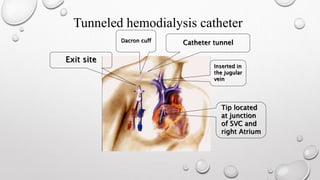
Tunneled hemodialysis catheter 
Exit site 
Catheter tunnel 
Inserted in 
the jugular 
vein 
Tip located 
at junction 
of SVC and 
right Atrium 
Dacron cuff
INDICATION 
• ARF 
• CRF 
• HYPERKALEMIA 
• HYPERCALCEMIA 
• DRUG TOXICITY 
• SEVER TEMPERATURE DISORDER
COMPLICATION 
1. A-V shunt complication: 
· Throbmosis. · Infection. 
· Aneursysm. · HF. 
2. bleeding. 
3. Hepatitis B, C. 
4. Loss of folic acid, vit B complex & hormones . 
5. Dialysis disequilibrium syndrome. 
7. Al dementia due to chronic dialysis using hard water to dissolve dialysate. 
8. Hypotension. 
9. Air embolism. 
10. Depression.
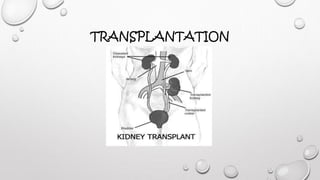
TRANSPLANTATION
• Technique: 
Source: 
Living related donor with HLA & ABO matching. 
. Unrelated donor with hla.With paratial matching. 
. Cadaveric kidney. 
• Operative 
. Nephrectomy 
. The kidney is perfused with cold solution till transplantation(cold ischemic time) 
. The kidney is placed in iliac fossa & anastmosed to iliac vessels & ureter is 
placed in 
Bladder. 
• Indications 
all patients of ESRD without contraindications for transplantation & with 
available donor.
Common complications of transplantation 
 Early complications 
 Surgical complications 
 Delayed or slow graft function 
 Lymphocele 
 Allograft rejection 
 Hyper acute rejection (antibody-mediated rejection) : within min. To hr of 
perfusing of allograft 
- Due to preformed antibodies to the ABO & HLA antigens. 
 Acute rejection – within 3 months of transplant 
 Chronic rejection
Infectious complications 
 Cytomegalovirus 
 BK virus 
 Others 
Hypertension- diet therapy, ACEI, CCB 
Hematologic complications : anemia, leukopenia, thrombocytopenia
Metabolic complications- hypomagnesaemia, hypophosphatemia, hypercalcemia, 
hyperkalemia, RTA, dyslipidemia 
Malignancy- post transplant lymphoproliferative disorder 
Recurrence of primary disease in the allograft- FSGS, MPGN, atypical HUS 
Treatment :csa, cyclophosphamide. 
Chronic allograft dysfunction
Surgical complications 
 Lymphocele 
 Perirenal serous fluid collection 
 Hematoma 
 Graft thrombosis: 
 Caused by thrombosis of donor renal artery or vein. 
 Usually happens in first week. 
 Diagnosed by ultrasound with doppler studies. 
 Almost always requires explant of kidney.
Immunosuppressive medications 
• Induction: 
• Corticosteroids 
• Anti-thymocyte globulin (ATG) 
• Okt3 
• IL-2 receptor antagonists 
• Maintenance: 
• Corticosteroids 
• Calcineurin inhibitors (cnis) 
• Mtor inhibitors 
• Antimetabolites
Renal replacement therapy

Renal replacement therapy

  • 1.
    RENAL REPLACEMENT THERAPY Hamad Emad H. Dhuhayr
  • 2.
    CONTENTS • SOEPEL • Dialysis • Renal transplantation • Reffrences
  • 3.
    SOEPEL • S-O 65years old Saudi male. he complained of pain in her upper abdominal from 4 day with nausea, loos appetite and bone pain. • O- taking history and physical examination • E- peptic ulcer, eosophegitis, AKD • P- cbc, urinalysis and creatinine level in plasma • E- hemofiltration • L- renal replacement therapy
  • 4.
  • 5.
    Types of dialysis Dialysis is a way to clean blood of wastes, fluids and salts that build up in the body when the kidneys fail. There are 2 kinds of dialysis: • Peritoneal dialysis: • Uses the peritoneal membrane as the filter. The membrane covers the abdominal organs and lines the abdominal wall. This takes place inside the body and requires placement of a catheter in the peritoneal cavity to allow fluid to be instilled and drained out. • Hemodialysis: • Uses a dialyzer or artificial kidney to filter the blood. This takes place outside the body and requires some form of access to the circulatory system. Accomplished with the use of a sophisticated computerized control unit.
  • 6.
    • Kidney transplantation: • To be placed on a transplant list the patient must be on some form of renal replacement therapy, whether it is peritoneal dialysis or hemodialysis • Once a patient is accepted for transplant, the date of start of dialysis is the date they are active on the list • If the patient has a living donor who has been accepted as healthy donor, it is possible to have a pre-emptive transplant, bypassing dialysis. • No treatment or palliative care
  • 7.
    Peritoneal dialysis •Uses the peritoneal membrane as the filter. The membrane covers the abdominal organs and lines the abdominal wall. The membrane size is 1 – 2 m2 and approximates the body surface area. Uses the following principles: • Diffusion: movement of solutes across the peritoneal membrane from an area of higher concentration to an area of lower concentration • Osmosis: movement of water across the peritoneal membrane from an area of lower solute concentration to an area of higher solute concentration. • Ultrafiltration: water removal related to an osmotic pressure gradient with the use of various concentrations of dialysate fluid.
  • 8.
    • Fluid calledDIALYSATE is put into the abdomen through a PD catheter. This fluid is left to dwell in the peritoneum for several hours. • While in the abdomen, the fluid collects wastes that have been filtered through the peritoneal membrane. These wastes pass from the body when the fluid is drained.
  • 9.
    Peritoneal dialysis •Performed daily, by the patient at home, more physiological • Allows for independence, patients can work or travel • Fewer fluid and dietary restrictions • Often fewer medications or lower doses required • Residual renal function preserved • Ministry of health funded home therapy
  • 10.
    Peritoneal dialysis Patients • Must have a clean room to perform exchanges and a large enough area to store all supplies • No pets allowed in the room • Must learn to monitor their own weight and blood pressures • Must be able to follow important instructions to prevent infection in the peritoneum • Must also be able to determine the choice of dialysate fluid and when to use it
  • 12.
  • 13.
    Types of peritonealdialysis CAPD ~ continuous ambulatory peritoneal dialysis • The blood is cleaned constantly by dialysate fluid while it is in the abdomen. • Capd does not require the use of a machine, the exchanges are completed manually. Apd ~ automated peritoneal dialysis • Requires the use of a machine called a cycler • The CYCLER is used during the night and is set to deliver the fluid in and out of the abdomen.
  • 14.
    • Indications 1.bleeding tendency 2. Hypotension 3. Diabetic nephropathy • Complications 1. Peritonitis 2. Injury of viscus 3. Abdominal hernia 4. Leakage of dialysate into pleural cavity or scrotom
  • 15.
    Hemodialysis • Bloodis circulated through an artificial kidney which has two compartments: blood & dialysate, separated by a thin semi-permeable membrane • Waste and excess water pass from the blood side to the dialysate side and is discarded in the drain the cleaned blood is returned to the patient. • Usually done 3x /week ~ 4hrs m-w-f or t-th-sat
  • 16.
    • Hemodialysis treatmentsevery other day are not as physiological as peritoneal dialysis • Requires a trip to the hospital up to 3 times weekly • Patients can travel to other units but must be pre-arranged and space is not always available • Patients are more restricted in dietary and fluid intake between treatments • Medication requirements different than for those on peritoneal dialysis e.G. Require more antihypertensive meds, higher doses of erythropoietin
  • 20.
    Hemodialysis • Requiresaccess to the blood stream • Arterio – venous fistula • Arterio – venous graft • Temporary catheter • Long – term catheter
  • 21.
  • 23.
    Temporary hemodialysis catheter Exit site at surface of the skin Inserted in the jugular vein Tip located at junction of SVC and right Atrium
  • 24.
    Tunneled hemodialysis catheter Exit site Catheter tunnel Inserted in the jugular vein Tip located at junction of SVC and right Atrium Dacron cuff
  • 25.
    INDICATION • ARF • CRF • HYPERKALEMIA • HYPERCALCEMIA • DRUG TOXICITY • SEVER TEMPERATURE DISORDER
  • 26.
    COMPLICATION 1. A-Vshunt complication: · Throbmosis. · Infection. · Aneursysm. · HF. 2. bleeding. 3. Hepatitis B, C. 4. Loss of folic acid, vit B complex & hormones . 5. Dialysis disequilibrium syndrome. 7. Al dementia due to chronic dialysis using hard water to dissolve dialysate. 8. Hypotension. 9. Air embolism. 10. Depression.
  • 27.
  • 28.
    • Technique: Source: Living related donor with HLA & ABO matching. . Unrelated donor with hla.With paratial matching. . Cadaveric kidney. • Operative . Nephrectomy . The kidney is perfused with cold solution till transplantation(cold ischemic time) . The kidney is placed in iliac fossa & anastmosed to iliac vessels & ureter is placed in Bladder. • Indications all patients of ESRD without contraindications for transplantation & with available donor.
  • 29.
    Common complications oftransplantation  Early complications  Surgical complications  Delayed or slow graft function  Lymphocele  Allograft rejection  Hyper acute rejection (antibody-mediated rejection) : within min. To hr of perfusing of allograft - Due to preformed antibodies to the ABO & HLA antigens.  Acute rejection – within 3 months of transplant  Chronic rejection
  • 30.
    Infectious complications Cytomegalovirus  BK virus  Others Hypertension- diet therapy, ACEI, CCB Hematologic complications : anemia, leukopenia, thrombocytopenia
  • 31.
    Metabolic complications- hypomagnesaemia,hypophosphatemia, hypercalcemia, hyperkalemia, RTA, dyslipidemia Malignancy- post transplant lymphoproliferative disorder Recurrence of primary disease in the allograft- FSGS, MPGN, atypical HUS Treatment :csa, cyclophosphamide. Chronic allograft dysfunction
  • 32.
    Surgical complications Lymphocele  Perirenal serous fluid collection  Hematoma  Graft thrombosis:  Caused by thrombosis of donor renal artery or vein.  Usually happens in first week.  Diagnosed by ultrasound with doppler studies.  Almost always requires explant of kidney.
  • 33.
    Immunosuppressive medications •Induction: • Corticosteroids • Anti-thymocyte globulin (ATG) • Okt3 • IL-2 receptor antagonists • Maintenance: • Corticosteroids • Calcineurin inhibitors (cnis) • Mtor inhibitors • Antimetabolites