Parathyroid gland
HAMAD EMAD HAMAD DHUHAYR
ID: 10110067
Contents
Anatomy
Physiology
Hyperparathyroidism
Hypoparathyroidism
References
Anatomy
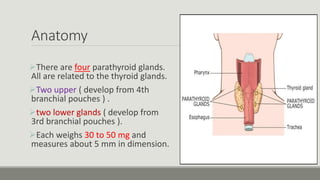
There are four parathyroid glands.
All are related to the thyroid glands.
Two upper ( develop from 4th
branchial pouches ) .
two lower glands ( develop from
3rd branchial pouches ).
Each weighs 30 to 50 mg and
measures about 5 mm in dimension.
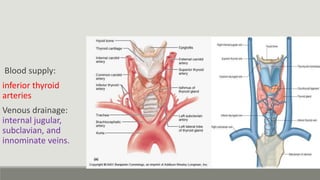
Blood supply:
inferior thyroid
arteries
Venous drainage:
internal jugular,
subclavian, and
innominate veins.
physiology
Factors that affect calcium in the body:
1- PTH (parathyroid hormone)
• PTH is synthesized and secreted by parathyroid glands. It is very sensitive to
serum Ca levels and it aims at keeping serum Ca levels up in the blood.
• Hypocalcemia stimulates PTH secretion.
• Hypercalemia inhibits PTH secretion.
• PTH increases calcium reabsorption in proximal convoluted tubule(PCT) and
increases phosphate clearance.
• It also mobilizes calcium from bones and indirectly increases GI absorption of
calcium by stimulating Vit D production.
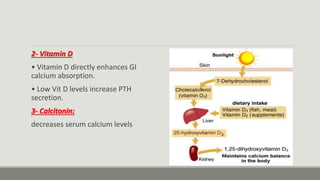
2- Vitamin D
• Vitamin D directly enhances GI
calcium absorption.
• Low Vit D levels increase PTH
secretion.
3- Calcitonin:
decreases serum calcium levels
Role of CA in body
1-To provide the electrical energy for our nervous
system.
2-To provide the electrical energy for our muscular
system.
3-To provide strength to our skeletal system
Thus, calcium is the most closely regulated element in
our bodies! In fact, calcium is the ONLY element /
mineral that has its own regulatory system (the
parathyroid glands).
Primary hyperparathyroidism
• The relation between PTH and Ca is disturbed. Normally, PTH is
secreted or inhibited whenever the balance is disturbed. And it goes
back to normal once this balance is restored.
• High PTH
• Low Phosphorus
• Normal or elevated serum Ca
• Excess PTH secretion leads to increased GI absorption of Ca,
increased urinary excretion of Ca, and bone loss.
• Three distinct lesions that can cause PHP:
1- Carcinoma (1%)
2- Adenoma (84%): only one is enlarged.
3- Hyperplasia (15%): all are enlarged.
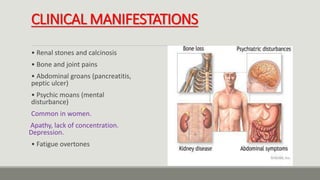
CLINICAL MANIFESTATIONS
• Renal stones and calcinosis
• Bone and joint pains
• Abdominal groans (pancreatitis,
peptic ulcer)
• Psychic moans (mental
disturbance)
Common in women.
Apathy, lack of concentration.
Depression.
• Fatigue overtones
INVESTIGATIONS
 High serum Calcium sometimes you may find it low, so you have to repeat it again.
 High PTH
 Low serum Phosphate
 High Chloride
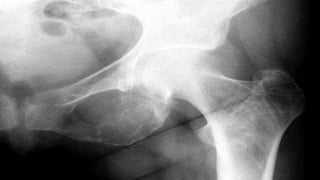
 x-ray the hand for signs of bone resorption.
• Hypercalcemia could be drug-induced e.g. diuretics and Ca supplements.
• Elevated PTH occurs only with PHP, familial hypercalcemic hypocalciurea, or
Vit D deficiency.
• A calcium:creatinine ratio less than 0.05 indicates FHH
• High PTH-rP indicates malignancy.
• Some tumors secrete PTH-rP as paraneoplastic syndrome. The most
common one is bronchial squamous cell carcinoma, others include, breast,
renal, and ovarian cancers.
• Primary bone cancers (multiple myeloma) cause hypercalcemia without
high PTH-rP. Other tumors (lymphoma) that secrete Vit D behave in the same
way.
• Primary bone cancers cause hypercalcemia without high PTH-rP.
Management
Patients can be managed medically (in case of hypercalcemia) or
surgically (in case of PHP):
• Hypercalcemia: In case of acute, severe hypercalemia, patients are
managed by large volume infusion. Loop diuretics are used
adjunctively other drugs may be added to decrease bone turnover
e.g. bisphosphate and calcitonin.
• Primary hyperparathyroidism: Currently, there is no definitive medical treatment.
• Surgical management: All symptomatic patients should be treated.
• Asymptomatic: do not operate unless there are symptoms. So, it is better to wait.
• For ESRD patients the most effective treatment is renal transplantation.
• Single-gland resection is preferred for adenoma.
• Subtotal resection ( three and half) is preferred for hyperplasia.
Post operative management
What is Bone hunger syndrome?
Before operation: high PTH, in addition, bones are resorbed.
After operation: the bones now are free from the high PTH.
Therefore, they will immediately take up calcium from serum which
may lead to severe hypocalcemia to the point that the patient may
have tetany.
To avoid this hungry bone syndrome, patients with advanced bone
diseases are sent to ICU after operations for 24 hours monitoring.
Secondary hyperparathyroidism
• The problem here is not in the glands.
• High PTH
• Low Ca levels
• E.g. rickets, malabsorption, Vit D, Renal failure.
• In these cases you should treat the cause.
Hypoparathyroidisim
Diagnosis and Causes
1 - Damage to the Parathyroid Glands from Surgery .
2 - Developmental Defects in the Parathyroid Glands.
3 - Autoimmune Hypoparathyroidism .
4 - Defects in the Parathyroid Hormone Molecule.
5 - Defective Regulation of Parathyroid Hormone Secretion.
Clinical pictures
Perioral paresthesia, cramps, tetany.
Chvostek's sign: tapering over facial nerve induce facial muscle
contractions.
Trousseau's sign: inflating blood pressure cuff to above systolic
pressure induce typical
main d'accoucheur or carpopedal spasm.
Prolonged QT intervalon ECG.
Treatment of Hypoparathyroidism
Calcium and Vitamin D Analogues
Parathyroid-Tissue Transplantation
or Parathyroid Hormone
summary
*Parathyroids are NOT related to the thyroid (except they
are neighbors in the neck)
*The thyroid gland controls much of your body's
metabolism, but the parathyroid glands control body
calcium. They have no relationship except they are
neighbors.
*All four parathyroid glands do the exact same thing.
*Parathyroid glands control the amount of calcium in your blood
and bones.
*You can easily live with one (or even 1/2) parathyroid gland.
*When parathyroid glands go bad, it is just one gland that goes bad
about 96-98% of the time--it just grows big (develops a benign
tumor) and makes too much hormone.
*There is only ONE way to treat parathyroid problems--Surgery.
References
Matary
Baily & love’s
Website
Research for surgical approach for parathyroid gland

Parathyroid

  • 1.
    Parathyroid gland HAMAD EMADHAMAD DHUHAYR ID: 10110067
  • 2.
  • 3.
    Anatomy There are fourparathyroid glands. All are related to the thyroid glands. Two upper ( develop from 4th branchial pouches ) . two lower glands ( develop from 3rd branchial pouches ). Each weighs 30 to 50 mg and measures about 5 mm in dimension.
  • 4.
    Blood supply: inferior thyroid arteries Venousdrainage: internal jugular, subclavian, and innominate veins.
  • 5.
    physiology Factors that affectcalcium in the body: 1- PTH (parathyroid hormone) • PTH is synthesized and secreted by parathyroid glands. It is very sensitive to serum Ca levels and it aims at keeping serum Ca levels up in the blood. • Hypocalcemia stimulates PTH secretion. • Hypercalemia inhibits PTH secretion. • PTH increases calcium reabsorption in proximal convoluted tubule(PCT) and increases phosphate clearance. • It also mobilizes calcium from bones and indirectly increases GI absorption of calcium by stimulating Vit D production.
  • 6.
    2- Vitamin D •Vitamin D directly enhances GI calcium absorption. • Low Vit D levels increase PTH secretion. 3- Calcitonin: decreases serum calcium levels
  • 7.
    Role of CAin body 1-To provide the electrical energy for our nervous system. 2-To provide the electrical energy for our muscular system. 3-To provide strength to our skeletal system Thus, calcium is the most closely regulated element in our bodies! In fact, calcium is the ONLY element / mineral that has its own regulatory system (the parathyroid glands).
  • 8.
    Primary hyperparathyroidism • Therelation between PTH and Ca is disturbed. Normally, PTH is secreted or inhibited whenever the balance is disturbed. And it goes back to normal once this balance is restored. • High PTH • Low Phosphorus • Normal or elevated serum Ca • Excess PTH secretion leads to increased GI absorption of Ca, increased urinary excretion of Ca, and bone loss.
  • 9.
    • Three distinctlesions that can cause PHP: 1- Carcinoma (1%) 2- Adenoma (84%): only one is enlarged. 3- Hyperplasia (15%): all are enlarged.
  • 10.
    CLINICAL MANIFESTATIONS • Renalstones and calcinosis • Bone and joint pains • Abdominal groans (pancreatitis, peptic ulcer) • Psychic moans (mental disturbance) Common in women. Apathy, lack of concentration. Depression. • Fatigue overtones
  • 11.
    INVESTIGATIONS  High serumCalcium sometimes you may find it low, so you have to repeat it again.  High PTH  Low serum Phosphate  High Chloride  x-ray the hand for signs of bone resorption.
  • 13.
    • Hypercalcemia couldbe drug-induced e.g. diuretics and Ca supplements. • Elevated PTH occurs only with PHP, familial hypercalcemic hypocalciurea, or Vit D deficiency. • A calcium:creatinine ratio less than 0.05 indicates FHH • High PTH-rP indicates malignancy. • Some tumors secrete PTH-rP as paraneoplastic syndrome. The most common one is bronchial squamous cell carcinoma, others include, breast, renal, and ovarian cancers. • Primary bone cancers (multiple myeloma) cause hypercalcemia without high PTH-rP. Other tumors (lymphoma) that secrete Vit D behave in the same way. • Primary bone cancers cause hypercalcemia without high PTH-rP.
  • 14.
    Management Patients can bemanaged medically (in case of hypercalcemia) or surgically (in case of PHP): • Hypercalcemia: In case of acute, severe hypercalemia, patients are managed by large volume infusion. Loop diuretics are used adjunctively other drugs may be added to decrease bone turnover e.g. bisphosphate and calcitonin.
  • 15.
    • Primary hyperparathyroidism:Currently, there is no definitive medical treatment. • Surgical management: All symptomatic patients should be treated. • Asymptomatic: do not operate unless there are symptoms. So, it is better to wait. • For ESRD patients the most effective treatment is renal transplantation. • Single-gland resection is preferred for adenoma. • Subtotal resection ( three and half) is preferred for hyperplasia.
  • 16.
    Post operative management Whatis Bone hunger syndrome? Before operation: high PTH, in addition, bones are resorbed. After operation: the bones now are free from the high PTH. Therefore, they will immediately take up calcium from serum which may lead to severe hypocalcemia to the point that the patient may have tetany. To avoid this hungry bone syndrome, patients with advanced bone diseases are sent to ICU after operations for 24 hours monitoring.
  • 17.
    Secondary hyperparathyroidism • Theproblem here is not in the glands. • High PTH • Low Ca levels • E.g. rickets, malabsorption, Vit D, Renal failure. • In these cases you should treat the cause.
  • 18.
    Hypoparathyroidisim Diagnosis and Causes 1- Damage to the Parathyroid Glands from Surgery . 2 - Developmental Defects in the Parathyroid Glands. 3 - Autoimmune Hypoparathyroidism . 4 - Defects in the Parathyroid Hormone Molecule. 5 - Defective Regulation of Parathyroid Hormone Secretion.
  • 19.
    Clinical pictures Perioral paresthesia,cramps, tetany. Chvostek's sign: tapering over facial nerve induce facial muscle contractions. Trousseau's sign: inflating blood pressure cuff to above systolic pressure induce typical main d'accoucheur or carpopedal spasm. Prolonged QT intervalon ECG.
  • 20.
    Treatment of Hypoparathyroidism Calciumand Vitamin D Analogues Parathyroid-Tissue Transplantation or Parathyroid Hormone
  • 21.
    summary *Parathyroids are NOTrelated to the thyroid (except they are neighbors in the neck) *The thyroid gland controls much of your body's metabolism, but the parathyroid glands control body calcium. They have no relationship except they are neighbors.
  • 22.
    *All four parathyroidglands do the exact same thing. *Parathyroid glands control the amount of calcium in your blood and bones. *You can easily live with one (or even 1/2) parathyroid gland. *When parathyroid glands go bad, it is just one gland that goes bad about 96-98% of the time--it just grows big (develops a benign tumor) and makes too much hormone. *There is only ONE way to treat parathyroid problems--Surgery.
  • 23.
    References Matary Baily & love’s Website Researchfor surgical approach for parathyroid gland