T A U H I D A H M E D B H U I Y A N , P H A R M D
P H A R M A C Y P R A C T I C E R E S I D E N C Y
( P G Y - 1 ) , R 2
Topic Review and Case Presentation
Focal Segmental
Glomerulosclerosis (FSGS)
King Faisal Specialist Hospital and Research Center (KFSHRC) is accredited by the Accreditation Council for
Pharmacy Education as a provider of continuing pharmacy education. (UAN# 0833-0000-14-064-L01-P, 0833-
0000-14-064-L01-T)
Objectives
 To provide a general overview of FSGS
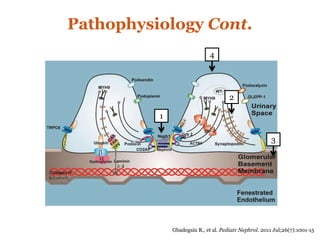
 To identify clinical presentations of FSGS
 Outline possible evidenced-based management strategies of
FSGS
 Analyze a patient case of FSGS
I do not have financial relationship and no actual or potential conflict of interest in relation to this activity
Background
 Disease “entity” defined by findings on the kidney biopsy
 Characterized by scarring or hardening of glomeruli
 Affect alternation of normal glomerular structure and function
 It is a major cause of idiopathic steroid-resistant nephrotic
syndrome in children and adults
 Unlike minimal change disease, FSGS often progress to
end-state renal disease (ESRD)
Epidemiology
 Frequency:
 Adults > children
 Prevalence in adults: ≥45 years old
 In US, >5400 patients are diagnosed with FSGS each year
and ~20K patients are currently living with ESRD due to
FSGS
 In children
 The 2nd leading cause of renal failure
 Accounts for 15%-20% of cases with nephrotic syndrome
 Most common cause of steroid-resistant nephrotic syndrome
FSGS Facts. Accessed: February 22, 2014. Available at:
http://nephcure.org/livingwithkidneydisease/understanding-fsgs/fsgs-facts/
In Kingdom of Saudi Arabia
 In Saudi registry (2000):
 1294 renal biopsies were obtain from six large referral hospital
 Glomerulonephritis (GN) accounted for ~73% of total biopsy
 FSGS was the most common form found (~21.3%)
 Nawaz et al. conducted a five-year, single center,
retrospective study
 Primary GN accounted for 55.1% of all renal biopsies
 Most common histological lesion was focal segmental
glomerulosclerosis (FSGS) (27.6%)
Huraib S., et al. Saudi J Kidney Dis Transpl. 2000;11(3):434-41
Nawaz Z., et al. Saudi J Kidney Dis Transpl. 2013; 24(6):1265-70
Definition
 Described as:
“Segmental increase of mesangial matrix with obliteration of the
capillaries, sclerosis, hyalinosis, foam cells, and segmental
scarring, and adhesion between the glomerular tuft and
Bowman’s capsule”
 Based on appearance of the kidney tissue on biopsy:
F S G S
Focal: some of the
glomeruli involved (as
opposed to diffuse)
Segmental: part of
the glomerulus
involved (as
opposed to global)
Glomerulus
Scarring/
hardening
KDIGO Clinical Practice Guideline for Glomerulonephritis 2012
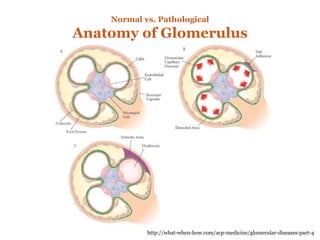
Normal vs. Pathological
Anatomy of Glomerulus
http://what-when-how.com/acp-medicine/glomerular-diseases-part-4
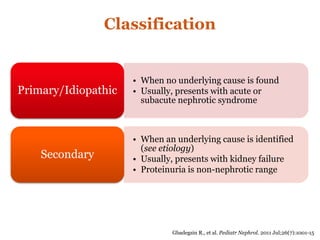
Classification
• When no underlying cause is found
• Usually, presents with acute or
subacute nephrotic syndrome
Primary/Idiopathic
• When an underlying cause is identified
(see etiology)
• Usually, presents with kidney failure
• Proteinuria is non-nephrotic range
Secondary
Gbadegsin R., et al. Pediatr Nephrol. 2011 Jul;26(7):1001-15
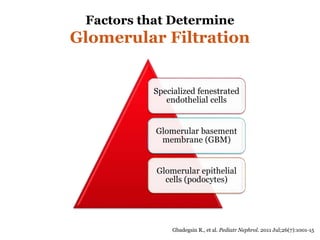
Factors that Determine
Glomerular Filtration
Specialized fenestrated
endothelial cells
Glomerular basement
membrane (GBM)
Glomerular epithelial
cells (podocytes)
Gbadegsin R., et al. Pediatr Nephrol. 2011 Jul;26(7):1001-15
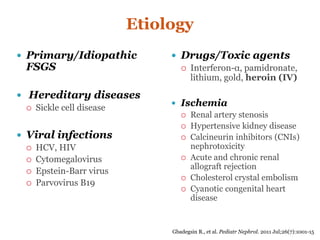
Etiology
 Primary/Idiopathic
FSGS
 Hereditary diseases
 Sickle cell disease
 Viral infections
 HCV, HIV
 Cytomegalovirus
 Epstein-Barr virus
 Parvovirus B19
 Drugs/Toxic agents
 Interferon-α, pamidronate,
lithium, gold, heroin (IV)
 Ischemia
 Renal artery stenosis
 Hypertensive kidney disease
 Calcineurin inhibitors (CNIs)
nephrotoxicity
 Acute and chronic renal
allograft rejection
 Cholesterol crystal embolism
 Cyanotic congenital heart
disease
Gbadegsin R., et al. Pediatr Nephrol. 2011 Jul;26(7):1001-15
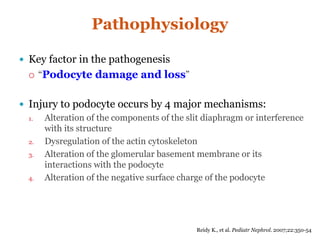
Pathophysiology
Reidy K., et al. Pediatr Nephrol. 2007;22:350-54
 Key factor in the pathogenesis
 “Podocyte damage and loss”
 Injury to podocyte occurs by 4 major mechanisms:
1. Alteration of the components of the slit diaphragm or interference
with its structure
2. Dysregulation of the actin cytoskeleton
3. Alteration of the glomerular basement membrane or its
interactions with the podocyte
4. Alteration of the negative surface charge of the podocyte
Pathophysiology Cont.
Gbadegsin R., et al. Pediatr Nephrol. 2011 Jul;26(7):1001-15
1
2
3
4
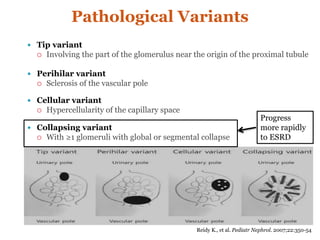
Pathological Variants
 Tip variant
 Involving the part of the glomerulus near the origin of the proximal tubule
 Perihilar variant
 Sclerosis of the vascular pole
 Cellular variant
 Hypercellularity of the capillary space
 Collapsing variant
 With ≥1 glomeruli with global or segmental collapse
Reidy K., et al. Pediatr Nephrol. 2007;22:350-54
Progress
more rapidly
to ESRD
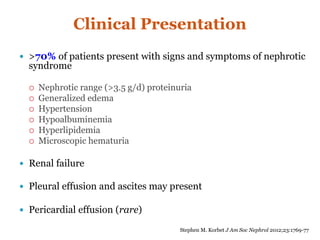
Clinical Presentation
 >70% of patients present with signs and symptoms of nephrotic
syndrome
 Nephrotic range (>3.5 g/d) proteinuria
 Generalized edema
 Hypertension
 Hypoalbuminemia
 Hyperlipidemia
 Microscopic hematuria
 Renal failure
 Pleural effusion and ascites may present
 Pericardial effusion (rare)
Stephen M. Korbet J Am Soc Nephrol 2012;23:1769-77
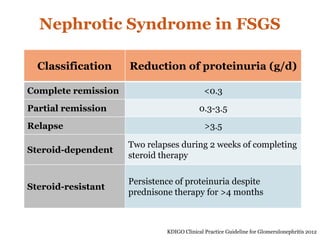
Nephrotic Syndrome in FSGS
Classification Reduction of proteinuria (g/d)
Complete remission <0.3
Partial remission 0.3-3.5
Relapse >3.5
Steroid-dependent
Two relapses during 2 weeks of completing
steroid therapy
Steroid-resistant
Persistence of proteinuria despite
prednisone therapy for >4 months
KDIGO Clinical Practice Guideline for Glomerulonephritis 2012
Prognosis
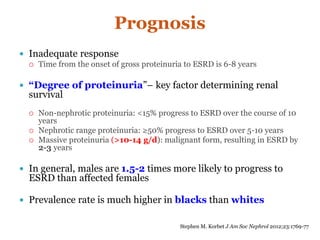
 Inadequate response
 Time from the onset of gross proteinuria to ESRD is 6-8 years
 “Degree of proteinuria”– key factor determining renal
survival
 Non-nephrotic proteinuria: <15% progress to ESRD over the course of 10
years
 Nephrotic range proteinuria: ≥50% progress to ESRD over 5-10 years
 Massive proteinuria (>10-14 g/d): malignant form, resulting in ESRD by
2-3 years
 In general, males are 1.5-2 times more likely to progress to
ESRD than affected females
 Prevalence rate is much higher in blacks than whites
Stephen M. Korbet J Am Soc Nephrol 2012;23:1769-77
Diagnostic Workup
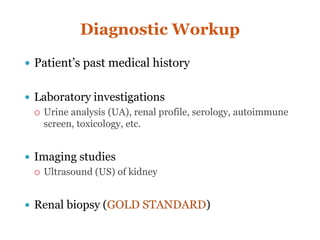
 Patient’s past medical history
 Laboratory investigations
 Urine analysis (UA), renal profile, serology, autoimmune
screen, toxicology, etc.
 Imaging studies
 Ultrasound (US) of kidney
 Renal biopsy (GOLD STANDARD)
Management
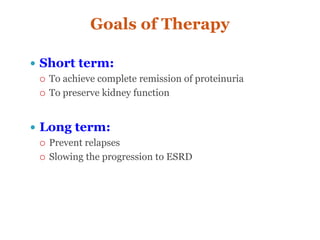
Goals of Therapy
 Short term:
 To achieve complete remission of proteinuria
 To preserve kidney function
 Long term:
 Prevent relapses
 Slowing the progression to ESRD
Pharmacological
Management
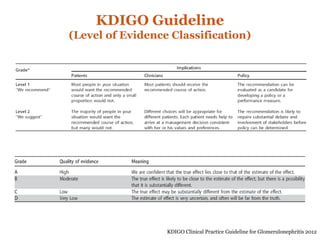
KDIGO Guideline
(Level of Evidence Classification)
KDIGO Clinical Practice Guideline for Glomerulonephritis 2012
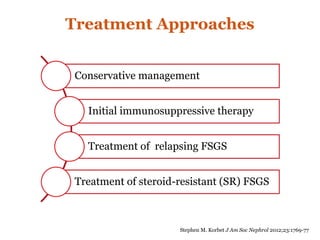
Treatment Approaches
Stephen M. Korbet J Am Soc Nephrol 2012;23:1769-77
Conservative management
Initial immunosuppressive therapy
Treatment of relapsing FSGS
Treatment of steroid-resistant (SR) FSGS
Conservative Approach
 Initially for first 6 months (both for nephrotic + non-
nephrotic)
 Optimal blood pressure control
 Use of angiotensin converting enzyme (ACE) inhibitors or
angiotensin-receptor blockers (ARBs)
 Goal:
 Slow rate of progression
 Provide better renal survival
Stephen M. Korbet J Am Soc Nephrol 2012;23:1769-77
Initial Immunosuppressive
Therapy
 Two pharmacological options:
 Corticosteroids
 Mycophenolate mofetil (MMF)/CNIs— steroid-sparing
alternatives
Corticosteroids
 Mainstay of treatment for idiopathic FSGS with nephrotic
syndrome
 Mechanism of action:
 Not fully understood, however, possibly through suppression of T-
lymphocyte mediated response
 Treatment regimen:
 Prednisone oral:
1 mg/kg/day (max 80 mg/day) or alternate-day of 2 mg/kg (up to 120
mg) for at least 4 weeks
 Taper (complete remission): reduce dose by 10mg per 2 weeks down to
0.15 mg/kg/d, then taper dose every 2–4 weeks by 2.5 mg
 Remission rate:
 Complete: 28% to 74%
 Partial: 0% to 50%
KDIGO Clinical Practice Guideline for Glomerulonephritis 2012
Adverse Effects
 Cardiovascular
 Sodium retention
 Fluid retention
 Potassium depletion
 Hypertension
 Endocrine
 Carbohydrate intolerance and
diabetes mellitus
 Cushingoid features
 Growth retardation
 Menstrual irregularities
 Neurologic
 Altered mood
 Headaches
 Musculoskeletal
 Osteoporosis
 Muscle weakness
 Myopathy
 Dermatologic
 Increased bruising
 Skin thinning
 Acne
 Gastrointestinal
 Peptic ulceration
 Pancreatitis
Rowe I., et al. Primer on Transplantation, 3rd edition
MMF
 Application:
 High-dose steroids is a concern (e.g. diabetes, morbid obesity)
 Nayagam et al. in a randomized prospective trial
 MMF 1 g twice daily for 6 months + low-dose (0.5 mg/kg/d)
prednisone for 2–3 months (n =17) VS.
 High dose (1 mg/kg/d) for 3–6 months
MMF vs. high dose prednisone
 Remission rate: 70% vs. 69%
 Time to remission: 6 weeks vs. 10 weeks
 Relapse: 23% vs. 18%
Stephen M. Korbet J Am Soc Nephrol 2012;23:1769-77
Adverse Effects
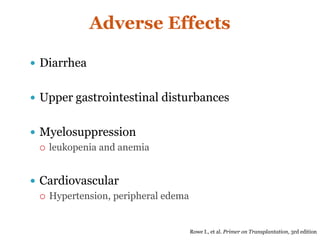
 Diarrhea
 Upper gastrointestinal disturbances
 Myelosuppression
 leukopenia and anemia
 Cardiovascular
 Hypertension, peripheral edema
Rowe I., et al. Primer on Transplantation, 3rd edition
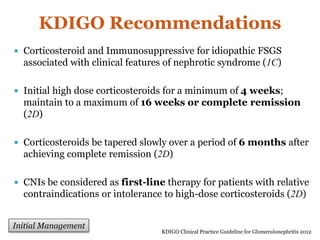
KDIGO Recommendations
 Corticosteroid and Immunosuppressive for idiopathic FSGS
associated with clinical features of nephrotic syndrome (1C)
 Initial high dose corticosteroids for a minimum of 4 weeks;
maintain to a maximum of 16 weeks or complete remission
(2D)
 Corticosteroids be tapered slowly over a period of 6 months after
achieving complete remission (2D)
 CNIs be considered as first-line therapy for patients with relative
contraindications or intolerance to high-dose corticosteroids (2D)
KDIGO Clinical Practice Guideline for Glomerulonephritis 2012
Initial Management
Relapsing FSGS
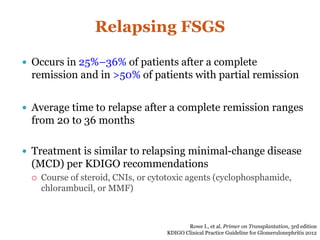
 Occurs in 25%–36% of patients after a complete
remission and in >50% of patients with partial remission
 Average time to relapse after a complete remission ranges
from 20 to 36 months
 Treatment is similar to relapsing minimal-change disease
(MCD) per KDIGO recommendations
 Course of steroid, CNIs, or cytotoxic agents (cyclophosphamide,
chlorambucil, or MMF)
Rowe I., et al. Primer on Transplantation, 3rd edition
KDIGO Clinical Practice Guideline for Glomerulonephritis 2012
Steroid-Resistant FSGS
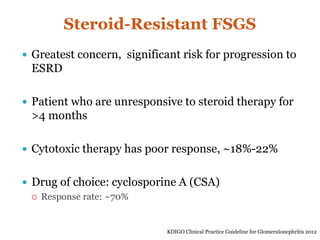
 Greatest concern, significant risk for progression to
ESRD
 Patient who are unresponsive to steroid therapy for
>4 months
 Cytotoxic therapy has poor response, ~18%-22%
 Drug of choice: cyclosporine A (CSA)
 Response rate: ~70%
KDIGO Clinical Practice Guideline for Glomerulonephritis 2012
Steroid-Resistant FSGS Cont.
Dosing regimen
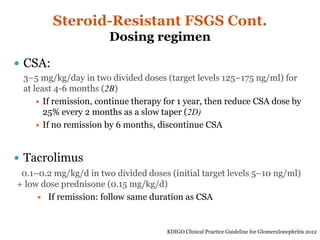
 CSA:
3–5 mg/kg/day in two divided doses (target levels 125–175 ng/ml) for
at least 4-6 months (2B)
 If remission, continue therapy for 1 year, then reduce CSA dose by
25% every 2 months as a slow taper (2D)
 If no remission by 6 months, discontinue CSA
 Tacrolimus
0.1–0.2 mg/kg/d in two divided doses (initial target levels 5–10 ng/ml)
+ low dose prednisone (0.15 mg/kg/d)
 If remission: follow same duration as CSA
KDIGO Clinical Practice Guideline for Glomerulonephritis 2012
Steroid-Resistant FSGS Cont.
 Cattran el at. conducted the largest randomized placebo-
controlled trial of 49 steroid resistant FSGS patients,
 CSA group (n = 26): 3.5 mg/kg/d in two divided doses for 6 months
 All received low dose corticosteroid (0.15 mg/kg/d)
 Results:
 Complete remission at 6 months: 69% (CSA group) vs. 12% (placebo)
 Partial remission: 57% (CSA group) vs. <5% (placebo)
 Average time to remission: 7 weeks [range: 1,25]
 However, at 78 weeks 60% of CSA group relapsed
 Meyrier et al. studied nephrotoxicity of CSA using renal
biopsy post 1 year of CSA therapy
 Result: risk of nephrotoxicity was generally seen at 11-29 months and
dose >5.5 mg/kg/d posed greatest toxicity
Stephen M. Korbet J Am Soc Nephrol 2012;23:1769-77
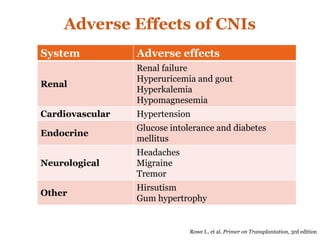
Adverse Effects of CNIs
System Adverse effects
Renal
Renal failure
Hyperuricemia and gout
Hyperkalemia
Hypomagnesemia
Cardiovascular Hypertension
Endocrine
Glucose intolerance and diabetes
mellitus
Neurological
Headaches
Migraine
Tremor
Other
Hirsutism
Gum hypertrophy
Rowe I., et al. Primer on Transplantation, 3rd edition
Role of Rituximab
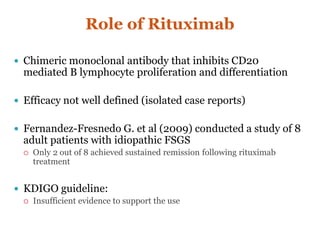
 Chimeric monoclonal antibody that inhibits CD20
mediated B lymphocyte proliferation and differentiation
 Efficacy not well defined (isolated case reports)
 Fernandez-Fresnedo G. et al (2009) conducted a study of 8
adult patients with idiopathic FSGS
 Only 2 out of 8 achieved sustained remission following rituximab
treatment
 KDIGO guideline:
 Insufficient evidence to support the use
Patient Case
Subjective
 Date of Admission: 10/02/2015
 CC: “generalized edema”
 HPI:
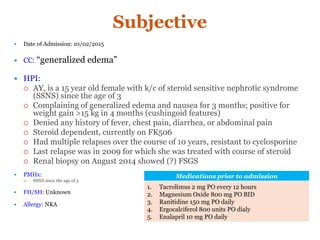
 AY, is a 15 year old female with k/c of steroid sensitive nephrotic syndrome
(SSNS) since the age of 3
 Complaining of generalized edema and nausea for 3 months; positive for
weight gain >15 kg in 4 months (cushingoid features)
 Denied any history of fever, chest pain, diarrhea, or abdominal pain
 Steroid dependent, currently on FK506
 Had multiple relapses over the course of 10 years, resistant to cyclosporine
 Last relapse was in 2009 for which she was treated with course of steroid
 Renal biopsy on August 2014 showed (?) FSGS
 PMHx:
 SSNS since the age of 3
 FH/SH: Unknown
 Allergy: NKA
Medications prior to admission
1. Tacrolimus 2 mg PO every 12 hours
2. Magnesium Oxide 800 mg PO BID
3. Ranitidine 150 mg PO daily
4. Ergocalciferol 800 units PO dialy
5. Enalapril 10 mg PO daily
Initial Findings
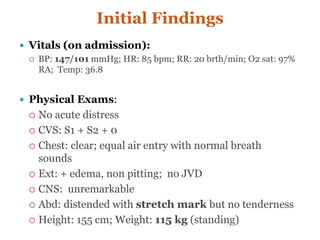
 Vitals (on admission):
 BP: 147/101 mmHg; HR: 85 bpm; RR: 20 brth/min; O2 sat: 97%
RA; Temp: 36.8
 Physical Exams:
 No acute distress
 CVS: S1 + S2 + 0
 Chest: clear; equal air entry with normal breath
sounds
 Ext: + edema, non pitting; no JVD
 CNS: unremarkable
 Abd: distended with stretch mark but no tenderness
 Height: 155 cm; Weight: 115 kg (standing)
Labs
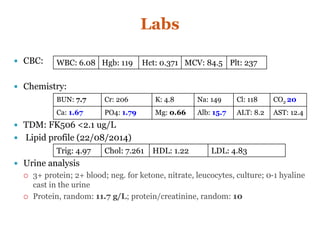
 CBC:
 Chemistry:
 TDM: FK506 <2.1 ug/L
 Lipid profile (22/08/2014)
 Urine analysis
 3+ protein; 2+ blood; neg. for ketone, nitrate, leucocytes, culture; 0-1 hyaline
cast in the urine
 Protein, random: 11.7 g/L; protein/creatinine, random: 10
WBC: 6.08 Hgb: 119 Hct: 0.371 MCV: 84.5 Plt: 237
BUN: 7.7 Cr: 206 K: 4.8 Na: 149 Cl: 118 CO2 20
Ca: 1.67 PO4: 1.79 Mg: 0.66 Alb: 15.7 ALT: 8.2 AST: 12.4
Trig: 4.97 Chol: 7.261 HDL: 1.22 LDL: 4.83
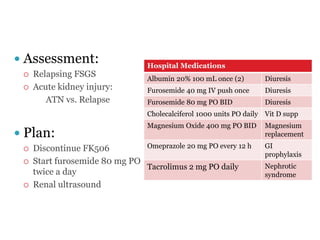
 Assessment:
 Relapsing FSGS
 Acute kidney injury:
ATN vs. Relapse
 Plan:
 Discontinue FK506
 Start furosemide 80 mg PO
twice a day
 Renal ultrasound
Hospital Medications
Albumin 20% 100 mL once (2) Diuresis
Furosemide 40 mg IV push once Diuresis
Furosemide 80 mg PO BID Diuresis
Cholecalciferol 1000 units PO daily Vit D supp
Magnesium Oxide 400 mg PO BID Magnesium
replacement
Omeprazole 20 mg PO every 12 h GI
prophylaxis
Tacrolimus 2 mg PO daily Nephrotic
syndrome
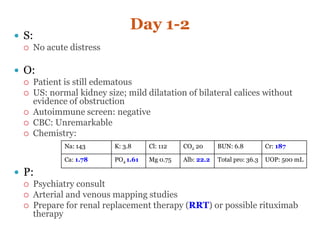
Day 1-2
 S:
 No acute distress
 O:
 Patient is still edematous
 US: normal kidney size; mild dilatation of bilateral calices without
evidence of obstruction
 Autoimmune screen: negative
 CBC: Unremarkable
 Chemistry:
 P:
 Psychiatry consult
 Arterial and venous mapping studies
 Prepare for renal replacement therapy (RRT) or possible rituximab
therapy
Na: 143 K: 3.8 Cl: 112 CO2 20 BUN: 6.8 Cr: 187
Ca: 1.78 PO4 1.61 Mg 0.75 Alb: 22.2 Total pro: 36.3 UOP: 500 mL
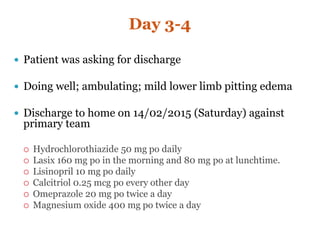
Day 3-4
 Patient was asking for discharge
 Doing well; ambulating; mild lower limb pitting edema
 Discharge to home on 14/02/2015 (Saturday) against
primary team
 Hydrochlorothiazide 50 mg po daily
 Lasix 160 mg po in the morning and 80 mg po at lunchtime.
 Lisinopril 10 mg po daily
 Calcitriol 0.25 mcg po every other day
 Omeprazole 20 mg po twice a day
 Magnesium oxide 400 mg po twice a day
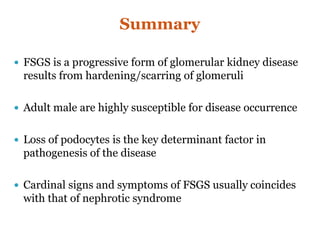
Summary
 FSGS is a progressive form of glomerular kidney disease
results from hardening/scarring of glomeruli
 Adult male are highly susceptible for disease occurrence
 Loss of podocytes is the key determinant factor in
pathogenesis of the disease
 Cardinal signs and symptoms of FSGS usually coincides
with that of nephrotic syndrome
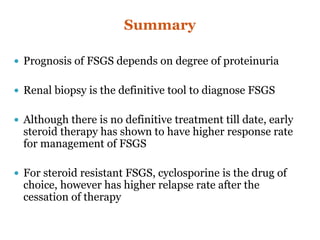
Summary
 Prognosis of FSGS depends on degree of proteinuria
 Renal biopsy is the definitive tool to diagnose FSGS
 Although there is no definitive treatment till date, early
steroid therapy has shown to have higher response rate
for management of FSGS
 For steroid resistant FSGS, cyclosporine is the drug of
choice, however has higher relapse rate after the
cessation of therapy
Focal Segmental Glomerulosclerosis (FSGS)

Focal Segmental Glomerulosclerosis (FSGS)

  • 1.
    T A UH I D A H M E D B H U I Y A N , P H A R M D P H A R M A C Y P R A C T I C E R E S I D E N C Y ( P G Y - 1 ) , R 2 Topic Review and Case Presentation Focal Segmental Glomerulosclerosis (FSGS) King Faisal Specialist Hospital and Research Center (KFSHRC) is accredited by the Accreditation Council for Pharmacy Education as a provider of continuing pharmacy education. (UAN# 0833-0000-14-064-L01-P, 0833- 0000-14-064-L01-T)
  • 2.
    Objectives  To providea general overview of FSGS  To identify clinical presentations of FSGS  Outline possible evidenced-based management strategies of FSGS  Analyze a patient case of FSGS I do not have financial relationship and no actual or potential conflict of interest in relation to this activity
  • 3.
    Background  Disease “entity”defined by findings on the kidney biopsy  Characterized by scarring or hardening of glomeruli  Affect alternation of normal glomerular structure and function  It is a major cause of idiopathic steroid-resistant nephrotic syndrome in children and adults  Unlike minimal change disease, FSGS often progress to end-state renal disease (ESRD)
  • 4.
    Epidemiology  Frequency:  Adults> children  Prevalence in adults: ≥45 years old  In US, >5400 patients are diagnosed with FSGS each year and ~20K patients are currently living with ESRD due to FSGS  In children  The 2nd leading cause of renal failure  Accounts for 15%-20% of cases with nephrotic syndrome  Most common cause of steroid-resistant nephrotic syndrome FSGS Facts. Accessed: February 22, 2014. Available at: http://nephcure.org/livingwithkidneydisease/understanding-fsgs/fsgs-facts/
  • 5.
    In Kingdom ofSaudi Arabia  In Saudi registry (2000):  1294 renal biopsies were obtain from six large referral hospital  Glomerulonephritis (GN) accounted for ~73% of total biopsy  FSGS was the most common form found (~21.3%)  Nawaz et al. conducted a five-year, single center, retrospective study  Primary GN accounted for 55.1% of all renal biopsies  Most common histological lesion was focal segmental glomerulosclerosis (FSGS) (27.6%) Huraib S., et al. Saudi J Kidney Dis Transpl. 2000;11(3):434-41 Nawaz Z., et al. Saudi J Kidney Dis Transpl. 2013; 24(6):1265-70
  • 6.
    Definition  Described as: “Segmentalincrease of mesangial matrix with obliteration of the capillaries, sclerosis, hyalinosis, foam cells, and segmental scarring, and adhesion between the glomerular tuft and Bowman’s capsule”  Based on appearance of the kidney tissue on biopsy: F S G S Focal: some of the glomeruli involved (as opposed to diffuse) Segmental: part of the glomerulus involved (as opposed to global) Glomerulus Scarring/ hardening KDIGO Clinical Practice Guideline for Glomerulonephritis 2012
  • 7.
    Normal vs. Pathological Anatomyof Glomerulus http://what-when-how.com/acp-medicine/glomerular-diseases-part-4
  • 8.
    Classification • When nounderlying cause is found • Usually, presents with acute or subacute nephrotic syndrome Primary/Idiopathic • When an underlying cause is identified (see etiology) • Usually, presents with kidney failure • Proteinuria is non-nephrotic range Secondary Gbadegsin R., et al. Pediatr Nephrol. 2011 Jul;26(7):1001-15
  • 9.
    Factors that Determine GlomerularFiltration Specialized fenestrated endothelial cells Glomerular basement membrane (GBM) Glomerular epithelial cells (podocytes) Gbadegsin R., et al. Pediatr Nephrol. 2011 Jul;26(7):1001-15
  • 10.
    Etiology  Primary/Idiopathic FSGS  Hereditarydiseases  Sickle cell disease  Viral infections  HCV, HIV  Cytomegalovirus  Epstein-Barr virus  Parvovirus B19  Drugs/Toxic agents  Interferon-α, pamidronate, lithium, gold, heroin (IV)  Ischemia  Renal artery stenosis  Hypertensive kidney disease  Calcineurin inhibitors (CNIs) nephrotoxicity  Acute and chronic renal allograft rejection  Cholesterol crystal embolism  Cyanotic congenital heart disease Gbadegsin R., et al. Pediatr Nephrol. 2011 Jul;26(7):1001-15
  • 11.
    Pathophysiology Reidy K., etal. Pediatr Nephrol. 2007;22:350-54  Key factor in the pathogenesis  “Podocyte damage and loss”  Injury to podocyte occurs by 4 major mechanisms: 1. Alteration of the components of the slit diaphragm or interference with its structure 2. Dysregulation of the actin cytoskeleton 3. Alteration of the glomerular basement membrane or its interactions with the podocyte 4. Alteration of the negative surface charge of the podocyte
  • 12.
    Pathophysiology Cont. Gbadegsin R.,et al. Pediatr Nephrol. 2011 Jul;26(7):1001-15 1 2 3 4
  • 13.
    Pathological Variants  Tipvariant  Involving the part of the glomerulus near the origin of the proximal tubule  Perihilar variant  Sclerosis of the vascular pole  Cellular variant  Hypercellularity of the capillary space  Collapsing variant  With ≥1 glomeruli with global or segmental collapse Reidy K., et al. Pediatr Nephrol. 2007;22:350-54 Progress more rapidly to ESRD
  • 14.
    Clinical Presentation  >70%of patients present with signs and symptoms of nephrotic syndrome  Nephrotic range (>3.5 g/d) proteinuria  Generalized edema  Hypertension  Hypoalbuminemia  Hyperlipidemia  Microscopic hematuria  Renal failure  Pleural effusion and ascites may present  Pericardial effusion (rare) Stephen M. Korbet J Am Soc Nephrol 2012;23:1769-77
  • 15.
    Nephrotic Syndrome inFSGS Classification Reduction of proteinuria (g/d) Complete remission <0.3 Partial remission 0.3-3.5 Relapse >3.5 Steroid-dependent Two relapses during 2 weeks of completing steroid therapy Steroid-resistant Persistence of proteinuria despite prednisone therapy for >4 months KDIGO Clinical Practice Guideline for Glomerulonephritis 2012
  • 16.
    Prognosis  Inadequate response Time from the onset of gross proteinuria to ESRD is 6-8 years  “Degree of proteinuria”– key factor determining renal survival  Non-nephrotic proteinuria: <15% progress to ESRD over the course of 10 years  Nephrotic range proteinuria: ≥50% progress to ESRD over 5-10 years  Massive proteinuria (>10-14 g/d): malignant form, resulting in ESRD by 2-3 years  In general, males are 1.5-2 times more likely to progress to ESRD than affected females  Prevalence rate is much higher in blacks than whites Stephen M. Korbet J Am Soc Nephrol 2012;23:1769-77
  • 17.
    Diagnostic Workup  Patient’spast medical history  Laboratory investigations  Urine analysis (UA), renal profile, serology, autoimmune screen, toxicology, etc.  Imaging studies  Ultrasound (US) of kidney  Renal biopsy (GOLD STANDARD)
  • 18.
  • 19.
    Goals of Therapy Short term:  To achieve complete remission of proteinuria  To preserve kidney function  Long term:  Prevent relapses  Slowing the progression to ESRD
  • 20.
  • 21.
    KDIGO Guideline (Level ofEvidence Classification) KDIGO Clinical Practice Guideline for Glomerulonephritis 2012
  • 22.
    Treatment Approaches Stephen M.Korbet J Am Soc Nephrol 2012;23:1769-77 Conservative management Initial immunosuppressive therapy Treatment of relapsing FSGS Treatment of steroid-resistant (SR) FSGS
  • 23.
    Conservative Approach  Initiallyfor first 6 months (both for nephrotic + non- nephrotic)  Optimal blood pressure control  Use of angiotensin converting enzyme (ACE) inhibitors or angiotensin-receptor blockers (ARBs)  Goal:  Slow rate of progression  Provide better renal survival Stephen M. Korbet J Am Soc Nephrol 2012;23:1769-77
  • 24.
    Initial Immunosuppressive Therapy  Twopharmacological options:  Corticosteroids  Mycophenolate mofetil (MMF)/CNIs— steroid-sparing alternatives
  • 25.
    Corticosteroids  Mainstay oftreatment for idiopathic FSGS with nephrotic syndrome  Mechanism of action:  Not fully understood, however, possibly through suppression of T- lymphocyte mediated response  Treatment regimen:  Prednisone oral: 1 mg/kg/day (max 80 mg/day) or alternate-day of 2 mg/kg (up to 120 mg) for at least 4 weeks  Taper (complete remission): reduce dose by 10mg per 2 weeks down to 0.15 mg/kg/d, then taper dose every 2–4 weeks by 2.5 mg  Remission rate:  Complete: 28% to 74%  Partial: 0% to 50% KDIGO Clinical Practice Guideline for Glomerulonephritis 2012
  • 26.
    Adverse Effects  Cardiovascular Sodium retention  Fluid retention  Potassium depletion  Hypertension  Endocrine  Carbohydrate intolerance and diabetes mellitus  Cushingoid features  Growth retardation  Menstrual irregularities  Neurologic  Altered mood  Headaches  Musculoskeletal  Osteoporosis  Muscle weakness  Myopathy  Dermatologic  Increased bruising  Skin thinning  Acne  Gastrointestinal  Peptic ulceration  Pancreatitis Rowe I., et al. Primer on Transplantation, 3rd edition
  • 27.
    MMF  Application:  High-dosesteroids is a concern (e.g. diabetes, morbid obesity)  Nayagam et al. in a randomized prospective trial  MMF 1 g twice daily for 6 months + low-dose (0.5 mg/kg/d) prednisone for 2–3 months (n =17) VS.  High dose (1 mg/kg/d) for 3–6 months MMF vs. high dose prednisone  Remission rate: 70% vs. 69%  Time to remission: 6 weeks vs. 10 weeks  Relapse: 23% vs. 18% Stephen M. Korbet J Am Soc Nephrol 2012;23:1769-77
  • 28.
    Adverse Effects  Diarrhea Upper gastrointestinal disturbances  Myelosuppression  leukopenia and anemia  Cardiovascular  Hypertension, peripheral edema Rowe I., et al. Primer on Transplantation, 3rd edition
  • 29.
    KDIGO Recommendations  Corticosteroidand Immunosuppressive for idiopathic FSGS associated with clinical features of nephrotic syndrome (1C)  Initial high dose corticosteroids for a minimum of 4 weeks; maintain to a maximum of 16 weeks or complete remission (2D)  Corticosteroids be tapered slowly over a period of 6 months after achieving complete remission (2D)  CNIs be considered as first-line therapy for patients with relative contraindications or intolerance to high-dose corticosteroids (2D) KDIGO Clinical Practice Guideline for Glomerulonephritis 2012 Initial Management
  • 30.
    Relapsing FSGS  Occursin 25%–36% of patients after a complete remission and in >50% of patients with partial remission  Average time to relapse after a complete remission ranges from 20 to 36 months  Treatment is similar to relapsing minimal-change disease (MCD) per KDIGO recommendations  Course of steroid, CNIs, or cytotoxic agents (cyclophosphamide, chlorambucil, or MMF) Rowe I., et al. Primer on Transplantation, 3rd edition KDIGO Clinical Practice Guideline for Glomerulonephritis 2012
  • 31.
    Steroid-Resistant FSGS  Greatestconcern, significant risk for progression to ESRD  Patient who are unresponsive to steroid therapy for >4 months  Cytotoxic therapy has poor response, ~18%-22%  Drug of choice: cyclosporine A (CSA)  Response rate: ~70% KDIGO Clinical Practice Guideline for Glomerulonephritis 2012
  • 32.
    Steroid-Resistant FSGS Cont. Dosingregimen  CSA: 3–5 mg/kg/day in two divided doses (target levels 125–175 ng/ml) for at least 4-6 months (2B)  If remission, continue therapy for 1 year, then reduce CSA dose by 25% every 2 months as a slow taper (2D)  If no remission by 6 months, discontinue CSA  Tacrolimus 0.1–0.2 mg/kg/d in two divided doses (initial target levels 5–10 ng/ml) + low dose prednisone (0.15 mg/kg/d)  If remission: follow same duration as CSA KDIGO Clinical Practice Guideline for Glomerulonephritis 2012
  • 33.
    Steroid-Resistant FSGS Cont. Cattran el at. conducted the largest randomized placebo- controlled trial of 49 steroid resistant FSGS patients,  CSA group (n = 26): 3.5 mg/kg/d in two divided doses for 6 months  All received low dose corticosteroid (0.15 mg/kg/d)  Results:  Complete remission at 6 months: 69% (CSA group) vs. 12% (placebo)  Partial remission: 57% (CSA group) vs. <5% (placebo)  Average time to remission: 7 weeks [range: 1,25]  However, at 78 weeks 60% of CSA group relapsed  Meyrier et al. studied nephrotoxicity of CSA using renal biopsy post 1 year of CSA therapy  Result: risk of nephrotoxicity was generally seen at 11-29 months and dose >5.5 mg/kg/d posed greatest toxicity Stephen M. Korbet J Am Soc Nephrol 2012;23:1769-77
  • 34.
    Adverse Effects ofCNIs System Adverse effects Renal Renal failure Hyperuricemia and gout Hyperkalemia Hypomagnesemia Cardiovascular Hypertension Endocrine Glucose intolerance and diabetes mellitus Neurological Headaches Migraine Tremor Other Hirsutism Gum hypertrophy Rowe I., et al. Primer on Transplantation, 3rd edition
  • 35.
    Role of Rituximab Chimeric monoclonal antibody that inhibits CD20 mediated B lymphocyte proliferation and differentiation  Efficacy not well defined (isolated case reports)  Fernandez-Fresnedo G. et al (2009) conducted a study of 8 adult patients with idiopathic FSGS  Only 2 out of 8 achieved sustained remission following rituximab treatment  KDIGO guideline:  Insufficient evidence to support the use
  • 36.
  • 37.
    Subjective  Date ofAdmission: 10/02/2015  CC: “generalized edema”  HPI:  AY, is a 15 year old female with k/c of steroid sensitive nephrotic syndrome (SSNS) since the age of 3  Complaining of generalized edema and nausea for 3 months; positive for weight gain >15 kg in 4 months (cushingoid features)  Denied any history of fever, chest pain, diarrhea, or abdominal pain  Steroid dependent, currently on FK506  Had multiple relapses over the course of 10 years, resistant to cyclosporine  Last relapse was in 2009 for which she was treated with course of steroid  Renal biopsy on August 2014 showed (?) FSGS  PMHx:  SSNS since the age of 3  FH/SH: Unknown  Allergy: NKA Medications prior to admission 1. Tacrolimus 2 mg PO every 12 hours 2. Magnesium Oxide 800 mg PO BID 3. Ranitidine 150 mg PO daily 4. Ergocalciferol 800 units PO dialy 5. Enalapril 10 mg PO daily
  • 38.
    Initial Findings  Vitals(on admission):  BP: 147/101 mmHg; HR: 85 bpm; RR: 20 brth/min; O2 sat: 97% RA; Temp: 36.8  Physical Exams:  No acute distress  CVS: S1 + S2 + 0  Chest: clear; equal air entry with normal breath sounds  Ext: + edema, non pitting; no JVD  CNS: unremarkable  Abd: distended with stretch mark but no tenderness  Height: 155 cm; Weight: 115 kg (standing)
  • 39.
    Labs  CBC:  Chemistry: TDM: FK506 <2.1 ug/L  Lipid profile (22/08/2014)  Urine analysis  3+ protein; 2+ blood; neg. for ketone, nitrate, leucocytes, culture; 0-1 hyaline cast in the urine  Protein, random: 11.7 g/L; protein/creatinine, random: 10 WBC: 6.08 Hgb: 119 Hct: 0.371 MCV: 84.5 Plt: 237 BUN: 7.7 Cr: 206 K: 4.8 Na: 149 Cl: 118 CO2 20 Ca: 1.67 PO4: 1.79 Mg: 0.66 Alb: 15.7 ALT: 8.2 AST: 12.4 Trig: 4.97 Chol: 7.261 HDL: 1.22 LDL: 4.83
  • 40.
     Assessment:  RelapsingFSGS  Acute kidney injury: ATN vs. Relapse  Plan:  Discontinue FK506  Start furosemide 80 mg PO twice a day  Renal ultrasound Hospital Medications Albumin 20% 100 mL once (2) Diuresis Furosemide 40 mg IV push once Diuresis Furosemide 80 mg PO BID Diuresis Cholecalciferol 1000 units PO daily Vit D supp Magnesium Oxide 400 mg PO BID Magnesium replacement Omeprazole 20 mg PO every 12 h GI prophylaxis Tacrolimus 2 mg PO daily Nephrotic syndrome
  • 41.
    Day 1-2  S: No acute distress  O:  Patient is still edematous  US: normal kidney size; mild dilatation of bilateral calices without evidence of obstruction  Autoimmune screen: negative  CBC: Unremarkable  Chemistry:  P:  Psychiatry consult  Arterial and venous mapping studies  Prepare for renal replacement therapy (RRT) or possible rituximab therapy Na: 143 K: 3.8 Cl: 112 CO2 20 BUN: 6.8 Cr: 187 Ca: 1.78 PO4 1.61 Mg 0.75 Alb: 22.2 Total pro: 36.3 UOP: 500 mL
  • 42.
    Day 3-4  Patientwas asking for discharge  Doing well; ambulating; mild lower limb pitting edema  Discharge to home on 14/02/2015 (Saturday) against primary team  Hydrochlorothiazide 50 mg po daily  Lasix 160 mg po in the morning and 80 mg po at lunchtime.  Lisinopril 10 mg po daily  Calcitriol 0.25 mcg po every other day  Omeprazole 20 mg po twice a day  Magnesium oxide 400 mg po twice a day
  • 43.
    Summary  FSGS isa progressive form of glomerular kidney disease results from hardening/scarring of glomeruli  Adult male are highly susceptible for disease occurrence  Loss of podocytes is the key determinant factor in pathogenesis of the disease  Cardinal signs and symptoms of FSGS usually coincides with that of nephrotic syndrome
  • 44.
    Summary  Prognosis ofFSGS depends on degree of proteinuria  Renal biopsy is the definitive tool to diagnose FSGS  Although there is no definitive treatment till date, early steroid therapy has shown to have higher response rate for management of FSGS  For steroid resistant FSGS, cyclosporine is the drug of choice, however has higher relapse rate after the cessation of therapy

Editor's Notes

  • #5 http://nephcure.org/wp-content/uploads/2014/08/Focal-Semental-Glomerulosclerosis-Fact-Sheet.pdf
  • #33 There are no RCTs using tacrolimus
  • #40 CrCl: 36