ARTIFICIAL LIVER SUPPORT
SYSTEMS
Dr.Y Raghu Nandhini
1st yr medicine P.G
Medical unit -IV
INTRODUCTION
• The liver is a complex organ with various vital
functions in synthesis, detoxification and
regulation; its failure therefore constitutes a
life threatening condition
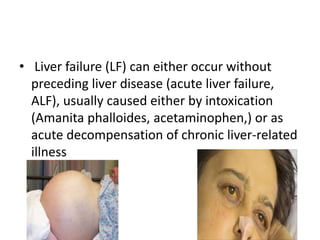
• Liver failure (LF) can either occur without
preceding liver disease (acute liver failure,
ALF), usually caused either by intoxication
(Amanita phalloides, acetaminophen,) or as
acute decompensation of chronic liver-related
illness
• The only long-term therapy in most cases
is orthotopic liver transplantation, unless
the liver is able to regenerate
• Many patients, especially those who are
not listed for high urgency
transplantation, may not survive until a
suitable donor organ is available, since
donor organs are rare
• For these indications, extracorporeal liver
assist devices have been developed in order to
either bridge the patient to transplantation or
temporarily support the failing organ until it is
able to regenerate
INTRODUCTION
• Unlike renal failure, artificial support
systems were not widely used in liver
failure, mainly because hepatic
toxins are albumin-bound unlike
most uremic toxins and hence
cannot be removed by conventional
dialysis.
Albumin bound toxins-
• Aromatic amino acids
• Bile acids
• Bilirubin
• Copper (Wilson’s
disease)
• Digoxin-like
substances
• Endogenous
benzodiazepines
• Indols
• Mercaptan
• Middle- and short-
chain fatty acids
• Nitric oxide
• Phenols
• Prostacyclins
• Tryptophan
• It has been only recently that advances
have been made concerning removal of
hepatic toxins.
• It is now possible to support the patient
with liver failure till the liver recovers or
until liver transplantation is feasible
INDICATIONS FOR CONSIDERING ARTIFICIAL
LIVER SUPPORT SYSTEMS
–To give additional time for liver
regeneration or spontaneous recovery to
occur
–The usual situations include-
• acute fulminant hepatitis due to Hepatitis
A &b
• Liver toxicity due to acetaminophen
• severe acute alcoholic hepatitis
INDICATIONS
–conditions producing an acute
exacerbation of a chronic liver disease
•like a gastrointestinal bleed
•spontaneous bacterial peritonitis
and
•sepsis
INDICATIONS
• In hepatorenal syndrome type 1,
sudden deterioration of liver
function with acute renal failure
following precipitating events may
warrant use of ALS systems
INDICATIONS
• In chronic liver disease and in
hepatorenal syndrome type 2 , ALS
systems are indicated,till liver transplant
is feasible
• Following liver transplantation, ALS may
be indicated in primary non-function or
delayed function of the graft
TYPES OF ARTIFICIAL LIVER SUPPORT
SYSTEMS
• Support systems designed to treat patients
with liver failure have been in development
for over 30 years
• two main categories:
– Artificial or Non-cell-based:
– Bioartificial or cell-based:
TYPES OF ARTIFICIAL LIVER SUPPORT
SYSTEMS
Artificial or Non-cell-based:
conventional METHODS
• 1. Peritoneal dialysis
• 2. Hemodialysis
• 3. Hemofiltration (HF)
• 4. Continuous renal replacement therapy
• 5. Charcoal hemoperfusion.
• 6. Plasma exchange
Artificial Liver support devices (Non-
cell based liver support systems)
• Molecular Adsorbents recirculating
system (MARS)
• Fractionated plasma separation and
adsorption (prometheus)
• Single pass albumin dialysis (SPAD)
• Selective Plasma Filtration therapy
(SEPET)
TYPES OF ARTIFICIAL LIVER SUPPORT
SYSTEMS
• Bioartificial or cell-based:
• HepatAssist
• Extracorporeal Liver AssistDevice (ELAD)
• Bioartificial Liver support system (Blss)
• Amsterdam Medical Centre Bio-
artificial Liver (AMCBAl)
• Molecular Extracorporeal Liver Support
(Mels)
Comparition b/n artificial and
bio-artificialliver support device
Cellular component
Hepatic functions
achieved
Cost
Ease of use
Efficacy
Artificial liver support
device
No
Detoxification only
Comparatively less
Relatively easier
Limited
Bio-artificial liver support
device
Yes
All hepatic functions
High cost for designing,
operating and managing
Complexity of maintain
living components
Expected results more
promising
Type of liver support
device
PERITONEAL DIALYSIS
• This has been used occasionally in
patients with combined liver and
renal failure with ascites,
• It has a limited role due to
inadequate removal of hepatic toxins
especially in those having poor
peritoneal blood flow.
HEMODIALYSIS
• Haemodialysis, being the common
treatment for renal failure, is also used
for treatment of patients in liver failure
to remove water soluble toxins.
• Since liver failure is often accompanied
by renal failure, haemodialysis is part of
the standard intensive care treatment
HEMODIALYSIS
• Conventional hemodialysis (HD) removes only
water soluble small molecules by diffusion,
including some removal of ammonia and
amino acids.
• Limitations :
– Majority of hepatic toxins are albumin-bound or
lipid soluble, they are not removed by HD
– Challenging hemodynamics
– Bleeding risk from acquired coagulopathy
-
HEMOFILTRATION (HF)
• Highly permeable membranes like
polysulphone or polyacrylonitrile are used to
remove fluid, including some hepatic toxins
and ammonia
Charcoal hemoperfusion.
• Blood is passed through a cartridge
containing charcoal particles.
• Adsorbs lipid-soluble toxins and thus
is theoretically superior to HD or HF
though randomized controlled trials
have not shown any additional
benefit in prolonging survival.
Charcoal hemoperfusion.
Complications-
– loss of thrombocytes and clotting
problems, which could partially be
overcome by avoiding direct contact of
plasma and charcoal particles
Plasma exchange
• By using high volume plasma exchange
using highly permeable plasma filters, it
is possible to remove lipid-soluble and
albumin-bound hepatic toxins.
•
CONTINUOUS RENAL REPLACEMENT
THERAPY
• Use of permeable membranes with a
slower blood pump speed for prolonged
periods in hepatic encephalopathy is
associated with greater cardiovascular
and intracranial stability compared to
intermittent HD or HF
CONTINUOUS RENAL REPLACEMENT
THERAPY
• When an arterial line is obtained, a blood
pump is not required and is termed
continuous arteriovenous hemodialysis
(CAVHD).
• With venous lines, a pump is required
and is called continuous venovenous
hemodialysis (CVVHD).
CONTINUOUS RENAL REPLACEMENT
THERAPY
CONTINUOUS RENAL REPLACEMENT
THERAPY
• This method may improve hepatic encephalopathy
by decreasing intracranial pressure, and may be
useful when sepsis is a precipitating factor by
removing inflammatory cytokines
CONTINUOUS RENAL REPLACEMENT
THERAPY
• Lactate based replacement fluids or
dialysate are however to be avoided
in liver failure due to defective
conversion of lactate to bicarbonate.
• Hence bicarbonate based fluids have
to be used
Molecular adsorbents recirculating
system (MARS)dialysis
• This is a modification of dialysis in which an
albumin based dialysate is employed with the
aim of removing albumin-bound toxins which
accumulate in liver failure
• The MARS system consists of three
compartments:
- a blood circuit,
-an albumin circuit and
-either a HD or HF compartment
• The blood circuit generally employs a veno-
venous access with a blood pump at a speed
of around 150 ml/min.
• Blood is passed through a special non-
albumin permeable high flux dialyzer
membrane usually made of
polysulphone, which is capable of
adsorbing albumin-bound toxins
• The albumin circuit generally contains
about 600 ml of 20% human albumin and
is also driven by a pump at a speed of
around 150 ml/mint.
• This is passed through the dialysate
compartment of the blood dialyzer
where it removes the toxins bound to the
dialyzer membrane
• The dialysate is then regenerated by passing
through an activated charcoal column and
then through another column containing an
anion exchange resin
• In addition, water-soluble toxins are
removed from the dialysate by
passing it across a low flux HD
membrane with a bicarbonate
dialysate as in conventionalHD
• Heparin is used as anticoagulant at a
dose of 250 – 1000 IU / hr
• Each session is around eight hours and is
performed either daily or on alternate day.
The number of sessions is decided based on
the patient’s response
• Generaly 5 sittings may be adequate in acute
liver failure where a decrease in bilirubin,
bile acids, liver enzymes, plasma ammonia
levels as well as urea levels can occur
• COMPLICATIONS
• Thrombocytopenia is a common
though usually mild and
occasionally arrhythmias may occur
• The approximate cost for the
disposable items used in each
session is around 2 lakhs
• BENEFICIAL EFFECTS OF MARS
• decrease in mortality in type I hepatorenal
syndrome patients
• acute alcoholic hepatitis where a marked
fall in serum bilirubin can occur.
• An improvement in cardiovascular
hemodynamics and subsequent renal
function can occur.
• Improvement in encephalopathy and a
decrease in intracranial pressure and
pruritus has been shown
thirteen patients with cirrhosis were
divided into two groups
• A control group (n = 5)
• received standard
medical treatment
and hemodiafiltration
(HDF)
• Test group (n = 8)
additionally being
treated with MARS
along with standard
treatment
• MARS-treatment was
applied 1–10 times for
6–8 hours
According to chui le
et .al
• . A significant decrease in creatinine and
bilirubin levels as well as an increase in serum
sodium level and prothrombin activity was
detected in the MARS group
• Mortality of the control group reached 100%
after seven days, whereas it was at 62,5% in
the MARS group
Prometheus system
• Fractional plasma separation and adsorption
system creates a filtrate through 250 kDa
pore size filter.
• Unlike MARS where the membrane is
albumin-impermeable, in Prometheus, the
albumin-bound toxins diffuse across the
albumin-permeable membrane of
Prometheus.
Prometheus system
• The filtrate is then passed over two columns of
neutral resin and anion-exchange and then returned
to the patient.
• Thus the patient’s albumin is cleansed of the bound
toxins and no exogenous albumin is used
PROMETHEUS
• Overall Prometheus provides higher
clearance for most liver toxins especially
if they are tightly albumin bound.
• However, for bile acids and cytokines no
such differences have been found
between MARS/prometheus.
Single Pass Albumin Dialysis (SPAD)
• The patient's blood also passes a high
flux dialysis membrane.
• Albumin solution streams along the
other side of the membrane counter-
directionally, accepting toxins from the
plasma.
• However, in SPAD the albumin solution is
discarded after a single passage of the
membrane without being recycled
Selective Plasma Filtration therapy
(SEPET)
• SEPET utilizes hollow-fiber with a membrane
pore size, which allows passage of molecules
with molecular weight less than 100 kDa,
thereby preserving immunoglobulins,
complement proteins, clotting factors and
hepatocyte growth factor.
Selective Plasma Filtration therapy
(SEPET)
• Part of the patient’s albumin is lost
due to the pore size of the filter and
has to be replaced.
• The removed fluid is replaced by
Albumin, fresh frozen plasma and
electrolytes.
• This system is currently under clinical
evaluation.
Bioartificial liver systems
• In this system, patient's blood or
plasma is pumped into bioreactors,
which are hollow fibre devices,
seeded on the dialysate side with
freshly isolated or cryopreserved
porcine hepatocytes or transformed
human hepatoma cell line
Bioartificial liver systems
• Blood initially passes through a plasma
filter and the plasma filtrate perfuses
through the bioartificial liver and is
returned to the patient after passing
through a charcoal adsorption column
Bioartificial liver systems
• Has the advantage of performing hepatic
synthetic functions in addition to
detoxification functions performed by
the other ALS systems.
• This have been employed in treatment
of acute liver failure and in primary non-
function of a liver transplant
Bioartificial liver systems
• An improvement in encephalopathy and
an increase in cerebral perfusion
pressure were noted
• The effective hepatocytes account for
only 2% of a normal hepatic function and
is hence not very successful in acute
decompensation of chronic liver disease
HepatAssist
• HepatAssist by Arbios was the first FDA-
approached biologically based liver assist
device.
• This employs a hollow fiber extracorporeal
bioreactor loaded with cryopreserved porcine
hepatocytes
EXTRCORPOREAL LIVER ASSIST
DEVICES
• In this system, blood is made to pass through
one or more hollow fibre devices containing
up to 200 gm of human hepatocytes, usually
derived from hepatoblastoma cell line, on
the dialysate side
• Patients generally tolerate the procedure
well with improvement in encephalopathy
and can be used in patients awaiting liver
transplantation.
Modular Extracorporeal Liver support
(MELS)
• The Modular Extracorporeal Liver support
(MELS) system is based on hollow fibers
containing fresh porcine hepatocytes.
Modular Extracorporeal Liver support
(MELS)
Bioartificial Liver Support System
(BLSS)
• Bioartificial Liver Support System
(BLSS) by Excorp Medical
(Minnesota, USA) utilizes porcine
hepatocytes in a single hollow fiber
cartridge
• It is under phase II/III studies.
Amsterdam Medical Center
Bioartificial Liver (AMC-BAL)
• Amsterdam Medical Center Bioartificial
Liver (AMC-BAL) utilizes porcine
hepatocytes bound to a spiral-shaped
polyester fabric with integrated hollow
fiber.
• It is under preliminary studies,….
Xenogenic perfusion
• Attempts to prolong life in fulminant
hepatic failure using extracorporeal
whole organ perfusion with baboon
or pig liver have not shown
significant advantage over
conventional treatment.
Extracorporeal hepatic perfusion
• Performing extracorporeal perfusion
using human liver not suitable for
transplantation may show a transient
improvement.
• This may hence have a role just prior
to liver transplantation.
CONCLUSIONS
• Artificial and bioartificial liver devices
represent a potentially useful options in
management of patients with liver failure.
• While artificial liver devices have shown
improvement in biochemical parameters, the
benefit in terms of survival benefit has not
been clearly demonstrated.
CONCLUSIONS
• The artificial liver devices provide
detoxification alone.
• BALs provides both detoxification as well as
synthetic functions
• However, a lot of work needs to be done in
developing BAL devices and carrying out
clinical trials to demonstrate not only efficacy
but also safety
References
• Journal of the Association of Physicians of
India
• Medicine update 2012
• www.ncbi.nlm.nih.gov/pubmed
• Sleisenger and Fordtran’s gastrointestinal and
liver disease
•
• .

Liver dialysis

  • 1.
    ARTIFICIAL LIVER SUPPORT SYSTEMS Dr.YRaghu Nandhini 1st yr medicine P.G Medical unit -IV
  • 2.
    INTRODUCTION • The liveris a complex organ with various vital functions in synthesis, detoxification and regulation; its failure therefore constitutes a life threatening condition
  • 3.
    • Liver failure(LF) can either occur without preceding liver disease (acute liver failure, ALF), usually caused either by intoxication (Amanita phalloides, acetaminophen,) or as acute decompensation of chronic liver-related illness
  • 4.
    • The onlylong-term therapy in most cases is orthotopic liver transplantation, unless the liver is able to regenerate • Many patients, especially those who are not listed for high urgency transplantation, may not survive until a suitable donor organ is available, since donor organs are rare
  • 5.
    • For theseindications, extracorporeal liver assist devices have been developed in order to either bridge the patient to transplantation or temporarily support the failing organ until it is able to regenerate
  • 6.
    INTRODUCTION • Unlike renalfailure, artificial support systems were not widely used in liver failure, mainly because hepatic toxins are albumin-bound unlike most uremic toxins and hence cannot be removed by conventional dialysis.
  • 7.
    Albumin bound toxins- •Aromatic amino acids • Bile acids • Bilirubin • Copper (Wilson’s disease) • Digoxin-like substances • Endogenous benzodiazepines • Indols • Mercaptan • Middle- and short- chain fatty acids • Nitric oxide • Phenols • Prostacyclins • Tryptophan
  • 8.
    • It hasbeen only recently that advances have been made concerning removal of hepatic toxins. • It is now possible to support the patient with liver failure till the liver recovers or until liver transplantation is feasible
  • 9.
    INDICATIONS FOR CONSIDERINGARTIFICIAL LIVER SUPPORT SYSTEMS –To give additional time for liver regeneration or spontaneous recovery to occur –The usual situations include- • acute fulminant hepatitis due to Hepatitis A &b • Liver toxicity due to acetaminophen • severe acute alcoholic hepatitis
  • 10.
    INDICATIONS –conditions producing anacute exacerbation of a chronic liver disease •like a gastrointestinal bleed •spontaneous bacterial peritonitis and •sepsis
  • 11.
    INDICATIONS • In hepatorenalsyndrome type 1, sudden deterioration of liver function with acute renal failure following precipitating events may warrant use of ALS systems
  • 12.
    INDICATIONS • In chronicliver disease and in hepatorenal syndrome type 2 , ALS systems are indicated,till liver transplant is feasible • Following liver transplantation, ALS may be indicated in primary non-function or delayed function of the graft
  • 13.
    TYPES OF ARTIFICIALLIVER SUPPORT SYSTEMS • Support systems designed to treat patients with liver failure have been in development for over 30 years • two main categories: – Artificial or Non-cell-based: – Bioartificial or cell-based:
  • 14.
    TYPES OF ARTIFICIALLIVER SUPPORT SYSTEMS Artificial or Non-cell-based: conventional METHODS • 1. Peritoneal dialysis • 2. Hemodialysis • 3. Hemofiltration (HF) • 4. Continuous renal replacement therapy • 5. Charcoal hemoperfusion. • 6. Plasma exchange
  • 15.
    Artificial Liver supportdevices (Non- cell based liver support systems) • Molecular Adsorbents recirculating system (MARS) • Fractionated plasma separation and adsorption (prometheus) • Single pass albumin dialysis (SPAD) • Selective Plasma Filtration therapy (SEPET)
  • 16.
    TYPES OF ARTIFICIALLIVER SUPPORT SYSTEMS • Bioartificial or cell-based: • HepatAssist • Extracorporeal Liver AssistDevice (ELAD) • Bioartificial Liver support system (Blss) • Amsterdam Medical Centre Bio- artificial Liver (AMCBAl) • Molecular Extracorporeal Liver Support (Mels)
  • 18.
    Comparition b/n artificialand bio-artificialliver support device Cellular component Hepatic functions achieved Cost Ease of use Efficacy Artificial liver support device No Detoxification only Comparatively less Relatively easier Limited Bio-artificial liver support device Yes All hepatic functions High cost for designing, operating and managing Complexity of maintain living components Expected results more promising Type of liver support device
  • 19.
    PERITONEAL DIALYSIS • Thishas been used occasionally in patients with combined liver and renal failure with ascites, • It has a limited role due to inadequate removal of hepatic toxins especially in those having poor peritoneal blood flow.
  • 20.
    HEMODIALYSIS • Haemodialysis, beingthe common treatment for renal failure, is also used for treatment of patients in liver failure to remove water soluble toxins. • Since liver failure is often accompanied by renal failure, haemodialysis is part of the standard intensive care treatment
  • 21.
    HEMODIALYSIS • Conventional hemodialysis(HD) removes only water soluble small molecules by diffusion, including some removal of ammonia and amino acids.
  • 22.
    • Limitations : –Majority of hepatic toxins are albumin-bound or lipid soluble, they are not removed by HD – Challenging hemodynamics – Bleeding risk from acquired coagulopathy
  • 23.
  • 24.
    HEMOFILTRATION (HF) • Highlypermeable membranes like polysulphone or polyacrylonitrile are used to remove fluid, including some hepatic toxins and ammonia
  • 26.
    Charcoal hemoperfusion. • Bloodis passed through a cartridge containing charcoal particles. • Adsorbs lipid-soluble toxins and thus is theoretically superior to HD or HF though randomized controlled trials have not shown any additional benefit in prolonging survival.
  • 27.
    Charcoal hemoperfusion. Complications- – lossof thrombocytes and clotting problems, which could partially be overcome by avoiding direct contact of plasma and charcoal particles
  • 28.
    Plasma exchange • Byusing high volume plasma exchange using highly permeable plasma filters, it is possible to remove lipid-soluble and albumin-bound hepatic toxins. •
  • 29.
    CONTINUOUS RENAL REPLACEMENT THERAPY •Use of permeable membranes with a slower blood pump speed for prolonged periods in hepatic encephalopathy is associated with greater cardiovascular and intracranial stability compared to intermittent HD or HF
  • 30.
    CONTINUOUS RENAL REPLACEMENT THERAPY •When an arterial line is obtained, a blood pump is not required and is termed continuous arteriovenous hemodialysis (CAVHD). • With venous lines, a pump is required and is called continuous venovenous hemodialysis (CVVHD).
  • 31.
  • 32.
    CONTINUOUS RENAL REPLACEMENT THERAPY •This method may improve hepatic encephalopathy by decreasing intracranial pressure, and may be useful when sepsis is a precipitating factor by removing inflammatory cytokines
  • 33.
    CONTINUOUS RENAL REPLACEMENT THERAPY •Lactate based replacement fluids or dialysate are however to be avoided in liver failure due to defective conversion of lactate to bicarbonate. • Hence bicarbonate based fluids have to be used
  • 34.
    Molecular adsorbents recirculating system(MARS)dialysis • This is a modification of dialysis in which an albumin based dialysate is employed with the aim of removing albumin-bound toxins which accumulate in liver failure
  • 35.
    • The MARSsystem consists of three compartments: - a blood circuit, -an albumin circuit and -either a HD or HF compartment
  • 36.
    • The bloodcircuit generally employs a veno- venous access with a blood pump at a speed of around 150 ml/min.
  • 37.
    • Blood ispassed through a special non- albumin permeable high flux dialyzer membrane usually made of polysulphone, which is capable of adsorbing albumin-bound toxins
  • 39.
    • The albumincircuit generally contains about 600 ml of 20% human albumin and is also driven by a pump at a speed of around 150 ml/mint. • This is passed through the dialysate compartment of the blood dialyzer where it removes the toxins bound to the dialyzer membrane
  • 40.
    • The dialysateis then regenerated by passing through an activated charcoal column and then through another column containing an anion exchange resin
  • 41.
    • In addition,water-soluble toxins are removed from the dialysate by passing it across a low flux HD membrane with a bicarbonate dialysate as in conventionalHD • Heparin is used as anticoagulant at a dose of 250 – 1000 IU / hr
  • 42.
    • Each sessionis around eight hours and is performed either daily or on alternate day. The number of sessions is decided based on the patient’s response • Generaly 5 sittings may be adequate in acute liver failure where a decrease in bilirubin, bile acids, liver enzymes, plasma ammonia levels as well as urea levels can occur
  • 43.
    • COMPLICATIONS • Thrombocytopeniais a common though usually mild and occasionally arrhythmias may occur • The approximate cost for the disposable items used in each session is around 2 lakhs
  • 44.
    • BENEFICIAL EFFECTSOF MARS • decrease in mortality in type I hepatorenal syndrome patients • acute alcoholic hepatitis where a marked fall in serum bilirubin can occur. • An improvement in cardiovascular hemodynamics and subsequent renal function can occur. • Improvement in encephalopathy and a decrease in intracranial pressure and pruritus has been shown
  • 45.
    thirteen patients withcirrhosis were divided into two groups • A control group (n = 5) • received standard medical treatment and hemodiafiltration (HDF) • Test group (n = 8) additionally being treated with MARS along with standard treatment • MARS-treatment was applied 1–10 times for 6–8 hours According to chui le et .al
  • 46.
    • . Asignificant decrease in creatinine and bilirubin levels as well as an increase in serum sodium level and prothrombin activity was detected in the MARS group • Mortality of the control group reached 100% after seven days, whereas it was at 62,5% in the MARS group
  • 47.
    Prometheus system • Fractionalplasma separation and adsorption system creates a filtrate through 250 kDa pore size filter. • Unlike MARS where the membrane is albumin-impermeable, in Prometheus, the albumin-bound toxins diffuse across the albumin-permeable membrane of Prometheus.
  • 48.
    Prometheus system • Thefiltrate is then passed over two columns of neutral resin and anion-exchange and then returned to the patient. • Thus the patient’s albumin is cleansed of the bound toxins and no exogenous albumin is used
  • 50.
    PROMETHEUS • Overall Prometheusprovides higher clearance for most liver toxins especially if they are tightly albumin bound. • However, for bile acids and cytokines no such differences have been found between MARS/prometheus.
  • 51.
    Single Pass AlbuminDialysis (SPAD) • The patient's blood also passes a high flux dialysis membrane. • Albumin solution streams along the other side of the membrane counter- directionally, accepting toxins from the plasma.
  • 52.
    • However, inSPAD the albumin solution is discarded after a single passage of the membrane without being recycled
  • 53.
    Selective Plasma Filtrationtherapy (SEPET) • SEPET utilizes hollow-fiber with a membrane pore size, which allows passage of molecules with molecular weight less than 100 kDa, thereby preserving immunoglobulins, complement proteins, clotting factors and hepatocyte growth factor.
  • 54.
    Selective Plasma Filtrationtherapy (SEPET) • Part of the patient’s albumin is lost due to the pore size of the filter and has to be replaced. • The removed fluid is replaced by Albumin, fresh frozen plasma and electrolytes. • This system is currently under clinical evaluation.
  • 55.
    Bioartificial liver systems •In this system, patient's blood or plasma is pumped into bioreactors, which are hollow fibre devices, seeded on the dialysate side with freshly isolated or cryopreserved porcine hepatocytes or transformed human hepatoma cell line
  • 56.
    Bioartificial liver systems •Blood initially passes through a plasma filter and the plasma filtrate perfuses through the bioartificial liver and is returned to the patient after passing through a charcoal adsorption column
  • 57.
    Bioartificial liver systems •Has the advantage of performing hepatic synthetic functions in addition to detoxification functions performed by the other ALS systems. • This have been employed in treatment of acute liver failure and in primary non- function of a liver transplant
  • 58.
    Bioartificial liver systems •An improvement in encephalopathy and an increase in cerebral perfusion pressure were noted • The effective hepatocytes account for only 2% of a normal hepatic function and is hence not very successful in acute decompensation of chronic liver disease
  • 59.
    HepatAssist • HepatAssist byArbios was the first FDA- approached biologically based liver assist device. • This employs a hollow fiber extracorporeal bioreactor loaded with cryopreserved porcine hepatocytes
  • 60.
    EXTRCORPOREAL LIVER ASSIST DEVICES •In this system, blood is made to pass through one or more hollow fibre devices containing up to 200 gm of human hepatocytes, usually derived from hepatoblastoma cell line, on the dialysate side • Patients generally tolerate the procedure well with improvement in encephalopathy and can be used in patients awaiting liver transplantation.
  • 62.
    Modular Extracorporeal Liversupport (MELS) • The Modular Extracorporeal Liver support (MELS) system is based on hollow fibers containing fresh porcine hepatocytes.
  • 63.
  • 64.
    Bioartificial Liver SupportSystem (BLSS) • Bioartificial Liver Support System (BLSS) by Excorp Medical (Minnesota, USA) utilizes porcine hepatocytes in a single hollow fiber cartridge • It is under phase II/III studies.
  • 65.
    Amsterdam Medical Center BioartificialLiver (AMC-BAL) • Amsterdam Medical Center Bioartificial Liver (AMC-BAL) utilizes porcine hepatocytes bound to a spiral-shaped polyester fabric with integrated hollow fiber. • It is under preliminary studies,….
  • 66.
    Xenogenic perfusion • Attemptsto prolong life in fulminant hepatic failure using extracorporeal whole organ perfusion with baboon or pig liver have not shown significant advantage over conventional treatment.
  • 67.
    Extracorporeal hepatic perfusion •Performing extracorporeal perfusion using human liver not suitable for transplantation may show a transient improvement. • This may hence have a role just prior to liver transplantation.
  • 69.
    CONCLUSIONS • Artificial andbioartificial liver devices represent a potentially useful options in management of patients with liver failure. • While artificial liver devices have shown improvement in biochemical parameters, the benefit in terms of survival benefit has not been clearly demonstrated.
  • 70.
    CONCLUSIONS • The artificialliver devices provide detoxification alone. • BALs provides both detoxification as well as synthetic functions • However, a lot of work needs to be done in developing BAL devices and carrying out clinical trials to demonstrate not only efficacy but also safety
  • 71.
    References • Journal ofthe Association of Physicians of India • Medicine update 2012 • www.ncbi.nlm.nih.gov/pubmed • Sleisenger and Fordtran’s gastrointestinal and liver disease
  • 72.