OBJECTIVES
 Anatomy of liver
 Classification
 Etiology and patho-physiology
 Management
ANATOMY OF LIVER
CLASSIFICATION
PYOGENIC
 Gram Positive
 Gram-negative
 Anaerobic
 Staph aureus,Strepto pyogenes,Strepto milleri,strepto
faecalis
 E coli,Klebsiella,Proteus
 Bacteroids,Clostridium,Actinomyces
AMOEBIC
CANDIDA
TB (rare)
PATHO PHYSIOLOGY
 Liver largest portion of reticuloendothelial system
so continuous exposure to bacteria from enteric
tract
 Due to high level of reticuloendothelial tissue, non-
viral infections are uncommon
RISK FACTORS
 PYOGENIC
 DM
 Cancer
 Liver Transplant
 ENTAMOEBA
 Pregnancy
 Steroids
 Cancer
 Endemic area travel (short or long term)
PYOGENIC LIVER ABSCESS
EPIDEMIOLOGY
 MALE > FEMALE
3 : 1
 MORE IN RIGHT LOBE, SUPERIOR ASPECT
 INCREASED INCIDENCE IN DIABETES MELLITIS
PATHO PHYSIOLOGY OF PYOGENIC
ABCESS
 PYOGENIC:
 Peritonitis
 To liver via portal circulation
 Direct Spread
 Biliary infections(ascending cholingitis
 Hematogenous Seeding
 Bacteremia, septecemia(unusual)
 Adjacent infections
 Sub phrenic abscess, Cholecystitis
 Sites: R lobe most common
 Blood supply
…PATHO PHYSIOLOGY
 Mostly multiple abscesses/sometimes single
 40 % monomicrobial
 40 % polymicrobial
 20 % negative culture
SIGN AND SYMPTOMS
 Rigors high swinging temp(90 %)
 Tender palpable liver(50 %)
 Jaundice 1/3
 Charcot’s triad
 Or non-specific malaise over month
INVESTIGATIONS
 NON SPECIFIC
 total lymphocyte count: increase leukocytosis
 Increase ESR
 Increase alk phosphate(mild)(67-90%)
 SPECIFIC
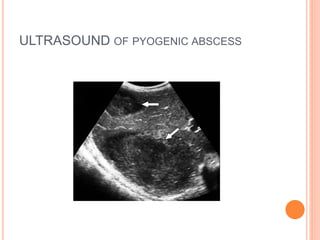
 USG
 DIAGNOSTIC ASPIRATION & CULTURE SENSITIVITY
 CT scan
ULTRASOUND OF PYOGENIC ABSCESS
CT SCAN
TREATMENT
 MEDICAL
 BROAD SPECTRUM ANTIBIOTICS
 triple regime(penicillin , amino glycoside and Metronidazole)
 cephalosporin and Metronidazole
 SPECIFIC
 ACCORDING TO CULTURE SENSITIVITY
 i/v fluids to prevent hepatorenal syndrome
 ANALGESICS & ANTIPYRATICS
 Urgent drainage
CONTINUED
 INVASIVE
 TO DRAIN OR NOT TO DRAIN:
 <5cm, single abscess- needle aspiration or catheter
 >5cm- catheter
 Also: Surgery, ERCP
 URGENT DRAINAGE
 USG GUIDED, AND PIG TAIL CATHETER
 OPEN
 ERCP IN CASE OF OBSTRUCTION
AMOEBIC LIVER ABSCESS
AMOEBIC ABSCESS
 Epidemiology
 M > F 7:1
 10 % world population
 40-50 million amoeba infections/year worldwide
 Age Extremes
 Endemic Areas most susceptible
 Country of origin or Travel
GEOGRAPHIC DISTRIBUTION
ETIOLOGY AND PATHOPHYSIOLOGY
 Entemoeba histolytica
MODE OF TRANSMISSION
 Large intestine (history of dysentery)
 Travel to liver most common superior aspect near
diaphragm through portal vein
 Where proliferates to produce cytolytic enzymes
 Destroy liver tissues
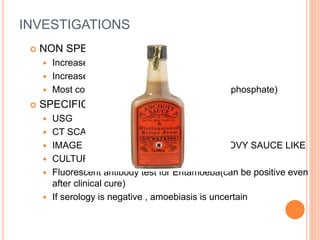
 Abscess which is sterile(anchovy paste or chocolate
sauce
 Amoeba may be found in abscess wall
SIGN AND SYMPTOMS
 Fever
 Pain RHC
 Dysentery
 Tenderness
INVESTIGATIONS
 NON SPECIPIC
 Increase TLC
 Increase LFT’s
 Most common biochemical abnormality(alk phosphate)
 SPECIFIC
 USG
 CT SCAN
 IMAGE GUIDED ASPIRATION ANCHOVY SAUCE LIKE
 CULTURE AND SENSTIVITY
 Fluorescent antibody test for Entamoeba(can be positive even
after clinical cure)
 If serology is negative , amoebiasis is uncertain
USG OF AMEBIC ABSCESS-NOTE PERIPHERAL
LOCATION, ROUNDED SHAPE, POOR RIM WITH
INTERNAL ECHOES
pgme
dical
worl
d.co
m
CT SHOWING SUPERFICIAL ABSCESS
pgme
dical
worl
d.co
m
PERIPHERALLY LOCATED AND ROUND. RIM IS
NONENHANCING BUT SHOWS PERIPHERAL EDEMA
(BLACK ARROWS). NOTE THE EXTENSION INTO THE
INTERCOSTAL SPACE (WHITE ARROWS).
pgme
dical
worl
d.co
m
TREATMENT
 NON INVASIVE
 Metronidazole 400-800 mg TDS …….7 to 10 days
 INVASIVE
 Ultrasound guided aspiration
 Surgery
 Amoeba: drainage not usually required
 Exceptions:
 Verge of rupture
 Abx not working
 Imminent need to exclude other dx
 Large abscess
COMPARISON
PROGNOSIS & NATURAL HISTORY
• Mortality 2-12%
• Often due to co morbidities, not
necessarily abscess itself
SUMMARY
 If untreated LA is potentially fatal.
 Must be diagnosed & treated promptly
 Investigations-LFT,USG and CT
 SEROLOGY-corner stone to differentiate
 Pyogenic liver abscess-Antibiotics plus drainage
 Causative pathology should also be treated
 ALA-most cases treated with amebicidal agents
alone with drainage procedures reserved for
resistant or complicated cases
 Luminal amebicides should also be given
 When there is high index of suspicion for LA Rx
should not be withheld until diagnosis is confirmed
REFERRENCES
 Baily and love
Thank you

liver abscess

  • 2.
    OBJECTIVES  Anatomy ofliver  Classification  Etiology and patho-physiology  Management
  • 3.
  • 4.
    CLASSIFICATION PYOGENIC  Gram Positive Gram-negative  Anaerobic  Staph aureus,Strepto pyogenes,Strepto milleri,strepto faecalis  E coli,Klebsiella,Proteus  Bacteroids,Clostridium,Actinomyces AMOEBIC CANDIDA TB (rare)
  • 5.
    PATHO PHYSIOLOGY  Liverlargest portion of reticuloendothelial system so continuous exposure to bacteria from enteric tract  Due to high level of reticuloendothelial tissue, non- viral infections are uncommon
  • 6.
    RISK FACTORS  PYOGENIC DM  Cancer  Liver Transplant  ENTAMOEBA  Pregnancy  Steroids  Cancer  Endemic area travel (short or long term)
  • 7.
  • 8.
    EPIDEMIOLOGY  MALE >FEMALE 3 : 1  MORE IN RIGHT LOBE, SUPERIOR ASPECT  INCREASED INCIDENCE IN DIABETES MELLITIS
  • 9.
    PATHO PHYSIOLOGY OFPYOGENIC ABCESS  PYOGENIC:  Peritonitis  To liver via portal circulation  Direct Spread  Biliary infections(ascending cholingitis  Hematogenous Seeding  Bacteremia, septecemia(unusual)  Adjacent infections  Sub phrenic abscess, Cholecystitis  Sites: R lobe most common  Blood supply
  • 10.
    …PATHO PHYSIOLOGY  Mostlymultiple abscesses/sometimes single  40 % monomicrobial  40 % polymicrobial  20 % negative culture
  • 11.
    SIGN AND SYMPTOMS Rigors high swinging temp(90 %)  Tender palpable liver(50 %)  Jaundice 1/3  Charcot’s triad  Or non-specific malaise over month
  • 12.
    INVESTIGATIONS  NON SPECIFIC total lymphocyte count: increase leukocytosis  Increase ESR  Increase alk phosphate(mild)(67-90%)  SPECIFIC  USG  DIAGNOSTIC ASPIRATION & CULTURE SENSITIVITY  CT scan
  • 13.
  • 14.
  • 15.
    TREATMENT  MEDICAL  BROADSPECTRUM ANTIBIOTICS  triple regime(penicillin , amino glycoside and Metronidazole)  cephalosporin and Metronidazole  SPECIFIC  ACCORDING TO CULTURE SENSITIVITY  i/v fluids to prevent hepatorenal syndrome  ANALGESICS & ANTIPYRATICS  Urgent drainage
  • 16.
    CONTINUED  INVASIVE  TODRAIN OR NOT TO DRAIN:  <5cm, single abscess- needle aspiration or catheter  >5cm- catheter  Also: Surgery, ERCP  URGENT DRAINAGE  USG GUIDED, AND PIG TAIL CATHETER  OPEN  ERCP IN CASE OF OBSTRUCTION
  • 17.
  • 18.
    AMOEBIC ABSCESS  Epidemiology M > F 7:1  10 % world population  40-50 million amoeba infections/year worldwide  Age Extremes  Endemic Areas most susceptible  Country of origin or Travel
  • 19.
  • 20.
    ETIOLOGY AND PATHOPHYSIOLOGY Entemoeba histolytica
  • 22.
    MODE OF TRANSMISSION Large intestine (history of dysentery)  Travel to liver most common superior aspect near diaphragm through portal vein  Where proliferates to produce cytolytic enzymes  Destroy liver tissues  Abscess which is sterile(anchovy paste or chocolate sauce  Amoeba may be found in abscess wall
  • 23.
    SIGN AND SYMPTOMS Fever  Pain RHC  Dysentery  Tenderness
  • 24.
    INVESTIGATIONS  NON SPECIPIC Increase TLC  Increase LFT’s  Most common biochemical abnormality(alk phosphate)  SPECIFIC  USG  CT SCAN  IMAGE GUIDED ASPIRATION ANCHOVY SAUCE LIKE  CULTURE AND SENSTIVITY  Fluorescent antibody test for Entamoeba(can be positive even after clinical cure)  If serology is negative , amoebiasis is uncertain
  • 25.
    USG OF AMEBICABSCESS-NOTE PERIPHERAL LOCATION, ROUNDED SHAPE, POOR RIM WITH INTERNAL ECHOES pgme dical worl d.co m
  • 26.
    CT SHOWING SUPERFICIALABSCESS pgme dical worl d.co m
  • 27.
    PERIPHERALLY LOCATED ANDROUND. RIM IS NONENHANCING BUT SHOWS PERIPHERAL EDEMA (BLACK ARROWS). NOTE THE EXTENSION INTO THE INTERCOSTAL SPACE (WHITE ARROWS). pgme dical worl d.co m
  • 28.
    TREATMENT  NON INVASIVE Metronidazole 400-800 mg TDS …….7 to 10 days  INVASIVE  Ultrasound guided aspiration  Surgery  Amoeba: drainage not usually required  Exceptions:  Verge of rupture  Abx not working  Imminent need to exclude other dx  Large abscess
  • 29.
  • 30.
    PROGNOSIS & NATURALHISTORY • Mortality 2-12% • Often due to co morbidities, not necessarily abscess itself
  • 31.
    SUMMARY  If untreatedLA is potentially fatal.  Must be diagnosed & treated promptly  Investigations-LFT,USG and CT  SEROLOGY-corner stone to differentiate  Pyogenic liver abscess-Antibiotics plus drainage  Causative pathology should also be treated
  • 32.
     ALA-most casestreated with amebicidal agents alone with drainage procedures reserved for resistant or complicated cases  Luminal amebicides should also be given  When there is high index of suspicion for LA Rx should not be withheld until diagnosis is confirmed
  • 33.
  • 34.