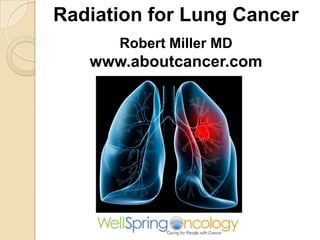
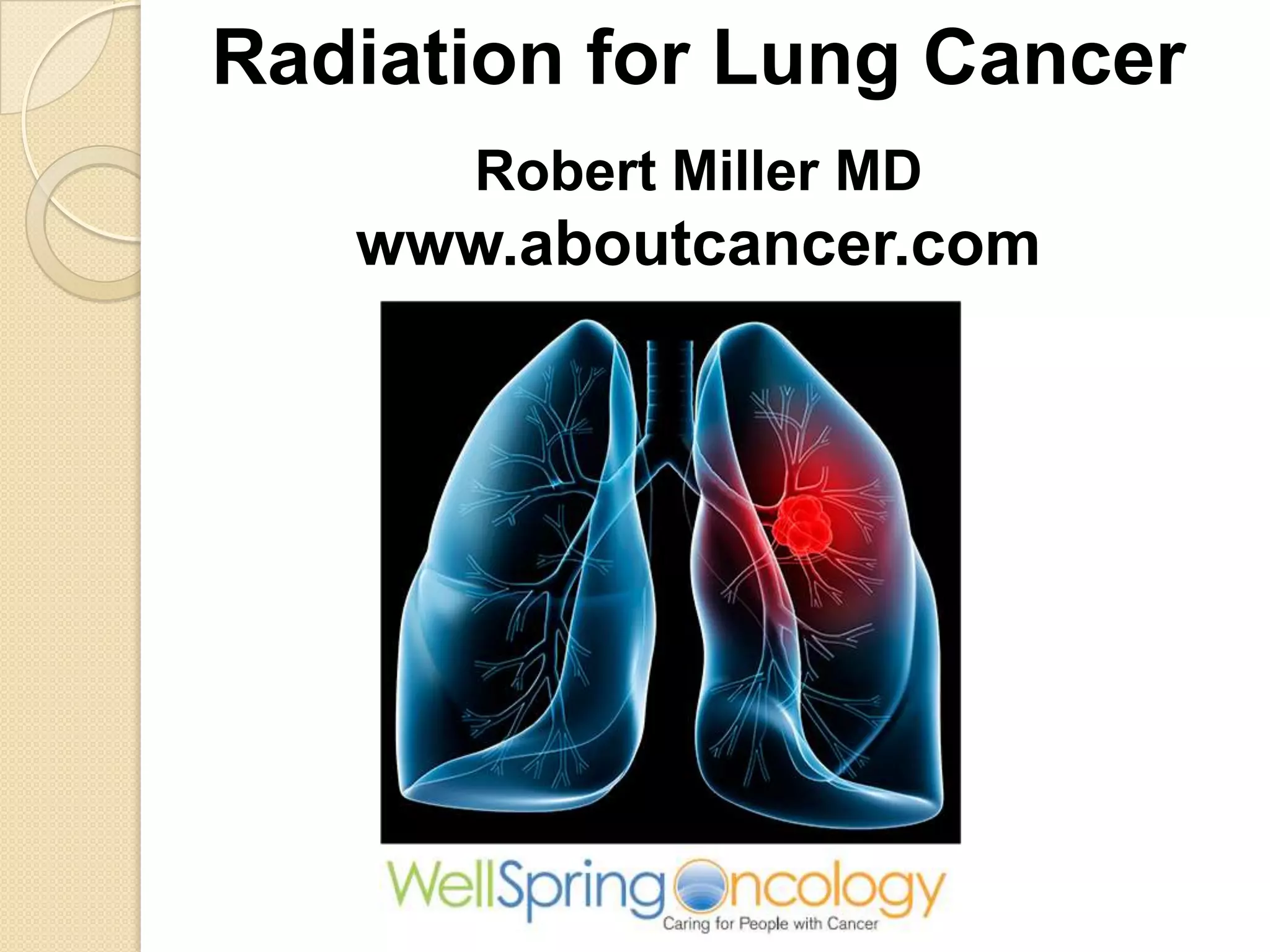
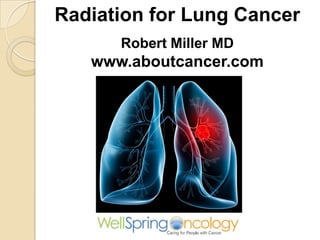
Radiation for Lung Cancer
      Robert Miller MD
   www.aboutcancer.com
NCCN.org
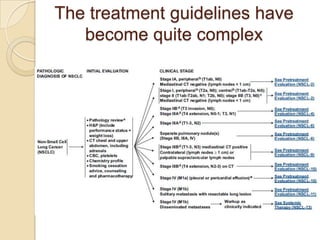
The treatment guidelines have
   become quite complex
NCCN.com
Treatment of Lung Cancer

 Stage  I and II – surgery (if possible)
  and sometime postOp chemo or
  radiation (virtually all small cell
  cancer patients receive
  chemotherapy)
 Stage III – usually chemo plus
  radiation, sometime followed by
  surgery
 Stage IV – chemo or radiation,
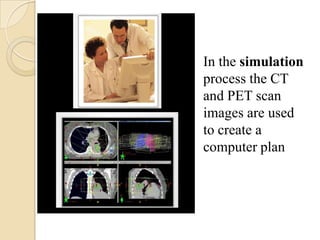
In the simulation
process the CT
and PET scan
images are used
to create a
computer plan
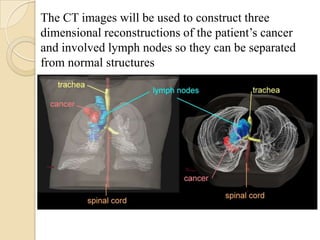
The CT images will be used to construct three
dimensional reconstructions of the patient’s cancer
and involved lymph nodes so they can be separated
from normal structures
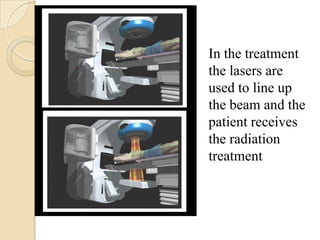
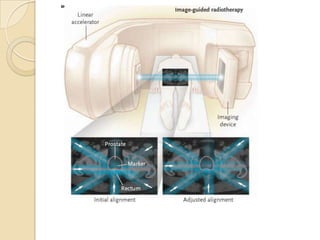
In the treatment
the lasers are
used to line up
the beam and the
patient receives
the radiation
treatment
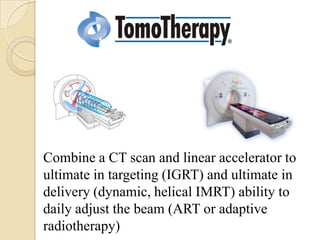
Combine a CT scan and linear accelerator to
ultimate in targeting (IGRT) and ultimate in
delivery (dynamic, helical IMRT) ability to
daily adjust the beam (ART or adaptive
radiotherapy)
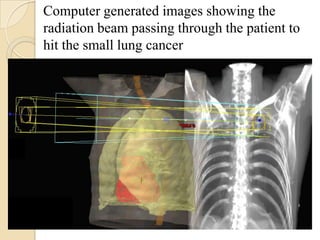
Computer generated images showing the
radiation beam passing through the patient to
hit the small lung cancer
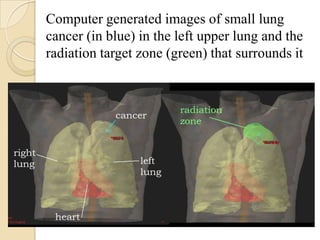
Computer generated images of small lung
cancer (in blue) in the left upper lung and the
radiation target zone (green) that surrounds it
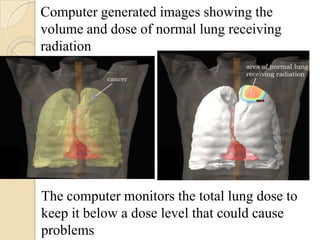
Computer generated images showing the
volume and dose of normal lung receiving
radiation


The computer monitors the total lung dose to
keep it below a dose level that could cause
problems
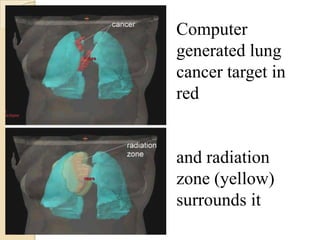
Computer
generated lung
cancer target in
red


and radiation
zone (yellow)
surrounds it
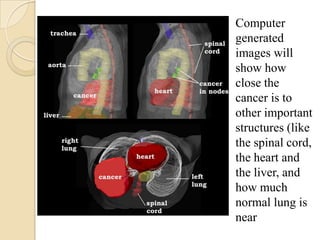
Computer
generated
images will
show how
close the
cancer is to
other important
structures (like
the spinal cord,
the heart and
the liver, and
how much
normal lung is
near
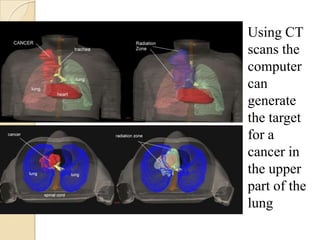
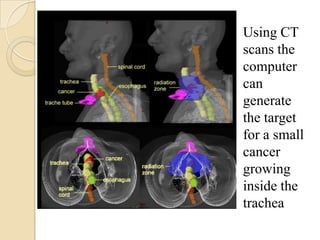
Using CT
scans the
computer
can
generate
the target
for a
cancer in
the upper
part of the
lung
Using CT
scans the
computer
can
generate
the target
for a small
cancer
growing
inside the
trachea
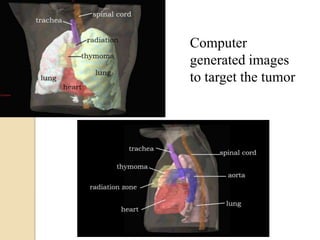
Computer
generated images
to target the tumor
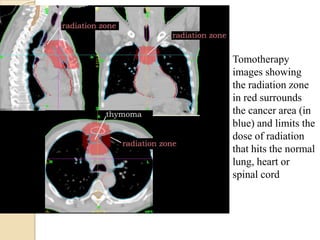
Tomotherapy
images showing
the radiation zone
in red surrounds
the cancer area (in
blue) and limits the
dose of radiation
that hits the normal
lung, heart or
spinal cord
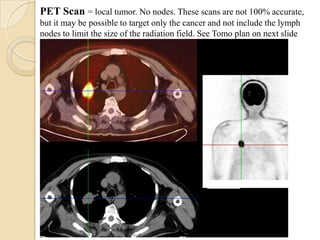
PET Scan = local tumor. No nodes. These scans are not 100% accurate,
but it may be possible to target only the cancer and not include the lymph
nodes to limit the size of the radiation field. See Tomo plan on next slide
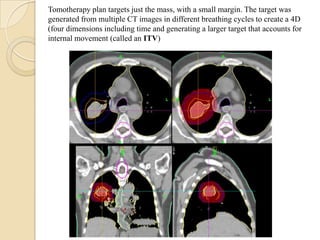
Tomotherapy plan targets just the mass, with a small margin. The target was
generated from multiple CT images in different breathing cycles to create a 4D
(four dimensions including time and generating a larger target that accounts for
internal movement (called an ITV)
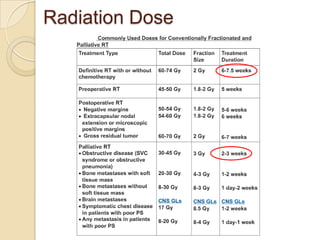
Radiation Dose
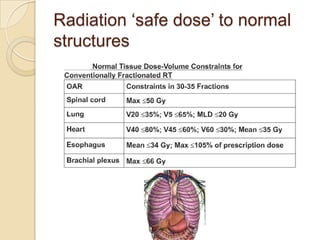
Radiation ‘safe dose’ to normal
structures
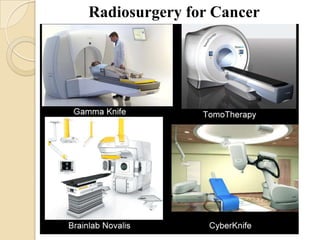
Radiosurgery for Cancer
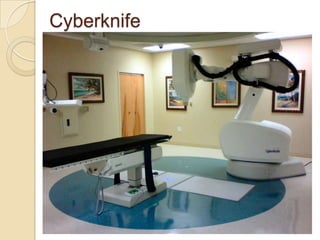
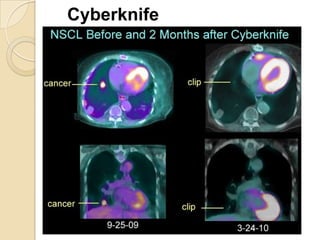
Cyberknife
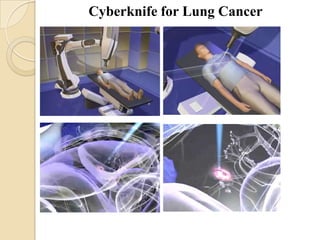
Cyberknife for Lung Cancer
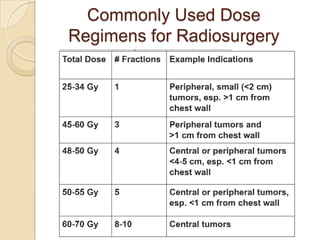
Commonly Used Dose
Regimens for Radiosurgery
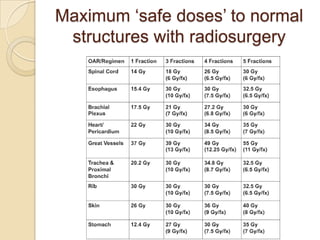
Maximum ‘safe doses’ to normal
 structures with radiosurgery
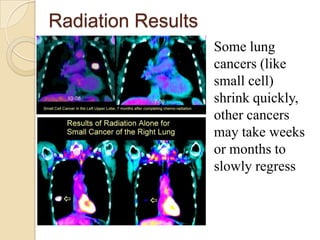
Radiation Results
                    Some lung
                    cancers (like
                    small cell)
                    shrink quickly,
                    other cancers
                    may take weeks
                    or months to
                    slowly regress
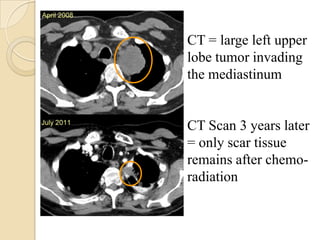
CT = large left upper
lobe tumor invading
the mediastinum


CT Scan 3 years later
= only scar tissue
remains after chemo-
radiation
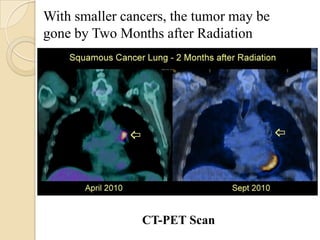
With smaller cancers, the tumor may be
gone by Two Months after Radiation


                CT-PET Scan
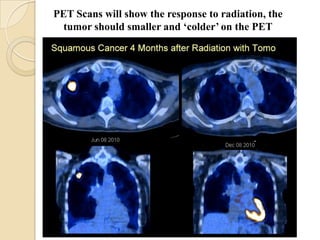
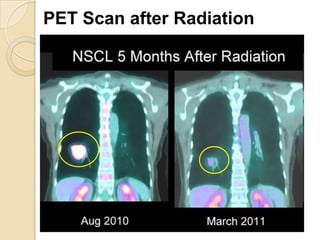
PET Scans will show the response to radiation, the
  tumor should smaller and ‘colder’ on the PET
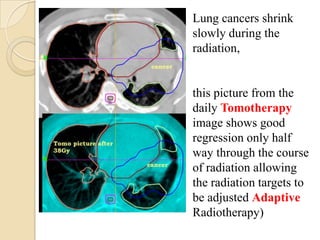
Lung cancers shrink
slowly during the
radiation,


this picture from the
daily Tomotherapy
image shows good
regression only half
way through the course
of radiation allowing
the radiation targets to
be adjusted Adaptive
Radiotherapy)
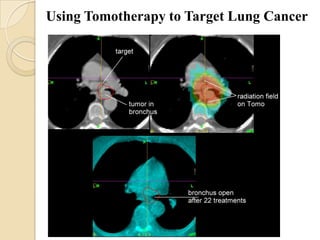
Using Tomotherapy to Target Lung Cancer
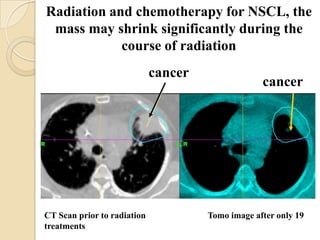
Radiation and chemotherapy for NSCL, the
 mass may shrink significantly during the
            course of radiation
                             cancer
                                                   cancer


CT Scan prior to radiation            Tomo image after only 19
treatments
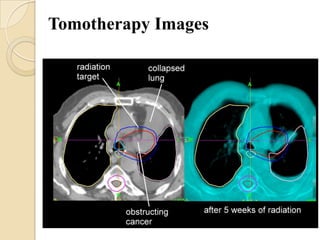
Tomotherapy Images
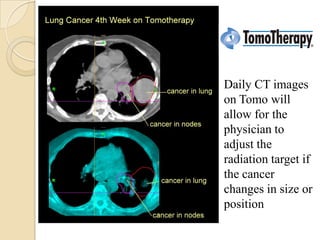
Daily CT images
on Tomo will
allow for the
physician to
adjust the
radiation target if
the cancer
changes in size or
position
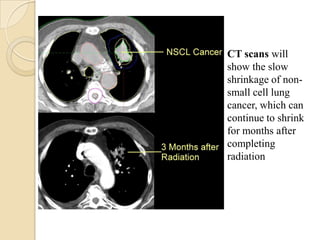
CT scans will
show the slow
shrinkage of non-
small cell lung
cancer, which can
continue to shrink
for months after
completing
radiation
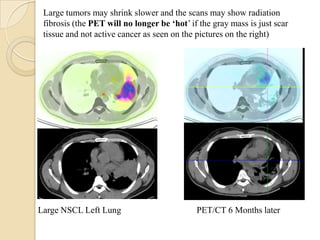
Large tumors may shrink slower and the scans may show radiation
 fibrosis (the PET will no longer be ‘hot’ if the gray mass is just scar
 tissue and not active cancer as seen on the pictures on the right)


Large NSCL Left Lung                         PET/CT 6 Months later
PET Scan after Radiation
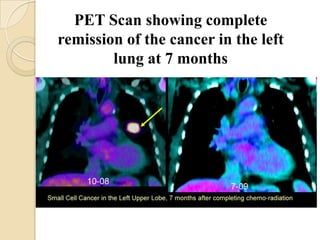
PET Scan showing complete
remission of the cancer in the left
        lung at 7 months
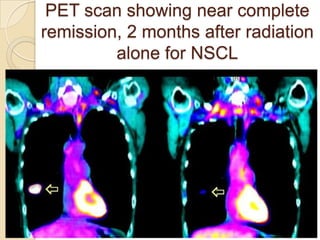
PET scan showing near complete
remission, 2 months after radiation
         alone for NSCL
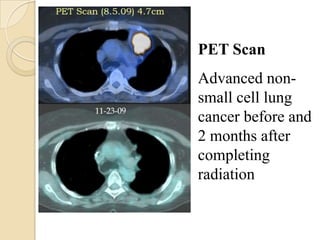
PET Scan
Advanced non-
small cell lung
cancer before and
2 months after
completing
radiation
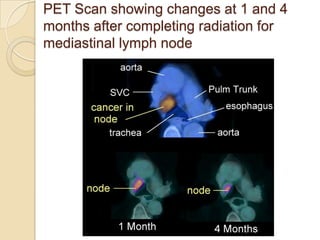
PET Scan showing changes at 1 and 4
months after completing radiation for
mediastinal lymph node
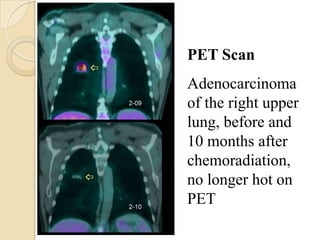
PET Scan

 2-09
        Adenocarcinoma
        of the right upper
        lung, before and
        10 months after
        chemoradiation,
2-10    no longer hot on
        PET
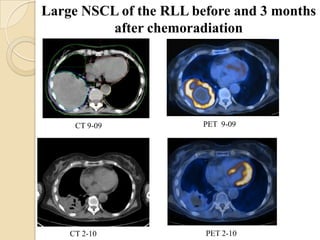
Large NSCL of the RLL before and 3 months
          after chemoradiation


     CT 9-09            PET 9-09


    CT 2-10             PET 2-10
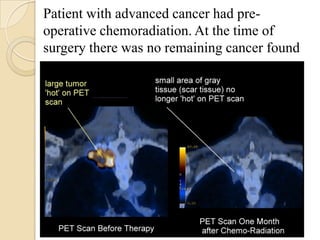
Patient with advanced cancer had pre-
operative chemoradiation. At the time of
surgery there was no remaining cancer found
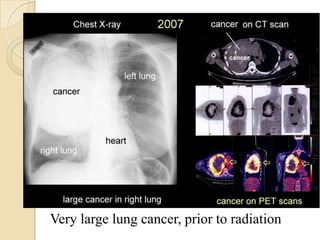
Very large lung cancer, prior to radiation
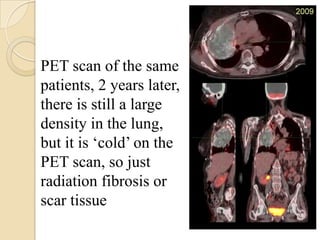
PET scan of the same
patients, 2 years later,
there is still a large
density in the lung,
but it is ‘cold’ on the
PET scan, so just
radiation fibrosis or
scar tissue
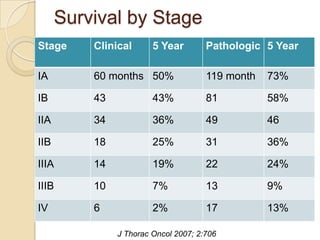
Survival by Stage
Stage     Clinical      5 Year        Pathologic 5 Year

IA        60 months 50%               119 month   73%

IB        43            43%           81          58%

IIA       34            36%           49          46

IIB       18            25%           31          36%

IIIA      14            19%           22          24%

IIIB      10            7%            13          9%

IV        6             2%            17          13%

               J Thorac Oncol 2007; 2:706
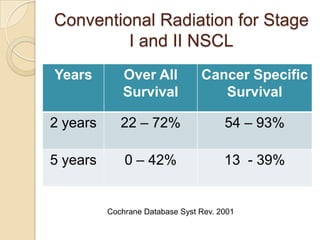
Conventional Radiation for Stage
         I and II NSCL
Years        Over All            Cancer Specific
             Survival               Survival

2 years      22 – 72%                  54 – 93%

5 years       0 – 42%                  13 - 39%


          Cochrane Database Syst Rev. 2001
Cyberknife
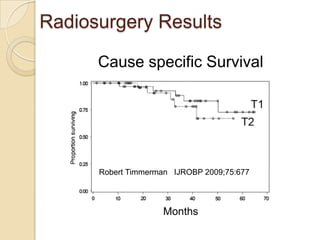
Radiosurgery Results

      Cause specific Survival


      Robert Timmerman IJROBP 2009;75:677


                    Months
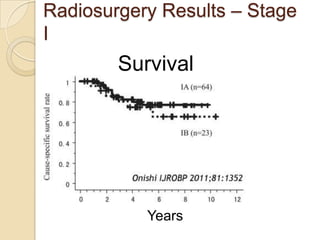
Radiosurgery Results – Stage
I
        Survival


           Years
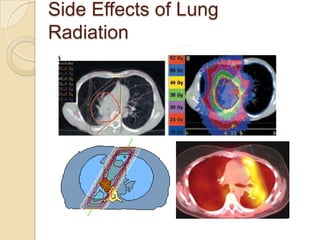
Side Effects of Lung
Radiation
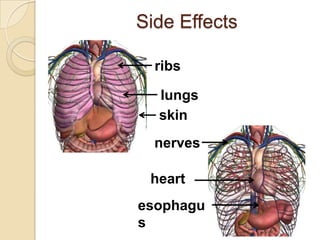
Side Effects

  ribs

  lungs
  skin
  nerves

 heart
esophagu
s
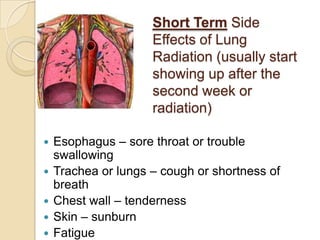
Short Term Side
                     Effects of Lung
                     Radiation (usually start
                     showing up after the
                     second week or
                     radiation)

   Esophagus – sore throat or trouble
    swallowing
   Trachea or lungs – cough or shortness of
    breath
   Chest wall – tenderness
   Skin – sunburn
   Fatigue
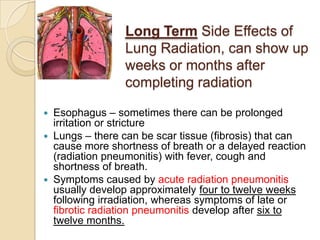
Long Term Side Effects of
                Lung Radiation, can show up
                weeks or months after
                completing radiation

 Esophagus – sometimes there can be prolonged
  irritation or stricture
 Lungs – there can be scar tissue (fibrosis) that can
  cause more shortness of breath or a delayed reaction
  (radiation pneumonitis) with fever, cough and
  shortness of breath.
 Symptoms caused by acute radiation pneumonitis
  usually develop approximately four to twelve weeks
  following irradiation, whereas symptoms of late or
  fibrotic radiation pneumonitis develop after six to
  twelve months.
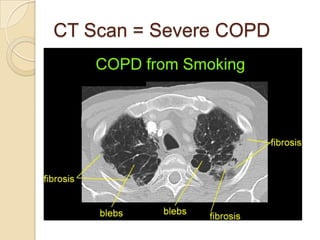
CT Scan = Severe COPD
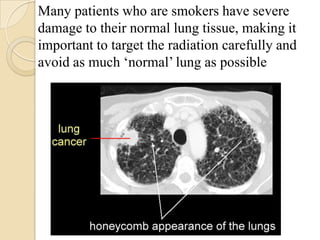
Many patients who are smokers have severe
damage to their normal lung tissue, making it
important to target the radiation carefully and
avoid as much ‘normal’ lung as possible
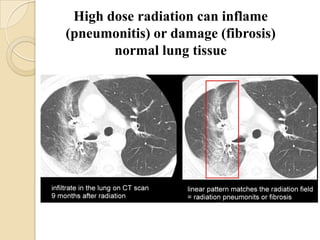
High dose radiation can inflame
(pneumonitis) or damage (fibrosis)
       normal lung tissue
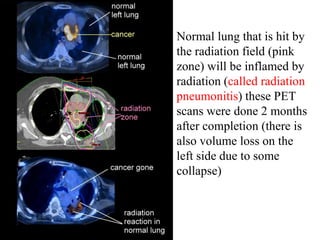
Normal lung that is hit by
the radiation field (pink
zone) will be inflamed by
radiation (called radiation
pneumonitis) these PET
scans were done 2 months
after completion (there is
also volume loss on the
left side due to some
collapse)
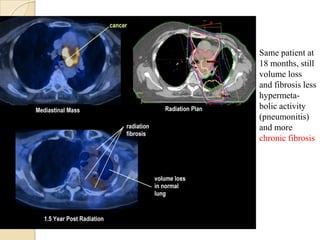
Same patient at
18 months, still
volume loss
and fibrosis less
hypermeta-
bolic activity
(pneumonitis)
and more
chronic fibrosis
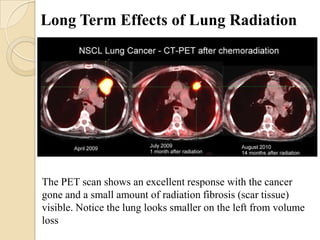
Long Term Effects of Lung Radiation


The PET scan shows an excellent response with the cancer
gone and a small amount of radiation fibrosis (scar tissue)
visible. Notice the lung looks smaller on the left from volume
loss
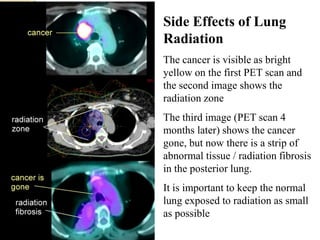
Side Effects of Lung
Radiation
The cancer is visible as bright
yellow on the first PET scan and
the second image shows the
radiation zone
The third image (PET scan 4
months later) shows the cancer
gone, but now there is a strip of
abnormal tissue / radiation fibrosis
in the posterior lung.
It is important to keep the normal
lung exposed to radiation as small
as possible
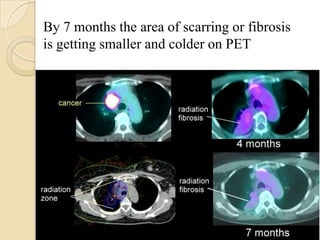
By 7 months the area of scarring or fibrosis
is getting smaller and colder on PET
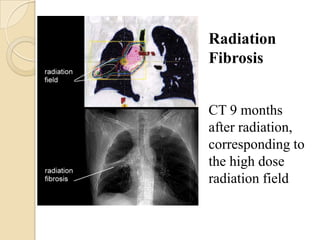
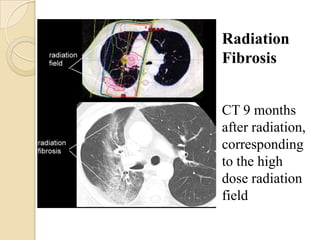
Radiation
Fibrosis


CT 9 months
after radiation,
corresponding to
the high dose
radiation field
Radiation
Fibrosis


CT 9 months
after radiation,
corresponding
to the high
dose radiation
field
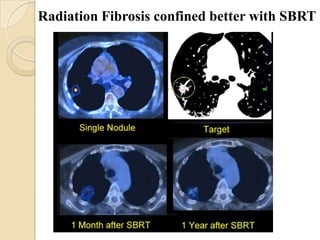
Radiation Fibrosis confined better with SBRT
Radiation for Lung Cancer
      Robert Miller MD
   www.aboutcancer.com

Radiation for Lung Cancer

  • 1.
    Radiation for LungCancer Robert Miller MD www.aboutcancer.com
  • 3.
  • 4.
    The treatment guidelineshave become quite complex
  • 5.
  • 6.
    Treatment of LungCancer  Stage I and II – surgery (if possible) and sometime postOp chemo or radiation (virtually all small cell cancer patients receive chemotherapy)  Stage III – usually chemo plus radiation, sometime followed by surgery  Stage IV – chemo or radiation,
  • 7.
    In the simulation processthe CT and PET scan images are used to create a computer plan
  • 8.
    The CT imageswill be used to construct three dimensional reconstructions of the patient’s cancer and involved lymph nodes so they can be separated from normal structures
  • 9.
    In the treatment thelasers are used to line up the beam and the patient receives the radiation treatment
  • 11.
    Combine a CTscan and linear accelerator to ultimate in targeting (IGRT) and ultimate in delivery (dynamic, helical IMRT) ability to daily adjust the beam (ART or adaptive radiotherapy)
  • 12.
    Computer generated imagesshowing the radiation beam passing through the patient to hit the small lung cancer
  • 13.
    Computer generated imagesof small lung cancer (in blue) in the left upper lung and the radiation target zone (green) that surrounds it
  • 14.
    Computer generated imagesshowing the volume and dose of normal lung receiving radiation The computer monitors the total lung dose to keep it below a dose level that could cause problems
  • 15.
    Computer generated lung cancer targetin red and radiation zone (yellow) surrounds it
  • 16.
    Computer generated images will show how closethe cancer is to other important structures (like the spinal cord, the heart and the liver, and how much normal lung is near
  • 17.
    Using CT scans the computer can generate thetarget for a cancer in the upper part of the lung
  • 18.
    Using CT scans the computer can generate thetarget for a small cancer growing inside the trachea
  • 19.
  • 20.
    Tomotherapy images showing the radiationzone in red surrounds the cancer area (in blue) and limits the dose of radiation that hits the normal lung, heart or spinal cord
  • 21.
    PET Scan =local tumor. No nodes. These scans are not 100% accurate, but it may be possible to target only the cancer and not include the lymph nodes to limit the size of the radiation field. See Tomo plan on next slide
  • 22.
    Tomotherapy plan targetsjust the mass, with a small margin. The target was generated from multiple CT images in different breathing cycles to create a 4D (four dimensions including time and generating a larger target that accounts for internal movement (called an ITV)
  • 23.
  • 24.
    Radiation ‘safe dose’to normal structures
  • 25.
  • 26.
  • 27.
  • 28.
  • 29.
    Maximum ‘safe doses’to normal structures with radiosurgery
  • 30.
    Radiation Results Some lung cancers (like small cell) shrink quickly, other cancers may take weeks or months to slowly regress
  • 31.
    CT = largeleft upper lobe tumor invading the mediastinum CT Scan 3 years later = only scar tissue remains after chemo- radiation
  • 32.
    With smaller cancers,the tumor may be gone by Two Months after Radiation CT-PET Scan
  • 33.
    PET Scans willshow the response to radiation, the tumor should smaller and ‘colder’ on the PET
  • 34.
    Lung cancers shrink slowlyduring the radiation, this picture from the daily Tomotherapy image shows good regression only half way through the course of radiation allowing the radiation targets to be adjusted Adaptive Radiotherapy)
  • 35.
    Using Tomotherapy toTarget Lung Cancer
  • 36.
    Radiation and chemotherapyfor NSCL, the mass may shrink significantly during the course of radiation cancer cancer CT Scan prior to radiation Tomo image after only 19 treatments
  • 37.
  • 38.
    Daily CT images onTomo will allow for the physician to adjust the radiation target if the cancer changes in size or position
  • 39.
    CT scans will showthe slow shrinkage of non- small cell lung cancer, which can continue to shrink for months after completing radiation
  • 40.
    Large tumors mayshrink slower and the scans may show radiation fibrosis (the PET will no longer be ‘hot’ if the gray mass is just scar tissue and not active cancer as seen on the pictures on the right) Large NSCL Left Lung PET/CT 6 Months later
  • 41.
    PET Scan afterRadiation
  • 42.
    PET Scan showingcomplete remission of the cancer in the left lung at 7 months
  • 43.
    PET scan showingnear complete remission, 2 months after radiation alone for NSCL
  • 44.
    PET Scan Advanced non- smallcell lung cancer before and 2 months after completing radiation
  • 45.
    PET Scan showingchanges at 1 and 4 months after completing radiation for mediastinal lymph node
  • 46.
    PET Scan 2-09 Adenocarcinoma of the right upper lung, before and 10 months after chemoradiation, 2-10 no longer hot on PET
  • 47.
    Large NSCL ofthe RLL before and 3 months after chemoradiation CT 9-09 PET 9-09 CT 2-10 PET 2-10
  • 48.
    Patient with advancedcancer had pre- operative chemoradiation. At the time of surgery there was no remaining cancer found
  • 49.
    Very large lungcancer, prior to radiation
  • 50.
    PET scan ofthe same patients, 2 years later, there is still a large density in the lung, but it is ‘cold’ on the PET scan, so just radiation fibrosis or scar tissue
  • 51.
    Survival by Stage Stage Clinical 5 Year Pathologic 5 Year IA 60 months 50% 119 month 73% IB 43 43% 81 58% IIA 34 36% 49 46 IIB 18 25% 31 36% IIIA 14 19% 22 24% IIIB 10 7% 13 9% IV 6 2% 17 13% J Thorac Oncol 2007; 2:706
  • 52.
    Conventional Radiation forStage I and II NSCL Years Over All Cancer Specific Survival Survival 2 years 22 – 72% 54 – 93% 5 years 0 – 42% 13 - 39% Cochrane Database Syst Rev. 2001
  • 53.
  • 54.
    Radiosurgery Results Cause specific Survival Robert Timmerman IJROBP 2009;75:677 Months
  • 55.
    Radiosurgery Results –Stage I Survival Years
  • 56.
    Side Effects ofLung Radiation
  • 57.
    Side Effects ribs lungs skin nerves heart esophagu s
  • 58.
    Short Term Side Effects of Lung Radiation (usually start showing up after the second week or radiation)  Esophagus – sore throat or trouble swallowing  Trachea or lungs – cough or shortness of breath  Chest wall – tenderness  Skin – sunburn  Fatigue
  • 59.
    Long Term SideEffects of Lung Radiation, can show up weeks or months after completing radiation  Esophagus – sometimes there can be prolonged irritation or stricture  Lungs – there can be scar tissue (fibrosis) that can cause more shortness of breath or a delayed reaction (radiation pneumonitis) with fever, cough and shortness of breath.  Symptoms caused by acute radiation pneumonitis usually develop approximately four to twelve weeks following irradiation, whereas symptoms of late or fibrotic radiation pneumonitis develop after six to twelve months.
  • 60.
    CT Scan =Severe COPD
  • 61.
    Many patients whoare smokers have severe damage to their normal lung tissue, making it important to target the radiation carefully and avoid as much ‘normal’ lung as possible
  • 62.
    High dose radiationcan inflame (pneumonitis) or damage (fibrosis) normal lung tissue
  • 63.
    Normal lung thatis hit by the radiation field (pink zone) will be inflamed by radiation (called radiation pneumonitis) these PET scans were done 2 months after completion (there is also volume loss on the left side due to some collapse)
  • 64.
    Same patient at 18months, still volume loss and fibrosis less hypermeta- bolic activity (pneumonitis) and more chronic fibrosis
  • 65.
    Long Term Effectsof Lung Radiation The PET scan shows an excellent response with the cancer gone and a small amount of radiation fibrosis (scar tissue) visible. Notice the lung looks smaller on the left from volume loss
  • 66.
    Side Effects ofLung Radiation The cancer is visible as bright yellow on the first PET scan and the second image shows the radiation zone The third image (PET scan 4 months later) shows the cancer gone, but now there is a strip of abnormal tissue / radiation fibrosis in the posterior lung. It is important to keep the normal lung exposed to radiation as small as possible
  • 67.
    By 7 monthsthe area of scarring or fibrosis is getting smaller and colder on PET
  • 68.
    Radiation Fibrosis CT 9 months afterradiation, corresponding to the high dose radiation field
  • 69.
    Radiation Fibrosis CT 9 months afterradiation, corresponding to the high dose radiation field
  • 70.
  • 71.
    Radiation for LungCancer Robert Miller MD www.aboutcancer.com