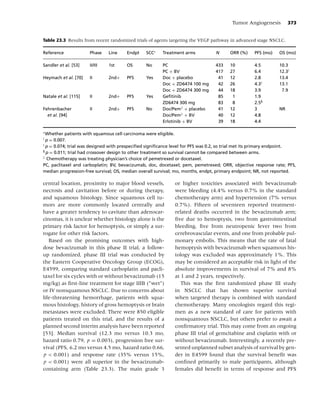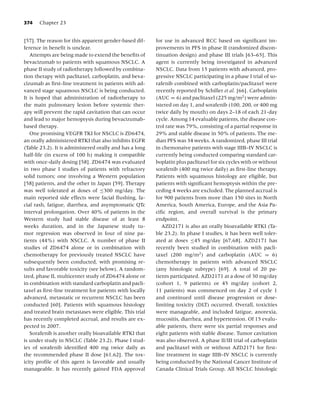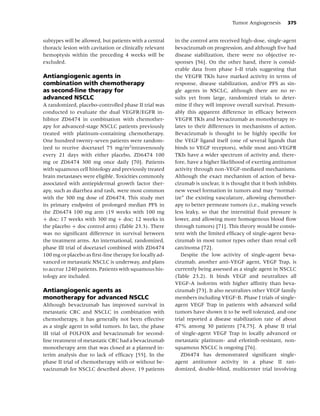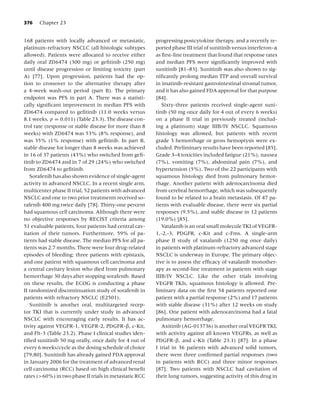


Lung Cancer
Lung Cancer
EDITED BY

Jack A. Roth,             MD, F.A.C.S.
Professor and Bud Johnson Clinical Distinguished Chair
Department of Thoracic and Cardiovascular Surgery
Professor of Molecular and Cellular Oncology
Director, W.M. Keck Center for Innovative Cancer Therapies
Chief, Section of Thoracic Molecular Oncology
The University of Texas M.D. Anderson Cancer Center
Houston, Texas, USA


James D. Cox,               MD
Professor and Head
Division of Radiation Oncology
The University of Texas M. D. Anderson Cancer Center
Houston, Texas, USA


Waun Ki Hong,                MD, D.M.Sc. (Hon.)
American Cancer Society Professor
Samsung Distinguished University Chair in Cancer Medicine
Professor and Head, Division of Cancer Medicine
Professor, Department of Thoracic/Head and Neck Medical Oncology
The University of Texas M.D. Anderson Cancer Center
Houston, Texas, USA


THIRD EDITION
C 2008 by Blackwell Publishing
Blackwell Publishing, Inc., 350 Main Street, Malden, Massachusetts 02148-5020, USA
Blackwell Publishing Ltd, 9600 Garsington Road, Oxford OX4 2DQ, UK
Blackwell Publishing Asia Pty Ltd, 550 Swanston Street, Carlton, Victoria 3053, Australia
The right of the Author to be identified as the Author of this Work has been asserted in accordance with
the Copyright, Designs and Patents Act 1988.
All rights reserved. No part of this publication may be reproduced, stored in a retrieval system, or
transmitted, in any form or by any means, electronic, mechanical, photocopying, recording or
otherwise, except as permitted by the UK Copyright, Designs and Patents Act 1988, without the prior
permission of the publisher.
First published 1998
Third edition 2008
1   2008
Library of Congress Cataloging-in-Publication Data
Lung cancer / edited by Jack A. Roth, James D. Cox, Waun Ki Hong. – 3rd ed.
     p. ; cm.
  Includes bibliographical references and index.
  ISBN 978-1-4051-5112-2 (alk. paper)
  1. Lungs–Cancer. I. Roth, Jack A. II. Cox, James D. (James Daniel), 1938–
  III. Hong, Waun Ki.
  [DNLM: 1. Lung Neoplasms–therapy. 2. Lung Neoplasms–diagnosis. 3. Lung Neoplasms–genetics.
  WF 658 L9604 2008]
RC280.L8L765 2008
616.99 424–dc22
ISBN: 978-1-4051-5112-2
A catalogue record for this title is available from the British Library
Set in 9.5/12pt Meridien by Aptara Inc., New Delhi, India
Printed and bound in Singapore by Fabulous Printers Pte Ltd
For further information on Blackwell Publishing, visit our website:
http://www.blackwellpublishing.com
The publisher’s policy is to use permanent paper from mills that operate a sustainable forestry policy,
and which has been manufactured from pulp processed using acid-free and elementary chlorine-free
practices. Furthermore, the publisher ensures that the text paper and cover board used have met
acceptable environmental accreditation standards.
Designations used by companies to distinguish their products are often claimed as trademarks. All brand
names and product names used in this book are trade names, service marks, trademarks or registered
trademarks of their respective owners. The Publisher is not associated with any product or vendor
mentioned in this book.
The contents of this work are intended to further general scientific research, understanding, and
discussion only and are not intended and should not be relied upon as recommending or promoting a
specific method, diagnosis, or treatment by physicians for any particular patient. The publisher and the
author make no representations or warranties with respect to the accuracy or completeness of the
contents of this work and specifically disclaim all warranties, including without limitation any implied
warranties of fitness for a particular purpose. In view of ongoing research, equipment modifications,
changes in governmental regulations, and the constant flow of information relating to the use of
medicines, equipment, and devices, the reader is urged to review and evaluate the information provided
in the package insert or instructions for each medicine, equipment, or device for, among other things,
any changes in the instructions or indication of usage and for added warnings and precautions. Readers
should consult with a specialist where appropriate. The fact that an organization or Website is referred to
in this work as a citation and/or a potential source of further information does not mean that the author
or the publisher endorses the information the organization or Website may provide or recommendations
it may make. Further, readers should be aware that Internet Websites listed in this work may have
changed or disappeared between when this work was written and when it is read. No warranty may be
created or extended by any promotional statements for this work. Neither the publisher nor the author
shall be liable for any damages arising herefrom.
Contents


Contributors, vii

Preface, xi
 1 Smoking Cessation, 1
   Alexander V. Prokhorov, Kentya H. Ford,
   and Karen Suchanek Hudmon

 2 Lung Cancer Susceptibility Genes, 20
   Joan E. Bailey-Wilson

 3 Lung Cancer Susceptibility and Risk Assessment Models, 33
   Xifeng Wu, Hushan Yang, Jie Lin, and Margaret R. Spitz

 4 The Molecular Genetics of Lung Cancer, 61
   David S. Shames, Mitsuo Sato, and John D. Minna

 5 Molecular Biology of Preneoplastic Lesions of the Lung, 84
   Ignacio I. Wistuba and Adi F. Gazdar

 6 Detection of Preneoplastic Lesions, 99
   Stephen Lam

 7 Treatment of Preneoplastic Lesions of the Lung, 111
   Annette McWilliams

 8 The Pathology and Pathogenesis of Peripheral Lung Adenocarcinoma
   Including Bronchioloalveolar Carcinoma, 121
   Wilbur A. Franklin

 9 Treatment of Bronchioloalveolar Carcinoma, 144
   Ji-Youn Han, Dae Ho Lee, and Jin Soo Lee

10 Molecular Profiling for Early Detection and Prediction of Response
   in Lung Cancer, 153
   Jacob M. Kaufman and David P. Carbone

11 The Role for Mediastinoscopy in the Staging of Nonsmall Cell
   Lung Cancer, 169
   Carolyn E. Reed

12 Minimally Invasive Surgery for Lung Cancer, 180
   Michael Kent, Miguel Alvelo-Rivera, and James Luketich

13 Extended Resections for Lung Cancer, 194
   Philippe G. Dartevelle, Bedrettin Yildizeli, and Sacha Mussot

                                                                       v
vi   Contents


                14 Adjuvant Chemotherapy Following Surgery for Lung Cancer, 221
                   Benjamin Besse and Thierry Le Chevalier

                15 Induction Chemotherapy for Resectable Lung Cancer, 233
                   Katherine M.W. Pisters

                16 Image-Guided Radiation Therapy, 247
                   Kenneth E. Rosenzweig and Sonal Sura

                17 Stereotactic Body Radiation Therapy for Lung Cancer, 256
                   Robert D. Timmerman and Brian D. Kavanagh

                18 Proton Therapy, 271
                   Joe Y. Chang, Alfred R. Smith, and James D. Cox

                19 Combinations of Radiation Therapy and Chemotherapy for
                   Nonsmall Cell Lung Carcinoma, 283
                   Zhongxing Liao, Frank V. Fossella, and Ritsuko Komaki

                20 New Chemotherapeutic Agents in Lung Cancer, 315
                   Anne S. Tsao

                21 Immunologic Approaches to Lung Cancer Therapy, 334
                   Jay M. Lee, Steven M. Dubinett, and Sherven Sharma

                22 Epidermal Growth Factor Receptor Inhibitors, 352
                   Lecia V. Sequist and Thomas J. Lynch

                23 Tumor Angiogenesis: Biology and Therapeutic Implications
                   for Lung Cancer, 369
                   Emer O. Hanrahan, Monique Nilsson, and John V. Heymach

                24 Retinoids and Rexinoids in Lung Cancer Prevention and Treatment, 386
                   Nishin Bhadkamkar and Fadlo R. Khuri

                25 Proteasome Inhibition in Nonsmall Cell Lung Cancer Therapy, 400
                   Minh Huynh and Primo N. Lara Jr

                26 Targeted Genetic Therapy for Lung Cancer, 411
                   Jack Roth

                27 Screening for Early Detection, 421
                   James L. Mulshine

                28 Natural Agents for Chemoprevention of Lung Cancer, 441
                   Amir Sharafkhaneh, Suryakanta Velamuri,
                   Seyed Javad Moghaddam, Vladimir Badmaev,
                   Burton Dickey, and Jonathan Kurie

                Index, 457

                Color plates are found facing, 276
Contributors


Miguel Alvelo-Rivera, MD                                James D. Cox, MD
Assistant Professor of Surgery,                         Professor and Head, Division of Radiation Oncology
Division of Thoracic Surgery                            The University of Texas,
University of Pittsburgh Medical Center,                M.D. Anderson Cancer Center,
Pittsburgh, PA, USA                                     Houston, TX, USA

Vladimir Badmaev, MD                                    Philippe G. Dartevelle, MD
Vice President, Scientific and Medical Affairs           Professor of Thoracic and Cardiovascular Surgery
Sabinsa Pharmaceutical, Inc.,                             at Paris Sud University
New Jersey, NJ, USA                                     Head of the Department of Thoracic
                                                          and Vascular Surgery and Heart Lung Tansplantation
Joan E. Bailey-Wilson, PhD                                ˆ
                                                        Hopital Marie Lannelongue Le Plessis
Senior Investigator and Co-Branch Chief,                  Robinson France
National Human Genome Research Institute,
National Institutes of Health,                          Burton Dickey, MD
Baltimore, MD, USA                                      Professor and Chair,
                                                        Department of Pulmonary Medicine
Benjamin Besse, MD                                      The University of Texas
Assistant Professor,                                    M. D. Anderson Cancer Center
Department of Medicine,                                 Houston, TX, USA
Institut Gustave Roussy,
Villejuif, France                                       Steven M. Dubinett, MD
                                                        Professor and Chief
Nishin Bhadkamkar                                       Division of Pulmonary and Critical Care Medicine,
Resident, House Staff Doctor                            Department of Medicine,
Emory University School of Medicine                     Director, UCLA Lung Cancer Research Program,
Atlanta, GA, USA                                        Jonsson Comprehensive Cancer Center,
                                                        David Geffen School of Medicine at UCLA,
David P. Carbone, MD, PhD                               Los Angeles, CA, USA
Professor of Medicine and Cancer Biology,
Vanderbilt-Ingram Cancer Center,                        Kentya H. Ford, PhD
Nashville, TN, USA                                      Postdoctoral Fellow,
                                                        Department of Behavioral Sicence,
Joe Y. Chang, MD, PhD                                   The University of Texas,
Assistant Professor,                                    M. D. Anderson Cancer Center,
Director of Translation Research in                     Houston, TX, USA
  Thoracic Radiation Oncology,
Department of Radiation Oncology,                       Frank Fosella, MD
The University of Texas M. D. Anderson Cancer Center,   Medical Director, Thoracic Oncology
Houston, TX, USA                                          Multidisciplinary Care Center;
                                                        Professor, Department of Thoracic/Head
Thierry Le Chevalier, MD                                  and Neck Medical Oncology
Department of Medicine,                                 The University of Texas,
Institut Gustave Roussy,                                M.D. Anderson Cancer Center
Villejuif, France                                       Houston, TX , USA


                                                                                                               vii
viii   Contributors


Wilbur A. Franklin, MD                                  Michael Kent, MD
Professor, Department of Pathology,                     Surgical Resident, Department of
University of Colorado Health Sciences Center,            Thoracic Surgery,
Aurora, CO, USA                                         Beth Israel Deaconess Medical Center,
                                                        Boston, MA, USA
Adi F. Gazdar, MD
Professor of Pathology and Deputy Director,             Fadlo R. Khuri, MD
Hamon Center for Therapeutic Oncology Research,         Professor of Hematology and Oncology,
The University of Texas Southwestern Medical Center,    Winship Cancer Institute,
Dallas, TX, USA                                         Emory University,
                                                        Atlanta, GA, USA
Ji-Youn Han, MD, PhD
Chief Scientist, Lung Cancer Branch,                    Ritsuko Komaki, MD
National Cancer Center                                  Professor, Department of Radiation
Goyang, Gyeonggi, Korea                                   Oncology,
                                                        Gloria Lupton Tennison Distinguished
Emer O. Hanrahan, MB, BCh, MRCPI                          Professorship for Lung Cancer Resarch
Medical Oncology Fellow,                                The University of Texas,
Department of Thoracic/Head and                         M. D. Anderson Cancer Center,
  Neck Medical Oncology,                                Houston, TX, USA
The University of Texas M.D. Anderson
  Cancer Center,
                                                        Jonathan Kurie, MD
Houston, TX, USA
                                                        Professor, Department of Thoracic/Head
                                                          and Neck Medical Oncology
John Heymach, MD, PhD
                                                        The University of Texas,
Assistant Professor,
                                                        M.D. Anderson Cancer Center
Department of Thoracic/Head and Neck Medical Oncology
                                                        Houston, TX, USA
  and Cancer Biology
The University of Texas,
M.D. Anderson Cancer Center
                                                        Stephen Lam, MD, FRCPC
                                                        Professor of Medicine,
Houston, TX , USA
                                                        University of British Columbia;
                                                        and Chair, Lung Tumor Group,
Karen Suchanek Hudmon, Dr PH, MS, BS Pharm
                                                        British Columbia Cancer Agency,
Associate Professor,
                                                        Vancouver, British Columbia, Canada
Department of Pharmacy Practice,
Purdue University School of Pharmacy &
  Pharmaceutical Sciences,                              Primo N. Lara Jr, MD
West, Lafavette,                                        Professor of Medicine,
IN, USA                                                 University of California Davis
                                                        Cancer Center, Sacramento, CA, USA
Minh Huynh, MD
Staff Oncologist                                        Dae Ho Lee, MD
Kaiser Permanente Walnut Creek Medical Center,          Assistant Professor,
Walnut Creek, CA                                        Division of Oncology,
                                                        Department of Internal Medicine,
Jacob M. Kaufman, MD, PhD                               College of Medicine,
Candidate, Predoctoral Trainee                          University of Ulsan and Asan Medical
Vanderbilt University School of Medicine                  Center,
Vanderbilt University Cancer Center,                    Seoul, Korea
Nashville, TN, USA
                                                        Jay M. Lee, MD
Brian D. Kavanagh, MD, MPH                              Surgical Director, Thoracic Oncology Program
Professor and Vice Chairman,                            Assistant Professor of Surgery
Department of Radiation Oncology,                       Division of Cardiothoracic Surgery
University of Colorado Comprehensive Cancer Center,     David Geffen School of Medicine at UCLA
Aurora, CO, USA                                         Los Angeles, CA, USA
Contributors       ix


Jin Soo Lee, MD                                        Sacha Mussot, MD
Director,                                              Thoracic and Vascular Surgeon and Staff Member
Research Institute,                                    Department of Thoracic and Vascular Surgery
National Cancer Center,                                  and Heart Lung Transplantation
Goyang, Gyeonggi, Korea                                 ˆ
                                                       Hopital Marie Lannelongue – Le Plessis Robinson – France

Zhongxing Liao, MD                                     Monique B. Nilsson, PhD
Associate Professor,                                   Research Scientist,
The University of Texas M.D.                           Department of Cancer Biology,
Anderson Cancer Center,                                The University of Texas M.D. Anderson Cancer Center,
Houston, TX, USA                                       Houston, TX, USA

Jie Lin, PhD                                           Katherine M.W. Pisters, MD
Instructor, Department of Epidemiology,                Professor of Medicine,
The University of Texas M.D. Anderson Cancer Center,   Department of Thoracic/Head & Neck Medical
Houston, TX, USA                                         Oncology,
                                                       Division of Cancer Medicine,
James D. Luketich, MD
                                                       The University of Texas M.D. Anderson Cancer
Sampson Endowed Professor of Surgery;
                                                         Center,
  and Chief, Heart,
                                                       Houston, TX, USA
Lung and Esophageal Surgery Institute,
University of Pittsburgh
                                                       Alexander V. Prokhorov, MD, PhD
Medical Center,
                                                       Professor, Department of Behavioral Science,
Pittsburgh, PA, USA
                                                       The University of Texas M.D. Anderson Cancer
                                                         Center,
Thomas J. Lynch
                                                       Houston, TX, USA
Chief of Hematology–Oncology,
Massachusetts General Hospital,
                                                       Carolyn E. Reed, MD
Boston, MA, USA
                                                       Professor of Surgery and Chief,
Annette McWilliams, MD, FRCPC                          Section of General Thoracic Surgery,
Clinical Assistant Professor,                          Medical University of South Carolina,
Department of Medicine,                                Charleston, SC, USA
University of British Columbia;
  and Respiratory Physician,                           Kenneth E. Rosenzweig, MD
Department of Cancer Imaging,                          Associate Attending,
BC Cancer Research Centre,                             Department of Radiation Oncology,
Vancouver, BC, Canada                                  Memorial Sloan–Kettering Cancer Center,
                                                       New York, NY, USA
John D. Minna, MD
Professor of Internal Medicine and Pharmacology;       Jack Roth, MD
  and Director, Hamon Center for Therapeutic           Professor and Bud Johnson Clinical Distinguished Chair
  Oncology Research,                                   Department of Thoracic and Cardiovascular Surgery
The University of Texas Southwestern Medical Center,   Professor of Molecular and Cellular Oncology
Dallas, TX, USA                                        Director, W.M. Keck Center for Innovative Cancer
                                                         Therapies
Seyed Javad Moghaddam, MD                              Chief, Section of Thoracic Molecular Oncology
Instructor, Department of Pulmonary Medicine           The University of Texas,
The University of Texas,                               M.D. Anderson Cancer Center
M.D. Anderson Cancer Center,                           Houston, TX, USA
Houston, TX, USA
                                                       Mitsuo Sato, MD, PhD
James L. Mulshine, MD                                  Postdoctoral Researcher,
Professor, Internal Medicine and Associate Provost     Hamon Center for Therapeutic Oncology Research
  for Research,                                          and the Simmons Cancer Center,
Rush University Medical Center,                        The University of Texas Southwestern Medical Center,
Chicago, IL, USA                                       Dallas, TX, USA
x   Contributors


Lecia Sequist, MD, MPH                                   Robert D. Timmerman, MD
Instructor in Medicine,                                  Professor and Vice Chairman,
Harvard Medical School,                                  Effie Marie Cain Distinguished Chair
MGH Cancer Center,                                         in Cancer Therapy Research,
Boston, MA, USA                                          Department of Radiation Oncology,
                                                         University of Texas
David S. Shames, PhD                                     Southwestern Medical Center,
Postdoctoral Fellow                                      Dallas, TX, USA
Hamon Center for Therapeutic Oncology Research
The University of Texas Southwestern Medical Center,     Anne S. Tsao, MD
Dallas, TX, USA                                          Assistant Professor,
                                                         Department of Thoracic/Head and
Amir Sharafkhaneh, MD                                      Neck Medical Oncology,
Assistant Professor of Medicine at Baylor College        The University of Texas
  of Medicine and Staff,                                 M.D. Anderson Cancer Center,
Physician at the Michael E. DeBakey VA Medical Center,   Houston, TX, USA
Houston, TX, USA
                                                         Suryakanta Velamuri, MD
Sherven Sharma, PhD                                      Assistant Professor of Medicine,
Associate Professor,                                     Balor College of Medicine;
Division of Pulmonary and Critical                         and Staff Physician,
  Care Medicine,                                         Michael E. Debakey VA Medical Center,
Department of Medicine,                                  Houston, TX, USA
UCLA Lung Cancer Research Program,
David Geffen School of Medicine at UCLA,                 Ignacio I. Wistuba, MD
West Los Angeles VA,                                     Associate Professor of Pathology
Los Angeles, CA, USA                                     and Thoracic/Head & Neck Medical
                                                           Oncology,
Alfred R. Smith, PhD                                     The University of Texas
Professor, The University of Texas                       M.D. Anderson Cancer Center,
M.D. Anderson Proton Therapy Center,                     Houston, TX, USA
Houston, TX, USA
                                                         Xifeng Wu, MD, PhD
Margaret R. Spitz, MD, MPH                               Professor, Department of Epidemiology,
Professor and Chair,                                     The University of Texas
Department of Epidemiology,                              M.D. Anderson Cancer Center,
The University of Texas                                  Houston, TX, USA
M.D. Anderson Cancer Center,
Houston, TX, USA                                         Bedrettin Yildizeli, MD
                                                         Associated Professor of Thoracic Surgery,
Sonal Sura, MD                                           Department of Thoracic Surgery,
Radiation Oncology Resident,                             Marmara University Hospital,
New York City, NY, USA                                   Istanbul, Turkey
Preface


When the first edition of Lung Cancer was pub-           high risk for developing lung cancer. This will be
lished 14 years ago, the editors were optimistic that   important for implementing screening and preven-
progress in reducing the mortality from this disease    tion strategies. New techniques have emerged for
would result from insights in the biology of can-       lung cancer staging that improve accuracy. A va-
cer and new treatment strategies. Rapid progress in     riety of surgical and radiation therapy techniques
the biology, prevention, diagnosis, and treatment       have been developed which will make local tumor
of lung cancer convinced us that a third edition        control more effective and less invasive. Combined
was warranted. This book is not intended as a com-      modality therapy and new chemotherapeutic agents
prehensive textbook, but as a concise summary of        are yielding higher response rates and improved sur-
advances in lung cancer clinical research and treat-    vival when used in the adjuvant setting. The final
ment for the clinician.                                 section of the book describes novel approaches that
   Over 20 years of research on the biology of lung     may emerge as important preventative, diagnostic,
cancer has culminated in the clinical application       and therapeutic modalities in the near future.
of targeted therapies. These agents disable specific        The editors emphasize that these advances are
oncogenic pathways in the lung cancer cell and          possible because of the work of those dedicated
can mediate tumor regression with fewer adverse         to translational research and rigorously conducted
events. Several chapters are devoted to summariz-       clinical trials. We are optimistic that progress will
ing the most recent work in this field. Much research    continue at a rapid pace and that deaths from lung
is attempting to identify biomarkers to predict a       cancer will continue to decrease.

                                                                                                Jack A. Roth
                                                                                               James D. Cox
                                                                                              Waun Ki Hong


                                                                                                           xi
CHAPTER 1
Smoking Cessation
Alexander V. Prokhorov, Kentya H. Ford, and Karen Suchanek Hudmon


Overview                                                          resulting in nearly 440,000 deaths each year [3].
                                                                  The economic implications are enormous: more
Tobacco use is a public health issue of enormous                  than $75 billion in medical expenses and over $81
importance, and smoking is the primary risk factor                billion in loss of productivity as a result of pre-
for the development of lung cancer. Considerable                  mature death are attributed to smoking each year
knowledge has been gained with respect to biobe-                  [4–8]. While the public often associates tobacco use
havioral factors leading to smoking initiation and                with elevated cancer risk, the negative health con-
development of nicotine dependence. Smoking ces-                  sequences are much broader. The 2004 Surgeon
sation provides extensive health benefits for every-               General’s Report on the health consequences of
one. State-of-the-art treatment for smoking cessa-                smoking [9] provides compelling evidence of the ad-
tion includes behavioral counseling in conjunction                verse impact of smoking and concluded that smok-
with one or more FDA-approved pharmaceutical                      ing harms nearly every organ in the body (Table
aids for cessation. The US Public Health Service Clin-            1.1). In 2000, 8.6 million persons in the United
ical Practice Guideline for Treating Tobacco Use and De-          States were living with an estimated 12.7 mil-
pendence advocates a five-step approach to smoking                 lion smoking-attributable medical conditions [10].
cessation (Ask about tobacco use, Advise patients to              There is convincing evidence that stopping smok-
quit, Assess readiness to quit, Assist with quitting,             ing is associated with immediate as well as long-
and Arrange follow-up). Health care providers are                 term health benefits, including reduced cumulative
encouraged to provide at least brief interventions at             risk for cancer. This is true even in older individu-
each encounter with a patient who uses tobacco.                   als, and in patients who have been diagnosed with
                                                                  cancer [11].

Introduction
                                                                  Smoking and lung cancer
More than two decades ago, the former US Surgeon
General C. Everett Koop stated that cigarette smok-               In the United States, approximately 85% of all
ing is the “chief, single, avoidable cause of death in            lung cancers are in people who smoke or who
our society and the most important public health                  have smoked [3]. Lung cancer is fatal for most
issue of our time” [1]. This statement remains true               patients. The estimated number of deaths of lung
today. In the United States, cigarette smoking is the             cancer will exceed 1.3 million annually early in the
primary known cause of preventable deaths [2],                    third millennium [12]. Lung cancer is the leading
                                                                  cause of cancer-related deaths among Americans
Lung Cancer, 3rd edition. Edited by Jack A. Roth, James D. Cox,
                                                                  of both genders, with 174,470 estimated newly
and Waun Ki Hong. c 2008 Blackwell Publishing,                    diagnosed cases and 162,460 deaths [13,14]. The
ISBN: 978-1-4051-5112-2.                                          number of deaths due to lung cancer exceeds the


                                                                                                                     1
2   Chapter 1


Table 1.1 Health consequences of smoking.                     annual number of deaths from breast, colon, and
                                                              prostate cancer combined [15]. Recent advances in
Cancer            Acute myeloid leukemia
                                                              technology have enabled earlier diagnoses, and ad-
                  Bladder
                                                              vances in surgery, radiation therapy, imaging, and
                  Cervical
                  Esophageal                                  chemotherapy have produced improved responses
                  Gastric                                     rates. However, despite these efforts, overall sur-
                  Kidney                                      vival has not been appreciably affected in 30 years,
                  Laryngeal                                   and only 12–15% of patients with lung cancer are
                  Lung                                        being cured with current treatment approaches
                  Oral cavity and pharyngeal
                                                              [16]. The prognosis of lung cancer depends largely
                  Pancreatic
                                                              on early detection and immediate, premetastasis
Cardiovascular    Abdominal aortic aneurysm
                                                              stage treatment [17]. Prevention of lung cancer
diseases          Coronary heart disease (angina pectoris,    is the most desirable and cost-efficient approach
                  ischemic heart disease, myocardial
                                                              to eradicating this deadly condition. Numerous
                  infarction, sudden death)
                                                              epidemiologic studies consistently define smoking
                  Cerebrovascular disease (transient
                                                              as the major risk factor for lung cancer (e.g. [18–
                  ischemic attacks, stroke)
                                                              20]). The causal role of cigarette smoking in lung
                  Peripheral arterial disease
                                                              cancer mortality has been irrefutably established
Pulmonary         Acute respiratory illnesses                 in longitudinal studies, one of which lasted as long
diseases            Pneumonia
                                                              as 50 years [21]. Tobacco smoke, which is inhaled
                  Chronic respiratory illnesses               either directly or as second-hand smoke, contains
                    Chronic obstructive pulmonary
                                                              an estimated 4000 chemical compounds, including
                    disease
                                                              over 60 substances that are known to cause cancer
                    Respiratory symptoms (cough,
                                                              [22]. Tobacco irritants and carcinogens damage the
                    phlegm, wheezing, dyspnea)
                                                              cells in the lungs, and over time the damaged cells
                    Poor asthma control
                                                              may become cancerous. Cigarette smokers have
                    Reduced lung function in infants          lower levels of lung function than nonsmokers
                    exposed (in utero) to maternal
                                                              [9,23], and quitting smoking greatly reduces
                    smoking
                                                              cumulative risk for developing lung cancer [24].
Reproductive      Reduced fertility in women
                                                                 The association of smoking with the development
effects           Pregnancy and pregnancy outcomes            of lung cancer is the most thoroughly documented
                    Premature rupture of membranes
                                                              causal relationship in biomedical history [25]. The
                    Placenta previa
                    Placental abruption
                                                              link was first observed in the early 1950s through
                    Preterm delivery                          the research of Sir Richard Doll, whose pioneering
                    Low infant birth weight                   research has, perhaps more so than any other epi-
                  Infant mortality (sudden infant death       demiologist of his time, altered the landscape of dis-
                  syndrome)                                   ease prevention and consequently saved millions of
Other             Cataract                                    lives worldwide. In two landmark US Surgeon Gen-
effects           Osteoporosis (reduced bone density in       erals’ reports published within a 20-year interval (in
                  postmenopausal women, increased risk        1964 [26] and in 2004 [9]), literature syntheses fur-
                  of hip fracture)                            ther documented the strong link between smoking
                  Periodontitis                               and cancer. Compared to never smokers, smokers
                  Peptic ulcer disease (in patients who are   have a 20-fold risk of developing lung cancer, and
                  infected with Helicobacter pylori)          more than 87% of lung cancers are attributable to
                  Surgical outcomes                           smoking [27]. The risk for developing lung cancer
                    Poor wound healing                        increases with younger age at initiation of smoking,
                    Respiratory complications                 greater number of cigarettes smoked, and greater
                                                              number of years smoked [11]. Women smoking the
Source: Reference [9].
Smoking Cessation      3


same amount as men experience twice the risk of          Smoking among lung
developing lung cancer [28,29].                          cancer patients

                                                         Tobacco use among patients with cancer is a se-
Second-hand smoke and                                    rious health problem with significant implications
lung cancer                                              for morbidity and mortality [36–39]. Evidence in-
                                                         dicates that continued smoking after a diagnosis
While active smoking has been shown to be the            with cancer has substantial adverse effects on treat-
main preventable cause of lung cancer, second-           ment effectiveness [40], overall survival [41], risk
hand smoke contains the same carcinogens that are        of second primary malignancy [42], and increases
inhaled by smokers [30]. Consequently, there has         the rate and severity of treatment-related complica-
been a concern since release of the 1986 US Sur-         tions such as pulmonary and circulatory problems,
geon General’s report [31] concluding that second-       infections, impaired would healing, mucositis, and
hand smoke causes cancer among nonsmokers and            Xerostomia [43,44].
smokers. Although estimates vary by exposure lo-            Despite the strong evidence for the role of smok-
cation (e.g., workplace, car, home), the 2000 Na-        ing in the development of cancer, many cancer pa-
tional Household Interview Survey estimates that a       tients continue to smoke. Specifically, about one
quarter of the US population is exposed to second-       third of cancer patients who smoked prior to their
hand smoke [32]. Second-hand smoke is the third          diagnoses continue to smoke [45] and among pa-
leading cause of preventable deaths in the United        tients received surgical treatment of stage I nonsmall
States [33], and it has been estimated that expo-        cell lung cancer [46] found only 40% who were ab-
sure to second-hand smoke kills more than 3000           stinent 2 years after surgery. Davison and Duffy [47]
adult nonsmokers from lung cancer [34]. Accord-          reported that 48% of former smokers had resumed
ing to Glantz and colleagues, for every eight smok-      regular smoking after surgical treatment of lung
ers who die from a smoking-attributable illness, one     cancer. Therefore, among patients with smoking-
additional nonsmoker dies because of second-hand         related malignancies, the likelihood of a positive
smoke exposure [35].                                     smoking history at and after diagnosis is high.
   Since 1986, numerous additional studies have             Patients who are diagnosed with lung cancer may
been conducted and summarized in the 2006 US             face tremendous challenges and motivation to quit
Surgeon General’s report on “The Health Conse-           after a cancer diagnosis can be influenced by a range
quences of Involuntary Exposure of Tobacco Smoke.” The   of psychological variables. Schnoll and colleagues
report’s conclusions based on this additional ev-        [48] reported that continued smoking among pa-
idence are consistent with the previous reports:         tients with head and neck and lung cancer is asso-
exposure to second-hand smoke increases risk of          ciated with lesser readiness to quit, having relatives
lung cancer. More than 50 epidemiologic stud-            who smoke at home, greater time between diag-
ies of nonsmokers’ cigarette smoke exposure at           noses and assessment, greater nicotine dependence,
the household and/or in the workplace showed             lower self-efficacy, lower risk perception, fewer per-
an increased risk of lung cancer associated with         ceived pros and greater cons to quitting, more fa-
second-hand smoke exposure [34]. This means that         talistic beliefs, and higher emotional distress. Lung
20 years after second-hand smoke was first es-            cancer patients should be advised to quit smoking,
tablished as a cause of lung cancer in lifetime          but once they are diagnosed, some might feel that
nonsmokers, the evidence supporting smoking ces-         there is nothing to be gained from quitting [49].
sation and reduction of second-hand smoke expo-          Smoking cessation should be a matter of special
sure continues to mount. Eliminating second-hand         concern throughout cancer diagnosis, treatment,
smoke exposure at home, in the workplaces, and           and the survival continuum, and the diagnosis of
other public places appears to be essential for re-      cancer should be used as a “teachable moment”
ducing the risk of lung cancer development among         to encourage smoking cessation among patients,
nonsmokers.                                              family members, and significant others [37]. The
4   Chapter 1


Table 1.2 Percentage of current cigarette smokersa aged ≥18 years, by selected characteristics—National Health
Interview Survey, United States, 2005.

Characteristic      Category                             Men (n = 13,762)      Women (n = 17,666)        Total (n = 31,428)

Race/ethnicityb     White, non-Hispanic                  24.0                  20.0                      21.9
                    Black, non-Hispanic                  26.7                  17.3                      21.5
                    Hispanic                             21.1                  11.1                      16.2
                    American Indian/Alaska Native        37.5                  26.8                      32.0
                    Asianc                               20.6                   6.1                      13.3

Educationd          0–12 years (no diploma)              29.5                  21.9                      25.5
                    GEDe (diploma)                       47.5                  38.8                      43.2
                    High school graduate                 28.8                  20.7                      24.6
                    Associate degree                     26.1                  17.1                      20.9
                    Some college (no degree)             26.2                  19.5                      22.5
                    Undergraduate degree                 11.9                   9.6                      10.7
                    Graduate degree                       6.9                   7.4                       7.1

Age group (yrs)     18–24                                28.0                  20.7                      24.4
                    25–44                                26.8                  21.4                      24.1
                    45–64                                25.2                  18.8                      21.9
                    ≥65                                   8.9                   8.3                       8.6

Poverty levelf      At or above                          23.7                  17.6                      20.6
                    Below                                34.3                  26.9                      29.9
                    Unknown                              21.2                  16.1                      18.4

Total                                                    23.9                  18.1                      20.9

a
  Persons who reported having smoked at least 100 cigarettes during their lifetime and at the time of the interview reported
smoking every day or some days; excludes 296 respondents whose smoking status was unknown.
b
  Excludes 314 respondents of unknown or multiple racial/ethnic categories or whose racial/ethnic category was unknown.
c
  Excludes Native Hawaiians or other Pacific Islanders.
d
  Persons aged ≥25 years, excluding 339 persons with unknown level of education.
e
  General Educational Development.
f
  Calculated on the basis of US Census Bureau 2004 poverty thresholds.
Source: Reference [7].


medical, psychosocial, and general health benefits               proportion of the population continues to smoke.
of smoking cessation for cancer patients provide a              In 2005, an estimated 45.1 million adult Americans
clear rationale for intervention.                               (20.9%) were current smokers; of these, 80.8% re-
                                                                ported to smoking every day, and 19.2% reported
                                                                smoking some days [7]. The prevalence of smoking
Forms of tobacco                                                varies considerably across populations (Table 1.2),
                                                                with a greater proportion of men (23.9%) than
Smoked tobacco                                                  women (18.1%) reporting current smoking. Per-
Cigarettes have been the most widely used form of               sons of Asian or Hispanic origin exhibit the low-
tobacco in the United States for several decades [51],          est prevalence of smoking (13.3 and 16.2%, respec-
yet in recent years, cigarette smoking has been de-             tively), and American Indian/Alaska natives exhibit
clining steadily among most population subgroups.               the highest prevalence (32.0%). Also, the preva-
In 2005, just over half of ever smokers reported be-            lence of smoking among adults varies widely across
ing former smokers [3]. However, a considerable                 the United States, ranging from 11.5% in Utah to
Smoking Cessation       5


28.7% in Kentucky [51]. Twenty-three percent of           less tobacco than standard cigarettes, bidis expose
high school students report current smoking, and          their smokers to considerable amounts of hazardous
among boys, 13.6% report current use of smoke-            compounds. A smoking machine-based investiga-
less tobacco, and 19.2% currently smoke cigars [52].      tion found that bidis deliver three times the amount
These figures are of particular concern, because           of carbon monoxide and nicotine and almost five
nearly 90% of smokers begin smoking before the            times the amount of tar found in conventional
age of 18 years [53].                                     cigarettes [63].
   Other common forms of burned tobacco in the
United States include cigars, pipe tobacco, and bidis.    Smokeless tobacco
Cigars represent a roll of tobacco wrapped in leaf to-    Smokeless tobacco products, also commonly called
bacco or in any substance containing tobacco [54].        “spit tobacco,” are placed in the mouth to allow ab-
Cigars’ popularity has somewhat increased over the        sorption of nicotine through the buccal mucosa. Spit
past decade [55]. The latter phenomenon is likely         tobacco includes chewing tobacco and snuff. Chew-
to be explained by a certain proportion of smok-          ing tobacco, which is typically available in loose leaf,
ers switching cigarettes for cigars and by adoles-        plug, and twist formulations, is chewed or parked in
cents’ experimentation with cigars [56]. In 1998,         the cheek or lower lip. Snuff, commonly available as
approximately 5% of adults had smoked at least one        loose particles or sachets (resembling tea bags), has
cigar in the past month [57]. The nicotine content        a much finer consistency and is generally held in
of cigars sold in the United States ranged from 5.9       the mouth and not chewed. Most snuff products
to 335.2 mg per cigar [58] while cigarettes have a        in the United States are classified as moist snuff.
narrow range of total nicotine content, between 7.2       The users park a “pinch” (small amount) of snuff
and 13.4 mg per cigarette [59]. Therefore, one large      between the cheek and gum (also known as dip-
cigar, which could contain as much tobacco as an          ping) for 30 minutes or longer. Dry snuff is typically
entire pack of cigarettes is able to deliver enough       sniffed or inhaled through the nostrils; it is used less
nicotine to establish and maintain physical depen-        commonly [64].
dence [59].                                                  In 2004, an estimated 3.0% of Americans 12 years
   Pipe smoking has been declining steadily over the      of age and older had used spit tobacco in the past
past 50 years [60]. It is a form of tobacco use seen      month. Men used it at higher rates (5.8%) than
among less than 1% of Americans [60]. Bidi smok-          women (0.3%) [60]. The prevalence of spit tobacco
ing is a more recent phenomenon in the United             is the highest among 18- to 25-year-olds and is sub-
States. Bidis are hand-rolled brown cigarettes im-        stantially higher among American Indians, Alaska
ported mostly from Southeast Asian countries. Bidis       natives, residents of the southern states, and ru-
are wrapped in a tendu or temburni leaf [61]. Visually,   ral residents [61,66]. The consumption of chew-
they somewhat resemble marijuana joints, which            ing tobacco has been declining since the mid-1980s;
might make them attractive to certain groups of           conversely, in 2005, snuff consumption increased by
the populations. Bidis are available in multiple fla-      approximately 2% over the previous year [66], pos-
vors (e.g., chocolate, vanilla, cinnamon, strawberry,     sibly because tobacco users are consuming snuff in-
cherry, mango, etc.), which might make them par-          stead of cigarettes in locations and situations where
ticularly attractive to younger smokers. A survey         smoking is banned.
of nearly 64,000 people in 15 states in the United
States revealed that young people (18–24 years of
age) reported higher rates of ever (16.5%) and            Factors explaining tobacco use
current (1.4%) use of bidis then among older adults
(ages 25 plus years). With respect to sociodemo-          Smoking initiation
graphic characteristics, the use of bidis is most com-    In the United States, smoking initiation typically
mon among males, African Americans, and con-              occurs during adolescence. About 90% of adult
comitant cigarette smokers [62]. Although featuring       smokers have tried their first cigarette by 18 years
6   Chapter 1


of age and 70% of daily smokers have become              tine acts on the brain to produce a number of ef-
regular smokers by that age [67,68]. Because most        fects [77,78] and immediately after exposure, nico-
adolescents who smoke at least monthly continue          tine induces a wide range of central nervous sys-
to smoke into adulthood, youth-oriented tobacco          tem, cardiovascular, and metabolic effects. Nicotine
preventions and cessation strategies are warranted       stimulates the release of neurotransmitters, in-
[67,68]. Since the mid-1990s, by 2004, the past-         ducing pharmacologic effects, such as pleasure
month prevalence had decreased by 56% in 8th             and reward (dopamine), arousal (acetylcholine,
graders, 47% in 10th graders, and 32% in 12th            norepinephrine), cognitive enhancement (acetyl-
graders [69]. In recent years, however, this down-       choline), appetite suppression (norepinephrine),
ward trend has decelerated [69]. The downward            learning and memory enhancement (glutamate),
trend is unlikely to be sustained without steady and     mood modulation and appetite suppression (sero-
systematic efforts by health care providers in pre-      tonin), and reduction of anxiety and tension
venting initiation of tobacco use and assisting young    (β-endorphin and GABA) [78]. Upon entering the
smokers in quitting.                                     brain, a bolus of nicotine activates the dopamine re-
   A wide range of sociodemographic, behavioral,         ward pathway, a network of nervous tissue in the
personal, and environmental factors have been ex-        brain that elicits feelings of pleasure and stimulates
amined as potential predictors of tobacco exper-         the release of dopamine.
imentation and initiation of regular tobacco use            Although withdrawal symptoms are not the only
among adolescents. For example, it has been sug-         consequence of abstinence, most cigarette smok-
gested that the prevalence of adolescent smok-           ers do experience craving and withdrawal on ces-
ing is related inversely to parental socioeconomic       sation [79], and, therefore, relapse is common [80].
status and adolescent academic performance [68].         The calming effect of nicotine reported by many
Other identified predictors of adolescent smoking         users is usually associated with a decline in with-
include social influence and normative beliefs, neg-      drawal effects rather than direct effects on nicotine
ative affect, outcome expectations associated with       [53]. This rapid dose-response, along with the short
smoking, resistance skills (self-efficacy), engaging in   half-life of nicotine (t 1/2 = 2 h), underlies tobacco
other risk-taking behaviors, exposure to smoking in      users’ frequent, repeated administration, thereby
movies, and having friends who smoke [70–75].            perpetuating tobacco use and dependence. Tobacco
   Although numerous studies have been successful        users become proficient in titrating their nicotine
in identifying predictors of smoking initiation, few     levels throughout the day to avoid withdrawal
studies have identified successful methods for pro-       symptoms, to maintain pleasure and arousal, and
moting cessation among youth, despite the finding         to modulate mood. Withdrawal symptoms include
that in 2005, more than half of high school cigarette    depression, insomnia, irritability/frustration/anger,
smokers have tried to quit smoking in the past year      anxiety, difficulty concentrating, restlessness, in-
and failed [52]. These results confirm the highly         creased appetite/weight gain, and decreased heart
addictive nature of tobacco emphasizing the need         rate [81,82].
for more effective methods for facilitating cessation       The assumption that heavy daily use (i.e., 15–
among the young.                                         30 cigarettes per day), is necessary for dependence
                                                         to develop is derived from observations of “chip-
Nicotine addiction                                       pers,” adult smokers who have not developed de-
Nicotine has come to be regarded as a highly addic-      pendence despite smoking up to five cigarettes per
tive substance. Judging by the current diagnostic cri-   day for many years [83,84]. Chippers do not tend
teria, tobacco dependence appears to be quite preva-     to differ from other smokers in their absorption and
lent among cigarette smokers; more than 90% of           metabolism of nicotine, causing some investigators
smokers meet the DSM-IV (Diagnostic and Statisti-        to suggest that this level of consumption may be too
cal Manual of Mental Disorders) criteria for nicotine    low to cause nicotine dependence. However, these
dependence [76]. Research has shown that nico-           atypical smokers are usually eliminated from most
Smoking Cessation      7


studies, which are routinely limited to smokers of       smoked, number of cigarettes smoked per day) will
at least 10 cigarettes per day [83].                     be more similar for persons who are related geneti-
   Signs of dependence on nicotine have been re-         cally (i.e., biologically) than for persons who are not
ported among adolescent smokers, with approx-            related genetically. Hence, one would expect to ob-
imately one fifth of them exhibiting adult-like           serve greater similarities between children and their
dependence [85]. Although, lengthy and regular           biological parents and siblings than would be ob-
tobacco use has been considered necessary for            served between children and their adoptive parents
nicotine dependence to develop [68], recent re-          or adopted siblings. Indeed, research has demon-
ports have raised concerns that nicotine depen-          strated stronger associations (i.e., higher correlation
dence symptoms can develop soon after initiation,        coefficients) between biologically-related individu-
and that these symptoms might lead to smoking            als, compared to nonbiologically-related individu-
intensification [79,86]. Adolescent smokers, who          als, for the reported number of cigarettes consumed
use tobacco regularly, tend to exhibit high craving      [90]. In recent years, it has become more difficult
for cigarettes and substantial levels of withdrawal      to conduct adoption studies, because of the reduced
symptoms [87].                                           number of intranational children available for adop-
                                                         tion [91]. Additionally, delayed adoption (i.e., time
                                                         elapsed between birth and entry into the new fam-
Genetics of tobacco use and                              ily) is common with international adoptions and
dependence                                               might lead to an overestimation of genetic effects
                                                         if early environmental influences are attributed to
As early as 1958, Fisher hypothesized that the link      genetic influences [92].
between smoking and lung cancer could be ex-                In twin studies, identical (monozygotic) twins
plained at least in part by shared genes that predis-    and fraternal (dizygotic) twins are compared. Iden-
pose individuals to begin smoking as young adults        tical twins share the same genes; fraternal twins,
and to develop lung cancer later in adulthood [88].      like ordinary siblings, share approximately 50% of
More recently, tobacco researchers have begun to         their genes. If a genetic link exists for the phe-
explore whether genetic factors do in fact contribute    nomenon under study, then one would expect to
toward tobacco use and dependence.                       see a greater concordance in identical twins than
   Tobacco use and dependence are hypothesized to        in fraternal twins. Thus, in the case of tobacco
result from an interplay of many factors (includ-        use, one would expect to see a greater proportion
ing pharmacologic, environmental and physiologic)        of identical twins with the same tobacco use be-
[77]. Some of these factors are shared within fam-       havior than would be seen with fraternal twins.
ilies, either environmentally or genetically. Studies    Statistically, twin studies aim to estimate the per-
of families consistently demonstrate that, compared      centage of the variance in the behavior that is
to family members of nonsmokers, family members          due to (1) genes (referred to as the “heritability”),
of smokers are more likely to be smokers also. How-      (2) shared (within the family) environmental ex-
ever, in addition to shared genetic predispositions,     periences, and (3) nonshared (external from the
it is important to consider environmental factors        family) environmental experiences [91]. A num-
that promote tobacco use—siblings within the same        ber of twin studies of tobacco use have been con-
family share many of the same environmental in-          ducted in recent years. These studies have largely
fluences as well as the same genes. To differentiate      supported a genetic role [91,93]; higher concor-
the genetic from the environmental influences, epi-       dance of tobacco use behavior is evident in identical
demiologists use adoption, twin, twins reared apart,     twins than in fraternal twins. The estimated aver-
and linkage study designs [89].                          age heritability for smoking is 0.53 (range, 0.28–
   Key to the adoption studies is the assumption that    0.84) [93,94]; approximately half of the variance
if a genetic link for tobacco use exists, then tobacco   in smoking appears to be attributable to genetic
use behaviors (e.g., smoking status, number of years     factors.
8   Chapter 1


   Recent advances in the mapping of the human             metabolism via the cytochrome P450 liver enzymes
genome have enabled researchers to search for              (specifically, CYP2A6 and CYP2D6).
genes associated with specific disorders, including            In summary, each of these types of study designs
tobacco use. Using a statistical technique called link-    supports the hypothesis that genetics influence the
age analysis, it is possible to identify genes that pre-   risk for a wide range of tobacco-related phenotypes,
dict a trait or disorder. This process is not based on     such as ever smoking, age at smoking onset, level
prior knowledge of a gene’s function, but rather it        of smoking, ability to quit, and the metabolic path-
is determined by examining whether the trait or            ways of nicotine (e.g., see [45,89,95–99]). But given
disorder is coinherited with markers found in spec-        that there are many predictors of tobacco use and
ified chromosomal regions. Typically, these types           dependence, of which genetic predisposition is just
of investigations involve collection of large family       one piece of a complex puzzle, it is unlikely that so-
pedigrees, which are studied to determine inheri-          ciety will move toward widespread genotyping for
tance of the trait or disorder. This method works          early identification of individuals who are at risk
well when a single gene is responsible for the out-        for tobacco use. Perhaps a more likely use of ge-
come; however, it becomes more difficult when               netics as related to tobacco use is its potential for
multiple genes have an impact, such as with to-            improving our treatment for dependence [91]. If
bacco use. In linkage studies of smoking, it is com-       genetic research leads to new knowledge regarding
mon for investigators to identify families, ideally        the mechanisms underlying the development and
with two or more biologically-related relatives that       maintenance of dependence, it is possible that new,
have the trait or disorder under study (referred to        more effective medications might be created. Fur-
as affected individuals, in this case, smokers) and        thermore, through pharmacogenomics research we
other unaffected relatives. For example, data from         might gain improved knowledge as to which pa-
affected sibling pairs with parents is a common de-        tients, based on their genetic profiles, would be best
sign in linkage analysis. A tissue sample (typically       treated with which medications. Researchers are be-
blood) is taken from each individual, and the sample       ginning to examine how DNA variants affect health
undergoes genotyping to obtain information about           outcome with pharmacologic treatments, with a
the study participant’s unique genetic code. If a          goal of determining which genetic profiles respond
gene in a specific region of a chromosome is as-            most favorably to specific pharmaceutical aids for
sociated with smoking, and if a genetic marker is          cessation (e.g. [98,100–103]).
linked (i.e., in proximity), then the affected pairs
(such as affected sibling pairs) will have increased
odds for sharing the same paternal/maternal gene           Benefits of quitting
[91].
   As genetic research moves forward, new clues            The reports of the US Surgeon General on the
provide insight into which genes might be promis-          health consequences of smoking, released in 1990
ing “candidates” as contributors to tobacco use and        and 2004, summarize abundant and significant
dependence. Currently, there are two general lines         health benefits associated with giving up tobacco
of research related to candidate genes for smoking.        [9,104]. Benefits noticed shortly after quitting (e.g.,
One examines genes that affect nicotine pharmaco-          within 2 weeks to 3 months), include improvements
dynamics (the way that nicotine affects the body)          in pulmonary function and circulation. Within
and the other examines genes that affect nicotine          1–9 months of quitting, the ciliary function of
pharmacokinetics (the way that the body affects            the lung epithelium is restored. Initially, patients
nicotine). A long list of candidate genes are being        might experience increased coughing as the lungs
examined—some of the most extensively explored             clear excess mucus and tobacco smoke particu-
involve (a) the dopamine reward pathway (e.g.,             lates. In several months, smoking cessation results
those related to dopamine synthesis, receptor acti-        in measurable improvements of lung function. Over
vation, reuptake, and metabolism) and (b) nicotine         time, patients experience decreased coughing, sinus
Smoking Cessation      9


congestion, fatigue, shortness of breath, and risk for    positive influence on survival rates. Although many
pulmonary infection and 1 year postcessation, the         smoking cessation interventions are aimed at pri-
excess risk for coronary heart disease is reduced to      mary prevention of cancer, these results indicate
half that of continuing smokers. After 5–15 years,        that there can be substantial medical benefits for
the risk for stroke is reduced to a rate similar to       individuals who quit smoking after they are diag-
that of people who are lifetime nonsmokers, and           nosed with cancer.
10 years after quitting, an individual’s chance of
dying of lung cancer is approximately half that of        Smoking cessation interventions
continuing smokers. Additionally, the risk of devel-
oping mouth, larynx, pharynx, esophagus, bladder,         Effective and timely administration of smoking ces-
kidney, or pancreatic cancer is decreased. Finally,       sation interventions can significantly reduce the risk
15 years after quitting, a risk for coronary heart dis-   of smoking-related disease [110]. Recognizing the
ease is reduced to a rate similar of that of people who   complexity of tobacco use is a necessary first step
have never smoked. Smoking cessation can also lead        in developing effective interventions and trials for
to a significant reduction in the cumulative risk for      cessation and prevention. The biobehavioral model
death from lung cancer, for males and females.            of nicotine addiction and tobacco-related cancers
   Smokers who are able to quit by age 35 can be          presents the complex interplay of social, psycho-
expected to live an additional 6–9 years compared         logical, and biological factors that influence tobacco
to those who continue to smoke [105]. Ossip-Klein         use and addiction (Figure 1.1). These factors in turn
et al. [106] recently named tobacco use a “geriatric      mediate dependence, cessation, and relapse in most
health issue.” Indeed, a considerable proportion of       individuals, and treatment has been developed to
tobacco users continue to smoke well into their 70s       address many of the factors noted in the model [38].
and 80s, despite the widespread knowledge of the
tobacco health hazards. Elderly smokers frequently        The health care provider’s role
claim that the “damage is done,” and it is “too late      and responsibility
to quit;” however, a considerable body of evidence        Health care providers are uniquely positioned to
refutes these statements. Even individuals who            assist patients with quitting, having both access to
postpone quitting until age 65 can incur up to four       quitting aids and commanding a level of respect that
additional years of life, compared with those who         renders them particularly influential in advising pa-
continued to smoke [24,106]. Therefore, elderly           tients on health-related issues. To date, physicians
smokers should not be ignored as a potential target       have received the greatest attention in the scien-
for cessation efforts. Health care providers ought to     tific community as providers of tobacco cessation
remember that it is never too late to advise their        treatment. Although less attention has been paid to
elderly patients to quit and to incur health benefits.     other health care providers such as pharmacists and
   A growing body of evidence indicates that con-         nurses, they too are in a unique position to serve
tinued smoking after a diagnosis of cancer has            the public and situated to initiate behavior change
substantial adverse effects. For example, these           among patients or complement the efforts of other
studies indicate that smoking reduces the over-           providers [64,111].
all effectiveness of treatment, while causing com-           Fiore and associates conducted a meta-analysis
plications with healing as well as exacerbating           of 29 investigations in which they estimated that
treatment side effects, increases risk of developing      compared with smokers who do not receive an in-
second primary malignancy, and decreases over-            tervention from a clinician, patients who receive
all survival rates [36–38,107–109]. On the other          a tobacco cessation intervention from a physician
hand, the medical, health, and psychosocial bene-         clinician or a nonphysician clinician are 2.2 and
fits of smoking cessation among cancer patients are        1.7 times as likely to quit smoking at 5 or more
promising. Gritz et al. [37] indicated that stopping      months postcessation, respectively [112]. Although
smoking prior to diagnosis and treatment can have a       brief advice from a clinician has been shown to
10    Chapter 1


     Social factors
     • Culture
     • Socio-economic status
     • Media/peer/family influences
     • Politics


       Psychological factors
       • Comorbidity                                                                Tobacco use,
       • Personality                            Behavioral,                         Dependence,
                                                                                                               Cancer
       • Stress                               Neurochemical,                      Cessation, Relapse
                                            Physiological factors


          Biological factors
          • Genetics
          • Nutrition


Figure 1.1 Biobehavioral model of nicotine addiction and tobacco-related cancers. (Adapted from [38].)


lead to increased likelihood of quitting, more in-                  from self-help materials to individual cognitive–
tensive counseling leads to more dramatic increases                 behavioral therapy, enable individuals to more ef-
in quit rates [112]. Because the use of pharma-                     fectively recognize high-risk smoking situations, de-
cotherapy agents approximately doubles the odds                     velop alternative coping strategies, manage stress,
of quitting [7,112], smoking cessation interventions                improve problem-solving skills, and increase social
should consider combining pharmacotherapy with                      support [113]. The Clinical Practice Guideline out-
behavioral counseling.                                              lines a five-step framework that clinicians can apply
   To assist clinicians and other health care providers             when assisting patients with quitting. Health care
in providing cessation treatment, the US Public                     providers should: (a) systematically identify all to-
Health Service has produced a Clinical Practice Guide-              bacco users, (b) strongly advise all tobacco users to
line for the Treatment of Tobacco Use and Dependence                quit, (c) assess readiness to make a quit attempt, (d)
[112]. The Guideline is based on a systematic re-                   assist patients in quitting, and (e) arrange follow-up
view and analysis of scientific literature which yields              contact. The steps have been described as the 5 A’s:
a series of recommendations and strategies to as-                   Ask, Advise, Assess, Assist, and Arrange follow-up
sist health care providers in delivering smoking                    (Table 1.3). Due to the possibility of relapse, health
cessation treatment. The Guideline emphasizes the                   care providers should also provide patients with
importance of systematic identification of tobacco                   brief relapse prevention treatment. Relapse preven-
users by health care workers and offering at least                  tion reinforces the patient’s decision to quit, reviews
brief treatment interventions to every patient who                  the benefits of quitting, and assists the patient in re-
uses tobacco. Among the most effective approaches                   solving any problems arising from quitting [112].
for quitting are behavioral counseling and pharma-                  The outlined strategy has been termed the 5 R’s
cotherapy, used alone or, preferably, in combination                (Table 1.3): Relevance, Risks, Rewards, Roadblocks,
[112].                                                              and Repetition. In the absence of time or expertise
                                                                    for providing more comprehensive counseling, clin-
Behavioral counseling                                               icians are advised to (at a minimum), ask about to-
Behavioral interventions play an integral role in                   bacco use, advise tobacco users to quit, and refer
smoking cessation treatment, either alone or in con-                these patients to other resources for quitting, such
junction with pharmacotherapy. These interven-                      as a toll-free tobacco cessation quitline (1-800-QUIT
tions, which include a variety of methods ranging                   NOW, in the US).
Smoking Cessation          11


Table 1.3 The 5 A’s and 5 R’s for smoking cessation interventions.

5 A’s      Ask about tobacco use             Identify and document tobacco use status for every patient at every visit
           Advise to quit                    Urge every tobacco user to quit in a clear, strong, and personalized manner
           Assess readiness to make a        Assess whether or not the tobacco user is ready to make a quit attempt in
             quit attempt                      the next 30 days
           Assist in quit attempt            Use counseling and/or pharmacotherapy with the patient willing to make a
                                               quit attempt to help him or her quit
           Arrange follow-up                 Schedule follow-up contact, preferably within the first week after the quit
                                               date

5 R’s      Relevance                         Encourage the patient to indicate why quitting is personally relevant,
                                               being specific as possible
           Risk                              Ask the patient to identify the negative consequences of tobacco use,
                                               including acute risks (e.g., short breath), long-term risks (e.g., cancer, and
                                               environmental risks, e.g., cancer among family)
           Rewards                           Request that the patient identify potential benefits of stopping tobacco
                                               use (e.g., improved health)
           Roadblocks                        Ask the patient to identify barriers or impediments to quitting and note
                                               the elements of treatment that could address such barriers (e.g.,
                                               withdrawal symptoms, fear of failure, lack of support)
           Repetition                        Repeat the motivational intervention every time an unmotivated patient
                                               visits the clinic setting

Adapted from [112].


Pharmaceutical aids for                                       nicotine oral inhaler), sustained-release bupropion,
smoking cessation                                             and varenicline tartrate. These are described in brief
                                                              below, and summaries of the prescribing informa-
According to the Clinical Practice Guideline [112],           tion for each medication are provided in Table 1.4.
all patients attempting to quit should be encour-
aged to use one or more effective pharmacother-               Nicotine replacement therapy
apy agents for cessation except in the presence of            In clinical trials, patients who use NRT products are
special circumstances. These recommendations are              1.77 times as likely to quit smoking than are those
supported by the results of more than 100 controlled          who receive placebo [7]. The main mechanism of
trials demonstrating that patients receiving pharma-          action of NRT products is thought to be a stimula-
cotherapy are approximately twice as likely to re-            tion of nicotine receptors in the ventral tegmental
main abstinent long-term (greater than 5 mo) when             area of the brain, which results in dopamine release
compared to patients receiving placebo (Figure 1.2).          in the nucleus accumbens. The use of NRT is to re-
Although one would argue that pharmacotherapy                 duce the physical withdrawal symptoms and to al-
is costly and might not be a necessary component              leviate the physiologic symptoms of withdrawal, so
of a treatment plan for each patient, it is the most          the smoker can focus on the behavioral and psy-
effective known method for maximizing the odds                chological aspects of quitting before fully abstaining
of success for any given quit attempt, particularly           nicotine. Key advantages of NRT are that patients
when combined with behavioral counseling [112].               are not exposed to the carcinogens and other toxic
   Currently, seven marketed agents have an FDA-              compounds found in tobacco and tobacco smoke,
approved indication for smoking cessation in the              and NRT provides slower onset of action than nico-
US: five nicotine replacement therapy (NRT) for-               tine delivered via cigarettes, thereby eliminating the
mulations (nicotine gum, nicotine lozenge, trans-             near-immediate reinforcing effects of nicotine ob-
dermal nicotine patches, nicotine nasal spray, and            tained through smoking (Figure 1.3). NRT products
12


Table 1.4 FDA-approved medications for smoking cessation.

                                                                                       Nicotine replacement therapy (NRT) formulations
                                                                                                                                                                                                                                          Bupropion SR                       Varenicline
                                                                                                                                                                                                                                                                                                       Chapter 1


                              Gum                                     Lozenge                                  Transdermal preparations1                            Nasal spray                         Oral inhaler
                              2                                   2                                        2                                                             3                                           3                      2
                   Nicorette , Generic                   Commit , Generic                   Nicoderm CQ                       Generic Patch               Nicotrol NS                           Nicotrol inhaler                    Zyban , Generic                   Chantix3
                   OTC                                   OTC                                OTC                               OTC/Rx                      Rx                                    Rx                                  Rx                                Rx
                   2 mg, 4 mg;                           2 mg, 4 mg                         24-hour release                   (formerly Habitrol)         Metered spray                         10 mg cartridge                     150 mg sustained-release          0.5 mg, 1 mg tablet
                   original, FreshMint2, Fruit Chill2,   mint                               7 mg, 14 mg, 21 mg                24-hour release             0.5 mg nicotine in 50 L               delivers 4 mg inhaled               tablet


 Product
                   mint, orange2                                                                                              7 mg, 14 m g, 21 mg         aqueous nicotine solution             nicotine vapor
                   ≥25 cigarettes/day: 4 mg              1st cigarette ≤30 minutes after    >10 cigarettes/day :              >10 cigarettes/day:         1–2 doses/hour                        6–16 cartridges/day;                150 mg po q AM × 3 days,          Days 1–3:
                   <25 cigarettes/day: 2 mg                 waking: 4 mg                    21 mg/day × 6 weeks               21 mg/day × 4 weeks         (8–40 doses/day)                        individualized dosing               then increase to 150 mg           0.5 mg po q AM
                                                         1st cigarette >30 minutes after    14 mg/day × 2 weeks               14 mg/day × 2 weeks         One dose = 2 sprays (one in                                                 pobid                           Days 4 –7:
                   Week 1–6:                                waking: 2 mg                     7 mg/day × 2 weeks                7 mg/day × 2 weeks         each nostril); each spray             •   Initially, use at least                                             0.5 mg po bid
                     1 piece q 1–2 hours                                                                                                                  delivers 0.5 mg of nicotine to            6 cartridges/day                •   Do not exceed 300 mg/day      Weeks 2–12:
                   Week 7–9:                             Week 1–6:                          ≤10 cigarettes/day:               ≤10 cigarettes/day:         the nasal mucosa                                                                                              1 mg po bid
                                                                                                                                                                                                •   Best effects with               •   Treatment should be
                     1 piece q 2–4 hours                   1 lozenge q 1–2 hours            14 mg/day × 6 weeks               14 mg/day × 6 weeks                                                   continuous puffing for              initiated while patient is
                   Week 10–12:                           Week 7–9:                           7 mg/day × 2 weeks                7 mg/day × 2 weeks         •   Maximum                                                                                                 •   Patients should begin
                                                                                                                                                                                                    20 minutes                          still smoking
                     1 piece q 4–8 hours                   1 lozenge q 2–4 hours                                                                              – 5 doses/hour                                                                                              therapy 1 week prior to
                                                         Week 10–12:                                                                                                                            •   Nicotine in cartridge is        •   Set quit date 1–2 weeks           quit date
                                                                                            •   May wear patch for 16 hours   •   May wear patch for 16       – 40 doses/day                        depleted after 20 minutes           after initiation of therapy
                   •   Maximum, 24 pieces/day              1 lozenge q 4–8 hours                                                                                                                                                                                      •   Take dose after eating
                                                                                                if patient experiences            hours if patient        •   For best results, initially use       of active puffing                   Allow at least 8 hours
                   •   Chew each piece slowly                                                   sleep disturbances                experiences sleep           at least 8 doses/day
                                                                                                                                                                                                                                    •                                     with a full glass of water
                                                         •   Maximum, 20 lozenges/day                                                                                                           •   Patient should inhale into          between doses
                   •   Park between cheek and                                                   (remove at bedtime)               disturbances                Patients should not sniff,                                                                              •   Dose tapering is not
                                                         •   Allow to dissolve slowly                                                                     •                                         back of throat or puff in       •   Avoid bedtime dosing to
                       gum when peppery or                                                                                        (remove at bedtime)         swallow, or inhale through                                                                                  necessary
                                                             (20–30 min)                    •   Duration: 8–10 weeks                                                                                short breaths                       minimize insomnia
                       tingling sensation appears                                                                                                                                                                                                                         Nausea and insomnia are


 Dosing
                                                                                                                                                              the nose as the spray is          •   Do not inhale into the                                            •
                       (~15–30 chews)                    •   Nicotine release may cause                                       •   Duration: 8 weeks           being administered                                                    •   Dose tapering is not              side effects that are
                                                             a warm, tingling sensation                                                                                                             lungs (like a cigarette) but        necessary
                   •   Resume chewing when taste                                                                                                              Duration: 3 –6 mo                                                                                           usually temporary
                                                                                                                                                          •                                         “puff’’ as if lighting a pipe
                       or tingle fades                   •   Do not chew or swallow                                                                                                                                                 •   Can be used safely with       •   Duration: 12 weeks; an
                                                                                                                                                                                                •   Open cartridge retains              NRT
                   •   Repeat chew/park steps until      •   Occasionally rotate to                                                                                                                                                                                       additional 12 week course
                                                                                                                                                                                                    potency for 24 hours
                       most of the nicotine is gone          different areas of the mouth                                                                                                                                           •   Duration: 7–12 weeks,             may be used in selected
                       (taste or tingle does not                                                                                                                                                •   Duration: up to 6 months            with maintenance up to            patients
                                                         •   No food or beverages 15
                       return; generally 30 min)             minutes before or during use                                                                                                                                               6 months in selected
                   •   Park in different areas of            Duration: up to 12 weeks                                                                                                                                                   patients
                                                         •
                       mouth
                   •   No food or beverages 15 min
                       before or during use
                   •   Duration: up to 12 weeks

                   •   Mouth/jaw soreness                •   Nausea                         • Local skin reactions (erythema, pruritus, burning)          • Nasal and/or throat irritation      • Mouth and/or throat               • Insomnia                        • Nausea
                   •   Hiccups                           •   Hiccups                        • Headache                                                        (hot, peppery, or burning             irritation                      • Dry mouth                       • Sleep disturbances
                   •   Dyspepsia                         •   Cough                          • Sleep disturbances (insomnia) or abnormal/vivid                 sensation)                        •   Unpleasant taste                • Nervousness/difficulty              (insomnia, abnormal
                   •   Hypersalivation                   •   Heartburn                          dreams (associated with nocturnal nicotine                •   Rhinitis                          •   Cough                               concentrating                     dreams)
                   •   Effects associated with           •   Headache                           absorption)                                               •   Tearing                           •   Rhinitis                        •   Rash                          •   Constipation
                       incorrect chewing                 •   Flatulence                                                                                   •   Sneezing                          •   Dyspepsia                       •   Constipation                  •   Flatulence
                       technique:                        •   Insomnia                                                                                     •   Cough                             •   Hiccups                         •   Seizures (risk is 1/1000      •   Vomiting


 Adverse effects
                           Lightheadedness                                                                                                                •   Headache                          •   Headache                            [0.1%])
                           Nausea/vomiting
                           Throat and mouth
                           irritation
Nicotine replacement therapy (NRT) formulations
                            Gum                            Lozenge                         Transdermal preparations                                  Nasal spray                   Oral inhaler                 Bupropion SR                    Varenicline
                                                                                       Nicoderm CQ                  Generic Patch
                 • Gum use might satisfy oral     • Lozenge use might satisfy       • Provides consistent nicotine levels over 24 hours      • Patients can titrate therapy   • Patients can titrate        • Easy to use; oral           • Easy to use; oral
                   cravings                         oral cravings                   • Easy to use and conceal                                  to manage withdrawal             therapy to manage             formulation might be          formulation might be
                 • Gum use may delay weight       • Patients can titrate therapy    • Once-a-day dosing associated with fewer                  symptoms                         withdrawal symptoms           associated with fewer         associated with fewer
                   gain                             to manage withdrawal              compliance problems                                                                     • Mimics hand-to-mouth          compliance problems           compliance problems
                 • Patients can titrate therapy     symptoms                                                                                                                    ritual of smoking           • Can be used with NRT        • Offers a new
                   to manag e withdrawal                                                                                                                                                                    • Might be beneficial in        mechanism of action for


 Advantages
                   symptoms                                                                                                                                                                                   patients with depression      patients who have failed
                                                                                                                                                                                                                                            other agents


                 • Gum chewing may not be         • Gastrointestinal side effects   • Patients cannot titrate the dose                       • Nasal/throat irritation may    • Initial throat or mouth     • Seizure risk is increased   • May induce nausea in
                   socially acceptable              (nausea, hiccups,               • Allergic reactions to adhesive might occur               be bothersome                    irritation can be           • Several                       up to one third of
                 • Gum is difficult to use with     heartburn) might be             • Patients with dermatologic conditions should not use   • Dependence can result            bothersome                    contraindications and         patients
                   dentures                         bothersome                        the patch                                              • Patients must wait 5           • Cartridges should not be      precautions preclude        • Post-marketing
                 • Patients must use proper                                                                                                    minutes before driving or        stored in very warm           use (see Precautions,         surveillance data not yet
                   chewing technique to                                                                                                        operating heavy machinery        conditions or used in         above)                        available
                   minimize adverse effects                                                                                                  • Patients with chronic nasal      very cold conditions


 Disadvantages
                                                                                                                                               disorders or severe reactive   • Patients with underlying
                                                                                                                                               airway disease should not        bronchospastic disease
                                                                                                                                               use the spray                    must use the inhaler
                                                                                                                                                                                with caution


                 2 mg: $3.28–$6.57 (9 pieces)     2 mg: $3.66–$5.26 (9 pieces)           $2.24–$3.89                    $1.90–$2.94                       $3.67                          $5.29                     $3.62–$6.04                   $4.00–$4.22
                 4 mg: $4.31 –$6.57 (9 pieces)    4 mg: $3.66–$5.26 (9 pieces)            (1 patch)                      (1 patch)                      (8 doses)                    (6 cartridges)                 (2 tablets)                   (2 tablets)


 Cost/day4
From Rx for Change: [8] Copyright © 1999--2007, with permission.
 1
  Transdermal patch formulations previously marketed, but no longer available: Nicotrol 5 mg, 10 mg, 15 mg delivered over 16 hours (Pfizer) and generic patch (formerly Prostep) 11 mg and 22 mg delivered over 24 hours.
 2
  Marketed by GlaxoSmithKline.
 3
  Marketed by Pfizer.
 4
  Average wholesale price from 2006 Drug Topics Redbook. Montvale, NJ: Medical Economics Company, Inc., June 2007.
 Abbreaviations : Hx, history; MAO, monoamine oxidase; NRT, nicotine replacement therapy; OTC, (over-the-counter) non-prescription product; Rx, prescription product.
 For complete prescribing information, please refer to the manufacturers' package inserts.
                                                                                                                                                                                                                                                                        Smoking Cessation
                                                                                                                                                                                                                                                                        13
14                                Chapter 1


                           30
                                                             Active drug
                           25                                                                23.9
                                                             Placebo
                                                                                                                                           21.4
                                              19.5                                                                           20.0
                           20
Percent quit


                                                                           16.4                            17.1

                           15                                 14.6
                                                     11.5                                           11.8
                                                                                                                                    10.2
                           10                                        8.6               8.8                        9.1                                7.9

                                  5


                                  0
                                          Nicotine gum         Nicotine     Nicotine           Nicotine     Nicotine         Bupropion     Varenicline
                                                                patch       lozenge          nasal spray    inhaler
Figure 1.2 Long-term (≥6 mo) quit rates for FDA-approved medications for smoking cessation. (Data adapted from
[4–7].) (From Rx for Change: [114] Copyright c 1999–2007, with permission.)

should be used with caution in patients who have                                                are classified by the Food and Drug Administration
underlying serious arrhythmias, serious or worsen-                                              as pregnancy category D agents. Yet despite these
ing angina pectoris, or a recent (within 2 weeks)                                               concerns, most experts perceive the risks of NRT to
myocardial infarction [112]. Animal data suggest                                                be small relative to the risks of continued smoking.
that nicotine is harmful to the developing fetus,                                               Use of NRT may be appropriate in patients with un-
and as such prescription formulations of nicotine                                               derlying cardiovascular disease or in women who

                                                                                                                                       Cigarette
                                  25


                                                                                                                                       Moist snuff
                                  20
        Plasma nicotine (mcg/L)


                                                                                                                                       Nasal spray
                                  15


                                                                                                                                       Inhaler
                                  10


                                                                                                                                       Lozenge (2 mg)
                                      5

                                                                                                                                       Gum (2 mg)
                                      0
                                          0             10           20           30           40          50           60
                                                                           Time (min)                                                  Patch

Figure 1.3 Plasma nicotine concentrations for various nicotine-containing products. (From Rx for Change: [114];)
Copyright c 1999–2007, with permission.)
Smoking Cessation      15


are pregnant if these patients are under medical su-    mal teratogenic or embryocidal effects, but there are
pervision [112]. Patients with temporomandibular        no controlled studies in women, or (b) no studies are
joint disease should not use the nicotine gum, and      available in either animals or women. Correspond-
patients smoking fewer than 10 cigarettes daily         ingly, the manufacturer recommends that this agent
should initiate NRT with caution and generally at       be used during pregnancy only if clearly necessary
reduced dosages [112]. The safety and efficacy of        [118].
NRT have not been established in adolescents, and
currently none of the NRT products are indicated        Varenicline tartrate (Chantix)
for use in this population [112,115].                   The efficacy of varenicline, a partial agonist selec-
                                                        tive for the a4b2 nicotinic acetylcholine receptor
Sustained-release bupropion (Zyban)                     [120,121), is believed to be the result of sustained,
Initially marketed as an atypical antidepressant,       low-level agonist activity at the receptor site com-
sustained-release bupropion is hypothesized to pro-     bined with competitive inhibition of nicotine bind-
mote smoking cessation by inhibiting the reuptake       ing. The partial agonist activity induces mod-
of dopamine and norepinephrine in the central           est receptor stimulation, which leads to increased
nervous system [116] and acting as a nicotinic          dopamine levels, thereby attenuating the symptoms
acetylcholine receptor antagonist [117]. These neu-     of nicotine withdrawal. In addition, by competi-
rochemical effects are believed to modulate the         tively blocking the binding of nicotine to nicotinic
dopamine reward pathway and reduce the cravings         acetylcholine receptors in the central nervous sys-
for nicotine and symptoms of withdrawal [112].          tem, varenicline inhibits the surges of dopamine
   Because seizures are a dose-related toxicity         release that occur following the inhalation of to-
associated with bupropion, this medication is           bacco smoke. The latter effect might be effective in
contraindicated in patients with underlying seizure     preventing relapse by reducing the reinforcing and
disorders and in patients receiving concurrent ther-    rewarding effects of smoking [120]. The FDA classi-
apy with other forms of bupropion (Wellbutrin,          fies varenicline as a pregnancy category C drug, and
Wellbutrin SR, and Wellbutrin XL). Bupropion also       the manufacturer recommends that this medication
is contraindicated in patients with anorexia or bu-     be used during pregnancy only if the potential ben-
limia nervosa and in patients who are undergo-          efit justifies the potential risk to the fetus [121].
ing abrupt discontinuation of alcohol or sedatives
(including benzodiazepines) due to the increased        Summary
risk for seizures. The concurrent administration        Tobacco use remains prevalent among the popula-
of bupropion and a monoamine oxidase (MAO)              tion and represents a matter of special public health
inhibitor is contraindicated and at least 14 days       concern. It is the primary risk factor for the devel-
should elapse between discontinuation of an MAO         opment of lung cancer. It has been shown to cause
inhibitor and initiation of treatment with bupro-       malignancies in other locations, as well as numerous
pion [118]. Although seizures were not reported in      other diseases. The body of knowledge of various
the smoking cessation clinical trials, the incidence    aspects of smoking behavior has largely increased
of seizures with the sustained-release formulation      over the past two decades. Studies of factors predis-
(Wellbutrin) used in the treatment of depression        posing to smoking initiation among youth may pro-
was 0.1% among patients without a previous his-         vide important clues for the development of feasi-
tory of seizures [119]. For this reason, bupropion      ble and effective smoking prevention activities. The
should be used with extreme caution in patients         knowledge of biobehavioral factors leading to devel-
with a history of seizure, cranial trauma, patients     opment of nicotine dependence may assist in pro-
receiving medications known to lower the seizure        viding more effective treatments to patients who use
threshold, and patients with underlying severe hep-     tobacco products. The five A’s approach (Ask about
atic cirrhosis. Bupropion is classified as a pregnancy   tobacco use, Advise patients to quit, Assess readiness
category C drug, meaning that either (a) animal         to quit, Assist with quitting, and Arrange follow-
studies have demonstrated that the drug exerts ani-     up) is described in the US Public Health Service
16    Chapter 1


Clinical Practice Guideline for Treating Tobacco Use and       15 Spiro SG, Silvestri GA. One hundred years of lung
Dependence. Health care providers are encouraged to               cancer. Am J Respir Crit Care Med 2005; 172:523–
implement at least brief interventions at each en-                39.
counter with a patient who uses tobacco.                       16 Knop C. Lung Cancer. Boston, MA: Hones and Barlett,
                                                                  2005.
                                                               17 Pastorino U. Early detection of lung cancer. Thematic
References                                                        Rev Ser 2006; 73:5–13.
                                                               18 Thun M, Day-Lally C, Myers D et al. Trends in Tobacco
  1 USDHHS. Cancer.A Report of the Surgeon General.               Smoking and Mortality from Cigarette Use in Cancer Pre-
    Rockville, MD: Office of Smoking and Health, 1982.             vention Studies I (1959 through 1965) and II (1982 through
  2 Mokdad AH, Marks JS, Stroup DF, Gerberding JL. Ac-            1988). Washington, DC: National Cancer Institute,
    tual causes of death in the United States, 2000 [Spe-         1997.
    cial Communication]. JAMA 2004; 291(10):1238–45.           19 Thun MJ, Lally CA, Flannery JT, Calle EE, Flanders
  3 Centers for Disease Control and Prevention. Tobacco           WD, Heath CW, Jr. Cigarette smoking and changes in
    use among adults—United States, 2005. MMWR 2006;              the histopathology of lung cancer. J Natl Cancer Inst
    55:1145–1148.                                                 1997; 89:1580–6.
  4 Gonzales D, Rennard SI, Nides M et al. Varenicline, an     20 Wynder E, Muscat JE. The changing epidemiology
    a4β2 nicotinic acetylcholine receptor partial agonist,        of smoking and lung cancer. Environ Health Perspect
    vs sustained-release bupropion and placebo for smok-          1995; 103(Suppl 8):143–8.
    ing cessation: a randomized controlled trial. JAMA         21 Stampfer M. New insights from British doctors study.
    2006; 296:47–55.                                              Br Med J 2004; 328(7455):1507.
  5 Hughes JR, Stead LF, Lancaster T. Antidepressants          22 National Cancer Institute. Cigarette Smoking and Can-
    for smoking cessation; Art. No. CD000031. DOI:                cer. Questions and Answers, 2004 [cited October
    10.1002/14651858.CD000031.pub3, 2004.                         12, 2006]. Available from http://www.cancer.gov/
  6 Jorenby DE, Hays JT, Rigotti NA et al. for Vareni-            cancertopics/factsheet/Tobacco/cancer.
    cline Phase 3 Study Group. Efficacy of varenicline, an      23 Kamholz SL. Pulmonary and cardiovascular con-
    a4β2 nicotinic acetylcholine receptor partial agonist,        sequences of smoking. Med Clin North Am 2004;
    vs placebo or sustained-release bupropion for smok-           88:1415–30.
    ing cessation: a randomized controlled trial. JAMA         24 Peto R, Darby S, Deo H et al. Smoking, smoking ces-
    2006; 296:56–63.                                              sation, and lung cancer in the UK since 1950: com-
  7 Silagy C, Lancaster T, Stead L, Mant D, Fowler G.             bination of national statistics with two case–control
    Nicotine replacement therapy for smoking cessation.           studies. BMJ 2000; 321(7257):329.
    Cochrane Database Syst Rev 2004; 3:CD000146.               25 Albert A, Samet J. Epidemiology of lung cancer. Chest
  8 CDC. Annual smoking-attributable mortality, years of          2003; 123(Suppl 1):21S–49S.
    potential life lost, and economic costs—United States,     26 US Public Health Service. Surgeon General’s Advisory
    1995–1999. MMWR 2002; 51:300–3.                               Committee on Smoking and Health. Washington, DC: US
  9 USDHHS. The Health Consequences of Smoking: A Report          Public Health Service, 1964.
    of the Surgeon General. Bethesda, MD: US Department        27 American Cancer Society. Cancer Facts and Figures. At-
    of Health and Human Services, Centers for Disease             lanta, GA: American Cancer Society, 2004.
    Control and Prevention, National Center for Chronic        28 Mackay J, Amos A. Women and tobacco. Respirology
    disease Prevention and Health Promotion, 2004.                2003; 8:123–30.
 10 Center for Disease Control. Cigarette smoking at-          29 Siegfriend J. Woman and lung cancer: does estrogen
    tributable mortality—United States. MMWR 2003;                play a role? Lancet Oncol 2001; 2(8):606–13.
    52(35):842–4.                                              30 US Environmental Protection Agency. Respiratory
 11 Gotay C. Behavior and cancer prevention. J Clin Oncol         Health Effects of Passive Smoking: Lung Cancer and Other
    2005; 23:301–10.                                              Disorders. Washington, DC: US EPA, 1992. Report No.:
 12 Peto R, Lopez AD, Thurn M, Heath C, Doll R. Mortal-           Publication EPA/600/6-90/006F.
    ity from smoking worldwide. BMJ 1996; 52:12–21.            31 USDHHS. The Health Consequences of Using Smokeless
 13 Yoder L. Lung cancer epidemiology. Medsurg Nurs               Tobacco. A Report of the Advisory Committee to the Sur-
    2006; 15(3):171–5.                                            geon General. NIH Publication No 86-2874 1986 [cited
 14 Jemel A, Siegel R, Ward E et al. Cancer statistics 2006.      May 8, 2006]. Available from http://profiles.nlm.nih.
    Cancer J Clin 2006; 56(2):106–30.                             gov/NN/B/B/F/C/ /nnbbfc.pdf.
Smoking Cessation         17


32 Center for Disease Control. State-specific prevalence       47 Davison A, Duffy M. Smoking habits of long-term
   of cigarette smoking among adults, and policies and           survivors of surgery for lung cancer. Thorax 1982;
   attitudes about second-hand smoke—United States,              37:331–3.
   2000. MMWR 2001; 50(49):1101–6.                            48 Schnoll R, Malstrom M, James C et al. Correlates of
33 Evans WN, Crankshaw E, Nimsch C et al. Media and              tobacco use among smokers and recent quitters diag-
   secondhand smoke exposure: results from a national            nosed with cancer. Patient Educ Couns 2002; 46:137–
   survey. Am J Health Behav 2006; 30(1):62–71.                  45.
34 USDHHS. The Health Consequences of Involuntary Expo-       49 Dresler C, Bailey M, Roper C, Patterson G, Cooper
   sure to Tobacco Smoke: A Report of the Surgeon General.       J. Smoking cessation and lung cancer resection. Chest
   Atlanta, GA: USDHHS, 2006.                                    1996; 110:1199–202.
35 Glantz S, Parmley W. Passive smoking and heart             50 Thun MJ, Henley SJ, Calle EE. Tobacco use and can-
   disease: epidemiology, physiology and biochemistry.           cer: an epidemiologic perspective for geneticists. Onco-
   Circulation 1991; 83(1):1–12.                                 gene 2002; 21:7307–25.
36 Cox L, Patten C, Ebbert J et al. Tobacco use outcomes      51 Center for Disease Control and Prevention (CDC).
   among patients with lung cancer treated for nicotine          State-specific prevalence of cigarette smoking among
   dependence. J Clin Oncol 2002; 20:3461–9.                     adults and secondhand smoke rules and policies in
37 Gritz E, Fingeret M, Vidrine D, Lazev A, Mehta N,             homes and workplaces—United States, 2005. MMWR
   Reece G. Successes and failures of the teachable mo-          2006; 55:1148–51.
   ment. Cancer 2005; 106:17–27.                              52 Center for Disease Control. Youth risk behavior
38 Gritz E, Vidrine D, Lazev A. Smoking Cessation in Cancer      surveillance, United States, 2005. MMWR 2006;
   Patients: Never too Late to Quit. New York, NY: Springer      55:SS–55.
   Publishing, 2003.                                          53 USDHHS. Tobacco Addiction. Atlanta, GA: USDHHS,
39 Schnoll R, Rothman R, Wielt D et al. A randomized pi-         2006. (Printed 1998, reprinted 2001, Revised 2006)
   lot study of cognitive–behavioral therapy versus basic     54 Baker F, Ainsworth S, Dye JT et al. Health risks
   health education for smoking cessation among cancer           associated with cigar smoking. JAMA 2000; 284:
   patients. Ann Behav Med 2004; 30(1):1–11.                     735–40.
40 Vander Ark W, DiNardo LJ, Oliver D. Factors affect-        55 US Department of Agriculture. Tobacco Outlook. Report
   ing smoking cessation in patients with head and neck          TBS-258, 2005 [cited April 22, 2005]. Available from
   cancer. Laryngoscope 1997; 107:888–92.                        http://www.ers.usda.gov/publications/soview.aspf=
41 DeBoer M, Van den Borne B, Pruyne J et al. Psychoso-          speciality/tbs-bb/.
   cial and physical correlates of survival and recurrence    56 National Cancer Institute. Cigars. Health Effects
   in patients with head and neck carcinoma: results of          and Trends. Bethesda, MD: National Cancer Insti-
   a 6-year longitudinal study. Cancer 1998; 83:2567–            tute, 1998. Report No.: NIH Publication No. 98–
   629.                                                          4302.
42 Tucker M, Murray N, Shaw E et al. Second primary           57 CDC. State-specific prevalence of current cigarette
   cancers related to smoking and treatment of small-            and cigar smoking among adults—United States,
   cell lung cancer. J Natl Cancer Inst 1997; 89:1782–8.         1998. MMWR Morb Mortal Wkly Rep 1999; 48(45):
43 Benowitz NL. Pharmacologic aspects of cigarette               1034–9.
   smoking and nicotine addiction. N Engl J Med 1988;         58 Henningfield JE, Fant R, Radzius A et al. Nicotine con-
   319:1318–30.                                                  centration, smoke pH and whole tobacco aqueous pH
44 Moller A, Villebro N, Pedersen T, Tonnesen H.                 of some cigar brands and types popular in the US.
   Effects of preoperative smoking intervention on               Nicotine Tob Res 1999; 1(2):163–8.
   post-operative complications: a randomized clinical        59 Kozlowski LT, Mehta N, Sweeney C et al. Filter ven-
   trial. Lancet 2002; 359:1114–7.                               tilation and nicotine content of tobacco in cigarettes
45 Spitz MR, Fueger JJ, Chamberlain R, Goepfert H,               from Canada, The United Kingdom, and the United
   Newell G. Cigarette smoking patterns in patients af-          States. Tob Control 1998; 7(4):369.
   ter treatment of upper aerodigestive tract cancers. J      60 U.S. Department of Health and Human Services, Sub-
   Cancer Educ 1990; 5:109–13.                                   stance Abuse and Mental Health Services Administra-
46 Gritz ER, Nisenbaum R, Elashoff RE, Holmes EC.                tion. Results from the 2004 National Survey on Drug Use
   Smoking behavior following diagnosis in patients              and Health: National Findings (Office of Applied Stud-
   with stage I non-small cell lung cancer. Cancer Causes        ies, NHSDA Seris H-28, DHHS Publication No. SMA
   Control 1991; 2:105–12.                                       05–4062), 2005.
18   Chapter 1


61 Center for Disease Control. Bidi use among urban               and theoretical discussion. Tob Control 1997; 6(2):95–
   youth—Massachusetts, March–April 1999. MMWR                    103.
   1999; 48(36):796–9.                                       76   APA. Diagnostic and Statistical Manual of Mental Disor-
62 Delnevo C, Pevzner E, Hrywna M et al. Bidi cigarette           ders, 4th edn. Washington, DC: American Psychiatric
   use among young adults in 15 states. Prev Med 2004;            Association, 2000.
   39(1):207–11.                                             77   Benowtiz N. Cigarette smoking and nicotine addic-
63 Rickert WS. Determination of Yields of “Tar”, Nicotine         tion. Med Clin N Am 1992; 76:415–37.
   and Carbon Monoxide from Bidi Cigarettes: Final Report.   78   Benowtiz N. The biology of nicotine dependence:
   Ontario, Canada: Lab Stat International, Inc., 1999.           from the 188 Surgeon General’s Report to the
64 Hudmon K, Kilfoy B, Prokhorov A. The epidemiology              present and into the future. Nicotine Tob Res 1999;
   of tobacco use and dependence. Crit Care Nurs Clin N           1(Suppl 2):S159–63.
   Am 2006; 18:1–11.                                         79   DiFranza J, Rigotti N, McNeill A et al. Initial symp-
65 Ebbert J, Carr A, Dale L. Smokeless tobacco: an                toms of nicotine dependence in adolescents. Tob Con-
   emerging addiction. Med Clin N Am 2004; 88(6):1593–            trol 2000; 9:313–9.
   605.                                                      80   Brown R, Lejuez C, Kahler C, Strong D, Zwolensky
66 US Department of Agriculture. Tobacco Outlook. Re-             M. Distress tolerance and early smoking lapse. Clin
   port TBS-260. Available from http://usda.mannlib.              Psychol Rev 2005; 25(6):713–33.
   cornell.edu/usda/ers/TBS//2000s/2006/TBS-04-28-           81   APA. Diagnostic and Statistical Manual of Mental Disor-
   2006.pdf.                                                      ders, 4th edn. Washington, DC: American Psychiatric
67 Gilpin E, Choi W, Berry C et al. How many adolescents          Association, 1994.
   start smoking each day in the US? J Adolesc Health        82   DiFranza JR, Wellman RJ. A sensitization-
   1999; 24(4):248–55.                                            homeostasis model of nicotine craving, withdrawal,
68 USDHHS. Preventing Tobacco Use Among Young People:             and tolerance: integrating the clinical and basis
   A Report of the Surgeon General. Atlanta, GA: United           science literature. Nicotine Tob Res 2005; 7(1):9–26.
   States Department of Health and Human Service,            83   Shiffman S. Tobacco chippers—individual differences
   Public Health Service, Centers for Disease Control and         in tobacco dependence. Psychopharmacology 1989;
   Prevention, National Center for Chronic Disease Pre-           97:539–47.
   vention and Health Promotion, Office on Smoking            84   Shiffman S, Fischer LB, Zettler-Segal M, Benowitz
   and Health, 1994.                                              NL. Nicotine exposure among nondependent smok-
69 Johnston L, O’Malley PM, Bachman J, Schulenberg                ers. Arch Gen Psychiatry 1990; 47:333–6.
   J. Monitoring the Future National Results on Adolescent   85   Prokhorov A, Pallonen U, Fava J, Ding L, Niaura
   Drug Use: Overview of Key Findings, 2005. Bethesda, MD:        R. Measuring nicotine dependence among high-risk
   National Institute on Drug Abuse, 2006.                        adolescent smokers. J Addict Behav 1996; 21:117–27.
70 Biglan A, Duncan TE, Ary DV, Smolkowski K. Peer           86   DiFranza J, Wellman R. Preventing cancer by con-
   and parental influences on adolescent tobacco use. J            trolling youth tobacco use. Semin Oncol Nurs 2003;
   Behav Med Aug 1995; 18(4):315–30.                              19:261–7.
71 Gritz ER, Prokhorov AV, Hudmon KS et al. Predictors       87   Prokhorov A, Hudmon KS, Cinciripini P, Marani S.
   of susceptibility to smoking and ever smoking: a lon-          “Withdrawal symptoms” in adolescents: a compari-
   gitudinal study in a triethnic sample of adolescents.          son of former smokers and never-smokers. Nicotine
   Nicotine Tob Res Aug 2003; 5(4):493–506.                       Tob Res 2005; 7(6):909–13.
72 Hansen WB. Pilot test results comparing the All Stars     88   Fisher RA. Cigarettes, cancer and statistics. Centennial
   program with seventh grade D.A.R.E.: program in-               Rev 1958; 2:151–66.
   tegrity and mediating variable analysis. Subst Use Mis-   89   Sullivan PF, Kendler KS. The genetic epidemiology of
   use Aug 1996; 31(10):1359–77.                                  smoking. Nicotine Tob Res 1999; 1:S51–S7.
73 MacKinnon DP. Analysis of mediating variables in          90   Eysenck HJ. The Causes and Effects of Smoking. Beverly
   prevention and intervention research. NIDA Res                 Hills, CA: Sage, 1980.
   Monogr 1994; 139:127–53.                                  91   Hall W, Madden P, Lynskey M. The genetics of tobacco
74 Sargent J. Smoking in movies: impact on adolescent             use: methods, findings and policy implications. Tob
   smoking. Adolesc Med Clin 2005; 16(2):345–70.                  Control 2002; 11:119–24.
75 Wahlgren DR, Hovell MF, Slymen DJ, Conway TL,             92   Rutter M, Pickles A, Murray R et al. Testing hypothe-
   Hofstetter CR, Jones JA. Predictors of tobacco use             ses on specific environmental causal effects on behav-
   initiation in adolescents: a two-year prospective study        ior. Psychol Bull 2001; 127:291–324.
Smoking Cessation         19


 93 Hughes JR. Genetics of smoking: a brief review. Behav      107 Pinto B, Trunzo J. Health behaviors during and after
    Ther 1986; 17:335–45.                                          cancer diagnosis. Cancer 2005; 104(Suppl 11):2614–
 94 Carmelli D, Swan GE, Robinette D, Fabsitz R. Genetic           23.
    influences on smoking—a study of male twins. N Engl         108 Schnoll R, Rothman R, Wielt D et al. A random-
    J Med 1992; 327:829–33.                                        ized pilot study of cognitive–behavioral therapy ver-
 95 Heath A, Kirk K, Meyer J, Martin N. Genetic and                sus basic health education for smoking cessation
    social determinants of initiation and age at onset             among cancer patients. Ann Behav Med 2005; 30(1):1–
    of smoking in Australian twins. Behav Genet 1999;              11.
    29:395–407.                                                109 Walker MC, Larsen R, Zona D, Govindan R, Fisher
 96 Koudsi N, Tyndale R. Genetic influences on smoking.             E. Smoking urges and relapse among lung cancer
    Drug Monit 2005; 27(6):704–9.                                  patients: findings from a preliminary retrospective
 97 Lerman C, Tyndale R, Patterson F et al. Nicotine               study. Prev Med 2004; 39:449–57.
    metabolite ratio predicts efficacy of transdermal nico-     110 Prokhorov AV, Hudmon KS, Gritz ER. Promot-
    tine for smoking cessation. Clin Pharmacol Ther 2006;          ing smoking cessation among cancer patients: a
    79:600–8.                                                      behavioral model. Oncology (Huntingt) Dec 1997;
 98 Swan GE, Hops H, Wilhelmsen KC et al. A genome-                11(12):1807–13; discussion 13–4.
    wide screen for nicotine dependence susceptibility         111 Corelli R, Hudmon K. Pharmacologic interventions
    loci. Am J Med Genet B Neuropsychiartr Genet June 5,           for smoking cessation. Crit Care Nurs Clin N Am 2006;
    2006; 141(4):354–60.                                           18:39–51.
 99 Xian H, Scherrer J, Madden P et al. The heritability       112 Fiore MC, Bailey WC, Cohen SJ et al. Treating To-
    of failed smoking cessation and nicotine withdrawal            bacco Use and Dependence: Clinical Practice Guideline.
    in twins who smoked and attempted to quit. Nicotine            Rockville, MD: US Department of Health and Human
    Tob Res 2003; 5:245–54.                                        Services, 2000.
100 Berrettini WH, Lerman CE. Pharmacotherapy and              113 West R, McNeill A, Raw M. Smoking cessation guide-
    pharmacogenetics of nicotine dependence. Am J Psy-             lines for health professionals: an update. Thorax 2000;
    chiatry 2005; 152:1441–51.                                     55:987–99.
101 Lerman C, Jepson C, Wileyto EP et al. Role of func-        114 Rx for Change: Clinician-Assisted Tobacco Cessation.
    tional genetic variation in the dopamine D2 receptor           San Francisco, CA: University of California San
    (DRD2) in response to bupropion and nicotine re-               Francisco, University of Southern California, and
    placement therapy for tobacco dependence: results              Western University of Health Sciences, 1999–
    of two randomized clinical trials. Neuropsychopharma-          2007.
    cology [online] 2006; 31(1):231–42.                        115 Prokhorov AV, Hudmon KS, Stancic N. Adolescent
102 Lerman C, Shields PG, Wileyto EP et al. Pharmaco-              smoking: epidemiology and approaches for achieving
    genetic investigation of smoking cessation treatment.          cessation. Paediatr Drugs 2003; 5(1):1–10.
    Pharmacogenetics 2002; 12(8):627–34.                       116 Ascher JA, Cole JO, Colin J et al. Bupropion: a re-
103 Munafo MR, Lerman C, Niaura R, Shields AE, Swan                view of its mechanism of antidepressant activity. J
    GE. Smoking cessation treatment: pharmacogenetic               Clin Psychiatry 1995; 56:395–401.
    assessment. Curr Opin Mol Ther 2005; 7:202–8.              117 Slemmer JE, Martin BR, Damaj MI. Bupropion is
104 USDHHS. The Health Benefits of Smoking Cessation: A Re-         a nicotinic antagonist. J Pharmacol Exp Ther 2000;
    port of the Surgeon General. Atlanta, GA: United States        295:321–7.
    Department of Health and Human Services, Public            118 GlaxoSmithKline Inc. Zyban Package Insert. Research
    Health Service, Centers for Disease Control, Center            Triangle Park, NC: GlaxoSmithKline Inc., 2006.
    for Chronic Disease Prevention and Health Promo-           119 Dunner DL, Zisook S, Billow AA, Batey SR, John-
    tion, 1990. Office on Smoking and Health, United                ston JA, Ascher JA. A prospective safety surveillance
    States Government Printing Office, CDC Publication              study for bupropion sustained-release in the treat-
    No.: 90–8416.                                                  ment of depression. J Clin Psychiatry 1998; 59:366–
105 Taylor DH, Jr, Hasselblad V, Henley J, Thus MJ, Sloan          73.
    FA. Benefits of smoking cessation for longevity. Am J       120 Foulds J. The neurobiological basis for partial agonist
    Public Health 2002; 92(6):990–6.                               treatment of nicotine dependence: varenicline. Int J
106 Ossip-Klein D, Pearson T, McIntosh S et al. Smoking            Clin Pract 2006; 60:571–6.
    is a geriatric disease. Nicotine Tob Res 1999; 1(4):299–   121 Pfizer Inc. Chantix Package Insert. New York, NY: Pfizer
    300.                                                           Inc., 2006.
CHAPTER 2
Lung Cancer Susceptibility Genes
Joan E. Bailey-Wilson


Introduction                                                      of lung cancer (for review see [3,4,25–27]) with a
                                                                  recent prospective European study estimating that
After heart disease, cancer is the most common                    between 16 and 24% of lung cancers in nonsmokers
cause of death and lung cancer is the most common                 and long-term ex-smokers were attributable to ETS
cause of cancer death in the United States [1]. From              [28]. A recent meta-analysis of 22 studies showed
1950 to 1988, lung cancer experienced the largest                 that exposure to workplace ETS increased risk of
increase in mortality rate of all the cancers and lung            lung cancer in workers by 24% and that this risk
cancer caused an estimated 146,000 deaths in the                  was highly correlated with duration of exposure
United States in 1992 [2]. Lung cancer became the                 [29]. These environmental risk factors cannot be
leading cause of cancer death in men in the early                 reviewed in detail here. There is little doubt that
1950s and in women in 1987.                                       the majority of lung cancer cases are attributable to
   Cancer of the lung has frequently been cited as an             (i.e., would not occur in the absence of) cigarette
example of a malignancy that is solely determined                 smoking and other behavioral and environmental
by the environment [3,4] and the risks associated                 risk factors [2,7,25,30]. However, some investiga-
with cigarette smoking [3–7] and certain occupa-                  tors have long hypothesized that individuals differ
tions, such as mining [8], asbestos exposure, ship-               in their susceptibility to these environmental in-
building, and petroleum refining [9–14], are well                  sults (e.g. [31–34]). It is well known that muta-
established. Most lung cancers are attributable to                tions and loss of heterozygosity at genetic loci such
cigarette smoking (e.g. [15]). Dietary studies have               as oncogenes and tumor suppressor genes are in-
found reduction in risk associated with high com-                 volved in lung carcinogenesis (see [35,36] for re-
pared to low consumption of carotene-containing                   views) but most of these changes are thought to
fruits and vegetables (for reviews see [16–19]). At               be accumulated at the somatic cell level. However,
least one recent, very large meta-analysis [20] has               evidence has been mounting that certain allelic vari-
found significant protective effects of increased lev-             ants at some genetic loci may affect susceptibil-
els of dietary β-cryptoxanthin although recent trials             ity to lung cancer, although these effects may be
of beta-carotene and vitamin A supplements have                   small. Furthermore, mounting epidemiologic evi-
not shown any significant reduction in lung cancer                 dence has suggested lung cancer may show famil-
risk; instead they showed an increased risk of lung               ial aggregation after adjusting for cigarette smok-
cancer death in the treated group [21–24]. Environ-               ing and other risk factors, and that differential sus-
mental tobacco smoke (ETS, passive smoking) has                   ceptibility to lung cancer may be inherited in a
also been shown to be associated with increased risk              Mendelian fashion. There is evidence that both lung
                                                                  cancer and smoking-associated cancer in general
Lung Cancer, 3rd edition. Edited by Jack A. Roth, James D. Cox,
                                                                  have an inherited genetic component, but the exis-
and Waun Ki Hong. c 2008 Blackwell Publishing,                    tence of such a genetic component has not been def-
ISBN: 978-1-4051-5112-2.                                          initely proven. This chapter will detail the evidence


20
Lung Cancer Susceptibility Genes       21


suggesting the existence of inherited major sus-         disease or trait such as lung cancer has a genetic
ceptibility loci for lung cancer risk, and will relate   susceptibility, one asks three major questions:
these risks to the well-known risks due to environ-      1 Does the disease (lung cancer) cluster in families?
mental risk factors, particularly personal cigarette     If some risk for lung cancer is inherited, then one
smoking.                                                 would expect to see clustering of that trait in some
                                                         families above what would be expected by chance.
                                                         2 If the aggregation of lung cancer does occur in
Inhalation of tobacco smoke                              some families, can the observation be explained by
                                                         shared environmental/cultural risk factors? In this
The association between cigarette smoking and lung       disease, one needs to assess whether the familial
cancer is strong and well established (e.g. [3,5,6,37–   clustering of lung cancer is solely due to clustering
42]). The incidence of lung cancer is correlated with    of smoking behaviors or other environmental expo-
the cumulative amount and duration of cigarettes         sures within families.
smoked in a dose–response relationship [7,38,43]         3 If the excess clustering in families is not explained
and smoking cessation results in decreased risk of       by measured environmental risk factors, is the pat-
the disease, with the amount of decrease being re-       tern of disease consistent with Mendelian transmis-
lated to time elapsed since the individual stopped       sion of a major gene (i.e., of transmission through
smoking [7,44]. Lung cancer rates and smoking            some families of a moderately high penetrance risk
rates are also highly correlated in different geo-       allele) and can this gene(s) be localized and identi-
graphic regions [45]. In 1991, Shopland et al. [46]      fied in the human genome.
showed that the relative risk of lung cancer for male
smokers versus nonsmokers is 22.36 and that for fe-      Evidence for familial aggregation of
male smokers versus female nonsmokers is 11.94.          lung cancer
They also estimated that 90% of lung cancers in          Tokuhata and Lilienfeld [48,49] provided epidemi-
men and 78% in women were directly attributable          ologic evidence for familial aggregation of lung can-
to tobacco smoking. Kondo et al. [47] showed a           cer over 40 years ago. After accounting for personal
significant ( p < 0.001) dose–response relationship       smoking, their results suggested the possible inter-
between number of cigarettes smoked and the fre-         action of genes, shared environment, and common
quency of p53 mutations in tumors of lung cancer         life-style factors in the etiology of lung cancer. In
patients, suggesting that somatic p53 mutations may      their study of 270 lung cancer patients and 270 age-,
be caused in some way by exposure to a carcino-          sex-, race-, and location-matched controls and their
gen/mutagen in tobacco smoke or its metabolites. A       relatives, they found a relative risk of 2–2.5 for mor-
review by Anberg and Samet [30] discusses this evi-      tality due to lung cancer in cigarette-smoking rel-
dence of the role of cigarette smoking in lung cancer    atives of cases as compared to smoking relatives
causation in more detail. None of the evidence given     of controls. Nonsmoking relatives of lung cancer
below for genetic susceptibility loci should be con-     cases were also at higher risk when compared to
strued as suggesting that cigarette smoking is not       nonsmoking relatives of controls. Smoking was a
the main cause of lung cancer.                           more important risk factor for males but family his-
                                                         tory was the more important risk factor for females.
                                                         They also noted a synergistic interaction between
Biologic risk factors                                    familial and smoking factors on the risk of lung
                                                         cancer in relatives, with smoking relatives of lung
In general, all studies suggesting genetic suscepti-     cancer patients having much higher risk of lung
bility have also shown strong risk due to cigarette      cancer than either nonsmoking relatives of patients
smoking and often have shown an interaction of           or smoking relatives of controls. They observed a
high-risk genotype and smoking on lung cancer            substantial increase in mortality due to noncancer-
risk. When trying to determine whether a complex         ous respiratory diseases in relatives of patients as
22   Chapter 2


compared to relatives of controls, suggesting that        total duration of smoking, cigarette pack-years, and
the case relatives have a common susceptibility to        a cumulative index of occupational/industrial ex-
respiratory diseases. However, they found no signif-      posures. Parents of probands had a fourfold risk of
icant differences between the spouses of the lung         having developed lung cancer as opposed to parents
cancer cases and controls for lung cancer mortality,      of spouses, after adjusting for the effects of age, sex,
mortality from noncancerous respiratory diseases,         smoking, and occupational exposures. Females over
or smoking habits.                                        40 years old who were relatives of probands were
   The major weakness of this study was that smok-        at nine times higher risk than similar female rela-
ing status alone was used, as no measures of amount       tives of spouses, even among nonsmokers who had
or duration of smoking in the relatives were avail-       not reported excessive exposure to hazardous occu-
able. Therefore, some of the familial aggregation         pations. Among female heavy smokers who were
could be due to familial correlation in smoking lev-      relatives of probands, the risk was increased four-
els or age at starting smoking. However, nonsmok-         to sixfold. Overall, male relatives of probands had a
ing relatives of cases were at higher risk than non-      greater risk of lung cancer than their female coun-
smoking relatives of controls.                            terparts. After controlling for the confounding ef-
   Since this time, many other studies have shown         fects of the measured environmental risk factors,
evidence of familial aggregation of lung cancer. In       relationship to a proband remained a significant de-
1975, Fraumeni et al. [50] reported an increased          terminant of lung cancer, with a 2.4 odds in favor
risk of lung cancer mortality in siblings of lung can-    of relatives of probands.
cer probands. In 1982, Goffman et al. [51] reported          These same families were reanalyzed [55] to de-
families with excess lung cancer of diverse histo-        termine if nonlung cancers exhibited similar familial
logic types. Lynch et al. [52] reported evidence for      aggregation. When analyzing the number of cancers
increased risk of cancer at all anatomic sites for rel-   at any site that occurred in a family, proband fam-
atives of lung cancer patients but no significant in-      ilies were found to be 1.67 times more likely than
creased risk for lung cancer alone in these relatives.    spouse families to have one family member (other
Leonard et al. [53] reported that survivors of famil-     than the proband) with cancer, and 2.16 times more
ial retinoblastoma may also be at increased risk for      likely to have two family members with cancer. For
small cell lung cancer.                                   three cancers and four or more cancers, the relative
   In southern Louisiana, our retrospective case–         risk increased to 3.66 and 5.04, respectively. Each
control studies reported an increased familial risk for   risk estimate was significant at the 0.01 level. The
lung cancer [54] and nonlung cancers [55] among           most striking differences in cancer prevalence be-
relatives of lung cancer probands after allowing for      tween proband and control families were noted for
the effects of age, sex, occupation, and smoking.         cancer of the nasal cavity/sinus, mid-ear, and lar-
In these two studies, familial aggregation analy-         ynx (odds ratio, OR = 4.6); trachea, bronchus and
ses were performed on a set of 337 lung cancer            lung (OR = 3.0); skin (OR = 2.8); and uterus, pla-
probands (cases), their spouse controls, and the par-     centa, ovary, and other female organs (OR = 2.1).
ents, siblings, half-siblings, and offspring of both      After controlling for age, sex, cigarette smoking, and
the probands and the controls. The probands were          occupational/industrial exposures, relatives of lung
male and female Caucasians who died from lung             cancer probands maintained an increased risk of
cancer during the period 1976–1979 in a 10-parish         nonlung cancer ( p < 0.05) when compared to rel-
(county) area of southern Louisiana, a region noted       atives of spouse controls.
for its high lung cancer mortality rates. There were         A family case–control study, drawn from
about 3.5 male probands to every female lung can-         a population-based registry in Saskatchewan,
cer proband in the dataset. A strong excess risk for      Canada, was reported by McDuffie [56]. A total
lung cancer was detected among first-degree rela-          of 359 cases and 234 age- and gender-matched
tives of probands compared to relatives of spouse         community controls were included in the study.
controls, after adjusting for age, sex, smoking status,   Most families reported at least one member with a
Lung Cancer Susceptibility Genes       23


history of neoplastic disease exclusive of the            lung cancer risk associated with lung cancer in
proband (62% of patients’ families and 57% of con-        relatives.
trol families). However, the families of the lung can-       Cannon-Albright et al. [58] examined the degree
cer cases were more likely (30%) to have two or           of relatedness of all pairs of lung cancer patients in
more family members affected with any cancer than         the Utah Population Database. By comparing this to
the families of the controls. The case families were      the degree of relatedness in sets of matched controls,
also significantly more likely to have two or more         they showed that lung cancer exhibited excess fa-
relatives with lung cancer than were the control          miliality, and three of four histological tumor types
families. In addition, a higher percentage of all pri-    still showed excess familiality when considered sep-
mary tumors were lung tumors (16.5%) in patients’         arately. In the same population, but using different
relatives as compared to controls’ relatives (10%).       methodology, Goldgar et al. [59] studied lung can-
The progression of increased risks for observing 1,       cer probands and controls who had died in Utah
2, 3, and 4+ affected relatives in case families ver-     and their first-degree relatives. They found that 2.55
sus control families was slightly smaller than in the     times more lung cancers occurred in first-degree rel-
Sellers et al. study [55] but showed the same type of     atives of lung cancer probands than expected based
progression.                                              on rates in control relatives. When they stratified
   Family history data from an incident case–control      by gender, they observed higher relative risks for
study in Texas were analyzed for evidence of familial     female relatives of female probands (FRR = 4.02)
aggregation by Shaw et al. [57]. A total of 943 histo-    versus male relatives of male probands (FRR = 2.5).
logically confirmed lung cancer cases and 955 age-,        No adjustment was made in these analyses for per-
gender-, vital-status-, and ethnicity-matched con-        sonal smoking or other environmental risk factors,
trols were interviewed regarding smoking, alcohol         so these results may simply reflect the familiality of
use, cancer in first-degree relatives, medical history,    smoking behaviors. However, this is a largely non-
and demographic characteristics. After adjusting for      smoking population and Utah has the lowest smok-
personal smoking status, passive smoking exposure         ing rates of any state in the United States.
(ever/never), and gender, participants with at least         The number of lung cancers observed in some
one first-degree relative with lung cancer had a lung      twin studies have been too small to draw con-
cancer risk of 1.8 compared to those with no rela-        clusions regarding familiality of lung cancer [60]
tives with lung cancer. Lung cancer risk increased as     although possible aggregation of bronchoalveolar
the number of relatives with cancer increased and         carcinoma has been suggested in twin and family
was highest when only relatives with lung cancer          studies [61,62]. However, this effect may be due to
were considered (odds ratios of 1.7 and 2.8 for one       aggregation of cigarette smoking as risk of this can-
and two or more relatives with lung cancer, respec-       cer is linked to tobacco consumption [63]. In 1995,
tively). Lung cancer was diagnosed at a significantly      a study using a large twin registry, the National
younger age among cases who had first-degree rel-          Academy of Sciences—National Research Council
atives with lung cancer than among those who had          Twin Registry, Braun et al. [64] reported that the
no relatives with lung cancer. However, no such age       observed concordance rates of monozygotic (MZ)
difference was seen between cases who had first-           twins for death from lung cancer compared to that
degree relatives with any cancer versus those who         of dizygotic (DZ) twins was 1.1 (95% confidence
had no relatives with cancer. This study also exam-       interval, 0.6–1.9) although this did not adjust for
ined histologic subtypes of lung cancer cases and         smoking behaviors in the twins. These results sug-
found that for each histologic type, there were sig-      gest that, as expected, on a population level, smok-
nificant risks associated with having any relatives        ing behavior is probably a much stronger risk factor
with lung cancer, with odds ratios of 2.1 for ade-        than inherited genetic susceptibility.
nocarcinoma, 1.9 for squamous cell carcinoma, and            Studies of familial risk of lung cancer in non-
1.7 for small cell lung cancer. Finally, in this study,   smokers [65–67] have also shown increased risk
only current and former smokers had an increased          of lung cancer associated with a family history of
24   Chapter 2


lung cancer. The study by Schwartz et al. [65] found      that first-degree relatives of lung cancer patients
increased risk of lung cancer among relatives of          were at significantly increased risk for lung cancer
younger, nonsmoking lung cancer cases as com-             compared to the same relatives of controls. They
pared with relatives of younger controls after adjust-    also observed that families of the lung cancer pa-
ing for smoking, occupational and medical histories       tients were significantly more likely to have three or
of each family member, suggesting increased sus-          more affected relatives than were control families.
ceptibility to lung cancer among relatives of early-         A series of studies using the Swedish Family-
onset nonsmoking lung cancer patients. Wu et al.          Cancer Database [72–75], which totals over
[66] found an increased risk of lung cancer in per-       10.2 million individuals, found that a high propor-
sons with a history of lung or aerodigestive tract can-   tion of lung cancers diagnosed before the age of 50
cer in first-degree relatives after adjustment for ETS     appear to be heritable, and that lung cancer patients
exposure, which was significant for affected moth-         with a family history of lung cancer were at a sig-
ers and sisters. Mayne et al. [67], in a population-      nificantly increased risk of subsequent primary lung
based study of nonsmokers (45% never smokers              cancers.
and 55% former smokers who had quit at least                 In the United Kingdom, a case–control study of
10 years prior to diagnosis or interview; 437 lung        lung cancer prevalence in first-degree relatives of
cancer cases and 437 matched population controls)         1482 female lung cancer cases and 1079 female
in New York State, found that after adjusting for age     controls [76] was performed, adjusting for age and
and smoking status (yes, no) in the relatives, a posi-    tobacco exposure (pack-years) in the cases and
tive history in first-degree relatives of any cancer or    controls. They found that lung cancer in any first-
lung cancer or aerodigestive tract cancer or breast       degree relative was associated with a significant in-
cancer were each associated with significantly in-         crease in lung cancer risk, and that the increase in
creased risk of lung cancer.                              risk was stronger in relatives of cases with onset less
   In 2000, Bromen et al. [68], in a population-based     than 60 years or cases with three or more affected
case–control study in Germany, showed that lung           relatives. However, this study was not able to adjust
cancer in parents or siblings was significantly as-        for personal smoking in the relatives since these data
sociated with an increased risk of lung cancer and        were not available.
that this risk was much stronger in younger partic-          A study of white and black relatives of early-onset
ipants. In 2003, Etzel et al. [69] evaluated whether      lung cancer cases and of 773 frequency-matched
first-degree relatives of lung cancer cases were at in-    controls in Detroit, Michigan [77], showed that
creased risk for lung cancer and for other smoking-       smokers with a family history of early-onset lung
related cancers (bladder, head and neck, kidney, and      cancer had a higher risk of lung cancer with increas-
pancreas). They studied 806 hospital-based lung           ing age than smokers without a family history, and
cancer patients and 663 controls matched on age,          that relatives of black cases were at higher risk than
sex, ethnicity, and smoking history, all from the         relatives of white cases, after adjusting for age, sex,
Houston, Texas, area. After adjustment for smok-          pack-years of cigarette smoking, pneumonia, and
ing history of patients and their relatives, there        COPD.
was significant evidence for familial aggregation of          A recent study [78] utilizing the Icelandic Can-
lung cancer and of smoking-related cancers. How-          cer Registry calculated risk ratios of lung cancer in
ever, they did not find increased aggregation in           first-, second-, and third-degree relatives of 2756
the families of young onset (less than or equal to        lung cancer patients diagnosed between 1955 and
age 55) lung cancer cases or in families of never-        2002. Relative risks were significantly elevated for
smokers.                                                  all three classes of relatives, and this increased risk
   Two studies in China [70,71] found, after adjust-      was stronger in relatives of early-onset lung cancer
ing for age, sex, birth order, residence, family size,    patients (age at onset less than or equal to 60 years).
chronic obstructive pulmonary disease (COPD),             The effect did not appear to be solely due to the
smoking and cumulative index of smoky coal ex-            effects of smoking in all relative types, except for
posure or occupational/industrial exposure index,         cousins and spouses.
Lung Cancer Susceptibility Genes       25


   A review in 2005 by Matakidou et al. [79] of 28       22% of all lung cancers in persons up to age 70, a
case–control, 17 cohort and 7 twin studies of the re-    reflection of an increasing proportion of noncarriers
lationship between family history and risk of lung       succumbing to the effects of long-term exposure to
cancer and a meta-analysis of risk estimates, con-       tobacco [80,87].
cluded that the case–control and cohort studies con-        Additional segregation analysis of these families
sistently show an increased risk of lung cancer given    was performed to determine whether evidence ex-
a family history of lung cancer, and that risk appears   ists for a major gene that increases susceptibility to
to be increased given a history of early-onset lung      a group of smoking-associated cancers rather than
cancer or of multiple affected relatives. However,       just lung cancer alone. The trait was defined as
the results of the twin studies and the observed in-     unaffected or affected with cancer at any of the
creased risk of disease in spouses highlighted the       following sites: lung, lip, oral cavity, esophagus, na-
importance of environmental risk factors, such as        sopharynx, trachea, bronchus, larynx, cervix, blad-
smoking, in this disease.                                der, kidney, colon/rectum, and pancreas. The results
                                                         were compatible with segregation of a major gene
                                                         that influences age-of-onset of cancer. The hypothe-
Segregation analyses of lung- and                        ses of Mendelian dominant, codominant, and reces-
smoking-associated cancers                               sive inheritance could not be rejected but, according
Given the evidence for familial aggregation of lung      to Akaike’s Information Criterion [88], Mendelian
and other smoking-associated cancers, after ac-          codominant inheritance provided the best fit to
counting for personal tobacco use and occupa-            the data [89]. Additional analyses suggest that bet-
tional/industrial risk factors, segregation analyses     ter fit of Mendelian inheritance of an allele that
have been performed to determine whether pat-            acts with smoking to influence the risk of can-
terns of transmission consistent with at least one       cer is obtained if a somewhat different cluster of
major, high-penetrance genetic locus may be in-          smoking-associated cancers is considered “affected”:
volved in lung cancer risk.                              lung, oral cavity, esophagus, nasopharynx, lar-
   Sellers et al. [80] performed genetic segregation     ynx, pancreas, bladder, kidney, and uterine cervix
analyses on the lung cancer proband families of Ooi      [90].
et al. [54] described above. The trait was expressed        Segregation analyses of these data ([91] and
as a dichotomy, affected or unaffected with lung         our unpublished results) using Class A regressive
cancer. The analyses used the general transmission       models showed significant evidence for a poly-
probability model [81], which allows for variable        genic/multifactorial component in addition to the
age of onset of the lung cancer [82–84]. The likeli-     major gene component described above. Inclusion
hood of the models was calculated using a correction     of this polygenic/multifactorial component signifi-
factor appropriate for single ascertainment [85,86],     cantly improved the fit of the model to the data
i.e., conditioning the likelihood of each pedigree on    without changing the basic conclusions of the pre-
the probands being affected by their ages at exami-      vious analyses, i.e., that evidence exists for a major
nation or death.                                         locus with a codominant susceptibility allele that
   Age of onset of lung cancer was assumed to fol-       acts in conjunction with smoking, and that all mod-
low a logistic distribution that depended on pack-       els excluding such a major gene effect were rejected.
years of cigarette consumption and its square, an        Gauderman et al. [92] reanalyzed these same data
age coefficient and a baseline parameter. Results in-     using a Gibbs sampler method to examine gene by
dicated compatibility of the data with Mendelian         environment interactions and found evidence for a
codominant inheritance of a rare major autosomal         major dominant susceptibility locus that acts in con-
gene that produces earlier age of onset of the can-      junction with cigarette smoking to increase risk; this
cer. Segregation at this putative locus could account    model was very similar to the previous results since
for 69 and 47% of the cumulative incidence of lung       the codominant Mendelian models predicted very
cancer in individuals up to ages 50 and 60, respec-      small numbers of homozygous susceptibility allele
tively. The gene was predicted to be involved in only    carriers.
26   Chapter 2


   Yang and her coworkers performed complex seg-          and demonstrate statistical evidence for at least one
regation analysis on the families of nonsmoking           major gene that acts in conjunction with personal
lung cancer probands in metropolitan Detroit [93].        smoking and possibly chronic bronchitis to increase
Evidence was found for Mendelian codominant in-           risk of lung cancer.
heritance with modifying effects of smoking and
chronic bronchitis in families of nonsmoking cases        Weaknesses of familial aggregation
diagnosed at ages 40–59. The estimated risk allele        and segregation analyses
frequency was 0.004. While homozygous individu-           While most of these studies included measures of
als with the risk allele are rare in the study popula-    personal smoking on the cases (or probands) and
tion, penetrance was very high for early-onset lung       controls in the models, some of the aggregation
cancer (85% in males and 74% in females by age            studies did not include measures of amount of
60). The probability of developing lung cancer by         cigarette smoking in the relatives and only one in-
age 60 in individuals heterozygous for the rare al-       cluded measures of passive smoking. The segrega-
lele was low in the absence of smoking and chronic        tion analyses did not include passive smoking or oc-
bronchitis (7% in males and 4% in females) but in         cupational risk factors in the models, and only one
the presence of these risk factors it increased to 85%    of these three studies collected data on history of
in males and 74% in females, which was the same           chronic bronchitis. Furthermore, segregation anal-
level predicted for homozygotes. The attributable         yses are not sufficient to prove the existence of a
risk associated with the high-risk allele declines with   major locus because only a subset of all possible
age, when the role of tobacco smoking and chronic         models can be tested. These segregation analyses
bronchitis become more important.                         did not, for example, model the large number of
   Wu et al. [94] performed complex segregation           possible oligogenic cases where two or three major
analysis of families of 125 female, nonsmoking            loci act in conjunction with smoking to affect risk of
lung cancer probands in Taiwan. These lung cancer         lung cancer.
probands were diagnosed with lung cancer between
1992 and 2002 at two hospitals in Taiwan. Complete        Oncogenes and tumor suppressor
data on patients, spouses and first-degree relatives       genes
were collected for 108 families. Data collected on the    In addition to epidemiological evidence, experimen-
patients and their relatives included demographic,        tal evidence of the role of genes in lung cancer cau-
life-style, and medical history variables. Complex        sation has been accumulating. First, it seems prob-
segregation analysis using logistic models for age at     able that genetic changes are responsible for the
onset, including pack-years of cigarette smoking in       pathogenesis of most, if not all, human malignan-
the model was performed on 58 of these families.          cies [95]. In particular, lung carcinogenesis is the re-
An ascertainment correction was made using the            sult of a series of genetic mutations that accumulate
phenotype of the probands, but this may have been         progressively in the bronchial epithelium, first gen-
inadequate since the 58 families were a subset of         erating histologically identifiable premalignant le-
the 108 families where there was at least one addi-       sions and finally resulting in an invasive carcinoma.
tional affected relative in the family. The Mendelian     The premalignant genetic changes may occur many
codominant model that included risk due to per-           years before the appearance of invasive carcinoma.
sonal smoking fit the data best, significantly better          Cytogenetic and molecular studies have shown
than the sporadic or purely environmental mod-            that mutations in protooncogenes and tumor sup-
els. This model was not rejected against the general      pressor genes (TSGs) are critical in the multistep de-
model in an early-onset (less than 60 years) subset       velopment and progression of lung tumors. Allele
of the families but was rejected in the later-onset       loss analyses have implicated the presence of other
families and the total dataset.                           tumor suppressor genes involved in lung tumorige-
   Taken together, the Taiwan, Detroit, and               nesis. These studies revealed frequent occurrences
Louisiana studies share remarkably similar results        of chromosomal deletions including regions of 3p,
Lung Cancer Susceptibility Genes       27


5q, 8p, 9p, 9q, 11p, 11q, and 17q. These studies are         with lung cancer. Cancers were verified by medical
outside the scope of this chapter (see e.g. [96–98]          records, pathology reports, cancer registry records,
for reviews).                                                or death certificates for 69% of individuals affected
                                                             with either lung or throat cancer (LT), and by reports
                                                             of multiple family members for the other 31% of
Linkage analysis of lung cancer                              family members affected with LT. Of these families,
                                                             only 52 had enough biospecimens available to make
Linkage analysis is a statistical analysis of pedi-          them informative for linkage analyses. DNA isolated
gree data that looks for evidence of cosegregation           from blood was genotyped at the Center for Inher-
through the generations in human pedigrees of al-            ited Disease Research (CIDR, a National Institutes of
leles at a genetic “susceptibility” locus and some           Health-supported core research facility), and DNA
known genetic “marker” locus (usually a DNA poly-            from buccal cells and archival tissue and sputum
morphism). Linkage analysis is a very powerful               were genotyped at the University of Cincinnati, for
method for detecting genetic loci that are highly            a panel of 392 microsatellite (short tandem repeat
penetrant (after adjusting for environmental risk            polymorphism, STRP) marker loci. The data were
factors). However, power decreases as the suscep-            checked for errors and then analyzed using para-
tibility allele becomes more common and less pene-           metric and nonparametric linkage methods. Marker
trant. Since cigarette smoking is an extremely strong        allele frequencies were calculated separately and
risk factor for lung cancer (e.g., 4), it is important       linkage analyses were performed separately for the
that one looks for a major gene after controlling for        white American and African American families,
at least personal smoking, as this will increase the         with the results combined in overall tests of linkage.
power to detect linkage.                                        Our primary analytical approach assumed a
   Bailey-Wilson et al. [99] published the first ev-          model with 10% penetrance in carriers and 1% pen-
idence of linkage of a putative lung cancer sus-             etrance in the noncarriers. This analytical approach
ceptibility locus to a region of chromosome 6q.              weights information only from the affected subjects.
Data were collected at eight recruitment sites of the        For this analysis we used FASTLINK for two-point
Genetic Epidemiology of Lung Cancer Consortium               analysis and SIMWALK2 for multipoint analysis. We
(GELCC): the University of Cincinnati, University of         chose this linkage model as our primary analytical
Colorado, Johns Hopkins School of Public Health,             approach because of uncertainty about the strength
Karmanos Cancer Institute, Saccomanno Research               of relationship between smoking behavior and lung
Institute, Louisiana State University Health Sciences        cancer risk in the high-risk families we are study-
Center, Mayo Clinic, and Medical College of Ohio.            ing, and because the complex “gene + environ-
Of the 26,108 lung cancer cases screened at GELCC            ment” models from the published segregation anal-
sites for this study, 13.7% had at least one first-           yses were not currently available in any multipoint
degree relative with lung cancer. Following the ini-         linkage analysis program. In addition, since about
tial family history screening process, we collected          90% of the affected family members in our studies
additional information from the 3541 families with           smoked, weighting only the affected individuals in
at least one first-degree relative with lung cancer.          our simple dominant, low penetrance model has the
We interviewed probands and/or their family rep-             effect of jointly allowing for smoking status, while
resentatives to collect data regarding additional per-       ignoring information from unaffected subjects. We
sons affected with any cancers in the extended fam-          allowed for genetic heterogeneity (different families
ily, vital status of affected individuals, availability of   having different genetic causation) in the analysis.
archival tissue, and willingness of family members           Secondary analyses used more complex models that
to participate in the study. Further pedigree devel-         included age and pack-years of cigarette smoking to
opment and biospecimen collection (blood, buccal             modify the penetrances. Our standard for this anal-
cells, or fixed tissue) were performed on 771 fami-           ysis was LODLINK, which uses the genetic regres-
lies with three or more first-degree relatives affected       sive model, obtained from segregation analyses by
28   Chapter 2


                                Chromosome 6 multipoint HLOD linkage results


                     5.00


                     4.00


                     3.00
                                                                                                       hlod-52
                                                                                                       markers
       LOD


                     2.00
                                                                                                       hlod-38
                                                                                                       hlod-23
                     1.00


                     0.00
                         0.00        50.00       100.00       150.00      200.00       250.00


                                                   cM

Figure 2.1 Plot of chromosome 6 parametric multipoint HLOD scores (lung cancer affected only analysis) from
SIMWALK2 in all 52 families, in the 38 families with 4 or more affected individuals, and in the 23 multigenerational
families with 5 or more affected individuals.


Sellers et al. [80] and Bailey-Wilson et al. [91]. The        estimated to be linked to this region. Our non-
current implementation of LODLINK only permit-                parametric analyses and the two-point parametric
ted two-point analysis when a covariate is included           analyses that used the Sellers et al. model [80,91]
and it is well known that two-point linkage is less           all provided additional support for linkage to this
powerful in general than multipoint linkage analy-            region.
sis. Nonparametric analyses were also performed as               Additional families are now being collected by the
secondary analyses with variance components mod-              GELCC to attempt to confirm this linkage result in
els using SOLAR (binary trait option) and mixed ef-           an independent sample and to narrow the critical
fects Cox regression models, in which time to onset           region that may contain a susceptibility gene. In ad-
of disease is modeled as a quantitative trait.                dition, several other regions showed suggestive ev-
   Multipoint parametric linkage under the sim-               idence of linkage and these are being pursued.
ple dominant low-penetrance affected-only model
(Figure 2.1) yielded a maximum heterogeneity LOD
score (HLOD) of 2.79 at 155 cM (marker D6S2436)               Association of common alleles of
on chromosome 6q23–25 in the 52 families, with                small effect (polymorphisms) with
67% of families estimated to be linked. Multipoint            lung cancer risk
analysis of a subset of 38 families with four affected
relatives gave an HLOD of 3.47 at this same loca-             Results of hundreds of studies using association
tion, with 78% of families estimated to be linked,            analysis to evaluate the effects of various polymor-
whereas for the 23 highest risk families (five or more         phisms, in metabolic genes, growth factors, growth
affected in two or more generations), the multipoint          factor receptors, markers of DNA damage and re-
HLOD score was 4.26, with 94% of these families               pair and genomic instability, and in oncogenes and
Lung Cancer Susceptibility Genes            29


tumor suppressor loci have been published. Many           at several other regions of the genome supports the
of these studies have yielded inconsistent results.       possibility of locus heterogeneity in lung cancer.
The effects of risk alleles at these loci are expected       If, through linkage and positional cloning tech-
to be individually small, and they may interact with      niques, a genetic locus or loci that contributes to
smoking and/or other loci to increase lung cancer         inheritable risk for lung cancer can be identified, or
risk. These association studies are beyond the scope      one of the candidate loci suggested to modify risk
of this chapter. Two recent reviews [100,101] can         by association studies can be confirmed as a sus-
help the reader obtain an overview of these studies.      ceptibility locus, then the effects of the alleles at
                                                          this locus and its interaction with cigarette smok-
                                                          ing and the other well-known environmental risk
Discussion                                                factors for lung cancer can be elucidated with much
                                                          more accuracy than presently possible and our un-
All these lines of evidence suggest that there may        derstanding of lung carcinogenesis in general may
be one or several genes causing inherited increased       be increased.
risk to lung cancer in the general population. While
association studies have given evidence that alle-
les at various genetic loci may influence lung can-        Acknowledgments
cer risk, there has frequently been disagreement be-
tween studies. The first linkage study of lung cancer      This work was supported by the intramural program
has given significant evidence of linkage to a region      of the National Human Genome Research Institute,
on chromosome 6q. If a susceptibility locus is iden-      NIH.
tified in this region, it will be of major public health
importance as it will allow identification of individ-
uals at especially high risk who can then be targeted     References
for intensive efforts at environmental risk reduc-
tion. In addition, identification of such a gene will        1 Ries LAG, Harkins D, Krapcho M et al. (eds). SEER
lead to better understanding of the mechanism of              Cancer Statistics Review, 1975–2003. Bethesda, MD:
carcinogenesis in general, perhaps eventually lead-           National Cancer Institute. http://seer.cancer.gov/csr/
ing to better methods of prevention and treatment.            1975 2003/, based on November 2005 SEER data
   Confirmation of a genetic predisposition for lung           submission, posted to the SEER web site, 2006.
                                                            2 Beckett WS. Epidemiology and etiology of lung can-
cancer can be obtained by finding evidence for link-
                                                              cer. Clin Chest Med 1993; 14:1–15.
age of the putative susceptibility gene(s) to genetic
                                                            3 Doll R, Peto R. The Causes of Cancer: Quantitative Es-
marker loci in a specific chromosomal region(s).               timates of Avoidable Risks of Cancer in the United States
One potential problem in the search for such a link-          Today. New York: Oxford University Press, 1981.
age is heterogeneity. There are different types of          4 Doll R, Peto R. The Causes of Cancer. Oxford: Oxford
heterogeneity of this disease and of its etiological          University Press, 1981.
factors: (1) there is heterogeneity at the level of         5 Burch PR. Smoking and lung cancer. Tests of a causal
histological types of lung cancer, (2) there is het-          hypothesis. J Chron Dis 1980; 33:221–38.
erogeneity at the level of exposure to a variety of         6 Carbone D. Smoking and cancer. Am J Med 1992;
environmental risk factors, and (3) there could be            93(1A):13S–17S.
heterogeneity at the level of inherited susceptibil-        7 Doll R, Peto R, Wheatley K, Gray R, Sutherland I.
                                                              Mortality in relation to smoking: 40 years’ observa-
ity loci, i.e., there could be one locus involved in
                                                              tions on male British doctors. BMJ 1994; 309:901–11.
susceptibility for one family and a different locus
                                                            8 Seaton A. Occupational pulmonary neoplasms. In:
involved in susceptibility for another family. All of         Occupational Lung Disease. Philadelphia: Saunders,
these types of heterogeneity could possibly con-              1975.
found the identification of a susceptibility locus (or       9 Seaton A. Occupational pulmonary neoplasms. In:
loci) for lung cancer. The suggestive evidence in the         Morgan WKC, Seaton A (eds). Occupational Lung Dis-
published linkage study [99] for susceptibility loci          eases, 2nd edn. Philadelphia: Saunders, 1984:657–75.
30   Chapter 2


10 Blot WJ, Fraumeni JF. Geographic patterns of lung        26 Fontham ETH, Correa P, Chen VW. Passive smoking
   cancer: industrial correlations. Am J Epidemiol 1976;       and lung cancer. J La State Med Soc 1993; 145:133–6.
   103:539–50.                                              27 Subramanian J, Govindan R. Lung cancer in never
11 Blot WJ, Harrington JM, Toledo A et al. Lung cancer         smokers: a review. J Clin Oncol 2007; 25(5):561–70.
   after employment in shipyards during World War II.       28 Vineis P, Hoek G, Krzyzanowski M et al. Lung can-
   N Engl J Med 1979; 229:620–4.                               cers attributable to environmental tobacco smoke and
12 Gottlieb MS, Steadman R. Lung cancer in Shipbuild-          air pollution in non-smokers in different European
   ing and related industries in Louisiana. South Med J        countries: a prospective study. Environ Health 2007;
   1979; 72:1099–101.                                          6:7.
13 Whitesell PL, Drage CW. Occupational lung cancer.        29 Stayner L, Bena J, Sasco AJ et al. Lung cancer risk
   Mayo Clin Proc 1993; 68:183–8.                              and workplace exposure to environmental tobacco
14 Cullen MR, Barnett MJ, Balmes JR et al. Predictors          smoke. Am J Public Health 2007; 97(3):545–51.
   of lung cancer among asbestos-exposed men in the         30 Anberg A, Samet J. Epidemiology of lung cancer. In:
   {beta}-carotene and retinol efficacy trial. Am J Epi-        Kane M, Kelly K, Miller Y, Bunn P (eds). The Biology
   demiol 2005; 161(3):260–70.                                 of Lung Cancer. Volume 122 of the Lung Biology in Health
15 Mattson ME, Pollack ES, Cullen JW. What are the             and Disease Series. New York: Marcel Dekker, 1998.
   odds that smoking will kill you? Am J Public Health      31 Parnell RW. Smoking and cancer [Letter]. Lancet
   1987; 77:425–31.                                            1951; 1:963.
16 Fontham ETH. Protective dietary factors and lung         32 Heath CW: Differences between smokers and non-
   cancer. Int J Epidemiol 1990; 19:S32–42.                    smokers. Arch Intern Med 1958; 101:377–88.
17 Donaldson MS. Nutrition and cancer: a review of the      33 Friberg L. Smoking habits of monozygotic and dizy-
   evidence for an anti-cancer diet. Nutr J Oct 20, 2004;      gotic twins. Br Med J 1959; 1:1090–2.
   3:19.                                                    34 Motulsky AG. Drug reactions, enzymes, and bio-
18 Gonzalez CA. Nutrition and cancer: the current epi-         chemical genetics. JAMA 1957; 165:835–7.
   demiological evidence. Br J Nutr 2006; 96(Suppl 1):      35 Niklinski J, Niklinska W, Chyczewski L, Becker HD,
   S42–5.                                                      Pluygers E. Molecular genetic abnormalities in pre-
19 Divisi D, Di Tommaso S, Salvemini S, Garramone              malignant lung lesions: biological and clinical impli-
   M, Crisci R. Diet and cancer. Acta Biomed Aug 2006;         cations. Eur J Cancer Prev 2001; 10(3):213–26.
   77(2):118–23.                                            36 Panani AD, Roussos C. Cytogenetic and molecular as-
20 Mannisto S, Smith-Warner SA, Spiegelman D et al.            pects of lung cancer. Cancer Lett 2006; 239(1):1–9.
   Dietary carotenoids and risk of lung cancer in a         37 Hammond EC. Smoking in relation to the death rates
   pooled analysis of seven cohort studies. Cancer Epi-        of one million men and women. Natl Cancer Inst
   demiol Biomarkers Prev 2004; 13:40–8.                       Monogr 1966; 19:127–204.
21 Omenn GS, Goodman G, Thornquist M et al. The             38 Doll R, Peto R. Cigarette smoking and bronchial car-
   beta-carotene and retinol efficacy trial (CARET) for         cinoma: dose and time relationships among regular
   chemoprevention of lung cancer in high risk popula-         smokers and lifelong non-smokers. J Epidemiol Com-
   tions: smokers and asbestos-exposed workers. Cancer         munity Health 1978; 32:303–13.
   Res 1994; 54:2038s–43s.                                  39 Garfinkel L. Selection, follow-up, and analysis in the
22 Marwick C. Trials reveal no benefit, possible harm of        American Cancer Society prospective studies. Natl
   beta carotene and vitamin A for lung cancer preven-         Cancer Inst Monogr 1985; 67:49–52.
   tion [News]. JAMA 1996; 275:422.                         40 Department of Health and Human Services, Public
23 Smigel K. Beta carotene fails to prevent cancer in two      Health Service. Health Consequences of Smoking, Cancer:
   major studies; CARET intervention stopped [News].           A Report of the Surgeon General. Washington, DC: US
   J Natl Cancer Inst 1996; 88:145.                            Government Printing Office, 1972.
24 Goodman GE, Thornquist MD, Balmes J et al. The           41 Department of Health and Human Services, Pub-
   Beta-Carotene and Retinol Efficacy Trial: incidence          lic Health Service. Reducing the Health Consequences of
   of lung cancer and cardiovascular disease mortality         Smoking: 25 Years of Progress; A Report of the Surgeon
   during 6-year follow-up after stopping beta-carotene        General. Washington, DC: US Government Printing
   and retinol supplements. J Natl Cancer Inst 2004;           Office, 1989 (Publication No. CDC 89-8411).
   96(23):1743–50.                                          42 International Agency for Research on Cancer. To-
25 Davila DG, Williams DE. The etiology of lung cancer.        bacco smoking. IARC Monogr Eval Carcinog Risks Hum
   Mayo Clin Proc 1993; 68:170–82.                             1986; 38:15–395.
Lung Cancer Susceptibility Genes           31


43 Damber LA, Larsson L-G. Smoking and lung cancer            59 Goldgar DE, Easton DF, Cannon-Albright LA,
   with special regard to type of smoking and type of            Skolnick MH. Systematic population-based asses-
   cancer: a case–control study in north Sweden. Br J            ment of cancer risk in first-degree relatives of can-
   Cancer 1986; 53:673–81.                                       cer probands. J Natl Cancer Inst 1994; 86(21):1600–
44 Centers for Disease Control, Office on Smoking and             8.
   Health. Health Benefits of Smoking Cessation: A Report of   60 Hrubec A, Neel JV. Contribution of familial factors
   the Surgeon General, 1990. Washington, DC: US Gov-            to the occurrence of cancer before old age in twin
   ernment Printing Office, 1990 (Publication No. 90-             veterans. Am J Hum Genet 1982; 34:658–71.
   8416).                                                     61 Joishy SK, Cooper RA, Rowley PT. Alveolar cell car-
45 Silverberg E. Cancer statstics, 1980. CA Cancer J Clin        cinoma in identical twins: similarity in time of onset,
   1980; 30:23–38.                                               histochemistry, and site of metastasis. Ann Intern Med
46 Shopland DR, Eyre HJ, Pechacek TF. Smoking-                   1977; 87:447–50.
   attributable cancer mortality in 1991: is lung cancer      62 Paul SM, Bacharach B, Goepp C. A genetic influence
   now the leading cause of death among smokers in the           on alveolar cell carcinoma. J Surg Oncol 1987; 36:249–
   United States? J Natl Cancer Inst 1991; 83:1142–8.            52.
47 Kondo K, Tsuzuki H, Sasa M, Sumitomo M, Uyama T,           63 Falk RT, Pickle LW, Fontham ETH et al. Epidemiol-
   Monden Y. A dose–response relationship between the            ogy of bronchioloalveolar carcinoma. Cancer Epidemiol
   frequency of p53 mutations and tobacco consump-               Biomarkers Prev 1992; 1:339–44.
   tion in lung cancer patients. J Surg Oncol 1996; 61:20–    64 Braun MM, Caporaso NE, Page WF, Hoover RN. A
   6.                                                            cohort study of twins and cancer. Cancer Epidemiol
48 Tokuhata GK, Lilienfeld AM. Familial aggregation              Biomarkers Prev 1995; 4:469–73.
   of lung cancer in humans. J Natl Cancer Inst 1963;         65 Schwartz AG, Yang P, Swanson GM. Familial risk of
   30:289–312.                                                   lung cancer among nonsmokers and their relatives.
49 Tokuhata GK, Lilienfeld AM. Familial aggregation of           Am J Epidemiol 1996; 114:554–62.
   lung cancer among hospital patients. Public Health Rep     66 Wu AH, Fontham ET, Reynolds P et al. Family history
   1963; 78:277–83.                                              of cancer and risk of lung cancer among lifetime non-
50 Fraumeni JF, Wertelecki W, Blattner WA et al. Var-            smoking women in the United States. Am J Epidemiol
   ied manifestations of a familial lymphoproliferative          1996; 143:535–42.
   disorder. Am J Med 1975; 59:145–51.                        67 Mayne ST, Buenconsejo J, Janerich DT. Familial can-
51 Goffman TE, Hassinger DD, Mulvihill JJ. Familial res-         cer history and lung cancer risk in United States non-
   piratory tract cancer, opportunities for research and         smoking men and women. Cancer Epidemiol Biomark-
   prevention. JAMA 1982; 247:1020–3.                            ers Prev 1999; 8(12):1065–9.
52 Lynch HT, Kimberling WJ, Markvicka SE et al. Genet-        68 Bromen K, Pohlabeln H, Jahn I, Ahrens W, Jockel KH.
   ics and smoking-associated cancers. A study of 485            Aggregation of lung cancer in families: results from a
   families. Cancer 1986; 57:1640–6.                             population-based case–control study in Germany. Am
53 Leonard RCF, Mackay T, Brown A, Gregory A,                    J Epidemiol 2000; 152(6):497–505.
   Crompton GK, Smyth JF. Small-cell lung cancer after        69 Etzel CJ, Amos CI, Spitz MR. Risk for smoking-related
   retinoblastoma. Lancet 1988; II:1503.                         cancer among relatives of lung cancer patients. Cancer
54 Ooi WL, Elston RC, Chen VW, Bailey-Wilson JE,                 Res 2003; 63(23):8531–5.
   Rothschild H. Increased familial risk for lung cancer.     70 Jin Y, Xu Y, Xu M, Xue S. Increased risk of cancer
   J Natl Cancer Inst 1986; 76:217–22.                           among relatives of patients with lung cancer in China.
55 Sellers TA, Ooi WL, Elston RC et al. Increased famil-         BMC Cancer 2005; 5:146.
   ial risk for non-lung cancer among relatives of lung       71 Jin YT, Xu YC, Yang RD, Huang CF, Xu CW, He XZ.
   cancer patients. Am J Epidemiol 1987; 126:237–46.             Familial aggregation of lung cancer in a high inci-
56 McDuffie HH. Clustering of cancer in families with             dence area in China. Br J Cancer 2005; 92(7):1321–
   primary lung cancer. J Clin Epidemiol 1991; 44:69–76.         5.
57 Shaw GL, Falk RT, Pickle LW, Mason TJ, Buffler PA.          72 Li X, Hemminki K. Familial and second lung
   Lung cancer risk associated with cancer in relatives.         cancers: a nation-wide epidemiologic study from
   J Clin Epidemiol 1991; 44:429–37.                             Sweden. Lung Cancer 2003; 39(3):255–63.
58 Cannon-Albright LA, Thomas A, Goldgar DE et al. Fa-        73 Li X, Hemminki K. Inherited predisposition to early
   miliality of cancer in Utah. Cancer Res 1994; 54:2378–        onset lung cancer according to histological type. Int J
   85.                                                           Cancer 2004; 112(3):451–7.
32   Chapter 2


74 Li X, Hemminki K. Familial multiple primary lung            88 Akaike H. A new look at the statistical model iden-
   cancers: a population-based analysis from Sweden.              tification. IEEE Trans Automatic Control 1974; 19:
   Lung Cancer 2005; 47(3):301–7.                                 716–23.
75 Hemminki K, Li X. Familial risk for lung cancer by          89 Chen PL, Sellers TA, Bailey-Wilson JE, Rothschild
   histology and age of onset: evidence for recessive in-         H, Elston RC. Segregation analysis of smoking-
   heritance. Exp Lung Res 2005; 31(2):205–15.                    associated malignancies; Evidence for Mendelian in-
76 Matakidou A, Eisen T, Bridle H, O’Brien M, Mutch R,            heritance. Am J Hum Genet 1991; 49(Suppl):15.
   Houlston RS. Case–control study of familial lung can-       90 Sellers TA, Chen PL, Potter JD, Bailey-Wilson
   cer risks in UK women. Int J Cancer 2005; 116(3):445–          JE, Rothschild H, Elston RC. Segregation analy-
   50.                                                            sis of smoking-associated malignancies; evidence for
77 Cote ML, Kardia SL, Wenzlaff AS, Ruckdeschel JC,               Mendelian inheritance. Am J Med Genet 1994; 52:308–
   Schwartz AG. Risk of lung cancer among white and               14.
   black relatives of individuals with early-onset lung        91 Bailey-Wilson JE, Elston RC, Sellers TA, Roth-
   cancer. JAMA 2005; 293(24):3036–42.                            schild H. Segregation analysis of lung cancer using
78 Jonsson S, Thorsteinsdottir U, Gudbjartsson DF et al.          Class A regressive models. Am J Hum Genet 1992;
   Familial risk of lung carcinoma in the Icelandic pop-          51(Suppl):A145.
   ulation. JAMA 2004; 292(24):2977–83. [Erratum in:           92 Gauderman WJ, Morrison JL, Carpenter CL, Thomas
   JAMA 2005; 293(2):163.]                                        DC. Analysis of gene-smoking interaction in lung
79 Matakidou A, Eisen T, Houlston RS. Systematic re-              cancer. Genetic Epidemiol 1997; 14:199–214.
   view of the relationship between family history and         93 Yang P, Schwartz AG, McAllister AE, Swanson GM,
   lung cancer risk. Br J Cancer 2005; 93(7):825–33.              Aston CE. Lung cancer risk in families of nonsmok-
80 Sellers TA, Bailey-Wilson JE, Elston RC, Wilson AF,            ing probands: heterogeneity by age at diagnosis. Genet
   Ooi WL, Rothschild H. Evidence for mendelian in-               Epidemiol 1999; 17(4):253–73.
   heritance in the pathogenesis of lung cancer. J Natl        94 Wu PF, Lee CH, Wang MJ et al. Cancer aggregation and
   Cancer Inst 1990; 82:1272–9.                                   complex segregation analysis of families with female
81 Elston RC, Stewart J. A general model for the genetic          non-smoking lung cancer probands in Taiwan. Eur J
   analysis of pedigree data. Hum Hered 1971; 21:523–             Cancer 2004; 40(2):260–6.
   42.                                                         95 Croce CM. Genetic approaches to the study of the
82 Elston RC, Yelverton KC. General models for segre-             molecular basis of human cancer. Cancer Res 1991;
   gation analysis. Am J Hum Genet 1975; 27:31–45.                51(Suppl):5015s–8s.
83 Bonney GE. Regressive logistic models for familial dis-     96 Thomas RK, Weir B, Meyerson M. Genomic ap-
   ease and other binary traits. Biometrics 1986; 42:611–         proaches to lung cancer. Clin Cancer Res 2006; 12(14,
   25.                                                            Pt 2):4384s–91s.
84 Elston RC, George VT. Age of onset, age at exami-           97 Breuer RH, Postmus PE, Smit EF. Molecular pathol-
   nation, and other covariates in the analysis of family         ogy of non-small-cell lung cancer. Respiration 2005;
   data. Genet Epidemiol 1989; 6:217–20.                          72(3):313–30.
85 Cannings C, Thompson EA. Ascertainment in the               98 Bunn PA, Jr. Molecular biology and early diagnosis in
   sequential sampling of pedigrees. Clin Genet 1977;             lung cancer. Lung Cancer 2002; 38(1):S5–8.
   12:208–12.                                                  99 Bailey-Wilson JE, Amos CI, Pinney SM et al. A major
86 Elston RC, Sobel E. Sampling considerations in the             lung cancer susceptibility locus maps to chromosome
   gathering and analysis of pedigree data. Am J Hum              6q23-25. Am J Hum Genet 2004; 75(3):460–74.
   Genet 1979; 31:62–9.                                       100 Schwartz AG, Prysak GM, Bock CH, Cote ML. The
87 Sellers TA, Bailey-Wilson JE, Elston RC, Rothschild            molecular epidemiology of lung cancer. Carcinogenesis
   H. Evidence for Mendelian factors in early-onset lung          Dec 20, 2006 [Epub ahead of print].
   cancer. In: Origins of Human Cancer: A Comprehensive Re-   101 Kiyohara C, Otsu A, Shirakawa T, Fukuda S, Hopkin
   view. New York: Cold Spring Harbor Laboratory Press,           JM. Genetic polymorphisms and lung cancer suscep-
   1991:775–80.                                                   tibility: a review. Lung Cancer 2002; 37(3):241–56.
CHAPTER 3
Lung Cancer Susceptibility and Risk
Assessment Models
Xifeng Wu, Hushan Yang, Jie Lin, and Margaret R. Spitz


Introduction                                                      Cancer (IARC) [6] with “sufficient evidence for
                                                                  carcinogenicity” in humans or lab animals. While
In 2007, it is estimated that there will be 213,380               smokers are at higher risk of LC than those who
new cases of lung cancer (LC) and 160,390 LC-                     have never smoked, there is substantial variation
related deaths in the United States [1]. These deaths             in LC risk among smokers [7,8]. Peto et al. [7]
represent 31% of total mortality from all cancers in              related UK national trends in smoking, smoking
US men and 26% in women. While tobacco smok-                      cessation, and LC to the contrasting results from
ing is the predominant cause of LC, a variety of                  two case–control studies of smoking and LC in the
other exposures, such as family history of LC, var-               United Kingdom [9]. Results showed large increases
ious chronic respiratory diseases, and environmen-                in cumulative LC risk among continuing smokers
tal tobacco smoke (ETS), are also linked to elevated              in 1990 data, reflecting prolonged smoking expo-
LC risk. Host susceptibility may also be involved in              sure. Among both men and women in 1990, former
LC risk, since only a fraction of smokers develops LC             smokers had lower LC rates than continuing smok-
[2–5]. Because carcinogenesis is a multistep process,             ers, with the reduction increasing substantially for
multiple molecular events during this process ac-                 increased time since quitting. This study stresses the
count for the malignant transformation upon initial               importance of quitting smoking at an earlier age
carcinogenic exposure. Understanding that multi-                  to avoid subsequent risk of LC. The lifetime risk
ple components contributing to LC can lead to the                 of developing LC remains high for former smok-
identification of high-risk subgroups, who may ben-                ers, no matter how long the period of abstinence;
efit from targeted screening or other interventions.               however, longer duration of abstinence is associated
Here, we provide a summary of recent advances in                  with greater reductions in risk [7]. The relationship
the molecular epidemiology of LC.                                 between ETS exposure and LC has been extensively
                                                                  evaluated in many epidemiologic studies. Results
Epidemiologic risk factors in LC                                  from several meta-analyses report a positive asso-
                                                                  ciation [10,11].
Smoking

Cigarette smoking
                                                                  Family history
Cigarette smoke contains >80 carcinogens evalu-
                                                                  There have been a number of published studies
ated by the International Agency for Research on
                                                                  showing familial aggregation of LCs in first-degree
Lung Cancer, 3rd edition. Edited by Jack A. Roth, James D. Cox,
                                                                  relatives of probands with LC [12–18]. Schwartz
and Waun Ki Hong. c 2008 Blackwell Publishing,                    et al. [17] showed that the LC risk in a first-degree
ISBN: 978-1-4051-5112-2.                                          relative was associated with a 7.2-fold (95%


                                                                                                                     33
34   Chapter 3


confidence interval (CI), 1.3–39.7) increased risk        Environmental and occupational
among nonsmokers with early age at onset (40–            exposures
59 year old group). The association between an in-       Asbestos, arsenic, bischloromethylether,chromium,
creased risk of LC among first-degree relatives has       nickel, polycyclic aromatic compounds, radon, and
been confirmed in other studies [19,20]. On the           vinyl chloride have all been implicated in LC etiol-
other hand, Kreuzer et al. [21] reported no evi-         ogy, and have been reviewed extensively before.
dence of familial risk. Familial aggregation only pro-
vides indirect evidence for the genetic influence,        Nutrition and dietary patterns
and could be due to common genetic profiles among
the family members, shared smoking patterns, or by       Fruits and vegetables
a combination of both factors.                           Observational studies strongly suggest that in-
                                                         creased vegetable and fruit intake is associated
                                                         with reduced risk of LC [30–33]. In the European
Prior respiratory diseases                               Prospective Investigation into Cancer and Nutrition
LC risk may be modified by a prior history of res-        (EPIC), with data collected from 478,021 subjects, a
piratory diseases such as asthma, bronchitis, em-        significant inverse association between LC risk and
physema, and hay fever. It has been reported             fruit consumption was observed after adjusting for
that there was a significant protective effect in         smoking and other confounders (RR = 0.60; 95%
the association between hay fever and LC (odds           CI, 0.46–0.98 for the highest quintile compared to
ratio (OR) = 0.58; 95% CI, 0.48–0.70), and a             the lowest); however, there was no such associa-
significantly increased risk associated with prior        tion with vegetable consumption [33]. In a large
physician-diagnosed emphysema (OR = 2.87; 95%            prospective Danish cohort study comprising 54,158
CI, 2.20–3.76) [22]. A significantly lower frequency      participants, the incidence rate of LC was highest
of hay fever was observed among patients with ma-        in the lowest quartile of plant food intake (fruit,
lignancies of lung, colon, bladder, and prostate as      vegetable, legumes, and potatoes) [34]. Neuhouser
compared to controls [23]. It was suggested that         et al. [35] in a pooled analysis of eight prospective
the protective effects were attributed to enhanced       studies with a total of 3206 incident LC cases oc-
immune surveillance resulting from better detec-         curring among 430,281 individuals followed for 6–
tion and destruction of malignant cells [16,23–27];      16 years reported that compared to the lowest quin-
also possibly, anti-inflammatory agents used to treat     tile of consumption, the RRs of the highest quintile
hay fever might contribute to this protection. In        consumption for total fruits, total fruits and vegeta-
contrast, Talbot-Smith et al. [24] and Osann [16]        bles, and total vegetables were 0.77 (0.67–0.87; p <
found no association between hay fever and LC            0.001), 0.7 (0.69–0.90; p = 0.001), and 0.88 (0.78–
risk.                                                    1.00; p = 0.12), respectively. They concluded that
   In another large case–control study comprised of      elevated fruit and vegetable consumption, mostly
2854 cases and 3116 controls from seven different        due to fruit intake, is associated with a modest re-
European countries, a history of eczema was in-          duction in LC risk [35]. Overall, the association
versely associated with LC risk with an OR of 0.61       between high intake of fruit and vegetables and re-
(0.5–0.8) [28]. In a meta-analysis, asthma was a         duced LC risk appears conclusive but what subtypes
significant risk factor for LC among never smok-          of fruits and vegetables and which micronutrients
ers with a pooled risk ratio (RR) of 1.9 (1.4–2.5)       contribute to this protection remain controversial.
when adjusted for ETS exposure [29]. Currently,
there is no consensus on the role of prior respiratory   Carotenoids
diseases, other than emphysema, in LC and the em-        Carotenoids are red and yellow fat-soluble pig-
pirical evidence, which is not entirely consistent,      ments found in many fruits and vegetables.
has been largely derived from observational epi-         Numerous studies have shown that a diet high
demiologic data.                                         in total carotenoids is protectives, but results are
Susceptibility and Risk Assessment Models        35


inconsistent in the association between individual        ever smokers. Tests for interaction between smok-
carotenoids and LC. In a pooled analysis of seven         ing and β-carotene intake were significant [44].
cohort studies in North America and Europe based
on a follow-up of 7–16 years with 3155 incident LC        Folate, isothiocyanates, and phytoestrogens
cases among 399,765 participants, Mannisto et al.         Folate deficiency is implicated in in vitro studies
[36] reported that only β-cryptoxanthin intake            in alterations in DNA methylation, DNA synthesis,
was inversely associated with LC risk with a RR of        and disruption of DNA repair activities [45]; how-
0.76 (0.67–0.86) even after controlling for intake of     ever, observational studies have yielded inconsis-
vitamin C, folate, other carotenoids, multivitamin        tent results [46–49]. In the New York State [46] and
use, and smoking status. In the Alpha-Tocopherol,         Netherland Cohort Studies [48], an inverse associa-
β-carotene Cancer Prevention Study (ATBC) [37],           tion between folate intake and LC risk was reported.
with 1644 incident LC cases, during 14 years              Shen et al. [49] also reported that dietary folate in-
of follow-up, lower risks were observed for the           take was associated with a 40% reduction in LC risk
highest versus the lowest quintiles of lycopene           among former smokers. In contrast, data from the
(28% reduction), lutein/zeaxanthin (17%), β-              Nurse’s Health Study revealed a lack of association
cryptoxanthin (15%), total carotenoids (16%),             [47].
serum β-carotene (19%), and serum retinol (27%),             Isothiocyanates (ITCs) are nonnutrient com-
while intakes of β-carotene, α-carotene, and retinol      pounds in cruciferous vegetables with anticarcino-
were not associated with significant reduction. In         genic properties. One possible mechanism for their
a pooled analysis of the Nurse’s Health Study and         protective action is through downregulation of cy-
the Health Professional Follow-up Study (HPFS),           tochrome P-450 biotransformation enzyme levels
Michaud et al. [38] reported that only α-carotene         and induction of phase II enzymes [50,51]. ITCs can
and lycopene intakes were significantly associated         also induce apoptosis, cell cycle arrest, and cell dif-
with lower risk of LC. In overall analyses of all         ferentiation [52]. Brennan et al. [53] showed that
carotenoids combined, LC risk was significantly            weekly consumption of cruciferous vegetables pro-
lower in subjects with high total carotenoid intake       tected against LC in those who were GSTM1 null
with RR of 0.68 (0.49–0.94). Inadequate adjust-           (OR = 0.67; 95% CI, 0.49–0.91), GSTT1 null (0.63,
ment for confounding, especially smoking factors,         0.37–1.07), or both (0.28, 0.11–0.67). Similar pro-
and the lack of consideration of multicollinearity        tective results were noted for consumption of spe-
between individual carotenoids may be responsible         cific cruciferous vegetables. However, Spitz et al. [54]
for inconsistent results across studies.                  reported that current smokers with both low ITC
   Data generated by the Beta-Carotene and Retinol        dietary intake and the GSTM1 null genotype or the
Efficacy Trial (CARET) and ATBC trials failed to con-      GSTT1 null genotype exhibited increased LC risk,
firm the protective role of β-carotene in smokers          with ORs of 2.22 (1.20–4.10) and 3.19 (1.54–6.62),
[35,37]. Contrary to the expectation and observa-         respectively. This association was confirmed by Gao
tional epidemiologic evidence, supplementation of         et al. [55]. The comparable OR in the presence of
β-carotene resulted in a surprisingly increased over-     both null genotypes was 5.45 (1.72–17.22). Results
all LC incidence and higher total mortality among         in former smokers were not statistically significant.
current smokers [39–41]. Debate has been focused             Dietary phytoestrogens are plant-derived nons-
on dosage, duration of trials, and the difference         teroidal compounds with weak estrogen-like activ-
between dietary intake and supplement use [42].           ity. A significant reductions in risk of LC with in-
Preclinical data provide biologic plausibility for this   creased phytoestrogen intake was observed [56].
adverse interaction between cigarette smoking and         The highest quartile of intake of total phytoestro-
β-carotene [43]. Recently, in a cohort of French          gens from food sources was associated with a 46%
Women [44], high intake of β-carotene was signifi-         reduction in risk (OR = 0.54; 95% CI, 0.42–0.70;
cantly protective against LC among never smokers,         p < 0.001 for trend). Several studies in Asian pop-
but was associated with increased LC incidence in         ulations, whose diet contains large quantities of
36   Chapter 3


phytoestrogens, also reported reduced risk of LC         increasing risk of LC with increasing number of the
associated with high intakes of phytoestrogen            variant allele of the CYP1A1 Ile462Val SNP [63].
[57–61].
                                                         CYP1B1
                                                         CYP1B1 is an extrahepatic xenobiotic enzyme ex-
Genetic variations in                                    pressed in the human lung, and is inducible upon
LC risk assessment                                       exposure to tobacco smoking and B[a]P [64]. A
                                                         nonsynonymous SNP (nsSNP) results in the substi-
Individual susceptibility could be modulated by ge-      tution of leucine by valine in exon 3. Though no sig-
netic variants in genes involved in many cellu-          nificant main effects of this polymorphism and LC
lar processes such as carcinogen metabolism, DNA         risk have been found, subgroup associations have
repair, cell cycle checkpoint control, apoptosis,        been reported [65,66].
telomere integrity and microenvironment control.
Numerous molecular epidemiological studies have          CYP2A6
been conducted to evaluate the associations of com-      CYP2A6 transforms nicotine into 3-hydroxycoti-
mon sequence variants of these genes with LC risk        nine, the primary urinary nicotine metabo-
but the results are conflicting for most polymor-         lite in tobacco smokers. It is also involved in
phisms. The following section will focus on some         the metabolism of nitrosamine 4-(methylnitros-
consistent results as well as those contradictory re-    amino)-1-(3-pyridyl)-1-butanone (NNK), N -nitro-
sults that merit further investigation.                  sodimethylamine (NNN), and N-nitrosodiethyla-
                                                         mine (NDEA), major nitrosamine carcinogens
Carcinogen metabolism                                    resulting from tobacco combustion. Considerable
Tobacco carcinogens are metabolized by phase I and       interindividual genetic variation exists in the
phase II xenobiotic enzymes. Phase I enzymes (the        CYP2A6 gene, many variants of which have been
cytochrome P450 (CYP) family members) are in-            associated with altered carcinogen metabolizing ca-
volved in the activation of carcinogens to form elec-    pacity. Particularly interesting, those homozygous
trophilic metabolites that are further processed by      for CYP2A6∗ 4C, a whole-gene deletion polymor-
phase II detoxification enzymes through the conju-        phism [67], exhibited lower LC risk only in smokers
gation of hydrophobic or electrophilic compounds.        [68–70], supporting the notion that subjects with
Several groups of enzymes are involved in these          reduced activity of phase I metabolism enzymes may
steps.                                                   have lower cancer risk. It was also suggested that in-
                                                         dividuals with the variant allele and hence reduced
CYP1A1                                                   CYP2A6 activity are less likely to become addicted
CYP1A1 is the most extensively studied phase I car-      to nicotine, making it is easier to quit smoking and
cinogen metabolizing enzyme involved in bioacti-         leading to reduced LC risk [71].
vation of a wide spectrum of carcinogens including
benzo[a]pyrene (B[a]P), one of the most abundant         CYP2A13
polycyclic aromatic hydrocarbon (PAH) carcinogens        CYP2A13, the primary CYP isoenzyme to activate
derived from tobacco-smoking. Two CYP1A1 sin-            NNK, is highly expressed in the human respiratory
gle nucleotide polymorphisms (SNPs) have been as-        tract [72–74]. Wang et al. [75] showed that variant
sessed in LC association studies. In a meta-analysis     genotypes of the Arg257Cys SNP of CYP2A13 were
of 22 studies with 1441 Caucasian cases and 1779         associated with substantially decreased LC risk with
controls, when compared to the common homozy-            an OR of 0.41 (0.23–0.71). Furthermore, Zhang et al.
gotes, the rare homozygote variant T3801C geno-          [76] reported that individuals homozygous for the
type carriers had a 2.28-fold increased LC risk (0.98–   variant allele exhibited a 2-fold decrease in NNK ac-
5.28) [62]. In a pooled analysis of 11 studies, Le       tivation efficiency, and heterozygotes had 37–56%
Marchand et al. noted a dose–response effect of          lower metabolic activity.
Susceptibility and Risk Assessment Models      37


CYP2C9                                                  Common variants in the GST family have been ex-
CYP2C9 is involved in the activation of PAH             tensively investigated but the results have been in-
and heterocyclic aromatic amines. The CYP2C9∗ 2         consistent. A recent meta-analysis compiling 119
(Arg144Cys) is the most intensively studied SNP, but    previous studies with 19,729 cases and 25,921 con-
results have been inconsistent due to small study       trols reported a 1.18-fold increased LC risk (1.14–
sizes [77–79].                                          1.23) associated with the null genotype [97]. How-
                                                        ever, when the analysis was restricted to five large
CYP2D6                                                  studies (3436 cases and 3897 controls) with >500
CYP2D6 is responsible for the metabolism of NNK.        cases in each to avoid potential publication bias,
In a meta-analysis of 13 studies, no association was    only a slight increase in LC risk was identified with
noted with the variant genotype [80]. This was con-     an OR of 1.04 (0.95–1.14). For the whole-gene
firmed by studies in different ethnic groups [81,82].    deletion polymorphism of GSTT1, a meta-analysis
                                                        with 9632 cases and 12,322 controls from 44 previ-
CYP2E1                                                  ous studies reported a 1.09-fold increase in LC risk
CYP2E1 metabolizes a wide variety of carcinogens        (1.02–1.16) [97]; however, restricting the analysis
including NNK. There is an Rsa I polymorphism in        to four large studies with >500 cases eliminated this
the 5 flanking region which has been shown to af-        effect with an OR of 0.99 (0.86–1.11). Publication
fect gene transcription [83], and individuals in var-   bias and study heterogeneity were not detected in
ious populations with the variant allele exhibited a    this GSTT1 meta-analysis, suggesting limited poten-
significant reduction in LC risk [84–88]. Phenotypic     tial of this polymorphism alone as a risk factor for
assays suggest that the variant allele is associated    LC. Two SNPs (Ile105Val and Ala114Val) have been
with impaired host capacity to process chlorzoxa-       commonly studied for the GSTP1 gene. A reduction
zone to its active metabolites [89]. However, a few     in GSTP1 enzyme activity has been reported to be
studies reported null results for this polymorphism     associated with the variant allele of both SNPs [98].
and LC risk [79]. Similar conflicting results were       However, a meta-analysis with 6221 cases and 7602
also reported for the Dra I polymorphism located in     controls from 25 previous studies, and with 1251
intron 6 [83,90–92].                                    cases and 1295 controls from 4 studies did not reveal
                                                        any significant association with LC risk for either
MPO                                                     variant [97]. GSTM3 has a 3bp-deletion polymor-
Myeloperoxidase (MPO) transforms a broad range          phism in intron 6, which has been investigated in
of tobacco smoking-derived procarcinogens such as       different populations but again with mixed results.
B[a]P. A promoter SNP (–463G>A) has been asso-          A meta-analysis of five studies with 1238 cases and
ciated with reduced gene expression and enzymatic       1179 controls did not note any significant associa-
activity, as well as reduced level of tobacco-derived   tion with LC risk with an OR of 1.05 (0.89–1.23)
DNA adducts [93,94]. A meta-analysis of 2686 cases      [97].
and 3325 controls [95] reported a nonsignificantly
reduced LC risk associated with the variant allele      NAT family
with an OR of 0.86 (0.67–1.1). This finding is con-      Human N-acetyltransferases (NATs) are generally
sistent with another study [96].                        classified into two categories, slow and fast acetyla-
                                                        tors, depending on the effect on protein enzymatic
GST family                                              activity by the polymorphisms. So far, the studies of
GST is a family of soluble detoxification enzymes        LC risk with NAT polymorphisms have yielded in-
that mainly catalyzes the conjugation of GSH with       consistent results. For NAT1, significant gene–dose
intermediate cytotoxic compounds metabolized by         effects were observed between slow acetylators and
phase I enzymes. There are four classes of GST          increased risk of LC in one study [99]. Conversely,
enzymes, namely, GST alpha (GSTA), GST mu               a German study [100] demonstrated that the NAT1
(GSTM), GST pi (GSTP), and GST theta (GSTT).            fast acetylators had an increased risk of lung
38   Chapter 3


adenocarcinoma, but not squamous cell carcinoma,          EPHX1
which was consistent with the observation that fast       There are two commonly studied SNPs (Try113His
NAT1 acetylators exhibited a higher level of chro-        and His139Arg) in the microsomal epoxide hydro-
mosomal aberrations as well as increased LC risk          lase 1 (EPHX1) gene that encodes a phase II pro-
in smokers [101]. Similarly, discordant conclusions       tein involved in the hydrolysis of reactive aliphatic
have been noted for NAT2 polymorphisms with LC            and arene epoxides derived from PAH and aromatic
risk. A recent meta-analysis of 16 studies with a total   amines [110]. Mixed results were derived from a
of 3865 cases and 6077 controls failed to detect any      number of small case–control studies evaluating
statistically significant difference in NAT2 acetylator    their associations with LC risk. A pooled analysis of
status and LC risk [102].                                 986 cases and 1633 controls from eight studies re-
                                                          ported a decreased LC risk associated with the vari-
                                                          ant allele of Try113His polymorphism with OR of
UGT family                                                0.70 (0.51–0.96) [111], which was further validated
UDP-glucuronosyltransferase (UGT) superfamily             by an Austrian study [112]. In both studies, the rare
catalyzes the conjugation of a glucuronic acid moi-       allele of His139Arg was associated with an increased
ety to the nucleophilic substrate resulting from          LC risk that did not reach statistical significance.
the phase I bioactivation. A small Japanese study
showed that the UGT1A7∗ 3 polymorphism was as-            GPX1
sociated with a 4.02-fold (1.57–10.30) increased LC       Glutathione peroxidase I (GPX1) is a selenium-
risk compared with the wild-type UGT1A7∗ 1 allele         dependent phase II antioxidant enzyme which plays
[103].                                                    a crucial role in detoxifying organic peroxides and
                                                          hydrogen peroxides [113]. A nsSNP (Pro198Leu)
                                                          has been widely assessed for an association with LC
SULT family                                               risk, but the results appear to be conflicting in dif-
The sulfotransferase (SULT) family catalyzes the          ferent populations [114–116].
sulfonation of a wide spectrum of exogenous and
endogenous compounds. SULT1A1 G638A is the                DNA damage and repair
most studied SNP and the variant allele has been          The capacity to repair DNA damage from endoge-
associated with reduced sulfotransferase activity         nous and exogenous sources is crucial to maintain-
[104]. Compared with the wild-type, the variant-          ing genomic integrity. Nucleotide-excision repair
containing genotypes exhibited a significantly in-         (NER), base-excision repair (BER), double-strand-
creased LC risk with an OR of 1.85 (1.44–2.37) in a       break repair (DSBR), and mismatch repair (MMR)
Chinese population [105], which was in line with a        are four key DNA repair pathways that operate on
Caucasian study showing a 1.41-fold increased LC          different types of DNA damage. Common genetic
risk (1.04–1.91) [106].                                   variants in genes involved in these repair path-
                                                          ways have been reported in many LC susceptibility
                                                          studies [117].
NQO1
NAD(P)H:quinono oxidoreductase 1 (NQO1) is a              Genetic polymorphisms in DNA repair genes
cytosolic protein that metabolizes quinoid com-           NER
pounds and derivatives. In vitro studies demon-           NER is capable of removing a wide class of helix-
strated a significantly reduced enzyme activity asso-      distorting lesions that interfere with base pair-
ciated with the variant allele of a Pro187Ser SNP in      ing and generally disrupt transcription and normal
a dose-dependent fashion [107,108]. Nonetheless,          replication resulting from tobacco smoking such as
a meta-analysis of 19 studies with a total of 6980        benzo[a]pyrene diol-epoxide (BPDE) [118]. NER is
cases and 8080 controls reported no significant LC         the most versatile DNA repair pathway and includes
risk association [109].                                   ∼30 proteins involved in DNA damage recognition,
Susceptibility and Risk Assessment Models       39


incision, DNA ligation, and resynthesis [119]. A            lower DRC than the wild-type homozygotes [127].
growing number of studies have examined the as-             PAT+/+ subjects were at significantly increased risk
sociation of polymorphisms in NER genes and LC              for LC with OR of 1.60 (1.01–2.55) in a Spanish pop-
risk.                                                       ulation [128]. Hu et al. showed that the minor Val
                                                            allele of Ala499Val was associated with increased
ERCC2/XPD                                                   risk of LC in a Chinese population [129].
Two SNPs in the XPD gene have been partic-
ularly well studied: Asp312Asn and Lys751Gln.               ERCC1
Manuguerra et al., in a meta-analysis, showed that          ERCC1, a highly conserved enzyme, is required for
the two homozygote variant genotypes were as-               the incision step of NER [118,119]. Two common
sociated with increased risk of LC with ORs of              polymorphisms, C8092A and Asn118Asn, are as-
1.25 (1.04–1.51) and 1.24 (1.05–1.47), respectively         sociated with altered ERCC1 mRNA stability and
[120]. Spitz et al. reported that both polymorphisms        mRNA levels [130,131]. Zhou et al. reported no
might modulate NER capacity in LC patients [121];           overall association between these two SNPs and LC
both cases and controls with the wild-type genotype         risk [132]; however, Zienolddiny et al. showed that
exhibited the most proficient DNA repair capacity            the rare homozygous genotype of Asn118Asn poly-
(DRC) as measured by the host cell reactivation as-         morphism was associated with a significantly in-
say. A statistically significant difference in allele fre-   creased risk of nonsmall cell LC (NSCLC) (OR =
quency between different ethnic groups has been             3.11; 95% CI, 1.82–5.30) [125].
observed for these two SNPs [120].
                                                            XPG
XPA                                                         XPG functions as a structure-specific endonucle-
A polymorphic site (–4A>G) in the 5 UTR region of           ase that cleaves the damaged DNA strand in
the XPA gene has been evaluated in several studies,         NER [118,119]. Two studies investigating the
with most identifying the G allele as being associated      His1104Asp polymorphism came to the similar con-
with reduced LC risk [122–124]. One study, how-             clusion that the rare homozygote genotype had a
ever, suggested that the A allele had a protective role     protective role in LC [133,134].
in LC [125]. Wu et al. reported that control subjects
with one or two copies of the G allele demonstrated         BER
more efficient DRC than did those with the homozy-           In parallel with NER proteins which primarily op-
gous A allele as measured by the host cell reactiva-        erate on bulky lesions, the BER proteins mainly
tion assay [122]. This finding is consistent with the        repair damaged DNA bases arising from endoge-
putative association reported with reduced LC risk          nous oxidative processes and hydrolytic decay of
in Caucasians.                                              DNA. OGG1, APE1, and XRCC1 are three key play-
                                                            ers in BER. OGG1 is a base-specific glycosylase that
XPC                                                         initiates repair by releasing the modified base, 8-
XPC binds to HR23B, and the XPC-HR23B com-                  oxoguanine, and creating abasic sites. APE1 is an
plex functions as an early DNA damage detector in           endonuclease that incises the DNA strand at the aba-
NER [118,119]. Lee et al. studied the association of        sic site. XRCC1 functions as a scaffold protein in BER
seven XPC polymorphisms (–449G>C, –371G>A, –                by bringing DNA polymerase and ligase together at
27G>C, Ala499Val, PAT −/+, IVS11 –5C>A, and                 the site of repair [118]. Genetic polymorphisms in
Lys939Gln) with LC risk in a Korean population and          these three genes have also been implicated in LC
found that only the –27C allele was associated with         risk.
a significantly increased risk for LC with an OR of
1.97 (1.22–3.17) [126]. The PAT−/+ is a biallelic           OGG1
poly (AT) insertion/deletion polymorphism in in-            A high incidence of spontaneous lung adenoma
tron 9. PAT+ homozygotes exhibited significantly             and carcinoma was found in OGG1-knockout mice,
40    Chapter 3


which suggested that OGG1 acts as a suppressor of        ATM
LC [135]. Four studies concluded that the homozy-        In human cells, ATM is required for the early re-
gous variant genotype of Ser326Cys was associated        sponse to ionizing radiation. ATM senses genomic
with significantly increased risk of LC [125,136–         damage and initiates DNA repair through interact-
138], while one reported a borderline significance        ing with the MRN (MRE11, RAD50, and NBS1)
[139]. A meta-analysis also found increased risk         complex and subsequently activating a series of
among subjects carrying the homozygous variant           downstream signaling mediators [153]. In a Korean
genotype (OR = 1.24; 95% CI, 1.01–1.53) [140].           study, an SNP in intron 62 (IVS62 +50G>A) ex-
These findings are consistent with experimental           hibited a significantly increased LC risk with an OR
evidence that this isoform exhibits lower enzyme         of 1.6 (1.1–2.1) [154], and higher risks for haplo-
activity [141].                                          types and diplotypes containing the variant allele
                                                         with ORs of 7.6 (1.7–33.5) and 13.2 (3.1–56.1), re-
APE1                                                     spectively. The close proximity of this SNP to ATM
Four case–control studies investigated the associa-      PI3K and FAT domains suggests a potential func-
tion between Asp148Glu SNP and LC risk all report-       tional impact on ATM kinase activity.
ing no significant association [125,142–144]. Sub-
                                                         NBS1
jects who had the rare homozygote of Ile64Val had
                                                         In the HR pathway, the first event is the resec-
reduced risk of NSCLC with an OR of 0.10 (0.01–
                                                         tion of the DNA to yield single-strand overhangs
0.81). No significant association was observed for
                                                         [118]. NBS1 is part of an exonuclease complex that
the Gln51His polymorphism [125].
                                                         takes part in this step. Zienolddiny et al. and Mat-
                                                         ullo et al. showed no association between the NBS1
XRCC1                                                    Glu185Gln polymorphism and LC risk [125,155],
There are three extensively studied SNPs of              but Lan et al. reported that homozygotes for this al-
XRCC1, Arg194Trp, Arg280His, and Arg399Gln. The          lele had an increased risk of LC with an OR of 2.53
Arg194Trp variant has been shown to be associated        (1.05–6.08) [156].
with BPDE sensitivity in vitro [145]. Most studies
have reported a trend for reduced risk for the Trp al-   XRCC3
lele in LC [125,139,146,147], as did a meta-analysis     XRCC3 is an RAD51-related protein involved in cat-
of tobacco-related cancers with an OR of 0.86 (0.77–     alyzing the DNA strand exchange reaction during
0.95), based on 4895 cases and 5977 controls from        HR [118]. Five epidemiological studies found no
16 studies [140]. The results for the Arg280His poly-    association between the thr241Met polymorphism
morphism were contradictory [139,143,146]. Most          with LC risk [125,143,148,155,157].
studies showed no significant association between
                                                         LIG4
Arg399Gln and LC risk [125,139,142–144,146,148–
                                                         In the NHEJ pathway, LIG4 has an important role in
151] and this finding has been confirmed by a
                                                         linking the ends of a double-strand break together
meta-analysis with 6120 LC cases and 6895 controls
                                                         [118]. Matullo et al. found no association between
[152].
                                                         two LIG4 polymorphisms (Ala3Val and Thr9Ile) and
                                                         LC risk [155]. Sakiyama et al. reported that the vari-
DSB                                                      ant allele of the Ile658Val polymorphism of LIG4
DSB is considered the most detrimental to cellu-         was associated with a reduced risk of squamous cell
lar DNA damage as both DNA strands are affected.         carcinoma with an OR of 0.4 (0.1–0.8) [158].
DSBs arise from a number of mechanisms, including
ionizing radiation, X-ray, certain chemotherapeutic      MMR
agents and replication errors [118]. Homologous re-      The MMR system maintains the stability of the
combination (HR) and nonhomologous end-joining           genome during repeated duplication, by repairing
(NHEJ) are two complementary pathways in DSBR.           base–base mismatches, caused not only by errors
Susceptibility and Risk Assessment Models         41


of DNA polymerases that escape their proofreading        Comet assay
function, but also by insertion/deletion loops that      The comet assay is a single-cell gel electrophoresis
result from slippage during replication of repetitive    method used to measure DNA damage in individ-
sequences or during recombination [118]. So far,         ual cells. It is a sensitive and versatile method with
only a few studies have investigated the connection      high throughout potential [168,169]. The alkaline
between MMR and LC.                                      version (pH > 13) of the comet assay can detect
   MLH1 –93G>A polymorphism was studied for its          DNA damage such as single-strand breaks, double-
association with risk of LC and no overall associa-      strand breaks, and alkaline labile sites [170]. Com-
tion was identified [159]; Jung et al. investigated the   mon mutagens used in this assay include BPDE,
association of MSH2 –118T>C, IVS1 +9G>C, IVS10           bleomycin, and γ-radiation. Wu et al. found that
+12A>G, and IVS12 –6T>C genotypes with LC risk           higher γ-radiation- and BPDE-induced olive tail
[160] and found that the presence of at least one        moments, one of the parameters for measuring
IVS10 +12G allele was associated with a decreased        DNA damage, were significantly associated with
risk of adenocarcinoma as compared with the IVS10        2.32- and 4.49-fold risks of LC, respectively [171].
+12AA genotype with OR of 0.59 (0.40–0.88), and          Rajaee-Behbahani et al. reported lower repair rate of
the presence of at least one IVS12 –6C allele was as-    bleomycin-induced DNA damage using the alkaline
sociated with an increased risk of adenocarcinoma        comet assay in LC patients compared with controls
as compared with the IVS12 –6TT genotype with an         [172].
OR of 1.52 (1.02–2.27) [160].
                                                         DNA adducts
                                                         Using 32 P postlabeling techniques, two studies by
DNA damage and repair phenotypic assays                  the same group indicated a significant association
The phenotypic assays for DNA damage and repair          between the level of in vitro BPDE-induced DNA
include measuring: (a) DNA damage/repair after a         adducts and risk for LC [173,174], suggesting sub-
chemical or physical mutagen challenge (such as the      optimal ability to remove the BPDE-DNA adduct re-
mutagen sensitivity, comet, and induced adduct as-       sulted in increased susceptibility to tobacco carcino-
says); (b) unscheduled DNA synthesis; (c) cellular       gen exposure [174].
ability to remove DNA lesions from plasmid trans-
fected into lymphocyte cultures in vitro by expres-      Host cell reactivation assay
sion of damaged reporter genes (the host–cell reac-      The host cell reactivation assay measures global NER
tivation assay); (d) activity of DNA repair enzyme       as a biomarker for LC susceptibility [175–177], by
(repair activity assay for 8-OH-Guanine) [161,162].      quantifying the activity of a reporter gene (CAT
                                                         or LUC gene) in undamaged lymphocytes trans-
                                                         fected with BPDE-treated plasmids. Because a single
Mutagen sensitivity                                      unrepaired BPDE-induced DNA adduct can block
The mutagen sensitivity assay quantifies chromatid        reporter gene transcription [178], the measured
breaks induced by mutagens in cultured lympho-           reporter gene activity reflects the ability of the trans-
cytes in vitro as an indirect measure of DRC             fected cells to remove the adducts from the plasmid.
[163,164]. Bleomycin is a clastogenic agent that         Reduced capacity to repair adducts is observed in
mimics the effects of radiation by generating free       cases compared to controls and is associated with
oxygen radicals capable of producing DNA single-         an increased risk of LC with evidence of a signifi-
and double-strand breaks that initiate BER and DSB       cant dose–response association between decreased
repair [165]. Wu et al. showed that higher BPDE and      DRC and risk of LC [175–177].
bleomycin sensitivities were independently signifi-
cantly associated with increased risks of LC, a find-     8-OGG assay
ing that has been confirmed by other studies [3–          The enzyme 8-oxoguanine DNA N-glycosylase is
5,166,167].                                              encoded by the OGG1 gene and initiates the BER
42   Chapter 3


pathway. The OGG activity assay monitors the abil-         compared to the haplotype with wild-type alleles at
ity of OGG to remove an 8-oxoguanine residue from          all three loci. This result was supported by func-
a radiolabeled synthetic DNA oligonucleotide, gen-         tional studies showing that the variant-harboring
erating two DNA products that can be distinguished         haplotypes exhibited a reduced apoptotic index and
on the basis of size [179]. Paz-Elizur et al. showed       reduced DNA repair capacity [187]. Moreover, the
that OGG activity was significantly lower in periph-        association with the intron 3 polymorphism was
eral blood mononuclear cells from LC patients than         confirmed in a recent large-scale European study,
in those from controls. Individuals in the lowest ter-     which reported a 2.98-fold [194] increased LC risk
tile of OGG activity exhibited an increased risk of        for the homozygous variant genotype. Although
NSCLC compared with those in the highest tertile           most studies suggest a positive association between
(OR = 4.8; 95% CI, 1.5–15.9) [179]. Gackowski et al.       these p53 polymorphisms and LC risk, disagree-
also reported that the repair activity of OGG was          ments exist including a recent meta-analysis of
significantly higher in blood leukocytes of healthy         13 LC studies showing no LC risk association for
volunteers than in LC patients [180].                      any of these polymorphisms [195].

Cell cycle control                                         p73
The intricate cell cycle regulatory network is essen-      p73 may activate p53 down-stream transcriptional
tial for cells to undergo replication, division, prolif-   effectors such as p21 to control cell cycle progression
eration, and differentiation. Anomalies of cell cycle      and apoptosis [196]. A dinucleotide polymorphism
regulation genes are frequently observed in a vari-        in the 5 UTR of p73 is associated with an increased
ety of human malignancies including LC, and are            risk of LC in a Caucasian population but a protec-
considered to be one of the most critical early-stage      tive effect in a Chinese population [197,198], sug-
events in carcinogenesis [181–184].                        gesting the possible existence of ethnic-specific risk
                                                           differentiation. Furthermore, a gene–dosage effect
Genetic polymorphisms in cell                              by combining both p53 and p73 variant alleles to-
cycle-related genes                                        gether was demonstrated [199].
p53
p53 is the most important tumor suppressor gene of         MDM2
the genome defense system regulating pivotal cel-          MDM2, a ubiquitin ligase, negatively regulates p53
lular activities such as DNA damage response, DNA          activity either by binding to the transactivation do-
repair, cell cycle control, and apoptosis. Three poly-     main of p53 protein and inhibiting its transcrip-
morphisms of the p53 gene have been commonly               tional activation of p21, or by targeting p53 pro-
studied in cancer susceptibility. Weston et al. first re-   tein to ubiquitin-mediated proteasome degradation
ported the association between the Arg72Pro nsSNP          [200]. A T to G transversion in the intronic promoter
in exon 4 and increased LC risk [185], which was           region of MDM2 was associated with increased LC
confirmed by a number of subsequent studies in              risk in Chinese [190], Koreans [201], and Euro-
various populations [186–191]. Functional assays           peans [202]. Other studies exhibited similarly el-
corroborated this finding by demonstrating the as-          evated risk, although not reaching statistical sig-
sociation between the variant allele and increased         nificance [203,204]. The agreement amongst these
p53 mutations in tumor tissues, as well as a reduced       studies recapitulates the in vivo observation that
rate of apoptosis in white blood cells of LC patients      the variant allele upregulates MDM2 expression and
[189,192,193]. Wu et al. reported an association           thus reduces p53 protein level [205].
with the variant genotype of both the intron 3 16-bp
deletion/insertion and the intron 6 polymorphisms          HRAD9
[187]. Analyses of haplotypes reconstructed using          HRAD9 is a phosphorylation target of ATM kinase
these three polymorphisms demonstrated an in-              that plays a crucial role in DNA repair and cell cycle
creased LC risk for the variant-harboring haplotypes       arrest in response to DNA damage [206]. A nsSNP
Susceptibility and Risk Assessment Models    43


(His239Arg) in exon 8 was reported to be over-          G2/M cell percentages as well as a lower apopto-
represented in LC patients in a Japanese popula-        sis rate [217]. Moreover, the change in p53 pro-
tion [207]. Moreover, the high homology of the          tein level correlated with the G2/M delay and
wild-type allele across species and computational       chromatid breaks upon gamma exposure, indi-
predictions that the variant allele might adversely     cating that possible defective cell cycle check-
affect protein function support this association        point functions in cancer patients might be asso-
[207,208].                                              ciated with p53-dependent DNA damage response
                                                        and DRC. These findings were elaborated in a
CCND1                                                   larger case–control study by Wu et al. reporting
CCND1 is the most important cyclin that drives the      that the γ-radiation-induced delay of both S and
G1-S transition in conjunction with CDK4/CDK6.          G2/M phases might also predict LC susceptibility
Overexpression of CCND1 is associated with in-          [171]. Similar conclusions were drawn by Zheng
creased cell proliferation, deviated apoptosis, ele-    et al. [218].
vated cancer risk and poor survival [209]. A G807A
SNP in exon 4 affects mRNA alternative splicing         Apoptosis
and the A allele has been shown to be associated
with higher nuclear protein level and poor NSCLC        Genetic polymorphisms in
patient survival compared with the C allele [210].      apoptotic pathways
Qiuling et al. reported an association of the A al-     Apoptosis (programmed cell death) is an essential
lele with early onset and increased LC risk in a Chi-   cellular defense mechanism. Two principal signal-
nese population [211], and Hung et al. noted that       ing pathways, the intrinsic pathway and the ex-
individuals with the A allele-containing genotype       trinsic pathway, are implicated in the coordination
exhibited an increased LC risk in individuals with      of the apoptotic process. In the extrinsic apopto-
prior X-ray exposure [194], confirming the observa-      sis pathway, polymorphisms influencing the FASL–
tion that elevated nuclear CCND1 expression might       FAS interaction might affect LC predisposition. In
promote carcinogenesis in a milieu of high genomic      a Chinese case–control study, two promoter SNPs
instability [212].                                      of FAS (−1377G >A) and FASL (−844T >C) [219]
                                                        were associated with increased LC risks with ORs
STK15                                                   of 1.59 (1.21–2.10) and 1.79 (1.26–2.52), respec-
STK15 is a serine/theronine protein kinase modu-        tively, when the rare homozygotes were compared
lating G2/M cell cycle progression through its regu-    to the common homozygotes. A multiplicative in-
lation of mitotic spindle formation and centrosome      teractive effect was noted. In the intrinsic apop-
duplication [196,213]. Dysfunction of STK15 might       tosis pathway, CASP9 is the only gene that has
result in aberrant chromosome replication and seg-      been assessed for a role in LC development. In a
regation, a potential early event in LC [196,214]. A    Korean study, Park et al. found that two CASP9
nsSNP (Phe31Ile) exhibited a protective effect on LC    promoter SNPs (−1263A >G and −712C >T) were
risk [215], a finding discordant with its roles in the   associated with significantly altered LC risk with
carcinogenesis of most other malignancies [216],        OR’s of 0.64 (0.42–0.98) and 2.32 (1.09–4.94),
suggesting that this SNP might modulate tumori-         respectively, when their homozygous variant geno-
genesis in a cancer type-specific manner.                types were compared to the homozygous wild-type
                                                        reference group [220]. Furthermore, the haplo-
Cell cycle phenotypic assays                            type composed of the G allele of −1263A >G and
Two types of cell cycle arrest phenotypic assays        the C allele of −712C>T was associated with a
have been developed to assess LC risk. Using flow        significantly decreased risk. This was consistent
cytometry, Zhao et al. showed that when com-            with the results from single SNP analysis and
pared to control subjects, LC patients exhibited        was functionally validated by a promoter-luciferase
significantly less γ-radiation-elicited increases in     assay.
44   Chapter 3


Phenotypic assays in apoptotic pathways                   Compared to the common homozygotes, the rare
Two groups have reported that impaired mutagen-           homozygotes exhibited reduced telomerase activity.
induced apoptotic capacity was associated with in-
creased risk of LC [217] using the TUNEL (Terminal        Tumor microenvironment
transferase dUTP nick end labeling) method [221].
Biros et al. [192] reported that in LC patients, indi-    Microenvironmental factors
viduals with the variant allele of p53 Pro72Arg poly-     Matrix metalloproteins (MMPs) degrade a range of
morphism exhibited a lower level of apoptotic white       extracellular matrix and nonmatrix proteins. Since
blood cells. This finding was consistent with the re-      MMP expression level has been implicated in can-
sults from Wu et al. [187] who showed that the hap-       cer development, several polymorphisms in the pro-
lotype containing the wild-type alleles of the three      moter regions of MMPs that might affect gene ex-
p53 polymorphisms (intron 3, exon 4, and intron           pression have been evaluated.
6) was associated with higher apoptotic index than
those with at least one variant allele.                   MMP1
                                                          MMP1 is a highly expressed interstitial collagenase,
Telomere and telomerase                                   which degrades fibrillar collagens. MMP1 is upregu-
Telomeres are TTAGGG repeat complexes bound by            lated by tobacco exposure [226] and overexpression
specialized nucleoproteins at the ends of chromo-         of MMP1 in tumors has been linked to tumor inva-
somes in eukaryotic cells. By capping the ends of         sion and metastasis [227,228]. A 1G/2G polymor-
chromosomes, telomeres prevent nucleolytic degra-         phism in the MMP1 promoter was associated with
dation, end-to-end fusion, irregular recombination        altered gene expression [229]. Promoters contain-
and other events lethal to cells [222]. Wu et al. [223]   ing the 2G allele displayed higher transcriptional ac-
measured telomere length in the peripheral blood          tivity than those with the 1G allele. An increased LC
lymphocytes of LC patients and age-matched con-           risk was identified with the 2G/2G genotype by Zhu
trols and found significantly shorter telomere length      et al. [230]. Two other studies, Su et al. [231] and
in LC cases.                                              Fang et al. [232] both noted an increase in LC risk
   To date, only two studies have indicated that com-     with the 2G allele, but this did not reach statistical
mon sequence variants in the TERT genomic region          significance.
might predispose to LC. TERT is the protein moi-
ety of telomerase, the key enzyme in the mainte-          MMP2
nance of telomere length by synthesizing TTAGGG           MMP2 is a gelatinase whose substrates include
nucleotide repeats. In the majority of human can-         gelatins, collagens, and fibronectin. The expression
cers, telomerase is activated and cells overcome          levels of MMP2 have been commonly used to pre-
senescence and become immortalized. Wang et al.           dict cancer prognosis. A promoter SNP (−1306C>T)
[224] showed that a polymorphic tandem repeat             has been associated with reduced activity due to
minisatellite (MNS16A) in the promoter region of          a possible interference with the SP1-binding site
an antisense transcript of the TERT gene regulates        [233]. Interestingly, compared to the variant allele
the antisense transcript expression. Cells with short     associated with lower gene expression, the wild-
tandem repeats displayed higher promoter activity         type allele exhibited an association with LC risk
compared to those with longer tandem repeats. A           with an OR of 2.18 (1.70–2.79) in a Chinese pop-
subsequent case–control study showed that the long        ulation [234]. Another promoter SNP (−735C>T),
tandem repeat variant was associated with a more          which was linked with −1306C>T, was also associ-
than 2-fold increase in LC risk in a recessive pat-       ated with risk for the wild-type allele with an OR of
tern, supporting the conjecture that the antisense        1.57 (1.27–1.95) [235] which retains the SP1 bind-
transcript might serve as a tumor suppressor gene         ing site as well as a higher transcriptional activa-
inhibiting the expression of TERT [224]. Another          tion efficiency [236]. Moreover, it was noted that an
polymorphism was recently identified in the Ets2           even higher risk was associated with the haplotype
binding site of the TERT promoter region [225].           containing the wild-type alleles at both loci and this
Susceptibility and Risk Assessment Models      45


risk showed a multiplicative interaction effect with    was associated with higher LC risk among never
smoking [235].                                          smokers in comparison to haplotypes containing
                                                        −82G and 1082A [238].
MMP3
MMP3 is a stromelysin whose substrates include          Inflammation
collagens, gelatin, aggrecan, fibronectin, laminin,      Airway inflammation may promote tumorigenesis
and casein. The most commonly studied MMP3              through multiple mechanisms such as inducing ox-
polymorphism is a promoter variant located at           idative stress and lipid peroxidation [243]. To date,
−1171 nucleotide, containing either five or six          only a few polymorphisms in inflammation genes
adenosines that may affect promoter transcription       have been evaluated for their roles in lung tumori-
activity [237]. In a Caucasian population, a hap-       genesis and the results have been mostly discrepant.
lotype containing the 6A allele exhibited a higher
LC risk in never smokers [238]. However, in a Chi-      Anti-inflammatory genes
nese study, Fang et al. reported that smokers with      The major functions of anti-inflammation genes
the MMP3 5A allele had a 1.68-fold (1.04–2.70) in-      such as IL4, IL10, IL13, and PPARs are to resolve the
creased risk to develop NSCLC [232].                    acute inflammatory reactions. Among these, IL10 is
                                                        produced by monocytes and lymphocytes and ex-
MMP7                                                    hibits multiple functions in the regulation of cell-
MMP7 is a matrilysin whose substrates include col-      mediated immunity, inflammation, and angiogene-
lagens, aggrecan, decorin, fibronectin, elastin, and     sis [244]. Three SNPs in the promoter region of IL10
casein. MMP7 is highly expressed in lungs of patients   have been identified (−1082A>G, −819C>T, and
with pulmonary fibrosis and other conditions asso-       −592C>A). In a Chinese study, the variant allele
ciated with airway and alveolar injury. The variant     of the −1082A>G SNP was associated with a 5.26-
allele of a promoter SNP, –181A>G, might lead to        fold (2.65–10.4) increased LC risk [245], which was
higher promoter activity and increased mRNA lev-        in agreement with another study in small cell LC
els [239]. Consistently, the variant-harboring geno-    [246]. The variant allele has been shown to affect
types, when compared to the common homozy-              IL10 protein level through regulating gene tran-
gotes, have been proven to predispose to risk of        scription [247–249].
NSCLC [240].
                                                        Proinflammatory genes
MMP9                                                    Engels et al. [250] systematically evaluated a panel
MMP9 is a gelatinase and the major structural com-      of 59 single nucleotide polymorphisms (SNP) in 37
ponent of the basement membrane. Hu et al. re-          inflammation-related genes among non-Hispanic
ported that two common nsSNPs, Arg279Gln and            Caucasian lung cancer cases (N = 1,553) and con-
Pro574Arg, might confer LC susceptibility in a dose-    trols (N = 1,730). They found that Interleukin 1
dependent fashion [241].                                beta (IL1B) C3954T was associated with increased
                                                        risk of lung cancer and that one IL1A-IL1B hap-
MMP12                                                   lotype, containing only the IL1B 3954T allele, was
MMP12 is a metalloelastase required for                 associated with elevated lung cancer risk. These as-
macrophage-mediated extracellular matrix pro-           sociations were stronger in heavy smokers, partic-
teolysis and tissue invasion. A promoter SNP            ularly for IL 1B C3954T. IL1B activates a mixture
(−82A>G) might regulate MMP12 expression                of inflammatory signaling mediators including NF
through modulating the binding affinity of tran-         Kappa B, leading to an amplified proinflammatory
scription activation protein 1 [242]. Another           effect. A variable number of tandem repeats (VNTR)
nsSNP (1082A>G) leads to the substitution of            polymorphism in intron 2 of the IL1RN gene [251]
serine for asparagine. Although no significant LC        influences the expression of both IL1B and IL1RN
risk associations were identified for either SNP, a      [252,253]. Lind et al. [251] observed an increased LC
haplotype containing the −82A and 1082G alleles         risk in individuals with both the IL1RN ∗ 1 and the
46   Chapter 3


IL1B-31T alleles, indicating a possible interacting ef-   regulate cellular growth [265]. High plasma levels
fect between the two polymorphisms. In addition,          of IGF1 were associated with increased risk of LC in
compared to IL1RN∗ 2, the IL1RN∗ 1 allele carriers        a dose-dependent manner [266]. To date, only two
exhibited a 2-fold increased level of DNA adducts         SNPs were reported to predispose to LC. The ho-
in normal lung tissues, consistent with its associ-       mozygous variant at the −202 nucleotide position
ation with elevated cancer risk [251]. TNFA stim-         of IGFBP3 promoter region was reported to be neg-
ulates tumor formation through activating multi-          atively correlated to LC susceptibility in a Korean
ple pathways leading to an enhanced inflammatory           population [267]. This was supported by the ob-
microenvironment [254,255]. In a Chinese study            servation that IGFBP3 may have a dual role in the
[256], the rare allele of the −308G>A polymor-            biosynthesis of IGFs [268], and serum-circulating
phism, which was associated with increased TNF            IGFBP3 protein might prolong the half-life of IGF
expression [257,258], exhibited a 3.75-fold (2.38–        through influencing its interaction with the mem-
5.92) excess cancer risk compared with the com-           brane receptors [269]. A recent study evaluating
mon allele; while the variant allele of the −238G>A       1476 nsSNPs of cancer-related genes identified a sig-
polymorphism, which was associated with reduced           nificantly altered LC risk associated with Trp138Arg
TNF transcription [259], was found to be signifi-          of IGFBP5 [270]. Using the Pathway Assist software,
cantly protective with an OR of 0.26 (0.13–0.50).         11 out of 1476 SNPs exhibiting significant LC risk
IL6 induces the expression of numerous down-              association were mapped to the GH–IGF axis [270],
stream signaling effectors of acute-phase inflamma-        indicating the importance of this pathway in LC
tion including COX2 and NFKB [260]. A −634C>G             development.
SNP in the promoter region has been associated
with increased LC risk only in nonsmoking Chi-            EGF
nese women with asthma/atopy [261], suggesting            Epidermal growth factor (EGF), a small molecule
a potential interplay between inflammation poly-           ligand that activates receptor tyrosine kinase (RTK),
morphisms and chronic inflammatory conditions.             mediates signal transduction pathways. An A to G
Another IL6 promoter SNP, −174G>C, which influ-            transition in the 5 UTR of EGF gene has been asso-
ences the protein levels of IL6 and C-reactive pro-       ciated with reduced LC risk in a Korean population
tein, was associated with increased risk of squamous      [271].
cell but not adenocarcinoma [262]. Cyclooxygenase
2 (COX2) is an essential enzyme in the biosynthe-
sis of inflammation-promoting prostaglandins and           VEGF
is overexpressed in many human cancers including          Vascular endothelial growth factor (VEGF) is a
LC [263]. A 3 UTR SNP (C8473T) was associated             proangiogenesis protein implicated in carcinogene-
with elevated LC risk in a dose-dependent manner          sis and metastasis of many cancers. Three common
[262]. It was suggested that the variant allele might     polymorphisms in the promoter region (−634G>C,
lead to more stabilized COX2 mRNA and therefore,          −1154G>A, and −2578C>A) regulate VEGF pro-
a stronger inflammatory effect [262].                      tein level, vascular density, as well as vascularization
                                                          status of tumor tissues from NSCLC patients [272].
Growth factor                                             However, no study has assessed their implications
                                                          in LC risk.
IGFs
Both insulin growth factors (IFG1 and IGF2) play          Methylation-related genes
a major role in fostering cell proliferation, survival,   Aberrant methylation of pivotal cell growth-related
migration and inhibiting apoptosis [264]. The inter-      genes may lead to carcinogenesis through regulating
actions between IGFs and IGFRs are regulated by           their protein expression and common genetic vari-
IGF binding proteins (IGFBPs) functioning in both         ants in methylation maintenance genes may also
IGF-dependent and IGF-independent manners to              impact cancer susceptibility.
Susceptibility and Risk Assessment Models        47


DNMT 3B                                                 lysine 9 in histone 3. A1624G>C SNP in the 3
DNMT3B is responsible for the generation of ge-         UTR region was associated with a 2.63-fold (1.10–
nomic methylation patterns. To date, three DNMT3B       6.29) increased risk of LC in ever smokers when
polymorphisms have been evaluated in LC suscep-         variant-containing genotypes were compared to
tibility. Wang et al. reported that a C to T single     homozygous wild-types [279]. In vitro assays
base substitution in the promoter region was as-        showed a more than 2-fold higher transcript level
sociated with enhanced promoter activity [273].         for the variant allele, indicating that this SNP
Genotypes encompassing the variant allele were as-      might be the causal agent functioning through
sociated with a 1.88-fold excess of LC risk com-        influencing protein expression.
pared to the common homozygotes in Caucasians
[274]. In a Korean population, Lee et al. noted that
the variant alleles of another two promoter poly-       LC risk assessment models
morphisms (−283C>T and −579G>T) were both
associated with reduced risk for LC [275]. The re-      Statistical models relating multiple risk factors to
sults of the these studies were in concordance as       cancer risk can identify high-risk subsets of smokers.
both reported that the allele leading to enhanced       There are three criteria to evaluate the performance
DNMT3B expression was associated with increased         of risk assessment models: calibration (reliability),
cancer risk.                                            discrimination, and accuracy [280]. Calibration as-
                                                        sesses the ability of a model to predict the num-
MBD1                                                    ber of endpoint events in subgroups of the popula-
MBD1 is a mediator of the DNA methylation-              tion and is evaluated by using the goodness-of-fit
induced gene silencing. Jang et al. reported that       statistic. Discrimination is a measure of a model’s
the wild-type allele of a −634G>A SNP in the pro-       ability to distinguish between those who will and
moter region was associated with LC risk with OR        will not develop disease, and is quantified by cal-
of 3.10 (1.24–7.75) in a Korean population [276].       culating the concordance statistic, or area under a
For another two SNPs (−501delT and Pro401Ala),          receiver operating characteristic (ROC) curve. Ac-
the wild-type alleles were correlated with increased    curacy including positive and negative predictive
risk of adenocarcinoma but not with other LC            values refers to the model’s ability to categorize spe-
subtypes. Luciferase assays demonstrated that the       cific individuals. The best-known cancer prediction
haplotype containing the risk-conferring alleles ex-    model is the Gail model for breast cancer [281]. It
hibited higher promoter activity, indicating the        has been validated in several populations [282–285]
presence of a negative correlation between MBD1         and appears to give accurate predictions for women
expression and LC development.                          undergoing routine mammographic screening but
                                                        probably overestimates the risk for young women
MTHFR                                                   not undergoing routine mammography [286]. The
MTHFR gene encodes an essential enzyme involved         modest discrimination ability of the Gail model calls
in the production of the S-adenosylmethionine in-       for the incorporation of promising biological fac-
termediate for DNA methylation [277]. Besides a         tors [287–290]. Prediction models for other cancers
role in DNA methylation, MTHFR is also important        (melanoma [291,292], colorectal cancer [293], and
in maintaining normal cellular folate levels. So far,   LC [7,8]) have also emerged.
two nsSNPs (677C>T and 1298A>C) have been as-              The few published LC risk assessment models
sessed in studies with inconsistent results [278].      mainly focus on smoking behavior and demo-
                                                        graphic characteristics. Bach et al. [8] used data col-
SUV39H2                                                 lected from CARET, a large, randomized trial of LC
Suppressor of variegation 3–9 homolog 2                 prevention, to derive a LC risk prediction model.
(SUV39H2) is a site-specific histone methyl-             The model used the subject’s age, sex, asbestos ex-
transferase responsible for the methylation of          posure history, and smoking history to predict LC
48   Chapter 3


risk and was derived by use of data from five CARET         not be replicated even with key study parameters
study sites and then validated by assessing the ex-        similar to the original ones. Beyond a possible effect
tent it could predict events in the sixth study site.      from population heterogeneity, shortcomings in ex-
The model was then applied to evaluate the risk of         perimental design and statistical methodology such
LC among smokers enrolled in a study of LC screen-         as small sample size, lack of control for confound-
ing with computed tomography (CT). The model               ing, selection bias, and multiple comparisons may
identified smoking variables (duration of smoking,          account for a large part of these discrepancies. Since
average number of cigarettes smoked per day, dura-         cancer is a multistep and multifactorial disease, the
tion of abstinence), age, asbestos exposure and the        influence of individual variants identified from most
study drug, β-carotene and retinyl palmitate as sig-       candidate gene approach studies on overall cancer
nificant predictors of LC. The model provided strong        risk might be minimal. Moreover, many cancer risk-
evidence that LC risk varies greatly among smok-           associated genetic variants lack functional valida-
ers and was internally validated and well calibrated       tion. To circumvent these caveats, pathway-based
with a cross-validated concordance index of 0.72.          approaches have been exploited that simultane-
Bach’s model is most applicable to heavy smokers           ously analyze the impact of multiple variants in
aged between 50 and 75 years. Recently, Spitz et al.       the same carcinogenesis-related signaling or func-
[294] developed lung cancer risk models for never,         tion pathway on cancer predisposition. This strategy
former, and current smokers, respectively. In their        might amplify the effect from single variants; how-
models, factors with strong etiological roles, e.g., en-   ever, the pathway-based approach also depends on
vironmental tobacco smoke, family history of can-          a priori knowledge from basic investigations sug-
cer, dust exposure, prior respiratory disease, and         gesting the involvement of the pathway in tumori-
smoking history variables were all identified as sig-       genesis. A haplotype-based genome scan approach
nificant predictors of lung cancer risk. The models         has also been proposed to identify causal variants
were internally validated with cross-validated con-        in the whole-genome scale without any presump-
cordance statistics for the never, former, and current     tion based on prior knowledge, as has been success-
smoker models of 0.57, 0.63, and 0.58, respectively.       fully applied to isolate causal polymorphisms in a
The computed 1-year absolute risk of lung cancer           variety of common human diseases. This approach
for a hypothetical male current smoker with an esti-       mandates stringent study designs, adequate sample
mated relative risk close to 9 was 8.68%. The ordinal      size, and statistical power. In addition, high-power
risk index performed well in that true-positive rates      computational methodologies of data analysis and
in the designated high-risk categories were 69%            error shooting should be developed to probe the vast
and 70% for current and former smokers, respec-            amount of interactions amongst genetic and envi-
tively. When externally validated, this risk assess-       ronmental factors, and molecular function assays
ment procedure could use easily obtained clinical          should be carried out to determine the genotype–
information to identify individuals who may benefit         phenotype correlations and validate the biological
from increased screening surveillance for lung can-        significance of the identified high risk alleles.
cer. In summary, current LC risk prediction models
have been focused on smoking variables and there
is potential to develop more accurate models by col-       References
lecting more data and incorporating additional risk
factors. Moreover, external validation of existing           1 American Cancer Society: Cancer Facts & Figures.
                                                               Atlanta, GA: American Cancer Society, 2007.
models to independent populations is important.
                                                             2 Hsu TC, Spitz MR, Schantz SP. Mutagen sensitivity: a
                                                               biological marker of cancer susceptibility. Cancer Epi-
                                                               demiol Biomarkers Prev 1991; 1(1):83–9.
Concluding remarks                                           3 Spitz MR Hsu TC, Wu X, Fueger JJ, Amos CI, Roth
                                                               JA. Mutagen sensitivity as a biological marker of lung
The results of many reported associations of single            cancer risk in African Americans. Cancer Epidemiol
polymorphism analyses are incongruent and could                Biomarkers Prev 1995; 4(2):99–103.
Susceptibility and Risk Assessment Models              49


 4 Wu X, Delclos GL, Annegers JF et al. A case–control              and women nonsmokers. Am J Epidemiol 1999;
   study of wood dust exposure, mutagen sensitivity,                149(1):13–20.
   and lung cancer risk. Cancer Epidemiol Biomarkers Prev      19   Bromen K, Pohlabeln H, Jahn I, Ahrens W, Jockel KH.
   1995; 4(6):583–8.                                                Aggregation of lung cancer in families: results from a
 5 Zheng YL, Loffredo CA, Yu Z et al. Bleomycin-induced             population-based case–control study in Germany. Am
   chromosome breaks as a risk marker for lung cancer: a            J Epidemiol 2000; 152(6):497–505.
   case–control study with population and hospital con-        20   Etzel CJ, Amos CI, Spitz MR. Risk for smoking-related
   trols. Carcinogenesis 2003; 24(2):269–74.                        cancer among relatives of lung cancer patients. Cancer
 6 Smith-Warner SA, Spiegelman D, Yaun SS et al.                    Res 2003; 63(23):8531–5.
   Fruits, vegetables and lung cancer: a pooled analysis       21   Kreuzer M, Kreienbrock L, Gerken M et al. Risk factors
   of cohort studies. Int J Cancer 2003; 107(6):1001–11.            for lung cancer in young adults. Am J Epidemiol 1998;
 7 Peto R, Darby S, Deo H, Silcocks P, Whitley E, Doll R.           147(11):1028–37.
   Smoking, smoking cessation, and lung cancer in the          22   Schabath MB, Delclos GL, Martynowicz MM et al. Op-
   UK since 1950: combination of national statistics with           posing effects of emphysema, hay fever, and select
   two case–control studies. BMJ 2000; 321(7257):323–               genetic variants on lung cancer risk. Am J Epidemiol
   9.                                                               2005; 161(5):412–22.
 8 Bach PB, Kattan MW, Thornquist MD et al. Variations         23   Cockcroft DW, Klein GJ, Donevan RE, Copland GM.
   in lung cancer risk among smokers. J Natl Cancer Inst            Is there a negative correlation between malignancy
   2003; 95(6):470–8.                                               and respiratory atopy? Ann Allergy 1979; 43(6):345–
 9 Darby S, Whitley E, Silcocks P et al. Risk of lung cancer        7.
   associated with residential radon exposure in south-        24   Talbot-Smith A, Fritschi L, Divitini ML, Mallon DF,
   west England: a case–control study. Br J Cancer 1998;            Knuiman MW. Allergy, atopy, and cancer: a prospec-
   78(3):394–408.                                                   tive study of the 1981 Busselton cohort. Am J Epi-
10 Taylor R, Cumming R, Woodward A, Black M. Pas-                   demiol 2003; 157(7):606–12.
   sive smoking and lung cancer: a cumulative meta-            25   Vena JE, Bona JR, Byers TE, Middleton E, Jr, Swanson
   analysis. Aust N Z J Public Health 2001; 25(3):203–              MK, Graham S. Allergy-related diseases and can-
   11.                                                              cer: an inverse association. Am J Epidemiol 1985;
11 Gorlova OY, Zhang Y, Schabath MB et al. Never smok-              122(1):66–74.
   ers and lung cancer risk: a case–control study of epi-      26   Gabriel R, Dudley BM, Alexander WD. Lung cancer
   demiological factors. Int J Cancer 2006; 118(7):1798–            and allergy. Br J Clin Pract 1972; 26(5):202–4.
   804.                                                        27   McDuffie HH. Atopy and primary lung cancer. Histol-
12 Tokuhata GK, Lilienfeld AM. Familial aggregation                 ogy and sex distribution. Chest 1991; 99(2):404–7.
   of lung cancer in humans. J Natl Cancer Inst 1963;          28   Castaing M, Youngson J, Zaridze D et al. Is the risk
   30:289–312.                                                      of lung cancer reduced among eczema patients? Am
13 Ooi WL, Elston RC, Chen VW, Bailey-Wilson JE,                    J Epidemiol 2005; 162(6):542–7.
   Rothschild H. Increased familial risk for lung cancer.      29   Santillan AA, Camargo CA, Jr, Colditz GA. A meta-
   J Natl Cancer Inst 1986; 76(2):217–22.                           analysis of asthma and risk of lung cancer (United
14 Samet JM, Humble CG, Pathak DR. Personal and fam-                States). Cancer Causes Control 2003; 14(4):327–34.
   ily history of respiratory disease and lung cancer risk.    30   Feskanich D, Ziegler RG, Michaud DS et al. Prospec-
   Am Rev Respir Dis 1986; 134(3):466–70.                           tive study of fruit and vegetable consumption and risk
15 Shaw GL, Falk RT, Pickle LW, Mason TJ, Buffler PA.                of lung cancer among men and women. J Natl Cancer
   Lung cancer risk associated with cancer in relatives.            Inst 2000; 92(22):1812–23.
   J Clin Epidemiol 1991; 44(4–5):429–37.                      31   Voorrips LE, Goldbohm RA, van Poppel G, Sturmans
16 Osann KE. Lung cancer in women: the importance of                F, Hermus RJ, van den Brandt PA. Vegetable and fruit
   smoking, family history of cancer, and medical history           consumption and risks of colon and rectal cancer
   of respiratory disease. Cancer Res 1991; 51(18):4893–            in a prospective cohort study: The Netherlands Co-
   7.                                                               hort Study on Diet and Cancer. Am J Epidemiol 2000;
17 Schwartz AG, Yang P, Swanson GM. Familial risk of                152(11):1081–92.
   lung cancer among nonsmokers and their relatives.           32   Brennan P, Fortes C, Butler J et al. A multicenter
   Am J Epidemiol 1996; 144(6):554–62.                              case–control study of diet and lung cancer among
18 Mayne ST, Buenconsejo J, Janerich DT. Previous                   non-smokers. Cancer Causes Control 2000; 11(1):49–
   lung disease and risk of lung cancer among men                   58.
50   Chapter 3


33 Miller AB, Atenburg HP, Bueno-de-Mesquita B et al.        46 Bandera EV, Freudenheim JL, Marshall JR et al. Diet
   Fruits and vegetables and lung cancer: findings from          and alcohol consumption and lung cancer risk in the
   the European prospective investigation into cancer           New York State Cohort (United States). Cancer Causes
   and nutrition. Int J Cancer 2004: 108(2):269–76.             Control 1997; 8(6):828–40.
34 Skuladottir H, Tjoenneland A, Overvad K et al.            47 Speizer FE, Colditz GA, Hunter DJ, Rosner B,
   Does insufficient adjustment for smoking explain the          Hennekens C. Prospective study of smoking,
   preventive effects of fruit and vegetables on lung can-      antioxidant intake, and lung cancer in middle-aged
   cer? Lung Cancer 2004; 45(1):1–10.                           women (USA). Cancer Causes Control 1999; 10(5):475–
35 Neuhouser ML, Patterson RE, Thornquist MD,                   82.
   Omenn GS, King IB, Goodman GE. Fruits and vegeta-         48 Voorrips LE, Goldbohm RA, Brants HA et al. A
   bles are associated with lower lung cancer risk only in      prospective cohort study on antioxidant and folate
   the placebo arm of the beta-carotene and retinol ef-         intake and male lung cancer risk. Cancer Epidemiol
   ficacy trial (CARET). Cancer Epidemiol Biomarkers Prev        Biomarkers Prev 2000; 9(4):357–65.
   2003; 12(4):350–8.                                        49 Shen H, Wei Q, Pillow PC, Amos CI, Hong WK, Spitz
36 Mannisto S, Smith-Warner SA, Spiegelman D et al.             MR. Dietary folate intake and lung cancer risk in for-
   Dietary carotenoids and risk of lung cancer in a             mer smokers: a case–control analysis. Cancer Epidemiol
   pooled analysis of seven cohort studies. Cancer Epi-         Biomarkers Prev 2003; 12(10):980–6.
   demiol Biomarkers Prev 2004; 13(1):40–8.                  50 Zhang Y, Talalay P. Anticarcinogenic activities of or-
37 Holick CN, Michaud DS, Stolzenberg-Solomon R et al.          ganic isothiocyanates: chemistry and mechanisms.
   Dietary carotenoids, serum beta-carotene, and retinol        Cancer Res 1994; 54(Suppl 7):1976s–81s.
   and risk of lung cancer in the alpha-tocopherol,          51 Smith T, Evans K, Lythgoe MF, Anderson PJ, Gordon
   beta-carotene cohort study. Am J Epidemiol 2002;             I. Dosimetry of pediatric radiopharmaceuticals: uni-
   156(6):536–47.                                               formity of effective dose and a simple aid for its esti-
38 Michaud DS, Feskanich D, Rimm EB et al. Intake               mation. J Nucl Med 1997; 38(12):1982–7.
   of specific carotenoids and risk of lung cancer in         52 Thornalley PJ. Isothiocyanates: mechanism of can-
   2 prospective US cohorts. Am J Clin Nutr 2000;               cer chemopreventive action. Anticancer Drugs 2002;
   72(4):990–7.                                                 13(4):331–8.
39 The effect of vitamin E and beta carotene on the          53 Brennan P, Hsu CC, Moullan N et al. Effect of crucifer-
   incidence of lung cancer and other cancers in male           ous vegetables on lung cancer in patients stratified by
   smokers. The Alpha-Tocopherol, Beta Carotene Can-            genetic status: a Mendelian randomisation approach.
   cer Prevention Study Group. N Engl J Med 1994;               Lancet 2005; 366(9496):1558–60.
   330(15):1029–35.                                          54 Spitz MR, Duphorne CM, Detry MA et al. Dietary
40 Hennekens CH, Buring JE, Manson JE et al. Lack of ef-        intake of isothiocyanates: evidence of a joint ef-
   fect of long-term supplementation with beta carotene         fect with glutathione S-transferase polymorphisms
   on the incidence of malignant neoplasms and cardio-          in lung cancer risk. Cancer Epidemiol Biomarkers Prev
   vascular disease. N Engl J Med 1996; 334(18):1145–9.         2000; 9(10):1017–20.
41 Omenn GS, Goodman GE, Thornquist MD et al. Ef-            55 Gao CM, Tajima K, Kuroishi T, Hirose K, Inoue M.
   fects of a combination of beta carotene and vitamin          Protective effects of raw vegetables and fruit against
   A on lung cancer and cardiovascular disease. N Engl          lung cancer among smokers and ex-smokers: a case–
   J Med 1996; 334(18):1150–5.                                  control study in the Tokai area of Japan. Jpn J Cancer
42 Greenwald P. Beta-carotene and lung cancer: a les-           Res 1993; 84(6):594–600.
   son for future chemoprevention investigations? J Natl     56 Schabath MB, Hernandez LM, Wu X, Pillow PC, Spitz
   Cancer Inst 2003; 95(1):E1.                                  MR. Dietary phytoestrogens and lung cancer risk.
43 Palozza P. Prooxidant actions of carotenoids in bio-         JAMA 2005; 294(12):1493–504.
   logic systems. Nutr Rev 1998; 56(9):257–65.               57 Wakai K, Egami I, Kato K et al. Dietary intake and
44 Touvier M, Kesse E, Clavel-Chapelon F, Boutron-              sources of isoflavones among Japanese. Nutr Cancer
   Ruault MC. Dual association of beta-carotene with            1999; 33(2):139–45.
   risk of tobacco-related cancers in a cohort of French     58 Swanson CA, Mao BL, Li JY et al. Dietary determi-
   women. J Natl Cancer Inst 2005; 97(18):1338–44.              nants of lung-cancer risk: results from a case–control
45 Choi SW, Mason JB. Folate and carcinogenesis: an             study in Yunnan Province, China. Int J Cancer 1992;
   integrated scheme. J Nutr 2000; 130(2):129–32.               50(6):876–80.
Susceptibility and Risk Assessment Models              51


59 Hu J, Johnson KC, Mao Y et al. A case–control study             tine dependence and influence withdrawal symp-
   of diet and lung cancer in northeast China. Int J Cancer        toms in smoking cessation. Pharmacogenomics J 2006;
   1997; 71(6):924–31.                                             6(2):115–9.
60 Koo LC. Dietary habits and lung cancer risk among          72   Koskela S, Hakkola J, Hukkanen J et al. Expression of
   Chinese females in Hong Kong who never smoked.                  CYP2A genes in human liver and extrahepatic tissues.
   Nutr Cancer 1988; 11(3):155–72.                                 Biochem Pharmacol 1999; 57(12):1407–13.
61 Seow A, Poh WT, Teh M et al. Diet, reproductive fac-       73   Gu J, Su T, Chen Y, Zhang QY, Ding X. Expression
   tors and lung cancer risk among Chinese women in                of biotransformation enzymes in human fetal olfac-
   Singapore: evidence for a protective effect of soy in           tory mucosa: potential roles in developmental toxic-
   nonsmokers. Int J Cancer 2002; 97(3):365–71.                    ity. Toxicol Appl Pharmacol 2000; 165(2):158–62.
62 Vineis P, Veglia F, Benhamou S et al. CYP1A1 T3801         74   Ding X, Kaminsky LS. Human extrahepatic cy-
   C polymorphism and lung cancer: a pooled analysis               tochromes P450: function in xenobiotic metabolism
   of 2451 cases and 3358 controls. Int J Cancer 2003;             and tissue-selective chemical toxicity in the respira-
   104(5):650–7.                                                   tory and gastrointestinal tracts. Annu Rev Pharmacol
63 Le Marchand L, Guo C, Benhamou S et al. Pooled                  Toxicol 2003; 43:149–73.
   analysis of the CYP1A1 exon 7 polymorphism and             75   Wang H, Tan W, Hao B et al. Substantial reduc-
   lung cancer (United States). Cancer Causes Control              tion in risk of lung adenocarcinoma associated with
   2003; 14(4):339–46.                                             genetic polymorphism in CYP2A13, the most ac-
64 Spencer DL, Masten SA, Lanier KM et al. Quan-                   tive cytochrome P450 for the metabolic activation
   titative analysis of constitutive and 2,3,7,8-                  of tobacco-specific carcinogen NNK. Cancer Res 2003;
   tetrachlorodibenzo-p-dioxin-induced       cytochrome            63(22):8057–61.
   P450 1B1 expression in human lymphocytes. Cancer           76   Zhang X, Su T, Zhang QY et al. Genetic polymorphisms
   Epidemiol Biomarkers Prev 1999; 8(2):139–46.                    of the human CYP2A13 gene: identification of single-
65 Liang G, Pu Y, Yin L. Rapid detection of single nu-             nucleotide polymorphisms and functional character-
   cleotide polymorphisms related with lung cancer sus-            ization of an Arg257Cys variant. J Pharmacol Exp Ther
   ceptibility of Chinese population. Cancer Lett 2005;            2002; 302(2):416–23.
   223(2):265–74.                                             77   Garcia-Martin E, Martinez C, Ladero JM, Gamito FJ,
66 Sorensen M, Autrup H, Tjonneland A, Overvad                     Rodriguez-Lescure A, Agundez JA. Influence of cy-
   K, Raaschou-Nielsen O. Genetic polymorphisms in                 tochrome P450 CYP2C9 genotypes in lung cancer
   CYP1B1, GSTA1, NQO1 and NAT2 and the risk of                    risk. Cancer Lett 2002; 180(1):41–6.
   lung cancer. Cancer Lett 2005; 221(2):185–90.              78   London SJ, Sullivan-Klose T, Daly AK, Idle JR. Lung
67 Nunoya KI, Yokoi T, Kimura K, et al. A new CYP2A6               cancer risk in relation to the CYP2C9 genetic poly-
   gene deletion responsible for the in vivo poly-                 morphism among Caucasians in Los Angeles County.
   morphic metabolism of (+)-cis-3,5-dimethyl-2-(3-                Pharmacogenetics 1997; 7(5):401–4.
   pyridyl)thiazolidin-4-one hydrochloride in humans.         79   London SJ, Daly AK, Leathart JB, Navidi WC,
   J Pharmacol Exp Ther 1999; 289(1):437–42.                       Idle JR. Lung cancer risk in relation to the
68 Miyamoto M, Umetsu Y, Dosaka-Akita H et al.                     CYP2C9∗ 1/CYP2C9∗ 2 genetic polymorphism among
   CYP2A6 gene deletion reduces susceptibility to                  African-Americans and Caucasians in Los Angeles
   lung cancer. Biochem Biophys Res Commun 1999;                   County, California. Pharmacogenetics 1996; 6(6):527–
   261(3):658–60.                                                  33.
69 Ariyoshi N, Miyamoto M, Umetsu Y et al. Genetic            80   Christensen PM, Gotzsche PC, Brosen K. The
   polymorphism of CYP2A6 gene and tobacco-induced                 sparteine/debrisoquine (CYP2D6) oxidation poly-
   lung cancer risk in male smokers. Cancer Epidemiol              morphism and the risk of lung cancer: a meta-
   Biomarkers Prev 2002; 11(9):890–4.                              analysis. Eur J Clin Pharmacol 1997; 51(5):389–93.
70 Fujieda M, Yamazaki H, Saito T et al. Evaluation of        81   Laforest L, Wikman H, Benhamou S et al. CYP2D6
   CYP2A6 genetic polymorphisms as determinants of                 gene polymorphism in Caucasian smokers: lung can-
   smoking behavior and tobacco-related lung cancer                cer susceptibility and phenotype–genotype relation-
   risk in male Japanese smokers. Carcinogenesis 2004;             ships. Eur J Cancer 2000; 36(14):1825–32.
   25(12):2451–8.                                             82   Butkiewicz D, Cole KJ, Phillips DH, Harris CC,
71 Kubota T, Nakajima-Taniguchi C, Fukuda T et al.                 Chorazy M. GSTM1, GSTP1, CYP1A1 and CYP2D6
   CYP2A6 polymorphisms are associated with nico-                  polymorphisms in lung cancer patients from an
52    Chapter 3


     environmentally polluted region of Poland: correla-             myeloperoxidase promoter contains a composite SP1-
     tion with lung DNA adduct levels. Eur J Cancer Prev             thyroid hormone-retinoic acid response element. J
     1999; 8(4):315–23.                                              Biol Chem 1996; 271(24):14412–20.
83   Uematsu F, Kikuchi H, Motomiya M et al. Associa-           94   Van Schooten FJ, Boots AW, Knaapen AM et al.
     tion between restriction fragment length polymor-               Myeloperoxidase (MPO) −463G→A reduces MPO
     phism of the human cytochrome P450IIE1 gene and                 activity and DNA adduct levels in bronchoalveolar
     susceptibility to lung cancer. Jpn J Cancer Res 1991;           lavages of smokers. Cancer Epidemiol Biomarkers Prev
     82(3):254–6.                                                    2004; 13(5):828–33.
84   Wang J, Deng Y, Li L et al. Association of GSTM1,          95   Feyler A, Voho A, Bouchardy C et al. Point: myeloper-
     CYP1A1 and CYP2E1 genetic polymorphisms with                    oxidase −463G→ a polymorphism and lung can-
     susceptibility to lung adenocarcinoma: a case–control           cer risk. Cancer Epidemiol Biomarkers Prev 2002;
     study in Chinese population. Cancer Sci 2003;                   11(12):1550–4.
     94(5):448–52.                                              96   Schabath MB, Spitz MR, Hong WK et al. A myeloper-
85   Persson I, Johansson I, Bergling H et al. Genetic poly-         oxidase polymorphism associated with reduced risk
     morphism of cytochrome P4502E1 in a Swedish pop-                of lung cancer. Lung Cancer 2002; 37(1):35–40.
     ulation. Relationship to incidence of lung cancer.         97   Ye Z, Song H, Higgins JP, Pharoah P, Danesh J.
     FEBS Lett 1993; 319(3):207–11.                                  Five glutathione s-transferase gene variants in 23,452
86   Le Marchand L, Sivaraman L, Pierce L et al. Asso-               cases of lung cancer and 30,397 controls: meta-
     ciations of CYP1A1, GSTM1, and CYP2E1 polymor-                  analysis of 130 studies. PLoS Med 2006; 3(4):e91.
     phisms with lung cancer suggest cell type specificities     98   Ali-Osman F, Akande O, Antoun G, Mao JX,
     to tobacco carcinogens. Cancer Res 1998; 58(21):4858–           Buolamwini J. Molecular cloning, characterization,
     63.                                                             and expression in Escherichia coli of full-length
87   Wu X, Shi H, Jiang H et al. Associations between                cDNAs of three human glutathione S-transferase Pi
     cytochrome P4502E1 genotype, mutagen sensitivity,               gene variants. Evidence for differential catalytic ac-
     cigarette smoking and susceptibility to lung cancer.            tivity of the encoded proteins. J Biol Chem 1997;
     Carcinogenesis 1997; 18(5):967–73.                              272(15):10004–12.
88   Wang SL, Lee H, Chen KW, Tsai KJ, Chen CY, Lin P.          99   Bouchardy C, Mitrunen K, Wikman H et al. N-
     Cytochrome P4502E1 genetic polymorphisms and                    acetyltransferase NAT1 and NAT2 genotypes and lung
     lung cancer in a Taiwanese population. Lung Cancer              cancer risk. Pharmacogenetics 1998; 8(4):291–8.
     1999; 26(1):27–34.                                        100   Wikman H, Thiel S, Jager B et al. Relevance of N-
89   Marchand LL, Wilkinson GR, Wilkens LR. Genetic                  acetyltransferase 1 and 2 (NAT1, NAT2) genetic poly-
     and dietary predictors of CYP2E1 activity: a pheno-             morphisms in non-small cell lung cancer susceptibil-
     typing study in Hawaii Japanese using chlorzoxa-                ity. Pharmacogenetics 2001; 11(2):157–68.
     zone. Cancer Epidemiol Biomarkers Prev 1999; 8(6):495–    101   Abdel-Rahman SZ, El-Zein RA, Zwischenberger JB,
     500.                                                            Au WW. Association of the NAT1∗ 10 genotype with
90   Uematsu F, Ikawa S, Kikuchi H et al. Restric-                   increased chromosome aberrations and higher lung
     tion fragment length polymorphism of the human                  cancer risk in cigarette smokers. Mutat Res 1998;
     CYP2E1 (cytochrome P450IIE1) gene and suscep-                   398(1–2):43–54.
     tibility to lung cancer: possible relevance to low        102   Borlak J, Reamon-Buettner SM. N-acetyltransferase
     smoking exposure. Pharmacogenetics 1994; 4(2):58–               2 (NAT2) gene polymorphisms in colon and lung can-
     63.                                                             cer patients. BMC Med Genet 2006; 7:58.
91   Uematsu F, Kikuchi H, Motomiya M et al. Human             103   Araki J, Kobayashi Y, Iwasa M et al. Polymorphism
     cytochrome P450IIE1 gene: DraI polymorphism and                 of UDP-glucuronosyltransferase 1A7 gene: a possible
     susceptibility to cancer. Tohoku J Exp Med 1992;                new risk factor for lung cancer. Eur J Cancer 2005;
     168(2):113–7.                                                   41(15):2360–5.
92   Wu X, Amos CI, Kemp BL et al. Cytochrome P450             104   Nowell S, Ambrosone CB, Ozawa S et al. Relationship
     2E1 DraI polymorphisms in lung cancer in minor-                 of phenol sulfotransferase activity (SULT1A1) geno-
     ity populations. Cancer Epidemiol Biomarkers Prev 1998;         type to sulfotransferase phenotype in platelet cytosol.
     7(1):13–8.                                                      Pharmacogenetics 2000; 10(9):789–97.
93   Piedrafita FJ, Molander RB, Vansant G, Orlova EA,          105   Liang G, Miao X, Zhou Y, Tan W, Lin D. A func-
     Pfahl M, Reynolds WF. An Alu element in the                     tional polymorphism in the SULT1A1 gene (G638A)
Susceptibility and Risk Assessment Models            53


      is associated with risk of lung cancer in relation to     118 Hoeijmakers JH. Genome maintenance mechanisms
      tobacco smoking. Carcinogenesis 2004; 25(5):773–8.            for preventing cancer. Nature 2001; 411(6835):366–
106   Wang Y, Spitz MR, Tsou AM, Zhang K, Makan N,                  74.
      Wu X. Sulfotransferase (SULT) 1A1 polymorphism as         119 Friedberg EC. How nucleotide excision repair protects
      a predisposition factor for lung cancer: a case–control       against cancer. Nat Rev Cancer 2001; 1(1):22–33.
      analysis. Lung Cancer 2002; 35(2):137–42.                 120 Manuguerra M, Saletta F, Karagas MR et al. XRCC3
107   Kuehl BL, Paterson JW, Peacock JW, Paterson MC,               and XPD/ERCC2 single nucleotide polymorphisms
      Rauth AM. Presence of a heterozygous substitution             and the risk of cancer: a HuGE review. Am J Epidemiol
      and its relationship to DT-diaphorase activity. Br J          2006; 164(4):297–302.
      Cancer 1995; 72(3):555–61.                                121 Spitz MR, Wu X, Wang Y et al. Modulation of nu-
108   Siegel D, McGuinness SM, Winski SL, Ross D.                   cleotide excision repair capacity by XPD polymor-
      Genotype–phenotype relationships in studies of a              phisms in lung cancer patients. Cancer Res 2001;
      polymorphism in NAD(P)H:quinone oxidoreductase                61(4):1354–7.
      1. Pharmacogenetics 1999; 9(1):113–21.                    122 Wu X, Zhao H, Wei Q et al. XPA polymorphism associ-
109   Chao C, Zhang ZF, Berthiller J, Boffetta P,                   ated with reduced lung cancer risk and a modulating
      Hashibe M. NAD(P)H:quinone oxidoreductase 1                   effect on nucleotide excision repair capacity. Carcino-
      (NQO1) Pro187Ser polymorphism and the risk                    genesis 2003; 24(3):505–9.
      of lung, bladder, and colorectal cancers: a meta-         123 Park JY, Park SH, Choi JE et al. Polymorphisms of
      analysis. Cancer Epidemiol Biomarkers Prev 2006; 15(5):       the DNA repair gene xeroderma pigmentosum group
      979–87.                                                       A and risk of primary lung cancer. Cancer Epidemiol
110   Oesch F. Mammalian epoxide hydrases: inducible                Biomarkers Prev 2002; 11(10, Pt 1):993–7.
      enzymes catalysing the inactivation of carcinogenic       124 Butkiewicz D, Popanda O, Risch A et al. Association
      and cytotoxic metabolites derived from aromatic and           between the risk for lung adenocarcinoma and a (−4)
      olefinic compounds. Xenobiotica 1973; 3(5):305–40.             G-to-A polymorphism in the XPA gene. Cancer Epi-
111   Lee WJ, Brennan P, Boffetta P et al. Microsomal epox-         demiol Biomarkers Prev 2004; 13(12):2242–6.
      ide hydrolase polymorphisms and lung cancer risk:         125 Zienolddiny S, Campa D, Lind H et al. Polymorphisms
      a quantitative review. Biomarkers 2002; 7(3):230–             of DNA repair genes and risk of non-small cell lung
      41.                                                           cancer. Carcinogenesis 2006; 27(3):560–7.
112   Gsur A, Zidek T, Schnattinger K et al. Association of     126 Lee GY, Jang JS, Lee SY et al. XPC polymorphisms and
      microsomal epoxide hydrolase polymorphisms and                lung cancer risk. Int J Cancer 2005; 115(5):807–13.
      lung cancer risk. Br J Cancer 2003; 89(4):702–6.          127 Qiao Y, Spitz MR, Shen H et al. Modulation of repair
113   Forsberg L, de Faire U, Morgenstern R. Oxidative              of ultraviolet damage in the host-cell reactivation as-
      stress, human genetic variation, and disease. Arch            say by polymorphic XPC and XPD/ERCC2 genotypes.
      Biochem Biophys 2001; 389(1):84–93.                           Carcinogenesis 2002; 23(2):295–9.
114   Ratnasinghe D, Tangrea JA, Andersen MR et al.             128 Marin MS, Lopez-Cima MF, Garcia-Castro L,
      Glutathione peroxidase codon 198 polymorphism                 Pascual T, Marron MG, Tardon A. Poly (AT) poly-
      variant increases lung cancer risk. Cancer Res 2000;          morphism in intron 11 of the XPC DNA repair gene
      60(22):6381–3.                                                enhances the risk of lung cancer. Cancer Epidemiol
115   Lee CH, Lee KY, Choe KH et al. Effects of oxidative           Biomarkers Prev 2004; 13(11, Pt 1):1788–93.
      DNA damage and genetic polymorphism of the glu-           129 Hu Z, Wang Y, Wang X et al. DNA repair gene XPC
      tathione peroxidase 1 (GPX1) and 8-oxoguanine gly-            genotypes/haplotypes and risk of lung cancer in a
      cosylase 1 (hOGG1) on lung cancer. J Prev Med Public          Chinese population. Int J Cancer 2005; 115(3):478–
      Health 2006; 39(2):130–4.                                     83.
116   Raaschou-Nielsen O, Sorensen M, Hansen RD et al.          130 Chen P, Wiencke J, Aldape K et al. Association of an
      GPX1 Pro198Leu polymorphism, interactions with                ERCC1 polymorphism with adult-onset glioma. Can-
      smoking and alcohol consumption, and risk for lung            cer Epidemiol Biomarkers Prev 2000; 9(8):843–7.
      cancer. Cancer Lett 2007; 247(2):293–300.                 131 Yu JJ, Lee KB, Mu C et al. Comparison of two hu-
117   Goode EL, Ulrich CM, Potter JD. Polymorphisms in              man ovarian carcinoma cell lines (A2780/CP70 and
      DNA repair genes and associations with cancer risk.           MCAS) that are equally resistant to platinum, but dif-
      Cancer Epidemiol Biomarkers Prev 2002; 11(12):1513–           fer at codon 118 of the ERCC1 gene. Int J Oncol 2000;
      30.                                                           16(3):555–60.
54    Chapter 3


132 Zhou W, Liu G, Park S et al. Gene-smoking interaction    144 Ito H, Matsuo K, Hamajima N et al. Gene-
    associations for the ERCC1 polymorphisms in the risk         environment interactions between the smoking habit
    of lung cancer. Cancer Epidemiol Biomarkers Prev 2005;       and polymorphisms in the DNA repair genes, APE1
    14(2):491–6.                                                 Asp148Glu and XRCC1 Arg399Gln, in Japanese
133 Jeon HS, Kim KM, Park SH et al. Relationship between         lung cancer risk. Carcinogenesis 2004; 25(8):1395–
    XPG codon 1104 polymorphism and risk of primary              401.
    lung cancer. Carcinogenesis 2003; 24(10):1677–81.        145 Wang Y, Spitz MR, Zhu Y, Dong Q, Shete S, Wu X.
134 Cui Y, Morgenstern H, Greenland S et al. Polymor-            From genotype to phenotype: correlating XRCC1
    phism of Xeroderma Pigmentosum group G and the               polymorphisms with mutagen sensitivity. DNA Repair
    risk of lung cancer and squamous cell carcinomas of          (Amst) 2003; 2(8):901–8.
    the oropharynx, larynx and esophagus. Int J Cancer       146 Ratnasinghe D, Yao SX, Tangrea JA et al. Polymor-
    2006; 118(3):714–20.                                         phisms of the DNA repair gene XRCC1 and lung
135 Sakumi K, Tominaga Y, Furuichi M et al. Ogg1                 cancer risk. Cancer Epidemiol Biomarkers Prev 2001;
    knockout-associated lung tumorigenesis and its sup-          10(2):119–23.
    pression by Mth1 gene disruption. Cancer Res 2003;       147 David-Beabes GL, London SJ. Genetic polymor-
    63(5):902–5.                                                 phism of XRCC1 and lung cancer risk among
136 Le Marchand L, Donlon T, Lum-Jones A, Seifried A,            African-Americans and Caucasians. Lung Cancer
    Wilkens LR. Association of the hOGG1 Ser326Cys               2001; 34(3):333–9.
    polymorphism with lung cancer risk. Cancer Epidemiol     148 Harms C, Salama SA, Sierra-Torres CH,
    Biomarkers Prev 2002; 11(4):409–12.                          Cajas-Salazar N, Au WW. Polymorphisms in
137 Park J, Chen L, Tockman MS, Elahi A, Lazarus P. The          DNA repair genes, chromosome aberrations, and
    human 8-oxoguanine DNA N-glycosylase 1 (hOGG1)               lung cancer. Environ Mol Mutagen 2004; 44(1):74–82.
    DNA repair enzyme and its association with lung can-     149 Chen S, Tang D, Xue K et al. DNA repair gene XRCC1
    cer risk. Pharmacogenetics 2004; 14(2):103–9.                and XPD polymorphisms and risk of lung cancer in a
138 Sugimura H, Kohno T, Wakai K et al. hOGG1                    Chinese population. Carcinogenesis 2002; 23(8):1321–
    Ser326Cys polymorphism and lung cancer sus-                  5.
    ceptibility. Cancer Epidemiol Biomarkers Prev 1999;      150 Zhang X, Miao X, Liang G et al. Polymorphisms in
    8(8):669–74.                                                 DNA base excision repair genes ADPRT and XRCC1
139 Hung RJ, Brennan P, Canzian F et al. Large-scale in-         and risk of lung cancer. Cancer Res 2005; 65(3):722–6.
    vestigation of base excision repair genetic polymor-     151 Hu Z, Ma H, Lu D et al. A promoter polymorphism
    phisms and lung cancer risk in a multicenter study. J        (−77T>C) of DNA repair gene XRCC1 is associated
    Natl Cancer Inst 2005; 97(8):567–76.                         with risk of lung cancer in relation to tobacco smok-
140 Hung RJ, Hall J, Brennan P, Boffetta P. Genetic poly-        ing. Pharmacogenet Genomics 2005; 15(7):457–63.
    morphisms in the base excision repair pathway and        152 Matullo G, Palli D, Peluso M et al. XRCC1, XRCC3,
    cancer risk: a HuGE review. Am J Epidemiol 2005;             XPD gene polymorphisms, smoking and (32)P-DNA
    162(10):925–42.                                              adducts in a sample of healthy subjects. Carcinogenesis
141 Kohno T, Shinmura K, Tosaka M et al. Ge-                     2001; 22(9):1437–45.
    netic polymorphisms and alternative splicing of the      153 Shiloh Y. ATM and related protein kinases: safeguard-
    hOGG1 gene, that is involved in the repair of 8-             ing genome integrity. Nat Rev Cancer 2003; 3(3):155–
    hydroxyguanine in damaged DNA. Oncogene 1998;                68.
    16(25):3219–25.                                          154 Kim JH, Kim H, Lee KY et al. Genetic polymorphisms
142 Popanda O, Schattenberg T, Phong CT et al. Specific           of ataxia telangiectasia mutated affect lung cancer
    combinations of DNA repair gene variants and in-             risk. Hum Mol Genet 2006; 15(7):1181–6.
    creased risk for non-small cell lung cancer. Carcino-    155 Matullo G, Dunning AM, Guarrera S et al. DNA repair
    genesis 2004; 25(12):2433–41.                                polymorphisms and cancer risk in non-smokers in a
143 Misra RR, Ratnasinghe D, Tangrea JA et al. Poly-             cohort study. Carcinogenesis 2006; 27(5):997–1007.
    morphisms in the DNA repair genes XPD, XRCC1,            156 Lan Q, Shen M, Berndt SI et al. Smoky coal expo-
    XRCC3, and APE/ref-1, and the risk of lung cancer            sure, NBS1 polymorphisms, p53 protein accumula-
    among male smokers in Finland. Cancer Lett 2003;             tion, and lung cancer risk in Xuan Wei, China. Lung
    191(2):171–8.                                                Cancer 2005; 49(3):317–23.
Susceptibility and Risk Assessment Models                55


157 David-Beabes GL, Lunn RM, London SJ. No associ-                  exposure to DNA-damaging agents and effect of con-
    ation between the XPD (Lys751G1n) polymorphism                   founding factors. Cancer Epidemiol Biomarkers Prev
    or the XRCC3 (Thr241Met) polymorphism and lung                   2000; 9(10):1005–15.
    cancer risk. Cancer Epidemiol Biomarkers Prev 2001;        171   Wu X, Roth JA, Zhao H et al. Cell cycle checkpoints,
    10(8):911–2.                                                     DNA damage/repair, and lung cancer risk. Cancer Res
158 Sakiyama T, Kohno T, Mimaki S et al. Association of              2005; 65(1):349–57.
    amino acid substitution polymorphisms in DNA re-           172   Rajaee-Behbahani N, Schmezer P, Risch A et al. Al-
    pair genes TP53, POLI, REV1 and LIG4 with lung can-              tered DNA repair capacity and bleomycin sensitivity
    cer risk. Int J Cancer 2005; 114(5):730–7.                       as risk markers for non-small cell lung cancer. Int J
159 Park SH, Lee GY, Jeon HS et al. −93G→A polymor-                  Cancer 2001; 95(2):86–91.
    phism of hMLH1 and risk of primary lung cancer. Int        173   Li D, Wang M, Cheng L, Spitz MR, Hittelman WN,
    J Cancer 2004; 112(4):678–82.                                    Wei Q. In vitro induction of benzo(a)pyrene diol
160 Jung CY, Choi JE, Park JM et al. Polymorphisms in                epoxide-DNA adducts in peripheral lymphocytes as
    the hMSH2 gene and the risk of primary lung cancer.              a susceptibility marker for human lung cancer. Can-
    Cancer Epidemiol Biomarkers Prev 2006; 15(4):762–8.              cer Res 1996; 56(16):3638–41.
161 Potter JD, Goode E, Morimoto L. AACR special               174   Li D, Firozi PF, Wang LE et al. Sensitivity to DNA
    conference: the molecular and genetic epidemiol-                 damage induced by benzo(a)pyrene diol epoxide and
    ogy of cancer. Cancer Epidemiol Biomarkers Prev 2003;            risk of lung cancer: a case–control analysis. Cancer Res
    12(8):803–5.                                                     2001; 61(4):1445–50.
162 Spitz MR, Wei Q, Dong Q, Amos CI, Wu X. Genetic            175   Shen H, Spitz MR, Qiao Y et al. Smoking, DNA repair
    susceptibility to lung cancer: the role of DNA dam-              capacity and risk of nonsmall cell lung cancer. Int J
    age and repair. Cancer Epidemiol Biomarkers Prev 2003;           Cancer 2003; 107(1):84–8.
    12(8):689–98.                                              176   Wei Q, Cheng L, Amos CI et al. Repair of tobacco
163 Hsu TC, Johnston DA, Cherry LM et al. Sensitivity                carcinogen-induced DNA adducts and lung cancer
    to genotoxic effects of bleomycin in humans: possi-              risk: a molecular epidemiologic study. J Natl Cancer
    ble relationship to environmental carcinogenesis. Int            Inst 2000; 92(21):1764–72.
    J Cancer 1989; 43(3):403–9.                                177   Wei Q, Cheng L, Hong WK, Spitz MR. Reduced DNA
164 Wu X, Gu J, Amos CI, Jiang H, Hong WK, Spitz MR. A               repair capacity in lung cancer patients. Cancer Res
    parallel study of in vitro sensitivity to benzo[a]pyrene         1996; 56(18):4103–7.
    diol epoxide and bleomycin in lung carcinoma cases         178   Koch KS, Fletcher RG, Grond MP et al. Inactiva-
    and controls. Cancer 1998; 83(6):1118–27.                        tion of plasmid reporter gene expression by one
165 Burger RM, Peisach J, Horwitz SB. Mechanism of                   benzo(a)pyrene diol-epoxide DNA adduct in adult
    bleomycin action: in vitro studies. Life Sci 1981;               rat hepatocytes. Cancer Res 1993; 53(Suppl 10):
    28(7):715–27.                                                    2279–86.
166 Wei Q, Gu J, Cheng L et al. Benzo(a)pyrene diol            179   Paz-Elizur T, Krupsky M, Blumenstein S, Elinger D,
    epoxide-induced chromosomal aberrations and risk                 Schechtman E, Livneh Z. DNA repair activity for ox-
    of lung cancer. Cancer Res 1996; 56(17):3975–9.                  idative damage and risk of lung cancer. J Natl Cancer
167 Strom SS, Wu S, Sigurdson AJ et al. Lung can-                    Inst 2003; 95(17):1312–9.
    cer, smoking patterns, and mutagen sensitivity in          180   Gackowski D Speina E, Zielinska M et al. Products
    Mexican-Americans. J Natl Cancer Inst Monogr 1995;               of oxidative DNA damage and repair as possible
    (18):29–33.                                                      biomarkers of susceptibility to lung cancer. Cancer Res
168 Kassie F, Parzefall W, Knasmuller S. Single cell gel             2003; 63(16):4899–902.
    electrophoresis assay: a new technique for human           181   Vincenzi B, Schiavon G, Silletta M et al. Cell cycle
    biomonitoring studies. Mutat Res 2000; 463(1):13–31.             alterations and lung cancer. Histol Histopathol 2006;
169 Tice RR, Agurell E, Anderson D et al. Single cell                21(4):423–35.
    gel/comet assay: guidelines for in vitro and in vivo       182   Au NH, Cheang M, Huntsman DG et al. Evaluation
    genetic toxicology testing. Environ Mol Mutagen 2000;            of immunohistochemical markers in non-small cell
    35(3):206–21.                                                    lung cancer by unsupervised hierarchical clustering
170 Moller P, Knudsen LE, Loft S, Wallin H. The comet                analysis: a tissue microarray study of 284 cases and
    assay as a rapid test in biomonitoring occupational              18 markers. J Pathol 2004; 204(1):101–9.
56    Chapter 3


183 Singhal S, Vachani A, Antin-Ozerkis D, Kaiser LR,          195 Matakidou A, Eisen T, Houlston RS. TP53 polymor-
    Albelda SM. Prognostic implications of cell cycle,             phisms and lung cancer risk: a systematic review and
    apoptosis, and angiogenesis biomarkers in non-small            meta-analysis. Mutagenesis 2003; 18(4):377–85.
    cell lung cancer: a review. Clin Cancer Res 2005;          196 Zhu J, Jiang J, Zhou W, Chen X. The potential tu-
    11(11):3974–86.                                                mor suppressor p73 differentially regulates cellular
184 Abdulkader I, Sanchez L, Cameselle-Teijeiro J et al.           p53 target genes. Cancer Res 1998; 58(22):5061–5.
    Cell-cycle-associated markers and clinical outcome in      197 Li G, Wang LE, Chamberlain RM, Amos CI, Spitz MR,
    human epithelial cancers: a tissue microarray study.           Wei Q. p73 G4C14-to-A4T14 polymorphism and risk
    Oncol Rep 2005; 14(6):1527–31.                                 of lung cancer. Cancer Res 2004; 64(19):6863–6.
185 Weston A, Perrin LS, Forrester K et al. Allelic fre-       198 Hu Z, Miao X, Ma H et al. Dinucleotide polymorphism
    quency of a p53 polymorphism in human lung                     of p73 gene is associated with a reduced risk of lung
    cancer. Cancer Epidemiol Biomarkers Prev 1992; 1(6):           cancer in a Chinese population. Int J Cancer 2005;
    481–3.                                                         114(3):455–60.
186 To-Figueras J, Gene M, Gomez-Catalan J et al.              199 Schabath MB, Wu X, Wei Q, Li G, Gu J, Spitz MR.
    Glutathione-S-Transferase M1 and codon 72 p53                  Combined effects of the p53 and p73 polymorphisms
    polymorphisms in a northwestern Mediterranean                  on lung cancer risk. Cancer Epidemiol Biomarkers Prev
    population and their relation to lung cancer sus-              2006; 15(1):158–61.
    ceptibility. Cancer Epidemiol Biomarkers Prev 1996;        200 Brooks CL, Gu W. p53 ubiquitination: Mdm2 and be-
    5(5):337–42.                                                   yond. Mol Cell 2006; 21(3):307–15.
187 Wu X, Zhao H, Amos CI et al. p53 genotypes and hap-        201 Park SH, Choi JE, Kim EJ et al. MDM2 309T>G poly-
    lotypes associated with lung cancer susceptibility and         morphism and risk of lung cancer in a Korean popu-
    ethnicity. J Natl Cancer Inst 2002; 94(9):681–90.              lation. Lung Cancer 2006; 54(1):19–24.
188 Liu G, Miller DP, Zhou W et al. Differential association   202 LindH,ZienolddinyS,EkstromPO,SkaugV,Haugen A.
    of the codon 72 p53 and GSTM1 polymorphisms on                 Association of a functional polymorphism in the pro-
    histological subtype of non-small cell lung carcinoma.         moter of the MDM2 gene with risk of nonsmall cell
    Cancer Res 2001; 61(24):8718–22.                               lung cancer. Int J Cancer 2006; 119(3):718–21.
189 Szymanowska A, Jassem E, Dziadziuszko R et al.             203 Hu Z, Ma H, Lu D et al. Genetic variants in the MDM2
    Increased risk of non-small cell lung cancer and               promoter and lung cancer risk in a Chinese popula-
    frequency of somatic TP53 gene mutations in Pro72              tion. Int J Cancer 2006; 118(5):1275–8.
    carriers of TP53 Arg72Pro polymorphism. Lung Cancer        204 Pine SR, Mechanic LE, Bowman ED et al. MDM2
    2006; 52(1):9–14.                                              SNP309 and SNP354 are not associated with lung
190 Zhang X, Miao X, Guo Y et al. Genetic polymorphisms            cancer risk. Cancer Epidemiol Biomarkers Prev 2006;
    in cell cycle regulatory genes MDM2 and TP53 are as-           15(8):1559–61.
    sociated with susceptibility to lung cancer. Hum Mutat     205 Bond GL, Hu W, Bond EE et al. A single nucleotide
    2006; 27(1):110–7.                                             polymorphism in the MDM2 promoter attenuates the
191 Irarrazabal CE, Rojas C, Aracena R, Marquez C, Gil L.          p53 tumor suppressor pathway and accelerates tumor
    Chilean pilot study on the risk of lung cancer asso-           formation in humans. Cell 2004; 119(5):591–602.
    ciated with codon 72 polymorphism in the gene of           206 Chen MJ, Lin YT, Lieberman HB, Chen G, Lee
    protein p53. Toxicol Lett 2003; 144(1):69–76.                  EY. ATM-dependent phosphorylation of human
192 Biros E, Kohut A, Biros I, Kalina I, Bogyiova E,               Rad9 is required for ionizing radiation-induced
    Stubna J. A link between the p53 germ line poly-               checkpoint activation. J Biol Chem 2001; 276(19):
    morphisms and white blood cells apoptosis in lung              16580–6.
    cancer patients. Lung Cancer 2002; 35(3):231–5.            207 Maniwa Y, Yoshimura M, Bermudez VP et al.
193 Hu Y, McDermott MP, Ahrendt SA. The p53 codon 72               His239Arg SNP of HRAD9 is associated with lung ade-
    proline allele is associated with p53 gene mutations           nocarcinoma. Cancer 2006; 106(5):1117–22.
    in non-small cell lung cancer. Clin Cancer Res 2005;       208 Ng PC, Henikoff S. Accounting for human polymor-
    11(7):2502–9.                                                  phisms predicted to affect protein function. Genome
194 Hung RJ, Boffetta P, Canzian F et al. Sequence variants        Res 2002; 12(3):436–46.
    in cell cycle control pathway, X-ray exposure, and         209 Dobashi Y. Cell cycle regulation and its aberrations
    lung cancer risk: a multicenter case–control study in          in human lung carcinoma. Pathol Int 2005; 55(3):95–
    central Europe. Cancer Res 2006; 66(16):8280–6.                105.
Susceptibility and Risk Assessment Models                57


210 Betticher DC, Thatcher N, Altermatt HJ, Hoban P,                 downstream of human telomerase gene and lung
    Ryder WD, Heighway J. Alternate splicing pro-                    cancer. Oncogene 2003; 22(46):7123–9.
    duces a novel cyclin D1 transcript. Oncogene 1995;         225   Hsu CP, Hsu NY, Lee LW, Ko JL. Ets2 binding
    11(5):1005–11.                                                   site single nucleotide polymorphism at the hTERT
211 Qiuling S, Yuxin Z, Suhua Z, Cheng X, Shuguang L,                gene promoter—effect on telomerase expression
    Fengsheng H. Cyclin D1 gene polymorphism and sus-                and telomere length maintenance in non-small
    ceptibility to lung cancer in a Chinese population. Car-         cell lung cancer. Eur J Cancer 2006; 42(10):1466–
    cinogenesis 2003; 24(9):1499–503.                                74.
212 Lu F, Gladden AB, Diehl JA. An alternatively spliced       226   Phillips J, Kluss B, Richter A, Massey E. Exposure of
    cyclin D1 isoform, cyclin D1b, is a nuclear oncogene.            bronchial epithelial cells to whole cigarette smoke: as-
    Cancer Res 2003; 63(21):7056–61.                                 sessment of cellular responses. Altern Lab Anim 2005;
213 Nigg EA. Centrosome aberrations: cause or conse-                 33(3):239–48.
    quence of cancer progression? Nat Rev Cancer 2002;         227   Huntington JT, Shields JM, Der CJ et al. Overexpres-
    2(11):815–25.                                                    sion of collagenase 1 (MMP-1) is mediated by the ERK
214 Kim TM, Yim SH, Lee JS et al. Genome-wide screen-                pathway in invasive melanoma cells: role of BRAF
    ing of genomic alterations and their clinicopathologic           mutation and fibroblast growth factor signaling. J Biol
    implications in non-small cell lung cancers. Clin Can-           Chem 2004; 279(32):33168–76.
    cer Res 2005; 11(23):8235–42.                              228   Franchi A, Santucci M, Masini E, Sardi I, Paglierani M,
215 Gu J, Gong Y, Huang M, Lu C, Spitz MR, Wu X. Poly-               Gallo O. Expression of matrix metalloproteinase 1,
    morphisms of STK15 (Aurora-A) gene and lung can-                 matrix metalloproteinase 2, and matrix metallopro-
    cer risk in Caucasians. Carcinogenesis 2006.                     teinase 9 in carcinoma of the head and neck. Cancer
216 Ewart-Toland A, Dai Q, Gao YT et al. Aurora-A/STK15              2002; 95(9):1902–10.
    T+91A is a general low penetrance cancer suscepti-         229   O-charoenrat P, Leksrisakul P, Sangruchi S.
    bility gene: a meta-analysis of multiple cancer types.           A functional polymorphism in the matrix
    Carcinogenesis 2005; 26(8):1368–73.                              metalloproteinase-1 gene promoter is associated
217 Zhao H, Spitz MR, Tomlinson GE, Zhang H, Minna JD,               with susceptibility and aggressiveness of head and
    Wu X. Gamma-radiation-induced G2 delay, apopto-                  neck cancer. Int J Cancer 2006; 118(10):2548–53.
    sis, and p53 response as potential susceptibility mark-    230   Zhu Y, Spitz MR, Lei L, Mills GB, Wu X. A single
    ers for lung cancer. Cancer Res 2001; 61(21):7819–24.            nucleotide polymorphism in the matrix metallopro-
218 Zheng YL, Loffredo CA, Alberg AJ et al. Less efficient            teinase-1 promoter enhances lung cancer susceptibil-
    g2-m checkpoint is associated with an increased risk             ity. Cancer Res 2001; 61(21):7825–9.
    of lung cancer in African Americans. Cancer Res 2005;      231   Su L, Zhou W, Park S et al. Matrix metalloproteinase-1
    65(20):9566–73.                                                  promoter polymorphism and lung cancer risk. Cancer
219 Zhang X, Miao X, Sun T et al. Functional polymor-                Epidemiol Biomarkers Prev 2005; 14(3):567–70.
    phisms in cell death pathway genes FAS and FASL            232   Fang S, Jin X, Wang R et al. Polymorphisms in
    contribute to risk of lung cancer. J Med Genet 2005;             the MMP1 and MMP3 promoter and non-small cell
    42(6):479–84.                                                    lung carcinoma in North China. Carcinogenesis 2005;
220 Park JY, Park JM, Jang JS et al. Caspase 9 promoter              26(2):481–6.
    polymorphisms and risk of primary lung cancer. Hum         233   Price SJ, Greaves DR, Watkins H. Identification of
    Mol Genet 2006; 15(12):1963–71.                                  novel, functional genetic variants in the human ma-
221 Gavrieli Y, Sherman Y, Ben-Sasson SA. Identification              trix metalloproteinase-2 gene: role of Sp1 in allele-
    of programmed cell death in situ via specific label-              specific transcriptional regulation. J Biol Chem 2001;
    ing of nuclear DNA fragmentation. J Cell Biol 1992;              276(10):7549–58.
    119(3):493–501.                                            234   Yu C, Pan K, Xing D et al. Correlation between
222 Rhodes D, Giraldo R. Telomere structure and func-                a single nucleotide polymorphism in the matrix
    tion. Curr Opin Struct Biol 1995; 5(3):311–22.                   metalloproteinase-2 promoter and risk of lung can-
223 Wu X, Amos CI, Zhu Y et al. Telomere dysfunction:                cer. Cancer Res 2002; 62(22):6430–3.
    a potential cancer predisposition factor. J Natl Cancer    235   Zhou Y, Yu C, Miao X et al. Functional haplotypes in
    Inst 2003; 95(16):1211–8.                                        the promoter of matrix metalloproteinase-2 and lung
224 Wang L, Soria JC, Chang YS, Lee HY, Wei Q, Mao L.                cancer susceptibility. Carcinogenesis 2005; 26(6):1117–
    Association of a functional tandem repeats in the                21.
58    Chapter 3


236 Yu C, Zhou Y, Miao X, Xiong P, Tan W, Lin D.              247 Reuss E, Fimmers R, Kruger A, Becker C, Rittner C,
    Functional haplotypes in the promoter of matrix               Hohler T. Differential regulation of interleukin-10
    metalloproteinase-2 predict risk of the occurrence            production by genetic and environmental factors—a
    and metastasis of esophageal cancer. Cancer Res 2004;         twin study. Genes Immun 2002; 3(7):407–13.
    64(20):7622–8.                                            248 Suarez A, Castro P, Alonso R, Mozo L, Gutierrez C.
237 Ye S, Eriksson P, Hamsten A, Kurkinen M, Humphries            Interindividual variations in constitutive interleukin-
    SE, Henney AM. Progression of coronary atheroscle-            10 messenger RNA and protein levels and their asso-
    rosis is associated with a common genetic variant             ciation with genetic polymorphisms. Transplantation
    of the human stromelysin-1 promoter which re-                 2003; 75(5):711–7.
    sults in reduced gene expression. J Biol Chem 1996;       249 Turner DM, Williams DM, Sankaran D, Lazarus M,
    271(22):13055–60.                                             Sinnott PJ, Hutchinson IV. An investigation of poly-
238 Su L, Zhou W, Asomaning K et al. Genotypes and                morphism in the interleukin-10 gene promoter. Eur
    haplotypes of matrix metalloproteinase 1, 3 and 12            J Immunogenet 1997; 24(1):1–8.
    genes and the risk of lung cancer. Carcinogenesis 2006;   250 Engels E, Wu X, Gu J, Dong Q, Liu J, Spitz M. Sys-
    27(5):1024–9.                                                 tematic evaluation of genetic variants in the inflam-
239 Jormsjo S, Whatling C, Walter DH, Zeiher AM,                  mation pathway and risk of lung cancer. Canger Res
    Hamsten A, Eriksson P. Allele-specific regulation of           2007; 67(13):6520–7.
    matrix metalloproteinase-7 promoter activity is as-       251 Lind H, Zienolddiny S, Ryberg D, Skaug V, Phillips
    sociated with coronary artery luminal dimensions              DH, Haugen A. Interleukin 1 receptor antagonist gene
    among hypercholesterolemic patients. Arterioscler             polymorphism and risk of lung cancer: a possible
    Thromb Vasc Biol 2001; 21(11):1834–9.                         interaction with polymorphisms in the interleukin
240 Zhang J, Jin X, Fang S et al. The functional poly-            1 beta gene. Lung Cancer 2005; 50(3):285–90.
    morphism in the matrix metalloproteinase-7 pro-           252 Wilkinson RJ, Patel P, Llewelyn M et al. Influence of
    moter increases susceptibility to esophageal squa-            polymorphism in the genes for the interleukin (IL)-
    mous cell carcinoma, gastric cardiac adenocarcinoma           1 receptor antagonist and IL-1beta on tuberculosis. J
    and non-small cell lung carcinoma. Carcinogenesis             Exp Med 1999; 189(12):1863–74.
    2005; 26(10):1748–53.                                     253 Santtila S, Savinainen K, Hurme M. Presence of the
241 Hu Z, Huo X, Lu D et al. Functional polymorphisms of          IL-1RA allele 2 (IL1RN∗ 2) is associated with en-
    matrix metalloproteinase-9 are associated with risk of        hanced IL-1beta production in vitro. Scand J Immunol
    occurrence and metastasis of lung cancer. Clin Cancer         1998; 47(3):195–8.
    Res 2005; 11(15):5433–9.                                  254 Leek RD, Landers R, Fox SB, Ng F, Harris AL, Lewis
242 Jormsjo S, Ye S, Moritz J et al. Allele-specific regula-       CE. Association of tumour necrosis factor alpha and
    tion of matrix metalloproteinase-12 gene activity is          its receptors with thymidine phosphorylase expres-
    associated with coronary artery luminal dimensions            sion in invasive breast carcinoma. Br J Cancer 1998;
    in diabetic patients with manifest coronary artery dis-       77(12):2246–51.
    ease. Circ Res 2000; 86(9):998–1003.                      255 Squadrito F, Altavilla D, Ammendolia L et al. Im-
243 Bartsch H, Nair J. Oxidative stress and lipid                 proved survival and reversal of endothelial dysfunc-
    peroxidation-derived DNA-lesions in inflammation               tion by the 21-aminosteroid, U-74389G in splanchnic
    driven carcinogenesis. Cancer Detect Prev 2004;               ischaemia-reperfusion injury in the rat. Br J Pharma-
    28(6):385–91.                                                 col 1995; 115(3):395–400.
244 Blankenstein T. The role of tumor stroma in the in-       256 Shih CM, Lee YL, Chiou HL et al. Association of TNF-
    teraction between tumor and immune system. Curr               alpha polymorphism with susceptibility to and sever-
    Opin Immunol 2005; 17(2):180–6.                               ity of non-small cell lung cancer. Lung Cancer 2006;
245 Shih CM, Lee YL, Chiou HL et al. The involve-                 52(1):15–20.
    ment of genetic polymorphism of IL-10 promoter in         257 Kroeger KM, Steer JH, Joyce DA, Abraham LJ. Effects
    non-small cell lung cancer. Lung Cancer 2005; 50(3):          of stimulus and cell type on the expression of the -
    291–7.                                                        308 tumour necrosis factor promoter polymorphism.
246 Seifart C, Plagens A, Dempfle A et al. TNF-alpha, TNF-         Cytokine 2000; 12(2):110–9.
    beta, IL-6, and IL-10 polymorphisms in patients with      258 258 Kroeger KM, Carville KS, Abraham LJ. The −308
    lung cancer. Dis Markers 2005; 21(3):157–65.                  tumor necrosis factor-alpha promoter polymorphism
Susceptibility and Risk Assessment Models                  59


      effects transcription. Mol Immunol 1997; 34(5):391–                binding protein 3 ternary complex in patients with
      9.                                                                 anorexia nervosa: effect of partial weight recovery.
259   Kaluza W, Reuss E, Grossmann S et al. Different                    Horm Res 2003; 60(1):43–8.
      transcriptional activity and in vitro TNF-alpha pro-         270   Rudd MF, Webb EL, Matakidou A et al. Variants in
      duction in psoriasis patients carrying the TNF-alpha               the GH-IGF axis confer susceptibility to lung cancer.
      238A promoter polymorphism. J Invest Dermatol 2000;                Genome Res 2006; 16(6):693–701.
      114(6):1180–3.                                               271   Lim YJ, Kim JW, Song JY et al. Epidermal growth
260   Coussens LM, Werb Z. Inflammation and cancer. Na-                   factor gene polymorphism is different between
      ture 2002; 420(6917):860–7.                                        schizophrenia and lung cancer patients in Korean
261   Seow A, Ng DP, Choo S et al. Joint effect of asthma/               population. Neurosci Lett 2005; 374(3):157–60.
      atopy and an IL-6 gene polymorphism on lung cancer           272   Koukourakis MI, Papazoglou D, Giatromanolaki A,
      risk among lifetime non-smoking Chinese women.                     Bougioukas G, Maltezos E, Sivridis E. VEGF gene se-
      Carcinogenesis 2006; 27(6):1240–4.                                 quence variation defines VEGF gene expression status
262   Campa D, Zienolddiny S, Maggini V, Skaug V,                        and angiogenic activity in non-small cell lung cancer.
      Haugen A, Canzian F. Association of a common poly-                 Lung Cancer 2004; 46(3):293–8.
      morphism in the cyclooxygenase 2 gene with risk              273   Wang L, Wang J, Sun S et al. A novel DNMT3B sub-
      of non-small cell lung cancer. Carcinogenesis 2004;                family, DeltaDNMT3B, is the predominant form of
      25(2):229–35.                                                      DNMT3B in non-small cell lung cancer. Int J Oncol
263   Mascaux C, Martin B, Paesmans M et al. Has Cox-                    2006; 29(1):201–7.
      2 a prognostic role in non-small-cell lung cancer?           274   Shen H, Wang L, Spitz MR, Hong WK, Mao L,
      A systematic review of the literature with meta-                   Wei Q. A novel polymorphism in human cytosine
      analysis of the survival results. Br J Cancer 2006; 95(2):         DNA-methyltransferase-3B promoter is associated
      139–45.                                                            with an increased risk of lung cancer. Cancer Res 2002;
264   Ciampolillo A, De Tullio C, Giorgino F. The IGF-                   62(17):4992–5.
      I/IGF-I receptor pathway: implications in the patho-         275   Lee SJ, Jeon HS, Jang JS et al. DNMT3B polymor-
      physiology of thyroid cancer. Curr Med Chem 2005;                  phisms and risk of primary lung cancer. Carcinogenesis
      12(24):2881–91.                                                    2005; 26(2):403–9.
265   Kamangar BB, Gabillard JC, Bobe J. Insulin-like              276   Jang JS, Lee SJ, Choi JE et al. Methyl-CpG binding
      growth factor-binding protein (IGFBP)-1, -2, -3,                   domain 1 gene polymorphisms and risk of primary
      -4, -5, and -6 and IGFBP-related protein 1 during                  lung cancer. Cancer Epidemiol Biomarkers Prev 2005;
      rainbow trout postvitellogenesis and oocyte matu-                  14(11, Pt 1):2474–80.
      ration: molecular characterization, expression pro-          277   Castro R, Rivera I, Ravasco P et al. 5,10-
      files, and hormonal regulation. Endocrinology 2006;                 methylenetetrahydrofolate reductase (MTHFR)
      147(5):2399–410.                                                   677C→T and 1298A→C mutations are associated
266   Yu H, Spitz MR, Mistry J, Gu J, Hong WK, Wu X.                     with DNA hypomethylation. J Med Genet 2004;
      Plasma levels of insulin-like growth factor-I and lung             41(6):454–8.
      cancer risk: a case–control analysis. J Natl Cancer Inst     278   Shi Q, Zhang Z, Li G et al. Sex differences in risk of lung
      1999; 91(2):151–6.                                                 cancer associated with methylene-tetrahydrofolate
267   Moon JW, Chang YS, Ahn CW et al. Promoter −202                     reductase polymorphisms. Cancer Epidemiol Biomark-
      A/C polymorphism of insulin-like growth factor bind-               ers Prev 2005; 14(6):1477–84.
      ing protein-3 gene and non-small cell lung cancer            279   Yoon KA, Hwangbo B, Kim IJ et al. Novel poly-
      risk. Int J Cancer 2006; 118(2):353–6.                             morphisms in the SUV39H2 histone methyltrans-
268   De Mellow JS, Baxter RC. Growth hormone-                           ferase and the risk of lung cancer. Carcinogenesis
      dependent insulin-like growth factor (IGF) bind-                   2006.
      ing protein both inhibits and potentiates IGF-I-             280   Freedman AN, Seminara D, Gail MH et al. Cancer
      stimulated DNA synthesis in human skin fibrob-                      risk prediction models: a workshop on development,
      lasts. Biochem Biophys Res Commun 1988; 156(1):                    evaluation, and application. J Natl Cancer Inst 2005;
      199–204.                                                           97(10):715–23.
269   Stoving RK, Hangaard J, Hagen C, Flyvbjerg A.                281   Gail MH, Brinton LA, Byar DP et al. Projecting indi-
      Low levels of the 150-kD insulin-like growth factor                vidualized probabilities of developing breast cancer
60     Chapter 3


      for white females who are being examined annually.       288 Byrne C, Schairer C, Wolfe J et al. Mammographic
      J Natl Cancer Inst 1989; 81(24):1879–86.                     features and breast cancer risk: effects with time,
282   Costantino JP, Gail MH, Pee D et al. Validation stud-        age, and menopause status. J Natl Cancer Inst 1995;
      ies for models projecting the risk of invasive and to-       87(21):1622–9.
      tal breast cancer incidence. J Natl Cancer Inst 1999;    289 Hankinson SE, Willett WC, Manson JE et al. Plasma
      91(18):1541–8.                                               sex steroid hormone levels and risk of breast cancer
283   Bondy ML, Lustbader ED, Halabi S, Ross E, Vogel VG.          in postmenopausal women. J Natl Cancer Inst 1998;
      Validation of a breast cancer risk assessment model          90(17):1292–9.
      in women with a positive family history. J Natl Cancer   290 Palomares MR, Machia JR, Lehman CD, Daling
      Inst 1994; 86(8):620–5.                                      JR, McTiernan A Mammographic density correlation
284   Spiegelman D, Colditz GA, Hunter D, Hertzmark E.             with Gail model breast cancer risk estimates and com-
      Validation of the Gail et al. model for predicting in-       ponent risk factors. Cancer Epidemiol Biomarkers Prev
      dividual breast cancer risk. J Natl Cancer Inst 1994;        2006; 15(7):1324–30.
      86(8):600–7.                                             291 Fears TR, Guerry Dt, Pfeiffer RM et al. Identifying in-
285   Rockhill B, Spiegelman D, Byrne C, Hunter DJ,                dividuals at high risk of melanoma: a practical predic-
      Colditz GA. Validation of the Gail et al. model of           tor of absolute risk. J Clin Oncol 2006; 24(22):3590–
      breast cancer risk prediction and implications for           6.
      chemoprevention. J Natl Cancer Inst 2001; 93(5):358–     292 Cho E, Rosner BA, Feskanich D, Colditz GA. Risk
      66.                                                          factors and individual probabilities of melanoma for
286   Armstrong K, Eisen A, Weber B. Assessing the risk            whites. J Clin Oncol 2005; 23(12):2669–75.
      of breast cancer. N Engl J Med 2000; 342(8):564–         293 Selvachandran SN, Hodder RJ, Ballal MS, Jones P,
      71.                                                          Cade D. Prediction of colorectal cancer by a pa-
287   Boyd NF, Byng JW, Jong RA et al. Quantitative classi-        tient consultation questionnaire and scoring system:
      fication of mammographic densities and breast can-            a prospective study. Lancet 2002; 360(9329):278–83.
      cer risk: results from the Canadian National Breast      294 Spitz MR, Hong WK, Amos CI et al. A risk model
      Screening Study. J Natl Cancer Inst 1995; 87(9):670–         for prediction of lung cancer. J Nati Cancer Inst 2007;
      5.                                                           99(9);715–26.
CHAPTER 4
The Molecular Genetics of Lung Cancer
David S. Shames, Mitsuo Sato, and John D. Minna


A brief history of cancer genetics                                these sequences are “proto-oncogenes” ready to be
                                                                  activated during cancer pathogenesis.
That cancer is a genetic disease was first understood                 Around the same time Alfred Knudson used
near the turn of the last century [1]. After the dis-             statistical inference to devise the complementary
covery that DNA was the genetic material, cytoge-                 concept of recessive anti-oncogenes. In a classic pa-
netic studies showed that neoplasms were nearly                   per, Knudson postulated that if the overall muta-
always clonal with respect to karyotype and chro-                 tion rate between patients with the inherited form
mosomal pattern. These early genetic studies led to               of retinoblastoma versus the sporadic version were
the concept of the clonal inheritance of somatically              similar, then the frequent incidence of multifocal
acquired genetic abnormalities in cancer pathogen-                or bilateral retinoblastomas in familial cases must
esis [2].                                                         occur on the background of a germline mutation
   By the late 1960s, there were two competing hy-                in a critical gene [5]. The implication of this study
potheses both of which derived from the observa-                  was that, at least in retinoblastoma, two mutations
tion that retroviral-like sequences of DNA and RNA                were sufficient for the onset of disease: the so-called
were frequently found in tumor cells: the idea popu-              “two-hit hypothesis.” Several years later, the gene
larized by Temin involved retrotranscription of viral             that is responsible for familial retinoblastoma was
genes into host cell DNA (this hypothesis eventu-                 cloned [6]. In the two decades since retinoblastoma
ally led to a Nobel Prize for Temin and his postdoc-              was first cloned and characterized, several hundred
toral researcher David Baltimore); the other idea de-             genes—either oncogenes or tumor suppressors or
veloped by Huebner and Todaro led to the concept                  their accomplices—have been implicated in cancer
of the oncogene—genes that promote the develop-                   pathogenesis [7,8].
ment of cancer [3,4]. The distinction between these                  The brief overview presented above suggests that
two ideas was the source of the oncogenic element:                there are at least two distinct genetic components
in Temin’s view, the carcinogen derived from an in-               to cellular transformation: there are large, clonal
fectious agent, whereas for Todaro and Huebner, the               chromosome aberrations (aneuploidy) including
source was an endogenous, vertically transmitted,                 translocations, amplifications, and deletions, and
retroviral-like gene. Both proposals turned out to                there are alterations that occur at the level of
partially correct. By directly testing these compet-              the gene, which often include point mutations,
ing hypotheses, Nobel laureates, Varmus and Bishop                small amplifications, and deletions. By studying the
were able to show that normal cells contain gene                  genetic lesions that frequently occur in primary
sequences that are homologous to viral oncogenes;                 tumor material, cancer geneticists have made sig-
                                                                  nificant inroads into a general understanding of the
Lung Cancer, 3rd edition. Edited by Jack A. Roth, James D. Cox,
                                                                  mechanisms of cancer pathogenesis [9]. Modern
and Waun Ki Hong. c 2008 Blackwell Publishing,                    molecular biology techniques including cloning, the
ISBN: 978-1-4051-5112-2.                                          polymerase chain reaction, and genome-wide DNA


                                                                                                                     61
62   Chapter 4


microarrays have increased the rate with which            or those shed into the blood as aids for very early
new genes are discovered and disease associations         diagnosis or learning who is at the highest risk for
determined. The next step in the biotechnology            developing cancer? These patients would be can-
revolution will be to translate our growing under-        didates for extensive screening and early detection
standing of cancer genetics into rational diagnos-        efforts. Could some of the changes be targets for de-
tic and drug development platforms, and ultimately        veloping tumor-specific vaccines or targeting drugs
into better treatment strategies. This chapter dis-       to specific molecular abnormalities for therapeutic
cusses the genetic basis of lung cancer in light of the   purposes? A molecular diagnostic platform was re-
ongoing translational and clinical challenges these       cently approved for use in breast cancer, and similar
diseases present to physicians, and describes new         designs must be developed for use in suspected lung
approaches to developing molecularly targeted ther-       cancer cases. Possible targets for these platforms in-
apies to treating lung cancer.                            clude altered gene expression patterns, serum pro-
                                                          tein profiles, and aberrantly methylated DNA.
                                                             Although it seems intuitive that the large mass
Overview of lung cancer etiology,                         of tumor cells that make up the bulk of the tu-
incidence, and treatment                                  mor should be the target of cancer drugs, recent
                                                          evidence suggests that this bulk tumor cell popu-
Pathologists have described various different his-        lation may be less important to tumor progression
tologies of lung cancer. There are two major sub-         than a rare cancer stem cell that can self-renew,
types: small cell lung cancer (SCLC), and nonsmall        initiate invasion, and propagate metastases. These
cell lung cancer (NSCLC). SCLC accounts for 25% of        cancer stem cells are often less sensitive to cytotoxic
lung cancer cases in the United States, and NSCLC         chemotherapy than the bulk primary tumor, and
accounts for the remaining 75%. NSCLCs can be             evade first-line therapy as a result. The key to tar-
further subdivided into several subtypes: adenocar-       geting these rare cells is the development of molec-
cinoma (Ad), squamous cell carcinoma (SCC), large         ularly targeted therapies based on the profile of the
cell carcinoma (LCC), bronchioalveolar carcinoma          individual tumors.
(BAC), and various mixed subtypes. While this clas-          Individual tumors exhibit significant phenotypic
sification system is based on histology, there are sig-    and epigenetic variation, yet they are normally
nificant molecular differences between SCLC and            clonal with respect to crucial genetic alterations.
NSCLC. Thus, there is an ongoing effort to describe       This means that the evolution of a particular tumor
these differences in terms of mRNA expression pro-        is driven, at least in part, by the oncogenic changes it
files as well as the acquired genetic and epigenetic       has acquired, and suggests that the continued prop-
changes between the different subtypes. There are         agation of the tumor also depends on the activ-
significant clinical differences in terms of prognosis     ity of the oncogenes it contains. Bernard Weinstein
and treatment strategies for the different subtypes.      likened this effect of oncogene dependence to an
Therefore, another effort is directed at determin-        Achilles “heal” for the tumor: he proposed that be-
ing if specific molecular abnormalities predict stage      cause tumors are “addicted” to the presence of a par-
and prognosis as well as the different responses to       ticular oncogene, they might be uniquely sensitive
chemotherapy and radiation therapy well described         to compounds or natural products (antibodies) that
in patients.                                              specifically target the function of the activated onco-
   We need to understand the molecular differences        gene [10]. Similarly, a given tumor with a mutation
between tumors arising in current smokers, for-           in a “gatekeeper” tumor suppressor gene whose loss
mer smokers, and lifetime never smokers. Are there        of function is absolutely required for a particular tu-
different acquired molecular abnormalities in lung        mor to develop may be hypersensitive to replacing
cancers arising in women and men or in persons of         the activity of that tumor suppressor gene (TSG).
different ethnicity or age? Can we use the molec-         These concepts are the basis for rational, or molec-
ular abnormalities found in lung tissue, sputum,          ularly targeted, therapeutic approaches. Several
The Molecular Genetics of Lung Cancer        63


Table 4.1 Molecularly targeted therapies that may be of value in lung cancer treatment.

Gene                 Type of alteration                Drug or therapeutics targeting abnormalities

EGFR                 Mutation and amplification         Tyrosine kinase inhibitors (gefitinib, elrotinib)
                                                       Chimeric IgG monoclonal antibody (cetuximab)

HER2                 Mutation and amplification         Pan-ERBB tyrosine kinase inhibitor (CI-1033)
                                                       Humanized monoclonal antibody (trastuzumab)

c-KIT                Overexpressed                     Tyrosine kinase inhibitor (imatinib)

SRC                  Constitutively activated          Src inhibitor (dasatinib)

BRAF                 Mutation                          Raf kinase inhibitor (sorafenib)

RAS                  Mutation                          Farnesyl transferase inhibitors (tipifarnib, lonafarnib)

MEK                  Constitutively activated          Inhibitor of MEK (CI-1040, PD325901)

PI3K/AKT/mTOR        Constitutively activated          PI3K inhibitor (LY294002)
                                                       mTOR (rapamycin) and its derivatives (CCI-779, RAD001, AP23576)

BCL2                 Overexpressed                     Antisense oligonucleotide (oblimersen sodium)
                                                       Inhibitor of BCL2 (ABT-737)

p53                  Mutation and deletion             p53 adenoviral vector (Advexin)

FUS1                 Loss of protein expression        FUS1 nanoparticles (DOTAP:Chol-FUS1)

VEGF                 Overexpressed                     Humanized monoclonal antibody (bevacizumab)
                                                       VEGFR-2 and EGFR inhibitor (ZD6474)

Telomerase           Overexpressed                     Telomerase template antagonist (GRN163L)

EGFR, epidermal growth factor receptor; VEGF, vascular endothelial growth factor.
(Adapted from Ref [11])


examples of this new therapeutic approach are now              Molecular genetics of lung cancer
available and are having a significant impact in the
clinic (Table 4.1).                                            Tobacco smoke and lung cancer
   To fully exploit the potential targets in human             It is well known that tobacco smoke is the major
cancer cells for rational drug design, an understand-          cause of lung cancer. Smokers are 14-fold more
ing of the mutational repertoire of human cancer               likely to develop lung cancer than nonsmokers
is necessary. Recently there have been several re-             [14]. There are more than 60 carcinogens in to-
ports on large-scale sequencing of candidate genes             bacco smoke, many of which are activated by the
in cancer cells (such as all tyrosine kinases) that            p450 enzymes in the cytosol and then interact co-
have identified mutations in several genes that drug            valently with DNA, forming DNA adducts [15].
targets such as PI3 kinases [12]. Following this, the          Human cells have evolved specialized mechanisms
NIH, in collaboration with the Broad Institute at MIT          that repair different types of DNA adducts, as well
and Johns Hopkins University among others, has                 as a specific DNA polymerase (DNA polymerase)
begun to collect data for The Cancer Genome At-                that can bypass the most common types of DNA
las (TCGA). Over the next decade, this project will            mutations. Benzopyrene and 5-methylchrysene (as
produce a wealth of information that will need to              well as other components of tobacco smoke)
be analyzed and put into biological context to be              form large adducts that cannot be bypassed by
exploited for pharmaceutical development [13].                 DNA polymerase eta, and need to be removed
64   Chapter 4


by nucleotide excision repair (NER). Enzymes in           next section, we will discuss the genes frequently
this DNA repair pathway remove large adducts              affected by mutational events in human lung can-
by cleaving the DNA helix where adducts have              cer, and how knowledge of their function will trans-
formed, replacing the affected base, and then ligat       late into novel, effective therapeutics. While we dis-
the broken DNA chain. This pathway also repairs           cuss genomic instability and loss or gain of gene
inter- and intra-strand DNA cross-links. Another          function in different sections, it is important to re-
important family of tobacco smoke carcinogens, the        alize that these factors are not mutually exclusive
N-nitrosamines, frequently induce miscoding mu-           and both contribute to cellular transformation in
tations. The most common type of miscoding mu-            complex and cooperative ways. The consequences
tation involves alkylation of guanine at the 6 O          of specific alterations in DNA sequence, be they
position, and 6 O-methylguanine methyltransferase         large-scale translocations or single-point mutations,
repairs this particular change.                           are rarely binary events; rather, it is the accrued ef-
   Several studies have explored the nature of to-        fects of multiple, sequential genetic alterations over
bacco smoke-induced mutations in lung cancer pa-          time that gives each tumor its idiosyncratic clinical
tients and have found that the most common type of        course and outcome.
mutation is a G-T transversion. When the profile of           It has been argued that the term genetic insta-
tumor-acquired point mutations in the p53 tumor           bility properly refers to the rate at which genetic al-
suppressor gene is compared between smokers and           terations occur [17]. Vogelstein and others correctly
nonsmokers with lung cancer, there are clear dis-         argue that the rate of genetic change cannot be in-
tinctions in the position and type of mutation that       ferred from the extant alterations in a given sam-
occur. In smokers, the most frequent type of muta-        ple, but rather should be determined experimen-
tion is G:C>T:A transversion, whereas in lung can-        tally. As a result, here we will distinguish between
cer patients with no smoking history, the most com-       the terms genomic instability and genetic instability,
mon type of mutation is G:C>A:T transition at CpG         and use the term genomic instability to refer only to
sites (the cytosine in the CpG dinucleotides is partic-   the fact of alterations in chromosome number (ane-
ularly susceptible to spontaneous deamination re-         uploidy) or gross alterations in chromosome struc-
sulting in a conversion to thymine) [15,16]. Fur-         ture through translocation, amplification, and dele-
ther distinctions are apparent when the positions of      tion (chromosomal instability). Genomic instability
G-T transversions are compared between smoking-           can involve LOH, particularly in the context of tu-
related lung cancer and other common types of can-        mor suppressor genes. In this case, one allele has a
cer [15].                                                 mutation or epigenetic change inactivating one al-
                                                          lele while the other wild-type allele is lost along with
Chromosomal instability, aneuploidy,                      many other genes leaving the cell with a completely
and loss of heterozygosity                                inactive tumor suppressor gene. This commonly oc-
There are several types of genetic damage that con-       curs in the case of the well-known TSGs p53, p16,
tribute to lung cancer pathogenesis: (i) changes in       and RB.
chromosome number; (ii) changes in chromosome                LOH refers to the loss of one allele of a given lo-
structure; (iii) allelic alterations and loss of het-     cus, but says nothing about the number of copies
erozygosity (LOH); and (iv) sequence alterations in       of that locus. This distinction is important be-
the form of point mutations or small amplifications        cause tumor cells frequently duplicate their chro-
or deletions [17]. The first three types of genetic        mosome complement on a background of LOH
damage fall under the rubric of genomic instability       such that one parental allele of a chromosome
and can occur anywhere in the genome, whereas             is lost, but the other is duplicated. The net ef-
the final type involves mutations in protein coding        fect is that daughter cells are hemizygous for
sequences. In this section, we will discuss genomic       a given allele, but retain a normal karyotype
instability in the context of chromosomal instabil-       for that particular chromosome. The mechanisms
ity, aneuploidy, and loss of heterozygosity. In the       that cause genomic instability include exposure
The Molecular Genetics of Lung Cancer         65


to carcinogens, hypoxia, hypomethylation of het-         on chromosome 3p, suggesting the presence of one
erochromatic DNA, loss of mitotic checkpoint con-        or more tumor suppressor genes in this chromo-
trols, defective DNA repair, and telomere shortening     some region. Although LOH by itself is not sufficient
[18–20].                                                 to indicate the presence of a tumor suppressor lo-
   Karyotypic studies were the first to shed light on     cus, subsequent, high-resolution analyses showed
the genetic complexity of cancer pathogenesis, and       that in some SCLCs, several genes in the minimally
one of the first observations was that cancer cells of-   deleted 3p21.3 and 3p14.2 were deleted on both the
ten exhibit significant aneuploidy. Solid tumors fre-     maternal and paternal alleles and thus completely
quently undergo genome duplication early in their        gone from the cancer cell genome, a so-called ho-
evolution, and many malignancies exhibit a hy-           mozygous deletion [24]. Homozygous deletions are
potetraploid genotype. Genome duplication occurs         rare in cancer cell genomes, and are taken as a
during mitosis, and may involve centrosome am-           strong indication that a tumor suppressor gene ex-
plification and the formation of multipolar spindles      ists in the affected region. Other homozygous dele-
prior to cytokinesis [21]. Genome duplication prob-      tions common in lung cancer occur on 9p21 and
ably occurs in normal cells, but functional mitotic      17p13. These loci turned out to include the tumor
checkpoints and sentinel DNA damage response             suppressor genes p16 and p53, respectively. Subse-
proteins such as p53 and ATM detect aberrant spin-       quent work showed the 3p14.2 region to include the
dle formation and either induce apoptosis or repair      TSG fragile histidine triad, FHIT, while the 3p21.3
the damage. In preneoplastic cells with mutations        region encodes several closely linked TSGs includ-
in p53 or other crucial genes, this type of damage       ing RASSF1A, FUS1, NPRG2, 101F6, SEMA3B, and
can go undetected.                                       SEMA3F [24,25].
   Karyotypic studies also yielded the first informa-        Another common type of genomic instability in
tion about large genetic alterations in lung cancer.     lung cancer primarily affects short repetitive se-
A major step to achieve lung cancer chromosome           quences of DNA, which are called microsatellites.
analysis occurred with the ability to grow lung          These microsatellites, while polymorphic can un-
cancer cells in tissue culture, which allowed prepa-     dergo tumor-specific (compared to normal DNA
ration of cancer cell metaphases for analysis [22].      from the same patient) alterations in length as a
Indeed, karyotypic studies where the first to demon-      result of insertion or deletion of the repeating units.
strate genetic similarities and differences between      Tumors vary significantly in the rate of microsatel-
NSCLC and SCLC [23]. Frequent sites of chromoso-         lite instability (MSI), which may be due to differ-
mal losses in SCLC include 3p, 5q, 13q, and 17p.         ences in extant DNA repair pathways as is the case
These occur together with double minutes asso-           in colon cancer [17]. MSI can be measured by us-
ciated with amplification of the myelocytomatosis         ing a series of microsatellite markers in polymerase
viral oncogene homolog (MYC), particularly the c-        chain reaction (PCR)-based assays. The overall fre-
Myc, family of genes. In NSCLCs, deletions of 3p,        quencies of MSI from 13 studies are 35% for SCLCs
9q, and 17p; +7, i(5)(p10), and i(8)(q10) are com-       and 22% for NSCLCs [26]. However, it remains to
mon [23]. Molecular cytogenetic methods includ-          be determined whether MSI is a cause or corollary
ing array-based comparative genomic hybridization        of lung tumorigenesis.
(CGH), microsatellite marker analysis, and single-
nucleotide polymorphism (SNP) studies have con-
firmed and extended earlier work. CGH analysis            Preneoplasia and the early
incorporates whole genome-scale analyses with            detection of lung cancer
relatively high-resolution quantitative information
and revealed gains in 5p, 1q24, and Xq26, and dele-      As discussed above, lung cancer results from the
tions in 22q12.1–13.1, 10q26, and 16p11.2 [23].          accumulated effects of genetic and epigenetic al-
   Comparative genomic studies led to the finding         terations over time. Strong evidence for this posi-
that nearly all SCLCs and many NSCLCs suffer LOH         tion derives from molecular genetic studies which
66   Chapter 4


show that some genetic alterations found in frank         which contained defined tumor suppressor genes
tumors can also be identified in preneoplastic lung        or oncogenes. Loss of tumor suppressor gene func-
cells. Using a series of microsatellite markers and       tion and activation of oncogenes contribute to the
precise microdissection of cancer and lung preneo-        initiation, development, and maintenance of lung
plastic lesions in smoking-damaged lung epithelium        cancer by conferring six distinct properties, called
as well as primary lung cancers, several groups have      the “hallmarks of cancer” [9]. The hallmarks in-
shown that as cells progress histologically from hy-      clude self-sufficiency in growth signals (activation
perplastic epithelium through dysplasia, carcinoma        of oncogenes), insensitivity to growth-inhibitory
in situ, to invasive carcinomas, they acquire more        signals (inactivation of TSGs), evading apoptosis,
frequent and extensive genetic alterations [27,28].       immortalization, sustained angiogenesis, and tissue
The earliest genetic change that has been identified       invasion and metastases. In the following section,
in preneoplastic bronchial epithelial cells often in-     we will discuss the genes involved in conferring
volves the short arm of chromosome 3. The specific         these “hallmarks” on lung cancer cells.
region is a 630-kb minimal homozygously deleted
portion of cytoband 3p21.3 [24]. This locus encom-
passes approximately 20 genes, including RASSF1A,         Epigenetic basis of lung
FUS1, and SEMA3B, which are discussed in the next         cancer—DNA methylation
section.                                                  and tumor suppressor
   The most common genetic alterations and the rel-       gene inactivation
ative timing of their appearance during lung tumori-
genesis are of particular interest because knowledge      Lung cancers turn out to have at least as many
of their occurrence can be potentially used for risk      epigenetic alterations as genetic changes. Epige-
assessment of who is the most likely to develop lung      netic phenomena are heritable characteristics (phe-
cancer. However, these changes primarily represent        notypes) that cannot be explained by differences
a “full defect” induced by cigarette smoking and          in the primary structure of DNA. In normal cells,
only rarely do sites of these changes progress to full-   genomic DNA is packaged into chromatin. Chro-
fledged cancer.                                            matin regulates the spatial arrangement and acces-
   In exposure-related cancers such as lung cancer,       sibility of DNA to transcription factors in the nu-
progenitor epithelial cell clones frequently undergo      cleus. DNA methylation is an important component
epigenetic and genetic alterations that expand into       of epigenetic gene regulation in normal cells and its
“fields” of cells, exacerbating the problem of clonal      dysregulation is crucial to cellular transformation
instances of genetic damage. The presence of spe-         on at least two levels: genome-wide hypomethyla-
cific genetic changes such as a defined mutation can        tion and gene-specific promoter hypermethylation.
be used to track clonally-related cells. In one such      Genome-wide hypomethylation affects heterochro-
study, a group of pathologists examined 10 widely         matic regions of the genome, which do not ordinar-
dispersed sites in the tracheobronchial tree of a pa-     ily code for protein. These regions were believed to
tient who died of severe atherosclerosis and found        be transcriptionally inert, or “junk” DNA, but recent
patches of cells with the identical p53 point muta-       evidence suggests that the transcriptional capacity
tion in seven of these sites [29]. While there was        genome has been underestimated, and thus could
no evidence of cancer in any organ at autopsy, the        encode sequences important for cancer [20].
presence of this mutation indicated that a lung cell         Genome-wide hypomethylation has several im-
with the stem-like properties existed and migrated        plications in preneoplastic cells, affecting both
throughout the lung.                                      transcription and genetic integrity. Transcriptional
   The combination of chronic exposure to cigarette       effects include loss of imprinting, re-expression
smoke and chromosomal instability lead to LOH             of genes involved in fetal development, and
in 3p21.3 (several genes), 9p21 (p16), and 17p.13         transcriptional activation of repetitive elements
(p53) and frequent amplifications in eight (c-Myc),        [19,30,31]. The genetic effects are indirect and
The Molecular Genetics of Lung Cancer         67


involve larger-scale processes such as overall chro-    gene RASSF1A, which has a prominent CpG island
matin architecture, aneuploidy, and DNA replica-        are nearly always inactivated by LOH and promoter
tion [20,32,33].                                        hypermethylation in both SCLC and NSCLC. Thus, a
   There is overwhelming evidence that tumor-           curious feature of aberrant promoter hypermethy-
acquired promoter hypermethylation, leading to          lation is that it does not appear to affect all genes
loss of expression of the associated gene, is a com-    with equal probability. An even more conspicuous
mon event during the multistep pathogenesis of hu-      example of this phenomenon is evidenced by the
man lung cancer [26,34–37]. Over the past decade,       difference between p16 and RB; the protein prod-
nearly 150 genes have been identified that show          ucts of these two genes interact directly and inac-
tumor-specific methylation in primary tumor sam-         tivation of one or the genes (and thus this regu-
ples, including many in lung cancer (Table 4.2) [38].   latory pathway) is nearly universal in tumors. In-
Certain loci are preferentially methylated in certain   terestingly in SCLC, RB (13q14) is nearly univer-
cancer types [39,40]. Gene-specific promoter hyper-      sally inactivated, whereas in NSCLC, it is usually
methylation is an early event in tumorigenesis and      p16 (9p21) that is lost. Both genes have large CpG
occurs in conjunction with transcriptional silencing    islands in their promoter regions, but only p16 is
of the associated gene. In addition, aberrant pro-      methylated with significant frequency, whereas in-
moter hypermethylation often coincides with loss        activation of RB almost always occurs through DNA
of heterozygosity resulting in complete loss of ex-     mutations. This suggests tumor-acquired promoter
pression and thus function of the affected locus        hypermethylation is nonrandom, and that there is
[16,37]. However, the molecular mechanisms that         something about certain loci that makes them par-
drive tumor-acquired promoter hypermethylation          ticularly susceptible to aberrant methylation or to
in cancer progression are not yet known [41].           mutation [37,45].
   DNA methylation-dependent transcriptional si-
lencing frequently affects genes that are involved
in transcriptional regulation, DNA repair, negative     Tumor suppressor genes
regulation of the cell cycle, as well as growth reg-
ulatory signaling pathways (Table 4.2). Similar to      Several key tumor-suppressor pathways are fre-
genetic changes, promoter hypermethylation in-          quently inactivated in lung cancer. These include
creases during tumor progression. However, in-          the p53 and the p16INK4a —CyclinD1-CDK4-RB
creasing promoter hypermethylation also occurs          pathways.
with increasing age and with carcinogen exposure-
related cancers such as that of the colon and lung      The p53 pathway
[42]. In the lung, a continuum of increasing methy-     The tumor suppressor gene p53 is the most fre-
lation from hyperplasia through invasive carcinoma      quently mutated gene in human cancer, and p53
is evident [27,28,34,43,44]. Aberrant promoter hy-      is inactivated by mutation in ∼90% of SCLCs and
permethylation has been found in a variety of pre-      ∼50% of NSCLCs, respectively [26,46]. Most in-
neoplastic lesions, which supports the hypothesis       activating mutations in p53 are caused by point
that this epigenetic alteration is an early event in    mutations in the DNA-binding domain (missense
carcinogenesis. This observation has resulted in sub-   mutation, 70–80%) of one parental allele and LOH
stantial interest from the medical community in         (deletion) of the other. Occasionally homozygous
that detection of methylation in sputum, blood, or      deletions are observed. p53 is located at chromo-
bronchial washings may have utility in the early de-    some 17p13.1, and codes for a protein that functions
tection of cancer.                                      as a key transcription factor. The transcriptional tar-
   Some genes, such as the important TSG p53, are       gets of p53 include a number of cell cycle regula-
never inactivated by promoter hypermethylation          tory proteins such as p21 and MYC, as well as many
because they do not have a promoter region CpG          proteins involved in apoptosis such as BAX, 14-3-
islands. Other genes, such as the tumor suppressor      3σ, and GADD45. p53 regulation occurs primarily at
Table 4.2 Genes found to be methylated in primary lung cancers, but not adjacent normal tissue.
                                                                                                                                                                         68

Gene           Name                          Accession number   Function                                        Cytoband        Methylated

14-3-3 Sigma   Stratifin                      BC023552           p53-regulated inhibitor of g2/m progression     1p36.11         Breast, pancreas, NSCLC, Gyn, GI

ADRB2          Adrenergic, beta-2-,          M15169             G-protein coupled receptor                      5q31-q32        NSCLC, GI
                                                                                                                                                                         Chapter 4


               receptor, surface

ALDH1A3        Aldehyde dehydrogenase 1      AF198444           Recognizes as substrates free retinal and       15q26.3         NSCLC, GI, breast, prostate, colon
               family, member A3                                cellular retinol-binding protein-bound
                                                                retinal

APC            Adenomatosis polyposis coli   NM 000038          Tumor suppressor. Promotes rapid                5q21-q22        Colon, gastric, esophegeal, NSCLC
                                                                degradation of β-catenin and participates in
                                                                wnt signaling

Betaig-h3      Transforming growth factor    NM 000358          Binds to type I, II, and IV collagens. This     5q31            NSCLC
               beta-induced, 68 kDa                             adhesion protein may play an important
                                                                role in cell–collagen interactions

BIK            BCL2-interacting killer       AB051441           Accelerates programmed cell death by            22q13.31        NSCLC, glioma
               (apoptosis-inducing)                             binding to the apoptosis repressors Bcl-x(l),
                                                                Bhrf1, Bcl-2 or its adenovirus homolog e1b
                                                                19k protein

BNC1           Basonuclin 1                  L03427             Ribosomal transcription factor invovled in      15q25.2         NSCLC, breast, colon, prostate
                                                                gametogenesis and squamous cell
                                                                differentiation

CALCA          Calcitonin/calcitonin-        X02330             Regulates calcium levels in plasma              11p15.2-p15.1   Colon, NSCLC, lymphoma, leukemia
               related polypeptide,
               alpha

CASP8          Caspase 8,                    BC017031           Most upstream protease of the activation        2q33-q34        Pediatric tumors, NSCLC, HCC, leukemia
               apoptosis-related cysteine                       cascade of caspases in apoptosis
               peptidase
CAV1           Caveolin 1                    NM 001753          May act as a scaffolding protein within         7q31.1          Breast, NSCLC, prostate, sarcoma
                                                                caveolar membranes

CD24           CD24 molecule                 AK057112           Modulates B-cell activation responses           6q21            NSCLC

CDH1           Cadherin 1, type 1,           NM 004360          Cadherins are calcium-dependent cell            16q22.1         NSCLC, breast , GI
               E-cadherin (epithelial)                          adhesion proteins. They preferentially
                                                                interact with themselves in a homophilic
                                                                manner in connecting cells; cadherins may
                                                                thus contribute to the sorting of
                                                                heterogeneous cell types
CDH13   Cadherin 13, H-cadherin      BX538273                                                       16q24.2-q24.3   NSCLC, breast, colon, HCC
        (heart)

COX2    Cyclooxygenase 2             NM 000963.1   May have a role as a major mediator of           1q25.2-q25.3    Colon, pancreas, prostate, NSCLC
                                                   inflammation and/or a role for prostanoid
                                                   signaling in activity-dependent plasticity

CSPG2   Chondroitin sulfate          NM 004385     Involved in intercellular signaling and          5q14.3          NSCLC, colon
        proteoglycan 2 (versican)                  connecting cells with the extracellular matrix

CTSZ    Cathepsin Z                  NM 001336     Exhibits carboxy-monopeptidase as well as        20q13           NSCLC, breast
                                                   carboxy-dipeptidase activity

CX26    Gap junction protein, beta   NM 004004     Cell to cell communication                       13q11-q12       NSCLC, breast
        2, 26 kDa (connexin 26)

DAPK    Death-associated protein     NM 004938.1   Calcium/calmodulin-dependent                     9q34.1          HCC, head and neck, colon, NSCLC, breast
        kinease                                    serine/threonine kinase which acts as a
                                                   positive regulator of apoptosis

DCR1    Tumor necrosis factor        NM 003841     Receptor for the cytotoxic ligand TRAIL, but     8p22-p21        NSCLC, breast, leukemia, lymphoma
        receptor superfamily,                      lacks a cytoplasmic death domain and hence
        member 10c, decoy without                  is not capable of inducing apoptosis
        an intracellular domain

DCR2    Tumor necrosis factor        NM 003840     Receptor for the cytotoxic ligand TRAIL.         8p21            NSCLC, breast, leukemia, lymphoma
        receptor superfamily,                      Contains a truncated death domain and
        member 10d, decoy with                     hence is not capable of inducing apoptosis
        truncated death domain                     but protects against trail-mediated
                                                   apoptosis

DIPA    Coiled-coil domain           BM558600      Uknown                                           11q12.1         NSCLC
        containing 85B

DUSP1   Dual specificity              AK127679      Regulates MAPK pathway.                          5q34            NSCLC
        phosphatase 1                              Dephosphorylates map kinase ERK2 on both
                                                   thr-183 and tyr-185

EDNRB   Endothelian Receptor B       NM 000115     Nonspecific receptor for endothelin 1, 2,         13q22           Prostate, head and neck, nasopharyngeal,
                                                   and 3. Mediates its action by association                        bladder, NSCLC
                                                   with G-proteins that activate a
                                                   phosphatidylinositol- calcium second
                                                   messenger system

EPAS1   Endothelial PAS domain       NM 001430     Transcription factor involved in the             2p21-p16        NSCLC
        protein 1                                  induction of oxygen regulated genes.
                                                                                                                                                                  The Molecular Genetics of Lung Cancer


                                                   Regulates the VEGF expression
                                                                                                                                                        (cont.)
                                                                                                                                                                    69
70
Table 4.2 (Continued )

Gene            Name                          Accession number   Function                                        Cytoband      Methylated

ER              Estrogen receptor             NM 001437          Nuclear hormone receptor. Binds estrogens       14q23.2       Colon, CML, NSCLC
                                                                 and activates expression of down stream
                                                                                                                                                                         Chapter 4


                                                                 genes

GATA-4          GATA-binding protein 4        NM 002052          Transcriptional activator. Binds to the         8p23.1-p22    NSCLC, colon, GI, ovarian
                                                                 consensus sequence 5’-AGATAG-3’

GATA-5          GATA-binding protein 5        BC047790           Binds to CEF-1 nuclear protein binding site     20q13.33      Colon, GI, NSCLC
                                                                 in the cardiac-specific slow/cardiac troponin
                                                                 c transcriptional enhancer

GCAT            Glycine C-acetyltransferase   AK123190           Amino acid metabolism                           22q13.1       NSCLC
                (2-amino-3-ketobutyrate
                coenzyme A ligase)

GNG11           Guanine nucleotide binding    BF971151           Regulates signalling through G-protein          7q21          NSCLC
                protein (G protein),                             coupled receptors
                gamma 11

GPX1            Glutathione peroxidase 1      BM478682           Protects the hemoglobin in erythrocytes         3p21.3        NSCLC
                                                                 from oxidative breakdown

GREM1           Gremlin 1, cysteine knot      NM 013372          Developmental cytokine required for early       15q13-q15     NSCLC, breast, GI
                superfamily, homolog                             limb outgrowth and patterning. Acts as
                (Xenopus laevis)                                 inhibitor of monocyte chemotaxis

HIC1            Hypermethylated in            NM 006497          Transcriptional repressor. Involved in          17p13.3       Breast, brain, colon, prostate, breast,
                cancer 1                                         development of head, face, limbs and                          NSCLC, kidney, leukemia, lymphoma
                                                                 ventral body wall

hMLH1           MutL homolog 1, colon         BX648844           Involved in DNA mismatch repair                 3p21.3        Colon, endometrial, GI, NSCLC, breast,
                cancer, nonpolyposis type 2                                                                                    lymphoma, leukemia
                (E. coli )

HS3ST3B1        Heparan sulfate               BC063301           Transfers a sulfuryl group to an                17p12-p11.2   NSCLC, breast
                (glucosamine)                                    n-unsubstituted glucosamine linked to a
                3-O-sulfotransferase 3B1                         2-o-sulfo iduronic acid unit on heparan
                                                                 sulfate

IGFBP3          Insulin-like growth factor    NM 001013398       IGF-binding proteins prolong the half-life of   7p13-p12      NSCLC, breast, GI
                binding protein 3                                the IGF and have been shown to either
                                                                 inhibit or stimulate the growth promoting
                                                                 effects of the IGFs on cell culture
IGFBP7   Insulin-like growth factor     BX648756       Binds IGF-I and IGF-II with a relatively low   4q12             NSCLC, GI
         binding protein 7                             affinity. Stimulates prostacyclin (pgi2)
                                                       production

IL6R     Interleukin 6 receptor         NM 000565      Low concentration of a soluble form of IL-6    1q21             NSCLC
                                                       receptor acts as an agonist of IL6 activity

IMP-3    Insulin-like growth factor 2   U97188         Single-stranded nucleic acid binding protein   7p11             NSCLC
         mRNA binding protein 3                        that binds preferentially to oligo dC

IRF7     Interferon regulatory          BC021078       Transcriptional activator. Binds to the        11p15.5          Astrocytoma, NSCLC, HCC
         factor 7                                      interferon-stimulated response element in
                                                       IFN promoters. Functions as a molecular
                                                       switch for antiviral activity

IRS1     Insulin receptor substrate 1   NM 005544      Mediates the control of various cellular       2q36             NSCLC
                                                       processes by insulin

IRX4     Iroquois homeobox              NM 016358      Likely to be an important mediator of          5p15.3           NSCLC
         protein 4                                     ventricular differentiation during cardiac
                                                       development

JAG1     Jagged 1 (Alagille             AF003837       Ligand for multiple NOTCH receptors            20p12.1-p11.23   NSCLC
         syndrome)

KRT8     Keratin 8                      NM 002273      Together with KRT19, helps to link the         12q13            NSCLC
                                                       contractile apparatus to dystrophin at the
                                                       costameres of striated muscle

LHFP     Lipoma HMGIC fusion            CR749848       Unknown                                        13q12            NSCLC
         partner

LOX      Lysyl oxidase                  NM 002317      Responsible for the posttranslational          5q23.2           NSCLC, breast, GI
                                                       oxidative deamination of peptidyl lysine
                                                       residues in precursors to fibrous collagen
                                                       and elastin, in addition to cross-linking of
                                                       extracellular matrix proteins

LRCH4    Leucine-rich repeats and       NM 002319      Unknown                                        7q22             NSCLC
         calponin homology (CH)
         domain containing 4

MAD      MAX dimerization protein 1     BC098396       Transcriptional repressor. Antagonizes         2p13-p12         NSCLC
                                                       CMYC transcriptional activity by competing
                                                       for MAX

MAF      V-maf musculoaponeurotic       NM 001031804   Pol II trascription factor activity. Viral     16q22-q23        NSCLC
                                                                                                                                                           The Molecular Genetics of Lung Cancer


         fibrosarcoma oncogene                          oncogene
         homolog (avian)
                                                                                                                                                 (cont.)
                                                                                                                                                             71
Table 4.2 (Continued )                                                                                                                                                      72

Gene            Name                           Accession number   Function                                        Cytoband       Methylated

MGMT            O-6-methylguanine-DNA          AK126049           Repairs alkylated guanine in DNA by             10q26          Brain, colon, NSCLC, breast, lymphoma
                methyltransferase                                 stoichiometrically transferring the alkyl
                                                                  group at the O6 position to a cysteine
                                                                                                                                                                            Chapter 4


                                                                  residue in the enzyme

MSX1            Msh homeobox homolog 1         NM 002448          Transcriptional repressor. Role in limb         4p16.3-p16.1   GI, NSCLC, breast, colon, prostate
                (Drosophila)                                      formation

MYOD1           Myogenic                       NM 002478          Involved in muscle differentiation. Induces     11p15.4        Colon, breast, bladder, NSCLC, lymphoma,
                differentiation 1                                 fibroblasts to differentiate into myoblasts                     leukemia

NRCAM           Neuronal cell adhesion         NM 001037132       Cell adhesion, ankyrin-binding protein          7q31.1-q31.2   NSCLC, breast
                molecule                                          involved in neuron–neuron adhesion

p15             Cyclin-dependent kinase        NM 078487                                                          9p21           Colon, NSCLC, breast, AML
                inhibitor 2B (p15, inhibits
                CDK4)

p16             Cyclin-dependent kinase        NM 000077                                                          9p21           Nearly all
                inhibitor 2A (melanoma,
                p16, inhibits CDK4)

p73             Tumor protein p73              NM 005427          Participates in the apoptotic response to       1p36.3         Lymphoma, leukemia, NSCLC, prostate
                                                                  DNA damage. When overproduced,
                                                                  activates transcription from p53-responsive
                                                                  promoters and induces apoptosis

PCDH20          Protocadherin 20               NM 022843          Potential calcium-dependent cell-adhesion       13q21          NSCLC
                                                                  protein

PGF             Placental growth factor,       AK023843           Growth factor active in angiogenesis, and       14q24-q31      NSCLC
                vascular endothelial growth                       endothelial cell growth, stimulating their
                factor-related protein                            proliferation and migration

PHLDA1          Pleckstrin homology-like       NM 007350          Regulation of apoptosis. May be involved in     12q15          NSCLC
                domain, family A,                                 detachment-mediated programmed cell
                member 1                                          death

PLAGL1          Pleiomorphic adenoma           CR749329           Transcriptional regulator of the type 1         6q24-q25       GI, NSCLC
                gene-like 1                                       receptor for pituitary adenylate
                                                                  cyclase-activating polypeptide

RARβ            Retinoic acid receptor, beta   BX640880           Receptor for retinoic acid. This receptor       3p24           Colon, breast, NSCLC
                                                                  controls cell function by directly regulating
                                                                  gene expression
RASSF1A   Ras association                NM 170715   Required for full ubiquitin ligase activity of   3p21.3       All
          (RalGDS/AF-6) domain                       the anaphase promoting complex/cyclosome
          family 1                                   (apc/c) and may confer substrate specificity
                                                     upon the complex

REPRIMO   Reprimo, TP53 dependent        NM 019845   Invovled in p53-dependent cell cycle arrest      2q23.3       GI, lymphomas, colon, esophageal, breast,
          G2 arrest mediator                                                                                       leukemias, NSCLC
          candidate

RGC32     Response gene to               AK095079    May regulate cyclin dependent protein            13q14.11     NSCLC
          complement 32                              kinase activity

RIS1      Ras-induced senescence 1       CR615050    Unknown                                          3p21.3       NSCLC, glioma

RNASET2   Ribonuclease T2                AK001769    Unknown                                          6q27         NSCLC

RUNX3     Runt-related transcription     NM 004350   Binds to enhancer and promoter elements          1p36         GI, NSCLC, colon, prostate
          factor 3

SFRP1     Secreted frizzled-related      BC036503    Secreted frizzled-related proteins function      8p12-p11.1   Colon, NSCLC, breast, esophegeal, head
          protein 1                                  as modulators of WNT signaling through                        and neck
                                                     direct interaction with WNTs. Regulate cell
                                                     growth and differentiation in specific cell
                                                     types

SFRP2     Secreted frizzled-related      NM 003013                                                    4q31.3       Colon, NSCLC, breast, esophegeal, head
          protein 2                                                                                                and neck

SFRP4     Secreted frizzled-related      AF026692                                                     7p14.1       Colon, NSCLC, breast, esophegeal, head
          protein 4                                                                                                and neck

SFRP5     Secreted frizzled-related      AF117758                                                     10q24.1      Colon, NSCLC, breast, esophegeal, head
          protein 5                                                                                                and neck

SLCO3A1   Solute carrier organic anion   AF205074    Mediates the Na(+)-independent transport         15q26        NSCLC
          transporter family, member                 of organic anions such as estrone-3-sulfate
          3A1

SOCS1     Suppressor of cytokine         AK127621    SOCS1 is involved in negative regulation of      16p13.13     NSCLC, breast
          signaling 1                                cytokines that signal through the JAK/STAT3
                                                     pathway

SOCS3     Suppressor of cytokine         NM 003955   SOCS3 is involved in negative regulation of      17q25.3      NSCLC, breast
          signaling 3                                cytokines that signal through the jak/stat
                                                     pathway. Inhibits cytokine signal
                                                     transduction by binding to tyrosine kinase
                                                     receptors including gp130, LIF,
                                                     erythropoietin, insulin, IL12, GCSF, and
                                                                                                                                                                The Molecular Genetics of Lung Cancer


                                                     leptin receptors
                                                                                                                                                      (cont.)
                                                                                                                                                                  73
Table 4.2 (Continued )
                                                                                                                                                                         74

Gene            Name                          Accession number   Function                                          Cytoband        Methylated

SOX15           SRY (sex determining          AB006867           Transcription factor. Binds to the 5’-aacaat-3’   17p13           NSCLC, breast, prostate, colon
                region Y)-box 15                                 sequence
                                                                                                                                                                         Chapter 4


SPARC           Secreted protein, acidic,     NM 003118          Regulates cell growth through interactions        5q31.3-q32      NSCLC, pancreas
                cysteine-rich (osteonectin)                      with the extracellular matrix and cytokines

TBX1            T-box 1                       AF373867           Transcriptional regulator involved in             22q11.21        NSCLC
                                                                 developmental processes

TFPI2           Tissue factor pathway         AK129833           Regulation of plasmin-mediated matrix             7q22            NSCLC
                inhibitor 2                                      remodeling. Inhibits trypsin, plasmin, factor
                                                                 VIIa/tissue factor and weakly factor XA

TIMP3           TIMP metallopeptidase         AB051444           Complexes with metalloproteinases (such as        22q12.1-q13.2   Brain, kidney, NSCLC, breast, colon
                inhibitor 3 (Sorsby fundus                       collagenases) and irreversibly inactivates
                dystrophy,                                       them
                pseudoinflammatory)

TJP2            Tight junction protein 2      AB209630           Plays a role in tight junctions and adherens      9q13-q21        NSCLC, pancreas
                (zona occludens 2)                               junctions

TMEFF2          Transmembrane protein         DQ133599           May be a novel survival factor for                2q32.3          Colon, NSCLC, breast, esophegeal
                with EGF-like and two                            hippocampal and mesencephalic neurons
                follistatin-like domains 2

TWIST1          Twist homolog 1               NM 000474          Transcription factor involved in the negative     7p21.2          NSCLC, breast, glioma
                (acrocephalosyndactyly 3;                        regulation of cellular determination and in
                Saethre-Chotzen syndrome)                        the differentiation of several lineages
                (Drosophila)                                     including myogenesis, osteogenesis, and
                                                                 neurogenesis. Necessary for breast cancer
                                                                 metastasis

uPA             Plasminogen activator,        NM 002658          Potent plasminogen activator                      10q24           Breast, NSCLC, prostate
                urokinase

ZNF22           Zinc finger protein 22         NM 006963          Binds DNA through the consensus sequence          10q11           NSCLC
                (KOX 15)                                         5’-caatg-3’. May be involved in
                                                                 transcriptional regulation and play a role in
                                                                 tooth formation


NSCLC, nonsmall cell lung cancer; HCC, hepatocellular carcinoma; Gyn, gynecological tumors including cervical, ovarian, and endometrial cancers; Gl, gastroin-
testinal tumors; AML/CML, acute and chronic myelogenous leukemia; CNS, central nervous system.
(Adapted from Shames et al. [37].)
The Molecular Genetics of Lung Cancer          75


the level of protein stability. p53 controls transcrip-    clinical trials of p53 gene replacement therapy. The
tion of MDM2, an E3 ubiquitin ligase, which in turn        results from preclinical and early-stage clinical trials
regulates p53 stability in a feedback loop. This par-      of p53 gene replacement therapy using a replication
ticular connection in the p53 pathway is a frequent        incompetent retrovirus p53 expression vector in pa-
target of dysregulation in tumor cells.                    tients with NSCLCs, show evidence of antitumor
   The p53 pathway is activated in response cel-           activity and the feasibility and safety of gene ther-
lular stress and DNA damage induced by gamma-              apy [47]. INGN 201 (Ad5CMV-p53, AdvexinTM ),
irradiation, ultraviolet light, DNA damaging drugs,        a replication-impaired p53 adenoviral vector has
and carcinogens. p53 stabilization results in the          been evaluated in clinical trials, and is both safe and
expression of downstream genes, which induces              effective for the treatment of several different types
either cell cycle arrest to permit DNA repair, or          of cancer [48]. This treatment has been approved in
programmed cell death when there is too much               China for the treatment of primary head and neck
damage. Loss of p53 function allows cells to di-           cancers in combination with radiation therapy and
vide in spite of genetic damage, which can result          is currently undergoing phase III trials in head and
the clonal expansion of premalignant cells. In most        neck cancer in the United States.
cases, only mutant, missense p53 is present because
of LOH involving the wild-type p53 allele. However,        The RB pathway
in some cases, mutant p53 proteins can form het-           The RB pathway plays a central role in G1/S
erodimers with wild-type p53 inactivating its tumor        cell transition. Hypophosphorylated RB exerts its
suppressive function even before LOH. These “gain-         growth suppressive effect by binding to and inhibit-
of-function” mutations contribute to increased tu-         ing the E2F transcription factor, which promotes
morigenicity and invasiveness of several types of          cells through the G1/S transition. RB is phosphory-
cancers [26,46]. However, despite large-scale stud-        lated by the CyclinD1/CDK4 complex. Once these
ies, it is not clear whether NSCLCs with p53 muta-         kinases phosphorylate RB, it releases E2F, resulting
tions have impaired survival compared to lung can-         in transition from G1 to S. Thus, loss of RB function
cers with only wild-type p53.                              though deletion or mutation leads to loss of the G1/S
   There are two important upstream regulators             checkpoint, and is a common event in lung cancer,
in the p53 pathway: MDM2 and p14ARF . MDM2                 particularly SCLCs (>90%), while inactivation of
functions as an oncogene by reducing p53 levels            RB is found in 15–30% of NSCLCs [26].
through enhancing proteasome-dependent degra-                 The activity of the CDK4/Cyclin D1 complex is
dation. Amplifications of MDM2 were reported in             regulated by p16. p16 keeps RB hypophosphory-
∼7% (2/30) of NSCLCs, resulting in loss of p53             lated (and growth suppressing mode) by preventing
function [46]. p14ARF derives from the p16 locus           CDK4 from phosphorylating RB. Thus, loss of p16
with an alternatively spliced 5-exon that results in       function results in loss of function of the RB path-
an alternative reading frame for translation. p14 en-      way. By contrast to RB, p16 is more frequently in-
codes a protein that binds to MDM2 thereby inhibit-        activated in NSCLCs (∼70%) than in SCLCs (10%)
ing its ubiquitination activity, which leads to the sta-   [26]. Inactivation of p16 is caused by LOH coupled
bilization of p53. Immunohistochemistry analyses           with deletion, intragenic mutations or promoter
of p14ARF on lung cancers have shown that p14ARF           hypermethylation of the remaining allele. In lung
protein expression was lost in ∼65% of SCLCs and           cancer, promoter methylation is the most frequent
∼40% of NSCLCs. Thus, through p53 mutation or              method of inactivation of p16.
changes in MDM2 or p14, the p53 pathway is inac-              Overexpression of either CDK4 or Cyclin D1
tivated in the majority of all lung cancers.               inhibits RB pathway function by saturating the
   Lung cancer cells are addicted to loss of p53 func-     growth suppressive activity of p16. CDK4 is am-
tion. When wild-type p53 is re-expressed in lung           plified in some cases of NSCLCs, but cyclin D1 is
cancer cells with mutant or deleted p53, the tumor         overexpressed in more than 40% of NSCLCs as as-
cells undergo apoptosis. These findings have led to         sessed by immunohistochemistry [26,49]. Recently,
76   Chapter 4


overexpression of Cyclin D1 in normal-appearing           cell growth in vitro and in vivo. These preclinical
bronchial epithelial of patients with NSCLCs has          studies provide a basis for FUS1 gene therapy clin-
been reported to be associated with smoking and to        ical trials for the treatment of lung tumors using
predict shorter survival, suggesting the possible util-   FUS1-nanoparticles [54,55].
ity of Cyclin D1 as a molecular marker to identify           Two other 3p21.3 candidate tumor suppressor
high-risk individuals [50]. Thus through changes in       genes, Semaphorin 3B (SEMA3B) and a family
either RB, p16, CDK4, or cyclin D1, this important        member SEMA3F, are extracellular secreted mem-
growth regulatory pathway is inactivated and dis-         bers of the semaphorin family, and are impor-
rupted in the large majority of lung cancers.             tant in axonal guidance. Wild-type SEMA3B, but
                                                          not missense mutant SEMA3B, induces apopto-
3p tumor suppressor genes                                 sis when re-expressed in lung cancers or added
Allele loss in 3p, including LOH and homozygous           as a soluble molecule [56,57]. Overexpression of
deletion, occurs in nearly 100% of SCLCs and more         SEMA3F in tissue culture results in inhibition of
than 90% of NSCLCs and is one of the earliest             tumor cell growth and tumor cell invasion. Both
events in lung cancer development. Because of the         SEMA3B and SEMA3F are soluble, secreted pro-
early changes in chromosome region 3p21.3 (oc-            teins, and therefore are promising candidates for
curring in histologically normal lung epithelium)         drug development.
the presence of 3p allele loss and inactivation of           Two other 3p genes with evidence to support
expression of these 3p TSGs can be of use in de-          their candidacy as tumor suppressors are FHIT and
termining smoking related field effects. Three dis-        retinoic acid receptor beta (RARβ). FHIT is located
creet regions of 3p loss have been identified by           in 3p14.2, one of the most common fragile sites of
allelotyping in lung cancers, including, a 600-kb         the human genome. FHIT is either homozygously
segment in 3p21.3, the 3p14.2 (FHIT/FRAB3), and           deleted or expresses aberrant transcripts in more
the 3p12 (ROBO1/DUTT1) regions. The 3p21.3 re-            than 50% of lung cancers [58]. In addition, FHIT
gion has been analyzed most extensively and 25            overexpression induces apoptosis in lung cancer
genes were identified from this region.                    cells. RARβ is located at 3p24 and functions as a
   One of the best studied genes in this region is        receptor for retinoic acid (RA). Although the RARβ
RASSF1A, which is rarely mutated in lung cancer           gene is not mutated in lung cancer, it undergoes
but whose expression is frequently lost by tumor          methylation in 72% of SCLCs and 41% of NSCLCs,
acquired promoter methylation [51,52]. RASSF1A            leading to loss of its expression [59]. Re-expression
is involved in multiple pathways critical to can-         of RARβ in lung cancer cell lines suppresses their
cer pathogenesis, including cell cycle, apoptosis,        growth in the culture and nude mice [60].
and microtubule stability. RASSF1A is methylated
in ∼90% of SCLCs and ∼40% of NSCLCs and has
the ability to suppress the growth of lung cancer
cell lines in tissue culture and as xenografts in nude    Oncogenes and the pathways
mice [51,52].                                             they regulate
   FUS1 is located next to RASSF1A and one of the
two alleles of the gene is often lost in lung cancers.    While there are multiple components to each of the
FUS1 is rarely mutated in lung cancers, does not un-      growth signaling pathways involved in lung can-
dergo promoter hypermethylation, yet the protein          cer, we will focus the discussion on those proteins
product of this gene is frequently lost in lung can-      that are frequently affected by genetic abnormalities
cer compared to normal lung tissues [53]. Wild-type       in cancer. It has become clear that these mutated
FUS1 but not tumor-acquired mutant FUS1 induces           proteins, while driving cells toward transformation,
G1 growth arrest and apoptosis [53]. Administration       also “addict” the cells to their abnormal function.
of FUS1 with in DOTAP:cholesterol (DOTAP:Chol)            This concept is referred to as “oncogene addiction”
nanoparticles (FUS1-nanoperticles) inhibits cancer        and represents a cellular physiologic state where the
The Molecular Genetics of Lung Cancer       77


continued presence of the abnormal function, while       19 (44% of all mutations) and missense mutations
oncogenic, also becomes required for the tumor to        in exon 21 (41% of all mutations) are the most fre-
survive [61]. This means that if the function is re-     quent, accounting for more than 80% of all muta-
moved or inhibited, for example, by a targeted drug,     tions [67]. Importantly, the presence of mutations
the tumor cells die. By contrast, bystander normal       in TK domain correlates with the drug sensitivity to
cells, which are not “addicted” to the mutant pro-       TKIs [65,66]. An intriguing characteristic of EGFR
tein, are much less sensitive to the drug; thus, the     mutations is that they occur in a highly selected
targeted drugs have great tumor cell specificity. The     subpopulation: female East-Asian never smokers
most important example of this concept for lung          with adenocarcinoma histology [68]. Notably, be-
cancer is EGFR. Tumors with mutations in EGFR are        fore EGFR mutations were discovered, all of same
dependent on survival signals transduced by mu-          clinicopathological factors were found to be associ-
tant EGFR, and thus are particularly sensitive to ty-    ated with tumor responses to TKIs [69,70].
rosine kinase inhibitors (TKIs) [62]. These findings         Although several studies have confirmed the re-
have led to massive genome-wide sequencing ef-           lationship between the presence of mutant EGFR
forts (discussed above) targeting thousands of genes     and the response to TKIs [65,66,71], a subset of
to find additional mutated oncogene targets for ra-       NSCLC patients with mutant EGFRs do not respond
tional therapeutics design.                              to TKIs. These tumors often (>50%) have a “sec-
                                                         ond” TK domain mutation (T790M) usually found
                                                         in patients who relapse after TKI treatment, suggest-
Receptor tyrosine kinases                                ing its contribution to acquired resistance to TKIs
                                                         [72,73]. However, several examples of the T790M
The EGFR family                                          mutations occur in lung tumors not treated with
The EGFR family of receptors are transmembrane           EGFR TKIs, and often the mutation is only in a small
TK receptors and are composed of EGFR, HER2,             subset of the tumor cells. This contrasts with the
HER3, and HER4 and each has unique proper-               other EGFR TK domain mutations, which are in all
ties. For example, HER2 lacks a functional ligand-       tumor cells. Also, a germline EGFR T790M mutation
binding domain and HER3 lacks kinase activity [63].      was reported to be associated with familial NSCLC,
Upon ligand binding, these EGFR family members           suggesting that this mutation could predispose peo-
form active homo- and hetero-dimers, leading to          ple to lung cancer [74]. Fortunately, there are EGFR
autophosphorylation and activation of intracellular      TKIs that inhibit EGFR with the T790M mutation,
signaling cascades. EGFR is overexpressed in ∼70%        and these drugs are currently under clinical evalu-
of NSCLCs but rarely expressed in SCLCs [64]. There      ation [75].
are several drugs targeting EGFR or HER2 currently          Some patients without EGFR mutation also re-
available including the small molecule TKIs, gefi-        spond to TKIs, and several predictive markers other
tinib, erlotinib, and the monoclonal antibodies, ce-     than EGFR mutation have been reported to corre-
tuximab (targeting EGFR), and trastuzumab (target-       late with TKI response, including EGFR amplifica-
ing HER2).                                               tion, elevated EGFR protein, HER2 amplification,
   Recently, several mutations in the TK domain of       HER3 amplification, and activation of AKT [76–
EGFR have been described, and are not infrequent in      80]. In fact, KRAS mutations and EGFR mutations
NSCLC (10–20%), but never occur in SCLC [65,66].         are mutually exclusive. KRAS mutations are asso-
Of interest is that TK domain mutations are almost       ciated with cigarette smoking, while EGFR muta-
exclusive to lung cancer, whereas intracellular re-      tions generally occur in never smokers [81]. These
gion mutations are found in glioblastomas. In lung       studies suggest that other biological features be-
cancer, these mutations are limited to the first four     sides EGFR mutation status determine TKI response.
exons of the TK domain and are categorized into          Among biologic predictors, EGFR mutation and
three different types (deletions, insertions, and mis-   amplification by fluorescence in situ hybridization
sense point mutations). Inframe deletions in exon        are highly correlated with TKI response while
78   Chapter 4


EGFR protein expression gives conflicting results           lial cells adjacent to tumors with EGFR mutations.
[65,66,71,76,82]. There is also the possibility that       The discovery of EGFR mutations could be used
tumors with EGFR mutations are associated with             as an early detection marker and chemoprevention
better survival independent of TKI treatment. Thus,        target [94]. Transgenic mice with either EGFR point
all survival studies after TKI treatment need to have      mutations or deletion mutations develop lung ade-
molecular analyses for comparison [80,83,84]. Two          nocarcinomas with similar histology to those seen
well-controlled phase III studies were conducted for       in patients [95,96]. When the mutant gene was
these drugs. The results of these studies showed that      “turned-off” in the mice through controlled gene
erlotinib prolonged survival of previously treated         expression the lung tumors all regressed indicating
NSCLC patients by 2 months (BR21 trial), while             that mutant EGFR is required for both initiation and
gefitinib failed to show survival benefit (Iressa Sur-       maintenance of the tumors.
vival Evalulation in Lung Cancer (ISEL)) [86,87].
Despite positive preclinical studies of the combi-         c-KIT
nation of TKI and chemotherapy, several phase              SCLC but not NSCLC frequently express (40–70%)
III studies have failed to show a survival bene-           both the receptor c-KIT and its ligand, stem cell fac-
fit of adding erlotinib or gefitinib to conventional         tor (SCF) suggesting an autocrine loop may promote
chemotherapy [88,89]. Finally, lung cancers with           the growth of the SCLC cells [97]. However, unlike
EGFR mutations are more sensitive to ionizing ra-          gastrointestinal stromal tumors which frequently
diation than those without EGFR mutations, which           contain c-KIT mutations, activating c-KIT mutations
potentially provides a molecular basis for combined        are very rare in lung cancer [98,99]. While imatinib,
modality treatment involving TKIs and radiother-           an inhibitor of c-KIT kinase, inhibits cell growth in
apy [90].                                                  some c-KIT expressing SCLC cell lines in vitro, two
   While standard criteria for selecting patients with     phase II clinical studies and a mouse xenograft study
NSCLC for TKI therapy are being developed, in prac-        failed to show tumor regression in SCLC by imatinib
tice, East-Asian female patients with tumors that          monotherapy [100–103].
have EGFR mutations or EGFR amplification and
that are never smokers often receive TKI therapy. To       RAS/RAF/MEK/ERK pathway
address this issue, prospective clinical trials designed   The RAS family of proto-oncogenes (HRAS, KRAS,
to incorporate the patient’s clinicopathological data      and NRAS) are 21-kD plasma membrane-associated
as well as molecular biological features (EGFR mu-         G-proteins that regulate key signal transduction
tation and/or amplification) of the tumors are cur-         pathways involved in normal cellular differenti-
rently underway.                                           ation, proliferation, and survival [104]. Multiple
   HER2 mutations occur in 2% of NSCLCs. All re-           studies have shown that oncogenic KRAS (e.g.,
ported HER2 mutations are in-frame insertions in           KRASV12 mutant) activates cell signaling pathways
exon 20 and target the corresponding TK domain             important to cellular transformation [105]. As a
region as in EGFR insertion mutations and occur in         result, KRAS abnormalities represent an impor-
the same subpopulation as those with EGFR muta-            tant therapeutic target. RAS mutations (nearly al-
tions (adenocarcinoma, never smoker, East Asian,           ways KRAS mutations in lung cancer) are found in
and woman) [68,91,92]. So far no small molecule            15–20% of NSCLCs, especially in adenocarcinomas
inhibitors show similar potency against HER2 muta-         (20–30%), but never in SCLCs [26]. The mutations
tions as seen with EGFR TKIs and studies are needed        occur in codons 12, 13, and 61, all of which in-
to see if mutant HER2 lung cancers respond to the          fluence intrinsic GTPase activity [104]. A number
anti-HER2 antibody trastuzumab. HER4 mutations             of drugs that target different aspects of RAS func-
were found in (2.3%) NSCLC tumor samples from              tion and metabolism have been developed and are
Asian patients including male smokers [93].                currently under clinical investigation [104]. These
   EGFR mutations occur as preneoplastic lesions           include the farnesyl transferase inhibitors tipifarnib
occurring in histologically normal bronchial epithe-       and lonafarnib, which are now being tested in the
The Molecular Genetics of Lung Cancer               79


combination with cytotoxic drugs in phase III clini-               9 Hanahan D, Weinberg RA. The hallmarks of cancer.
cal trials [106].                                                    Cell Jan 7, 2000; 100(1):57–70.
   BRAF protein serine/threonine kinase is a down-                10 Weinstein IB. Cancer. addiction to oncogenes—the
stream effecter of the Ras pathway and mutations                     Achilles heal of cancer. Science Jul 5, 2002; 297(5578):
of BRAF occur in ∼70% melanoma, but in only 3%                       63–4.
                                                                  11 Sato M, Shames DS, Gazdar AF, Minna JD. A Trans-
of lung cancers [107–109]. However, for those rare
                                                                     lational View of the Molecular Pathogenesis of Lung
lung cancers, mutated BRAF protein is a potentially
                                                                     Cancer. J Thorac Oncol 2007; 2(4):327–43.
important and specific therapeutic target. An orally               12 Sjoblom T, Jones S, Wood LD et al. The consensus cod-
administered Raf kinase inhibitor, BAY 43-9006 (so-                  ing sequences of human breast and colorectal cancers.
rafenib), is currently being tested in phase I and                   Science Oct 13, 2006; 314(5797):268–74.
phase II trials in lung cancer [110–111].                         13 Varmus H. The new era in cancer research. Science
   Activated BRAF phosphorylates and activates                       May 26, 2006; 312(5777):1162–5.
MEK1 and MEK2, which in turn phosphorylate                        14 Amos CI, Xu W, Spitz MR. Is there a genetic basis
and activate ERK1 and ERK2. However, MEK or                          for lung cancer susceptibility? Recent Results Cancer Res
ERK gene amplification or mutations have not been                     1999; 151:3–12.
found in lung cancers. Nevertheless, ERK1/ERK2                    15 Pfeifer GP, Denissenko MF, Olivier M, Tretyakova N,
                                                                     Hecht SS, Hainaut P. Tobacco smoke carcinogens,
are constitutively activated in a subset of lung can-
                                                                     DNA damage and p53 mutations in smoking-
cers and MEK and ERK remain therapeutic tar-
                                                                     associated cancers. Oncogene Oct 21, 2002; 21(48):
gets for lung cancer treatment using an oral MEK                     7435–51.
inhibitor CI-1040 and its derivative PD03255901                   16 Jones PA, Baylin SB. The fundamental role of epi-
[112].                                                               genetic events in cancer. Nat Rev Genet Jun 2002;
                                                                     3(6):415–28.
                                                                  17 Lengauer C, Kinzler KW, Vogelstein B. Genetic in-
References                                                           stabilities in human cancers. Nature Dec 17, 1998;
                                                                     396(6712):643–9.
  1 Mazin B, Qumsiyeh YY. Molecular methods in oncol-             18 Ma Y, Jacobs SB, Jackson-Grusby L et al. DNA CpG
    ogy: cytogenetics. In: Vincent T, Devita SH, Rosen-              hypomethylation induces heterochromatin reorgani-
    berg SA (eds). Cancer: Principles and Practice of Oncology,      zation involving the histone variant macroH2A. J Cell
    7th edn. Philadelphia: Lippincott, Williams & Wilkins,           Sci Apr 15, 2005; 118(Pt 8):1607–16.
    2005.                                                         19 Holm TM, Jackson-Grusby L, Brambrink T, Yamada Y,
  2 Nowell PC. The clonal evolution of tumor cell popu-              Rideout WM, III, Jaenisch R. Global loss of imprint-
    lations. Science Oct 1, 1976; 194(4260):23–8.                    ing leads to widespread tumorigenesis in adult mice.
  3 Varmus HE. Nobel lecture. Retroviruses and onco-                 Cancer Cell Oct 2005; 8(4):275–85.
    genes. I. Biosci Rep Oct 1990; 10(5):413–30.                  20 Jaenisch R, Bird A. Epigenetic regulation of gene
  4 Todaro GJ, Huebner RJ. The viral oncogene hypoth-                expression: how the genome integrates intrinsic
    esis: new evidence. Proc Natl Acad Sci U S A 1972;               and environmental signals. Nat Genet Mar 2003;
    69:1009–15.                                                      33(Suppl):245–54.
  5 Knudson AG, Jr. Mutation and cancer: statistical              21 Fukasawa K. Centrosome amplification, chromo-
    study of retinoblastoma. Proc Natl Acad Sci U S A Apr            some instability and cancer development. Cancer Lett
    1971; 68(4):820–3.                                               Dec 8, 2005; 230(1):6–19.
  6 Friend SH, Bernards R, Rogelj S et al. A human DNA            22 Whang-Peng J, Kao-Shan CS, Lee EC et al. Specific
    segment with properties of the gene that predisposes             chromosome defect associated with human small-cell
    to retinoblastoma and osteosarcoma. Nature Oct 16–               lung cancer; deletion 3p(14-23). Science Jan 8, 1982;
    22, 1986; 323(6089):643–6.                                       215(4529):181–2.
  7 Futreal PA, Coin L, Marshall M et al. A census of hu-         23 Testa JR, Liu Z, Feder M et al. Advances in the analysis
    man cancer genes. Nat Rev Mar 2004; 4(3):177–83.                 of chromosome alterations in human lung carcino-
  8 Sjoblom T, Jones S, Wood LD et al. The consensus cod-            mas. Cancer Genet Cytogenet May 1997; 95(1):20–32.
    ing sequences of human breast and colorectal cancers.         24 Lerman MI, Minna JD. The 630-kb lung cancer ho-
    Science Oct 13, 2006; 314(5797):268–74.                          mozygous deletion region on human chromosome
80    Chapter 4


     3p21.3: identification and evaluation of the resi-        39 Esteller M, Corn PG, Baylin SB, Herman JG. A gene
     dent candidate tumor suppressor genes. The Inter-           hypermethylation profile of human cancer. Cancer Res
     national Lung Cancer Chromosome 3p21.3 Tumor                Apr 15, 2001; 61(8):3225–9.
     Suppressor Gene Consortium. Cancer Res Nov 1, 2000;      40 Baylin SB, Belinsky SA, Herman JG. Aberrant methy-
     60(21):6116–33.                                             lation of gene promoters in cancer—concepts, mis-
25   Ji L, Nishizaki M, Gao B et al. Expression of several       concepts, and promise. J Natl Cancer Inst Sep 20, 2000;
     genes in the human chromosome 3p21.3 homozy-                92(18):1460–1.
     gous deletion region by an adenovirus vector results     41 Bestor TH. Unanswered questions about the role of
     in tumor suppressor activities in vitro and in vivo.        promoter methylation in carcinogenesis. Ann NY Acad
     Cancer Res May 1, 2002; 62(9):2715–20.                      Sci Mar 2003; 983:22–7.
26   Sekido Y, Fong KM, Minna JD. Molecular genetics of       42 Chan AO, Broaddus RR, Houlihan PS, Issa JP,
     lung cancer. Annu Rev Med 2003; 54:73–87.                   Hamilton SR, Rashid A. CpG island methylation in
27   Wistuba II, Gazdar AF. Lung cancer preneoplasia.            aberrant crypt foci of the colorectum. Am J Pathol May
     Annu Rev Pathol Mech Dis 2006; 1(1):331–48.                 2002; 160(5):1823–30.
28   Wistuba II, Mao L, Gazdar AF. Smoking molecular          43 Shivapurkar N, Stastny V, Suzuki M et al. Application
     damage in bronchial epithelium. Oncogene Oct 21,            of a methylation gene panel by quantitative PCR for
     2002; 21(48):7298–306.                                      lung cancers. Cancer Lett Apr 25, 2006; 247(1):56–71.
29   Franklin WA, Gazdar AF, Haney J et al. Widely dis-       44 Zochbauer-Muller S, Minna JD, Gazdar AF. Aberrant
     persed p53 mutation in respiratory epithelium. A            DNA methylation in lung cancer: biological and clin-
     novel mechanism for field carcinogenesis. J Clin In-         ical implications. Oncologist 2002; 7(5):451–7.
     vest Oct 15, 1997; 100(8):2133–7.                        45 Issa JP. CpG island methylator phenotype in cancer.
30   Walsh CP, Chaillet JR, Bestor TH. Transcription of IAP      Nat Rev Dec 2004; 4(12):988–93.
     endogenous retroviruses is constrained by cytosine       46 Sekido Y, Fong KM, Minna JD. Progress in un-
     methylation. Nat Genet Oct 1998; 20(2):116–7.               derstanding the molecular pathogenesis of human
31   Yoder JA, Walsh CP, Bestor TH. Cytosine methyla-            lung cancer. Biochim Biophys Acta Aug 19, 1998;
     tion and the ecology of intragenomic parasites. Trends      1378(1):F21–59.
     Genet Aug 1997; 13(8):335–40.                            47 Roth JA, Nguyen D, Lawrence DD et al. Retrovirus-
32   Gaudet F, Hodgson JG, Eden A et al. Induction of tu-        mediated wild-type p53 gene transfer to tumors of pa-
     mors in mice by genomic hypomethylation. Science            tients with lung cancer. Nat Med Sep 1996; 2(9):985–
     Apr 18, 2003; 300(5618):489–92.                             91.
33   Eden A, Gaudet F, Waghmare A, Jaenisch R. Chromo-        48 Gabrilovich DI. INGN 201 (Advexin): adenoviral p53
     somal instability and tumors promoted by DNA hy-            gene therapy for cancer. Expert Opin Biol Ther Aug
     pomethylation. Science Apr 18, 2003; 300(5618):455.         2006; 6(8):823–32.
34   Zochbauer-Muller S, Lam S, Toyooka S et al. Aberrant     49 Wikman H, Nymark P, Vayrynen A et al. CDK4 is a
     methylation of multiple genes in the upper aerodiges-       probable target gene in a novel amplicon at 12q13.3-
     tive tract epithelium of heavy smokers. Int J Cancer        q14.1 in lung cancer. Genes Chromosomes Cancer Feb
     Nov 20, 2003; 107(4):612–6.                                 2005; 42(2):193–9.
35   Zochbauer-Muller S, Fong KM, Virmani AK,                 50 Ratschiller D, Heighway J, Gugger M et al. Cyclin D1
     Geradts J, Gazdar AF, Minna JD. Aberrant promoter           overexpression in bronchial epithelia of patients with
     methylation of multiple genes in non-small cell lung        lung cancer is associated with smoking and predicts
     cancers. Cancer Res Jan 1, 2001; 61(1):249–55.              survival. J Clin Oncol Jun 1, 2003; 21(11):2085–93.
36   Belinsky SA, Liechty KC, Gentry FD et al. Promoter       51 Burbee DG, Forgacs E, Zochbauer-Muller S et al. Epi-
     hypermethylation of multiple genes in sputum pre-           genetic inactivation of RASSF1A in lung and breast
     cedes lung cancer incidence in a high-risk cohort.          cancers and malignant phenotype suppression. J Natl
     Cancer Res Mar 15, 2006; 66(6):3338–44.                     Cancer Inst May 2, 2001; 93(9):691–9.
37   Baylin SB, Ohm JE. Epigenetic gene silencing in          52 Dammann R, Li C, Yoon JH, Chin PL, Bates S, Pfeifer
     cancer—a mechanism for early oncogenic pathway              GP. Epigenetic inactivation of a RAS association do-
     addiction? Nature Rev Feb 2006; 6(2):107–16.                main family protein from the lung tumour suppressor
38   Shames DS, Minna JD, Gazdar AF. DNA methylation             locus 3p21.3. Nat Genet Jul 2000; 25(3):315–9.
     in health, disease, and cancer. Curr Mol Med Feb 2007;   53 Kondo M, Ji L, Kamibayashi C et al. Overexpression
     7(1):85–102.                                                of candidate tumor suppressor gene FUS1 isolated
The Molecular Genetics of Lung Cancer              81


     from the 3p21.3 homozygous deletion region leads to             gefitinib. N Engl J Med May 20, 2004; 350(21):2129–
     G1 arrest and growth inhibition of lung cancer cells.           39.
     Oncogene Sep 27, 2001; 20(43):6258–62.                     66   Paez JG, Janne PA, Lee JC et al. EGFR mutations in
54   Ito I, Ji L, Tanaka F et al. Liposomal vector mediated          lung cancer: correlation with clinical response to gefi-
     delivery of the 3p FUS1 gene demonstrates potent                tinib therapy. Science Jun 4, 2004; 304(5676):1497–
     antitumor activity against human lung cancer in vivo.           500.
     Cancer Gene Ther Nov 2004; 11(11):733–9.                   67   Shigematsu H, Gazdar AF. Somatic mutations of epi-
55   Uno F, Sasaki J, Nishizaki M et al. Myristoylation of           dermal growth factor receptor signaling pathway in
     the fus1 protein is required for tumor suppression              lung cancers. Int J Cancer Jan 15, 2006; 118(2):257–
     in human lung cancer cells. Cancer Res May 1, 2004;             62.
     64(9):2969–76.                                             68   Shigematsu H, Lin L, Takahashi T et al. Clinical and
56   Castro-Rivera E, Ran S, Thorpe P, Minna JD.                     biological features associated with epidermal growth
     Semaphorin 3B (SEMA3B) induces apoptosis in lung                factor receptor gene mutations in lung cancers. J Natl
     and breast cancer, whereas VEGF165 antagonizes                  Cancer Inst Mar 2, 2005; 97(5):339–46.
     this effect. Proc Natl Acad Sci U S A Aug 3, 2004;         69   Fukuoka M, Yano S, Giaccone G et al. Multi-
     101(31):11432–7.                                                institutional randomized phase II trial of gefitinib for
57   Tomizawa Y, Sekido Y, Kondo M et al. Inhibition of              previously treated patients with advanced non-small-
     lung cancer cell growth and induction of apoptosis af-          cell lung cancer (The IDEAL 1 Trial) [corrected]. J Clin
     ter reexpression of 3p21.3 candidate tumor suppres-             Oncol Jun 15, 2003; 21(12):2237–46.
     sor gene SEMA3B. Proc Natl Acad Sci U S A Nov 20,          70   Kris MG, Natale RB, Herbst RS et al. Efficacy of gefi-
     2001; 98(24):13954–9.                                           tinib, an inhibitor of the epidermal growth factor re-
58   Sozzi G, Veronese ML, Negrini M et al. The FHIT gene            ceptor tyrosine kinase, in symptomatic patients with
     3p14.2 is abnormal in lung cancer. Cell Apr 5, 1996;            non-small cell lung cancer: a randomized trial. JAMA
     85(1):17–26.                                                    Oct 22, 2003; 290(16):2149–58.
59   Virmani AK, Rathi A, Zochbauer-Muller S et al. Pro-        71   Pao W, Miller V, Zakowski M et al. EGF receptor gene
     moter methylation and silencing of the retinoic acid            mutations are common in lung cancers from “never
     receptor-beta gene in lung carcinomas. J Natl Cancer            smokers” and are associated with sensitivity of tumors
     Inst Aug 16, 2000; 92(16):1303–7.                               to gefitinib and erlotinib. Proc Natl Acad Sci U S A Sep
60   Houle B, Rochette-Egly C, Bradley WE. Tumor-                    7, 2004; 101(36):13306–11.
     suppressive effect of the retinoic acid receptor beta in   72   Kobayashi S, Boggon TJ, Dayaram T et al. EGFR mu-
     human epidermoid lung cancer cells. Proc Natl Acad              tation and resistance of non-small-cell lung cancer
     Sci U S A Feb 1, 1993; 90(3):985–9.                             to gefitinib. N Engl J Med Feb 24, 2005; 352(8):786–
61   Weinstein IB. Cancer. Addiction to oncogenes—                   92.
     the Achilles heal of cancer. Science Jul 5, 2002;          73   Pao W, Miller VA, Politi KA et al. Acquired resistance
     297(5578):63–4.                                                 of lung adenocarcinomas to gefitinib or erlotinib is
62   Sordella R, Bell DW, Haber DA, Settleman J.                     associated with a second mutation in the EGFR kinase
     Gefitinib-sensitizing EGFR mutations in lung can-                domain. PLoS Med Mar 2005; 2(3):e73.
     cer activate anti-apoptotic pathways. Science Aug 20,      74   Bell DW, Gore I, Okimoto RA et al. Inherited sus-
     2004; 305(5687):1163–7.                                         ceptibility to lung cancer may be associated with the
63   Rowinsky EK. The erbB family: targets for thera-                T790M drug resistance mutation in EGFR. Nat Genet
     peutic development against cancer and therapeu-                 Dec 2005; 37(12):1315–6.
     tic strategies using monoclonal antibodies and tyro-       75   Kobayashi S, Ji H, Yuza Y et al. An alternative in-
     sine kinase inhibitors. Annu Rev Med 2004; 55:433–              hibitor overcomes resistance caused by a mutation of
     57.                                                             the epidermal growth factor receptor. Cancer Res Aug
64   Franklin WA, Veve R, Hirsch FR, Helfrich BA, Bunn               15, 2005; 65(16):7096–101.
     PA, Jr. Epidermal growth factor receptor family in         76   Cappuzzo F, Hirsch FR, Rossi E et al. Epidermal growth
     lung cancer and premalignancy. Semin Oncol Feb                  factor receptor gene and protein and gefitinib sensi-
     2002; 29(1, Suppl 4):3–14.                                      tivity in non-small-cell lung cancer. J Natl Cancer Inst
65   Lynch TJ, Bell DW, Sordella R et al. Activating muta-           May 4, 2005; 97(9):643–55.
     tions in the epidermal growth factor receptor under-       77   Cappuzzo F, Magrini E, Ceresoli GL et al. Akt phos-
     lying responsiveness of non-small-cell lung cancer to           phorylation and gefitinib efficacy in patients with
82    Chapter 4


     advanced non-small-cell lung cancer. J Natl Cancer Inst         advanced non-small-cell lung cancer: a phase III
     Aug 4, 2004; 96(15):1133–41.                                    trial—INTACT 1. J Clin Oncol Mar 1, 2004; 22(5):777–
78   Cappuzzo F, Toschi L, Domenichini I et al. HER3 ge-             84.
     nomic gain and sensitivity to gefitinib in advanced        89    Herbst RS, Giaccone G, Schiller JH et al. Gefitinib in
     non-small-cell lung cancer patients. Br J Cancer Dec            combination with paclitaxel and carboplatin in ad-
     12, 2005; 93(12):1334–40.                                       vanced non-small-cell lung cancer: a phase III trial—
79   Cappuzzo F, Varella-Garcia M, Shigematsu H et al. In-           INTACT 2. J Clin Oncol Mar 1, 2004; 22(5):785–94.
     creased HER2 gene copy number is associated with          90    Das AK, Sato M, Story MD et al. Non-small cell lung
     response to gefitinib therapy in epidermal growth fac-           cancers with kinase domain mutations in the epider-
     tor receptor-positive non-small-cell lung cancer pa-            mal growth factor receptor are sensitive to ionizing
     tients. J Clin Oncol Aug 1, 2005; 23(22):5007–18.               radiation. Cancer Res Oct 1, 2006; 66(19):9601–8.
80   Tsao MS, Sakurada A, Cutz JC et al. Erlotinib in          91    Shigematsu H, Takahashi T, Nomura M et al. Somatic
     lung cancer—molecular and clinical predictors of out-           mutations of the HER2 kinase domain in lung adeno-
     come. N Engl J Med Jul 14, 2005; 353(2):133–44.                 carcinomas. Cancer Res Mar 1, 2005; 65(5):1642–6.
81   Pao W, Wang TY, Riely GJ et al. KRAS mutations and        92    Stephens P, Hunter C, Bignell G et al. Lung cancer: in-
     primary resistance of lung adenocarcinomas to gefi-              tragenic ERBB2 kinase mutations in tumours. Nature
     tinib or erlotinib. PLoS Med Jan 2005; 2(1):e17.                Sep 30, 2004; 431(7008):525–6.
82   Cappuzzo F, Gregorc V, Rossi E et al. Gefitinib in         93    Soung YH, Lee JW, Kim SY et al. Somatic mutations
     pretreated non-small-cell lung cancer (NSCLC): anal-            of the ERBB4 kinase domain in human cancers. Int J
     ysis of efficacy and correlation with HER2 and epi-              Cancer Mar 15, 2006; 118(6):1426–9.
     dermal growth factor receptor expression in locally       94    Tang X, Shigematsu H, Bekele BN et al. EGFR ty-
     advanced or metastatic NSCLC. J Clin Oncol Jul 15,              rosine kinase domain mutations are detected in
     2003; 21(14):2658–63.                                           histologically normal respiratory epithelium in lung
83   Bell DW, Lynch TJ, Haserlat SM et al. Epidermal                 cancer patients. Cancer Res Sep 1, 2005; 65(17):7568–
     growth factor receptor mutations and gene amplifica-             72.
     tion in non-small-cell lung cancer: molecular analysis    95    Ji H, Li D, Chen L et al. The impact of human EGFR
     of the IDEAL/INTACT gefitinib trials. J Clin Oncol Nov           kinase domain mutations on lung tumorigenesis and
     1, 2005; 23(31):8081–92.                                        in vivo sensitivity to EGFR-targeted therapies. Cancer
84   Eberhard DA, Johnson BE, Amler LC et al. Muta-                  Cell Jun 2006; 9(6):485–95.
     tions in the epidermal growth factor receptor and in      96    Politi K, Zakowski MF, Fan PD, Schonfeld EA, Pao W,
     KRAS are predictive and prognostic indicators in pa-            Varmus HE. Lung adenocarcinomas induced in mice
     tients with non-small-cell lung cancer treated with             by mutant EGF receptors found in human lung can-
     chemotherapy alone and in combination with er-                  cers respond to a tyrosine kinase inhibitor or to down-
     lotinib. J Clin Oncol Sep 1, 2005; 23(25):5900–9.               regulation of the receptors. Genes Dev Jun 1, 2006;
85   Mitsudomi T, Kosaka T, Endoh H et al. Mutations                 20(11):1496–510.
     of the epidermal growth factor receptor gene pre-         97    Sekido Y, Obata Y, Ueda R et al. Preferential expression
     dict prolonged survival after gefitinib treatment in             of c-kit protooncogene transcripts in small cell lung
     patients with non-small-cell lung cancer with post-             cancer. Cancer Res May 1, 1991; 51(9):2416–9.
     operative recurrence. J Clin Oncol Apr 10, 2005;          98    Boldrini L, Ursino S, Gisfredi S et al. Expression and
     23(11):2513–20.                                                 mutational status of c-kit in small-cell lung cancer:
86   Shepherd FA, Rodrigues Pereira J, Ciuleanu T et al. Er-         prognostic relevance. Clin Cancer Res Jun 15, 2004;
     lotinib in previously treated non-small-cell lung can-          10(12, Pt 1):4101–8.
     cer. N Engl J Med Jul 14, 2005; 353(2):123–32.            99    Hirota S, Isozaki K, Moriyama Y et al. Gain-of-
87   Thatcher N, Chang A, Parikh P et al. Gefitinib plus best         function mutations of c-kit in human gastrointestinal
     supportive care in previously treated patients with re-         stromal tumors. Science Jan 23, 1998; 279(5350):577–
     fractory advanced non-small-cell lung cancer: results           80.
     from a randomised, placebo-controlled, multicentre        100   Johnson BE, Fischer T, Fischer B et al. Phase II study
     study (Iressa Survival Evaluation in Lung Cancer).              of imatinib in patients with small cell lung cancer. Clin
     Lancet Oct 29–Nov 4, 2005; 366(9496):1527–37.                   Cancer Res Dec 1, 2003; 9(16, Pt 1):5880–7.
88   Giaccone G, Herbst RS, Manegold C et al. Gefitinib         101   Krug LM, Crapanzano JP, Azzoli CG et al. Imatinib
     in combination with gemcitabine and cisplatin in                mesylate lacks activity in small cell lung carcinoma
The Molecular Genetics of Lung Cancer              83


      expressing c-kit protein: a phase II clinical trial. Cancer   107 Brose MS, Volpe P, Feldman M et al. BRAF and RAS
      May 15, 2005; 103(10):2128–31.                                    mutations in human lung cancer and melanoma. Can-
102   Wolff NC, Randle DE, Egorin MJ, Minna JD, Ilaria RL,              cer Res Dec 1, 2002; 62(23):6997–7000.
      Jr. Imatinib mesylate efficiently achieves therapeu-           108 Davies H, Bignell GR, Cox C et al. Mutations of the
      tic intratumor concentrations in vivo but has limited             BRAF gene in human cancer. Nature Jun 27, 2002;
      activity in a xenograft model of small cell lung cancer.          417(6892):949–54.
      Clin Cancer Res May 15, 2004; 10(10):3528–34.                 109 Naoki K, Chen TH, Richards WG, Sugarbaker DJ,
103   Wang WL, Healy ME, Sattler M et al. Growth inhibi-                Meyerson M. Missense mutations of the BRAF gene
      tion and modulation of kinase pathways of small cell              in human lung adenocarcinoma. Cancer Res Dec 1,
      lung cancer cell lines by the novel tyrosine kinase in-           2002; 62(23):7001–3.
      hibitor STI 571. Oncogene Jul 20, 2000; 19(31):3521–          110 Liu B, Barrett T, Choyke P et al. A phase II study of BAY
      8.                                                                43-9006 (Sorafenib) in patients with relapsed non-
104   Downward J. Targeting RAS signalling pathways                     small cell lung cancer (NSCLC) [Abstract 17119]. Pro
      in cancer therapy. Nat Rev Cancer Jan 2003; 3(1):                 Am Soc Clin Onc 2005; 24:18S.
      11–22.                                                        111 Tuveson DA, Weber BL, Herlyn M. BRAF as a poten-
105   Stacey DW, Kung HF. Transformation of NIH 3T3 cells               tial therapeutic target in melanoma and other malig-
      by microinjection of Ha-ras p21 protein. Nature Aug               nancies. Cancer Cell Aug 2003; 4(2):95–8.
      9–15, 1984; 310(5977):508–11.                                 112 Hoshino R, Chatani Y, Yamori T et al. Constitutive ac-
106   Isobe T, Herbst RS, Onn A. Current management of                  tivation of the 41-/43-kDa mitogen-activated protein
      advanced non-small cell lung cancer: targeted ther-               kinase signaling pathway in human tumors. Oncogene
      apy. Semin Oncol Jun 2005; 32(3):315–28.                          Jan 21, 1999; 18(3):813–22.
CHAPTER 5
Molecular Biology of Preneoplastic
Lesions of the Lung
Ignacio I. Wistuba and Adi F. Gazdar


Introduction                                                      of the distant airway of the lung. Squamous cell car-
                                                                  cinomas and SCLCs usually arise centrally, whereas
Lung cancer is the leading cause of cancer deaths in              adenocarcinomas and large cell carcinomas usually
the United States and worldwide [1]. The high mor-                arise peripherally [3]. However, the specific respira-
tality of this disease is primarily due to the fact that          tory epithelial cell type from which each lung can-
the majority of the lung cancers are diagnosed at ad-             cer type develops has not been established. As with
vanced stages when the options for treatment are                  other epithelial malignancies, it is believed that lung
mostly palliative. Experience with other epithelial               cancers arise after a series of progressive patholog-
tumors has shown that if neoplastic lesions can be                ical changes, known as preneoplastic or premalig-
detected and treated at their intraepithelial stage the           nant lesions [4,5]. Although the sequential preneo-
chances for survival can be improved significantly.                plastic changes have been defined for centrally aris-
Thus, to reduce the mortality rate of lung cancer,                ing squamous carcinomas of the lung [6], they have
new techniques and approaches must be developed                   been poorly documented for the other major forms
to identify, diagnose, and treat preinvasive lesions.             of lung cancers [4,5].
However, the early diagnosis of lung cancer repre-                   Although many molecular abnormalities have
sents an enormous challenge.                                      been described in clinically evident lung cancers
   From histopathological and biological perspec-                 [2], relatively little is known about the molecular
tives, lung cancer is a highly complex set of dif-                events preceding the development of lung carcino-
ferent but related neoplasms [2], probably having                 mas and the underlying genetic basis of lung car-
multiple preneoplastic pathways. Lung cancer con-                 cinogenesis. In the past decade, several studies have
sists of several histological types, including small              provided information regarding the molecular char-
cell lung carcinoma (SCLC) and nonsmall cell lung                 acterization of the preneoplastic changes involved
carcinoma (NSCLC) types of squamous cell carci-                   in the pathogenesis of lung cancer, especially squa-
noma, adenocarcinoma (including the noninvasive                   mous cell carcinoma and adenocarcinoma [7–10].
type of bronchioloalveolar carcinoma, BAC), and                   Many of these molecular changes have been de-
large cell carcinoma [3]. Lung cancers may arise                  tected in the histologically normal respiratory mu-
from the major bronchi (central tumors) or small                  cosa of smokers [11,12]. The high-risk population
bronchi, bronchioles, or alveoli (peripheral tumors)              targeted for early detection efforts are heavy smok-
                                                                  ers and patients who have survived a cancer of the
                                                                  upper aerodigestive tract. However, conventional
Lung Cancer, 3rd edition. Edited by Jack A. Roth, James D. Cox,
                                                                  morphologic methods for the identification of pre-
and Waun Ki Hong. c 2008 Blackwell Publishing,                    malignant cell populations in the lung airways have
ISBN: 978-1-4051-5112-2.                                          important limitations. This has led to research in


84
Preneoplastic Lesions of the Lung      85


biological properties, including molecular and ge-       Cancer (IASLC) histological classification of
netic changes, of the respiratory epithelium and its     preinvasive lesions of the lung lists three main
corresponding preneoplastic cells and lesions.           morphologic forms of preneoplastic lesions in the
   Although several studies have provided rele-          lung [3]: (a) squamous dysplasia and carcinoma in
vant information regarding the molecular charac-         situ (CIS); (b) atypical adenomatous hyperplasia
terization of the premalignant changes involved          (AAH); and (c) diffuse idiopathic pulmonary neu-
in the pathogenesis of lung cancer, especially for       roendocrine cell hyperplasia (DIPNECH). While
squamous cell carcinoma [10], that information is        the sequential preneoplastic changes have been
not sufficient to identify with certainty molecular       defined for centrally arising squamous carcinomas,
pathogenetic pathways or molecular markers use-          they have been poorly documented for large cell
ful for risks assessment, targeted chemoprevention       carcinomas, adenocarcinomas and SCLCs [4,5].
or treatment, and early detection of lung prema-         Mucosal changes in the large airways that may
lignant lesions. Further research in this area may       precede invasive squamous cell carcinoma include
provide new methods for assessing the likelihood         squamous dysplasia and CIS [4,5]. Adenocarcino-
of developing invasive lung cancer in smokers and        mas may be preceded by morphological changes
allow for early detection and monitoring of their        including AAH in peripheral airway cells [4,15].
response to chemopreventive regimens. Attempts           While DIPNECH are thought to be precursor lesions
to better define the pathogenesis of lung premalig-       for carcinoids of the lung, for SCLC there is no
nancy have been thwarted by the relative invisibil-      specific preneoplastic change have been identified.
ity of the cellular lesions and their random distribu-
tion throughout the respiratory airway field, and         Squamous cell carcinoma
new methodologies, including computed tomog-             preneoplastic lesions
raphy (CT) imaging [13] and fluorescence bron-            Mucosal changes in the large airways that may pre-
choscopy [14], has been introduced to better iden-       cede or accompany invasive squamous cell carci-
tify and visualize lung premalignant lesions.            noma include hyperplasia, squamous metaplasia,
   In this chapter we summarize the current infor-       squamous dysplasia, and CIS [4,5] (Figure 5.1).
mation on lung cancer molecular and histopatho-          There are no squamous cells in the normal airways.
logic pathogenesis and discuss the complexity of         The progenitor or stem cells for the squamous meta-
the identification of novel molecular mechanisms          plastic epithelium of the proximal airway is not
involved in the development of the lung prema-           known, but it is presumed that the basal cells are
lignant disease, and their relevance to the devel-       pluripotent and can give rise to metaplastic and dys-
opment of new strategies for early detection and         plastic squamous cells, which function as precursors
chemoprevention. In addition, we describe the rec-       of squamous cell carcinomas.
ognized preneoplastic lesions for major types of lung       Dysplastic squamous lesions may be graded in of
cancers and review the current concepts of early         different intensities (i.e., mild, moderate, and se-
pathogenesis and the progression of the most im-         vere); however, these lesions represent a contin-
portant histologic types of lung cancer.                 uum of cytologic and histologic atypical changes
                                                         that may show some overlapping between cate-
                                                         gories. Whereas mild squamous dysplasia is char-
Pathology of lung cancer                                 acterized by minimal architectural and cytological
preneoplastic lesions                                    disturbance, moderate dysplasia exhibits more cy-
                                                         tological irregularity, which is even higher in severe
Lung cancers are believed to arise after a series of     dysplasia and is accompanied by considerable cellu-
progressive pathological changes (preneoplastic or       lar polymorphism. In a subset of squamous dysplas-
precursor lesions) in the respiratory mucosa. The        tic changes, the basal membrane thickens and there
recent 2004 World Health Organization (WHO)              is vascular budding in the subepithelial tissue that
International Association for the Study of Lung          results in papillary protrusions of the epithelium,
86    Chapter 5


  Squamous cell carcinoma


 Normal bronchial      Basal cell           Squamous                                Carcinoma         Squamous cell
    epithelium        hyperplasia           metaplasia          Dysplasia             in situ           carcinoma


  Adenocarcinoma


 Normal alveolar                                                  AAH                  BAC
   epithelium


                                                                                                      Adenocarcinoma


Normal bronchiolar
    epithelium


  Small cell carcinoma


 Normal bronchial      Basal cell
                                                                                                           SCLC
    epithelium        hyperplasia

 Figure 5.1 Summary of histopathologic changes involved      which seems to be the precursor for a subset of lung ade-
 in the pathogenesis of lung cancer. The sequence of pre-    nocarcinomas, those with bronchioloalveolar carcinoma
 neoplastic lesions involved in the development of squa-     (BAC) features. No preneoplastic lesion has been recog-
 mous cell carcinoma of the lung has been elucidated.        nized for SCLC (microphotographs of histology sections
 For adenocarcinoma histology, the only known preneo-        stained with hematoxylin and eosin).
 plastic lesion is AAH (atypical adenomatous hyperplasia),

 lesions that have been termed angiogenic squamous           bronchoscopy, such as lung-imaging fluorescent en-
 dysplasia (ASD) [16]. These lesions indicate that           doscopy (LIFE), greatly increases the sensitivity for
 angiogenesis commences at a relatively early pre-           detection of squamous dysplastic and CIS lesions
 neoplastic stage. CIS demonstrates extreme cytolog-         [14]. Little is known about the rate and risks of pro-
 ical aberrations with almost complete architectural         gression from squamous dysplasia to CIS and ulti-
 disarray, but with an intact basement membrane              mately to invasive squamous cell carcinoma.
 and absence of stromal invasion. Foci of CIS usu-
 ally arise near bifurcations in the segmental bronchi,      Adenocarcinoma precursor lesions
 subsequently extending proximally into the adja-            It has been suggested that peripherally arising
 cent lobar bronchus and distally into subsegmental          adenocarcinomas may be preceded by AAH in
 branches. These lesions are often not detected by           peripheral airway cells [4,15]; however, the res-
 conventional white-light bronchoscopy or gross ex-          piratory structures and the specific epithelia
 amination. However, the utilization of fluorescent           cell types involved in the origin of most lung
Preneoplastic Lesions of the Lung     87


adenocarcinomas are unknown (Figure 5.1). AAH is           However, a rare lesion called DIPENECH has been
considered a putative precursor of adenocarcinoma          associated with the development of other neuroen-
[4,15]. AAH is a discrete parenchymal lesion aris-         docrine tumors of the lung, typical and atypical
ing in the alveoli close to terminal and respiratory       carcinoids [4,24]. DIPENECH lesions include local
bronchioles. Because of their size, AAH are usually        extraluminal proliferations in the form of tumorlets.
incidental histological findings, but they may be de-       Carcinoid tumors are arbitrarily separated from tu-
tected grossly, especially if they are 0.5 cm or larger.   morlets if the neuroendocrine proliferation is 0.5 cm
The increasing use of high resolution CT scans for         or larger.
screening purposes has led to an increasing aware-
ness of this entity, as it remains one of the most im-
portant differential diagnoses of air filled peripheral     Molecular pathogenesis of
lesions (called “ground glass opacities”) [17]. AHH        lung cancer
maintains an alveolar structure lined by rounded,
cuboidal, or low columnar cells.                           Although our current knowledge of the molecular
   The postulated progression of AAH to nonin-             pathogenesis of lung cancer is still meager, during
vasive BAC adenocarcinoma with, apparent from              the last decade, there are several important lessons
the increasingly atypical morphology, is supported         learnt on the molecular pathogenesis of this tu-
by morphometric, cytofluorometric, and molecu-              mor, including the following: (a) There are several
lar studies [5,15]. Invasion may follow, especially        histopathologic and molecular pathways associated
at the fibrous centers of these lesions, giving rise        with the development of the major types of NSCLC.
to adenocarcinomas having mixed features of BAC            (b) Although there is a field effect phenomenon for
and tubular or papillary adenocarcinomas. Distinc-         lung preneoplastic lesions, recent data suggest that
tion between highly atypical AAH and nonmuci-              there are at least two distinct lung airways com-
nous BAC is sometimes difficult. However, as these          partments (central and peripheral) for lung can-
lesions have very high 5-year survival rates after re-     cer pathogenesis. (c) Inflammation may play an
section provided they are <2 cm in size, the distinc-      important role in lung cancer development and
tion may be academic. Somewhat arbitrarily, BAC            it could be an important component of the field
are considered generally >10 mm in size, with more         effect phenomenon. (d) For lung adenocarcinoma,
cellular atypia than their AAH counterparts. The           at least two smoking and nonsmoking-related path-
origin of AAH is still unknown, but the differentia-       ways have been identified. Most of the molecu-
tion phenotype derived from immunohistochemical            lar and histopathologic changes in the respiratory
and ultrastructural features suggests an origin from       epithelium associated to lung cancer pathogenesis
the progenitor cells of the peripheral airways, such       have been related to smoking [10]. However, the
Clara cells and type II pneumocytes [18,19].               recent discovery of frequent EGFR gene mutations
   There is an increasing body of evidence to sup-         in lung cancer and adjacent normal epithelium in
port the concept of AAH as precursor of at least           never or light smokers suggests the presence of at
a subset of adenocarcinomas. AAH is most fre-              least two distinct molecular pathogenesis for lung
quently detected in lung from patients bearing lung        cancer, smoking and nonsmoking-related [25,26].
cancers (9–20%), especially adenocarcinomas (up            As a relatively small subset of smokers develop lung
to 40%) compared to squamous cell carcinomas               cancer, attention has been focused in the identifica-
(11%) [5,20–22]. By contrast, autopsy studies have         tion of specific molecular and histopathologic path-
reported AAH in ∼3% of noncancer patients [23].            ways that can predict lung cancer development in
                                                           high-risk populations. One of those key pathways,
Precursor lesions of neuroendocrine                        currently under intense investigation, is the activa-
tumors                                                     tion of inflammation-related pathways.
As stated above, the precursor lesions for the most           Several studies have revealed that multiple ge-
common type of neuroendocrine carcinoma of the             netic changes are found in clinically evident lung
lung, the SCLC, are unknown [4,5] (Figure 5.1).            cancers, and involve known and putative tumor
88   Chapter 5


suppressor genes as well as several dominant onco-      least one bronchial epithelial site from 44% of lung
genes [2]. Lung cancers arise after a series of         cancer patients and cancer-free smokers. A recent
molecular changes that commence in histologically       nested case–control study [37] of incident lung can-
normal epithelium and demonstrate a specific se-         cer cases from an extremely high-risk cohort for
quence [7,10]. There is a preferred order of these      evaluating promoter methylation of 14 genes in
allele loss changes with 3p allele loss (several 3p     sputum showed that the prevalence for methylation
sites) followed by 9p (p16INK4a locus) as the earli-    of gene promoters increased as the time to lung can-
est changes occurring in histologically normal ep-      cer diagnosis decreased. Six (p16INK4a , MGMT, DAPK,
ithelium [7,9,27]. Telomerase activation has been       RASSF1A, PAX5β, and GATA5) of 14 genes were as-
also implicated as an early event in lung cancer        sociated with a >50% increased lung cancer risk. In
pathogenesis [28,29]. Telomerase shortening repre-      addition, in the same study, the concomitant methy-
sents an early genetic abnormality in bronchial car-    lation of three or more of these six genes was associ-
cinogenesis, preceding telomerase expression and        ated with a 6.5-fold increased risk and a sensitivity
p53/Rb inactivation, which predominate in high-         and specificity of 64%. Of interest, the methylation
grade squamous preinvasive lesions [30]. Precise        patterns of adenocarcinomas arising in smokers and
microscopic-based microdissection of epithelial tis-    never smokers are different, and may be related to
sue followed by allelotyping of smoking damaged         the major genetic changes in these tumors (KRAS
lung from lung cancer patients or current or former     and EGFR mutations, respectively) [38].
smokers without lung cancer revealed multiple le-          Considerable attention has been given to the
sions containing clonal abnormalities of allele loss,   identification of the 3p genes involved in lung can-
occurring in both histologically normal as well as      cer pathogenesis including RARβ at 3p24, FHIT at
mildly abnormal (hyperplasia and squamous meta-         3p14.2, RASSF1A, BLU, FUS1, and SEMA3B located
plasia) and preneoplastic (dysplasia) respiratory ep-   at 3p21.3, and potentially ROBO1 at 3p12 [9,32,39].
ithelium [31]. While those changes are found in         Their expression is frequently lost in lung cancer,
the lungs of current and former smokers without         usually by promoter methylation [40]. However,
lung cancer they are almost never found in lifetime     specific roles of the genes undergoing activation or
never smokers [11,12]. Interestingly, these clonal      inactivation and the order of cumulative molecular
changes persist for decades after smoking cessation     changes that lead to the development of each lung
[11].                                                   tumor histologic type remain to be elucidated.
   Similar evidence exists for multiple promoter           Profiling studies using high-throughput tech-
methylation changes in smoking-damaged lung ep-         nologies for the identification of molecular signa-
ithelium and sputum specimens [32,33]. Results          tures associated to the development and progres-
on methylation analysis of several genes, including     sion of lung cancer precursor lesions are extremely
RARβ-2, H-cadherin, APC, p16INK4a , and RASFF1A in-     difficult to perform because usually they are small
dicate that abnormal gene methylation is a relatively   size lesions that need histological confirmation by
frequent (one or more genes in 48%) in oropharyn-       tissue fixation and histopathologic processing. Al-
geal and bronchial epithelial cells in heavy smokers    though some profiling studies have been performed
with evidence of sputum atypia [33]. Methylation in     using in vitro cultured human normal bronchial ep-
one or more of three genes tested (p16INK4a , GSTP1,    ithelial cells [41,42], recently a specific pattern of
and DAPK) has been demonstrated in bronchial            protein expression using proteomic methodology
brush specimens in about one third of smokers [34].     of the airway epithelium that accurately classified
Results from another study indicated that aberrant      bronchial and alveolar tissue with normal histology
promoter hypermethylation of the p16INK4a gene          from preinvasive bronchial lesions and from inva-
occurs frequently in the bronchial epithelium of        sive lung cancer was reported [41]. Although these
lung cancer cases and smokers without cancer and        findings need to be further validated, this represent
persists after smoking cessation [35,36]. Aberrant      a first step toward a new proteomic characterization
promoter methylation of p16INK4a was seen in at         of the human model of lung cancer development.
Preneoplastic Lesions of the Lung       89


                                                              LOH: 3p21 and 9p21

                       Normal epithelium                      Microsatellite instability


                                                              Telomerase dysregulation
                            Hyperplasia
                                                              Cell proliferation


                                                              Angiogenesis (VEGF-VEGFR)


                     Squamous metaplasia                      Change in cell differentiation


                                                              Methylation of multiple genes:
                                                              P16INK4a , RAR- , H-Cad, DAPK

                                                              EGFR overexpression

                             Dysplasia                        LOH 8p22

                                                              FHIT (3p14) inactivation


                                                              LOH 5q22-APC and 13q14-RB
                                                              TP53 mutation


                             Invasive
                            carcinoma
Figure 5.2 Molecular pathogenesis of squamous cell carcinoma of the lung. Several sequential molecular abnormalities
have been recognized in the multistep pathogenesis of squamous cell carcinoma of the lung, which have been detected
in high-risk individuals.


Pathogenesis of squamous                                    field effect or field cancerization [7,9,11,12]. (c)
cell carcinoma                                              Mutations follow a sequence, with progressive al-
The current working model of the sequential molec-          lelic losses at multiple 3p (3p21, 3p14, 3p22-24,
ular abnormalities in the pathogenesis of squamous          and 3p12) chromosome sites and 9p21 (p16INK4a )
cell lung carcinoma indicates that: (a) Genetic ab-         as the earliest detected changes. Later changes
normalities commence in histologically normal ep-           include 8p21-23, 13q14 (RB), and 17p13 (TP53)
ithelium and increase with increasing severity of           [7,9,27]. p16INK4a methylation has been also de-
histologic changes [7] (Figure 5.2). (b) Molecular          tected at an early stage of squamous preinva-
changes in the respiratory epithelium are exten-            sive lesions with a frequency that increases dur-
sive and multifocal throughout the bronchial tree           ing histopathologic progression (24% in squamous
of smokers and lung cancer patients, indicating a           metaplasia and 50% in CIS) [35]. (d) Multiple clonal
90   Chapter 5


and subclonal patches of molecular abnormalities              The recent developments in molecular biology
not much larger in size than the average bronchial         have increased our knowledge of critical biolog-
biopsy obtained by fluorescent bronchoscopy, esti-          ical pathways that are deregulated in lung can-
mated to be approximately 40,000–360,000 cells,            cer cells and they have provided rationale for the
can be detected in the normal and slightly abnor-          development of targeted therapy in human tu-
mal bronchial epithelium of patients with lung can-        mors, including lung. Activation of tyrosine kinases
cer [31]. Despite encouraging results from isolated        (TK), particularly receptor TK is increasingly rec-
studies [37], most of these findings have not been          ognized as a common cause for deregulation of
useful for the development of successful strategies        these pathways, and inhibiting TK has proven to
for lung cancer risk assessment, early detection, and      be an effective strategy for a number of malignan-
chemoprevention.                                           cies, including lung cancer [46]. Thus, the possi-
   Interestingly, in a subset of squamous metaplas-        ble activation of signaling pathways early in the
tic and dysplastic changes, the basal membrane be-         pathogenesis of lung cancer have created an op-
comes thickened and there is vascular budding in           portunity for the design of targeted chemopre-
the subepithelial tissues that results in papillary pro-   vention strategies [47]. Of interest, most impor-
trusions of the epithelium, lesions termed ASD [16].       tant signaling pathways that are being targeted in
ASD lesions are more frequently detected using             lung cancer have been shown to be also deregu-
fluorescent bronchoscopy compared to white-light            lated in lung cancer preneoplastic lesions, mostly
conventional bronchoscopy [43]. In the bronchial           in the squamous cell carcinoma pathway, in-
biopsies with these lesions microvessel density is el-     cluding, among others, the inflammation-related
evated in comparison to normal mucosa but not in           polyunsaturated fatty acid metabolic pathways [48],
comparison to other forms of hyperplasia or dys-           retinoic acid signaling [49], and pathways involv-
plasia. ASD thus represents a qualitatively distinct       ing Ras [15,50,51], EGFR [26,52], phosphoinositide
form of angiogenesis in which there is architectural       3-kinase (PI3K)/Akt [53,54], insulin-like growth
rearrangement of the capillary microvasculature.           (IGF) factor axis [55], and mTOR [50].
Genetic analysis of surface epithelium in a subset
of lesions revealed loss of heterozygosity (LOH) at        Pathogenesis of lung adenocarcinoma
chromosome 3p in 53% of lesions, and compared              Several molecular changes frequently present in
with normal epithelium, proliferative activity was         lung adenocarcinomas are also present in AAH le-
markedly elevated in ASD lesions. ASD occurs in ap-        sions, and they are further evidence that AAH may
proximately 19% of high-risk smokers without car-          represent true preneoplastic lesions (Figure 5.3).
cinoma who underwent fluorescence bronchoscopy              The most important finding is the presence of KRAS
[44] and was not present in biopsies from 16 nor-          (codon 12) mutations in up to 39% of AAHs,
mal nonsmoker control subjects [16]. The presence          which are also a relatively frequent alteration in
of this lesion in high-risk smokers suggests that aber-    lung adenocarcinomas [15,56]. Other molecular
rant patterns of microvascularization may occur at         alterations detected in AAH are overexpression
an early stage of bronchial carcinogenesis. The find-       of Cyclin D1 (∼70%), p53 (ranging from 10 to
ing of vascular endothelial growth factor (VEGF)           58%), survivin (48%), and HER2/neu (7%) pro-
isoforms and VEGF receptors (VEGFR) by semi-               teins overexpression [15,57,58]. Some AAH le-
quantitative reverse transcriptase-PCR confirmed            sions have demonstrated LOH in chromosomes 3p
by immunohistochemistry in bronchial squamous              (18%), 9p (p16INK4a , 13%), 9q (53%), 17q, and
dysplastic compared to normal bronchial epithe-            17p (TP53, 6%), changes that are frequently de-
lia [45] supports the notion that angiogenesis de-         tected in lung adenocarcinomas [59,60]. A study
velops early in lung carcinogenesis and that these         on lung adenocarcinoma with synchronous multi-
abnormalities provide rationale for the develop-           ple AAHs showed frequent LOH of tuberous scle-
ment of targeted antiangiogenic chemoprevention            rosis complex (TSC)-associated regions (TSC1 at 9q,
strategies.                                                53%, and TSC2 at 16p, 6%), suggesting that these
Preneoplastic Lesions of the Lung       91


         LOH: 3p21 and p21

    Microsatellite instability                 Normal                                Normal                EGFR mutation
                                              epithelium                            epithelium


          Telomerase dysregulation

                    Cell proliferation

                            KRAS mutation
   p53, cyclin D1 and survivin expression
                                                           AAH                ?
                          LKB1 inactivation

              LOH 9q-TSC1 and 16p-TSC2


              Smokers                                               BAC
                                                                                                 Never smokers


                                         TP53 mutation


                                                                  Invasive
                                                                 carcinoma

Figure 5.3 Molecular pathogenesis of adenocarcinoma of the lung. At least two molecular pathways have been
identified in the development of lung adenocarcinoma, smoking, and nonsmoking-related (AAH, atypical adenomatous
hyperplasia; BAC, bronchioloalveolar carcinoma).

are candidate loci for tumor suppressor gene in a                tumors, and to test novel chemopreventive agents
subset of adenocarcinomas of the lung [60]. Ac-                  [63]. The KRAS oncogenic mouse model is charac-
tivation of telomerase expressed by expression of                terized for the development of peripheral alveolar
human telomerase RNA component (hTERC) and                       type of proliferations, including AAH, adenoma,
telomerase reverse transcriptase (hTERT) mRNA,                   and adenocarcinoma [63]. Using this mouse model,
has been detected in 27–78% of AAH lesions, de-                  several important findings that need to be further
pending in their atypia level [61]. Recently, it has             validated in human tissues have been reported.
been shown that loss of LKB1, a serine/threonine                 Kim et al. [64] identified the potential stem cell
kinase that functions as a tumor suppressor gene, is             population (expressing Clara cells-specific protein
frequent in lung adenocarcinomas (25%) and AAH                   and surfactant protein-C, termed bronchioalveolar
(21%) with severe cytological atypia, while it is rare           stem cell, BASC) that maintains the bronchiolar
in mild atypical AAH lesions (5%), suggesting that               Clara cells and alveolar cells of the distal respiratory
LKB1 inactivation may play a role in the AAH pro-                epithelium and which could be considered the
gression to malignancy [62].                                     precursors of lung KRAS neoplastic lesions in
   Several mouse models have been developed to                   mice. Wislez et al. [50] provided evidence that
better study various oncogenic molecular signaling               the expansion of lung adenocarcinoma precursors
pathways and the sequence of molecular events                    induced by oncogenic KRAS requires mammalian
involved in the pathogenesis of peripheral lung                  target of rapamycin (mTOR)-dependent signaling
92   Chapter 5


and, most importantly, that inflammation-related          the respiratory epithelium has been mutagenized,
host factors, including factors derived from             presumably from exposure to tobacco-related car-
macrophages, play a critical role in mice adenocar-      cinogenesis [67]. Several studies performed in the
cinoma progression. Recent findings reported by           respiratory epithelium of lung cancer patients and
Collado et al. [65], suggest that KRAS oncogene-         smokers individuals have demonstrated that mul-
induced senescence may help to restrict tumor            tiple molecularly altered foci of bronchial epithe-
progression of lung peripheral lesions in mice. They     lium are present throughout the airway [7,8]. A
discovered that a substantial number of cells in         detailed analysis of premalignant and malignant ep-
mice premalignant alveolar type of lesions undergo       ithelium from squamous cell carcinoma patients in-
oncogene-induced senescence, but the cells that          dicated that multiple, sequentially occurring allele-
escape senescence by loss of oncogene-induced            specific chromosomal deletions (LOH) commence in
senescence effectors, such as p16INK4a or p53,           widely dispersed, apparently clonally independent
progress to malignancy. Thus, senescence is a            foci, early in the multistage pathogenesis of squa-
defining feature of premalignant lung lesions, but        mous cell carcinomas of the lung [8]. These observa-
not invasive tumors.                                     tions were extended to former and current smokers
                                                         [11,12], whose bronchial epithelium demonstrate
Pathogenesis of SCLC                                     multiple foci of genetic changes similar to those
As stated before, no phenotypically identifiable ep-      found in lung cancers and may persist for many
ithelial lesion has been identified as a precursor for    years after smoking cessation [11].
SCLC (Figure 5.1). A study comparing the molec-
ular changes (LOH at several chromosomal sites
and microsatellite instability) occurring in histolog-   Inflammation and lung cancer
ically normal and mildly abnormal (hyperplastic)
centrally located bronchial epithelia accompanying       Accumulating evidence suggests that tumor pro-
SCLCs and NSCLCs tumors demonstrated a signifi-           gression is governed not only by genetic changes
cantly higher incidence of genetic abnormalities in      intrinsic to cancer cells but also by epigenetic and
bronchial epithelia accompanying SCLC than those         environmental factors. Chronic inflammation has
adjacent to NSCLC (squamous cell carcinoma and           been hypothesized as one of the most important
adenocarcinoma) [8]. These findings indicate that         epigenetic and environmental factors contributing
more widespread and more extensive genetic dam-          to epithelial cancer development and tumor pro-
age is present in bronchial epithelium in patients       gression [68]. A chronic inflammatory process en-
with SCLC. The finding that some specimens of             hances cell proliferation, cell survival, and cell mi-
normal or mildly abnormal epithelia accompany-           gration in epithelial cells, as well as angiogenesis
ing SCLCs have a high incidence of genetic changes       in the adjacent stroma, thereby promoting epithe-
suggests that SCLC may arise directly from histo-        lial tumor development [68]. In the last decades,
logically normal or mildly abnormal epithelium,          inflammation and related pathways have been sug-
without passing through a more complex histologic        gested to play an important role in the pathogene-
sequence.                                                sis of lung cancer, particularly in smoking-damaged
                                                         respiratory epithelium [69,70]. However, the mech-
                                                         anisms involved are not well understood.
Field defect phenomenon in lung                             The specific cellular and molecular pathways
cancer pathogenesis                                      that link such inflammatory responses to malignant
                                                         transformation vary depending on the microorgan-
Current information suggests that lung premalig-         ism, target organ, and tumor subtype [68,70]. How-
nant lesions are frequently extensive and multifocal     ever, despite these differences, several common fea-
throughout the respiratory epithelium, indicating a      tures exist, including the release of free radicals
field effect [66]. This phenomenon is called field         that contribute to malignant transformation of ep-
defect or field cancerization, by which much of           ithelial cells by peroxidating lipids and inducing
Preneoplastic Lesions of the Lung      93


genetic mutations [68]. Such damage to epithelial        phenomenon in the pathogenesis of lung cancer, be-
cells stimulates apoptotic cell death and reactive       ing frequently detected in bronchial squamous dys-
epithelial hyperproliferation that promotes further      plastic changes and peripheral lung AAH lesions in
mutation. Moreover, inflammation-related carcino-         lung cancer patients [77], and in a limited num-
genesis results from the stimulation of angiogenesis     ber of squamous dysplasias obtained from smokers
and from inflammatory cells and mediators that act        without cancer [78]. NF-κB has recently identified
directly on epithelial cells and indirectly on stromal   as a molecular link between chronic inflammation
cells and extracellular matrix components [68].          and cancer [79,80], suggesting that NF-κB exerts
   The association between chronic inflammatory           its oncogenic effects in both the tumor and the mi-
conditions of the lung and cancer has been stud-         croenvironment, promoting the survival of prema-
ied extensively [70]. As stated above, several stud-     lignant epithelial cells [81]. NF-κB has shown to
ies have found that smoker with chronic obstruc-         suppress apoptosis and induce expression of proto-
tive pulmonary disease (COPD) have an increased          oncogenes such as c-myc and cyclin D1, which di-
risk of lung cancer compared to smokers without          rectly stimulate cell proliferation [82]. In addition,
COPD [70]. In COPD, at the level of the alveoli,         NF-κB regulates the expression of various molecules
inflammation leads to protease release and oxida-         important in tumorigenesis, such as matrix met-
tive inactivation of antiproteases by inflammatory        alloproteinases, COX-2, inducible nitric oxide syn-
cells contributing to degradation of the extracel-       thase, chemokines, and inflammatory cytokines, all
lular matrix [71,72]. At the level of the conduct-       of which promote tumor cell invasion and angio-
ing airways, there is metaplasia of the airway           genesis [83].
epithelium to a mucus-secreting phenotype, thick-           The eicosanoid pathway, specifically COX-2, has
ening of the airway wall from the increased de-          been involved in the pathogenesis of lung cancer.
position of matrix molecules and the proliferation       COX-2, an intermediate early response gene in-
of mesenchymal cells, and narrowing from fibro-           duced by growth factors, oncogenes, carcinogens,
sis [71,72]. These changes are also present in the       and tumor-promoter phorbol esters [84], has been
lungs of smokers without COPD but they are not as        shown to be overexpressed in lung adenocarcinoma
severe [73]. COPD patients with 40 or more pack-         and squamous cell carcinoma [85]. Cyclooxyge-
years of smoking history have demonstrated a high        nase catalyzes the synthesis of prostaglandins from
prevalence of premalignant dysplasia (24% severe         arachidonic acid, and both arachidonic acid and
and CIS) detectable through sputum cytology [74].        eicosanoids are potent inflammatory and growth
Compared with men, women smokers have a lower            agents. Both preclinical and clinical trials of the ef-
prevalence of high-grade preinvasive lesions in the      fect of celecoxib on lung cancer prevention have
observed airways (14% versus 31%), and women             shown a marked reduction in PGE2 production
with preinvasive lesions had fewer such lesions. The     [86]. COX-2 immunohistochemical expression has
prevalence of preinvasive lesions did not change         shown to be highly expressed in bronchial squa-
substantially for more than 10 years after cessation     mous dysplasias, especially those having high-grade
of smoking. Lung function was associated with the        histology (severe dysplasia and CIS) [87]. Recent
prevalence of preinvasive lesions, but the associa-      findings suggest that the COX-2 inhibitor celecoxib
tion was weaker in women than in men [75].               may be capable of modulating the proliferation in-
   A number of lines of evidence suggest that            dices and apoptotic balance in bronchial tissue of
chronic inflammation contributes to the process of        active smokers [88].
lung carcinogenesis through activation of a number          However, it is currently unknown whether
of molecular pathways, including the nuclear fac-        NF-κB or COX-2 activity itself plays a causal role
tor kappa B (NF-κB) [69,70]. In NSCLC cell lines,        in the initiation event leading to lung cancer or
it has been demonstrated that tobacco components         whether it may participate in tumor promotion and
stimulate NF-κB-dependent survival [76]. It has          progression. Clearly, despite recent advances, the
been recently demonstrated that NF-κB p65 pro-           role of inflammation in lung cancer pathogenesis
tein nuclear overexpression is an early and frequent     still remains an open question.
94   Chapter 5


Nonsmoking-related pathways                            such mutations. The finding of relatively infrequent
                                                       EGFR mutations in AAH lesions (3 out of 40 ex-
Although most lung cancers are smoking-related tu-     amined) [101,102], and the finding of no muta-
mors, a subset of NSCLCs arises in never smoker pa-    tion [95] or relatively low frequency of mutation
tients. Adenocarcinoma histology is the tumor type     in true BACs of the lung, support the concept that
most frequently detected in never smoker popula-       genetic abnormalities of EGFR are no relevant in the
tion. Recently, somatic mutations of EGFR and HER-     pathogenesis of alveolar-type lung neoplasia. Thus,
2/NEU, TK members of the ErbB family, have been        two different molecular pathways have been iden-
reported in a subset of lung adenocarcinoma pa-        tified in the pathogenesis of lung adenocarcinoma,
tients having never or light smoker status, female     a smoking-associated activation of KRAS signaling,
gender and East Asian ethnicity [89–96]. The EGFR      and nonsmoking-associated activation of EGFR sig-
mutations are clinically relevant because most of      naling, the latter detected in histologically normal
them have been associated with sensitivity of lung     bronchial and bronchiolar epithelium (Figure 5.3).
adenocarcinoma to small molecule TK inhibitors
(gefitinib and erlotinib) [89–91,97]. Over 80% of
the mutations detected in EGFR are in-frame dele-      Summary
tions in exon 19 and a single missense mutation in
exon 21 (L858R) [89–92,94,95]. It has been pro-        Lung cancer results from the accumulation of mul-
posed that lung cancer cells with mutant EGFR          tiple genetic and epigenetic changes and different
might become physiologically dependent on the          patterns of molecular alterations have been detected
continued activity of the gene for the maintenance     among the major lung cancer histology types. There
of their malignant phenotype, leading to acceler-      are three main morphologic forms of preneoplas-
ated development of lung adenocarcinoma [25].          tic lesions recognized in the lung: squamous dys-
Recent studies have demonstrated that tumor cell       plasias, AAH, and DIPENECH. However, these le-
high EGFR copy number, identified by fluorescent         sions account for the development of only a subset
in situ hybridization (FISH) technique, may also be    of lung cancers. For squamous cell carcinoma of the
predictor for response to EGFR TK inhibitors [98–      lung, the current working model indicates a step-
100] and may involved in the pathogenesis of lung      wise sequence of molecular and histopathological
adenocarcinoma.                                        changes, with the molecular abnormalities starting
   To better understand the pathogenesis of EGFR       in histologically normal and mildly abnormal ep-
mutant lung adenocarcinomas, the presence of           ithelia. AAH is considered a putative precursor of a
EGFR mutations in the normal bronchial and bron-       subset of lung adenocarcinoma, and they demon-
chiolar epithelium adjacent to mutant tumors has       strate similar molecular changes than invasive tu-
been investigated. EGFR mutations have been de-        mors. At least, two different molecular pathways
tected in normal appearing peripheral respiratory      have been detected in lung adenocarcinoma patho-
epithelium in 9 out 21 (44%) adenocarcinoma pa-        genesis: smoking-related pathways associated with
tients, but not in patients without mutations in the   KRAS mutations and nonsmoking-related pathways
tumors [26]. The findings of more frequent EGFR         associated with EGFR mutations; the latter are
mutations in normal epithelium within the tumor        detected in histologically normal respiratory ep-
(43%) than in adjacent sites (24%) suggest a lo-       ithelium. Molecular changes detected in lung tu-
calized field effect phenomenon, probably affecting     mors and associated preneoplastic lesions have been
preferentially the peripheral lung airway compart-     detected in smoking-damaged epithelium of smok-
ment, for this abnormality in the respiratory ep-      ers, including histologically normal bronchial ep-
ithelium of the lung. Although the cell type having    ithelium. A number of lines of evidence suggest
those mutations is unknown, it has been hypothe-       that chronic inflammation contributes to the pro-
sized that stem or progenitor cells of the bronchial   cess of lung carcinogenesis through activation of
and bronchiolar epithelium are the cell type bearing   a number of molecular pathways. Molecular and
Preneoplastic Lesions of the Lung          95


histopathological changes in the respiratory epithe-           13 Mulshine JL. Current issues in lung cancer screening.
lium are extensive and multifocal throughout the                  Oncology (Williston Park) Nov 2005; 19(13):1724–30;
bronchial tree of smokers and lung cancer patients,               discussion 30–1.
indicating a field effect phenomenon.                           14 Lam S, MacAulay C, leRiche JC, Palcic B. Detection
                                                                  and localization of early lung cancer by fluorescence
                                                                  bronchoscopy. Cancer Dec 1, 2000; 89(Suppl 11):
References                                                        2468–73.
                                                               15 Westra WH. Early glandular neoplasia of the lung.
  1 Jemal A, Murray T, Ward E et al. Cancer statistics,           Respir Med 2000; 1:163–9.
    2005. CA Cancer J Clin Jan–Feb 2005; 55(1):10–30.          16 Keith RL, Miller YE, Gemmill RM et al. Angiogenic
  2 Minna JD, Gazdar A. Focus on lung cancer. Cancer Cell         squamous dysplasia in bronchi of individuals at high
    2002; 1:49–52.                                                risk for lung cancer. Clin Cancer Res 2000; 6(5):1616–
  3 Travis WD, Brambilla E, Muller-Hermelink HK, Harris           25.
    CC. Tumours of the lung. In: Travis WD, Brambilla E,       17 Ohtsuka T, Watanabe K, Kaji M, Naruke T,
    Muller-Hermelink HK, Harris CC (eds). Pathology and           Suemasu K. A clinicopathological study of resected
    Genetics: Tumours of the Lung, Pleura, Thymus and Heart.      pulmonary nodules with focal pure ground-glass
    Lyon: International Agency for Research on Cancer             opacity. Eur J Cardiothorac Surg Jul 2006; 30(1):160–3.
    (IARC), 2004:9–124.                                        18 Kitamura H, Kameda Y, Ito T, Hayashi H. Atypical ade-
  4 Colby TV, Wistuba II, Gazdar A. Precursors to pul-            nomatous hyperplasia of the lung. Implications for
    monary neoplasia. Adv Anat Pathol 1998; 5(4):205–             the pathogenesis of peripheral lung adenocarcinoma
    15.                                                           [see comments]. Am J Clin Pathol 1999; 111(5):610–
  5 Kerr KM. Pulmonary preinvasive neoplasia. J Clin              22.
    Pathol 2001; 54:257–71.                                    19 Osanai M, Igarashi T, Yoshida Y. Unique cellular fea-
  6 Franklin W, Wistuba I, Geisinger K et al. Squamous            tures in atypical adenomatous hyperplasia of the
    dysplasia and carcinoma in situ. In: Travis W, Bram-          lung: ultrastructural evidence of its cytodifferentia-
    billa E, Muller-Hermelink HK, Harris CC (eds). Pathol-        tion. Ultrastruct Pathol 2001; 25:367–73.
    ogy and Genetics Tumors of the Lung, Pleura, Thymus and    20 Nakanishi K. Alveolar epithelial hyperplasia and ade-
    Heart. Lyon: International Agency for Research on             nocarcinoma of the lung. Arch Pathol Lab Med 1990;
    Cancer (IARC), 2004:68–72.                                    114(4):363–8.
  7 Wistuba II, Behrens C, Milchgrub S et al. Sequential       21 Chapman AD, Kerr KM. The association between
    molecular abnormalities are involved in the multi-            atypical adenomatous hyperplasia and primary lung
    stage development of squamous cell lung carcinoma.            cancer. Br J Cancer 2000; 83:632–6.
    Oncogene 1999; 18:643–50.                                  22 Koga T, Hashimoto S, Sugio K et al. Lung adenocarci-
  8 Wistuba II, Berry J, Behrens C et al. Molecular changes       noma with bronchioloalveolar carcinoma component
    in the bronchial epithelium of patients with small cell       is frequently associated with foci of high-grade atyp-
    lung cancer. Clin Cancer Res 2000; 6:2604–10.                 ical adenomatous hyperplasia. Am J Clin Pathol 2002;
  9 Wistuba II, Behrens C, Virmani AK et al. High res-            117:464–70.
    olution chromosome 3p allelotyping of human lung           23 Yokose T, Doi M, Tanno K, Yamazaki K, Ochiai A.
    cancer and preneoplastic/preinvasive bronchial ep-            Atypical adenomatous hyperplasia of the lung in au-
    ithelium reveals multiple, discontinuous sites of 3p          topsy cases. Lung Cancer 2001; 33:155–61.
    allele loss and three regions of frequent breakpoints.     24 Armas OA, White DA, Erlanson RA, Rosai J. Diffuse
    Cancer Res 2000; 60(7):1949–60.                               idiopathic pulmonary neuroendocrine cell prolifera-
 10 Wistuba II, Mao L, Gazdar AF. Smoking molecular               tion presenting as interstitial lung disease. Am J Surg
    damage in bronchial epithelium. Oncogene Oct 21,              Pathol 1995; 19:963–70.
    2002; 21(48):7298–306.                                     25 Gazdar AF, Shigematsu H, Herz J, Minna JD. Muta-
 11 Wistuba II, Lam S, Behrens C et al. Molecular damage          tions and addiction to EGFR: the Achilles “heal” of
    in the bronchial epithelium of current and former             lung cancers? Trends Mol Med Oct 2004; 10(10):481–
    smokers. J Natl Cancer Inst 1997; 89:1366–73.                 6.
 12 Mao L, Lee JS, Kurie JM et al. Clonal genetic alter-       26 Tang X, Shigematsu H, Bekele BN et al. EGFR ty-
    ations in the lungs of current and former smokers. J          rosine kinase domain mutations are detected in
    Natl Cancer Inst 1997; 89:857–62.                             histologically normal respiratory epithelium in lung
96    Chapter 5


     cancer patients. Cancer Res Sep 1, 2005; 65(17):7568–     39 Lerman MI, Minna JD. The 630-kb lung cancer ho-
     72.                                                          mozygous deletion region on human chromosome
27   Wistuba II, Behrens C, Virmani AK et al. Allelic             3p21.3: identification and evaluation of the resident
     losses at chromosome 8p21-23 are early and frequent          candidate tumor suppressor genes. The International
     events in the pathogenesis of lung cancer. Cancer Res        Lung Cancer Chromosome 3p21.3 Tumor Suppressor
     1999; 59(8):1973–9.                                          Gene Consortium. Cancer Res 2000; 60(21):6116–33.
28   Yashima K, Milchgrub S, Gollahon LS et al. Telom-         40 Zabarovsky ER, Lerman MI, Minna JD. Tumor sup-
     erase enzyme activity and RNA expression during the          pressor genes on chromosome 3p involved in the
     multistage pathogenesis of breast carcinoma. Clin Can-       pathogenesis of lung and other cancers. Oncogene
     cer Res 1998; 4(1):229–34.                                   Oct 7, 2002; 21(45):6915–35.
29   Miyazu YM, Miyazawa T, Hiyama K et al. Telomerase         41 Rahman SM, Shyr Y, Yildiz PB et al. Proteomic pat-
     expression in noncancerous bronchial epithelia is a          terns of preinvasive bronchial lesions. Am J Respir Crit
     possible marker of early development of lung cancer.         Care Med Dec 15, 2005; 172(12):1556–62.
     Cancer Res Nov 1, 2005; 65(21):9623–7.                    42 Jorgensen ED, Dozmorov I, Frank MB, Centola M,
30   Lantuejoul S, Soria JC, Morat L et al. Telomere short-       Albino AP. Global gene expression analysis of human
     ening and telomerase reverse transcriptase expres-           bronchial epithelial cells treated with tobacco con-
     sion in preinvasive bronchial lesions. Clin Cancer Res       densates. Cell Cycle Sep 2004; 3(9):1154–68.
     Mar 1, 2005; 11(5):2074–82.                               43 Hirsch FR, Franklin WA, Gazdar AF, Bunn PA, Jr.
31   Park IW, Wistuba II, Maitra A et al. Multiple clonal         Early detection of lung cancer: clinical perspectives
     abnormalities in the bronchial epithelium of patients        of recent advances in biology and radiology. Clin Can-
     with lung cancer [in process citation]. J Natl Cancer        cer Res Jan 2001; 7(1):5–22.
     Inst 1999; 91(21):1863–8.                                 44 Hirsch FR, Prindiville SA, Miller YE et al. Fluorescence
32   Zochbauer-Muller S, Fong KM, Maitra A et al. 5 CpG           versus white-light bronchoscopy for detection of pre-
     island methylation of the FHIT gene is correlated with       neoplastic lesions: a randomized study. J Natl Cancer
     loss of gene expression in lung and breast cancer. Can-      Inst Sep 19, 2001; 93(18):1385–91.
     cer Res 2001; 61(9):3581–5.                               45 Merrick DT, Haney J, Petrunich S et al. Overex-
33   Zochbauer-Muller S, Lam S, Toyooka S et al. Aberrant         pression of vascular endothelial growth factor and
     methylation of multiple genes in the upper aerodiges-        its receptors in bronchial dysplasia demonstrated by
     tive tract epithelium of heavy smokers. Int J Cancer         quantitative RT-PCR analysis. Lung Cancer Apr 2005;
     Nov 20, 2003; 107(4):612–6.                                  48(1):31–45.
34   Soria JC, Rodriguez M, Liu DD, Lee JJ, Hong WK,           46 Santarpia M, Altavilla G, Salazar F, Taron M, Rosell R.
     Mao L. Aberrant promoter methylation of multi-               From the bench to the bed: individualizing treatment
     ple genes in bronchial brush samples from former             in non-small-cell lung cancer. Clin Transl Oncol Feb
     cigarette smokers. Cancer Res Jan 15, 2002; 62(2):351–       2006; 8(2):71–6.
     5.                                                        47 Abbruzzese JL, Lippman SM. The convergence of can-
35   Belinsky SA, Nikula KJ, Palmisano WA et al. Aberrant         cer prevention and therapy in early-phase clinical
     methylation of p16(INK4a) is an early event in lung          drug development. Cancer Cell Oct 2004; 6(4):321–6.
     cancer and a potential biomarker for early diagnosis.     48 Hirsch FR, Lippman SM. Advances in the biology of
     Proc Natl Acad Sci U S A 1998; 95(20):11891–6.               lung cancer chemoprevention. J Clin Oncol May 10,
36   Belinsky SA, Palmisano WA, Gilliland FD et al. Aber-         2005; 23(14):3186–97.
     rant promoter methylation in bronchial epithelium         49 Khuri FR, Cohen V. Molecularly targeted approaches
     and sputum from current and former smokers. Can-             to the chemoprevention of lung cancer. Clin Cancer
     cer Res Apr 15, 2002; 62(8):2370–7.                          Res Jun 15, 2004; 10(12, Pt 2):4249s–53s.
37   Belinsky SA, Liechty KC, Gentry FD et al. Promoter        50 Wislez M, Spencer ML, Izzo JG et al. Inhibition of
     hypermethylation of multiple genes in sputum pre-            mammalian target of rapamycin reverses alveolar ep-
     cedes lung cancer incidence in a high-risk cohort.           ithelial neoplasia induced by oncogenic K-ras. Cancer
     Cancer Res Mar 15, 2006; 66(6):3338–44.                      Res Apr 15, 2005; 65(8):3226–35.
38   Toyooka S, Tokumo M, Shigematsu H et al. Mutational       51 Wislez M, Fujimoto N, Izzo JG et al. High expres-
     and epigenetic evidence for independent pathways             sion of ligands for chemokine receptor CXCR2 in
     for lung adenocarcinomas arising in smokers and              alveolar epithelial neoplasia induced by oncogenic
     never smokers. Cancer Res Feb 1, 2006; 66(3):1371–5.         KRAS. Cancer Res Apr 15, 2006; 66(8):4198–207.
Preneoplastic Lesions of the Lung          97


52 Merrick DT, Kittelson J, Winterhalder R et al. Analysis    64 Kim CF, Jackson EL, Woolfenden AE et al. Identifi-
   of c-ErbB1/epidermal growth factor receptor and c-            cation of bronchioalveolar stem cells in normal lung
   ErbB2/HER-2 expression in bronchial dysplasia: eval-          and lung cancer. Cell Jun 17, 2005; 121(6):823–35.
   uation of potential targets for chemoprevention of         65 Collado M, Gil J, Efeyan A et al. Tumour biology:
   lung cancer. Clin Cancer Res Apr 1, 2006; 12(7, Pt            senescence in premalignant tumours. Nature Aug 4,
   1):2281–8.                                                    2005; 436(7051):642.
53 Tsao AS, McDonnell T, Lam S et al. Increased phospho-      66 Auerbach O, Stout AP, Hammond EC, Garfinkel L.
   AKT (Ser(473)) expression in bronchial dysplasia: im-         Changes in bronchial epithelium in relation to smok-
   plications for lung cancer prevention studies. Cancer         ing and cancer of the lung. N Engl J Med 1961;
   Epidemiol Biomarkers Prev Jul 2003; 12(7):660–4.              265:253–67.
54 Lee HY, Oh SH, Woo JK et al. Chemopreventive effects       67 Slaughter DP, Southwick HW, Smejkal W. “Field can-
   of deguelin, a novel Akt inhibitor, on tobacco-induced        cerization” in oral stratified squamous epithelium:
   lung tumorigenesis. J Natl Cancer Inst Nov 16, 2005;          clinical implications of multicentric origin. Cancer
   97(22):1695–9.                                                1954; 6(963):963–8.
55 Lee HY, Moon H, Chun KH et al. Effects of insulin-like     68 Coussens LM, Werb Z. Inflammation and cancer. Na-
   growth factor binding protein-3 and farnesyltrans-            ture Dec 19–26, 2002; 420(6917):860–7.
   ferase inhibitor SCH66336 on Akt expression and            69 Ballaz S, Mulshine JL. The potential contributions
   apoptosis in non-small-cell lung cancer cells. J Natl         of chronic inflammation to lung carcinogenesis. Clin
   Cancer Inst Oct 20, 2004; 96(20):1536–48.                     Lung Cancer Jul 2003; 5(1):46–62.
56 Westra WH, Baas IO, Hruban RH et al. K-ras oncogene        70 Anderson GP, Bozinovski S. Acquired somatic muta-
   activation in atypical alveolar hyperplasias of the hu-       tions in the molecular pathogenesis of COPD. Trends
   man lung. Cancer Res 1996; 56:2224–8.                         Pharmacol Sci Feb 2003; 24(2):71–6.
57 Tominaga M, Sueoka N, Irie K et al. Detection and dis-     71 Hogg JC. Pathophysiology of airflow limitation in
   crimination of preneoplastic and early stages of lung         chronic obstructive pulmonary disease. Lancet Aug
   adenocarcinoma using hmRNP B1, combined with                  21–27, 2004; 364(9435):709–21.
   the cell cycle-related markers p16, cyclin D1, and Ki-     72 Barnes PJ. Chronic obstructive pulmonary disease. N
   67. Lung Cancer 2003; 40:45–53.                               Engl J Med Jul 27, 2000; 343(4):269–80.
58 Nakanishi K, Kawai T, Kumaki F, Hiroi S, Mukai M,          73 Hida T, Kozaki K, Muramatsu H et al. Cyclooxygenase-
   Ikeda E. Survivin expression in atypical adenoma-             2 inhibitor induces apoptosis and enhances cytotoxic-
   tous hyperplasia of the lung. Am J Clin Pathol 2003;          ity of various anticancer agents in non-small cell lung
   120:712–9.                                                    cancer cell lines. Clin Cancer Res May 2000; 6(5):2006–
59 Kitaguchi S, Takeshima Y, Nishisaka T, Inai K. Prolifer-      11.
   ative activity, p53 expressin and loss of heterozygosity   74 Kennedy TC, Proudfoot SP, Franklin WA et al. Cy-
   on 3p, 9 and 17p in atypical adenomatous hyperplasia          topathological analysis of sputum in patients with
   of the lung. Hiroshima J Med Sci 1998; 47:17–25.              airflow obstruction and significant smoking histories.
60 Takamochi K, Ogura T, Suzuki K et al. Loss of het-            Cancer Res 1996; 56(20):4673–8.
   erozygosity on chromosome 9q and 16p in atypical           75 Lam S, leRiche JC, Zheng Y et al. Sex-related differ-
   adenomatous hyperplasia concomitant with adeno-               ences in bronchial epithelial changes associated with
   carcinoma of the lung. Am J Pathol 2001; 159:1941–8.          tobacco smoking. J Natl Cancer Inst 1999; 91(8):691–
61 Nakanishi K, Kawai T, Kumaki F, Hirot S, Mukai M,             6.
   Ikeda E. Expression of human telomerase RNA com-           76 Tsurutani J, Castillo SS, Brognard J et al. Tobacco com-
   ponent and telomerase reverse transcriptase mRNA              ponents stimulate Akt-dependent proliferation and
   in atypical adenomatous hyperplasia of the lung. Hum          NFκB-dependent survival in lung cancer cells. Car-
   Pathol 2002; 33:697–702.                                      cinogenesis Jul 2005; 26(7):1182–95.
62 Ghaffar H, Sahin F, Sanchez-Cespedes M et al. LKB1         77 Tang X, Liu D, Shishodia S et al. Nuclear factor-kB (NF-
   protein expression in the evolution of glandular neo-         kB) is frequently activated in lung cancer and pre-
   plasia of the lung. Clin Cancer Res 2003; 9:2998–3003.        neoplastic lesions. Cancer Dec 1, 2006; 107(11):2637–
63 Nikitin AY, Alcaraz A, Anver MR et al. Classification of       46.
   proliferative pulmonary lesions of the mouse: recom-       78 Tichelaar JW, Zhang Y, leRiche JC, Biddinger
   mendations of the mouse models of human cancers               PW, Lam S, Anderson MW. Increased stain-
   consortium. Cancer Res Apr 1, 2004; 64(7):2307–16.            ing for phospho-Akt, p65/RELA and cIAP-2 in
98    Chapter 5


     pre-neoplastic human bronchial biopsies. BMC Can-          92 Huang SF, Liu HP, Li LH et al. High frequency of epi-
     cer 2005; 5:155.                                              dermal growth factor receptor mutations with com-
79   Aggarwal BB. Nuclear factor-kappaB: the enemy                 plex patterns in non-small cell lung cancers related
     within. Cancer Cell Sep 2004; 6(3):203–8.                     to gefitinib responsiveness in Taiwan. Clin Cancer Res
80   Karin M, Greten FR. NF-kappaB: linking inflamma-               Dec 15, 2004; 10(24):8195–203.
     tion and immunity to cancer development and pro-           93 Kosaka T, Yatabe Y, Endoh H, Kuwano H, Takahashi T,
     gression. Nat Rev Immunol Oct 2005; 5(10):749–59.             Mitsudomi T. Mutations of the epidermal growth
81   Pikarsky E, Porat RM, Stein I et al. NF-kappaB                factor receptor gene in lung cancer: biological
     functions as a tumour promoter in inflamma-                    and clinical implications. Cancer Res Dec 15, 2004;
     tion-associated cancer. Nature Sep 23, 2004; 431              64(24):8919–23.
     (7007):461–6.                                              94 Tokumo M, Toyooka S, Kiura K et al. The relation-
82   Kumar A, Takada Y, Boriek AM, Aggarwal BB. Nu-                ship between epidermal growth factor receptor muta-
     clear factor-kappaB: its role in health and disease. J        tions and clinicopathologic features in non-small cell
     Mol Med Jul 2004; 82(7):434–48.                               lung cancers. Clin Cancer Res Feb 1, 2005; 11(3):1167–
83   Shishodia S, Aggarwal BB. Nuclear factor-kappaB: a            73.
     friend or a foe in cancer? Biochem Pharmacol Sep 15,       95 Shigematsu H, Lin L, Takahashi T et al. Clinical and
     2004; 68(6):1071–80.                                          biological features associated with epidermal growth
84   Dannenberg AJ, Altorki NK, Boyle JO et al. Cyclo-             factor receptor gene mutations in lung cancers. J Natl
     oxygenase 2: a pharmacological target for the preven-         Cancer Inst Mar 2, 2005; 97(5):339–46.
     tion of cancer. Lancet Oncol Sep 2001; 2(9):544–51.        96 Shigematsu H, Takahashi T, Nomura M et al. Somatic
85   Hasturk S, Kemp B, Kalapurakal SK, Kurie JM,                  mutations of the HER2 kinase domain in lung adeno-
     Hong WK, Lee JS. Expression of cyclooxygenase-1               carcinomas. Cancer Res Mar 1, 2005; 65(5):1642–6.
     and cyclooxygenase-2 in bronchial epithelium and           97 Amann J, Kalyankrishna S, Massion PP et al. Aber-
     nonsmall cell lung carcinoma. Cancer Feb 15, 2002;            rant epidermal growth factor receptor signaling and
     94(4):1023–31.                                                enhanced sensitivity to EGFR inhibitors in lung can-
86   Mao JT, Cui X, Reckamp K et al. Chemoprevention               cer. Cancer Res Jan 1, 2005; 65(1):226–35.
     strategies with cyclooxygenase-2 inhibitors for lung       98 Cappuzzo F, Hirsch FR, Rossi E et al. Epidermal growth
     cancer. Clin Lung Cancer Jul 2005; 7(1):30–9.                 factor receptor gene and protein and gefitinib sensi-
87   Mascaux C, Martin B, Verdebout JM, Ninane V,                  tivity in non-small-cell lung cancer. J Natl Cancer Inst
     Sculier JP. COX-2 expression during early lung squa-          May 4, 2005; 97(9):643–55.
     mous cell carcinoma oncogenesis. Eur Respir J Aug          99 Hirsch FR, Varella-Garcia M, McCoy J et al. Increased
     2005; 26(2):198–203.                                          epidermal growth factor receptor gene copy number
88   Mao JT, Fishbein MC, Adams B et al. Celecoxib de-             detected by fluorescence in situ hybridization asso-
     creases Ki-67 proliferative index in active smokers.          ciates with increased sensitivity to gefitinib in pa-
     Clin Cancer Res Jan 1, 2006; 12(1):314–20.                    tients with bronchioloalveolar carcinoma subtypes:
89   Paez JG, Janne PA, Lee JC et al. EGFR mutations in            a Southwest Oncology Group Study. J Clin Oncol Oct
     lung cancer: correlation with clinical response to gefi-       1, 2005; 23(28):6838–45.
     tinib therapy. Science Jun 4, 2004; 304(5676):1497–       100 Tsao MS, Sakurada A, Cutz JC et al. Erlotinib in
     500.                                                          lung cancer—molecular and clinical predictors of out-
90   Lynch TJ, Bell DW, Sordella R et al. Activating muta-         come. N Engl J Med Jul 14, 2005; 353(2):133–44.
     tions in the epidermal growth factor receptor under-      101 Yatabe Y, Kosaka T, Takahashi T, Mitsudomi T. EGFR
     lying responsiveness of non-small-cell lung cancer to         mutation is specific for terminal respiratory unit
     gefitinib. N Engl J Med May 20, 2004; 350(21):2129–            type adenocarcinoma. Am J Surg Pathol May 2005;
     39.                                                           29(5):633–9.
91   Pao W, Miller V, Zakowski M et al. EGF receptor gene      102 Yoshida Y, Shibata T, Kokubu A et al. Mutations of
     mutations are common in lung cancers from “never              the epidermal growth factor receptor gene in atypi-
     smokers” and are associated with sensitivity of tumors        cal adenomatous hyperplasia and bronchioloalveolar
     to gefitinib and erlotinib. Proc Natl Acad Sci U S A Sep       carcinoma of the lung. Lung Cancer Oct 2005; 50(1):1–
     7, 2004; 101(36):13306–11.                                    8.
CHAPTER 6
Detection of Preneoplastic Lesions
Stephen Lam


Introduction                                                      sisting of a complex branching system of conduct-
                                                                  ing airways leading to peripheral gas exchange units
Currently, lung cancer survival is poor with only                 with a surface area of the size of a tennis court.
15% of patients surviving 5 years after diagnosis                 In addition, instead of a single cell type, lung can-
[1]. While new chemotherapy agents and radiother-                 cer consists of several cell types and they are pref-
apy have improved survival and quality of life of                 erentially located in different parts of the tracheo-
patients, the overall impact in the last decade has               bronchial tree. There is no single method that can
been mainly on palliation rather than cure (reduc-                scan the entire bronchial epithelium for preneoplas-
tion in mortality). Lung cancer survival is strongly              tic lesions and allow tissue sampling for pathological
associated with stage, and the 5-year survival statis-            diagnosis and molecular profiling. Several biopho-
tics reflect the stage distribution. The surveillance              tonic imaging methods have been developed such
epidemiology and end results (SEER) data indicate                 as autofluorescence bronchoscopy and optical co-
that only 16% of lung cancer patients present with                herence tomography (OCT) for localization of pre-
localized disease while the remaining presents with               neoplastic lesions in areas accessible by fiberoptic
either regional or distant metastasis [2]. Improving              probes. Multidetector spiral CT is a sensitive tool to
cure rates involves diagnosing patients at an earlier             detect preneoplastic lesions in the peripheral lung.
stage, when the cancer is still localized. Despite more           CT can serve as a virtual map to enable biopsy of
optimistic reports from tertiary care or academic                 peripheral lung lesions using navigational systems.
centers, population-based statistics from the SEER                In this chapter, current evidence supporting the use
cancer registry (1988–2002) indicate that for local-              of these methods and direction for future research
ized disease, 5-year survival is only 49.1% [2]. Thus,            is discussed.
approximately half of the individuals diagnosed
with localized disease will die within 5 years, with
the vast majority of them dying from recurrence                   Detection of preneoplastic lesions
and progression of their disease. Clearly, strategies             in central airways
to improve outcome by detecting and treating the
disease in the preinvasive stage is needed.                       Principles of biophotonic imaging
   There are unique challenges to localize preneo-                When the bronchial surface is illuminated by light,
plastic lesions in the lung. In contrast to other                 the light can be absorbed, reflected, back scattered,
epithelial organs, the lung is an internal organ con-             or induce fluorescence [3]. These optical proper-
                                                                  ties can be used for determining the structural
                                                                  features as well as the biochemical composition
Lung Cancer, 3rd edition. Edited by Jack A. Roth, James D. Cox,
                                                                  and functional changes in normal and abnormal
and Waun Ki Hong. c 2008 Blackwell Publishing,                    bronchial tissues. White-light bronchoscopy (WLB)
ISBN: 978-1-4051-5112-2.                                          makes use of differences in specular reflection, back


                                                                                                                     99
100   Chapter 6


scattering, and absorption properties of broadband      sues. The presence of an increased concentration
visible light to define the structural features of the   and distribution of hemoglobin results in increased
bronchial surface to discriminate between normal        absorption of the blue excitation light and reduced
and abnormal tissues. Although it is the simplest       fluorescence. For example, angiogenic squamous
imaging technique, less than 40% of carcinoma in        dysplasia was found to have decreased autofluo-
situ is detectable by standard WLB [4]. Autofluo-        rescence [8]. Fourthly, there is a reduction in the
rescence bronchoscopy makes use of fluorescence          amount of flavins and NADH in premalignant and
and absorption properties to provide information        malignant cells. Other factors such as pH and oxy-
about the biochemical composition and metabolic         genation may also alter the fluorescence quantum
state of bronchial tissues. Most endogenous fluo-        yield [9,10]. The extent to which these metabolic
rophores are associated with the tissue matrix or       and morphologic changes will alter the fluores-
are involved in cellular metabolic processes. Col-      cence signal depends on the excitation and emission
lagen and elastin are the most important struc-         wavelengths used for illumination and detection in
tural fluorophores and their composition involves        fluorescence imaging devices used clinically. In
cross-linking between fluorescing amino acids. Flu-      bronchoscopy, the excitation wavelengths produc-
orophores involved in cellular metabolism include       ing the highest tumor to normal tissue contrasts are
nicotinamide adenine dinucleotide (NADH) and            between 400 and 480 nm with a peak at 405 nm
flavins. Other fluorophores include the aromatic          [5,11]. The spectral differences between 500 and
amino acids (e.g., tryptophan, tyrosine, phenylala-     700 nm in normal, premalignant and malignant tis-
nine), various porphyrins, and lipopigments (e.g.,      sues serve as the basis for the design of several aut-
ceroids, lipofuscin). The fluorescence properties of     ofluorescence endoscopic imaging devices for local-
bronchial tissue is determined by the concentration     ization of early lung cancer in the bronchial tree
of these fluorophores, the distinct excitation and       [3,12,13]. Recent versions of these devices usually
emission spectrum of each fluorophore, distribution      use a combination of reflectance and fluorescence
of various fluorophores in the tissue, the metabolic     for imaging to make use of all the optical properties
state of the fluorophores, the tissue architecture and   to optimize detection of subtle preneoplastic lesions
the wavelength-dependent light attenuation due to       [14–16].
the concentration as well as distribution of non-
fluorescent chromophores such as hemoglobin [3].         Autofluorescence bronchoscopy
Upon illumination by violet or blue light, normal       Autofluorescence bronchoscopic (AFB) imaging
bronchial tissues fluoresce strongly in the green. As    was initially developed in the early 1990s at the
the bronchial epithelium changes from normal to         British Columbia Cancer Research Centre in Van-
dysplasia, and then to carcinoma in situ and inva-      couver, British Columbia, as a method to localiz-
sive cancer, there is a progressive decrease in green   ing high-grade dysplasia (moderate and severe dys-
autofluorescence but proportionately less decrease       plasia), carcinoma in situ (CIS), and microinvasive
in red fluorescence intensity [5]. This change is due    squamous cell carcinoma [17]. Prior efforts at imag-
to a combination of several factors. The autofluo-       ing these lesions used porphyrin products which,
rescence yield in the submucosa is approximately        while allowing better imaging, was limited by skin
10 times higher than the epithelium [3,5–7]. There      photosensitivity reactions, high false-positive rates
is a decrease in extracellular matrix in the submu-     as well as added costs related to the drug. These
cosa such as collagen and elastin in dysplasia and      methods did not gain significant acceptance by clin-
cancer. Secondly, the increase in the number of         icians [3].
cell layers associated with dysplasia or cancer de-        The first FDA-approved autofluorescence bron-
creases the fluorescence measured in the bronchial       choscopy device—LIFE-Lung (Novadaq Inc., Rich-
surface due to reabsorption of light by the thick-      mond, BC)—was made commercially available in
ened epithelium [6,7]. Thirdly, the microvascular       1998 [12]. This system used a 442 nm light from
density is increased in dysplastic and malignant tis-   a helium–cadmium laser for illumination. The red
Detection of Preneoplastic Lesions      101


and green autofluorescent light emitted from the          a fluorescence–reflectance image. The white-light
airways are captured by two image-intensified             and fluorescence images can also be made displayed
charge-coupled device (CCD) cameras. A combined          simultaneously [16].
color image of the relative red–green fluorescence          The Olympus autofluorescence imaging bron-
intensity is generated in real-time by a computer.       chovideoscope (AFI) system (Olympus Corp.,
The image is displayed green in normal areas and         Tokyo, Japan) uses blue light (395–445 nm) for il-
reddish-brown in abnormal areas, due to reduced          lumination. An autofluorescence image (490–700
green autofluorescence in preneoplastic and neo-          nm) as well as two reflectance images, one green
plastic lesions.                                         (550 nm) and other red (610 nm), are captured
   Improvements in sensor technology, light source       sequentially and integrated by a videoprocessor to
and filters make it possible to use nonimage intensi-     produce a composite image [15]. Normal tissue ap-
fied CCDs for detection. Two second-generation de-        pears green, abnormal tissues appear blue or ma-
vices approved by FDA make use of a combination          genta.
of fluorescence and reflectance to enhance contrast
between normal and abnormal tissues. The D-Light         Clinical trial results
system (Karl Storz Endoscopy of America, Culver          In addition to a number of single center studies
City, California, USA) consists of an RGB CCD cam-       [19–28], three multicenter clinical trials [12,18,29]
era and a filtered Xe lamp (380–460 nm). It com-          and two randomized studies [30,31] using different
bines an autofluorescence image from wavelengths          devices that are based on the same optical proper-
>480 nm with a blue reflectance image [14]. The           ties principles showed that autofluorescence bron-
lesions appear purple against a bluish-green back-       choscopy improves the detection rate of high-grade
ground. Frame averaging is used to amplify the           dysplasia, carcinoma in situ and microinvasive can-
weak autofluorescence signal.                             cers compared to WLB by 1.4–6.3 times (Table 6.1).
   The Onco-LIFE system (Novadaq Inc., Richmond,            A multi-institutional trial involving 173 subjects
Canada) utilizes a combination of reflectance and         and 700 biopsies acquired after white-light exam-
fluorescence imaging. Blue light (395–445 nm) and         ination followed by autofluorescence examination
small amount of red light (675–720 nm) from a fil-        using the LIFE-Lung device showed that fluores-
tered mercury arc lamp is used for illumination. A       cence examination provided a 2.7 times increase
red reflectance image is captured in combination          in relative sensitivity compared to white-light ex-
with the green autofluorescence image to enhance          amination alone for localization of moderate/severe
the contrast between premalignant, malignant, and        dysplasia, CIS, and invasive carcinoma [12]. When
normal tissues as well as to correct for differences     invasive carcinoma was excluded, the relative sen-
in light intensities from changes in angle and dis-      sitivity rose to 6.3. A second multicenter trial us-
tance of the bronchoscope from the bronchial sur-        ing the D-Light device involving 293 subjects and
face [18]. Using reflected infrared red light as a ref-   821 biopsies showed a sixfold improvement in rela-
erence has the theoretical advantage over reflected       tive sensitivity using autofluorescence examination
blue light in that it is less absorbed by hemoglobin     [29]. A third multicenter trial using the Onco-LIFE
and hence less influenced by changes in vascularity       device showed a fourfold improvement using aut-
associated with inflammation.                             ofluorescence examination [18].
   Outside of the United States and Canada, other           There are two randomized trials. One study using
systems are available for clinical use. The Pentax       the LIFE-Lung device randomized the order of the
SAFE-3000 system (Pentax Corp., Tokyo, Japan)            examination and randomized the operators blinded
uses a semiconductor laser diode that emits 408 nm       as to the results of the other observer [30]. In this
wavelength light for illumination and detects aut-       study the relative sensitivity was 3.1. A second
ofluorescence using a single high sensitivity color       large, randomized, controlled multicenter trial in
CCD sensor in the fluorescence spectrum 430–              Europe examined subjects who were current smok-
700 nm. Reflected blue light is used to generate          ers over 40 years of age with at least 20 pack-years of
102        Chapter 6


Table 6.1 Results of multicenter clinical trials and randomized studies.

                                                                     Sensitivity (%)        Specificity (%)
                                                Number of
Reference                         Device        subjects            WLB          AFB       WLB          AFB

Lam et al.[12]∗                   LIFE-Lung       173                9           66        90           66
                    ∗
Ernst et al. [29]                 D-Light         293               11           66        95           73
                    ∗
Edell et al. [18]                 Onco-LIFE       170               10           44        94           75

Hirsch et al. [30]†               LIFE-Lung        55               18           73        78           46

Haussinger et al. [31]†           D-Light       1173                58           82        62           58

∗
    Multicenter clinical trial.
†
    Randomized trial.


smoking and had either symptoms suspicious for                 interobserver variation is to quantitate the red to
lung cancer or radiological abnormality suspicious             green fluorescence intensities. An example of this
for cancer [31]. The study randomized 1173 sub-                approach is illustrated by the ROC curve in Figure
jects to white light (WLB) only, or to WLB + ABF               6.1. It is possible to set a threshold for the red to
examination. The D-Light system was used. The au-              green fluorescence intensity ratios for more consis-
thors reported a lower overall yield of high-grade             tent scoring to reduce interobserver variation.
dysplasia or CIS (3.9%) compared to other studies                 In addition to interobserver variation, the relative
but reaffirmed the increased sensitivity of AFB +               sensitivity between WLB and AFB is also influenced
WLB compared to WLB alone (82% versus 58%).                    by the type of subjects included in the study and the
   A direct comparative study between WLB using                mode of referral. Studies involving patients who are
fiberoptic bronchoscopes versus CCD-tipped video-               referred for endobronchial therapy after diagnosis of
bronchoscopes has not been performed. A recent                 CIS under WLB could not expect to have any change
study showed that AFB using the LIFE-Lung system               in the diagnosis with AFB for obvious reason. Par-
was more sensitive than WLB using state-of-the-art             ticipants who were examined because of abnormal
videobronchoscope in the detection of high-grade               sputum based on conventional sputum cytology and
dysplasia and carcinoma in situ (96% versus 72%,               those with known or suspected cancer in the upper
respectively) [25]. Studies using videobronchoscope            aerodigestive tract tend to have a higher yield of
for both white-light and fluorescence examinations              high-grade dysplasia or CIS as well as a higher de-
instead of fiberoptic bronchoscopes showed similar              tection rate under WLB [19,23,24,26,32] compared
improvements in detection rates with AFB [15,16].              to screening studies of heavy smokers without a his-
   Several general observations can be made from               tory of cancer in the upper aerodigestive tract [13].
the published clinical trials. A high sensitivity in ei-       The detected lesions in clinical cases are probably
ther WLB or AFB is associated with a lower speci-              larger and hence more obvious under WLB than
ficity (Figure 6.1). In other words, if a broncho-              those discovered in screening studies.
scopist considers any bifurcation that is thickened               All studies appear to show a lower specificity with
or erythematous as being abnormal, the detection               AFB compare to WLB. False-positive fluorescence
rate would be higher than another bronchoscopist               can occur due to the presence of inflammation,
who would only score areas that are irregular or               suction, or contact trauma of the bronchial surface
granular in addition to thickening. The same bron-             by the bronchoscope or coughing. Recent data on
choscopist is also more likely to score lesser degree of       lesions that are positive on AFB but negative on
abnormal fluorescence as being suspicious for high-             pathology (mild dysplasia or lower grade) suggests
grade dysplasia or cancer. One way to overcome the             that these lesions are not entirely normal. These
Detection of Preneoplastic Lesions      103


Figure 6.1 Receiver operating curve                        100
of quantitative fluorescence imaging
using red to green intensity ratios of
areas that showed moderate dysplasia
                                                            80
(N = 50), severe dysplasia (N = 8) or
carcinoma in situ (N = 15) versus
those that were normal (N = 462),
hyperplasia (N = 1581), metaplasia                          60


                                             Sensitivity
(N = 455) or mild dysplasia (N =
549) on biopsy. The sensitivity and                                  WLB
specificity of six reported clinical trials                  40
using the LIFE-Lung device in the                                    LIFE-Lung
white-light examination mode (WLB)
or the autofluorescence examination
                                                            20
(LIFE-Lung) mode are represented
by • or respectively. Subjective
scorings paralleled the objective
measurements with higher                                     0
sensitivities associated with lower                              0      20          40             60         80          100

specificities and vice versa.                                                         Specificity


lesions show more genetic alterations than those                        been used to improve the specificity of AFB is by
with normal fluorescence suggesting they may                             adding optical spectroscopy [37,38]. Further stud-
have a higher potential for progression [33]. The                       ies are required to determine the practicality of per-
presence of multiple areas of abnormal autofluores-                      forming spectroscopy during a standard broncho-
cence, notwithstanding the histopathology grade,                        scopic procedure.
appears to be a risk factor for subsequent develop-
ment of lung cancer. Pasic et al. evaluated a group of                  Indications for autofluorescence
46 subjects with either previous aerodigestive can-                     bronchoscopy
cer or sputum atypia and reported that the pres-
ence of two or more areas of abnormal autofluores-                       Evaluation of patients with high-grade
cence increased the risk of developing subsequent                       sputum atypia
lung cancer over the next 4 years compared to sub-                      There is no controversy that a finding of cells sus-
jects with only one suspicious area (50% versus 8%)                     picious or diagnostic of malignancy on sputum cy-
[34]. Therefore, the presence of autofluorescence                        tology examination requires further investigation,
abnormalities in some cases may be an indicator of                      usually bronchoscopy and CT scanning. Sato et al.
field cancerization and increased cancer risk.                           reported a marked improvement in survival of pa-
   False-positive fluorescence can be minimized by                       tients with a sputum diagnosis of squamous cell car-
the use of OCT. In principle, OCT is similar to en-                     cinoma and negative chest radiographs who were
doscopic ultrasound. Instead of sound waves, OCT                        treated following bronchoscopic localization of the
uses infrared light. Back scattered light from dif-                     cancer compared to a group with the same diagno-
ferent layers of the bronchial wall is captured to                      sis but declined treatment. The treated group had a
form an image [35,36]. High-grade dysplasia and                         94.9% survival at 10 years and the untreated group
CIS appears as a multilayer structure compare to                        had a 33.5% survival in the same time period [26].
normal, hyperplasia or metaplasia. An example of                           Severe atypia on sputum cytology examination
OCT imaging is shown in Figure 6.2. The ability to                      has been reported in several studies to have a risk
visualize structures below the bronchial surface is                     of developing lung cancer within 2 years of approx-
a distinct improvement. Another approach that has                       imately 45% [39,40]. In the Johns Hopkins Early
104    Chapter 6


                                      E


                        BM
 (a)                                                         (b)


                                            BM


                                  BM


(c)                                                          (d)
Figure 6.2 Optical coherence tomography of bronchial wall that shows metaplasia (a), dysplasia (b), carcinoma in situ
(c), or invasive cancer (d). BM, basement membrane; E, epithelial surface. The invasive cancer has invaded through the
basement membrane.


Lung Cancer Detection Project, moderate atypia               status, was found to increase from 1.10 for mild
was also found to have an increased risk of the              atypia, 1.68 for moderate atypia, 3.18 for moder-
subsequent development of lung cancer. Fourteen              ate atypia or worse, and 31.4 for severe atypia or
percent of the participants with moderate atypia             worse [41]. Sputum cytology of severe atypia or
developed lung cancer on long-term follow-up,                worse clearly carries a risk of lung cancer that is
compared to 3% of participants without atypia [39].          high enough to warrant an aggressive diagnostic ap-
In the Colorado SPORE cohort of high-risk smokers            proach with combined white-light and fluorescence
and ex-smokers with airflow obstruction, the rela-            bronchoscopy.
tive risks of developing lung cancer, adjusted for age,         A case may also be made for bronchoscopic
gender, recruitment year, pack-years, and smoking            examination of patients with moderate atypia
Detection of Preneoplastic Lesions     105


although the evidence is not as strong as patients        rate of metachronous lesions appears even higher
with severe atypia. In a series of 79 subjects with       with up to nearly 30% develop a second central
moderate sputum atypia with chest radiographs             carcinoma within 4 years [40–43,47–49]. Postop-
negative for cancer, lung cancer was found at bron-       erative surveillance white-light and fluorescence
choscopy in 5 (6.3%; 95% CI, 0.7–11%) [32]. Two           bronchoscopy was performed in patients with com-
of the cancers were carcinoma in situ lesions and         pletely resected NSCLC [34,49,50]. In 25 patients,
three were invasive. This rate of discovery of can-       Weigel et al. found 12% of the patients subsequently
cer at bronchoscopy exceeds the rate of discovery of      developed three lesions of moderate/severe dyspla-
colon cancer when colonoscopy is performed for a          sia and one microinvasive cancer over an average
positive fecal occult blood test.                         of 20.5 months of follow-up [48]. Pasic et al., found
                                                          that 28% of patients with a previous lung cancer
Evaluation of patients with suspected,                    developed metachronous central squamous cell car-
known or previous lung cancer                             cinoma within a median of 47 months of follow-
Autofluorescence bronchoscopy can play a useful            up [34]. The predominance of metachronous
role in both the delineation of tumor margins and         lesions in the central airways in patients with pre-
to assess the presence of synchronous lesions in          vious squamous cell carcinoma versus those with
patients with early lung cancer who are being as-         peripheral adenocarcinoma is suggested by a study
sessed for curative surgical resection [32–35,42,43].     that showed 30% of the patients with a previously
A careful clinical–pathological study by Ikeda et al.     resected squamous cell carcinoma had high-grade
in 30 patients with NSCLC who had preoperative            dysplasia or worse compared to only 4% with a
AFB examination and subsequently surgical resec-          previously resected adenocarcinoma [51]. Patients
tion showed more accurate delineation of the tumor        with a previous curative resection for lung cancer
extent as well as finding other sites of dysplasia with    are at high risk of developing second primary lung
AFB compared to WLB [17,44].                              cancers. Surveillance AFB may be useful in those
   Synchronous cancer can be found on autofluo-            with previous squamous cell carcinoma who have
rescence bronchoscopy in up to 15% of these pa-           good performance status and no significant comor-
tients and up to 44% of patients may also have other      bidities.
moderate/severe dysplastic lesions that will require
bronchoscopic follow-up [19,43,45,46]. For exam-          Patients with early central lung cancer
ple, Pierard et al. found that in 43 preoperative lung,   eligible for curative endobronchial therapy
9.3% had a synchronous occult CIS, and 19% had            When considering an early central carcinoma for
high-grade dysplasia [45]. Lam et al. reported syn-       curative endobronchial therapy, autofluorescence
chronous site of CIS in 15% of 53 subjects with lung      examination plays an important role in determining
cancer [19]. van Rens et al. reported the preoper-        the extent of the lesion. Complete response after en-
ative evaluation of 72 NSCLC patients and found           dobronchial therapy such as photodynamic therapy
3 synchronous NSCLC lesions in 3 patients (4.2%)          is influenced by the surface area of the lesion and
and 13 high-grade dysplasia in 10 patients (14%)          whether all margins can be visualized [52]. These
[43]. Venmans et al. detected other sites of moder-       factors have an important impact on the success of
ate dysplasia or worse in 44% subjects with a known       endobronchial treatment, and cannot be accurately
site of CIS referred for endobronchial therapy [46].      assessed with white-light bronchoscopy. Sutedja
The discovery of these synchronous lesions altered        et al. performed AFB on 23 patients referred for in-
the therapeutic plan in these patients.                   traluminal therapy of NSCLC following WLB [53].
   Following successful curative resection of nons-       In four, CT scans showed the lesions too extensive
mall cell carcinoma, a high rate (1–3% per year)          for intraluminal therapy. In the remaining 19 pa-
of second primary (metachronous) tumors is re-            tients, 13 patients (68%) were found to have le-
ported [47]. In the subset of patients with prior         sions too extensive for intraluminal therapy by AFB
early central squamous cell carcinoma, the reported       examination.
106   Chapter 6


Follow-up of high-grade bronchial                        sist or progress to invasive cancer [46,54–56]. There
intraepithelial neoplasia                                is only one study where patients with severe dys-
In an attempt to clarify the natural history of pre-     plasia or CIS were not treated until development of
malignant lesions and CIS, longitudinal study using      invasive cancer. George et al. recently reported the
serial bronchoscopy and biopsy were performed in         results of observation in 22 patients [57]. Forty-one
patients with dysplasia or CIS [46,49,51,54]. These      percent of these patients had previous lung cancer.
studies were small (∼50 patients or less). The du-       High-grade lesions included 7 severe dysplasia and
ration of follow-up was short (<5 yr). A significant      29 CIS were found in 16 patients. The remaining
proportion of the subjects were patients with lung or    patients had mild/moderate dysplasia. None of the
head and neck cancer. Overall, <2% of lesions with       lesions with mild or moderate dysplasia progressed
moderate dysplasia and 11–50% of lesions with se-        during the period of follow-up. Among 18 high-
vere dysplasia progressed to CIS/invasive cancer. As     grade lesions that were evaluable without the influ-
high as 9% of lesions with metaplasia/mild dysplasia     ence of treatment to synchronous lesion in the same
had been reported to progress to CIS/invasive can-       area, 6 lesions (33%) progressed to invasive cancer
cer [55], but the number is likely to be falsely high.   within 17 months; all of these were previous sites
The color ratio threshold in the LIFE-Lung device        of CIS. Another 5 lesions (28%) persisted during
is optimized to detect moderate dysplasia or worse.      follow-up. Three of the five patients with 6 CIS who
Therefore, the denominator for the progression rate      developed invasive cancer had progressive disease
of low-grade lesions such as metaplasia/mild dyspla-     despite radical radiotherapy or photodynamic ther-
sia was probably grossly underestimated.                 apy. Distinguishing between severe dysplasia versus
   As part of several chemoprevention trials, 1881       carcinoma in situ was found to be difficult due to
heavy volunteer smokers above 45 years of age            intra- and interobserver variation in the pathologi-
with ≥20 pack-years smoking history without pre-         cal classification highlighting some of the problems
vious cancer in the upper aerodigestive tract were       comparing studies or trying to pool data from dif-
screened by AFB (S. Lam, unpublished data). In           ferent series. Repeatedly biopsies of the same site
a total of 5060 random and fluorescence bron-             may also remove the lesion mechanically leading to
choscopy directed biopsies, normal/hyperplasia           falsely high regression rates.
were found in 2925 sites, metaplasia/mild dyspla-           The studies reviewed showed that the risk of pro-
sia in 1922, moderate dysplasia in 164, and se-          gression is very high for severe dysplasia and CIS.
vere dysplasia in 49 of the biopsies. During an av-      The presence of high-grade dysplasia is also a risk
erage follow-up of 4.4 years (range 1.3–12.4 yr),        marker for lung cancer developing elsewhere in the
progression to CIS/invasive cancer was found in          lung. Therefore, close follow-up with AFB and radi-
the same site where the initial biopsy was taken         ological imaging are indicated in patients with these
in 8.2% of severe dysplasia, 1.2% of moderate            lesions. Carcinoma in situ, when allowed to progress
dysplasia, 0.26% of metaplasia/mild dysplasia, and       to invasive cancer can become incurable by local
0.58% of areas that were normal/hyperplasia. Al-         therapy. Since endobronchial therapy such as elec-
though some lesions appear to progress from nor-         trocautery treatment and cryotherapy is quick, low
mal/hyperplasia to CIS/invasive cancer within 2–         cost and safe [58–60], treatment is preferable for CIS
3 years—much shorter than the traditional think-         lesions instead of observation with repeated bron-
ing of 10–20 years, in general, the progression rate     choscopies and biopsies.
appears to correlate with the initial pathological
change.
   The progression rate of CIS to invasive cancer is     Detection of preneoplastic lesions
difficult to evaluate as most centers treat these le-     in peripheral lung
sions at the time of diagnosis or when the lesion
persists on repeat bronchoscopy and biopsy within 3      Atypical adenomatous hyperplasia (AAH) is
months. Overall, 39–84% of CIS were found to per-        considered to be the preinvasive lesion of
Detection of Preneoplastic Lesions          107


adenocarcinoma [61,62]. These lesions are usually       Summary
less than 7 mm in diameter and are detectable on
CT scan as small, “ground glass” densities [63–66].     Rapid advances in optical imaging such as autoflu-
In resected lungs, the incidence of AAH was             orescence bronchoscopy, optical coherent tomog-
estimated to be 9–21% in patients with primary          raphy, and computerized tomography as well as
lung cancer and 4–10% in patients without lung          an image-guided navigation biopsy devices provide
cancer [61]. Laboratory investigations demonstrate      unprecedented opportunity to localize preneoplas-
that AAH cells have the ultrastructural features of     tic lesions in the lung, allow biopsy to characterize
Clara cells or Type II pneumocytes [67,68] and that     these lesions better and to study their natural his-
many of the molecular changes present in lung           tory. Localization of these lesions also enables mini-
adenocarcinomas are present in these lesions sup-       mally invasive endobronchial treatment without re-
porting the concept that AAH lesions are precursor      moving adjacent normal lung tissue.
lesions of peripheral adenocarcinoma. Tumors with
a predominant ground glass CT appearance showed
a growth pattern involving replacement of alveolar
lining cells, and a better prognosis. As tumors ap-     References
peared more solid on CT, they were associated with
central fibrosis, alveolar collapse, and eventually a     1 Jemal A, Siegel R, Ward E et al. Cancer statistics, 2006.
solid mass, and a less favorable outcome. The theory       CA Cancer J Clin 2006; 56:106–30.
                                                         2 Surveillance, Epidemiology, and End Results (SEER)
is that there is progression from the earlier lepidic
                                                           Program (www.seer.cancer.gov) SEER*Stat Database:
growth with ground glass appearance to more solid
                                                           Incidence—SEER 17 Regs Public-Use, Nov 2005 Sub
tumors.                                                    (1973–2003 varying), National Cancer Institute, DC-
   Unfortunately, the finding of ground glass den-          CPS, Surveillance Research Program, Cancer Statistics
sities or small noncalcified nodules in the lung            Branch, released April 2006, based on the November
is not specific for AAH, bronchioloalveolar carci-          2005 submission.
noma (BAC) or adenocarcinoma. The majority of            3 Wagnieres G, McWilliams A, Lam S. Lung cancer imag-
these small lung densities are not preneoplastic or        ing with fluorescence endoscopy. In: Mycek M, Pogue
neoplastic [64,65]. Transthoracic needle aspiration        B (eds). Handbook of Biomedical Fluorescence. New York:
biopsy of small lung densities ≤7 mm in size is diffi-      Marcel Dekker, 2003:361–96.
cult to perform even under CT guidance. It also car-     4 Woolner L. Pathology of cancer detected cytologically.
                                                           In: Atlas of Early Lung Cancer, National Institutes of
ries a significant risk for pneumothorax. A promis-
                                                           Health, US Department of Health and Human Services.
ing approach is to use either endoscopic ultrasound
                                                           Tokyo: Igaku-Shoin, 1983:107–213.
[69], or an electromagnetic guidance system to nav-      5 Hung J, Lam S, leRiche J, Palcic B. Autofluorescence
igate a small sensor tipped catheter to the periph-        of normal and malignant bronchial tissue. Laser Surg
eral lung density using virtual CT as a road map           Med 1991; 11:99–105.
[70–72]. Early experience of this approach showed        6 Qu J, MacAulay C, Lam S, Palcic B. Laser-induced
improved diagnostic accuracy but the average size          fluorescence spectroscopy at endoscopy: tissue optics,
of the lung nodules detected are ≥2 cm in diame-           Monte Carlo modeling, and in vivo measurements. Opt
ter. Further improvement in the technology with            Eng 1995; 34:3334–43.
better co-registration of the bronchoscopic image        7 Qu J, MacAulay C, Lam S, Palcic B. Optical proper-
and the virtual CT is needed to biopsy subcentime-         ties of normal and carcinoma bronchial tissue. Appl
                                                           Opt 1994; 33(31):7397–405.
ter lesions. Coupling the navigation system with
                                                         8 Keith R, Miller Y, Gemmill R et al. Angiogenic squa-
OCT may allow better localization and characteriza-
                                                           mous dysplasia in bronchi of individuals at high risk
tion of small lung densities to separate preneoplas-       for lung cancer. Clin Cancer Res 2000; 6:1616–25.
tic lesions and early adenocarcinoma from benign         9 Gardner C, Jacques S, Welch A. Fluorescence spec-
lesions.                                                   troscopy of tissue: recovery of intrinsic fluorescence
108     Chapter 6


     from measured fluorescence. Appl Opt 1996;                   23 Kusunoki Y, Imamura F, Uda H, Mano M, Horai T. Early
     35(10):1780–92.                                                detection of lung cancer with laser-induced fluores-
10   Wolfbeis O. Fluorescence of organic natural prod-              cence endoscopy and spectrofluorometry. Chest 2000;
     ucts. In: Schulman SG (ed). Molecular Luminescence             118(6):1776–82.
     Spectroscopy, Vol. 1. New York: John Wiley and Sons,        24 Shibuya K, Fujisawa T, Hoshino H et al. Fluorescence
     1973:167–370.                                                  bronchoscopy in the detection of preinvasive bronchial
11   Zellweger M, Grosjean P, Goujon D, Monnier P, Van              lesions in patients with sputum cytology suspicious or
                             `
     Den Bergh H, Wagnieres G. Autofluorescence spec-                positive for malignancy. Lung Cancer 2001; 32(1):19–
     troscopy to characterize the histopathological status          25.
     of bronchial tissue in vivo. J Biomed Opt 2001; 6(1):       25 Chhajed PN, Shibuya K, Hoshino H et al. A compar-
     41–52.                                                         ison of video and autofluorescence bronchoscopy in
12   Lam S, Kennedy T, Unger M et al. Localization of               patients at high risk of lung cancer. Eur Respir J 2005;
     bronchial intraepithelial neoplastic lesions by fluores-        25(6): 951–5.
     cence bronchoscopy. Chest 1998; 113:696–702.                26 Sato M, Sakurada A, Sagawa M et al. Diagnostic re-
13   Lam S, MacAulay C, leRiche J, Palcic B. Detection and          sults before and after introduction of autofluorescence
     localization of early lung cancer by fluorescence bron-         bronchoscopy in patients suspected of having lung can-
     choscopy. Cancer 2000; 89(Suppl 11):2468–73.                   cer detected by sputum cytology in lung cancer mass
14   Haussinger K, Pichler J, Stanzel F et al. Autofluores-
       ¨                                                            screening. Lung Cancer 2001; 32(3):247–53.
     cence bronchoscopy: the D-light system. Intervent Bron-     27 Goujon D, Zellweger M, Radu A et al. In vivo autoflu-
     chosc 2000; 30:243–52.                                         orescence imaging of early cancers in the human tra-
15   Chiyo M, Shibuya K, Hoshino H et al. Effective detec-          cheobronchial tree with a spectrally optimized system.
     tion of bronchial preinvasive lesions by a new autoflu-         Biomed Opt J 2003; 8(1):17–25.
     orescence imaging bronchovideoscope system. Lung            28 Fielding D. Practical issues in autofluorescence bron-
     Cancer 2005; 48:307–13.                                        choscopy with Storz D Light bronchoscope. Photodiagn
16   Ikeda N, Honda H, Hayashi A et al. Early detec-                Photodynamic Ther 2004; 1(3):247–51.
     tion of bronchial lesions using newly developed             29 Ernst A, Simoff MJ, Mathur PN, Yung RC, Beamis JF,
     videoendoscopy-based autofluorescence bronchos-                 Jr. D-light autofluorescence in the detection of prema-
     copy. Lung Cancer 2006; 52:21–7.                               lignant airway changes: a multicenter trial. J Bronchol
17   Lam S, MacAulay C, Hung J, leRiche J, Profio A, Palcic          2005; 12(3):133–8.
     B. Detection of dysplasia and carcinoma in situ with a      30 Hirsch FR, Prindiville SA, Miller YE et al. Fluorescence
     lung imaging fluorescence endoscope device. J Thorac            versus white-light bronchoscopy for detection of pre-
     Cardiovasc Surg 1993; 105:1035–40.                             neoplastic lesions: a randomized study. J Natl Cancer
18   Onco-LIFE endoscopic light source and camera.                  Inst 2001; 93(18):1385–91.
     P950043/S003. June 30, 2005. Available from                 31 Haussinger K, Becker H, Stanzel F et al. Autofluores-
     http://www.fda.gov/cdrh/pmapage/html.                          cence bronchoscopy with white light bronchoscopy
19   Lam S, MacAulay C, leRiche J, Ikeda N, Palcic B. Early         compared with white light bronchoscopy alone for
     localization of bronchogenic carcinoma. Diagn Ther En-         the detection of precancerous lesions: a European
     dosc 1994; 1:75–8.                                             randomised controlled multicentre trial. Thorax 2005;
20   Venmans BJW, van Boxem AJM, Smit EF et al. Early               60(6):496–503.
     detection of preinvasive lesions in high-risk patients. A   32 Kennedy TC, Franklin WA, Prindiville SA et al. High
     comparison of conventional flexible and fluorescence             prevalence of occult endobronchial malignancy in high
     bronchoscopy. J Bronchol 1998; 5:280–3.                        risk patients with moderate sputum atypia. Lung Cancer
21   Vermylen P, Pierard P, Roufosse C et al. Detection of          2005; 49(2):187–91.
     bronchial preneoplastic lesions and early lung cancer       33 Helfritzsch H, Junker K, Bartel M, Scheele J. Differenti-
     with fluorescence bronchoscopy: a study about its am-           ation of positive autofluorescence bronchoscopy find-
     bulatory feasibility under local anesthesis. Lung Cancer       ings by comparative genomic hybridization. Oncol Rep
     1999; 25(3):161–8.                                             2002; 9(4):697–701.
22   Horvath T, Horvathova M, Salajka F et al. Detection of      34 Pasic A, Vonk-Noordegraaf A, Risse EK, Postmus
     bronchial neoplasia in uranium miners by autofluores-           PE, Sutedja TG. Multiple suspicious lesions detected
     cence bronchoscopy. Diagn Ther Endosc 1999; 5:91–8.            by autofluorescence bronchoscopy predict malignant
Detection of Preneoplastic Lesions         109


     development in the bronchial mucosa in high risk pa-       47 Johnson B. Second lung cancers in patients after treat-
     tients. Lung Cancer 2003; 41(3):295–301.                      ment for an initial lung cancer. J Natl Cancer Inst 1998;
35   Aguirre A, Hsiung P, Ko T, Hartl I, Fujimoto J. High-         90(18):1335–45.
     resolution optical coherence microscopy for high-          48 Nakamura H, Kawasaki N, Hagiwara M et al. Early hilar
     speed, in vivo cellular imaging. Opt Lett 2003; 28(21):       lung cancer—risk for multiple lung cancers and clinical
     2064–6.                                                       outcome. Lung Cancer 2001; 33(1):51–7.
36   Tsuboi M, Hayashi A, Ikeda N et al. Optical coherence      49 Weigel TL, Yousem S, Dacic S, Kosco PJ, Siegfried
     tomography in the diagnosis of bronchial lesions. Lung        J, Luketich JD. Fluorescence bronchoscopic surveil-
     Cancer 2005; 49:387–94.                                       lance after curative surgical resection for non-small-
37   Bard MPL, Amelink A, Skurichina M et al. Improv-              cell lung cancer. Ann Surg Oncol 2000; 7(3):176–80.
     ing the specificity of fluorescence bronchoscopy for         50 Weigel TL, Kosco PJ, Dacic S, Rusch VW, Ginsberg
     the analysis of neoplastic lesions of the bronchial tree      RJ, Luketich JD. Postoperative fluorescence bron-
     by combination with optical spectroscopy: preliminary         choscopic surveillance in non-small cell lung can-
     communication. Lung Cancer 2005; 47(1):41–7.                  cer patients [see comment]. Ann Thorac Surg 2001;
38   Zeng H, Petek M, Zorman MT, McWilliams A, Palcic B,           71(3):967–70.
     Lam S. Integrated endoscopy system for simultaneous        51 Moro-Sibilot D, Fievet F, Jeanmart M et al. Clini-
     imaging and spectroscopy for early lung cancer detec-         cal prognostic indicators of high-grade pre-invasive
     tion. Opt Lett 2004; 29:587–9.                                bronchial lesions. Eur Respirol J 2004; 24:24–9.
39   Frost JK, Ball WC, Jr, Levin ML et al. Sputum cy-          52 Kato H, Okunaka T, Shimatani H. Photodynamic ther-
     topathology: use and potential in monitoring the              apy for early stage bronchogenic carcinoma. J Clin Laser
     workplace environment by screening for biological             Med Surg Oct 1996; 14(5):235–8.
     effects of exposure. J Occup Med 1986; 28(8):692–          53 Sutedja TG, Codrington H, Risse EK et al. Autofluores-
     703.                                                          cence bronchoscopy improves staging of radiographi-
40   Risse EK, Vooijs GP, van’t Hof MA. Diagnostic signif-         cally occult lung cancer and has an impact on thera-
     icance of “severe dysplasia” in sputum cytology. Acta         peutic strategy. Chest 2001; 120(4):1327–32.
     Cytol 1988; 32:629–34.                                     54 Hoshino H, Shibuya K, Chiyo M et al. Biological fea-
41   Prindiville SA, Byers T, Hirsch FR et al. Sputum cyto-        tures of bronchial squamous dysplasia followed up
     logical atypia as a predictor of incident lung cancer in      by autofluorescence bronchoscopy. Lung Cancer 2004;
     a cohort of heavy smokers with airflow obstruction.            46:187–96.
     Cancer Epidemiol Biomarkers Prev 2003; 12:987–93.          55 Breuer RH, Pasic A, Smit EF et al. The natural course
42   Pierard P, Faber J, Hutsebaut J et al. Synchronous le-        of pre-neoplastic lesions in bronchial epithelium. Clin
     sions detected by autofluorescence bronchoscopy in             Cancer Res 2005; 11(2, Pt 1):537–43.
     patients with high-grade preinvasive lesions and oc-       56 Bota S, Auliac JB, Paris C et al. Follow-up of bronchial
     cult invasive squamous cell carcinoma of the proximal         precancerous lesions and carcinoma in situ using flu-
     airways. Lung Cancer 2004; 46(3):341–7.                       orescence endoscopy. Am J Respir Crit Care Med 2001;
43   van Rens MT, Schramel FM, Elbers JR, Lammers JW.              164(9):1688–93.
     The clinical value of lung imaging fluorescence en-         57 George P, Banerjee A, Read C et al. Surveillance for
     doscopy for detecting synchronous lung cancer. Lung           the detection of early lung cancer in patients with
     Cancer 2001; 32(1):13–8.                                      bronchial dysplasia. Thorax 2007; 63:43–50.
44   Ikeda N, Hiyoshi T, Kakihana M et al. Histopathologi-      58 Deygas N, Froudarakis M, Ozenne G, Vergnon JM.
     cal evaluation of fluorescence bronchoscopy using re-          Cryotherapy in early superficial bronchogenic carci-
     sected lungs in cases of lung cancer. Lung Cancer 2003;       noma. Chest 2001; 120:26–31.
     41(3):303–9.                                               59 Sutedja G, Postmus PE. Bronchoscopic treatment of
45   Pierard P, Vermylen P, Bosschaerts T et al. Synchronous       lung tumors. Review article. Lung Cancer 1994; 11:1–
     roentgenographically occult lung carcinoma in pa-             17.
     tients with resectable primary lung cancer. Chest 2000;    60 Pasic A, Brokx HAP, Nooregraaf AV et al. Cost-
     117(3):779–85.                                                effectiveness of early interventions: comparison
46   Venmans B, vanBoxem A, Smit E, Postmus P, Sutedja             between intraluminal bronchoscopic treatment and
     T. Outcome of bronchial carcinoma in-situ. Chest 2000;        surgical resection for T1N0 lung cancer patients. Respi-
     117:1572–6.                                                   ration 2004; 71:391–6.
110    Chapter 6


61 Miller R. Bronchoalveolar cell adenomas. Am J Surg              sia and adenocarcinoma of the human lung. Ultrastruct
   Pathol 1990; 14:904–12.                                         Pathol 1998; 22:459–66.
62 Mori M, Chiba R, Takahashi T. Atypical adenomatous         68   Kerr K. Adenomatous hyperplasia and the origin of
   hyperplasia of the lung and its differentiation. Charac-        peripheral adenocarcinoma of the lung. In: Corrin B
   terization of atypical cells by morphometry ad multi-           (ed). Pathology of Lung Tumours. New York: Churchill
   variate cluster analysis. Cancer 1993; 72:2331–40.              Livingstone, 1997:119–33.
63 Henschke C, McCauley D, Yankelevitz D et al. Early         69   Herth FJ, Everhardt R, Becker HD, Ernst A. En-
   lung cancer action project: overall design and findings          dobronchial ultrasound-guided transbronchial lung
   from baseline screening. Lancet 1999; 354:99–105.               biopsy in fluoroscopically invisible solitary pulmonary
64 McWilliams AM, Mayo JR, Ahn MI, MacDonald SLS,                  nodules: a prospective trial. Chest 2006; 129:147–50.
   Lam S. Lung cancer screening using multi-slice thin-       70   Hautmann H, Schneider A, Pinkau T, Peltz F, Feussner
   section computed tomography and autofluorescence                 H. Electromagnetic catheter navigation during bron-
   bronchoscopy. J Thorac Oncol 2006; 1(1):61–8.                   choscopy validation of a novel method by a conven-
65 Swensen SJ, Jett JR, Hartman TE et al. CT screening for         tional fluoroscopy. Chest 2005; 128:382–7.
   lung cancer: five-year prospective experience. Radiol-      71   Schwarz Y, Greif J, Becker HD, Ernst A, Mehta A. Real-
   ogy 2005; 235:259–65.                                           time electromagnetic navigation bronchoscopy to pe-
66 Vazquez M, Flieder D. Small peripheral glandular le-            ripheral lung lesions using overlaid CT images: the first
   sions detected by screening CT for lung cancer. A di-           human study. Chest 2006; 129:988–94.
   agnostic dilemma for the pathologist. Radiol Clin North    72   Gildea TR, Mazzone PJ, Karnak D, Meziane M,
   Am 2000; 38(3):1–11.                                            Mehta AC. Electromagnetic navigation diagnostic
67 Mori M, Kaji M, Tezuka F, Takahasi T. Comparative ul-           bronchoscopy: a prospective study. Am J Respir Crit Care
   trastructural study of atypical adenomatous hyperpla-           Med 2006; 174:982–9.
CHAPTER 7
Treatment of Preneoplastic
Lesions of the Lung
Annette McWilliams


Introduction                                                      biopsy. Angiogenic squamous dysplasia is a recently
                                                                  described histopathological change in the bronchial
Localization of intraepithelial neoplasia (IEN) (mod-             epithelium of heavy smokers that is felt to be a
erate/severe dysplasia, and carcinoma in situ (CIS))              possible intermediate biomarker in bronchial car-
has been made possible by the development of                      cinogenesis [5]. This lesion is detected by aut-
autofluorescence imaging of the bronchial mucosa                   ofluorescence bronchoscopy and is a collection of
as these lesions are difficult to detect with white-               capillary-sized blood vessels closely juxtaposed to
light examination even with the new generation of                 dysplastic epithelial cells. The capillary loops project
videoendoscopes [1]. Information about the natu-                  upward into the bronchial mucosa and the lesion
ral history of IEN is now emerging but considerable               is associated with increased expression of prolifer-
controversy still exists regarding prognosis and in-              ative markers. Although the long-term prognostic
dications for treatment. Currently, histopathology is             significance is unknown, short-term follow-up at
the only available tool to predict the biological be-             1 year shows persistence of 45% of these lesions
havior of IEN and it remains the gold standard for                and they were more common in subjects with a
assessment of lesions that are abnormal on autoflu-                concurrent lung cancer, particularly squamous cell
orescence examination. Interobserver variation in                 carcinoma.
reporting the presence or degree of IEN has been                     In association with its improved ability to de-
an important issue but the recent development of                  tect IEN, autofluorescence bronchoscopy has been
new WHO classification will act to reduce this prob-               shown to have reduced specificity due to the iden-
lem [2]. The development of endobronchial carci-                  tification of multiple false-positive lesions. How-
noma has been proposed to occur through progres-                  ever, this has been challenged by recent data show-
sive premalignant changes and higher degrees of                   ing that false-positive lesions (abnormal autoflu-
dysplasia are associated with increased risk for sub-             orescence but benign pathology) have increased
sequent invasive cancer [3]. However, some lesions                chromosomal aberrations [6]. The presence of aut-
may persist without progression, show nonstepwise                 ofluorescence abnormalities may be a marker of
progression or spontaneous regression [4]. Interpre-              field carcinogenesis and overall cancer risk. Patients
tation of regression rates may be confounded by the               harboring high-grade lesions appear to be at risk
removal of part or the entire lesion by bronchial                 for developing lung cancers at remote sites [7]. The
                                                                  presence of two areas or more of abnormal autoflu-
                                                                  orescence in high-risk patients, despite histopatho-
Lung Cancer, 3rd edition. Edited by Jack A. Roth, James D. Cox,
                                                                  logical grade, has been shown to be associated with
and Waun Ki Hong. c 2008 Blackwell Publishing,                    a significantly increased risk of developing subse-
ISBN: 978-1-4051-5112-2.                                          quent lung cancer [8].


                                                                                                                     111
112     Chapter 7


Table 7.1 Longitudinal outcome of intraepithelial neoplasia.

                                                             Moderate
                                                             dysplasia           Severe dysplasia       Carcinoma in situ

                                                Median                                                          Progression
                      Number of   Number of     follow-up    Progression to      Progression to                 to invasive
                      patients    lesions       (months)     cancer              cancer             Persistance cancer

Venmans et al. [14]     9              9        22           –                   –                  –           67%∗
Deygas et al. [15]    35           41           NR           –                   –                  –           20%†
Bota et al. [16]      104         228           24           0% ‡                11%                75%§        –
George et al. [7]      22          53           23           0% ‡                    0%             64%         21%
Lam et al. [17]       566         208           21           1.3%                    6%             –           –
                                                                  ‡
Breuer et al. [4]     52          89            17.5         9%                  32%                –           –
Hoshino et al. [11]    50         66             6.9         1.8%                18%                –           –

∗
  Progression occurred despite initial endobronchial treatment in 67% lesions.
†
  Progression occurred despite initial cryotherapy in all lesions.
‡
  Mild and moderate dysplasia reported together.
§ Persisted at 3 months and were treated.

  Only mean followup duration reported.
NR, not reported.


   There are presently no molecular markers to reli-             stimulated discussion regarding the need to treat
ably predict the biological behavior of IEN although             CIS when it is diagnosed in the bronchus. How-
work in this area is progressing. Suprabasal p53                 ever, this approach does not yield information about
staining has been shown to be predictive of subse-               the development or progression of the disease. Ret-
quent development of bronchial cancer in the same                rospective analysis of untreated patients with ra-
lobe or bronchial spur, and may be a useful tool in              diologically occult lung cancer has revealed much
combination with histopathology [9]. Telomerase                  lower 5-year survival rates compared to surgically
expression in nonmalignant epithelium in high-                   treated cases who can achieve >90% survival at 5
risk patients with treated lung cancer is associated             years [13]. Certainly some subjects with significant
with an increased subsequent development of sec-                 comorbidities may succumb to cardiopulmonary or
ond bronchial malignancies [10]. In addition, high               other disease before their lung cancer, but in health-
telomerase activity, increased Ki-67 expression and              ier or younger patients who have longer expected
p53 positivity in IEN have been found to be asso-                survival, ignoring the presence of carcinoma at an
ciated with persistence or progression of the lesion             early curable stage is likely to be detrimental.
on longitudinal observation [11].                                   Longitudinal observational data using serial aut-
                                                                 ofluorescence bronchoscopy and biopsy in patients
                                                                 with IEN has now been reported by a number of
The natural history of high-grade                                centers (Table 7.1) [4,7,11,14–17]. The observed
bronchial intraepithelial neoplasia                              rate of progression to carcinoma of moderate dys-
                                                                 plasia is up to 9% and severe dysplasia is up to
Autopsy data has revealed that some patients har-                32%. CIS is seen to either persist in >60% cases
bor radiographically occult lung cancer at the time              on short- to medium-term follow-up or progress to
of their death from another cause [12]. This find-                invasive cancer in more than 20–60% cases despite
ing has raised the possibility of overdiagnosis and              initial treatment in some instances. Carcinoma has
Treatment of Preneoplastic Lesions       113


also been seen to develop from nondysplastic ar-         tinue observation. Reported spontaneous regres-
eas supporting the field carcinogenesis theory. Lam       sion of CIS is likely influenced by diagnostic biopsy
et al. found carcinoma arising from areas of hyper-      that may remove small lesions completely, thereby
plasia (0.3%) and metaplasia (0.4%), and Breuer          falsely increasing the rate of regression. Historically,
et al. found the rate of progression to carcinoma from   variation in histopathological reporting and differ-
metaplasia of 9% [4,17]. Breuer et al. also observed     entiation between severe dysplasia and CIS may
that many sites showed nonstepwise progression           also have influenced reported outcomes. These fac-
and erratic fluctuations between histologic grades        tors have stimulated much debate as to whether
[4]. Bota et al. also reported carcinoma arising from    these lesions should be observed or treated at ini-
areas of hyperplasia/metaplasia at a rate of 2% [16].    tial detection. However, reported data from small
   The variable rates in progression of these lesions    published prospective series is helpful in this situa-
may be due to the different patient populations          tion (Table 7.1). These series have shown that the
evaluated and variation in histopathological inter-      majority of CIS persists on short- to medium-term
pretation. Patients with a diagnosis of lung cancer      follow-up and a significant proportion (21–67%)
or other aerodigestive cancers are at risk of devel-     will progress to invasive cancer. In the series where
oping metachronous lung cancers, and this subset         CIS lesions were observed without treatment, only
represents a very high-risk group who are likely to      half of the lesions that progressed to invasive can-
have greater observed rates of progression. In Lam       cer were successfully treated, raising concerns that
et al.’s reported series, with lower rates of progres-   delay in treatment may have resulted in a poorer
sion of moderate/severe dysplasia to carcinoma, the      outcome for the patients [7].
subjects were smokers with no clinical suspicion of         There are no present biological or histopatholog-
cancer or previous history of aerodigestive cancer       ical markers to assist in the assessment of these le-
[17]. In the series reported by George et al., who       sions and to predict future progression or stability.
also documented lower rates of progression of IEN,       Therefore, although some lesions of CIS may be in-
only 40% of study subjects had previous lung can-        dolent in the short- to medium-term, a significant
cer and subjects were excluded if they had a clini-      proportion is likely to eventually progress to inva-
cal suspicion of lung cancer [7]. The remainder had      sive cancer. The clinical relevance will vary accord-
other risk factors such as significant smoking his-       ing to individual patient characteristics and life ex-
tory, airflow limitation or asbestos exposure. Ven-       pectancy, e.g., an elderly patient with severe airflow
mans et al., Deygas et al., Breuer et al., and Hoshino   limitation compared to a 50-year-old patient with
et al. published series where the majority of the sub-   no significant comorbidities. The risk of continued
ject population included those with prior or current     observation may be the lost opportunity to treat an
aerodigestive cancers or a clinical suspicion of lung    early-stage lesion and a worse final outcome due to
cancer (Table 7.1) [4,11,14,15].                         bronchial wall invasion and lymph node metastasis.
   There are no published guidelines for the follow-
up or treatment of moderate and severe dysplasia.
Most centers that perform autofluorescence bron-          Treatment of CIS
choscopy keep these lesions under periodic surveil-
lance with autofluorescence examination although          Surgery remains the mainstay of treatment of CIS
treatment of large areas of severe dysplasia may be      as the traditional and proven therapy, and results in
performed. There is also considerable controversy        >80–90% 5-year survival rate [18–21]. However,
regarding the appropriate management of CIS. Car-        up to 30% may require bilobectomy or pneumonec-
cinoma in situ is difficult to detect without autoflu-     tomy to achieve cure, and the remaining 70% usu-
orescence bronchoscopy and therefore large obser-        ally require lobectomy [18,20,21]. Segmentectomy
vational series of long-term behavior do not exist       has only been used in small series of selected pa-
as the imaging technique has only been developed         tients with good 5-year survival rates (>90%) [19].
in the last decade. In addition, some centers treat      The risk of metachronous lung cancer in patients
CIS immediately upon diagnosis rather than con-          with central squamous cell carcinoma is significant,
114   Chapter 7


ranging from 14 to 30% and synchronous lesions           vasion and lymph node involvement. All margins
can be detected in up to 20% of patients [13,15,         of the lesion must be visualized endoscopically, the
18–27]. In addition, surgery is not without risk in      maximum diameter should be ≤10 mm and the
these patients due to comorbidities associated with      whole lesion must be bronchoscopically accessible.
their smoking history and some patients will be in-      Flat superficial lesions are more appropriate than
operable due to limited pulmonary reserves. There-       those with a nodular or polypoid appearance. There
fore, tissue-sparing methods to conserve pulmonary       should be no invasion into or beyond the cartilage
parenchyma need to be considered in the manage-          layer of the bronchial wall and lymph nodes should
ment of selected small CIS, reserving surgical re-       be of normal appearance and size [33]. Lesions that
section for lesions that are ineligible or have failed   do not fit these criteria should be referred directly
endobronchial therapy.                                   for curative surgery if the patient is an operable can-
   There are no prospective, randomized studies          didate.
comparing surgery to endobronchial therapy for              Multiple technologies should be used in combi-
CIS and they are unlikely to be performed in the         nation to accurately assess these lesions and assist
near future, in part due to the difficulty in obtain-     in the choice of the most suitable treatment option.
ing sufficient number of cases without a very large       These include autofluorescence bronchoscopy, en-
multicenter study [28]. However, outcomes of sim-        dobronchial ultrasound, and computed tomography
ilar cases of early central lung cancer treated with     (CT), in addition to the clinical assessment of the
endobronchial therapy or surgery are comparable          patient and their comorbidities that may influence
[20,21,29]. In one cost-effectiveness analysis, the      management.
total cost of treatment and follow-up of broncho-
scopically treated small stage 1A cancers in inopera-    Surface characteristics
ble patients was 30% of the cost of standard surgery     Autofluorescence bronchoscopy is the best modal-
in matched operable patients [29].                       ity to evaluate surface features such as extent and
   Endobronchial therapy is not curative for lesions     size of the lesion and to accurately visualize all
that have invaded into the bronchial cartilage or        margins [34,35]. These features cannot be accu-
wall and is therefore limited to ≤3 mm thickness         rately assessed with white-light imaging alone. In
[22,30]. Information gained from surgical series         one series, 70% of CIS cases diagnosed with white-
have been helpful in identifying lesions that have       light bronchoscopy and referred for therapy were
a low risk of bronchial wall invasion and lymph          not eligible for endobronchial therapy with cura-
node metastasis that may be amenable to curative         tive intent when assessed by autofluorescence imag-
endobronchial therapy [19,21,31]. Bronchial wall         ing, thereby resulting in a change in clinical man-
invasion and lymph node involvement were seen            agement [35]. In addition, autofluorescence bron-
to be associated a number of features including: ex-     choscopy has the added benefit of detecting other
tension of the lesion beyond endoscopic visibility;      synchronous sites of IEN that may require surveil-
greater longitudinal dimension of the lesion (>10        lance or treatment. These are particularly common
mm length); and greater nodularity of the tumor.         with central squamous cell carcinoma where up to
Clinical trials with photodynamic therapy in the         ∼20% patients have a synchronous carcinoma and
treatment of small central cancers have confirmed         up to ∼ 45% patients have other lesions of moderate
that a maximum diameter of 10 mm is an important         or severe dysplasia [24–26,36,37].
predictor of response to therapy [32,33].
                                                         Depth of invasion and lymph
                                                         node assessment
Assessment of eligibility for                            Although the endoscopic features of CIS are use-
curative endobronchial therapy                           ful in predicting bronchial wall invasion and lymph
                                                         node involvement, a more detailed assessment is
Features predictive of response to endobronchial         required. Imaging modalities to consider are endo-
therapy include surface appearance, depth of in-         bronchial ultrasound (EBUS), CT scan, and positron
Treatment of Preneoplastic Lesions       115


emission tomography (PET). Thoracic CT and PET            treatment of a series of CIS, Nd-YAG laser therapy
are useful techniques for the evaluation of hilar and     is not generally considered appropriate for curative
mediastinal lymph nodes and also to exclude syn-          therapy due to the increased risk of perforation and
chronous peripheral tumors. Positive lymph nodes          hemorrhage with the treatment of these flat lesions
either on CT or PET imaging should be investi-            and the availability of safer techniques [48]. All the
gated to exclude metastases before curative endo-         techniques can be used with flexible bronchoscopy
bronchial treatment is performed.                         under conscious sedation as the CIS lesions are small
   Although true CIS is not visible with EBUS or          and easily treated compared to bulkier obstructive
CT scan, as it is only cell layers thick, unexpected      endoluminal disease that may require rigid bron-
deeper invasion is visible and would correctly ex-        choscopy.
clude these lesions from endobronchial treatment             Photodynamic therapy has the most worldwide
[38–40]. CT scan can detect bronchial wall thicken-       clinical experience, mainly in Japan, but there
ing, peribronchial extension, and lymph node en-          are issues of cost and photosensitivity. Electro-
largement and has been shown to alter clinical man-       cautery/APC and cryotherapy are cheaper and eas-
agement in 22–35% of cases being considered for           ier alternatives to PDT but large studies are not avail-
curative therapy after bronchoscopy [38,39].              able. There have been no prospective, randomized
   Endobronchial ultrasonography has been eval-           studies comparing these methods for curative treat-
uated prospectively in the assessment of cases of         ment of CIS. There is one reported prospective series
small central squamous cell carcinoma for cura-           comparing the side effects of electrocautery, PDT or
tive endobronchial treatment [39,41,42]. The sen-         Nd-YAG laser in patients with similar small, intralu-
sitivity for cartilaginous involvement has been re-       minal tumors treated with curative intent [30]. Sig-
ported as 86% with a specificity of 67% [42]. Results      nificant airway scarring with/without stenosis was
have confirmed that the ultrasound images corre-           more common with PDT or Nd-YAG laser therapy
late well with surgical resection findings and lesions     than with electrocautery. This is not surprising con-
that appear intracartilaginous on EBUS have excel-        sidering the deeper penetrative properties of PDT
lent long-term results after endobronchial therapy.       and Nd-YAG laser compared to electrocautery. As
EBUS resulted in a change in management in 36%            CIS is limited to the epithelium and only cell layers
of tumors thought to be curable by endobronchial          thick it is likely that the technique itself is not the
therapy after white-light bronchoscopy and thoracic       determinant of cure but that correct staging and se-
CT [39].                                                  lection of lesions are the most important factors in
   CIS lesions were not generally thought to be visi-     achieving a good outcome. It is important to limit
ble with PET scan as the lesion size is often below the   tissue damage in order to avoid stenosis that could
resolution threshold, but one center has reported         cause further complications for the patient.
73% sensitivity and 80% specificity with PET in               Many of the published studies included both stage
CT occult CIS/microinvasive carcinoma of ≤10 mm           1A as well as stage 0 (CIS) disease in both surgi-
diameter [43]. The development of new combined            cally operable and inoperable patients and the size
CT/PET imaging is interesting and may provide fur-        of the lesion was not always reported. Definitions of
ther advances in imaging these small lesions.             complete response and duration of follow-up vary
                                                          between reports. These factors are important to con-
                                                          sider when assessing treatment outcomes and there-
Endobronchial therapies                                   fore this review focused, where possible, on results
                                                          of treatment of either CIS or microinvasive disease
There are a number of well-described techniques           ≤10 mm diameter with long-term follow-up.
that have been developed to treat endoluminal dis-
ease. These include photodynamic therapy (PDT),           Photodynamic therapy
electrocautery, argon plasma coagulation (APC),           Photodynamic therapy uses the interaction of a
cryotherapy, brachytherapy, and Nd-YAG laser ther-        photosensitizing drug and light of a specific wave-
apy [44–47]. Despite some promising findings in the        length in the presence of oxygen to produce a
116     Chapter 7


Table 7.2 Outcome of photodynamic therapy in CIS/microinvasive disease ≤10 mm diameter.

                       Number of                                                 Initial          Long-term
                       treated lesions      Lesion type                          response         response

Furukawa et al. [33]   83                   CIS/microinvasive <10 mm             93%              82%
Imamura et al. [50]    19                   CIS ≤10 mm    2
                                                                                 79%              42%
Radu et al. [51]       20                   CIS (size NR)                        —                90%
Cortese et al. [28]    15                   Superficial squamous cancer           87%              73%
                                            <10 mm

NR, not reported.


photochemical reaction to destroy the tumor by                included 15 superficial carcinoma ≤10 mm diame-
a number of different mechanisms including tu-                ter in their series evaluating the role of PDT as a
mor cell apoptosis, vascular damage, and inflam-               surgical alternative and achieved an initial response
matory/immune reaction. The main limitations of               of 87% and a long-term response of 73%. A second
its use are the cost and size of the laser equipment,         treatment to achieve cure was needed in 13% of
cost of drug and skin photosensitization, but the de-         these lesions [28].
velopment of new diode laser systems and photo-
sensitizers will help to reduce these issues [32,49].         Electrocautery
   The majority of clinical data has emerged from             Endobronchial electrocautery uses a high-
Japan and 5-year follow-up data of the largest, most          frequency alternating current that is converted to
well-described series of squamous cell carcinoma              heat when passing through tissue. A small probe
<10 mm diameter has recently been published [33].             is used to focus the heat at the point of contact
In this report, 83 CIS/microinvasive lesions treated          and achieve tissue destruction. It is an inexpensive
with PDT between 1980 and 2001 achieved an ini-               technique with rapid and easy application and low
tial bronchoscopic cure rate of 93% that fell to 82%          complication rates. There is one report of a series of
over the follow-up duration due to recurrences at             13 patients with 15 small intraluminal lesions ≤10
or near the treated site within 3–18 months after             mm2 with normal CT scans. The majority of these
treatment (8/9 occurring within 12 mo) (Table 7.2)            lesions were stage 1A (13/15) and the remaining
[33]. The recurrences were thought to be due to in-           two lesions were CIS (stage 0). No residual disease
appropriate estimation of the peripheral margin, in-          was seen at a median follow-up of 22 months in
adequate laser irradiation or unsuspected intracar-           80% lesions. The failures were found to be due to
tilaginous invasion. A smaller Japanese series of 19          more extensive disease on surgical resection, i.e.,
CIS lesions ≤10 mm2 achieved initial bronchoscopic            diameter >10 mm and deeper invasion [52].
eradication in 79% lesions, but on longer follow-up              A further subsequent report by the same group
some cases showed local recurrence and the final               evaluating curative endobronchial treatment of
cure rate was only 42% [50]. It is uncertain as to            small intraluminal, microinvasive stage 1A disease
why the results in this study are much lower than             (CIS excluded) in 32 inoperable patients achieved
other series (Table 7.2).                                     bronchoscopic eradication in >95% of treated cases.
   Other studies have been performed in North                 Lesions were ≤10 mm in diameter and were as-
America and Europe (Table 7.2). A European study              sessed to be appropriate for endobronchial ther-
reported the treatment of 20 bronchial CIS as part            apy by autofluorescence imaging and CT scan. Most
of a larger series of aerodigestive cancers achiev-           patients were treated with electrocautery (75%)
ing bronchoscopic eradication in 90% cases over a             and the remainder with APC, PDT, or Nd-YAG
mean follow-up of 27 months [51]. The Mayo Clinic             laser. A second treatment to achieve cure was
Treatment of Preneoplastic Lesions       117


required in 9% subjects. Half the patients died in the   bronchial malignancy to deliver local irradiation
mean follow-up of 5 years due to other disease or        and requires the placement of an afterloading
cancers, but only one death was attributable to the      polyurethane catheter into the airway during flexi-
failure of treatment of achieve cure. The remainder      ble bronchoscopy. This technique is not usually used
of patients is alive without recurrent disease at the    as first-line endobronchial therapy for cure of CIS
treated site after mean follow-up of 5 years [23].       or small microinvasive disease, but as second-line
   Argon plasma coagulation is a more recent devel-      therapy or for bulkier disease in an inoperable pa-
opment that delivers electrocautery by a noncontact      tient. Brachytherapy has been evaluated as a sole
method using ionized argon gas to conduct electric-      modality in a study of high dose iridium in 18 inop-
ity between the active electrode and the tissue. It      erable patients with endobronchial cancers ≤10 mm
has excellent coagulative properties and is a cheap      and normal CT scan, achieving 83% initial response
and easy technique [44,47]. There is little published    rates that fell to 72% at 1 year follow-up [54]. Intra-
data of its use in treatment of bronchial CIS but due    luminal dosage ranged between 21 and 35 Gy. How-
to its superficial coagulation properties it would also   ever, 55% subjects developed asymptomatic partial
be a useful technique [53].                              bronchial stenosis and 16.5% developed bronchial
                                                         wall necrosis and/or fatal hemoptysis [54]. A similar
Cryotherapy                                              study in 34 patients with endobronchial cancer and
Cryotherapy is an inexpensive and safe technique         normal CT scan was subsequently published but the
where tissue is destroyed by freezing and is partic-     lesion size was not reported although it included six
ularly useful for CIS situated on the membranous         CIS lesions. Similar results were obtained with 85%
portion of the trachea or main bronchi where the         eradication at 2 years and 73% at 3 years follow-up
risk of perforation is greater than the cartilaginous    with similar intraluminal dosages. Hemoptysis was
portion. Nitrous oxide is the most commonly used         only seen in 2.9% cases [55].
agent in bronchoscopic cryotherapy. There are lim-          Therefore, PDT, electrocautery, and cryotherapy
ited reports of its use for curative therapy of CIS      are effective in treating small CIS/microinvasive le-
but no adverse events have been reported [15].           sions ≤10 mm diameter and achieving long-term
Deygas et al. reported the largest series of 35 pa-      cure rates of between 73 and 90% in most studies.
tients with CIS/microinvasive disease detected by        Brachytherapy appears similarly effective but has
white-light bronchoscopy and achieved 91% cure           higher complication rates and requires repeat treat-
at 12 months follow-up. Initial size of the lesions      ment fractions. Response rates may be further im-
was not reported. A second cryotherapy treatment         proved in the future by the incorporation of newer
was required in 8.6% patients to achieve cure. The       technologies such as autofluorescence imaging and
overall long-term cure rate was 80% as 7/35 pa-          EBUS to improve eligibility assessment.
tients (20%) subsequently developed invasive dis-
ease at the previously treated sites. It is uncertain    Follow-up after endobronchial
from the reported data whether the invasive disease      treatment
occurred at the sites of CIS or microinvasive dis-       Careful surveillance with repeat biopsies after the
ease. The lesions were only assessed with white-         initial therapy is required as up to 10–15% of pa-
light bronchoscopy and thoracic CT scan and there-       tients may require a second treatment to achieve
fore it is likely that some lesions may not have been    cure [15,23,28]. However, this may be an overesti-
eligible for curative endobronchial therapy accord-      mate of the true need for repeat treatment of CIS as
ing to the aforementioned criteria that has been sub-    it arises from series that include microinvasive dis-
sequently developed [15].                                ease and lesions not assessed with autofluorescence
                                                         imaging or EBUS. In surgically operable patients,
Brachytherapy                                            if cure is not achieved with endobronchial ther-
Brachytherapy involves the insertion of a radioac-       apy, then prompt referral for surgery is required to
tive source (usually Iridium192 ) near an endo-          avoid progressive disease. In addition, longer-term
118    Chapter 7


surveillance is recommended after curative therapy             2 Brambilla E, Travis WD, Colby TV, Corrin B, Shimosato
as up to 30% subjects will develop metachronous                  Y. The New World Health Organization classification of
disease at other sites. Follow-up bronchoscopy and               lung tumors. Eur Respir J 2001; 18:1059–68.
biopsy are generally performed at 4–6 weeks after              3 McWilliams A, MacAulay C, Gazdar AF, Lam S. Inno-
the initial treatment, 3–6 monthly for the first 1–2              vative molecular and imaging approaches for the de-
                                                                 tection of lung cancer and its precursor lesions. Onco-
years, and then 6–12 monthly for up to 5 years.
                                                                 gene 2002; 21(45):6949–59.
                                                               4 Breuer R, Pasic A, Smit E et al. The natural course of
Conclusion                                                       preneoplastic lesions in bronchial epithelium. Clin Can-
                                                                 cer Res 2005; 15:537–43.
                                                               5 Keith R, Miller Y, Gemmill R et al. Angiogenic squa-
The detection of moderate or severe dysplasia re-
                                                                 mous dysplasia in bronchi of individuals at high risk
quires the consideration of longitudinal surveillance            for lung cancer. Clin Cancer Res 2000; 6:1616–25.
as patients harboring these lesions are at increased           6 Helfritzsch H, Junker K, Bartel M, Scheele J. Differenti-
risk of developing malignancy either at the detected             ation of positive autofluorescence bronchoscopy find-
dysplastic site or at another site in the lungs. Future          ings by comparative genomic hybridization. Oncol Rep
development of biological markers may assist in the              2002; 9(4):697–701.
task of risk prediction in these patients. CIS should          7 George P, Banerjee A, Read C et al. Surveillance for
be considered for curative therapy in patients with              the detection of early lung cancer in patients with
good life expectancy as there are high rates of per-             bronchial dysplasia. Thorax 2007; 62:43–50.
sistence or progression to invasive carcinoma. In-             8 Pasic A, Vonk-Noordegraaf A, Risse E, Postmus P, Sut-
                                                                 edja T. Multiple suspicious lesions detected by autoflu-
formation from surgical series and prospective data
                                                                 orescence bronchoscopy predict malignant develop-
from clinical trials have enabled the development of
                                                                 ment in the bronchial mucosa in high risk patients.
clear guidelines in the assessment of lesions for cura-          Lung Cancer 2003; 41(3):295–301.
tive endobronchial therapy. There are a number of              9 Breuer R, Snijders P, Sutedja T et al. Suprabasal p53
available tools that can be used for endobronchial               immunostaining in premalignant endobronchial le-
treatment that are safe and easy to use with                     sions in combination with histology is associated with
flexible bronchoscopy under conscious sedation.                   bronchial cancer. Lung Cancer 2003; 40(2):165–72.
Eligible lesions include flat, bronchoscopically ac-           10 Miyazu Y, Miyazawa T, Hiyama K et al. Telomerase ex-
cessible lesions ≤10 mm diameter with visible mar-               pression in noncancerous bronchial epithelia is a possi-
gins on autofluorescence imaging, no invasion on                  ble marker of early development of lung cancer. Cancer
endobronchial ultrasound or CT scan and normal                   Res 2005; 65(21):9623–7.
                                                              11 Hoshino H, Shibuya K, Chiyo M et al. Biological fea-
lymph nodes. If the patient is a surgical candidate,
                                                                 tures of bronchial squamous dysplasia followed up
curative endobronchial therapy could be discussed
                                                                 by autofluorescence bronchoscopy. Lung Cancer 2004;
with the patient as a possible surgical alternative              46:187–96.
and parenchymal sparing measure in light of the               12 Manser R, Dodd M, Byrnes G, Irving L, Campbell
high risk of metachronous disease. If the patient is             DA. Incidental lung cancers identified at coronial au-
not a surgical candidate, endobronchial treatment                topsy: implications for overdiagnosis of lung cancer by
could be considered as first-line therapy if appro-               screening. Respir Med 2005; 99(4):501–7.
priate or in combination with radiation therapy               13 Sato M, Saito Y, Endo C et al. The natural history of ra-
[50,56].                                                         diographically occult bronchogenic squamous cell car-
                                                                 cinoma: a retrospective study of overdiagnosis bias.
                                                                 Chest 2004; 126(1):108–13.
References                                                    14 Venmans B, van Boxem T, Smit E, Postmus P, Sutedja
                                                                 T. Outcome of bronchial carcinoma in situ. Chest 2000;
 1 Chhajed P, Shibuya K, Hoshino H et al. A compari-             117(6):1572–6.
   son of video and autofluorescence bronchoscopy in           15 Deygas N, Froudarakis M, Ozenne G, Vergnon JM.
   patients at high risk of lung cancer. Eur Respir J 2005;      Cryotherapy in early superficial bronchogenic carci-
   25(6):951–5.                                                  noma. Chest 2001; 120(1):26–31.
Treatment of Preneoplastic Lesions         119


16 Bota S, Auliac J, Paris C et al. Follow-up of bronchial   29 Pasic A, Brokx H, Vonk Noordegraaf A, Paul R, Post-
   precancerous lesions and carcinoma in situ using             mus P, Sutedja T. Cost-effectiveness of early interven-
   fluorescence endoscopy. Am J Respir Crit Care Med 2001;       tion: comparison between intraluminal bronchoscopic
   164(9):1688–93.                                              treatment and surgical resection for T1N0 lung cancer
17 Lam S, Slivinskas J, McWilliams A et al. Natu-               patients. Respiration 2004; 71:391–6.
   ral history of premalignant bronchial lesions: impli-     30 van Boxem A, Westerga J, Venmans B, Postmus P, Sut-
   cations for chemoprevention. Am Assoc Cancer Res             edja G. Photodynamic therapy, Nd-YAG laser and elec-
   2002.                                                        trocautery for treating early-stage intraluminal cancer:
18 Cortese D, Pairolero P, Bergstralh E et al. Roentgeno-       which to choose? Lung Cancer 2001; 31:31–6.
   graphically occult lung cancer. A ten-year experience.    31 Konaka C, Hirano T, Kato H et al. Comparison of en-
   J Thorac Cardiovasc Surg 1983; 86(3):373–80.                 doscopic features of early-stage squamous cell lung
19 Fujimura S, Sagawa M, Saito Y et al. A therapeu-             cancer and histological findings. Br J Cancer 1999;
   tic approach to roentgenographically occult squamous         80:1435–9.
   cell carcinoma of the lung. Cancer 2000; 89(Suppl         32 Furuse K, Fukuoka M, Kato H et al. A prospective
   11):2445–8.                                                  phase II study on photodynamic therapy for centrally
20 Nakamura H, Kawasaki N, Hagiwara M et al. Early hilar        located early-stage lung cancer. J Clin Oncol 1993;
   lung cancer-risk for multiple lung cancers and clinical      11(10):1852–7.
   outcome. Lung Cancer 2001; 33(1):51–7.                    33 Furukawa K, Kato H, Konaka C, Okunaka T, Usuda
21 Nakamura H, Kawasaki N, Haigwara M, Ogata A, Kato            J, Ebihara Y. Locally recurrent central-type early stage
   H. Endoscopic evaluation of centrally located early          lung cancer <1.0 cm in diameter after complete remis-
   squamous cell carcinoma of the lung. Cancer 2001;            sion by photodynamic therapy. Chest 2005; 128:3269–
   91:1142–7.                                                   75.
22 Woolner L, Fontana R, Cortese D et al. Roentgeno-         34 Ikeda N, Hiyoshi T, Kakihana M et al. Histopathologi-
   graphically occult lung cancer; pathologic findings and       cal evaluation of fluorescence bronchoscopy using re-
   frequency of multicentricity during a 10-year period.        sected lungs in cases of lung cancer. Lung Cancer 2003;
   Mayo Clin Proc 1984; 59:453–66.                              41(3):303–9.
23 Vonk-Noordegraaf A, Postmus P, Sutedja T. Broncho-        35 Sutedja T, Codrington H, Risse E et al. Autofluores-
   scopic treatment of patients with intraluminal microin-      cence bronchoscopy improves staging of radiographi-
   vasive radiographically occult lung cancer not eligible      cally occult lung cancer and has an impact on thera-
   for surgical resection: a follow-up study. Lung Cancer       peutic strategy. Chest 2001; 120(4):1327–32.
   2003; 39(1):49–53.                                        36 Lam S, MacAulay C, LeRiche J, Ikeda N, Palcic B. Early
24 Lam S, MacAulay C, Hung J, LeRiche J, Profio A, Palcic        localization of bronchogenic carcinoma. Diagn Ther En-
   B. Detection of dysplasia and carcinoma in situ with a       dosc 1994; 1:75–8.
   lung imaging fluorescence endoscope device. J Thorac       37 Pierard P, Martin B, Verdebout JM et al. Fluorescence
   Cardiovasc Surg 1993; 105(6):1035–40.                        bronchoscopy in high-risk patients comparison of LIFE
25 Pierard P, Vermylen P, Bosschaerts T et al. Synchronous      and pentax systems. J Bronchol 2001; 8:254–9.
   roentgenographically occult lung carcinoma in pa-         38 Sutedja G, Golding R, Postmus P. High resolution com-
   tients with resectable primary lung cancer. Chest 2000;      puted tomography in patients referred for intraluminal
   117(3):779–85.                                               bronchoscopic therapy with curative intent. Eur Respir
26 Pierard P, Faber J, Hutsebaut J et al. Synchronous le-       J 1996; 9(5):1020–3.
   sions detected by autofluorescence bronchoscopy in         39 Miyazu Y, Miyazawa T, Kurimoto N, Iwamoto Y, Kanoh
   patients with high-grade preinvasive lesions and oc-         K, Kohno N. Endobronchial ultrasonography in the
   cult invasive squamous cell carcinoma of the proximal        assessment of centrally located early-stage lung cancer
   airways. Lung Cancer 2004; 46(3):341–7.                      before photodynamic therapy. Am J Respir Crit Care Med
27 van Rens M, Schramel F, Elbers J, Lammers J. The clin-       2002; 165:832–7.
   ical value of lung imaging fluorescence endoscopy for      40 McWilliams A, Mayo J, Ahn MI, MacDonald S, Lam S.
   detecting synchronous lung cancer. Lung Cancer 2001;         Lung cancer screening using multi-slice thin-section
   32(1):13–8.                                                  computed tomography and autofluorescence bron-
28 Cortese D, Edell E, Kinsey J. Photodynamic therapy for       choscopy. J Thorac Oncol 2006; 1(1):61–8.
   early stage squamous cell carcinoma of the lung. Mayo     41 Kurimoto N, Murayama M, Yoshioka S, Nishisaka
   Clin Proc 1997; 72(7):595–602.                               T, Inai K, Dohi K. Assessment of usefulness of
120     Chapter 7


     endobronchial ultrasonography in determination of          50 Imamura S, Kusunoki Y, Takifuji N et al. Photody-
     depth of tracheobronchial tumor invasion. Chest 1999;         namic therapy and/or external beam radiation therapy
     115:1500–6.                                                   for roentgenologically occult lung cancer. Cancer 1994;
42   Takahasi H, Sagawa M, Sato M et al. A prospective             73(6):1608–14.
     evaluation of transbronchial ultrasonography for as-       51 Radu A, Grosjean P, Fontolliet C et al. Photodynamic
     sessment of depth of invasion in early bronchogenic           therapy for 101 early cancers of the upper aerodiges-
     squamous cell carcinoma. Lung Cancer 2003; 42:                tive tract, the esophagus, and the bronchi: a single-
     43–9.                                                         institution experience. Diagn Ther Endosc 1999; 5:145–
43   Pasic A, Brokx H, Comans E et al. Detection and stag-         54.
     ing of preinvasive lesions and occult lung cancer in the   52 van Boxem T, Venmans B, Schramel F et al. Radio-
     central airways with 18 F-Fluorodeoxyglucose positron         graphically occult lung cancer treated with fibreop-
     emission tomography: a pilot study. Clin Cancer Res           tic bronchoscopic electrocautery: a pilot study of a
     2005; 11(17):6186–9.                                          simple and inexpensive technique. Eur Respir J 1998;
44   Sutedja G, Bolliger C. Endobronchial electrocautery           11(1):169–72.
     and argon plasma coagulation. Interventional bron-         53 Schuurman B, Postmus P, van Mourik J, Risse E,
     choscopy. Prog Respir Res 2000; 30:120–32.                    Sutedja T. Combined use of autofluorescence bron-
45   Lee P, Kupeli E, Mehta A. Therapeutic bronchoscopy            choscopy and argon plasma coagulation enables less
     in lung cancer. Clin Chest Med 2002; 23(1):241–               extensive resection of radiographically occult lung can-
     56.                                                           cer. Respiration 2004; 71:410–1.
46   Sheski F, Mathur P. Endoscopic treatment of early-         54 Perol M, Caliandro R, Pommier P et al. Curtive irradi-
     stage lung cancer. Cancer Control 2000; 7(1):35–44.           ation of limited endobronchial carcinomas with high
47   Beamis J. Interventional pulmonology techniques for           dose brachytherapy: results of a pilot study. Chest 1997;
     treating malignant large airway obstruction. Curr Opin        111(5):1417–23.
     Pulm Med 2005; 11:292–5.                                   55 Marsiglia H, Baldeyrou P, Lartigau E et al. High-dose-
48   Cavaliere S, Foccoli P, Toninelli C. Curative broncho-        rate brachytherapy as sole modality for early-stage
     scopic laser therapy for surgically resectable tracheo-       endobronchial carcinoma. Int J Radiat Oncol Biol Phys
     bronchial tumors. J Bronchol 2002; 9:90–5.                    2000; 47(3):665–72.
49   Kato H, Furukawa K, Sato M et al. Phase II clinical        56 Freitag L, Ernst A, Thomas M, Prenzel R, Whalers B,
     study of photodynamic therapy using mono-L-aspartyl           Macha HN. Sequential photodynamic therapy (PDT)
     chlorine e6 and diode laser for early superficial squa-        and high dose brachytherapy for endobronchial tu-
     mous cell carcinoma of the lung. Lung Cancer 2003; 42:        mour control in patients with limited bronchogenic
     103–11.                                                       carcinoma. Thorax 2004; 59:790–3.
CHAPTER 8
The Pathology and Pathogenesis of
Peripheral Lung Adenocarcinoma
Including Bronchioloalveolar
Carcinoma
Wilbur A. Franklin


Introduction                                                      Adenocarcinoma and the anatomy
                                                                  of the peripheral airway
The histopathological classification of adenocarci-
noma of lung has received extraordinary scrutiny                  Adenocarcinoma is the most common tumor of the
during the past several years for several reasons.                peripheral airway, an anatomic region that is not
First, improved sensitivity of thoracic imaging meth-             easily accessible for tissue sampling. In this region
ods has resulted in resection of increasingly smaller             the bronchioles terminate in microscopic alveolar
peripheral lung lesions, more than 70% of which                   sacs where gas exchange occurs. The transition from
are adenocarcinomas [1–3]. Second, high through-                  bronchus to alveolus is accompanied by a transition
put gene expression methods and molecular models                  from the pseudostratified mucociliary epithelium of
have changed molecular understanding of adeno-                    the distal bronchi and proximal bronchioles to non-
carcinoma. Finally, new targeted therapeutic agents               mucinous epithelium in the distal bronchiole that
have provided tools that are effective in subsets of              contains a mixture of ciliated and nonciliated cells,
adenocarcinomas and challenge pathologists to ac-                 including the Clara cells [4]. Clara cells synthesize
count for selective drug sensitivity. This chapter will           numerous proteins specific for this region includ-
review the historical development of the current                  ing surfactant apoproteins A, B and D, tryptase,
histopathological classification pulmonary adeno-                  β-galactoside-binding lectin, a specific phospholi-
carcinoma and how this classification is being af-                 pase, and a 10 kD protein, CC10 [5]. These pro-
fected by changing concepts of pathogenesis and                   teins are stored in secretory granules and are re-
molecular properties of this increasingly common                  leased into lower airway fluid. The most abundant
tumor.                                                            protein in airway fluid is CC10, a uteroglobin-like
                                                                  protein whose function has not been conclusively
                                                                  established but may be to protect the lung from en-
                                                                  vironmental toxins [6,7]. It serves as a marker for
                                                                  distal bronchial epithelial differentiation.
                                                                     At the bronchiolar terminus where the bron-
Lung Cancer, 3rd edition. Edited by Jack A. Roth, James D. Cox,   chiole merges with the alveolar septum, a short
and Waun Ki Hong. c 2008 Blackwell Publishing,
                                                                  segment of the airway is surfaced by a simple
ISBN: 978-1-4051-5112-2.


                                                                                                                   121
122   Chapter 8


agranular, nonciliated cuboidal epithelium. The          and support the analogy between fetal development
nondescript cuboidal cells give way distally to the      and lung tumor differentiation. An incompletely ex-
flattened and thin alveolar cells that line the alve-     ploited consequence of this analogy is the revela-
olar sacs. Alveolar cells are of two types, the thin     tion of new biomarkers and possible targets for early
plate-like type I cells that cover more than 90% of      detection and therapeutic intervention as discussed
the alveolar septa and through which gas exchange        below.
occurs and the type II cells which are more numer-
ous than type I cell but cover only a small fraction
of the alveolar surface. Type I cells are only 0.1–      Classification of pulmonary
0.2 microns in thickness and may not be visible by       adenocarcinoma
light microscopy, but are consistently detected by
electron microscopy as a continuous lining of alve-      The classification of lung cancer in general and
olar surfaces. Type II cells are more easily identi-     adenocarcinoma in particular remains grounded in
fied as cuboidal cells protruding into the alveolar       the careful microscopic study of human tumors in
space. These cells have several functions including      hematoxylin and eosin-stained sections. This basic
secretion of surfactant, absorption of ions and fluid     information has been buttressed in recent years by
from the alveolar space, and repair of alveolar injury   new immunohistochemical and molecular data, but
[4]. The molecular apparatus that permits the            histological diagnosis remains the sina qua non of
type II cell to accomplish these functions is ev-        treatment and evaluation of outcome. At the most
ident in many pulmonary adenocarcinomas [8]              basic level, adenocarcinoma is defined in the most
(see below).                                             recent WHO monograph on lung cancer as “a ma-
   In addition to mimicking normal adult tissue,         lignant epithelial tumour with glandular differen-
lung tumors may recapitulate cellular and molecu-        tiation or mucin production . . . ” [15]. This recent
lar properties of the embryonic lung. Lung anatomy       edition, published in 2004, includes 13 types and
develops rapidly and continuously during embry-          subtypes of adenocarcinoma, the most common of
onic life through five more or less distinct anatomic     which is the adenocarcinoma, mixed subtype. A de-
stages (reviewed in [9]) beginning with the for-         tailed histological description is provided for each of
mation of the lung bud from the foregut endo-            the major subtypes of adenocarcinoma as well as for
derm in the embryonic stage (gestational age 9–          some of the more unusual subtypes in order to il-
12 days). During the succeeding stages, pseudog-         lustrate the diversity of histological appearances in
landular, canalicular and saccular structures, and       adenocarcinoma of the lung and to provide infor-
finally alveoli develop under the strictly timed reg-     mation on their differential diagnosis. The defining
ulation of transcription factors [9–11]. Distinct pat-   features of each subtype are listed in Table 8.1.
terns of gene expression correspond to each stage           The current classification is the result of a long
of development [12]. Similarities between gene ex-       historical process in which definitions and termi-
pression profiles of developing lung and tumor have       nology have been refined to accommodate ob-
been described in mouse models [13] and these            servations regarding cellular structure and clinical
findings have been extrapolated to human tumors.          outcome. Adenocarcinoma has been a recognized
One study suggests that adenocarcinomas recapit-         tumor type since the first codified histological clas-
ulate gene expression patterns that correspond to        sifications of lung cancer were introduced in the
the saccular and alveolar developmental stages of        early twentieth century when lung cancer was still a
the lung while large cell and squamous carcinomas        rare disease. In 1924, Marchesani produced one of
exhibit profiles that more closely match the ear-         the first widely adopted histological classifications
lier pseudoglandular and canalicular stages of devel-    of lung and included “zylinderzellige adenokarzi-
opment [14]. Overall comparisons of gene expres-         nome” (cylindrical cell adenocarcinoma) as one of
sion profiles suggest that tumors re-express genes        four main histological types of lung carcinoma. The
that are associated with embryonic development           Marchesani classification was used widely without
Pathology and Pathogenesis of Adenocarcinoma                  123


Table 8.1 Pathological features of adenocarcinomas.

Tumors of the lung               ICD-O codes          Defining features

Adenocarcinoma group             8140/3               Malignant epithelial tumors with glandular differentiation or
                                                      mucin production.

Adenocarcinoma mixed             8255/3               Invasive adenocarcinoma with acinar, papillary,
subtype                                               bronchioloalveolar or solid components. Representing
                                                      approximately 80% of resected adenocarcinomas.

Acinar adenocarcinoma            8550/3               Invasive tumor with tissue destruction and composed of cuboidal
subtype                                               or columnar cells.

Papillary adenocarcinoma         8260/3               Invasive carcinoma with >75% of tumor forming papillae with
subtype                                               secondary and tertiary papillary structures that replace the
                                                      underlying lung architecture.

Bronchioloalveolar               8250/3               Growth along pre-existing alveolar structures (lepidic growth)
adenocarcinoma subtype                                without evidence of stromal, vascular, or pleural invasion.

Solid adenocarcinoma             8230/3               Sheets of polygonal cells lacking acini, tubules, and papillae but
subtype                                               with mucin production in at least five tumor cells in each of two
                                                      high power fields.

Fetal adenocarcinoma             8333/3               Glandular elements composed of tubules of glycogen-rich,
subtype                                               nonciliated cells that resemble fetal lung tubules with focal
                                                      rounded morules of polygonal cells.

Mucinous (“colloid”)             8480/3               Dissecting pools of mucin containing islands of neoplastic
adenocarcinoma subtype                                epithelium. Tumor cells are well differentiated and sometimes
                                                      tumor cells float within the pools of mucin.

Mucinous                         8470/3               A circumscribed tumor that may have a partial fibrous tissue
cystadenocarcinoma                                    capsule. Centrally there is cystic change with mucin pooling.
subtype                                               Neoplastic mucinous epithelium grows along alveolar walls.

Signet ring                      8490/3               Usually a focal pattern associated with other histologic subtypes
adenocarcinoma subtype                                of adenocarcinoma. Large mucin vacuoles displace nuclei in
                                                      tumor cells.

Clear cell                       8310/3               Most often a focal pattern, but rarely it may be the major
adenocarcinoma subtype                                component of the tumor (clear cell adenocarcinoma). Tumor cells
                                                      have clear, featureless cytoplasm due to mucin or glycogen
                                                      accumulation.

Adenosquamous                    8560/3               A carcinoma showing components of both squamous cell
carcinoma                                             carcinoma and adenocarcinoma with each comprising at least
                                                      10% of the tumor.

Atypical adenomatous                                  Small (<5 mm) localized proliferation of atypical cells lining
hyperplasia                                           involved alveoli. Generally occurs in the absence of underlying
                                                      interstitial inflammation and fibrosis.

Summary of defining histological features along with ICD-O codes. The table includes features defining the entire group
of tumors as well as specific subtypes.
124   Chapter 8


change for the next 25 years as the frequency of           Current definitions permit no evidence of stro-
lung cancer increased. Following World War II, the       mal invasion in BAC. To understand the rationale
prevalence of lung cancer grew into a major public       for this definition, it is necessary to understand the
health problem and a universally applicable revised      evolution of the concept of BAC.
classification was needed. In 1967, the first WHO
lung cancer classification was published, represent-      The evolving definition of BAC
ing the consensus of an expert panel of pathologists.    Although the hypothesis that lung tumors may orig-
The classification included three subtypes of adeno-      inate in the alveoli was proposed as early as the
carcinoma, acinar, papillary, and bronchioloalveo-       mid-nineteenth century [16], it was not until 1953
lar. Over the succeeding 40 years, WHO-sponsored         that the thin layer of pneumocytes along the sur-
panels have convened periodically to revise the orig-    face of the alveolar septae was discovered by elec-
inal classification. The most notable trend in the        tron microscopy [17]. By 1960, the observation
revisions has been the increase in the number of         that some well-differentiated lung cancers resem-
tumor subtypes. The increase in diagnostic cate-         bled bronchiolar or alveolar epithelium and could
gories has been engendered largely by the recog-         spread along the alveolar surfaces led to the in-
nition of histologically distinct categories that have   troduction and general acceptance of the designa-
clinical or biological significance. The prototypical     tion “bronchioloalveolar” carcinoma by Leibow in
pulmonary adenocarcinoma is bronchioloalveolar           1960. These tumors were described as “ . . . well-
carcinoma (BAC), a tumor that uniquely reflects           differentiated adenocarcinomas primary in the pe-
the macroscopic and microscopic organization of the      riphery of the lung beyond a grossly recognizable
lung as discussed below.                                 bronchus, with a tendency to spread chiefly within
                                                         the confines of the lung by aerogenous and lym-
                                                         phatic routes . . . ” [18]. According to this definition,
Bronchioloalveolar carcinoma                             BAC could be invasive or noninvasive carcinoma.
BAC is a well-differentiated adenocarcinoma origi-       The WHO classifications accepted this definition un-
nating in the peripheral lung that spreads through       til 1999, when BAC was reclassified strictly as an in
the airways. Its defining histological feature is its     situ tumor.
nondestructive growth along the alveolar septae, a           The change in classification was based on evi-
feature that has been referred to as “lepidic” spread.   dence that began to accumulate in the late 1970s
The cells that exhibit this pattern of growth are of     and early 1980s. Shimosato et al. reported in 1980
two types, nonmucinous (Plate 8.1a) and mucinous         that peripheral adenocarcinomas <3 cm without fi-
(Plate 8.1b). Mucinous tumors have vacuoles, usu-        brosis had a significantly better prognosis than tu-
ally in the upper cytoplasm, that are large enough       mors of the same size with central scarring [19].
to compress and deform the nuclei of the cell. Large     Noguchi et al. later reported that tumors <2 cm had
amounts of mucin may be present in the alveoli ad-       a 100% 5-year survival while the presence of fi-
jacent to tumor cells. The nonmucinous cells resem-      brosis indicating stromal invasion reduced 5-year
ble Clara cells or type II pneumocytes. The Clara        survival to 75% [20]. Fibrosis was strictly defined
cell-type tumors are composed of columnar cells          in this study as an active fibroblastic focus and was
with eosinophilic cytoplasm and apical cytoplasmic       distinguished from “collapse” in which compressed
projections (“snouts”). Type II cell tumors are more     alveoli are admixed with elastic tissue. These studies
cuboidal with foamy, vacuolated cytoplasm. Nuclei        highlighted the importance of fibrosis in small soli-
of all types of BAC are usually low grade with mi-       tary nodules and it has been subsequently shown
totic figures few in number. In a small percent-          that not only is the presence of fibrosis important
age of BAC mixtures of cell types may occur. In          but the size of the fibroblastic focus also affects prog-
such cases mucin stains may be useful in confirming       nosis. Tumors with areas of scarring <5–10 mm in
the mucinous or mixed mucinous/nonmucinous               maximum diameter have a significantly worse out-
subtype.                                                 come that those without fibrosis [21,22]. Tumors
Pathology and Pathogenesis of Adenocarcinoma         125


<2.0 cm with invasion at the center of a fibroblastic        a result of fat or glycogen production or fixation
focus have 60% 5-year survival while tumors with            artifact. Nonadenocarcinomas may produce small
more minimal fibrotic foci have 100% survival at 5           amounts of mucin and by convention, 10% tumor
years [23].                                                 cells producing mucin is a requirement for the di-
   The prognostic importance of a fibroblastic stro-         agnosis of invasive adenocarcinoma.
mal response prompted a reassessment of BAC that               Adenocarcinoma is graded on the basis of level
is reflected in the 1999 [24] and 2004 [15] WHO              of cellular size and deformity, variation of nu-
classifications. In the revised classifications, BAC is       clear size and shape, chromatin configuration, nu-
considered to be a purely in situ lesion that can           clear/cytoplasmic ration, and mitotic activity. In the
spread through alveolar spaces but exhibits no stro-        better-differentiated tumors, cells have finely gran-
mal invasion and does not metastasis to distant sites       ular chromatin that is evenly dispersed. At the more
through blood or lymphatics. Since most tumors              poorly differentiated end of the spectrum, adeno-
have a component of stromal invasion, a possible            carcinoma may resemble large cell carcinoma with
effect of changing the definition of BAC could be            only a few tubular structures in a background of
to reduce its frequency. By exactly how much is             sheets of tumor cells. In more poorly differentiated,
not known. In Japanese studies in which the in-             higher-grade tumors nuclear chromatin is coarse,
vasion exclusion was first applied, 28 of 236 soli-          clumped, and irregular. Nuclear membranes are
tary tumors (12%) were classified as noninvasive             well defined and may be folded and angulated. Nu-
[20]. In a more recent CT screening study in the            cleoli are prominent and may be single or multiple
United States, where the in situ only criterion was         and rounded or irregularly shaped.
applied, 20 of 348 tumors (6%) were classified as               Precise grading criteria are not widely employed
BAC [1]. These figures are similar to older figures           nor are they well defined at the present time. Gen-
to which the in situ criterion was not applied (re-         erally the closer to recapitulation of normal lung
viewed in [25]). These preliminary numbers suggest          tissue, the lower the grade. Histological grade, nu-
that the frequency of BAC is not likely to drastically      clear grade, necrosis, and the presence of lymphatic
change as a result of changes in the criteria for the       invasion or a greater than 25% papillary growth
diagnosis of BAC. The overwhelming majority of              component have been associated with more aggres-
lung adenocarcinomas will continue to be classified          sive behavior. However, the predictive accuracy of
as invasive, either of the acinar type or the mixed         any of these features is low and generally not suf-
subtype (mixed acinar and bronchioloalveolar                ficient for extrapolation to individual cases. Even
subtype).                                                   small, well-differentiated adenocarcinomas have an
                                                            8% frequency of metastasis at the time of surgery.
Invasive adenocarcinoma: acinar and                         There is little evidence that grade of invasive tumor
mixed subtype                                               is of prognostic importance, the major determinant
Invasive pulmonary adenocarcinoma is character-             of prognosis being stage.
ized by the formation of tubules or acini in a fi-              Necrosis may be pronounced in untreated in-
brous stroma with the destruction of the underlying         vasive adenocarcinomas. This feature may hinder
lung architecture (Plate 8.2). This pattern of growth       efforts to microscopically assess chemotherapeutic
may occur without an associated BAC component               intervention following drug administration. Levels
(acinar adenocarcinoma) or as an epicenter adja-            of both necrosis pretreatment and posttreatment
cent to a BAC component (adenocarcinoma mixed               should be taken into account when protocols de-
subtype). Invasive adenocarcinoma cells are colum-          signed to assess the effect of chemotherapy are im-
nar or cuboidal and may produce mucin. The pro-             plemented.
duction of mucin is a useful diagnostic feature and            In some tumors, a recently described pattern
may be demonstrated by mucin or PAS stains. These           of differentiation referred to as micropapillary and
stains help to distinguish true mucus production            consisting of tufts of tumor cells without vascu-
from nonmucinous vacuolation that can occur as              lar cores, may be present in variable numbers of
126   Chapter 8


tumor cells [26]. Metastases from these tumors           more characteristic of stromal or mesenchymal cells
are more frequent and the metastatic tumor de-           than their cells of origin. This phenomenon is re-
posits are more frequently micropapillary than in        ferred to as an epithelial–mesenchymal transition
conventional adenocarcinomas [26]. Most studies          (EMT). EMT is accompanied by loss of epithelial in-
to date have suggested that this micropapillary pat-     tercellular junctions and changes in the pattern of
tern of tumor growth is associated with consid-          growth from the characteristic sheet-like epithelial
erably worse survival, particularly in early-stage       monolayer to a single cell infiltrating pattern, char-
tumors [26–29], although at least one study has          acteristic of mesenchymal cells [35]. Morphological
found no increase in survival risk for this pattern of   change is accompanied by changes in patterns of
tumor growth. More data will be needed from larger       gene expression. Tumor cells express mesenchyme-
cohorts to resolve this issue but for the moment         associated genes such as vimentin and zeb1 at a
the micropapillary pattern of tumor cell growth is       high level and epithelium-associated genes such as
best regarded carcinoma patients as a feature of         E-cadherin and snail at a low level [36]. Cell lines
lung adenocarcinoma that may predict an aggres-          with mesenchymal patterns of gene expression are
sive clinical course.                                    less sensitive to EGFR blockade than those with a
   The hallmark of invasive carcinoma is stromal         more characteristically epithelial phenotype [37].
invasion, which is characterized by the presence         How far this line of reasoning will take us is not
of active appearing fibroblasts in association with       evident at the present time but the predictive edi-
tumor cells. The significance of the fibrosis has been     fice provided by the EMT hypothesis may provide
debated for many years. Fibrotic scars may occur as a    a theoretical rationale for drug sensitivity and early
result of inflammatory conditions such as tubercu-        detection algorithms that may be clinically applica-
losis, infarction, pneumoconiosis, and many other        ble in the future.
conditions. In some cases, these postinflammatory            The stromal reaction in pulmonary adenocar-
scars may predate adenocarcinoma and it has been         cinoma also includes leukocytic infiltrates and in
suggested that scarring may play a causative role        some cases dramatic lymphocytic responses ac-
in adenocarcinoma of the lung, often in the apex         companied by mononuclear dendritic cells and
of the lung [30]. Tumors associated with scarring        eosinophils. Whether this infiltrate represents an
were referred to as “lung scar cancers” [31] or sim-     active immunological response directed against tu-
ply “scar carcinoma.” However, by the 1980s, it was      mor cell antigens or an epiphenomenon mediated
becoming evident that tumor itself could induce scar     by cytokines produced by tumor cells is currently
formation [19,32] and that the cellular and molec-       being debated. A detailed discussion of immuno-
ular composition of tumor-associated scars was dif-      logical response to tumor is beyond the scope of
ferent than that of post-inflammatory scars with the      this chapter but the presence of an inflammatory
former containing considerably greater numbers of        infiltrate, particularly the presence of tumor infil-
myofibroblasts [33] and larger quantities of types I      trating lymphocytes (TIL) in adenocarcinoma (Plate
[34] and V [33,34] collagen. The presence of scar-       8.3), raises hope that enhancing an immunologi-
ring in adenocarcinoma is now considered to be           cal response to tumor may be a feasible treatment.
largely a host response to tumor rather than an ac-      TIL concentrations estimated by simple microscopic
tive carcinogenic process. Those cases in which scar     inspection of sections of nonsmall cell lung carci-
precedes tumor are now attributed to coincidental        noma (NSCLC) stained for the T cell receptor CD3
occurrence of separate disease processes in the same     [38,39] or dendritic cells [38], have shown a modest
anatomic location.                                       survival advantage in those subjects with relatively
   Recently, tumor–stromal relationships in adeno-       high concentrations of these cells. Recent prelim-
carcinoma have been approached from an entirely          inary data suggests that the subset of lymphocytes
different perspective. It has been observed that car-    may predict outcome. It has been reported that CD8
cinoma cells, which are epithelium-derived, begin        cells infiltrating tumor may be inactive [40] and the
to express cellular and molecular properties that are    stimulation of TIL may activate CD8 cells [39,41]
Pathology and Pathogenesis of Adenocarcinoma         127


and thus have an antitumor effect. Whether it will           Tumors with abnormal mucin production—
be possible to translate these descriptive studies into      mucinous (colloid) adenocarcinoma,
clinical advance remains to be determined. What              mucinous cystadenocarcinoma, and signet
is clear is that the stromal and immunological re-           ring adenocarcinoma
sponse to tumor is complex and that enhancement              These tumors are discussed together since they
of specific responses to tumor may not only elicit an         share the common feature of strikingly aberrant
antitumor response but stimulate tumor growth as             production of mucin. In colloid adenocarcinoma,
well. Possible stimulatory effects from the cytokine-        tumor cells are suspended in large mucinous pools
rich stromal environment of lung NSCLC [42,43]               and may partially line fibrous septae within the tu-
(including adenocarcinoma) must be accounted                 mor (Plate 8.5). Mucinous cystadenocarcinoma is
for in immunological approaches to lung cancer               usually well circumscribed with tumor cells lining
treatment.                                                   cyst-like, mucin-containing spaces. Finally, signet
                                                             ring adenocarcinoma is composed of clusters and
                                                             singly infiltrating tumor cells that contain large in-
Unusual lung cancers and                                     tracellular mucin vacuoles [46]. They may be part
differential diagnosis                                       of a more copious acinar tumor [47]. All of these
In addition to the relatively common types of BAC            tumors are invasive tumors and resemble their
and invasive adenocarcinoma, several less common             counterparts in other organs including breast and
histological patterns are encountered in pulmonary           gastrointestinal tract. Immunohistochemical stains
adenocarcinoma that may present diagnostic diffi-             may help to distinguish tumors originating in lung
culties. Many of these tumors resemble metastatic            from those of GI origin. Pulmonary signet ring tu-
carcinoma with which they are prone to be con-               mors express cytokeratin 7 and TTF-1 but not cytok-
fused. However, careful histological examination             eratin 20, MUC2 or the intestine-specific homeobox
supplemented by appropriate immunohistochemi-                gene CDX-2 [46,48–50], an immunohistochemical
cal profiling will usually permit precise histological        profile typical of primary lung carcinoma. However,
classification.                                               a proportion of mucinous tumor in which lung is
                                                             the only detectable site may not have immunohis-
                                                             tochemical findings that are typical of lung cancer
Papillary adenocarcinoma                                     [50] and in these cases diagnosis of lung primary
Papillary carcinomas are tumors in which the pre-            can only be made by exclusion.
dominant pattern is one in which papillary struc-
tures supported by central fibrovascular cores form           Clear cell adenocarcinoma
secondary and tertiary branches (Plate 8.4). By              In this tumor, cytoplasmic contents do not stain giv-
current WHO definition, this is an invasive tu-               ing the cells an empty or “clear” appearance under
mor that replaces the underlying architecture of             the microscope. The cytoplasmic clearing may be
the lung [44]. Tumor cells exhibit marked nu-                due to the accumulation of lipid or glycogen, which
clear atypia. Papillary adenocarcinoma may contain           is dissolved during conventional histological pro-
psammoma bodies and areas of necrosis. This tu-              cessing. Clear cell differentiation may occur in any
mor is sometimes difficult to distinguish from BAC            of the pulmonary adenocarcinoma subtypes [51].
in which there may be simple papillary structures            Tumors with this morphological appearance must
but in BAC there is underlying preservation of the           be distinguished from renal cell carcinoma, which
alveolar architecture. Papillary adenocarcinoma oc-          is typically TTF-1 negative, and from the so-called
curs in an older population (mean age 65) and                “sugar tumor,” a benign neoplasm that is thought
most patients (86%) are smokers [45]. It is impor-           to arise from perivascular epithelioid cells that con-
tant to recognize this subtype of adenocarcinoma             tains copious glycogen and strongly express the
since survival is poor (3.4 yr for stage I tumors)           HMB45 immunohistochemical marker (reviewed in
[45].                                                        [52]).
128   Chapter 8


Fetal adenocarcinoma                                    ate a characteristic CT image, the so-called “ground
Low-grade tumors resembling fetal lung have been        glass opacity” [61] (Plate 8.8) [62,63]. The small pe-
distinguished in recent decades from higher-grade       ripheral ground glass opacity is often a presenting
pulmonary blastoma [53–57]. These tumors have           feature of BAC and is one of three major patterns
a peak incidence in the fourth decade and more          of spread recognizable on CT scans described below
often occur in females than males. They typically       and reviewed in [64].
occur in smokers. The characteristic feature of this    1 Solitary mass or nodule. Nodules may be “solid,”
tumor is the formation of tubules by glycogen-          obscuring of the underlying lung markings, or non-
rich cells that resemble fetal bronchial tubes at 10–   solid (“ground glass opacity”) in which the under-
15 weeks gestational age (Plate 8.6). The tubules       lying lung architecture remains visible. The latter
contain numerous neuroendocrine cells and fre-          appearance is due to the preservation of alveolar
quently form squamous morules. The stroma is            air spaces and is characteristic of BAC but may
composed of myofibroblastic cells but is not a promi-    also be observed in non-BAC tumors and inflam-
nent feature of this tumor, distinguishing it from      matory conditions. It might be expected that all
the more aggressive pulmonary blastoma. It is im-       BAC would have a ground glass appearance but
portant to recognize this tumor because of its ex-      the phenomenon of collapse causes partial or com-
cellent prognosis with surgery alone, and to avoid      plete opacification of tumor tissue so that histolog-
overtreatment.                                          ical confirmation of BAC diagnosis is required for
                                                        definitive diagnosis.
                                                        2 Pneumonic form. In this form, there is a
Sclerosing hemangioma
                                                        pneumonia-like consolidation of a segment, lobe or
Pulmonary sclerosing hemangioma is a generally
                                                        entire lung that may be difficult to distinguish from
benign tumor that has a prominent epithelial com-
                                                        benign peripheral airway disease [65]. This pattern
ponent and may be mistaken for adenocarcinoma.
                                                        is due to lepidic spread of tumor in the affected lung
Typically, it is a well-circumscribed lesion that is
                                                        and partial filling of the alveoli with tumor cells,
hemorrhagic and sclerotic (Plate 8.7a) but contains
                                                        mucous, or inflammatory cells.
a mixture of cells arranged in papillary structures
                                                        3 Diffuse BAC. Diffuse BAC appears as nodular solid
in which the surface cells are strongly positive for
                                                        or ground glass opacities throughout the lungs. This
epithelial immunohistochemical markers including
                                                        form of the disease is rare.
pancytokeratin, EMA, and surfactant proteins. The
central round cells at the center of papillary struc-   In general, while imaging studies may be suggestive
tures (Plate 8.7b) are less distinctly epithelial and   of BAC, definitive diagnosis continues to depend on
are negative for pancytokeratin, EMA, and surfac-       histological confirmation.
tant proteins. Both types of cells are TTF-1 positive
[58]. This immunophenotype profile suggests that
                                                        Cytology of BAC
sclerosing hemangioma is actually a tumor of pul-
                                                        BAC, because of its peripheral location, is rarely de-
monary progenitor cells. The clinical importance of
                                                        tected during early stages in sputum. The main ap-
the lesion is its benign clinical course.
                                                        plication for cytology in the diagnosis of BAC is in
                                                        fine needle aspiration. Because of its relatively low
Macroscopic patterns of peripheral                      morbidity, fine needle aspiration is often used to ac-
lung adenocarcinoma and correlation                     cess cells from peripheral lung nodules and other
with high-resolution imaging                            intrathoracic sites difficult to reach by other means.
The most sensitive current method for the detection     Aspirates of BAC contain epithelial tumor cell clus-
of BAC is computed tomography since PET scans           ters arranged in spheres, papillary clusters or sheets
may miss heavily mucinous or small lesions [59,60].     of uniform cells with round pale-staining nuclei
Tumor cells are often arrayed along the alveolar sep-   containing grooves in the usually prominent nu-
tum as a single cell or multicell layer that can cre-   clear membranes [66,67]. Aspirates usually contain
Pathology and Pathogenesis of Adenocarcinoma             129


                                                    (a)                                                           (b)


Figure 8.1 Helical CT image showing (a) solid nodule in the left lower lobe; (b) nonsolid nodule (ground glass opacity
[GGO]) in the posterior right upper lobe. Although the GGO has been associated with BAC, some BAC exhibit central
collapse and can appear solid. (Provided by Dr Kavita Garg of the Department of Radiology, University of Colorado,
Denver, and Health Sciences Center.)


minimal inflammatory infiltrate [68]. In mucinous               20 years has provided an opportunity to examine
tumor, mucin may be visible in the aspirate [69].             small lung cancers and premalignant lesions in the
Well-differentiated invasive adenocarcinoma of the            earliest stages of neoplastic transformation. Cur-
lung may have cytological features similar to BAC.            rently, the most likely candidate progenitor lesion
Because it is not possible to evaluate stromal inva-          for adenocarcinoma is atypical adenomatous hy-
sion by cytological examination, it is also not pos-          perplasia (AAH) (also referred to as atypical alve-
sible to distinguish early invasive adenocarcinoma            olar hyperplasia, bronchial adenoma). This is a
from BAC, an exclusively in situ lesion, by fine               small (<5 mm) proliferation of alveolar or termi-
needle aspiration alone [70]. It may also be diffi-            nal bronchial cells. In histological sections it appears
cult to unequivocally distinguish adenocarcinoma              as a well-circumscribed cluster of alveoli that are
from reactive processes. A recent online survey has           lined by a single layer of type II pneumocytes or
uncovered a high degree of diagnostic inaccuracy              “hobnail” Clara-type cells without scarring or sig-
among even experienced cytologists in the diagnosis           nificant inflammation (Figure 8.1). Involved alveoli
of lung cancer by fine needle aspiration (FNA) [71],           are sometimes clustered around terminal bronchi-
an observation that suggests ancillary tests such as          oles. The cells of AAH are sparsely distributed along
FISH (fluorescence in situ hybridization) [72] may             the alveolar surfaces. More densely cellular lesions
ultimately prove useful in diagnosing carcinoma by            may be difficult to distinguish from BAC, leading
FNA.                                                          to the suggestion that lesions under 5 mm be con-
                                                              sidered AAH with larger lesions classified as BAC
Origins of adenocarcinoma and                                 [70].
atypical adenomatous hyperplasia                                 AAH was originally discovered incidentally in
The application of computed tomography to the                 lungs resected for invasive adenocarcinoma [73].
detection of early lung cancers during the past               Since the original description of AAH, many studies
130    Chapter 8


have consistently document its presence in lung           not currently available. Until this confirmatory data
cancer with reported frequency varying from 14            is available, it seems reasonable to regard AAH as
to 57% in adenocarcinoma [74–80] and 3–30%                part of a continuous spectrum of neoplastic change
in squamous carcinoma [75,77–80]. This variabil-          in the peripheral lung with AAH an early noninva-
ity may be in part due to the difficulty in identi-        sive lesion, the histologically similar BAC a further
fying the lesions. Because of their small size they       step in malignant progression and invasive tumors
are best found in lungs inflated with formalin and         with mixed bronchioloalveolar and acinar subtype
thinly sectioned. Even with these precautions, AAH        or purely invasive acinar carcinomas a final step in
is often macroscopically invisible and is discov-         malignant progression.
ered only incidentally on microscopic examination
[78]. AAH may also be found without associated
lung cancer. In an autopsy study, 2.8% of an el-
                                                          Molecular correlates of BAC and
derly Japanese population without carcinoma had
                                                          invasive adenocarcinoma
AAH [81].
   The frequent association of AAH with adenocar-
                                                          Molecular correlates have conventionally been
cinoma and BAC has suggested that AAH is a pre-
                                                          used to verify the anatomical diagnosis of adeno-
cursor of these types of tumors. The strong morpho-
                                                          carcinoma, its types and subtypes as alluded to
logical similarity to adenocarcinoma, particularly to
                                                          above. Recently, as agents targeting specific sig-
BAC, has led to the suggestion that a stepwise se-
                                                          naling pathways have been introduced, informa-
quence of premalignant changes occurs in lung sim-
                                                          tion regarding the status of those pathways has
ilar to the well-established stepwise changes that oc-
                                                          become more than a diagnostic tool. Protein expres-
cur in the colon [75]. The precursor roll of AAH is
                                                          sion, gene copy number, and mutational status have
supported by a large and growing body of morpho-
                                                          become important predictors of response to treat-
metric and molecular evidence. Cells of AAH have
                                                          ment and are being considered for use in selection
been found to be aneuploid by both morphometric
                                                          of treatment, much as HER2/neu status, is used to
analysis [82–84] and flow cytometry [84,85].
                                                          select treatment in breast cancer. Finally, molecu-
Molecular changes frequently present in carcinoma
                                                          lar studies of early lesions have been applied on a
have also been found in AAH including Ki-ras muta-
                                                          limited basis to early adenocarcinoma and premalig-
tion [86] and loss of heterozygosity in chromosomal
                                                          nant lesions in an attempt to reconstruct the molec-
regions thought to harbor tumor suppressor includ-
                                                          ular changes that lead to pulmonary adenocarci-
ing 3p and 9p [87,88], 9q [89,90], 16p [89], and 17q
                                                          noma. All these applications employ tissue biomark-
[90]. Finally, genomic and chromosomal imbalance
                                                          ers in specific contexts and for specific purposes that
has been demonstrated in AAH by comparative ge-
                                                          are listed in Table 8.2 and discussed below. The in-
nomic hybridization [91].
                                                          formation provided by these studies has changed
   Despite this evidence, crucial longitudinal stud-
                                                          and will continue to affect the approach to patients
ies confirming the precursor roll of AAH in hu-
                                                          with lung cancer and has in turn changed our un-
man adenocarcinogenesis have not been possible
                                                          derstanding of the pathology and pathogenesis of
to date. Current CT screening algorithms exclude
                                                          adenocarcinoma.
nodules <5 mm, the size of most AAH, from study
[1]. Chemopreventive agents that could reduce the
malignant potential of AAH have not been tested           Diagnostic molecular studies
because of the difficulty of localizing these tiny
lesions in the lungs of patients at risk and because of   Immunohistochemistry
the lack of practical means to confirm the diagnosis.      Immunohistochemical tests have most commonly
A high-resolution imaging or molecular signature of       been applied to pulmonary adenocarcinoma in the
AAH may help to resolve this problem but these are        context of distinguishing lung from nonlung origin.
Table 8.2 Tissue biomarkers in adenocarcinoma.

                                            Common            Gene/RNA/          Abnormality/
Biomarker                                   abbreviation      protein            property                         Testing method                     Context

Thyroid transcription factor                TTF-1             Protein            Overexpression                   Immunohistochemistry               Diagnostic
Cytokeratin 7                               CK7               Protein            Overexpression                   Immunohistochemistry               Diagnostic
Cytokeratin 20                              CK20              Protein            Overexpression                   Immunohistochemistry               Diagnostic
CDX2                                        CDX2              Protein            Overexpression                   Immunohistochemistry               Diagnostic
Carcinoembryonic antigen                    CEA               Protein            Overexpression                   Immunohistochemistry               Diagnostic
Cluster of differentiation 15               CD15              Protein            Overexpression                   Immunohistochemistry               Diagnostic
Tumor-associated glycoprotein 72            TAG72             Protein            Overexpression                   Immunohistochemistry               Diagnostic
Calretinin                                  NA                Protein            Underexpression                  Immunohistochemistry               Diagnostic
Wilm’s Tumor 1                              WT1               Protein            Underexpression                  Immunohistochemistry               Diagnostic
E-cadherin                                  E-cad             Protein            Overexpression                   Immunohistochemistry               Prognostic
Microarray gene expression profiling         NA                RNA                Over-/underexpression            Oligonucleotide microarray         Prognostic/predictive?
                                                                                                                    (multiple platforms)
Multigene probe sets                        NA                DNA probe          Aneuploidy                       Multi-color FISH                   Diagnostic
Zinc finger E-box binding homeobox 1         zeb1              Protein/RNA        E-cadherin regulation            Immunohistochemistry               Predictive
Epidermal growth factor receptor            EGFR              Protein            Overexpression                   Immunohistochemistry               Predictive
Epidermal growth factor receptor            EGFR              Gene copy          Aneusomy                         FISH                               Predictive
                                                              number
Epidermal growth factor receptor            EGFR              Gene               Deletion/point mutation          Sequencing                         Predictive
HER2/neu                                    HER2/neu          Protein            Overexpression                   Immunohistochemistry               Predictive
HER2/neu                                    HER2/neu          Gene copy          Aneusomy                         FISH                               Predictive
                                                              number
HER2/neu                                    HER2/neu          Gene               Deletion/point mutation          Sequencing                         Predictive
Ki-ras                                      Ki-ras            Gene               Point mutation                   Sequencing                         Mechanistic/prognostic
p53                                         p53               Protein            Overexpression                   Immunohistochemistry               Mechanistic/prognostic
p53                                         p53               Gene               Point mutation                   Sequencing                         Mechanistic/prognostic
Excision repair cross-complementation       ERCC1             RNA/protein        Underexpression                  Immunohistochemistry/              Prognostic/predictive?
  group-1                                                                                                           qRT-PCR
Regulatory subunit of ribonucleotide        RRM1              RNA/protein        Underexpression                  Immunohistochemistry/              Prognostic/predictive?
reductase                                                                                                           qRT-PCR
Notch3                                      Notch3            Gene               Translocation/overexpression     Cytogenetics                       Mechanistic

Molecular biomarkers assessed in tissue including glossary, specimen tested, methods, and major application. Diagnostic refers to biomarkers that are primarily
                                                                                                                                                                              Pathology and Pathogenesis of Adenocarcinoma


useful in the pathological diagnosis. Prognostic refers to biomarkers that are significant associated with outcome. Predictive refers to biomarkers that can be used
to evaluate specific pathways targeted by therapeutic drugs. Mechanistic refers to markers that are involve in pulmonary adenocarcinogenesis but whose clinical
                                                                                                                                                                                131


roll is not yet established.
132    Chapter 8


Table 8.3 Immunohistochemical markers useful for differential diagnosis.

                                     CK7               CK20                TTF-1           CDX2              Calretinin

Bronchioloalveolar                   +++               −                   ++              −                 +
Acinar and mixed subtype             +++               −                   ++              −                 +
Mucinous (“colloid,” etc.)           +++               +                   +++             +                 +
Metastatic                           ++                ++                  −               +++               +
Mesothelioma                         ++                +++                 −               NA                +++

Immunohistochemical biomarkers useful in the differential diagnosis of lung cancer. The reactivity scale refers to the
percentage of cases reported positive with for the marker as – (<1%), + (1–25%), ++ (25–70%), and + + + (>70%).


Results of these tests reflect a unique molecular              approximately the same proportion of metastatic tu-
configuration in lung tumors that differs from that            mors positive for these proteins [94–96]. An even
of histologically similar adenocarcinomas originat-           smaller proportion of lung adenocarcinomas are
ing at other sites. The expected results of diagnostic        positive so that expression of TTF-1 appears to be
immunohistochemical stains for BAC and invasive               a better marker of lung origin than the surfactant
carcinoma are compared to expected results for tu-            proteins.
mors of other types and origins in Table 8.3. Perhaps            A frequent clinical problem is the distinction
the most useful immunohistochemical marker that               between adenocarcinoma and mesothelioma. Sev-
has become available in recent years is thyroid tran-         eral markers have been identified empirically that
scription factor 1 (TTF-1, Nkx2.1). TTF-1 is neces-           address this problem. BAC and adenocarcinoma
sary for branching morphogenesis in the developing            are positive for CEA, CD-15, and TAG72 but are
lung [10,92] and is first expressed early in embry-            negative for calretinin and WT1 distinguishing
onic development and in the normal adult alveolar             them from mesothelioma. This immunohistochem-
and thyroid cells. With the exception of the thyroid          ical panel or modifications are now almost uni-
tumors and occasional nonpulmonary small carci-               formly applied to address the differential diagnosis
nomas [93], its expression is confined to lung can-            of mesothelioma versus adenocarcinoma.
cer. More than three quarters of pulmonary ade-                  Finally, several immunohistochemical biomark-
nocarcinomas express TTF-1 [94]. A high propor-               ers are prognostically important. The most promi-
tion of pulmonary adenocarcinomas also express a              nent of these is E-cadherin. E-cadherin forms a com-
specific pattern of cytokeratin isotypes and are posi-         plex with β-catenin and other molecules at the cell
tive for CK7 but not CD20. The TTF-1 positive, CK7            surface that is critical for intercellular adhesion and
positive, and CK20 negative phenotype has become              intracellular signaling (reviewed in [97]). Loss of E-
established as standard procedure in distinguish-             cadherin expression may reduce intercellular adhe-
ing histologically similar pulmonary from nonpul-             sion among tumor cells and render them more dis-
monary adenocarcinomas and can greatly assist in              cohesive and prone to disperse into the circulation.
guiding diagnosis, staging, and treatment of adeno-           In a tissue microarray study, E-cadherin has been
carcinoma.                                                    shown to be an independent prognostic indicator in
   Less helpful have been immunohistochemical                 NSCLC including adenocarcinoma [98]. Also, there
stains for surfactant proteins. Although the expres-          may be crosstalk between the E-cadherin pathway
sion of these proteins is regulated by TTF-1 [10],            and EGFR in adenocarcinoma and other lung tu-
immunohistochemical stains for these proteins has             mors so that intact E-cadherin signaling may be nec-
been relatively insensitive and unspecific with ap-            essary for response to EGFR blockade [37]. Expres-
proximately half of all pulmonary carcinomas and              sion of E-cadherin may ultimately prove useful as
Pathology and Pathogenesis of Adenocarcinoma          133


a predictor of response to treatment, as discussed          and amplifications [105,106]. However, because of
below.                                                      the high frequency of chromosome imbalance (ane-
                                                            uploidy), multicolor FISH probes have been devel-
High throughput gene expression profiling                    oped [107] with the aim of using aneuploidy as
Oligonucleotide microarrays have been used to               a diagnostic tool. In equivocal cases, FISH can be
comprehensively assess gene expression in adeno-            helpful to confirm diagnosis and may enhance the
carcinoma and to relate these patterns to outcome.          sensitivity of cytological procedures [72,107–109].
Based on patterns of gene expression tumors were            It may also be useful as a predictive tool in assessing
found to segregate into groups that are not pre-            risk for future carcinoma in high-risk patients [110].
dictable by conventional morphological classifica-           FISH may be employed more broadly in the future
tion schemes with some tumors expressing profiles            as significance of aneuploidy becomes evident and
of neuroendocrine, pneumocyte, or squamoid dif-             better probes are developed. Finally, FISH for spe-
ferentiation [8,99]. The prognoses of tumors that           cific genetic imbalances has shown promise as a pre-
are defined by these classifier groups are statisti-          dictor of response to EGFR blockade as described
cally different [8,100]. Although specific genes in          below.
the classifiers may vary somewhat, raw data from
across institutions is similar and can be harmonized        Predictors of response to treatment
mathematically to arrive at a common informative            NSCLC has long been known to strongly express
gene list [101,102]. There is considerable overlap in       EGFR (reviewed in [111]) but the molecular mech-
tumor-associated gene expression between human              anism behind this overexpression has only recently
and mouse tumors [103], supporting the notion that          been addressed. Nonmucinous and some mucinous
the animal tumors are driven by some of the same            BAC are among the NSCLC that strongly express
molecular mechanisms as human tumors.                       EGFR protein [112], either with or without coex-
   While these studies are of biological interest and       pression of the ErbB partner, HER2/neu. In 2003,
illustrate the power of microarray analyses, the            it was reported that 21% of NSCLC contain high
technology involved remains complicated and ex-             copy number (>3) or amplification of chromoso-
pensive and to date most studies have been used pri-        mal loci containing the EGFR1 gene [113]. Tumors
marily to supplement existing morphological lung            with either true amplification consisting of clus-
cancer categorizations. Recently, an approach that          tered signals or high polysomy behaved similarly
addresses changes in gene expression profiles en-            in statistical analyses and tumors with either ab-
gendered by molecular pathology that is frequently          normality were therefore considered together as
present in adenocarcinoma. This has been accom-             high copy number tumors or “FISH positive.” FISH-
plished by examining changes in gene expression             positive NSCLC with high-level protein expression
in cell lines into which genes regulating specific cell      generally had a worse prognosis than FISH-negative
signaling pathways are introduced using recombi-            NSCLC but adenocarcinomas were not considered
nant adenoviral constructs [104]. The resulting gene        separately in this study and the overall numbers of
expression profiles correlate with clinical outcome          tumors were small.
in NSCLC so that it is now possible to relate out-             In 2004, point mutations in exon 18 and 21 and
come with underlying molecular pathology without            deletions in exon 19, all in the ATP-binding region
reference to histology. The implications of this work       of the EGFR tyrosine kinase domain were reported
for assessment of outcome and selection therapy are         almost simultaneously in lung tumors by two sep-
discussed below.                                            arate groups [114]. In one reported series [78], 16
                                                            mutations were found in 119 tumors and all but one
Fluorescence in situ hybridization                          of these tumors were adenocarcinomas. Slightly less
Structural chromosomal abnormalities abound in              than half (49%) of the tumors were from Japanese
pulmonary adenocarcinomas and include whole or              patients and all but one of the mutations was found
partial chromosomal losses, gains, translocations,          in the Japanese cohort. Several of the patients tested
134   Chapter 8


in this study had been treated by EGFR blockade         have been generated in order to predict response to
with gefitinib. Four of five responders to this treat-    therapy by two different approaches. One is to sim-
ment had mutated EGFR but none of the nonre-            ply evaluate gene expression profiles of tumors and
sponding tumors were mutant. In the second study        cell lines known to harbor an abnormality associ-
[115], eight of nine carcinomas including three BAC     ated with a pathway altered in carcinoma such as
and five adenocarcinomas contained a mutation.           EGFR [124]. A second approach (mentioned above)
These tumors were selected for testing because of       is to create a specific lesion in order to observe the
their responsiveness to EGFR blockade from a co-        effect on gene expression using high throughput
hort of 275 patients treated with gefitinib. All the     oligonucleotide microarrays [104]. Both methods
responsive mutant tumors were from never or for-        have generated gene lists of biological significance.
mer smokers. Since these original observations, mu-     The predictive power of these lists is still under in-
tational data on a large series of tumors from Japan,   vestigation. The former approach has identified E-
Taiwan, Australia, and the United States has been       cadherin as a gene of interest and detailed studies
published confirming the mutations are more com-         have revealed a reciprocal relationship between E-
mon in never smokers, adenocarcinoma, Asian eth-        codherin expression and the status of the zinc fin-
nicity, and females [116]. The association with BAC     ger transcriptional repressor, zeb1 [37]. Downregu-
was questioned [117], since, using the strict nonin-    lation of E-cadherin through zeb1 reduces sensitiv-
vasive criteria for BAC, none of the BAC from the       ity to EGFR, suggesting new targets for prediction of
United States that were available for review were       response to treatment and for intervention in ade-
mutant [116]. It therefore appears that mutation        nocarcinoma.
is associated with peripheral airway tumors, usu-          Most BACs occur in smokers. Several stud-
ally of mixed subtype, but not necessarily with pure    ies have indicated that Ki-ras mutations in ade-
BAC.                                                    nocarcinoma are highly associated with smoking
   Following the discovery of EGFR mutations in         [125,126]. There is little overlap between those tu-
adenocarcinoma, it was reported at two different        mors with EGFR mutations and those with Ki-ras
institutions that, while mutation correlates with re-   mutations [127,128]. Thus, mutations in separate
sponse to EGFR blockade in NSCLC including ade-         EGFR pathway genes caused by different muta-
nocarcinoma, it does not predict survival [118–121].    gens all activate signaling and result in the sin-
Protein overexpression (Plate 8.9a) and high gene       gle BAC/adenocarcinoma phenotype. Ki-ras muta-
copy number (Plate 8.9b) were reported to corre-        tions are reported to be resistant to EGFR blockade
late survival in adenocarcinoma [120] as well as        [118,122].
in NSCLC in general [119,121]. Moreover, virtu-            Several other mutational abnormalities have
ally all available EGFR-mutated cell lines are ampli-   been reported in adenocarcinoma that are thought
fied at the EGFR locus. These data suggest that the      to be smoking induced. The most frequent of these
combination of high gene copy number and pro-           is p53. P53 mutation is uncommon in pure BAC
tein expression may be the most potent predictor of     but may be found in 11% of mixed adenocarci-
response to treatment and appears to identify a sub-    noma/BAC and in 48% of tumors that are strictly in-
set of NSCLC, mostly adenocarcinomas, that are          vasive adenocarcinomas [129]. This suggests a role
EGFR dependent for growth and malignant proper-         for p53 in progression to aggressive forms of invasive
ties [122]. Whether single or multiple marker test-     peripheral lung cancer. That p53 mutation may pre-
ing of the EGFR pathway can be used to select           cede other mutations and chromosomal rearrange-
patients who would respond to EGFR blockade is          ments illustrated by the Li-Fraumeni patient is dis-
currently under active investigation.                   cussed below.
   Pathological alteration of specific signaling path-      Finally, DNA repair systems may be of practical
ways generates specific gene expression profiles that     importance in predicting response to DNA damag-
may correlate with response to treatment [123]. Sig-    ing agents such as platinum-based drugs used to
natures of pathologically altered signaling pathways    treat adenocarcinoma. Untreated early-stage patients
Pathology and Pathogenesis of Adenocarcinoma          135


with high levels of the repair enzymes ERCC1 and            these targets is EGFR. Despite the large amount of
RRM1 measured by a simple immunohistochemi-                 information regarding the EGFR pathway gene sta-
cal test [130], have a better prognosis than patients       tus in fully developed carcinoma (discussed above),
with low levels. The opposite is true for treated pa-       information regarding the status of this pathway in
tients; those with low levels of the same enzymes           premalignancy is limited. Tang et al. have found the
survive significantly longer than patients with high         same EGFR mutations in nonmalignant epithelium
levels [131,132]. The likely explanation for these          adjacent tumor from 24% of patients with EGFR
seemingly contradictory findings is that untreated tu-       mutant adenocarcinoma, suggesting that EGFR mu-
mors with low ability to repair DNA damage may              tation may precede frank carcinoma [135]. Possible
be prone to rapid accumulation of the genetic alter-        synergism between separate mutations was recently
ations and malignant progression while treated tu-          reported in a patient with Li-Fraumeni syndrome.
mors with low DNA repair capacity are likely to be          This patient had a germline mutation in p53 codon
damaged or destroyed by chemotherapy with re-               273 and developed a breast tumor at age 30 that
sulting improved patient survival. The gene encod-          was amplified for HER2/neu. At age 34, the patient
ing the excision repair enzyme, ERCC1, contains a           was diagnosed with a second carcinoma, this time
common polymorphism at codon 118 (AAC→AAT,                  an adenocarcinoma of lung with the characteris-
exon 4) [133], which is silent (both alleles encode         tic deletion in EGFR exon 19 encompassing bases
arginine). However, the homozygous AAC codon                2413–2428 (codon 746–750) and high copy num-
is associated with lower expression levels of ERCC1         ber for both EGFR and HER2/neu. This unusual case
[134]. These data offer the prospect of predicting re-      suggests that mutation in the p53 mitotic checkpoint
sponse to proven chemotherapeutic agents by sim-            gene may induce a sufficient level of genetic and
ple testing of tumor tissue or blood, resulting better      chromosomal instability over time to induce EGFR
response and survival rates and reduced morbidity           pathway mutation and gene dosage imbalance. This
from futile treatment of this common lung tumor             study also suggests that the sequence in which mu-
type.                                                       tation occurs may not be as important as the num-
                                                            ber of mutations that occur during the carcinogenic
Molecular pathogenesis of peripheral                        process.
adenocarcinoma                                                 A considerably simple somatic genetic alteration
The molecular and biological mechanisms involved            leading to adenocarcinoma in a 34-year-old female
in adenocarcinogenesis are not as well understood           nonsmoker has been described. In this case, a sin-
as those involved in central airway carcinogen-             gle translocation [t(15;19) (q11;p13)], was detected
esis due to the inaccessibility of the peripheral           in tumor cells mapped to a region 50 kb upstream of
lung for sequential analysis. Recently, however, im-        the notch3 gene on chromosome 19p and resulted
proved understanding of genetic and gene expres-            in an increase in notch3 expression. Examination of
sion changes in adenocarcinoma have provided in-            several cell lines indicated that notch3 was involved
sight into the molecular processes that lead to lung        in several different translocations involving many
cancer. These insights have come from evaluation            different reciprocal chromosome partners. Notch3
of large cohorts of subjects as well as from careful        is involved in differentiation, apoptosis and regula-
study of individual cases. The conclusions of these         tion of the cell cycle and is therefore a candidate
studies can be divided into the two broad categories        oncogene. This translocation and the Li-Fraumeni
of structural genetic and chromosomal changes that          case described above indicate that a wide diversity
are thought to represent stages in multistep carcino-       of molecular mechanisms may be at play in adeno-
genesis in the peripheral lung.                             carcinogenesis and that targeting a single gene or
   The status of genes involved in several signaling        pathway may not be successful as a means of early
pathways has been intensively evaluated because             detection or treatment.
of the availability of targeted agents that can inter-         In addition to analysis of existing malignancy, sev-
fere with or block those pathways. Most notable of          eral studies have evaluated the molecular changes
136   Chapter 8


in AAH as a window on peripheral airway carcino-        not completely resolved but it appears at the mo-
genesis. The most striking molecular change is the      ment that models more analogous to the clini-
high frequency of Ki-ras mutation with one study        coepidemiological setting in the human might be
showing 39% of AAH with mutations [86]. Ki-ras          insightful.
mutation thus is likely to be a major event in early       One animal model has become predominant in
lung carcinogenesis but appears to require a sec-       recent years and that is the mouse model of pul-
ond event to progress to invasive carcinoma. That       monary adenocarcinoma. Mice have several obvi-
silencing of other tumor suppressor genes may be        ous advantages as experimental models including
present in AAH is suggested by the finding of loss of    the small size of the host animal, affordability of
heterozygosity at chromosomal sites of putative tu-     housing, and short life span. In addition, the abil-
mor suppressor genes including 3p and 9p [87,88],       ity to genetically engineer this animal has provided
9q [89,90], 16p [89], and 17q [90]. These molec-        recently improved understanding of lung carcino-
ular changes are also frequent in BAC, suggesting       genesis in the mouse as well as in man.
that these lesions are related and perhaps the result      While wild mice are relatively resistant to the
of action of similar carcinogens.                       development of lung tumors, certain inbred stains
   Finally, AAH is frequently aneuploid [82–85]         have a high frequency of lung tumors and can be
indicating significant chromosomal instability and       induced to develop tumors by exposure to tobacco
missegregation. Chromosomal imbalance has been          smoke itself [144] and to the potent carcinogens that
demonstrated by comparative genomic hybridiza-          are present in tobacco smoke including urethane,
tion suggesting that AAH may represent a morpho-        nitrosamines, and polyaromatic hydrocarbons
logical change that is late in the multistep sequence   (reviewed in [145]).
of molecular events that ends in carcinoma.                Detailed review of mouse lung carcinogenesis is
                                                        beyond the scope of this review. However, several
                                                        new insights into the cellular origin and compo-
Experimental models                                     sition of adenocarcinoma have been provided by
                                                        recent mouse experiments that are important to
Animal models for human lung adenocarcinoma             the current understanding of human lung tumor
have been available for many decades and have           pathology. In these experiments putative stem cells
recently provided increasingly comprehensive un-        for peripheral lung and for adenocarcinoma have
derstanding of pulmonary adenocarcinogenesis. In        been identified. Stem cells have the ability to re-
the early twentieth century, an endemic infectious      generate themselves, to form multiple cell lineages
disease (jagziekte) was described in South African      and to proliferate [146]. They are important since
sheep [136] that produced multicentric alveolar ep-     genetic lesions in stem cells may be replicated and
ithelial proliferation similar to BAC in man [137].     passed on to large populations of cells that may in-
This disease, now referred to as ovine pulmonary        crease the probability of tumor development in pre-
adenocarcinoma (OPA) has more recently been             malignant cells or resistance to treatment in fully
shown to be the result of infection with a retro-       developed tumors.
virus, jaagsiekte sheep retrovirus (JSRV) [138–141].       Until recently, models testing for the presence of
This retrovirus is unique in its tropism for differ-    stem cells have focused on separate local cellular
entiated pulmonary epithelial cells and to date is      compartments of the lung including tracheal mu-
the only known naturally occurring viral cause of       cociliary epithelium, bronchial glands, Clara cells,
pulmonary adenocarcinoma [142]. However, the            and alveolar cells. These experiments have iden-
virus does appear to be confined to sheep and            tified progenitor cells that can repopulate local
has not been demonstrated in human pulmonary            compartments after injury but not resident multi-
tumors [143]. Whether this reflects an inability         potential stem cells that can repopulate any lung
of present methods to detect the virus or that          epithelium [147]. Recently, cells capable of self-
the virus is simply absent from human tumor is          renewal, able to regenerate both Clara cells and
Pathology and Pathogenesis of Adenocarcinoma            137


alveolar pneumocytes in injured lungs have been               2 Flieder DB, Vazquez M, Carter D et al. Pathologic find-
enriched by flow cytometry from whole mouse                      ings of lung tumors diagnosed on baseline CT screen-
lung preparations and thus have properties of stem              ing. Am J Surg Pathol 2006; 30:606–13.
cells [148]. These cells reside at the bronchoalveo-          3 Carter D, Vazquez M, Flieder DB et al. Comparison
lar junction and have consistently expressed both               of pathologic findings of baseline and annual repeat
                                                                cancers diagnosed on CT screening. Lung Cancer 2007;
surfactant protein C and CC10. In a genetically en-
                                                                56:193–9.
gineered mouse adenocarcinoma model in which
                                                              4 Kuhn C, Wright JL. The normal lung. In: Churg AM,
cells are transformed by conditional expression of              Myers JL, Tazelaar HD, Wright JL (eds). Thurlbeck’s
mutant Ki-ras [149], cells with stem cell properties            Pathology of the Lung, 3rd edn. New York: Thieme Med-
can be found early in neoplastic transformation and             ical Publications, 2005:1–37.
are proposed as the cell of origin of adenocarcinoma.         5 Singh G, Katyal SL. Clara cell proteins. Ann N Y Acad
This hypothesis has yet to be confirmed in human                 Sci 2000; 923:43–58.
adenocarcinoma but provides a model that in many              6 Linnoila RI, Szabo E, DeMayo F, Witschi H, Sabourin
respects is analogous if not to invasive lung carci-            C, Malkinson A. The role of CC10 in pulmonary
noma, then to AAH and BAC, well-differentiated                  carcinogenesis: from a marker to tumor suppression.
tumors with frequent Ki-ras mutation (discussed                 Ann N Y Acad Sci 2000; 923:249–67.
                                                              7 Stripp BR, Reynolds SD, Plopper CG, Boe IM, Lund J.
above).
                                                                Pulmonary phenotype of CCSP/UG deficient mice: a
                                                                consequence of CCSP deficiency or altered Clara cell
                                                                function? Ann N Y Acad Sci 2000; 923:202–9.
Conclusions and predictions                                   8 Bhattacharjee A, Richards WG, Staunton J et al. Clas-
                                                                sification of human lung carcinomas by mRNA ex-
Advances in technology and the availability of a                pression profiling reveals distinct adenocarcinoma
large armamentarium of targeted agents pose new                 subclasses. Proc Natl Acad Sci U S A 2001; 98:
challenges for pathological classifications of lung              13790–5.
cancer and premalignancy. It is unlikely that lung            9 Whitsett JA, Wert SE, Trapnell BC. Genetic disor-
                                                                ders influencing lung formation and function at birth.
cancer will respond uniformly to the new agents.
                                                                Hum Mol Genet 2004; 13(2):R207–15.
The heterogeneity of lung cancer and the diver-
                                                             10 Warburton D, Zhao J, Berberich MA, Bernfield M.
sity of its morphological appearances and molecular             Molecular embryology of the lung: then, now, and in
properties evident from the data presented above                the future. Am J Physiol 1999; 276:L697–704.
imply that molecular targets will be applicable to           11 Mendelson CR. Role of transcription factors in fetal
an increasingly narrow range of lung cancers in the             lung development and surfactant protein gene ex-
future and that treatments will have to be tailored             pression. Annu Rev Physiol 2000; 62:875–915.
to the molecular as well as to the cellular charac-          12 Bonner AE, Lemon WJ, You M. Gene expression sig-
teristics of individual tumors. Pathologists will con-          natures identify novel regulatory pathways during
tinue to play a large and increasing role in tis-               murine lung development: implications for lung tu-
sue management and molecular testing for which                  morigenesis. J Med Genet 2003; 40:408–17.
                                                             13 Bonner AE, Lemon WJ, Devereux TR, Lubet RA, You
strong grounding in both the detailed anatomical
                                                                M. Molecular profiling of mouse lung tumors: asso-
analysis and molecular testing will continue to be
                                                                ciation with tumor progression, lung development,
essential.                                                      and human lung adenocarcinomas. Oncogene 2004;
                                                                23:1166–76.
                                                             14 Borczuk AC, Gorenstein L, Walter KL, Assaad AA,
References                                                      Wang L, Powell CA. Non-small-cell lung cancer
                                                                molecular signatures recapitulate lung developmen-
  1 Henschke CI, Yankelevitz DF, Libby DM, Pasmantier           tal pathways. Am J Pathol 2003; 163:1949–60.
    MW, Smith JP, Miettinen OS. Survival of patients         15 Colby TV, Noguchi M, Henschke C et al. Adenocarci-
    with stage I lung cancer detected on CT screening.          noma. In: Travis WD, Brambilla E, Muller-Hermelink
    N Engl J Med 2006; 355:1763–71.                             HK, Harris CC (eds). Pathology and Genetics of Tumours
138     Chapter 8


      of the Lung, Pleura, Thymus and Heart, 1st edn. Lyon:      30 Raeburn C, Spencer H. A study of the origin and de-
      IARC Press, 2004:35–44.                                       velopment of lung cancer. Thorax 1953; 8:1–10.
16    Malassez L. Examen histologique d’un cas de can-           31 Raeburn B, Spencer H. Lung scar cancers. Br J Tuberc
      cer encephaloide du poumon (epithelioma). Arch Phys           Dis Chest 1957; 51:237–45.
      Norm Pathol 1876; 3:353.                                   32 Kung IT, Lui IO, Loke SL et al. Pulmonary scar can-
17    Low FN. The pulmonary alveolar epithelium of labo-            cer. A pathologic reappraisal. Am J Surg Pathol 1985;
      ratory mammals and man. Anat Rec 1953; 117:241.               9:391–400.
18    Liebow AA. Bronchiolo-alveolar carcinoma. Adv In-          33 Barsky SH, Huang SJ, Bhuta S. The extracellular ma-
      tern Med 1960; 10:329–58.                                     trix of pulmonary scar carcinomas is suggestive of a
19    Shimosato Y, Suzuki A, Hashimoto T et al. Prognostic          desmoplastic origin. Am J Pathol 1986; 124:412–9.
      implications of fibrotic focus (scar) in small peripheral   34 el-Torkey M, Giltman LI, Dabbous M. Collagens
      lung cancers. Am J Surg Pathol 1980; 4:365–73.                in scar carcinoma of the lung. Am J Pathol 1985;
20    Noguchi M, Morikawa A, Kawasaki M et al. Small                121:322–6.
      adenocarcinoma of the lung. Histologic characteristics     35 Lee JM, Dedhar S, Kalluri R, Thompson EW. The
      and prognosis. Cancer 1995; 75:2844–52.                       epithelial–mesenchymal transition: new insights in
21    Suzuki K, Yokose T, Yoshida J et al. Prognostic sig-          signaling, development, and disease. J Cell Biol 2006;
      nificance of the size of central fibrosis in peripheral         172:973–81.
      adenocarcinoma of the lung. Ann Thorac Surg 2000;          36 Thomson S, Buck E, Petti F et al. Epithelial to mes-
      69:893–7.                                                     enchymal transition is a determinant of sensitiv-
22    Maeshima AM, Niki T, Maeshima A, Yamada T,                    ity of non-small-cell lung carcinoma cell lines and
      Kondo H, Matsuno Y. Modified scar grade: a prog-               xenografts to epidermal growth factor receptor inhi-
      nostic indicator in small peripheral lung adenocarci-         bition. Cancer Res 2005; 65:9455–62.
      noma. Cancer 2002; 95:2546–54.                             37 Witta SE, Gemmill RM, Hirsch FR et al. Restoring E-
23    Sakurai H, Maeshima A, Watanabe S et al. Grade                cadherin expression increases sensitivity to epidermal
      of stromal invasion in small adenocarcinoma of the            growth factor receptor inhibitors in lung cancer cell
      lung: histopathological minimal invasion and prog-            lines. Cancer Res 2006; 66:944–50.
      nosis. Am J Surg Pathol 2004; 28:198–206.                  38 Johnson SK, Kerr KM, Chapman AD et al. Immune
24    Travis WD, Colby TV, Corrin B et al. Adenocarcinoma.          cell infiltrates and prognosis in primary carcinoma of
      In: Histological Typing of Lung and Pleural Tumours, 3rd      the lung. Lung Cancer 2000; 27:27–35.
      edn. Berlin: Springer, 1999:34–8.                          39 Petersen RP, Campa MJ, Sperlazza J et al. Tumor in-
25    Barkley JE, Green MR. Bronchioloalveolar carci-               filtrating Foxp3(+) regulatory T-cells are associated
      noma. J Clin Oncol 1996; 14:2377–86.                          with recurrence in pathologic stage I NSCLC patients.
26    Amin MB, Tamboli P, Merchant SH et al. Micropap-              Cancer 2006; 107:2866–72.
      illary component in lung adenocarcinoma: a distinc-        40 Trojan A, Urosevic M, Dummer R, Giger R, Weder
      tive histologic feature with possible prognostic signif-      W, Stahel RA. Immune activation status of CD8+ T
      icance. Am J Surg Pathol 2002; 26:358–64.                     cells infiltrating non-small cell lung cancer. Lung Can-
27    Makimoto Y, Nabeshima K, Iwasaki H et al. Micropap-           cer 2004; 44:143–7.
      illary pattern: a distinct pathological marker to sub-     41 Woo EY, Chu CS, Goletz TJ et al. Regulatory
      classify tumours with a significantly poor prognosis           CD4(+)CD25(+) T cells in tumors from patients with
      within small peripheral lung adenocarcinoma (</=              early-stage non-small cell lung cancer and late-stage
      20 mm) with mixed bronchioloalveolar and invasive             ovarian cancer. Cancer Res 2001; 61:4766–72.
      subtypes (Noguchi’s type C tumours). Histopathology        42 Strieter RM, Belperio JA, Burdick MD, Sharma S, Du-
      2005; 46:677–84.                                              binett SM, Keane MP. CXC chemokines: angiogene-
28    Hoshi R, Tsuzuku M, Horai T, Ishikawa Y, Satoh Y.             sis, immunoangiostasis, and metastases in lung can-
      Micropapillary clusters in early-stage lung adenocar-         cer. Ann N Y Acad Sci 2004; 1028:351–60.
      cinomas: a distinct cytologic sign of significantly poor    43 Wislez M, Fujimoto N, Izzo JG et al. High expression
      prognosis. Cancer 2004; 102:81–6.                             of ligands for chemokine receptor CXCR2 in alveolar
29    Miyoshi T, Satoh Y, Okumura S et al. Early-stage lung         epithelial neoplasia induced by oncogenic kras. Cancer
      adenocarcinomas with a micropapillary pattern, a dis-         Res 2006; 66:4198–207.
      tinct pathologic marker for a significantly poor prog-      44 Colby TV, Noguchi M, Henschke C et al. Adenocarci-
      nosis. Am J Surg Pathol 2003; 27:101–9.                       noma. In: Travis WD, Brambilla E, Muller-Hermelink
Pathology and Pathogenesis of Adenocarcinoma                   139


     HK, Harris CC (eds). Tumors of the Lung, Pleura, Thymus            logic study of five cases with immunohistochemi-
     and Heart. Lyon: IARC Press, 2004:35–44.                           cal and ultrastructural characterization. Hum Pathol
45   Silver SA, Askin FB. True papillary carcinoma of the               1990; 21:1097–107.
     lung: a distinct clinicopathologic entity. Am J Surg          57   Koss MN, Hochholzer L, O’Leary T. Pulmonary blas-
     Pathol 1997; 21:43–51.                                             tomas. Cancer 1991; 67:2368–81.
46   Castro CY, Moran CA, Flieder DG, Suster S. Primary            58   Devouassoux-Shisheboran M, Hayashi T, Linnoila RI,
     signet ring cell adenocarcinomas of the lung: a clini-             Koss MN, Travis WD. A clinicopathologic study of
     copathological study of 15 cases. Histopathology 2001;             100 cases of pulmonary sclerosing hemangioma with
     39:397–401.                                                        immunohistochemical studies: TTF-1 is expressed in
47   Tsuta K, Ishii G, Yoh K et al. Primary lung carcinoma              both round and surface cells, suggesting an origin
     with signet-ring cell carcinoma components: clinico-               from primitive respiratory epithelium. Am J Surg
     pathological analysis of 39 cases. Am J Surg Pathol                Pathol 2000; 24:906–16.
     2004; 28:868–74.                                              59   Heyneman LE, Patz EF. PET imaging in patients with
48   Yousem SA. Pulmonary intestinal-type adenocarci-                   bronchioloalveolar cell carcinoma. Lung Cancer 2002;
     noma does not show enteric differentiation by im-                  38:261–6.
     munohistochemical study. Mod Pathol 2005; 18:816–             60   Yap CS, Schiepers C, Fishbein MC, Phelps ME, Cz-
     21.                                                                ernin J. FDG-PET imaging in lung cancer: how sensi-
49   Merchant SH, Amin MB, Tamboli P et al. Primary                     tive is it for bronchioloalveolar carcinoma? Eur J Nucl
     signet-ring cell carcinoma of lung: immunohisto-                   Med Mol Imaging 2002; 29:1166–73.
     chemical study and comparison with non-pulmonary              61   Wislez M, Massiani MA, Milleron B et al. Clinical char-
     signet-ring cell carcinomas. Am J Surg Pathol 2001;                acteristics of pneumonic-type adenocarcinoma of the
     25:1515–9.                                                         lung. Chest 2003; 123:1868–77.
50   Rossi G, Murer B, Cavazza A et al. Primary mu-                62   Kakinuma R, Ohmatsu H, Kaneko M et al. Progression
     cinous (so-called colloid) carcinomas of the lung:                 of focal pure ground-glass opacity detected by low-
     a clinicopathologic and immunohistochemical study                  dose helical computed tomography screening for lung
     with special reference to CDX-2 homeobox gene and                  cancer. J Comput Assist Tomogr 2004; 28:17–23.
     MUC2 expression. Am J Surg Pathol 2004; 28:442–52.            63   Gaeta M, Caruso R, Barone M, Volta S, Casablanca
51   Gaffey MJ, Mills SE, Ritter JH. Clear cell tumors of               G, La Spada F. Ground-glass attenuation in nodu-
     the lower respiratory tract. Semin Diagn Pathol 1997;              lar bronchioloalveolar carcinoma: CT patterns and
     14:222–32.                                                         prognostic value. J Comput Assist Tomogr 1998; 22:
52   Nicholson AG. Clear cell tumour. In: Travis WD,                    215–9.
     Brambilla E, Muller-Hermelink HK, Harris CC (eds).            64   Garfield DH, Cadranel JL, Wislez M, Franklin WA,
     Tumours of the Lung, Pleura, Thymus and Heart. Lyon:               Hirsch FR. The bronchioloalveolar carcinoma and pe-
     IARC Press, 2004:118.                                              ripheral adenocarcinoma spectrum of diseases. J Tho-
53   Kradin RL, Young RH, Dickersin GR, Kirkham SE,                     rac Oncol 2006; 1:344–59.
     Mark EJ. Pulmonary blastoma with argyrophil cells             65   Akata S, Fukushima A, Kakizaki D, Abe K, Amino
     and lacking sarcomatous features (pulmonary endo-                  S. CT scanning of bronchioloalveolar carcinoma: spe-
     dermal tumor resembling fetal lung). Am J Surg Pathol              cific appearances. Lung Cancer 1995; 12:221–30.
     1982; 6:165–72.                                               66   Tao LC, Weisbrod GL, Pearson FG, Sanders DE, Donat
54   Kodama T, Shimosato Y, Watanabe S, Koide T, Naruke                 EE, Filipetto L. Cytologic diagnosis of bronchioloalve-
     T, Shimase J. Six cases of well-differentiated ade-                olar carcinoma by fine-needle aspiration biopsy. Can-
     nocarcinoma simulating fetal lung tubules in pseu-                 cer 1986; 57:1565–70.
     doglandular stage. Comparison with pulmonary blas-            67   Auger M, Katz RL, Johnston DA. Differentiating cyto-
     toma. Am J Surg Pathol 1984; 8:735–44.                             logical features of bronchioloalveolar carcinoma from
55   Nakatani Y, Kitamura H, Inayama Y et al. Pulmonary                 adenocarcinoma of the lung in fine-needle aspira-
     adenocarcinomas of the fetal lung type: a clinico-                 tions: a statistical analysis of 27 cases. Diagn Cytopathol
     pathologic study indicating differences in histology,              1997; 16:253–7.
     epidemiology, and natural history of low-grade and            68   Elson CE, Moore SP, Johnston WW. Morphologic and
     high-grade forms. Am J Surg Pathol 1998; 22:399–411.               immunocytochemical studies of bronchioloalveolar
56   Nakatani Y, Dickersin GR, Mark EJ. Pulmonary endo-                 carcinoma at Duke University Medical Center, 1968–
     dermal tumor resembling fetal lung: a clinicopatho-                1986. Anal Quant Cytol Histol 1989; 11:261–74.
140   Chapter 8


69 MacDonald LL, Yazdi HM. Fine-needle aspiration                  plastic epithelial lesions in the peripheral lung. Am J
   biopsy of bronchioloalveolar carcinoma. Cancer 2001;            Clin Pathol 1986; 85:146–51.
   93:29–34.                                                  83   Mori M, Chiba R, Takahashi T. Atypical adenomatous
70 Flieder DB. Screen-detected adenocarcinoma of the               hyperplasia of the lung and its differentiation from
   lung. Practical points for surgical pathologists. Am J          adenocarcinoma. Characterization of atypical cells by
   Clin Pathol 2003; 119(Suppl):S39–57.                            morphometry and multivariate cluster analysis. Can-
71 Glatz K, Savic S, Glatz D et al. An online quiz uncovers        cer 1993; 72:2331–40.
   limitations of morphology in equivocal lung cytology.      84   Kitamura H, Kameda Y, Nakamura N et al. Atypical
   Cancer 2006; 108:480–7.                                         adenomatous hyperplasia and bronchoalveolar lung
72 Savic S, Glatz K, Schoenegg R et al. Multitarget flu-            carcinoma. Analysis by morphometry and the expres-
   orescence in situ hybridization elucidates equivocal            sions of p53 and carcinoembryonic antigen. Am J Surg
   lung cytology. Chest 2006; 129:1629–35.                         Pathol 1996; 20:553–62.
73 Shimosato Y, Kodama T, Kameya T. Morphogenesis             85   Nakayama H, Noguchi M, Tsuchiya R, Kodama T, Shi-
   of peripheral type adenocarcinoma of the lung. In:              mosato Y. Clonal growth of atypical adenomatous hy-
   Shimosato Y, Melamed MR, Nettesheim P (eds). Mor-               perplasia of the lung: cytofluorometric analysis of nu-
   phogenesis of Lung Cancer, Vol. 1. Boca Raton, FL: CRC          clear DNA content. Mod Pathol 1990; 3:314–20.
   Press, 1982:65–89.                                         86   Westra WH, Baas IO, Hruban RH et al. K-ras oncogene
74 Kodama T, Nishiyama H, Nishiwaki Y et al.                       activation in atypical alveolar hyperplasias of the hu-
   Histopathological study of adenocarcinoma and hy-               man lung. Cancer Res 1996; 56:2224–8.
   perplastic epithelial lesions of the lung. Jpn J Lung      87   Kohno H, Hiroshima K, Toyozaki T, Fujisawa T,
   Cancer (Haigan) 1988; 28:325–33.                                Ohwada H. p53 mutation and allelic loss of chro-
75 Miller RR. Bronchioloalveolar cell adenomas. Am J               mosome 3p, 9p of preneoplastic lesions in patients
   Surg Pathol 1990; 14:904–12.                                    with nonsmall cell lung carcinoma. Cancer 1999; 85:
76 Nakanishi K. Alveolar epithelial hyperplasia and ade-           341–7.
   nocarcinoma of the lung. Arch Pathol Lab Med 1990;         88   Yamasaki M, Takeshima Y, Fujii S et al. Correlation be-
   114:363–8.                                                      tween genetic alterations and histopathological sub-
77 Weng SY, Tsuchiya E, Kasuga T, Sugano H. Incidence              types in bronchiolo-alveolar carcinoma and atypical
   of atypical bronchioloalveolar cell hyperplasia of the          adenomatous hyperplasia of the lung. Pathol Int 2000;
   lung: relation to histological subtypes of lung can-            50:778–85.
   cer. Virchows Arch A Pathol Anat Histopathol 1992; 420:    89   Takamochi K, Ogura T, Suzuki K et al. Loss of het-
   463–71.                                                         erozygosity on chromosomes 9q and 16p in atypical
78 Chapman AD, Kerr KM. The association between                    adenomatous hyperplasia concomitant with adeno-
   atypical adenomatous hyperplasia and primary lung               carcinoma of the lung. Am J Pathol 2001; 159:1941–8.
   cancer. Br J Cancer 2000; 83:632–6.                        90   Anami Y, Matsuno Y, Yamada T et al. A case of double
79 Nakahara R, Yokose T, Nagai K, Nishiwaki Y, Ochiai              primary adenocarcinoma of the lung with multiple
   A. Atypical adenomatous hyperplasia of the lung: a              atypical adenomatous hyperplasia. Pathol Int 1998;
   clinicopathological study of 118 cases including cases          48:634–40.
   with multiple atypical adenomatous hyperplasia.            91   Ullmann R, Bongiovanni M, Halbwedl I et al. Is high-
   Thorax 2001; 56:302–5.                                          grade adenomatous hyperplasia an early bronchi-
80 Koga T, Hashimoto S, Sugio K et al. Lung adenocarci-            oloalveolar adenocarcinoma? J Pathol 2003; 201:371–
   noma with bronchioloalveolar carcinoma component                6.
   is frequently associated with foci of high-grade atyp-     92   Minoo P, Hamdan H, Bu D, Warburton D, Stepanik P,
   ical adenomatous hyperplasia. Am J Clin Pathol 2002;            deLemos R. TTF-1 regulates lung epithelial morpho-
   117:464–70.                                                     genesis. Dev Biol 1995; 172:694–8.
81 Yokose T, Ito Y, Ochiai A. High prevalence of atypi-       93   Ordonez NG. Value of thyroid transcription factor-
   cal adenomatous hyperplasia of the lung in autopsy              1 immunostaining in distinguishing small cell lung
   specimens from elderly patients with malignant neo-             carcinomas from other small cell carcinomas. Am J
   plasms. Lung Cancer 2000; 29:125–30.                            Surg Pathol 2000; 24:1217–23.
82 Kodama T, Biyajima S, Watanabe S, Shimosato Y.             94   Bejarano PA, Baughman RP, Biddinger PW et al. Sur-
   Morphometric study of adenocarcinomas and hyper-                factant proteins and thyroid transcription factor-1 in
Pathology and Pathogenesis of Adenocarcinoma             141


      pulmonary and breast carcinomas. Mod Pathol 1996;           107 Bubendorf L, Muller P, Joos L et al. Multitarget FISH
      9:445–52.                                                       analysis in the diagnosis of lung cancer. Am J Clin
95    Noguchi M, Nakajima T, Hirohashi S, Akiba T, Shi-               Pathol 2005; 123:516–23.
      mosato Y. Immunohistochemical distinction of ma-            108 Halling KC, Rickman OB, Kipp BR, Harwood AR, Do-
      lignant mesothelioma from pulmonary adenocarci-                 err CH, Jett JR. A comparison of cytology and flu-
      noma with anti-surfactant apoprotein, anti-Lewisa,              orescence in situ hybridization for the detection of
      and anti-Tn antibodies. Hum Pathol 1989; 20:53–7.               lung cancer in bronchoscopic specimens. Chest 2006;
96    Kaufmann O, Dietel M. Thyroid transcription factor-1            130:694–701.
      is the superior immunohistochemical marker for pul-         109 Barkan GA, Caraway NP, Jiang F et al. Comparison
      monary adenocarcinomas and large cell carcinomas                of molecular abnormalities in bronchial brushings
      compared to surfactant proteins A and B. Histopathol-           and tumor touch preparations. Cancer 2005; 105:35–
      ogy 2000; 36:8–16.                                              43.
97    Bremnes RM, Veve R, Hirsch FR, Franklin WA. The E-          110 Romeo MS, Sokolova IA, Morrison LE et al. Chromo-
      cadherin cell-cell adhesion complex and lung cancer             somal abnormalities in non-small cell lung carcino-
      invasion, metastasis, and prognosis. Lung Cancer 2002;          mas and in bronchial epithelia of high-risk smokers
      36:115–24.                                                      detected by multi-target interphase fluorescence in
98    Bremnes RM, Veve R, Gabrielson E et al. High-                   situ hybridization. J Mol Diagn 2003; 5:103–12.
      throughput tissue microarray analysis used to eval-         111 Franklin WA, Veve R, Hirsch FR, Helfrich BA, Bunn
      uate biology and prognostic significance of the e-               PA, Jr. Epidermal growth factor receptor family in
      cadherin pathway in non-small-cell lung cancer. J               lung cancer and premalignancy. Semin Oncol 2002;
      Clin Oncol 2002; 20:2417–28.                                    29:3–14.
99    Garber ME, Troyanskaya OG, Schluens K et al. Di-            112 Gandara DR, West H, Chansky K et al. Bronchi-
      versity of gene expression in adenocarcinoma of the             oloalveolar carcinoma: a model for investigating the
      lung. Proc Natl Acad Sci U S A 2001; 98:13784–9.                biology of epidermal growth factor receptor inhibi-
100   Beer DG, Kardia SL, Huang CC et al. Gene-expression             tion. Clin Cancer Res 2004; 10:4205S–9S.
      profiles predict survival of patients with lung adeno-       113 Hirsch FR, Varella-Garcia M, Bunn PA, Jr. et al. Epi-
      carcinoma. Nat Med 2002; 8:816–24.                              dermal growth factor receptor in non-small-cell lung
101   Barash Y, Dehan E, Krupsky M et al. Compar-                     carcinomas: correlation between gene copy number
      ative analysis of algorithms for signal quantita-               and protein expression and impact on prognosis. J
      tion from oligonucleotide microarrays. Bioinformatics           Clin Oncol 2003; 21:3798–807.
      2004; 20:839–46.                                            114 Paez JG, Janne PA, Lee JC et al. EGFR mutations in
102   Chen G, Gharib TG, Wang H et al. Protein profiles                lung cancer: correlation with clinical response to gefi-
      associated with survival in lung adenocarcinoma. Proc           tinib therapy. Science 2004; 304:1497–500.
      Natl Acad Sci U S A 2003; 100:13537–42.                     115 Lynch TJ, Bell DW, Sordella R et al. Activating muta-
103   Stearman RS, Dwyer-Nield L, Zerbe L et al. Analysis             tions in the epidermal growth factor receptor under-
      of orthologous gene expression between human pul-               lying responsiveness of non-small-cell lung cancer to
      monary adenocarcinoma and a carcinogen-induced                  gefitinib. N Engl J Med 2004; 350:2129–39.
      murine model. Am J Pathol 2005; 167:1763–75.                116 Shigematsu H, Lin L, Takahashi T et al. Clinical and
104   Bild AH, Yao G, Chang JT et al. Oncogenic pathway               biological features associated with epidermal growth
      signatures in human cancers as a guide to targeted              factor receptor gene mutations in lung cancers. J Natl
      therapies. Nature 2006; 439:353–7.                              Cancer Inst 2005; 97:339–46.
105   Sy SM, Wong N, Lee TW et al. Distinct patterns              117 Shigematsu H, Gazdar AF. Somatic mutations of epi-
      of genetic alterations in adenocarcinoma and squa-              dermal growth factor receptor signaling pathway in
      mous cell carcinoma of the lung. Eur J Cancer 2004;             lung cancers. Int J Cancer 2006; 118:257–62.
      40:1082–94.                                                 118 Eberhard DA, Johnson BE, Amler LC et al. Muta-
106   Luk C, Tsao MS, Bayani J, Shepherd F, Squire JA.                tions in the epidermal growth factor receptor and in
      Molecular cytogenetic analysis of non-small cell lung           KRAS are predictive and prognostic indicators in pa-
      carcinoma by spectral karyotyping and comparative               tients with non-small-cell lung cancer treated with
      genomic hybridization. Cancer Genet Cytogenet 2001;             chemotherapy alone and in combination with er-
      125:87–99.                                                      lotinib. J Clin Oncol 2005; 23:5900–9.
142    Chapter 8


119 Cappuzzo F, Hirsch FR, Rossi E et al. Epidermal growth     130 Zheng Z, Chen T, Li X, Haura E, Sharma A, Bepler G.
    factor receptor gene and protein and gefitinib sensi-           DNA synthesis and repair genes RRM1 and ERCC1 in
    tivity in non-small-cell lung cancer. J Natl Cancer Inst       lung cancer. N Engl J Med 2007; 356:800–8.
    2005; 97:643–55.                                           131 Lord RV, Brabender J, Gandara D et al. Low ERCC1 ex-
120 Hirsch FR, Varella-Garcia M, McCoy J et al. Increased          pression correlates with prolonged survival after cis-
    epidermal growth factor receptor gene copy number              platin plus gemcitabine chemotherapy in non-small
    detected by fluorescence in situ hybridization asso-            cell lung cancer. Clin Cancer Res 2002; 8:2286–91.
    ciates with increased sensitivity to gefitinib in pa-       132 Ceppi P, Volante M, Novello S et al. ERCC1 and
    tients with bronchioloalveolar carcinoma subtypes: a           RRM1 gene expressions but not EGFR are predictive
    Southwest Oncology Group Study. J Clin Oncol 2005;             of shorter survival in advanced non-small-cell lung
    23:6838–45.                                                    cancer treated with cisplatin and gemcitabine. Ann
121 Tsao MS, Sakurada A, Cutz JC et al. Erlotinib in               Oncol 2006; 17:1818–25.
    lung cancer—molecular and clinical predictors of out-      133 Yu JJ, Mu C, Lee KB et al. A nucleotide polymorphism
    come. N Engl J Med 2005; 353:133–44.                           in ERCC1 in human ovarian cancer cell lines and tu-
122 Hirsch F, Varella-Garcia M, Cappuzzo F et al. Combi-           mor tissues. Mutat Res 1997; 382:13–20.
    nation of EGFR gene copy number and protein ex-            134 Yu JJ, Lee KB, Mu C et al. Comparison of two hu-
    pression predicts outcome for advanced non-small-              man ovarian carcinoma cell lines (A2780/CP70 and
    cell lung cancer patients treated with gefitinib. Ann           MCAS) that are equally resistant to platinum, but dif-
    Oncol 2007; 18:752–60.                                         fer at codon 118 of the ERCC1 gene. Int J Oncol 2000;
123 Potti A, Mukherjee S, Petersen R et al. A genomic              16:555–60.
    strategy to refine prognosis in early-stage non-small-      135 Tang X, Shigematsu H, Bekele BN et al. EGFR tyro-
    cell lung cancer. N Engl J Med 2006; 355:570–                  sine kinase domain mutations are detected in histo-
    80.                                                            logically normal respiratory epithelium in lung cancer
124 Coldren CD, Helfrich BA, Witta SE et al. Baseline gene         patients. Cancer Res 2005; 65:7568–72.
    expression predicts sensitivity to gefitinib in non-        136 Cowdry EV. Studies on the etiology of Jagziekte: ori-
    small cell lung cancer cell lines. Mol Cancer Res 2006;        gin of the epithelial proliferations and subsequent
    4:521–8.                                                       changes. J Exp Med 1925; 42:335.
125 Ahrendt SA, Decker PA, Alawi EA et al. Cigarette           137 Bonne C. Morphological resemblance of pulmonary
    smoking is strongly associated with mutation of the            adenomatosis (jaagseikte) in sheep and certain cases
    K-ras gene in patients with primary adenocarcinoma             of cancer of the lung in man. Am J Cancer 1939;
    of the lung. Cancer 2001; 92:1525–30.                          35:491–501.
126 Le Calvez F, Mukeria A, Hunt JD et al. TP53 and            138 York DF, Vigne R, Verwoerd DW, Querat G. Isola-
    KRAS mutation load and types in lung cancers in re-            tion, identification, and partial cDNA cloning of ge-
    lation to tobacco smoke: distinct patterns in never,           nomic RNA of jaagsiekte retrovirus, the etiological
    former, and current smokers. Cancer Res 2005; 65:              agent of sheep pulmonary adenomatosis. J Virol 1991;
    5076–83.                                                       65:5061–7.
127 Kosaka T, Yatabe Y, Endoh H, Kuwano H, Taka-               139 Palmarini M, Cousens C, Dalziel RG et al. The ex-
    hashi T, Mitsudomi T. Mutations of the epidermal               ogenous form of Jaagsiekte retrovirus is specifically
    growth factor receptor gene in lung cancer: biological         associated with a contagious lung cancer of sheep. J
    and clinical implications. Cancer Res 2004; 64:8919–           Virol 1996; 70:1618–23.
    23.                                                        140 Cousens C, Minguijon E, Garcia M et al. PCR-based
128 Tam IY, Chung LP, Suen WS et al. Distinct epidermal            detection and partial characterization of a retrovirus
    growth factor receptor and KRAS mutation patterns              associated with contagious intranasal tumors of sheep
    in non-small cell lung cancer patients with different          and goats. J Virol 1996; 70:7580–3.
    tobacco exposure and clinicopathologic features. Clin      141 Palmarini M, Sharp JM, de las Heras M, Fan H.
    Cancer Res 2006; 12:1647–53.                                   Jaagsiekte sheep retrovirus is necessary and sufficient
129 Koga T, Hashimoto S, Sugio K et al. Clinicopatholog-           to induce a contagious lung cancer in sheep. J Virol
    ical and molecular evidence indicating the indepen-            1999; 73:6964–72.
    dence of bronchioloalveolar components from other          142 Palmarini M, Fan H. Retrovirus-induced ovine pul-
    subtypes of human peripheral lung adenocarcinoma.              monary adenocarcinoma, an animal model for lung
    Clin Cancer Res 2001; 7:1730–8.                                cancer. J Natl Cancer Inst 2001; 93:1603–14.
Pathology and Pathogenesis of Adenocarcinoma           143


143 Yousem SA, Finkelstein SD, Swalsky PA, Bakker A,          146 Jordan CT, Guzman ML, Noble M. Cancer stem cells.
    Ohori NP. Absence of jaagsiekte sheep retrovirus DNA          N Engl J Med 2006; 355:1253–61.
    and RNA in bronchioloalveolar and conventional hu-        147 Otto WR. Lung epithelial stem cells. J Pathol 2002;
    man pulmonary adenocarcinoma by PCR and RT-PCR                197:527–35.
    analysis. Hum Pathol 2001; 32:1039–42.                    148 Kim CF, Jackson EL, Woolfenden AE et al. Identifi-
144 Witschi H. Tobacco smoke as a mouse lung carcino-             cation of bronchioalveolar stem cells in normal lung
    gen. Exp Lung Res 1998; 24:385–94.                            and lung cancer. Cell 2005; 121:823–35.
145 Malkinson AM. Primary lung tumors in mice as an           149 Jackson EL, Willis N, Mercer K et al. Analysis of
    aid for understanding, preventing, and treating hu-           lung tumor initiation and progression using condi-
    man adenocarcinoma of the lung. Lung Cancer 2001;             tional expression of oncogenic K-ras. Genes Dev 2001;
    32:265–79.                                                    15:3243–8.
CHAPTER 9
Treatment of Bronchioloalveolar
Carcinoma
Ji-Youn Han, Dae Ho Lee, and Jin Soo Lee


Introduction                                                      scar of previous inflammation, such as tuberculosis,
                                                                  could be the bed of BAC [7].
The latest World Health Organization (WHO) clas-                     It is generally observed that the prognosis for BAC
sification divides lung adenocarcinoma mainly into                 is better than those for other types of lung cancer
adenocarcinoma mixed subtype, acinar adenocarci-                  [6,8–12]. Previously, Noguchi et al. pointed out that
noma, papillary adenocarcinoma, bronchioloalve-                   small (3 cm or less) peripheral lung adenocarcinoma
olar carcinoma (BAC), and solid adenocarcinoma                    with a pure BAC pattern and no invasion had 5-year
with mucin production [1]. BAC is characterized by                survival rate of 100%, and patients with mixed BAC
distinct clinical presentation, radiographic appear-              and invasive components had a survival of 75% in
ance, tumor biology, response to therapy, and prog-               contrast to those with a purely invasive growth pat-
nosis. It disproportionately affects women, never                 tern who had a survival of 52% [13]. These findings
smokers, and Asians and tends to be younger at                    greatly influenced the 1999 WHO/the International
diagnosis. These differences raise the question of                Association for the Study of Lung Cancer (IASLC)
whether BAC represents a separate biologic entity                 panel, which strictly redefined BAC as a subtype
[2,3]. Although pure BAC accounts for approxi-                    of pulmonary adenocarcinoma with growth of neo-
mately 4% of lung cancers, tumors with histolog-                  plastic cells along pre-existing alveolar structures
ically mixed BAC and adenocarcinoma account for                   (lepidic growth) without evidence of stromal, vas-
>20% of all lung cancers, and the incidence of BAC                cular, or pleural invasion [14]. BACs are formally
might be increasing [3–5]. In a recent report of 278              classified into three subtypes, nonmucinous, muci-
lung resections for adenocarcinoma between 1992                   nous, and mixed mucinous and nonmucinous type
and 2001, the proportion of BAC rose from 6.9% of                 [1,14]. They have been recognized as a solitary pe-
adenocarcinoma in 1992 to 46.9% in 2001 [6]. The                  ripheral nodule, multiple nodules, and lobar consol-
increasing numbers of BAC cases suggest that there                idation and characterized by a higher incidence of
might be a change in the etiologic factors of lung                intrathoracic recurrence and second primary lung
cancer. Although smoking remains a very important                 cancers, and less frequent distant metastasis com-
factor of lung cancer, the higher proportion of BAC               pared to other type of nonsmall cell lung cancer
in never smoker postulates that BAC can develop in                (NSCLC) [9,11,14]. The mucinous BAC, which ac-
a previously scarred area of the lung parenchyma. A               counts for 20% of BACs, has worse outcome than
                                                                  the nonmucinous BACs. While nonmucinous BACs
                                                                  most commonly present as small peripheral nod-
Lung Cancer, 3rd edition. Edited by Jack A. Roth, James D. Cox,
                                                                  ules, mucinous BACs tend to spread aerogenously
and Waun Ki Hong. c 2008 Blackwell Publishing,                    and develop multifocal lesions and frequently mas-
ISBN: 978-1-4051-5112-2.                                          querade as pneumonia often resulting in a delay


144
Treatment of Bronchioloalveolar Carcinoma         145


in diagnosis [15]. As with other subsets of NSCLC,        than those of other types of lung cancer [11–13].
surgical resection is the only potentially curative       In stage I disease, both 5-year DFS and OS were
treatment. Patients with unresectable BAC are more        significantly higher in patients with pure BAC than
likely to respond to the epidermal growth factor re-      adenocarcinoma (DFS, 81% versus 51%; OS, 86%
ceptor (EGFR) tyrosine kinase inhibitors (TKIs) gefi-      versus 71%; p = 0.005) [11]. In addition, 76–95%
tinib and erlotinib than patients with other subtypes     of patients with recurrence initially recur locally,
of NSCLC [16,17].                                         which is higher than other types of lung cancer
                                                          [11–13]. Early stage, nonmucinous type, and the
                                                          absence of vascular or lymphatic invasion are as-
Surgery                                                   sociated with better survival after surgical resection
                                                          [6,11,20,22,26]. Apart from the fact that advanced
Surgery in a curative intent                              stage is generally associated with a worse progno-
BAC is most commonly found in small peripheral le-        sis, the management of patients with multiple nod-
sions, and it is subjected to surgery in an early stage   ules is controversial and the presence of multiple
[18]. While only 15–25% of all lung cancers are in        or satellite nodule is not an adverse prognostic fac-
stage I, the proportion of stage I in BAC is 68%, sug-    tor in BAC [20,27]. Thus, surgery should not be
gesting the growth of BAC is slower than other types      denied for patients with multiple nodules who are
of NSCLC [6,12,18–21]. BAC usually spreads by the         younger than 60 years of age and without lymph
aerogenous route, and lymph node metastasis is            node involvement. In the absence of mediastinal in-
rare, reported in less than 10% [18,19]. After cura-      volvement or distant metastasis, possible multifocal
tive resection, 92% of patients display intrathoracic     BACs should be treated as separate primary tumors
recurrence, while 29% of resected cases display ex-       [17,27].
trathoracic recurrence. For example, brain metasta-
sis is frequently occurred in non-BAC lung cancer,        Palliative surgery for BAC
for about 20%, it is rarely seen in BAC, for only         In a highly selected subgroup of patients who
about 8% [9,11]. Thus, surgical resection appears         present with bilateral BAC, palliative pneumonec-
to have a pivotal role in the treatment of BAC [9].       tomy or lobectomy could be considered because of
   Localized BAC is treated like other NSCLCs with        the unequal involvement of the lungs and major
lobar lung resection and ipsilateral mediastinal lym-     hypoxemia in relation to a severe intrapulmonary
phadenectomy [20,22]. Although lobectomy is the           shunting. Both symptoms and respiratory function
most commonly performed surgical procedure, the           could be quickly improved postoperatively with tol-
extent of resection has been somewhat controver-          erable morbidity [28]. However, palliative surgery
sial. Some investigators have suggested that patients     should be considered exclusively for very highly se-
treated with less than a lobectomy have higher re-        lected patients and further discussion in a multidis-
currence rates and a worse prognosis [18,23]. Given       ciplinary manner would be needed [22,29].
the propensity of the disease to occur in a multi-
focal fashion, others have advocated lung-sparing         Transplantation
procedures (wedge or segmentectomy) [9,24,25].            Because of the theoretical risk of rapid cancer dis-
Sometimes bilobectomy and pneumonectomy are               semination with posttransplant immunosuppres-
required for complete resection of the diffuse or         sion, bronchogenic carcinoma has been consid-
multifocal BAC. However, the extent of resection          ered a strict contraindication to lung transplantation
never remained significant in multivariate analy-          [30]. BAC can present as a localized discrete lesion
sis maybe because the surgical procedure is closely       or with a diffuse multifocal pattern involving one
linked to the tumor node metastasis (TNM) stage           or both lungs [14]. Pulmonary recurrence without
[22].                                                     systemic dissemination is often observed after lung
   Completely resected BAC is associated with bet-        resection for multifocal BAC, and survival beyond 2
ter disease-free (DFS) and overall survival (OS) rate     years is uncommon [9,11]. Death usually occurs as
146     Chapter 9


Table 9.1 Paclitaxel chemotherapy trials in advanced BAC or NSCLC.

                                                  Patients                                      Response          Median
Study                  Histology      Phase       no.          Schedule                         rate              survival

SWOG 9714 [35]         BAC            II          58           35 mg/m2 /24 h CI over 96 h      8/58 (14%)        12 M
                                                                          2
EORTC 08956 [36]       BAC            II          19           200 mg/m IV for 3 h              2/18 (11%)        8.6 M
                                                                          2
Ranson et al. [37]     NSCLC          III         79           200 mg/m IV for 3 h              12/76 (16%)       6.8 M

BAC, bronchioloalveolar carcinoma; NSCLC, nonsmall cell lung cancer; CI, continuous infusion; IV, intravenously; M, month;
BST, best supportive care.


a result of pulmonary failure secondary to tumor re-           may be indolent enough to follow asymptomatic pa-
placement of the functioning lung [19]. Despite case           tients without any systemic therapy if patients are
reports and small case series on lung transplantation          comfortable with this approach. It is because the
for multifocal BAC, the role of lung transplantation           rate of disease progression may be slow enough to
in the treatment of patients with bronchogenic car-            warrant no therapy for many months or even years.
cinoma and end-stage lung disease remains unre-                For patients with symptoms and/or clear evidence
solved [31,32].                                                of disease progression over a short interval, standard
   A recent international survey determined the                chemotherapy is appropriate [17].
outcome of patients who presented with bron-                      Advanced multifocal BAC has been considered
chogenic carcinoma in the explanted lung at the                to be relatively resistant to chemotherapy based on
time of transplantation [33]. This survey demon-               limited retrospective data [27]. However, all BAC
strates that the 5-year actuarial survival rate was            chemotherapy studies are limited by their sample
51% in patients with stage I bronchogenic carci-               size and the use of old regimens. In addition, analy-
nomas, which was significantly better than for pa-              sis of the response of BAC to chemotherapy is com-
tients with stage II and III bronchogenic carcinomas           plicated by the classification of most patients with
(survival of 14%) or with incidental multifocal BAC            mixed BAC as adenocarcinoma, and also by mis-
(survival of 23%). Time from transplantation to re-            classification of histologic type when the diagnosis
currence and from recurrence to death was signifi-              is made by cytology and by the absence of indepen-
cantly longer in patients with multifocal BAC than             dent pathologic review in most chemotherapy trials
in patients with other types of bronchogenic carci-            [2]. Moreover, retrospective reviews have suggested
noma. In addition, the site of recurrence was limited          that patients with BAC survive longer than those
to the transplanted lung in 88% of the patients with           with other types of NSCLC after chemotherapy
multifocal BAC, whereas it was always widespread               [8,34]. Thus, little can be said about the chemosen-
in patients with other types of bronchogenic car-              sitivity of these tumors based on the limited retro-
cinoma. Thus, although rarely curative, lung trans-            spective data.
plantation remains a valuable procedure for patients              Recently, two clinical trials of chemotherapy in
with impending respiratory failure secondary to ad-            advanced BAC have been reported (Table 9.1). In
vanced multifocal BAC [33].                                    the Southwest Oncology Group (SWOG) trial 9714
                                                               [35], 58 chemona¨ve patients with advanced BAC
                                                                                    ı
Chemotherapy                                                   received a 96-hour infusion of paclitaxel (35 mg/m2
Despite the slow growth kinetics and prolonged sur-            for 24 h). The overall response rate was 14% with
vival after repeated surgical resection of multifocal          the time to progression of 5 months, median sur-
lesions, advanced bilateral multifocal BAC remains             vival of 12 months, and 3-year overall survival rate
incurable. There is no optimal established therapy             of 10%. However, the toxicity of the infusional pa-
for unresectable multifocal BAC. Multifocal BAC                clitaxel dissuaded the general use of this regimen.
Treatment of Bronchioloalveolar Carcinoma                147


Table 9.2 Phase II trials of EGFR-TKIs in patients with previously treated NSCLC.

                                                            Patients                            Median          1-year
Study                      Agent       Dose                 no.∗       Response rate            survival        survival

IDEAL 1 [39]               Gefitinib    250 vs. 500 mg/day   216        12/102 (12%) vs.         7 M vs. 6 M     27% vs. 24%
                                                                       10/114 (9%)

IDEAL 2 [40]†              Gefitinib    250 vs. 500 mg/day   208        18/103 (17.5%) vs.       7.6 M vs. 8 M   35% vs. 29%
                                                                       19/105 (18.1%)

Perez-Soler et al. [41]‡   Erlotinib   150 mg/day           55         7/55 (12.7%, 2CR, 5PR)   8.4 M           40%

∗
  Evaluable patients.
†
  The response rate was higher for Japanese patients than non-Japanese patients (27.5% vs. 10.4%; odds ratio = 3.27;
p = 0.0023).
‡
  NSCLC with EGFR expression.


A similar study was conducted by the European Or-                 after both platinum- and docetaxel-containing reg-
ganisation for Research and Treatment of Cancer;                  imens [38]. Belonged to this class of agents are
EORTC trial 08956 [36]. In this study, a 3-hour                   gefitinib (Iressa®, AstraZeneca, Wilmington, DE)
infusion of paclitaxel (200 mg/m2 on day 1 every                  and erlotinib (Tarceva®, OSI Pharmaceuticals Inc,
3 weeks) was used to treat chemona¨ve patients
                                          ı                       Melville, NY). Both agents are small molecules that
with advanced BAC. The overall response rate was                  belong to the quinazolinamine class and inhibit the
11%, time to progression was 2.2 months, median                   tyrosine kinase (TK) activity of the EGFR by com-
survival was 8.6 months, and 1-year overall sur-                  peting ATP for the ATP-binding site. Single agent
vival was 35%. These results are comparable to the                trials of gefitinib or erlotinib in patients with previ-
single-agent paclitaxel activity in advanced NSCLC                ously treated advanced NSCLC have reported re-
[37]. It is generally accepted that patients with BAC             sponse rates in approximately 10% of Caucasian
should not be excluded from the clinical trials eval-             patients and 28% of Japanese patients (Table 9.2)
uating efficacy of chemotherapy and new targeted                   [39–41].
agents. Particularly in the absence of an optimal                    Accumulating evidence from these trials of gefi-
standard therapy, clinical trials should remain as a              tinib or erlotinib suggest that such patient char-
viable treatment option for these patients.                       acteristics as never smoker, female gender, East
                                                                  Asian origin, adenocarcinoma histology, and bron-
                                                                  chioloalveolar carcinoma subtype, are associated
Epidermal growth factor                                           with a grater benefit from treatment with these TKIs
receptor-tyrosine kinase inhibitors                               [16,34,42,43]. In light of these observations, two
                                                                  prospective phase II trials were undertaken in pa-
Although patients with advanced NSCLC are com-                    tients with advanced BAC or adenocarcinoma with
monly treated with chemotherapy, there is a gen-                  BAC features (Table 9.3). In SWOG S0126 trial [44],
eral consensus in that the benefits of traditional                 136 (101 chemona¨ve, 35 previously treated) pa-
                                                                                        ı
chemotherapy have reached a plateau. In the                       tients with advanced BAC received gefitinib sin-
past few years, several agents that are more spe-                 gle treatment. The response rates were 17 and 9%
cific for cancer cell targets have shown signifi-                   for chemona¨ve and previously treated patients, re-
                                                                                ı
cant antitumor activity in NSCLC. The EGFR-TKI                    spectively. Median survival was 13 months for both
is the first class of molecular-targeted agent ap-                 chemona¨ve and previously treated patients. These
                                                                             ı
proved in the United States and other countries for               results are similar to that achieved in SWOG S9714
the treatment of advanced NSCLC that progressed                   trial with 96-hour paclitaxel infusion. However,
148     Chapter 9


Table 9.3 Clinical trials of EGFR-TKIs in BAC.

                                                                                                    Median     1-year
Study                Agent       Dose            Patients no.∗              Response rate           survival   survival

SWOG S0126 [44]      Gefitinib    500 mg/day      Previously untreated-69    17% (12/69, 4CR, 8PR)   13 M       51%
                                                 Previously treated-22      9% (2/22, 2PR)          12 M       51%

Kris et al. [45]     Erlotinib   150 mg/day      59                         25% (15/59)             NR         58%

∗
  Evaluable patients.
CR, completer response; PR, partial response.


survival at 2 and 3 years in S0126 (chemona¨ve     ı             nomas investigated. A total of 39 mutations were
patents) is 39% and 23% versus 29% and 13%                       found in a series of 375 adenocarcinomas. Among
in S9714, respectively. Kris et al. [45] also con-               them, 22 (26%) were found in 86 BACs, which is
ducted a similar study of erlotinib in 69 patients               very similar to the response rates of BAC to EGFR-
with adenocarcinoma with any BAC features. The                   TKIs (Table 9.3). These findings suggest that about
preliminary data also showed encouraging results                 one fourth of BACs may respond to EGFR-TKIs be-
of erlotinib single treatment in these patients. These           cause mutations affecting the gene.
long-term survival results observed in EGFR-TKI tri-                Nevertheless, it is unclear whether all BACs re-
als in advanced BAC support the preferred treat-                 spond better than conventional adenocarcinoma to
ment of these agents as the first-line or second-line             EGFR-TKIs. Although it is preliminary, Kris et al.
for patients with BAC feature. However, whether                  [45] reported that patients with adenocarcinoma
the results of EGFR-TKIs in BAC are superior to                  with BAC features showed higher response to er-
those achieved with platinum-based chemotherapy                  lotinib compared to pure BAC (30% versus 7%,
remains unclear.                                                 respectively). Marchetti et al. [47] reported that
   The discovery of EGFR gene mutations in the re-               all the EGFR mutations found in BAC were seen
ceptor TK domain and their association with high                 in the nonmucinous type. Eighteen (35%) of 52
response rate to EGFR-TKIs has had a profound im-                nonmucinous BACs had EGFR mutations. Con-
pact on understanding the role of these agents in                versely, mucinous BACs were always negative for
NSCLC. A recent comprehensive review on EGFR                     EGFR mutations. They also investigated for K-ras
somatic mutations provided detailed information on               mutations at codon 12 and all of the tumors af-
clinicopathologic features in lung cancer that are               fected by EGFR were found to be negative for K-ras
associated with these mutations. A total of over                 mutations, whereas, tumors negative for EGFR mu-
2000 NSCLC samples have been analyzed, and a                     tations showed a K-ras mutation in 32% of cases
total of 477 mutations were detected. A signifi-                  ( p = 0.000001). The prevalence of K-ras mutations
cantly higher frequency of EGFR kinase domain                    was 29% in conventional lung adenocarcinoma and
mutations found in patients with adenocarcinoma                  27% in BAC. Fourteen percent of nonmucinous
(30% versus 2%; p < 0.001), never smoker (45%                    BACs carried K-ras mutations, while 76% of muci-
versus 7%; p < 0.001), female (38% versus 10%;                   nous BACs showed K-ras mutations ( p = 0.00002)
p < 0.001), and East Asian individuals (33% ver-                 [47]. K-ras mutations are strongly associated with
sus 6%; p < 0.001), which matches the profile of                  smoking status and more common in nonrespon-
NSCLC patients who likely to respond to EGFR-TKIs                ders to EGFR-TKIs [48]. These findings suggest that
[46]. In a study of EGFR tyrosine kinase domain                  EGFR and K-ras genes seem to be related to the
mutations in 860 lung cancers, Marchetti et al. [47]             development of different BAC types and result-
found that there were no EGFR mutations in 454                   ing different effects on responding to EGFR-TKIs.
squamous cell carcinomas and 31 large cell carci-                However, due to the limited number of BAC cases,
Treatment of Bronchioloalveolar Carcinoma         149


additional studies are required to confirm these          of 17.8 months. Notably, two of these responders
data. Prospective trials evaluating response to          had BAC. Responses in the two BAC patients were
EGFR-TKIs including EGFR and K-ras sequencing            durable and complete and the response duration
are under way to help shed more light on this in-        measured 18 months in one patient and exceeded
triguing finding.                                         22 months in the other patient. The median survival
                                                         of all 33 patients was 11.6 months, which com-
                                                         pares favorably to the approved second-line doc-
Other molecular target agents                            etaxel chemotherapy for such patients [54]. An on-
in BAC                                                   going phase II CG8123 (GVAX) trial (SWOG 0310)
                                                         will treat nearly 100 patients with advanced BAC
Eastern Cooperative Oncology Group (ECOG) has            both untreated and previously treated [34].
conducted a study evaluating the role of adenovirus         Another agent of interest is a proteasome in-
p53 administered by bronchoalveolar lavage to pa-        hibitor. The proteasome plays a critical role in
tients with BAC (ECOG 6597). The rationale for this      the degradation of proteins involved in the reg-
study included the fact that NSCLCs have a high          ulation of cell cycle, apoptosis, and angiogenesis
frequency of p53 mutations and that BAC tends to         [55]. Bortezomib (VELCADE, Vc, Millennium Phar-
spread as a thin layer of cells along the airways        maceuticals) is a reversible novel proteasome in-
rather than developing into a solid tumor mass.          hibitor approved for the treatment of relapsed mul-
Some previous gene therapy studies have used in-         tiple myeloma [56]. In the initial phase I study of
jections into the tumor mass, but success is often       bortezomib in advanced solid tumors, one of 43
limited because the gene-carrying viruses cannot         patients, a patient with heavily pretreated BAC,
reach most of the cancer cells in the solid tumor. In    achieved a PR [57]. Recent studies in patients with
BAC, on the other hand, it may be possible to de-        advanced NSCLC as a single agent or in combina-
liver gene therapy directly through the air passages.    tion with other chemotherapy have demonstrated
Thus, adequate dissemination of adenovirus p53           encouraging results (Table 9.4) [58–60]. In addition,
might be obtained in this locoregional setting. Of       there are anecdotal reports of objective responses of
27 patients enrolled, 25 were treated and one par-       bortezomib in BAC [61]. Currently, the California–
tial response and 17 stable diseases were observed of    Pittsburgh Cancer Consortium is conducting a phase
24 evaluable patients. Three patients had more than      II study to evaluate the activity and safety of borte-
20% improvement in the diffusion capacity of car-        zomib in patients with advanced BAC or adenocar-
bon monoxide, and subjectively improved breath-          cinoma with BAC features.
ing was noted in many patients [49].
   Therapeutic cancer vaccines derived from whole
tumor cells have also been tested in patients with re-   Summary
sected early-stage NSCLC, which demonstrated im-
munologic activity and the suggestion of survival        BAC is previously considered an uncommon sub-
advantage [50,51]. G8123 (GVAX) is a genetically         set of NSCLC with unique epidemiology, pathol-
engineered autologous anticancer vaccine to secrete      ogy, clinical features, radiographic presentation, and
granulocyte-macrophage colony-stimulating factor         natural history compared with other subtypes of
(GM-CSF). In head-to-head comparison, geneti-            NSCLC. However, recent data suggest that the in-
cally engineered anticancer vaccines secreting GM-       cidence of BAC is increasing. Despite reports of
CSF have shown greater activity than vaccines using      prolonged survival after repeated surgical resection
other cytokines in murine tumor models including         of multifocal lesions and slow growth kinetics, ad-
the Lewis lung carcinoma [52,53]. In a phase I/II        vanced bilateral or recurrent diffuse BAC remains
trial of this vaccine, complete responses were seen      incurable, with the vast majority of patients dy-
in three of 33 previously treated patients with ad-      ing of respiratory failure or intercurrent pneumo-
vanced NSCLC with a median duration of response          nia within 5 years. Most of the clinical information
150      Chapter 9


Table 9.4 Clinical trials of Bortezomib in NSCLC.

                                 Patients   Prior                                                                 Median
Author                  Phase    no.∗       chemotherapy       Regimen                        Efficacy             TTP

Davies et al. [58]      I        10         0                  Bortezomib + gemcitabine +     PR 40% (4/10)       NR
                                                               carboplatin                    SD 50% (5/10)

Stevenson et al. [59]   II       22         ≤1                 Bortezomib                     PR 5% (1/22)        NR
                                                                                              SD 41% (9/22)

Fanucchi et al. [60]    II       155        1                  Bortezomib vs.                 PR 8% (6/75) vs.    1.5 mo vs.
                                                               Bortezomib + docetaxel         PR 9% (7/80)        4 mo

∗
 Evaluable patients.
PR, partial response; SD, stable disease; TTP, time to progression; NR, not reported.


on BAC comes from retrospective institutional re-                  5 Auerbach O, Garfinkel L. The changing pattern of
views. Recent studies of molecular-targeted ther-                    lung carcinoma. Cancer 1991; 68:1973–7.
apies, however, have focused more specifically on                   6 Furak J, Trojan I, Szoke T et al. Bronchioloalveolar
BAC. In particular, clinical trials of EGFR-TKIs have                lung cancer: occurrence, surgical treatment and sur-
led to a deeper understanding of the distinct features               vival. Eur J Cardiothorac Surg 2003; 23:818–23.
                                                                   7 Barkley JE, Green MR. Bronchioloalveolar carci-
of this cancer and suggest that BAC may require
                                                                     noma. J Clin Oncol 1996; 14:2377–86.
a new therapeutic paradigm different from that of
                                                                   8 Breathnach OS, Ishibe N, Williams J, Linnoila RI, Ca-
other NSCLCs. The limited utility of chemotherapy                    poraso N, Johnson BE. Clinical features of patients
necessitates the investigation of novel agents and                   with stage IIIB and IV bronchioloalveolar carcinoma
combinations for the treatment of BAC. Identifica-                    of the lung. Cancer 1999; 86:1165–73.
tion of molecular pathways unique to BAC would                     9 Breathnach OS, Kwiatkowski DJ, Finkelstein DM
enable faster the development of more efficacious                     et al. Bronchioloalveolar carcinoma of the lung: recur-
therapy for this unique subset of NSCLC.                             rences and survival in patients with stage I disease. J
                                                                     Thorac Cardiovasc Surg 2001; 121:42–7.
                                                                  10 Grover FL, Piantadosi S. Recurrence and survival fol-
                                                                     lowing resection of bronchioloalveolar carcinoma of
References                                                           the lung—The Lung Cancer Study Group experience.
                                                                     Ann Surg 1989; 209:779–90.
    1 Travis WD, Brambilla E, Muller-Hermelink HK, Har-           11 Rena O, Papalia E, Ruffini E et al. Stage I pure bron-
      ris CC. World Health Organization classification. In:           chioloalveolar carcinoma: recurrences, survival and
      Tumors of the Lung, Pleura, Thymus, and Heart. Lyon,           comparison with adenocarcinoma of the lung. Eur J
      France: IARC Press, 2004.                                      Cardiothorac Surg 2003; 23:409–14.
    2 Laskin JJ, Sandler AB, Johnson DH. Redefining bron-          12 Sakurai H, Dobashi Y, Mizutani E et al. Bronchi-
      chioloalveolar carcinoma. Semin Oncol 2005; 32:329–            oloalveolar carcinoma of the lung 3 centimeters or
      35.                                                            less in diameter: a prognostic assessment. Ann Thorac
    3 Zell JA, Ou SH, Ziogas A, Anton-Culver H. Epidemi-             Surg 2004; 78:1728–33.
      ology of bronchioloalveolar carcinoma: improvement          13 Noguchi M, Morikawa A, Kawasaki M et al. Small
      in survival after release of the 1999 WHO classifica-           adenocarcinoma of the lung. Histologic characteristics
      tion of lung tumors. J Clin Oncol 2005; 23:8396–405.           and prognosis. Cancer 1995; 75:2844–52.
    4 Barsky SH, Cameron R, Osann KE, Tomita D, Holmes            14 Travis WD, Garg K, Franklin WA et al. Evolving con-
      EC. Rising incidence of bronchioloalveolar lung carci-         cepts in the pathology and computed tomography
      noma and its unique clinicopathologic features. Can-           imaging of lung adenocarcinoma and bronchioloalve-
      cer 1994; 73:1163–70.                                          olar carcinoma. J Clin Oncol 2005; 23:3279–87.
Treatment of Bronchioloalveolar Carcinoma             151


15 Raz DJ, He B, Rosell R, Jablons DM. Current concepts        28 Barlesi F, Doddoli C, Thomas P, Kleisbauer JP, Giudi-
   in bronchioloalveolar carcinoma biology. Clin Cancer           celli R, Fuentes P. Bilateral bronchioloalveolar lung
   Res 2006; 12:3698–704.                                         carcinoma: is there a place for palliative pneumonec-
16 Miller VA, Kris MG, Shah N et al. Bronchioloalveolar           tomy? Eur J Cardiothorac Surg 2001; 20:1113–6.
   pathologic subtype and smoking history predict sen-         29 Chetty KG, Dick C, McGovern J, Conroy RM,
   sitivity to gefitinib in advanced non-small-cell lung           Mahutte CK. Refractory hypoxemia due to intrapul-
   cancer. J Clin Oncol 2004; 22:1103–9.                          monary shunting associated with bronchioloalveolar
17 West H. Emerging approaches to advanced bronchi-               carcinoma. Chest 1997; 111:1120–1.
   oloalveolar carcinoma. Curr Treat Options Oncol 2006;       30 Maurer JR, Frost AE, Estenne M, Higenbottam T,
   7:69–76.                                                       Glanville AR. International guidelines for the selec-
18 Liu YY, Chen YM, Huang MH, Perng RP. Prognosis and             tion of lung transplant candidates. J Heart Lung Trans-
   recurrent patterns in bronchioloalveolar carcinoma.            plant 1998; 17:703–9.
   Chest 2000; 118:940–7.                                      31 Etienne B, Bertocchi M, Gamondes JP, Wiesendan-
19 Okubo K, Mark EJ, Flieder D et al. Bronchoalveolar             ger T, Brune J, Mornex JF. Successful double-lung
   carcinoma: clinical, radiologic and pathologic factors         transplantation for bronchioalveolar carcinoma. Chest
   and survival. J Thorac Cardiovasc Surg 1999; 118:702–          1997; 112:1423–4.
   9.                                                          32 de Perrot M, Fischer S, Waddell TK et al. Management
                               ´
20 Dumont P, Gasser B, Rouge C, Massard G, Wihlm JM.              of lung transplant recipients with bronchogenic carci-
   Bronchoalveolar carcinoma. Histopathologic study of            noma in the native lung. J Heart Lung Transplant 2003;
   evolution in a series of 105 surgically treated patients.      22:87–9.
   Chest 1998; 113:391–5.                                      33 de Perrot M, Chernenko S, Waddell TK et al. Role
21 Kwiatkowski DJ, Harpole DH, Godleski J et al. Molec-           of lung transplantation in the treatment of bron-
   ular pathologic substaging in 244 stage I non-small-           chogenic carcinomas for patients with end-stage pul-
   cell lung cancer patients: clinical implication. J Clin        monary disease. J Clin Oncol 2004; 22:4351–6.
   Oncol 1998; 16:2468–77.                                     34 Miller VA, Hirsch FR, Johnson DH. Systemic therapy
22 Barlesi F, Doddoli C, Gimenez C et al. Bronchioloalve-         of advanced bronchioloalveolar cell carcinoma: chal-
   olar carcinoma: myths and realities in the surgical            lenges and opportunities. J Clin Oncol 2005; 23:3288–
   management. Eur J Cardiothorac Surg 2003; 24(l):159–           93.
   64.                                                         35 West HL, Crowley JJ, Vance RB et al. Advanced bron-
23 Miller DL, Rowland CM, Deschamps C, Allen MS,                  chioloalveolar carcinoma: a phase II trial of pacli-
   Trastek VF, Pairolero PC. Surgical treatment of non-           taxel by 96-hour infusion (SWOG 9714): a South-
   small cell lung cancer 1 cm or less in diameter. Ann           west Oncology Group study. Ann Oncol 2005; 16:
   Thorac Surg 2002; 73:1545–50.                                  1076–80.
24 Harpole DH, Bigelow C, Young WG, Wolfe WG, Sabis-           36 Scagliotti GV, Smit E, Bosquee L et al. A phase II study
   ton DC. Alveolar cell carcinoma of the lung: a ret-            of paclitaxel in advanced bronchioloalveolar carci-
   rospective analysis of 205 patients. Ann Thorac Surg           noma (EORTC trial 08956). Lung Cancer 2005; 50:91–
   1988; 46:502–7.                                                6.
25 Yamato Y, Tsuchida M, Watanabe T et al. Early results       37 Ranson M, Davidson N, Nicolson M et al. Randomized
   of a prospective study of limited resection for bronchi-       trial of paclitaxel plus supportive care versus support-
   oloalveolar adenocarcinoma of the lung. Ann Thorac             ive care for patients with advanced non-small-cell
   Surg 2001; 71:971–4.                                           lung cancer. J Natl Cancer Inst 2000; 92:1074–80.
26 Ebright MI, Zakowski MF, Martin J et al. Clinical pat-      38 Giaccone G, Rodriguez JA. EGFR inhibitors: what
   tern and pathologic stage but not histologic features          have we learned from the treatment of lung cancer?
   predict outcome for bronchioloalveolar carcinoma.              Nat Clin Pract Oncol 2005; 2:554–61.
   Ann Thorac Surg 2002; 74:1640–7.                            39 Kris MG, Natale RB, Herbst RS et al. Efficacy of gefi-
27 Donker R, Stewart DJ, Dahrouge S et al. Clini-                 tinib, an inhibitor of the epidermal growth factor re-
   cal characteristics and the impact of surgery and              ceptor tyrosine kinase, in symptomatic patients with
   chemotherapy on survival of patients with ad-                  non-small cell lung cancer: a randomized trial. JAMA
   vanced and metastatic bronchioloalveolar carci-                2003; 290:2149–58.
   noma: a retrospective study. Clin Lung Cancer 2000;         40 Fukuoka M, Yano S, Giaccone G et al. Multi-
   1:211–6.                                                       institutional randomized phase II trial of gefitinib for
152     Chapter 9


      previously treated patients with advanced non-small-        52 Dranoff G, Jaffee E, Lazenby A et al. Vaccination
      cell lung cancer. J Clin Oncol 2003; 21:2237–46.               with irradiated tumor cells engineered to secrete
41    Perez-Soler R, Chachoua A, Hammond LA et al. De-               murine granulocyte-macrophage colony-stimulating
      terminants of tumor response and survival with er-             factor stimulates potent, specific, and long-lasting
      lotinib in patients with non-small-cell lung cancer.           anti-tumor immunity. Proc Natl Acad Sci U S A 1993;
      J Clin Oncol 2004; 22:3238–47.                                 90:3539–43.
42    Blackhall F, Ranson M, Thatcher N. Where next for           53 Lee CT, Wu S, Ciernik IF et al. Genetic immunother-
      gefitinib in patients with lung cancer? Lancet Oncol            apy of established tumors with adenovirus-murine
      2006; 7:499–507.                                               granulocyte-macrophage colony-stimulating factor.
43    Calvo E, Baselga J. Ethnic differences in response to          Hum Gene Ther 1997; 8:187–93.
      epidermal growth factor receptor tyrosine kinase in-        54 Nemunaitis J, Sterman D, Jablons D et al.
      hibitors. J Clin Oncol 2006; 24:2158–63.                       Granulocyte-macrophage colony-stimulating fac-
44    West HL, Franklin WA, McCoy J et al. Gefitinib                  tor gene-modified autologous tumor vaccines in
      therapy in advanced bronchioloalveolar carcinoma:              non-small-cell lung cancer. J Natl Cancer Inst 2004;
      Southwest Oncology Group Study S0126. J Clin Oncol             96:326–31.
      2006; 24:1807–13.                                           55 Mitchell BS. The proteasome—an emerging thera-
45    Kris MG, Sandler A, Miller V et al. Cigarette smok-            peutic target in cancer. N Engl J Med 2003; 348:2597–
      ing history predicts sensitivity to erlotinib: results of      8.
      a phase II trial in patients with bronchioloalveolar car-   56 San Miguel J, Blade J, Boccadoro M et al. A practical
      cinoma (BAC) [Abstract 7062]. Proc Am Soc Clin Oncol           update on the use of bortezomib in the management
      2004; 22:14S.                                                  of multiple myeloma. Oncologist 2006; 11:51–61.
46    Shigematsu H, Gazdar AF. Somatic mutations of epi-          57 Aghajanian C, Soignet S, Dizon DS et al. A phase
      dermal growth factor receptor signaling pathway in             I trial of the novel proteasome inhibitor PS341 in
      lung cancers. Int J Cancer 2006; 118:257–62.                   advanced solid tumor malignancies. Clin Cancer Res
47    Marchetti A, Martella C, Felicioni L et al. EGFR muta-         2002; 8:2505–11.
      tions in non-small-cell lung cancer: analysis of a large    58 Davies M, Lara PN, Lau DH et al. The proteasome
      series of cases and development of a rapid and sen-            inhibitor, bortezomib, in combination with gemc-
      sitive method for diagnostic screening with potential          itabine (Gem) and carboplatin (Carbo) in advanced
      implications on pharmacologic treatment. J Clin Oncol          non-small cell lung cancer (NSCLC): final results of a
      2005; 23:857–65.                                               phase I California Cancer Consortium study [Abstract
48    Janne PA, Engelman JA, Johnson BE. Epidermal                   7106]. Proc Am Soc Clin Oncol 2004; 22:14S.
      growth factor receptor mutations in non-small-cell          59 Stevenson JP, Nho CW, Johnson SW et al. Effects of
      lung cancer: implications for treatment and tumor bi-          bortezomib (PS-341) on NF-κB activation in periph-
      ology. J Clin Oncol 2005; 23:3227–34.                          eral blood mononuclear cells (PBMCs) of advanced
49    Carbone DP, Adak S, Schiller J et al. Adenovirus p53           non-small lung cancer (NSCLC) patients: a phase
      administered by bronchoalveolar lavage in patients             II/pharmacodynamic trial [Abstract 7145]. Proc Am
      with bronchioalveolar cell lung carcinoma (BAC)                Soc Clin Oncol 2004; 22:14S.
      [Abstract 2492]. Proc Am Soc Clin Oncol 2003; 22:           60 Fanucchi MP, Fossella FV, Belt R et al. Randomized
      620.                                                           phase II study of bortezomib alone and bortezomib in
50    Schulof R, Mai D, Nelson M et al. Active specific im-           combination with docetaxel in previously treated ad-
      munotherapy with an autologous tumor cell vaccine              vanced non-small-cell lung cancer. J Clin Oncol 2006;
      in patients with resected non-small cell lung cancer.          24:5025–33.
      Mol Biother 1988; 1:30–6.                                   61 Subramanian J, Pillot G, Narra V, Govindan R. Re-
51    Stack BH, McSwan N, Stirling JM et al. Autologous              sponse to bortezomib (velcade) in a case of advanced
      x-irradiated tumour cells and percutaneous BCG in              bronchiolo-alveolar carcinoma (BAC). A case report.
      operable lung cancer. Thorax 1982; 37:588–93.                  Lung Cancer 2006; 51:257–9.
CHAPTER 10
Molecular Profiling for Early
Detection and Prediction of
Response in Lung Cancer
Jacob M. Kaufman and David P. Carbone


Introduction                                                      will provide a more comprehensive understanding
                                                                  of the biology and clinical behavior of cancer in gen-
Patterns of gene and protein expression determine                 eral, and, in particular for the purposes of this re-
the biologic behavior of all cells, normal and ma-                view, lung cancer.
lignant, and it is now well accepted that aberrant                   Investigations of the expression of single genes
gene expression underlies all aspects of the malig-               and proteins, particularly oncogenes and tumor
nant phenotype, including uncontrolled cell prolif-               suppressor genes—e.g., membrane tyrosine kinases,
eration, faulty apoptosis, local invasion, and metas-             ras family signaling proteins, p53, and bcl-2 [1–
tasis. Three decades of molecular and cellular re-                4]—have identified important correlations with cer-
search have led to a complex picture of the cancer                tain clinical variables, such as survival. Unfortu-
cell, with disruptions of normal controls of cellular             nately, these correlations generally lack the pre-
homeostasis at every level, from the outer and inner              dictive power to affect clinical decision-making.
cell membranes, to cytoplasmic signaling cascades,                Molecular profiling, on the other hand, because of
to nuclear transcription factors; these processes re-             the very large numbers of genes simultaneously an-
sult from as well as lead to abnormalities in regu-               alyzed, may yield more statistically powerful cor-
lation of transcription, DNA replication and cell di-             relations and, thus, clinically important diagnostics
vision, DNA repair, energy utilization, and cellular              and treatment planning.
waste management. It is clear that abnormal ex-                      Molecular profiling techniques of either mRNA
pression of not just a few, but potentially dozens or             or proteins have potential use for earlier and more
hundreds of genes and proteins may be detectable in               accurate detection and diagnosis of cancer, as an ad-
biopsy specimens or in serum or other body fluids.                 junct to traditional pathological diagnosis and sub-
With the sequencing of the entire human genome                    classification, for assigning prognostic categories,
and the development of technologies for simulta-                  and for guiding the inclusion of chemotherapy, ra-
neously assaying the expression of thousands of                   diation or surgery or for selecting agents for use
mRNA species or proteins from a single biological                 with conventional or targeted chemotherapy. Ad-
sample, the emerging field of molecular profiling                   ditionally, molecular profiling can enrich the infor-
                                                                  mation obtained from molecular biology to give a
                                                                  greater understanding of lung cancer and to gener-
Lung Cancer, 3rd edition. Edited by Jack A. Roth, James D. Cox,   ate hypotheses about lung cancer that can guide fur-
and Waun Ki Hong. c 2008 Blackwell Publishing,                    ther in depth basic laboratory investigations of lung
ISBN: 978-1-4051-5112-2.                                          cancer.


                                                                                                                    153
154   Chapter 10


(a)                                                                      Figure 10.1 In a microarray gene
                                                                         profiling experiment (a), RNA isolated
                                                                         from homogenized tumor tissue is
                                                                         labeled with a fluorescent dye and
                                                                         hybridized with an array of oligomers
                                                                         representing thousands of individual
                                                                         genes. The expression level of any gene
                                                                         in the sample is estimated by the
(b)                                                                      intensity of fluorescence at the gene’s
                                                                         position in the array. In one type of
                                                                         MALDI protein profiling experiment
                                                                         (b), thinly sliced sections from a frozen
                                                                         tumor specimen are fixed to a
(c)                                                                      conductive instrument probe, and
                                                                         spotted with an organic acid solution
                                                                         that dries to form a thin crystalline
                                                                         layer. A laser irradiates the sample in a
                                                                         mass spectrometer, producing intact
                                                                         protein ions that are detected according
                                                                         to their molecular weight-to-charge
                                                                         (m/z) ratio. Statistical analysis (c), e.g.,
                                                                         with hierarchical clustering of the
                                                                         resulting data can define patient
                                                                         subgroups and relationships between
                                                                         clinical and molecular variables.


   Molecular profiling encompasses experiments in         or normal state with any organism—provided each
which expression of hundreds or thousands of             is adequately described and reliably measurable.
unique molecules (e.g., mRNA, genomic DNA, pro-             Here, we will first briefly review the available pro-
teins, phosphorylated peptides, etc.) are measured       filing technologies and then some clinical applica-
from a single sample (Figure 10.1). The resulting        tions and data.
sets of measurements are compared over a large col-
lection of patient samples, using a variety of statis-
tical techniques, to clinical and biological parame-     Techniques used in molecular
ters of interest to identify molecular features that     profiling
underlie specific disease behavior. A certain rela-
tionship between the expression pattern and the          Molecular profiling experiments can be used to in-
disease behavior is first posited based on analysis       vestigate relationships between any clinical variable
of a “training set” of samples, which might have         and any type of analyte. Thus, any technique that
been obtained and analyzed years before the clinical     measures a large number of distinct molecules from
data are fully available. The training set conclusions   a sample could find application for particular clinical
are then validated in one or more “testing set” co-      questions. For example, lipid and carbohydrate pro-
horts to determine whether the posited relationship      filing have each begun to identify interesting pat-
holds in an independent set of samples. Molecular        terns associated with cellular phenotypes and pro-
profiling is a dynamic concept—theoretically it can       cesses. However, partially due to the diverse actions
be used to investigate and define unknown rela-           of proteins in the regulation of all cellular processes
tionships between any measurable set of analytes         and the dependence of protein translation on the
and any phenotype associated with a pathological         transcription and processing of mRNA, and partially
Molecular Profiling for Early Detection      155


due to key enabling technological developments,          the genes of interest, up to all possible expressed
the profiling of proteins (proteomics), and of mRNA       genes, attached to an inert platform. A microar-
and DNA (genomics) are best developed, and per-          ray chip can then simultaneously assay thousands
haps hold the most potential for the understanding       of expressed genes by measuring hybridization of
of human disease. Hence, this chapter will focus on      sample mRNA to RNA oligomers fixed to an inert
the reported and potential future applications of ge-    substrate in a two-dimensional array. Hybridization
nomics and proteomics in lung cancer.                    of complementary strands of RNA or DNA occurs
   Genomics and proteomics are complementary             with extremely high affinity allowing very sensitive
modes of investigation. Genomics is currently more       and specific detection of low-level species with the
widely used and more developmentally mature              ability to distinguish between sequences differing by
than proteomics. The physical properties of DNA          only a single nucleotide.
and RNA that allow complementary base pairing               Messenger RNA is isolated from a homogenized
simplify their analysis. Proteins are, by virtue of      biological sample and a fluorescent dye is bound to
their heterogeneity, more difficult to characterize.      the mRNA. The labeled RNA is then applied to the
However, proteins have more direct impact on             gene chip and allowed to hybridize with the pre-
pathological behavior, and many complexities of          fixed oligomers, each of which represents a short
their regulation and function are not captured by        sequence usually selected from the exon region of a
studies of gene expression levels. Studies that com-     particular gene. After hybridization and washing to
pare genomic and proteomic data show that the cor-       remove unhybridized species, a scanner measures at
relation between gene and protein levels is quite        each position in the array the level of fluorescence
low, and changes in expression level often occur dis-    that corresponds to the measure of expression for
cordantly [5–7]. Thus, although it is easier to assay    each gene represented on the chip. The fluorescence
mRNA levels, they may provide a rougher surro-           measurements for each of the thousands of genes
gate of biologic activity than knowledge of protein      across each of the samples are stored in a database.
expression and modifications.                             Quackenbush offers an excellent review of the use
                                                         of microarrays for tumor analysis [8].
Genomics                                                    Early microarray studies used fewer than 10,000
Genomics can be defined as the study of the genes         oligomer probes mounted on in-house produced
and their expression in normal or diseased cells         chips. The potential power of microarray technol-
and tissues, to determine correlations with growth,      ogy was readily apparent, and the technique was
development and disease states. Technologies that        featured on the cover of the journal Science in 1991
have enabled the efficient detection of patterns of       3 years after the first prototype was manufactured.
altered expression of many genes in a single exper-      As interest and use increased dramatically, chips
iment, coupled with powerful statistical techniques      are now commercially manufactured and the num-
correlating the expression pattern with the biologic     ber of oligomer probes represented on a chip has
phenotype, afford a deeper understanding of the          also greatly increased, recently culminating in the
phenotype and offer the possibility to predict biolog-   Affymetrix Human Exon chip, which contains ∼1.4
ical or clinical behavior in subsequent unknown an-      million probes that cover each exon in the human
alytes. Genomics has already yielded clinically use-     genome, allowing alternate splicing to be investi-
ful results in oncology, particularly breast cancer,     gated over the entire genome. In addition to char-
lymphomas, and leukemias.                                acterizing exon regions of genes, probes represent-
   The predominant technology currently employed         ing mutated sequences have been utilized to rapidly
is the DNA microarray chip, which has rapidly            characterize mutations occurring at known sites,
evolved into a highly versatile, standardized re-        while other probes can be designed to profile micro-
search tool and is poised to have an important im-       RNA or other genetic elements of interest [9,10].
pact clinically. A chip is composed of short syn-           Other profiling techniques can give information
thetic oligomer probes, corresponding to each of         about the genome that may be complementary to
156   Chapter 10


mRNA expression levels [5,6,11–13]. Comparative          proteins in low concentrations. MS can be coupled
genomic hybridization allows a rapid means of de-        with a variety of protein separation techniques in-
termining changes in gene copy number across the         cluding gel and column separations, and can also be
genome, relative to that in normal tissues. This         used directly to assay protein profiles in tissues or
technique can be performed with gene arrays sim-         blood without a separation step.
ilar to those used for profiling mRNA, or can be             A mass spectrometer is an instrument that ionizes
used without arrays to analyze metaphase chro-           molecules from a sample and measures the abun-
mosomal preparations. For example, specific am-           dance and the ratio of molecular mass to unit charge
plification on chromosome 3q was identified to be          (m/z) for all ions produced above a certain sensi-
associated with squamous cell lung cancer [12].          tivity threshold. A sample is ionized in a vacuum
Profiling of large numbers of single nucleotide poly-     and the m/z ratios of each ionized species are dis-
morphisms (SNPs) allow linkage of phenotype in-          tinguished by different physical properties depend-
heritance with specific chromosomal regions in pop-       ing on the type of detector: time-of-flight (TOF),
ulations as well as uncovering losses of heterozy-       Fourier-transform (FT), quadrupole etc. Two meth-
gosity in tumor samples that may be related to           ods of ionization are generally employed: matrix-
malignant transformation and disease phenotype.          assisted laser desorption/ionization (MALDI), and
However, these techniques that measure gene copy         electrospray ionization (ESI). The important distinc-
number lack the capacity to detect changes in gene       tion between MALDI and ESI is that MALDI pro-
expression produced by any of a myriad of other          duces ions by laser irradiation of samples fixed to
factors regulating gene expression, whereas cDNA         a solid conductive plate coated with a crystalline
microarray experiments assessing mRNA levels can,        layer of organic acid; whereas, ESI produces ions
at least theoretically, detect perturbations reflecting   from a sample in solution as it passes through a
underlying epigenetic mechanisms as well as muta-        small-bore highly charge capillary. MALDI, and the
tions or chromosomal aberrations. These genomic          closely related technique, surface enhanced laser
techniques thus capture less of the complexity re-       desorption/ionization (SELDI), can be used to pro-
sponsible for phenotypic variability in lung cancer      duce protein profiles from frozen tissue sections or
and, while of demonstrated utility in specific cases      whole cell cytological preparations; unfortunately,
such as associating epidermal growth factor recep-       with limited exceptions, paraffin-embedded tissue
tor (EGFR) amplification with clinical benefit from        cannot be used. Multiple protein mass spectra can
EGFR tyrosine kinase inhibitors, may be less useful      be obtained from different positions on a frozen
for developing complex predictive models of clinical     tissue section, allowing analysis of a protein’s spa-
utility. However, specific genomic alterations may        tial distribution and production of two-dimensional
be important in offering insight into the biological     images of protein location and abundance. Thus,
relationships discovered by profiling mRNA levels,        MALDI is useful for discerning field effects or dis-
especially when a single or limited number of ge-        tinguishing protein expression in tumor from pro-
nomic alterations drive the biology.                     teins found in surrounding stroma or lymphocytic
                                                         infiltrate. MALDI can also be used to analyze dried
Proteomics                                               droplets of biologic samples such as blood, serum,
Proteomics encompasses the study of protein ex-          or plasma, pleural or ascitic fluid, or fractions col-
pression, including spatial and temporal profiles,        lected from column separations or extracted pro-
posttranslational modifications, and interactions         teins from one-dimensional or two-dimensional gel
with other molecules. Several important analytical       separations. ESI requires samples to be in solution
tools and methodologies have been used extensively       and has been particularly useful for online analy-
in proteomic research.                                   sis of proteins and peptides in the eluate of column
  Mass spectrometry (MS) features prominently as         separations.
the most accurate means of determining the molec-           MALDI or SELDI experiments have both been
ular weight of proteins, and is sensitive in detecting   used in profiling studies of resected lung tumors
Molecular Profiling for Early Detection       157


and patient serum. Data analysis software is then        ment ions, and the identity of the parent ion is estab-
used to detect and quantitate ions. Various peak         lished by matching to the predicted fragmentation
detection approaches can be used or alternatively        patterns of peptides in a human protein database.
the software can select an m/z window surround-          These fragmentation patterns can also be used to
ing each ion such that the ion abundance data can        study posttranslational modifications.
be put into “bins” across all the samples with the          Tandem MS is also a powerful tool for iden-
measured ion current in each bin corresponds to          tifying disease-related proteins selected from gel
the relative expression of a protein. This allows a      electrophoresis or column-based separations. Two-
protein’s expression level to be compared between        dimensional gel electrophoresis can be used for pro-
samples and each bin can be used to simplify the         teomic profiling either by directly comparing spot
data and define molecular variables that are then         intensity across a set of samples or by using differ-
correlated with clinical parameters in profiling stud-    ential in gel electrophoresis (DIGE), in which dif-
ies. However, these techniques have many draw-           ferent samples are labeled with separate fluorescent
backs. Only 102 –103 proteins are typically observed     dyes and are then mixed and separated within the
in a MALDI spectrum, falling far short of the num-       same gel. Tandem MS is then used to determine the
ber of mRNA species detectable with microarray           primary amino acid sequence and posttranslational
experiments. Additionally, whereas, oligomer se-         modifications of any proteins determined to be of
quences allow the direct identification of the genes      interest.
expressed in a sample analyzed in a microarray ex-          Tandem MS can also couple with ESI to sequence
periment, MALDI spectra identifies a protein only         peptides as they are eluted from a high performance
by its m/z ratio, which is insufficient for determining   liquid chromatography (HPLC) or reverse phase col-
its unique identity. Although m/z ratios and relative    umn separation. Such HPLC/tandem MS analysis
abundance levels may be sufficient for describing         has led to a useful form of profiling known as “shot-
a molecular “signature” or “fingerprint” associated       gun” proteomics, in which a biological sample con-
with a clinical parameter, the interpretation of such    taining proteins is digested and the entire cock-
a result in biological context requires knowledge of     tail of proteolytic peptides is separated using HPLC,
the identity of proteins responsible for the profile,     with MS/MS sequencing providing the identity of
which requires, at least for profiles derived using       these peptides and hence of the original proteins.
MALDI TOF, a laborious separation and purification        Although sample analysis is time consuming and
of each protein of interest followed by sequencing       analysis of fragmentation spectra is computation-
of its amino acids.                                      ally intensive, many more unique proteins are typ-
   More recently the technique of tandem mass            ically observed with shotgun proteomics than with
spectrometry, also called MS/MS, has enabled direct      MALDI, and the protein identifications are already
sequencing of peptides in a mixture. Intact peptide      established without additional effort. Because of the
ions are separated in one stage of the mass spectrom-    large number of proteins identified and the addi-
eter; next a collision gas is introduced into the vac-   tional advantage of investigating posttranslational
uum, which causes the ions to fragment, producing        modifications, shotgun strategies show promise for
characteristic fragment ions resulting from cleavage     general proteomic profiling.
of the carbon–carbon and carbon–nitrogen bonds              Monoclonal antibody-based protein assays are
of the polypeptide backbone. These fragments are         perhaps the oldest and best-established proteomic
then separated and detected in the second stage of       technologies. They also provide an effective means
the mass spectrometer. This fragmentation does not       to detect protein concentrations without the tech-
occur efficiently with full-length proteins, which        nical complexities of MS analyses, and multiple
must first be digested into smaller peptides by pro-      antibody-based biomarkers are routinely used in
teolytic enzymes such as trypsin. For each peptide       clinical lung cancer diagnostic studies. Interestingly,
undergoing MS/MS analysis, a new mass spectrum           antibodies are often called upon to validate protein
is recorded that measures the m/z ratios of the frag-    signals and relationships determined in MS profiling
158   Chapter 10


experiments, for example, by immunohistochemi-          cated statistical techniques are then required to dis-
cal analysis of tissue microarrays. However, the vast   cover statistically meaningful classifications of sam-
differences between these technologies make this        ples or relationships between clinical parameters
sort of comparison problematic.                         and measured molecular variables. Most studies use
   Antibody microarrays are another proteomic           a training–testing approach to developing these re-
technique for assaying protein expression. Mono-        lationships. A sufficiently large training set is used
clonal antibodies against a variety of known pro-       to define a set of predictive genes or proteins and
teins are fixed to an inert substrate in a two-          the accuracy of this model is then assessed in an
dimensional array analogous to the DNA oligomers        independent testing set.
on a gene microarray. Protein lysates with fluo-             Once samples and genes are selected, a number
rescent labels are applied to individual chips and      of statistical techniques are applied to discover pat-
fluorescence at each antibody position determines        terns of gene or protein expression that underlie
the relative expression of the corresponding tar-       tumor biology or phenotype. These techniques can
get protein. These microarrays can be used to look      be broadly classified as either “supervised” or “un-
for proteins related to lung cancer phenotypes          supervised.” Unsupervised techniques use gene ex-
and underlying similarities between samples in the      pression data without input of nongenetic descrip-
same way as other proteomic and genomic profil-          tors to discover subgroups whose members share
ing techniques. Additionally, antibody microarray       genetic similarities. Supervised techniques, on the
chips may allow development of practical clinical       other hand, include one or more clinical covariates
assays for multifactor predictive markers derived us-   such as histologic type, presence of distant metasta-
ing other technologies.                                 sis, or clinical outcome data, and use gene expres-
   The development and characterization of new          sion data to discover relationships that specifically
monoclonal antibodies remains laborious, and each       pertain to a clinical question of interest.
antibody may have slightly different optimal bind-          Unsupervised clustering is based on the hypoth-
ing conditions, so in general, antibodies are not       esis that there may exist subgroups that can be dis-
readily applied to high-throughput “comprehen-          cerned solely on the basis of shared gene expression
sive” discovery efforts.                                profiles, and that these clusters may exhibit dis-
                                                        tinct clinical behaviors not previously appreciated
Data analysis and statistics                            without the profiling data. Hierarchical clustering
Each molecular profiling experiment yields data          is a common means of defining genetic clusters in
on the relative abundances of large numbers of          which correlations of gene expression between two
mRNA species or proteins in a number of differ-         samples are calculated and a clustering diagram is
ent samples. Statistical algorithms have been devel-    produced that visually represents underlying simi-
oped that allow clustering of different samples with    larity of gene expression. Researchers define some
similar expression profiles. When coupled with bi-       number of subgroups based on the clustering results
ologic or clinical data for each sample—response to     and attempt to discern whether any of these appar-
chemotherapy, metastatic patterns, or survival, for     ent genetic groupings has significance with regard
example—statistical correlations between molecu-        to clinically relevant variables. A common method
lar profile clusters and clinical outcome can be         is to produce Kaplan–Meier survival curves compar-
made. Although different profiling techniques vary       ing overall or disease-free survival for members of
in the type and quantity of molecular analytes mea-     one subgroup against all nonmembers. Any num-
sured, the statistical methods used to analyze the      ber of subgroups can be defined from the results
data are quite similar. A first step may include re-     of a given clustering experiment, depending on the
moving low quality samples or data values from          cutoff used to define two tumor samples as sim-
the analysis and filtering out molecular variables       ilar or dissimilar. A given cutoff may define two
that are either expressed only sporadically, or ex-     patient groups but may fail adequately to capture
pressed with low variance across samples. Sophisti-     the genetic complexities of the sample set. A more
Molecular Profiling for Early Detection       159


stringent similarity cutoff can define a larger num-         the limited size of many studies necessitates the
ber of subgroups, each composed of samples that             most efficient possible use of samples, and setting
have more uniform gene expression profiles; how-             aside a large number of samples for adequate valida-
ever, this makes it more difficult for observed dif-         tion leaves fewer samples for training and less robust
ferences (e.g., in survival) to reach statistical signif-   predictive models. Furthermore, the genes picked
icance, due to the shrinking number of patients in          as predictive are very dependent on the patients in-
each group and increase the likelihood of arriving          cluded in the training set [16]. Cross-validation is
at false conclusions due to multiple subgroup anal-         an approach that maximizes the size of the training
ysis. On the other hand, if newly discovered clinical       set while still allowing validation of results on a suf-
correlations are statistically robust, the information      ficiently large testing set [17–19]. In this method, a
may be further validated in prospective studies and         single sample or a small number of samples is re-
be applied in individualizing treatment decisions.          moved from a set and the remaining samples are
   Supervised classification schemes start with two          used to construct a predictive model. The model is
or more clinically or biologically defined groups—           applied to the sample or samples that were left out
for instance, node negative versus node positive,           of the model building process, and its accuracy in
responders versus nonresponders, or tumors that             predicting the feature of interest is recorded. This
express a mutation versus those that do not—and             is then repeated a large number of times and the
attempt to determine genetic profiles capable of pre-        combined accuracy over all the left-out samples is
dicting to which group an unknown sample be-                reported as an estimate of the classification accuracy
longs. One can perform a clustering approach simi-          rate of the model.
lar to that described earlier but with the constraint          Another method to minimize the necessary num-
that the two dominant clusters must differ by the           ber of precious samples required for validating re-
clinical variable of interest. Alternatively, one can       sults is to use online databases of previously pub-
use statistical tests to determine individual genes or      lished gene expression profiles as independent test
proteins that may correlate with the clinical vari-         sets. This is an attractive method made possible by
able of interest and then construct a model using           the increasing standardization of some of the tech-
weighted linear combinations of these features to           nologies [20–26], but there are challenges in inte-
make predictions on unknown samples.                        grating data sets from different experiments. There
   Both supervised and unsupervised techniques              may be substantial differences in the methods used
have the potential to “overtrain” the data, yielding        to obtain the expression profiles; for instance, stud-
models that perform well on the sample set from             ies use microarray chips from different manufac-
which they were derived, but with poor accuracy             turers and even arrays produced at in-house mi-
on independent testing cohorts [14,15]. Validation          croarray facilities. Even data obtained for the same
of results is thus the most important step in a molec-      genes from newer versions of chips from a given
ular profiling experiment; studies without effective         manufacturer may not be directly comparable to
validation deserve little credibility, since even rela-     earlier versions. Also, newer microarrays typically
tionships that appear convincing may fail to have           have more probes spanning more genetic elements
significance when applied to an independent set of           than older versions. Thus, many genes may not be
samples. Some studies have approached this prob-            represented in both data sets, and it may be dif-
lem by arbitrarily splitting sample sets into separate      ficult to translate expression data from one set to
training and testing groups. However, to be mean-           another. With the advent of exon arrays, it has be-
ingful, the testing set should be used as such only         come clear that the location of the oligo within the
once, without recursive retraining.                         putative transcript yields different measurement re-
   It is often underappreciated that high-quality           sults. Furthermore, idiosyncratic differences in sam-
clinical samples are difficult to obtain and costly          ple handling and experimental protocol can lead
to collect and store, and maintaining accurate and          to other systematic differences between gene ex-
complete clinical follow-up is labor intensive. Thus,       pression sets. Despite these challenges many studies
160    Chapter 10


have shown that relationships observed in one data        lung cancer in patients at high risk, including yearly
set can be successfully and convincingly demon-           chest X-rays, sputum cytologies, even when cou-
strated to hold true in large independent sets. When      pled with immunofluorescence or PCR, and bron-
efforts are taken to standardize procedures, interlab-    choscopic screening, have had a discouragingly neg-
oratory reproducibility has been shown to be quite        ligible impact on survival. A recent report of a non-
good [20–26]. Current microarray-based profiling           randomized trial of spiral CT screening of smokers
will likely benefit from such increased standardiza-       suggests the possibility that very small tumors can
tion across laboratories, as well as the use of a sin-    be detected with encouraging survival results [33].
gle microarray platform and the ongoing develop-          However, these results must be validated prospec-
ment of bioinformatics tools to permit sharing of         tively, since lead-time bias is a possible explana-
large data sets and integrating data optimally de-        tion for the apparently salutary effect. Moreover,
spite lab-to-lab differences. These advances will lead    screening detected a number of small, indetermi-
not only to more effective validation of models, but      nate nodules, of which a significant minority proved
will also allow large-scale meta-analyses to look for     to be benign. The cost of CT screening is not in-
important molecular–clinical relationships in much        significant and a large additional cost—including
larger sample sets, with better statistical power for     increased morbidity and potentially mortality—is
developing robust molecular classifiers [27–32]. Of        incurred by the necessity of additional diagnos-
course, regardless of its reproducibility in training     tic testing of suspicious nodules that subsequently
and validation sets, the real rubric of success for any   prove to be benign. A noninvasive test for cancer de-
molecular classification scheme will be its perfor-        tection potentially could be integrated with imaging
mance in prospective clinical trials that determine       modalities to help select patients with higher risk
whether its clinical use improves patient outcomes.       nodules for more intensive efforts at diagnosis and
                                                          follow-up. A very high positive and negative pre-
                                                          dictive value for the targeted patient population is
Clinical applications                                     mandatory, but most important, the screening test
                                                          or combination of tests must result in improved sur-
Early detection and diagnosis                             vival.
The peripheral blood is clearly the most readily             MALDI and SELDI have been used to profile
available and clinically practical biospecimen source     blood, serum, and plasma, as have antibody mi-
for early detection and diagnosis. Pathological states    croarrays [34–37]. Other studies have attempted
can cause disease-related changes in molecules cir-       to discover patient antibodies directed against tu-
culating in the blood, due to altered cellular ex-        mor antigens that could have diagnostic utility
pression of secreted proteins, proteins being directly    [37–40]. To date, these studies have been small
released into extracellular fluid after cell death,        and incompletely validated and have yielded sen-
posttranslational modification by cleavage, glyco-         sitivities and specificities much lower than what
sylation, or other processes, or as a result of the       would be required for clinical use. However, as
host’s response to the disease. If a change in blood      proteomic technology improves, a wider range of
protein composition occurs reproducibly in the            low-concentration protein species may be detected,
presence of a disease, then such a change may be          some of which may be useful in detecting early lung
useful for disease detection and diagnosis. For ex-       cancer.
ample, the demonstration of proteins leaked from             Other possible avenues for research include pro-
damaged cardiac myocytes has become the gold              teomic profiling bronchial washings or pleural
standard for detection of myocardial infarction,          effusion [41] to determine diagnostic or prognostic
even though they are not themselves causal.               indicators. Gene profiles might also be helpful in dis-
   One reason for the abysmal survival rates in lung      tinguishing poorly differentiated lung cancers from
cancer may be the absence of effective screening          other malignancies with similar histological appear-
for early detection. A variety of screening tests for     ance [42].
Molecular Profiling for Early Detection       161


Subclassification and staging                             filing, with corresponding differences in prognosis
Treatment decisions in lung cancer are based largely     and response to therapy, including a previously un-
on the extent of disease as determined by staging        recognized subtype, the basal-like, or “triple neg-
criteria and generalizations on disease behavior as-     ative” subtype with a distinctly worse prognosis
sociated with histological distinctions. Stage has a     [48,51–53]. Other expression studies have uncov-
strong impact on determining which patients are          ered independent sets of genes capable of reliably
most likely to benefit from different types of treat-     distinguishing good prognosis from poor prognosis
ment: surgery does not improve survival of stage         patients among women with node-negative, estro-
IV patients since it has no effect on metastatic foci;   gen receptor-positive breast cancer treated with ta-
conversely, patients with stage I lung cancer receive    moxifen. The Oncotype DX assay (Genomic Health,
little or no survival advantage as a group from cur-     Redwood City, CA) utilizes a 21-gene marker set,
rently available adjuvant chemotherapy because a         using RT-PCR to profile expression using paraffin-
significant percentage will have no residual disease      fixed biopsy specimens; from these a 10-year
following surgery and chemotherapy has limited ef-       Recurrence Score predicting the rate of distant re-
fectiveness for those with micrometastases. More-        currence among women treated with tamoxifen is
over, there is significant variability in the clinical    generated [49]. Survival benefit with chemotherapy
outcome of individual patients within each stage         appears to be limited to the poor prognosis group,
classification; there are differences in metastatic po-   indicating that this risk stratification may be useful
tential, aggressiveness of metastatic disease, and re-   in guiding treatment [50]. These risk predictors, as
sponse to chemotherapy. The ability to elucidate fac-    well as the Affymetrix 70-gene assay [54,55], and
tors predicting individual prognosis and response to     the wound response model [44,45], are based on
therapy will be invaluable clinically.                   different sets of genes with relatively little overlap,
   The most important pathologic distinction de-         yet they have demonstrated similar ability to distin-
scribed so far is that between small cell and nonsmall   guish high risk from low risk node-negative, estro-
cell lung cancer (NSCLC). These are readily appar-       gen receptor-positive patients treated with tamox-
ent by histological and immunohistochemical eval-        ifen [46]. Further prospective studies are underway
uation and have fundamental differences in prob-         to determine whether adding chemotherapy will
able cell of origin, natural history, and response to    benefit those patients predicted to have worse prog-
chemotherapy. Subtype classification of NSCLC has         nosis when treated with tamoxifen alone.
minimal impact on patient care, with a few notable          Efforts to uncover useful predictive classifiers in
exceptions: e.g., recent studies suggest that EGF-R-     lung cancer have also been fruitful. Many stud-
targeted therapy may show overall benefit in treat-       ies [6,11,14,15,28–30,56–78] have tried to identify
ing certain patients with adenocarcinoma and es-         subtypes of lung cancer based on overall similarities
pecially the subset with receptor mutations. Unfor-      in gene and protein expression profiles using similar
tunately, the behavioral features that most likely       approaches to those successfully employed in breast
affect clinical outcome—aggressiveness, likelihood       and other cancers. The number of patients enrolled
of metastasis, resistance to apoptosis, and re-          in these studies range from approximately 50 to 200,
sponse to therapy, inter alia—are indistinguishable      and the number of RNA probes has increased in re-
with conventional microscopic evaluation. How-           cent studies as commercial chip technology has ad-
ever, these features clearly have underlying genetic     vanced. Early studies demonstrated that many clini-
determinants, and uncovering these with molecu-          cal or histological groups clustered together by their
lar profiling may lead to dramatic changes in the         natural genetic similarity. Normal lung could be
management of lung cancer.                               distinguished from tumor, NSCLC from SCLC, and
   Gene profiling experiments in other cancer disci-      adenocarcinomas, squamous cell carcinomas, and
plines have uncovered such determinants [43–55].         large cell carcinomas largely segregated into their re-
Five reproducible genetic clusters within breast can-    spective groups. The ability to differentiate samples
cer have been disclosed by mRNA expression pro-          with obvious histological differences was not a step
162   Chapter 10


forward in itself, but proved the concept that              Gene expression and annotated clinical data from
gene profiling experiments could make meaningful          these early studies and several others, e.g. .[62],
classifications. Several studies have demonstrated        were made publicly available, permitting the data
clustering of samples within one or more histo-          to be further investigated through several meta-
logical subtypes [6,14,15,56–58,61–65,71–74,77].         analyses [27–32]. These studies showed that many
These results suggest that there may be genetic sub-     underlying genetic relationships were observed in
groups within the main histologic subtypes, with         multiple data sets, and that data sets could be com-
possible different biologic implications, although the   bined to make larger training sets or for use as
reproducibility of observed subgroups has not been       independent testing sets, despite significant differ-
conclusively verified across studies.                     ences between sample sets. Furthermore, meta-
   Bhattacharjee et al. assayed gene profiles of 186      analyses combining lung cancer microarray studies
patients and described four distinct clusters of tu-     with studies from other cancer disciplines have dis-
mors, one of which was said to have worse survival       covered profiles of chemotherapy response, metas-
than the others [57]. However, a majority of samples     tasis, and oncogenesis that are predictive in multiple
did not fit into distinct clusters, and the prognostic    types of cancer [27,31,32]. Efforts to standard-
differences have not been validated in subsequent        ize microarray platforms and sample handling
studies. Nevertheless, these were interesting obser-     technique will also likely improve reproducibility
vations about the general appearance of clustering       across studies and improve the power of future
within lung cancer, and the gene data and annotated      studies.
clinical information has been a valuable resource for       Potti et al. have also recently described a prog-
deriving and testing new predictive models.              nostic indicator developed from 89 early-stage lung
   Beer et al. studied 86 patients with adenocarci-      cancer patients and tested in two independent test
noma, and described three dominant clusters within       sets from cooperative group studies [70]. The results
this cohort, one cluster differing significantly from     from this work are being used to design a prospec-
the others prognostically [56]. A linear model based     tive clinical trial to determine whether this classi-
on 50 genes that could predict prognostic class in       fier can guide recommendations for adjuvant treat-
unknown patients was derived using a split sample        ment. In one potential design, tumors resected from
training–testing approach in “leave-one-out” cross-      early-stage patients will be tested to predict good
validation. The conclusions were also tested in the      or bad prognostic category. All patients will be ran-
Bhattacharjee et al.’s data set and found to be valid.   domized to either receive adjuvant chemotherapy
The model was predictive for stage I patients in all     or not, in order to test the hypothesis that adjuvant
testing sets and represents the first well-validated      therapy will improve the survival of patients with
discovery of a prognostic indicator in lung cancer       worse prognosis, regardless of stage, whereas, good
using molecular profiling. Chen et al. performed a        prognosis patients will derive little or no benefit
proteomic analysis of the same patient cohort using      from chemotherapy. This would then test whether
two-dimensional PAGE and defined a protein-based          treatment strategies incorporating molecular pre-
risk index predictive of prognosis [6]. The proteins     dictors to guide treatment are justified.
selected did not overlap with the previously devel-         The above-mentioned and other similar clinical
oped 50-gene classifier, although the mRNA levels         trials may demonstrate that patients have better
of several proteins were significantly associated with    overall survival when treatment decisions take into
survival. Raponi et al. further validated the 50-gene    account prognostic gene profiles. If this proves to
prognostic profile and developed a separate 50-gene       be the case, then molecular profiling may be as-
classifier through analysis of 129 patients with squa-    similated into clinical practice as a staging adjunct,
mous cell carcinoma [71]. The two classifiers were        particularly to predict which patients may not need
combined to form a single 100-gene classifier appli-      chemotherapy. However, it is not at all clear that
cable to both histologic types, which was shown to       likelihood of relapse predicts likelihood of benefit
be a significant prognosticator.                          from treatment.
Molecular Profiling for Early Detection       163


Selection of therapy                                      and additionally, a small sample in a heterogeneous
Although there are numerous chemotherapy single           tumor may not be representative of the entire tu-
agents and combination regimens with clear clini-         mor. Furthermore, research studies attempting to
cal activity in the treatment of lung cancer, there       analyze these samples are often hampered by the
is wide variability in their observed effectiveness       frequent opinion that nonclinically indicated biop-
in individual patients. The ability to select an ac-      sies from metastatic lesions are not warranted.
tive regimen de novo in individual patients would            Many groups have applied molecular profiling to
be particularly valuable, especially considering the      panels of cell lines, in which sensitivity to differ-
substantial treatment-related morbidity and the tu-       ent agents is measured with in vitro techniques,
mor morbidity and death associated with ineffective       and it is possible that the correlations between drug
therapy.                                                  sensitivity and molecular profile could be trans-
   In vitro drug sensitivity assays have been touted      lated to patient specimens [79–87]. Studies involv-
as a potential means to individualize chemother-          ing cell lines would allow for greater control of ex-
apy selection, but so far have had limited clinical       perimental factors affecting microarray assays and a
utility. If molecular profiling can effectively predict    straightforward determination of in vitro drug effi-
the clinical efficacy of different therapies against a     cacy. Furthermore, these experiments offer the ad-
particular tumor, it will profoundly impact patient       vantage that large numbers of chemotherapeutics
care, particularly in the age of highly selective tar-    can be economically investigated in parallel, includ-
geted therapies [27,69,72,79–87]. It is likely that       ing first-line and second-line agents in lung cancer,
such selective therapies will be useful only in small     drugs used primarily for other types of tumors, and
subsets of lung cancer patients, and clinical benefit      experimental therapies.
can only be detected if these subsets can be molec-          However, as for any model, cell lines only par-
ularly identified. A number of factors make it more        tially represent clinical lung cancer and are only
challenging to discover predictors of chemotherapy        hypothesis-generating. Human tumors may differ
response using actual patient samples. Surgical re-       profoundly from their cell line derivates, and gene
section of NSCLC is typically performed only if it        expression profiles of cells grown on culture dishes
can remove all known disease burden, and this is          in growth media supplemented with various growth
only possible in about a quarter of NSCLC patients        factors are likely quite distinct from those of tumors
and is rarely an option in SCLC. Thus, while re-          in vivo. Thus, it may be difficult to translate these
sected primary tumors are well suited for molecular       molecular assays into a clinically applicable form.
profiling, the requirement for fresh resected tumor        If this proves to be the case, it may be possible to
tissue poses problems for prediction of chemosensi-       develop predictors on other models that better rep-
tivity. Chemotherapy is most commonly used in dis-        resent human disease, such as implanting cell lines
ease diagnosed in advanced stages where fresh tis-        or cells from fresh human tumors into mice.
sue is rarely available, in the adjuvant setting, where      Molecular profiling may be particularly useful
there is no followable disease, or after local or dis-    in the selection of targeted therapies. This class
tant recurrence, in which case the disease may be         of anticancer drugs comprises a growing number
genetically distinct from the original primary tumor.     of molecular agents that inhibit a particular sig-
With effort, tissue specimens can be obtained from        naling pathway or other crucial cellular process.
metastatic sites to be analyzed for molecular profil-      Currently available examples of targeted agents in-
ing in order to determine correlates with sensitivity;    clude the EGFR inhibitors gefitinib, erlotinib, and
however, this poses new problems. The quality of          cetuximab, the inhibitor of vascular endothelial
the specimens may vary, the entirety of the spec-         growth factor (VEGF) receptors, bevacizumab, and
imen may be required for pathological evaluation,         the multitargeted agents, sorafenib and sunitinib.
the number of tumor cells observed can be quite           These agents can induce dramatic responses in some
small, often too few to perform microarray analysis,      patients whose tumors are particularly reliant on
highly contaminated with normal tissue elements,          the targeted pathway, but they often show little
164    Chapter 10


benefit in an unselected patient population. Molec-         aided by efforts to accommodate smaller samples
ular profiles can potentially be correlated with drug       and to get accurate results from potentially lower
response, using methods similar to those described         quality real-world clinical samples. MALDI has been
above for conventional agents, or they can be used         shown to be effective in analyzing very small col-
to determine which tumors have profiles associated          lections of cells, thus allowing analysis of biopsy
with the target gene or protein [80,81,83].                samples and fine needle aspirates [88]. For microar-
   Bild et al. observed changes in gene expression         rays, however, increases in sensitivity are required
after transfection of lung cancer cell lines with          to expand their clinical utility to these types of spec-
different oncogenes, and then used the resulting           imens. Quantitative real-time PCR can provide such
gene profiles to predict whether patient samples            sensitivity and can be clinically used to measure
had overexpression or mutations of those genes             expression levels of each gene used in a profile,
[80]. Conversely, another approach that has re-            and also can be applied to fixed tissue embedded
cently been proposed is the compilation of gene ex-        in paraffin, rather than the fresh-frozen samples re-
pression changes after perturbation of a set of cell       quired for full microarray analysis.
lines with a panel of pharmaceutical compounds                Another challenge is the interpretation of results
[83]. These approaches can yield signatures of key         in a meaningful biological context. Significant clin-
molecular pathways and drug effects that can poten-        ical predictions and classifications can be made us-
tially be used to select patients for targeted therapy     ing a gene or protein profile as a “fingerprint” or
and may help direct basic research by implicating          “signature” without identification of its molecular
novel targets for drug design.                             constituents or knowledge of the biological rela-
                                                           tionships it represents. The theoretical and statistical
                                                           framework of molecular profiling does not require
Future directions and conclusions                          that the underlying biology be understood, but such
                                                           knowledge would undoubtedly aid scientists’ ability
There are many challenges that must be met be-             to form and test hypotheses and identify new targets
fore profiling techniques can reach their full poten-       for therapy. Understanding the biology that under-
tial. A major limitation of many studies has been          lies clinically significant molecular profiles will re-
that the number of patient samples investigated has        quire the coordinated efforts of proteomics and ge-
been too small to draw meaningful conclusions.             nomics researchers, molecular biologists and clinical
One attractive means of increasing sample sizes is to      scientists, as well as statisticians and bioinformatics
combine data from multiple laboratories into shared        experts to explore the actions of individual proteins
databases. Improved standardization of sample han-         and pathways responsible for various phenotypes
dling, microarray or other analytical platforms, and       and behaviors of lung cancer.
quality control metrics will be essential for the suc-        Although many challenges remain, molecular
cess of such data sharing [20–26]. Advancements in         profiling experiments have produced encouraging
bioinformatics and computational tools will also be        results in the study of breast, lung, and a vari-
required to efficiently utilize the large quantities of     ety of other cancers. In breast cancer, gene pro-
data, to adjust for variability between labs, and to in-   files are already being utilized clinically to predict
tegrate experiments that profile different analytes,        recurrence risk of certain patients and better in-
e.g., proteomic and genomic studies.                       form the decision to include adjuvant chemother-
   Once a predictive profile has been described and         apy. Similar prognostic assays have been developed
validated, an additional challenge is posed in de-         from microarray analyses of lung cancer, and a
veloping a suitable clinical assay. As already men-        prospective clinical trial has been proposed to as-
tioned, this may pose a particular challenge for pro-      sess the efficacy of one test in selecting patients
files derived from cell lines or animal models, or          for adjuvant treatment of early-stage NSCLC. These
from highly technical, limited availability platforms.     early successes attest to the potential of profiling
Once assays are developed, clinical utility will be        experiments to improve patient outcome through
Molecular Profiling for Early Detection            165


individualized risk assessment and optimal selec-              9 Yanaihara N, Caplen N, Bowman E et al. Unique mi-
tion of therapy options. As proteomic and genomic                croRNA molecular profiles in lung cancer diagnosis
technology and methodology continue to mature                    and prognosis. Cancer Cell 2006; 9:189–98.
they will without doubt become more and more                  10 Lu J, Getz G, Miska EA et al. Microrna expression pro-
integral to research and patient care. The level of              files classify human cancers. Nature 2005; 435:834–8.
                                                              11 Li R, Wang H, Bekele BN et al. Identification of puta-
information and understanding that can be thus
                                                                 tive oncogenes in lung adenocarcinoma by a compre-
attained will bring about a paradigm shift in the
                                                                 hensive functional genomic approach. Oncogene 2006;
study of cancer biology and the practice of clinical             25:2628–35.
oncology.                                                     12 Massion PP, Kuo WL, Stokoe D et al. Genomic copy
                                                                 number analysis of non-small cell lung cancer using
                                                                 array comparative genomic hybridization: implications
Acknowledgments                                                  of the phosphatidylinositol 3-kinase pathway. Cancer
                                                                 Res 2002; 62:3636–40.
                                                              13 Shibata T, Uryu S, Kokubu A et al. Genetic classifi-
We gratefully acknowledge Dr Dwight Kaufman,
                                                                 cation of lung adenocarcinoma based on array-based
and Dr Angelo Russo, for their invaluable sugges-
                                                                 comparative genomic hybridization analysis: its asso-
tions and insights.
                                                                 ciation with clinicopathologic features. Clin Cancer Res
                                                                 2005; 11:6177–85.
                                                              14 Blackhall FH, Wigle DA, Jurisica I et al. Validating the
References                                                       prognostic value of marker genes derived from a non-
                                                                 small cell lung cancer microarray study. Lung Cancer
 1 Martin B, Paesmans M, Berghmans T et al. Role of bcl-2        2004; 46:197–204.
   as a prognostic factor for survival in lung cancer: a      15 Wigle DA, Jurisica I, Radulovich N et al. Molecular
   systematic review of the literature with meta-analysis.       profiling of non-small cell lung cancer and correlation
   Br J Cancer 2003; 89:55–64.                                   with disease-free survival. Cancer Res 2002; 62:3005–8.
 2 Mascaux C, Iannino N, Martin B et al. The role of RAS      16 Michiels S, Koscielny S, Hill C. Prediction of cancer out-
   oncogene in survival of patients with lung cancer: a          come with microarrays: a multiple random validation
   systematic review of the literature with meta-analysis.       strategy. Lancet 2005; 365:488–92.
   Br J Cancer 2005; 92:131–9.                                17 Braga-Neto UM, Dougherty ER. Is cross-validation
 3 Mitsudomi T, Hamajima N, Ogawa M, Takahashi T.                valid for small-sample microarray classification? Bioin-
   Prognostic significance of p53 alterations in patients         formatics 2004; 30:374–80.
   with non-small cell lung cancer: a meta-analysis. Clin     18 Varma S, Simon R. Bias in error estimation when using
   Cancer Res 2000; 6:4055–63.                                   cross-validation for model selection. BMC Bioinformatics
 4 Zhu CQ, Shih W, Ling CH, Tsao MS. Immunohis-                  2005; 7:91.
   tochemical markers of prognosis in non-small cell          19 Simon R, Radmacher MD, Dobbin K, McShane LM.
   lung cancer: a review and proposal for a multiphase           Pitfalls in the use of DNA microarray data for diagnostic
   approach to marker evaluation. J Clin Pathol 2006;            and prognostic classification. J Natl Cancer Inst 2003;
   59:790–800.                                                   95:14–18.
 5 Chen G, Gharib TG, Huang CC et al. Discordant protein      20 Canales RD, Luo Y, Willey JC et al. Evaluation of DNA
   and mRNA expression in lung adenocarcinomas. Mol              microarray results with quantitative gene expression
   Cell Proteomics 2002; 1:304–13.                               platforms. Nat Biotechnol 2006; 24:1115–22.
 6 Chen G, Gharib TG, Wang H et al. Protein profiles asso-     21 Dobbin KK, Beer DG, Meyerson M et al. Interlaboratory
   ciated with survival in lung adenocarcinoma. Proc Natl        comparability study of cancer gene expression analy-
   Acad Sci USA 2003; 100:13537–42.                              sis using oligonucleotide microarrays. Clin Cancer Res
 7 Nishizuka S, Charboneau L, Young L et al. Proteomic           2005; 11:565–72.
   profiling of the nci-60 cancer cell lines using new high-   22 Guo L, Lobenhofer EK, Wang C et al. Rat toxicogenomic
   density reverse-phase lysate microarrays. Proc Natl Acad      study reveals analytical consistency across microarray
   Sci USA 2003; 100:14229–34.                                   platforms. Nat Biotechnol 2006; 24:1162–9.
 8 Quackenbush J. Microarray analysis and tumor classi-       23 Patterson TA, Lobenhofer EK, Fulmer-Smentek SB
   fication. N Engl J Med 2006; 354:2463–72.                      et al. Performance comparison of one-color and
166      Chapter 10


     two-color platforms within the microarray quality con-       37 Zhong L, Hidalgo GE, Stromberg AJ et al. Using protein
     trol (MAQC) project. Nat Biotechnol 2006; 24:1140–              microarray as a diagnostic assay for non-small cell lung
     50.                                                             cancer. Am J Respir Crit Care Med 2005; 172:1308–14.
24   Shi L, Reid LH, Jones WD et al. The microarray               38 Matsunaga H, Hangai N, Aso Y et al. Application of dif-
     quality control (MAQC) project shows inter- and in-             ferential display to identify genes for lung cancer detec-
     traplatform reproducibility of gene expression mea-             tion in peripheral blood. Int J Cancer 2002; 100:592–9.
     surements. Nat Biotechnol 2006; 24:1151–61.                  39 Zhong L, Coe SP, Stromberg AJ et al. Profiling tumor-
25   Shippy R, Fulmer-Smentek S, Jensen RV et al. Us-                associated antibodies for early detection of non-small
     ing RNA sample titrations to assess microarray plat-            cell lung cancer. J Thorac Oncol 2006; 1:513–19.
     form performance and normalization techniques. Nat           40 Zhong L, Peng X, Hidalgo GE et al. Identification of
     Biotechnol 2006; 24:1123–31.                                    circulating antibodies to tumor-associated proteins for
26   Tong W, Lucas AB, Shippy R et al. Evaluation of ex-             combined use as markers of non-small cell lung cancer.
     ternal RNA controls for the assessment of microarray            Proteomics 2004; 4:1216–25.
     performance. Nat Biotechnol 2006; 24:1132–9.                 41 Tyan YC, Wu HY, Lai WW, Su WC, Liao PC. Pro-
27   Glinsky GV, Berezovska O, Glinskii AB. Microarray               teomic profiling of human pleural effusion using
     analysis identifies a death-from-cancer signature pre-           two-dimensional nano liquid chromatography tandem
     dicting therapy failure in patients with multiple types         mass spectrometry. J Proteome Res 2005; 4:1274–86.
     of cancer. J Clin Invest 2005; 115:1503–21.                  42 Gordon GJ, Jensen RV, Hsiao LL et al. Translation of mi-
28   Guo L, Ma Y, Ward R et al. Constructing molecular clas-         croarray data into clinically relevant cancer diagnostic
     sifiers for the accurate prognosis of lung adenocarci-           tests using gene expression ratios in lung cancer and
     noma. Clin Cancer Res 2006; 12:3344–54.                         mesothelioma. Cancer Res 2002; 62:4963–7.
29   Jiang H, Deng Y, Chen HS et al. Joint analysis of two mi-    43 Alizadeh AA, Eisen MB, Davis RE et al. Distinct types
     croarray gene-expression data sets to select lung ade-          of diffuse large b-cell lymphoma identified by gene ex-
     nocarcinoma marker genes. BMC Bioinformatics 2004;              pression profiling. Nature 2000; 403:503–11.
     5:81.                                                        44 Chang HY, Nuyten DS, Sneddon JB et al. Robustness,
30   Parmigiani G, Garrett-Mayer ES, Anbazhagan R,                   scalability, and integration of a wound-response gene
     Gabrielson E. A cross-study comparison of gene ex-              expression signature in predicting breast cancer sur-
     pression studies for the molecular classification of lung        vival. Proc Natl Acad Sci USA 2005; 102:3738–43.
     cancer. Clin Cancer Res 2004; 10:2922–7.                     45 Chang HY, Sneddon JB, Alizadeh AA et al. Gene ex-
31   Ramaswamy S, Ross KN, Lander ES, Golub TR. A                    pression signature of fibroblast serum response pre-
     molecular signature of metastasis in primary solid tu-          dicts human cancer progression: similarities between
     mors. Nat Genet 2003; 33:49–54.                                 tumors and wounds. PLoS Biol 2004; 2:E7.
32   Rhodes DR, Yu J, Shanker K et al. Large-scale meta-          46 Fan C, Oh DS, Wessels L et al. Concordance among
     analysis of cancer microarray data identifies com-               gene-expression-based predictors for breast cancer. N
     mon transcriptional profiles of neoplastic transforma-           Engl J Med 2006; 355:560–9.
     tion and progression. Proc Natl Acad Sci USA 2004;           47 Golub TR, Slonim DK, Tamayo P et al. Molecular clas-
     101:9309–14.                                                    sification of cancer: class discovery and class prediction
33   Investigators; IELCAP, Henschke CI, Yankelevitz DF et           by gene expression monitoring. Science 1999; 286:531–
     al. Survival of patients with stage I lung cancer detected      7.
     on ct screening. N Engl J Med 2006; 355:1763–71.             48 Hu Z, Fan C, Oh DS et al. The molecular portraits of
34   Gao WM, Kuick R, Orchekowski RP et al. Distinctive              breast tumors are conserved across microarray plat-
     serum protein profiles involving abundant proteins in            forms. BMC Genomics 2006; 7:96.
     lung cancer patients based upon antibody microarray          49 Paik S, Shak S, Tang G et al. A multigene assay to predict
     analysis. BMC Cancer 2005; 5:110.                               recurrence of tamoxifen-treated, node-negative breast
35   Sidransky D, Irizarry R, Califano JA et al. Serum protein       cancer. N Engl J Med 2004; 351:2817–26.
     maldi profiling to distinguish upper aerodigestive tract      50 Paik S, Tang G, Shak S et al. Gene expression and ben-
     cancer patients from control subjects. J Natl Cancer Inst       efit of chemotherapy in women with node-negative,
     2003; 95:1711–17.                                               estrogen receptor-positive breast cancer. J Clin Oncol
36   Yang SY, Xiao XY, Zhang WG et al. Application of serum          2006; 24:3726–34.
     seldi proteomic patterns in diagnosis of lung cancer.        51 Perou CM, Sorlie T, Eisen MB et al. Molecular portraits
     BMC Cancer 2005; 5:83.                                          of human breast tumours. Nature 2000; 406:747–52.
Molecular Profiling for Early Detection          167


52 Sorlie T, Perou CM, Tibshirani R et al. Gene expres-        65 Larsen JE, Pavey SJ, Passmore LH et al. Expression pro-
   sion patterns of breast carcinomas distinguish tumor           filing defines a recurrence signature in lung squamous
   subclasses with clinical implications. Proc Natl Acad Sci      cell carcinoma. Carcinogenesis 2007; 28:760–6.
   USA 2001; 98:10869–74.                                      66 Li C, Chen Z, Xiao Z et al. Comparative proteomics anal-
53 Sorlie T, Tibshirani R, Parker J et al. Repeated ob-           ysis of human lung squamous carcinoma. Biochem Bio-
   servation of breast tumor subtypes in independent              phys Res Commun 2003; 309:253–60.
   gene expression data sets. Proc Natl Acad Sci USA 2003;     67 Miura K, Bowman ED, Simon R et al. Laser capture
   100:8418–23.                                                   microdissection and microarray expression analysis of
54 van’t Veer LJ, Dai H, van de Vijver MJ et al. Gene ex-         lung adenocarcinoma reveals tobacco smoking- and
   pression profiling predicts clinical outcome of breast          prognosis-related molecular profiles. Cancer Res 2002;
   cancer. Nature 2002; 415:530–6.                                62:3244–50.
55 van de Vijver MJ, He YD, van’t Veer LJ et al. A gene-       68 Muller-Tidow C, Diederichs S, Bulk E et al. Identifi-
   expression signature as a predictor of survival in breast      cation of metastasis-associated receptor tyrosine ki-
   cancer. N Engl J Med 2002; 347:1999–2009.                      nases in non-small cell lung cancer. Cancer Res 2005;
56 Beer DG, Kardia SL, Huang CC et al. Gene-expression            65:1778–82.
   profiles predict survival of patients with lung adeno-       69 Petty RD, Kerr KM, Murray GI et al. Tumor transcrip-
   carcinoma. Nat Med 2002; 8:816–24.                             tome reveals the predictive and prognostic impact of
57 Bhattacharjee A, Richards WG, Staunton J et al.                lysosomal protease inhibitors in non-small-cell lung
   Classification of human lung carcinomas by mRNA                 cancer. J Clin Oncol 2006; 24:1729–44.
   expression profiling reveals distinct adenocarcinoma         70 Potti A, Mukherjee S, Petersen R et al. A genomic strat-
   subclasses. Proc Nat Acad Sci USA 2001; 98:13790–              egy to refine prognosis in early-stage non-small-cell
   5.                                                             lung cancer. N Engl J Med 2006; 355:570–80.
58 Borczuk AC, Gorenstein L, Walter KL et al. Non-small-       71 Raponi M, Zhang Y, Yu J et al. Gene expression
   cell lung cancer molecular signatures recapitulate lung        signatures for predicting prognosis of squamous cell
   developmental pathways. Am J Pathol 2003; 163:1949–            and adenocarcinomas of the lung. Cancer Res 2006;
   60.                                                            66:7466–72.
59 Creighton C, Hanash S, Beer DG. Gene expression pat-        72 Takeuchi T, Tomida S, Yatabe Y et al. Expression
   terns define pathways correlated with loss of differ-           profile-defined classification of lung adenocarcinoma
   entiation in lung adenocarcinomas. FEBS Lett 2003;             shows close relationship with underlying major ge-
   540:167–70.                                                    netic changes and clinicopathologic behaviors. J Clin
60 Cuezva JM, Chen G, Alonso AM et al. The bioener-               Oncol 2006; 24:1679–88.
   getic signature of lung adenocarcinomas is a molecular      73 Talbot SG, Estilo C, Maghami E et al. Gene expres-
   marker of cancer diagnosis and prognosis. Carcinogene-         sion profiling allows distinction between primary and
   sis 2004; 25:1157–63.                                          metastatic squamous cell carcinomas in the lung. Can-
61 Endoh H, Tomida S, Yatabe Y et al. Prognostic model            cer Res 2005; 65:3063–71.
   of pulmonary adenocarcinoma by expression profiling          74 Tomida S, Koshikawa K, Yatabe Y et al. Gene
   of eight genes as determined by quantitative real-time         expression-based, individualized outcome prediction
   reverse transcriptase polymerase chain reaction. J Clin        for surgically treated lung cancer patients. Oncogene
   Oncol 2004; 22:811–19.                                         2004; 23:5360–70.
62 Garber ME, Troyanskaya OG, Schluens K et al. Diver-         75 Ullmann R, Morbini P, Halbwedl I et al. Protein ex-
   sity of gene expression in adenocarcinoma of the lung.         pression profiles in adenocarcinomas and squamous
   Proc Natl Acad Sci USA 2001; 98:13784–9.                       cell carcinomas of the lung generated using tissue mi-
63 Hayes DN, Monti S, Parmigiani G et al. Gene expression         croarrays. J Pathol 2004; 203:798–807.
   profiling reveals reproducible human lung adenocar-          76 Xi L, Lyons-Weiler J, Coello MC et al. Prediction of
   cinoma subtypes in multiple independent patient co-            lymph node metastasis by analysis of gene expression
   horts. J Clin Oncol 2006; 24:5079–90.                          profiles in primary lung adenocarcinomas. Clin Cancer
64 Inamura K, Fujiwara T, Hoshida Y et al. Two subclasses         Res 2005; 11:4128–35.
   of lung squamous cell carcinoma with different gene         77 Yamagata N, Shyr Y, Yanagisawa K et al. A training–
   expression profiles and prognosis identified by hier-            testing approach to the molecular classification of re-
   archical clustering and non-negative matrix factoriza-         sected non-small cell lung cancer. Clin Cancer Res 2003;
   tion. Oncogene 2005; 24:7105–13.                               9:4965–704.
168    Chapter 10


78 Yanagisawa K, Shyr Y, Xu BJ et al. Proteomic patterns            nect small molecules, genes, and disease. Science 2006;
   of tumour subsets in non-small-cell lung cancer. Lancet          313:1929–35.
   2003; 362:433–9.                                            84   Ma Y, Ding Z, Qian Y et al. Predicting cancer drug re-
79 Balko JM, Potti A, Saunders C et al. Gene expression             sponse by proteomic profiling. Clin Cancer Res 2006;
   patterns that predict sensitivity to epidermal growth            12:4583–9.
   factor receptor tyrosine kinase inhibitors in lung cancer   85   Potti A, Dressman HK, Bild A et al. Genomic signatures
   cell lines and human lung tumors. BMC Genomics 2006;             to guide the use of chemotherapeutics. Nat Med 2006;
   7:289.                                                           12:1294–300.
80 Bild AH, Yao G, Chang JT et al. Oncogenic pathway sig-      86   Rickardson L, Fryknas M, Dhar S et al. Identification of
   natures in human cancers as a guide to targeted ther-            molecular mechanisms for cellular drug resistance by
   apies. Nature 2006; 439:353–7.                                   combining drug activity and gene expression profiles.
81 Coldren CD, Helfrich BA, Witta SE et al. Baseline gene           Br J Cancer 2005; 93:483–92.
   expression predicts sensitivity to gefitinib in non-small    87   Staunton JE, Slonim DK, Coller HA et al. Chemosensi-
   cell lung cancer cell lines. Mol Cancer Res 2006; 4:             tivity prediction by transcriptional profiling. Proc Natl
   521–8.                                                           Acad Sci USA 2001; 98:10787–92.
82 Gemma A, Li C, Sugiyama Y et al. Anticancer drug clus-      88   Amann JM, Chaurand P, Gonzalez A et al. Selective
   tering in lung cancer based on gene expression profiles           profiling of proteins in lung cancer cells from fine-
   and sensitivity database. BMC Cancer 2006; 6:174.                needle aspirates by matrix-assisted laser desorption
83 Lamb J, Crawford ED, Peck D et al. The connec-                   ionization time-of-flight mass spectrometry. Clin Cancer
   tivity map: using gene-expression signatures to con-             Res 2006; 12:5142–50.
CHAPTER 11
The Role for Mediastinoscopy in the
Staging of Nonsmall Cell Lung Cancer
Carolyn E. Reed


Introduction                                                      as multimodality therapy has become more com-
                                                                  mon. Therapeutic options will vary for subsets of
The staging of nonsmall cell lung cancer (NSCLC)                  the N2 patient population, and comparison of study
aids the physician in selecting appropriate treat-                results will require appropriate stratification.
ment, communicating prognosis, and studying                          The methods of staging the mediastinum in-
treatment results in equivalent patient populations.              clude radiographic modalities, minimally invasive
Once distant metastatic disease has been ruled out,               techniques, and invasive procedures as listed in
focus shifts to the assessment of lymph node in-                  Table 11.1 [4]. This chapter will focus on the role
volvement. It is estimated that 26–44% of patients                of mediastinoscopy in staging NSCLC, which has
diagnosed with NSCLC will have mediastinal lymph                  been considered the “gold standard.” However, dis-
node disease [1,2].                                               cussion of alternate techniques will emphasize that
   Detection of metastatic disease in contralateral               radiographic and endoscopic sophistication in stag-
mediastinal or hilar lymph nodes or supraclavicu-                 ing has changed the present and probably the future
lar lymph nodes (stage IIIB) generally renders the                utilization of mediastinoscopy.
patient unresectable. Patients with ipsilateral medi-
astinal lymph node involvement (stage IIIA) consti-
tute a heterogeneous population with varying treat-               Radiographic staging of the
ment options and outcomes. This heterogeneity is                  mediastinum
emphasized by a study of 702 consecutive patients
with N2 disease undergoing surgical resection. Five-              The initial staging of the mediastinum usually
year survival varied from 34% when one level was                  begins with noninvasive radiographic techniques.
involved with microscopic disease (n = 244), 11%                  These techniques may direct who undergoes inva-
when multiple levels were microscopically positive                sive staging and/or the most likely location of N2
(n = 78), 8% when clinical N2 disease in one level                positivity and therefore modality chosen for staging.
was detected (n = 118), and only 3% when multiple                 There are presently three commonly used meth-
levels of clinical N2 disease were apparent (n = 122)             ods of radiographic mediastinal assessment: com-
[3]. The need to define the presence and extent of                 puterized tomography (CT), positron emission to-
mediastinal lymph node involvement is important                   mography (PET), and integrated CT-PET. Table 11.2
                                                                  illustrates the sensitivity, specificity, positive pre-
                                                                  dictive value (PPV), and negative predictive value
Lung Cancer, 3rd edition. Edited by Jack A. Roth, James D. Cox,
                                                                  (NPV) of each modality [2,5]. CT scanning of the
and Waun Ki Hong. c 2008 Blackwell Publishing,                    mediastinum has poor accuracy, and denying a
ISBN: 978-1-4051-5112-2.                                          patient surgery based on CT-enlarged (>1 cm in


                                                                                                                    169
170    Chapter 11


Table 11.1 Options for staging the mediastinum.             ative PET and CT scanning [13]. However, other sur-
                                                            geons have adopted a more selective approach to
Noninvasive radiographic imaging
                                                            invasive staging if the mediastinum is negative by
 Chest X-ray
                                                            radiographic assessment, especially if the tumor is
 CT scan
 MRI                                                        small (<2 cm in diameter) and peripheral. Selective
 PET scan                                                   use of mediastinoscopy is further discussed later in
Minimally invasive staging                                  the chapter. The additional effectiveness (i.e., per-
 Transbronchial needle aspiration (TBNA)                    centage of positive lymph nodes) of endoscopic min-
 Esophageal endoscopic ultrasonography with                 imally invasive staging in radiographically negative
    fine-needle aspiration (EUS-FNA)                         patients awaits further clarification.
 Endobronchial ultrasonography with fine-needle
    aspiration (EBUS-FNA)
Invasive staging
  Mediastinoscopy                                           Mediastinoscopy
  Mediastinotomy
  Extended cervical mediastinoscopy                         History
  Thoracoscopy                                              Cervical mediastinal exploration using the Jackson
  Thoracotomy
                                                            laryngoscope was originally described by Harken
                                                            and associates in 1954 [14]. Carlens, using a spe-
Adapted from Pass [4].
                                                            cially designed mediastinoscope and a suprasternal
                                                            notch incision, advanced the technique [15], and
                                                            Pearson and the Toronto surgical group further
diameter) mediastinal lymph nodes should not be
                                                            developed the indications and popularized the
accepted without histologic confirmation. Although
                                                            procedure as currently used [16]. Mediastinoscopy
PET scanning has improved accuracy of mediasti-
                                                            subsequently became the “gold standard” by which
nal staging [6], initial hope from early studies that
                                                            other methods of evaluating the mediastinum are
PET would almost eliminate the need for invasive
                                                            compared.
staging has dimmed as more recent reports do not
reach the level of accuracy desired [7,8]. PET fails
to identify microscopic metastatic disease and cer-         Indications for mediastinoscopy
tain clinical factors, such as size and location of tu-     The main indication for mediastinoscopy is en-
mor, need to be considered in the decision to pro-          larged mediastinal lymph nodes detected by CT or
ceed with invasive staging. The integrated CT-PET           PET positivity in any mediastinal lymph node level.
has the potential to improve accuracy and further           There are certain instances where despite a nor-
refinements are expected [5,9].                              mal CT scan, the incidence of N2 disease is in-
   Controversy exists over whether invasive medi-           creased and the application of mediastinoscopy is
astinal staging is still needed if radiographic assess-     suggested. This includes large lesions and tumors
ment is negative. In a series of 271 clinical stage I CT-   occupying the inner third of the lung field, espe-
negative NSCLC patients undergoing resection after          cially when the histology is adenocarcinoma or large
negative mediastinoscopy, N2 disease was found in           cell carcinoma [17]. As noted previously, the use
9.2% [10]. In a similar study, the negative predic-         of mediastinoscopy will vary with surgeon prefer-
tive value of mediastinoscopy was 93.4% [11]. In a          ence and tolerance for an acceptable limit of false
small study where both PET and CT scanning did not          negativity. Other techniques are now replacing or
identify mediastinal lymph node involvement, 8%             being used in a complementary fashion to medi-
of patients had pathologically positive nodes [12].         astinoscopy and will be discussed later in this chap-
This finding was confirmed in a subsequent report             ter. One of the advantages of mediastinoscopy is
that concluded routine mediastinoscopy is still the         the ability to obtain a large fragment of tissue for
most economically reasonable strategy despite neg-          histopathology or even entire small lymph nodes as
Role of Mediastinoscopy in Staging NSCLC                 171


Table 11.2 Radiographic staging of the
mediastinum.                                                                                       Positive     Negative
                                                     Number of                                     predictive   predictive
                                         Modality    patients       Sensitivity   Specificity       value        value

                                         CT          3438           0.75          0.82             0.56         0.83
                                         PET         1045           0.84          0.89             0.79         0.93
                                         PET-CT      728            0.69          0.94             0.49         0.99

                                         Modified from Toloza et al. [2] and Cerfolio et al. [5].


compared to clusters of aspirated cells for cytologic       Procedure
examination.                                                The technique of cervical mediastinoscopy is de-
   Selective indications for mediastinoscopy in clin-       scribed in textbooks of general thoracic surgery.
ical N0 patients include tumor factors (size and lo-        Right and left, high and low paratracheal nodes (lev-
cation) and histology. In a study of 164 patients           els 2R, 2L, 4R, 4L), pretracheal nodes, and anterior
with T1 adenocarcinomas or T1 squamous cell carci-          subcarinal nodes (level 7) are accessible via this ap-
nomas undergoing mediastinoscopy, true negative             proach. Correct positioning of the patient is impor-
(TN) and true positive (TP) rates for tumors 2 cm           tant to facilitate insertion of the mediastinoscope
or less were 96% and 4% compared to large tu-               into the pretracheal space. A metal suction catheter
mors (2–3 cm) with 84% TN and 14% TP rates                  can be used to dissect fascial planes. The habit of al-
[18]. In a study of T1N0 patients (N0 defined by CT          ways aspirating the structure to be biopsied with a
scan with diameter <1.5 cm) with adenocarcinomas            spinal needle avoids vascular mishaps.
and squamous cell carcinomas undergoing medi-                  Ideally, the surgeon should routinely examine
astinoscopy, positivity was 9.5% in the adenocarci-         and sample five nodal levels (2R, 2L, 4R, 4L, 7). The
noma group. However, none of the T1N0 squamous              false-negative rate of mediastinoscopy is undoubt-
cell patients had a positive mediastinoscopy [19]. In       edly affected by the skill and diligence of dissection.
a meta-analysis of 14 studies involving the size of         A survey of United States cancer practice showed
lymph nodes detected on CT scan, if PET was nega-           how infrequently mediastinoscopy is done properly
tive and nodes were 10–15 mm in CT, probability of          and that in over half of cases no tissue is submitted
N2 disease was only 5% [20]. In a cost-effectiveness        for pathology [23].
study of NSCLC patients who were stage I by CT
and PET screening, routine mediastinoscopy was              Results
found to be of questionable value given the high            In a review of over 5687 patients undergoing cer-
cost (>$250,000) per life year (0.008) gained [21].         vical mediastinoscopy between 1983 and 1999, the
However, the prevalence of N2 disease was low               sensitivity was 81% and negative predictive value
(3%) in this study. As prevalence exceeded 10% in           91% [1]. In several large series, it has been empha-
the decision analysis model, the cost-effectiveness         sized that the majority of patients found to have
increased. In a somewhat similar study comparing            N2 disease at thoracotomy after a negative medi-
PET with selected mediastinoscopy to routine medi-          astinoscopy have had abnormal lymph nodes lo-
astinoscopy, prevalence of mediastinal involvement          cated in levels that are inaccessible by standard me-
in potentially resectable NSCLC patients was as-            diastinoscopy [24,25].
sumed to be 20% and sensitivities and specificities
of modalities were based on literature review [22].
                                                            Complications
The selective approach of using mediastinoscopy
                                                            The reported mortality rate of cervical medi-
only when PET was positive for N2/N3 disease was
                                                            astinoscopy ranges from 0 to 0.2%, and morbid-
shown to offer cost benefit.
                                                            ity rates vary from 0.6 to 3.7% [1]. Ginsberg
172   Chapter 11


reported no deaths in 2259 mediastinoscopies [26].          Although unusual, the left recurrent laryngeal
Of the 2.0% of patients having a complication,           nerve can be traumatized if there is excessive dis-
only 0.3% required surgical treatment (thoraco-          section, sampling, or cautery at the left tracheo-
tomy or sternotomy). Significant life-threatening         bronchial angle occurs. Pneumothorax, wound in-
complications include hemorrhage (the most com-          fections, and arrhythmias are rare minor complica-
mon), tracheobronchial injury, and esophageal            tions.
injury.
   The management of major hemorrhage during
mediastinoscopy was reviewed by Park and asso-           Extended cervical
ciates [27]. During a 12-year period at Memo-            mediastinoscopy and
rial Sloan Kettering Cancer Center, 3391 medi-           anterior mediastinotomy
astinoscopies were performed, and 14 patients
(0.4%) experienced major hemorrhage, which was           Standard mediastinoscopy cannot reach lymph
defined as any bleeding that required additional sur-     nodes in levels 5 and 6, which are major drainage
gical exploration for surgical control. The most com-    basins for left upper lobe tumors. Extended cervi-
mon biopsy site resulting in major hemorrhage was        cal mediastinoscopy as described by Ginsberg and
the lower right paratracheal region (level 4R), and      associates allows exploration of subaortic and an-
the most frequently injured vessels were the azy-        terior mediastinal lymph nodes via the same inci-
gos vein and the pulmonary and innominate arter-         sion [29]. Blunt dissection with an index finger is
ies. The azygos vein can easily be mistaken for an       used to open the fascia between the innominate
anthracotic lymph node. Needle aspiration prior to       and carotid arteries superior to the arch of the aorta.
biopsy and avoidance of excessive traction are rec-      A tunnel is created along the anterolateral surface
ommended to avoid bleeding. Possible factors that        of the aorta, and the mediastinoscope is inserted
could increase the risk of hemorrhage include prior      into this tunnel and gently advanced over the top
radiotherapy, induction therapy, prior surgical pro-     of the aorta to the aortopulmonary window [30,31]
cedures in the mediastinum and reoperative medi-         (Figure 11.1). Electrocautery is not used to avoid
astinoscopy.                                             injury to the vagus and phrenic nerves. Extended
   The initial first step to control major hemorrhage     cervical mediastinoscopy when added to standard
is gauze packing. The mediastinoscope should not         mediastinoscopy can increase the negative predic-
be removed because direct tamponade is facilitated.      tive value by 10–20% [1]. However, this technique
Damage to the main pulmonary artery or innomi-           is not commonly used in the United States.
nate artery usually requires prompt exploration via         An alternate approach to the aortopulmonary
median sternotomy and this approach should also          window is anterior mediastinotomy described by
be used if packing is unsuccessful and the patient       McNeil and Chamberlain in 1966 [32]. Although
remains unstable. Median sternotomy is the most          in the original report a vertical parasternal inci-
versatile incision, allows identification and control     sion was used with resection of the second and
of most injuries, and facilitates institution of car-    third costal cartilages, more common modifications
diopulmonary bypass if needed. If packing stabi-         include a short transverse incision over the second
lizes the patient but hemorrhage is still ongoing, the   costal cartilage which is excised or a second inter-
surgical approach to repair the injury may include       costal incision without cartilage incision. The me-
consideration of thoracotomy for possible definitive      diastinal pleura can be bluntly dissected allowing
pulmonary resection.                                     access to the aortopulmonary window without en-
   Injury to the trachea or mainstem bronchi is very     tering the pleural space. A mediastinoscope can be
rare. It usually responds to packing with absorbable     inserted through the incision and regional lymph
cellulose gauze and closes when the patient is extu-     nodes identified and biopsied (Figure 11.2). When
bated and no longer subjected to positive pressure       performed alone as directed by CT scan, the sen-
ventilation [28].                                        sitivity of anterior mediastinotomy is 63–86% and
Role of Mediastinoscopy in Staging NSCLC          173


Figure 11.1 Extended cervical mediastinoscopy. Reproduced from [31] by permission of Elsevier.


the NPV 89–100% [1]. Today, anterior mediastino-            surgery, excisional biopsy of entire lymph nodes,
tomy is most commonly used to obtain large biop-            and is an excellent teaching tool. It does increase the
sies of anterior mediastinal masses as other tech-          cost when compare to standard mediastinoscopy.
niques have become available to assess aortopul-            In a study of 240 consecutive patients undergoing
monary lymphadenopathy.                                     video-assisted mediastinoscopy, the mean number
                                                            of biopsies was 6, mean number of lymph node lev-
                                                            els sampled was 2.3, and mean operating room time
Video-assisted mediastinoscopy                              was 36.6 minutes [34]. The sensitivity, specificity,
                                                            and accuracy for the 154 patients with NSCLC were
Video-assisted mediastinoscopy was introduced in            97.3, 100, and 98.0%, respectively. There were no
1994 by Sortini and associates [33]. The use of             deaths, and there were two complications (0.83%),
the video mediastinoscope allows wide and magni-            a pneumothorax and injury to the innominate
fied operative exposure, ability to perform bimanual         artery requiring manubrial split and direct repair.
174    Chapter 11


Figure 11.2 Anterior mediastinotomy. Reproduced from [31] by permission of Elsevier.


Redo mediastinoscopy                                       [38]. It was possible to obtain a biopsy at the same
                                                           level that was positive at the initial mediastinoscopy.
Multiple studies utilizing induction chemotherapy          There were no complications other than a wound
or chemoradiotherapy have documented increased             infection. Of the 12 patients found to be N2 neg-
survival in the subset of N2 patients found to have        ative, 5 had residual N2 disease after thoracotomy
N0 or N1 disease at the time of surgery [35–37].           and lymphadenectomy. The sensitivity for redo me-
Although the use of PET scanning to assess re-             diastinoscopy was 0.70 and accuracy 0.80. It was
sponse to induction therapy is being investigated,         admitted that the technique was more complex sec-
histopathologic confirmation of residual N2 disease         ondary to peritracheal adhesions. The authors em-
is required if alternate therapies to surgery are be-      phasized digital dissection and gradual access cre-
ing considered. Most surgeons are fearful of redo          ated by using the electrocautery. It was noted that
mediastinoscopy secondary to expected fibrosis and          the mediastinoscope was more easily inserted via
difficulty reaching the original biopsy site and the        the left side of the trachea. Dissection to create a
danger of increased complications.                         left paratracheal tunnel until the posterior arch of
   In a small study of patients undergoing neoad-          the aorta is reached is also emphasized in a series
juvant chemotherapy for N2 disease, 24 patients            reported by Van Schil and associates [39]. Dissec-
underwent redo mediastinoscopy to assess response          tion using the suction tip is then carried back to the
Role of Mediastinoscopy in Staging NSCLC           175


mid line and right side of the trachea. Bleeding con-
trolled by tamponade was encountered in two of 27                                  1
patients. The accuracy of redo mediastinoscopy in
this series was 85%. It was noted that subcarinal
nodes were the most difficult to reach.
                                                                               2        2
   Video-assisted mediastinoscopy has also been
successfully used in the postinduction setting [40].                                        Aortic arch
The anticipated increased difficulty when radiother-
apy is added requires further evaluation.
   Although redo mediastinoscopy is feasible, the                              4        4        5
use of alternate minimally invasive techniques to
evaluate the mediastinum offers a simpler and less                         10               10
                                                                    12
risky method to reassess the postinduction medi-                                   7
astinum. Although limited by fine-needle aspira-
                                                                      11
tions, the level of initial positivity can always easily                                             11
be rebiopsied and multiple procedures are possible.
                                                                                   8
                                                                               Esaphagus
Alternative methods to                                                                                    12
mediastinoscopy                                                            9                9

                                                                         Pulmonary ligament
Both endobronchial ultrasonography (EBUS) and
esophageal endoscopic ultrasonography (EUS) al-
low excellent visualization of the mediastinum. By                              EBUS-TBNA
adding real-time fine-needle aspiration (FNA) to
both techniques, histologic confirmation of medi-
astinal disease can be obtained in an outpatient                                EUS-FNA
setting with conscious sedation, and even minor
complications are rare (i.e., these methods are min-       Figure 11.3 The diagnostic reach of EUS-FNA and
imally invasive). As shown in Figure 11.3, the diag-       EBUS-FNA (TBNA).(Reproduced with permission from
nostic reach of EBUS-FNA and EUS-FNA is com-               Elsevier.)
plementary [41]. EUS-FNA allows access to the
retrotracheal space (level 3), the lower paratracheal
region on the left (4L), the radiographic subaortic        PET in the posterior mediastinum, the sensitivity
space (5), and the posterior mediastinum (levels 7,        ranged from 92.5 to 96% and accuracy has been
8, and 9). EBUS-FNA provides access to the superior        97–98% [43,44].
mediastinum (levels 2R, 2L, 4R, 4L), the subcarinal           EUS-FNA can prevent up to 70% of invasive
space (7), as well as hilar (10), interlobar (11) and      staging in patients with radiographic evidence of
lobar (12) lymph node levels.                              N2/N3 disease [45,46] and therefore can clearly im-
                                                           pact on patient management [47]. The utility of
EUS-FNA                                                    EUS-FNA in the setting of a radiographic negative
In a large series of 242 consecutive patients with         mediastinum has yet to be clarified. In a study by
suspected or proven NSCLC and enlarged (>1 cm              Wallace and associates [48], a small cohort of pa-
short-axis diameter) lymph nodes by CT, the sen-           tients (n = 24) without enlarged mediastinal lymph
sitivity, specificity, and accuracy for EUS in medi-        nodes underwent EUS-FNA and a surprising 42%
astinal analysis were 91, 100, and 93%, respectively       had stage III or IV disease detected by EUS. In a study
[42]. In patients with suspicious nodes by CT and/or       specifically assessing EUS-FNA in the CT-negative
176    Chapter 11


mediastinum, surgery was precluded by the find-            EUS-FNA was successful in 78%[57]. Combining
ing of stage IIIA or IIIB disease in 12% of patients      both approaches produced successful biopsies in
with NSCLC [49]. Malignant mediastinal adenopa-           97% and diagnoses in 94%.
thy was detected significantly more frequently in            The learning curve for thoracic surgeons is proba-
lower lobe and hilar cancers combined compared            bly least with EBUS. If both EBUS and EUS are avail-
with upper lobe cancers.                                  able, it is recommended that EBUS be performed
   EUS also has the ability to detect T4 disease and      first unless lower mediastinal lymph nodes other
allows biopsy of suspicious left adrenal lesions. The     than level 7 are the only enlarged nodes. In view
use of EUS-FNA is not meant to supplant medi-             of the minimal invasiveness of these techniques,
astinoscopy as the methods are complementary.             the yield and cost-effectiveness of assessing a CT
When used as a first approach to accessible enlarged       and PET-negative mediastinum should be further
mediastinal lymph nodes, EUS-FNA has been found           defined.
by decision analysis to be cost-effective [50,51].

EBUS-FNA
                                                          Video-assisted thoracoscopy
Transbronchial needle aspiration has not been
widely used in the staging of NSCLC as the reported
                                                          Video-assisted thoracoscopy can be utilized to assess
yield has been variable, success is related to the size
                                                          all lymph node levels if performed on both right and
and location of the lesion, and the technique is es-
                                                          left sides. It has been most frequently used to assess
sentially “blind” and highly operator dependent. Us-
                                                          level 5 and 6 lymph nodes or when tumor invasion
ing EBUS as a guide, the diagnostic yield was in-
                                                          or pleural tumor seeding is suspected. It may be use-
creased (71%) and lymph node size and location
                                                          ful after induction therapy when both assessment of
did not influence success [52]. In a randomized trial
                                                          the N2 positive site and/or tumor status could alter
of conventional versus ultrasound-guided trans-
                                                          attempt at surgical resection.
bronchial needle aspiration to assess 200 patients,
EBUS guidance significantly increased the yield in
all stations except in the subcarinal region [53].
   As technology evolved, linear array EBUS has           Future recommendations
been coupled with fine-needle aspiration capabil-
ity via the biopsy channel. In an initial report, the     The staging of the mediastinum will continue to
sensitivity, specificity, and accuracy of EBUS-FNA         be critical for optimal management of NSCLC. The
in distinguishing benign from malignant lymph             combined use of EBUS-FNA and EUS-FNA offers
nodes were 95.7, 100, and 97.1%, respectively [54].       the potential of more comprehensive access to me-
EBUS-FNA was recently evaluated in NSCLC pa-              diastinal and hilar lymph nodes than is usual by
tients with no evidence of enlarged lymph nodes in        standard mediastinoscopy. These minimally inva-
CT scan [55]. Of 100 patients evaluated, 119 lymph        sive approaches avoid anesthesia, do not necessitate
nodes with a mean size of 8.1 mm were biopsied.           clinical admission, and reduce risk. The same lymph
Unnecessary surgical exploration was avoided in 19        node level can be repeatedly biopsied and this abil-
patients, and malignancy was missed in two pa-            ity becomes increasingly important if downstaging
tients. Sensitivity was therefore 92.3%, specificity       is essential to surgical intervention, chemothera-
was 100%, and the negative predictive value was           peutic regimens could be added or changed, and
96.3%.                                                    correlation with PET findings need to be corrob-
   The accuracy of the combination of EBUS-FNA            orated. There will continue to be instances when
and EUS-FNA has been reported to be 100% [56].            despite negative evaluation of CT-enlarged or PET-
In a study of patients with enlarged lymph nodes in       positive mediastinal nodes by EBUS and/or EUS,
one of eight lymph node stations with a crossover         mediastinoscopy is still warranted by tumor charac-
design, EBUS-FNA was successful in 85% and                teristics, surgeon judgment, or patient risk profile.
Role of Mediastinoscopy in Staging NSCLC             177


References                                                      13 Kelly RF, Tran T, Holmstrom A, Murar J, Segurola
                                                                   RJ. Accuracy and cost-effectiveness of [18F]-2-Fluoro-
 1 Toloza EM, Harpole L, Detterbeck F, McCrory DC. In-             Deoxy-D-Glucose-positron emission tomography scan
   vasive staging of non-small cell lung cancer: a re-             in potentially resectable non-small cell lung cancer.
   view of the current evidence. Chest 2003; 123:157S–             Chest 2004; 125:1413–23.
   66S.                                                         14 Harken DE, Black H, Clauss R, Farrand RE. A sim-
 2 Toloza EM, Harpole L, McCrory DC. Noninvasive stag-             ple cervicomediastinal exploration for tissue diagno-
   ing of non-small cell lung cancer: a review of the cur-         sis of intrathoracic disease. N Engl J Med 1954; 251:
   rent evidence. Chest 2003; 123:137S–46S.                        1041–4.
 3 Andre F, Grunenwald D, Pignon J-P et al. Survival of         15 Carlens E. Mediastinoscopy: a method for inspection
   patients with resected N2 non-small cell lung cancer:           and tissue biopsy of the superior mediastinum. Dis Chest
   evidence for a subclassification and implications. J Clin        1959; 36:343–52.
   Oncol 2000; 18:2981–9.                                       16 Pearson FG. An evaluation of mediastinoscopy in the
 4 Pass HI. Mediastinal staging 2005: pictures, scopes, and        management of presumably operable bronchial carci-
   scalpels. Semin Oncol 2005; 32:269–78.                          noma. J Thorac Cardiovasc Surg 1968; 55:617–25.
 5 Cerfolio RJ, Ojha B, Bryant AS, Raghuveer V, Mountz          17 Daly BD, Mueller JD, Faling LJ et al. N2 lung cancer:
   JM, Bartolucci AA. The accuracy of integrated PET-CT            outcome in patients with false-negative computed to-
   compared with dedicated PET alone for the staging of            mographic scans of the chest. J Thorac Cardiovasc Surg
   patients with non small cell lung cancer. Ann Thorac            1993; 105:904–10.
   Surg 2004; 78:1017–23.                                       18 Funatsu T, Matsubara Y, Ikeda S, Hatakenaka R,
 6 Birim O, Kappetein AP, Stijnen T, Bogers AJJC. Meta-            Hanawa T, Ishida H. Preoperative mediastinoscopic as-
   analysis of positron emission tomographic and com-              sessment of N factors and the need for mediastinal
   puted tomographic imaging in detecting mediastinal              lymph node dissection in T1 lung cancer. J Thorac Car-
   lymph node metastases in nonsmall cell lung cancer.             diovasc Surg 1994; 108:321–8.
   Ann Thorac Surg 2005; 79:375–81.                             19 De Leyn P, Vansteenkiste J, Cuypers P et al. Role of
 7 Reed CE, Harpole DH, Posther KE et al. Results of the           cervical mediastinoscopy in staging of non-small cell
   American College of Surgeons Oncology Group Z0050               lung cancer without enlarged mediastinal lymph nodes
   trial: the utility of positron emission tomography in           on CT scan. Eur J Cardiothorac Surg 1997; 12:706–
   staging potentially operable non-small cell lung cancer.        12.
   J Thorac Cardiovasc Surg 2003; 126:1943–51.                  20 de Langen AJ, Raijmakers P, Riphagen I, Paul MA,
 8 Gonzalez-Stawinski GV, Lemaire A, Merchant F et al.             Hoekstra OS. The size of mediastinal lymph nodes
   A comparative analysis of positron emission tomog-              and its relation with metastatic involvement: a meta-
   raphy and mediastinoscopy in staging non-small cell             analysis. Eur J Cardiothorac Surg 2006; 29:26–9.
   lung cancer. J Thorac Cardiovasc Surg 2003; 126:1900–        21 Meyers BF, Haddad F, Siegel BA et al. Cost-
   5.                                                              effectiveness of routine mediastinoscopy in computed
 9 Lardinois D, Weder W, Hany TF et al. Staging of                 tomography—and positron emission tomography—
   non-small cell lung cancer with integrated positron-            screened patients with stage I lung cancer. J Thorac
   emission tomography and computed tomography. N                  Cardiovasc Surg 2006; 131:822–9.
   Engl J Med 2003; 348:2500–7.                                 22 Yap KK, Yap KS, Byrne AJ et al. Positron emission to-
10 Choi YS, Shim YM, Kim J, Kim K. Mediastinoscopy in              mography with selected mediastinoscopy compared to
   patients with clinical stage I non-small cell lung cancer.      routine mediastinoscopy offers cost and clinical out-
   Ann Thorac Surg 2003; 75:364–6.                                 come benefits for pre-operative staging of non-small
11 Gurses A, Turna A, Bedirhan MA et al. The value of
      ¨                                                            cell lung cancer. Eur J Nucl Med Mol Imaging 2005;
   mediastinoscopy in preoperative evaluation of medi-             32:1033–40.
   astinal involvement in non-small cell lung cancer pa-        23 Little AG, Rusch VW, Bonner JA et al. Patterns of surgi-
   tients with clinical N0 disease. Thorac Cardiovasc Surg         cal care of lung cancer patients. Ann Thorac Surg 2005;
   2002; 50:174–7.                                                 80:2051–6.
12 Kempstine KH, Stanford W, Mullan BF et al. PET, CT,          24 Luke WP, Pearson FG, Todd TR, Patterson GA, Cooper
   and MRI with Combidex for mediastinal staging in                JD. Prospective evaluation of mediastinoscopy for as-
   non-small cell lung carcinoma. Ann Thorac Surg 1999;            sessment of carcinoma of the lung. J Thorac Cardiovasc
   68:1022–8.                                                      Surg 1986; 91:53–6.
178    Chapter 11


25 Hammoud ZT, Anderson RC, Meyers BF et al. The cur-          40 Lardinois D, Schallberger A, Betticher D, Ris HB.
   rent role of mediastinoscopy in the evaluation of tho-         Postinduction video-mediastinoscopy is as accurate
   racic disease. J Thorac Cardiovasc Surg 1999; 118:894–9.       and safe as video-mediastinoscopy in patients without
26 Ginsberg RJ. Evaluation of the mediastinum by inva-            pretreatment for potentially operable non-small cell
   sive techniques. Surg Clin North Am 1987; 67:1025–35.          lung cancer. Ann Thorac Surg 2003; 75:1102–6.
27 Park BJ, Flores R, Downey RJ, Bains MS, Rusch               41 Yasufuku K, Chiyo M, Koh E et al. Endobronchial ul-
   VW. Management of major hemorrhage during medi-                trasound guided transbronchial needle aspiration for
   astinoscopy. J Thorac Cardiovasc Surg 2003; 126:726–31.        staging of lung cancer. Lung Cancer 2005; 50:347–
28 Pubakka HJ. Complications of mediastinoscopy. J                54.
   Laryngol Otol 1989; 103:312–5.                              42 Annema JT, Versteegh MI, Veselic M, Voigt P, Rabe KF.
29 Ginsberg RJ, Rice TW, Goldberg M, Waters PF,                   Endoscopic ultrasound-guided fine-needle aspiration
   Schmocker BJ. Extended cervical mediastinoscopy: a             in the diagnosis and staging of lung cancer and its im-
   single staging procedure for bronchogenic carcinoma            pact on surgical staging. J Clin Oncol 2005; 23:8357–61.
   of the left upper lobe. J Thorac Cardiovasc Surg 1987;      43 Eloubeidi MA, Cerfolio RJ, Chen VK, Desmond R, Syed
   94:673–8.                                                      S, Ojha B. Endoscopic ultrasound-guided fine needle
30 Ginsberg RJ. Extended cervical mediastinoscopy. Chest          aspiration of mediastinal lymph node in patients with
   Surg Clin North Am 1996; 6:21–30.                              suspected lung cancer after positron emission tomog-
31 Kirby TJ, Fell SC. Mediastinoscopy. In: Pearson FG,            raphy and computed tomography scans. Ann Thorac
   Cooper JD, Delauriers J et al. (eds). Thoracic Surgery.        Surg 2005; 79:263–8.
   Philadelphia, PA: Churchill Livingstone, 2002:98–103.       44 Savides TJ, Perricone A. Impact of EUS-guided FNA
32 McNeill TM, Chamberlain JM. Diagnostic anterior me-            of enlarged mediastinal lymph nodes on subsequent
   diastinotomy. Ann Thorac Surg 1966; 2:532–9.                   thoracic surgery rates. Gastrointest Endosc 2004; 60:340–
33 Sortini A, Navarra G, Santini M et al. Video-assisted          6.
   mediastinoscopy: a new application of television tech-      45 Annema JT, Hoekstra OS, Smit EF, Veselic M, Versteegh
   nology in surgery. Minerva Chir 1994; 49:803–5.                MIM, Rabe KF. Towards a minimally invasive staging
34 Venissac N, Alifano M, Mouroux J. Video-assisted me-           strategy in NSCLC: analysis of PET positive mediastinal
   diastinoscopy: experience from 240 consecutive cases.          lesions by EUS-FNA. Lung Cancer 2004; 44:53–60.
   Ann Thorac Surg 2003; 76:208–12.                            46 Kramer H, van Putten JWG, Post WJ et al. Oesophageal
35 Albain K, Rusch VW, Crowley JJ et al. Concurrent cis-          endoscopic ultrasound with fine needle aspiration im-
   platin/etoposide plus chest radiotherapy followed by           proves and simplifies the staging of lung cancer. Thorax
   surgery for stages IIIA (N2) and IIIB non-small cell lung      2004; 59:596–601.
   cancer: mature results of Southwest Oncology Group          47 Larsen SS, Krasnik M, Vilmann P et al. Endoscopic
   phase II study 8805. J Clin Oncol 1995; 13:1880–92.            ultrasound guided biopsy of mediastinal lesions has a
36 Bueno R, Richards WG, Swanson SJ et al. Nodal stage            major impact on patient management. Thorax 2002;
   after induction therapy for stage IIIA lung cancer deter-      57:98–103.
   mines patient survival. Ann Thorac Surg 2000; 70:1826–      48 Wallace MB, Silvestri GA, Sahai AV et al. Endoscopic
   31.                                                            ultrasound-guided fine needle aspiration for staging
37 Betticher DC, Hsu Schmitz SF, Totsch M et al. Medi-
                                        ¨                         patients with carcinoma of the lung. Ann Thorac Surg
   astinal lymph node clearance after docetaxel-cisplatin         2001; 72:1861–7.
   neoadjuvant chemotherapy is prognostic of survival in       49 LeBlanc JK, Devereaux BM, Imperiale TF et al. Endo-
   patients with stage IIIA pN2 non-small cell lung cancer.       scopic ultrasound in non-small cell lung cancer and
   A multicenter phase II trial. J Clin Oncol 2003; 21:1752–      negative mediastinum on computed tomography. Am
   9.                                                             J Respir Crit Care Med 2005; 171:177–82.
38 Mateu-Navarro M, Rami-Porta R, Bastus-Piulats               50 Aabakken L, Silvestri GA, Hawes R, Reed CE, Marsi
                                     ´
   R, Cirera-Nogueras L, Gonzalez-Pont G. Remedi-                 V, Hoffman B. Cost-efficacy of endoscopic ultrasonog-
   astinoscopy after induction chemotherapy in non-               raphy with fine-needle aspiration vs. mediastinotomy
   small cell lung cancer. Ann Thorac Surg 2000; 70:              in patients with lung cancer and suspected mediastinal
   391–5.                                                         adenopathy. Endoscopy 1999; 31:707–11.
39 Van Schil P, van der Schoot J, Poniewierski J et al. Re-    51 Harewood GC, Wiersema MJ, Edell ES, Liebow M.
   mediastinoscopy after neoadjuvant therapy for non-             Cost-minimization analysis of alternative diagnostic
   small cell lung cancer. Lung Cancer 2002; 37:281–5.            approaches in a modeled patient with non-small cell
Role of Mediastinoscopy in Staging NSCLC           179


     lung cancer and subcarinal lymphadenopathy. Mayo            transbronchial needle aspiration of lymph nodes in the
     Clin Proc 2002; 77:155–64.                                  radiologically normal mediastinum. Eur Resp J 2006;
52   Herth FJ, Becker HD, Ernst A. Ultrasound-guided             28: 910–14.
     transbronchial needle aspiration: an experience in 242   56 Vilmann P, Krasnik M, Larsen SS, Jacobsen
     patients. Chest 2003; 123:604–7.                            GK, Clementsen P. Transesophageal endoscopic
53   Herth F, Becker HD, Ernst A. Conventional vs endo-          ultrasound-guided fine-needle aspiration (EUS-FNA)
     bronchial ultrasound-guided transbronchial needle as-       and endobronchial ultrasound-guided transbronchial
     piration: a randomized trial. Chest 2004; 125:322–5.        needle aspiration (EBUS-TBNA) biopsy: a combined
54   Yasufuku K, Chiyo M, Sekine Y et al. Real-time endo-        approach in the evaluation of mediastinal lesions.
     bronchial ultrasound-guided needle aspiration of me-        Endoscopy 2005; 37:833–9.
     diastinal and hilar lymph nodes. Chest 2004; 126:122–    57 Herth FJ, Lunn W, Eberhardt R, Becker HD, Ernst
     8.                                                          A. Transbronchial versus transesophageal ultrasound-
55   Herth FJF, Ernst A, Eberhardt R, Vilmann P, Diene-          guided aspiration of enlarged mediastinal lymph
     mann H, Krasnik M. Endobronchial ultrasound-guided          nodes. Am J Respir Crit Care Med 2005; 171:1164–7.
CHAPTER 12
Minimally Invasive Surgery for
Lung Cancer
Michael Kent, Miguel Alvelo-Rivera, and James Luketich


Introduction                                                      demonstrating decreased morbidity and equivalent
                                                                  long-term survival is lacking.
Minimally invasive surgery has revolutionized the                    The other issue that has limited widespread adop-
management of many benign diseases. As an exam-                   tion of the procedure is the potential for uncon-
ple, laparoscopy has largely supplanted open tech-                trolled bleeding. Injury to the pulmonary artery or
niques for the treatment of morbid obesity and                    vein may occur during lobectomy, particularly for
gastroesophageal reflux disease. However, this has                 more central tumors or those with nodal involve-
not been the case for patients with malignant dis-                ment. Injury to these vessels is not more common
ease. For lung cancer in specific, only a few cen-                 during thoracoscopic lobectomy, but the concern is
ters have developed significant experience with tho-               that valuable time will be spent while the procedure
racoscopic lobectomy. Proponents of this operation                is converted to an open thoracotomy. Large series
note the decreased morbidity and equivalent long-                 of thoracoscopic lobectomy have shown that this
term survival that can be achieved with the mini-                 complication is extremely rare. However, this will
mally invasive approach. Despite these claims, the                remain an issue until the procedure becomes com-
procedure has not found widespread acceptance. In                 monplace at training programs for thoracic surgery,
fact, among the 40,000 lobectomies performed an-                  regardless of the level of evidence that supports tho-
nually in the United States, only 5% are performed                racoscopic lobectomy.
thoracoscopically [1].                                               In this chapter the technique of thoracoscopic
   There are several reasons for this. The most im-               lobectomy, and the evidence that it leads to lower
portant is that nearly all the data supporting tho-               morbidity and equivalent long-term survival will
racoscopic lobectomy are retrospective. Although                  be critically evaluated. In addition, the controversy
some centers have extensive experience with the                   surrounding the role of thoracoscopic wedge
operation and have reported outstanding results                   resection for early-stage lung cancer will be briefly
[1,2], no large, multi-institutional trials have been             discussed.
conducted. Furthermore, the few randomized trials
comparing thoracoscopic lobectomy to open resec-
tion are either small [3] or were performed when                  Technique of thoracoscopic
the procedure was still in its infancy [4]. Thus, crit-           lobectomy
ics of the operation emphasize that strong evidence
                                                                  Unfortunately there is no universally accepted
Lung Cancer, 3rd edition. Edited by Jack A. Roth, James D. Cox,
                                                                  definition for what distinguishes a thoracoscopic
and Waun Ki Hong. c 2008 Blackwell Publishing,                    from an open lobectomy. In either procedure a
ISBN: 978-1-4051-5112-2.                                          thoracotomy is required for removal of the


180
Minimally Invasive Surgery for Lung Cancer            181


Figure 12.1 During an open lobectomy, the pulmonary artery is visualized from within the fissure. The parenchymal
division that is required may lead to postoperative air leaks. (Reproduced with permission from General Thoracic Surgery,
6th edn, Lipincott Williams and Wilkins, 2005.)


specimen. For a thoracoscopic lobectomy this small             both cases the hilar structures are individually dis-
(or “access”) thoracotomy is usually limited to 5 cm           sected and divided. Similarly, the extent of lymph
in length, and a rib-spreading retractor is not used.          node dissection should not differ between the two
The surgeon may use standard instruments for dis-              techniques. However, one important difference is
section, but visualization of the operative field is            that in an open lobectomy the pulmonary artery
provided by a thoracoscope. In contrast, during a              is usually identified from within the fissures of the
“VATS-assisted lobectomy” the surgeon uses a rib-              lung (see Figure 12.1). Unless the fissure is absent,
spreading retractor and operates directly through              this approach entails some division of parenchyma
the thoracotomy (usually 8–10 cm in length). In                that overlies the pulmonary artery. The parenchyma
these cases the camera is only used for illumination.          is usually divided with either scissors or electro-
These two procedures are probably not equivalent               cautery, neither of which provides an airtight clo-
in terms of postoperative pain and length of stay.             sure. This may lead to a postoperative air leak that
Confusion over this terminology has made it more               could potentially increase length of stay. In the tho-
difficult to document the benefits of the minimally              racoscopic approach, dissection within the fissure
invasive approach. In this chapter we therefore de-            is usually avoided (see Figure 12.2). Identification
fine a thoracoscopic lobectomy by the avoidance of              and division of the pulmonary artery is instead
rib-spreading and use of the thoracoscope for visu-            performed from the hilum. The fissures are then
alization. The total number of ports is not relevant           completed with staplers. This technical difference is
in this definition, but is typically between 2 and 4.           important, as it is claimed that the thoracoscopic ap-
   The technique of thoracoscopic lobectomy is sim-            proach leads to a lower incidence of prolonged air
ilar to an open lobectomy in many respects. In                 leaks, allowing earlier removal of chest tubes and
182    Chapter 12


Figure 12.2 During a VATS approach, the pulmonary artery is identified from the hilum. In this figure the artery is
visualized once the middle lobe vein has been divided. The fissures are divided with a stapler once the hilar dissection is
complete. (Reproduced with permission from Operative Techniques in Thoracic and Cardiovascular Surgery 2004; 9:98–114.)


discharge from the hospital. It should be noted that           not a contraindication. In fact, adhesions from prior
this distinction in technique is not absolute. On oc-          surgery may be easier to visualize during thora-
casion the pulmonary artery is dissected from within           coscopy than through a thoracotomy incision. Com-
the fissure during thoracoscopy, although this is less          plete pleural symphysis is a contraindication for any
common than during open lobectomy.                             thoracoscopic procedure, as is the inability to toler-
                                                               ate single lung ventilation. However, complete pleu-
                                                               ral symphysis is rare in the absence of prior chemical
Contraindications to                                           pleurodesis, high-dose radiation therapy or a his-
thoracoscopic lobectomy                                        tory of empyema. Moreover, most minimally inva-
                                                               sive surgeons would at least attempt thoracoscopy
There are few absolute contraindications to thoraco-           to determine if the operation is feasible before con-
scopic lobectomy. A prior thoracotomy is certainly             verting to a thoracotomy.
Minimally Invasive Surgery for Lung Cancer         183


   Another contraindication is involvement of the         open and minimally invasive groups was equiva-
chest wall by tumor. Although the pulmonary re-           lent. It should be noted that these results come from
section may be performed thoracoscopically, the           a highly experienced center, and represent a care-
requirement for a chest wall resection would ob-          fully selected group of patients. For most surgeons
viate any benefit gained from the thoracoscopic            thoracoscopic lobectomy is reserved for peripheral,
approach. Thoracoscopy is certainly useful to de-         early-stage tumors, although this may change as ex-
termine if the chest wall is involved, but if so the      perience with the technique increases.
procedure should be converted to a thoracotomy.
   There are also relative contraindications to thora-
coscopic lobectomy, although these are being chal-        Benefits of thoracoscopic
lenged in experienced centers. The first is the pres-      lobectomy
ence of a central tumor, in which involvement of the
hilar structures is suspected. Most surgeons would        Proponents of thoracoscopic lobectomy claim that
consider these cases inappropriate for VATS for the       there are several advantages to the minimally inva-
following reasons: (1) injury to a hilar vessel is more   sive approach. Specifically, these are:
likely in this setting, with the possibility of signifi-   – equivalent nodal clearance
cant blood loss, and (2) some patients may be spared      – decreased pain
a pneumonectomy if a sleeve resection can be per-         – lower perioperative morbidity
formed, and this is difficult to perform thoracoscop-      – earlier discharge and return to work
ically.                                                   – equivalent long-term survival
   However, minimally invasive pneumonectomies            A detailed review of the literature that supports or
for central tumors have been performed [5]. Ex-           challenges these claims follows.
perience with this operation is very limited, in fact
the largest series has only reported seven patients       Adequacy of nodal clearance
[6]. In this report, a total of 25 pneumonectomies        The benefit of a complete lymphadenectomy versus
were performed over the study period. Only seven          nodal sampling for nonsmall cell lung cancer has not
were attempted thoracoscopically, and one was con-        been resolved. Hopefully, a multi-institutional trial
verted to a thoracotomy. As such one can only con-        sponsored by the American College of Surgeons On-
clude that the operation is technically feasible in a     cology Group (ACOSOG protocol Z0030) will pro-
highly selected group of patients. However for most       vide definitive data on this issue. What is clear at the
surgeons, even those with significant experience in        present time is that mediastinal lymph nodes should
thoracoscopy, a central tumor or bulky adenopathy         be adequately sampled during pulmonary resection.
would mandate a thoracotomy.                              This is important for two reasons: (1) it is critical
   In most centers induction therapy is also consid-      for prognosis, and (2) decisions regarding adjuvant
ered a contraindication to VATS lobectomy. Reasons        therapy are driven by accurate staging. The issue of
for this are twofold: (1) preoperative therapy may        adequate sampling is so important that some have
fuse the normal anatomic planes, rendering hilar          suggested it be used to measure quality of care in
dissection more hazardous, and (2) many patients          thoracic surgery [8].
will have residual nodal disease within the medi-            Three prospective trials, all from Japan, have in-
astinum, and this may be difficult to completely re-       vestigated the adequacy of nodal sampling during
sect during thoracoscopy. However, one report has         thoracoscopic lobectomy. The first is a small trial
documented that thoracoscopic lobectomy can be            of 29 patients who underwent thoracoscopic lobec-
safely performed in the setting of induction therapy      tomy with mediastinal nodal dissection [9]. What is
[7]. In this series 97 consecutive patients were re-      remarkable about this study is that following thora-
viewed, 12 of whom had a thoracoscopic lobectomy.         coscopic dissection, a thoracotomy was carried out
There were no significant complications in the tho-        by another surgeon and any remaining mediastinal
racoscopic group, and median survival between the         lymph nodes were removed. For right-sided tumors,
184   Chapter 12


40 nodes on average were removed during thora-           Decreased pain
coscopy. During open thoracotomy, only one addi-         Pain after thoracotomy can be considerable. For sev-
tional lymph node was removed on average. Simi-          eral reasons, minimizing this pain may have a sig-
lar results were found for left-sided tumors. Based      nificant impact on both morbidity and long-term
on weight and number of nodes, the authors con-          quality of life. First, pain related to thoracic inci-
cluded that only 2–3% of nodal tissue was “missed”       sions has a significant impact on chest wall me-
with thoracoscopic techniques. Unfortunately, de-        chanics [11]. Patients with significant pain have a
spite the excellent design of this study the results     reduced functional residual volume, and are more
are not clearly interpretable. This is because it does   prone to develop atelectasis, sputum retention, and
not appear that a true “VATS lobectomy” was per-         pneumonia. Secondly, regimens to treat postopera-
formed. The authors describe using an 8-cm tho-          tive pain are themselves associated with morbidity.
racotomy with a “retractor.” Furthermore, approxi-       Opiates, for example, are associated with decreased
mately 50% of the operation was performed under          ventilatory drive, hypotension, nausea, and urinary
direct vision, the remainder using the thoracoscope.     retention. These side effects persist even when pain
This does not meet the currently accepted definition      control is supplemented with an epidural catheter
of a VATS lobectomy, and it is not clear if the same     [12]. Perhaps most important, pain in the perioper-
degree of nodal clearance could be achieved using a      ative period is a significant risk-factor for the devel-
true minimally invasive approach.                        opment of chronic postthoracotomy pain syndrome
   Two randomized studies have also documented           [13]. This syndrome is characterized by a burning
the degree of lymph node clearance that can be           pain in the distribution of the thoracotomy incision
achieved during thoracoscopic lobectomy. In the          that responds poorly to medication and may have a
first study, 100 patients with clinical stage IA lung     significant impact on quality of life.
cancer were randomized to either a conventional             Postthoracotomy pain is primarily related to two
or VATS lobectomy [3]. The mean number of hi-            issues. The first is trauma to the intercostal nerve
lar and mediastinal nodes removed during open            that occurs during rib-spreading [14]. The second is
lobectomy were 8 and 13 respectively, exactly the        shoulder dysfunction caused by division of the latis-
same as in the thoracoscopy group. Furthermore,          simus dorsi muscle. Thoracoscopy is likely to lead to
an equal number of patients were upstaged to N1          less pain, as the ribs are not spread and the latissimus
or N2 disease in each group. Unfortunately, this         muscle is largely preserved.
study has been criticized for not describing the tho-       However, the evidence to support these claims is
racoscopic technique in sufficient detail. The tho-       largely retrospective. Only three randomized stud-
racotomy incision was 8 cm in size, and the au-          ies have reported pain control as an outcome mea-
thors do not state if a rib-spreading retractor was      sure. The first study randomized patients to either a
used.                                                    thoracoscopic lobectomy without rib-spreading or a
   In the second trial, 39 patients were randomized      “VATS-assisted lobectomy” with rib-spreading and
to undergo either a “complete VATS lobectomy” (in        a large access incision. The design of this trial was
which the access incision was 4 cm in length and         discussed previously [10]. In this trial analgesic re-
rib-spreading was not used) or an “assisted VATS         quirements were less in the completely thoraco-
lobectomy” (in which the thoracotomy was 10 cm           scopic group, although this did not reach statistical
in length and rib-spreading was used) [10]. Given        significance ( p = 0.07). Unfortunately, this was the
the length of the thoracotomy and the use of a           only measure of pain control that was reported. Nei-
rib-spreading retractor in the “assisted” group, we      ther pain measured by a visual analogue scale (VAS)
would argue that this trial really compares the true     nor the duration of narcotic use after discharge was
VATS procedure to an open lobectomy technique. In        reported. In an earlier trail from the United States,
the complete VATS group 32 nodes were submitted          55 patients were randomized to either a conven-
for pathologic review, compared to 29 in the control     tional muscle-sparing thoracotomy or a thoraco-
group ( p = 0.12).                                       scopic lobectomy [15]. Acute pain was not reported
Minimally Invasive Surgery for Lung Cancer         185


in this study, although the authors did note that         pain [23]. By 2 years, only 4% of patients had any
there was no difference in disabling postthoraco-         residual discomfort.
tomy pain between the two groups. The final study             Shoulder dysfunction is another potential com-
randomized 47 patients with an undiagnosed pul-           plication of thoracotomy. Preservation of shoulder
monary nodule to undergo either thoracoscopic or          function is necessary for many activities of daily liv-
open surgery [16]. The majority of patients had a         ing. The restriction of shoulder function after tho-
wedge resection; only seven had a lobectomy. How-         racotomy may delay resumption of full activity, and
ever, we believe that this study is relevant given that   could lead to significant long-term disability. To date
rib-spreading was not used in the VATS group and          two retrospective and one prospective study have
the incisions were similar in size to those used dur-     documented that shoulder dysfunction is less af-
ing VATS lobectomy. Pain as measured by a VAS             ter VATS lobectomy. In the first retrospective study,
was significantly lower in the thoracoscopic group         shoulder dysfunction was the same in both the VATS
up to 72 hours after surgery. Similarly, narcotic re-     and muscle-sparing thoracotomy groups in the first
quirements were less in the VATS group at all time        3 days after surgery. However, shoulder function re-
points.                                                   turned to normal within 3 weeks in the VATS group,
   Several retrospective studies have also shown          whereas it remained significantly impaired in the
that the VATS approach is associated with less pain       thoracotomy group [24]. A follow-up study com-
in the immediate postoperative period [17–19].            pared shoulder function in 178 patients who had
While this is important, evidence that VATS could         a VATS resection (wedge or lobectomy) to 165 pa-
lessen the incidence of chronic postoperative pain        tients who had a thoracotomy [22]. Within the first
would be more significant. Chronic postthoraco-            year following surgery 25% of patients in the open
tomy pain is surprisingly common and can be quite         group had shoulder dysfunction versus 10% in the
disabling. For example, in a prospective study from       VATS group ( p < 0.001).
Finland 61% of patients had pain 1 year after thora-         One prospective study has validated these ear-
cotomy [20]. Pain was considered severe in only 5%        lier reports. In this report, 29 consecutive patients
of patients, however more than half of the patients       who underwent lobectomy through a thoracotomy
said that pain interfered with their daily activities.    (n = 11) or VATS (n = 18) were followed [25].
   Unfortunately, there is no large study that docu-      Shoulder function was measured preoperatively
ments the prevalence of chronic pain following tho-       and at 1 week, 1 month, and 3 months following
racoscopic lobectomy. One small study compared            surgery. Strength and function were determined by
22 patients who underwent a thoracoscopic lobec-          a physiotherapist using the American Shoulder and
tomy versus an equal number who underwent open            Elbow Surgeons Standardized Assessment forms.
lobectomy [21]. Patients were surveyed by ques-           Shoulder strength and range of motion were found
tionnaire at a mean of 13 months in the VATS group        to be significantly improved in the VATS group
and 34 months in the open group. Although the             throughout the study period. Importantly, the anal-
follow-up was longer in the open group, four of           gesic requirement was also lower in the VATS group,
these patients (18%) still required narcotics for pain    and this persisted for up to 1 month after surgery.
control, compared to none in the VATS group. A
similar study from our center concluded that tho-         Lower morbidity
racoscopy patients had less pain and narcotic re-         The prevalence of complications following open
quirements than those who underwent a thora-              lobectomy has been prospectively measured by
cotomy [22]. However, these differences did not           the Z0030 trial, a randomized study sponsored by
persist beyond the first postoperative year. Other         the American College of Surgeons [26]. In this
studies without a control group have drawn similar        study, 1111 patients undergoing thoracotomy and
conclusions. In a large series of 173 VATS patients       anatomic resection for lung cancer were random-
(16 had a lobectomy), 75% had no complaints at            ized to either lymph node sampling or a com-
6 months after surgery, and no patient had severe         plete nodal dissection. Overall, 38% of patients had
186       Chapter 12


Table 12.1 Morbidity following open and thoracoscopic lobotomy.

                                                                Air                                      Length
Author       Procedure   Evidence        Number   Mortality     leak    Arrhythmia   MI     Pneumonia    of stay

Allen        Open        Prospective,    1111     1.4%          11.5%   14%          1%     2.5%         Not Stated
(Z0030                   randomized
trial)
McKenna      VATS        Retrospective   1100     0.8%          5%      3%           1%     1%           3 days

Onaitis      VATS        Retrospective   500      1.2%          4%      10%          0.4%   5%           3 days


one or more complications following surgery. How-             these complications are not life-threatening, they
ever, the majority of these complications were mi-            may have a significant impact on length of stay.
nor: atrial arrhythmias (14%) and prolonged air               Serious complications such as pneumonia and
leak (11.5%) were the most common. More sig-                  myocardial infarction are rare after thoracoscopic
nificant complications such as pneumonia (2.5%)                lobectomy, although comparable to open series.
and myocardial infarction (1%) were rare. The op-                However, outstanding results from dedicated cen-
erative mortality was 1.4%. This multi-institutional          ters need to be interpreted with caution. The most
series represents a benchmark against which se-               important issue is whether such a low complication
ries of thoracoscopic lobectomy can be compared               rate could be achieved in smaller centers without
(Table 12.1).                                                 the same degree of experience. The second issue is
   The largest VATS lobectomy series was reported             whether results from a single center with a few ded-
by McKenna [27]. Among 1100 cases, the opera-                 icated surgeons can be fairly compared to outcomes
tive mortality was 0.8%. There were no intraoper-             from a large randomized trial that enrolled patients
ative deaths and only six patients required conver-           from 63 institutions.
sion to a thoracotomy for bleeding. Overall 85% of               There is no question that there is a learning curve
patients had no complications. Prolonged air leak             associated with thoracoscopic lobectomy. The ap-
(5%) and atrial fibrillation (3%) were the most                proach to the hilar structures is different, and the
common complications. Pneumonia and myocar-                   thoracoscopic view can be disorienting for those
dial infarction occurred in 1% of patients.                   used to open surgery. In our opinion, at least 30
   Similar results were reported from Duke Uni-               cases are required before a surgeon experienced in
versity [28]. Among 500 consecutive patients, the             open pulmonary resection will be comfortable per-
mortality was 1.2%, and conversion to a thoraco-              forming a VATS lobectomy. Experience with other
tomy was required in 1.6% of cases. Atrial fibrilla-           minimally invasive procedures, such as thoraco-
tion and pneumonia were the most common com-                  scopic wedge resection or laparoscopic surgery will
plications, occurring in 10% and 5% of cases, re-             shorten this learning curve.
spectively. Prolonged air leak occurred in 4% of                 The issue of whether outstanding results can
patients.                                                     be replicated in smaller centers will only be an-
   What is clear from these series is that outstand-          swered by a multi-institutional trial. Although the
ing results with very low mortality can be achieved           results have not yet been published, such a trial
in dedicated centers. Massive intraoperative bleed-           has been concluded by the Cancer and Leukemia
ing is extremely rare, and the conversion rate to             Group B (CALGB protocol 93802). This prospective
thoracotomy is low. The incidence of minor com-               trial was designed to determine the perioperative
plications such as atrial fibrillation and prolonged           morbidity and mortality of patients undergoing
air leak seem to be lower after thoracoscopic lobec-          thoracoscopic lobectomy, without an open control
tomy when compared to the Z0030 trial. Although               group. A follow-up registry study is planned, in
Minimally Invasive Surgery for Lung Cancer        187


which surgeons can prospectively enter patients          and length of stay: 11.8 days in the completely tho-
who have undergone either an open or thoraco-            racoscopic group, 15.3 days in the assisted group,
scopic lobectomy. This study was designed in lieu of     and 17.9 days in the open group.
a randomized trial comparing the two procedures.            Within the United States the largest series to re-
Unfortunately, it has been estimated that an ad-         port length of stay is from McKenna [1]. Among
equately powered randomized study would re-              1100 patients who underwent VATS anatomic
quire approximately 800 patients. Accrual to such        resection, the median length of stay was 3 days
a study would be limited by an unwillingness of          (mean 4.8 days). Median length of stay was also
centers with experience in thoracoscopic lobectomy       3 days in the series from Duke University [28]. Al-
to randomize patients to an open procedure. A            though there is no comparison group, these series
registry study may provide some data to support          clearly demonstrate that patients can anticipate a
claims of decreased morbidity following thoraco-         short hospital stay when thoracoscopic lobectomy
scopic lobectomy, although issues regarding out-         is performed in a dedicated center. It may be argued
comes in smaller centers may remain unanswered.          that these short stays reflect efficient postoperative
                                                         care and discharge planning as much as the opera-
Earlier discharge and return to work                     tive approach. However, we would note that a me-
Outside of a randomized trial it is difficult to sub-     dian length of stay of 3 days would be most unusual
stantiate claims that length of stay is shorter after    in series of open lobectomies.
thoracoscopic lobectomy. This is because length of
stay is not only related to pain control and the inci-   Equivalent long-term survival
dence of complications, but also to the practices of     Critics of thoracoscopic lobectomy suggest that in-
the institution and country where the procedure is       adequate nodal sampling and the potential for port
performed. It is therefore difficult to compare length    site contamination by tumor will lead to inferior sur-
of stay from different institutions or from separate     vival compared to open lobectomy. However, sev-
time periods within a single institution. However,       eral retrospective series and a single randomized
a trend toward earlier discharge has been demon-         trial have minimized the significance of these con-
strated by several retrospective series.                 cerns (Table 12.2).
   For example, a comparative study from the Uni-           The single randomized trial to report survival
versity of Missouri evaluated 19 patients who had        data was published in 2000 from Japan [3]. In this
undergone VATS lobectomy [29]. These patients            trial 100 consecutive patients with clinical stage IA
were matched to a cohort of open lobectomy pa-           lung cancer were randomized to either a thoraco-
tients on the basis of age, gender, and pulmonary        scopic or open lobectomy. The median follow-up
function. In this study length of stay was markedly      was 4.9 years. Within this period, 6% of patients
reduced in the VATS group (5.2 versus 12.2 days).        in both the thoracoscopic and open group devel-
The median time required to return to full activity      oped a local recurrence. The 5-year survival was
was 2.2 months in the VATS group compared to 3.6         85% in the open group and 90% in the thoraco-
months in the open group ( p < 0.01).                    scopic group ( p = 0.91). Although this study stands
   Similar results have been reported from Japan. In     as the only randomized study on the topic, it is
the largest study, the outcomes of 90 patients who       unfortunately underpowered to document equiv-
underwent VATS lobectomy in three institutions           alency between the two procedures. For compari-
were compared with 55 patients treated with an           son, the Clinical Outcomes of Surgery Study Group
open lobectomy [10]. The thoracoscopic lobectomy         (COST) trial was an adequately powered study to
group was subdivided into those who had a com-           evaluate laparoscopic colectomy for colon cancer
pletely thoracoscopic procedure (no rib-spreading)       [31]. The primary endpoint was time to recurrence.
and an “assisted” VATS procedure (a small thora-         To document equivalency between the open and
cotomy with rib-spreading). There was a clear rela-      laparoscopic groups, a sample size of 1200 patients
tionship between the invasiveness of the procedure       was deemed necessary.
188        Chapter 12


Table 12.2 Survival following thoracoscopic lobectomy for lung cancer.

Author              Year   Evidence         Number               Mean follow-up    Stage     5-yr survival

Shiraishi [36]      2006   Retrospective    81 VATS, 79 open     46 mo             IA        89% VATS, 78% open
Shigemura [10]      2006   Retrospective    145 VATS             39 mo             IA        96%
McKenna [1]         2006   Retrospective    1015 VATS            NR                IA-IIIB   Stage IA: 80%
Onaitis [2]         2006   Retrospective    416 VATS             NR                IA-IIIB   Stage I: 85% at 2 yr
Iwasaki [35]        2004   Retrospective    140 VATS             NR                I/II      Stage I: 81%, stage II: 70%
Walker [30]         2002   Prospective      158 VATS             38 mo             I/II      Stage I: 78%, stage II: 51%
Sugi [3]            2000   Prospective,     48 VATS, 52 open     NR                IA        90% VATS, 85% open
                             randomized

NR, not reported.


   However, two large single-institution series have           VATS lobectomy summary
shown that stage-specific survival is comparable
to historical series of open lobectomy. In the                 No appropriately powered study has documented
McKenna series, 1015 patients underwent thoraco-               decreased morbidity and equivalent survival with
scopic lobectomy for nonsmall cell lung cancer. For            VATS lobectomy compared to the open approach.
those with pathologic stage IA disease, the 5-year             However, smaller studies have documented that
survival was 78%. Similar data was reported in the             nodal clearance is equivalent and that periopera-
Duke series (2-year survival for stage I cancer was            tive morbidity may be less with the minimally in-
85%). By comparison, Mountain reported survival                vasive approach. Certainly, large single-institution
data of 1524 patients treated by open lobectomy in             series have shown that the risk of uncontrolled
1997; this data was used to validate the current TNM           bleeding during the procedure is extremely rare.
staging system [32]. In that series, the 5-year sur-           It is likely that a well-designed randomized study
vival of stage IA patients was only 67%.                       to substantiate these findings will never be per-
   The local recurrence rate was not reported in ei-           formed, given the reluctance of surgeons skilled in
ther the McKenna or Duke series. However, this                 thoracoscopic lobectomy to randomize patients to a
data was provided in some smaller reports. For                 thoracotomy. A prospective study evaluating VATS
example, in an earlier paper from McKenna of                   lobectomy in a multi-institutional setting has been
298 patients, recurrence in the incision occurred              completed, and a comparative registry study is be-
in one patient (0.3%) [33]. Comparable results                 ing planned. Currently, only a small percentage of
were reported in a large series from France [34].              lobectomies are performed thoracoscopically in the
In that report, outcomes of 110 patients with stage            United States. Positive findings from these studies
I lung cancer treated thoracoscopically were com-              may increase this percentage, despite the lack of a
pared with 405 patients resected through a tho-                randomized trial.
racotomy. The recurrence rates (distant and local)
were 25% for the VATS group and 23% for the open
group. No patients in either group developed a re-             Limited resection for lung cancer
currence at a port site or the thoracotomy incision.
Several other retrospective series have documented             Lobectomy with mediastinal node dissection is
similar findings—that overall and recurrence-free               considered the standard of care for patients with
survival are equivalent among patients treated by              early-stage nonsmall cell lung cancer. Resection of
open and VATS lobectomy [9,35,36].                             the primary tumor by less than a lobectomy (i.e.,
Minimally Invasive Surgery for Lung Cancer          189


anatomic segmentectomy or a wedge resection) is         sided statistical test. If a more rigorous two-sided test
considered a “limited resection.” Whether such an       was used, the reported survival advantage would
operation is appropriate for any subset of patients     not be significant at a p-value of 0.05. Second, only
has been intensely debated for 25 years [37]. The       60% of patients were able to undergo pulmonary
clear benefit of a limited resection is that more pul-   function testing at 6 months. It is stressed by critics
monary parenchyma is conserved. Consequently,           that the poor follow-up in this study should pre-
it has been argued that a limited resection should      clude any conclusions regarding pulmonary func-
be offered to those patients with pulmonary dis-        tion from being made.
ease severe enough that a lobectomy is contraindi-         Since the Lung Cancer Study Group report, sev-
cated. However, two additional issues have made         eral retrospective series have confirmed a higher
this debate more relevant for a larger population       local recurrence after limited resections [40–42].
of patients. The first is that screening for lung can-   In some of these series overall survival was also
cer in high-risk patients has become more common        decreased in patients who underwent limited re-
[38]. As such an increasing number of patients          section [40,41]. Some studies have suggested that
with subcentimeter tumors are presenting for re-        limited resection may be appropriate for smaller
section. It has been argued that removing the en-       tumors. For instance, Warren [40] demonstrated
tire lobe may not offer any survival benefit in these    that the survival advantage for lobectomy was only
patients. The other issue is that a thoracoscopic       evident if the tumor was greater than 3 cm in size.
wedge resection is technically straightforward. Most    However, in another study [42] that only included
thoracic surgeons are very comfortable with this        tumors smaller than 1 cm, 5-year survival was still
procedure, although this is not the case for tho-       higher after lobectomy than limited resection (71%
racoscopic lobectomy. Therefore, in many centers        versus 33%).
the distinction between a wedge resection and a            It should be noted that excellent survival fol-
lobectomy is that the former can be performed tho-      lowing limited resection have been reported from
racoscopically whereas the latter will mandate a        Japan [43–45]. These studies have consistently
thoracotomy.                                            shown that 5-year survival rates above 80% can
   The single randomized trial designed to resolve      be achieved with limited resection. A uniform con-
this debate was conducted by the Lung Cancer            clusion of these studies is that limited resection is
Study Group, and reported in 1995 [39]. In this         an acceptable alternative to lobectomy for “selected
study, 276 patients with clinical stage I lung cancer   patients.”
were randomized to receive either a lobectomy or           Therefore, the critical issue is to determine the cri-
a limited resection (both wedge resection and seg-      teria by which patients should be selected for limited
mentectomy were allowed). Although the trial pre-       resection. Unfortunately, retrospective series con-
dated the era of high-resolution CT and PET scan-       tain significant biases that make it difficult to es-
ning, the study required hilar and mediastinal nodes    tablish these criteria. For example, wedge resection
to be sampled before resection to confirm stage I dis-   is often reserved for marginal surgical candidates
ease. The authors found no difference in periopera-     with multiple comorbidities. Survival in the limited
tive morbidity or mortality between the two groups.     resection group will be lower because of comorbid
Also, there was no difference in pulmonary function     disease, regardless of the effectiveness of the oper-
at 6 months. Most importantly, the local recurrence     ation. Another issue is the potential understaging
rate was three times higher in the limited resection    of patients who undergo limited resection. The rate
group, and this was associated with a 50% increase      of lymph node metastases in tumors less than 2 cm
in disease-specific mortality.                           in size is approximately 20% [46,47]. It is certainly
   Although the conclusions of this trial would ap-     possible that a significant number of patients who
pear definitive, the methodology of the study has        undergo wedge resection with limited nodal sam-
been questioned. First, the survival advantage seen     pling will be erroneously staged as N0, whereas they
with lobectomy was calculated on the basis of a one-    may harbor occult nodal micrometastases. Thus
190    Chapter 12


reports that claim to be restricted to stage IA pa-        (a)                      1
tients likely include some with stage II or III disease.
                                                                                   0.8


                                                             Cumulative survival
A recent paper from our institution supported this
                                                                                                                                  Lobectomies
concern [48]. Over a 13-year period 784 patients                                   0.6
with stage I lung cancer were reviewed: 577 un-
derwent a lobectomy and 207 a sublobar resection.                                  0.4                                            Limited rsct

Those who underwent limited resection were much
                                                                                   0.2
more likely to have limited nodal sampling: 43% of                                           p = 0.03
patients in the limited group had no nodes sampled                                  0
compared to 3% in the lobectomy group. Further-                                          0      10      20   30   40    50    60       70    80
more, a 2% decrease in mortality was observed for                                                             Time (mos)
every additional node resected, an observation that        (b)                      1
likely reflects more accurate staging with increased
nodal sampling.                                                                    0.8


                                                             Cumulative survival
   Another issue that may impact on mortality after
                                                                                   0.6                                            Lobectomies
limited resection is age. Although limited resection
may have a survival disadvantage, this may not be                                  0.4
relevant for older patients who have a limited life                                                                               Limited rsct
expectancy. This hypothesis was examined in a re-                                  0.2
                                                                                             p = 0.0009
view of 14,555 patients with lung cancer registered                                 0
in the Surveillance, Epidemiology and End Results                                        0      10      20   30   40    50    60       70    80
Database [49]. In this study age itself was a signif-                                                         Time (mos)
icant predictor of both overall and disease-specific
mortality. For younger patients (less than 65 yr),         (c)                      1

lobectomy conferred a significant survival advan-
                                                                                   0.8
                                                             Cumulative survival


tage over wedge resection. However, for older pa-
tients (75 yr or above) the choice of surgical proce-                              0.6
dure had no impact on survival (Figure 12.3). This                                                                                 Lobectomies
                                                                                   0.4
paper suggests that age is a confounding factor in
series that compare limited resection to lobectomy.                                0.2                             Limited rsct
It also supports the practice of offering wedge re-                                          p = 0.47
section to elderly patients, although this should be                                0

individualized. For example, an otherwise healthy                                        0      10      20   30   40    50    60       70    80
                                                                                                              Time (mos)
elderly patient would likely benefit from lobectomy.
On the other hand, an older patient with mul-              Figure 12.3 Survival of patients undergoing lobectomy
tiple comorbidities and a limited life expectancy          or limited resection based on SEER data. Panel (a):
                                                           Patients < 65 years of age; Panel (b): 65–74 years old;
may be appropriately managed with a wedge
                                                           Panel (c): > 75 years. As illustrated, lobectomy offers no
resection.
                                                           survival benefit for patients older than 75 years of age.
   Adjuvant radiation therapy has been suggested           (Reproduced with permission from Chest 2005;
as a means to reduce the high local recurrence rate        128:237–45.)
following limited resection. The largest study to in-
vestigate this was a prospective, multi-institutional
trial sponsored by the Cancer and Leukemia Group           in thoracoscopy to participate in the trial, although
B (CALGB) [50]. This trial only included patients          the manner by which this was established was not
with clinical T1 lesions considered to be “high-risk”      specified. However, the results of surgical resection
for lobectomy on the basis of pulmonary function           of these small tumors were poor: conversion to tho-
testing. Surgeons were required to show proficiency         racotomy occurred in 17% of cases, and resection
Minimally Invasive Surgery for Lung Cancer           191


margins were positive in 9% of patients. Further-          thoracoscopic wedge resection. At the present,
more, a resection margin of more that 1 cm was             data on these modalities is from small, single-
present in only 44% of pathologically staged T1            institution series [56]. However, a nonrandomized
lesions and 33% of those with T2 lesions. Fortu-           clinical trial has begun accruing patients treated
nately, complications after surgery and radiother-         with RFA. This prospective trial, sponsored by
apy were low in this high-risk population: the rates       the American College of Surgeons, will document
of perioperative mortality, postoperative respiratory      technical complications associated with the proce-
failure, and radiation pneumonitis were each 4%.           dure and the rates of local recurrence and overall
The median survival after combined therapy was 27          survival.
months. The authors of this study concluded that              In addition, two upcoming randomized trials will
thoracoscopic wedge resection had a high techni-           provide more data on the role of limited resec-
cal failure rate, although radiation therapy could be      tion and brachytherapy. The first is a trial spon-
administered safely.                                       sored by the CALGB which will randomize patients
   Another technique to decrease the risk of local         with early-stage lung cancer to either lobectomy or
failure is to combine wedge resection with place-          sublobar resection. This study will essentially re-
ment of brachytherapy mesh [51–53]. In contrast to         visit the issues raised earlier by the Lung Cancer
external beam radiation, brachytherapy allows radi-        Study Group trial. The second is a trial sponsored by
ation to be precisely delivered to the staple line, with   the American College of Surgeons Oncology Group
100% patient compliance. At the moment the data            (protocol Z4032). The study seeks to enroll patients
to support the use of brachytherapy is retrospec-          with compromised pulmonary function and early-
tive. In one series from our center [52] the addition      stage lung cancer (less than 3 cm). Patients are ran-
of brachytherapy to sublobar resection was demon-          domized to receive sublobar resection with or with-
strated to lower the local recurrence rate from 17%        out brachytherapy. The primary endpoint of the trial
to 3%.                                                     is local recurrence. Hopefully, the results of these
   One issue with limited resections is whether func-      trials will allow the treatment of early-stage lung
tional lung tissue is being preserved. In fact, pa-        cancer to be guided by the highest levels of clinical
tients with severe emphysema have been shown to            evidence.
improve their pulmonary function after lobectomy
[54,55]. In these patients lobectomy is thought to
improve pulmonary mechanics in much the same               References
way as long-volume reduction surgery—by improv-
ing diaphragmatic excursion and restoring the elas-         1 McKenna R, Houck W, Fuller C. Video-assisted thoracic
tic recoil of the remaining lung. Although it may be          surgery lobectomy: experience with 1,100 cases. Ann
difficult to predict which patients will benefit from           Thorac Surg 2006; 81:421–6.
lobectomy, what is clear is that not all patients with      2 Onaitis M, Peterson R, Balderson S. Thoracoscopic
COPD should be consigned to limited resection or              lobectomy is a safe and versatile procedure: experience
nonoperative therapy.                                         with 500 consecutive patients. Ann Thorac Surg 2006;
                                                              244:420–5.
                                                            3 Sugi K, Kaneda Y, Esato K. Video-assisted thoraco-
                                                              scopic lobectomy achieves a satisfactory long-term
Future directions
                                                              prognosis in patients with clinical stage IA lung can-
                                                              cer. World J Surg 2000; 24(1):27–31.
Radiofrequency ablation and stereotactic radio-
                                                            4 Kirby T, Mack M, Landreneau R, Rice T. Initial experi-
surgery have both been explored as alternatives               ence with video-assisted thoracoscopic lobectomy. Ann
to conventional radiation therapy for high-risk               Thorac Surg 1993; 56:1248–52.
patients with early-stage lung cancer. These pa-            5 Conlan A, Sandor A. Total thoracoscopic pneumonec-
tients have such severe cardiopulmonary dysfunc-              tomy: indications and technical considerations. J Tho-
tion that they are unlikely to tolerate even a                rac Cardiovasc Surg 2003; 126:2083.
192    Chapter 12


 6 Nwogu C, Glinanski M, Demmy T. Minimally invasive           20 Pertunnen K, Tasmuth T, Kalso E. Chronic pain after
   pneumonectomy. Ann Thorac Surg 2006; 82:e3–4.                  thoracic surgery: a follow-up study. Acta Anaesthesiol
 7 Peterson R, DuyKhanh P, Toloza E et al. Thoracoscopic          Scand 1999; 43:563–7.
   lobectomy: a safe and effective strategy for patients re-   21 Sugiura H, Morikawa T, Kaji M et al. Long-term benefits
   ceiving induction therapy for non-small cell lung can-         for the quality of life after video-assisted thoracoscopic
   cer. Ann Thorac Surg 2006; 82:214–9.                           lobectomy in patients with lung cancer. Surg Lap Percut
 8 Little A. No nodes is good nodes. Ann Thorac Surg 2006;        Tech 1999; 9:403–8.
   82:4–5.                                                     22 Landreneau RJ, Mack MJ, Hazelrigg SR et al. Preva-
 9 Sagawa M, Sato M, Sakurada A et al. A prospective              lence of chronic pain after pulmonary resection by tho-
   trial of systematic nodal dissection for lung cancer by        racotomy or video-assisted thoracic surgery. J Thorac
   video-assisted thoracic surgery: can it be perfect? Ann        Cardiovasc Surg 1994; 107:1079–86.
   Thorac Surg 2002; 73: 900–904.                              23 Stammberger U, Steinacher C, Hillinger S et al. Early
10 Shigemura N, Akashi A, Nakagiri T, Ohta M, Matsuda             and long-term complaints following video-assisted
   H. Complete versus assisted thoracoscopic approach: a          thoracoscopic surgery: evaluation in 173 patients. Eur
   prospective trial comparing a variety of video-assisted        J Cardiothorac Surg 2000; 18(1):7–11.
   thoracoscopic lobectomy techniques. Surg Endosc 2004;       24 Landreneau RJ, Hazelrigg SR, Mack MJ et al. Postop-
   18:1492–7.                                                     erative pain-related morbidity: video-assisted thoracic
11 Ochroch A, Gottschalk A. Impact of acute pain and its          surgery versus thoracotomy. Ann Thorac Surg 1993:
   management for thoracic surgical patients. Thorac Surg         56(6):1285–9.
   Clin 2005; 15:105–21.                                       25 Li W, Lee R, Lee, T et al. The impact of thoracic surgical
12 Richardson J, Sabanathan S, Jones J et al. A prospec-          access on early shoulder function: video-assisted tho-
   tive, randomized comparison of preoperative and con-           racic surgery versus posterolateral thoracotomy. Eur J
   tinuous balanced epidural or paravertebral bupiva-             Cardiothorac Surg 2003; 23:390–6.
   caine on post-thoracotomy pain, pulmonary func-             26 Allen M, Darling G, Pechet T et al. Morbidity and mor-
   tion and stress responses. Br J Anaesth 1999; 83:387–          tality of major pulmonary resections in patients with
   92.                                                            early-stage lung cancer: initial results of the random-
13 Gotoda Y, Kambara N, Sakai T et al. The morbidity,             ized, prospective ACOSOG Z0030 trial. Ann Thorac Surg
   time course and predictive factors for persistent post-        2006; 81:1013–20.
   thoracotomy pain. Eur J Pain 2001; 5:89–96.                 27 McKenna R, Houck W, Fuller C. Video-assisted thoracic
14 Benedetti F, Amanzio M, Casadio C et al. Postoperative         surgery lobectomy: experience with 1,100 cases. Ann
   pain and superficial abdominal reflexes after postero-           Thorac Surg 2006; 81:421–6.
   lateral thoracotomy. Ann Thorac Surg 1997; 64:207–10.       28 Onaitis M, Peterson R, Balderson S et al. Thoracoscopic
15 Kirby T, Mack M, Landreneau R, Rice T. Lobectomy-              lobectomy is a safe and versatile procedure: experi-
   video-assisted thoracic surgery versus muscle-sparing          ence with 500 consecutive patients. Ann Surg 2006;
   thoracotomy. J Thorac Cardiovasc Surg 1995; 109:997–           244:420–5.
   1001.                                                       29 Demmy T, Curtis J. Minimally invasive lobectomy
16 Tschernko EM, Hofer S, Bieglmeyer C et al. Early               directed toward frail and high-risk patients: a case–
   postoperative stress: video-assisted wedge resec-              control study. Ann Thorac Surg 1999; 68:194–200.
   tion/lobectomy vs conventional axillary thoracotomy.        30 Walker WS, Codispoti M, Soon SY et al. Long-term out-
   Chest 1996; 109(6):1636–42.                                    comes following VATS lobectomy for non-small cell
17 Walker WS, Pugh GC, Craig SR et al. Continued expe-            bronchogenic carcinoma. Eur J Cardiothorac Surg 2003;
   rience with thoracoscopic major pulmonary resection.           23:397–402.
   Int Surg 1996; 81(3):235–6.                                 31 Clinical Outcomes of Surgery Study Group. A compar-
18 Ohbuchi T, Morikawa T, Takeuchi E et al. Lobec-                ison of laparoscopically assisted and open colectomy
   tomy: video-assisted thoracic surgery versus postero-          for colon cancer. N Engl J Med 2004; 350:2050–9.
   lateral thoracotomy. Jpn J Thorac Cardiovasc Surg 1998;     32 Mountain CF. Revisions in the international system for
   46(6):519–22.                                                  staging lung cancer. Chest 1997; 111: 1710–7.
19 Nomori H, Horio H, Naruke T, Suemasu K. What is the         33 McKenna R, Wolf R, Brenner M, Fischel R, Wurn-
   advantage of a thoracoscopic lobectomy over a limited          ing P. Is lobectomy by video-assisted thoracic surgery
   thoracotomy procedure for lung cancer surgery? Ann             an adequate cancer operation? Ann Thorac Surg 1998;
   Thorac Surg 2001; 72:879–84.                                   66:1903–8.
Minimally Invasive Surgery for Lung Cancer               193


34 Thomas P, Doddoli C, Yena S et al. VATS is an adequate         these carcinomas candidates for video-assisted lobec-
   oncological operation for stage I non-small cell lung          tomy? J Thorac Cardiovasc Surg 1996; 111:1125–34.
   cancer. Eur J Cardiothorac Surg 2002; 21:1094–9.          47   Takizawa T, Terishima M, Koike T et al. Lymph node
35 Iwasaki A, Shirakusa T, Shiraishi T, Yamamoto S. Re-           metastases in small, peripheral adenocarcinoma of the
   sults of video-assisted thoracic surgery for stage I/II        lung. J Thorac Cardiovasc Surg 1998; 116:276–80.
   non-small cell lung cancer. Eur J Cardiothorac Surg       48   El-Sherif A, Gooding W, Santos R et al. Outcomes of
   2004; 26:158–64.                                               sublobar resection versus lobectomy for stage I non-
36 Shiraishi T, Shirakusa T, Hiratsuka M et al. Video-            small cell lung cancer: a 13 year analysis. Ann Thorac
   assisted thoracoscopic surgery lobectomy for                   Surg 2006; 82:408–16.
   c-T1N0M0 primary lung cancer: its impact on lo-           49   Mery C, Pappas A, Bueno R et al. Similar long-term sur-
   coregional control. Ann Thorac Surg 2006; 82:1021–6.           vival of elderly patients with non-small cell lung cancer
37 Peters RM. The role of limited resection in carcinoma          treated with lobectomy or wedge resection within the
   of the lung. Am J Surg 1982; 143:706–10.                       surveillance, epidemiology and end results database.
38 Henschke C, Yankelevitz D, Libby D et al. Survival of          Chest 2005; 128:237–45.
   stage I lung cancer detected on CT screening. N Engl J    50   Shennib H, Bogart J, Herndon J et al. Video-assisted
   Med 2006; 335:1763–71.                                         wedge resection and local radiotherapy for periph-
39 Lung Cancer Study Group. Randomized trial of lobec-            eral lung cancer in high-risk patients: The Cancer and
   tomy versus limited resection for T1 N0 non-small cell         Leukemia Group B (CALGB) 9335, a phase II multi-
   lung cancer. Ann Thorac Surg 1995; 60:615–23.                  institutional cooperative group study. J Thorac Cardio-
40 Warren W, Faber P. Segmentectomy versus lobectomy              vasc Surg 2005; 129(4):813–8.
   in patients with stage I pulmonary carcinoma. J Thorac    51   Santos R, Colonias A, Parda D et al. Comparison be-
   Cardiovasc Surg 1994; 107:187–94.                              tween sublobar resection and 125 Iodine brachyther-
41 Landreneau R, Sugarbaker D, Mack M et al. Wedge                apy after sublobar resection in high-risk patients with
   resection versus lobectomy for stage I (T1N0M0) non-           stage I non-small cell lung cancer. Surgery Oct 2003;
   small cell lung cancer. J Thorac Cardiovasc Surg 1997;         134(4):691–7.
   113:691–700.                                              52   Fernando HC, Santos RS, Benfield JR et al. Lobar and
42 Miller D, Rowlang C, Deschamps C et al. Surgical treat-        sublobar resection with and without brachytherapy for
   ment of non-small cell lung cancer 1 cm or less in di-         small stage IA non-small cell lung cancer. J Thorac Car-
   ameter. Ann Thorac Surg 2002; 73:1545–51.                      diovasc Surg Feb 2005; 129(2):261–7.
43 Kodama K, Doi O, Higashiyama M et al. Inten-              53   Birdas TJ, Koehler RP, Colonias A et al. Sublobar resec-
   tional limited resection for selected patients with            tion with brachytherapy versus lobectomy for stage IB
   T1N0M0 non-small cell lung cancer: a single insti-             nonsmall cell lung cancer. Ann Thorac Surg Feb 2006;
   tution study. J Thorac Cardiovasc Surg 1997; 114:347–          81(2):434–8.
   53.                                                       54   Korst R, Ginsberg R, Ailawadi et al. Lobectomy im-
44 Sagawa M, Koike T, Sato M et al. Segmentectomy for             proves ventilatory function in selected patients with
   roentgenographically occult bronchogenic carcinoma.            severe COPD. Ann Thorac Surg 1998; 66:898–902.
   Ann Thorac Surg 2001; 71:1100–4.                          55   Sekine Y, Iwata T, Chiyo M et al. Minimal alteration
45 Yoshikawa K, Tsubot N, Kodama K et al. Prospec-                of pulmonary function after lobectomy in lung cancer
   tive study of extended segmentectomy for small                 patients with chronic obstructive pulmonary disease.
   lung tumors: final report. Ann Thorac Surg 2002; 73:            Ann Thorac Surg 2003; 76:356–61.
   1055–9.                                                   56   Fernando H, de Hoyos A, Landreneau R. Radiofre-
46 Asamura H, Nakayama H, Kondo H et al. Lymph node               quency ablation for the treatment of non-small cell
   involvement, recurrence and prognosis in resected,             lung cancer in marginal surgical candidates. J Thorac
   small, peripheral non-small cell lung carcinomas: are          Cardiovasc Surg 2005; 129:639–44.
CHAPTER 13
Extended Resections for Lung Cancer
Philippe G. Dartevelle, Bedrettin Yildizeli, and Sacha Mussot


Introduction                                                      surgery after induction therapy poses special peri-
                                                                  operative risks and technical challenges because the
Lung cancer remains the most fatal cancer world-                  difference it is often difficult to distinguish between
wide with over 1,300,000 deaths estimated for the                 sclerotic tissue and tumor margins; moreover the
year 2000 [1,2]. Only 10% of patients with lung                   “down staging” phenomenon does not occur with a
cancers diagnosed in the European population are                  high frequency.
alive at 5 years, a figure that compares quite poorly                 Patients with T4 tumors with N0 or N1 disease
with the 50 and 70% 5-year survival rates for colon               should benefit most from surgery because these tu-
and breast cancer, respectively [3]. Using the tu-                mors are often more local-regionally than systemi-
mor node metastasis (TNM) classification to direct                 cally aggressive.
treatment can eliminate some patients from poten-                    This chapter will try to define the subsets of pa-
tially curative surgery. For example, Stage IIIb in-              tients with locally advanced nonsmall cell lung can-
cludes T1N3 which is not curable by surgery as well               cer (NSCLC) who are most likely to benefit from
as T4N0 which is sometimes amenable to surgical                   surgery.
resection and possible long-term survival.
   Locally advanced lung cancer encompasses T3 tu-
mors with direct extension into the chest wall, di-               Chest wall invasion
aphragm, mediastinal pleura, or within 2 cm of the
carina and nearly all T4 tumors invading the me-                  Five to eight percent of patients undergoing re-
diastinum, heart, great vessels, trachea, esophagus,              section for NSCLC have involvement of the chest
vertebral body, or carina.                                        wall [4]. Patients’ complaints are the most reliable
   Extended resections for tumors that are locally                indications of chest wall involvement, as infiltra-
advanced according to T status imply that surgical                tion between the ribs may result in false-negative
resection is being performed under circumstances                  bone or computed tomography (CT) scans. It was
that are technically challenging and beyond the                   claimed that CT scan could be inaccurate in assess-
usual scope of an operation for lung cancer                       ing direct parietal pleura invasion of lung cancer [5].
(Table 13.1).                                                     However, Ratto et al. [6] and Rendina et al. [7] re-
   Likewise, the development of preoperative                      ported that thickening of the pleura is not useful and
chemotherapy or chemoradiotherapy is said to                      obliteration of the extrapleural fat pad is the most
make curative treatment possible for tumors that                  sensitive and specific finding in CT scan. Further-
are locally advanced according to N status. However,              more, visible rib destruction from direct invasion is
                                                                  a very specific sign (and a bad prognosis) for chest
Lung Cancer, 3rd edition. Edited by Jack A. Roth, James D. Cox,
                                                                  wall invasion. Although magnetic resonance imag-
and Waun Ki Hong. c 2008 Blackwell Publishing,                    ing (MRI) is not routinely used, it has the theoretic
ISBN: 978-1-4051-5112-2.                                          advantage of being able to determine if the muscle


194
Extended Resections for Lung Cancer         195


Table 13.1 New technical advances in T4 tumors             are mandatory to confirm completeness of the
surgery.                                                   resection.
                                                              Majority of the chest wall resections do not re-
Vascular resection/reconstruction
                                                           quire prosthetic reconstruction. Resection of a por-
Tracheal/carinal resection
Anterior approach to thoracic inlet tumors                 tion of three or fewer ribs posteriorly rarely requires
Vertebrectomy                                              prosthetic replacement, as the scapula lessens the
Safety of surgery after induction chemoradiation therapy   cosmetic and functional impact of the chest wall re-
                                                           section. Resection of larger defect, especially when
                                                           located anterolateral aspects of the lower ribs, may
                                                           require prosthetic replacement, yet the risks of in-
layers are involved. Positron emission tomography          fection should be balanced against the cosmetic and
(PET) is useful for detecting distant metastases but       functional benefit of prosthetic replacement.
is not useful for determining local invasion because          Reconstruction can be accomplished using non-
the resolution is not adequate to determine chest          reinforced materials like Marlex mesh or Gore-
wall invasion. McCaughan et al. [8] reported an el-        tex patch. The advantage of Marlex mesh (Bard
evated serum alkaline phosphatase level in 34% of          Inc.), over Gore-tex patch (W. L. Gore and Assoc.,
the patients; however, this abnormality is not a spe-      Flagstaff), is that it allows the ingrowth of the sur-
cific finding. Pulmonary function tests and quanti-          rounding tissue and remains rigid over time [9]. For
tative perfusion lung scan are necessary to assess the     small defects, the Marlex mesh is doubled cross-
patient’s ability to withstand operation and whether       wise at a 90◦ angle for added strength, and tailored
the paradox motion of the residual wall requires sta-      and sutured to the edges of the defect with non-
bilization.                                                absorbable sutures. With larger and unsupported
   The goals of surgery are to completely resect the       defects, the chest wall rigidity can be obtained by
primary tumors with clear surgical margins and             utilizing methylmethacrylate between two layers of
maintain a normal respiratory physiology by restor-        Marlex mesh as described by Eschapasse et al. [9]
ing the rigidity of the chest wall and resected soft       and McCormack et al. [10].
tissue. Knowledge of chest wall invasion preopera-            In recent years, we adapted a more anatomical re-
tively is important because entering the chest at a        construction, which is less prone to infection [11].
site remote from the chest wall invasion lessens the       Following the chest wall resection, the Marlex mesh
risk of tumor spillage, allows the surgeon to assess       is anchored to the surrounding tissues so that it re-
the extent of involvement, and avoids placement of         mains beneath the ribs; 28-Fr silicone chest wall
the prosthetic material directly beneath the incision.     tubes are then tailored so that they can be inter-
As a general rule, all tumors except those invad-          posed between the healthy portion of the previously
ing the thoracic inlet or the anterior thoracic cage       resected rib to cover the Marlex mesh. The methyl-
are approached through a standard posterolateral           methacrylate is then spread into chest tubes, and
thoracotomy. Resection should include at least one         while it becomes settled, the tubes are shaped ac-
segment of rib (with the related intercostal muscle)       cording to the course of the resected ribs. Once hard
above and below the involved rib(s) and 3–5 cm             and cool enough, the tube edges are telescoped and
laterally and medially. To prevent tumor spillage,         fixed with nonabsorbable sutures to the edges of the
the entire tumor-bearing area should be resected en        corresponding ribs. Presently, chest wall reconstruc-
bloc, and it is frequently easier to do the chest wall     tion rarely requires the interposition of a myocuta-
resection initially (small involvements) and then          neous flap. As with all other prosthetic substitutes,
proceed with the pulmonary resection. For large            absolute sterility is required, and the amount of air
involvements, it is easier to do a wedge excision          leaks should be minimal.
of the tumor-bearing area with a mechanical sta-              All T3 tumors are resectable, but the prognosis
pler and to resect the remainder of the collapsed          varies according to the involved site. A T3 tumor in-
lobe later. Frozen sections on the soft-tissue margins     volving the chest wall provides the most favorable
196    Chapter 13


Table 13.2 Results after complete resection of NSCLC invading the chest wall.

                                                           Operative
                                                                                     Survival rates, 5 yr (%)
                                         Number of         mortality
Author [ref.]                 Year       patients          (%)             Overall      NO         N1           N2

Piehler et al. [12]           1982        66              15.2             32.9         54.0         7.4∗        7.4∗
Patterson et al. [13]         1982        35               8.5             38.0         NS         NS            0.0
McCaughan et al. [8]          1985       125               4.0             40.0         56.0        21.0∗        21.0∗
Ratto et al. [6]              1991       112               1.7             NS           50.0        25.0         0.0
Allen et al. [14]             1991        52               3.8             26.3         29.0        11.0        NS
Shah and Goldstraw [15]       1995        58               3.4             37.2         45.0        38.0         0.0
Downey et al. [16]            1999       175               6.0             36.0         56.0        13.0        29.0
Facciolo et al. [17]          2001       104               0.0             61.4         67.0       100.0        17.0
Magdeleinat et al. [18]       2001       201               7.0             21.0         25.0        21.0        20.0
Burkhart et al. [19]          2002        94               6.3             38.7         44.0       26∗           26.0∗
Chapelier et al. [20]         2000       100               1.8             18           22           9           0
Riquet et al. [21]            2002       125               7               22.5         30.7         0          11.5
Roviaro et al. [22]           2003       146               0.7             NS           78.5         7.2∗        7.2∗
Matsuoka et al. [23]          2004        97              NS               34.2†        44.2        40.0         6.2

∗
 N1 and N2 patients combined.
†
 Complete resection.
NS, not stated.


prognosis among the resected T3 lesions. If com-             with chest wall infiltration. Current trend for this
pletely excised, T3 (chest wall) N0 lung cancers pro-        decision depends on the extent of the tumor. When
vide a 5-year survival in excess of 50% (Table 13.2).        only flimsy adhesions are found, these can be safely
The strongest determinants of 5-year survival, by            divided without a problem. When there is a ques-
far, are completeness of resection, depth of chest           tion of whether the tumor invades into the chest
wall invasion, and nodal status. Patients with in-           wall, however, an extrapleural resection is not ad-
complete resection may survive less than 2.5 years           equate and only an en bloc chest wall resection
[6,8,12–23]. Likewise, the depth of chest wall inva-         should be performed. We believe that when a lung
sion affects prognosis, as extension to the parietal         cancer invades at least the parietal pleura, a wide re-
pleura only is associated with twofold increase of           section of the chest wall with attached lung should
5-year survival (62% versus 35%) when compared               be performed [20].
to deeper involvements [8]. Different opinions exist            Most if not all series report no 5-year survivors
as to whether tumors confined to the parietal pleura          with positive N2, compared to 5-year survival ex-
can be resected by simple extrapleural mobilization,         ceeding 50% for N0 patients. In this sense, both PET
without resecting en bloc the adjacent soft and bony         scan and mediastinoscopy is advocated for patients
tissues, as long as the resection margins are nega-          with chest wall involvement and enlarged lymph
tive. While McCaughan et al. [8] showed that ex-             nodes. If patients are found to have N2 disease be-
trapleural mobilization was sufficient for a signifi-          fore thoracotomy, they should receive either preop-
cant number of patients whose tumors invaded the             erative chemotherapy or chemoradiotherapy, either
parietal pleura only, Piehler et al. [12] reported a         as induction or definitive treatment.
high incidence of local recurrence after extrapleural           The final area of controversy is whether radiation
dissection for tumors invading the parietal pleura.          therapy, administered either pre- or postoperatively,
Chapelier et al. [20] also found that patients with          is indicated in patients who have lung cancer that
a tumor infiltration confined to the parietal pleura           invade the chest wall. Potential benefits of preop-
had a significantly better 5-year survival than those         erative therapy include the following: downstaging
Extended Resections for Lung Cancer        197


the tumor, allowing potentially unresectable tumors       anterior aspect; the subclavian artery with its pri-
to be resected, decreasing the rate of close margins,     mary branches, except the posterior scapular artery;
and decreasing the risk of tumor spillage at the time     and the trunks of the brachial plexus and middle
of resection [24]. However, recent reports showed         scalene muscle (Figure 13.1). As the tumor involves
decreased survival rates in those patients who re-        the brachial plexus, symptoms develop in the dis-
ceived radiation therapy [14,18]. Currently, radio-       tribution of T1 (ulnar distribution of the arm and
therapy is proposed to reduce the incidence of local      elbow) and C8 nerve roots (ulnar surface of the fore-
recurrence, and should be reserved for patients with      arm and small and ring fingers).
close surgical margins, or those with hilar or medi-         Tumors lying posterior to the middle scalene
astinal nodal involvement. Adjuvant chemotherapy          muscles are usually located in the costovertebral
had no apparent effect on survival, but the num-          groove and invade the nerve roots of T1, the pos-
ber of patients was too small to obtain statistically     terior aspect of the subclavian and vertebral arter-
meaningful data.                                          ies, paravertebral sympathetic chain, inferior cer-
                                                          vical (stellate) ganglion, and prevertebral muscles.
                                                          Some of these posterior tumors can invade trans-
Superior sulcus tumors                                    verse process indeed the vertebral bodies (only
                                                          abutting the costovertebral angle or extending into
Superior sulcus lesions include a constellation of be-    the intraspinal foramen without intraspinal exten-
nign or malignant tumors extending to the supe-           sion may yet be resected). Because of the periph-
rior thoracic inlet. They cause steady, severe, and       eral location of these lesions, pulmonary symptoms,
unrelenting shoulder and arm pain along the dis-          such as cough, hemoptysis, and dyspnea, are un-
tribution of the eighth cervical nerve trunk and          common in the initial stages of the disease. Abnor-
first and second thoracic nerve trunks. They also          mal sensation and pain in the axilla and medial
cause Horner’s syndrome and weakness and atro-            aspect of the upper arm in the distribution of the
phy of the intrinsic muscles of the hand, a clin-         intercostobrachial (T2) nerve are more frequently
ical entity known as Pancoast–Tobias syndrome.            observed in the early stage of the disease process.
Bronchial carcinoma represents the most frequent          With further tumor growth, patients may present
cause of superior sulcus lesions. Superior sulcus le-     with full-blown Pancoast’s syndrome.
sions of nonsmall cell histology account for less than       Superior sulcus tumors are extremely difficult to
5% of all bronchial carcinomas. These tumors may          diagnose at initial presentation. The time elapsed be-
arise from either upper lobe and tend to invade the       tween the onset of the Pancoast–Tobias syndrome
parietal pleura, endothoracic fascia, subclavian ves-     and diagnosis is still around 6 months. These pa-
sels, brachial plexus, vertebral bodies, and first ribs.   tients usually present with small apical tumors that
However, their clinical features are influenced by         are hidden behind the clavicle and the first rib on
their location. Tumors located anterior to the ante-      routine chest radiographs. The diagnosis is estab-
rior scalene muscle may invade the platysma and           lished by history and physical examination, bio-
sternocleidomastoid muscles, external and anterior        chemical profile, chest radiographs, bronchoscopy
jugular veins, inferior belly of the omohyoid mus-        and sputum cytology, fine-needle transthoracic or
cle, subclavian and internal jugular veins and their      transcutaneous biopsy and aspiration, and CT of the
major branches, and the scalene fat pad. They in-         chest. If there is evidence of mediastinal adenopa-
vade the first intercostal nerve and first rib more         thy on chest radiographs, computed tomographic
frequently than the phrenic nerve or superior vena        scanning or PET scan, histological proof is manda-
cava (SVC), and patients usually complain of pain         tory because patients with clinical N2 disease are
distributed to the upper anterior chest wall.             not suitable for operation. Neurologic examination,
   Tumors located between the anterior and mid-           MRI, and electromyography delineate the tumor’s
dle scalene muscles may invade the anterior sca-          extension to the brachial plexus, phrenic nerve,
lene muscle with the phrenic nerve lying on its           and epidural space. Vascular invasion is evaluated
198   Chapter 13


                                                                         Figure 13.1 A left superior sulcus
                                                                         bronchial carcinoma invading the
                                                                         middle thoracic inlet, including the
                                                                         subclavian artery.


by venous angiography, subclavian arteriography,         cure, optimal management for superior sulcus tu-
Doppler ultrasonography (cerebrovascular disor-          mors continues to be a major challenge. The tra-
ders may contraindicate sacrifice of the vertebral        ditional approach to superior sulcus tumors has
artery), and MRI. Magnetic resonance imaging has         been preoperative radiotherapy followed by resec-
to be performed routinely when tumors approach           tion, although this standard was established 45
the intervertebral foramina to rule out invasion of      years ago solely on the basis of encouraging short-
the extradural space.                                    term survival as compared with historical controls
   The initial evaluation also includes all preopera-    [25]. Then, high-dose curative primary radiother-
tive cardiopulmonary functional tests routinely per-     apy [26], “sandwich” preoperative and postoper-
formed before any major lung resection and inves-        ative radiotherapy [27], postoperative radiother-
tigative procedures to identify the presence of any      apy alone [28], or intraoperative brachytherapy
metastatic disease.                                      combined with preoperative radiation therapy and
   Although it is now established that radical surgery   operation [29] have been reported as the treat-
represents the only hope for long-term survival and      ment modalities of superior sulcus tumors. In 2001,
Extended Resections for Lung Cancer       199


SWOG 9416 (Intergroup 0160) [30], evaluated the         rior transcervical approach as described by Dartev-
role of induction chemoradiotherapy and surgery         elle and colleagues [28]. This operative procedure
for patients with superior sulcus tumors in multi-      is increasingly accepted as a standard approach for
institutional setting and updated their results in      all benign and malignant lesions of the thoracic in-
2003 [31] for the treatment of these tumors. And        let structures, including nonbronchial cancers (e.g.,
then, preoperative concurrent chemotherapy and          osteosarcomas of the first rib and tumors of the
radiotherapy has been explored by several other         brachial plexus), and for exposing the anterolat-
groups [32,33]. The rate of complete resection was      eral aspects of the upper thoracic vertebrae. Con-
92% as opposed to an average of 66% among his-          traindications to this approach include extrathoracic
torical series of conventional treatment [30,34].       metastasis, invasion of the brachial plexus above the
The consistency of the data regarding preoperative      T1 nerve root, invasion of the vertebral canal and
chemoradiotherapy and regarding preoperative ra-        sheath of the medulla, massive invasion of the sca-
diotherapy alone is convincing that preoperative        lene muscles and extrathoracic muscles, mediastinal
chemoradiotherapy represents a new standard of          lymph node metastasis, and significant cardiopul-
care for patients with Pancoast tumors. Although        monary disease.
no randomized data are available comparing these           Our technique of anterior transcervical approach
approaches [35]. As to whether surgery should pro-      has been reviewed in detail elsewhere [36]. Only
ceed or follow radiation therapy in newly diag-         some specific points are presented herein. Follow-
nosed superior sulcus tumors, our strong opinion        ing double-lumen endotracheal intubation, the pa-
is to first resect, because dissecting on a previously   tient is in the supine position with the neck hy-
(chemo)irradiated thoracic inlet unquestionably in-     perextended and the head turned away from the
creases the technical difficulties and postoperative     involved side. An L-shaped cervicotomy incision
morbidity. Radiation therapy is to be discussed in      is made, including a vertical presternocleidomas-
the postoperative course.                               toid incision carried horizontally below the clav-
   Absolute surgical contraindications in the man-      icle up to the deltopectoral groove (Figure 13.2).
agement of superior sulcus tumors are the presence
of extra-thoracic sites of metastasis, histologically
confirmed N2 disease, extensive invasion of the cer-
vical trachea, esophagus and the brachial plexus
above the T1 nerve root; this because it indicates
that the tumor is locally too extensive to achieve a
complete resection or that limb amputation is nec-
essary. Invasion of the subclavian vessels should
no longer be considered a surgical contraindica-
tion. Massive vertebral invasion, diagnosed preop-
eratively, is synonymous with unresectability. Inva-
sions limited to the intervertebral foramen without
extension into the spinal canal are resectable.
   As a general rule, superior sulcus tumors not in-
vading the thoracic inlet are completely resectable
through the classic posterior approach of Shaw and
associates [25] alone. Because the posterior ap-
proach does not allow direct and safe visualiza-
tion, manipulation, and complete oncologic clear-
ance of all anatomic structures that compose the
thoracic inlet, superior sulcus lesions extending to
the thoracic inlet should be resected by the ante-      Figure 13.2 Anterior transcervical approach.
200    Chapter 13


Figure 13.3 Revascularization between the both sides of the subclavian artery was performed with a
polytetrafluoroethylene graft.


A myocutaneous flap is then folded back, provid-             is necessary. Revascularization is performed at the
ing full exposure of the neck and cervicothoracic           end of the procedure either with a polytetrafluo-
junction. The scalene fat pad is dissected and patho-       roethylene graft (6 or 8 mm) (Figure 13.3) or, more
logically examined to exclude scalene lymph node            often, with an end-to-end anastomosis after free-
metastasis. Inspection of the ipsilateral superior me-      ing the carotid and subclavian arteries (Figure 13.4).
diastinum after division of the sternothyroid and           During these maneuvers, the pleural space is usu-
sternohyoid muscles is then made by the operator’s          ally opened by dividing Sibson’s fascia. The middle
finger along the tracheoesophageal groove. The tu-           scalene muscle is divided above its insertion on the
mor’s extension to the thoracic inlet is then care-         first rib or higher, as indicated by the extension of
fully assessed. We recommend resection of the me-           the tumor. The nerve roots of C8 and T1 are then
dial half of the clavicle only if the tumor is deemed       easily identified and dissected free from outside to
respectable. Before dealing with the anterior scalene       inside up to where they join to form the lower trunk
muscle, the status of the phrenic nerve is carefully        of the brachial plexus. The T1 nerve root is usually
assessed because its unnecessary division has a dele-       divided proximally beyond visible tumor, just lat-
terious influence on the postoperative course. The           eral to the T1 intervertebral foramen. Although the
vertebral artery is resected only if invaded and if         tumor’s spread to the brachial plexus may be high,
no significant extracranial occlusive disease was de-        neurolysis is usually achieved without division of
tected on preoperative Doppler ultrasound. If there         the nerve roots above T1. Injury of the lateral and
is invasion of the arterial wall, resection and recon-      long thoracic nerves should be avoided because it
struction of the artery to obtain tumor-free margins        may result in a winged scapula. Before the upper
Extended Resections for Lung Cancer       201


Figure 13.4 End-to-end anastomosis after freeing the carotid and subclavian arteries.


lobectomy, the chest wall resection is completed. It is      costoclavicular ligaments rather than the sim-
through this cavity that an upper lobectomy can be           ple sternoclavicular disarticulation. Clavicular os-
performed to complete the operation, although it is          teosynthesis can then be accomplished by placing
technically demanding. Unlike our original descrip-          metallic wires across the lateral clavicular edges and
tion [28], it has become evident that an additional          across the divided manubrium.
posterior thoracotomy is usually not required.                  We also developed a technique for resecting pos-
   There is increasing concern about the functional          teriorly located superior sulcus tumors extending
and esthetic benefit of preserving the clavicle. We           into the intervertebral foramen without intraspinal
believe that the indications for preserving and re-          extension in collaboration with a spinal surgeon
constructing the clavicle are limited to the combined        [37]. The underlying principle is that one can per-
resection of the serratus anterior muscle and the            form a radical procedure by resecting the interver-
long thoracic nerve because this causes the scapula          tebral foramen and dividing the nerve roots inside
to rotate and draw forward. This entity (scapula             the spinal canal by a combined anterior transcervi-
alata), combined with the resection of the inter-            cal and posterior midline approach. After division
nal half of the clavicle, pushes the shoulder ante-          of the ipsilateral hemivertebral bodies, the speci-
riorly and medially and leads to severe cosmetic             men is resected en bloc with the lung, ribs, and ves-
and functional discomfort. If this circumstance is           sels through the posterior incision (Figure 13.5). On
anticipated, we recommend an oblique section of              the side of the tumor, spinal fixation is performed
the manubrium that fully preserves the sternoclav-           from the pedicle above to the pedicle below the re-
icular articulation, its intra-articular disc, and the       sected hemivertebrae; on the contralateral side, a
202   Chapter 13


                                                                         Figure 13.5 Right-sided apical tumor
                                                                         involving the costo-transverse space
                                                                         and intervertebral foramen and part of
                                                                         the ipsilateral vertebral body; this
                                                                         tumor is first approached anteriorly
                                                                         and then the operation is completed
                                                                         through a hemivertebrectomy
                                                                         performed through the posterior
                                                                         midline approach. (Adapted from
                                                                         Dartevelle et al. [28].)


screw is placed in each pedicle. However, the pres-     ina with a 5-year and median survival rates of 20%
ence of an anterior spinal artery penetrating the       and 27 months, respectively. Among the adverse
spinal canal through an invaded intervertebral fora-    prognostic factors, the nodal status is the only pre-
men may contraindicates surgery. Tumors involving       dictor of disease-free survival.
transverse processes should be resected with the an-
terior approach. The maneuver is similar to what
is used with the posterior approach but from the
front to the back, with a finger placed behind the       Carinal resections
transverse process of T1 and T2 to give the correct
direction of the chisel.                                Refinement in techniques of tracheal surgery and
   The reported surgical morbidity ranges from 7        bronchial sleeve lobectomy has made carinal re-
to 38% with surgical mortality generally around         section and reconstruction possible. However, the
5–10% [38]. Surgical complications include spinal       potential for complications remains high and few
fluid leakage, Horner’s syndrome and nerve deficits,      centers only have cumulated sufficient expertise to
hematothorax, chylothorax, and prolonged ventila-       safely perform the operation. Surgery is still infre-
tory support due to atelectasis because of the con-     quently proposed because of its complexity and the
comitant extended chest wall resection and phrenic      paucity of data demonstrating benefit in the long
nerve resection.                                        term. However, results from recent series demon-
   The overall 5-year survival rates after combined     strate that carinal resection is safe in experienced
radiosurgical (posterior approach) treatment of su-     centers with an operative mortality of less than 10%
perior sulcus tumors due to bronchial carcinoma         and can be associated with good to excellent long-
range from 18 to 56% (Table 13.3). The best progno-     term survival in selected patients. The current re-
sis is found in patients without nodal involvement      sults are considerably better than those from earlier
who have had a complete resection. We reported a        reported series and likely accounts for the improve-
complete resection rate of 100% with no postoper-       ment in surgical and anesthetic techniques.
ative mortality or major complications. The 5-year         Careful patient selection and detailed evaluation
and median survival rates were approximately 35%        of the lesion is a key component to good surgi-
and 18 months, respectively. The local recurrence       cal results in carinal resection. All patients should
rate was less than 1.8% using our approach. Fadel       be evaluated to ascertain that they can tolerate the
et al. [37] reported 17 en bloc resections of NSCLCs    operation and withstand the necessary removal of
invading the thoracic inlet and intervertebral foram-   pulmonary parenchyma. The preoperative workup
Extended Resections for Lung Cancer             203


Table 13.3 Results of patients treated
surgically for superior sulcus tumors.                                    Number of    5-yr survival
                                            Author (year)                 cases        (%)             Mortality (%)

                                            Paulson [39] (1985)            79          35              3
                                            Anderson et al. [40] (1986)    28          34              7
                                            Devine et al. [41] (1986)      40          10              8
                                            Miller et al. [42] (1979)      36          31              NS
                                            Wright et al. [43] (1987)      21          27              —
                                            Shahian et al. [27] (1987)     18          56              —
                                            McKneally [44] (1987)          25          51              NS
                                            Komaki et al. [26] (1990)      25          40              NS
                                            Sartori et al. [45] (1992)     42          25              2.3
                                            Maggi et al. [46] (1994)       60          17.4            5
                                            Ginsberg et al. [47] (1994)   100          26              4
                                            Okubo et al. [48] (1995)       18          38.5            5.6
                                            Dartevelle [49] (1997)         70          34              —
                                            Martinod et al. [50] (2002)   139          35              7.2
                                            Alifano et al. [51] (2003)     67          36.2            8.9
                                            Goldberg et al. [52] (2005)    39          47.9            5%

                                            Total                         807          34.5 ± 11.7     5.6 ± 2.2

                                            Values are number ± standard deviation.
                                            NS, not stated.

consists of chest radiography, chest CT scan, pul-          cavography is performed if the SVC is potentially in-
monary function tests, arterial blood gas, ven-             volved. Transesophageal echography is occasionally
tilation/perfusion scan, electrocardiography, and           performed to evaluate tumor extension to the pos-
echocardiography. Stress thallium studies, maxi-            terior mediastinum, especially the esophagus or the
mum oxygen uptake, and exercise testing are used            left atrium.
when indicated. The operation is an elective pro-
cedure and efforts should be made to prepare                Indications and contraindications
the patients for surgery with chest physiotherapy,          The safe limit of resection between the lower tra-
deep breathing, and cessation of smoking. Airway            chea and the contralateral main bronchus is usually
obstruction, bronchospasm, and intercurrent pul-            considered to be 4 cm. This is particularly important
monary infection should be reversed. Steroids               if a right carinal pneumonectomy is performed and
should be discontinued before surgery.                      the left mainstem bronchus is to be reanastomosed
   Flexible or rigid bronchoscopy is crucial to evalu-      end-to-end to the distal trachea. Upward mobiliza-
ate the overall length of the tumor, the adequacy           tion of the left mainstem bronchus is limited because
of the remaining airway, and the feasibility of a           of the aortic arch and can easily result in excessive
tension-free anastomosis. Besides routine investiga-        anastomotic tension.
tion to rule out extrathoracic metastasis for patients         In patients with bronchogenic carcinoma, cari-
with bronchogenic carcinoma, we also routinely              nal resection should be considered for tumors in-
perform a mediastinoscopy at the time of surgery in         vading the first centimeter of the ipsilateral main
patients presenting with bronchogenic carcinoma to          bronchus, the lateral aspect of the lower trachea,
exclude N2 or N3 disease.                                   the carina, or the contralateral main bronchus. This
   Pulmonary angiography is performed for carinal           applies usually for right-sided tumor, since left-sided
tumors arising from the anterior segment of the             tumor rarely extend up to the carina without mas-
right upper lobe, because invasion of right upper           sively invading structures situated in the subaortic
lobe (mediastinal) artery usually indirectly reveals        space. The long-term results of carinal resection for
invasion of the posterior aspect of the SVC. Superior       patients with bronchogenic carcinoma and N2 or N3
204   Chapter 13


disease is poor, and therefore the findings of positive   ing a left pneumonectomy, can provide access to a
mediastinal nodes at the time of mediastinoscopy is      cervical collar incision for laryngeal or suprahyoid
usually considered a contraindication to surgery. In-    release procedure, and affords access to both a right
duction therapy may be offered for these patients,       and a left pulmonary hilar release if it is found to be
but we have found that this increases the techni-        necessary intraoperatively.
cal difficulty of the operation and is associated with       For carinal resection with sacrifice of pulmonary
greater operative mortality, particularly if carinal     parenchyma approach depends on the lung con-
pneumonectomy is required.                               cerned by resection. On the right side, a right pos-
                                                         terolateral thoracotomy in the fifth intercostal space
Surgical technique
                                                         gives perfect exposure of the lower trachea and the
Our technique of carinal resection has been re-
                                                         origin of both main bronchi. On the left side, expo-
viewed in detail elsewhere [53,54]. Only some spe-
                                                         sure of the lower trachea and right main bronchus is
cific points are presented herein. Ventilation during
                                                         hindered by the aortic arch that is why the median
carinal resection has always been a major concern.
                                                         sternotomy is our preferred approach for left carinal
Our technique is similar to Grillo et al. [55]. The
                                                         pneumonectomy. It provides superb exposure to the
patient is initially intubated with an extra-long ar-
                                                         tracheobronchial bifurcation, causes less incisional
mored oral endotracheal tube that can be advanced
                                                         discomfort and results in less ventilatory restriction
into the opposite bronchus if one-lung ventilation
                                                         than a thoracotomy. The main disadvantages are
is desired. Once the carina has been resected, the
                                                         that freeing pleuroparietal adhesions can be diffi-
opposite main bronchus is intubated with a cross-
                                                         cult and mobilization of the left hilum requires car-
field sterile endotracheal tube connected to a ster-
                                                         diac retraction that may cause some hemodynamic
ile tubing system. The tube can be safely removed
                                                         instability.
intermittently to place the sutures precisely. Any
blood spillage into the contralateral lung should be
                                                         Type of carinal resection
carefully suctioned to preserve the lung. Once the
trachea and the bronchus are ready to be approxi-
                                                         Carinal resection without pulmonary
mated, the cross-field tube is withdrawn, and ven-
                                                         resection
tilation resumed with the original oral tube once
                                                         Carinal resection without pulmonary resection is
the anastomosis is completed. If a secondary end-
                                                         limited to the tumors located at the carina or at the
to-side anastomosis is required between the other
                                                         origin of the right or left main bronchus. Depend-
bronchus and the lateral trachea, the oral tube is
                                                         ing on the extent of invasion, different modes of re-
advanced across the first anastomosis and ventila-
                                                         construction exist. For very small tumors implanted
tion can proceed uninterrupted until the secondary
                                                         on the carina only, the medial wall of both main
anastomosis is completed.
                                                         bronchi can be approximate together to fashion a
Approaches                                               new carina that is then anastomosed to the trachea
The incision varies according to the type of cari-       (Figure 13.6). The main problem with this recon-
nal resection. Carinal resection without sacrifice of     struction is that the “neocarina” has very limited
pulmonary parenchyma is approached through a             mobility because of the aortic arch and therefore
median sternotomy. The pericardium is opened an-         the trachea needs to be pulled down to the newly
teriorly and the tracheobronchial bifurcation is ex-     created carina.
posed between the SVC and the ascending aorta.              When the tumor is more extensive, requiring a
The exposure is facilitated by completely mobiliz-       larger portion of the trachea to be resected, end-
ing the ascending aorta and both main pulmonary          to-end plus end-to-side anastomosis is the method
arteries. The ligamentum arteriosum is systemati-        of choice. Various methods of reconstruction have
cally sectioned. As previously reported by Pearson       been described according to the length of resection
et al. [56], we find that this approach offers several    of the trachea, right and left main bronchi. The tech-
advantages over a right posterolateral thoracotomy.      nique described by Barclay et al. [57] involves end-
It allows any type of pulmonary resection, includ-       to-end anastomosis between the trachea and right
Extended Resections for Lung Cancer              205


 (a)                                               (b)                                          (c)
Figure 13.6 Carinal resection with “neo-carina” recon-           pleted, sutures for anastomosis between the trachea and
struction. (a) Carinal lesion involving little of the trachea.   the bronchial circumference are placed. The joined main
Resection lines are indicated. (b) The medial walls of the       bronchi are treated as a single unit. The anterior mattress
right and left main bronchi are approximated with inter-         suture at the confluence of the trachea and both bronchi
rupted 4–0 PDS sutures to form a new carina. Note the            is shown. (c) After all anastomotic sutures are placed, the
midlateral traction sutures in the lateral walls, one ring       paired lateral traction sutures are tied on each side simulta-
distant from the cut edges. After the neocarina is com-          neously. Note the mattress suture in the anterior midpoint.


main bronchus with end-to-side anastomosis of the                anterior surface of the lower trachea while preserv-
left main bronchus across the mediastinum into                   ing the lateral blood supply as much as possible.
the bronchus intermedius (Figure 13.7). This recon-              Umbilical tapes are passed around the distal trachea
struction is possible only if the right main bronchus            and contralateral main bronchus. The hilum and
is left sufficiently long, but presents difficult access           esophagus are then dissected and the esophagus
for the end-to-side anastomosis, often requiring hy-             is retracted posteriorly. If there is no SVC involve-
poventilation of the right lung. Grillo et al. [55] de-          ment, the pulmonary artery and veins are stapled
scribed anastomosing the left main bronchus into                 at their extrapericardial origin in order to have
the lateral wall of the trachea after an end-to-end              the lung attached by the main bronchus only.
anastomosis between the trachea and the right main               Subsequently, the cross-field intubation system
bronchus. This technique has rare indication and is              is installed. The trachea and contralateral main
technically very demanding. In our experience, the               bronchus are divided by sharp, straight transection
right main bronchus can usually be anastomosed to                lines. The trachea is always sectioned first to provide
the lateral wall of the trachea after adequate release           better exposure to section the left main bronchus.
maneuvers, regardless of the residual length of the              In order to accomplish a tension-free anastomosis,
right main bronchus (Figure 13.8).                               it is crucial to limit the length of resection between
                                                                 the distal trachea and left main bronchus to less
Right carinal pneumonectomy                                      than 4 cm. Frozen section are obtained on the
Right carinal pneumonectomy is the most frequent                 tracheal and bronchial margins. The decision to
type of carinal resection for bronchogenic carci-                resect further trachea or bronchus or leave residual
noma. No irrevocable step should be taken until                  tumor at the bronchial margin in case of positive
resection is certain. After division of the azygos vein,         margins is balanced by the necessity to perform
the tracheobronchial bifurcation is gently mobilized             a tension-free anastomosis. Enlarged subcarinal
and dissected. Dissection should be limited to the               nodes can be resected, but otherwise the soft tissue
206   Chapter 13


                                                                         Figure 13.7 Barclay technique;
                                                                         resection of the carina and a
                                                                         significant length of the trachea. Right:
                                                                         The length of trachea resected (dotted
                                                                         lines) exceeds 4 cm. The trachea and
                                                                         left main bronchus will not
                                                                         approximate safely. Left: The elevated
                                                                         right main bronchus is anastomosed to
                                                                         the trachea after intrapericardial hilar
                                                                         mobilization. The left main bronchus
                                                                         is then anastomosed to the medial
                                                                         wall of the bronchus intermedius.


around the carina should be preserved as much as        intermedius is then transected below the take off
possible to ensure adequate vascularization of the      of the right upper lobe bronchus. After completing
anastomosis and good lymphatic drainage for the         the anastomosis between the trachea and the left
contralateral lung. After completing the anastomo-      main bronchus, the bronchus intermedius is anas-
sis, the endotracheal tube is pulled back a sufficient   tomosed 1 cm below the initial anastomosis to the
distance from the suture line to avoid any damage       left main bronchus (Figure 13.9). We do not suggest
from the tip of the tube and the anastomosis is         to perform an anastomosis of the bronchus inter-
checked for airtightness. The anastomosis is then       medius above the initial anastomosis of the trachea
covered by the surrounding tissue.                      and left main bronchus (Figure 13.9b). Mobiliza-
   If segmental resection of the SVC is planed, the     tion of the pulmonary ligament and a right hilar
vascular procedure is usually performed before di-      release is always required to limit the tension on
vision of the airway. The SVC is clamped proxi-         the anastomosis. Occasionally, the bronchus inter-
mally at the confluence of the brachiocephalic veins     medius can be anastomosed to the lateral wall of
and distally at the cavoatrial junction, and divided    the trachea if the tension on this anastomosis is not
on each side of the tumor. Section of the SVC           excessive.
facilitates exposure and stapling of the right pul-
monary artery in the interaorto-caval groove. The       Left carinal pneumonectomy
SVC is reconstructed with a ring-less straight 18- or   The aortic arch greatly hinders performance of
20-sized polytetrafluoroethylene (PTFE) graft. The       the anastomosis in left carinal pneumonectomy
PTFE graft is protected with gauze soaked in beta-      and renders the procedure technically challeng-
dine during reconstruction of the airway to prevent     ing through a left thoracotomy. A one-step proce-
graft contamination.                                    dure with mobilization of the aortic arch should,
                                                        however, be preferred to a two-stage approach in
Carinal resection with lobar resection                  which a left proximal pneumonectomy with posi-
Occasionally, the bronchogenic tumor can extend         tive bronchial margin is followed 2–3 weeks later
from the right upper lobe to the carina and lower       by the resection of the carina through a right tho-
trachea. The fissure is completed and the vessels for    racotomy or a sternotomy. In our experience, we
the right upper lobe are ligated and sectioned before   have favored a median sternotomy over a left tho-
dividing the lower trachea and left main bronchus       racotomy in the past few years if a left carinal pneu-
as for a right carinal pneumonectomy. The bronchus      monectomy is anticipated [58].
Extended Resections for Lung Cancer           207


Figure 13.8 Extended resection of the carina and the tra-     the right main bronchus into the medial wall of the left
chea. (a) Computed tomographic scan of a 74-year-old          main bronchus. The decision is based on evaluation of
female patient with adenocarcinoma of the trachea ob-         relative tensions intraoperatively. (d) Anastomosis of the
structing distal lumen of the trachea. (b) Fiberoptic bron-   right main bronchus to the trachea. The oval orifice in the
choscopy showing the lesion. (c) Anastomosis is first com-     trachea is located entirely within the cartilaginous wall.
pleted between the trachea and left main bronchus. The        The lung is retracted anteriorly. The opening is as long
long proximal endotracheal tube is then advanced into         as the bronchus is wide, but the width of the aperture is
the left main bronchus. The right main bronchus, which        somewhat less than the anteroposterior diameter of the
has been freed by intrapericardial hilar mobilization, is     bronchus. Note the location of the orifice about two rings
anastomosed to an orifice in the lateral wall of the tra-      above the prior anastomosis. The initial anastomotic su-
chea. On rare occasions, it may be preferable to implant      ture is shown.


   Exposure of the carina and main bronchi through            patient. The key to an adequate exposure of the
a median sternotomy requires a transpericardial ap-           left main bronchus through a median sternotomy
proach. The anterior pericardium is divided verti-            is to perform a large mobilization of the ascend-
cally to permit circumferential mobilization of the           ing aorta and aortic arch, and to section the lig-
ascending aorta and aortic arch, which is then en-            amentum arteriosum. Then, excellent exposure of
circled and retracted laterally to the left of the            the mediastinal trachea and carina can be displayed
208    Chapter 13


                                                                            Figure 13.9 Carinal resection with
                                                                            lobar resection. (a) A right upper lobe
                                                                            tumor extending to the carina and
                                                                            lower trachea. (b) An anastomosis of
                                                                            the bronchus intermedius above the
                                                                            initial anastomosis of the trachea and
                                                                            left main bronchus is not suggested.
                                                                            (c) Following the anastomosis
                                                                            between the trachea and the left main
                                                                            bronchus, the bronchus intermedius is
                                                                            anastomosed 1 cm below the initial
                                                                            anastomosis.


by encircling and retracting the SVC to the right         technique consists in applying a running 4/0 poly-
and the right main pulmonary artery inferiorly. The       diaxone (PDS) suture on the deepest aspect of the
posterior pericardium can then be divided vertically      airway with respect to the surgeon. For instance,
to improve accessibility to both the right and left       in right carinal pneumonectomy, this represents the
main bronchi (Figure 13.10).                              left aspect of the cartilage wall of the trachea and left
   The left mediastinal pleura is opened anteriorly       main bronchus. The running suture is then tied at
below the sternal edge to access the left pleural space   each end with two independent PDS sutures whose
and perform the left pneumonectomy. The hilum             knots are made outside the lumen. Thereafter, sev-
is dissected to expose the left pulmonary artery          eral interrupted stitches of 3/0 PDS or 3/0 vicryl
and both pulmonary veins. The pericardium can be          are placed in the remaining part of the anastomo-
opened anteriorly and posteriorly around the hilum        sis. They are tied after all of them have been placed
to improve exposure and facilitate stapling of both       to correct for size discrepancies. The stitches applied
pulmonary veins and the pulmonary artery. The             on the membranous portion are tied at the end to
pericardial opening should be limited around the          avoid any traction and potential tears. If an end-to-
hilum and closed at the end of the procedure to           side anastomosis is required, the lateral side of the
avoid luxation of the heart into the left chest. The      trachea is opened in an ovoid fashion correspond-
left lung can then be removed after transecting the       ing to the size of the bronchus to be implanted. The
distal trachea and right main bronchus. An end-           opening is performed at least 1 cm away from the
to-end anastomosis between the trachea and right          first anastomosis and is placed on the cartilaginous
main bronchus is performed. The left pleura should        part of the trachea or bronchus to avoid any devas-
then be closed in order to contain fluid accumula-         cularization of the initial anastomosis and to provide
tion into the pleural space. The anastomosis can be       additional rigidity to the end-to-side anastomosis.
covered with surrounding tissue and the anterior          Again, a running suture of 4/0 PDS is used for the
pericardium closed. The left pleural space and the        posterior part and interrupted stitches of 3/0 PDS
pericardium should be drained separately.                 or 3/0 vicryl are used for the anterior part of the
                                                          anastomosis.
Anastomotic technique                                        The development of anastomotic complications is
The tracheobronchial anastomosis is usually per-          likely due to technical factors at the time of airway
formed in an end-to-end fashion first. Our                 resection and reconstruction. Careful dissection and
Extended Resections for Lung Cancer           209


Figure 13.10 (a) Mediastinal approach to the entire tra-      the carina. A tape around the right pulmonary artery helps
chea. The sternum is fully divided, the anterior peri-        exposure. (b) Intraoperative photograph showing the ex-
cardium is opened vertically between the superior vena        posure of the carina for a patient who underwent a left
cava (SVC) and the aorta. The posterior pericardium is        carinal pneumonectomy. The aorta is retracted to the left
similarly opened retraction of the vena cava and aorta ex-    and the SVC is to the right. The tapes are around the right
poses a quadrilateral space in which the lower trachea and    main bronchus and the trachea.
carina are seen. The right pulmonary artery lies just below


precise placement of anastomotic sutures should               advance by about 2 cm upward and reduce the anas-
limit tissue trauma and avoid devascularization               tomotic tension. Additional length may be gained by
of the anastomotic site. In addition, airway resec-           completely incising the pericardium around the hi-
tion should be limited to a maximum of 4 cm                   lar vessels. We do not find that laryngeal or suprala-
at the carinal level, in particular if a right carinal        ryngeal release is useful to reduce the anastomotic
pneumonectomy is performed and the left main-                 tension at the level of the carina and we do not rou-
stem bronchus is to be reanastomosed end-to-end               tinely use a chin stitch in these patients.
to the distal trachea. Upward mobilization of the left
mainstem bronchus is limited because of the aortic
                                                              Postoperative care
arch and can easily result in excessive anastomotic
                                                              The anastomosis is always controlled by bron-
tension.
                                                              choscopy at the end of the procedure and secre-
                                                              tions are cleaned up from the airways. All patients
Release maneuvers                                             are extubated in the operating room or shortly after
Dissection of the pretracheal plane is always per-            arrival in the recovery room. Pain relief is achieved
formed (usually at the time of the mediastinoscopy)           with epidural analgesia or patient-controlled anal-
to reduce the tension at the anastomotic site.                gesia.
Hilar release with a U-shaped incision of the peri-              Inadequate epithelial ciliary motility of the resid-
cardium starting on the anterior pericardium behind           ual lung usually occur after resection of the ca-
the phrenic nerve at the level of the upper pul-              rina, but this can be controlled by adequate chest
monary vein, coming down below the inferior pul-              physiotherapy and occasionally repeated aspiration
monary vein, and rising up behind the pulmonary               by flexible bronchoscopies in the first few days
veins along the posterior pericardium up the pul-             postoperatively. A temporary tracheostomy can be
monary artery can allow the hilar structures to               performed to reduce the physiological respiratory
210     Chapter 13


                                                                           Table 13.4 Mortality and 5-year survival
                                             Operative                     rates after carinal pneumonectomy.
                                Number of    mortality     5-yr survival
Author (year)                   patients     (%)           (%)

Jensik et al. [59] 1982          34          29            15
Deslauriers et al. [60] 1989     38          29            13
Tsuchiya et al. [61] 1990        20          40            59 (2 yr)
Mathisen and Grillo [62] 1991    37          18.9          19
Roviaro et al. [63] 1994         28           4            20
Dartevelle et al. [64] 1995      60           6.6          43.3
Mitchell et al. [65] 1999       143          12.7          42
Roviaro et al. [66] 2001         49           8.2          24.5
Porhanov et al. [67] 2002       231          16            24.7
Regnard et al. [68] 2005         65           7.7          26.5
de Perrot et al. [58] 2006      119           7.6          44
Macchiarini et al. [69] 2006     50           4            51

Total                           874          10.4 ± 11.6   25.6 ± 15.2


dead space and facilitate direct aspiration when-          nodes can be sterilized prior to the lung resection.
ever the predicted residual ventilatory functional         However, induction therapy could potentially be
reserve is borderline or the patient’s collaboration       associated with increased operative morbidity and
reduced. The tracheostomy should be performed              mortality in patients requiring right carinal pneu-
early in the postoperative period to prevent possible      monectomy. Recently, we reported that operative
complications.                                             mortality increased from 6.7 to 13% after induction
  The results of carinal resection for bronchogenic        therapy in patients undergoing right carinal pneu-
carcinoma have improved over time. Recent series           monectomy [58]. Martin et al. [70] also reported an
have shown that carinal resection is relatively safe in    operative mortality as high as 24% after right pneu-
experienced centers and can be associated with good        monectomy following induction therapy.
long-term survival in selected patients [58–69]. The
median operative mortality is less than 7% and the
median 5-year survival is 43.3% in our experience          SVC invasion
(Table 13.4).
  Patients with positive mediastinal lymph node            SVC syndrome is a distressing manifestation of be-
metastasis have a dismal prognosis; therefore, cari-       nign and malignant disease obstructing venous re-
nal resection should be considered a potential             turn through the SVC. Invasion of the SVC by the
contraindication. This also underscores the impor-         right-sided bronchogenic carcinomas occurs in less
tance of performing routine preoperative medi-             than 1% of operable patients [71] and is usually
astinoscopy in these patients. We recommend per-           regarded as an absolute surgical contraindication
forming the mediastinoscopy at the time of the             because of the dismal prognosis, absence of suit-
planed carinal resection in order to avoid the de-         able graft material for reconstruction, and technical
velopment of scaring tissue along the trachea and          fear concerning the effects of SVC clampage, graft
to take advantage of the tracheal mobilization to          thrombosis, and infection. However, recent experi-
reduce tension at the anastomotic site.                    mental and clinical advances increased the popular-
  Further studies should determine the role of in-         ity of SVC replacement and expanded its therapeutic
duction therapy in patients presenting with bron-          role in the management of patients with tho-
chogenic carcinoma and N2 disease. Induction ther-         racic neoplasm [70–82]. Although, SVC resection
apy seems to improve survival if the mediastinal           and revascularization is a technically demanding
Extended Resections for Lung Cancer         211


procedure, a favorable outcome is possible for se-         Vascular indications
lected patients with advanced lung cancer.                 Graft thrombosis may develop in the postoperative
   The clinical picture of a patient with SVC syn-         period and has deleterious consequences because
drome is routinely simple because the symptoms             of the risk of pulmonary embolism. In this sense,
and signs are typical and unmistakable. The most           the status of the cephalic venous collateral pathway
common symptoms in descending order are dysp-              plays a major role. Since the proximal anastomosis
nea, suffusion, cough, and arm or facial swelling.         needs to be performed either at the origin of the SVC
Less common symptoms include chest pain, dys-              or at the level of one or both brachiocephalic veins,
phagia, syncope, obtundation, hemoptysis, and              SVC revascularization can be done only if there is an
headache. The most common signs are facial and             excellent patency at the level of the cephalic venous
extremity edema, engorged neck, and chest veins,           bed. Moreover, the proximal veins should have nor-
cyanosis, and plethora. In most patients, the syn-         mal venous walls.
drome is insidious, with slow development of symp-
toms. A short interval to presentation is highly
correlated with either an underlying malignancy            Hemodynamic effects of
or catheter-in
Lung cancer, 3rd ed
Lung cancer, 3rd ed
Lung cancer, 3rd ed
Lung cancer, 3rd ed
Lung cancer, 3rd ed
Lung cancer, 3rd ed
Lung cancer, 3rd ed
Lung cancer, 3rd ed
Lung cancer, 3rd ed
Lung cancer, 3rd ed
Lung cancer, 3rd ed
Lung cancer, 3rd ed
Lung cancer, 3rd ed
Lung cancer, 3rd ed
Lung cancer, 3rd ed
Lung cancer, 3rd ed
Lung cancer, 3rd ed
Lung cancer, 3rd ed
Lung cancer, 3rd ed
Lung cancer, 3rd ed
Lung cancer, 3rd ed
Lung cancer, 3rd ed
Lung cancer, 3rd ed
Lung cancer, 3rd ed
Lung cancer, 3rd ed
Lung cancer, 3rd ed
Lung cancer, 3rd ed
Lung cancer, 3rd ed
Lung cancer, 3rd ed
Lung cancer, 3rd ed
Lung cancer, 3rd ed
Lung cancer, 3rd ed
Lung cancer, 3rd ed
Lung cancer, 3rd ed
Lung cancer, 3rd ed
Lung cancer, 3rd ed
Lung cancer, 3rd ed
Lung cancer, 3rd ed
Lung cancer, 3rd ed
Lung cancer, 3rd ed
Lung cancer, 3rd ed
Lung cancer, 3rd ed
Lung cancer, 3rd ed
Lung cancer, 3rd ed
Lung cancer, 3rd ed
Lung cancer, 3rd ed
Lung cancer, 3rd ed
Lung cancer, 3rd ed
Lung cancer, 3rd ed
Lung cancer, 3rd ed
Lung cancer, 3rd ed
Lung cancer, 3rd ed
Lung cancer, 3rd ed
Lung cancer, 3rd ed
Lung cancer, 3rd ed
Lung cancer, 3rd ed
Lung cancer, 3rd ed
Lung cancer, 3rd ed
Lung cancer, 3rd ed
Lung cancer, 3rd ed
Lung cancer, 3rd ed
Lung cancer, 3rd ed
Lung cancer, 3rd ed
Lung cancer, 3rd ed
Lung cancer, 3rd ed
Lung cancer, 3rd ed
Lung cancer, 3rd ed
Lung cancer, 3rd ed
Lung cancer, 3rd ed
Lung cancer, 3rd ed
Lung cancer, 3rd ed
Lung cancer, 3rd ed
Lung cancer, 3rd ed
Lung cancer, 3rd ed
Lung cancer, 3rd ed
Lung cancer, 3rd ed
Lung cancer, 3rd ed
Lung cancer, 3rd ed
Lung cancer, 3rd ed
Lung cancer, 3rd ed
Lung cancer, 3rd ed
Lung cancer, 3rd ed
Lung cancer, 3rd ed
Lung cancer, 3rd ed
Lung cancer, 3rd ed
Lung cancer, 3rd ed
Lung cancer, 3rd ed
Lung cancer, 3rd ed
Lung cancer, 3rd ed
Lung cancer, 3rd ed
Lung cancer, 3rd ed
Lung cancer, 3rd ed
Lung cancer, 3rd ed
Lung cancer, 3rd ed
Lung cancer, 3rd ed
Lung cancer, 3rd ed
Lung cancer, 3rd ed
Lung cancer, 3rd ed
Lung cancer, 3rd ed
Lung cancer, 3rd ed
Lung cancer, 3rd ed
Lung cancer, 3rd ed
Lung cancer, 3rd ed
Lung cancer, 3rd ed
Lung cancer, 3rd ed
Lung cancer, 3rd ed
Lung cancer, 3rd ed
Lung cancer, 3rd ed
Lung cancer, 3rd ed
Lung cancer, 3rd ed
Lung cancer, 3rd ed
Lung cancer, 3rd ed
Lung cancer, 3rd ed
Lung cancer, 3rd ed
Lung cancer, 3rd ed
Lung cancer, 3rd ed
Lung cancer, 3rd ed
Lung cancer, 3rd ed
Lung cancer, 3rd ed
Lung cancer, 3rd ed
Lung cancer, 3rd ed
Lung cancer, 3rd ed
Lung cancer, 3rd ed
Lung cancer, 3rd ed
Lung cancer, 3rd ed
Lung cancer, 3rd ed
Lung cancer, 3rd ed
Lung cancer, 3rd ed
Lung cancer, 3rd ed
Lung cancer, 3rd ed
Lung cancer, 3rd ed
Lung cancer, 3rd ed
Lung cancer, 3rd ed
Lung cancer, 3rd ed
Lung cancer, 3rd ed
Lung cancer, 3rd ed
Lung cancer, 3rd ed
Lung cancer, 3rd ed
Lung cancer, 3rd ed
Lung cancer, 3rd ed
Lung cancer, 3rd ed
Lung cancer, 3rd ed
Lung cancer, 3rd ed
Lung cancer, 3rd ed
Lung cancer, 3rd ed
Lung cancer, 3rd ed
Lung cancer, 3rd ed
Lung cancer, 3rd ed
Lung cancer, 3rd ed
Lung cancer, 3rd ed
Lung cancer, 3rd ed
Lung cancer, 3rd ed
Lung cancer, 3rd ed
Lung cancer, 3rd ed
Lung cancer, 3rd ed
Lung cancer, 3rd ed
Lung cancer, 3rd ed
Lung cancer, 3rd ed
Lung cancer, 3rd ed
Lung cancer, 3rd ed
Lung cancer, 3rd ed
Lung cancer, 3rd ed
Lung cancer, 3rd ed
Lung cancer, 3rd ed
Lung cancer, 3rd ed
Lung cancer, 3rd ed
Lung cancer, 3rd ed
Lung cancer, 3rd ed
Lung cancer, 3rd ed
Lung cancer, 3rd ed
Lung cancer, 3rd ed
Lung cancer, 3rd ed
Lung cancer, 3rd ed
Lung cancer, 3rd ed
Lung cancer, 3rd ed
Lung cancer, 3rd ed
Lung cancer, 3rd ed
Lung cancer, 3rd ed
Lung cancer, 3rd ed
Lung cancer, 3rd ed
Lung cancer, 3rd ed
Lung cancer, 3rd ed
Lung cancer, 3rd ed
Lung cancer, 3rd ed
Lung cancer, 3rd ed
Lung cancer, 3rd ed
Lung cancer, 3rd ed
Lung cancer, 3rd ed
Lung cancer, 3rd ed
Lung cancer, 3rd ed
Lung cancer, 3rd ed
Lung cancer, 3rd ed
Lung cancer, 3rd ed
Lung cancer, 3rd ed
Lung cancer, 3rd ed
Lung cancer, 3rd ed
Lung cancer, 3rd ed
Lung cancer, 3rd ed
Lung cancer, 3rd ed
Lung cancer, 3rd ed
Lung cancer, 3rd ed
Lung cancer, 3rd ed
Lung cancer, 3rd ed
Lung cancer, 3rd ed
Lung cancer, 3rd ed
Lung cancer, 3rd ed
Lung cancer, 3rd ed
Lung cancer, 3rd ed
Lung cancer, 3rd ed
Lung cancer, 3rd ed
Lung cancer, 3rd ed
Lung cancer, 3rd ed
Lung cancer, 3rd ed
Lung cancer, 3rd ed
Lung cancer, 3rd ed
Lung cancer, 3rd ed
Lung cancer, 3rd ed
Lung cancer, 3rd ed
Lung cancer, 3rd ed
Lung cancer, 3rd ed
Lung cancer, 3rd ed
Lung cancer, 3rd ed
Lung cancer, 3rd ed
Lung cancer, 3rd ed
Lung cancer, 3rd ed
Lung cancer, 3rd ed
Lung cancer, 3rd ed
Lung cancer, 3rd ed
Lung cancer, 3rd ed
Lung cancer, 3rd ed
Lung cancer, 3rd ed
Lung cancer, 3rd ed
Lung cancer, 3rd ed
Lung cancer, 3rd ed
Lung cancer, 3rd ed
Lung cancer, 3rd ed
Lung cancer, 3rd ed
Lung cancer, 3rd ed
Lung cancer, 3rd ed
Lung cancer, 3rd ed
Lung cancer, 3rd ed
Lung cancer, 3rd ed
Lung cancer, 3rd ed
Lung cancer, 3rd ed
Lung cancer, 3rd ed
Lung cancer, 3rd ed
Lung cancer, 3rd ed
Lung cancer, 3rd ed
Lung cancer, 3rd ed
Lung cancer, 3rd ed
Lung cancer, 3rd ed
Lung cancer, 3rd ed
Lung cancer, 3rd ed
Lung cancer, 3rd ed
Lung cancer, 3rd ed
Lung cancer, 3rd ed

Lung cancer, 3rd ed

  • 2.
  • 3.
    Lung Cancer EDITED BY JackA. Roth, MD, F.A.C.S. Professor and Bud Johnson Clinical Distinguished Chair Department of Thoracic and Cardiovascular Surgery Professor of Molecular and Cellular Oncology Director, W.M. Keck Center for Innovative Cancer Therapies Chief, Section of Thoracic Molecular Oncology The University of Texas M.D. Anderson Cancer Center Houston, Texas, USA James D. Cox, MD Professor and Head Division of Radiation Oncology The University of Texas M. D. Anderson Cancer Center Houston, Texas, USA Waun Ki Hong, MD, D.M.Sc. (Hon.) American Cancer Society Professor Samsung Distinguished University Chair in Cancer Medicine Professor and Head, Division of Cancer Medicine Professor, Department of Thoracic/Head and Neck Medical Oncology The University of Texas M.D. Anderson Cancer Center Houston, Texas, USA THIRD EDITION
  • 4.
    C 2008 byBlackwell Publishing Blackwell Publishing, Inc., 350 Main Street, Malden, Massachusetts 02148-5020, USA Blackwell Publishing Ltd, 9600 Garsington Road, Oxford OX4 2DQ, UK Blackwell Publishing Asia Pty Ltd, 550 Swanston Street, Carlton, Victoria 3053, Australia The right of the Author to be identified as the Author of this Work has been asserted in accordance with the Copyright, Designs and Patents Act 1988. All rights reserved. No part of this publication may be reproduced, stored in a retrieval system, or transmitted, in any form or by any means, electronic, mechanical, photocopying, recording or otherwise, except as permitted by the UK Copyright, Designs and Patents Act 1988, without the prior permission of the publisher. First published 1998 Third edition 2008 1 2008 Library of Congress Cataloging-in-Publication Data Lung cancer / edited by Jack A. Roth, James D. Cox, Waun Ki Hong. – 3rd ed. p. ; cm. Includes bibliographical references and index. ISBN 978-1-4051-5112-2 (alk. paper) 1. Lungs–Cancer. I. Roth, Jack A. II. Cox, James D. (James Daniel), 1938– III. Hong, Waun Ki. [DNLM: 1. Lung Neoplasms–therapy. 2. Lung Neoplasms–diagnosis. 3. Lung Neoplasms–genetics. WF 658 L9604 2008] RC280.L8L765 2008 616.99 424–dc22 ISBN: 978-1-4051-5112-2 A catalogue record for this title is available from the British Library Set in 9.5/12pt Meridien by Aptara Inc., New Delhi, India Printed and bound in Singapore by Fabulous Printers Pte Ltd For further information on Blackwell Publishing, visit our website: http://www.blackwellpublishing.com The publisher’s policy is to use permanent paper from mills that operate a sustainable forestry policy, and which has been manufactured from pulp processed using acid-free and elementary chlorine-free practices. Furthermore, the publisher ensures that the text paper and cover board used have met acceptable environmental accreditation standards. Designations used by companies to distinguish their products are often claimed as trademarks. All brand names and product names used in this book are trade names, service marks, trademarks or registered trademarks of their respective owners. The Publisher is not associated with any product or vendor mentioned in this book. The contents of this work are intended to further general scientific research, understanding, and discussion only and are not intended and should not be relied upon as recommending or promoting a specific method, diagnosis, or treatment by physicians for any particular patient. The publisher and the author make no representations or warranties with respect to the accuracy or completeness of the contents of this work and specifically disclaim all warranties, including without limitation any implied warranties of fitness for a particular purpose. In view of ongoing research, equipment modifications, changes in governmental regulations, and the constant flow of information relating to the use of medicines, equipment, and devices, the reader is urged to review and evaluate the information provided in the package insert or instructions for each medicine, equipment, or device for, among other things, any changes in the instructions or indication of usage and for added warnings and precautions. Readers should consult with a specialist where appropriate. The fact that an organization or Website is referred to in this work as a citation and/or a potential source of further information does not mean that the author or the publisher endorses the information the organization or Website may provide or recommendations it may make. Further, readers should be aware that Internet Websites listed in this work may have changed or disappeared between when this work was written and when it is read. No warranty may be created or extended by any promotional statements for this work. Neither the publisher nor the author shall be liable for any damages arising herefrom.
  • 5.
    Contents Contributors, vii Preface, xi 1 Smoking Cessation, 1 Alexander V. Prokhorov, Kentya H. Ford, and Karen Suchanek Hudmon 2 Lung Cancer Susceptibility Genes, 20 Joan E. Bailey-Wilson 3 Lung Cancer Susceptibility and Risk Assessment Models, 33 Xifeng Wu, Hushan Yang, Jie Lin, and Margaret R. Spitz 4 The Molecular Genetics of Lung Cancer, 61 David S. Shames, Mitsuo Sato, and John D. Minna 5 Molecular Biology of Preneoplastic Lesions of the Lung, 84 Ignacio I. Wistuba and Adi F. Gazdar 6 Detection of Preneoplastic Lesions, 99 Stephen Lam 7 Treatment of Preneoplastic Lesions of the Lung, 111 Annette McWilliams 8 The Pathology and Pathogenesis of Peripheral Lung Adenocarcinoma Including Bronchioloalveolar Carcinoma, 121 Wilbur A. Franklin 9 Treatment of Bronchioloalveolar Carcinoma, 144 Ji-Youn Han, Dae Ho Lee, and Jin Soo Lee 10 Molecular Profiling for Early Detection and Prediction of Response in Lung Cancer, 153 Jacob M. Kaufman and David P. Carbone 11 The Role for Mediastinoscopy in the Staging of Nonsmall Cell Lung Cancer, 169 Carolyn E. Reed 12 Minimally Invasive Surgery for Lung Cancer, 180 Michael Kent, Miguel Alvelo-Rivera, and James Luketich 13 Extended Resections for Lung Cancer, 194 Philippe G. Dartevelle, Bedrettin Yildizeli, and Sacha Mussot v
  • 6.
    vi Contents 14 Adjuvant Chemotherapy Following Surgery for Lung Cancer, 221 Benjamin Besse and Thierry Le Chevalier 15 Induction Chemotherapy for Resectable Lung Cancer, 233 Katherine M.W. Pisters 16 Image-Guided Radiation Therapy, 247 Kenneth E. Rosenzweig and Sonal Sura 17 Stereotactic Body Radiation Therapy for Lung Cancer, 256 Robert D. Timmerman and Brian D. Kavanagh 18 Proton Therapy, 271 Joe Y. Chang, Alfred R. Smith, and James D. Cox 19 Combinations of Radiation Therapy and Chemotherapy for Nonsmall Cell Lung Carcinoma, 283 Zhongxing Liao, Frank V. Fossella, and Ritsuko Komaki 20 New Chemotherapeutic Agents in Lung Cancer, 315 Anne S. Tsao 21 Immunologic Approaches to Lung Cancer Therapy, 334 Jay M. Lee, Steven M. Dubinett, and Sherven Sharma 22 Epidermal Growth Factor Receptor Inhibitors, 352 Lecia V. Sequist and Thomas J. Lynch 23 Tumor Angiogenesis: Biology and Therapeutic Implications for Lung Cancer, 369 Emer O. Hanrahan, Monique Nilsson, and John V. Heymach 24 Retinoids and Rexinoids in Lung Cancer Prevention and Treatment, 386 Nishin Bhadkamkar and Fadlo R. Khuri 25 Proteasome Inhibition in Nonsmall Cell Lung Cancer Therapy, 400 Minh Huynh and Primo N. Lara Jr 26 Targeted Genetic Therapy for Lung Cancer, 411 Jack Roth 27 Screening for Early Detection, 421 James L. Mulshine 28 Natural Agents for Chemoprevention of Lung Cancer, 441 Amir Sharafkhaneh, Suryakanta Velamuri, Seyed Javad Moghaddam, Vladimir Badmaev, Burton Dickey, and Jonathan Kurie Index, 457 Color plates are found facing, 276
  • 7.
    Contributors Miguel Alvelo-Rivera, MD James D. Cox, MD Assistant Professor of Surgery, Professor and Head, Division of Radiation Oncology Division of Thoracic Surgery The University of Texas, University of Pittsburgh Medical Center, M.D. Anderson Cancer Center, Pittsburgh, PA, USA Houston, TX, USA Vladimir Badmaev, MD Philippe G. Dartevelle, MD Vice President, Scientific and Medical Affairs Professor of Thoracic and Cardiovascular Surgery Sabinsa Pharmaceutical, Inc., at Paris Sud University New Jersey, NJ, USA Head of the Department of Thoracic and Vascular Surgery and Heart Lung Tansplantation Joan E. Bailey-Wilson, PhD ˆ Hopital Marie Lannelongue Le Plessis Senior Investigator and Co-Branch Chief, Robinson France National Human Genome Research Institute, National Institutes of Health, Burton Dickey, MD Baltimore, MD, USA Professor and Chair, Department of Pulmonary Medicine Benjamin Besse, MD The University of Texas Assistant Professor, M. D. Anderson Cancer Center Department of Medicine, Houston, TX, USA Institut Gustave Roussy, Villejuif, France Steven M. Dubinett, MD Professor and Chief Nishin Bhadkamkar Division of Pulmonary and Critical Care Medicine, Resident, House Staff Doctor Department of Medicine, Emory University School of Medicine Director, UCLA Lung Cancer Research Program, Atlanta, GA, USA Jonsson Comprehensive Cancer Center, David Geffen School of Medicine at UCLA, David P. Carbone, MD, PhD Los Angeles, CA, USA Professor of Medicine and Cancer Biology, Vanderbilt-Ingram Cancer Center, Kentya H. Ford, PhD Nashville, TN, USA Postdoctoral Fellow, Department of Behavioral Sicence, Joe Y. Chang, MD, PhD The University of Texas, Assistant Professor, M. D. Anderson Cancer Center, Director of Translation Research in Houston, TX, USA Thoracic Radiation Oncology, Department of Radiation Oncology, Frank Fosella, MD The University of Texas M. D. Anderson Cancer Center, Medical Director, Thoracic Oncology Houston, TX, USA Multidisciplinary Care Center; Professor, Department of Thoracic/Head Thierry Le Chevalier, MD and Neck Medical Oncology Department of Medicine, The University of Texas, Institut Gustave Roussy, M.D. Anderson Cancer Center Villejuif, France Houston, TX , USA vii
  • 8.
    viii Contributors Wilbur A. Franklin, MD Michael Kent, MD Professor, Department of Pathology, Surgical Resident, Department of University of Colorado Health Sciences Center, Thoracic Surgery, Aurora, CO, USA Beth Israel Deaconess Medical Center, Boston, MA, USA Adi F. Gazdar, MD Professor of Pathology and Deputy Director, Fadlo R. Khuri, MD Hamon Center for Therapeutic Oncology Research, Professor of Hematology and Oncology, The University of Texas Southwestern Medical Center, Winship Cancer Institute, Dallas, TX, USA Emory University, Atlanta, GA, USA Ji-Youn Han, MD, PhD Chief Scientist, Lung Cancer Branch, Ritsuko Komaki, MD National Cancer Center Professor, Department of Radiation Goyang, Gyeonggi, Korea Oncology, Gloria Lupton Tennison Distinguished Emer O. Hanrahan, MB, BCh, MRCPI Professorship for Lung Cancer Resarch Medical Oncology Fellow, The University of Texas, Department of Thoracic/Head and M. D. Anderson Cancer Center, Neck Medical Oncology, Houston, TX, USA The University of Texas M.D. Anderson Cancer Center, Jonathan Kurie, MD Houston, TX, USA Professor, Department of Thoracic/Head and Neck Medical Oncology John Heymach, MD, PhD The University of Texas, Assistant Professor, M.D. Anderson Cancer Center Department of Thoracic/Head and Neck Medical Oncology Houston, TX, USA and Cancer Biology The University of Texas, M.D. Anderson Cancer Center Stephen Lam, MD, FRCPC Professor of Medicine, Houston, TX , USA University of British Columbia; and Chair, Lung Tumor Group, Karen Suchanek Hudmon, Dr PH, MS, BS Pharm British Columbia Cancer Agency, Associate Professor, Vancouver, British Columbia, Canada Department of Pharmacy Practice, Purdue University School of Pharmacy & Pharmaceutical Sciences, Primo N. Lara Jr, MD West, Lafavette, Professor of Medicine, IN, USA University of California Davis Cancer Center, Sacramento, CA, USA Minh Huynh, MD Staff Oncologist Dae Ho Lee, MD Kaiser Permanente Walnut Creek Medical Center, Assistant Professor, Walnut Creek, CA Division of Oncology, Department of Internal Medicine, Jacob M. Kaufman, MD, PhD College of Medicine, Candidate, Predoctoral Trainee University of Ulsan and Asan Medical Vanderbilt University School of Medicine Center, Vanderbilt University Cancer Center, Seoul, Korea Nashville, TN, USA Jay M. Lee, MD Brian D. Kavanagh, MD, MPH Surgical Director, Thoracic Oncology Program Professor and Vice Chairman, Assistant Professor of Surgery Department of Radiation Oncology, Division of Cardiothoracic Surgery University of Colorado Comprehensive Cancer Center, David Geffen School of Medicine at UCLA Aurora, CO, USA Los Angeles, CA, USA
  • 9.
    Contributors ix Jin Soo Lee, MD Sacha Mussot, MD Director, Thoracic and Vascular Surgeon and Staff Member Research Institute, Department of Thoracic and Vascular Surgery National Cancer Center, and Heart Lung Transplantation Goyang, Gyeonggi, Korea ˆ Hopital Marie Lannelongue – Le Plessis Robinson – France Zhongxing Liao, MD Monique B. Nilsson, PhD Associate Professor, Research Scientist, The University of Texas M.D. Department of Cancer Biology, Anderson Cancer Center, The University of Texas M.D. Anderson Cancer Center, Houston, TX, USA Houston, TX, USA Jie Lin, PhD Katherine M.W. Pisters, MD Instructor, Department of Epidemiology, Professor of Medicine, The University of Texas M.D. Anderson Cancer Center, Department of Thoracic/Head & Neck Medical Houston, TX, USA Oncology, Division of Cancer Medicine, James D. Luketich, MD The University of Texas M.D. Anderson Cancer Sampson Endowed Professor of Surgery; Center, and Chief, Heart, Houston, TX, USA Lung and Esophageal Surgery Institute, University of Pittsburgh Alexander V. Prokhorov, MD, PhD Medical Center, Professor, Department of Behavioral Science, Pittsburgh, PA, USA The University of Texas M.D. Anderson Cancer Center, Thomas J. Lynch Houston, TX, USA Chief of Hematology–Oncology, Massachusetts General Hospital, Carolyn E. Reed, MD Boston, MA, USA Professor of Surgery and Chief, Annette McWilliams, MD, FRCPC Section of General Thoracic Surgery, Clinical Assistant Professor, Medical University of South Carolina, Department of Medicine, Charleston, SC, USA University of British Columbia; and Respiratory Physician, Kenneth E. Rosenzweig, MD Department of Cancer Imaging, Associate Attending, BC Cancer Research Centre, Department of Radiation Oncology, Vancouver, BC, Canada Memorial Sloan–Kettering Cancer Center, New York, NY, USA John D. Minna, MD Professor of Internal Medicine and Pharmacology; Jack Roth, MD and Director, Hamon Center for Therapeutic Professor and Bud Johnson Clinical Distinguished Chair Oncology Research, Department of Thoracic and Cardiovascular Surgery The University of Texas Southwestern Medical Center, Professor of Molecular and Cellular Oncology Dallas, TX, USA Director, W.M. Keck Center for Innovative Cancer Therapies Seyed Javad Moghaddam, MD Chief, Section of Thoracic Molecular Oncology Instructor, Department of Pulmonary Medicine The University of Texas, The University of Texas, M.D. Anderson Cancer Center M.D. Anderson Cancer Center, Houston, TX, USA Houston, TX, USA Mitsuo Sato, MD, PhD James L. Mulshine, MD Postdoctoral Researcher, Professor, Internal Medicine and Associate Provost Hamon Center for Therapeutic Oncology Research for Research, and the Simmons Cancer Center, Rush University Medical Center, The University of Texas Southwestern Medical Center, Chicago, IL, USA Dallas, TX, USA
  • 10.
    x Contributors Lecia Sequist, MD, MPH Robert D. Timmerman, MD Instructor in Medicine, Professor and Vice Chairman, Harvard Medical School, Effie Marie Cain Distinguished Chair MGH Cancer Center, in Cancer Therapy Research, Boston, MA, USA Department of Radiation Oncology, University of Texas David S. Shames, PhD Southwestern Medical Center, Postdoctoral Fellow Dallas, TX, USA Hamon Center for Therapeutic Oncology Research The University of Texas Southwestern Medical Center, Anne S. Tsao, MD Dallas, TX, USA Assistant Professor, Department of Thoracic/Head and Amir Sharafkhaneh, MD Neck Medical Oncology, Assistant Professor of Medicine at Baylor College The University of Texas of Medicine and Staff, M.D. Anderson Cancer Center, Physician at the Michael E. DeBakey VA Medical Center, Houston, TX, USA Houston, TX, USA Suryakanta Velamuri, MD Sherven Sharma, PhD Assistant Professor of Medicine, Associate Professor, Balor College of Medicine; Division of Pulmonary and Critical and Staff Physician, Care Medicine, Michael E. Debakey VA Medical Center, Department of Medicine, Houston, TX, USA UCLA Lung Cancer Research Program, David Geffen School of Medicine at UCLA, Ignacio I. Wistuba, MD West Los Angeles VA, Associate Professor of Pathology Los Angeles, CA, USA and Thoracic/Head & Neck Medical Oncology, Alfred R. Smith, PhD The University of Texas Professor, The University of Texas M.D. Anderson Cancer Center, M.D. Anderson Proton Therapy Center, Houston, TX, USA Houston, TX, USA Xifeng Wu, MD, PhD Margaret R. Spitz, MD, MPH Professor, Department of Epidemiology, Professor and Chair, The University of Texas Department of Epidemiology, M.D. Anderson Cancer Center, The University of Texas Houston, TX, USA M.D. Anderson Cancer Center, Houston, TX, USA Bedrettin Yildizeli, MD Associated Professor of Thoracic Surgery, Sonal Sura, MD Department of Thoracic Surgery, Radiation Oncology Resident, Marmara University Hospital, New York City, NY, USA Istanbul, Turkey
  • 11.
    Preface When the firstedition of Lung Cancer was pub- high risk for developing lung cancer. This will be lished 14 years ago, the editors were optimistic that important for implementing screening and preven- progress in reducing the mortality from this disease tion strategies. New techniques have emerged for would result from insights in the biology of can- lung cancer staging that improve accuracy. A va- cer and new treatment strategies. Rapid progress in riety of surgical and radiation therapy techniques the biology, prevention, diagnosis, and treatment have been developed which will make local tumor of lung cancer convinced us that a third edition control more effective and less invasive. Combined was warranted. This book is not intended as a com- modality therapy and new chemotherapeutic agents prehensive textbook, but as a concise summary of are yielding higher response rates and improved sur- advances in lung cancer clinical research and treat- vival when used in the adjuvant setting. The final ment for the clinician. section of the book describes novel approaches that Over 20 years of research on the biology of lung may emerge as important preventative, diagnostic, cancer has culminated in the clinical application and therapeutic modalities in the near future. of targeted therapies. These agents disable specific The editors emphasize that these advances are oncogenic pathways in the lung cancer cell and possible because of the work of those dedicated can mediate tumor regression with fewer adverse to translational research and rigorously conducted events. Several chapters are devoted to summariz- clinical trials. We are optimistic that progress will ing the most recent work in this field. Much research continue at a rapid pace and that deaths from lung is attempting to identify biomarkers to predict a cancer will continue to decrease. Jack A. Roth James D. Cox Waun Ki Hong xi
  • 12.
    CHAPTER 1 Smoking Cessation AlexanderV. Prokhorov, Kentya H. Ford, and Karen Suchanek Hudmon Overview resulting in nearly 440,000 deaths each year [3]. The economic implications are enormous: more Tobacco use is a public health issue of enormous than $75 billion in medical expenses and over $81 importance, and smoking is the primary risk factor billion in loss of productivity as a result of pre- for the development of lung cancer. Considerable mature death are attributed to smoking each year knowledge has been gained with respect to biobe- [4–8]. While the public often associates tobacco use havioral factors leading to smoking initiation and with elevated cancer risk, the negative health con- development of nicotine dependence. Smoking ces- sequences are much broader. The 2004 Surgeon sation provides extensive health benefits for every- General’s Report on the health consequences of one. State-of-the-art treatment for smoking cessa- smoking [9] provides compelling evidence of the ad- tion includes behavioral counseling in conjunction verse impact of smoking and concluded that smok- with one or more FDA-approved pharmaceutical ing harms nearly every organ in the body (Table aids for cessation. The US Public Health Service Clin- 1.1). In 2000, 8.6 million persons in the United ical Practice Guideline for Treating Tobacco Use and De- States were living with an estimated 12.7 mil- pendence advocates a five-step approach to smoking lion smoking-attributable medical conditions [10]. cessation (Ask about tobacco use, Advise patients to There is convincing evidence that stopping smok- quit, Assess readiness to quit, Assist with quitting, ing is associated with immediate as well as long- and Arrange follow-up). Health care providers are term health benefits, including reduced cumulative encouraged to provide at least brief interventions at risk for cancer. This is true even in older individu- each encounter with a patient who uses tobacco. als, and in patients who have been diagnosed with cancer [11]. Introduction Smoking and lung cancer More than two decades ago, the former US Surgeon General C. Everett Koop stated that cigarette smok- In the United States, approximately 85% of all ing is the “chief, single, avoidable cause of death in lung cancers are in people who smoke or who our society and the most important public health have smoked [3]. Lung cancer is fatal for most issue of our time” [1]. This statement remains true patients. The estimated number of deaths of lung today. In the United States, cigarette smoking is the cancer will exceed 1.3 million annually early in the primary known cause of preventable deaths [2], third millennium [12]. Lung cancer is the leading cause of cancer-related deaths among Americans Lung Cancer, 3rd edition. Edited by Jack A. Roth, James D. Cox, of both genders, with 174,470 estimated newly and Waun Ki Hong. c 2008 Blackwell Publishing, diagnosed cases and 162,460 deaths [13,14]. The ISBN: 978-1-4051-5112-2. number of deaths due to lung cancer exceeds the 1
  • 13.
    2 Chapter 1 Table 1.1 Health consequences of smoking. annual number of deaths from breast, colon, and prostate cancer combined [15]. Recent advances in Cancer Acute myeloid leukemia technology have enabled earlier diagnoses, and ad- Bladder vances in surgery, radiation therapy, imaging, and Cervical Esophageal chemotherapy have produced improved responses Gastric rates. However, despite these efforts, overall sur- Kidney vival has not been appreciably affected in 30 years, Laryngeal and only 12–15% of patients with lung cancer are Lung being cured with current treatment approaches Oral cavity and pharyngeal [16]. The prognosis of lung cancer depends largely Pancreatic on early detection and immediate, premetastasis Cardiovascular Abdominal aortic aneurysm stage treatment [17]. Prevention of lung cancer diseases Coronary heart disease (angina pectoris, is the most desirable and cost-efficient approach ischemic heart disease, myocardial to eradicating this deadly condition. Numerous infarction, sudden death) epidemiologic studies consistently define smoking Cerebrovascular disease (transient as the major risk factor for lung cancer (e.g. [18– ischemic attacks, stroke) 20]). The causal role of cigarette smoking in lung Peripheral arterial disease cancer mortality has been irrefutably established Pulmonary Acute respiratory illnesses in longitudinal studies, one of which lasted as long diseases Pneumonia as 50 years [21]. Tobacco smoke, which is inhaled Chronic respiratory illnesses either directly or as second-hand smoke, contains Chronic obstructive pulmonary an estimated 4000 chemical compounds, including disease over 60 substances that are known to cause cancer Respiratory symptoms (cough, [22]. Tobacco irritants and carcinogens damage the phlegm, wheezing, dyspnea) cells in the lungs, and over time the damaged cells Poor asthma control may become cancerous. Cigarette smokers have Reduced lung function in infants lower levels of lung function than nonsmokers exposed (in utero) to maternal [9,23], and quitting smoking greatly reduces smoking cumulative risk for developing lung cancer [24]. Reproductive Reduced fertility in women The association of smoking with the development effects Pregnancy and pregnancy outcomes of lung cancer is the most thoroughly documented Premature rupture of membranes causal relationship in biomedical history [25]. The Placenta previa Placental abruption link was first observed in the early 1950s through Preterm delivery the research of Sir Richard Doll, whose pioneering Low infant birth weight research has, perhaps more so than any other epi- Infant mortality (sudden infant death demiologist of his time, altered the landscape of dis- syndrome) ease prevention and consequently saved millions of Other Cataract lives worldwide. In two landmark US Surgeon Gen- effects Osteoporosis (reduced bone density in erals’ reports published within a 20-year interval (in postmenopausal women, increased risk 1964 [26] and in 2004 [9]), literature syntheses fur- of hip fracture) ther documented the strong link between smoking Periodontitis and cancer. Compared to never smokers, smokers Peptic ulcer disease (in patients who are have a 20-fold risk of developing lung cancer, and infected with Helicobacter pylori) more than 87% of lung cancers are attributable to Surgical outcomes smoking [27]. The risk for developing lung cancer Poor wound healing increases with younger age at initiation of smoking, Respiratory complications greater number of cigarettes smoked, and greater number of years smoked [11]. Women smoking the Source: Reference [9].
  • 14.
    Smoking Cessation 3 same amount as men experience twice the risk of Smoking among lung developing lung cancer [28,29]. cancer patients Tobacco use among patients with cancer is a se- Second-hand smoke and rious health problem with significant implications lung cancer for morbidity and mortality [36–39]. Evidence in- dicates that continued smoking after a diagnosis While active smoking has been shown to be the with cancer has substantial adverse effects on treat- main preventable cause of lung cancer, second- ment effectiveness [40], overall survival [41], risk hand smoke contains the same carcinogens that are of second primary malignancy [42], and increases inhaled by smokers [30]. Consequently, there has the rate and severity of treatment-related complica- been a concern since release of the 1986 US Sur- tions such as pulmonary and circulatory problems, geon General’s report [31] concluding that second- infections, impaired would healing, mucositis, and hand smoke causes cancer among nonsmokers and Xerostomia [43,44]. smokers. Although estimates vary by exposure lo- Despite the strong evidence for the role of smok- cation (e.g., workplace, car, home), the 2000 Na- ing in the development of cancer, many cancer pa- tional Household Interview Survey estimates that a tients continue to smoke. Specifically, about one quarter of the US population is exposed to second- third of cancer patients who smoked prior to their hand smoke [32]. Second-hand smoke is the third diagnoses continue to smoke [45] and among pa- leading cause of preventable deaths in the United tients received surgical treatment of stage I nonsmall States [33], and it has been estimated that expo- cell lung cancer [46] found only 40% who were ab- sure to second-hand smoke kills more than 3000 stinent 2 years after surgery. Davison and Duffy [47] adult nonsmokers from lung cancer [34]. Accord- reported that 48% of former smokers had resumed ing to Glantz and colleagues, for every eight smok- regular smoking after surgical treatment of lung ers who die from a smoking-attributable illness, one cancer. Therefore, among patients with smoking- additional nonsmoker dies because of second-hand related malignancies, the likelihood of a positive smoke exposure [35]. smoking history at and after diagnosis is high. Since 1986, numerous additional studies have Patients who are diagnosed with lung cancer may been conducted and summarized in the 2006 US face tremendous challenges and motivation to quit Surgeon General’s report on “The Health Conse- after a cancer diagnosis can be influenced by a range quences of Involuntary Exposure of Tobacco Smoke.” The of psychological variables. Schnoll and colleagues report’s conclusions based on this additional ev- [48] reported that continued smoking among pa- idence are consistent with the previous reports: tients with head and neck and lung cancer is asso- exposure to second-hand smoke increases risk of ciated with lesser readiness to quit, having relatives lung cancer. More than 50 epidemiologic stud- who smoke at home, greater time between diag- ies of nonsmokers’ cigarette smoke exposure at noses and assessment, greater nicotine dependence, the household and/or in the workplace showed lower self-efficacy, lower risk perception, fewer per- an increased risk of lung cancer associated with ceived pros and greater cons to quitting, more fa- second-hand smoke exposure [34]. This means that talistic beliefs, and higher emotional distress. Lung 20 years after second-hand smoke was first es- cancer patients should be advised to quit smoking, tablished as a cause of lung cancer in lifetime but once they are diagnosed, some might feel that nonsmokers, the evidence supporting smoking ces- there is nothing to be gained from quitting [49]. sation and reduction of second-hand smoke expo- Smoking cessation should be a matter of special sure continues to mount. Eliminating second-hand concern throughout cancer diagnosis, treatment, smoke exposure at home, in the workplaces, and and the survival continuum, and the diagnosis of other public places appears to be essential for re- cancer should be used as a “teachable moment” ducing the risk of lung cancer development among to encourage smoking cessation among patients, nonsmokers. family members, and significant others [37]. The
  • 15.
    4 Chapter 1 Table 1.2 Percentage of current cigarette smokersa aged ≥18 years, by selected characteristics—National Health Interview Survey, United States, 2005. Characteristic Category Men (n = 13,762) Women (n = 17,666) Total (n = 31,428) Race/ethnicityb White, non-Hispanic 24.0 20.0 21.9 Black, non-Hispanic 26.7 17.3 21.5 Hispanic 21.1 11.1 16.2 American Indian/Alaska Native 37.5 26.8 32.0 Asianc 20.6 6.1 13.3 Educationd 0–12 years (no diploma) 29.5 21.9 25.5 GEDe (diploma) 47.5 38.8 43.2 High school graduate 28.8 20.7 24.6 Associate degree 26.1 17.1 20.9 Some college (no degree) 26.2 19.5 22.5 Undergraduate degree 11.9 9.6 10.7 Graduate degree 6.9 7.4 7.1 Age group (yrs) 18–24 28.0 20.7 24.4 25–44 26.8 21.4 24.1 45–64 25.2 18.8 21.9 ≥65 8.9 8.3 8.6 Poverty levelf At or above 23.7 17.6 20.6 Below 34.3 26.9 29.9 Unknown 21.2 16.1 18.4 Total 23.9 18.1 20.9 a Persons who reported having smoked at least 100 cigarettes during their lifetime and at the time of the interview reported smoking every day or some days; excludes 296 respondents whose smoking status was unknown. b Excludes 314 respondents of unknown or multiple racial/ethnic categories or whose racial/ethnic category was unknown. c Excludes Native Hawaiians or other Pacific Islanders. d Persons aged ≥25 years, excluding 339 persons with unknown level of education. e General Educational Development. f Calculated on the basis of US Census Bureau 2004 poverty thresholds. Source: Reference [7]. medical, psychosocial, and general health benefits proportion of the population continues to smoke. of smoking cessation for cancer patients provide a In 2005, an estimated 45.1 million adult Americans clear rationale for intervention. (20.9%) were current smokers; of these, 80.8% re- ported to smoking every day, and 19.2% reported smoking some days [7]. The prevalence of smoking Forms of tobacco varies considerably across populations (Table 1.2), with a greater proportion of men (23.9%) than Smoked tobacco women (18.1%) reporting current smoking. Per- Cigarettes have been the most widely used form of sons of Asian or Hispanic origin exhibit the low- tobacco in the United States for several decades [51], est prevalence of smoking (13.3 and 16.2%, respec- yet in recent years, cigarette smoking has been de- tively), and American Indian/Alaska natives exhibit clining steadily among most population subgroups. the highest prevalence (32.0%). Also, the preva- In 2005, just over half of ever smokers reported be- lence of smoking among adults varies widely across ing former smokers [3]. However, a considerable the United States, ranging from 11.5% in Utah to
  • 16.
    Smoking Cessation 5 28.7% in Kentucky [51]. Twenty-three percent of less tobacco than standard cigarettes, bidis expose high school students report current smoking, and their smokers to considerable amounts of hazardous among boys, 13.6% report current use of smoke- compounds. A smoking machine-based investiga- less tobacco, and 19.2% currently smoke cigars [52]. tion found that bidis deliver three times the amount These figures are of particular concern, because of carbon monoxide and nicotine and almost five nearly 90% of smokers begin smoking before the times the amount of tar found in conventional age of 18 years [53]. cigarettes [63]. Other common forms of burned tobacco in the United States include cigars, pipe tobacco, and bidis. Smokeless tobacco Cigars represent a roll of tobacco wrapped in leaf to- Smokeless tobacco products, also commonly called bacco or in any substance containing tobacco [54]. “spit tobacco,” are placed in the mouth to allow ab- Cigars’ popularity has somewhat increased over the sorption of nicotine through the buccal mucosa. Spit past decade [55]. The latter phenomenon is likely tobacco includes chewing tobacco and snuff. Chew- to be explained by a certain proportion of smok- ing tobacco, which is typically available in loose leaf, ers switching cigarettes for cigars and by adoles- plug, and twist formulations, is chewed or parked in cents’ experimentation with cigars [56]. In 1998, the cheek or lower lip. Snuff, commonly available as approximately 5% of adults had smoked at least one loose particles or sachets (resembling tea bags), has cigar in the past month [57]. The nicotine content a much finer consistency and is generally held in of cigars sold in the United States ranged from 5.9 the mouth and not chewed. Most snuff products to 335.2 mg per cigar [58] while cigarettes have a in the United States are classified as moist snuff. narrow range of total nicotine content, between 7.2 The users park a “pinch” (small amount) of snuff and 13.4 mg per cigarette [59]. Therefore, one large between the cheek and gum (also known as dip- cigar, which could contain as much tobacco as an ping) for 30 minutes or longer. Dry snuff is typically entire pack of cigarettes is able to deliver enough sniffed or inhaled through the nostrils; it is used less nicotine to establish and maintain physical depen- commonly [64]. dence [59]. In 2004, an estimated 3.0% of Americans 12 years Pipe smoking has been declining steadily over the of age and older had used spit tobacco in the past past 50 years [60]. It is a form of tobacco use seen month. Men used it at higher rates (5.8%) than among less than 1% of Americans [60]. Bidi smok- women (0.3%) [60]. The prevalence of spit tobacco ing is a more recent phenomenon in the United is the highest among 18- to 25-year-olds and is sub- States. Bidis are hand-rolled brown cigarettes im- stantially higher among American Indians, Alaska ported mostly from Southeast Asian countries. Bidis natives, residents of the southern states, and ru- are wrapped in a tendu or temburni leaf [61]. Visually, ral residents [61,66]. The consumption of chew- they somewhat resemble marijuana joints, which ing tobacco has been declining since the mid-1980s; might make them attractive to certain groups of conversely, in 2005, snuff consumption increased by the populations. Bidis are available in multiple fla- approximately 2% over the previous year [66], pos- vors (e.g., chocolate, vanilla, cinnamon, strawberry, sibly because tobacco users are consuming snuff in- cherry, mango, etc.), which might make them par- stead of cigarettes in locations and situations where ticularly attractive to younger smokers. A survey smoking is banned. of nearly 64,000 people in 15 states in the United States revealed that young people (18–24 years of age) reported higher rates of ever (16.5%) and Factors explaining tobacco use current (1.4%) use of bidis then among older adults (ages 25 plus years). With respect to sociodemo- Smoking initiation graphic characteristics, the use of bidis is most com- In the United States, smoking initiation typically mon among males, African Americans, and con- occurs during adolescence. About 90% of adult comitant cigarette smokers [62]. Although featuring smokers have tried their first cigarette by 18 years
  • 17.
    6 Chapter 1 of age and 70% of daily smokers have become tine acts on the brain to produce a number of ef- regular smokers by that age [67,68]. Because most fects [77,78] and immediately after exposure, nico- adolescents who smoke at least monthly continue tine induces a wide range of central nervous sys- to smoke into adulthood, youth-oriented tobacco tem, cardiovascular, and metabolic effects. Nicotine preventions and cessation strategies are warranted stimulates the release of neurotransmitters, in- [67,68]. Since the mid-1990s, by 2004, the past- ducing pharmacologic effects, such as pleasure month prevalence had decreased by 56% in 8th and reward (dopamine), arousal (acetylcholine, graders, 47% in 10th graders, and 32% in 12th norepinephrine), cognitive enhancement (acetyl- graders [69]. In recent years, however, this down- choline), appetite suppression (norepinephrine), ward trend has decelerated [69]. The downward learning and memory enhancement (glutamate), trend is unlikely to be sustained without steady and mood modulation and appetite suppression (sero- systematic efforts by health care providers in pre- tonin), and reduction of anxiety and tension venting initiation of tobacco use and assisting young (β-endorphin and GABA) [78]. Upon entering the smokers in quitting. brain, a bolus of nicotine activates the dopamine re- A wide range of sociodemographic, behavioral, ward pathway, a network of nervous tissue in the personal, and environmental factors have been ex- brain that elicits feelings of pleasure and stimulates amined as potential predictors of tobacco exper- the release of dopamine. imentation and initiation of regular tobacco use Although withdrawal symptoms are not the only among adolescents. For example, it has been sug- consequence of abstinence, most cigarette smok- gested that the prevalence of adolescent smok- ers do experience craving and withdrawal on ces- ing is related inversely to parental socioeconomic sation [79], and, therefore, relapse is common [80]. status and adolescent academic performance [68]. The calming effect of nicotine reported by many Other identified predictors of adolescent smoking users is usually associated with a decline in with- include social influence and normative beliefs, neg- drawal effects rather than direct effects on nicotine ative affect, outcome expectations associated with [53]. This rapid dose-response, along with the short smoking, resistance skills (self-efficacy), engaging in half-life of nicotine (t 1/2 = 2 h), underlies tobacco other risk-taking behaviors, exposure to smoking in users’ frequent, repeated administration, thereby movies, and having friends who smoke [70–75]. perpetuating tobacco use and dependence. Tobacco Although numerous studies have been successful users become proficient in titrating their nicotine in identifying predictors of smoking initiation, few levels throughout the day to avoid withdrawal studies have identified successful methods for pro- symptoms, to maintain pleasure and arousal, and moting cessation among youth, despite the finding to modulate mood. Withdrawal symptoms include that in 2005, more than half of high school cigarette depression, insomnia, irritability/frustration/anger, smokers have tried to quit smoking in the past year anxiety, difficulty concentrating, restlessness, in- and failed [52]. These results confirm the highly creased appetite/weight gain, and decreased heart addictive nature of tobacco emphasizing the need rate [81,82]. for more effective methods for facilitating cessation The assumption that heavy daily use (i.e., 15– among the young. 30 cigarettes per day), is necessary for dependence to develop is derived from observations of “chip- Nicotine addiction pers,” adult smokers who have not developed de- Nicotine has come to be regarded as a highly addic- pendence despite smoking up to five cigarettes per tive substance. Judging by the current diagnostic cri- day for many years [83,84]. Chippers do not tend teria, tobacco dependence appears to be quite preva- to differ from other smokers in their absorption and lent among cigarette smokers; more than 90% of metabolism of nicotine, causing some investigators smokers meet the DSM-IV (Diagnostic and Statisti- to suggest that this level of consumption may be too cal Manual of Mental Disorders) criteria for nicotine low to cause nicotine dependence. However, these dependence [76]. Research has shown that nico- atypical smokers are usually eliminated from most
  • 18.
    Smoking Cessation 7 studies, which are routinely limited to smokers of smoked, number of cigarettes smoked per day) will at least 10 cigarettes per day [83]. be more similar for persons who are related geneti- Signs of dependence on nicotine have been re- cally (i.e., biologically) than for persons who are not ported among adolescent smokers, with approx- related genetically. Hence, one would expect to ob- imately one fifth of them exhibiting adult-like serve greater similarities between children and their dependence [85]. Although, lengthy and regular biological parents and siblings than would be ob- tobacco use has been considered necessary for served between children and their adoptive parents nicotine dependence to develop [68], recent re- or adopted siblings. Indeed, research has demon- ports have raised concerns that nicotine depen- strated stronger associations (i.e., higher correlation dence symptoms can develop soon after initiation, coefficients) between biologically-related individu- and that these symptoms might lead to smoking als, compared to nonbiologically-related individu- intensification [79,86]. Adolescent smokers, who als, for the reported number of cigarettes consumed use tobacco regularly, tend to exhibit high craving [90]. In recent years, it has become more difficult for cigarettes and substantial levels of withdrawal to conduct adoption studies, because of the reduced symptoms [87]. number of intranational children available for adop- tion [91]. Additionally, delayed adoption (i.e., time elapsed between birth and entry into the new fam- Genetics of tobacco use and ily) is common with international adoptions and dependence might lead to an overestimation of genetic effects if early environmental influences are attributed to As early as 1958, Fisher hypothesized that the link genetic influences [92]. between smoking and lung cancer could be ex- In twin studies, identical (monozygotic) twins plained at least in part by shared genes that predis- and fraternal (dizygotic) twins are compared. Iden- pose individuals to begin smoking as young adults tical twins share the same genes; fraternal twins, and to develop lung cancer later in adulthood [88]. like ordinary siblings, share approximately 50% of More recently, tobacco researchers have begun to their genes. If a genetic link exists for the phe- explore whether genetic factors do in fact contribute nomenon under study, then one would expect to toward tobacco use and dependence. see a greater concordance in identical twins than Tobacco use and dependence are hypothesized to in fraternal twins. Thus, in the case of tobacco result from an interplay of many factors (includ- use, one would expect to see a greater proportion ing pharmacologic, environmental and physiologic) of identical twins with the same tobacco use be- [77]. Some of these factors are shared within fam- havior than would be seen with fraternal twins. ilies, either environmentally or genetically. Studies Statistically, twin studies aim to estimate the per- of families consistently demonstrate that, compared centage of the variance in the behavior that is to family members of nonsmokers, family members due to (1) genes (referred to as the “heritability”), of smokers are more likely to be smokers also. How- (2) shared (within the family) environmental ex- ever, in addition to shared genetic predispositions, periences, and (3) nonshared (external from the it is important to consider environmental factors family) environmental experiences [91]. A num- that promote tobacco use—siblings within the same ber of twin studies of tobacco use have been con- family share many of the same environmental in- ducted in recent years. These studies have largely fluences as well as the same genes. To differentiate supported a genetic role [91,93]; higher concor- the genetic from the environmental influences, epi- dance of tobacco use behavior is evident in identical demiologists use adoption, twin, twins reared apart, twins than in fraternal twins. The estimated aver- and linkage study designs [89]. age heritability for smoking is 0.53 (range, 0.28– Key to the adoption studies is the assumption that 0.84) [93,94]; approximately half of the variance if a genetic link for tobacco use exists, then tobacco in smoking appears to be attributable to genetic use behaviors (e.g., smoking status, number of years factors.
  • 19.
    8 Chapter 1 Recent advances in the mapping of the human metabolism via the cytochrome P450 liver enzymes genome have enabled researchers to search for (specifically, CYP2A6 and CYP2D6). genes associated with specific disorders, including In summary, each of these types of study designs tobacco use. Using a statistical technique called link- supports the hypothesis that genetics influence the age analysis, it is possible to identify genes that pre- risk for a wide range of tobacco-related phenotypes, dict a trait or disorder. This process is not based on such as ever smoking, age at smoking onset, level prior knowledge of a gene’s function, but rather it of smoking, ability to quit, and the metabolic path- is determined by examining whether the trait or ways of nicotine (e.g., see [45,89,95–99]). But given disorder is coinherited with markers found in spec- that there are many predictors of tobacco use and ified chromosomal regions. Typically, these types dependence, of which genetic predisposition is just of investigations involve collection of large family one piece of a complex puzzle, it is unlikely that so- pedigrees, which are studied to determine inheri- ciety will move toward widespread genotyping for tance of the trait or disorder. This method works early identification of individuals who are at risk well when a single gene is responsible for the out- for tobacco use. Perhaps a more likely use of ge- come; however, it becomes more difficult when netics as related to tobacco use is its potential for multiple genes have an impact, such as with to- improving our treatment for dependence [91]. If bacco use. In linkage studies of smoking, it is com- genetic research leads to new knowledge regarding mon for investigators to identify families, ideally the mechanisms underlying the development and with two or more biologically-related relatives that maintenance of dependence, it is possible that new, have the trait or disorder under study (referred to more effective medications might be created. Fur- as affected individuals, in this case, smokers) and thermore, through pharmacogenomics research we other unaffected relatives. For example, data from might gain improved knowledge as to which pa- affected sibling pairs with parents is a common de- tients, based on their genetic profiles, would be best sign in linkage analysis. A tissue sample (typically treated with which medications. Researchers are be- blood) is taken from each individual, and the sample ginning to examine how DNA variants affect health undergoes genotyping to obtain information about outcome with pharmacologic treatments, with a the study participant’s unique genetic code. If a goal of determining which genetic profiles respond gene in a specific region of a chromosome is as- most favorably to specific pharmaceutical aids for sociated with smoking, and if a genetic marker is cessation (e.g. [98,100–103]). linked (i.e., in proximity), then the affected pairs (such as affected sibling pairs) will have increased odds for sharing the same paternal/maternal gene Benefits of quitting [91]. As genetic research moves forward, new clues The reports of the US Surgeon General on the provide insight into which genes might be promis- health consequences of smoking, released in 1990 ing “candidates” as contributors to tobacco use and and 2004, summarize abundant and significant dependence. Currently, there are two general lines health benefits associated with giving up tobacco of research related to candidate genes for smoking. [9,104]. Benefits noticed shortly after quitting (e.g., One examines genes that affect nicotine pharmaco- within 2 weeks to 3 months), include improvements dynamics (the way that nicotine affects the body) in pulmonary function and circulation. Within and the other examines genes that affect nicotine 1–9 months of quitting, the ciliary function of pharmacokinetics (the way that the body affects the lung epithelium is restored. Initially, patients nicotine). A long list of candidate genes are being might experience increased coughing as the lungs examined—some of the most extensively explored clear excess mucus and tobacco smoke particu- involve (a) the dopamine reward pathway (e.g., lates. In several months, smoking cessation results those related to dopamine synthesis, receptor acti- in measurable improvements of lung function. Over vation, reuptake, and metabolism) and (b) nicotine time, patients experience decreased coughing, sinus
  • 20.
    Smoking Cessation 9 congestion, fatigue, shortness of breath, and risk for positive influence on survival rates. Although many pulmonary infection and 1 year postcessation, the smoking cessation interventions are aimed at pri- excess risk for coronary heart disease is reduced to mary prevention of cancer, these results indicate half that of continuing smokers. After 5–15 years, that there can be substantial medical benefits for the risk for stroke is reduced to a rate similar to individuals who quit smoking after they are diag- that of people who are lifetime nonsmokers, and nosed with cancer. 10 years after quitting, an individual’s chance of dying of lung cancer is approximately half that of Smoking cessation interventions continuing smokers. Additionally, the risk of devel- oping mouth, larynx, pharynx, esophagus, bladder, Effective and timely administration of smoking ces- kidney, or pancreatic cancer is decreased. Finally, sation interventions can significantly reduce the risk 15 years after quitting, a risk for coronary heart dis- of smoking-related disease [110]. Recognizing the ease is reduced to a rate similar of that of people who complexity of tobacco use is a necessary first step have never smoked. Smoking cessation can also lead in developing effective interventions and trials for to a significant reduction in the cumulative risk for cessation and prevention. The biobehavioral model death from lung cancer, for males and females. of nicotine addiction and tobacco-related cancers Smokers who are able to quit by age 35 can be presents the complex interplay of social, psycho- expected to live an additional 6–9 years compared logical, and biological factors that influence tobacco to those who continue to smoke [105]. Ossip-Klein use and addiction (Figure 1.1). These factors in turn et al. [106] recently named tobacco use a “geriatric mediate dependence, cessation, and relapse in most health issue.” Indeed, a considerable proportion of individuals, and treatment has been developed to tobacco users continue to smoke well into their 70s address many of the factors noted in the model [38]. and 80s, despite the widespread knowledge of the tobacco health hazards. Elderly smokers frequently The health care provider’s role claim that the “damage is done,” and it is “too late and responsibility to quit;” however, a considerable body of evidence Health care providers are uniquely positioned to refutes these statements. Even individuals who assist patients with quitting, having both access to postpone quitting until age 65 can incur up to four quitting aids and commanding a level of respect that additional years of life, compared with those who renders them particularly influential in advising pa- continued to smoke [24,106]. Therefore, elderly tients on health-related issues. To date, physicians smokers should not be ignored as a potential target have received the greatest attention in the scien- for cessation efforts. Health care providers ought to tific community as providers of tobacco cessation remember that it is never too late to advise their treatment. Although less attention has been paid to elderly patients to quit and to incur health benefits. other health care providers such as pharmacists and A growing body of evidence indicates that con- nurses, they too are in a unique position to serve tinued smoking after a diagnosis of cancer has the public and situated to initiate behavior change substantial adverse effects. For example, these among patients or complement the efforts of other studies indicate that smoking reduces the over- providers [64,111]. all effectiveness of treatment, while causing com- Fiore and associates conducted a meta-analysis plications with healing as well as exacerbating of 29 investigations in which they estimated that treatment side effects, increases risk of developing compared with smokers who do not receive an in- second primary malignancy, and decreases over- tervention from a clinician, patients who receive all survival rates [36–38,107–109]. On the other a tobacco cessation intervention from a physician hand, the medical, health, and psychosocial bene- clinician or a nonphysician clinician are 2.2 and fits of smoking cessation among cancer patients are 1.7 times as likely to quit smoking at 5 or more promising. Gritz et al. [37] indicated that stopping months postcessation, respectively [112]. Although smoking prior to diagnosis and treatment can have a brief advice from a clinician has been shown to
  • 21.
    10 Chapter 1 Social factors • Culture • Socio-economic status • Media/peer/family influences • Politics Psychological factors • Comorbidity Tobacco use, • Personality Behavioral, Dependence, Cancer • Stress Neurochemical, Cessation, Relapse Physiological factors Biological factors • Genetics • Nutrition Figure 1.1 Biobehavioral model of nicotine addiction and tobacco-related cancers. (Adapted from [38].) lead to increased likelihood of quitting, more in- from self-help materials to individual cognitive– tensive counseling leads to more dramatic increases behavioral therapy, enable individuals to more ef- in quit rates [112]. Because the use of pharma- fectively recognize high-risk smoking situations, de- cotherapy agents approximately doubles the odds velop alternative coping strategies, manage stress, of quitting [7,112], smoking cessation interventions improve problem-solving skills, and increase social should consider combining pharmacotherapy with support [113]. The Clinical Practice Guideline out- behavioral counseling. lines a five-step framework that clinicians can apply To assist clinicians and other health care providers when assisting patients with quitting. Health care in providing cessation treatment, the US Public providers should: (a) systematically identify all to- Health Service has produced a Clinical Practice Guide- bacco users, (b) strongly advise all tobacco users to line for the Treatment of Tobacco Use and Dependence quit, (c) assess readiness to make a quit attempt, (d) [112]. The Guideline is based on a systematic re- assist patients in quitting, and (e) arrange follow-up view and analysis of scientific literature which yields contact. The steps have been described as the 5 A’s: a series of recommendations and strategies to as- Ask, Advise, Assess, Assist, and Arrange follow-up sist health care providers in delivering smoking (Table 1.3). Due to the possibility of relapse, health cessation treatment. The Guideline emphasizes the care providers should also provide patients with importance of systematic identification of tobacco brief relapse prevention treatment. Relapse preven- users by health care workers and offering at least tion reinforces the patient’s decision to quit, reviews brief treatment interventions to every patient who the benefits of quitting, and assists the patient in re- uses tobacco. Among the most effective approaches solving any problems arising from quitting [112]. for quitting are behavioral counseling and pharma- The outlined strategy has been termed the 5 R’s cotherapy, used alone or, preferably, in combination (Table 1.3): Relevance, Risks, Rewards, Roadblocks, [112]. and Repetition. In the absence of time or expertise for providing more comprehensive counseling, clin- Behavioral counseling icians are advised to (at a minimum), ask about to- Behavioral interventions play an integral role in bacco use, advise tobacco users to quit, and refer smoking cessation treatment, either alone or in con- these patients to other resources for quitting, such junction with pharmacotherapy. These interven- as a toll-free tobacco cessation quitline (1-800-QUIT tions, which include a variety of methods ranging NOW, in the US).
  • 22.
    Smoking Cessation 11 Table 1.3 The 5 A’s and 5 R’s for smoking cessation interventions. 5 A’s Ask about tobacco use Identify and document tobacco use status for every patient at every visit Advise to quit Urge every tobacco user to quit in a clear, strong, and personalized manner Assess readiness to make a Assess whether or not the tobacco user is ready to make a quit attempt in quit attempt the next 30 days Assist in quit attempt Use counseling and/or pharmacotherapy with the patient willing to make a quit attempt to help him or her quit Arrange follow-up Schedule follow-up contact, preferably within the first week after the quit date 5 R’s Relevance Encourage the patient to indicate why quitting is personally relevant, being specific as possible Risk Ask the patient to identify the negative consequences of tobacco use, including acute risks (e.g., short breath), long-term risks (e.g., cancer, and environmental risks, e.g., cancer among family) Rewards Request that the patient identify potential benefits of stopping tobacco use (e.g., improved health) Roadblocks Ask the patient to identify barriers or impediments to quitting and note the elements of treatment that could address such barriers (e.g., withdrawal symptoms, fear of failure, lack of support) Repetition Repeat the motivational intervention every time an unmotivated patient visits the clinic setting Adapted from [112]. Pharmaceutical aids for nicotine oral inhaler), sustained-release bupropion, smoking cessation and varenicline tartrate. These are described in brief below, and summaries of the prescribing informa- According to the Clinical Practice Guideline [112], tion for each medication are provided in Table 1.4. all patients attempting to quit should be encour- aged to use one or more effective pharmacother- Nicotine replacement therapy apy agents for cessation except in the presence of In clinical trials, patients who use NRT products are special circumstances. These recommendations are 1.77 times as likely to quit smoking than are those supported by the results of more than 100 controlled who receive placebo [7]. The main mechanism of trials demonstrating that patients receiving pharma- action of NRT products is thought to be a stimula- cotherapy are approximately twice as likely to re- tion of nicotine receptors in the ventral tegmental main abstinent long-term (greater than 5 mo) when area of the brain, which results in dopamine release compared to patients receiving placebo (Figure 1.2). in the nucleus accumbens. The use of NRT is to re- Although one would argue that pharmacotherapy duce the physical withdrawal symptoms and to al- is costly and might not be a necessary component leviate the physiologic symptoms of withdrawal, so of a treatment plan for each patient, it is the most the smoker can focus on the behavioral and psy- effective known method for maximizing the odds chological aspects of quitting before fully abstaining of success for any given quit attempt, particularly nicotine. Key advantages of NRT are that patients when combined with behavioral counseling [112]. are not exposed to the carcinogens and other toxic Currently, seven marketed agents have an FDA- compounds found in tobacco and tobacco smoke, approved indication for smoking cessation in the and NRT provides slower onset of action than nico- US: five nicotine replacement therapy (NRT) for- tine delivered via cigarettes, thereby eliminating the mulations (nicotine gum, nicotine lozenge, trans- near-immediate reinforcing effects of nicotine ob- dermal nicotine patches, nicotine nasal spray, and tained through smoking (Figure 1.3). NRT products
  • 23.
    12 Table 1.4 FDA-approvedmedications for smoking cessation. Nicotine replacement therapy (NRT) formulations Bupropion SR Varenicline Chapter 1 Gum Lozenge Transdermal preparations1 Nasal spray Oral inhaler 2 2 2 3 3 2 Nicorette , Generic Commit , Generic Nicoderm CQ Generic Patch Nicotrol NS Nicotrol inhaler Zyban , Generic Chantix3 OTC OTC OTC OTC/Rx Rx Rx Rx Rx 2 mg, 4 mg; 2 mg, 4 mg 24-hour release (formerly Habitrol) Metered spray 10 mg cartridge 150 mg sustained-release 0.5 mg, 1 mg tablet original, FreshMint2, Fruit Chill2, mint 7 mg, 14 mg, 21 mg 24-hour release 0.5 mg nicotine in 50 L delivers 4 mg inhaled tablet Product mint, orange2 7 mg, 14 m g, 21 mg aqueous nicotine solution nicotine vapor ≥25 cigarettes/day: 4 mg 1st cigarette ≤30 minutes after >10 cigarettes/day : >10 cigarettes/day: 1–2 doses/hour 6–16 cartridges/day; 150 mg po q AM × 3 days, Days 1–3: <25 cigarettes/day: 2 mg waking: 4 mg 21 mg/day × 6 weeks 21 mg/day × 4 weeks (8–40 doses/day) individualized dosing then increase to 150 mg 0.5 mg po q AM 1st cigarette >30 minutes after 14 mg/day × 2 weeks 14 mg/day × 2 weeks One dose = 2 sprays (one in pobid Days 4 –7: Week 1–6: waking: 2 mg 7 mg/day × 2 weeks 7 mg/day × 2 weeks each nostril); each spray • Initially, use at least 0.5 mg po bid 1 piece q 1–2 hours delivers 0.5 mg of nicotine to 6 cartridges/day • Do not exceed 300 mg/day Weeks 2–12: Week 7–9: Week 1–6: ≤10 cigarettes/day: ≤10 cigarettes/day: the nasal mucosa 1 mg po bid • Best effects with • Treatment should be 1 piece q 2–4 hours 1 lozenge q 1–2 hours 14 mg/day × 6 weeks 14 mg/day × 6 weeks continuous puffing for initiated while patient is Week 10–12: Week 7–9: 7 mg/day × 2 weeks 7 mg/day × 2 weeks • Maximum • Patients should begin 20 minutes still smoking 1 piece q 4–8 hours 1 lozenge q 2–4 hours – 5 doses/hour therapy 1 week prior to Week 10–12: • Nicotine in cartridge is • Set quit date 1–2 weeks quit date • May wear patch for 16 hours • May wear patch for 16 – 40 doses/day depleted after 20 minutes after initiation of therapy • Maximum, 24 pieces/day 1 lozenge q 4–8 hours • Take dose after eating if patient experiences hours if patient • For best results, initially use of active puffing Allow at least 8 hours • Chew each piece slowly sleep disturbances experiences sleep at least 8 doses/day • with a full glass of water • Maximum, 20 lozenges/day • Patient should inhale into between doses • Park between cheek and (remove at bedtime) disturbances Patients should not sniff, • Dose tapering is not • Allow to dissolve slowly • back of throat or puff in • Avoid bedtime dosing to gum when peppery or (remove at bedtime) swallow, or inhale through necessary (20–30 min) • Duration: 8–10 weeks short breaths minimize insomnia tingling sensation appears Nausea and insomnia are Dosing the nose as the spray is • Do not inhale into the • (~15–30 chews) • Nicotine release may cause • Duration: 8 weeks being administered • Dose tapering is not side effects that are a warm, tingling sensation lungs (like a cigarette) but necessary • Resume chewing when taste Duration: 3 –6 mo usually temporary • “puff’’ as if lighting a pipe or tingle fades • Do not chew or swallow • Can be used safely with • Duration: 12 weeks; an • Open cartridge retains NRT • Repeat chew/park steps until • Occasionally rotate to additional 12 week course potency for 24 hours most of the nicotine is gone different areas of the mouth • Duration: 7–12 weeks, may be used in selected (taste or tingle does not • Duration: up to 6 months with maintenance up to patients • No food or beverages 15 return; generally 30 min) minutes before or during use 6 months in selected • Park in different areas of Duration: up to 12 weeks patients • mouth • No food or beverages 15 min before or during use • Duration: up to 12 weeks • Mouth/jaw soreness • Nausea • Local skin reactions (erythema, pruritus, burning) • Nasal and/or throat irritation • Mouth and/or throat • Insomnia • Nausea • Hiccups • Hiccups • Headache (hot, peppery, or burning irritation • Dry mouth • Sleep disturbances • Dyspepsia • Cough • Sleep disturbances (insomnia) or abnormal/vivid sensation) • Unpleasant taste • Nervousness/difficulty (insomnia, abnormal • Hypersalivation • Heartburn dreams (associated with nocturnal nicotine • Rhinitis • Cough concentrating dreams) • Effects associated with • Headache absorption) • Tearing • Rhinitis • Rash • Constipation incorrect chewing • Flatulence • Sneezing • Dyspepsia • Constipation • Flatulence technique: • Insomnia • Cough • Hiccups • Seizures (risk is 1/1000 • Vomiting Adverse effects Lightheadedness • Headache • Headache [0.1%]) Nausea/vomiting Throat and mouth irritation
  • 24.
    Nicotine replacement therapy(NRT) formulations Gum Lozenge Transdermal preparations Nasal spray Oral inhaler Bupropion SR Varenicline Nicoderm CQ Generic Patch • Gum use might satisfy oral • Lozenge use might satisfy • Provides consistent nicotine levels over 24 hours • Patients can titrate therapy • Patients can titrate • Easy to use; oral • Easy to use; oral cravings oral cravings • Easy to use and conceal to manage withdrawal therapy to manage formulation might be formulation might be • Gum use may delay weight • Patients can titrate therapy • Once-a-day dosing associated with fewer symptoms withdrawal symptoms associated with fewer associated with fewer gain to manage withdrawal compliance problems • Mimics hand-to-mouth compliance problems compliance problems • Patients can titrate therapy symptoms ritual of smoking • Can be used with NRT • Offers a new to manag e withdrawal • Might be beneficial in mechanism of action for Advantages symptoms patients with depression patients who have failed other agents • Gum chewing may not be • Gastrointestinal side effects • Patients cannot titrate the dose • Nasal/throat irritation may • Initial throat or mouth • Seizure risk is increased • May induce nausea in socially acceptable (nausea, hiccups, • Allergic reactions to adhesive might occur be bothersome irritation can be • Several up to one third of • Gum is difficult to use with heartburn) might be • Patients with dermatologic conditions should not use • Dependence can result bothersome contraindications and patients dentures bothersome the patch • Patients must wait 5 • Cartridges should not be precautions preclude • Post-marketing • Patients must use proper minutes before driving or stored in very warm use (see Precautions, surveillance data not yet chewing technique to operating heavy machinery conditions or used in above) available minimize adverse effects • Patients with chronic nasal very cold conditions Disadvantages disorders or severe reactive • Patients with underlying airway disease should not bronchospastic disease use the spray must use the inhaler with caution 2 mg: $3.28–$6.57 (9 pieces) 2 mg: $3.66–$5.26 (9 pieces) $2.24–$3.89 $1.90–$2.94 $3.67 $5.29 $3.62–$6.04 $4.00–$4.22 4 mg: $4.31 –$6.57 (9 pieces) 4 mg: $3.66–$5.26 (9 pieces) (1 patch) (1 patch) (8 doses) (6 cartridges) (2 tablets) (2 tablets) Cost/day4 From Rx for Change: [8] Copyright © 1999--2007, with permission. 1 Transdermal patch formulations previously marketed, but no longer available: Nicotrol 5 mg, 10 mg, 15 mg delivered over 16 hours (Pfizer) and generic patch (formerly Prostep) 11 mg and 22 mg delivered over 24 hours. 2 Marketed by GlaxoSmithKline. 3 Marketed by Pfizer. 4 Average wholesale price from 2006 Drug Topics Redbook. Montvale, NJ: Medical Economics Company, Inc., June 2007. Abbreaviations : Hx, history; MAO, monoamine oxidase; NRT, nicotine replacement therapy; OTC, (over-the-counter) non-prescription product; Rx, prescription product. For complete prescribing information, please refer to the manufacturers' package inserts. Smoking Cessation 13
  • 25.
    14 Chapter 1 30 Active drug 25 23.9 Placebo 21.4 19.5 20.0 20 Percent quit 16.4 17.1 15 14.6 11.5 11.8 10.2 10 8.6 8.8 9.1 7.9 5 0 Nicotine gum Nicotine Nicotine Nicotine Nicotine Bupropion Varenicline patch lozenge nasal spray inhaler Figure 1.2 Long-term (≥6 mo) quit rates for FDA-approved medications for smoking cessation. (Data adapted from [4–7].) (From Rx for Change: [114] Copyright c 1999–2007, with permission.) should be used with caution in patients who have are classified by the Food and Drug Administration underlying serious arrhythmias, serious or worsen- as pregnancy category D agents. Yet despite these ing angina pectoris, or a recent (within 2 weeks) concerns, most experts perceive the risks of NRT to myocardial infarction [112]. Animal data suggest be small relative to the risks of continued smoking. that nicotine is harmful to the developing fetus, Use of NRT may be appropriate in patients with un- and as such prescription formulations of nicotine derlying cardiovascular disease or in women who Cigarette 25 Moist snuff 20 Plasma nicotine (mcg/L) Nasal spray 15 Inhaler 10 Lozenge (2 mg) 5 Gum (2 mg) 0 0 10 20 30 40 50 60 Time (min) Patch Figure 1.3 Plasma nicotine concentrations for various nicotine-containing products. (From Rx for Change: [114];) Copyright c 1999–2007, with permission.)
  • 26.
    Smoking Cessation 15 are pregnant if these patients are under medical su- mal teratogenic or embryocidal effects, but there are pervision [112]. Patients with temporomandibular no controlled studies in women, or (b) no studies are joint disease should not use the nicotine gum, and available in either animals or women. Correspond- patients smoking fewer than 10 cigarettes daily ingly, the manufacturer recommends that this agent should initiate NRT with caution and generally at be used during pregnancy only if clearly necessary reduced dosages [112]. The safety and efficacy of [118]. NRT have not been established in adolescents, and currently none of the NRT products are indicated Varenicline tartrate (Chantix) for use in this population [112,115]. The efficacy of varenicline, a partial agonist selec- tive for the a4b2 nicotinic acetylcholine receptor Sustained-release bupropion (Zyban) [120,121), is believed to be the result of sustained, Initially marketed as an atypical antidepressant, low-level agonist activity at the receptor site com- sustained-release bupropion is hypothesized to pro- bined with competitive inhibition of nicotine bind- mote smoking cessation by inhibiting the reuptake ing. The partial agonist activity induces mod- of dopamine and norepinephrine in the central est receptor stimulation, which leads to increased nervous system [116] and acting as a nicotinic dopamine levels, thereby attenuating the symptoms acetylcholine receptor antagonist [117]. These neu- of nicotine withdrawal. In addition, by competi- rochemical effects are believed to modulate the tively blocking the binding of nicotine to nicotinic dopamine reward pathway and reduce the cravings acetylcholine receptors in the central nervous sys- for nicotine and symptoms of withdrawal [112]. tem, varenicline inhibits the surges of dopamine Because seizures are a dose-related toxicity release that occur following the inhalation of to- associated with bupropion, this medication is bacco smoke. The latter effect might be effective in contraindicated in patients with underlying seizure preventing relapse by reducing the reinforcing and disorders and in patients receiving concurrent ther- rewarding effects of smoking [120]. The FDA classi- apy with other forms of bupropion (Wellbutrin, fies varenicline as a pregnancy category C drug, and Wellbutrin SR, and Wellbutrin XL). Bupropion also the manufacturer recommends that this medication is contraindicated in patients with anorexia or bu- be used during pregnancy only if the potential ben- limia nervosa and in patients who are undergo- efit justifies the potential risk to the fetus [121]. ing abrupt discontinuation of alcohol or sedatives (including benzodiazepines) due to the increased Summary risk for seizures. The concurrent administration Tobacco use remains prevalent among the popula- of bupropion and a monoamine oxidase (MAO) tion and represents a matter of special public health inhibitor is contraindicated and at least 14 days concern. It is the primary risk factor for the devel- should elapse between discontinuation of an MAO opment of lung cancer. It has been shown to cause inhibitor and initiation of treatment with bupro- malignancies in other locations, as well as numerous pion [118]. Although seizures were not reported in other diseases. The body of knowledge of various the smoking cessation clinical trials, the incidence aspects of smoking behavior has largely increased of seizures with the sustained-release formulation over the past two decades. Studies of factors predis- (Wellbutrin) used in the treatment of depression posing to smoking initiation among youth may pro- was 0.1% among patients without a previous his- vide important clues for the development of feasi- tory of seizures [119]. For this reason, bupropion ble and effective smoking prevention activities. The should be used with extreme caution in patients knowledge of biobehavioral factors leading to devel- with a history of seizure, cranial trauma, patients opment of nicotine dependence may assist in pro- receiving medications known to lower the seizure viding more effective treatments to patients who use threshold, and patients with underlying severe hep- tobacco products. The five A’s approach (Ask about atic cirrhosis. Bupropion is classified as a pregnancy tobacco use, Advise patients to quit, Assess readiness category C drug, meaning that either (a) animal to quit, Assist with quitting, and Arrange follow- studies have demonstrated that the drug exerts ani- up) is described in the US Public Health Service
  • 27.
    16 Chapter 1 Clinical Practice Guideline for Treating Tobacco Use and 15 Spiro SG, Silvestri GA. One hundred years of lung Dependence. Health care providers are encouraged to cancer. Am J Respir Crit Care Med 2005; 172:523– implement at least brief interventions at each en- 39. counter with a patient who uses tobacco. 16 Knop C. Lung Cancer. Boston, MA: Hones and Barlett, 2005. 17 Pastorino U. Early detection of lung cancer. Thematic References Rev Ser 2006; 73:5–13. 18 Thun M, Day-Lally C, Myers D et al. Trends in Tobacco 1 USDHHS. Cancer.A Report of the Surgeon General. Smoking and Mortality from Cigarette Use in Cancer Pre- Rockville, MD: Office of Smoking and Health, 1982. vention Studies I (1959 through 1965) and II (1982 through 2 Mokdad AH, Marks JS, Stroup DF, Gerberding JL. Ac- 1988). Washington, DC: National Cancer Institute, tual causes of death in the United States, 2000 [Spe- 1997. cial Communication]. JAMA 2004; 291(10):1238–45. 19 Thun MJ, Lally CA, Flannery JT, Calle EE, Flanders 3 Centers for Disease Control and Prevention. Tobacco WD, Heath CW, Jr. Cigarette smoking and changes in use among adults—United States, 2005. MMWR 2006; the histopathology of lung cancer. J Natl Cancer Inst 55:1145–1148. 1997; 89:1580–6. 4 Gonzales D, Rennard SI, Nides M et al. Varenicline, an 20 Wynder E, Muscat JE. The changing epidemiology a4β2 nicotinic acetylcholine receptor partial agonist, of smoking and lung cancer. Environ Health Perspect vs sustained-release bupropion and placebo for smok- 1995; 103(Suppl 8):143–8. ing cessation: a randomized controlled trial. JAMA 21 Stampfer M. New insights from British doctors study. 2006; 296:47–55. Br Med J 2004; 328(7455):1507. 5 Hughes JR, Stead LF, Lancaster T. Antidepressants 22 National Cancer Institute. Cigarette Smoking and Can- for smoking cessation; Art. No. CD000031. DOI: cer. Questions and Answers, 2004 [cited October 10.1002/14651858.CD000031.pub3, 2004. 12, 2006]. Available from http://www.cancer.gov/ 6 Jorenby DE, Hays JT, Rigotti NA et al. for Vareni- cancertopics/factsheet/Tobacco/cancer. cline Phase 3 Study Group. Efficacy of varenicline, an 23 Kamholz SL. Pulmonary and cardiovascular con- a4β2 nicotinic acetylcholine receptor partial agonist, sequences of smoking. Med Clin North Am 2004; vs placebo or sustained-release bupropion for smok- 88:1415–30. ing cessation: a randomized controlled trial. JAMA 24 Peto R, Darby S, Deo H et al. Smoking, smoking ces- 2006; 296:56–63. sation, and lung cancer in the UK since 1950: com- 7 Silagy C, Lancaster T, Stead L, Mant D, Fowler G. bination of national statistics with two case–control Nicotine replacement therapy for smoking cessation. studies. BMJ 2000; 321(7257):329. Cochrane Database Syst Rev 2004; 3:CD000146. 25 Albert A, Samet J. Epidemiology of lung cancer. Chest 8 CDC. Annual smoking-attributable mortality, years of 2003; 123(Suppl 1):21S–49S. potential life lost, and economic costs—United States, 26 US Public Health Service. Surgeon General’s Advisory 1995–1999. MMWR 2002; 51:300–3. Committee on Smoking and Health. Washington, DC: US 9 USDHHS. The Health Consequences of Smoking: A Report Public Health Service, 1964. of the Surgeon General. Bethesda, MD: US Department 27 American Cancer Society. Cancer Facts and Figures. At- of Health and Human Services, Centers for Disease lanta, GA: American Cancer Society, 2004. Control and Prevention, National Center for Chronic 28 Mackay J, Amos A. Women and tobacco. Respirology disease Prevention and Health Promotion, 2004. 2003; 8:123–30. 10 Center for Disease Control. Cigarette smoking at- 29 Siegfriend J. Woman and lung cancer: does estrogen tributable mortality—United States. MMWR 2003; play a role? Lancet Oncol 2001; 2(8):606–13. 52(35):842–4. 30 US Environmental Protection Agency. Respiratory 11 Gotay C. Behavior and cancer prevention. J Clin Oncol Health Effects of Passive Smoking: Lung Cancer and Other 2005; 23:301–10. Disorders. Washington, DC: US EPA, 1992. Report No.: 12 Peto R, Lopez AD, Thurn M, Heath C, Doll R. Mortal- Publication EPA/600/6-90/006F. ity from smoking worldwide. BMJ 1996; 52:12–21. 31 USDHHS. The Health Consequences of Using Smokeless 13 Yoder L. Lung cancer epidemiology. Medsurg Nurs Tobacco. A Report of the Advisory Committee to the Sur- 2006; 15(3):171–5. geon General. NIH Publication No 86-2874 1986 [cited 14 Jemel A, Siegel R, Ward E et al. Cancer statistics 2006. May 8, 2006]. Available from http://profiles.nlm.nih. Cancer J Clin 2006; 56(2):106–30. gov/NN/B/B/F/C/ /nnbbfc.pdf.
  • 28.
    Smoking Cessation 17 32 Center for Disease Control. State-specific prevalence 47 Davison A, Duffy M. Smoking habits of long-term of cigarette smoking among adults, and policies and survivors of surgery for lung cancer. Thorax 1982; attitudes about second-hand smoke—United States, 37:331–3. 2000. MMWR 2001; 50(49):1101–6. 48 Schnoll R, Malstrom M, James C et al. Correlates of 33 Evans WN, Crankshaw E, Nimsch C et al. Media and tobacco use among smokers and recent quitters diag- secondhand smoke exposure: results from a national nosed with cancer. Patient Educ Couns 2002; 46:137– survey. Am J Health Behav 2006; 30(1):62–71. 45. 34 USDHHS. The Health Consequences of Involuntary Expo- 49 Dresler C, Bailey M, Roper C, Patterson G, Cooper sure to Tobacco Smoke: A Report of the Surgeon General. J. Smoking cessation and lung cancer resection. Chest Atlanta, GA: USDHHS, 2006. 1996; 110:1199–202. 35 Glantz S, Parmley W. Passive smoking and heart 50 Thun MJ, Henley SJ, Calle EE. Tobacco use and can- disease: epidemiology, physiology and biochemistry. cer: an epidemiologic perspective for geneticists. Onco- Circulation 1991; 83(1):1–12. gene 2002; 21:7307–25. 36 Cox L, Patten C, Ebbert J et al. Tobacco use outcomes 51 Center for Disease Control and Prevention (CDC). among patients with lung cancer treated for nicotine State-specific prevalence of cigarette smoking among dependence. J Clin Oncol 2002; 20:3461–9. adults and secondhand smoke rules and policies in 37 Gritz E, Fingeret M, Vidrine D, Lazev A, Mehta N, homes and workplaces—United States, 2005. MMWR Reece G. Successes and failures of the teachable mo- 2006; 55:1148–51. ment. Cancer 2005; 106:17–27. 52 Center for Disease Control. Youth risk behavior 38 Gritz E, Vidrine D, Lazev A. Smoking Cessation in Cancer surveillance, United States, 2005. MMWR 2006; Patients: Never too Late to Quit. New York, NY: Springer 55:SS–55. Publishing, 2003. 53 USDHHS. Tobacco Addiction. Atlanta, GA: USDHHS, 39 Schnoll R, Rothman R, Wielt D et al. A randomized pi- 2006. (Printed 1998, reprinted 2001, Revised 2006) lot study of cognitive–behavioral therapy versus basic 54 Baker F, Ainsworth S, Dye JT et al. Health risks health education for smoking cessation among cancer associated with cigar smoking. JAMA 2000; 284: patients. Ann Behav Med 2004; 30(1):1–11. 735–40. 40 Vander Ark W, DiNardo LJ, Oliver D. Factors affect- 55 US Department of Agriculture. Tobacco Outlook. Report ing smoking cessation in patients with head and neck TBS-258, 2005 [cited April 22, 2005]. Available from cancer. Laryngoscope 1997; 107:888–92. http://www.ers.usda.gov/publications/soview.aspf= 41 DeBoer M, Van den Borne B, Pruyne J et al. Psychoso- speciality/tbs-bb/. cial and physical correlates of survival and recurrence 56 National Cancer Institute. Cigars. Health Effects in patients with head and neck carcinoma: results of and Trends. Bethesda, MD: National Cancer Insti- a 6-year longitudinal study. Cancer 1998; 83:2567– tute, 1998. Report No.: NIH Publication No. 98– 629. 4302. 42 Tucker M, Murray N, Shaw E et al. Second primary 57 CDC. State-specific prevalence of current cigarette cancers related to smoking and treatment of small- and cigar smoking among adults—United States, cell lung cancer. J Natl Cancer Inst 1997; 89:1782–8. 1998. MMWR Morb Mortal Wkly Rep 1999; 48(45): 43 Benowitz NL. Pharmacologic aspects of cigarette 1034–9. smoking and nicotine addiction. N Engl J Med 1988; 58 Henningfield JE, Fant R, Radzius A et al. Nicotine con- 319:1318–30. centration, smoke pH and whole tobacco aqueous pH 44 Moller A, Villebro N, Pedersen T, Tonnesen H. of some cigar brands and types popular in the US. Effects of preoperative smoking intervention on Nicotine Tob Res 1999; 1(2):163–8. post-operative complications: a randomized clinical 59 Kozlowski LT, Mehta N, Sweeney C et al. Filter ven- trial. Lancet 2002; 359:1114–7. tilation and nicotine content of tobacco in cigarettes 45 Spitz MR, Fueger JJ, Chamberlain R, Goepfert H, from Canada, The United Kingdom, and the United Newell G. Cigarette smoking patterns in patients af- States. Tob Control 1998; 7(4):369. ter treatment of upper aerodigestive tract cancers. J 60 U.S. Department of Health and Human Services, Sub- Cancer Educ 1990; 5:109–13. stance Abuse and Mental Health Services Administra- 46 Gritz ER, Nisenbaum R, Elashoff RE, Holmes EC. tion. Results from the 2004 National Survey on Drug Use Smoking behavior following diagnosis in patients and Health: National Findings (Office of Applied Stud- with stage I non-small cell lung cancer. Cancer Causes ies, NHSDA Seris H-28, DHHS Publication No. SMA Control 1991; 2:105–12. 05–4062), 2005.
  • 29.
    18 Chapter 1 61 Center for Disease Control. Bidi use among urban and theoretical discussion. Tob Control 1997; 6(2):95– youth—Massachusetts, March–April 1999. MMWR 103. 1999; 48(36):796–9. 76 APA. Diagnostic and Statistical Manual of Mental Disor- 62 Delnevo C, Pevzner E, Hrywna M et al. Bidi cigarette ders, 4th edn. Washington, DC: American Psychiatric use among young adults in 15 states. Prev Med 2004; Association, 2000. 39(1):207–11. 77 Benowtiz N. Cigarette smoking and nicotine addic- 63 Rickert WS. Determination of Yields of “Tar”, Nicotine tion. Med Clin N Am 1992; 76:415–37. and Carbon Monoxide from Bidi Cigarettes: Final Report. 78 Benowtiz N. The biology of nicotine dependence: Ontario, Canada: Lab Stat International, Inc., 1999. from the 188 Surgeon General’s Report to the 64 Hudmon K, Kilfoy B, Prokhorov A. The epidemiology present and into the future. Nicotine Tob Res 1999; of tobacco use and dependence. Crit Care Nurs Clin N 1(Suppl 2):S159–63. Am 2006; 18:1–11. 79 DiFranza J, Rigotti N, McNeill A et al. Initial symp- 65 Ebbert J, Carr A, Dale L. Smokeless tobacco: an toms of nicotine dependence in adolescents. Tob Con- emerging addiction. Med Clin N Am 2004; 88(6):1593– trol 2000; 9:313–9. 605. 80 Brown R, Lejuez C, Kahler C, Strong D, Zwolensky 66 US Department of Agriculture. Tobacco Outlook. Re- M. Distress tolerance and early smoking lapse. Clin port TBS-260. Available from http://usda.mannlib. Psychol Rev 2005; 25(6):713–33. cornell.edu/usda/ers/TBS//2000s/2006/TBS-04-28- 81 APA. Diagnostic and Statistical Manual of Mental Disor- 2006.pdf. ders, 4th edn. Washington, DC: American Psychiatric 67 Gilpin E, Choi W, Berry C et al. How many adolescents Association, 1994. start smoking each day in the US? J Adolesc Health 82 DiFranza JR, Wellman RJ. A sensitization- 1999; 24(4):248–55. homeostasis model of nicotine craving, withdrawal, 68 USDHHS. Preventing Tobacco Use Among Young People: and tolerance: integrating the clinical and basis A Report of the Surgeon General. Atlanta, GA: United science literature. Nicotine Tob Res 2005; 7(1):9–26. States Department of Health and Human Service, 83 Shiffman S. Tobacco chippers—individual differences Public Health Service, Centers for Disease Control and in tobacco dependence. Psychopharmacology 1989; Prevention, National Center for Chronic Disease Pre- 97:539–47. vention and Health Promotion, Office on Smoking 84 Shiffman S, Fischer LB, Zettler-Segal M, Benowitz and Health, 1994. NL. Nicotine exposure among nondependent smok- 69 Johnston L, O’Malley PM, Bachman J, Schulenberg ers. Arch Gen Psychiatry 1990; 47:333–6. J. Monitoring the Future National Results on Adolescent 85 Prokhorov A, Pallonen U, Fava J, Ding L, Niaura Drug Use: Overview of Key Findings, 2005. Bethesda, MD: R. Measuring nicotine dependence among high-risk National Institute on Drug Abuse, 2006. adolescent smokers. J Addict Behav 1996; 21:117–27. 70 Biglan A, Duncan TE, Ary DV, Smolkowski K. Peer 86 DiFranza J, Wellman R. Preventing cancer by con- and parental influences on adolescent tobacco use. J trolling youth tobacco use. Semin Oncol Nurs 2003; Behav Med Aug 1995; 18(4):315–30. 19:261–7. 71 Gritz ER, Prokhorov AV, Hudmon KS et al. Predictors 87 Prokhorov A, Hudmon KS, Cinciripini P, Marani S. of susceptibility to smoking and ever smoking: a lon- “Withdrawal symptoms” in adolescents: a compari- gitudinal study in a triethnic sample of adolescents. son of former smokers and never-smokers. Nicotine Nicotine Tob Res Aug 2003; 5(4):493–506. Tob Res 2005; 7(6):909–13. 72 Hansen WB. Pilot test results comparing the All Stars 88 Fisher RA. Cigarettes, cancer and statistics. Centennial program with seventh grade D.A.R.E.: program in- Rev 1958; 2:151–66. tegrity and mediating variable analysis. Subst Use Mis- 89 Sullivan PF, Kendler KS. The genetic epidemiology of use Aug 1996; 31(10):1359–77. smoking. Nicotine Tob Res 1999; 1:S51–S7. 73 MacKinnon DP. Analysis of mediating variables in 90 Eysenck HJ. The Causes and Effects of Smoking. Beverly prevention and intervention research. NIDA Res Hills, CA: Sage, 1980. Monogr 1994; 139:127–53. 91 Hall W, Madden P, Lynskey M. The genetics of tobacco 74 Sargent J. Smoking in movies: impact on adolescent use: methods, findings and policy implications. Tob smoking. Adolesc Med Clin 2005; 16(2):345–70. Control 2002; 11:119–24. 75 Wahlgren DR, Hovell MF, Slymen DJ, Conway TL, 92 Rutter M, Pickles A, Murray R et al. Testing hypothe- Hofstetter CR, Jones JA. Predictors of tobacco use ses on specific environmental causal effects on behav- initiation in adolescents: a two-year prospective study ior. Psychol Bull 2001; 127:291–324.
  • 30.
    Smoking Cessation 19 93 Hughes JR. Genetics of smoking: a brief review. Behav 107 Pinto B, Trunzo J. Health behaviors during and after Ther 1986; 17:335–45. cancer diagnosis. Cancer 2005; 104(Suppl 11):2614– 94 Carmelli D, Swan GE, Robinette D, Fabsitz R. Genetic 23. influences on smoking—a study of male twins. N Engl 108 Schnoll R, Rothman R, Wielt D et al. A random- J Med 1992; 327:829–33. ized pilot study of cognitive–behavioral therapy ver- 95 Heath A, Kirk K, Meyer J, Martin N. Genetic and sus basic health education for smoking cessation social determinants of initiation and age at onset among cancer patients. Ann Behav Med 2005; 30(1):1– of smoking in Australian twins. Behav Genet 1999; 11. 29:395–407. 109 Walker MC, Larsen R, Zona D, Govindan R, Fisher 96 Koudsi N, Tyndale R. Genetic influences on smoking. E. Smoking urges and relapse among lung cancer Drug Monit 2005; 27(6):704–9. patients: findings from a preliminary retrospective 97 Lerman C, Tyndale R, Patterson F et al. Nicotine study. Prev Med 2004; 39:449–57. metabolite ratio predicts efficacy of transdermal nico- 110 Prokhorov AV, Hudmon KS, Gritz ER. Promot- tine for smoking cessation. Clin Pharmacol Ther 2006; ing smoking cessation among cancer patients: a 79:600–8. behavioral model. Oncology (Huntingt) Dec 1997; 98 Swan GE, Hops H, Wilhelmsen KC et al. A genome- 11(12):1807–13; discussion 13–4. wide screen for nicotine dependence susceptibility 111 Corelli R, Hudmon K. Pharmacologic interventions loci. Am J Med Genet B Neuropsychiartr Genet June 5, for smoking cessation. Crit Care Nurs Clin N Am 2006; 2006; 141(4):354–60. 18:39–51. 99 Xian H, Scherrer J, Madden P et al. The heritability 112 Fiore MC, Bailey WC, Cohen SJ et al. Treating To- of failed smoking cessation and nicotine withdrawal bacco Use and Dependence: Clinical Practice Guideline. in twins who smoked and attempted to quit. Nicotine Rockville, MD: US Department of Health and Human Tob Res 2003; 5:245–54. Services, 2000. 100 Berrettini WH, Lerman CE. Pharmacotherapy and 113 West R, McNeill A, Raw M. Smoking cessation guide- pharmacogenetics of nicotine dependence. Am J Psy- lines for health professionals: an update. Thorax 2000; chiatry 2005; 152:1441–51. 55:987–99. 101 Lerman C, Jepson C, Wileyto EP et al. Role of func- 114 Rx for Change: Clinician-Assisted Tobacco Cessation. tional genetic variation in the dopamine D2 receptor San Francisco, CA: University of California San (DRD2) in response to bupropion and nicotine re- Francisco, University of Southern California, and placement therapy for tobacco dependence: results Western University of Health Sciences, 1999– of two randomized clinical trials. Neuropsychopharma- 2007. cology [online] 2006; 31(1):231–42. 115 Prokhorov AV, Hudmon KS, Stancic N. Adolescent 102 Lerman C, Shields PG, Wileyto EP et al. Pharmaco- smoking: epidemiology and approaches for achieving genetic investigation of smoking cessation treatment. cessation. Paediatr Drugs 2003; 5(1):1–10. Pharmacogenetics 2002; 12(8):627–34. 116 Ascher JA, Cole JO, Colin J et al. Bupropion: a re- 103 Munafo MR, Lerman C, Niaura R, Shields AE, Swan view of its mechanism of antidepressant activity. J GE. Smoking cessation treatment: pharmacogenetic Clin Psychiatry 1995; 56:395–401. assessment. Curr Opin Mol Ther 2005; 7:202–8. 117 Slemmer JE, Martin BR, Damaj MI. Bupropion is 104 USDHHS. The Health Benefits of Smoking Cessation: A Re- a nicotinic antagonist. J Pharmacol Exp Ther 2000; port of the Surgeon General. Atlanta, GA: United States 295:321–7. Department of Health and Human Services, Public 118 GlaxoSmithKline Inc. Zyban Package Insert. Research Health Service, Centers for Disease Control, Center Triangle Park, NC: GlaxoSmithKline Inc., 2006. for Chronic Disease Prevention and Health Promo- 119 Dunner DL, Zisook S, Billow AA, Batey SR, John- tion, 1990. Office on Smoking and Health, United ston JA, Ascher JA. A prospective safety surveillance States Government Printing Office, CDC Publication study for bupropion sustained-release in the treat- No.: 90–8416. ment of depression. J Clin Psychiatry 1998; 59:366– 105 Taylor DH, Jr, Hasselblad V, Henley J, Thus MJ, Sloan 73. FA. Benefits of smoking cessation for longevity. Am J 120 Foulds J. The neurobiological basis for partial agonist Public Health 2002; 92(6):990–6. treatment of nicotine dependence: varenicline. Int J 106 Ossip-Klein D, Pearson T, McIntosh S et al. Smoking Clin Pract 2006; 60:571–6. is a geriatric disease. Nicotine Tob Res 1999; 1(4):299– 121 Pfizer Inc. Chantix Package Insert. New York, NY: Pfizer 300. Inc., 2006.
  • 31.
    CHAPTER 2 Lung CancerSusceptibility Genes Joan E. Bailey-Wilson Introduction of lung cancer (for review see [3,4,25–27]) with a recent prospective European study estimating that After heart disease, cancer is the most common between 16 and 24% of lung cancers in nonsmokers cause of death and lung cancer is the most common and long-term ex-smokers were attributable to ETS cause of cancer death in the United States [1]. From [28]. A recent meta-analysis of 22 studies showed 1950 to 1988, lung cancer experienced the largest that exposure to workplace ETS increased risk of increase in mortality rate of all the cancers and lung lung cancer in workers by 24% and that this risk cancer caused an estimated 146,000 deaths in the was highly correlated with duration of exposure United States in 1992 [2]. Lung cancer became the [29]. These environmental risk factors cannot be leading cause of cancer death in men in the early reviewed in detail here. There is little doubt that 1950s and in women in 1987. the majority of lung cancer cases are attributable to Cancer of the lung has frequently been cited as an (i.e., would not occur in the absence of) cigarette example of a malignancy that is solely determined smoking and other behavioral and environmental by the environment [3,4] and the risks associated risk factors [2,7,25,30]. However, some investiga- with cigarette smoking [3–7] and certain occupa- tors have long hypothesized that individuals differ tions, such as mining [8], asbestos exposure, ship- in their susceptibility to these environmental in- building, and petroleum refining [9–14], are well sults (e.g. [31–34]). It is well known that muta- established. Most lung cancers are attributable to tions and loss of heterozygosity at genetic loci such cigarette smoking (e.g. [15]). Dietary studies have as oncogenes and tumor suppressor genes are in- found reduction in risk associated with high com- volved in lung carcinogenesis (see [35,36] for re- pared to low consumption of carotene-containing views) but most of these changes are thought to fruits and vegetables (for reviews see [16–19]). At be accumulated at the somatic cell level. However, least one recent, very large meta-analysis [20] has evidence has been mounting that certain allelic vari- found significant protective effects of increased lev- ants at some genetic loci may affect susceptibil- els of dietary β-cryptoxanthin although recent trials ity to lung cancer, although these effects may be of beta-carotene and vitamin A supplements have small. Furthermore, mounting epidemiologic evi- not shown any significant reduction in lung cancer dence has suggested lung cancer may show famil- risk; instead they showed an increased risk of lung ial aggregation after adjusting for cigarette smok- cancer death in the treated group [21–24]. Environ- ing and other risk factors, and that differential sus- mental tobacco smoke (ETS, passive smoking) has ceptibility to lung cancer may be inherited in a also been shown to be associated with increased risk Mendelian fashion. There is evidence that both lung cancer and smoking-associated cancer in general Lung Cancer, 3rd edition. Edited by Jack A. Roth, James D. Cox, have an inherited genetic component, but the exis- and Waun Ki Hong. c 2008 Blackwell Publishing, tence of such a genetic component has not been def- ISBN: 978-1-4051-5112-2. initely proven. This chapter will detail the evidence 20
  • 32.
    Lung Cancer SusceptibilityGenes 21 suggesting the existence of inherited major sus- disease or trait such as lung cancer has a genetic ceptibility loci for lung cancer risk, and will relate susceptibility, one asks three major questions: these risks to the well-known risks due to environ- 1 Does the disease (lung cancer) cluster in families? mental risk factors, particularly personal cigarette If some risk for lung cancer is inherited, then one smoking. would expect to see clustering of that trait in some families above what would be expected by chance. 2 If the aggregation of lung cancer does occur in Inhalation of tobacco smoke some families, can the observation be explained by shared environmental/cultural risk factors? In this The association between cigarette smoking and lung disease, one needs to assess whether the familial cancer is strong and well established (e.g. [3,5,6,37– clustering of lung cancer is solely due to clustering 42]). The incidence of lung cancer is correlated with of smoking behaviors or other environmental expo- the cumulative amount and duration of cigarettes sures within families. smoked in a dose–response relationship [7,38,43] 3 If the excess clustering in families is not explained and smoking cessation results in decreased risk of by measured environmental risk factors, is the pat- the disease, with the amount of decrease being re- tern of disease consistent with Mendelian transmis- lated to time elapsed since the individual stopped sion of a major gene (i.e., of transmission through smoking [7,44]. Lung cancer rates and smoking some families of a moderately high penetrance risk rates are also highly correlated in different geo- allele) and can this gene(s) be localized and identi- graphic regions [45]. In 1991, Shopland et al. [46] fied in the human genome. showed that the relative risk of lung cancer for male smokers versus nonsmokers is 22.36 and that for fe- Evidence for familial aggregation of male smokers versus female nonsmokers is 11.94. lung cancer They also estimated that 90% of lung cancers in Tokuhata and Lilienfeld [48,49] provided epidemi- men and 78% in women were directly attributable ologic evidence for familial aggregation of lung can- to tobacco smoking. Kondo et al. [47] showed a cer over 40 years ago. After accounting for personal significant ( p < 0.001) dose–response relationship smoking, their results suggested the possible inter- between number of cigarettes smoked and the fre- action of genes, shared environment, and common quency of p53 mutations in tumors of lung cancer life-style factors in the etiology of lung cancer. In patients, suggesting that somatic p53 mutations may their study of 270 lung cancer patients and 270 age-, be caused in some way by exposure to a carcino- sex-, race-, and location-matched controls and their gen/mutagen in tobacco smoke or its metabolites. A relatives, they found a relative risk of 2–2.5 for mor- review by Anberg and Samet [30] discusses this evi- tality due to lung cancer in cigarette-smoking rel- dence of the role of cigarette smoking in lung cancer atives of cases as compared to smoking relatives causation in more detail. None of the evidence given of controls. Nonsmoking relatives of lung cancer below for genetic susceptibility loci should be con- cases were also at higher risk when compared to strued as suggesting that cigarette smoking is not nonsmoking relatives of controls. Smoking was a the main cause of lung cancer. more important risk factor for males but family his- tory was the more important risk factor for females. They also noted a synergistic interaction between Biologic risk factors familial and smoking factors on the risk of lung cancer in relatives, with smoking relatives of lung In general, all studies suggesting genetic suscepti- cancer patients having much higher risk of lung bility have also shown strong risk due to cigarette cancer than either nonsmoking relatives of patients smoking and often have shown an interaction of or smoking relatives of controls. They observed a high-risk genotype and smoking on lung cancer substantial increase in mortality due to noncancer- risk. When trying to determine whether a complex ous respiratory diseases in relatives of patients as
  • 33.
    22 Chapter 2 compared to relatives of controls, suggesting that total duration of smoking, cigarette pack-years, and the case relatives have a common susceptibility to a cumulative index of occupational/industrial ex- respiratory diseases. However, they found no signif- posures. Parents of probands had a fourfold risk of icant differences between the spouses of the lung having developed lung cancer as opposed to parents cancer cases and controls for lung cancer mortality, of spouses, after adjusting for the effects of age, sex, mortality from noncancerous respiratory diseases, smoking, and occupational exposures. Females over or smoking habits. 40 years old who were relatives of probands were The major weakness of this study was that smok- at nine times higher risk than similar female rela- ing status alone was used, as no measures of amount tives of spouses, even among nonsmokers who had or duration of smoking in the relatives were avail- not reported excessive exposure to hazardous occu- able. Therefore, some of the familial aggregation pations. Among female heavy smokers who were could be due to familial correlation in smoking lev- relatives of probands, the risk was increased four- els or age at starting smoking. However, nonsmok- to sixfold. Overall, male relatives of probands had a ing relatives of cases were at higher risk than non- greater risk of lung cancer than their female coun- smoking relatives of controls. terparts. After controlling for the confounding ef- Since this time, many other studies have shown fects of the measured environmental risk factors, evidence of familial aggregation of lung cancer. In relationship to a proband remained a significant de- 1975, Fraumeni et al. [50] reported an increased terminant of lung cancer, with a 2.4 odds in favor risk of lung cancer mortality in siblings of lung can- of relatives of probands. cer probands. In 1982, Goffman et al. [51] reported These same families were reanalyzed [55] to de- families with excess lung cancer of diverse histo- termine if nonlung cancers exhibited similar familial logic types. Lynch et al. [52] reported evidence for aggregation. When analyzing the number of cancers increased risk of cancer at all anatomic sites for rel- at any site that occurred in a family, proband fam- atives of lung cancer patients but no significant in- ilies were found to be 1.67 times more likely than creased risk for lung cancer alone in these relatives. spouse families to have one family member (other Leonard et al. [53] reported that survivors of famil- than the proband) with cancer, and 2.16 times more ial retinoblastoma may also be at increased risk for likely to have two family members with cancer. For small cell lung cancer. three cancers and four or more cancers, the relative In southern Louisiana, our retrospective case– risk increased to 3.66 and 5.04, respectively. Each control studies reported an increased familial risk for risk estimate was significant at the 0.01 level. The lung cancer [54] and nonlung cancers [55] among most striking differences in cancer prevalence be- relatives of lung cancer probands after allowing for tween proband and control families were noted for the effects of age, sex, occupation, and smoking. cancer of the nasal cavity/sinus, mid-ear, and lar- In these two studies, familial aggregation analy- ynx (odds ratio, OR = 4.6); trachea, bronchus and ses were performed on a set of 337 lung cancer lung (OR = 3.0); skin (OR = 2.8); and uterus, pla- probands (cases), their spouse controls, and the par- centa, ovary, and other female organs (OR = 2.1). ents, siblings, half-siblings, and offspring of both After controlling for age, sex, cigarette smoking, and the probands and the controls. The probands were occupational/industrial exposures, relatives of lung male and female Caucasians who died from lung cancer probands maintained an increased risk of cancer during the period 1976–1979 in a 10-parish nonlung cancer ( p < 0.05) when compared to rel- (county) area of southern Louisiana, a region noted atives of spouse controls. for its high lung cancer mortality rates. There were A family case–control study, drawn from about 3.5 male probands to every female lung can- a population-based registry in Saskatchewan, cer proband in the dataset. A strong excess risk for Canada, was reported by McDuffie [56]. A total lung cancer was detected among first-degree rela- of 359 cases and 234 age- and gender-matched tives of probands compared to relatives of spouse community controls were included in the study. controls, after adjusting for age, sex, smoking status, Most families reported at least one member with a
  • 34.
    Lung Cancer SusceptibilityGenes 23 history of neoplastic disease exclusive of the lung cancer risk associated with lung cancer in proband (62% of patients’ families and 57% of con- relatives. trol families). However, the families of the lung can- Cannon-Albright et al. [58] examined the degree cer cases were more likely (30%) to have two or of relatedness of all pairs of lung cancer patients in more family members affected with any cancer than the Utah Population Database. By comparing this to the families of the controls. The case families were the degree of relatedness in sets of matched controls, also significantly more likely to have two or more they showed that lung cancer exhibited excess fa- relatives with lung cancer than were the control miliality, and three of four histological tumor types families. In addition, a higher percentage of all pri- still showed excess familiality when considered sep- mary tumors were lung tumors (16.5%) in patients’ arately. In the same population, but using different relatives as compared to controls’ relatives (10%). methodology, Goldgar et al. [59] studied lung can- The progression of increased risks for observing 1, cer probands and controls who had died in Utah 2, 3, and 4+ affected relatives in case families ver- and their first-degree relatives. They found that 2.55 sus control families was slightly smaller than in the times more lung cancers occurred in first-degree rel- Sellers et al. study [55] but showed the same type of atives of lung cancer probands than expected based progression. on rates in control relatives. When they stratified Family history data from an incident case–control by gender, they observed higher relative risks for study in Texas were analyzed for evidence of familial female relatives of female probands (FRR = 4.02) aggregation by Shaw et al. [57]. A total of 943 histo- versus male relatives of male probands (FRR = 2.5). logically confirmed lung cancer cases and 955 age-, No adjustment was made in these analyses for per- gender-, vital-status-, and ethnicity-matched con- sonal smoking or other environmental risk factors, trols were interviewed regarding smoking, alcohol so these results may simply reflect the familiality of use, cancer in first-degree relatives, medical history, smoking behaviors. However, this is a largely non- and demographic characteristics. After adjusting for smoking population and Utah has the lowest smok- personal smoking status, passive smoking exposure ing rates of any state in the United States. (ever/never), and gender, participants with at least The number of lung cancers observed in some one first-degree relative with lung cancer had a lung twin studies have been too small to draw con- cancer risk of 1.8 compared to those with no rela- clusions regarding familiality of lung cancer [60] tives with lung cancer. Lung cancer risk increased as although possible aggregation of bronchoalveolar the number of relatives with cancer increased and carcinoma has been suggested in twin and family was highest when only relatives with lung cancer studies [61,62]. However, this effect may be due to were considered (odds ratios of 1.7 and 2.8 for one aggregation of cigarette smoking as risk of this can- and two or more relatives with lung cancer, respec- cer is linked to tobacco consumption [63]. In 1995, tively). Lung cancer was diagnosed at a significantly a study using a large twin registry, the National younger age among cases who had first-degree rel- Academy of Sciences—National Research Council atives with lung cancer than among those who had Twin Registry, Braun et al. [64] reported that the no relatives with lung cancer. However, no such age observed concordance rates of monozygotic (MZ) difference was seen between cases who had first- twins for death from lung cancer compared to that degree relatives with any cancer versus those who of dizygotic (DZ) twins was 1.1 (95% confidence had no relatives with cancer. This study also exam- interval, 0.6–1.9) although this did not adjust for ined histologic subtypes of lung cancer cases and smoking behaviors in the twins. These results sug- found that for each histologic type, there were sig- gest that, as expected, on a population level, smok- nificant risks associated with having any relatives ing behavior is probably a much stronger risk factor with lung cancer, with odds ratios of 2.1 for ade- than inherited genetic susceptibility. nocarcinoma, 1.9 for squamous cell carcinoma, and Studies of familial risk of lung cancer in non- 1.7 for small cell lung cancer. Finally, in this study, smokers [65–67] have also shown increased risk only current and former smokers had an increased of lung cancer associated with a family history of
  • 35.
    24 Chapter 2 lung cancer. The study by Schwartz et al. [65] found that first-degree relatives of lung cancer patients increased risk of lung cancer among relatives of were at significantly increased risk for lung cancer younger, nonsmoking lung cancer cases as com- compared to the same relatives of controls. They pared with relatives of younger controls after adjust- also observed that families of the lung cancer pa- ing for smoking, occupational and medical histories tients were significantly more likely to have three or of each family member, suggesting increased sus- more affected relatives than were control families. ceptibility to lung cancer among relatives of early- A series of studies using the Swedish Family- onset nonsmoking lung cancer patients. Wu et al. Cancer Database [72–75], which totals over [66] found an increased risk of lung cancer in per- 10.2 million individuals, found that a high propor- sons with a history of lung or aerodigestive tract can- tion of lung cancers diagnosed before the age of 50 cer in first-degree relatives after adjustment for ETS appear to be heritable, and that lung cancer patients exposure, which was significant for affected moth- with a family history of lung cancer were at a sig- ers and sisters. Mayne et al. [67], in a population- nificantly increased risk of subsequent primary lung based study of nonsmokers (45% never smokers cancers. and 55% former smokers who had quit at least In the United Kingdom, a case–control study of 10 years prior to diagnosis or interview; 437 lung lung cancer prevalence in first-degree relatives of cancer cases and 437 matched population controls) 1482 female lung cancer cases and 1079 female in New York State, found that after adjusting for age controls [76] was performed, adjusting for age and and smoking status (yes, no) in the relatives, a posi- tobacco exposure (pack-years) in the cases and tive history in first-degree relatives of any cancer or controls. They found that lung cancer in any first- lung cancer or aerodigestive tract cancer or breast degree relative was associated with a significant in- cancer were each associated with significantly in- crease in lung cancer risk, and that the increase in creased risk of lung cancer. risk was stronger in relatives of cases with onset less In 2000, Bromen et al. [68], in a population-based than 60 years or cases with three or more affected case–control study in Germany, showed that lung relatives. However, this study was not able to adjust cancer in parents or siblings was significantly as- for personal smoking in the relatives since these data sociated with an increased risk of lung cancer and were not available. that this risk was much stronger in younger partic- A study of white and black relatives of early-onset ipants. In 2003, Etzel et al. [69] evaluated whether lung cancer cases and of 773 frequency-matched first-degree relatives of lung cancer cases were at in- controls in Detroit, Michigan [77], showed that creased risk for lung cancer and for other smoking- smokers with a family history of early-onset lung related cancers (bladder, head and neck, kidney, and cancer had a higher risk of lung cancer with increas- pancreas). They studied 806 hospital-based lung ing age than smokers without a family history, and cancer patients and 663 controls matched on age, that relatives of black cases were at higher risk than sex, ethnicity, and smoking history, all from the relatives of white cases, after adjusting for age, sex, Houston, Texas, area. After adjustment for smok- pack-years of cigarette smoking, pneumonia, and ing history of patients and their relatives, there COPD. was significant evidence for familial aggregation of A recent study [78] utilizing the Icelandic Can- lung cancer and of smoking-related cancers. How- cer Registry calculated risk ratios of lung cancer in ever, they did not find increased aggregation in first-, second-, and third-degree relatives of 2756 the families of young onset (less than or equal to lung cancer patients diagnosed between 1955 and age 55) lung cancer cases or in families of never- 2002. Relative risks were significantly elevated for smokers. all three classes of relatives, and this increased risk Two studies in China [70,71] found, after adjust- was stronger in relatives of early-onset lung cancer ing for age, sex, birth order, residence, family size, patients (age at onset less than or equal to 60 years). chronic obstructive pulmonary disease (COPD), The effect did not appear to be solely due to the smoking and cumulative index of smoky coal ex- effects of smoking in all relative types, except for posure or occupational/industrial exposure index, cousins and spouses.
  • 36.
    Lung Cancer SusceptibilityGenes 25 A review in 2005 by Matakidou et al. [79] of 28 22% of all lung cancers in persons up to age 70, a case–control, 17 cohort and 7 twin studies of the re- reflection of an increasing proportion of noncarriers lationship between family history and risk of lung succumbing to the effects of long-term exposure to cancer and a meta-analysis of risk estimates, con- tobacco [80,87]. cluded that the case–control and cohort studies con- Additional segregation analysis of these families sistently show an increased risk of lung cancer given was performed to determine whether evidence ex- a family history of lung cancer, and that risk appears ists for a major gene that increases susceptibility to to be increased given a history of early-onset lung a group of smoking-associated cancers rather than cancer or of multiple affected relatives. However, just lung cancer alone. The trait was defined as the results of the twin studies and the observed in- unaffected or affected with cancer at any of the creased risk of disease in spouses highlighted the following sites: lung, lip, oral cavity, esophagus, na- importance of environmental risk factors, such as sopharynx, trachea, bronchus, larynx, cervix, blad- smoking, in this disease. der, kidney, colon/rectum, and pancreas. The results were compatible with segregation of a major gene that influences age-of-onset of cancer. The hypothe- Segregation analyses of lung- and ses of Mendelian dominant, codominant, and reces- smoking-associated cancers sive inheritance could not be rejected but, according Given the evidence for familial aggregation of lung to Akaike’s Information Criterion [88], Mendelian and other smoking-associated cancers, after ac- codominant inheritance provided the best fit to counting for personal tobacco use and occupa- the data [89]. Additional analyses suggest that bet- tional/industrial risk factors, segregation analyses ter fit of Mendelian inheritance of an allele that have been performed to determine whether pat- acts with smoking to influence the risk of can- terns of transmission consistent with at least one cer is obtained if a somewhat different cluster of major, high-penetrance genetic locus may be in- smoking-associated cancers is considered “affected”: volved in lung cancer risk. lung, oral cavity, esophagus, nasopharynx, lar- Sellers et al. [80] performed genetic segregation ynx, pancreas, bladder, kidney, and uterine cervix analyses on the lung cancer proband families of Ooi [90]. et al. [54] described above. The trait was expressed Segregation analyses of these data ([91] and as a dichotomy, affected or unaffected with lung our unpublished results) using Class A regressive cancer. The analyses used the general transmission models showed significant evidence for a poly- probability model [81], which allows for variable genic/multifactorial component in addition to the age of onset of the lung cancer [82–84]. The likeli- major gene component described above. Inclusion hood of the models was calculated using a correction of this polygenic/multifactorial component signifi- factor appropriate for single ascertainment [85,86], cantly improved the fit of the model to the data i.e., conditioning the likelihood of each pedigree on without changing the basic conclusions of the pre- the probands being affected by their ages at exami- vious analyses, i.e., that evidence exists for a major nation or death. locus with a codominant susceptibility allele that Age of onset of lung cancer was assumed to fol- acts in conjunction with smoking, and that all mod- low a logistic distribution that depended on pack- els excluding such a major gene effect were rejected. years of cigarette consumption and its square, an Gauderman et al. [92] reanalyzed these same data age coefficient and a baseline parameter. Results in- using a Gibbs sampler method to examine gene by dicated compatibility of the data with Mendelian environment interactions and found evidence for a codominant inheritance of a rare major autosomal major dominant susceptibility locus that acts in con- gene that produces earlier age of onset of the can- junction with cigarette smoking to increase risk; this cer. Segregation at this putative locus could account model was very similar to the previous results since for 69 and 47% of the cumulative incidence of lung the codominant Mendelian models predicted very cancer in individuals up to ages 50 and 60, respec- small numbers of homozygous susceptibility allele tively. The gene was predicted to be involved in only carriers.
  • 37.
    26 Chapter 2 Yang and her coworkers performed complex seg- and demonstrate statistical evidence for at least one regation analysis on the families of nonsmoking major gene that acts in conjunction with personal lung cancer probands in metropolitan Detroit [93]. smoking and possibly chronic bronchitis to increase Evidence was found for Mendelian codominant in- risk of lung cancer. heritance with modifying effects of smoking and chronic bronchitis in families of nonsmoking cases Weaknesses of familial aggregation diagnosed at ages 40–59. The estimated risk allele and segregation analyses frequency was 0.004. While homozygous individu- While most of these studies included measures of als with the risk allele are rare in the study popula- personal smoking on the cases (or probands) and tion, penetrance was very high for early-onset lung controls in the models, some of the aggregation cancer (85% in males and 74% in females by age studies did not include measures of amount of 60). The probability of developing lung cancer by cigarette smoking in the relatives and only one in- age 60 in individuals heterozygous for the rare al- cluded measures of passive smoking. The segrega- lele was low in the absence of smoking and chronic tion analyses did not include passive smoking or oc- bronchitis (7% in males and 4% in females) but in cupational risk factors in the models, and only one the presence of these risk factors it increased to 85% of these three studies collected data on history of in males and 74% in females, which was the same chronic bronchitis. Furthermore, segregation anal- level predicted for homozygotes. The attributable yses are not sufficient to prove the existence of a risk associated with the high-risk allele declines with major locus because only a subset of all possible age, when the role of tobacco smoking and chronic models can be tested. These segregation analyses bronchitis become more important. did not, for example, model the large number of Wu et al. [94] performed complex segregation possible oligogenic cases where two or three major analysis of families of 125 female, nonsmoking loci act in conjunction with smoking to affect risk of lung cancer probands in Taiwan. These lung cancer lung cancer. probands were diagnosed with lung cancer between 1992 and 2002 at two hospitals in Taiwan. Complete Oncogenes and tumor suppressor data on patients, spouses and first-degree relatives genes were collected for 108 families. Data collected on the In addition to epidemiological evidence, experimen- patients and their relatives included demographic, tal evidence of the role of genes in lung cancer cau- life-style, and medical history variables. Complex sation has been accumulating. First, it seems prob- segregation analysis using logistic models for age at able that genetic changes are responsible for the onset, including pack-years of cigarette smoking in pathogenesis of most, if not all, human malignan- the model was performed on 58 of these families. cies [95]. In particular, lung carcinogenesis is the re- An ascertainment correction was made using the sult of a series of genetic mutations that accumulate phenotype of the probands, but this may have been progressively in the bronchial epithelium, first gen- inadequate since the 58 families were a subset of erating histologically identifiable premalignant le- the 108 families where there was at least one addi- sions and finally resulting in an invasive carcinoma. tional affected relative in the family. The Mendelian The premalignant genetic changes may occur many codominant model that included risk due to per- years before the appearance of invasive carcinoma. sonal smoking fit the data best, significantly better Cytogenetic and molecular studies have shown than the sporadic or purely environmental mod- that mutations in protooncogenes and tumor sup- els. This model was not rejected against the general pressor genes (TSGs) are critical in the multistep de- model in an early-onset (less than 60 years) subset velopment and progression of lung tumors. Allele of the families but was rejected in the later-onset loss analyses have implicated the presence of other families and the total dataset. tumor suppressor genes involved in lung tumorige- Taken together, the Taiwan, Detroit, and nesis. These studies revealed frequent occurrences Louisiana studies share remarkably similar results of chromosomal deletions including regions of 3p,
  • 38.
    Lung Cancer SusceptibilityGenes 27 5q, 8p, 9p, 9q, 11p, 11q, and 17q. These studies are with lung cancer. Cancers were verified by medical outside the scope of this chapter (see e.g. [96–98] records, pathology reports, cancer registry records, for reviews). or death certificates for 69% of individuals affected with either lung or throat cancer (LT), and by reports of multiple family members for the other 31% of Linkage analysis of lung cancer family members affected with LT. Of these families, only 52 had enough biospecimens available to make Linkage analysis is a statistical analysis of pedi- them informative for linkage analyses. DNA isolated gree data that looks for evidence of cosegregation from blood was genotyped at the Center for Inher- through the generations in human pedigrees of al- ited Disease Research (CIDR, a National Institutes of leles at a genetic “susceptibility” locus and some Health-supported core research facility), and DNA known genetic “marker” locus (usually a DNA poly- from buccal cells and archival tissue and sputum morphism). Linkage analysis is a very powerful were genotyped at the University of Cincinnati, for method for detecting genetic loci that are highly a panel of 392 microsatellite (short tandem repeat penetrant (after adjusting for environmental risk polymorphism, STRP) marker loci. The data were factors). However, power decreases as the suscep- checked for errors and then analyzed using para- tibility allele becomes more common and less pene- metric and nonparametric linkage methods. Marker trant. Since cigarette smoking is an extremely strong allele frequencies were calculated separately and risk factor for lung cancer (e.g., 4), it is important linkage analyses were performed separately for the that one looks for a major gene after controlling for white American and African American families, at least personal smoking, as this will increase the with the results combined in overall tests of linkage. power to detect linkage. Our primary analytical approach assumed a Bailey-Wilson et al. [99] published the first ev- model with 10% penetrance in carriers and 1% pen- idence of linkage of a putative lung cancer sus- etrance in the noncarriers. This analytical approach ceptibility locus to a region of chromosome 6q. weights information only from the affected subjects. Data were collected at eight recruitment sites of the For this analysis we used FASTLINK for two-point Genetic Epidemiology of Lung Cancer Consortium analysis and SIMWALK2 for multipoint analysis. We (GELCC): the University of Cincinnati, University of chose this linkage model as our primary analytical Colorado, Johns Hopkins School of Public Health, approach because of uncertainty about the strength Karmanos Cancer Institute, Saccomanno Research of relationship between smoking behavior and lung Institute, Louisiana State University Health Sciences cancer risk in the high-risk families we are study- Center, Mayo Clinic, and Medical College of Ohio. ing, and because the complex “gene + environ- Of the 26,108 lung cancer cases screened at GELCC ment” models from the published segregation anal- sites for this study, 13.7% had at least one first- yses were not currently available in any multipoint degree relative with lung cancer. Following the ini- linkage analysis program. In addition, since about tial family history screening process, we collected 90% of the affected family members in our studies additional information from the 3541 families with smoked, weighting only the affected individuals in at least one first-degree relative with lung cancer. our simple dominant, low penetrance model has the We interviewed probands and/or their family rep- effect of jointly allowing for smoking status, while resentatives to collect data regarding additional per- ignoring information from unaffected subjects. We sons affected with any cancers in the extended fam- allowed for genetic heterogeneity (different families ily, vital status of affected individuals, availability of having different genetic causation) in the analysis. archival tissue, and willingness of family members Secondary analyses used more complex models that to participate in the study. Further pedigree devel- included age and pack-years of cigarette smoking to opment and biospecimen collection (blood, buccal modify the penetrances. Our standard for this anal- cells, or fixed tissue) were performed on 771 fami- ysis was LODLINK, which uses the genetic regres- lies with three or more first-degree relatives affected sive model, obtained from segregation analyses by
  • 39.
    28 Chapter 2 Chromosome 6 multipoint HLOD linkage results 5.00 4.00 3.00 hlod-52 markers LOD 2.00 hlod-38 hlod-23 1.00 0.00 0.00 50.00 100.00 150.00 200.00 250.00 cM Figure 2.1 Plot of chromosome 6 parametric multipoint HLOD scores (lung cancer affected only analysis) from SIMWALK2 in all 52 families, in the 38 families with 4 or more affected individuals, and in the 23 multigenerational families with 5 or more affected individuals. Sellers et al. [80] and Bailey-Wilson et al. [91]. The estimated to be linked to this region. Our non- current implementation of LODLINK only permit- parametric analyses and the two-point parametric ted two-point analysis when a covariate is included analyses that used the Sellers et al. model [80,91] and it is well known that two-point linkage is less all provided additional support for linkage to this powerful in general than multipoint linkage analy- region. sis. Nonparametric analyses were also performed as Additional families are now being collected by the secondary analyses with variance components mod- GELCC to attempt to confirm this linkage result in els using SOLAR (binary trait option) and mixed ef- an independent sample and to narrow the critical fects Cox regression models, in which time to onset region that may contain a susceptibility gene. In ad- of disease is modeled as a quantitative trait. dition, several other regions showed suggestive ev- Multipoint parametric linkage under the sim- idence of linkage and these are being pursued. ple dominant low-penetrance affected-only model (Figure 2.1) yielded a maximum heterogeneity LOD score (HLOD) of 2.79 at 155 cM (marker D6S2436) Association of common alleles of on chromosome 6q23–25 in the 52 families, with small effect (polymorphisms) with 67% of families estimated to be linked. Multipoint lung cancer risk analysis of a subset of 38 families with four affected relatives gave an HLOD of 3.47 at this same loca- Results of hundreds of studies using association tion, with 78% of families estimated to be linked, analysis to evaluate the effects of various polymor- whereas for the 23 highest risk families (five or more phisms, in metabolic genes, growth factors, growth affected in two or more generations), the multipoint factor receptors, markers of DNA damage and re- HLOD score was 4.26, with 94% of these families pair and genomic instability, and in oncogenes and
  • 40.
    Lung Cancer SusceptibilityGenes 29 tumor suppressor loci have been published. Many at several other regions of the genome supports the of these studies have yielded inconsistent results. possibility of locus heterogeneity in lung cancer. The effects of risk alleles at these loci are expected If, through linkage and positional cloning tech- to be individually small, and they may interact with niques, a genetic locus or loci that contributes to smoking and/or other loci to increase lung cancer inheritable risk for lung cancer can be identified, or risk. These association studies are beyond the scope one of the candidate loci suggested to modify risk of this chapter. Two recent reviews [100,101] can by association studies can be confirmed as a sus- help the reader obtain an overview of these studies. ceptibility locus, then the effects of the alleles at this locus and its interaction with cigarette smok- ing and the other well-known environmental risk Discussion factors for lung cancer can be elucidated with much more accuracy than presently possible and our un- All these lines of evidence suggest that there may derstanding of lung carcinogenesis in general may be one or several genes causing inherited increased be increased. risk to lung cancer in the general population. While association studies have given evidence that alle- les at various genetic loci may influence lung can- Acknowledgments cer risk, there has frequently been disagreement be- tween studies. The first linkage study of lung cancer This work was supported by the intramural program has given significant evidence of linkage to a region of the National Human Genome Research Institute, on chromosome 6q. If a susceptibility locus is iden- NIH. tified in this region, it will be of major public health importance as it will allow identification of individ- uals at especially high risk who can then be targeted References for intensive efforts at environmental risk reduc- tion. In addition, identification of such a gene will 1 Ries LAG, Harkins D, Krapcho M et al. (eds). SEER lead to better understanding of the mechanism of Cancer Statistics Review, 1975–2003. Bethesda, MD: carcinogenesis in general, perhaps eventually lead- National Cancer Institute. http://seer.cancer.gov/csr/ ing to better methods of prevention and treatment. 1975 2003/, based on November 2005 SEER data Confirmation of a genetic predisposition for lung submission, posted to the SEER web site, 2006. 2 Beckett WS. Epidemiology and etiology of lung can- cancer can be obtained by finding evidence for link- cer. Clin Chest Med 1993; 14:1–15. age of the putative susceptibility gene(s) to genetic 3 Doll R, Peto R. The Causes of Cancer: Quantitative Es- marker loci in a specific chromosomal region(s). timates of Avoidable Risks of Cancer in the United States One potential problem in the search for such a link- Today. New York: Oxford University Press, 1981. age is heterogeneity. There are different types of 4 Doll R, Peto R. The Causes of Cancer. Oxford: Oxford heterogeneity of this disease and of its etiological University Press, 1981. factors: (1) there is heterogeneity at the level of 5 Burch PR. Smoking and lung cancer. Tests of a causal histological types of lung cancer, (2) there is het- hypothesis. J Chron Dis 1980; 33:221–38. erogeneity at the level of exposure to a variety of 6 Carbone D. Smoking and cancer. Am J Med 1992; environmental risk factors, and (3) there could be 93(1A):13S–17S. heterogeneity at the level of inherited susceptibil- 7 Doll R, Peto R, Wheatley K, Gray R, Sutherland I. Mortality in relation to smoking: 40 years’ observa- ity loci, i.e., there could be one locus involved in tions on male British doctors. BMJ 1994; 309:901–11. susceptibility for one family and a different locus 8 Seaton A. Occupational pulmonary neoplasms. In: involved in susceptibility for another family. All of Occupational Lung Disease. Philadelphia: Saunders, these types of heterogeneity could possibly con- 1975. found the identification of a susceptibility locus (or 9 Seaton A. Occupational pulmonary neoplasms. In: loci) for lung cancer. The suggestive evidence in the Morgan WKC, Seaton A (eds). Occupational Lung Dis- published linkage study [99] for susceptibility loci eases, 2nd edn. Philadelphia: Saunders, 1984:657–75.
  • 41.
    30 Chapter 2 10 Blot WJ, Fraumeni JF. Geographic patterns of lung 26 Fontham ETH, Correa P, Chen VW. Passive smoking cancer: industrial correlations. Am J Epidemiol 1976; and lung cancer. J La State Med Soc 1993; 145:133–6. 103:539–50. 27 Subramanian J, Govindan R. Lung cancer in never 11 Blot WJ, Harrington JM, Toledo A et al. Lung cancer smokers: a review. J Clin Oncol 2007; 25(5):561–70. after employment in shipyards during World War II. 28 Vineis P, Hoek G, Krzyzanowski M et al. Lung can- N Engl J Med 1979; 229:620–4. cers attributable to environmental tobacco smoke and 12 Gottlieb MS, Steadman R. Lung cancer in Shipbuild- air pollution in non-smokers in different European ing and related industries in Louisiana. South Med J countries: a prospective study. Environ Health 2007; 1979; 72:1099–101. 6:7. 13 Whitesell PL, Drage CW. Occupational lung cancer. 29 Stayner L, Bena J, Sasco AJ et al. Lung cancer risk Mayo Clin Proc 1993; 68:183–8. and workplace exposure to environmental tobacco 14 Cullen MR, Barnett MJ, Balmes JR et al. Predictors smoke. Am J Public Health 2007; 97(3):545–51. of lung cancer among asbestos-exposed men in the 30 Anberg A, Samet J. Epidemiology of lung cancer. In: {beta}-carotene and retinol efficacy trial. Am J Epi- Kane M, Kelly K, Miller Y, Bunn P (eds). The Biology demiol 2005; 161(3):260–70. of Lung Cancer. Volume 122 of the Lung Biology in Health 15 Mattson ME, Pollack ES, Cullen JW. What are the and Disease Series. New York: Marcel Dekker, 1998. odds that smoking will kill you? Am J Public Health 31 Parnell RW. Smoking and cancer [Letter]. Lancet 1987; 77:425–31. 1951; 1:963. 16 Fontham ETH. Protective dietary factors and lung 32 Heath CW: Differences between smokers and non- cancer. Int J Epidemiol 1990; 19:S32–42. smokers. Arch Intern Med 1958; 101:377–88. 17 Donaldson MS. Nutrition and cancer: a review of the 33 Friberg L. Smoking habits of monozygotic and dizy- evidence for an anti-cancer diet. Nutr J Oct 20, 2004; gotic twins. Br Med J 1959; 1:1090–2. 3:19. 34 Motulsky AG. Drug reactions, enzymes, and bio- 18 Gonzalez CA. Nutrition and cancer: the current epi- chemical genetics. JAMA 1957; 165:835–7. demiological evidence. Br J Nutr 2006; 96(Suppl 1): 35 Niklinski J, Niklinska W, Chyczewski L, Becker HD, S42–5. Pluygers E. Molecular genetic abnormalities in pre- 19 Divisi D, Di Tommaso S, Salvemini S, Garramone malignant lung lesions: biological and clinical impli- M, Crisci R. Diet and cancer. Acta Biomed Aug 2006; cations. Eur J Cancer Prev 2001; 10(3):213–26. 77(2):118–23. 36 Panani AD, Roussos C. Cytogenetic and molecular as- 20 Mannisto S, Smith-Warner SA, Spiegelman D et al. pects of lung cancer. Cancer Lett 2006; 239(1):1–9. Dietary carotenoids and risk of lung cancer in a 37 Hammond EC. Smoking in relation to the death rates pooled analysis of seven cohort studies. Cancer Epi- of one million men and women. Natl Cancer Inst demiol Biomarkers Prev 2004; 13:40–8. Monogr 1966; 19:127–204. 21 Omenn GS, Goodman G, Thornquist M et al. The 38 Doll R, Peto R. Cigarette smoking and bronchial car- beta-carotene and retinol efficacy trial (CARET) for cinoma: dose and time relationships among regular chemoprevention of lung cancer in high risk popula- smokers and lifelong non-smokers. J Epidemiol Com- tions: smokers and asbestos-exposed workers. Cancer munity Health 1978; 32:303–13. Res 1994; 54:2038s–43s. 39 Garfinkel L. Selection, follow-up, and analysis in the 22 Marwick C. Trials reveal no benefit, possible harm of American Cancer Society prospective studies. Natl beta carotene and vitamin A for lung cancer preven- Cancer Inst Monogr 1985; 67:49–52. tion [News]. JAMA 1996; 275:422. 40 Department of Health and Human Services, Public 23 Smigel K. Beta carotene fails to prevent cancer in two Health Service. Health Consequences of Smoking, Cancer: major studies; CARET intervention stopped [News]. A Report of the Surgeon General. Washington, DC: US J Natl Cancer Inst 1996; 88:145. Government Printing Office, 1972. 24 Goodman GE, Thornquist MD, Balmes J et al. The 41 Department of Health and Human Services, Pub- Beta-Carotene and Retinol Efficacy Trial: incidence lic Health Service. Reducing the Health Consequences of of lung cancer and cardiovascular disease mortality Smoking: 25 Years of Progress; A Report of the Surgeon during 6-year follow-up after stopping beta-carotene General. Washington, DC: US Government Printing and retinol supplements. J Natl Cancer Inst 2004; Office, 1989 (Publication No. CDC 89-8411). 96(23):1743–50. 42 International Agency for Research on Cancer. To- 25 Davila DG, Williams DE. The etiology of lung cancer. bacco smoking. IARC Monogr Eval Carcinog Risks Hum Mayo Clin Proc 1993; 68:170–82. 1986; 38:15–395.
  • 42.
    Lung Cancer SusceptibilityGenes 31 43 Damber LA, Larsson L-G. Smoking and lung cancer 59 Goldgar DE, Easton DF, Cannon-Albright LA, with special regard to type of smoking and type of Skolnick MH. Systematic population-based asses- cancer: a case–control study in north Sweden. Br J ment of cancer risk in first-degree relatives of can- Cancer 1986; 53:673–81. cer probands. J Natl Cancer Inst 1994; 86(21):1600– 44 Centers for Disease Control, Office on Smoking and 8. Health. Health Benefits of Smoking Cessation: A Report of 60 Hrubec A, Neel JV. Contribution of familial factors the Surgeon General, 1990. Washington, DC: US Gov- to the occurrence of cancer before old age in twin ernment Printing Office, 1990 (Publication No. 90- veterans. Am J Hum Genet 1982; 34:658–71. 8416). 61 Joishy SK, Cooper RA, Rowley PT. Alveolar cell car- 45 Silverberg E. Cancer statstics, 1980. CA Cancer J Clin cinoma in identical twins: similarity in time of onset, 1980; 30:23–38. histochemistry, and site of metastasis. Ann Intern Med 46 Shopland DR, Eyre HJ, Pechacek TF. Smoking- 1977; 87:447–50. attributable cancer mortality in 1991: is lung cancer 62 Paul SM, Bacharach B, Goepp C. A genetic influence now the leading cause of death among smokers in the on alveolar cell carcinoma. J Surg Oncol 1987; 36:249– United States? J Natl Cancer Inst 1991; 83:1142–8. 52. 47 Kondo K, Tsuzuki H, Sasa M, Sumitomo M, Uyama T, 63 Falk RT, Pickle LW, Fontham ETH et al. Epidemiol- Monden Y. A dose–response relationship between the ogy of bronchioloalveolar carcinoma. Cancer Epidemiol frequency of p53 mutations and tobacco consump- Biomarkers Prev 1992; 1:339–44. tion in lung cancer patients. J Surg Oncol 1996; 61:20– 64 Braun MM, Caporaso NE, Page WF, Hoover RN. A 6. cohort study of twins and cancer. Cancer Epidemiol 48 Tokuhata GK, Lilienfeld AM. Familial aggregation Biomarkers Prev 1995; 4:469–73. of lung cancer in humans. J Natl Cancer Inst 1963; 65 Schwartz AG, Yang P, Swanson GM. Familial risk of 30:289–312. lung cancer among nonsmokers and their relatives. 49 Tokuhata GK, Lilienfeld AM. Familial aggregation of Am J Epidemiol 1996; 114:554–62. lung cancer among hospital patients. Public Health Rep 66 Wu AH, Fontham ET, Reynolds P et al. Family history 1963; 78:277–83. of cancer and risk of lung cancer among lifetime non- 50 Fraumeni JF, Wertelecki W, Blattner WA et al. Var- smoking women in the United States. Am J Epidemiol ied manifestations of a familial lymphoproliferative 1996; 143:535–42. disorder. Am J Med 1975; 59:145–51. 67 Mayne ST, Buenconsejo J, Janerich DT. Familial can- 51 Goffman TE, Hassinger DD, Mulvihill JJ. Familial res- cer history and lung cancer risk in United States non- piratory tract cancer, opportunities for research and smoking men and women. Cancer Epidemiol Biomark- prevention. JAMA 1982; 247:1020–3. ers Prev 1999; 8(12):1065–9. 52 Lynch HT, Kimberling WJ, Markvicka SE et al. Genet- 68 Bromen K, Pohlabeln H, Jahn I, Ahrens W, Jockel KH. ics and smoking-associated cancers. A study of 485 Aggregation of lung cancer in families: results from a families. Cancer 1986; 57:1640–6. population-based case–control study in Germany. Am 53 Leonard RCF, Mackay T, Brown A, Gregory A, J Epidemiol 2000; 152(6):497–505. Crompton GK, Smyth JF. Small-cell lung cancer after 69 Etzel CJ, Amos CI, Spitz MR. Risk for smoking-related retinoblastoma. Lancet 1988; II:1503. cancer among relatives of lung cancer patients. Cancer 54 Ooi WL, Elston RC, Chen VW, Bailey-Wilson JE, Res 2003; 63(23):8531–5. Rothschild H. Increased familial risk for lung cancer. 70 Jin Y, Xu Y, Xu M, Xue S. Increased risk of cancer J Natl Cancer Inst 1986; 76:217–22. among relatives of patients with lung cancer in China. 55 Sellers TA, Ooi WL, Elston RC et al. Increased famil- BMC Cancer 2005; 5:146. ial risk for non-lung cancer among relatives of lung 71 Jin YT, Xu YC, Yang RD, Huang CF, Xu CW, He XZ. cancer patients. Am J Epidemiol 1987; 126:237–46. Familial aggregation of lung cancer in a high inci- 56 McDuffie HH. Clustering of cancer in families with dence area in China. Br J Cancer 2005; 92(7):1321– primary lung cancer. J Clin Epidemiol 1991; 44:69–76. 5. 57 Shaw GL, Falk RT, Pickle LW, Mason TJ, Buffler PA. 72 Li X, Hemminki K. Familial and second lung Lung cancer risk associated with cancer in relatives. cancers: a nation-wide epidemiologic study from J Clin Epidemiol 1991; 44:429–37. Sweden. Lung Cancer 2003; 39(3):255–63. 58 Cannon-Albright LA, Thomas A, Goldgar DE et al. Fa- 73 Li X, Hemminki K. Inherited predisposition to early miliality of cancer in Utah. Cancer Res 1994; 54:2378– onset lung cancer according to histological type. Int J 85. Cancer 2004; 112(3):451–7.
  • 43.
    32 Chapter 2 74 Li X, Hemminki K. Familial multiple primary lung 88 Akaike H. A new look at the statistical model iden- cancers: a population-based analysis from Sweden. tification. IEEE Trans Automatic Control 1974; 19: Lung Cancer 2005; 47(3):301–7. 716–23. 75 Hemminki K, Li X. Familial risk for lung cancer by 89 Chen PL, Sellers TA, Bailey-Wilson JE, Rothschild histology and age of onset: evidence for recessive in- H, Elston RC. Segregation analysis of smoking- heritance. Exp Lung Res 2005; 31(2):205–15. associated malignancies; Evidence for Mendelian in- 76 Matakidou A, Eisen T, Bridle H, O’Brien M, Mutch R, heritance. Am J Hum Genet 1991; 49(Suppl):15. Houlston RS. Case–control study of familial lung can- 90 Sellers TA, Chen PL, Potter JD, Bailey-Wilson cer risks in UK women. Int J Cancer 2005; 116(3):445– JE, Rothschild H, Elston RC. Segregation analy- 50. sis of smoking-associated malignancies; evidence for 77 Cote ML, Kardia SL, Wenzlaff AS, Ruckdeschel JC, Mendelian inheritance. Am J Med Genet 1994; 52:308– Schwartz AG. Risk of lung cancer among white and 14. black relatives of individuals with early-onset lung 91 Bailey-Wilson JE, Elston RC, Sellers TA, Roth- cancer. JAMA 2005; 293(24):3036–42. schild H. Segregation analysis of lung cancer using 78 Jonsson S, Thorsteinsdottir U, Gudbjartsson DF et al. Class A regressive models. Am J Hum Genet 1992; Familial risk of lung carcinoma in the Icelandic pop- 51(Suppl):A145. ulation. JAMA 2004; 292(24):2977–83. [Erratum in: 92 Gauderman WJ, Morrison JL, Carpenter CL, Thomas JAMA 2005; 293(2):163.] DC. Analysis of gene-smoking interaction in lung 79 Matakidou A, Eisen T, Houlston RS. Systematic re- cancer. Genetic Epidemiol 1997; 14:199–214. view of the relationship between family history and 93 Yang P, Schwartz AG, McAllister AE, Swanson GM, lung cancer risk. Br J Cancer 2005; 93(7):825–33. Aston CE. Lung cancer risk in families of nonsmok- 80 Sellers TA, Bailey-Wilson JE, Elston RC, Wilson AF, ing probands: heterogeneity by age at diagnosis. Genet Ooi WL, Rothschild H. Evidence for mendelian in- Epidemiol 1999; 17(4):253–73. heritance in the pathogenesis of lung cancer. J Natl 94 Wu PF, Lee CH, Wang MJ et al. Cancer aggregation and Cancer Inst 1990; 82:1272–9. complex segregation analysis of families with female 81 Elston RC, Stewart J. A general model for the genetic non-smoking lung cancer probands in Taiwan. Eur J analysis of pedigree data. Hum Hered 1971; 21:523– Cancer 2004; 40(2):260–6. 42. 95 Croce CM. Genetic approaches to the study of the 82 Elston RC, Yelverton KC. General models for segre- molecular basis of human cancer. Cancer Res 1991; gation analysis. Am J Hum Genet 1975; 27:31–45. 51(Suppl):5015s–8s. 83 Bonney GE. Regressive logistic models for familial dis- 96 Thomas RK, Weir B, Meyerson M. Genomic ap- ease and other binary traits. Biometrics 1986; 42:611– proaches to lung cancer. Clin Cancer Res 2006; 12(14, 25. Pt 2):4384s–91s. 84 Elston RC, George VT. Age of onset, age at exami- 97 Breuer RH, Postmus PE, Smit EF. Molecular pathol- nation, and other covariates in the analysis of family ogy of non-small-cell lung cancer. Respiration 2005; data. Genet Epidemiol 1989; 6:217–20. 72(3):313–30. 85 Cannings C, Thompson EA. Ascertainment in the 98 Bunn PA, Jr. Molecular biology and early diagnosis in sequential sampling of pedigrees. Clin Genet 1977; lung cancer. Lung Cancer 2002; 38(1):S5–8. 12:208–12. 99 Bailey-Wilson JE, Amos CI, Pinney SM et al. A major 86 Elston RC, Sobel E. Sampling considerations in the lung cancer susceptibility locus maps to chromosome gathering and analysis of pedigree data. Am J Hum 6q23-25. Am J Hum Genet 2004; 75(3):460–74. Genet 1979; 31:62–9. 100 Schwartz AG, Prysak GM, Bock CH, Cote ML. The 87 Sellers TA, Bailey-Wilson JE, Elston RC, Rothschild molecular epidemiology of lung cancer. Carcinogenesis H. Evidence for Mendelian factors in early-onset lung Dec 20, 2006 [Epub ahead of print]. cancer. In: Origins of Human Cancer: A Comprehensive Re- 101 Kiyohara C, Otsu A, Shirakawa T, Fukuda S, Hopkin view. New York: Cold Spring Harbor Laboratory Press, JM. Genetic polymorphisms and lung cancer suscep- 1991:775–80. tibility: a review. Lung Cancer 2002; 37(3):241–56.
  • 44.
    CHAPTER 3 Lung CancerSusceptibility and Risk Assessment Models Xifeng Wu, Hushan Yang, Jie Lin, and Margaret R. Spitz Introduction Cancer (IARC) [6] with “sufficient evidence for carcinogenicity” in humans or lab animals. While In 2007, it is estimated that there will be 213,380 smokers are at higher risk of LC than those who new cases of lung cancer (LC) and 160,390 LC- have never smoked, there is substantial variation related deaths in the United States [1]. These deaths in LC risk among smokers [7,8]. Peto et al. [7] represent 31% of total mortality from all cancers in related UK national trends in smoking, smoking US men and 26% in women. While tobacco smok- cessation, and LC to the contrasting results from ing is the predominant cause of LC, a variety of two case–control studies of smoking and LC in the other exposures, such as family history of LC, var- United Kingdom [9]. Results showed large increases ious chronic respiratory diseases, and environmen- in cumulative LC risk among continuing smokers tal tobacco smoke (ETS), are also linked to elevated in 1990 data, reflecting prolonged smoking expo- LC risk. Host susceptibility may also be involved in sure. Among both men and women in 1990, former LC risk, since only a fraction of smokers develops LC smokers had lower LC rates than continuing smok- [2–5]. Because carcinogenesis is a multistep process, ers, with the reduction increasing substantially for multiple molecular events during this process ac- increased time since quitting. This study stresses the count for the malignant transformation upon initial importance of quitting smoking at an earlier age carcinogenic exposure. Understanding that multi- to avoid subsequent risk of LC. The lifetime risk ple components contributing to LC can lead to the of developing LC remains high for former smok- identification of high-risk subgroups, who may ben- ers, no matter how long the period of abstinence; efit from targeted screening or other interventions. however, longer duration of abstinence is associated Here, we provide a summary of recent advances in with greater reductions in risk [7]. The relationship the molecular epidemiology of LC. between ETS exposure and LC has been extensively evaluated in many epidemiologic studies. Results Epidemiologic risk factors in LC from several meta-analyses report a positive asso- ciation [10,11]. Smoking Cigarette smoking Family history Cigarette smoke contains >80 carcinogens evalu- There have been a number of published studies ated by the International Agency for Research on showing familial aggregation of LCs in first-degree Lung Cancer, 3rd edition. Edited by Jack A. Roth, James D. Cox, relatives of probands with LC [12–18]. Schwartz and Waun Ki Hong. c 2008 Blackwell Publishing, et al. [17] showed that the LC risk in a first-degree ISBN: 978-1-4051-5112-2. relative was associated with a 7.2-fold (95% 33
  • 45.
    34 Chapter 3 confidence interval (CI), 1.3–39.7) increased risk Environmental and occupational among nonsmokers with early age at onset (40– exposures 59 year old group). The association between an in- Asbestos, arsenic, bischloromethylether,chromium, creased risk of LC among first-degree relatives has nickel, polycyclic aromatic compounds, radon, and been confirmed in other studies [19,20]. On the vinyl chloride have all been implicated in LC etiol- other hand, Kreuzer et al. [21] reported no evi- ogy, and have been reviewed extensively before. dence of familial risk. Familial aggregation only pro- vides indirect evidence for the genetic influence, Nutrition and dietary patterns and could be due to common genetic profiles among the family members, shared smoking patterns, or by Fruits and vegetables a combination of both factors. Observational studies strongly suggest that in- creased vegetable and fruit intake is associated with reduced risk of LC [30–33]. In the European Prior respiratory diseases Prospective Investigation into Cancer and Nutrition LC risk may be modified by a prior history of res- (EPIC), with data collected from 478,021 subjects, a piratory diseases such as asthma, bronchitis, em- significant inverse association between LC risk and physema, and hay fever. It has been reported fruit consumption was observed after adjusting for that there was a significant protective effect in smoking and other confounders (RR = 0.60; 95% the association between hay fever and LC (odds CI, 0.46–0.98 for the highest quintile compared to ratio (OR) = 0.58; 95% CI, 0.48–0.70), and a the lowest); however, there was no such associa- significantly increased risk associated with prior tion with vegetable consumption [33]. In a large physician-diagnosed emphysema (OR = 2.87; 95% prospective Danish cohort study comprising 54,158 CI, 2.20–3.76) [22]. A significantly lower frequency participants, the incidence rate of LC was highest of hay fever was observed among patients with ma- in the lowest quartile of plant food intake (fruit, lignancies of lung, colon, bladder, and prostate as vegetable, legumes, and potatoes) [34]. Neuhouser compared to controls [23]. It was suggested that et al. [35] in a pooled analysis of eight prospective the protective effects were attributed to enhanced studies with a total of 3206 incident LC cases oc- immune surveillance resulting from better detec- curring among 430,281 individuals followed for 6– tion and destruction of malignant cells [16,23–27]; 16 years reported that compared to the lowest quin- also possibly, anti-inflammatory agents used to treat tile of consumption, the RRs of the highest quintile hay fever might contribute to this protection. In consumption for total fruits, total fruits and vegeta- contrast, Talbot-Smith et al. [24] and Osann [16] bles, and total vegetables were 0.77 (0.67–0.87; p < found no association between hay fever and LC 0.001), 0.7 (0.69–0.90; p = 0.001), and 0.88 (0.78– risk. 1.00; p = 0.12), respectively. They concluded that In another large case–control study comprised of elevated fruit and vegetable consumption, mostly 2854 cases and 3116 controls from seven different due to fruit intake, is associated with a modest re- European countries, a history of eczema was in- duction in LC risk [35]. Overall, the association versely associated with LC risk with an OR of 0.61 between high intake of fruit and vegetables and re- (0.5–0.8) [28]. In a meta-analysis, asthma was a duced LC risk appears conclusive but what subtypes significant risk factor for LC among never smok- of fruits and vegetables and which micronutrients ers with a pooled risk ratio (RR) of 1.9 (1.4–2.5) contribute to this protection remain controversial. when adjusted for ETS exposure [29]. Currently, there is no consensus on the role of prior respiratory Carotenoids diseases, other than emphysema, in LC and the em- Carotenoids are red and yellow fat-soluble pig- pirical evidence, which is not entirely consistent, ments found in many fruits and vegetables. has been largely derived from observational epi- Numerous studies have shown that a diet high demiologic data. in total carotenoids is protectives, but results are
  • 46.
    Susceptibility and RiskAssessment Models 35 inconsistent in the association between individual ever smokers. Tests for interaction between smok- carotenoids and LC. In a pooled analysis of seven ing and β-carotene intake were significant [44]. cohort studies in North America and Europe based on a follow-up of 7–16 years with 3155 incident LC Folate, isothiocyanates, and phytoestrogens cases among 399,765 participants, Mannisto et al. Folate deficiency is implicated in in vitro studies [36] reported that only β-cryptoxanthin intake in alterations in DNA methylation, DNA synthesis, was inversely associated with LC risk with a RR of and disruption of DNA repair activities [45]; how- 0.76 (0.67–0.86) even after controlling for intake of ever, observational studies have yielded inconsis- vitamin C, folate, other carotenoids, multivitamin tent results [46–49]. In the New York State [46] and use, and smoking status. In the Alpha-Tocopherol, Netherland Cohort Studies [48], an inverse associa- β-carotene Cancer Prevention Study (ATBC) [37], tion between folate intake and LC risk was reported. with 1644 incident LC cases, during 14 years Shen et al. [49] also reported that dietary folate in- of follow-up, lower risks were observed for the take was associated with a 40% reduction in LC risk highest versus the lowest quintiles of lycopene among former smokers. In contrast, data from the (28% reduction), lutein/zeaxanthin (17%), β- Nurse’s Health Study revealed a lack of association cryptoxanthin (15%), total carotenoids (16%), [47]. serum β-carotene (19%), and serum retinol (27%), Isothiocyanates (ITCs) are nonnutrient com- while intakes of β-carotene, α-carotene, and retinol pounds in cruciferous vegetables with anticarcino- were not associated with significant reduction. In genic properties. One possible mechanism for their a pooled analysis of the Nurse’s Health Study and protective action is through downregulation of cy- the Health Professional Follow-up Study (HPFS), tochrome P-450 biotransformation enzyme levels Michaud et al. [38] reported that only α-carotene and induction of phase II enzymes [50,51]. ITCs can and lycopene intakes were significantly associated also induce apoptosis, cell cycle arrest, and cell dif- with lower risk of LC. In overall analyses of all ferentiation [52]. Brennan et al. [53] showed that carotenoids combined, LC risk was significantly weekly consumption of cruciferous vegetables pro- lower in subjects with high total carotenoid intake tected against LC in those who were GSTM1 null with RR of 0.68 (0.49–0.94). Inadequate adjust- (OR = 0.67; 95% CI, 0.49–0.91), GSTT1 null (0.63, ment for confounding, especially smoking factors, 0.37–1.07), or both (0.28, 0.11–0.67). Similar pro- and the lack of consideration of multicollinearity tective results were noted for consumption of spe- between individual carotenoids may be responsible cific cruciferous vegetables. However, Spitz et al. [54] for inconsistent results across studies. reported that current smokers with both low ITC Data generated by the Beta-Carotene and Retinol dietary intake and the GSTM1 null genotype or the Efficacy Trial (CARET) and ATBC trials failed to con- GSTT1 null genotype exhibited increased LC risk, firm the protective role of β-carotene in smokers with ORs of 2.22 (1.20–4.10) and 3.19 (1.54–6.62), [35,37]. Contrary to the expectation and observa- respectively. This association was confirmed by Gao tional epidemiologic evidence, supplementation of et al. [55]. The comparable OR in the presence of β-carotene resulted in a surprisingly increased over- both null genotypes was 5.45 (1.72–17.22). Results all LC incidence and higher total mortality among in former smokers were not statistically significant. current smokers [39–41]. Debate has been focused Dietary phytoestrogens are plant-derived nons- on dosage, duration of trials, and the difference teroidal compounds with weak estrogen-like activ- between dietary intake and supplement use [42]. ity. A significant reductions in risk of LC with in- Preclinical data provide biologic plausibility for this creased phytoestrogen intake was observed [56]. adverse interaction between cigarette smoking and The highest quartile of intake of total phytoestro- β-carotene [43]. Recently, in a cohort of French gens from food sources was associated with a 46% Women [44], high intake of β-carotene was signifi- reduction in risk (OR = 0.54; 95% CI, 0.42–0.70; cantly protective against LC among never smokers, p < 0.001 for trend). Several studies in Asian pop- but was associated with increased LC incidence in ulations, whose diet contains large quantities of
  • 47.
    36 Chapter 3 phytoestrogens, also reported reduced risk of LC increasing risk of LC with increasing number of the associated with high intakes of phytoestrogen variant allele of the CYP1A1 Ile462Val SNP [63]. [57–61]. CYP1B1 CYP1B1 is an extrahepatic xenobiotic enzyme ex- Genetic variations in pressed in the human lung, and is inducible upon LC risk assessment exposure to tobacco smoking and B[a]P [64]. A nonsynonymous SNP (nsSNP) results in the substi- Individual susceptibility could be modulated by ge- tution of leucine by valine in exon 3. Though no sig- netic variants in genes involved in many cellu- nificant main effects of this polymorphism and LC lar processes such as carcinogen metabolism, DNA risk have been found, subgroup associations have repair, cell cycle checkpoint control, apoptosis, been reported [65,66]. telomere integrity and microenvironment control. Numerous molecular epidemiological studies have CYP2A6 been conducted to evaluate the associations of com- CYP2A6 transforms nicotine into 3-hydroxycoti- mon sequence variants of these genes with LC risk nine, the primary urinary nicotine metabo- but the results are conflicting for most polymor- lite in tobacco smokers. It is also involved in phisms. The following section will focus on some the metabolism of nitrosamine 4-(methylnitros- consistent results as well as those contradictory re- amino)-1-(3-pyridyl)-1-butanone (NNK), N -nitro- sults that merit further investigation. sodimethylamine (NNN), and N-nitrosodiethyla- mine (NDEA), major nitrosamine carcinogens Carcinogen metabolism resulting from tobacco combustion. Considerable Tobacco carcinogens are metabolized by phase I and interindividual genetic variation exists in the phase II xenobiotic enzymes. Phase I enzymes (the CYP2A6 gene, many variants of which have been cytochrome P450 (CYP) family members) are in- associated with altered carcinogen metabolizing ca- volved in the activation of carcinogens to form elec- pacity. Particularly interesting, those homozygous trophilic metabolites that are further processed by for CYP2A6∗ 4C, a whole-gene deletion polymor- phase II detoxification enzymes through the conju- phism [67], exhibited lower LC risk only in smokers gation of hydrophobic or electrophilic compounds. [68–70], supporting the notion that subjects with Several groups of enzymes are involved in these reduced activity of phase I metabolism enzymes may steps. have lower cancer risk. It was also suggested that in- dividuals with the variant allele and hence reduced CYP1A1 CYP2A6 activity are less likely to become addicted CYP1A1 is the most extensively studied phase I car- to nicotine, making it is easier to quit smoking and cinogen metabolizing enzyme involved in bioacti- leading to reduced LC risk [71]. vation of a wide spectrum of carcinogens including benzo[a]pyrene (B[a]P), one of the most abundant CYP2A13 polycyclic aromatic hydrocarbon (PAH) carcinogens CYP2A13, the primary CYP isoenzyme to activate derived from tobacco-smoking. Two CYP1A1 sin- NNK, is highly expressed in the human respiratory gle nucleotide polymorphisms (SNPs) have been as- tract [72–74]. Wang et al. [75] showed that variant sessed in LC association studies. In a meta-analysis genotypes of the Arg257Cys SNP of CYP2A13 were of 22 studies with 1441 Caucasian cases and 1779 associated with substantially decreased LC risk with controls, when compared to the common homozy- an OR of 0.41 (0.23–0.71). Furthermore, Zhang et al. gotes, the rare homozygote variant T3801C geno- [76] reported that individuals homozygous for the type carriers had a 2.28-fold increased LC risk (0.98– variant allele exhibited a 2-fold decrease in NNK ac- 5.28) [62]. In a pooled analysis of 11 studies, Le tivation efficiency, and heterozygotes had 37–56% Marchand et al. noted a dose–response effect of lower metabolic activity.
  • 48.
    Susceptibility and RiskAssessment Models 37 CYP2C9 Common variants in the GST family have been ex- CYP2C9 is involved in the activation of PAH tensively investigated but the results have been in- and heterocyclic aromatic amines. The CYP2C9∗ 2 consistent. A recent meta-analysis compiling 119 (Arg144Cys) is the most intensively studied SNP, but previous studies with 19,729 cases and 25,921 con- results have been inconsistent due to small study trols reported a 1.18-fold increased LC risk (1.14– sizes [77–79]. 1.23) associated with the null genotype [97]. How- ever, when the analysis was restricted to five large CYP2D6 studies (3436 cases and 3897 controls) with >500 CYP2D6 is responsible for the metabolism of NNK. cases in each to avoid potential publication bias, In a meta-analysis of 13 studies, no association was only a slight increase in LC risk was identified with noted with the variant genotype [80]. This was con- an OR of 1.04 (0.95–1.14). For the whole-gene firmed by studies in different ethnic groups [81,82]. deletion polymorphism of GSTT1, a meta-analysis with 9632 cases and 12,322 controls from 44 previ- CYP2E1 ous studies reported a 1.09-fold increase in LC risk CYP2E1 metabolizes a wide variety of carcinogens (1.02–1.16) [97]; however, restricting the analysis including NNK. There is an Rsa I polymorphism in to four large studies with >500 cases eliminated this the 5 flanking region which has been shown to af- effect with an OR of 0.99 (0.86–1.11). Publication fect gene transcription [83], and individuals in var- bias and study heterogeneity were not detected in ious populations with the variant allele exhibited a this GSTT1 meta-analysis, suggesting limited poten- significant reduction in LC risk [84–88]. Phenotypic tial of this polymorphism alone as a risk factor for assays suggest that the variant allele is associated LC. Two SNPs (Ile105Val and Ala114Val) have been with impaired host capacity to process chlorzoxa- commonly studied for the GSTP1 gene. A reduction zone to its active metabolites [89]. However, a few in GSTP1 enzyme activity has been reported to be studies reported null results for this polymorphism associated with the variant allele of both SNPs [98]. and LC risk [79]. Similar conflicting results were However, a meta-analysis with 6221 cases and 7602 also reported for the Dra I polymorphism located in controls from 25 previous studies, and with 1251 intron 6 [83,90–92]. cases and 1295 controls from 4 studies did not reveal any significant association with LC risk for either MPO variant [97]. GSTM3 has a 3bp-deletion polymor- Myeloperoxidase (MPO) transforms a broad range phism in intron 6, which has been investigated in of tobacco smoking-derived procarcinogens such as different populations but again with mixed results. B[a]P. A promoter SNP (–463G>A) has been asso- A meta-analysis of five studies with 1238 cases and ciated with reduced gene expression and enzymatic 1179 controls did not note any significant associa- activity, as well as reduced level of tobacco-derived tion with LC risk with an OR of 1.05 (0.89–1.23) DNA adducts [93,94]. A meta-analysis of 2686 cases [97]. and 3325 controls [95] reported a nonsignificantly reduced LC risk associated with the variant allele NAT family with an OR of 0.86 (0.67–1.1). This finding is con- Human N-acetyltransferases (NATs) are generally sistent with another study [96]. classified into two categories, slow and fast acetyla- tors, depending on the effect on protein enzymatic GST family activity by the polymorphisms. So far, the studies of GST is a family of soluble detoxification enzymes LC risk with NAT polymorphisms have yielded in- that mainly catalyzes the conjugation of GSH with consistent results. For NAT1, significant gene–dose intermediate cytotoxic compounds metabolized by effects were observed between slow acetylators and phase I enzymes. There are four classes of GST increased risk of LC in one study [99]. Conversely, enzymes, namely, GST alpha (GSTA), GST mu a German study [100] demonstrated that the NAT1 (GSTM), GST pi (GSTP), and GST theta (GSTT). fast acetylators had an increased risk of lung
  • 49.
    38 Chapter 3 adenocarcinoma, but not squamous cell carcinoma, EPHX1 which was consistent with the observation that fast There are two commonly studied SNPs (Try113His NAT1 acetylators exhibited a higher level of chro- and His139Arg) in the microsomal epoxide hydro- mosomal aberrations as well as increased LC risk lase 1 (EPHX1) gene that encodes a phase II pro- in smokers [101]. Similarly, discordant conclusions tein involved in the hydrolysis of reactive aliphatic have been noted for NAT2 polymorphisms with LC and arene epoxides derived from PAH and aromatic risk. A recent meta-analysis of 16 studies with a total amines [110]. Mixed results were derived from a of 3865 cases and 6077 controls failed to detect any number of small case–control studies evaluating statistically significant difference in NAT2 acetylator their associations with LC risk. A pooled analysis of status and LC risk [102]. 986 cases and 1633 controls from eight studies re- ported a decreased LC risk associated with the vari- ant allele of Try113His polymorphism with OR of UGT family 0.70 (0.51–0.96) [111], which was further validated UDP-glucuronosyltransferase (UGT) superfamily by an Austrian study [112]. In both studies, the rare catalyzes the conjugation of a glucuronic acid moi- allele of His139Arg was associated with an increased ety to the nucleophilic substrate resulting from LC risk that did not reach statistical significance. the phase I bioactivation. A small Japanese study showed that the UGT1A7∗ 3 polymorphism was as- GPX1 sociated with a 4.02-fold (1.57–10.30) increased LC Glutathione peroxidase I (GPX1) is a selenium- risk compared with the wild-type UGT1A7∗ 1 allele dependent phase II antioxidant enzyme which plays [103]. a crucial role in detoxifying organic peroxides and hydrogen peroxides [113]. A nsSNP (Pro198Leu) has been widely assessed for an association with LC SULT family risk, but the results appear to be conflicting in dif- The sulfotransferase (SULT) family catalyzes the ferent populations [114–116]. sulfonation of a wide spectrum of exogenous and endogenous compounds. SULT1A1 G638A is the DNA damage and repair most studied SNP and the variant allele has been The capacity to repair DNA damage from endoge- associated with reduced sulfotransferase activity nous and exogenous sources is crucial to maintain- [104]. Compared with the wild-type, the variant- ing genomic integrity. Nucleotide-excision repair containing genotypes exhibited a significantly in- (NER), base-excision repair (BER), double-strand- creased LC risk with an OR of 1.85 (1.44–2.37) in a break repair (DSBR), and mismatch repair (MMR) Chinese population [105], which was in line with a are four key DNA repair pathways that operate on Caucasian study showing a 1.41-fold increased LC different types of DNA damage. Common genetic risk (1.04–1.91) [106]. variants in genes involved in these repair path- ways have been reported in many LC susceptibility studies [117]. NQO1 NAD(P)H:quinono oxidoreductase 1 (NQO1) is a Genetic polymorphisms in DNA repair genes cytosolic protein that metabolizes quinoid com- NER pounds and derivatives. In vitro studies demon- NER is capable of removing a wide class of helix- strated a significantly reduced enzyme activity asso- distorting lesions that interfere with base pair- ciated with the variant allele of a Pro187Ser SNP in ing and generally disrupt transcription and normal a dose-dependent fashion [107,108]. Nonetheless, replication resulting from tobacco smoking such as a meta-analysis of 19 studies with a total of 6980 benzo[a]pyrene diol-epoxide (BPDE) [118]. NER is cases and 8080 controls reported no significant LC the most versatile DNA repair pathway and includes risk association [109]. ∼30 proteins involved in DNA damage recognition,
  • 50.
    Susceptibility and RiskAssessment Models 39 incision, DNA ligation, and resynthesis [119]. A lower DRC than the wild-type homozygotes [127]. growing number of studies have examined the as- PAT+/+ subjects were at significantly increased risk sociation of polymorphisms in NER genes and LC for LC with OR of 1.60 (1.01–2.55) in a Spanish pop- risk. ulation [128]. Hu et al. showed that the minor Val allele of Ala499Val was associated with increased ERCC2/XPD risk of LC in a Chinese population [129]. Two SNPs in the XPD gene have been partic- ularly well studied: Asp312Asn and Lys751Gln. ERCC1 Manuguerra et al., in a meta-analysis, showed that ERCC1, a highly conserved enzyme, is required for the two homozygote variant genotypes were as- the incision step of NER [118,119]. Two common sociated with increased risk of LC with ORs of polymorphisms, C8092A and Asn118Asn, are as- 1.25 (1.04–1.51) and 1.24 (1.05–1.47), respectively sociated with altered ERCC1 mRNA stability and [120]. Spitz et al. reported that both polymorphisms mRNA levels [130,131]. Zhou et al. reported no might modulate NER capacity in LC patients [121]; overall association between these two SNPs and LC both cases and controls with the wild-type genotype risk [132]; however, Zienolddiny et al. showed that exhibited the most proficient DNA repair capacity the rare homozygous genotype of Asn118Asn poly- (DRC) as measured by the host cell reactivation as- morphism was associated with a significantly in- say. A statistically significant difference in allele fre- creased risk of nonsmall cell LC (NSCLC) (OR = quency between different ethnic groups has been 3.11; 95% CI, 1.82–5.30) [125]. observed for these two SNPs [120]. XPG XPA XPG functions as a structure-specific endonucle- A polymorphic site (–4A>G) in the 5 UTR region of ase that cleaves the damaged DNA strand in the XPA gene has been evaluated in several studies, NER [118,119]. Two studies investigating the with most identifying the G allele as being associated His1104Asp polymorphism came to the similar con- with reduced LC risk [122–124]. One study, how- clusion that the rare homozygote genotype had a ever, suggested that the A allele had a protective role protective role in LC [133,134]. in LC [125]. Wu et al. reported that control subjects with one or two copies of the G allele demonstrated BER more efficient DRC than did those with the homozy- In parallel with NER proteins which primarily op- gous A allele as measured by the host cell reactiva- erate on bulky lesions, the BER proteins mainly tion assay [122]. This finding is consistent with the repair damaged DNA bases arising from endoge- putative association reported with reduced LC risk nous oxidative processes and hydrolytic decay of in Caucasians. DNA. OGG1, APE1, and XRCC1 are three key play- ers in BER. OGG1 is a base-specific glycosylase that XPC initiates repair by releasing the modified base, 8- XPC binds to HR23B, and the XPC-HR23B com- oxoguanine, and creating abasic sites. APE1 is an plex functions as an early DNA damage detector in endonuclease that incises the DNA strand at the aba- NER [118,119]. Lee et al. studied the association of sic site. XRCC1 functions as a scaffold protein in BER seven XPC polymorphisms (–449G>C, –371G>A, – by bringing DNA polymerase and ligase together at 27G>C, Ala499Val, PAT −/+, IVS11 –5C>A, and the site of repair [118]. Genetic polymorphisms in Lys939Gln) with LC risk in a Korean population and these three genes have also been implicated in LC found that only the –27C allele was associated with risk. a significantly increased risk for LC with an OR of 1.97 (1.22–3.17) [126]. The PAT−/+ is a biallelic OGG1 poly (AT) insertion/deletion polymorphism in in- A high incidence of spontaneous lung adenoma tron 9. PAT+ homozygotes exhibited significantly and carcinoma was found in OGG1-knockout mice,
  • 51.
    40 Chapter 3 which suggested that OGG1 acts as a suppressor of ATM LC [135]. Four studies concluded that the homozy- In human cells, ATM is required for the early re- gous variant genotype of Ser326Cys was associated sponse to ionizing radiation. ATM senses genomic with significantly increased risk of LC [125,136– damage and initiates DNA repair through interact- 138], while one reported a borderline significance ing with the MRN (MRE11, RAD50, and NBS1) [139]. A meta-analysis also found increased risk complex and subsequently activating a series of among subjects carrying the homozygous variant downstream signaling mediators [153]. In a Korean genotype (OR = 1.24; 95% CI, 1.01–1.53) [140]. study, an SNP in intron 62 (IVS62 +50G>A) ex- These findings are consistent with experimental hibited a significantly increased LC risk with an OR evidence that this isoform exhibits lower enzyme of 1.6 (1.1–2.1) [154], and higher risks for haplo- activity [141]. types and diplotypes containing the variant allele with ORs of 7.6 (1.7–33.5) and 13.2 (3.1–56.1), re- APE1 spectively. The close proximity of this SNP to ATM Four case–control studies investigated the associa- PI3K and FAT domains suggests a potential func- tion between Asp148Glu SNP and LC risk all report- tional impact on ATM kinase activity. ing no significant association [125,142–144]. Sub- NBS1 jects who had the rare homozygote of Ile64Val had In the HR pathway, the first event is the resec- reduced risk of NSCLC with an OR of 0.10 (0.01– tion of the DNA to yield single-strand overhangs 0.81). No significant association was observed for [118]. NBS1 is part of an exonuclease complex that the Gln51His polymorphism [125]. takes part in this step. Zienolddiny et al. and Mat- ullo et al. showed no association between the NBS1 XRCC1 Glu185Gln polymorphism and LC risk [125,155], There are three extensively studied SNPs of but Lan et al. reported that homozygotes for this al- XRCC1, Arg194Trp, Arg280His, and Arg399Gln. The lele had an increased risk of LC with an OR of 2.53 Arg194Trp variant has been shown to be associated (1.05–6.08) [156]. with BPDE sensitivity in vitro [145]. Most studies have reported a trend for reduced risk for the Trp al- XRCC3 lele in LC [125,139,146,147], as did a meta-analysis XRCC3 is an RAD51-related protein involved in cat- of tobacco-related cancers with an OR of 0.86 (0.77– alyzing the DNA strand exchange reaction during 0.95), based on 4895 cases and 5977 controls from HR [118]. Five epidemiological studies found no 16 studies [140]. The results for the Arg280His poly- association between the thr241Met polymorphism morphism were contradictory [139,143,146]. Most with LC risk [125,143,148,155,157]. studies showed no significant association between LIG4 Arg399Gln and LC risk [125,139,142–144,146,148– In the NHEJ pathway, LIG4 has an important role in 151] and this finding has been confirmed by a linking the ends of a double-strand break together meta-analysis with 6120 LC cases and 6895 controls [118]. Matullo et al. found no association between [152]. two LIG4 polymorphisms (Ala3Val and Thr9Ile) and LC risk [155]. Sakiyama et al. reported that the vari- DSB ant allele of the Ile658Val polymorphism of LIG4 DSB is considered the most detrimental to cellu- was associated with a reduced risk of squamous cell lar DNA damage as both DNA strands are affected. carcinoma with an OR of 0.4 (0.1–0.8) [158]. DSBs arise from a number of mechanisms, including ionizing radiation, X-ray, certain chemotherapeutic MMR agents and replication errors [118]. Homologous re- The MMR system maintains the stability of the combination (HR) and nonhomologous end-joining genome during repeated duplication, by repairing (NHEJ) are two complementary pathways in DSBR. base–base mismatches, caused not only by errors
  • 52.
    Susceptibility and RiskAssessment Models 41 of DNA polymerases that escape their proofreading Comet assay function, but also by insertion/deletion loops that The comet assay is a single-cell gel electrophoresis result from slippage during replication of repetitive method used to measure DNA damage in individ- sequences or during recombination [118]. So far, ual cells. It is a sensitive and versatile method with only a few studies have investigated the connection high throughout potential [168,169]. The alkaline between MMR and LC. version (pH > 13) of the comet assay can detect MLH1 –93G>A polymorphism was studied for its DNA damage such as single-strand breaks, double- association with risk of LC and no overall associa- strand breaks, and alkaline labile sites [170]. Com- tion was identified [159]; Jung et al. investigated the mon mutagens used in this assay include BPDE, association of MSH2 –118T>C, IVS1 +9G>C, IVS10 bleomycin, and γ-radiation. Wu et al. found that +12A>G, and IVS12 –6T>C genotypes with LC risk higher γ-radiation- and BPDE-induced olive tail [160] and found that the presence of at least one moments, one of the parameters for measuring IVS10 +12G allele was associated with a decreased DNA damage, were significantly associated with risk of adenocarcinoma as compared with the IVS10 2.32- and 4.49-fold risks of LC, respectively [171]. +12AA genotype with OR of 0.59 (0.40–0.88), and Rajaee-Behbahani et al. reported lower repair rate of the presence of at least one IVS12 –6C allele was as- bleomycin-induced DNA damage using the alkaline sociated with an increased risk of adenocarcinoma comet assay in LC patients compared with controls as compared with the IVS12 –6TT genotype with an [172]. OR of 1.52 (1.02–2.27) [160]. DNA adducts Using 32 P postlabeling techniques, two studies by DNA damage and repair phenotypic assays the same group indicated a significant association The phenotypic assays for DNA damage and repair between the level of in vitro BPDE-induced DNA include measuring: (a) DNA damage/repair after a adducts and risk for LC [173,174], suggesting sub- chemical or physical mutagen challenge (such as the optimal ability to remove the BPDE-DNA adduct re- mutagen sensitivity, comet, and induced adduct as- sulted in increased susceptibility to tobacco carcino- says); (b) unscheduled DNA synthesis; (c) cellular gen exposure [174]. ability to remove DNA lesions from plasmid trans- fected into lymphocyte cultures in vitro by expres- Host cell reactivation assay sion of damaged reporter genes (the host–cell reac- The host cell reactivation assay measures global NER tivation assay); (d) activity of DNA repair enzyme as a biomarker for LC susceptibility [175–177], by (repair activity assay for 8-OH-Guanine) [161,162]. quantifying the activity of a reporter gene (CAT or LUC gene) in undamaged lymphocytes trans- fected with BPDE-treated plasmids. Because a single Mutagen sensitivity unrepaired BPDE-induced DNA adduct can block The mutagen sensitivity assay quantifies chromatid reporter gene transcription [178], the measured breaks induced by mutagens in cultured lympho- reporter gene activity reflects the ability of the trans- cytes in vitro as an indirect measure of DRC fected cells to remove the adducts from the plasmid. [163,164]. Bleomycin is a clastogenic agent that Reduced capacity to repair adducts is observed in mimics the effects of radiation by generating free cases compared to controls and is associated with oxygen radicals capable of producing DNA single- an increased risk of LC with evidence of a signifi- and double-strand breaks that initiate BER and DSB cant dose–response association between decreased repair [165]. Wu et al. showed that higher BPDE and DRC and risk of LC [175–177]. bleomycin sensitivities were independently signifi- cantly associated with increased risks of LC, a find- 8-OGG assay ing that has been confirmed by other studies [3– The enzyme 8-oxoguanine DNA N-glycosylase is 5,166,167]. encoded by the OGG1 gene and initiates the BER
  • 53.
    42 Chapter 3 pathway. The OGG activity assay monitors the abil- compared to the haplotype with wild-type alleles at ity of OGG to remove an 8-oxoguanine residue from all three loci. This result was supported by func- a radiolabeled synthetic DNA oligonucleotide, gen- tional studies showing that the variant-harboring erating two DNA products that can be distinguished haplotypes exhibited a reduced apoptotic index and on the basis of size [179]. Paz-Elizur et al. showed reduced DNA repair capacity [187]. Moreover, the that OGG activity was significantly lower in periph- association with the intron 3 polymorphism was eral blood mononuclear cells from LC patients than confirmed in a recent large-scale European study, in those from controls. Individuals in the lowest ter- which reported a 2.98-fold [194] increased LC risk tile of OGG activity exhibited an increased risk of for the homozygous variant genotype. Although NSCLC compared with those in the highest tertile most studies suggest a positive association between (OR = 4.8; 95% CI, 1.5–15.9) [179]. Gackowski et al. these p53 polymorphisms and LC risk, disagree- also reported that the repair activity of OGG was ments exist including a recent meta-analysis of significantly higher in blood leukocytes of healthy 13 LC studies showing no LC risk association for volunteers than in LC patients [180]. any of these polymorphisms [195]. Cell cycle control p73 The intricate cell cycle regulatory network is essen- p73 may activate p53 down-stream transcriptional tial for cells to undergo replication, division, prolif- effectors such as p21 to control cell cycle progression eration, and differentiation. Anomalies of cell cycle and apoptosis [196]. A dinucleotide polymorphism regulation genes are frequently observed in a vari- in the 5 UTR of p73 is associated with an increased ety of human malignancies including LC, and are risk of LC in a Caucasian population but a protec- considered to be one of the most critical early-stage tive effect in a Chinese population [197,198], sug- events in carcinogenesis [181–184]. gesting the possible existence of ethnic-specific risk differentiation. Furthermore, a gene–dosage effect Genetic polymorphisms in cell by combining both p53 and p73 variant alleles to- cycle-related genes gether was demonstrated [199]. p53 p53 is the most important tumor suppressor gene of MDM2 the genome defense system regulating pivotal cel- MDM2, a ubiquitin ligase, negatively regulates p53 lular activities such as DNA damage response, DNA activity either by binding to the transactivation do- repair, cell cycle control, and apoptosis. Three poly- main of p53 protein and inhibiting its transcrip- morphisms of the p53 gene have been commonly tional activation of p21, or by targeting p53 pro- studied in cancer susceptibility. Weston et al. first re- tein to ubiquitin-mediated proteasome degradation ported the association between the Arg72Pro nsSNP [200]. A T to G transversion in the intronic promoter in exon 4 and increased LC risk [185], which was region of MDM2 was associated with increased LC confirmed by a number of subsequent studies in risk in Chinese [190], Koreans [201], and Euro- various populations [186–191]. Functional assays peans [202]. Other studies exhibited similarly el- corroborated this finding by demonstrating the as- evated risk, although not reaching statistical sig- sociation between the variant allele and increased nificance [203,204]. The agreement amongst these p53 mutations in tumor tissues, as well as a reduced studies recapitulates the in vivo observation that rate of apoptosis in white blood cells of LC patients the variant allele upregulates MDM2 expression and [189,192,193]. Wu et al. reported an association thus reduces p53 protein level [205]. with the variant genotype of both the intron 3 16-bp deletion/insertion and the intron 6 polymorphisms HRAD9 [187]. Analyses of haplotypes reconstructed using HRAD9 is a phosphorylation target of ATM kinase these three polymorphisms demonstrated an in- that plays a crucial role in DNA repair and cell cycle creased LC risk for the variant-harboring haplotypes arrest in response to DNA damage [206]. A nsSNP
  • 54.
    Susceptibility and RiskAssessment Models 43 (His239Arg) in exon 8 was reported to be over- G2/M cell percentages as well as a lower apopto- represented in LC patients in a Japanese popula- sis rate [217]. Moreover, the change in p53 pro- tion [207]. Moreover, the high homology of the tein level correlated with the G2/M delay and wild-type allele across species and computational chromatid breaks upon gamma exposure, indi- predictions that the variant allele might adversely cating that possible defective cell cycle check- affect protein function support this association point functions in cancer patients might be asso- [207,208]. ciated with p53-dependent DNA damage response and DRC. These findings were elaborated in a CCND1 larger case–control study by Wu et al. reporting CCND1 is the most important cyclin that drives the that the γ-radiation-induced delay of both S and G1-S transition in conjunction with CDK4/CDK6. G2/M phases might also predict LC susceptibility Overexpression of CCND1 is associated with in- [171]. Similar conclusions were drawn by Zheng creased cell proliferation, deviated apoptosis, ele- et al. [218]. vated cancer risk and poor survival [209]. A G807A SNP in exon 4 affects mRNA alternative splicing Apoptosis and the A allele has been shown to be associated with higher nuclear protein level and poor NSCLC Genetic polymorphisms in patient survival compared with the C allele [210]. apoptotic pathways Qiuling et al. reported an association of the A al- Apoptosis (programmed cell death) is an essential lele with early onset and increased LC risk in a Chi- cellular defense mechanism. Two principal signal- nese population [211], and Hung et al. noted that ing pathways, the intrinsic pathway and the ex- individuals with the A allele-containing genotype trinsic pathway, are implicated in the coordination exhibited an increased LC risk in individuals with of the apoptotic process. In the extrinsic apopto- prior X-ray exposure [194], confirming the observa- sis pathway, polymorphisms influencing the FASL– tion that elevated nuclear CCND1 expression might FAS interaction might affect LC predisposition. In promote carcinogenesis in a milieu of high genomic a Chinese case–control study, two promoter SNPs instability [212]. of FAS (−1377G >A) and FASL (−844T >C) [219] were associated with increased LC risks with ORs STK15 of 1.59 (1.21–2.10) and 1.79 (1.26–2.52), respec- STK15 is a serine/theronine protein kinase modu- tively, when the rare homozygotes were compared lating G2/M cell cycle progression through its regu- to the common homozygotes. A multiplicative in- lation of mitotic spindle formation and centrosome teractive effect was noted. In the intrinsic apop- duplication [196,213]. Dysfunction of STK15 might tosis pathway, CASP9 is the only gene that has result in aberrant chromosome replication and seg- been assessed for a role in LC development. In a regation, a potential early event in LC [196,214]. A Korean study, Park et al. found that two CASP9 nsSNP (Phe31Ile) exhibited a protective effect on LC promoter SNPs (−1263A >G and −712C >T) were risk [215], a finding discordant with its roles in the associated with significantly altered LC risk with carcinogenesis of most other malignancies [216], OR’s of 0.64 (0.42–0.98) and 2.32 (1.09–4.94), suggesting that this SNP might modulate tumori- respectively, when their homozygous variant geno- genesis in a cancer type-specific manner. types were compared to the homozygous wild-type reference group [220]. Furthermore, the haplo- Cell cycle phenotypic assays type composed of the G allele of −1263A >G and Two types of cell cycle arrest phenotypic assays the C allele of −712C>T was associated with a have been developed to assess LC risk. Using flow significantly decreased risk. This was consistent cytometry, Zhao et al. showed that when com- with the results from single SNP analysis and pared to control subjects, LC patients exhibited was functionally validated by a promoter-luciferase significantly less γ-radiation-elicited increases in assay.
  • 55.
    44 Chapter 3 Phenotypic assays in apoptotic pathways Compared to the common homozygotes, the rare Two groups have reported that impaired mutagen- homozygotes exhibited reduced telomerase activity. induced apoptotic capacity was associated with in- creased risk of LC [217] using the TUNEL (Terminal Tumor microenvironment transferase dUTP nick end labeling) method [221]. Biros et al. [192] reported that in LC patients, indi- Microenvironmental factors viduals with the variant allele of p53 Pro72Arg poly- Matrix metalloproteins (MMPs) degrade a range of morphism exhibited a lower level of apoptotic white extracellular matrix and nonmatrix proteins. Since blood cells. This finding was consistent with the re- MMP expression level has been implicated in can- sults from Wu et al. [187] who showed that the hap- cer development, several polymorphisms in the pro- lotype containing the wild-type alleles of the three moter regions of MMPs that might affect gene ex- p53 polymorphisms (intron 3, exon 4, and intron pression have been evaluated. 6) was associated with higher apoptotic index than those with at least one variant allele. MMP1 MMP1 is a highly expressed interstitial collagenase, Telomere and telomerase which degrades fibrillar collagens. MMP1 is upregu- Telomeres are TTAGGG repeat complexes bound by lated by tobacco exposure [226] and overexpression specialized nucleoproteins at the ends of chromo- of MMP1 in tumors has been linked to tumor inva- somes in eukaryotic cells. By capping the ends of sion and metastasis [227,228]. A 1G/2G polymor- chromosomes, telomeres prevent nucleolytic degra- phism in the MMP1 promoter was associated with dation, end-to-end fusion, irregular recombination altered gene expression [229]. Promoters contain- and other events lethal to cells [222]. Wu et al. [223] ing the 2G allele displayed higher transcriptional ac- measured telomere length in the peripheral blood tivity than those with the 1G allele. An increased LC lymphocytes of LC patients and age-matched con- risk was identified with the 2G/2G genotype by Zhu trols and found significantly shorter telomere length et al. [230]. Two other studies, Su et al. [231] and in LC cases. Fang et al. [232] both noted an increase in LC risk To date, only two studies have indicated that com- with the 2G allele, but this did not reach statistical mon sequence variants in the TERT genomic region significance. might predispose to LC. TERT is the protein moi- ety of telomerase, the key enzyme in the mainte- MMP2 nance of telomere length by synthesizing TTAGGG MMP2 is a gelatinase whose substrates include nucleotide repeats. In the majority of human can- gelatins, collagens, and fibronectin. The expression cers, telomerase is activated and cells overcome levels of MMP2 have been commonly used to pre- senescence and become immortalized. Wang et al. dict cancer prognosis. A promoter SNP (−1306C>T) [224] showed that a polymorphic tandem repeat has been associated with reduced activity due to minisatellite (MNS16A) in the promoter region of a possible interference with the SP1-binding site an antisense transcript of the TERT gene regulates [233]. Interestingly, compared to the variant allele the antisense transcript expression. Cells with short associated with lower gene expression, the wild- tandem repeats displayed higher promoter activity type allele exhibited an association with LC risk compared to those with longer tandem repeats. A with an OR of 2.18 (1.70–2.79) in a Chinese pop- subsequent case–control study showed that the long ulation [234]. Another promoter SNP (−735C>T), tandem repeat variant was associated with a more which was linked with −1306C>T, was also associ- than 2-fold increase in LC risk in a recessive pat- ated with risk for the wild-type allele with an OR of tern, supporting the conjecture that the antisense 1.57 (1.27–1.95) [235] which retains the SP1 bind- transcript might serve as a tumor suppressor gene ing site as well as a higher transcriptional activa- inhibiting the expression of TERT [224]. Another tion efficiency [236]. Moreover, it was noted that an polymorphism was recently identified in the Ets2 even higher risk was associated with the haplotype binding site of the TERT promoter region [225]. containing the wild-type alleles at both loci and this
  • 56.
    Susceptibility and RiskAssessment Models 45 risk showed a multiplicative interaction effect with was associated with higher LC risk among never smoking [235]. smokers in comparison to haplotypes containing −82G and 1082A [238]. MMP3 MMP3 is a stromelysin whose substrates include Inflammation collagens, gelatin, aggrecan, fibronectin, laminin, Airway inflammation may promote tumorigenesis and casein. The most commonly studied MMP3 through multiple mechanisms such as inducing ox- polymorphism is a promoter variant located at idative stress and lipid peroxidation [243]. To date, −1171 nucleotide, containing either five or six only a few polymorphisms in inflammation genes adenosines that may affect promoter transcription have been evaluated for their roles in lung tumori- activity [237]. In a Caucasian population, a hap- genesis and the results have been mostly discrepant. lotype containing the 6A allele exhibited a higher LC risk in never smokers [238]. However, in a Chi- Anti-inflammatory genes nese study, Fang et al. reported that smokers with The major functions of anti-inflammation genes the MMP3 5A allele had a 1.68-fold (1.04–2.70) in- such as IL4, IL10, IL13, and PPARs are to resolve the creased risk to develop NSCLC [232]. acute inflammatory reactions. Among these, IL10 is produced by monocytes and lymphocytes and ex- MMP7 hibits multiple functions in the regulation of cell- MMP7 is a matrilysin whose substrates include col- mediated immunity, inflammation, and angiogene- lagens, aggrecan, decorin, fibronectin, elastin, and sis [244]. Three SNPs in the promoter region of IL10 casein. MMP7 is highly expressed in lungs of patients have been identified (−1082A>G, −819C>T, and with pulmonary fibrosis and other conditions asso- −592C>A). In a Chinese study, the variant allele ciated with airway and alveolar injury. The variant of the −1082A>G SNP was associated with a 5.26- allele of a promoter SNP, –181A>G, might lead to fold (2.65–10.4) increased LC risk [245], which was higher promoter activity and increased mRNA lev- in agreement with another study in small cell LC els [239]. Consistently, the variant-harboring geno- [246]. The variant allele has been shown to affect types, when compared to the common homozy- IL10 protein level through regulating gene tran- gotes, have been proven to predispose to risk of scription [247–249]. NSCLC [240]. Proinflammatory genes MMP9 Engels et al. [250] systematically evaluated a panel MMP9 is a gelatinase and the major structural com- of 59 single nucleotide polymorphisms (SNP) in 37 ponent of the basement membrane. Hu et al. re- inflammation-related genes among non-Hispanic ported that two common nsSNPs, Arg279Gln and Caucasian lung cancer cases (N = 1,553) and con- Pro574Arg, might confer LC susceptibility in a dose- trols (N = 1,730). They found that Interleukin 1 dependent fashion [241]. beta (IL1B) C3954T was associated with increased risk of lung cancer and that one IL1A-IL1B hap- MMP12 lotype, containing only the IL1B 3954T allele, was MMP12 is a metalloelastase required for associated with elevated lung cancer risk. These as- macrophage-mediated extracellular matrix pro- sociations were stronger in heavy smokers, partic- teolysis and tissue invasion. A promoter SNP ularly for IL 1B C3954T. IL1B activates a mixture (−82A>G) might regulate MMP12 expression of inflammatory signaling mediators including NF through modulating the binding affinity of tran- Kappa B, leading to an amplified proinflammatory scription activation protein 1 [242]. Another effect. A variable number of tandem repeats (VNTR) nsSNP (1082A>G) leads to the substitution of polymorphism in intron 2 of the IL1RN gene [251] serine for asparagine. Although no significant LC influences the expression of both IL1B and IL1RN risk associations were identified for either SNP, a [252,253]. Lind et al. [251] observed an increased LC haplotype containing the −82A and 1082G alleles risk in individuals with both the IL1RN ∗ 1 and the
  • 57.
    46 Chapter 3 IL1B-31T alleles, indicating a possible interacting ef- regulate cellular growth [265]. High plasma levels fect between the two polymorphisms. In addition, of IGF1 were associated with increased risk of LC in compared to IL1RN∗ 2, the IL1RN∗ 1 allele carriers a dose-dependent manner [266]. To date, only two exhibited a 2-fold increased level of DNA adducts SNPs were reported to predispose to LC. The ho- in normal lung tissues, consistent with its associ- mozygous variant at the −202 nucleotide position ation with elevated cancer risk [251]. TNFA stim- of IGFBP3 promoter region was reported to be neg- ulates tumor formation through activating multi- atively correlated to LC susceptibility in a Korean ple pathways leading to an enhanced inflammatory population [267]. This was supported by the ob- microenvironment [254,255]. In a Chinese study servation that IGFBP3 may have a dual role in the [256], the rare allele of the −308G>A polymor- biosynthesis of IGFs [268], and serum-circulating phism, which was associated with increased TNF IGFBP3 protein might prolong the half-life of IGF expression [257,258], exhibited a 3.75-fold (2.38– through influencing its interaction with the mem- 5.92) excess cancer risk compared with the com- brane receptors [269]. A recent study evaluating mon allele; while the variant allele of the −238G>A 1476 nsSNPs of cancer-related genes identified a sig- polymorphism, which was associated with reduced nificantly altered LC risk associated with Trp138Arg TNF transcription [259], was found to be signifi- of IGFBP5 [270]. Using the Pathway Assist software, cantly protective with an OR of 0.26 (0.13–0.50). 11 out of 1476 SNPs exhibiting significant LC risk IL6 induces the expression of numerous down- association were mapped to the GH–IGF axis [270], stream signaling effectors of acute-phase inflamma- indicating the importance of this pathway in LC tion including COX2 and NFKB [260]. A −634C>G development. SNP in the promoter region has been associated with increased LC risk only in nonsmoking Chi- EGF nese women with asthma/atopy [261], suggesting Epidermal growth factor (EGF), a small molecule a potential interplay between inflammation poly- ligand that activates receptor tyrosine kinase (RTK), morphisms and chronic inflammatory conditions. mediates signal transduction pathways. An A to G Another IL6 promoter SNP, −174G>C, which influ- transition in the 5 UTR of EGF gene has been asso- ences the protein levels of IL6 and C-reactive pro- ciated with reduced LC risk in a Korean population tein, was associated with increased risk of squamous [271]. cell but not adenocarcinoma [262]. Cyclooxygenase 2 (COX2) is an essential enzyme in the biosynthe- sis of inflammation-promoting prostaglandins and VEGF is overexpressed in many human cancers including Vascular endothelial growth factor (VEGF) is a LC [263]. A 3 UTR SNP (C8473T) was associated proangiogenesis protein implicated in carcinogene- with elevated LC risk in a dose-dependent manner sis and metastasis of many cancers. Three common [262]. It was suggested that the variant allele might polymorphisms in the promoter region (−634G>C, lead to more stabilized COX2 mRNA and therefore, −1154G>A, and −2578C>A) regulate VEGF pro- a stronger inflammatory effect [262]. tein level, vascular density, as well as vascularization status of tumor tissues from NSCLC patients [272]. Growth factor However, no study has assessed their implications in LC risk. IGFs Both insulin growth factors (IFG1 and IGF2) play Methylation-related genes a major role in fostering cell proliferation, survival, Aberrant methylation of pivotal cell growth-related migration and inhibiting apoptosis [264]. The inter- genes may lead to carcinogenesis through regulating actions between IGFs and IGFRs are regulated by their protein expression and common genetic vari- IGF binding proteins (IGFBPs) functioning in both ants in methylation maintenance genes may also IGF-dependent and IGF-independent manners to impact cancer susceptibility.
  • 58.
    Susceptibility and RiskAssessment Models 47 DNMT 3B lysine 9 in histone 3. A1624G>C SNP in the 3 DNMT3B is responsible for the generation of ge- UTR region was associated with a 2.63-fold (1.10– nomic methylation patterns. To date, three DNMT3B 6.29) increased risk of LC in ever smokers when polymorphisms have been evaluated in LC suscep- variant-containing genotypes were compared to tibility. Wang et al. reported that a C to T single homozygous wild-types [279]. In vitro assays base substitution in the promoter region was as- showed a more than 2-fold higher transcript level sociated with enhanced promoter activity [273]. for the variant allele, indicating that this SNP Genotypes encompassing the variant allele were as- might be the causal agent functioning through sociated with a 1.88-fold excess of LC risk com- influencing protein expression. pared to the common homozygotes in Caucasians [274]. In a Korean population, Lee et al. noted that the variant alleles of another two promoter poly- LC risk assessment models morphisms (−283C>T and −579G>T) were both associated with reduced risk for LC [275]. The re- Statistical models relating multiple risk factors to sults of the these studies were in concordance as cancer risk can identify high-risk subsets of smokers. both reported that the allele leading to enhanced There are three criteria to evaluate the performance DNMT3B expression was associated with increased of risk assessment models: calibration (reliability), cancer risk. discrimination, and accuracy [280]. Calibration as- sesses the ability of a model to predict the num- MBD1 ber of endpoint events in subgroups of the popula- MBD1 is a mediator of the DNA methylation- tion and is evaluated by using the goodness-of-fit induced gene silencing. Jang et al. reported that statistic. Discrimination is a measure of a model’s the wild-type allele of a −634G>A SNP in the pro- ability to distinguish between those who will and moter region was associated with LC risk with OR will not develop disease, and is quantified by cal- of 3.10 (1.24–7.75) in a Korean population [276]. culating the concordance statistic, or area under a For another two SNPs (−501delT and Pro401Ala), receiver operating characteristic (ROC) curve. Ac- the wild-type alleles were correlated with increased curacy including positive and negative predictive risk of adenocarcinoma but not with other LC values refers to the model’s ability to categorize spe- subtypes. Luciferase assays demonstrated that the cific individuals. The best-known cancer prediction haplotype containing the risk-conferring alleles ex- model is the Gail model for breast cancer [281]. It hibited higher promoter activity, indicating the has been validated in several populations [282–285] presence of a negative correlation between MBD1 and appears to give accurate predictions for women expression and LC development. undergoing routine mammographic screening but probably overestimates the risk for young women MTHFR not undergoing routine mammography [286]. The MTHFR gene encodes an essential enzyme involved modest discrimination ability of the Gail model calls in the production of the S-adenosylmethionine in- for the incorporation of promising biological fac- termediate for DNA methylation [277]. Besides a tors [287–290]. Prediction models for other cancers role in DNA methylation, MTHFR is also important (melanoma [291,292], colorectal cancer [293], and in maintaining normal cellular folate levels. So far, LC [7,8]) have also emerged. two nsSNPs (677C>T and 1298A>C) have been as- The few published LC risk assessment models sessed in studies with inconsistent results [278]. mainly focus on smoking behavior and demo- graphic characteristics. Bach et al. [8] used data col- SUV39H2 lected from CARET, a large, randomized trial of LC Suppressor of variegation 3–9 homolog 2 prevention, to derive a LC risk prediction model. (SUV39H2) is a site-specific histone methyl- The model used the subject’s age, sex, asbestos ex- transferase responsible for the methylation of posure history, and smoking history to predict LC
  • 59.
    48 Chapter 3 risk and was derived by use of data from five CARET not be replicated even with key study parameters study sites and then validated by assessing the ex- similar to the original ones. Beyond a possible effect tent it could predict events in the sixth study site. from population heterogeneity, shortcomings in ex- The model was then applied to evaluate the risk of perimental design and statistical methodology such LC among smokers enrolled in a study of LC screen- as small sample size, lack of control for confound- ing with computed tomography (CT). The model ing, selection bias, and multiple comparisons may identified smoking variables (duration of smoking, account for a large part of these discrepancies. Since average number of cigarettes smoked per day, dura- cancer is a multistep and multifactorial disease, the tion of abstinence), age, asbestos exposure and the influence of individual variants identified from most study drug, β-carotene and retinyl palmitate as sig- candidate gene approach studies on overall cancer nificant predictors of LC. The model provided strong risk might be minimal. Moreover, many cancer risk- evidence that LC risk varies greatly among smok- associated genetic variants lack functional valida- ers and was internally validated and well calibrated tion. To circumvent these caveats, pathway-based with a cross-validated concordance index of 0.72. approaches have been exploited that simultane- Bach’s model is most applicable to heavy smokers ously analyze the impact of multiple variants in aged between 50 and 75 years. Recently, Spitz et al. the same carcinogenesis-related signaling or func- [294] developed lung cancer risk models for never, tion pathway on cancer predisposition. This strategy former, and current smokers, respectively. In their might amplify the effect from single variants; how- models, factors with strong etiological roles, e.g., en- ever, the pathway-based approach also depends on vironmental tobacco smoke, family history of can- a priori knowledge from basic investigations sug- cer, dust exposure, prior respiratory disease, and gesting the involvement of the pathway in tumori- smoking history variables were all identified as sig- genesis. A haplotype-based genome scan approach nificant predictors of lung cancer risk. The models has also been proposed to identify causal variants were internally validated with cross-validated con- in the whole-genome scale without any presump- cordance statistics for the never, former, and current tion based on prior knowledge, as has been success- smoker models of 0.57, 0.63, and 0.58, respectively. fully applied to isolate causal polymorphisms in a The computed 1-year absolute risk of lung cancer variety of common human diseases. This approach for a hypothetical male current smoker with an esti- mandates stringent study designs, adequate sample mated relative risk close to 9 was 8.68%. The ordinal size, and statistical power. In addition, high-power risk index performed well in that true-positive rates computational methodologies of data analysis and in the designated high-risk categories were 69% error shooting should be developed to probe the vast and 70% for current and former smokers, respec- amount of interactions amongst genetic and envi- tively. When externally validated, this risk assess- ronmental factors, and molecular function assays ment procedure could use easily obtained clinical should be carried out to determine the genotype– information to identify individuals who may benefit phenotype correlations and validate the biological from increased screening surveillance for lung can- significance of the identified high risk alleles. cer. In summary, current LC risk prediction models have been focused on smoking variables and there is potential to develop more accurate models by col- References lecting more data and incorporating additional risk factors. Moreover, external validation of existing 1 American Cancer Society: Cancer Facts & Figures. Atlanta, GA: American Cancer Society, 2007. models to independent populations is important. 2 Hsu TC, Spitz MR, Schantz SP. Mutagen sensitivity: a biological marker of cancer susceptibility. Cancer Epi- demiol Biomarkers Prev 1991; 1(1):83–9. Concluding remarks 3 Spitz MR Hsu TC, Wu X, Fueger JJ, Amos CI, Roth JA. Mutagen sensitivity as a biological marker of lung The results of many reported associations of single cancer risk in African Americans. Cancer Epidemiol polymorphism analyses are incongruent and could Biomarkers Prev 1995; 4(2):99–103.
  • 60.
    Susceptibility and RiskAssessment Models 49 4 Wu X, Delclos GL, Annegers JF et al. A case–control and women nonsmokers. Am J Epidemiol 1999; study of wood dust exposure, mutagen sensitivity, 149(1):13–20. and lung cancer risk. Cancer Epidemiol Biomarkers Prev 19 Bromen K, Pohlabeln H, Jahn I, Ahrens W, Jockel KH. 1995; 4(6):583–8. Aggregation of lung cancer in families: results from a 5 Zheng YL, Loffredo CA, Yu Z et al. Bleomycin-induced population-based case–control study in Germany. Am chromosome breaks as a risk marker for lung cancer: a J Epidemiol 2000; 152(6):497–505. case–control study with population and hospital con- 20 Etzel CJ, Amos CI, Spitz MR. Risk for smoking-related trols. Carcinogenesis 2003; 24(2):269–74. cancer among relatives of lung cancer patients. Cancer 6 Smith-Warner SA, Spiegelman D, Yaun SS et al. Res 2003; 63(23):8531–5. Fruits, vegetables and lung cancer: a pooled analysis 21 Kreuzer M, Kreienbrock L, Gerken M et al. Risk factors of cohort studies. Int J Cancer 2003; 107(6):1001–11. for lung cancer in young adults. Am J Epidemiol 1998; 7 Peto R, Darby S, Deo H, Silcocks P, Whitley E, Doll R. 147(11):1028–37. Smoking, smoking cessation, and lung cancer in the 22 Schabath MB, Delclos GL, Martynowicz MM et al. Op- UK since 1950: combination of national statistics with posing effects of emphysema, hay fever, and select two case–control studies. BMJ 2000; 321(7257):323– genetic variants on lung cancer risk. Am J Epidemiol 9. 2005; 161(5):412–22. 8 Bach PB, Kattan MW, Thornquist MD et al. Variations 23 Cockcroft DW, Klein GJ, Donevan RE, Copland GM. in lung cancer risk among smokers. J Natl Cancer Inst Is there a negative correlation between malignancy 2003; 95(6):470–8. and respiratory atopy? Ann Allergy 1979; 43(6):345– 9 Darby S, Whitley E, Silcocks P et al. Risk of lung cancer 7. associated with residential radon exposure in south- 24 Talbot-Smith A, Fritschi L, Divitini ML, Mallon DF, west England: a case–control study. Br J Cancer 1998; Knuiman MW. Allergy, atopy, and cancer: a prospec- 78(3):394–408. tive study of the 1981 Busselton cohort. Am J Epi- 10 Taylor R, Cumming R, Woodward A, Black M. Pas- demiol 2003; 157(7):606–12. sive smoking and lung cancer: a cumulative meta- 25 Vena JE, Bona JR, Byers TE, Middleton E, Jr, Swanson analysis. Aust N Z J Public Health 2001; 25(3):203– MK, Graham S. Allergy-related diseases and can- 11. cer: an inverse association. Am J Epidemiol 1985; 11 Gorlova OY, Zhang Y, Schabath MB et al. Never smok- 122(1):66–74. ers and lung cancer risk: a case–control study of epi- 26 Gabriel R, Dudley BM, Alexander WD. Lung cancer demiological factors. Int J Cancer 2006; 118(7):1798– and allergy. Br J Clin Pract 1972; 26(5):202–4. 804. 27 McDuffie HH. Atopy and primary lung cancer. Histol- 12 Tokuhata GK, Lilienfeld AM. Familial aggregation ogy and sex distribution. Chest 1991; 99(2):404–7. of lung cancer in humans. J Natl Cancer Inst 1963; 28 Castaing M, Youngson J, Zaridze D et al. Is the risk 30:289–312. of lung cancer reduced among eczema patients? Am 13 Ooi WL, Elston RC, Chen VW, Bailey-Wilson JE, J Epidemiol 2005; 162(6):542–7. Rothschild H. Increased familial risk for lung cancer. 29 Santillan AA, Camargo CA, Jr, Colditz GA. A meta- J Natl Cancer Inst 1986; 76(2):217–22. analysis of asthma and risk of lung cancer (United 14 Samet JM, Humble CG, Pathak DR. Personal and fam- States). Cancer Causes Control 2003; 14(4):327–34. ily history of respiratory disease and lung cancer risk. 30 Feskanich D, Ziegler RG, Michaud DS et al. Prospec- Am Rev Respir Dis 1986; 134(3):466–70. tive study of fruit and vegetable consumption and risk 15 Shaw GL, Falk RT, Pickle LW, Mason TJ, Buffler PA. of lung cancer among men and women. J Natl Cancer Lung cancer risk associated with cancer in relatives. Inst 2000; 92(22):1812–23. J Clin Epidemiol 1991; 44(4–5):429–37. 31 Voorrips LE, Goldbohm RA, van Poppel G, Sturmans 16 Osann KE. Lung cancer in women: the importance of F, Hermus RJ, van den Brandt PA. Vegetable and fruit smoking, family history of cancer, and medical history consumption and risks of colon and rectal cancer of respiratory disease. Cancer Res 1991; 51(18):4893– in a prospective cohort study: The Netherlands Co- 7. hort Study on Diet and Cancer. Am J Epidemiol 2000; 17 Schwartz AG, Yang P, Swanson GM. Familial risk of 152(11):1081–92. lung cancer among nonsmokers and their relatives. 32 Brennan P, Fortes C, Butler J et al. A multicenter Am J Epidemiol 1996; 144(6):554–62. case–control study of diet and lung cancer among 18 Mayne ST, Buenconsejo J, Janerich DT. Previous non-smokers. Cancer Causes Control 2000; 11(1):49– lung disease and risk of lung cancer among men 58.
  • 61.
    50 Chapter 3 33 Miller AB, Atenburg HP, Bueno-de-Mesquita B et al. 46 Bandera EV, Freudenheim JL, Marshall JR et al. Diet Fruits and vegetables and lung cancer: findings from and alcohol consumption and lung cancer risk in the the European prospective investigation into cancer New York State Cohort (United States). Cancer Causes and nutrition. Int J Cancer 2004: 108(2):269–76. Control 1997; 8(6):828–40. 34 Skuladottir H, Tjoenneland A, Overvad K et al. 47 Speizer FE, Colditz GA, Hunter DJ, Rosner B, Does insufficient adjustment for smoking explain the Hennekens C. Prospective study of smoking, preventive effects of fruit and vegetables on lung can- antioxidant intake, and lung cancer in middle-aged cer? Lung Cancer 2004; 45(1):1–10. women (USA). Cancer Causes Control 1999; 10(5):475– 35 Neuhouser ML, Patterson RE, Thornquist MD, 82. Omenn GS, King IB, Goodman GE. Fruits and vegeta- 48 Voorrips LE, Goldbohm RA, Brants HA et al. A bles are associated with lower lung cancer risk only in prospective cohort study on antioxidant and folate the placebo arm of the beta-carotene and retinol ef- intake and male lung cancer risk. Cancer Epidemiol ficacy trial (CARET). Cancer Epidemiol Biomarkers Prev Biomarkers Prev 2000; 9(4):357–65. 2003; 12(4):350–8. 49 Shen H, Wei Q, Pillow PC, Amos CI, Hong WK, Spitz 36 Mannisto S, Smith-Warner SA, Spiegelman D et al. MR. Dietary folate intake and lung cancer risk in for- Dietary carotenoids and risk of lung cancer in a mer smokers: a case–control analysis. Cancer Epidemiol pooled analysis of seven cohort studies. Cancer Epi- Biomarkers Prev 2003; 12(10):980–6. demiol Biomarkers Prev 2004; 13(1):40–8. 50 Zhang Y, Talalay P. Anticarcinogenic activities of or- 37 Holick CN, Michaud DS, Stolzenberg-Solomon R et al. ganic isothiocyanates: chemistry and mechanisms. Dietary carotenoids, serum beta-carotene, and retinol Cancer Res 1994; 54(Suppl 7):1976s–81s. and risk of lung cancer in the alpha-tocopherol, 51 Smith T, Evans K, Lythgoe MF, Anderson PJ, Gordon beta-carotene cohort study. Am J Epidemiol 2002; I. Dosimetry of pediatric radiopharmaceuticals: uni- 156(6):536–47. formity of effective dose and a simple aid for its esti- 38 Michaud DS, Feskanich D, Rimm EB et al. Intake mation. J Nucl Med 1997; 38(12):1982–7. of specific carotenoids and risk of lung cancer in 52 Thornalley PJ. Isothiocyanates: mechanism of can- 2 prospective US cohorts. Am J Clin Nutr 2000; cer chemopreventive action. Anticancer Drugs 2002; 72(4):990–7. 13(4):331–8. 39 The effect of vitamin E and beta carotene on the 53 Brennan P, Hsu CC, Moullan N et al. Effect of crucifer- incidence of lung cancer and other cancers in male ous vegetables on lung cancer in patients stratified by smokers. The Alpha-Tocopherol, Beta Carotene Can- genetic status: a Mendelian randomisation approach. cer Prevention Study Group. N Engl J Med 1994; Lancet 2005; 366(9496):1558–60. 330(15):1029–35. 54 Spitz MR, Duphorne CM, Detry MA et al. Dietary 40 Hennekens CH, Buring JE, Manson JE et al. Lack of ef- intake of isothiocyanates: evidence of a joint ef- fect of long-term supplementation with beta carotene fect with glutathione S-transferase polymorphisms on the incidence of malignant neoplasms and cardio- in lung cancer risk. Cancer Epidemiol Biomarkers Prev vascular disease. N Engl J Med 1996; 334(18):1145–9. 2000; 9(10):1017–20. 41 Omenn GS, Goodman GE, Thornquist MD et al. Ef- 55 Gao CM, Tajima K, Kuroishi T, Hirose K, Inoue M. fects of a combination of beta carotene and vitamin Protective effects of raw vegetables and fruit against A on lung cancer and cardiovascular disease. N Engl lung cancer among smokers and ex-smokers: a case– J Med 1996; 334(18):1150–5. control study in the Tokai area of Japan. Jpn J Cancer 42 Greenwald P. Beta-carotene and lung cancer: a les- Res 1993; 84(6):594–600. son for future chemoprevention investigations? J Natl 56 Schabath MB, Hernandez LM, Wu X, Pillow PC, Spitz Cancer Inst 2003; 95(1):E1. MR. Dietary phytoestrogens and lung cancer risk. 43 Palozza P. Prooxidant actions of carotenoids in bio- JAMA 2005; 294(12):1493–504. logic systems. Nutr Rev 1998; 56(9):257–65. 57 Wakai K, Egami I, Kato K et al. Dietary intake and 44 Touvier M, Kesse E, Clavel-Chapelon F, Boutron- sources of isoflavones among Japanese. Nutr Cancer Ruault MC. Dual association of beta-carotene with 1999; 33(2):139–45. risk of tobacco-related cancers in a cohort of French 58 Swanson CA, Mao BL, Li JY et al. Dietary determi- women. J Natl Cancer Inst 2005; 97(18):1338–44. nants of lung-cancer risk: results from a case–control 45 Choi SW, Mason JB. Folate and carcinogenesis: an study in Yunnan Province, China. Int J Cancer 1992; integrated scheme. J Nutr 2000; 130(2):129–32. 50(6):876–80.
  • 62.
    Susceptibility and RiskAssessment Models 51 59 Hu J, Johnson KC, Mao Y et al. A case–control study tine dependence and influence withdrawal symp- of diet and lung cancer in northeast China. Int J Cancer toms in smoking cessation. Pharmacogenomics J 2006; 1997; 71(6):924–31. 6(2):115–9. 60 Koo LC. Dietary habits and lung cancer risk among 72 Koskela S, Hakkola J, Hukkanen J et al. Expression of Chinese females in Hong Kong who never smoked. CYP2A genes in human liver and extrahepatic tissues. Nutr Cancer 1988; 11(3):155–72. Biochem Pharmacol 1999; 57(12):1407–13. 61 Seow A, Poh WT, Teh M et al. Diet, reproductive fac- 73 Gu J, Su T, Chen Y, Zhang QY, Ding X. Expression tors and lung cancer risk among Chinese women in of biotransformation enzymes in human fetal olfac- Singapore: evidence for a protective effect of soy in tory mucosa: potential roles in developmental toxic- nonsmokers. Int J Cancer 2002; 97(3):365–71. ity. Toxicol Appl Pharmacol 2000; 165(2):158–62. 62 Vineis P, Veglia F, Benhamou S et al. CYP1A1 T3801 74 Ding X, Kaminsky LS. Human extrahepatic cy- C polymorphism and lung cancer: a pooled analysis tochromes P450: function in xenobiotic metabolism of 2451 cases and 3358 controls. Int J Cancer 2003; and tissue-selective chemical toxicity in the respira- 104(5):650–7. tory and gastrointestinal tracts. Annu Rev Pharmacol 63 Le Marchand L, Guo C, Benhamou S et al. Pooled Toxicol 2003; 43:149–73. analysis of the CYP1A1 exon 7 polymorphism and 75 Wang H, Tan W, Hao B et al. Substantial reduc- lung cancer (United States). Cancer Causes Control tion in risk of lung adenocarcinoma associated with 2003; 14(4):339–46. genetic polymorphism in CYP2A13, the most ac- 64 Spencer DL, Masten SA, Lanier KM et al. Quan- tive cytochrome P450 for the metabolic activation titative analysis of constitutive and 2,3,7,8- of tobacco-specific carcinogen NNK. Cancer Res 2003; tetrachlorodibenzo-p-dioxin-induced cytochrome 63(22):8057–61. P450 1B1 expression in human lymphocytes. Cancer 76 Zhang X, Su T, Zhang QY et al. Genetic polymorphisms Epidemiol Biomarkers Prev 1999; 8(2):139–46. of the human CYP2A13 gene: identification of single- 65 Liang G, Pu Y, Yin L. Rapid detection of single nu- nucleotide polymorphisms and functional character- cleotide polymorphisms related with lung cancer sus- ization of an Arg257Cys variant. J Pharmacol Exp Ther ceptibility of Chinese population. Cancer Lett 2005; 2002; 302(2):416–23. 223(2):265–74. 77 Garcia-Martin E, Martinez C, Ladero JM, Gamito FJ, 66 Sorensen M, Autrup H, Tjonneland A, Overvad Rodriguez-Lescure A, Agundez JA. Influence of cy- K, Raaschou-Nielsen O. Genetic polymorphisms in tochrome P450 CYP2C9 genotypes in lung cancer CYP1B1, GSTA1, NQO1 and NAT2 and the risk of risk. Cancer Lett 2002; 180(1):41–6. lung cancer. Cancer Lett 2005; 221(2):185–90. 78 London SJ, Sullivan-Klose T, Daly AK, Idle JR. Lung 67 Nunoya KI, Yokoi T, Kimura K, et al. A new CYP2A6 cancer risk in relation to the CYP2C9 genetic poly- gene deletion responsible for the in vivo poly- morphism among Caucasians in Los Angeles County. morphic metabolism of (+)-cis-3,5-dimethyl-2-(3- Pharmacogenetics 1997; 7(5):401–4. pyridyl)thiazolidin-4-one hydrochloride in humans. 79 London SJ, Daly AK, Leathart JB, Navidi WC, J Pharmacol Exp Ther 1999; 289(1):437–42. Idle JR. Lung cancer risk in relation to the 68 Miyamoto M, Umetsu Y, Dosaka-Akita H et al. CYP2C9∗ 1/CYP2C9∗ 2 genetic polymorphism among CYP2A6 gene deletion reduces susceptibility to African-Americans and Caucasians in Los Angeles lung cancer. Biochem Biophys Res Commun 1999; County, California. Pharmacogenetics 1996; 6(6):527– 261(3):658–60. 33. 69 Ariyoshi N, Miyamoto M, Umetsu Y et al. Genetic 80 Christensen PM, Gotzsche PC, Brosen K. The polymorphism of CYP2A6 gene and tobacco-induced sparteine/debrisoquine (CYP2D6) oxidation poly- lung cancer risk in male smokers. Cancer Epidemiol morphism and the risk of lung cancer: a meta- Biomarkers Prev 2002; 11(9):890–4. analysis. Eur J Clin Pharmacol 1997; 51(5):389–93. 70 Fujieda M, Yamazaki H, Saito T et al. Evaluation of 81 Laforest L, Wikman H, Benhamou S et al. CYP2D6 CYP2A6 genetic polymorphisms as determinants of gene polymorphism in Caucasian smokers: lung can- smoking behavior and tobacco-related lung cancer cer susceptibility and phenotype–genotype relation- risk in male Japanese smokers. Carcinogenesis 2004; ships. Eur J Cancer 2000; 36(14):1825–32. 25(12):2451–8. 82 Butkiewicz D, Cole KJ, Phillips DH, Harris CC, 71 Kubota T, Nakajima-Taniguchi C, Fukuda T et al. Chorazy M. GSTM1, GSTP1, CYP1A1 and CYP2D6 CYP2A6 polymorphisms are associated with nico- polymorphisms in lung cancer patients from an
  • 63.
    52 Chapter 3 environmentally polluted region of Poland: correla- myeloperoxidase promoter contains a composite SP1- tion with lung DNA adduct levels. Eur J Cancer Prev thyroid hormone-retinoic acid response element. J 1999; 8(4):315–23. Biol Chem 1996; 271(24):14412–20. 83 Uematsu F, Kikuchi H, Motomiya M et al. Associa- 94 Van Schooten FJ, Boots AW, Knaapen AM et al. tion between restriction fragment length polymor- Myeloperoxidase (MPO) −463G→A reduces MPO phism of the human cytochrome P450IIE1 gene and activity and DNA adduct levels in bronchoalveolar susceptibility to lung cancer. Jpn J Cancer Res 1991; lavages of smokers. Cancer Epidemiol Biomarkers Prev 82(3):254–6. 2004; 13(5):828–33. 84 Wang J, Deng Y, Li L et al. Association of GSTM1, 95 Feyler A, Voho A, Bouchardy C et al. Point: myeloper- CYP1A1 and CYP2E1 genetic polymorphisms with oxidase −463G→ a polymorphism and lung can- susceptibility to lung adenocarcinoma: a case–control cer risk. Cancer Epidemiol Biomarkers Prev 2002; study in Chinese population. Cancer Sci 2003; 11(12):1550–4. 94(5):448–52. 96 Schabath MB, Spitz MR, Hong WK et al. A myeloper- 85 Persson I, Johansson I, Bergling H et al. Genetic poly- oxidase polymorphism associated with reduced risk morphism of cytochrome P4502E1 in a Swedish pop- of lung cancer. Lung Cancer 2002; 37(1):35–40. ulation. Relationship to incidence of lung cancer. 97 Ye Z, Song H, Higgins JP, Pharoah P, Danesh J. FEBS Lett 1993; 319(3):207–11. Five glutathione s-transferase gene variants in 23,452 86 Le Marchand L, Sivaraman L, Pierce L et al. Asso- cases of lung cancer and 30,397 controls: meta- ciations of CYP1A1, GSTM1, and CYP2E1 polymor- analysis of 130 studies. PLoS Med 2006; 3(4):e91. phisms with lung cancer suggest cell type specificities 98 Ali-Osman F, Akande O, Antoun G, Mao JX, to tobacco carcinogens. Cancer Res 1998; 58(21):4858– Buolamwini J. Molecular cloning, characterization, 63. and expression in Escherichia coli of full-length 87 Wu X, Shi H, Jiang H et al. Associations between cDNAs of three human glutathione S-transferase Pi cytochrome P4502E1 genotype, mutagen sensitivity, gene variants. Evidence for differential catalytic ac- cigarette smoking and susceptibility to lung cancer. tivity of the encoded proteins. J Biol Chem 1997; Carcinogenesis 1997; 18(5):967–73. 272(15):10004–12. 88 Wang SL, Lee H, Chen KW, Tsai KJ, Chen CY, Lin P. 99 Bouchardy C, Mitrunen K, Wikman H et al. N- Cytochrome P4502E1 genetic polymorphisms and acetyltransferase NAT1 and NAT2 genotypes and lung lung cancer in a Taiwanese population. Lung Cancer cancer risk. Pharmacogenetics 1998; 8(4):291–8. 1999; 26(1):27–34. 100 Wikman H, Thiel S, Jager B et al. Relevance of N- 89 Marchand LL, Wilkinson GR, Wilkens LR. Genetic acetyltransferase 1 and 2 (NAT1, NAT2) genetic poly- and dietary predictors of CYP2E1 activity: a pheno- morphisms in non-small cell lung cancer susceptibil- typing study in Hawaii Japanese using chlorzoxa- ity. Pharmacogenetics 2001; 11(2):157–68. zone. Cancer Epidemiol Biomarkers Prev 1999; 8(6):495– 101 Abdel-Rahman SZ, El-Zein RA, Zwischenberger JB, 500. Au WW. Association of the NAT1∗ 10 genotype with 90 Uematsu F, Ikawa S, Kikuchi H et al. Restric- increased chromosome aberrations and higher lung tion fragment length polymorphism of the human cancer risk in cigarette smokers. Mutat Res 1998; CYP2E1 (cytochrome P450IIE1) gene and suscep- 398(1–2):43–54. tibility to lung cancer: possible relevance to low 102 Borlak J, Reamon-Buettner SM. N-acetyltransferase smoking exposure. Pharmacogenetics 1994; 4(2):58– 2 (NAT2) gene polymorphisms in colon and lung can- 63. cer patients. BMC Med Genet 2006; 7:58. 91 Uematsu F, Kikuchi H, Motomiya M et al. Human 103 Araki J, Kobayashi Y, Iwasa M et al. Polymorphism cytochrome P450IIE1 gene: DraI polymorphism and of UDP-glucuronosyltransferase 1A7 gene: a possible susceptibility to cancer. Tohoku J Exp Med 1992; new risk factor for lung cancer. Eur J Cancer 2005; 168(2):113–7. 41(15):2360–5. 92 Wu X, Amos CI, Kemp BL et al. Cytochrome P450 104 Nowell S, Ambrosone CB, Ozawa S et al. Relationship 2E1 DraI polymorphisms in lung cancer in minor- of phenol sulfotransferase activity (SULT1A1) geno- ity populations. Cancer Epidemiol Biomarkers Prev 1998; type to sulfotransferase phenotype in platelet cytosol. 7(1):13–8. Pharmacogenetics 2000; 10(9):789–97. 93 Piedrafita FJ, Molander RB, Vansant G, Orlova EA, 105 Liang G, Miao X, Zhou Y, Tan W, Lin D. A func- Pfahl M, Reynolds WF. An Alu element in the tional polymorphism in the SULT1A1 gene (G638A)
  • 64.
    Susceptibility and RiskAssessment Models 53 is associated with risk of lung cancer in relation to 118 Hoeijmakers JH. Genome maintenance mechanisms tobacco smoking. Carcinogenesis 2004; 25(5):773–8. for preventing cancer. Nature 2001; 411(6835):366– 106 Wang Y, Spitz MR, Tsou AM, Zhang K, Makan N, 74. Wu X. Sulfotransferase (SULT) 1A1 polymorphism as 119 Friedberg EC. How nucleotide excision repair protects a predisposition factor for lung cancer: a case–control against cancer. Nat Rev Cancer 2001; 1(1):22–33. analysis. Lung Cancer 2002; 35(2):137–42. 120 Manuguerra M, Saletta F, Karagas MR et al. XRCC3 107 Kuehl BL, Paterson JW, Peacock JW, Paterson MC, and XPD/ERCC2 single nucleotide polymorphisms Rauth AM. Presence of a heterozygous substitution and the risk of cancer: a HuGE review. Am J Epidemiol and its relationship to DT-diaphorase activity. Br J 2006; 164(4):297–302. Cancer 1995; 72(3):555–61. 121 Spitz MR, Wu X, Wang Y et al. Modulation of nu- 108 Siegel D, McGuinness SM, Winski SL, Ross D. cleotide excision repair capacity by XPD polymor- Genotype–phenotype relationships in studies of a phisms in lung cancer patients. Cancer Res 2001; polymorphism in NAD(P)H:quinone oxidoreductase 61(4):1354–7. 1. Pharmacogenetics 1999; 9(1):113–21. 122 Wu X, Zhao H, Wei Q et al. XPA polymorphism associ- 109 Chao C, Zhang ZF, Berthiller J, Boffetta P, ated with reduced lung cancer risk and a modulating Hashibe M. NAD(P)H:quinone oxidoreductase 1 effect on nucleotide excision repair capacity. Carcino- (NQO1) Pro187Ser polymorphism and the risk genesis 2003; 24(3):505–9. of lung, bladder, and colorectal cancers: a meta- 123 Park JY, Park SH, Choi JE et al. Polymorphisms of analysis. Cancer Epidemiol Biomarkers Prev 2006; 15(5): the DNA repair gene xeroderma pigmentosum group 979–87. A and risk of primary lung cancer. Cancer Epidemiol 110 Oesch F. Mammalian epoxide hydrases: inducible Biomarkers Prev 2002; 11(10, Pt 1):993–7. enzymes catalysing the inactivation of carcinogenic 124 Butkiewicz D, Popanda O, Risch A et al. Association and cytotoxic metabolites derived from aromatic and between the risk for lung adenocarcinoma and a (−4) olefinic compounds. Xenobiotica 1973; 3(5):305–40. G-to-A polymorphism in the XPA gene. Cancer Epi- 111 Lee WJ, Brennan P, Boffetta P et al. Microsomal epox- demiol Biomarkers Prev 2004; 13(12):2242–6. ide hydrolase polymorphisms and lung cancer risk: 125 Zienolddiny S, Campa D, Lind H et al. Polymorphisms a quantitative review. Biomarkers 2002; 7(3):230– of DNA repair genes and risk of non-small cell lung 41. cancer. Carcinogenesis 2006; 27(3):560–7. 112 Gsur A, Zidek T, Schnattinger K et al. Association of 126 Lee GY, Jang JS, Lee SY et al. XPC polymorphisms and microsomal epoxide hydrolase polymorphisms and lung cancer risk. Int J Cancer 2005; 115(5):807–13. lung cancer risk. Br J Cancer 2003; 89(4):702–6. 127 Qiao Y, Spitz MR, Shen H et al. Modulation of repair 113 Forsberg L, de Faire U, Morgenstern R. Oxidative of ultraviolet damage in the host-cell reactivation as- stress, human genetic variation, and disease. Arch say by polymorphic XPC and XPD/ERCC2 genotypes. Biochem Biophys 2001; 389(1):84–93. Carcinogenesis 2002; 23(2):295–9. 114 Ratnasinghe D, Tangrea JA, Andersen MR et al. 128 Marin MS, Lopez-Cima MF, Garcia-Castro L, Glutathione peroxidase codon 198 polymorphism Pascual T, Marron MG, Tardon A. Poly (AT) poly- variant increases lung cancer risk. Cancer Res 2000; morphism in intron 11 of the XPC DNA repair gene 60(22):6381–3. enhances the risk of lung cancer. Cancer Epidemiol 115 Lee CH, Lee KY, Choe KH et al. Effects of oxidative Biomarkers Prev 2004; 13(11, Pt 1):1788–93. DNA damage and genetic polymorphism of the glu- 129 Hu Z, Wang Y, Wang X et al. DNA repair gene XPC tathione peroxidase 1 (GPX1) and 8-oxoguanine gly- genotypes/haplotypes and risk of lung cancer in a cosylase 1 (hOGG1) on lung cancer. J Prev Med Public Chinese population. Int J Cancer 2005; 115(3):478– Health 2006; 39(2):130–4. 83. 116 Raaschou-Nielsen O, Sorensen M, Hansen RD et al. 130 Chen P, Wiencke J, Aldape K et al. Association of an GPX1 Pro198Leu polymorphism, interactions with ERCC1 polymorphism with adult-onset glioma. Can- smoking and alcohol consumption, and risk for lung cer Epidemiol Biomarkers Prev 2000; 9(8):843–7. cancer. Cancer Lett 2007; 247(2):293–300. 131 Yu JJ, Lee KB, Mu C et al. Comparison of two hu- 117 Goode EL, Ulrich CM, Potter JD. Polymorphisms in man ovarian carcinoma cell lines (A2780/CP70 and DNA repair genes and associations with cancer risk. MCAS) that are equally resistant to platinum, but dif- Cancer Epidemiol Biomarkers Prev 2002; 11(12):1513– fer at codon 118 of the ERCC1 gene. Int J Oncol 2000; 30. 16(3):555–60.
  • 65.
    54 Chapter 3 132 Zhou W, Liu G, Park S et al. Gene-smoking interaction 144 Ito H, Matsuo K, Hamajima N et al. Gene- associations for the ERCC1 polymorphisms in the risk environment interactions between the smoking habit of lung cancer. Cancer Epidemiol Biomarkers Prev 2005; and polymorphisms in the DNA repair genes, APE1 14(2):491–6. Asp148Glu and XRCC1 Arg399Gln, in Japanese 133 Jeon HS, Kim KM, Park SH et al. Relationship between lung cancer risk. Carcinogenesis 2004; 25(8):1395– XPG codon 1104 polymorphism and risk of primary 401. lung cancer. Carcinogenesis 2003; 24(10):1677–81. 145 Wang Y, Spitz MR, Zhu Y, Dong Q, Shete S, Wu X. 134 Cui Y, Morgenstern H, Greenland S et al. Polymor- From genotype to phenotype: correlating XRCC1 phism of Xeroderma Pigmentosum group G and the polymorphisms with mutagen sensitivity. DNA Repair risk of lung cancer and squamous cell carcinomas of (Amst) 2003; 2(8):901–8. the oropharynx, larynx and esophagus. Int J Cancer 146 Ratnasinghe D, Yao SX, Tangrea JA et al. Polymor- 2006; 118(3):714–20. phisms of the DNA repair gene XRCC1 and lung 135 Sakumi K, Tominaga Y, Furuichi M et al. Ogg1 cancer risk. Cancer Epidemiol Biomarkers Prev 2001; knockout-associated lung tumorigenesis and its sup- 10(2):119–23. pression by Mth1 gene disruption. Cancer Res 2003; 147 David-Beabes GL, London SJ. Genetic polymor- 63(5):902–5. phism of XRCC1 and lung cancer risk among 136 Le Marchand L, Donlon T, Lum-Jones A, Seifried A, African-Americans and Caucasians. Lung Cancer Wilkens LR. Association of the hOGG1 Ser326Cys 2001; 34(3):333–9. polymorphism with lung cancer risk. Cancer Epidemiol 148 Harms C, Salama SA, Sierra-Torres CH, Biomarkers Prev 2002; 11(4):409–12. Cajas-Salazar N, Au WW. Polymorphisms in 137 Park J, Chen L, Tockman MS, Elahi A, Lazarus P. The DNA repair genes, chromosome aberrations, and human 8-oxoguanine DNA N-glycosylase 1 (hOGG1) lung cancer. Environ Mol Mutagen 2004; 44(1):74–82. DNA repair enzyme and its association with lung can- 149 Chen S, Tang D, Xue K et al. DNA repair gene XRCC1 cer risk. Pharmacogenetics 2004; 14(2):103–9. and XPD polymorphisms and risk of lung cancer in a 138 Sugimura H, Kohno T, Wakai K et al. hOGG1 Chinese population. Carcinogenesis 2002; 23(8):1321– Ser326Cys polymorphism and lung cancer sus- 5. ceptibility. Cancer Epidemiol Biomarkers Prev 1999; 150 Zhang X, Miao X, Liang G et al. Polymorphisms in 8(8):669–74. DNA base excision repair genes ADPRT and XRCC1 139 Hung RJ, Brennan P, Canzian F et al. Large-scale in- and risk of lung cancer. Cancer Res 2005; 65(3):722–6. vestigation of base excision repair genetic polymor- 151 Hu Z, Ma H, Lu D et al. A promoter polymorphism phisms and lung cancer risk in a multicenter study. J (−77T>C) of DNA repair gene XRCC1 is associated Natl Cancer Inst 2005; 97(8):567–76. with risk of lung cancer in relation to tobacco smok- 140 Hung RJ, Hall J, Brennan P, Boffetta P. Genetic poly- ing. Pharmacogenet Genomics 2005; 15(7):457–63. morphisms in the base excision repair pathway and 152 Matullo G, Palli D, Peluso M et al. XRCC1, XRCC3, cancer risk: a HuGE review. Am J Epidemiol 2005; XPD gene polymorphisms, smoking and (32)P-DNA 162(10):925–42. adducts in a sample of healthy subjects. Carcinogenesis 141 Kohno T, Shinmura K, Tosaka M et al. Ge- 2001; 22(9):1437–45. netic polymorphisms and alternative splicing of the 153 Shiloh Y. ATM and related protein kinases: safeguard- hOGG1 gene, that is involved in the repair of 8- ing genome integrity. Nat Rev Cancer 2003; 3(3):155– hydroxyguanine in damaged DNA. Oncogene 1998; 68. 16(25):3219–25. 154 Kim JH, Kim H, Lee KY et al. Genetic polymorphisms 142 Popanda O, Schattenberg T, Phong CT et al. Specific of ataxia telangiectasia mutated affect lung cancer combinations of DNA repair gene variants and in- risk. Hum Mol Genet 2006; 15(7):1181–6. creased risk for non-small cell lung cancer. Carcino- 155 Matullo G, Dunning AM, Guarrera S et al. DNA repair genesis 2004; 25(12):2433–41. polymorphisms and cancer risk in non-smokers in a 143 Misra RR, Ratnasinghe D, Tangrea JA et al. Poly- cohort study. Carcinogenesis 2006; 27(5):997–1007. morphisms in the DNA repair genes XPD, XRCC1, 156 Lan Q, Shen M, Berndt SI et al. Smoky coal expo- XRCC3, and APE/ref-1, and the risk of lung cancer sure, NBS1 polymorphisms, p53 protein accumula- among male smokers in Finland. Cancer Lett 2003; tion, and lung cancer risk in Xuan Wei, China. Lung 191(2):171–8. Cancer 2005; 49(3):317–23.
  • 66.
    Susceptibility and RiskAssessment Models 55 157 David-Beabes GL, Lunn RM, London SJ. No associ- exposure to DNA-damaging agents and effect of con- ation between the XPD (Lys751G1n) polymorphism founding factors. Cancer Epidemiol Biomarkers Prev or the XRCC3 (Thr241Met) polymorphism and lung 2000; 9(10):1005–15. cancer risk. Cancer Epidemiol Biomarkers Prev 2001; 171 Wu X, Roth JA, Zhao H et al. Cell cycle checkpoints, 10(8):911–2. DNA damage/repair, and lung cancer risk. Cancer Res 158 Sakiyama T, Kohno T, Mimaki S et al. Association of 2005; 65(1):349–57. amino acid substitution polymorphisms in DNA re- 172 Rajaee-Behbahani N, Schmezer P, Risch A et al. Al- pair genes TP53, POLI, REV1 and LIG4 with lung can- tered DNA repair capacity and bleomycin sensitivity cer risk. Int J Cancer 2005; 114(5):730–7. as risk markers for non-small cell lung cancer. Int J 159 Park SH, Lee GY, Jeon HS et al. −93G→A polymor- Cancer 2001; 95(2):86–91. phism of hMLH1 and risk of primary lung cancer. Int 173 Li D, Wang M, Cheng L, Spitz MR, Hittelman WN, J Cancer 2004; 112(4):678–82. Wei Q. In vitro induction of benzo(a)pyrene diol 160 Jung CY, Choi JE, Park JM et al. Polymorphisms in epoxide-DNA adducts in peripheral lymphocytes as the hMSH2 gene and the risk of primary lung cancer. a susceptibility marker for human lung cancer. Can- Cancer Epidemiol Biomarkers Prev 2006; 15(4):762–8. cer Res 1996; 56(16):3638–41. 161 Potter JD, Goode E, Morimoto L. AACR special 174 Li D, Firozi PF, Wang LE et al. Sensitivity to DNA conference: the molecular and genetic epidemiol- damage induced by benzo(a)pyrene diol epoxide and ogy of cancer. Cancer Epidemiol Biomarkers Prev 2003; risk of lung cancer: a case–control analysis. Cancer Res 12(8):803–5. 2001; 61(4):1445–50. 162 Spitz MR, Wei Q, Dong Q, Amos CI, Wu X. Genetic 175 Shen H, Spitz MR, Qiao Y et al. Smoking, DNA repair susceptibility to lung cancer: the role of DNA dam- capacity and risk of nonsmall cell lung cancer. Int J age and repair. Cancer Epidemiol Biomarkers Prev 2003; Cancer 2003; 107(1):84–8. 12(8):689–98. 176 Wei Q, Cheng L, Amos CI et al. Repair of tobacco 163 Hsu TC, Johnston DA, Cherry LM et al. Sensitivity carcinogen-induced DNA adducts and lung cancer to genotoxic effects of bleomycin in humans: possi- risk: a molecular epidemiologic study. J Natl Cancer ble relationship to environmental carcinogenesis. Int Inst 2000; 92(21):1764–72. J Cancer 1989; 43(3):403–9. 177 Wei Q, Cheng L, Hong WK, Spitz MR. Reduced DNA 164 Wu X, Gu J, Amos CI, Jiang H, Hong WK, Spitz MR. A repair capacity in lung cancer patients. Cancer Res parallel study of in vitro sensitivity to benzo[a]pyrene 1996; 56(18):4103–7. diol epoxide and bleomycin in lung carcinoma cases 178 Koch KS, Fletcher RG, Grond MP et al. Inactiva- and controls. Cancer 1998; 83(6):1118–27. tion of plasmid reporter gene expression by one 165 Burger RM, Peisach J, Horwitz SB. Mechanism of benzo(a)pyrene diol-epoxide DNA adduct in adult bleomycin action: in vitro studies. Life Sci 1981; rat hepatocytes. Cancer Res 1993; 53(Suppl 10): 28(7):715–27. 2279–86. 166 Wei Q, Gu J, Cheng L et al. Benzo(a)pyrene diol 179 Paz-Elizur T, Krupsky M, Blumenstein S, Elinger D, epoxide-induced chromosomal aberrations and risk Schechtman E, Livneh Z. DNA repair activity for ox- of lung cancer. Cancer Res 1996; 56(17):3975–9. idative damage and risk of lung cancer. J Natl Cancer 167 Strom SS, Wu S, Sigurdson AJ et al. Lung can- Inst 2003; 95(17):1312–9. cer, smoking patterns, and mutagen sensitivity in 180 Gackowski D Speina E, Zielinska M et al. Products Mexican-Americans. J Natl Cancer Inst Monogr 1995; of oxidative DNA damage and repair as possible (18):29–33. biomarkers of susceptibility to lung cancer. Cancer Res 168 Kassie F, Parzefall W, Knasmuller S. Single cell gel 2003; 63(16):4899–902. electrophoresis assay: a new technique for human 181 Vincenzi B, Schiavon G, Silletta M et al. Cell cycle biomonitoring studies. Mutat Res 2000; 463(1):13–31. alterations and lung cancer. Histol Histopathol 2006; 169 Tice RR, Agurell E, Anderson D et al. Single cell 21(4):423–35. gel/comet assay: guidelines for in vitro and in vivo 182 Au NH, Cheang M, Huntsman DG et al. Evaluation genetic toxicology testing. Environ Mol Mutagen 2000; of immunohistochemical markers in non-small cell 35(3):206–21. lung cancer by unsupervised hierarchical clustering 170 Moller P, Knudsen LE, Loft S, Wallin H. The comet analysis: a tissue microarray study of 284 cases and assay as a rapid test in biomonitoring occupational 18 markers. J Pathol 2004; 204(1):101–9.
  • 67.
    56 Chapter 3 183 Singhal S, Vachani A, Antin-Ozerkis D, Kaiser LR, 195 Matakidou A, Eisen T, Houlston RS. TP53 polymor- Albelda SM. Prognostic implications of cell cycle, phisms and lung cancer risk: a systematic review and apoptosis, and angiogenesis biomarkers in non-small meta-analysis. Mutagenesis 2003; 18(4):377–85. cell lung cancer: a review. Clin Cancer Res 2005; 196 Zhu J, Jiang J, Zhou W, Chen X. The potential tu- 11(11):3974–86. mor suppressor p73 differentially regulates cellular 184 Abdulkader I, Sanchez L, Cameselle-Teijeiro J et al. p53 target genes. Cancer Res 1998; 58(22):5061–5. Cell-cycle-associated markers and clinical outcome in 197 Li G, Wang LE, Chamberlain RM, Amos CI, Spitz MR, human epithelial cancers: a tissue microarray study. Wei Q. p73 G4C14-to-A4T14 polymorphism and risk Oncol Rep 2005; 14(6):1527–31. of lung cancer. Cancer Res 2004; 64(19):6863–6. 185 Weston A, Perrin LS, Forrester K et al. Allelic fre- 198 Hu Z, Miao X, Ma H et al. Dinucleotide polymorphism quency of a p53 polymorphism in human lung of p73 gene is associated with a reduced risk of lung cancer. Cancer Epidemiol Biomarkers Prev 1992; 1(6): cancer in a Chinese population. Int J Cancer 2005; 481–3. 114(3):455–60. 186 To-Figueras J, Gene M, Gomez-Catalan J et al. 199 Schabath MB, Wu X, Wei Q, Li G, Gu J, Spitz MR. Glutathione-S-Transferase M1 and codon 72 p53 Combined effects of the p53 and p73 polymorphisms polymorphisms in a northwestern Mediterranean on lung cancer risk. Cancer Epidemiol Biomarkers Prev population and their relation to lung cancer sus- 2006; 15(1):158–61. ceptibility. Cancer Epidemiol Biomarkers Prev 1996; 200 Brooks CL, Gu W. p53 ubiquitination: Mdm2 and be- 5(5):337–42. yond. Mol Cell 2006; 21(3):307–15. 187 Wu X, Zhao H, Amos CI et al. p53 genotypes and hap- 201 Park SH, Choi JE, Kim EJ et al. MDM2 309T>G poly- lotypes associated with lung cancer susceptibility and morphism and risk of lung cancer in a Korean popu- ethnicity. J Natl Cancer Inst 2002; 94(9):681–90. lation. Lung Cancer 2006; 54(1):19–24. 188 Liu G, Miller DP, Zhou W et al. Differential association 202 LindH,ZienolddinyS,EkstromPO,SkaugV,Haugen A. of the codon 72 p53 and GSTM1 polymorphisms on Association of a functional polymorphism in the pro- histological subtype of non-small cell lung carcinoma. moter of the MDM2 gene with risk of nonsmall cell Cancer Res 2001; 61(24):8718–22. lung cancer. Int J Cancer 2006; 119(3):718–21. 189 Szymanowska A, Jassem E, Dziadziuszko R et al. 203 Hu Z, Ma H, Lu D et al. Genetic variants in the MDM2 Increased risk of non-small cell lung cancer and promoter and lung cancer risk in a Chinese popula- frequency of somatic TP53 gene mutations in Pro72 tion. Int J Cancer 2006; 118(5):1275–8. carriers of TP53 Arg72Pro polymorphism. Lung Cancer 204 Pine SR, Mechanic LE, Bowman ED et al. MDM2 2006; 52(1):9–14. SNP309 and SNP354 are not associated with lung 190 Zhang X, Miao X, Guo Y et al. Genetic polymorphisms cancer risk. Cancer Epidemiol Biomarkers Prev 2006; in cell cycle regulatory genes MDM2 and TP53 are as- 15(8):1559–61. sociated with susceptibility to lung cancer. Hum Mutat 205 Bond GL, Hu W, Bond EE et al. A single nucleotide 2006; 27(1):110–7. polymorphism in the MDM2 promoter attenuates the 191 Irarrazabal CE, Rojas C, Aracena R, Marquez C, Gil L. p53 tumor suppressor pathway and accelerates tumor Chilean pilot study on the risk of lung cancer asso- formation in humans. Cell 2004; 119(5):591–602. ciated with codon 72 polymorphism in the gene of 206 Chen MJ, Lin YT, Lieberman HB, Chen G, Lee protein p53. Toxicol Lett 2003; 144(1):69–76. EY. ATM-dependent phosphorylation of human 192 Biros E, Kohut A, Biros I, Kalina I, Bogyiova E, Rad9 is required for ionizing radiation-induced Stubna J. A link between the p53 germ line poly- checkpoint activation. J Biol Chem 2001; 276(19): morphisms and white blood cells apoptosis in lung 16580–6. cancer patients. Lung Cancer 2002; 35(3):231–5. 207 Maniwa Y, Yoshimura M, Bermudez VP et al. 193 Hu Y, McDermott MP, Ahrendt SA. The p53 codon 72 His239Arg SNP of HRAD9 is associated with lung ade- proline allele is associated with p53 gene mutations nocarcinoma. Cancer 2006; 106(5):1117–22. in non-small cell lung cancer. Clin Cancer Res 2005; 208 Ng PC, Henikoff S. Accounting for human polymor- 11(7):2502–9. phisms predicted to affect protein function. Genome 194 Hung RJ, Boffetta P, Canzian F et al. Sequence variants Res 2002; 12(3):436–46. in cell cycle control pathway, X-ray exposure, and 209 Dobashi Y. Cell cycle regulation and its aberrations lung cancer risk: a multicenter case–control study in in human lung carcinoma. Pathol Int 2005; 55(3):95– central Europe. Cancer Res 2006; 66(16):8280–6. 105.
  • 68.
    Susceptibility and RiskAssessment Models 57 210 Betticher DC, Thatcher N, Altermatt HJ, Hoban P, downstream of human telomerase gene and lung Ryder WD, Heighway J. Alternate splicing pro- cancer. Oncogene 2003; 22(46):7123–9. duces a novel cyclin D1 transcript. Oncogene 1995; 225 Hsu CP, Hsu NY, Lee LW, Ko JL. Ets2 binding 11(5):1005–11. site single nucleotide polymorphism at the hTERT 211 Qiuling S, Yuxin Z, Suhua Z, Cheng X, Shuguang L, gene promoter—effect on telomerase expression Fengsheng H. Cyclin D1 gene polymorphism and sus- and telomere length maintenance in non-small ceptibility to lung cancer in a Chinese population. Car- cell lung cancer. Eur J Cancer 2006; 42(10):1466– cinogenesis 2003; 24(9):1499–503. 74. 212 Lu F, Gladden AB, Diehl JA. An alternatively spliced 226 Phillips J, Kluss B, Richter A, Massey E. Exposure of cyclin D1 isoform, cyclin D1b, is a nuclear oncogene. bronchial epithelial cells to whole cigarette smoke: as- Cancer Res 2003; 63(21):7056–61. sessment of cellular responses. Altern Lab Anim 2005; 213 Nigg EA. Centrosome aberrations: cause or conse- 33(3):239–48. quence of cancer progression? Nat Rev Cancer 2002; 227 Huntington JT, Shields JM, Der CJ et al. Overexpres- 2(11):815–25. sion of collagenase 1 (MMP-1) is mediated by the ERK 214 Kim TM, Yim SH, Lee JS et al. Genome-wide screen- pathway in invasive melanoma cells: role of BRAF ing of genomic alterations and their clinicopathologic mutation and fibroblast growth factor signaling. J Biol implications in non-small cell lung cancers. Clin Can- Chem 2004; 279(32):33168–76. cer Res 2005; 11(23):8235–42. 228 Franchi A, Santucci M, Masini E, Sardi I, Paglierani M, 215 Gu J, Gong Y, Huang M, Lu C, Spitz MR, Wu X. Poly- Gallo O. Expression of matrix metalloproteinase 1, morphisms of STK15 (Aurora-A) gene and lung can- matrix metalloproteinase 2, and matrix metallopro- cer risk in Caucasians. Carcinogenesis 2006. teinase 9 in carcinoma of the head and neck. Cancer 216 Ewart-Toland A, Dai Q, Gao YT et al. Aurora-A/STK15 2002; 95(9):1902–10. T+91A is a general low penetrance cancer suscepti- 229 O-charoenrat P, Leksrisakul P, Sangruchi S. bility gene: a meta-analysis of multiple cancer types. A functional polymorphism in the matrix Carcinogenesis 2005; 26(8):1368–73. metalloproteinase-1 gene promoter is associated 217 Zhao H, Spitz MR, Tomlinson GE, Zhang H, Minna JD, with susceptibility and aggressiveness of head and Wu X. Gamma-radiation-induced G2 delay, apopto- neck cancer. Int J Cancer 2006; 118(10):2548–53. sis, and p53 response as potential susceptibility mark- 230 Zhu Y, Spitz MR, Lei L, Mills GB, Wu X. A single ers for lung cancer. Cancer Res 2001; 61(21):7819–24. nucleotide polymorphism in the matrix metallopro- 218 Zheng YL, Loffredo CA, Alberg AJ et al. Less efficient teinase-1 promoter enhances lung cancer susceptibil- g2-m checkpoint is associated with an increased risk ity. Cancer Res 2001; 61(21):7825–9. of lung cancer in African Americans. Cancer Res 2005; 231 Su L, Zhou W, Park S et al. Matrix metalloproteinase-1 65(20):9566–73. promoter polymorphism and lung cancer risk. Cancer 219 Zhang X, Miao X, Sun T et al. Functional polymor- Epidemiol Biomarkers Prev 2005; 14(3):567–70. phisms in cell death pathway genes FAS and FASL 232 Fang S, Jin X, Wang R et al. Polymorphisms in contribute to risk of lung cancer. J Med Genet 2005; the MMP1 and MMP3 promoter and non-small cell 42(6):479–84. lung carcinoma in North China. Carcinogenesis 2005; 220 Park JY, Park JM, Jang JS et al. Caspase 9 promoter 26(2):481–6. polymorphisms and risk of primary lung cancer. Hum 233 Price SJ, Greaves DR, Watkins H. Identification of Mol Genet 2006; 15(12):1963–71. novel, functional genetic variants in the human ma- 221 Gavrieli Y, Sherman Y, Ben-Sasson SA. Identification trix metalloproteinase-2 gene: role of Sp1 in allele- of programmed cell death in situ via specific label- specific transcriptional regulation. J Biol Chem 2001; ing of nuclear DNA fragmentation. J Cell Biol 1992; 276(10):7549–58. 119(3):493–501. 234 Yu C, Pan K, Xing D et al. Correlation between 222 Rhodes D, Giraldo R. Telomere structure and func- a single nucleotide polymorphism in the matrix tion. Curr Opin Struct Biol 1995; 5(3):311–22. metalloproteinase-2 promoter and risk of lung can- 223 Wu X, Amos CI, Zhu Y et al. Telomere dysfunction: cer. Cancer Res 2002; 62(22):6430–3. a potential cancer predisposition factor. J Natl Cancer 235 Zhou Y, Yu C, Miao X et al. Functional haplotypes in Inst 2003; 95(16):1211–8. the promoter of matrix metalloproteinase-2 and lung 224 Wang L, Soria JC, Chang YS, Lee HY, Wei Q, Mao L. cancer susceptibility. Carcinogenesis 2005; 26(6):1117– Association of a functional tandem repeats in the 21.
  • 69.
    58 Chapter 3 236 Yu C, Zhou Y, Miao X, Xiong P, Tan W, Lin D. 247 Reuss E, Fimmers R, Kruger A, Becker C, Rittner C, Functional haplotypes in the promoter of matrix Hohler T. Differential regulation of interleukin-10 metalloproteinase-2 predict risk of the occurrence production by genetic and environmental factors—a and metastasis of esophageal cancer. Cancer Res 2004; twin study. Genes Immun 2002; 3(7):407–13. 64(20):7622–8. 248 Suarez A, Castro P, Alonso R, Mozo L, Gutierrez C. 237 Ye S, Eriksson P, Hamsten A, Kurkinen M, Humphries Interindividual variations in constitutive interleukin- SE, Henney AM. Progression of coronary atheroscle- 10 messenger RNA and protein levels and their asso- rosis is associated with a common genetic variant ciation with genetic polymorphisms. Transplantation of the human stromelysin-1 promoter which re- 2003; 75(5):711–7. sults in reduced gene expression. J Biol Chem 1996; 249 Turner DM, Williams DM, Sankaran D, Lazarus M, 271(22):13055–60. Sinnott PJ, Hutchinson IV. An investigation of poly- 238 Su L, Zhou W, Asomaning K et al. Genotypes and morphism in the interleukin-10 gene promoter. Eur haplotypes of matrix metalloproteinase 1, 3 and 12 J Immunogenet 1997; 24(1):1–8. genes and the risk of lung cancer. Carcinogenesis 2006; 250 Engels E, Wu X, Gu J, Dong Q, Liu J, Spitz M. Sys- 27(5):1024–9. tematic evaluation of genetic variants in the inflam- 239 Jormsjo S, Whatling C, Walter DH, Zeiher AM, mation pathway and risk of lung cancer. Canger Res Hamsten A, Eriksson P. Allele-specific regulation of 2007; 67(13):6520–7. matrix metalloproteinase-7 promoter activity is as- 251 Lind H, Zienolddiny S, Ryberg D, Skaug V, Phillips sociated with coronary artery luminal dimensions DH, Haugen A. Interleukin 1 receptor antagonist gene among hypercholesterolemic patients. Arterioscler polymorphism and risk of lung cancer: a possible Thromb Vasc Biol 2001; 21(11):1834–9. interaction with polymorphisms in the interleukin 240 Zhang J, Jin X, Fang S et al. The functional poly- 1 beta gene. Lung Cancer 2005; 50(3):285–90. morphism in the matrix metalloproteinase-7 pro- 252 Wilkinson RJ, Patel P, Llewelyn M et al. Influence of moter increases susceptibility to esophageal squa- polymorphism in the genes for the interleukin (IL)- mous cell carcinoma, gastric cardiac adenocarcinoma 1 receptor antagonist and IL-1beta on tuberculosis. J and non-small cell lung carcinoma. Carcinogenesis Exp Med 1999; 189(12):1863–74. 2005; 26(10):1748–53. 253 Santtila S, Savinainen K, Hurme M. Presence of the 241 Hu Z, Huo X, Lu D et al. Functional polymorphisms of IL-1RA allele 2 (IL1RN∗ 2) is associated with en- matrix metalloproteinase-9 are associated with risk of hanced IL-1beta production in vitro. Scand J Immunol occurrence and metastasis of lung cancer. Clin Cancer 1998; 47(3):195–8. Res 2005; 11(15):5433–9. 254 Leek RD, Landers R, Fox SB, Ng F, Harris AL, Lewis 242 Jormsjo S, Ye S, Moritz J et al. Allele-specific regula- CE. Association of tumour necrosis factor alpha and tion of matrix metalloproteinase-12 gene activity is its receptors with thymidine phosphorylase expres- associated with coronary artery luminal dimensions sion in invasive breast carcinoma. Br J Cancer 1998; in diabetic patients with manifest coronary artery dis- 77(12):2246–51. ease. Circ Res 2000; 86(9):998–1003. 255 Squadrito F, Altavilla D, Ammendolia L et al. Im- 243 Bartsch H, Nair J. Oxidative stress and lipid proved survival and reversal of endothelial dysfunc- peroxidation-derived DNA-lesions in inflammation tion by the 21-aminosteroid, U-74389G in splanchnic driven carcinogenesis. Cancer Detect Prev 2004; ischaemia-reperfusion injury in the rat. Br J Pharma- 28(6):385–91. col 1995; 115(3):395–400. 244 Blankenstein T. The role of tumor stroma in the in- 256 Shih CM, Lee YL, Chiou HL et al. Association of TNF- teraction between tumor and immune system. Curr alpha polymorphism with susceptibility to and sever- Opin Immunol 2005; 17(2):180–6. ity of non-small cell lung cancer. Lung Cancer 2006; 245 Shih CM, Lee YL, Chiou HL et al. The involve- 52(1):15–20. ment of genetic polymorphism of IL-10 promoter in 257 Kroeger KM, Steer JH, Joyce DA, Abraham LJ. Effects non-small cell lung cancer. Lung Cancer 2005; 50(3): of stimulus and cell type on the expression of the - 291–7. 308 tumour necrosis factor promoter polymorphism. 246 Seifart C, Plagens A, Dempfle A et al. TNF-alpha, TNF- Cytokine 2000; 12(2):110–9. beta, IL-6, and IL-10 polymorphisms in patients with 258 258 Kroeger KM, Carville KS, Abraham LJ. The −308 lung cancer. Dis Markers 2005; 21(3):157–65. tumor necrosis factor-alpha promoter polymorphism
  • 70.
    Susceptibility and RiskAssessment Models 59 effects transcription. Mol Immunol 1997; 34(5):391– binding protein 3 ternary complex in patients with 9. anorexia nervosa: effect of partial weight recovery. 259 Kaluza W, Reuss E, Grossmann S et al. Different Horm Res 2003; 60(1):43–8. transcriptional activity and in vitro TNF-alpha pro- 270 Rudd MF, Webb EL, Matakidou A et al. Variants in duction in psoriasis patients carrying the TNF-alpha the GH-IGF axis confer susceptibility to lung cancer. 238A promoter polymorphism. J Invest Dermatol 2000; Genome Res 2006; 16(6):693–701. 114(6):1180–3. 271 Lim YJ, Kim JW, Song JY et al. Epidermal growth 260 Coussens LM, Werb Z. Inflammation and cancer. Na- factor gene polymorphism is different between ture 2002; 420(6917):860–7. schizophrenia and lung cancer patients in Korean 261 Seow A, Ng DP, Choo S et al. Joint effect of asthma/ population. Neurosci Lett 2005; 374(3):157–60. atopy and an IL-6 gene polymorphism on lung cancer 272 Koukourakis MI, Papazoglou D, Giatromanolaki A, risk among lifetime non-smoking Chinese women. Bougioukas G, Maltezos E, Sivridis E. VEGF gene se- Carcinogenesis 2006; 27(6):1240–4. quence variation defines VEGF gene expression status 262 Campa D, Zienolddiny S, Maggini V, Skaug V, and angiogenic activity in non-small cell lung cancer. Haugen A, Canzian F. Association of a common poly- Lung Cancer 2004; 46(3):293–8. morphism in the cyclooxygenase 2 gene with risk 273 Wang L, Wang J, Sun S et al. A novel DNMT3B sub- of non-small cell lung cancer. Carcinogenesis 2004; family, DeltaDNMT3B, is the predominant form of 25(2):229–35. DNMT3B in non-small cell lung cancer. Int J Oncol 263 Mascaux C, Martin B, Paesmans M et al. Has Cox- 2006; 29(1):201–7. 2 a prognostic role in non-small-cell lung cancer? 274 Shen H, Wang L, Spitz MR, Hong WK, Mao L, A systematic review of the literature with meta- Wei Q. A novel polymorphism in human cytosine analysis of the survival results. Br J Cancer 2006; 95(2): DNA-methyltransferase-3B promoter is associated 139–45. with an increased risk of lung cancer. Cancer Res 2002; 264 Ciampolillo A, De Tullio C, Giorgino F. The IGF- 62(17):4992–5. I/IGF-I receptor pathway: implications in the patho- 275 Lee SJ, Jeon HS, Jang JS et al. DNMT3B polymor- physiology of thyroid cancer. Curr Med Chem 2005; phisms and risk of primary lung cancer. Carcinogenesis 12(24):2881–91. 2005; 26(2):403–9. 265 Kamangar BB, Gabillard JC, Bobe J. Insulin-like 276 Jang JS, Lee SJ, Choi JE et al. Methyl-CpG binding growth factor-binding protein (IGFBP)-1, -2, -3, domain 1 gene polymorphisms and risk of primary -4, -5, and -6 and IGFBP-related protein 1 during lung cancer. Cancer Epidemiol Biomarkers Prev 2005; rainbow trout postvitellogenesis and oocyte matu- 14(11, Pt 1):2474–80. ration: molecular characterization, expression pro- 277 Castro R, Rivera I, Ravasco P et al. 5,10- files, and hormonal regulation. Endocrinology 2006; methylenetetrahydrofolate reductase (MTHFR) 147(5):2399–410. 677C→T and 1298A→C mutations are associated 266 Yu H, Spitz MR, Mistry J, Gu J, Hong WK, Wu X. with DNA hypomethylation. J Med Genet 2004; Plasma levels of insulin-like growth factor-I and lung 41(6):454–8. cancer risk: a case–control analysis. J Natl Cancer Inst 278 Shi Q, Zhang Z, Li G et al. Sex differences in risk of lung 1999; 91(2):151–6. cancer associated with methylene-tetrahydrofolate 267 Moon JW, Chang YS, Ahn CW et al. Promoter −202 reductase polymorphisms. Cancer Epidemiol Biomark- A/C polymorphism of insulin-like growth factor bind- ers Prev 2005; 14(6):1477–84. ing protein-3 gene and non-small cell lung cancer 279 Yoon KA, Hwangbo B, Kim IJ et al. Novel poly- risk. Int J Cancer 2006; 118(2):353–6. morphisms in the SUV39H2 histone methyltrans- 268 De Mellow JS, Baxter RC. Growth hormone- ferase and the risk of lung cancer. Carcinogenesis dependent insulin-like growth factor (IGF) bind- 2006. ing protein both inhibits and potentiates IGF-I- 280 Freedman AN, Seminara D, Gail MH et al. Cancer stimulated DNA synthesis in human skin fibrob- risk prediction models: a workshop on development, lasts. Biochem Biophys Res Commun 1988; 156(1): evaluation, and application. J Natl Cancer Inst 2005; 199–204. 97(10):715–23. 269 Stoving RK, Hangaard J, Hagen C, Flyvbjerg A. 281 Gail MH, Brinton LA, Byar DP et al. Projecting indi- Low levels of the 150-kD insulin-like growth factor vidualized probabilities of developing breast cancer
  • 71.
    60 Chapter 3 for white females who are being examined annually. 288 Byrne C, Schairer C, Wolfe J et al. Mammographic J Natl Cancer Inst 1989; 81(24):1879–86. features and breast cancer risk: effects with time, 282 Costantino JP, Gail MH, Pee D et al. Validation stud- age, and menopause status. J Natl Cancer Inst 1995; ies for models projecting the risk of invasive and to- 87(21):1622–9. tal breast cancer incidence. J Natl Cancer Inst 1999; 289 Hankinson SE, Willett WC, Manson JE et al. Plasma 91(18):1541–8. sex steroid hormone levels and risk of breast cancer 283 Bondy ML, Lustbader ED, Halabi S, Ross E, Vogel VG. in postmenopausal women. J Natl Cancer Inst 1998; Validation of a breast cancer risk assessment model 90(17):1292–9. in women with a positive family history. J Natl Cancer 290 Palomares MR, Machia JR, Lehman CD, Daling Inst 1994; 86(8):620–5. JR, McTiernan A Mammographic density correlation 284 Spiegelman D, Colditz GA, Hunter D, Hertzmark E. with Gail model breast cancer risk estimates and com- Validation of the Gail et al. model for predicting in- ponent risk factors. Cancer Epidemiol Biomarkers Prev dividual breast cancer risk. J Natl Cancer Inst 1994; 2006; 15(7):1324–30. 86(8):600–7. 291 Fears TR, Guerry Dt, Pfeiffer RM et al. Identifying in- 285 Rockhill B, Spiegelman D, Byrne C, Hunter DJ, dividuals at high risk of melanoma: a practical predic- Colditz GA. Validation of the Gail et al. model of tor of absolute risk. J Clin Oncol 2006; 24(22):3590– breast cancer risk prediction and implications for 6. chemoprevention. J Natl Cancer Inst 2001; 93(5):358– 292 Cho E, Rosner BA, Feskanich D, Colditz GA. Risk 66. factors and individual probabilities of melanoma for 286 Armstrong K, Eisen A, Weber B. Assessing the risk whites. J Clin Oncol 2005; 23(12):2669–75. of breast cancer. N Engl J Med 2000; 342(8):564– 293 Selvachandran SN, Hodder RJ, Ballal MS, Jones P, 71. Cade D. Prediction of colorectal cancer by a pa- 287 Boyd NF, Byng JW, Jong RA et al. Quantitative classi- tient consultation questionnaire and scoring system: fication of mammographic densities and breast can- a prospective study. Lancet 2002; 360(9329):278–83. cer risk: results from the Canadian National Breast 294 Spitz MR, Hong WK, Amos CI et al. A risk model Screening Study. J Natl Cancer Inst 1995; 87(9):670– for prediction of lung cancer. J Nati Cancer Inst 2007; 5. 99(9);715–26.
  • 72.
    CHAPTER 4 The MolecularGenetics of Lung Cancer David S. Shames, Mitsuo Sato, and John D. Minna A brief history of cancer genetics these sequences are “proto-oncogenes” ready to be activated during cancer pathogenesis. That cancer is a genetic disease was first understood Around the same time Alfred Knudson used near the turn of the last century [1]. After the dis- statistical inference to devise the complementary covery that DNA was the genetic material, cytoge- concept of recessive anti-oncogenes. In a classic pa- netic studies showed that neoplasms were nearly per, Knudson postulated that if the overall muta- always clonal with respect to karyotype and chro- tion rate between patients with the inherited form mosomal pattern. These early genetic studies led to of retinoblastoma versus the sporadic version were the concept of the clonal inheritance of somatically similar, then the frequent incidence of multifocal acquired genetic abnormalities in cancer pathogen- or bilateral retinoblastomas in familial cases must esis [2]. occur on the background of a germline mutation By the late 1960s, there were two competing hy- in a critical gene [5]. The implication of this study potheses both of which derived from the observa- was that, at least in retinoblastoma, two mutations tion that retroviral-like sequences of DNA and RNA were sufficient for the onset of disease: the so-called were frequently found in tumor cells: the idea popu- “two-hit hypothesis.” Several years later, the gene larized by Temin involved retrotranscription of viral that is responsible for familial retinoblastoma was genes into host cell DNA (this hypothesis eventu- cloned [6]. In the two decades since retinoblastoma ally led to a Nobel Prize for Temin and his postdoc- was first cloned and characterized, several hundred toral researcher David Baltimore); the other idea de- genes—either oncogenes or tumor suppressors or veloped by Huebner and Todaro led to the concept their accomplices—have been implicated in cancer of the oncogene—genes that promote the develop- pathogenesis [7,8]. ment of cancer [3,4]. The distinction between these The brief overview presented above suggests that two ideas was the source of the oncogenic element: there are at least two distinct genetic components in Temin’s view, the carcinogen derived from an in- to cellular transformation: there are large, clonal fectious agent, whereas for Todaro and Huebner, the chromosome aberrations (aneuploidy) including source was an endogenous, vertically transmitted, translocations, amplifications, and deletions, and retroviral-like gene. Both proposals turned out to there are alterations that occur at the level of partially correct. By directly testing these compet- the gene, which often include point mutations, ing hypotheses, Nobel laureates, Varmus and Bishop small amplifications, and deletions. By studying the were able to show that normal cells contain gene genetic lesions that frequently occur in primary sequences that are homologous to viral oncogenes; tumor material, cancer geneticists have made sig- nificant inroads into a general understanding of the Lung Cancer, 3rd edition. Edited by Jack A. Roth, James D. Cox, mechanisms of cancer pathogenesis [9]. Modern and Waun Ki Hong. c 2008 Blackwell Publishing, molecular biology techniques including cloning, the ISBN: 978-1-4051-5112-2. polymerase chain reaction, and genome-wide DNA 61
  • 73.
    62 Chapter 4 microarrays have increased the rate with which or those shed into the blood as aids for very early new genes are discovered and disease associations diagnosis or learning who is at the highest risk for determined. The next step in the biotechnology developing cancer? These patients would be can- revolution will be to translate our growing under- didates for extensive screening and early detection standing of cancer genetics into rational diagnos- efforts. Could some of the changes be targets for de- tic and drug development platforms, and ultimately veloping tumor-specific vaccines or targeting drugs into better treatment strategies. This chapter dis- to specific molecular abnormalities for therapeutic cusses the genetic basis of lung cancer in light of the purposes? A molecular diagnostic platform was re- ongoing translational and clinical challenges these cently approved for use in breast cancer, and similar diseases present to physicians, and describes new designs must be developed for use in suspected lung approaches to developing molecularly targeted ther- cancer cases. Possible targets for these platforms in- apies to treating lung cancer. clude altered gene expression patterns, serum pro- tein profiles, and aberrantly methylated DNA. Although it seems intuitive that the large mass Overview of lung cancer etiology, of tumor cells that make up the bulk of the tu- incidence, and treatment mor should be the target of cancer drugs, recent evidence suggests that this bulk tumor cell popu- Pathologists have described various different his- lation may be less important to tumor progression tologies of lung cancer. There are two major sub- than a rare cancer stem cell that can self-renew, types: small cell lung cancer (SCLC), and nonsmall initiate invasion, and propagate metastases. These cell lung cancer (NSCLC). SCLC accounts for 25% of cancer stem cells are often less sensitive to cytotoxic lung cancer cases in the United States, and NSCLC chemotherapy than the bulk primary tumor, and accounts for the remaining 75%. NSCLCs can be evade first-line therapy as a result. The key to tar- further subdivided into several subtypes: adenocar- geting these rare cells is the development of molec- cinoma (Ad), squamous cell carcinoma (SCC), large ularly targeted therapies based on the profile of the cell carcinoma (LCC), bronchioalveolar carcinoma individual tumors. (BAC), and various mixed subtypes. While this clas- Individual tumors exhibit significant phenotypic sification system is based on histology, there are sig- and epigenetic variation, yet they are normally nificant molecular differences between SCLC and clonal with respect to crucial genetic alterations. NSCLC. Thus, there is an ongoing effort to describe This means that the evolution of a particular tumor these differences in terms of mRNA expression pro- is driven, at least in part, by the oncogenic changes it files as well as the acquired genetic and epigenetic has acquired, and suggests that the continued prop- changes between the different subtypes. There are agation of the tumor also depends on the activ- significant clinical differences in terms of prognosis ity of the oncogenes it contains. Bernard Weinstein and treatment strategies for the different subtypes. likened this effect of oncogene dependence to an Therefore, another effort is directed at determin- Achilles “heal” for the tumor: he proposed that be- ing if specific molecular abnormalities predict stage cause tumors are “addicted” to the presence of a par- and prognosis as well as the different responses to ticular oncogene, they might be uniquely sensitive chemotherapy and radiation therapy well described to compounds or natural products (antibodies) that in patients. specifically target the function of the activated onco- We need to understand the molecular differences gene [10]. Similarly, a given tumor with a mutation between tumors arising in current smokers, for- in a “gatekeeper” tumor suppressor gene whose loss mer smokers, and lifetime never smokers. Are there of function is absolutely required for a particular tu- different acquired molecular abnormalities in lung mor to develop may be hypersensitive to replacing cancers arising in women and men or in persons of the activity of that tumor suppressor gene (TSG). different ethnicity or age? Can we use the molec- These concepts are the basis for rational, or molec- ular abnormalities found in lung tissue, sputum, ularly targeted, therapeutic approaches. Several
  • 74.
    The Molecular Geneticsof Lung Cancer 63 Table 4.1 Molecularly targeted therapies that may be of value in lung cancer treatment. Gene Type of alteration Drug or therapeutics targeting abnormalities EGFR Mutation and amplification Tyrosine kinase inhibitors (gefitinib, elrotinib) Chimeric IgG monoclonal antibody (cetuximab) HER2 Mutation and amplification Pan-ERBB tyrosine kinase inhibitor (CI-1033) Humanized monoclonal antibody (trastuzumab) c-KIT Overexpressed Tyrosine kinase inhibitor (imatinib) SRC Constitutively activated Src inhibitor (dasatinib) BRAF Mutation Raf kinase inhibitor (sorafenib) RAS Mutation Farnesyl transferase inhibitors (tipifarnib, lonafarnib) MEK Constitutively activated Inhibitor of MEK (CI-1040, PD325901) PI3K/AKT/mTOR Constitutively activated PI3K inhibitor (LY294002) mTOR (rapamycin) and its derivatives (CCI-779, RAD001, AP23576) BCL2 Overexpressed Antisense oligonucleotide (oblimersen sodium) Inhibitor of BCL2 (ABT-737) p53 Mutation and deletion p53 adenoviral vector (Advexin) FUS1 Loss of protein expression FUS1 nanoparticles (DOTAP:Chol-FUS1) VEGF Overexpressed Humanized monoclonal antibody (bevacizumab) VEGFR-2 and EGFR inhibitor (ZD6474) Telomerase Overexpressed Telomerase template antagonist (GRN163L) EGFR, epidermal growth factor receptor; VEGF, vascular endothelial growth factor. (Adapted from Ref [11]) examples of this new therapeutic approach are now Molecular genetics of lung cancer available and are having a significant impact in the clinic (Table 4.1). Tobacco smoke and lung cancer To fully exploit the potential targets in human It is well known that tobacco smoke is the major cancer cells for rational drug design, an understand- cause of lung cancer. Smokers are 14-fold more ing of the mutational repertoire of human cancer likely to develop lung cancer than nonsmokers is necessary. Recently there have been several re- [14]. There are more than 60 carcinogens in to- ports on large-scale sequencing of candidate genes bacco smoke, many of which are activated by the in cancer cells (such as all tyrosine kinases) that p450 enzymes in the cytosol and then interact co- have identified mutations in several genes that drug valently with DNA, forming DNA adducts [15]. targets such as PI3 kinases [12]. Following this, the Human cells have evolved specialized mechanisms NIH, in collaboration with the Broad Institute at MIT that repair different types of DNA adducts, as well and Johns Hopkins University among others, has as a specific DNA polymerase (DNA polymerase) begun to collect data for The Cancer Genome At- that can bypass the most common types of DNA las (TCGA). Over the next decade, this project will mutations. Benzopyrene and 5-methylchrysene (as produce a wealth of information that will need to well as other components of tobacco smoke) be analyzed and put into biological context to be form large adducts that cannot be bypassed by exploited for pharmaceutical development [13]. DNA polymerase eta, and need to be removed
  • 75.
    64 Chapter 4 by nucleotide excision repair (NER). Enzymes in next section, we will discuss the genes frequently this DNA repair pathway remove large adducts affected by mutational events in human lung can- by cleaving the DNA helix where adducts have cer, and how knowledge of their function will trans- formed, replacing the affected base, and then ligat late into novel, effective therapeutics. While we dis- the broken DNA chain. This pathway also repairs cuss genomic instability and loss or gain of gene inter- and intra-strand DNA cross-links. Another function in different sections, it is important to re- important family of tobacco smoke carcinogens, the alize that these factors are not mutually exclusive N-nitrosamines, frequently induce miscoding mu- and both contribute to cellular transformation in tations. The most common type of miscoding mu- complex and cooperative ways. The consequences tation involves alkylation of guanine at the 6 O of specific alterations in DNA sequence, be they position, and 6 O-methylguanine methyltransferase large-scale translocations or single-point mutations, repairs this particular change. are rarely binary events; rather, it is the accrued ef- Several studies have explored the nature of to- fects of multiple, sequential genetic alterations over bacco smoke-induced mutations in lung cancer pa- time that gives each tumor its idiosyncratic clinical tients and have found that the most common type of course and outcome. mutation is a G-T transversion. When the profile of It has been argued that the term genetic insta- tumor-acquired point mutations in the p53 tumor bility properly refers to the rate at which genetic al- suppressor gene is compared between smokers and terations occur [17]. Vogelstein and others correctly nonsmokers with lung cancer, there are clear dis- argue that the rate of genetic change cannot be in- tinctions in the position and type of mutation that ferred from the extant alterations in a given sam- occur. In smokers, the most frequent type of muta- ple, but rather should be determined experimen- tion is G:C>T:A transversion, whereas in lung can- tally. As a result, here we will distinguish between cer patients with no smoking history, the most com- the terms genomic instability and genetic instability, mon type of mutation is G:C>A:T transition at CpG and use the term genomic instability to refer only to sites (the cytosine in the CpG dinucleotides is partic- the fact of alterations in chromosome number (ane- ularly susceptible to spontaneous deamination re- uploidy) or gross alterations in chromosome struc- sulting in a conversion to thymine) [15,16]. Fur- ture through translocation, amplification, and dele- ther distinctions are apparent when the positions of tion (chromosomal instability). Genomic instability G-T transversions are compared between smoking- can involve LOH, particularly in the context of tu- related lung cancer and other common types of can- mor suppressor genes. In this case, one allele has a cer [15]. mutation or epigenetic change inactivating one al- lele while the other wild-type allele is lost along with Chromosomal instability, aneuploidy, many other genes leaving the cell with a completely and loss of heterozygosity inactive tumor suppressor gene. This commonly oc- There are several types of genetic damage that con- curs in the case of the well-known TSGs p53, p16, tribute to lung cancer pathogenesis: (i) changes in and RB. chromosome number; (ii) changes in chromosome LOH refers to the loss of one allele of a given lo- structure; (iii) allelic alterations and loss of het- cus, but says nothing about the number of copies erozygosity (LOH); and (iv) sequence alterations in of that locus. This distinction is important be- the form of point mutations or small amplifications cause tumor cells frequently duplicate their chro- or deletions [17]. The first three types of genetic mosome complement on a background of LOH damage fall under the rubric of genomic instability such that one parental allele of a chromosome and can occur anywhere in the genome, whereas is lost, but the other is duplicated. The net ef- the final type involves mutations in protein coding fect is that daughter cells are hemizygous for sequences. In this section, we will discuss genomic a given allele, but retain a normal karyotype instability in the context of chromosomal instabil- for that particular chromosome. The mechanisms ity, aneuploidy, and loss of heterozygosity. In the that cause genomic instability include exposure
  • 76.
    The Molecular Geneticsof Lung Cancer 65 to carcinogens, hypoxia, hypomethylation of het- on chromosome 3p, suggesting the presence of one erochromatic DNA, loss of mitotic checkpoint con- or more tumor suppressor genes in this chromo- trols, defective DNA repair, and telomere shortening some region. Although LOH by itself is not sufficient [18–20]. to indicate the presence of a tumor suppressor lo- Karyotypic studies were the first to shed light on cus, subsequent, high-resolution analyses showed the genetic complexity of cancer pathogenesis, and that in some SCLCs, several genes in the minimally one of the first observations was that cancer cells of- deleted 3p21.3 and 3p14.2 were deleted on both the ten exhibit significant aneuploidy. Solid tumors fre- maternal and paternal alleles and thus completely quently undergo genome duplication early in their gone from the cancer cell genome, a so-called ho- evolution, and many malignancies exhibit a hy- mozygous deletion [24]. Homozygous deletions are potetraploid genotype. Genome duplication occurs rare in cancer cell genomes, and are taken as a during mitosis, and may involve centrosome am- strong indication that a tumor suppressor gene ex- plification and the formation of multipolar spindles ists in the affected region. Other homozygous dele- prior to cytokinesis [21]. Genome duplication prob- tions common in lung cancer occur on 9p21 and ably occurs in normal cells, but functional mitotic 17p13. These loci turned out to include the tumor checkpoints and sentinel DNA damage response suppressor genes p16 and p53, respectively. Subse- proteins such as p53 and ATM detect aberrant spin- quent work showed the 3p14.2 region to include the dle formation and either induce apoptosis or repair TSG fragile histidine triad, FHIT, while the 3p21.3 the damage. In preneoplastic cells with mutations region encodes several closely linked TSGs includ- in p53 or other crucial genes, this type of damage ing RASSF1A, FUS1, NPRG2, 101F6, SEMA3B, and can go undetected. SEMA3F [24,25]. Karyotypic studies also yielded the first informa- Another common type of genomic instability in tion about large genetic alterations in lung cancer. lung cancer primarily affects short repetitive se- A major step to achieve lung cancer chromosome quences of DNA, which are called microsatellites. analysis occurred with the ability to grow lung These microsatellites, while polymorphic can un- cancer cells in tissue culture, which allowed prepa- dergo tumor-specific (compared to normal DNA ration of cancer cell metaphases for analysis [22]. from the same patient) alterations in length as a Indeed, karyotypic studies where the first to demon- result of insertion or deletion of the repeating units. strate genetic similarities and differences between Tumors vary significantly in the rate of microsatel- NSCLC and SCLC [23]. Frequent sites of chromoso- lite instability (MSI), which may be due to differ- mal losses in SCLC include 3p, 5q, 13q, and 17p. ences in extant DNA repair pathways as is the case These occur together with double minutes asso- in colon cancer [17]. MSI can be measured by us- ciated with amplification of the myelocytomatosis ing a series of microsatellite markers in polymerase viral oncogene homolog (MYC), particularly the c- chain reaction (PCR)-based assays. The overall fre- Myc, family of genes. In NSCLCs, deletions of 3p, quencies of MSI from 13 studies are 35% for SCLCs 9q, and 17p; +7, i(5)(p10), and i(8)(q10) are com- and 22% for NSCLCs [26]. However, it remains to mon [23]. Molecular cytogenetic methods includ- be determined whether MSI is a cause or corollary ing array-based comparative genomic hybridization of lung tumorigenesis. (CGH), microsatellite marker analysis, and single- nucleotide polymorphism (SNP) studies have con- firmed and extended earlier work. CGH analysis Preneoplasia and the early incorporates whole genome-scale analyses with detection of lung cancer relatively high-resolution quantitative information and revealed gains in 5p, 1q24, and Xq26, and dele- As discussed above, lung cancer results from the tions in 22q12.1–13.1, 10q26, and 16p11.2 [23]. accumulated effects of genetic and epigenetic al- Comparative genomic studies led to the finding terations over time. Strong evidence for this posi- that nearly all SCLCs and many NSCLCs suffer LOH tion derives from molecular genetic studies which
  • 77.
    66 Chapter 4 show that some genetic alterations found in frank which contained defined tumor suppressor genes tumors can also be identified in preneoplastic lung or oncogenes. Loss of tumor suppressor gene func- cells. Using a series of microsatellite markers and tion and activation of oncogenes contribute to the precise microdissection of cancer and lung preneo- initiation, development, and maintenance of lung plastic lesions in smoking-damaged lung epithelium cancer by conferring six distinct properties, called as well as primary lung cancers, several groups have the “hallmarks of cancer” [9]. The hallmarks in- shown that as cells progress histologically from hy- clude self-sufficiency in growth signals (activation perplastic epithelium through dysplasia, carcinoma of oncogenes), insensitivity to growth-inhibitory in situ, to invasive carcinomas, they acquire more signals (inactivation of TSGs), evading apoptosis, frequent and extensive genetic alterations [27,28]. immortalization, sustained angiogenesis, and tissue The earliest genetic change that has been identified invasion and metastases. In the following section, in preneoplastic bronchial epithelial cells often in- we will discuss the genes involved in conferring volves the short arm of chromosome 3. The specific these “hallmarks” on lung cancer cells. region is a 630-kb minimal homozygously deleted portion of cytoband 3p21.3 [24]. This locus encom- passes approximately 20 genes, including RASSF1A, Epigenetic basis of lung FUS1, and SEMA3B, which are discussed in the next cancer—DNA methylation section. and tumor suppressor The most common genetic alterations and the rel- gene inactivation ative timing of their appearance during lung tumori- genesis are of particular interest because knowledge Lung cancers turn out to have at least as many of their occurrence can be potentially used for risk epigenetic alterations as genetic changes. Epige- assessment of who is the most likely to develop lung netic phenomena are heritable characteristics (phe- cancer. However, these changes primarily represent notypes) that cannot be explained by differences a “full defect” induced by cigarette smoking and in the primary structure of DNA. In normal cells, only rarely do sites of these changes progress to full- genomic DNA is packaged into chromatin. Chro- fledged cancer. matin regulates the spatial arrangement and acces- In exposure-related cancers such as lung cancer, sibility of DNA to transcription factors in the nu- progenitor epithelial cell clones frequently undergo cleus. DNA methylation is an important component epigenetic and genetic alterations that expand into of epigenetic gene regulation in normal cells and its “fields” of cells, exacerbating the problem of clonal dysregulation is crucial to cellular transformation instances of genetic damage. The presence of spe- on at least two levels: genome-wide hypomethyla- cific genetic changes such as a defined mutation can tion and gene-specific promoter hypermethylation. be used to track clonally-related cells. In one such Genome-wide hypomethylation affects heterochro- study, a group of pathologists examined 10 widely matic regions of the genome, which do not ordinar- dispersed sites in the tracheobronchial tree of a pa- ily code for protein. These regions were believed to tient who died of severe atherosclerosis and found be transcriptionally inert, or “junk” DNA, but recent patches of cells with the identical p53 point muta- evidence suggests that the transcriptional capacity tion in seven of these sites [29]. While there was genome has been underestimated, and thus could no evidence of cancer in any organ at autopsy, the encode sequences important for cancer [20]. presence of this mutation indicated that a lung cell Genome-wide hypomethylation has several im- with the stem-like properties existed and migrated plications in preneoplastic cells, affecting both throughout the lung. transcription and genetic integrity. Transcriptional The combination of chronic exposure to cigarette effects include loss of imprinting, re-expression smoke and chromosomal instability lead to LOH of genes involved in fetal development, and in 3p21.3 (several genes), 9p21 (p16), and 17p.13 transcriptional activation of repetitive elements (p53) and frequent amplifications in eight (c-Myc), [19,30,31]. The genetic effects are indirect and
  • 78.
    The Molecular Geneticsof Lung Cancer 67 involve larger-scale processes such as overall chro- gene RASSF1A, which has a prominent CpG island matin architecture, aneuploidy, and DNA replica- are nearly always inactivated by LOH and promoter tion [20,32,33]. hypermethylation in both SCLC and NSCLC. Thus, a There is overwhelming evidence that tumor- curious feature of aberrant promoter hypermethy- acquired promoter hypermethylation, leading to lation is that it does not appear to affect all genes loss of expression of the associated gene, is a com- with equal probability. An even more conspicuous mon event during the multistep pathogenesis of hu- example of this phenomenon is evidenced by the man lung cancer [26,34–37]. Over the past decade, difference between p16 and RB; the protein prod- nearly 150 genes have been identified that show ucts of these two genes interact directly and inac- tumor-specific methylation in primary tumor sam- tivation of one or the genes (and thus this regu- ples, including many in lung cancer (Table 4.2) [38]. latory pathway) is nearly universal in tumors. In- Certain loci are preferentially methylated in certain terestingly in SCLC, RB (13q14) is nearly univer- cancer types [39,40]. Gene-specific promoter hyper- sally inactivated, whereas in NSCLC, it is usually methylation is an early event in tumorigenesis and p16 (9p21) that is lost. Both genes have large CpG occurs in conjunction with transcriptional silencing islands in their promoter regions, but only p16 is of the associated gene. In addition, aberrant pro- methylated with significant frequency, whereas in- moter hypermethylation often coincides with loss activation of RB almost always occurs through DNA of heterozygosity resulting in complete loss of ex- mutations. This suggests tumor-acquired promoter pression and thus function of the affected locus hypermethylation is nonrandom, and that there is [16,37]. However, the molecular mechanisms that something about certain loci that makes them par- drive tumor-acquired promoter hypermethylation ticularly susceptible to aberrant methylation or to in cancer progression are not yet known [41]. mutation [37,45]. DNA methylation-dependent transcriptional si- lencing frequently affects genes that are involved in transcriptional regulation, DNA repair, negative Tumor suppressor genes regulation of the cell cycle, as well as growth reg- ulatory signaling pathways (Table 4.2). Similar to Several key tumor-suppressor pathways are fre- genetic changes, promoter hypermethylation in- quently inactivated in lung cancer. These include creases during tumor progression. However, in- the p53 and the p16INK4a —CyclinD1-CDK4-RB creasing promoter hypermethylation also occurs pathways. with increasing age and with carcinogen exposure- related cancers such as that of the colon and lung The p53 pathway [42]. In the lung, a continuum of increasing methy- The tumor suppressor gene p53 is the most fre- lation from hyperplasia through invasive carcinoma quently mutated gene in human cancer, and p53 is evident [27,28,34,43,44]. Aberrant promoter hy- is inactivated by mutation in ∼90% of SCLCs and permethylation has been found in a variety of pre- ∼50% of NSCLCs, respectively [26,46]. Most in- neoplastic lesions, which supports the hypothesis activating mutations in p53 are caused by point that this epigenetic alteration is an early event in mutations in the DNA-binding domain (missense carcinogenesis. This observation has resulted in sub- mutation, 70–80%) of one parental allele and LOH stantial interest from the medical community in (deletion) of the other. Occasionally homozygous that detection of methylation in sputum, blood, or deletions are observed. p53 is located at chromo- bronchial washings may have utility in the early de- some 17p13.1, and codes for a protein that functions tection of cancer. as a key transcription factor. The transcriptional tar- Some genes, such as the important TSG p53, are gets of p53 include a number of cell cycle regula- never inactivated by promoter hypermethylation tory proteins such as p21 and MYC, as well as many because they do not have a promoter region CpG proteins involved in apoptosis such as BAX, 14-3- islands. Other genes, such as the tumor suppressor 3σ, and GADD45. p53 regulation occurs primarily at
  • 79.
    Table 4.2 Genesfound to be methylated in primary lung cancers, but not adjacent normal tissue. 68 Gene Name Accession number Function Cytoband Methylated 14-3-3 Sigma Stratifin BC023552 p53-regulated inhibitor of g2/m progression 1p36.11 Breast, pancreas, NSCLC, Gyn, GI ADRB2 Adrenergic, beta-2-, M15169 G-protein coupled receptor 5q31-q32 NSCLC, GI Chapter 4 receptor, surface ALDH1A3 Aldehyde dehydrogenase 1 AF198444 Recognizes as substrates free retinal and 15q26.3 NSCLC, GI, breast, prostate, colon family, member A3 cellular retinol-binding protein-bound retinal APC Adenomatosis polyposis coli NM 000038 Tumor suppressor. Promotes rapid 5q21-q22 Colon, gastric, esophegeal, NSCLC degradation of β-catenin and participates in wnt signaling Betaig-h3 Transforming growth factor NM 000358 Binds to type I, II, and IV collagens. This 5q31 NSCLC beta-induced, 68 kDa adhesion protein may play an important role in cell–collagen interactions BIK BCL2-interacting killer AB051441 Accelerates programmed cell death by 22q13.31 NSCLC, glioma (apoptosis-inducing) binding to the apoptosis repressors Bcl-x(l), Bhrf1, Bcl-2 or its adenovirus homolog e1b 19k protein BNC1 Basonuclin 1 L03427 Ribosomal transcription factor invovled in 15q25.2 NSCLC, breast, colon, prostate gametogenesis and squamous cell differentiation CALCA Calcitonin/calcitonin- X02330 Regulates calcium levels in plasma 11p15.2-p15.1 Colon, NSCLC, lymphoma, leukemia related polypeptide, alpha CASP8 Caspase 8, BC017031 Most upstream protease of the activation 2q33-q34 Pediatric tumors, NSCLC, HCC, leukemia apoptosis-related cysteine cascade of caspases in apoptosis peptidase CAV1 Caveolin 1 NM 001753 May act as a scaffolding protein within 7q31.1 Breast, NSCLC, prostate, sarcoma caveolar membranes CD24 CD24 molecule AK057112 Modulates B-cell activation responses 6q21 NSCLC CDH1 Cadherin 1, type 1, NM 004360 Cadherins are calcium-dependent cell 16q22.1 NSCLC, breast , GI E-cadherin (epithelial) adhesion proteins. They preferentially interact with themselves in a homophilic manner in connecting cells; cadherins may thus contribute to the sorting of heterogeneous cell types
  • 80.
    CDH13 Cadherin 13, H-cadherin BX538273 16q24.2-q24.3 NSCLC, breast, colon, HCC (heart) COX2 Cyclooxygenase 2 NM 000963.1 May have a role as a major mediator of 1q25.2-q25.3 Colon, pancreas, prostate, NSCLC inflammation and/or a role for prostanoid signaling in activity-dependent plasticity CSPG2 Chondroitin sulfate NM 004385 Involved in intercellular signaling and 5q14.3 NSCLC, colon proteoglycan 2 (versican) connecting cells with the extracellular matrix CTSZ Cathepsin Z NM 001336 Exhibits carboxy-monopeptidase as well as 20q13 NSCLC, breast carboxy-dipeptidase activity CX26 Gap junction protein, beta NM 004004 Cell to cell communication 13q11-q12 NSCLC, breast 2, 26 kDa (connexin 26) DAPK Death-associated protein NM 004938.1 Calcium/calmodulin-dependent 9q34.1 HCC, head and neck, colon, NSCLC, breast kinease serine/threonine kinase which acts as a positive regulator of apoptosis DCR1 Tumor necrosis factor NM 003841 Receptor for the cytotoxic ligand TRAIL, but 8p22-p21 NSCLC, breast, leukemia, lymphoma receptor superfamily, lacks a cytoplasmic death domain and hence member 10c, decoy without is not capable of inducing apoptosis an intracellular domain DCR2 Tumor necrosis factor NM 003840 Receptor for the cytotoxic ligand TRAIL. 8p21 NSCLC, breast, leukemia, lymphoma receptor superfamily, Contains a truncated death domain and member 10d, decoy with hence is not capable of inducing apoptosis truncated death domain but protects against trail-mediated apoptosis DIPA Coiled-coil domain BM558600 Uknown 11q12.1 NSCLC containing 85B DUSP1 Dual specificity AK127679 Regulates MAPK pathway. 5q34 NSCLC phosphatase 1 Dephosphorylates map kinase ERK2 on both thr-183 and tyr-185 EDNRB Endothelian Receptor B NM 000115 Nonspecific receptor for endothelin 1, 2, 13q22 Prostate, head and neck, nasopharyngeal, and 3. Mediates its action by association bladder, NSCLC with G-proteins that activate a phosphatidylinositol- calcium second messenger system EPAS1 Endothelial PAS domain NM 001430 Transcription factor involved in the 2p21-p16 NSCLC protein 1 induction of oxygen regulated genes. The Molecular Genetics of Lung Cancer Regulates the VEGF expression (cont.) 69
  • 81.
    70 Table 4.2 (Continued) Gene Name Accession number Function Cytoband Methylated ER Estrogen receptor NM 001437 Nuclear hormone receptor. Binds estrogens 14q23.2 Colon, CML, NSCLC and activates expression of down stream Chapter 4 genes GATA-4 GATA-binding protein 4 NM 002052 Transcriptional activator. Binds to the 8p23.1-p22 NSCLC, colon, GI, ovarian consensus sequence 5’-AGATAG-3’ GATA-5 GATA-binding protein 5 BC047790 Binds to CEF-1 nuclear protein binding site 20q13.33 Colon, GI, NSCLC in the cardiac-specific slow/cardiac troponin c transcriptional enhancer GCAT Glycine C-acetyltransferase AK123190 Amino acid metabolism 22q13.1 NSCLC (2-amino-3-ketobutyrate coenzyme A ligase) GNG11 Guanine nucleotide binding BF971151 Regulates signalling through G-protein 7q21 NSCLC protein (G protein), coupled receptors gamma 11 GPX1 Glutathione peroxidase 1 BM478682 Protects the hemoglobin in erythrocytes 3p21.3 NSCLC from oxidative breakdown GREM1 Gremlin 1, cysteine knot NM 013372 Developmental cytokine required for early 15q13-q15 NSCLC, breast, GI superfamily, homolog limb outgrowth and patterning. Acts as (Xenopus laevis) inhibitor of monocyte chemotaxis HIC1 Hypermethylated in NM 006497 Transcriptional repressor. Involved in 17p13.3 Breast, brain, colon, prostate, breast, cancer 1 development of head, face, limbs and NSCLC, kidney, leukemia, lymphoma ventral body wall hMLH1 MutL homolog 1, colon BX648844 Involved in DNA mismatch repair 3p21.3 Colon, endometrial, GI, NSCLC, breast, cancer, nonpolyposis type 2 lymphoma, leukemia (E. coli ) HS3ST3B1 Heparan sulfate BC063301 Transfers a sulfuryl group to an 17p12-p11.2 NSCLC, breast (glucosamine) n-unsubstituted glucosamine linked to a 3-O-sulfotransferase 3B1 2-o-sulfo iduronic acid unit on heparan sulfate IGFBP3 Insulin-like growth factor NM 001013398 IGF-binding proteins prolong the half-life of 7p13-p12 NSCLC, breast, GI binding protein 3 the IGF and have been shown to either inhibit or stimulate the growth promoting effects of the IGFs on cell culture
  • 82.
    IGFBP7 Insulin-like growth factor BX648756 Binds IGF-I and IGF-II with a relatively low 4q12 NSCLC, GI binding protein 7 affinity. Stimulates prostacyclin (pgi2) production IL6R Interleukin 6 receptor NM 000565 Low concentration of a soluble form of IL-6 1q21 NSCLC receptor acts as an agonist of IL6 activity IMP-3 Insulin-like growth factor 2 U97188 Single-stranded nucleic acid binding protein 7p11 NSCLC mRNA binding protein 3 that binds preferentially to oligo dC IRF7 Interferon regulatory BC021078 Transcriptional activator. Binds to the 11p15.5 Astrocytoma, NSCLC, HCC factor 7 interferon-stimulated response element in IFN promoters. Functions as a molecular switch for antiviral activity IRS1 Insulin receptor substrate 1 NM 005544 Mediates the control of various cellular 2q36 NSCLC processes by insulin IRX4 Iroquois homeobox NM 016358 Likely to be an important mediator of 5p15.3 NSCLC protein 4 ventricular differentiation during cardiac development JAG1 Jagged 1 (Alagille AF003837 Ligand for multiple NOTCH receptors 20p12.1-p11.23 NSCLC syndrome) KRT8 Keratin 8 NM 002273 Together with KRT19, helps to link the 12q13 NSCLC contractile apparatus to dystrophin at the costameres of striated muscle LHFP Lipoma HMGIC fusion CR749848 Unknown 13q12 NSCLC partner LOX Lysyl oxidase NM 002317 Responsible for the posttranslational 5q23.2 NSCLC, breast, GI oxidative deamination of peptidyl lysine residues in precursors to fibrous collagen and elastin, in addition to cross-linking of extracellular matrix proteins LRCH4 Leucine-rich repeats and NM 002319 Unknown 7q22 NSCLC calponin homology (CH) domain containing 4 MAD MAX dimerization protein 1 BC098396 Transcriptional repressor. Antagonizes 2p13-p12 NSCLC CMYC transcriptional activity by competing for MAX MAF V-maf musculoaponeurotic NM 001031804 Pol II trascription factor activity. Viral 16q22-q23 NSCLC The Molecular Genetics of Lung Cancer fibrosarcoma oncogene oncogene homolog (avian) (cont.) 71
  • 83.
    Table 4.2 (Continued) 72 Gene Name Accession number Function Cytoband Methylated MGMT O-6-methylguanine-DNA AK126049 Repairs alkylated guanine in DNA by 10q26 Brain, colon, NSCLC, breast, lymphoma methyltransferase stoichiometrically transferring the alkyl group at the O6 position to a cysteine Chapter 4 residue in the enzyme MSX1 Msh homeobox homolog 1 NM 002448 Transcriptional repressor. Role in limb 4p16.3-p16.1 GI, NSCLC, breast, colon, prostate (Drosophila) formation MYOD1 Myogenic NM 002478 Involved in muscle differentiation. Induces 11p15.4 Colon, breast, bladder, NSCLC, lymphoma, differentiation 1 fibroblasts to differentiate into myoblasts leukemia NRCAM Neuronal cell adhesion NM 001037132 Cell adhesion, ankyrin-binding protein 7q31.1-q31.2 NSCLC, breast molecule involved in neuron–neuron adhesion p15 Cyclin-dependent kinase NM 078487 9p21 Colon, NSCLC, breast, AML inhibitor 2B (p15, inhibits CDK4) p16 Cyclin-dependent kinase NM 000077 9p21 Nearly all inhibitor 2A (melanoma, p16, inhibits CDK4) p73 Tumor protein p73 NM 005427 Participates in the apoptotic response to 1p36.3 Lymphoma, leukemia, NSCLC, prostate DNA damage. When overproduced, activates transcription from p53-responsive promoters and induces apoptosis PCDH20 Protocadherin 20 NM 022843 Potential calcium-dependent cell-adhesion 13q21 NSCLC protein PGF Placental growth factor, AK023843 Growth factor active in angiogenesis, and 14q24-q31 NSCLC vascular endothelial growth endothelial cell growth, stimulating their factor-related protein proliferation and migration PHLDA1 Pleckstrin homology-like NM 007350 Regulation of apoptosis. May be involved in 12q15 NSCLC domain, family A, detachment-mediated programmed cell member 1 death PLAGL1 Pleiomorphic adenoma CR749329 Transcriptional regulator of the type 1 6q24-q25 GI, NSCLC gene-like 1 receptor for pituitary adenylate cyclase-activating polypeptide RARβ Retinoic acid receptor, beta BX640880 Receptor for retinoic acid. This receptor 3p24 Colon, breast, NSCLC controls cell function by directly regulating gene expression
  • 84.
    RASSF1A Ras association NM 170715 Required for full ubiquitin ligase activity of 3p21.3 All (RalGDS/AF-6) domain the anaphase promoting complex/cyclosome family 1 (apc/c) and may confer substrate specificity upon the complex REPRIMO Reprimo, TP53 dependent NM 019845 Invovled in p53-dependent cell cycle arrest 2q23.3 GI, lymphomas, colon, esophageal, breast, G2 arrest mediator leukemias, NSCLC candidate RGC32 Response gene to AK095079 May regulate cyclin dependent protein 13q14.11 NSCLC complement 32 kinase activity RIS1 Ras-induced senescence 1 CR615050 Unknown 3p21.3 NSCLC, glioma RNASET2 Ribonuclease T2 AK001769 Unknown 6q27 NSCLC RUNX3 Runt-related transcription NM 004350 Binds to enhancer and promoter elements 1p36 GI, NSCLC, colon, prostate factor 3 SFRP1 Secreted frizzled-related BC036503 Secreted frizzled-related proteins function 8p12-p11.1 Colon, NSCLC, breast, esophegeal, head protein 1 as modulators of WNT signaling through and neck direct interaction with WNTs. Regulate cell growth and differentiation in specific cell types SFRP2 Secreted frizzled-related NM 003013 4q31.3 Colon, NSCLC, breast, esophegeal, head protein 2 and neck SFRP4 Secreted frizzled-related AF026692 7p14.1 Colon, NSCLC, breast, esophegeal, head protein 4 and neck SFRP5 Secreted frizzled-related AF117758 10q24.1 Colon, NSCLC, breast, esophegeal, head protein 5 and neck SLCO3A1 Solute carrier organic anion AF205074 Mediates the Na(+)-independent transport 15q26 NSCLC transporter family, member of organic anions such as estrone-3-sulfate 3A1 SOCS1 Suppressor of cytokine AK127621 SOCS1 is involved in negative regulation of 16p13.13 NSCLC, breast signaling 1 cytokines that signal through the JAK/STAT3 pathway SOCS3 Suppressor of cytokine NM 003955 SOCS3 is involved in negative regulation of 17q25.3 NSCLC, breast signaling 3 cytokines that signal through the jak/stat pathway. Inhibits cytokine signal transduction by binding to tyrosine kinase receptors including gp130, LIF, erythropoietin, insulin, IL12, GCSF, and The Molecular Genetics of Lung Cancer leptin receptors (cont.) 73
  • 85.
    Table 4.2 (Continued) 74 Gene Name Accession number Function Cytoband Methylated SOX15 SRY (sex determining AB006867 Transcription factor. Binds to the 5’-aacaat-3’ 17p13 NSCLC, breast, prostate, colon region Y)-box 15 sequence Chapter 4 SPARC Secreted protein, acidic, NM 003118 Regulates cell growth through interactions 5q31.3-q32 NSCLC, pancreas cysteine-rich (osteonectin) with the extracellular matrix and cytokines TBX1 T-box 1 AF373867 Transcriptional regulator involved in 22q11.21 NSCLC developmental processes TFPI2 Tissue factor pathway AK129833 Regulation of plasmin-mediated matrix 7q22 NSCLC inhibitor 2 remodeling. Inhibits trypsin, plasmin, factor VIIa/tissue factor and weakly factor XA TIMP3 TIMP metallopeptidase AB051444 Complexes with metalloproteinases (such as 22q12.1-q13.2 Brain, kidney, NSCLC, breast, colon inhibitor 3 (Sorsby fundus collagenases) and irreversibly inactivates dystrophy, them pseudoinflammatory) TJP2 Tight junction protein 2 AB209630 Plays a role in tight junctions and adherens 9q13-q21 NSCLC, pancreas (zona occludens 2) junctions TMEFF2 Transmembrane protein DQ133599 May be a novel survival factor for 2q32.3 Colon, NSCLC, breast, esophegeal with EGF-like and two hippocampal and mesencephalic neurons follistatin-like domains 2 TWIST1 Twist homolog 1 NM 000474 Transcription factor involved in the negative 7p21.2 NSCLC, breast, glioma (acrocephalosyndactyly 3; regulation of cellular determination and in Saethre-Chotzen syndrome) the differentiation of several lineages (Drosophila) including myogenesis, osteogenesis, and neurogenesis. Necessary for breast cancer metastasis uPA Plasminogen activator, NM 002658 Potent plasminogen activator 10q24 Breast, NSCLC, prostate urokinase ZNF22 Zinc finger protein 22 NM 006963 Binds DNA through the consensus sequence 10q11 NSCLC (KOX 15) 5’-caatg-3’. May be involved in transcriptional regulation and play a role in tooth formation NSCLC, nonsmall cell lung cancer; HCC, hepatocellular carcinoma; Gyn, gynecological tumors including cervical, ovarian, and endometrial cancers; Gl, gastroin- testinal tumors; AML/CML, acute and chronic myelogenous leukemia; CNS, central nervous system. (Adapted from Shames et al. [37].)
  • 86.
    The Molecular Geneticsof Lung Cancer 75 the level of protein stability. p53 controls transcrip- clinical trials of p53 gene replacement therapy. The tion of MDM2, an E3 ubiquitin ligase, which in turn results from preclinical and early-stage clinical trials regulates p53 stability in a feedback loop. This par- of p53 gene replacement therapy using a replication ticular connection in the p53 pathway is a frequent incompetent retrovirus p53 expression vector in pa- target of dysregulation in tumor cells. tients with NSCLCs, show evidence of antitumor The p53 pathway is activated in response cel- activity and the feasibility and safety of gene ther- lular stress and DNA damage induced by gamma- apy [47]. INGN 201 (Ad5CMV-p53, AdvexinTM ), irradiation, ultraviolet light, DNA damaging drugs, a replication-impaired p53 adenoviral vector has and carcinogens. p53 stabilization results in the been evaluated in clinical trials, and is both safe and expression of downstream genes, which induces effective for the treatment of several different types either cell cycle arrest to permit DNA repair, or of cancer [48]. This treatment has been approved in programmed cell death when there is too much China for the treatment of primary head and neck damage. Loss of p53 function allows cells to di- cancers in combination with radiation therapy and vide in spite of genetic damage, which can result is currently undergoing phase III trials in head and the clonal expansion of premalignant cells. In most neck cancer in the United States. cases, only mutant, missense p53 is present because of LOH involving the wild-type p53 allele. However, The RB pathway in some cases, mutant p53 proteins can form het- The RB pathway plays a central role in G1/S erodimers with wild-type p53 inactivating its tumor cell transition. Hypophosphorylated RB exerts its suppressive function even before LOH. These “gain- growth suppressive effect by binding to and inhibit- of-function” mutations contribute to increased tu- ing the E2F transcription factor, which promotes morigenicity and invasiveness of several types of cells through the G1/S transition. RB is phosphory- cancers [26,46]. However, despite large-scale stud- lated by the CyclinD1/CDK4 complex. Once these ies, it is not clear whether NSCLCs with p53 muta- kinases phosphorylate RB, it releases E2F, resulting tions have impaired survival compared to lung can- in transition from G1 to S. Thus, loss of RB function cers with only wild-type p53. though deletion or mutation leads to loss of the G1/S There are two important upstream regulators checkpoint, and is a common event in lung cancer, in the p53 pathway: MDM2 and p14ARF . MDM2 particularly SCLCs (>90%), while inactivation of functions as an oncogene by reducing p53 levels RB is found in 15–30% of NSCLCs [26]. through enhancing proteasome-dependent degra- The activity of the CDK4/Cyclin D1 complex is dation. Amplifications of MDM2 were reported in regulated by p16. p16 keeps RB hypophosphory- ∼7% (2/30) of NSCLCs, resulting in loss of p53 lated (and growth suppressing mode) by preventing function [46]. p14ARF derives from the p16 locus CDK4 from phosphorylating RB. Thus, loss of p16 with an alternatively spliced 5-exon that results in function results in loss of function of the RB path- an alternative reading frame for translation. p14 en- way. By contrast to RB, p16 is more frequently in- codes a protein that binds to MDM2 thereby inhibit- activated in NSCLCs (∼70%) than in SCLCs (10%) ing its ubiquitination activity, which leads to the sta- [26]. Inactivation of p16 is caused by LOH coupled bilization of p53. Immunohistochemistry analyses with deletion, intragenic mutations or promoter of p14ARF on lung cancers have shown that p14ARF hypermethylation of the remaining allele. In lung protein expression was lost in ∼65% of SCLCs and cancer, promoter methylation is the most frequent ∼40% of NSCLCs. Thus, through p53 mutation or method of inactivation of p16. changes in MDM2 or p14, the p53 pathway is inac- Overexpression of either CDK4 or Cyclin D1 tivated in the majority of all lung cancers. inhibits RB pathway function by saturating the Lung cancer cells are addicted to loss of p53 func- growth suppressive activity of p16. CDK4 is am- tion. When wild-type p53 is re-expressed in lung plified in some cases of NSCLCs, but cyclin D1 is cancer cells with mutant or deleted p53, the tumor overexpressed in more than 40% of NSCLCs as as- cells undergo apoptosis. These findings have led to sessed by immunohistochemistry [26,49]. Recently,
  • 87.
    76 Chapter 4 overexpression of Cyclin D1 in normal-appearing cell growth in vitro and in vivo. These preclinical bronchial epithelial of patients with NSCLCs has studies provide a basis for FUS1 gene therapy clin- been reported to be associated with smoking and to ical trials for the treatment of lung tumors using predict shorter survival, suggesting the possible util- FUS1-nanoparticles [54,55]. ity of Cyclin D1 as a molecular marker to identify Two other 3p21.3 candidate tumor suppressor high-risk individuals [50]. Thus through changes in genes, Semaphorin 3B (SEMA3B) and a family either RB, p16, CDK4, or cyclin D1, this important member SEMA3F, are extracellular secreted mem- growth regulatory pathway is inactivated and dis- bers of the semaphorin family, and are impor- rupted in the large majority of lung cancers. tant in axonal guidance. Wild-type SEMA3B, but not missense mutant SEMA3B, induces apopto- 3p tumor suppressor genes sis when re-expressed in lung cancers or added Allele loss in 3p, including LOH and homozygous as a soluble molecule [56,57]. Overexpression of deletion, occurs in nearly 100% of SCLCs and more SEMA3F in tissue culture results in inhibition of than 90% of NSCLCs and is one of the earliest tumor cell growth and tumor cell invasion. Both events in lung cancer development. Because of the SEMA3B and SEMA3F are soluble, secreted pro- early changes in chromosome region 3p21.3 (oc- teins, and therefore are promising candidates for curring in histologically normal lung epithelium) drug development. the presence of 3p allele loss and inactivation of Two other 3p genes with evidence to support expression of these 3p TSGs can be of use in de- their candidacy as tumor suppressors are FHIT and termining smoking related field effects. Three dis- retinoic acid receptor beta (RARβ). FHIT is located creet regions of 3p loss have been identified by in 3p14.2, one of the most common fragile sites of allelotyping in lung cancers, including, a 600-kb the human genome. FHIT is either homozygously segment in 3p21.3, the 3p14.2 (FHIT/FRAB3), and deleted or expresses aberrant transcripts in more the 3p12 (ROBO1/DUTT1) regions. The 3p21.3 re- than 50% of lung cancers [58]. In addition, FHIT gion has been analyzed most extensively and 25 overexpression induces apoptosis in lung cancer genes were identified from this region. cells. RARβ is located at 3p24 and functions as a One of the best studied genes in this region is receptor for retinoic acid (RA). Although the RARβ RASSF1A, which is rarely mutated in lung cancer gene is not mutated in lung cancer, it undergoes but whose expression is frequently lost by tumor methylation in 72% of SCLCs and 41% of NSCLCs, acquired promoter methylation [51,52]. RASSF1A leading to loss of its expression [59]. Re-expression is involved in multiple pathways critical to can- of RARβ in lung cancer cell lines suppresses their cer pathogenesis, including cell cycle, apoptosis, growth in the culture and nude mice [60]. and microtubule stability. RASSF1A is methylated in ∼90% of SCLCs and ∼40% of NSCLCs and has the ability to suppress the growth of lung cancer cell lines in tissue culture and as xenografts in nude Oncogenes and the pathways mice [51,52]. they regulate FUS1 is located next to RASSF1A and one of the two alleles of the gene is often lost in lung cancers. While there are multiple components to each of the FUS1 is rarely mutated in lung cancers, does not un- growth signaling pathways involved in lung can- dergo promoter hypermethylation, yet the protein cer, we will focus the discussion on those proteins product of this gene is frequently lost in lung can- that are frequently affected by genetic abnormalities cer compared to normal lung tissues [53]. Wild-type in cancer. It has become clear that these mutated FUS1 but not tumor-acquired mutant FUS1 induces proteins, while driving cells toward transformation, G1 growth arrest and apoptosis [53]. Administration also “addict” the cells to their abnormal function. of FUS1 with in DOTAP:cholesterol (DOTAP:Chol) This concept is referred to as “oncogene addiction” nanoparticles (FUS1-nanoperticles) inhibits cancer and represents a cellular physiologic state where the
  • 88.
    The Molecular Geneticsof Lung Cancer 77 continued presence of the abnormal function, while 19 (44% of all mutations) and missense mutations oncogenic, also becomes required for the tumor to in exon 21 (41% of all mutations) are the most fre- survive [61]. This means that if the function is re- quent, accounting for more than 80% of all muta- moved or inhibited, for example, by a targeted drug, tions [67]. Importantly, the presence of mutations the tumor cells die. By contrast, bystander normal in TK domain correlates with the drug sensitivity to cells, which are not “addicted” to the mutant pro- TKIs [65,66]. An intriguing characteristic of EGFR tein, are much less sensitive to the drug; thus, the mutations is that they occur in a highly selected targeted drugs have great tumor cell specificity. The subpopulation: female East-Asian never smokers most important example of this concept for lung with adenocarcinoma histology [68]. Notably, be- cancer is EGFR. Tumors with mutations in EGFR are fore EGFR mutations were discovered, all of same dependent on survival signals transduced by mu- clinicopathological factors were found to be associ- tant EGFR, and thus are particularly sensitive to ty- ated with tumor responses to TKIs [69,70]. rosine kinase inhibitors (TKIs) [62]. These findings Although several studies have confirmed the re- have led to massive genome-wide sequencing ef- lationship between the presence of mutant EGFR forts (discussed above) targeting thousands of genes and the response to TKIs [65,66,71], a subset of to find additional mutated oncogene targets for ra- NSCLC patients with mutant EGFRs do not respond tional therapeutics design. to TKIs. These tumors often (>50%) have a “sec- ond” TK domain mutation (T790M) usually found in patients who relapse after TKI treatment, suggest- Receptor tyrosine kinases ing its contribution to acquired resistance to TKIs [72,73]. However, several examples of the T790M The EGFR family mutations occur in lung tumors not treated with The EGFR family of receptors are transmembrane EGFR TKIs, and often the mutation is only in a small TK receptors and are composed of EGFR, HER2, subset of the tumor cells. This contrasts with the HER3, and HER4 and each has unique proper- other EGFR TK domain mutations, which are in all ties. For example, HER2 lacks a functional ligand- tumor cells. Also, a germline EGFR T790M mutation binding domain and HER3 lacks kinase activity [63]. was reported to be associated with familial NSCLC, Upon ligand binding, these EGFR family members suggesting that this mutation could predispose peo- form active homo- and hetero-dimers, leading to ple to lung cancer [74]. Fortunately, there are EGFR autophosphorylation and activation of intracellular TKIs that inhibit EGFR with the T790M mutation, signaling cascades. EGFR is overexpressed in ∼70% and these drugs are currently under clinical evalu- of NSCLCs but rarely expressed in SCLCs [64]. There ation [75]. are several drugs targeting EGFR or HER2 currently Some patients without EGFR mutation also re- available including the small molecule TKIs, gefi- spond to TKIs, and several predictive markers other tinib, erlotinib, and the monoclonal antibodies, ce- than EGFR mutation have been reported to corre- tuximab (targeting EGFR), and trastuzumab (target- late with TKI response, including EGFR amplifica- ing HER2). tion, elevated EGFR protein, HER2 amplification, Recently, several mutations in the TK domain of HER3 amplification, and activation of AKT [76– EGFR have been described, and are not infrequent in 80]. In fact, KRAS mutations and EGFR mutations NSCLC (10–20%), but never occur in SCLC [65,66]. are mutually exclusive. KRAS mutations are asso- Of interest is that TK domain mutations are almost ciated with cigarette smoking, while EGFR muta- exclusive to lung cancer, whereas intracellular re- tions generally occur in never smokers [81]. These gion mutations are found in glioblastomas. In lung studies suggest that other biological features be- cancer, these mutations are limited to the first four sides EGFR mutation status determine TKI response. exons of the TK domain and are categorized into Among biologic predictors, EGFR mutation and three different types (deletions, insertions, and mis- amplification by fluorescence in situ hybridization sense point mutations). Inframe deletions in exon are highly correlated with TKI response while
  • 89.
    78 Chapter 4 EGFR protein expression gives conflicting results lial cells adjacent to tumors with EGFR mutations. [65,66,71,76,82]. There is also the possibility that The discovery of EGFR mutations could be used tumors with EGFR mutations are associated with as an early detection marker and chemoprevention better survival independent of TKI treatment. Thus, target [94]. Transgenic mice with either EGFR point all survival studies after TKI treatment need to have mutations or deletion mutations develop lung ade- molecular analyses for comparison [80,83,84]. Two nocarcinomas with similar histology to those seen well-controlled phase III studies were conducted for in patients [95,96]. When the mutant gene was these drugs. The results of these studies showed that “turned-off” in the mice through controlled gene erlotinib prolonged survival of previously treated expression the lung tumors all regressed indicating NSCLC patients by 2 months (BR21 trial), while that mutant EGFR is required for both initiation and gefitinib failed to show survival benefit (Iressa Sur- maintenance of the tumors. vival Evalulation in Lung Cancer (ISEL)) [86,87]. Despite positive preclinical studies of the combi- c-KIT nation of TKI and chemotherapy, several phase SCLC but not NSCLC frequently express (40–70%) III studies have failed to show a survival bene- both the receptor c-KIT and its ligand, stem cell fac- fit of adding erlotinib or gefitinib to conventional tor (SCF) suggesting an autocrine loop may promote chemotherapy [88,89]. Finally, lung cancers with the growth of the SCLC cells [97]. However, unlike EGFR mutations are more sensitive to ionizing ra- gastrointestinal stromal tumors which frequently diation than those without EGFR mutations, which contain c-KIT mutations, activating c-KIT mutations potentially provides a molecular basis for combined are very rare in lung cancer [98,99]. While imatinib, modality treatment involving TKIs and radiother- an inhibitor of c-KIT kinase, inhibits cell growth in apy [90]. some c-KIT expressing SCLC cell lines in vitro, two While standard criteria for selecting patients with phase II clinical studies and a mouse xenograft study NSCLC for TKI therapy are being developed, in prac- failed to show tumor regression in SCLC by imatinib tice, East-Asian female patients with tumors that monotherapy [100–103]. have EGFR mutations or EGFR amplification and that are never smokers often receive TKI therapy. To RAS/RAF/MEK/ERK pathway address this issue, prospective clinical trials designed The RAS family of proto-oncogenes (HRAS, KRAS, to incorporate the patient’s clinicopathological data and NRAS) are 21-kD plasma membrane-associated as well as molecular biological features (EGFR mu- G-proteins that regulate key signal transduction tation and/or amplification) of the tumors are cur- pathways involved in normal cellular differenti- rently underway. ation, proliferation, and survival [104]. Multiple HER2 mutations occur in 2% of NSCLCs. All re- studies have shown that oncogenic KRAS (e.g., ported HER2 mutations are in-frame insertions in KRASV12 mutant) activates cell signaling pathways exon 20 and target the corresponding TK domain important to cellular transformation [105]. As a region as in EGFR insertion mutations and occur in result, KRAS abnormalities represent an impor- the same subpopulation as those with EGFR muta- tant therapeutic target. RAS mutations (nearly al- tions (adenocarcinoma, never smoker, East Asian, ways KRAS mutations in lung cancer) are found in and woman) [68,91,92]. So far no small molecule 15–20% of NSCLCs, especially in adenocarcinomas inhibitors show similar potency against HER2 muta- (20–30%), but never in SCLCs [26]. The mutations tions as seen with EGFR TKIs and studies are needed occur in codons 12, 13, and 61, all of which in- to see if mutant HER2 lung cancers respond to the fluence intrinsic GTPase activity [104]. A number anti-HER2 antibody trastuzumab. HER4 mutations of drugs that target different aspects of RAS func- were found in (2.3%) NSCLC tumor samples from tion and metabolism have been developed and are Asian patients including male smokers [93]. currently under clinical investigation [104]. These EGFR mutations occur as preneoplastic lesions include the farnesyl transferase inhibitors tipifarnib occurring in histologically normal bronchial epithe- and lonafarnib, which are now being tested in the
  • 90.
    The Molecular Geneticsof Lung Cancer 79 combination with cytotoxic drugs in phase III clini- 9 Hanahan D, Weinberg RA. The hallmarks of cancer. cal trials [106]. Cell Jan 7, 2000; 100(1):57–70. BRAF protein serine/threonine kinase is a down- 10 Weinstein IB. Cancer. addiction to oncogenes—the stream effecter of the Ras pathway and mutations Achilles heal of cancer. Science Jul 5, 2002; 297(5578): of BRAF occur in ∼70% melanoma, but in only 3% 63–4. 11 Sato M, Shames DS, Gazdar AF, Minna JD. A Trans- of lung cancers [107–109]. However, for those rare lational View of the Molecular Pathogenesis of Lung lung cancers, mutated BRAF protein is a potentially Cancer. J Thorac Oncol 2007; 2(4):327–43. important and specific therapeutic target. An orally 12 Sjoblom T, Jones S, Wood LD et al. The consensus cod- administered Raf kinase inhibitor, BAY 43-9006 (so- ing sequences of human breast and colorectal cancers. rafenib), is currently being tested in phase I and Science Oct 13, 2006; 314(5797):268–74. phase II trials in lung cancer [110–111]. 13 Varmus H. The new era in cancer research. Science Activated BRAF phosphorylates and activates May 26, 2006; 312(5777):1162–5. MEK1 and MEK2, which in turn phosphorylate 14 Amos CI, Xu W, Spitz MR. Is there a genetic basis and activate ERK1 and ERK2. However, MEK or for lung cancer susceptibility? Recent Results Cancer Res ERK gene amplification or mutations have not been 1999; 151:3–12. found in lung cancers. Nevertheless, ERK1/ERK2 15 Pfeifer GP, Denissenko MF, Olivier M, Tretyakova N, Hecht SS, Hainaut P. Tobacco smoke carcinogens, are constitutively activated in a subset of lung can- DNA damage and p53 mutations in smoking- cers and MEK and ERK remain therapeutic tar- associated cancers. Oncogene Oct 21, 2002; 21(48): gets for lung cancer treatment using an oral MEK 7435–51. inhibitor CI-1040 and its derivative PD03255901 16 Jones PA, Baylin SB. The fundamental role of epi- [112]. genetic events in cancer. Nat Rev Genet Jun 2002; 3(6):415–28. 17 Lengauer C, Kinzler KW, Vogelstein B. Genetic in- References stabilities in human cancers. Nature Dec 17, 1998; 396(6712):643–9. 1 Mazin B, Qumsiyeh YY. Molecular methods in oncol- 18 Ma Y, Jacobs SB, Jackson-Grusby L et al. DNA CpG ogy: cytogenetics. In: Vincent T, Devita SH, Rosen- hypomethylation induces heterochromatin reorgani- berg SA (eds). Cancer: Principles and Practice of Oncology, zation involving the histone variant macroH2A. J Cell 7th edn. Philadelphia: Lippincott, Williams & Wilkins, Sci Apr 15, 2005; 118(Pt 8):1607–16. 2005. 19 Holm TM, Jackson-Grusby L, Brambrink T, Yamada Y, 2 Nowell PC. The clonal evolution of tumor cell popu- Rideout WM, III, Jaenisch R. Global loss of imprint- lations. Science Oct 1, 1976; 194(4260):23–8. ing leads to widespread tumorigenesis in adult mice. 3 Varmus HE. Nobel lecture. Retroviruses and onco- Cancer Cell Oct 2005; 8(4):275–85. genes. I. Biosci Rep Oct 1990; 10(5):413–30. 20 Jaenisch R, Bird A. Epigenetic regulation of gene 4 Todaro GJ, Huebner RJ. The viral oncogene hypoth- expression: how the genome integrates intrinsic esis: new evidence. Proc Natl Acad Sci U S A 1972; and environmental signals. Nat Genet Mar 2003; 69:1009–15. 33(Suppl):245–54. 5 Knudson AG, Jr. Mutation and cancer: statistical 21 Fukasawa K. Centrosome amplification, chromo- study of retinoblastoma. Proc Natl Acad Sci U S A Apr some instability and cancer development. Cancer Lett 1971; 68(4):820–3. Dec 8, 2005; 230(1):6–19. 6 Friend SH, Bernards R, Rogelj S et al. A human DNA 22 Whang-Peng J, Kao-Shan CS, Lee EC et al. Specific segment with properties of the gene that predisposes chromosome defect associated with human small-cell to retinoblastoma and osteosarcoma. Nature Oct 16– lung cancer; deletion 3p(14-23). Science Jan 8, 1982; 22, 1986; 323(6089):643–6. 215(4529):181–2. 7 Futreal PA, Coin L, Marshall M et al. A census of hu- 23 Testa JR, Liu Z, Feder M et al. Advances in the analysis man cancer genes. Nat Rev Mar 2004; 4(3):177–83. of chromosome alterations in human lung carcino- 8 Sjoblom T, Jones S, Wood LD et al. The consensus cod- mas. Cancer Genet Cytogenet May 1997; 95(1):20–32. ing sequences of human breast and colorectal cancers. 24 Lerman MI, Minna JD. The 630-kb lung cancer ho- Science Oct 13, 2006; 314(5797):268–74. mozygous deletion region on human chromosome
  • 91.
    80 Chapter 4 3p21.3: identification and evaluation of the resi- 39 Esteller M, Corn PG, Baylin SB, Herman JG. A gene dent candidate tumor suppressor genes. The Inter- hypermethylation profile of human cancer. Cancer Res national Lung Cancer Chromosome 3p21.3 Tumor Apr 15, 2001; 61(8):3225–9. Suppressor Gene Consortium. Cancer Res Nov 1, 2000; 40 Baylin SB, Belinsky SA, Herman JG. Aberrant methy- 60(21):6116–33. lation of gene promoters in cancer—concepts, mis- 25 Ji L, Nishizaki M, Gao B et al. Expression of several concepts, and promise. J Natl Cancer Inst Sep 20, 2000; genes in the human chromosome 3p21.3 homozy- 92(18):1460–1. gous deletion region by an adenovirus vector results 41 Bestor TH. Unanswered questions about the role of in tumor suppressor activities in vitro and in vivo. promoter methylation in carcinogenesis. Ann NY Acad Cancer Res May 1, 2002; 62(9):2715–20. Sci Mar 2003; 983:22–7. 26 Sekido Y, Fong KM, Minna JD. Molecular genetics of 42 Chan AO, Broaddus RR, Houlihan PS, Issa JP, lung cancer. Annu Rev Med 2003; 54:73–87. Hamilton SR, Rashid A. CpG island methylation in 27 Wistuba II, Gazdar AF. Lung cancer preneoplasia. aberrant crypt foci of the colorectum. Am J Pathol May Annu Rev Pathol Mech Dis 2006; 1(1):331–48. 2002; 160(5):1823–30. 28 Wistuba II, Mao L, Gazdar AF. Smoking molecular 43 Shivapurkar N, Stastny V, Suzuki M et al. Application damage in bronchial epithelium. Oncogene Oct 21, of a methylation gene panel by quantitative PCR for 2002; 21(48):7298–306. lung cancers. Cancer Lett Apr 25, 2006; 247(1):56–71. 29 Franklin WA, Gazdar AF, Haney J et al. Widely dis- 44 Zochbauer-Muller S, Minna JD, Gazdar AF. Aberrant persed p53 mutation in respiratory epithelium. A DNA methylation in lung cancer: biological and clin- novel mechanism for field carcinogenesis. J Clin In- ical implications. Oncologist 2002; 7(5):451–7. vest Oct 15, 1997; 100(8):2133–7. 45 Issa JP. CpG island methylator phenotype in cancer. 30 Walsh CP, Chaillet JR, Bestor TH. Transcription of IAP Nat Rev Dec 2004; 4(12):988–93. endogenous retroviruses is constrained by cytosine 46 Sekido Y, Fong KM, Minna JD. Progress in un- methylation. Nat Genet Oct 1998; 20(2):116–7. derstanding the molecular pathogenesis of human 31 Yoder JA, Walsh CP, Bestor TH. Cytosine methyla- lung cancer. Biochim Biophys Acta Aug 19, 1998; tion and the ecology of intragenomic parasites. Trends 1378(1):F21–59. Genet Aug 1997; 13(8):335–40. 47 Roth JA, Nguyen D, Lawrence DD et al. Retrovirus- 32 Gaudet F, Hodgson JG, Eden A et al. Induction of tu- mediated wild-type p53 gene transfer to tumors of pa- mors in mice by genomic hypomethylation. Science tients with lung cancer. Nat Med Sep 1996; 2(9):985– Apr 18, 2003; 300(5618):489–92. 91. 33 Eden A, Gaudet F, Waghmare A, Jaenisch R. Chromo- 48 Gabrilovich DI. INGN 201 (Advexin): adenoviral p53 somal instability and tumors promoted by DNA hy- gene therapy for cancer. Expert Opin Biol Ther Aug pomethylation. Science Apr 18, 2003; 300(5618):455. 2006; 6(8):823–32. 34 Zochbauer-Muller S, Lam S, Toyooka S et al. Aberrant 49 Wikman H, Nymark P, Vayrynen A et al. CDK4 is a methylation of multiple genes in the upper aerodiges- probable target gene in a novel amplicon at 12q13.3- tive tract epithelium of heavy smokers. Int J Cancer q14.1 in lung cancer. Genes Chromosomes Cancer Feb Nov 20, 2003; 107(4):612–6. 2005; 42(2):193–9. 35 Zochbauer-Muller S, Fong KM, Virmani AK, 50 Ratschiller D, Heighway J, Gugger M et al. Cyclin D1 Geradts J, Gazdar AF, Minna JD. Aberrant promoter overexpression in bronchial epithelia of patients with methylation of multiple genes in non-small cell lung lung cancer is associated with smoking and predicts cancers. Cancer Res Jan 1, 2001; 61(1):249–55. survival. J Clin Oncol Jun 1, 2003; 21(11):2085–93. 36 Belinsky SA, Liechty KC, Gentry FD et al. Promoter 51 Burbee DG, Forgacs E, Zochbauer-Muller S et al. Epi- hypermethylation of multiple genes in sputum pre- genetic inactivation of RASSF1A in lung and breast cedes lung cancer incidence in a high-risk cohort. cancers and malignant phenotype suppression. J Natl Cancer Res Mar 15, 2006; 66(6):3338–44. Cancer Inst May 2, 2001; 93(9):691–9. 37 Baylin SB, Ohm JE. Epigenetic gene silencing in 52 Dammann R, Li C, Yoon JH, Chin PL, Bates S, Pfeifer cancer—a mechanism for early oncogenic pathway GP. Epigenetic inactivation of a RAS association do- addiction? Nature Rev Feb 2006; 6(2):107–16. main family protein from the lung tumour suppressor 38 Shames DS, Minna JD, Gazdar AF. DNA methylation locus 3p21.3. Nat Genet Jul 2000; 25(3):315–9. in health, disease, and cancer. Curr Mol Med Feb 2007; 53 Kondo M, Ji L, Kamibayashi C et al. Overexpression 7(1):85–102. of candidate tumor suppressor gene FUS1 isolated
  • 92.
    The Molecular Geneticsof Lung Cancer 81 from the 3p21.3 homozygous deletion region leads to gefitinib. N Engl J Med May 20, 2004; 350(21):2129– G1 arrest and growth inhibition of lung cancer cells. 39. Oncogene Sep 27, 2001; 20(43):6258–62. 66 Paez JG, Janne PA, Lee JC et al. EGFR mutations in 54 Ito I, Ji L, Tanaka F et al. Liposomal vector mediated lung cancer: correlation with clinical response to gefi- delivery of the 3p FUS1 gene demonstrates potent tinib therapy. Science Jun 4, 2004; 304(5676):1497– antitumor activity against human lung cancer in vivo. 500. Cancer Gene Ther Nov 2004; 11(11):733–9. 67 Shigematsu H, Gazdar AF. Somatic mutations of epi- 55 Uno F, Sasaki J, Nishizaki M et al. Myristoylation of dermal growth factor receptor signaling pathway in the fus1 protein is required for tumor suppression lung cancers. Int J Cancer Jan 15, 2006; 118(2):257– in human lung cancer cells. Cancer Res May 1, 2004; 62. 64(9):2969–76. 68 Shigematsu H, Lin L, Takahashi T et al. Clinical and 56 Castro-Rivera E, Ran S, Thorpe P, Minna JD. biological features associated with epidermal growth Semaphorin 3B (SEMA3B) induces apoptosis in lung factor receptor gene mutations in lung cancers. J Natl and breast cancer, whereas VEGF165 antagonizes Cancer Inst Mar 2, 2005; 97(5):339–46. this effect. Proc Natl Acad Sci U S A Aug 3, 2004; 69 Fukuoka M, Yano S, Giaccone G et al. Multi- 101(31):11432–7. institutional randomized phase II trial of gefitinib for 57 Tomizawa Y, Sekido Y, Kondo M et al. Inhibition of previously treated patients with advanced non-small- lung cancer cell growth and induction of apoptosis af- cell lung cancer (The IDEAL 1 Trial) [corrected]. J Clin ter reexpression of 3p21.3 candidate tumor suppres- Oncol Jun 15, 2003; 21(12):2237–46. sor gene SEMA3B. Proc Natl Acad Sci U S A Nov 20, 70 Kris MG, Natale RB, Herbst RS et al. Efficacy of gefi- 2001; 98(24):13954–9. tinib, an inhibitor of the epidermal growth factor re- 58 Sozzi G, Veronese ML, Negrini M et al. The FHIT gene ceptor tyrosine kinase, in symptomatic patients with 3p14.2 is abnormal in lung cancer. Cell Apr 5, 1996; non-small cell lung cancer: a randomized trial. JAMA 85(1):17–26. Oct 22, 2003; 290(16):2149–58. 59 Virmani AK, Rathi A, Zochbauer-Muller S et al. Pro- 71 Pao W, Miller V, Zakowski M et al. EGF receptor gene moter methylation and silencing of the retinoic acid mutations are common in lung cancers from “never receptor-beta gene in lung carcinomas. J Natl Cancer smokers” and are associated with sensitivity of tumors Inst Aug 16, 2000; 92(16):1303–7. to gefitinib and erlotinib. Proc Natl Acad Sci U S A Sep 60 Houle B, Rochette-Egly C, Bradley WE. Tumor- 7, 2004; 101(36):13306–11. suppressive effect of the retinoic acid receptor beta in 72 Kobayashi S, Boggon TJ, Dayaram T et al. EGFR mu- human epidermoid lung cancer cells. Proc Natl Acad tation and resistance of non-small-cell lung cancer Sci U S A Feb 1, 1993; 90(3):985–9. to gefitinib. N Engl J Med Feb 24, 2005; 352(8):786– 61 Weinstein IB. Cancer. Addiction to oncogenes— 92. the Achilles heal of cancer. Science Jul 5, 2002; 73 Pao W, Miller VA, Politi KA et al. Acquired resistance 297(5578):63–4. of lung adenocarcinomas to gefitinib or erlotinib is 62 Sordella R, Bell DW, Haber DA, Settleman J. associated with a second mutation in the EGFR kinase Gefitinib-sensitizing EGFR mutations in lung can- domain. PLoS Med Mar 2005; 2(3):e73. cer activate anti-apoptotic pathways. Science Aug 20, 74 Bell DW, Gore I, Okimoto RA et al. Inherited sus- 2004; 305(5687):1163–7. ceptibility to lung cancer may be associated with the 63 Rowinsky EK. The erbB family: targets for thera- T790M drug resistance mutation in EGFR. Nat Genet peutic development against cancer and therapeu- Dec 2005; 37(12):1315–6. tic strategies using monoclonal antibodies and tyro- 75 Kobayashi S, Ji H, Yuza Y et al. An alternative in- sine kinase inhibitors. Annu Rev Med 2004; 55:433– hibitor overcomes resistance caused by a mutation of 57. the epidermal growth factor receptor. Cancer Res Aug 64 Franklin WA, Veve R, Hirsch FR, Helfrich BA, Bunn 15, 2005; 65(16):7096–101. PA, Jr. Epidermal growth factor receptor family in 76 Cappuzzo F, Hirsch FR, Rossi E et al. Epidermal growth lung cancer and premalignancy. Semin Oncol Feb factor receptor gene and protein and gefitinib sensi- 2002; 29(1, Suppl 4):3–14. tivity in non-small-cell lung cancer. J Natl Cancer Inst 65 Lynch TJ, Bell DW, Sordella R et al. Activating muta- May 4, 2005; 97(9):643–55. tions in the epidermal growth factor receptor under- 77 Cappuzzo F, Magrini E, Ceresoli GL et al. Akt phos- lying responsiveness of non-small-cell lung cancer to phorylation and gefitinib efficacy in patients with
  • 93.
    82 Chapter 4 advanced non-small-cell lung cancer. J Natl Cancer Inst advanced non-small-cell lung cancer: a phase III Aug 4, 2004; 96(15):1133–41. trial—INTACT 1. J Clin Oncol Mar 1, 2004; 22(5):777– 78 Cappuzzo F, Toschi L, Domenichini I et al. HER3 ge- 84. nomic gain and sensitivity to gefitinib in advanced 89 Herbst RS, Giaccone G, Schiller JH et al. Gefitinib in non-small-cell lung cancer patients. Br J Cancer Dec combination with paclitaxel and carboplatin in ad- 12, 2005; 93(12):1334–40. vanced non-small-cell lung cancer: a phase III trial— 79 Cappuzzo F, Varella-Garcia M, Shigematsu H et al. In- INTACT 2. J Clin Oncol Mar 1, 2004; 22(5):785–94. creased HER2 gene copy number is associated with 90 Das AK, Sato M, Story MD et al. Non-small cell lung response to gefitinib therapy in epidermal growth fac- cancers with kinase domain mutations in the epider- tor receptor-positive non-small-cell lung cancer pa- mal growth factor receptor are sensitive to ionizing tients. J Clin Oncol Aug 1, 2005; 23(22):5007–18. radiation. Cancer Res Oct 1, 2006; 66(19):9601–8. 80 Tsao MS, Sakurada A, Cutz JC et al. Erlotinib in 91 Shigematsu H, Takahashi T, Nomura M et al. Somatic lung cancer—molecular and clinical predictors of out- mutations of the HER2 kinase domain in lung adeno- come. N Engl J Med Jul 14, 2005; 353(2):133–44. carcinomas. Cancer Res Mar 1, 2005; 65(5):1642–6. 81 Pao W, Wang TY, Riely GJ et al. KRAS mutations and 92 Stephens P, Hunter C, Bignell G et al. Lung cancer: in- primary resistance of lung adenocarcinomas to gefi- tragenic ERBB2 kinase mutations in tumours. Nature tinib or erlotinib. PLoS Med Jan 2005; 2(1):e17. Sep 30, 2004; 431(7008):525–6. 82 Cappuzzo F, Gregorc V, Rossi E et al. Gefitinib in 93 Soung YH, Lee JW, Kim SY et al. Somatic mutations pretreated non-small-cell lung cancer (NSCLC): anal- of the ERBB4 kinase domain in human cancers. Int J ysis of efficacy and correlation with HER2 and epi- Cancer Mar 15, 2006; 118(6):1426–9. dermal growth factor receptor expression in locally 94 Tang X, Shigematsu H, Bekele BN et al. EGFR ty- advanced or metastatic NSCLC. J Clin Oncol Jul 15, rosine kinase domain mutations are detected in 2003; 21(14):2658–63. histologically normal respiratory epithelium in lung 83 Bell DW, Lynch TJ, Haserlat SM et al. Epidermal cancer patients. Cancer Res Sep 1, 2005; 65(17):7568– growth factor receptor mutations and gene amplifica- 72. tion in non-small-cell lung cancer: molecular analysis 95 Ji H, Li D, Chen L et al. The impact of human EGFR of the IDEAL/INTACT gefitinib trials. J Clin Oncol Nov kinase domain mutations on lung tumorigenesis and 1, 2005; 23(31):8081–92. in vivo sensitivity to EGFR-targeted therapies. Cancer 84 Eberhard DA, Johnson BE, Amler LC et al. Muta- Cell Jun 2006; 9(6):485–95. tions in the epidermal growth factor receptor and in 96 Politi K, Zakowski MF, Fan PD, Schonfeld EA, Pao W, KRAS are predictive and prognostic indicators in pa- Varmus HE. Lung adenocarcinomas induced in mice tients with non-small-cell lung cancer treated with by mutant EGF receptors found in human lung can- chemotherapy alone and in combination with er- cers respond to a tyrosine kinase inhibitor or to down- lotinib. J Clin Oncol Sep 1, 2005; 23(25):5900–9. regulation of the receptors. Genes Dev Jun 1, 2006; 85 Mitsudomi T, Kosaka T, Endoh H et al. Mutations 20(11):1496–510. of the epidermal growth factor receptor gene pre- 97 Sekido Y, Obata Y, Ueda R et al. Preferential expression dict prolonged survival after gefitinib treatment in of c-kit protooncogene transcripts in small cell lung patients with non-small-cell lung cancer with post- cancer. Cancer Res May 1, 1991; 51(9):2416–9. operative recurrence. J Clin Oncol Apr 10, 2005; 98 Boldrini L, Ursino S, Gisfredi S et al. Expression and 23(11):2513–20. mutational status of c-kit in small-cell lung cancer: 86 Shepherd FA, Rodrigues Pereira J, Ciuleanu T et al. Er- prognostic relevance. Clin Cancer Res Jun 15, 2004; lotinib in previously treated non-small-cell lung can- 10(12, Pt 1):4101–8. cer. N Engl J Med Jul 14, 2005; 353(2):123–32. 99 Hirota S, Isozaki K, Moriyama Y et al. Gain-of- 87 Thatcher N, Chang A, Parikh P et al. Gefitinib plus best function mutations of c-kit in human gastrointestinal supportive care in previously treated patients with re- stromal tumors. Science Jan 23, 1998; 279(5350):577– fractory advanced non-small-cell lung cancer: results 80. from a randomised, placebo-controlled, multicentre 100 Johnson BE, Fischer T, Fischer B et al. Phase II study study (Iressa Survival Evaluation in Lung Cancer). of imatinib in patients with small cell lung cancer. Clin Lancet Oct 29–Nov 4, 2005; 366(9496):1527–37. Cancer Res Dec 1, 2003; 9(16, Pt 1):5880–7. 88 Giaccone G, Herbst RS, Manegold C et al. Gefitinib 101 Krug LM, Crapanzano JP, Azzoli CG et al. Imatinib in combination with gemcitabine and cisplatin in mesylate lacks activity in small cell lung carcinoma
  • 94.
    The Molecular Geneticsof Lung Cancer 83 expressing c-kit protein: a phase II clinical trial. Cancer 107 Brose MS, Volpe P, Feldman M et al. BRAF and RAS May 15, 2005; 103(10):2128–31. mutations in human lung cancer and melanoma. Can- 102 Wolff NC, Randle DE, Egorin MJ, Minna JD, Ilaria RL, cer Res Dec 1, 2002; 62(23):6997–7000. Jr. Imatinib mesylate efficiently achieves therapeu- 108 Davies H, Bignell GR, Cox C et al. Mutations of the tic intratumor concentrations in vivo but has limited BRAF gene in human cancer. Nature Jun 27, 2002; activity in a xenograft model of small cell lung cancer. 417(6892):949–54. Clin Cancer Res May 15, 2004; 10(10):3528–34. 109 Naoki K, Chen TH, Richards WG, Sugarbaker DJ, 103 Wang WL, Healy ME, Sattler M et al. Growth inhibi- Meyerson M. Missense mutations of the BRAF gene tion and modulation of kinase pathways of small cell in human lung adenocarcinoma. Cancer Res Dec 1, lung cancer cell lines by the novel tyrosine kinase in- 2002; 62(23):7001–3. hibitor STI 571. Oncogene Jul 20, 2000; 19(31):3521– 110 Liu B, Barrett T, Choyke P et al. A phase II study of BAY 8. 43-9006 (Sorafenib) in patients with relapsed non- 104 Downward J. Targeting RAS signalling pathways small cell lung cancer (NSCLC) [Abstract 17119]. Pro in cancer therapy. Nat Rev Cancer Jan 2003; 3(1): Am Soc Clin Onc 2005; 24:18S. 11–22. 111 Tuveson DA, Weber BL, Herlyn M. BRAF as a poten- 105 Stacey DW, Kung HF. Transformation of NIH 3T3 cells tial therapeutic target in melanoma and other malig- by microinjection of Ha-ras p21 protein. Nature Aug nancies. Cancer Cell Aug 2003; 4(2):95–8. 9–15, 1984; 310(5977):508–11. 112 Hoshino R, Chatani Y, Yamori T et al. Constitutive ac- 106 Isobe T, Herbst RS, Onn A. Current management of tivation of the 41-/43-kDa mitogen-activated protein advanced non-small cell lung cancer: targeted ther- kinase signaling pathway in human tumors. Oncogene apy. Semin Oncol Jun 2005; 32(3):315–28. Jan 21, 1999; 18(3):813–22.
  • 95.
    CHAPTER 5 Molecular Biologyof Preneoplastic Lesions of the Lung Ignacio I. Wistuba and Adi F. Gazdar Introduction of the distant airway of the lung. Squamous cell car- cinomas and SCLCs usually arise centrally, whereas Lung cancer is the leading cause of cancer deaths in adenocarcinomas and large cell carcinomas usually the United States and worldwide [1]. The high mor- arise peripherally [3]. However, the specific respira- tality of this disease is primarily due to the fact that tory epithelial cell type from which each lung can- the majority of the lung cancers are diagnosed at ad- cer type develops has not been established. As with vanced stages when the options for treatment are other epithelial malignancies, it is believed that lung mostly palliative. Experience with other epithelial cancers arise after a series of progressive patholog- tumors has shown that if neoplastic lesions can be ical changes, known as preneoplastic or premalig- detected and treated at their intraepithelial stage the nant lesions [4,5]. Although the sequential preneo- chances for survival can be improved significantly. plastic changes have been defined for centrally aris- Thus, to reduce the mortality rate of lung cancer, ing squamous carcinomas of the lung [6], they have new techniques and approaches must be developed been poorly documented for the other major forms to identify, diagnose, and treat preinvasive lesions. of lung cancers [4,5]. However, the early diagnosis of lung cancer repre- Although many molecular abnormalities have sents an enormous challenge. been described in clinically evident lung cancers From histopathological and biological perspec- [2], relatively little is known about the molecular tives, lung cancer is a highly complex set of dif- events preceding the development of lung carcino- ferent but related neoplasms [2], probably having mas and the underlying genetic basis of lung car- multiple preneoplastic pathways. Lung cancer con- cinogenesis. In the past decade, several studies have sists of several histological types, including small provided information regarding the molecular char- cell lung carcinoma (SCLC) and nonsmall cell lung acterization of the preneoplastic changes involved carcinoma (NSCLC) types of squamous cell carci- in the pathogenesis of lung cancer, especially squa- noma, adenocarcinoma (including the noninvasive mous cell carcinoma and adenocarcinoma [7–10]. type of bronchioloalveolar carcinoma, BAC), and Many of these molecular changes have been de- large cell carcinoma [3]. Lung cancers may arise tected in the histologically normal respiratory mu- from the major bronchi (central tumors) or small cosa of smokers [11,12]. The high-risk population bronchi, bronchioles, or alveoli (peripheral tumors) targeted for early detection efforts are heavy smok- ers and patients who have survived a cancer of the upper aerodigestive tract. However, conventional Lung Cancer, 3rd edition. Edited by Jack A. Roth, James D. Cox, morphologic methods for the identification of pre- and Waun Ki Hong. c 2008 Blackwell Publishing, malignant cell populations in the lung airways have ISBN: 978-1-4051-5112-2. important limitations. This has led to research in 84
  • 96.
    Preneoplastic Lesions ofthe Lung 85 biological properties, including molecular and ge- Cancer (IASLC) histological classification of netic changes, of the respiratory epithelium and its preinvasive lesions of the lung lists three main corresponding preneoplastic cells and lesions. morphologic forms of preneoplastic lesions in the Although several studies have provided rele- lung [3]: (a) squamous dysplasia and carcinoma in vant information regarding the molecular charac- situ (CIS); (b) atypical adenomatous hyperplasia terization of the premalignant changes involved (AAH); and (c) diffuse idiopathic pulmonary neu- in the pathogenesis of lung cancer, especially for roendocrine cell hyperplasia (DIPNECH). While squamous cell carcinoma [10], that information is the sequential preneoplastic changes have been not sufficient to identify with certainty molecular defined for centrally arising squamous carcinomas, pathogenetic pathways or molecular markers use- they have been poorly documented for large cell ful for risks assessment, targeted chemoprevention carcinomas, adenocarcinomas and SCLCs [4,5]. or treatment, and early detection of lung prema- Mucosal changes in the large airways that may lignant lesions. Further research in this area may precede invasive squamous cell carcinoma include provide new methods for assessing the likelihood squamous dysplasia and CIS [4,5]. Adenocarcino- of developing invasive lung cancer in smokers and mas may be preceded by morphological changes allow for early detection and monitoring of their including AAH in peripheral airway cells [4,15]. response to chemopreventive regimens. Attempts While DIPNECH are thought to be precursor lesions to better define the pathogenesis of lung premalig- for carcinoids of the lung, for SCLC there is no nancy have been thwarted by the relative invisibil- specific preneoplastic change have been identified. ity of the cellular lesions and their random distribu- tion throughout the respiratory airway field, and Squamous cell carcinoma new methodologies, including computed tomog- preneoplastic lesions raphy (CT) imaging [13] and fluorescence bron- Mucosal changes in the large airways that may pre- choscopy [14], has been introduced to better iden- cede or accompany invasive squamous cell carci- tify and visualize lung premalignant lesions. noma include hyperplasia, squamous metaplasia, In this chapter we summarize the current infor- squamous dysplasia, and CIS [4,5] (Figure 5.1). mation on lung cancer molecular and histopatho- There are no squamous cells in the normal airways. logic pathogenesis and discuss the complexity of The progenitor or stem cells for the squamous meta- the identification of novel molecular mechanisms plastic epithelium of the proximal airway is not involved in the development of the lung prema- known, but it is presumed that the basal cells are lignant disease, and their relevance to the devel- pluripotent and can give rise to metaplastic and dys- opment of new strategies for early detection and plastic squamous cells, which function as precursors chemoprevention. In addition, we describe the rec- of squamous cell carcinomas. ognized preneoplastic lesions for major types of lung Dysplastic squamous lesions may be graded in of cancers and review the current concepts of early different intensities (i.e., mild, moderate, and se- pathogenesis and the progression of the most im- vere); however, these lesions represent a contin- portant histologic types of lung cancer. uum of cytologic and histologic atypical changes that may show some overlapping between cate- gories. Whereas mild squamous dysplasia is char- Pathology of lung cancer acterized by minimal architectural and cytological preneoplastic lesions disturbance, moderate dysplasia exhibits more cy- tological irregularity, which is even higher in severe Lung cancers are believed to arise after a series of dysplasia and is accompanied by considerable cellu- progressive pathological changes (preneoplastic or lar polymorphism. In a subset of squamous dysplas- precursor lesions) in the respiratory mucosa. The tic changes, the basal membrane thickens and there recent 2004 World Health Organization (WHO) is vascular budding in the subepithelial tissue that International Association for the Study of Lung results in papillary protrusions of the epithelium,
  • 97.
    86 Chapter 5 Squamous cell carcinoma Normal bronchial Basal cell Squamous Carcinoma Squamous cell epithelium hyperplasia metaplasia Dysplasia in situ carcinoma Adenocarcinoma Normal alveolar AAH BAC epithelium Adenocarcinoma Normal bronchiolar epithelium Small cell carcinoma Normal bronchial Basal cell SCLC epithelium hyperplasia Figure 5.1 Summary of histopathologic changes involved which seems to be the precursor for a subset of lung ade- in the pathogenesis of lung cancer. The sequence of pre- nocarcinomas, those with bronchioloalveolar carcinoma neoplastic lesions involved in the development of squa- (BAC) features. No preneoplastic lesion has been recog- mous cell carcinoma of the lung has been elucidated. nized for SCLC (microphotographs of histology sections For adenocarcinoma histology, the only known preneo- stained with hematoxylin and eosin). plastic lesion is AAH (atypical adenomatous hyperplasia), lesions that have been termed angiogenic squamous bronchoscopy, such as lung-imaging fluorescent en- dysplasia (ASD) [16]. These lesions indicate that doscopy (LIFE), greatly increases the sensitivity for angiogenesis commences at a relatively early pre- detection of squamous dysplastic and CIS lesions neoplastic stage. CIS demonstrates extreme cytolog- [14]. Little is known about the rate and risks of pro- ical aberrations with almost complete architectural gression from squamous dysplasia to CIS and ulti- disarray, but with an intact basement membrane mately to invasive squamous cell carcinoma. and absence of stromal invasion. Foci of CIS usu- ally arise near bifurcations in the segmental bronchi, Adenocarcinoma precursor lesions subsequently extending proximally into the adja- It has been suggested that peripherally arising cent lobar bronchus and distally into subsegmental adenocarcinomas may be preceded by AAH in branches. These lesions are often not detected by peripheral airway cells [4,15]; however, the res- conventional white-light bronchoscopy or gross ex- piratory structures and the specific epithelia amination. However, the utilization of fluorescent cell types involved in the origin of most lung
  • 98.
    Preneoplastic Lesions ofthe Lung 87 adenocarcinomas are unknown (Figure 5.1). AAH is However, a rare lesion called DIPENECH has been considered a putative precursor of adenocarcinoma associated with the development of other neuroen- [4,15]. AAH is a discrete parenchymal lesion aris- docrine tumors of the lung, typical and atypical ing in the alveoli close to terminal and respiratory carcinoids [4,24]. DIPENECH lesions include local bronchioles. Because of their size, AAH are usually extraluminal proliferations in the form of tumorlets. incidental histological findings, but they may be de- Carcinoid tumors are arbitrarily separated from tu- tected grossly, especially if they are 0.5 cm or larger. morlets if the neuroendocrine proliferation is 0.5 cm The increasing use of high resolution CT scans for or larger. screening purposes has led to an increasing aware- ness of this entity, as it remains one of the most im- portant differential diagnoses of air filled peripheral Molecular pathogenesis of lesions (called “ground glass opacities”) [17]. AHH lung cancer maintains an alveolar structure lined by rounded, cuboidal, or low columnar cells. Although our current knowledge of the molecular The postulated progression of AAH to nonin- pathogenesis of lung cancer is still meager, during vasive BAC adenocarcinoma with, apparent from the last decade, there are several important lessons the increasingly atypical morphology, is supported learnt on the molecular pathogenesis of this tu- by morphometric, cytofluorometric, and molecu- mor, including the following: (a) There are several lar studies [5,15]. Invasion may follow, especially histopathologic and molecular pathways associated at the fibrous centers of these lesions, giving rise with the development of the major types of NSCLC. to adenocarcinomas having mixed features of BAC (b) Although there is a field effect phenomenon for and tubular or papillary adenocarcinomas. Distinc- lung preneoplastic lesions, recent data suggest that tion between highly atypical AAH and nonmuci- there are at least two distinct lung airways com- nous BAC is sometimes difficult. However, as these partments (central and peripheral) for lung can- lesions have very high 5-year survival rates after re- cer pathogenesis. (c) Inflammation may play an section provided they are <2 cm in size, the distinc- important role in lung cancer development and tion may be academic. Somewhat arbitrarily, BAC it could be an important component of the field are considered generally >10 mm in size, with more effect phenomenon. (d) For lung adenocarcinoma, cellular atypia than their AAH counterparts. The at least two smoking and nonsmoking-related path- origin of AAH is still unknown, but the differentia- ways have been identified. Most of the molecu- tion phenotype derived from immunohistochemical lar and histopathologic changes in the respiratory and ultrastructural features suggests an origin from epithelium associated to lung cancer pathogenesis the progenitor cells of the peripheral airways, such have been related to smoking [10]. However, the Clara cells and type II pneumocytes [18,19]. recent discovery of frequent EGFR gene mutations There is an increasing body of evidence to sup- in lung cancer and adjacent normal epithelium in port the concept of AAH as precursor of at least never or light smokers suggests the presence of at a subset of adenocarcinomas. AAH is most fre- least two distinct molecular pathogenesis for lung quently detected in lung from patients bearing lung cancer, smoking and nonsmoking-related [25,26]. cancers (9–20%), especially adenocarcinomas (up As a relatively small subset of smokers develop lung to 40%) compared to squamous cell carcinomas cancer, attention has been focused in the identifica- (11%) [5,20–22]. By contrast, autopsy studies have tion of specific molecular and histopathologic path- reported AAH in ∼3% of noncancer patients [23]. ways that can predict lung cancer development in high-risk populations. One of those key pathways, Precursor lesions of neuroendocrine currently under intense investigation, is the activa- tumors tion of inflammation-related pathways. As stated above, the precursor lesions for the most Several studies have revealed that multiple ge- common type of neuroendocrine carcinoma of the netic changes are found in clinically evident lung lung, the SCLC, are unknown [4,5] (Figure 5.1). cancers, and involve known and putative tumor
  • 99.
    88 Chapter 5 suppressor genes as well as several dominant onco- least one bronchial epithelial site from 44% of lung genes [2]. Lung cancers arise after a series of cancer patients and cancer-free smokers. A recent molecular changes that commence in histologically nested case–control study [37] of incident lung can- normal epithelium and demonstrate a specific se- cer cases from an extremely high-risk cohort for quence [7,10]. There is a preferred order of these evaluating promoter methylation of 14 genes in allele loss changes with 3p allele loss (several 3p sputum showed that the prevalence for methylation sites) followed by 9p (p16INK4a locus) as the earli- of gene promoters increased as the time to lung can- est changes occurring in histologically normal ep- cer diagnosis decreased. Six (p16INK4a , MGMT, DAPK, ithelium [7,9,27]. Telomerase activation has been RASSF1A, PAX5β, and GATA5) of 14 genes were as- also implicated as an early event in lung cancer sociated with a >50% increased lung cancer risk. In pathogenesis [28,29]. Telomerase shortening repre- addition, in the same study, the concomitant methy- sents an early genetic abnormality in bronchial car- lation of three or more of these six genes was associ- cinogenesis, preceding telomerase expression and ated with a 6.5-fold increased risk and a sensitivity p53/Rb inactivation, which predominate in high- and specificity of 64%. Of interest, the methylation grade squamous preinvasive lesions [30]. Precise patterns of adenocarcinomas arising in smokers and microscopic-based microdissection of epithelial tis- never smokers are different, and may be related to sue followed by allelotyping of smoking damaged the major genetic changes in these tumors (KRAS lung from lung cancer patients or current or former and EGFR mutations, respectively) [38]. smokers without lung cancer revealed multiple le- Considerable attention has been given to the sions containing clonal abnormalities of allele loss, identification of the 3p genes involved in lung can- occurring in both histologically normal as well as cer pathogenesis including RARβ at 3p24, FHIT at mildly abnormal (hyperplasia and squamous meta- 3p14.2, RASSF1A, BLU, FUS1, and SEMA3B located plasia) and preneoplastic (dysplasia) respiratory ep- at 3p21.3, and potentially ROBO1 at 3p12 [9,32,39]. ithelium [31]. While those changes are found in Their expression is frequently lost in lung cancer, the lungs of current and former smokers without usually by promoter methylation [40]. However, lung cancer they are almost never found in lifetime specific roles of the genes undergoing activation or never smokers [11,12]. Interestingly, these clonal inactivation and the order of cumulative molecular changes persist for decades after smoking cessation changes that lead to the development of each lung [11]. tumor histologic type remain to be elucidated. Similar evidence exists for multiple promoter Profiling studies using high-throughput tech- methylation changes in smoking-damaged lung ep- nologies for the identification of molecular signa- ithelium and sputum specimens [32,33]. Results tures associated to the development and progres- on methylation analysis of several genes, including sion of lung cancer precursor lesions are extremely RARβ-2, H-cadherin, APC, p16INK4a , and RASFF1A in- difficult to perform because usually they are small dicate that abnormal gene methylation is a relatively size lesions that need histological confirmation by frequent (one or more genes in 48%) in oropharyn- tissue fixation and histopathologic processing. Al- geal and bronchial epithelial cells in heavy smokers though some profiling studies have been performed with evidence of sputum atypia [33]. Methylation in using in vitro cultured human normal bronchial ep- one or more of three genes tested (p16INK4a , GSTP1, ithelial cells [41,42], recently a specific pattern of and DAPK) has been demonstrated in bronchial protein expression using proteomic methodology brush specimens in about one third of smokers [34]. of the airway epithelium that accurately classified Results from another study indicated that aberrant bronchial and alveolar tissue with normal histology promoter hypermethylation of the p16INK4a gene from preinvasive bronchial lesions and from inva- occurs frequently in the bronchial epithelium of sive lung cancer was reported [41]. Although these lung cancer cases and smokers without cancer and findings need to be further validated, this represent persists after smoking cessation [35,36]. Aberrant a first step toward a new proteomic characterization promoter methylation of p16INK4a was seen in at of the human model of lung cancer development.
  • 100.
    Preneoplastic Lesions ofthe Lung 89 LOH: 3p21 and 9p21 Normal epithelium Microsatellite instability Telomerase dysregulation Hyperplasia Cell proliferation Angiogenesis (VEGF-VEGFR) Squamous metaplasia Change in cell differentiation Methylation of multiple genes: P16INK4a , RAR- , H-Cad, DAPK EGFR overexpression Dysplasia LOH 8p22 FHIT (3p14) inactivation LOH 5q22-APC and 13q14-RB TP53 mutation Invasive carcinoma Figure 5.2 Molecular pathogenesis of squamous cell carcinoma of the lung. Several sequential molecular abnormalities have been recognized in the multistep pathogenesis of squamous cell carcinoma of the lung, which have been detected in high-risk individuals. Pathogenesis of squamous field effect or field cancerization [7,9,11,12]. (c) cell carcinoma Mutations follow a sequence, with progressive al- The current working model of the sequential molec- lelic losses at multiple 3p (3p21, 3p14, 3p22-24, ular abnormalities in the pathogenesis of squamous and 3p12) chromosome sites and 9p21 (p16INK4a ) cell lung carcinoma indicates that: (a) Genetic ab- as the earliest detected changes. Later changes normalities commence in histologically normal ep- include 8p21-23, 13q14 (RB), and 17p13 (TP53) ithelium and increase with increasing severity of [7,9,27]. p16INK4a methylation has been also de- histologic changes [7] (Figure 5.2). (b) Molecular tected at an early stage of squamous preinva- changes in the respiratory epithelium are exten- sive lesions with a frequency that increases dur- sive and multifocal throughout the bronchial tree ing histopathologic progression (24% in squamous of smokers and lung cancer patients, indicating a metaplasia and 50% in CIS) [35]. (d) Multiple clonal
  • 101.
    90 Chapter 5 and subclonal patches of molecular abnormalities The recent developments in molecular biology not much larger in size than the average bronchial have increased our knowledge of critical biolog- biopsy obtained by fluorescent bronchoscopy, esti- ical pathways that are deregulated in lung can- mated to be approximately 40,000–360,000 cells, cer cells and they have provided rationale for the can be detected in the normal and slightly abnor- development of targeted therapy in human tu- mal bronchial epithelium of patients with lung can- mors, including lung. Activation of tyrosine kinases cer [31]. Despite encouraging results from isolated (TK), particularly receptor TK is increasingly rec- studies [37], most of these findings have not been ognized as a common cause for deregulation of useful for the development of successful strategies these pathways, and inhibiting TK has proven to for lung cancer risk assessment, early detection, and be an effective strategy for a number of malignan- chemoprevention. cies, including lung cancer [46]. Thus, the possi- Interestingly, in a subset of squamous metaplas- ble activation of signaling pathways early in the tic and dysplastic changes, the basal membrane be- pathogenesis of lung cancer have created an op- comes thickened and there is vascular budding in portunity for the design of targeted chemopre- the subepithelial tissues that results in papillary pro- vention strategies [47]. Of interest, most impor- trusions of the epithelium, lesions termed ASD [16]. tant signaling pathways that are being targeted in ASD lesions are more frequently detected using lung cancer have been shown to be also deregu- fluorescent bronchoscopy compared to white-light lated in lung cancer preneoplastic lesions, mostly conventional bronchoscopy [43]. In the bronchial in the squamous cell carcinoma pathway, in- biopsies with these lesions microvessel density is el- cluding, among others, the inflammation-related evated in comparison to normal mucosa but not in polyunsaturated fatty acid metabolic pathways [48], comparison to other forms of hyperplasia or dys- retinoic acid signaling [49], and pathways involv- plasia. ASD thus represents a qualitatively distinct ing Ras [15,50,51], EGFR [26,52], phosphoinositide form of angiogenesis in which there is architectural 3-kinase (PI3K)/Akt [53,54], insulin-like growth rearrangement of the capillary microvasculature. (IGF) factor axis [55], and mTOR [50]. Genetic analysis of surface epithelium in a subset of lesions revealed loss of heterozygosity (LOH) at Pathogenesis of lung adenocarcinoma chromosome 3p in 53% of lesions, and compared Several molecular changes frequently present in with normal epithelium, proliferative activity was lung adenocarcinomas are also present in AAH le- markedly elevated in ASD lesions. ASD occurs in ap- sions, and they are further evidence that AAH may proximately 19% of high-risk smokers without car- represent true preneoplastic lesions (Figure 5.3). cinoma who underwent fluorescence bronchoscopy The most important finding is the presence of KRAS [44] and was not present in biopsies from 16 nor- (codon 12) mutations in up to 39% of AAHs, mal nonsmoker control subjects [16]. The presence which are also a relatively frequent alteration in of this lesion in high-risk smokers suggests that aber- lung adenocarcinomas [15,56]. Other molecular rant patterns of microvascularization may occur at alterations detected in AAH are overexpression an early stage of bronchial carcinogenesis. The find- of Cyclin D1 (∼70%), p53 (ranging from 10 to ing of vascular endothelial growth factor (VEGF) 58%), survivin (48%), and HER2/neu (7%) pro- isoforms and VEGF receptors (VEGFR) by semi- teins overexpression [15,57,58]. Some AAH le- quantitative reverse transcriptase-PCR confirmed sions have demonstrated LOH in chromosomes 3p by immunohistochemistry in bronchial squamous (18%), 9p (p16INK4a , 13%), 9q (53%), 17q, and dysplastic compared to normal bronchial epithe- 17p (TP53, 6%), changes that are frequently de- lia [45] supports the notion that angiogenesis de- tected in lung adenocarcinomas [59,60]. A study velops early in lung carcinogenesis and that these on lung adenocarcinoma with synchronous multi- abnormalities provide rationale for the develop- ple AAHs showed frequent LOH of tuberous scle- ment of targeted antiangiogenic chemoprevention rosis complex (TSC)-associated regions (TSC1 at 9q, strategies. 53%, and TSC2 at 16p, 6%), suggesting that these
  • 102.
    Preneoplastic Lesions ofthe Lung 91 LOH: 3p21 and p21 Microsatellite instability Normal Normal EGFR mutation epithelium epithelium Telomerase dysregulation Cell proliferation KRAS mutation p53, cyclin D1 and survivin expression AAH ? LKB1 inactivation LOH 9q-TSC1 and 16p-TSC2 Smokers BAC Never smokers TP53 mutation Invasive carcinoma Figure 5.3 Molecular pathogenesis of adenocarcinoma of the lung. At least two molecular pathways have been identified in the development of lung adenocarcinoma, smoking, and nonsmoking-related (AAH, atypical adenomatous hyperplasia; BAC, bronchioloalveolar carcinoma). are candidate loci for tumor suppressor gene in a tumors, and to test novel chemopreventive agents subset of adenocarcinomas of the lung [60]. Ac- [63]. The KRAS oncogenic mouse model is charac- tivation of telomerase expressed by expression of terized for the development of peripheral alveolar human telomerase RNA component (hTERC) and type of proliferations, including AAH, adenoma, telomerase reverse transcriptase (hTERT) mRNA, and adenocarcinoma [63]. Using this mouse model, has been detected in 27–78% of AAH lesions, de- several important findings that need to be further pending in their atypia level [61]. Recently, it has validated in human tissues have been reported. been shown that loss of LKB1, a serine/threonine Kim et al. [64] identified the potential stem cell kinase that functions as a tumor suppressor gene, is population (expressing Clara cells-specific protein frequent in lung adenocarcinomas (25%) and AAH and surfactant protein-C, termed bronchioalveolar (21%) with severe cytological atypia, while it is rare stem cell, BASC) that maintains the bronchiolar in mild atypical AAH lesions (5%), suggesting that Clara cells and alveolar cells of the distal respiratory LKB1 inactivation may play a role in the AAH pro- epithelium and which could be considered the gression to malignancy [62]. precursors of lung KRAS neoplastic lesions in Several mouse models have been developed to mice. Wislez et al. [50] provided evidence that better study various oncogenic molecular signaling the expansion of lung adenocarcinoma precursors pathways and the sequence of molecular events induced by oncogenic KRAS requires mammalian involved in the pathogenesis of peripheral lung target of rapamycin (mTOR)-dependent signaling
  • 103.
    92 Chapter 5 and, most importantly, that inflammation-related the respiratory epithelium has been mutagenized, host factors, including factors derived from presumably from exposure to tobacco-related car- macrophages, play a critical role in mice adenocar- cinogenesis [67]. Several studies performed in the cinoma progression. Recent findings reported by respiratory epithelium of lung cancer patients and Collado et al. [65], suggest that KRAS oncogene- smokers individuals have demonstrated that mul- induced senescence may help to restrict tumor tiple molecularly altered foci of bronchial epithe- progression of lung peripheral lesions in mice. They lium are present throughout the airway [7,8]. A discovered that a substantial number of cells in detailed analysis of premalignant and malignant ep- mice premalignant alveolar type of lesions undergo ithelium from squamous cell carcinoma patients in- oncogene-induced senescence, but the cells that dicated that multiple, sequentially occurring allele- escape senescence by loss of oncogene-induced specific chromosomal deletions (LOH) commence in senescence effectors, such as p16INK4a or p53, widely dispersed, apparently clonally independent progress to malignancy. Thus, senescence is a foci, early in the multistage pathogenesis of squa- defining feature of premalignant lung lesions, but mous cell carcinomas of the lung [8]. These observa- not invasive tumors. tions were extended to former and current smokers [11,12], whose bronchial epithelium demonstrate Pathogenesis of SCLC multiple foci of genetic changes similar to those As stated before, no phenotypically identifiable ep- found in lung cancers and may persist for many ithelial lesion has been identified as a precursor for years after smoking cessation [11]. SCLC (Figure 5.1). A study comparing the molec- ular changes (LOH at several chromosomal sites and microsatellite instability) occurring in histolog- Inflammation and lung cancer ically normal and mildly abnormal (hyperplastic) centrally located bronchial epithelia accompanying Accumulating evidence suggests that tumor pro- SCLCs and NSCLCs tumors demonstrated a signifi- gression is governed not only by genetic changes cantly higher incidence of genetic abnormalities in intrinsic to cancer cells but also by epigenetic and bronchial epithelia accompanying SCLC than those environmental factors. Chronic inflammation has adjacent to NSCLC (squamous cell carcinoma and been hypothesized as one of the most important adenocarcinoma) [8]. These findings indicate that epigenetic and environmental factors contributing more widespread and more extensive genetic dam- to epithelial cancer development and tumor pro- age is present in bronchial epithelium in patients gression [68]. A chronic inflammatory process en- with SCLC. The finding that some specimens of hances cell proliferation, cell survival, and cell mi- normal or mildly abnormal epithelia accompany- gration in epithelial cells, as well as angiogenesis ing SCLCs have a high incidence of genetic changes in the adjacent stroma, thereby promoting epithe- suggests that SCLC may arise directly from histo- lial tumor development [68]. In the last decades, logically normal or mildly abnormal epithelium, inflammation and related pathways have been sug- without passing through a more complex histologic gested to play an important role in the pathogene- sequence. sis of lung cancer, particularly in smoking-damaged respiratory epithelium [69,70]. However, the mech- anisms involved are not well understood. Field defect phenomenon in lung The specific cellular and molecular pathways cancer pathogenesis that link such inflammatory responses to malignant transformation vary depending on the microorgan- Current information suggests that lung premalig- ism, target organ, and tumor subtype [68,70]. How- nant lesions are frequently extensive and multifocal ever, despite these differences, several common fea- throughout the respiratory epithelium, indicating a tures exist, including the release of free radicals field effect [66]. This phenomenon is called field that contribute to malignant transformation of ep- defect or field cancerization, by which much of ithelial cells by peroxidating lipids and inducing
  • 104.
    Preneoplastic Lesions ofthe Lung 93 genetic mutations [68]. Such damage to epithelial phenomenon in the pathogenesis of lung cancer, be- cells stimulates apoptotic cell death and reactive ing frequently detected in bronchial squamous dys- epithelial hyperproliferation that promotes further plastic changes and peripheral lung AAH lesions in mutation. Moreover, inflammation-related carcino- lung cancer patients [77], and in a limited num- genesis results from the stimulation of angiogenesis ber of squamous dysplasias obtained from smokers and from inflammatory cells and mediators that act without cancer [78]. NF-κB has recently identified directly on epithelial cells and indirectly on stromal as a molecular link between chronic inflammation cells and extracellular matrix components [68]. and cancer [79,80], suggesting that NF-κB exerts The association between chronic inflammatory its oncogenic effects in both the tumor and the mi- conditions of the lung and cancer has been stud- croenvironment, promoting the survival of prema- ied extensively [70]. As stated above, several stud- lignant epithelial cells [81]. NF-κB has shown to ies have found that smoker with chronic obstruc- suppress apoptosis and induce expression of proto- tive pulmonary disease (COPD) have an increased oncogenes such as c-myc and cyclin D1, which di- risk of lung cancer compared to smokers without rectly stimulate cell proliferation [82]. In addition, COPD [70]. In COPD, at the level of the alveoli, NF-κB regulates the expression of various molecules inflammation leads to protease release and oxida- important in tumorigenesis, such as matrix met- tive inactivation of antiproteases by inflammatory alloproteinases, COX-2, inducible nitric oxide syn- cells contributing to degradation of the extracel- thase, chemokines, and inflammatory cytokines, all lular matrix [71,72]. At the level of the conduct- of which promote tumor cell invasion and angio- ing airways, there is metaplasia of the airway genesis [83]. epithelium to a mucus-secreting phenotype, thick- The eicosanoid pathway, specifically COX-2, has ening of the airway wall from the increased de- been involved in the pathogenesis of lung cancer. position of matrix molecules and the proliferation COX-2, an intermediate early response gene in- of mesenchymal cells, and narrowing from fibro- duced by growth factors, oncogenes, carcinogens, sis [71,72]. These changes are also present in the and tumor-promoter phorbol esters [84], has been lungs of smokers without COPD but they are not as shown to be overexpressed in lung adenocarcinoma severe [73]. COPD patients with 40 or more pack- and squamous cell carcinoma [85]. Cyclooxyge- years of smoking history have demonstrated a high nase catalyzes the synthesis of prostaglandins from prevalence of premalignant dysplasia (24% severe arachidonic acid, and both arachidonic acid and and CIS) detectable through sputum cytology [74]. eicosanoids are potent inflammatory and growth Compared with men, women smokers have a lower agents. Both preclinical and clinical trials of the ef- prevalence of high-grade preinvasive lesions in the fect of celecoxib on lung cancer prevention have observed airways (14% versus 31%), and women shown a marked reduction in PGE2 production with preinvasive lesions had fewer such lesions. The [86]. COX-2 immunohistochemical expression has prevalence of preinvasive lesions did not change shown to be highly expressed in bronchial squa- substantially for more than 10 years after cessation mous dysplasias, especially those having high-grade of smoking. Lung function was associated with the histology (severe dysplasia and CIS) [87]. Recent prevalence of preinvasive lesions, but the associa- findings suggest that the COX-2 inhibitor celecoxib tion was weaker in women than in men [75]. may be capable of modulating the proliferation in- A number of lines of evidence suggest that dices and apoptotic balance in bronchial tissue of chronic inflammation contributes to the process of active smokers [88]. lung carcinogenesis through activation of a number However, it is currently unknown whether of molecular pathways, including the nuclear fac- NF-κB or COX-2 activity itself plays a causal role tor kappa B (NF-κB) [69,70]. In NSCLC cell lines, in the initiation event leading to lung cancer or it has been demonstrated that tobacco components whether it may participate in tumor promotion and stimulate NF-κB-dependent survival [76]. It has progression. Clearly, despite recent advances, the been recently demonstrated that NF-κB p65 pro- role of inflammation in lung cancer pathogenesis tein nuclear overexpression is an early and frequent still remains an open question.
  • 105.
    94 Chapter 5 Nonsmoking-related pathways such mutations. The finding of relatively infrequent EGFR mutations in AAH lesions (3 out of 40 ex- Although most lung cancers are smoking-related tu- amined) [101,102], and the finding of no muta- mors, a subset of NSCLCs arises in never smoker pa- tion [95] or relatively low frequency of mutation tients. Adenocarcinoma histology is the tumor type in true BACs of the lung, support the concept that most frequently detected in never smoker popula- genetic abnormalities of EGFR are no relevant in the tion. Recently, somatic mutations of EGFR and HER- pathogenesis of alveolar-type lung neoplasia. Thus, 2/NEU, TK members of the ErbB family, have been two different molecular pathways have been iden- reported in a subset of lung adenocarcinoma pa- tified in the pathogenesis of lung adenocarcinoma, tients having never or light smoker status, female a smoking-associated activation of KRAS signaling, gender and East Asian ethnicity [89–96]. The EGFR and nonsmoking-associated activation of EGFR sig- mutations are clinically relevant because most of naling, the latter detected in histologically normal them have been associated with sensitivity of lung bronchial and bronchiolar epithelium (Figure 5.3). adenocarcinoma to small molecule TK inhibitors (gefitinib and erlotinib) [89–91,97]. Over 80% of the mutations detected in EGFR are in-frame dele- Summary tions in exon 19 and a single missense mutation in exon 21 (L858R) [89–92,94,95]. It has been pro- Lung cancer results from the accumulation of mul- posed that lung cancer cells with mutant EGFR tiple genetic and epigenetic changes and different might become physiologically dependent on the patterns of molecular alterations have been detected continued activity of the gene for the maintenance among the major lung cancer histology types. There of their malignant phenotype, leading to acceler- are three main morphologic forms of preneoplas- ated development of lung adenocarcinoma [25]. tic lesions recognized in the lung: squamous dys- Recent studies have demonstrated that tumor cell plasias, AAH, and DIPENECH. However, these le- high EGFR copy number, identified by fluorescent sions account for the development of only a subset in situ hybridization (FISH) technique, may also be of lung cancers. For squamous cell carcinoma of the predictor for response to EGFR TK inhibitors [98– lung, the current working model indicates a step- 100] and may involved in the pathogenesis of lung wise sequence of molecular and histopathological adenocarcinoma. changes, with the molecular abnormalities starting To better understand the pathogenesis of EGFR in histologically normal and mildly abnormal ep- mutant lung adenocarcinomas, the presence of ithelia. AAH is considered a putative precursor of a EGFR mutations in the normal bronchial and bron- subset of lung adenocarcinoma, and they demon- chiolar epithelium adjacent to mutant tumors has strate similar molecular changes than invasive tu- been investigated. EGFR mutations have been de- mors. At least, two different molecular pathways tected in normal appearing peripheral respiratory have been detected in lung adenocarcinoma patho- epithelium in 9 out 21 (44%) adenocarcinoma pa- genesis: smoking-related pathways associated with tients, but not in patients without mutations in the KRAS mutations and nonsmoking-related pathways tumors [26]. The findings of more frequent EGFR associated with EGFR mutations; the latter are mutations in normal epithelium within the tumor detected in histologically normal respiratory ep- (43%) than in adjacent sites (24%) suggest a lo- ithelium. Molecular changes detected in lung tu- calized field effect phenomenon, probably affecting mors and associated preneoplastic lesions have been preferentially the peripheral lung airway compart- detected in smoking-damaged epithelium of smok- ment, for this abnormality in the respiratory ep- ers, including histologically normal bronchial ep- ithelium of the lung. Although the cell type having ithelium. A number of lines of evidence suggest those mutations is unknown, it has been hypothe- that chronic inflammation contributes to the pro- sized that stem or progenitor cells of the bronchial cess of lung carcinogenesis through activation of and bronchiolar epithelium are the cell type bearing a number of molecular pathways. Molecular and
  • 106.
    Preneoplastic Lesions ofthe Lung 95 histopathological changes in the respiratory epithe- 13 Mulshine JL. Current issues in lung cancer screening. lium are extensive and multifocal throughout the Oncology (Williston Park) Nov 2005; 19(13):1724–30; bronchial tree of smokers and lung cancer patients, discussion 30–1. indicating a field effect phenomenon. 14 Lam S, MacAulay C, leRiche JC, Palcic B. Detection and localization of early lung cancer by fluorescence bronchoscopy. Cancer Dec 1, 2000; 89(Suppl 11): References 2468–73. 15 Westra WH. Early glandular neoplasia of the lung. 1 Jemal A, Murray T, Ward E et al. Cancer statistics, Respir Med 2000; 1:163–9. 2005. CA Cancer J Clin Jan–Feb 2005; 55(1):10–30. 16 Keith RL, Miller YE, Gemmill RM et al. Angiogenic 2 Minna JD, Gazdar A. Focus on lung cancer. Cancer Cell squamous dysplasia in bronchi of individuals at high 2002; 1:49–52. risk for lung cancer. Clin Cancer Res 2000; 6(5):1616– 3 Travis WD, Brambilla E, Muller-Hermelink HK, Harris 25. CC. Tumours of the lung. In: Travis WD, Brambilla E, 17 Ohtsuka T, Watanabe K, Kaji M, Naruke T, Muller-Hermelink HK, Harris CC (eds). Pathology and Suemasu K. A clinicopathological study of resected Genetics: Tumours of the Lung, Pleura, Thymus and Heart. pulmonary nodules with focal pure ground-glass Lyon: International Agency for Research on Cancer opacity. Eur J Cardiothorac Surg Jul 2006; 30(1):160–3. (IARC), 2004:9–124. 18 Kitamura H, Kameda Y, Ito T, Hayashi H. Atypical ade- 4 Colby TV, Wistuba II, Gazdar A. Precursors to pul- nomatous hyperplasia of the lung. Implications for monary neoplasia. Adv Anat Pathol 1998; 5(4):205– the pathogenesis of peripheral lung adenocarcinoma 15. [see comments]. Am J Clin Pathol 1999; 111(5):610– 5 Kerr KM. Pulmonary preinvasive neoplasia. J Clin 22. Pathol 2001; 54:257–71. 19 Osanai M, Igarashi T, Yoshida Y. Unique cellular fea- 6 Franklin W, Wistuba I, Geisinger K et al. Squamous tures in atypical adenomatous hyperplasia of the dysplasia and carcinoma in situ. In: Travis W, Bram- lung: ultrastructural evidence of its cytodifferentia- billa E, Muller-Hermelink HK, Harris CC (eds). Pathol- tion. Ultrastruct Pathol 2001; 25:367–73. ogy and Genetics Tumors of the Lung, Pleura, Thymus and 20 Nakanishi K. Alveolar epithelial hyperplasia and ade- Heart. Lyon: International Agency for Research on nocarcinoma of the lung. Arch Pathol Lab Med 1990; Cancer (IARC), 2004:68–72. 114(4):363–8. 7 Wistuba II, Behrens C, Milchgrub S et al. Sequential 21 Chapman AD, Kerr KM. The association between molecular abnormalities are involved in the multi- atypical adenomatous hyperplasia and primary lung stage development of squamous cell lung carcinoma. cancer. Br J Cancer 2000; 83:632–6. Oncogene 1999; 18:643–50. 22 Koga T, Hashimoto S, Sugio K et al. Lung adenocarci- 8 Wistuba II, Berry J, Behrens C et al. Molecular changes noma with bronchioloalveolar carcinoma component in the bronchial epithelium of patients with small cell is frequently associated with foci of high-grade atyp- lung cancer. Clin Cancer Res 2000; 6:2604–10. ical adenomatous hyperplasia. Am J Clin Pathol 2002; 9 Wistuba II, Behrens C, Virmani AK et al. High res- 117:464–70. olution chromosome 3p allelotyping of human lung 23 Yokose T, Doi M, Tanno K, Yamazaki K, Ochiai A. cancer and preneoplastic/preinvasive bronchial ep- Atypical adenomatous hyperplasia of the lung in au- ithelium reveals multiple, discontinuous sites of 3p topsy cases. Lung Cancer 2001; 33:155–61. allele loss and three regions of frequent breakpoints. 24 Armas OA, White DA, Erlanson RA, Rosai J. Diffuse Cancer Res 2000; 60(7):1949–60. idiopathic pulmonary neuroendocrine cell prolifera- 10 Wistuba II, Mao L, Gazdar AF. Smoking molecular tion presenting as interstitial lung disease. Am J Surg damage in bronchial epithelium. Oncogene Oct 21, Pathol 1995; 19:963–70. 2002; 21(48):7298–306. 25 Gazdar AF, Shigematsu H, Herz J, Minna JD. Muta- 11 Wistuba II, Lam S, Behrens C et al. Molecular damage tions and addiction to EGFR: the Achilles “heal” of in the bronchial epithelium of current and former lung cancers? Trends Mol Med Oct 2004; 10(10):481– smokers. J Natl Cancer Inst 1997; 89:1366–73. 6. 12 Mao L, Lee JS, Kurie JM et al. Clonal genetic alter- 26 Tang X, Shigematsu H, Bekele BN et al. EGFR ty- ations in the lungs of current and former smokers. J rosine kinase domain mutations are detected in Natl Cancer Inst 1997; 89:857–62. histologically normal respiratory epithelium in lung
  • 107.
    96 Chapter 5 cancer patients. Cancer Res Sep 1, 2005; 65(17):7568– 39 Lerman MI, Minna JD. The 630-kb lung cancer ho- 72. mozygous deletion region on human chromosome 27 Wistuba II, Behrens C, Virmani AK et al. Allelic 3p21.3: identification and evaluation of the resident losses at chromosome 8p21-23 are early and frequent candidate tumor suppressor genes. The International events in the pathogenesis of lung cancer. Cancer Res Lung Cancer Chromosome 3p21.3 Tumor Suppressor 1999; 59(8):1973–9. Gene Consortium. Cancer Res 2000; 60(21):6116–33. 28 Yashima K, Milchgrub S, Gollahon LS et al. Telom- 40 Zabarovsky ER, Lerman MI, Minna JD. Tumor sup- erase enzyme activity and RNA expression during the pressor genes on chromosome 3p involved in the multistage pathogenesis of breast carcinoma. Clin Can- pathogenesis of lung and other cancers. Oncogene cer Res 1998; 4(1):229–34. Oct 7, 2002; 21(45):6915–35. 29 Miyazu YM, Miyazawa T, Hiyama K et al. Telomerase 41 Rahman SM, Shyr Y, Yildiz PB et al. Proteomic pat- expression in noncancerous bronchial epithelia is a terns of preinvasive bronchial lesions. Am J Respir Crit possible marker of early development of lung cancer. Care Med Dec 15, 2005; 172(12):1556–62. Cancer Res Nov 1, 2005; 65(21):9623–7. 42 Jorgensen ED, Dozmorov I, Frank MB, Centola M, 30 Lantuejoul S, Soria JC, Morat L et al. Telomere short- Albino AP. Global gene expression analysis of human ening and telomerase reverse transcriptase expres- bronchial epithelial cells treated with tobacco con- sion in preinvasive bronchial lesions. Clin Cancer Res densates. Cell Cycle Sep 2004; 3(9):1154–68. Mar 1, 2005; 11(5):2074–82. 43 Hirsch FR, Franklin WA, Gazdar AF, Bunn PA, Jr. 31 Park IW, Wistuba II, Maitra A et al. Multiple clonal Early detection of lung cancer: clinical perspectives abnormalities in the bronchial epithelium of patients of recent advances in biology and radiology. Clin Can- with lung cancer [in process citation]. J Natl Cancer cer Res Jan 2001; 7(1):5–22. Inst 1999; 91(21):1863–8. 44 Hirsch FR, Prindiville SA, Miller YE et al. Fluorescence 32 Zochbauer-Muller S, Fong KM, Maitra A et al. 5 CpG versus white-light bronchoscopy for detection of pre- island methylation of the FHIT gene is correlated with neoplastic lesions: a randomized study. J Natl Cancer loss of gene expression in lung and breast cancer. Can- Inst Sep 19, 2001; 93(18):1385–91. cer Res 2001; 61(9):3581–5. 45 Merrick DT, Haney J, Petrunich S et al. Overex- 33 Zochbauer-Muller S, Lam S, Toyooka S et al. Aberrant pression of vascular endothelial growth factor and methylation of multiple genes in the upper aerodiges- its receptors in bronchial dysplasia demonstrated by tive tract epithelium of heavy smokers. Int J Cancer quantitative RT-PCR analysis. Lung Cancer Apr 2005; Nov 20, 2003; 107(4):612–6. 48(1):31–45. 34 Soria JC, Rodriguez M, Liu DD, Lee JJ, Hong WK, 46 Santarpia M, Altavilla G, Salazar F, Taron M, Rosell R. Mao L. Aberrant promoter methylation of multi- From the bench to the bed: individualizing treatment ple genes in bronchial brush samples from former in non-small-cell lung cancer. Clin Transl Oncol Feb cigarette smokers. Cancer Res Jan 15, 2002; 62(2):351– 2006; 8(2):71–6. 5. 47 Abbruzzese JL, Lippman SM. The convergence of can- 35 Belinsky SA, Nikula KJ, Palmisano WA et al. Aberrant cer prevention and therapy in early-phase clinical methylation of p16(INK4a) is an early event in lung drug development. Cancer Cell Oct 2004; 6(4):321–6. cancer and a potential biomarker for early diagnosis. 48 Hirsch FR, Lippman SM. Advances in the biology of Proc Natl Acad Sci U S A 1998; 95(20):11891–6. lung cancer chemoprevention. J Clin Oncol May 10, 36 Belinsky SA, Palmisano WA, Gilliland FD et al. Aber- 2005; 23(14):3186–97. rant promoter methylation in bronchial epithelium 49 Khuri FR, Cohen V. Molecularly targeted approaches and sputum from current and former smokers. Can- to the chemoprevention of lung cancer. Clin Cancer cer Res Apr 15, 2002; 62(8):2370–7. Res Jun 15, 2004; 10(12, Pt 2):4249s–53s. 37 Belinsky SA, Liechty KC, Gentry FD et al. Promoter 50 Wislez M, Spencer ML, Izzo JG et al. Inhibition of hypermethylation of multiple genes in sputum pre- mammalian target of rapamycin reverses alveolar ep- cedes lung cancer incidence in a high-risk cohort. ithelial neoplasia induced by oncogenic K-ras. Cancer Cancer Res Mar 15, 2006; 66(6):3338–44. Res Apr 15, 2005; 65(8):3226–35. 38 Toyooka S, Tokumo M, Shigematsu H et al. Mutational 51 Wislez M, Fujimoto N, Izzo JG et al. High expres- and epigenetic evidence for independent pathways sion of ligands for chemokine receptor CXCR2 in for lung adenocarcinomas arising in smokers and alveolar epithelial neoplasia induced by oncogenic never smokers. Cancer Res Feb 1, 2006; 66(3):1371–5. KRAS. Cancer Res Apr 15, 2006; 66(8):4198–207.
  • 108.
    Preneoplastic Lesions ofthe Lung 97 52 Merrick DT, Kittelson J, Winterhalder R et al. Analysis 64 Kim CF, Jackson EL, Woolfenden AE et al. Identifi- of c-ErbB1/epidermal growth factor receptor and c- cation of bronchioalveolar stem cells in normal lung ErbB2/HER-2 expression in bronchial dysplasia: eval- and lung cancer. Cell Jun 17, 2005; 121(6):823–35. uation of potential targets for chemoprevention of 65 Collado M, Gil J, Efeyan A et al. Tumour biology: lung cancer. Clin Cancer Res Apr 1, 2006; 12(7, Pt senescence in premalignant tumours. Nature Aug 4, 1):2281–8. 2005; 436(7051):642. 53 Tsao AS, McDonnell T, Lam S et al. Increased phospho- 66 Auerbach O, Stout AP, Hammond EC, Garfinkel L. AKT (Ser(473)) expression in bronchial dysplasia: im- Changes in bronchial epithelium in relation to smok- plications for lung cancer prevention studies. Cancer ing and cancer of the lung. N Engl J Med 1961; Epidemiol Biomarkers Prev Jul 2003; 12(7):660–4. 265:253–67. 54 Lee HY, Oh SH, Woo JK et al. Chemopreventive effects 67 Slaughter DP, Southwick HW, Smejkal W. “Field can- of deguelin, a novel Akt inhibitor, on tobacco-induced cerization” in oral stratified squamous epithelium: lung tumorigenesis. J Natl Cancer Inst Nov 16, 2005; clinical implications of multicentric origin. Cancer 97(22):1695–9. 1954; 6(963):963–8. 55 Lee HY, Moon H, Chun KH et al. Effects of insulin-like 68 Coussens LM, Werb Z. Inflammation and cancer. Na- growth factor binding protein-3 and farnesyltrans- ture Dec 19–26, 2002; 420(6917):860–7. ferase inhibitor SCH66336 on Akt expression and 69 Ballaz S, Mulshine JL. The potential contributions apoptosis in non-small-cell lung cancer cells. J Natl of chronic inflammation to lung carcinogenesis. Clin Cancer Inst Oct 20, 2004; 96(20):1536–48. Lung Cancer Jul 2003; 5(1):46–62. 56 Westra WH, Baas IO, Hruban RH et al. K-ras oncogene 70 Anderson GP, Bozinovski S. Acquired somatic muta- activation in atypical alveolar hyperplasias of the hu- tions in the molecular pathogenesis of COPD. Trends man lung. Cancer Res 1996; 56:2224–8. Pharmacol Sci Feb 2003; 24(2):71–6. 57 Tominaga M, Sueoka N, Irie K et al. Detection and dis- 71 Hogg JC. Pathophysiology of airflow limitation in crimination of preneoplastic and early stages of lung chronic obstructive pulmonary disease. Lancet Aug adenocarcinoma using hmRNP B1, combined with 21–27, 2004; 364(9435):709–21. the cell cycle-related markers p16, cyclin D1, and Ki- 72 Barnes PJ. Chronic obstructive pulmonary disease. N 67. Lung Cancer 2003; 40:45–53. Engl J Med Jul 27, 2000; 343(4):269–80. 58 Nakanishi K, Kawai T, Kumaki F, Hiroi S, Mukai M, 73 Hida T, Kozaki K, Muramatsu H et al. Cyclooxygenase- Ikeda E. Survivin expression in atypical adenoma- 2 inhibitor induces apoptosis and enhances cytotoxic- tous hyperplasia of the lung. Am J Clin Pathol 2003; ity of various anticancer agents in non-small cell lung 120:712–9. cancer cell lines. Clin Cancer Res May 2000; 6(5):2006– 59 Kitaguchi S, Takeshima Y, Nishisaka T, Inai K. Prolifer- 11. ative activity, p53 expressin and loss of heterozygosity 74 Kennedy TC, Proudfoot SP, Franklin WA et al. Cy- on 3p, 9 and 17p in atypical adenomatous hyperplasia topathological analysis of sputum in patients with of the lung. Hiroshima J Med Sci 1998; 47:17–25. airflow obstruction and significant smoking histories. 60 Takamochi K, Ogura T, Suzuki K et al. Loss of het- Cancer Res 1996; 56(20):4673–8. erozygosity on chromosome 9q and 16p in atypical 75 Lam S, leRiche JC, Zheng Y et al. Sex-related differ- adenomatous hyperplasia concomitant with adeno- ences in bronchial epithelial changes associated with carcinoma of the lung. Am J Pathol 2001; 159:1941–8. tobacco smoking. J Natl Cancer Inst 1999; 91(8):691– 61 Nakanishi K, Kawai T, Kumaki F, Hirot S, Mukai M, 6. Ikeda E. Expression of human telomerase RNA com- 76 Tsurutani J, Castillo SS, Brognard J et al. Tobacco com- ponent and telomerase reverse transcriptase mRNA ponents stimulate Akt-dependent proliferation and in atypical adenomatous hyperplasia of the lung. Hum NFκB-dependent survival in lung cancer cells. Car- Pathol 2002; 33:697–702. cinogenesis Jul 2005; 26(7):1182–95. 62 Ghaffar H, Sahin F, Sanchez-Cespedes M et al. LKB1 77 Tang X, Liu D, Shishodia S et al. Nuclear factor-kB (NF- protein expression in the evolution of glandular neo- kB) is frequently activated in lung cancer and pre- plasia of the lung. Clin Cancer Res 2003; 9:2998–3003. neoplastic lesions. Cancer Dec 1, 2006; 107(11):2637– 63 Nikitin AY, Alcaraz A, Anver MR et al. Classification of 46. proliferative pulmonary lesions of the mouse: recom- 78 Tichelaar JW, Zhang Y, leRiche JC, Biddinger mendations of the mouse models of human cancers PW, Lam S, Anderson MW. Increased stain- consortium. Cancer Res Apr 1, 2004; 64(7):2307–16. ing for phospho-Akt, p65/RELA and cIAP-2 in
  • 109.
    98 Chapter 5 pre-neoplastic human bronchial biopsies. BMC Can- 92 Huang SF, Liu HP, Li LH et al. High frequency of epi- cer 2005; 5:155. dermal growth factor receptor mutations with com- 79 Aggarwal BB. Nuclear factor-kappaB: the enemy plex patterns in non-small cell lung cancers related within. Cancer Cell Sep 2004; 6(3):203–8. to gefitinib responsiveness in Taiwan. Clin Cancer Res 80 Karin M, Greten FR. NF-kappaB: linking inflamma- Dec 15, 2004; 10(24):8195–203. tion and immunity to cancer development and pro- 93 Kosaka T, Yatabe Y, Endoh H, Kuwano H, Takahashi T, gression. Nat Rev Immunol Oct 2005; 5(10):749–59. Mitsudomi T. Mutations of the epidermal growth 81 Pikarsky E, Porat RM, Stein I et al. NF-kappaB factor receptor gene in lung cancer: biological functions as a tumour promoter in inflamma- and clinical implications. Cancer Res Dec 15, 2004; tion-associated cancer. Nature Sep 23, 2004; 431 64(24):8919–23. (7007):461–6. 94 Tokumo M, Toyooka S, Kiura K et al. The relation- 82 Kumar A, Takada Y, Boriek AM, Aggarwal BB. Nu- ship between epidermal growth factor receptor muta- clear factor-kappaB: its role in health and disease. J tions and clinicopathologic features in non-small cell Mol Med Jul 2004; 82(7):434–48. lung cancers. Clin Cancer Res Feb 1, 2005; 11(3):1167– 83 Shishodia S, Aggarwal BB. Nuclear factor-kappaB: a 73. friend or a foe in cancer? Biochem Pharmacol Sep 15, 95 Shigematsu H, Lin L, Takahashi T et al. Clinical and 2004; 68(6):1071–80. biological features associated with epidermal growth 84 Dannenberg AJ, Altorki NK, Boyle JO et al. Cyclo- factor receptor gene mutations in lung cancers. J Natl oxygenase 2: a pharmacological target for the preven- Cancer Inst Mar 2, 2005; 97(5):339–46. tion of cancer. Lancet Oncol Sep 2001; 2(9):544–51. 96 Shigematsu H, Takahashi T, Nomura M et al. Somatic 85 Hasturk S, Kemp B, Kalapurakal SK, Kurie JM, mutations of the HER2 kinase domain in lung adeno- Hong WK, Lee JS. Expression of cyclooxygenase-1 carcinomas. Cancer Res Mar 1, 2005; 65(5):1642–6. and cyclooxygenase-2 in bronchial epithelium and 97 Amann J, Kalyankrishna S, Massion PP et al. Aber- nonsmall cell lung carcinoma. Cancer Feb 15, 2002; rant epidermal growth factor receptor signaling and 94(4):1023–31. enhanced sensitivity to EGFR inhibitors in lung can- 86 Mao JT, Cui X, Reckamp K et al. Chemoprevention cer. Cancer Res Jan 1, 2005; 65(1):226–35. strategies with cyclooxygenase-2 inhibitors for lung 98 Cappuzzo F, Hirsch FR, Rossi E et al. Epidermal growth cancer. Clin Lung Cancer Jul 2005; 7(1):30–9. factor receptor gene and protein and gefitinib sensi- 87 Mascaux C, Martin B, Verdebout JM, Ninane V, tivity in non-small-cell lung cancer. J Natl Cancer Inst Sculier JP. COX-2 expression during early lung squa- May 4, 2005; 97(9):643–55. mous cell carcinoma oncogenesis. Eur Respir J Aug 99 Hirsch FR, Varella-Garcia M, McCoy J et al. Increased 2005; 26(2):198–203. epidermal growth factor receptor gene copy number 88 Mao JT, Fishbein MC, Adams B et al. Celecoxib de- detected by fluorescence in situ hybridization asso- creases Ki-67 proliferative index in active smokers. ciates with increased sensitivity to gefitinib in pa- Clin Cancer Res Jan 1, 2006; 12(1):314–20. tients with bronchioloalveolar carcinoma subtypes: 89 Paez JG, Janne PA, Lee JC et al. EGFR mutations in a Southwest Oncology Group Study. J Clin Oncol Oct lung cancer: correlation with clinical response to gefi- 1, 2005; 23(28):6838–45. tinib therapy. Science Jun 4, 2004; 304(5676):1497– 100 Tsao MS, Sakurada A, Cutz JC et al. Erlotinib in 500. lung cancer—molecular and clinical predictors of out- 90 Lynch TJ, Bell DW, Sordella R et al. Activating muta- come. N Engl J Med Jul 14, 2005; 353(2):133–44. tions in the epidermal growth factor receptor under- 101 Yatabe Y, Kosaka T, Takahashi T, Mitsudomi T. EGFR lying responsiveness of non-small-cell lung cancer to mutation is specific for terminal respiratory unit gefitinib. N Engl J Med May 20, 2004; 350(21):2129– type adenocarcinoma. Am J Surg Pathol May 2005; 39. 29(5):633–9. 91 Pao W, Miller V, Zakowski M et al. EGF receptor gene 102 Yoshida Y, Shibata T, Kokubu A et al. Mutations of mutations are common in lung cancers from “never the epidermal growth factor receptor gene in atypi- smokers” and are associated with sensitivity of tumors cal adenomatous hyperplasia and bronchioloalveolar to gefitinib and erlotinib. Proc Natl Acad Sci U S A Sep carcinoma of the lung. Lung Cancer Oct 2005; 50(1):1– 7, 2004; 101(36):13306–11. 8.
  • 110.
    CHAPTER 6 Detection ofPreneoplastic Lesions Stephen Lam Introduction sisting of a complex branching system of conduct- ing airways leading to peripheral gas exchange units Currently, lung cancer survival is poor with only with a surface area of the size of a tennis court. 15% of patients surviving 5 years after diagnosis In addition, instead of a single cell type, lung can- [1]. While new chemotherapy agents and radiother- cer consists of several cell types and they are pref- apy have improved survival and quality of life of erentially located in different parts of the tracheo- patients, the overall impact in the last decade has bronchial tree. There is no single method that can been mainly on palliation rather than cure (reduc- scan the entire bronchial epithelium for preneoplas- tion in mortality). Lung cancer survival is strongly tic lesions and allow tissue sampling for pathological associated with stage, and the 5-year survival statis- diagnosis and molecular profiling. Several biopho- tics reflect the stage distribution. The surveillance tonic imaging methods have been developed such epidemiology and end results (SEER) data indicate as autofluorescence bronchoscopy and optical co- that only 16% of lung cancer patients present with herence tomography (OCT) for localization of pre- localized disease while the remaining presents with neoplastic lesions in areas accessible by fiberoptic either regional or distant metastasis [2]. Improving probes. Multidetector spiral CT is a sensitive tool to cure rates involves diagnosing patients at an earlier detect preneoplastic lesions in the peripheral lung. stage, when the cancer is still localized. Despite more CT can serve as a virtual map to enable biopsy of optimistic reports from tertiary care or academic peripheral lung lesions using navigational systems. centers, population-based statistics from the SEER In this chapter, current evidence supporting the use cancer registry (1988–2002) indicate that for local- of these methods and direction for future research ized disease, 5-year survival is only 49.1% [2]. Thus, is discussed. approximately half of the individuals diagnosed with localized disease will die within 5 years, with the vast majority of them dying from recurrence Detection of preneoplastic lesions and progression of their disease. Clearly, strategies in central airways to improve outcome by detecting and treating the disease in the preinvasive stage is needed. Principles of biophotonic imaging There are unique challenges to localize preneo- When the bronchial surface is illuminated by light, plastic lesions in the lung. In contrast to other the light can be absorbed, reflected, back scattered, epithelial organs, the lung is an internal organ con- or induce fluorescence [3]. These optical proper- ties can be used for determining the structural features as well as the biochemical composition Lung Cancer, 3rd edition. Edited by Jack A. Roth, James D. Cox, and functional changes in normal and abnormal and Waun Ki Hong. c 2008 Blackwell Publishing, bronchial tissues. White-light bronchoscopy (WLB) ISBN: 978-1-4051-5112-2. makes use of differences in specular reflection, back 99
  • 111.
    100 Chapter 6 scattering, and absorption properties of broadband sues. The presence of an increased concentration visible light to define the structural features of the and distribution of hemoglobin results in increased bronchial surface to discriminate between normal absorption of the blue excitation light and reduced and abnormal tissues. Although it is the simplest fluorescence. For example, angiogenic squamous imaging technique, less than 40% of carcinoma in dysplasia was found to have decreased autofluo- situ is detectable by standard WLB [4]. Autofluo- rescence [8]. Fourthly, there is a reduction in the rescence bronchoscopy makes use of fluorescence amount of flavins and NADH in premalignant and and absorption properties to provide information malignant cells. Other factors such as pH and oxy- about the biochemical composition and metabolic genation may also alter the fluorescence quantum state of bronchial tissues. Most endogenous fluo- yield [9,10]. The extent to which these metabolic rophores are associated with the tissue matrix or and morphologic changes will alter the fluores- are involved in cellular metabolic processes. Col- cence signal depends on the excitation and emission lagen and elastin are the most important struc- wavelengths used for illumination and detection in tural fluorophores and their composition involves fluorescence imaging devices used clinically. In cross-linking between fluorescing amino acids. Flu- bronchoscopy, the excitation wavelengths produc- orophores involved in cellular metabolism include ing the highest tumor to normal tissue contrasts are nicotinamide adenine dinucleotide (NADH) and between 400 and 480 nm with a peak at 405 nm flavins. Other fluorophores include the aromatic [5,11]. The spectral differences between 500 and amino acids (e.g., tryptophan, tyrosine, phenylala- 700 nm in normal, premalignant and malignant tis- nine), various porphyrins, and lipopigments (e.g., sues serve as the basis for the design of several aut- ceroids, lipofuscin). The fluorescence properties of ofluorescence endoscopic imaging devices for local- bronchial tissue is determined by the concentration ization of early lung cancer in the bronchial tree of these fluorophores, the distinct excitation and [3,12,13]. Recent versions of these devices usually emission spectrum of each fluorophore, distribution use a combination of reflectance and fluorescence of various fluorophores in the tissue, the metabolic for imaging to make use of all the optical properties state of the fluorophores, the tissue architecture and to optimize detection of subtle preneoplastic lesions the wavelength-dependent light attenuation due to [14–16]. the concentration as well as distribution of non- fluorescent chromophores such as hemoglobin [3]. Autofluorescence bronchoscopy Upon illumination by violet or blue light, normal Autofluorescence bronchoscopic (AFB) imaging bronchial tissues fluoresce strongly in the green. As was initially developed in the early 1990s at the the bronchial epithelium changes from normal to British Columbia Cancer Research Centre in Van- dysplasia, and then to carcinoma in situ and inva- couver, British Columbia, as a method to localiz- sive cancer, there is a progressive decrease in green ing high-grade dysplasia (moderate and severe dys- autofluorescence but proportionately less decrease plasia), carcinoma in situ (CIS), and microinvasive in red fluorescence intensity [5]. This change is due squamous cell carcinoma [17]. Prior efforts at imag- to a combination of several factors. The autofluo- ing these lesions used porphyrin products which, rescence yield in the submucosa is approximately while allowing better imaging, was limited by skin 10 times higher than the epithelium [3,5–7]. There photosensitivity reactions, high false-positive rates is a decrease in extracellular matrix in the submu- as well as added costs related to the drug. These cosa such as collagen and elastin in dysplasia and methods did not gain significant acceptance by clin- cancer. Secondly, the increase in the number of icians [3]. cell layers associated with dysplasia or cancer de- The first FDA-approved autofluorescence bron- creases the fluorescence measured in the bronchial choscopy device—LIFE-Lung (Novadaq Inc., Rich- surface due to reabsorption of light by the thick- mond, BC)—was made commercially available in ened epithelium [6,7]. Thirdly, the microvascular 1998 [12]. This system used a 442 nm light from density is increased in dysplastic and malignant tis- a helium–cadmium laser for illumination. The red
  • 112.
    Detection of PreneoplasticLesions 101 and green autofluorescent light emitted from the a fluorescence–reflectance image. The white-light airways are captured by two image-intensified and fluorescence images can also be made displayed charge-coupled device (CCD) cameras. A combined simultaneously [16]. color image of the relative red–green fluorescence The Olympus autofluorescence imaging bron- intensity is generated in real-time by a computer. chovideoscope (AFI) system (Olympus Corp., The image is displayed green in normal areas and Tokyo, Japan) uses blue light (395–445 nm) for il- reddish-brown in abnormal areas, due to reduced lumination. An autofluorescence image (490–700 green autofluorescence in preneoplastic and neo- nm) as well as two reflectance images, one green plastic lesions. (550 nm) and other red (610 nm), are captured Improvements in sensor technology, light source sequentially and integrated by a videoprocessor to and filters make it possible to use nonimage intensi- produce a composite image [15]. Normal tissue ap- fied CCDs for detection. Two second-generation de- pears green, abnormal tissues appear blue or ma- vices approved by FDA make use of a combination genta. of fluorescence and reflectance to enhance contrast between normal and abnormal tissues. The D-Light Clinical trial results system (Karl Storz Endoscopy of America, Culver In addition to a number of single center studies City, California, USA) consists of an RGB CCD cam- [19–28], three multicenter clinical trials [12,18,29] era and a filtered Xe lamp (380–460 nm). It com- and two randomized studies [30,31] using different bines an autofluorescence image from wavelengths devices that are based on the same optical proper- >480 nm with a blue reflectance image [14]. The ties principles showed that autofluorescence bron- lesions appear purple against a bluish-green back- choscopy improves the detection rate of high-grade ground. Frame averaging is used to amplify the dysplasia, carcinoma in situ and microinvasive can- weak autofluorescence signal. cers compared to WLB by 1.4–6.3 times (Table 6.1). The Onco-LIFE system (Novadaq Inc., Richmond, A multi-institutional trial involving 173 subjects Canada) utilizes a combination of reflectance and and 700 biopsies acquired after white-light exam- fluorescence imaging. Blue light (395–445 nm) and ination followed by autofluorescence examination small amount of red light (675–720 nm) from a fil- using the LIFE-Lung device showed that fluores- tered mercury arc lamp is used for illumination. A cence examination provided a 2.7 times increase red reflectance image is captured in combination in relative sensitivity compared to white-light ex- with the green autofluorescence image to enhance amination alone for localization of moderate/severe the contrast between premalignant, malignant, and dysplasia, CIS, and invasive carcinoma [12]. When normal tissues as well as to correct for differences invasive carcinoma was excluded, the relative sen- in light intensities from changes in angle and dis- sitivity rose to 6.3. A second multicenter trial us- tance of the bronchoscope from the bronchial sur- ing the D-Light device involving 293 subjects and face [18]. Using reflected infrared red light as a ref- 821 biopsies showed a sixfold improvement in rela- erence has the theoretical advantage over reflected tive sensitivity using autofluorescence examination blue light in that it is less absorbed by hemoglobin [29]. A third multicenter trial using the Onco-LIFE and hence less influenced by changes in vascularity device showed a fourfold improvement using aut- associated with inflammation. ofluorescence examination [18]. Outside of the United States and Canada, other There are two randomized trials. One study using systems are available for clinical use. The Pentax the LIFE-Lung device randomized the order of the SAFE-3000 system (Pentax Corp., Tokyo, Japan) examination and randomized the operators blinded uses a semiconductor laser diode that emits 408 nm as to the results of the other observer [30]. In this wavelength light for illumination and detects aut- study the relative sensitivity was 3.1. A second ofluorescence using a single high sensitivity color large, randomized, controlled multicenter trial in CCD sensor in the fluorescence spectrum 430– Europe examined subjects who were current smok- 700 nm. Reflected blue light is used to generate ers over 40 years of age with at least 20 pack-years of
  • 113.
    102 Chapter 6 Table 6.1 Results of multicenter clinical trials and randomized studies. Sensitivity (%) Specificity (%) Number of Reference Device subjects WLB AFB WLB AFB Lam et al.[12]∗ LIFE-Lung 173 9 66 90 66 ∗ Ernst et al. [29] D-Light 293 11 66 95 73 ∗ Edell et al. [18] Onco-LIFE 170 10 44 94 75 Hirsch et al. [30]† LIFE-Lung 55 18 73 78 46 Haussinger et al. [31]† D-Light 1173 58 82 62 58 ∗ Multicenter clinical trial. † Randomized trial. smoking and had either symptoms suspicious for interobserver variation is to quantitate the red to lung cancer or radiological abnormality suspicious green fluorescence intensities. An example of this for cancer [31]. The study randomized 1173 sub- approach is illustrated by the ROC curve in Figure jects to white light (WLB) only, or to WLB + ABF 6.1. It is possible to set a threshold for the red to examination. The D-Light system was used. The au- green fluorescence intensity ratios for more consis- thors reported a lower overall yield of high-grade tent scoring to reduce interobserver variation. dysplasia or CIS (3.9%) compared to other studies In addition to interobserver variation, the relative but reaffirmed the increased sensitivity of AFB + sensitivity between WLB and AFB is also influenced WLB compared to WLB alone (82% versus 58%). by the type of subjects included in the study and the A direct comparative study between WLB using mode of referral. Studies involving patients who are fiberoptic bronchoscopes versus CCD-tipped video- referred for endobronchial therapy after diagnosis of bronchoscopes has not been performed. A recent CIS under WLB could not expect to have any change study showed that AFB using the LIFE-Lung system in the diagnosis with AFB for obvious reason. Par- was more sensitive than WLB using state-of-the-art ticipants who were examined because of abnormal videobronchoscope in the detection of high-grade sputum based on conventional sputum cytology and dysplasia and carcinoma in situ (96% versus 72%, those with known or suspected cancer in the upper respectively) [25]. Studies using videobronchoscope aerodigestive tract tend to have a higher yield of for both white-light and fluorescence examinations high-grade dysplasia or CIS as well as a higher de- instead of fiberoptic bronchoscopes showed similar tection rate under WLB [19,23,24,26,32] compared improvements in detection rates with AFB [15,16]. to screening studies of heavy smokers without a his- Several general observations can be made from tory of cancer in the upper aerodigestive tract [13]. the published clinical trials. A high sensitivity in ei- The detected lesions in clinical cases are probably ther WLB or AFB is associated with a lower speci- larger and hence more obvious under WLB than ficity (Figure 6.1). In other words, if a broncho- those discovered in screening studies. scopist considers any bifurcation that is thickened All studies appear to show a lower specificity with or erythematous as being abnormal, the detection AFB compare to WLB. False-positive fluorescence rate would be higher than another bronchoscopist can occur due to the presence of inflammation, who would only score areas that are irregular or suction, or contact trauma of the bronchial surface granular in addition to thickening. The same bron- by the bronchoscope or coughing. Recent data on choscopist is also more likely to score lesser degree of lesions that are positive on AFB but negative on abnormal fluorescence as being suspicious for high- pathology (mild dysplasia or lower grade) suggests grade dysplasia or cancer. One way to overcome the that these lesions are not entirely normal. These
  • 114.
    Detection of PreneoplasticLesions 103 Figure 6.1 Receiver operating curve 100 of quantitative fluorescence imaging using red to green intensity ratios of areas that showed moderate dysplasia 80 (N = 50), severe dysplasia (N = 8) or carcinoma in situ (N = 15) versus those that were normal (N = 462), hyperplasia (N = 1581), metaplasia 60 Sensitivity (N = 455) or mild dysplasia (N = 549) on biopsy. The sensitivity and WLB specificity of six reported clinical trials 40 using the LIFE-Lung device in the LIFE-Lung white-light examination mode (WLB) or the autofluorescence examination 20 (LIFE-Lung) mode are represented by • or respectively. Subjective scorings paralleled the objective measurements with higher 0 sensitivities associated with lower 0 20 40 60 80 100 specificities and vice versa. Specificity lesions show more genetic alterations than those been used to improve the specificity of AFB is by with normal fluorescence suggesting they may adding optical spectroscopy [37,38]. Further stud- have a higher potential for progression [33]. The ies are required to determine the practicality of per- presence of multiple areas of abnormal autofluores- forming spectroscopy during a standard broncho- cence, notwithstanding the histopathology grade, scopic procedure. appears to be a risk factor for subsequent develop- ment of lung cancer. Pasic et al. evaluated a group of Indications for autofluorescence 46 subjects with either previous aerodigestive can- bronchoscopy cer or sputum atypia and reported that the pres- ence of two or more areas of abnormal autofluores- Evaluation of patients with high-grade cence increased the risk of developing subsequent sputum atypia lung cancer over the next 4 years compared to sub- There is no controversy that a finding of cells sus- jects with only one suspicious area (50% versus 8%) picious or diagnostic of malignancy on sputum cy- [34]. Therefore, the presence of autofluorescence tology examination requires further investigation, abnormalities in some cases may be an indicator of usually bronchoscopy and CT scanning. Sato et al. field cancerization and increased cancer risk. reported a marked improvement in survival of pa- False-positive fluorescence can be minimized by tients with a sputum diagnosis of squamous cell car- the use of OCT. In principle, OCT is similar to en- cinoma and negative chest radiographs who were doscopic ultrasound. Instead of sound waves, OCT treated following bronchoscopic localization of the uses infrared light. Back scattered light from dif- cancer compared to a group with the same diagno- ferent layers of the bronchial wall is captured to sis but declined treatment. The treated group had a form an image [35,36]. High-grade dysplasia and 94.9% survival at 10 years and the untreated group CIS appears as a multilayer structure compare to had a 33.5% survival in the same time period [26]. normal, hyperplasia or metaplasia. An example of Severe atypia on sputum cytology examination OCT imaging is shown in Figure 6.2. The ability to has been reported in several studies to have a risk visualize structures below the bronchial surface is of developing lung cancer within 2 years of approx- a distinct improvement. Another approach that has imately 45% [39,40]. In the Johns Hopkins Early
  • 115.
    104 Chapter 6 E BM (a) (b) BM BM (c) (d) Figure 6.2 Optical coherence tomography of bronchial wall that shows metaplasia (a), dysplasia (b), carcinoma in situ (c), or invasive cancer (d). BM, basement membrane; E, epithelial surface. The invasive cancer has invaded through the basement membrane. Lung Cancer Detection Project, moderate atypia status, was found to increase from 1.10 for mild was also found to have an increased risk of the atypia, 1.68 for moderate atypia, 3.18 for moder- subsequent development of lung cancer. Fourteen ate atypia or worse, and 31.4 for severe atypia or percent of the participants with moderate atypia worse [41]. Sputum cytology of severe atypia or developed lung cancer on long-term follow-up, worse clearly carries a risk of lung cancer that is compared to 3% of participants without atypia [39]. high enough to warrant an aggressive diagnostic ap- In the Colorado SPORE cohort of high-risk smokers proach with combined white-light and fluorescence and ex-smokers with airflow obstruction, the rela- bronchoscopy. tive risks of developing lung cancer, adjusted for age, A case may also be made for bronchoscopic gender, recruitment year, pack-years, and smoking examination of patients with moderate atypia
  • 116.
    Detection of PreneoplasticLesions 105 although the evidence is not as strong as patients rate of metachronous lesions appears even higher with severe atypia. In a series of 79 subjects with with up to nearly 30% develop a second central moderate sputum atypia with chest radiographs carcinoma within 4 years [40–43,47–49]. Postop- negative for cancer, lung cancer was found at bron- erative surveillance white-light and fluorescence choscopy in 5 (6.3%; 95% CI, 0.7–11%) [32]. Two bronchoscopy was performed in patients with com- of the cancers were carcinoma in situ lesions and pletely resected NSCLC [34,49,50]. In 25 patients, three were invasive. This rate of discovery of can- Weigel et al. found 12% of the patients subsequently cer at bronchoscopy exceeds the rate of discovery of developed three lesions of moderate/severe dyspla- colon cancer when colonoscopy is performed for a sia and one microinvasive cancer over an average positive fecal occult blood test. of 20.5 months of follow-up [48]. Pasic et al., found that 28% of patients with a previous lung cancer Evaluation of patients with suspected, developed metachronous central squamous cell car- known or previous lung cancer cinoma within a median of 47 months of follow- Autofluorescence bronchoscopy can play a useful up [34]. The predominance of metachronous role in both the delineation of tumor margins and lesions in the central airways in patients with pre- to assess the presence of synchronous lesions in vious squamous cell carcinoma versus those with patients with early lung cancer who are being as- peripheral adenocarcinoma is suggested by a study sessed for curative surgical resection [32–35,42,43]. that showed 30% of the patients with a previously A careful clinical–pathological study by Ikeda et al. resected squamous cell carcinoma had high-grade in 30 patients with NSCLC who had preoperative dysplasia or worse compared to only 4% with a AFB examination and subsequently surgical resec- previously resected adenocarcinoma [51]. Patients tion showed more accurate delineation of the tumor with a previous curative resection for lung cancer extent as well as finding other sites of dysplasia with are at high risk of developing second primary lung AFB compared to WLB [17,44]. cancers. Surveillance AFB may be useful in those Synchronous cancer can be found on autofluo- with previous squamous cell carcinoma who have rescence bronchoscopy in up to 15% of these pa- good performance status and no significant comor- tients and up to 44% of patients may also have other bidities. moderate/severe dysplastic lesions that will require bronchoscopic follow-up [19,43,45,46]. For exam- Patients with early central lung cancer ple, Pierard et al. found that in 43 preoperative lung, eligible for curative endobronchial therapy 9.3% had a synchronous occult CIS, and 19% had When considering an early central carcinoma for high-grade dysplasia [45]. Lam et al. reported syn- curative endobronchial therapy, autofluorescence chronous site of CIS in 15% of 53 subjects with lung examination plays an important role in determining cancer [19]. van Rens et al. reported the preoper- the extent of the lesion. Complete response after en- ative evaluation of 72 NSCLC patients and found dobronchial therapy such as photodynamic therapy 3 synchronous NSCLC lesions in 3 patients (4.2%) is influenced by the surface area of the lesion and and 13 high-grade dysplasia in 10 patients (14%) whether all margins can be visualized [52]. These [43]. Venmans et al. detected other sites of moder- factors have an important impact on the success of ate dysplasia or worse in 44% subjects with a known endobronchial treatment, and cannot be accurately site of CIS referred for endobronchial therapy [46]. assessed with white-light bronchoscopy. Sutedja The discovery of these synchronous lesions altered et al. performed AFB on 23 patients referred for in- the therapeutic plan in these patients. traluminal therapy of NSCLC following WLB [53]. Following successful curative resection of nons- In four, CT scans showed the lesions too extensive mall cell carcinoma, a high rate (1–3% per year) for intraluminal therapy. In the remaining 19 pa- of second primary (metachronous) tumors is re- tients, 13 patients (68%) were found to have le- ported [47]. In the subset of patients with prior sions too extensive for intraluminal therapy by AFB early central squamous cell carcinoma, the reported examination.
  • 117.
    106 Chapter 6 Follow-up of high-grade bronchial sist or progress to invasive cancer [46,54–56]. There intraepithelial neoplasia is only one study where patients with severe dys- In an attempt to clarify the natural history of pre- plasia or CIS were not treated until development of malignant lesions and CIS, longitudinal study using invasive cancer. George et al. recently reported the serial bronchoscopy and biopsy were performed in results of observation in 22 patients [57]. Forty-one patients with dysplasia or CIS [46,49,51,54]. These percent of these patients had previous lung cancer. studies were small (∼50 patients or less). The du- High-grade lesions included 7 severe dysplasia and ration of follow-up was short (<5 yr). A significant 29 CIS were found in 16 patients. The remaining proportion of the subjects were patients with lung or patients had mild/moderate dysplasia. None of the head and neck cancer. Overall, <2% of lesions with lesions with mild or moderate dysplasia progressed moderate dysplasia and 11–50% of lesions with se- during the period of follow-up. Among 18 high- vere dysplasia progressed to CIS/invasive cancer. As grade lesions that were evaluable without the influ- high as 9% of lesions with metaplasia/mild dysplasia ence of treatment to synchronous lesion in the same had been reported to progress to CIS/invasive can- area, 6 lesions (33%) progressed to invasive cancer cer [55], but the number is likely to be falsely high. within 17 months; all of these were previous sites The color ratio threshold in the LIFE-Lung device of CIS. Another 5 lesions (28%) persisted during is optimized to detect moderate dysplasia or worse. follow-up. Three of the five patients with 6 CIS who Therefore, the denominator for the progression rate developed invasive cancer had progressive disease of low-grade lesions such as metaplasia/mild dyspla- despite radical radiotherapy or photodynamic ther- sia was probably grossly underestimated. apy. Distinguishing between severe dysplasia versus As part of several chemoprevention trials, 1881 carcinoma in situ was found to be difficult due to heavy volunteer smokers above 45 years of age intra- and interobserver variation in the pathologi- with ≥20 pack-years smoking history without pre- cal classification highlighting some of the problems vious cancer in the upper aerodigestive tract were comparing studies or trying to pool data from dif- screened by AFB (S. Lam, unpublished data). In ferent series. Repeatedly biopsies of the same site a total of 5060 random and fluorescence bron- may also remove the lesion mechanically leading to choscopy directed biopsies, normal/hyperplasia falsely high regression rates. were found in 2925 sites, metaplasia/mild dyspla- The studies reviewed showed that the risk of pro- sia in 1922, moderate dysplasia in 164, and se- gression is very high for severe dysplasia and CIS. vere dysplasia in 49 of the biopsies. During an av- The presence of high-grade dysplasia is also a risk erage follow-up of 4.4 years (range 1.3–12.4 yr), marker for lung cancer developing elsewhere in the progression to CIS/invasive cancer was found in lung. Therefore, close follow-up with AFB and radi- the same site where the initial biopsy was taken ological imaging are indicated in patients with these in 8.2% of severe dysplasia, 1.2% of moderate lesions. Carcinoma in situ, when allowed to progress dysplasia, 0.26% of metaplasia/mild dysplasia, and to invasive cancer can become incurable by local 0.58% of areas that were normal/hyperplasia. Al- therapy. Since endobronchial therapy such as elec- though some lesions appear to progress from nor- trocautery treatment and cryotherapy is quick, low mal/hyperplasia to CIS/invasive cancer within 2– cost and safe [58–60], treatment is preferable for CIS 3 years—much shorter than the traditional think- lesions instead of observation with repeated bron- ing of 10–20 years, in general, the progression rate choscopies and biopsies. appears to correlate with the initial pathological change. The progression rate of CIS to invasive cancer is Detection of preneoplastic lesions difficult to evaluate as most centers treat these le- in peripheral lung sions at the time of diagnosis or when the lesion persists on repeat bronchoscopy and biopsy within 3 Atypical adenomatous hyperplasia (AAH) is months. Overall, 39–84% of CIS were found to per- considered to be the preinvasive lesion of
  • 118.
    Detection of PreneoplasticLesions 107 adenocarcinoma [61,62]. These lesions are usually Summary less than 7 mm in diameter and are detectable on CT scan as small, “ground glass” densities [63–66]. Rapid advances in optical imaging such as autoflu- In resected lungs, the incidence of AAH was orescence bronchoscopy, optical coherent tomog- estimated to be 9–21% in patients with primary raphy, and computerized tomography as well as lung cancer and 4–10% in patients without lung an image-guided navigation biopsy devices provide cancer [61]. Laboratory investigations demonstrate unprecedented opportunity to localize preneoplas- that AAH cells have the ultrastructural features of tic lesions in the lung, allow biopsy to characterize Clara cells or Type II pneumocytes [67,68] and that these lesions better and to study their natural his- many of the molecular changes present in lung tory. Localization of these lesions also enables mini- adenocarcinomas are present in these lesions sup- mally invasive endobronchial treatment without re- porting the concept that AAH lesions are precursor moving adjacent normal lung tissue. lesions of peripheral adenocarcinoma. Tumors with a predominant ground glass CT appearance showed a growth pattern involving replacement of alveolar lining cells, and a better prognosis. As tumors ap- References peared more solid on CT, they were associated with central fibrosis, alveolar collapse, and eventually a 1 Jemal A, Siegel R, Ward E et al. Cancer statistics, 2006. solid mass, and a less favorable outcome. The theory CA Cancer J Clin 2006; 56:106–30. 2 Surveillance, Epidemiology, and End Results (SEER) is that there is progression from the earlier lepidic Program (www.seer.cancer.gov) SEER*Stat Database: growth with ground glass appearance to more solid Incidence—SEER 17 Regs Public-Use, Nov 2005 Sub tumors. (1973–2003 varying), National Cancer Institute, DC- Unfortunately, the finding of ground glass den- CPS, Surveillance Research Program, Cancer Statistics sities or small noncalcified nodules in the lung Branch, released April 2006, based on the November is not specific for AAH, bronchioloalveolar carci- 2005 submission. noma (BAC) or adenocarcinoma. The majority of 3 Wagnieres G, McWilliams A, Lam S. Lung cancer imag- these small lung densities are not preneoplastic or ing with fluorescence endoscopy. In: Mycek M, Pogue neoplastic [64,65]. Transthoracic needle aspiration B (eds). Handbook of Biomedical Fluorescence. New York: biopsy of small lung densities ≤7 mm in size is diffi- Marcel Dekker, 2003:361–96. cult to perform even under CT guidance. It also car- 4 Woolner L. Pathology of cancer detected cytologically. In: Atlas of Early Lung Cancer, National Institutes of ries a significant risk for pneumothorax. A promis- Health, US Department of Health and Human Services. ing approach is to use either endoscopic ultrasound Tokyo: Igaku-Shoin, 1983:107–213. [69], or an electromagnetic guidance system to nav- 5 Hung J, Lam S, leRiche J, Palcic B. Autofluorescence igate a small sensor tipped catheter to the periph- of normal and malignant bronchial tissue. Laser Surg eral lung density using virtual CT as a road map Med 1991; 11:99–105. [70–72]. Early experience of this approach showed 6 Qu J, MacAulay C, Lam S, Palcic B. Laser-induced improved diagnostic accuracy but the average size fluorescence spectroscopy at endoscopy: tissue optics, of the lung nodules detected are ≥2 cm in diame- Monte Carlo modeling, and in vivo measurements. Opt ter. Further improvement in the technology with Eng 1995; 34:3334–43. better co-registration of the bronchoscopic image 7 Qu J, MacAulay C, Lam S, Palcic B. Optical proper- and the virtual CT is needed to biopsy subcentime- ties of normal and carcinoma bronchial tissue. Appl Opt 1994; 33(31):7397–405. ter lesions. Coupling the navigation system with 8 Keith R, Miller Y, Gemmill R et al. Angiogenic squa- OCT may allow better localization and characteriza- mous dysplasia in bronchi of individuals at high risk tion of small lung densities to separate preneoplas- for lung cancer. Clin Cancer Res 2000; 6:1616–25. tic lesions and early adenocarcinoma from benign 9 Gardner C, Jacques S, Welch A. Fluorescence spec- lesions. troscopy of tissue: recovery of intrinsic fluorescence
  • 119.
    108 Chapter 6 from measured fluorescence. Appl Opt 1996; 23 Kusunoki Y, Imamura F, Uda H, Mano M, Horai T. Early 35(10):1780–92. detection of lung cancer with laser-induced fluores- 10 Wolfbeis O. Fluorescence of organic natural prod- cence endoscopy and spectrofluorometry. Chest 2000; ucts. In: Schulman SG (ed). Molecular Luminescence 118(6):1776–82. Spectroscopy, Vol. 1. New York: John Wiley and Sons, 24 Shibuya K, Fujisawa T, Hoshino H et al. Fluorescence 1973:167–370. bronchoscopy in the detection of preinvasive bronchial 11 Zellweger M, Grosjean P, Goujon D, Monnier P, Van lesions in patients with sputum cytology suspicious or ` Den Bergh H, Wagnieres G. Autofluorescence spec- positive for malignancy. Lung Cancer 2001; 32(1):19– troscopy to characterize the histopathological status 25. of bronchial tissue in vivo. J Biomed Opt 2001; 6(1): 25 Chhajed PN, Shibuya K, Hoshino H et al. A compar- 41–52. ison of video and autofluorescence bronchoscopy in 12 Lam S, Kennedy T, Unger M et al. Localization of patients at high risk of lung cancer. Eur Respir J 2005; bronchial intraepithelial neoplastic lesions by fluores- 25(6): 951–5. cence bronchoscopy. Chest 1998; 113:696–702. 26 Sato M, Sakurada A, Sagawa M et al. Diagnostic re- 13 Lam S, MacAulay C, leRiche J, Palcic B. Detection and sults before and after introduction of autofluorescence localization of early lung cancer by fluorescence bron- bronchoscopy in patients suspected of having lung can- choscopy. Cancer 2000; 89(Suppl 11):2468–73. cer detected by sputum cytology in lung cancer mass 14 Haussinger K, Pichler J, Stanzel F et al. Autofluores- ¨ screening. Lung Cancer 2001; 32(3):247–53. cence bronchoscopy: the D-light system. Intervent Bron- 27 Goujon D, Zellweger M, Radu A et al. In vivo autoflu- chosc 2000; 30:243–52. orescence imaging of early cancers in the human tra- 15 Chiyo M, Shibuya K, Hoshino H et al. Effective detec- cheobronchial tree with a spectrally optimized system. tion of bronchial preinvasive lesions by a new autoflu- Biomed Opt J 2003; 8(1):17–25. orescence imaging bronchovideoscope system. Lung 28 Fielding D. Practical issues in autofluorescence bron- Cancer 2005; 48:307–13. choscopy with Storz D Light bronchoscope. Photodiagn 16 Ikeda N, Honda H, Hayashi A et al. Early detec- Photodynamic Ther 2004; 1(3):247–51. tion of bronchial lesions using newly developed 29 Ernst A, Simoff MJ, Mathur PN, Yung RC, Beamis JF, videoendoscopy-based autofluorescence bronchos- Jr. D-light autofluorescence in the detection of prema- copy. Lung Cancer 2006; 52:21–7. lignant airway changes: a multicenter trial. J Bronchol 17 Lam S, MacAulay C, Hung J, leRiche J, Profio A, Palcic 2005; 12(3):133–8. B. Detection of dysplasia and carcinoma in situ with a 30 Hirsch FR, Prindiville SA, Miller YE et al. Fluorescence lung imaging fluorescence endoscope device. J Thorac versus white-light bronchoscopy for detection of pre- Cardiovasc Surg 1993; 105:1035–40. neoplastic lesions: a randomized study. J Natl Cancer 18 Onco-LIFE endoscopic light source and camera. Inst 2001; 93(18):1385–91. P950043/S003. June 30, 2005. Available from 31 Haussinger K, Becker H, Stanzel F et al. Autofluores- http://www.fda.gov/cdrh/pmapage/html. cence bronchoscopy with white light bronchoscopy 19 Lam S, MacAulay C, leRiche J, Ikeda N, Palcic B. Early compared with white light bronchoscopy alone for localization of bronchogenic carcinoma. Diagn Ther En- the detection of precancerous lesions: a European dosc 1994; 1:75–8. randomised controlled multicentre trial. Thorax 2005; 20 Venmans BJW, van Boxem AJM, Smit EF et al. Early 60(6):496–503. detection of preinvasive lesions in high-risk patients. A 32 Kennedy TC, Franklin WA, Prindiville SA et al. High comparison of conventional flexible and fluorescence prevalence of occult endobronchial malignancy in high bronchoscopy. J Bronchol 1998; 5:280–3. risk patients with moderate sputum atypia. Lung Cancer 21 Vermylen P, Pierard P, Roufosse C et al. Detection of 2005; 49(2):187–91. bronchial preneoplastic lesions and early lung cancer 33 Helfritzsch H, Junker K, Bartel M, Scheele J. Differenti- with fluorescence bronchoscopy: a study about its am- ation of positive autofluorescence bronchoscopy find- bulatory feasibility under local anesthesis. Lung Cancer ings by comparative genomic hybridization. Oncol Rep 1999; 25(3):161–8. 2002; 9(4):697–701. 22 Horvath T, Horvathova M, Salajka F et al. Detection of 34 Pasic A, Vonk-Noordegraaf A, Risse EK, Postmus bronchial neoplasia in uranium miners by autofluores- PE, Sutedja TG. Multiple suspicious lesions detected cence bronchoscopy. Diagn Ther Endosc 1999; 5:91–8. by autofluorescence bronchoscopy predict malignant
  • 120.
    Detection of PreneoplasticLesions 109 development in the bronchial mucosa in high risk pa- 47 Johnson B. Second lung cancers in patients after treat- tients. Lung Cancer 2003; 41(3):295–301. ment for an initial lung cancer. J Natl Cancer Inst 1998; 35 Aguirre A, Hsiung P, Ko T, Hartl I, Fujimoto J. High- 90(18):1335–45. resolution optical coherence microscopy for high- 48 Nakamura H, Kawasaki N, Hagiwara M et al. Early hilar speed, in vivo cellular imaging. Opt Lett 2003; 28(21): lung cancer—risk for multiple lung cancers and clinical 2064–6. outcome. Lung Cancer 2001; 33(1):51–7. 36 Tsuboi M, Hayashi A, Ikeda N et al. Optical coherence 49 Weigel TL, Yousem S, Dacic S, Kosco PJ, Siegfried tomography in the diagnosis of bronchial lesions. Lung J, Luketich JD. Fluorescence bronchoscopic surveil- Cancer 2005; 49:387–94. lance after curative surgical resection for non-small- 37 Bard MPL, Amelink A, Skurichina M et al. Improv- cell lung cancer. Ann Surg Oncol 2000; 7(3):176–80. ing the specificity of fluorescence bronchoscopy for 50 Weigel TL, Kosco PJ, Dacic S, Rusch VW, Ginsberg the analysis of neoplastic lesions of the bronchial tree RJ, Luketich JD. Postoperative fluorescence bron- by combination with optical spectroscopy: preliminary choscopic surveillance in non-small cell lung can- communication. Lung Cancer 2005; 47(1):41–7. cer patients [see comment]. Ann Thorac Surg 2001; 38 Zeng H, Petek M, Zorman MT, McWilliams A, Palcic B, 71(3):967–70. Lam S. Integrated endoscopy system for simultaneous 51 Moro-Sibilot D, Fievet F, Jeanmart M et al. Clini- imaging and spectroscopy for early lung cancer detec- cal prognostic indicators of high-grade pre-invasive tion. Opt Lett 2004; 29:587–9. bronchial lesions. Eur Respirol J 2004; 24:24–9. 39 Frost JK, Ball WC, Jr, Levin ML et al. Sputum cy- 52 Kato H, Okunaka T, Shimatani H. Photodynamic ther- topathology: use and potential in monitoring the apy for early stage bronchogenic carcinoma. J Clin Laser workplace environment by screening for biological Med Surg Oct 1996; 14(5):235–8. effects of exposure. J Occup Med 1986; 28(8):692– 53 Sutedja TG, Codrington H, Risse EK et al. Autofluores- 703. cence bronchoscopy improves staging of radiographi- 40 Risse EK, Vooijs GP, van’t Hof MA. Diagnostic signif- cally occult lung cancer and has an impact on thera- icance of “severe dysplasia” in sputum cytology. Acta peutic strategy. Chest 2001; 120(4):1327–32. Cytol 1988; 32:629–34. 54 Hoshino H, Shibuya K, Chiyo M et al. Biological fea- 41 Prindiville SA, Byers T, Hirsch FR et al. Sputum cyto- tures of bronchial squamous dysplasia followed up logical atypia as a predictor of incident lung cancer in by autofluorescence bronchoscopy. Lung Cancer 2004; a cohort of heavy smokers with airflow obstruction. 46:187–96. Cancer Epidemiol Biomarkers Prev 2003; 12:987–93. 55 Breuer RH, Pasic A, Smit EF et al. The natural course 42 Pierard P, Faber J, Hutsebaut J et al. Synchronous le- of pre-neoplastic lesions in bronchial epithelium. Clin sions detected by autofluorescence bronchoscopy in Cancer Res 2005; 11(2, Pt 1):537–43. patients with high-grade preinvasive lesions and oc- 56 Bota S, Auliac JB, Paris C et al. Follow-up of bronchial cult invasive squamous cell carcinoma of the proximal precancerous lesions and carcinoma in situ using flu- airways. Lung Cancer 2004; 46(3):341–7. orescence endoscopy. Am J Respir Crit Care Med 2001; 43 van Rens MT, Schramel FM, Elbers JR, Lammers JW. 164(9):1688–93. The clinical value of lung imaging fluorescence en- 57 George P, Banerjee A, Read C et al. Surveillance for doscopy for detecting synchronous lung cancer. Lung the detection of early lung cancer in patients with Cancer 2001; 32(1):13–8. bronchial dysplasia. Thorax 2007; 63:43–50. 44 Ikeda N, Hiyoshi T, Kakihana M et al. Histopathologi- 58 Deygas N, Froudarakis M, Ozenne G, Vergnon JM. cal evaluation of fluorescence bronchoscopy using re- Cryotherapy in early superficial bronchogenic carci- sected lungs in cases of lung cancer. Lung Cancer 2003; noma. Chest 2001; 120:26–31. 41(3):303–9. 59 Sutedja G, Postmus PE. Bronchoscopic treatment of 45 Pierard P, Vermylen P, Bosschaerts T et al. Synchronous lung tumors. Review article. Lung Cancer 1994; 11:1– roentgenographically occult lung carcinoma in pa- 17. tients with resectable primary lung cancer. Chest 2000; 60 Pasic A, Brokx HAP, Nooregraaf AV et al. Cost- 117(3):779–85. effectiveness of early interventions: comparison 46 Venmans B, vanBoxem A, Smit E, Postmus P, Sutedja between intraluminal bronchoscopic treatment and T. Outcome of bronchial carcinoma in-situ. Chest 2000; surgical resection for T1N0 lung cancer patients. Respi- 117:1572–6. ration 2004; 71:391–6.
  • 121.
    110 Chapter 6 61 Miller R. Bronchoalveolar cell adenomas. Am J Surg sia and adenocarcinoma of the human lung. Ultrastruct Pathol 1990; 14:904–12. Pathol 1998; 22:459–66. 62 Mori M, Chiba R, Takahashi T. Atypical adenomatous 68 Kerr K. Adenomatous hyperplasia and the origin of hyperplasia of the lung and its differentiation. Charac- peripheral adenocarcinoma of the lung. In: Corrin B terization of atypical cells by morphometry ad multi- (ed). Pathology of Lung Tumours. New York: Churchill variate cluster analysis. Cancer 1993; 72:2331–40. Livingstone, 1997:119–33. 63 Henschke C, McCauley D, Yankelevitz D et al. Early 69 Herth FJ, Everhardt R, Becker HD, Ernst A. En- lung cancer action project: overall design and findings dobronchial ultrasound-guided transbronchial lung from baseline screening. Lancet 1999; 354:99–105. biopsy in fluoroscopically invisible solitary pulmonary 64 McWilliams AM, Mayo JR, Ahn MI, MacDonald SLS, nodules: a prospective trial. Chest 2006; 129:147–50. Lam S. Lung cancer screening using multi-slice thin- 70 Hautmann H, Schneider A, Pinkau T, Peltz F, Feussner section computed tomography and autofluorescence H. Electromagnetic catheter navigation during bron- bronchoscopy. J Thorac Oncol 2006; 1(1):61–8. choscopy validation of a novel method by a conven- 65 Swensen SJ, Jett JR, Hartman TE et al. CT screening for tional fluoroscopy. Chest 2005; 128:382–7. lung cancer: five-year prospective experience. Radiol- 71 Schwarz Y, Greif J, Becker HD, Ernst A, Mehta A. Real- ogy 2005; 235:259–65. time electromagnetic navigation bronchoscopy to pe- 66 Vazquez M, Flieder D. Small peripheral glandular le- ripheral lung lesions using overlaid CT images: the first sions detected by screening CT for lung cancer. A di- human study. Chest 2006; 129:988–94. agnostic dilemma for the pathologist. Radiol Clin North 72 Gildea TR, Mazzone PJ, Karnak D, Meziane M, Am 2000; 38(3):1–11. Mehta AC. Electromagnetic navigation diagnostic 67 Mori M, Kaji M, Tezuka F, Takahasi T. Comparative ul- bronchoscopy: a prospective study. Am J Respir Crit Care trastructural study of atypical adenomatous hyperpla- Med 2006; 174:982–9.
  • 122.
    CHAPTER 7 Treatment ofPreneoplastic Lesions of the Lung Annette McWilliams Introduction biopsy. Angiogenic squamous dysplasia is a recently described histopathological change in the bronchial Localization of intraepithelial neoplasia (IEN) (mod- epithelium of heavy smokers that is felt to be a erate/severe dysplasia, and carcinoma in situ (CIS)) possible intermediate biomarker in bronchial car- has been made possible by the development of cinogenesis [5]. This lesion is detected by aut- autofluorescence imaging of the bronchial mucosa ofluorescence bronchoscopy and is a collection of as these lesions are difficult to detect with white- capillary-sized blood vessels closely juxtaposed to light examination even with the new generation of dysplastic epithelial cells. The capillary loops project videoendoscopes [1]. Information about the natu- upward into the bronchial mucosa and the lesion ral history of IEN is now emerging but considerable is associated with increased expression of prolifer- controversy still exists regarding prognosis and in- ative markers. Although the long-term prognostic dications for treatment. Currently, histopathology is significance is unknown, short-term follow-up at the only available tool to predict the biological be- 1 year shows persistence of 45% of these lesions havior of IEN and it remains the gold standard for and they were more common in subjects with a assessment of lesions that are abnormal on autoflu- concurrent lung cancer, particularly squamous cell orescence examination. Interobserver variation in carcinoma. reporting the presence or degree of IEN has been In association with its improved ability to de- an important issue but the recent development of tect IEN, autofluorescence bronchoscopy has been new WHO classification will act to reduce this prob- shown to have reduced specificity due to the iden- lem [2]. The development of endobronchial carci- tification of multiple false-positive lesions. How- noma has been proposed to occur through progres- ever, this has been challenged by recent data show- sive premalignant changes and higher degrees of ing that false-positive lesions (abnormal autoflu- dysplasia are associated with increased risk for sub- orescence but benign pathology) have increased sequent invasive cancer [3]. However, some lesions chromosomal aberrations [6]. The presence of aut- may persist without progression, show nonstepwise ofluorescence abnormalities may be a marker of progression or spontaneous regression [4]. Interpre- field carcinogenesis and overall cancer risk. Patients tation of regression rates may be confounded by the harboring high-grade lesions appear to be at risk removal of part or the entire lesion by bronchial for developing lung cancers at remote sites [7]. The presence of two areas or more of abnormal autoflu- orescence in high-risk patients, despite histopatho- Lung Cancer, 3rd edition. Edited by Jack A. Roth, James D. Cox, logical grade, has been shown to be associated with and Waun Ki Hong. c 2008 Blackwell Publishing, a significantly increased risk of developing subse- ISBN: 978-1-4051-5112-2. quent lung cancer [8]. 111
  • 123.
    112 Chapter 7 Table 7.1 Longitudinal outcome of intraepithelial neoplasia. Moderate dysplasia Severe dysplasia Carcinoma in situ Median Progression Number of Number of follow-up Progression to Progression to to invasive patients lesions (months) cancer cancer Persistance cancer Venmans et al. [14] 9 9 22 – – – 67%∗ Deygas et al. [15] 35 41 NR – – – 20%† Bota et al. [16] 104 228 24 0% ‡ 11% 75%§ – George et al. [7] 22 53 23 0% ‡ 0% 64% 21% Lam et al. [17] 566 208 21 1.3% 6% – – ‡ Breuer et al. [4] 52 89 17.5 9% 32% – – Hoshino et al. [11] 50 66 6.9 1.8% 18% – – ∗ Progression occurred despite initial endobronchial treatment in 67% lesions. † Progression occurred despite initial cryotherapy in all lesions. ‡ Mild and moderate dysplasia reported together. § Persisted at 3 months and were treated. Only mean followup duration reported. NR, not reported. There are presently no molecular markers to reli- stimulated discussion regarding the need to treat ably predict the biological behavior of IEN although CIS when it is diagnosed in the bronchus. How- work in this area is progressing. Suprabasal p53 ever, this approach does not yield information about staining has been shown to be predictive of subse- the development or progression of the disease. Ret- quent development of bronchial cancer in the same rospective analysis of untreated patients with ra- lobe or bronchial spur, and may be a useful tool in diologically occult lung cancer has revealed much combination with histopathology [9]. Telomerase lower 5-year survival rates compared to surgically expression in nonmalignant epithelium in high- treated cases who can achieve >90% survival at 5 risk patients with treated lung cancer is associated years [13]. Certainly some subjects with significant with an increased subsequent development of sec- comorbidities may succumb to cardiopulmonary or ond bronchial malignancies [10]. In addition, high other disease before their lung cancer, but in health- telomerase activity, increased Ki-67 expression and ier or younger patients who have longer expected p53 positivity in IEN have been found to be asso- survival, ignoring the presence of carcinoma at an ciated with persistence or progression of the lesion early curable stage is likely to be detrimental. on longitudinal observation [11]. Longitudinal observational data using serial aut- ofluorescence bronchoscopy and biopsy in patients with IEN has now been reported by a number of The natural history of high-grade centers (Table 7.1) [4,7,11,14–17]. The observed bronchial intraepithelial neoplasia rate of progression to carcinoma of moderate dys- plasia is up to 9% and severe dysplasia is up to Autopsy data has revealed that some patients har- 32%. CIS is seen to either persist in >60% cases bor radiographically occult lung cancer at the time on short- to medium-term follow-up or progress to of their death from another cause [12]. This find- invasive cancer in more than 20–60% cases despite ing has raised the possibility of overdiagnosis and initial treatment in some instances. Carcinoma has
  • 124.
    Treatment of PreneoplasticLesions 113 also been seen to develop from nondysplastic ar- tinue observation. Reported spontaneous regres- eas supporting the field carcinogenesis theory. Lam sion of CIS is likely influenced by diagnostic biopsy et al. found carcinoma arising from areas of hyper- that may remove small lesions completely, thereby plasia (0.3%) and metaplasia (0.4%), and Breuer falsely increasing the rate of regression. Historically, et al. found the rate of progression to carcinoma from variation in histopathological reporting and differ- metaplasia of 9% [4,17]. Breuer et al. also observed entiation between severe dysplasia and CIS may that many sites showed nonstepwise progression also have influenced reported outcomes. These fac- and erratic fluctuations between histologic grades tors have stimulated much debate as to whether [4]. Bota et al. also reported carcinoma arising from these lesions should be observed or treated at ini- areas of hyperplasia/metaplasia at a rate of 2% [16]. tial detection. However, reported data from small The variable rates in progression of these lesions published prospective series is helpful in this situa- may be due to the different patient populations tion (Table 7.1). These series have shown that the evaluated and variation in histopathological inter- majority of CIS persists on short- to medium-term pretation. Patients with a diagnosis of lung cancer follow-up and a significant proportion (21–67%) or other aerodigestive cancers are at risk of devel- will progress to invasive cancer. In the series where oping metachronous lung cancers, and this subset CIS lesions were observed without treatment, only represents a very high-risk group who are likely to half of the lesions that progressed to invasive can- have greater observed rates of progression. In Lam cer were successfully treated, raising concerns that et al.’s reported series, with lower rates of progres- delay in treatment may have resulted in a poorer sion of moderate/severe dysplasia to carcinoma, the outcome for the patients [7]. subjects were smokers with no clinical suspicion of There are no present biological or histopatholog- cancer or previous history of aerodigestive cancer ical markers to assist in the assessment of these le- [17]. In the series reported by George et al., who sions and to predict future progression or stability. also documented lower rates of progression of IEN, Therefore, although some lesions of CIS may be in- only 40% of study subjects had previous lung can- dolent in the short- to medium-term, a significant cer and subjects were excluded if they had a clini- proportion is likely to eventually progress to inva- cal suspicion of lung cancer [7]. The remainder had sive cancer. The clinical relevance will vary accord- other risk factors such as significant smoking his- ing to individual patient characteristics and life ex- tory, airflow limitation or asbestos exposure. Ven- pectancy, e.g., an elderly patient with severe airflow mans et al., Deygas et al., Breuer et al., and Hoshino limitation compared to a 50-year-old patient with et al. published series where the majority of the sub- no significant comorbidities. The risk of continued ject population included those with prior or current observation may be the lost opportunity to treat an aerodigestive cancers or a clinical suspicion of lung early-stage lesion and a worse final outcome due to cancer (Table 7.1) [4,11,14,15]. bronchial wall invasion and lymph node metastasis. There are no published guidelines for the follow- up or treatment of moderate and severe dysplasia. Most centers that perform autofluorescence bron- Treatment of CIS choscopy keep these lesions under periodic surveil- lance with autofluorescence examination although Surgery remains the mainstay of treatment of CIS treatment of large areas of severe dysplasia may be as the traditional and proven therapy, and results in performed. There is also considerable controversy >80–90% 5-year survival rate [18–21]. However, regarding the appropriate management of CIS. Car- up to 30% may require bilobectomy or pneumonec- cinoma in situ is difficult to detect without autoflu- tomy to achieve cure, and the remaining 70% usu- orescence bronchoscopy and therefore large obser- ally require lobectomy [18,20,21]. Segmentectomy vational series of long-term behavior do not exist has only been used in small series of selected pa- as the imaging technique has only been developed tients with good 5-year survival rates (>90%) [19]. in the last decade. In addition, some centers treat The risk of metachronous lung cancer in patients CIS immediately upon diagnosis rather than con- with central squamous cell carcinoma is significant,
  • 125.
    114 Chapter 7 ranging from 14 to 30% and synchronous lesions vasion and lymph node involvement. All margins can be detected in up to 20% of patients [13,15, of the lesion must be visualized endoscopically, the 18–27]. In addition, surgery is not without risk in maximum diameter should be ≤10 mm and the these patients due to comorbidities associated with whole lesion must be bronchoscopically accessible. their smoking history and some patients will be in- Flat superficial lesions are more appropriate than operable due to limited pulmonary reserves. There- those with a nodular or polypoid appearance. There fore, tissue-sparing methods to conserve pulmonary should be no invasion into or beyond the cartilage parenchyma need to be considered in the manage- layer of the bronchial wall and lymph nodes should ment of selected small CIS, reserving surgical re- be of normal appearance and size [33]. Lesions that section for lesions that are ineligible or have failed do not fit these criteria should be referred directly endobronchial therapy. for curative surgery if the patient is an operable can- There are no prospective, randomized studies didate. comparing surgery to endobronchial therapy for Multiple technologies should be used in combi- CIS and they are unlikely to be performed in the nation to accurately assess these lesions and assist near future, in part due to the difficulty in obtain- in the choice of the most suitable treatment option. ing sufficient number of cases without a very large These include autofluorescence bronchoscopy, en- multicenter study [28]. However, outcomes of sim- dobronchial ultrasound, and computed tomography ilar cases of early central lung cancer treated with (CT), in addition to the clinical assessment of the endobronchial therapy or surgery are comparable patient and their comorbidities that may influence [20,21,29]. In one cost-effectiveness analysis, the management. total cost of treatment and follow-up of broncho- scopically treated small stage 1A cancers in inopera- Surface characteristics ble patients was 30% of the cost of standard surgery Autofluorescence bronchoscopy is the best modal- in matched operable patients [29]. ity to evaluate surface features such as extent and Endobronchial therapy is not curative for lesions size of the lesion and to accurately visualize all that have invaded into the bronchial cartilage or margins [34,35]. These features cannot be accu- wall and is therefore limited to ≤3 mm thickness rately assessed with white-light imaging alone. In [22,30]. Information gained from surgical series one series, 70% of CIS cases diagnosed with white- have been helpful in identifying lesions that have light bronchoscopy and referred for therapy were a low risk of bronchial wall invasion and lymph not eligible for endobronchial therapy with cura- node metastasis that may be amenable to curative tive intent when assessed by autofluorescence imag- endobronchial therapy [19,21,31]. Bronchial wall ing, thereby resulting in a change in clinical man- invasion and lymph node involvement were seen agement [35]. In addition, autofluorescence bron- to be associated a number of features including: ex- choscopy has the added benefit of detecting other tension of the lesion beyond endoscopic visibility; synchronous sites of IEN that may require surveil- greater longitudinal dimension of the lesion (>10 lance or treatment. These are particularly common mm length); and greater nodularity of the tumor. with central squamous cell carcinoma where up to Clinical trials with photodynamic therapy in the ∼20% patients have a synchronous carcinoma and treatment of small central cancers have confirmed up to ∼ 45% patients have other lesions of moderate that a maximum diameter of 10 mm is an important or severe dysplasia [24–26,36,37]. predictor of response to therapy [32,33]. Depth of invasion and lymph node assessment Assessment of eligibility for Although the endoscopic features of CIS are use- curative endobronchial therapy ful in predicting bronchial wall invasion and lymph node involvement, a more detailed assessment is Features predictive of response to endobronchial required. Imaging modalities to consider are endo- therapy include surface appearance, depth of in- bronchial ultrasound (EBUS), CT scan, and positron
  • 126.
    Treatment of PreneoplasticLesions 115 emission tomography (PET). Thoracic CT and PET treatment of a series of CIS, Nd-YAG laser therapy are useful techniques for the evaluation of hilar and is not generally considered appropriate for curative mediastinal lymph nodes and also to exclude syn- therapy due to the increased risk of perforation and chronous peripheral tumors. Positive lymph nodes hemorrhage with the treatment of these flat lesions either on CT or PET imaging should be investi- and the availability of safer techniques [48]. All the gated to exclude metastases before curative endo- techniques can be used with flexible bronchoscopy bronchial treatment is performed. under conscious sedation as the CIS lesions are small Although true CIS is not visible with EBUS or and easily treated compared to bulkier obstructive CT scan, as it is only cell layers thick, unexpected endoluminal disease that may require rigid bron- deeper invasion is visible and would correctly ex- choscopy. clude these lesions from endobronchial treatment Photodynamic therapy has the most worldwide [38–40]. CT scan can detect bronchial wall thicken- clinical experience, mainly in Japan, but there ing, peribronchial extension, and lymph node en- are issues of cost and photosensitivity. Electro- largement and has been shown to alter clinical man- cautery/APC and cryotherapy are cheaper and eas- agement in 22–35% of cases being considered for ier alternatives to PDT but large studies are not avail- curative therapy after bronchoscopy [38,39]. able. There have been no prospective, randomized Endobronchial ultrasonography has been eval- studies comparing these methods for curative treat- uated prospectively in the assessment of cases of ment of CIS. There is one reported prospective series small central squamous cell carcinoma for cura- comparing the side effects of electrocautery, PDT or tive endobronchial treatment [39,41,42]. The sen- Nd-YAG laser in patients with similar small, intralu- sitivity for cartilaginous involvement has been re- minal tumors treated with curative intent [30]. Sig- ported as 86% with a specificity of 67% [42]. Results nificant airway scarring with/without stenosis was have confirmed that the ultrasound images corre- more common with PDT or Nd-YAG laser therapy late well with surgical resection findings and lesions than with electrocautery. This is not surprising con- that appear intracartilaginous on EBUS have excel- sidering the deeper penetrative properties of PDT lent long-term results after endobronchial therapy. and Nd-YAG laser compared to electrocautery. As EBUS resulted in a change in management in 36% CIS is limited to the epithelium and only cell layers of tumors thought to be curable by endobronchial thick it is likely that the technique itself is not the therapy after white-light bronchoscopy and thoracic determinant of cure but that correct staging and se- CT [39]. lection of lesions are the most important factors in CIS lesions were not generally thought to be visi- achieving a good outcome. It is important to limit ble with PET scan as the lesion size is often below the tissue damage in order to avoid stenosis that could resolution threshold, but one center has reported cause further complications for the patient. 73% sensitivity and 80% specificity with PET in Many of the published studies included both stage CT occult CIS/microinvasive carcinoma of ≤10 mm 1A as well as stage 0 (CIS) disease in both surgi- diameter [43]. The development of new combined cally operable and inoperable patients and the size CT/PET imaging is interesting and may provide fur- of the lesion was not always reported. Definitions of ther advances in imaging these small lesions. complete response and duration of follow-up vary between reports. These factors are important to con- sider when assessing treatment outcomes and there- Endobronchial therapies fore this review focused, where possible, on results of treatment of either CIS or microinvasive disease There are a number of well-described techniques ≤10 mm diameter with long-term follow-up. that have been developed to treat endoluminal dis- ease. These include photodynamic therapy (PDT), Photodynamic therapy electrocautery, argon plasma coagulation (APC), Photodynamic therapy uses the interaction of a cryotherapy, brachytherapy, and Nd-YAG laser ther- photosensitizing drug and light of a specific wave- apy [44–47]. Despite some promising findings in the length in the presence of oxygen to produce a
  • 127.
    116 Chapter 7 Table 7.2 Outcome of photodynamic therapy in CIS/microinvasive disease ≤10 mm diameter. Number of Initial Long-term treated lesions Lesion type response response Furukawa et al. [33] 83 CIS/microinvasive <10 mm 93% 82% Imamura et al. [50] 19 CIS ≤10 mm 2 79% 42% Radu et al. [51] 20 CIS (size NR) — 90% Cortese et al. [28] 15 Superficial squamous cancer 87% 73% <10 mm NR, not reported. photochemical reaction to destroy the tumor by included 15 superficial carcinoma ≤10 mm diame- a number of different mechanisms including tu- ter in their series evaluating the role of PDT as a mor cell apoptosis, vascular damage, and inflam- surgical alternative and achieved an initial response matory/immune reaction. The main limitations of of 87% and a long-term response of 73%. A second its use are the cost and size of the laser equipment, treatment to achieve cure was needed in 13% of cost of drug and skin photosensitization, but the de- these lesions [28]. velopment of new diode laser systems and photo- sensitizers will help to reduce these issues [32,49]. Electrocautery The majority of clinical data has emerged from Endobronchial electrocautery uses a high- Japan and 5-year follow-up data of the largest, most frequency alternating current that is converted to well-described series of squamous cell carcinoma heat when passing through tissue. A small probe <10 mm diameter has recently been published [33]. is used to focus the heat at the point of contact In this report, 83 CIS/microinvasive lesions treated and achieve tissue destruction. It is an inexpensive with PDT between 1980 and 2001 achieved an ini- technique with rapid and easy application and low tial bronchoscopic cure rate of 93% that fell to 82% complication rates. There is one report of a series of over the follow-up duration due to recurrences at 13 patients with 15 small intraluminal lesions ≤10 or near the treated site within 3–18 months after mm2 with normal CT scans. The majority of these treatment (8/9 occurring within 12 mo) (Table 7.2) lesions were stage 1A (13/15) and the remaining [33]. The recurrences were thought to be due to in- two lesions were CIS (stage 0). No residual disease appropriate estimation of the peripheral margin, in- was seen at a median follow-up of 22 months in adequate laser irradiation or unsuspected intracar- 80% lesions. The failures were found to be due to tilaginous invasion. A smaller Japanese series of 19 more extensive disease on surgical resection, i.e., CIS lesions ≤10 mm2 achieved initial bronchoscopic diameter >10 mm and deeper invasion [52]. eradication in 79% lesions, but on longer follow-up A further subsequent report by the same group some cases showed local recurrence and the final evaluating curative endobronchial treatment of cure rate was only 42% [50]. It is uncertain as to small intraluminal, microinvasive stage 1A disease why the results in this study are much lower than (CIS excluded) in 32 inoperable patients achieved other series (Table 7.2). bronchoscopic eradication in >95% of treated cases. Other studies have been performed in North Lesions were ≤10 mm in diameter and were as- America and Europe (Table 7.2). A European study sessed to be appropriate for endobronchial ther- reported the treatment of 20 bronchial CIS as part apy by autofluorescence imaging and CT scan. Most of a larger series of aerodigestive cancers achiev- patients were treated with electrocautery (75%) ing bronchoscopic eradication in 90% cases over a and the remainder with APC, PDT, or Nd-YAG mean follow-up of 27 months [51]. The Mayo Clinic laser. A second treatment to achieve cure was
  • 128.
    Treatment of PreneoplasticLesions 117 required in 9% subjects. Half the patients died in the bronchial malignancy to deliver local irradiation mean follow-up of 5 years due to other disease or and requires the placement of an afterloading cancers, but only one death was attributable to the polyurethane catheter into the airway during flexi- failure of treatment of achieve cure. The remainder ble bronchoscopy. This technique is not usually used of patients is alive without recurrent disease at the as first-line endobronchial therapy for cure of CIS treated site after mean follow-up of 5 years [23]. or small microinvasive disease, but as second-line Argon plasma coagulation is a more recent devel- therapy or for bulkier disease in an inoperable pa- opment that delivers electrocautery by a noncontact tient. Brachytherapy has been evaluated as a sole method using ionized argon gas to conduct electric- modality in a study of high dose iridium in 18 inop- ity between the active electrode and the tissue. It erable patients with endobronchial cancers ≤10 mm has excellent coagulative properties and is a cheap and normal CT scan, achieving 83% initial response and easy technique [44,47]. There is little published rates that fell to 72% at 1 year follow-up [54]. Intra- data of its use in treatment of bronchial CIS but due luminal dosage ranged between 21 and 35 Gy. How- to its superficial coagulation properties it would also ever, 55% subjects developed asymptomatic partial be a useful technique [53]. bronchial stenosis and 16.5% developed bronchial wall necrosis and/or fatal hemoptysis [54]. A similar Cryotherapy study in 34 patients with endobronchial cancer and Cryotherapy is an inexpensive and safe technique normal CT scan was subsequently published but the where tissue is destroyed by freezing and is partic- lesion size was not reported although it included six ularly useful for CIS situated on the membranous CIS lesions. Similar results were obtained with 85% portion of the trachea or main bronchi where the eradication at 2 years and 73% at 3 years follow-up risk of perforation is greater than the cartilaginous with similar intraluminal dosages. Hemoptysis was portion. Nitrous oxide is the most commonly used only seen in 2.9% cases [55]. agent in bronchoscopic cryotherapy. There are lim- Therefore, PDT, electrocautery, and cryotherapy ited reports of its use for curative therapy of CIS are effective in treating small CIS/microinvasive le- but no adverse events have been reported [15]. sions ≤10 mm diameter and achieving long-term Deygas et al. reported the largest series of 35 pa- cure rates of between 73 and 90% in most studies. tients with CIS/microinvasive disease detected by Brachytherapy appears similarly effective but has white-light bronchoscopy and achieved 91% cure higher complication rates and requires repeat treat- at 12 months follow-up. Initial size of the lesions ment fractions. Response rates may be further im- was not reported. A second cryotherapy treatment proved in the future by the incorporation of newer was required in 8.6% patients to achieve cure. The technologies such as autofluorescence imaging and overall long-term cure rate was 80% as 7/35 pa- EBUS to improve eligibility assessment. tients (20%) subsequently developed invasive dis- ease at the previously treated sites. It is uncertain Follow-up after endobronchial from the reported data whether the invasive disease treatment occurred at the sites of CIS or microinvasive dis- Careful surveillance with repeat biopsies after the ease. The lesions were only assessed with white- initial therapy is required as up to 10–15% of pa- light bronchoscopy and thoracic CT scan and there- tients may require a second treatment to achieve fore it is likely that some lesions may not have been cure [15,23,28]. However, this may be an overesti- eligible for curative endobronchial therapy accord- mate of the true need for repeat treatment of CIS as ing to the aforementioned criteria that has been sub- it arises from series that include microinvasive dis- sequently developed [15]. ease and lesions not assessed with autofluorescence imaging or EBUS. In surgically operable patients, Brachytherapy if cure is not achieved with endobronchial ther- Brachytherapy involves the insertion of a radioac- apy, then prompt referral for surgery is required to tive source (usually Iridium192 ) near an endo- avoid progressive disease. In addition, longer-term
  • 129.
    118 Chapter 7 surveillance is recommended after curative therapy 2 Brambilla E, Travis WD, Colby TV, Corrin B, Shimosato as up to 30% subjects will develop metachronous Y. The New World Health Organization classification of disease at other sites. Follow-up bronchoscopy and lung tumors. Eur Respir J 2001; 18:1059–68. biopsy are generally performed at 4–6 weeks after 3 McWilliams A, MacAulay C, Gazdar AF, Lam S. Inno- the initial treatment, 3–6 monthly for the first 1–2 vative molecular and imaging approaches for the de- tection of lung cancer and its precursor lesions. Onco- years, and then 6–12 monthly for up to 5 years. gene 2002; 21(45):6949–59. 4 Breuer R, Pasic A, Smit E et al. The natural course of Conclusion preneoplastic lesions in bronchial epithelium. Clin Can- cer Res 2005; 15:537–43. 5 Keith R, Miller Y, Gemmill R et al. Angiogenic squa- The detection of moderate or severe dysplasia re- mous dysplasia in bronchi of individuals at high risk quires the consideration of longitudinal surveillance for lung cancer. Clin Cancer Res 2000; 6:1616–25. as patients harboring these lesions are at increased 6 Helfritzsch H, Junker K, Bartel M, Scheele J. Differenti- risk of developing malignancy either at the detected ation of positive autofluorescence bronchoscopy find- dysplastic site or at another site in the lungs. Future ings by comparative genomic hybridization. Oncol Rep development of biological markers may assist in the 2002; 9(4):697–701. task of risk prediction in these patients. CIS should 7 George P, Banerjee A, Read C et al. Surveillance for be considered for curative therapy in patients with the detection of early lung cancer in patients with good life expectancy as there are high rates of per- bronchial dysplasia. Thorax 2007; 62:43–50. sistence or progression to invasive carcinoma. In- 8 Pasic A, Vonk-Noordegraaf A, Risse E, Postmus P, Sut- edja T. Multiple suspicious lesions detected by autoflu- formation from surgical series and prospective data orescence bronchoscopy predict malignant develop- from clinical trials have enabled the development of ment in the bronchial mucosa in high risk patients. clear guidelines in the assessment of lesions for cura- Lung Cancer 2003; 41(3):295–301. tive endobronchial therapy. There are a number of 9 Breuer R, Snijders P, Sutedja T et al. Suprabasal p53 available tools that can be used for endobronchial immunostaining in premalignant endobronchial le- treatment that are safe and easy to use with sions in combination with histology is associated with flexible bronchoscopy under conscious sedation. bronchial cancer. Lung Cancer 2003; 40(2):165–72. Eligible lesions include flat, bronchoscopically ac- 10 Miyazu Y, Miyazawa T, Hiyama K et al. Telomerase ex- cessible lesions ≤10 mm diameter with visible mar- pression in noncancerous bronchial epithelia is a possi- gins on autofluorescence imaging, no invasion on ble marker of early development of lung cancer. Cancer endobronchial ultrasound or CT scan and normal Res 2005; 65(21):9623–7. 11 Hoshino H, Shibuya K, Chiyo M et al. Biological fea- lymph nodes. If the patient is a surgical candidate, tures of bronchial squamous dysplasia followed up curative endobronchial therapy could be discussed by autofluorescence bronchoscopy. Lung Cancer 2004; with the patient as a possible surgical alternative 46:187–96. and parenchymal sparing measure in light of the 12 Manser R, Dodd M, Byrnes G, Irving L, Campbell high risk of metachronous disease. If the patient is DA. Incidental lung cancers identified at coronial au- not a surgical candidate, endobronchial treatment topsy: implications for overdiagnosis of lung cancer by could be considered as first-line therapy if appro- screening. Respir Med 2005; 99(4):501–7. priate or in combination with radiation therapy 13 Sato M, Saito Y, Endo C et al. The natural history of ra- [50,56]. diographically occult bronchogenic squamous cell car- cinoma: a retrospective study of overdiagnosis bias. Chest 2004; 126(1):108–13. References 14 Venmans B, van Boxem T, Smit E, Postmus P, Sutedja T. Outcome of bronchial carcinoma in situ. Chest 2000; 1 Chhajed P, Shibuya K, Hoshino H et al. A compari- 117(6):1572–6. son of video and autofluorescence bronchoscopy in 15 Deygas N, Froudarakis M, Ozenne G, Vergnon JM. patients at high risk of lung cancer. Eur Respir J 2005; Cryotherapy in early superficial bronchogenic carci- 25(6):951–5. noma. Chest 2001; 120(1):26–31.
  • 130.
    Treatment of PreneoplasticLesions 119 16 Bota S, Auliac J, Paris C et al. Follow-up of bronchial 29 Pasic A, Brokx H, Vonk Noordegraaf A, Paul R, Post- precancerous lesions and carcinoma in situ using mus P, Sutedja T. Cost-effectiveness of early interven- fluorescence endoscopy. Am J Respir Crit Care Med 2001; tion: comparison between intraluminal bronchoscopic 164(9):1688–93. treatment and surgical resection for T1N0 lung cancer 17 Lam S, Slivinskas J, McWilliams A et al. Natu- patients. Respiration 2004; 71:391–6. ral history of premalignant bronchial lesions: impli- 30 van Boxem A, Westerga J, Venmans B, Postmus P, Sut- cations for chemoprevention. Am Assoc Cancer Res edja G. Photodynamic therapy, Nd-YAG laser and elec- 2002. trocautery for treating early-stage intraluminal cancer: 18 Cortese D, Pairolero P, Bergstralh E et al. Roentgeno- which to choose? Lung Cancer 2001; 31:31–6. graphically occult lung cancer. A ten-year experience. 31 Konaka C, Hirano T, Kato H et al. Comparison of en- J Thorac Cardiovasc Surg 1983; 86(3):373–80. doscopic features of early-stage squamous cell lung 19 Fujimura S, Sagawa M, Saito Y et al. A therapeu- cancer and histological findings. Br J Cancer 1999; tic approach to roentgenographically occult squamous 80:1435–9. cell carcinoma of the lung. Cancer 2000; 89(Suppl 32 Furuse K, Fukuoka M, Kato H et al. A prospective 11):2445–8. phase II study on photodynamic therapy for centrally 20 Nakamura H, Kawasaki N, Hagiwara M et al. Early hilar located early-stage lung cancer. J Clin Oncol 1993; lung cancer-risk for multiple lung cancers and clinical 11(10):1852–7. outcome. Lung Cancer 2001; 33(1):51–7. 33 Furukawa K, Kato H, Konaka C, Okunaka T, Usuda 21 Nakamura H, Kawasaki N, Haigwara M, Ogata A, Kato J, Ebihara Y. Locally recurrent central-type early stage H. Endoscopic evaluation of centrally located early lung cancer <1.0 cm in diameter after complete remis- squamous cell carcinoma of the lung. Cancer 2001; sion by photodynamic therapy. Chest 2005; 128:3269– 91:1142–7. 75. 22 Woolner L, Fontana R, Cortese D et al. Roentgeno- 34 Ikeda N, Hiyoshi T, Kakihana M et al. Histopathologi- graphically occult lung cancer; pathologic findings and cal evaluation of fluorescence bronchoscopy using re- frequency of multicentricity during a 10-year period. sected lungs in cases of lung cancer. Lung Cancer 2003; Mayo Clin Proc 1984; 59:453–66. 41(3):303–9. 23 Vonk-Noordegraaf A, Postmus P, Sutedja T. Broncho- 35 Sutedja T, Codrington H, Risse E et al. Autofluores- scopic treatment of patients with intraluminal microin- cence bronchoscopy improves staging of radiographi- vasive radiographically occult lung cancer not eligible cally occult lung cancer and has an impact on thera- for surgical resection: a follow-up study. Lung Cancer peutic strategy. Chest 2001; 120(4):1327–32. 2003; 39(1):49–53. 36 Lam S, MacAulay C, LeRiche J, Ikeda N, Palcic B. Early 24 Lam S, MacAulay C, Hung J, LeRiche J, Profio A, Palcic localization of bronchogenic carcinoma. Diagn Ther En- B. Detection of dysplasia and carcinoma in situ with a dosc 1994; 1:75–8. lung imaging fluorescence endoscope device. J Thorac 37 Pierard P, Martin B, Verdebout JM et al. Fluorescence Cardiovasc Surg 1993; 105(6):1035–40. bronchoscopy in high-risk patients comparison of LIFE 25 Pierard P, Vermylen P, Bosschaerts T et al. Synchronous and pentax systems. J Bronchol 2001; 8:254–9. roentgenographically occult lung carcinoma in pa- 38 Sutedja G, Golding R, Postmus P. High resolution com- tients with resectable primary lung cancer. Chest 2000; puted tomography in patients referred for intraluminal 117(3):779–85. bronchoscopic therapy with curative intent. Eur Respir 26 Pierard P, Faber J, Hutsebaut J et al. Synchronous le- J 1996; 9(5):1020–3. sions detected by autofluorescence bronchoscopy in 39 Miyazu Y, Miyazawa T, Kurimoto N, Iwamoto Y, Kanoh patients with high-grade preinvasive lesions and oc- K, Kohno N. Endobronchial ultrasonography in the cult invasive squamous cell carcinoma of the proximal assessment of centrally located early-stage lung cancer airways. Lung Cancer 2004; 46(3):341–7. before photodynamic therapy. Am J Respir Crit Care Med 27 van Rens M, Schramel F, Elbers J, Lammers J. The clin- 2002; 165:832–7. ical value of lung imaging fluorescence endoscopy for 40 McWilliams A, Mayo J, Ahn MI, MacDonald S, Lam S. detecting synchronous lung cancer. Lung Cancer 2001; Lung cancer screening using multi-slice thin-section 32(1):13–8. computed tomography and autofluorescence bron- 28 Cortese D, Edell E, Kinsey J. Photodynamic therapy for choscopy. J Thorac Oncol 2006; 1(1):61–8. early stage squamous cell carcinoma of the lung. Mayo 41 Kurimoto N, Murayama M, Yoshioka S, Nishisaka Clin Proc 1997; 72(7):595–602. T, Inai K, Dohi K. Assessment of usefulness of
  • 131.
    120 Chapter 7 endobronchial ultrasonography in determination of 50 Imamura S, Kusunoki Y, Takifuji N et al. Photody- depth of tracheobronchial tumor invasion. Chest 1999; namic therapy and/or external beam radiation therapy 115:1500–6. for roentgenologically occult lung cancer. Cancer 1994; 42 Takahasi H, Sagawa M, Sato M et al. A prospective 73(6):1608–14. evaluation of transbronchial ultrasonography for as- 51 Radu A, Grosjean P, Fontolliet C et al. Photodynamic sessment of depth of invasion in early bronchogenic therapy for 101 early cancers of the upper aerodiges- squamous cell carcinoma. Lung Cancer 2003; 42: tive tract, the esophagus, and the bronchi: a single- 43–9. institution experience. Diagn Ther Endosc 1999; 5:145– 43 Pasic A, Brokx H, Comans E et al. Detection and stag- 54. ing of preinvasive lesions and occult lung cancer in the 52 van Boxem T, Venmans B, Schramel F et al. Radio- central airways with 18 F-Fluorodeoxyglucose positron graphically occult lung cancer treated with fibreop- emission tomography: a pilot study. Clin Cancer Res tic bronchoscopic electrocautery: a pilot study of a 2005; 11(17):6186–9. simple and inexpensive technique. Eur Respir J 1998; 44 Sutedja G, Bolliger C. Endobronchial electrocautery 11(1):169–72. and argon plasma coagulation. Interventional bron- 53 Schuurman B, Postmus P, van Mourik J, Risse E, choscopy. Prog Respir Res 2000; 30:120–32. Sutedja T. Combined use of autofluorescence bron- 45 Lee P, Kupeli E, Mehta A. Therapeutic bronchoscopy choscopy and argon plasma coagulation enables less in lung cancer. Clin Chest Med 2002; 23(1):241– extensive resection of radiographically occult lung can- 56. cer. Respiration 2004; 71:410–1. 46 Sheski F, Mathur P. Endoscopic treatment of early- 54 Perol M, Caliandro R, Pommier P et al. Curtive irradi- stage lung cancer. Cancer Control 2000; 7(1):35–44. ation of limited endobronchial carcinomas with high 47 Beamis J. Interventional pulmonology techniques for dose brachytherapy: results of a pilot study. Chest 1997; treating malignant large airway obstruction. Curr Opin 111(5):1417–23. Pulm Med 2005; 11:292–5. 55 Marsiglia H, Baldeyrou P, Lartigau E et al. High-dose- 48 Cavaliere S, Foccoli P, Toninelli C. Curative broncho- rate brachytherapy as sole modality for early-stage scopic laser therapy for surgically resectable tracheo- endobronchial carcinoma. Int J Radiat Oncol Biol Phys bronchial tumors. J Bronchol 2002; 9:90–5. 2000; 47(3):665–72. 49 Kato H, Furukawa K, Sato M et al. Phase II clinical 56 Freitag L, Ernst A, Thomas M, Prenzel R, Whalers B, study of photodynamic therapy using mono-L-aspartyl Macha HN. Sequential photodynamic therapy (PDT) chlorine e6 and diode laser for early superficial squa- and high dose brachytherapy for endobronchial tu- mous cell carcinoma of the lung. Lung Cancer 2003; 42: mour control in patients with limited bronchogenic 103–11. carcinoma. Thorax 2004; 59:790–3.
  • 132.
    CHAPTER 8 The Pathologyand Pathogenesis of Peripheral Lung Adenocarcinoma Including Bronchioloalveolar Carcinoma Wilbur A. Franklin Introduction Adenocarcinoma and the anatomy of the peripheral airway The histopathological classification of adenocarci- noma of lung has received extraordinary scrutiny Adenocarcinoma is the most common tumor of the during the past several years for several reasons. peripheral airway, an anatomic region that is not First, improved sensitivity of thoracic imaging meth- easily accessible for tissue sampling. In this region ods has resulted in resection of increasingly smaller the bronchioles terminate in microscopic alveolar peripheral lung lesions, more than 70% of which sacs where gas exchange occurs. The transition from are adenocarcinomas [1–3]. Second, high through- bronchus to alveolus is accompanied by a transition put gene expression methods and molecular models from the pseudostratified mucociliary epithelium of have changed molecular understanding of adeno- the distal bronchi and proximal bronchioles to non- carcinoma. Finally, new targeted therapeutic agents mucinous epithelium in the distal bronchiole that have provided tools that are effective in subsets of contains a mixture of ciliated and nonciliated cells, adenocarcinomas and challenge pathologists to ac- including the Clara cells [4]. Clara cells synthesize count for selective drug sensitivity. This chapter will numerous proteins specific for this region includ- review the historical development of the current ing surfactant apoproteins A, B and D, tryptase, histopathological classification pulmonary adeno- β-galactoside-binding lectin, a specific phospholi- carcinoma and how this classification is being af- pase, and a 10 kD protein, CC10 [5]. These pro- fected by changing concepts of pathogenesis and teins are stored in secretory granules and are re- molecular properties of this increasingly common leased into lower airway fluid. The most abundant tumor. protein in airway fluid is CC10, a uteroglobin-like protein whose function has not been conclusively established but may be to protect the lung from en- vironmental toxins [6,7]. It serves as a marker for distal bronchial epithelial differentiation. At the bronchiolar terminus where the bron- Lung Cancer, 3rd edition. Edited by Jack A. Roth, James D. Cox, chiole merges with the alveolar septum, a short and Waun Ki Hong. c 2008 Blackwell Publishing, segment of the airway is surfaced by a simple ISBN: 978-1-4051-5112-2. 121
  • 133.
    122 Chapter 8 agranular, nonciliated cuboidal epithelium. The and support the analogy between fetal development nondescript cuboidal cells give way distally to the and lung tumor differentiation. An incompletely ex- flattened and thin alveolar cells that line the alve- ploited consequence of this analogy is the revela- olar sacs. Alveolar cells are of two types, the thin tion of new biomarkers and possible targets for early plate-like type I cells that cover more than 90% of detection and therapeutic intervention as discussed the alveolar septa and through which gas exchange below. occurs and the type II cells which are more numer- ous than type I cell but cover only a small fraction of the alveolar surface. Type I cells are only 0.1– Classification of pulmonary 0.2 microns in thickness and may not be visible by adenocarcinoma light microscopy, but are consistently detected by electron microscopy as a continuous lining of alve- The classification of lung cancer in general and olar surfaces. Type II cells are more easily identi- adenocarcinoma in particular remains grounded in fied as cuboidal cells protruding into the alveolar the careful microscopic study of human tumors in space. These cells have several functions including hematoxylin and eosin-stained sections. This basic secretion of surfactant, absorption of ions and fluid information has been buttressed in recent years by from the alveolar space, and repair of alveolar injury new immunohistochemical and molecular data, but [4]. The molecular apparatus that permits the histological diagnosis remains the sina qua non of type II cell to accomplish these functions is ev- treatment and evaluation of outcome. At the most ident in many pulmonary adenocarcinomas [8] basic level, adenocarcinoma is defined in the most (see below). recent WHO monograph on lung cancer as “a ma- In addition to mimicking normal adult tissue, lignant epithelial tumour with glandular differen- lung tumors may recapitulate cellular and molecu- tiation or mucin production . . . ” [15]. This recent lar properties of the embryonic lung. Lung anatomy edition, published in 2004, includes 13 types and develops rapidly and continuously during embry- subtypes of adenocarcinoma, the most common of onic life through five more or less distinct anatomic which is the adenocarcinoma, mixed subtype. A de- stages (reviewed in [9]) beginning with the for- tailed histological description is provided for each of mation of the lung bud from the foregut endo- the major subtypes of adenocarcinoma as well as for derm in the embryonic stage (gestational age 9– some of the more unusual subtypes in order to il- 12 days). During the succeeding stages, pseudog- lustrate the diversity of histological appearances in landular, canalicular and saccular structures, and adenocarcinoma of the lung and to provide infor- finally alveoli develop under the strictly timed reg- mation on their differential diagnosis. The defining ulation of transcription factors [9–11]. Distinct pat- features of each subtype are listed in Table 8.1. terns of gene expression correspond to each stage The current classification is the result of a long of development [12]. Similarities between gene ex- historical process in which definitions and termi- pression profiles of developing lung and tumor have nology have been refined to accommodate ob- been described in mouse models [13] and these servations regarding cellular structure and clinical findings have been extrapolated to human tumors. outcome. Adenocarcinoma has been a recognized One study suggests that adenocarcinomas recapit- tumor type since the first codified histological clas- ulate gene expression patterns that correspond to sifications of lung cancer were introduced in the the saccular and alveolar developmental stages of early twentieth century when lung cancer was still a the lung while large cell and squamous carcinomas rare disease. In 1924, Marchesani produced one of exhibit profiles that more closely match the ear- the first widely adopted histological classifications lier pseudoglandular and canalicular stages of devel- of lung and included “zylinderzellige adenokarzi- opment [14]. Overall comparisons of gene expres- nome” (cylindrical cell adenocarcinoma) as one of sion profiles suggest that tumors re-express genes four main histological types of lung carcinoma. The that are associated with embryonic development Marchesani classification was used widely without
  • 134.
    Pathology and Pathogenesisof Adenocarcinoma 123 Table 8.1 Pathological features of adenocarcinomas. Tumors of the lung ICD-O codes Defining features Adenocarcinoma group 8140/3 Malignant epithelial tumors with glandular differentiation or mucin production. Adenocarcinoma mixed 8255/3 Invasive adenocarcinoma with acinar, papillary, subtype bronchioloalveolar or solid components. Representing approximately 80% of resected adenocarcinomas. Acinar adenocarcinoma 8550/3 Invasive tumor with tissue destruction and composed of cuboidal subtype or columnar cells. Papillary adenocarcinoma 8260/3 Invasive carcinoma with >75% of tumor forming papillae with subtype secondary and tertiary papillary structures that replace the underlying lung architecture. Bronchioloalveolar 8250/3 Growth along pre-existing alveolar structures (lepidic growth) adenocarcinoma subtype without evidence of stromal, vascular, or pleural invasion. Solid adenocarcinoma 8230/3 Sheets of polygonal cells lacking acini, tubules, and papillae but subtype with mucin production in at least five tumor cells in each of two high power fields. Fetal adenocarcinoma 8333/3 Glandular elements composed of tubules of glycogen-rich, subtype nonciliated cells that resemble fetal lung tubules with focal rounded morules of polygonal cells. Mucinous (“colloid”) 8480/3 Dissecting pools of mucin containing islands of neoplastic adenocarcinoma subtype epithelium. Tumor cells are well differentiated and sometimes tumor cells float within the pools of mucin. Mucinous 8470/3 A circumscribed tumor that may have a partial fibrous tissue cystadenocarcinoma capsule. Centrally there is cystic change with mucin pooling. subtype Neoplastic mucinous epithelium grows along alveolar walls. Signet ring 8490/3 Usually a focal pattern associated with other histologic subtypes adenocarcinoma subtype of adenocarcinoma. Large mucin vacuoles displace nuclei in tumor cells. Clear cell 8310/3 Most often a focal pattern, but rarely it may be the major adenocarcinoma subtype component of the tumor (clear cell adenocarcinoma). Tumor cells have clear, featureless cytoplasm due to mucin or glycogen accumulation. Adenosquamous 8560/3 A carcinoma showing components of both squamous cell carcinoma carcinoma and adenocarcinoma with each comprising at least 10% of the tumor. Atypical adenomatous Small (<5 mm) localized proliferation of atypical cells lining hyperplasia involved alveoli. Generally occurs in the absence of underlying interstitial inflammation and fibrosis. Summary of defining histological features along with ICD-O codes. The table includes features defining the entire group of tumors as well as specific subtypes.
  • 135.
    124 Chapter 8 change for the next 25 years as the frequency of Current definitions permit no evidence of stro- lung cancer increased. Following World War II, the mal invasion in BAC. To understand the rationale prevalence of lung cancer grew into a major public for this definition, it is necessary to understand the health problem and a universally applicable revised evolution of the concept of BAC. classification was needed. In 1967, the first WHO lung cancer classification was published, represent- The evolving definition of BAC ing the consensus of an expert panel of pathologists. Although the hypothesis that lung tumors may orig- The classification included three subtypes of adeno- inate in the alveoli was proposed as early as the carcinoma, acinar, papillary, and bronchioloalveo- mid-nineteenth century [16], it was not until 1953 lar. Over the succeeding 40 years, WHO-sponsored that the thin layer of pneumocytes along the sur- panels have convened periodically to revise the orig- face of the alveolar septae was discovered by elec- inal classification. The most notable trend in the tron microscopy [17]. By 1960, the observation revisions has been the increase in the number of that some well-differentiated lung cancers resem- tumor subtypes. The increase in diagnostic cate- bled bronchiolar or alveolar epithelium and could gories has been engendered largely by the recog- spread along the alveolar surfaces led to the in- nition of histologically distinct categories that have troduction and general acceptance of the designa- clinical or biological significance. The prototypical tion “bronchioloalveolar” carcinoma by Leibow in pulmonary adenocarcinoma is bronchioloalveolar 1960. These tumors were described as “ . . . well- carcinoma (BAC), a tumor that uniquely reflects differentiated adenocarcinomas primary in the pe- the macroscopic and microscopic organization of the riphery of the lung beyond a grossly recognizable lung as discussed below. bronchus, with a tendency to spread chiefly within the confines of the lung by aerogenous and lym- phatic routes . . . ” [18]. According to this definition, Bronchioloalveolar carcinoma BAC could be invasive or noninvasive carcinoma. BAC is a well-differentiated adenocarcinoma origi- The WHO classifications accepted this definition un- nating in the peripheral lung that spreads through til 1999, when BAC was reclassified strictly as an in the airways. Its defining histological feature is its situ tumor. nondestructive growth along the alveolar septae, a The change in classification was based on evi- feature that has been referred to as “lepidic” spread. dence that began to accumulate in the late 1970s The cells that exhibit this pattern of growth are of and early 1980s. Shimosato et al. reported in 1980 two types, nonmucinous (Plate 8.1a) and mucinous that peripheral adenocarcinomas <3 cm without fi- (Plate 8.1b). Mucinous tumors have vacuoles, usu- brosis had a significantly better prognosis than tu- ally in the upper cytoplasm, that are large enough mors of the same size with central scarring [19]. to compress and deform the nuclei of the cell. Large Noguchi et al. later reported that tumors <2 cm had amounts of mucin may be present in the alveoli ad- a 100% 5-year survival while the presence of fi- jacent to tumor cells. The nonmucinous cells resem- brosis indicating stromal invasion reduced 5-year ble Clara cells or type II pneumocytes. The Clara survival to 75% [20]. Fibrosis was strictly defined cell-type tumors are composed of columnar cells in this study as an active fibroblastic focus and was with eosinophilic cytoplasm and apical cytoplasmic distinguished from “collapse” in which compressed projections (“snouts”). Type II cell tumors are more alveoli are admixed with elastic tissue. These studies cuboidal with foamy, vacuolated cytoplasm. Nuclei highlighted the importance of fibrosis in small soli- of all types of BAC are usually low grade with mi- tary nodules and it has been subsequently shown totic figures few in number. In a small percent- that not only is the presence of fibrosis important age of BAC mixtures of cell types may occur. In but the size of the fibroblastic focus also affects prog- such cases mucin stains may be useful in confirming nosis. Tumors with areas of scarring <5–10 mm in the mucinous or mixed mucinous/nonmucinous maximum diameter have a significantly worse out- subtype. come that those without fibrosis [21,22]. Tumors
  • 136.
    Pathology and Pathogenesisof Adenocarcinoma 125 <2.0 cm with invasion at the center of a fibroblastic a result of fat or glycogen production or fixation focus have 60% 5-year survival while tumors with artifact. Nonadenocarcinomas may produce small more minimal fibrotic foci have 100% survival at 5 amounts of mucin and by convention, 10% tumor years [23]. cells producing mucin is a requirement for the di- The prognostic importance of a fibroblastic stro- agnosis of invasive adenocarcinoma. mal response prompted a reassessment of BAC that Adenocarcinoma is graded on the basis of level is reflected in the 1999 [24] and 2004 [15] WHO of cellular size and deformity, variation of nu- classifications. In the revised classifications, BAC is clear size and shape, chromatin configuration, nu- considered to be a purely in situ lesion that can clear/cytoplasmic ration, and mitotic activity. In the spread through alveolar spaces but exhibits no stro- better-differentiated tumors, cells have finely gran- mal invasion and does not metastasis to distant sites ular chromatin that is evenly dispersed. At the more through blood or lymphatics. Since most tumors poorly differentiated end of the spectrum, adeno- have a component of stromal invasion, a possible carcinoma may resemble large cell carcinoma with effect of changing the definition of BAC could be only a few tubular structures in a background of to reduce its frequency. By exactly how much is sheets of tumor cells. In more poorly differentiated, not known. In Japanese studies in which the in- higher-grade tumors nuclear chromatin is coarse, vasion exclusion was first applied, 28 of 236 soli- clumped, and irregular. Nuclear membranes are tary tumors (12%) were classified as noninvasive well defined and may be folded and angulated. Nu- [20]. In a more recent CT screening study in the cleoli are prominent and may be single or multiple United States, where the in situ only criterion was and rounded or irregularly shaped. applied, 20 of 348 tumors (6%) were classified as Precise grading criteria are not widely employed BAC [1]. These figures are similar to older figures nor are they well defined at the present time. Gen- to which the in situ criterion was not applied (re- erally the closer to recapitulation of normal lung viewed in [25]). These preliminary numbers suggest tissue, the lower the grade. Histological grade, nu- that the frequency of BAC is not likely to drastically clear grade, necrosis, and the presence of lymphatic change as a result of changes in the criteria for the invasion or a greater than 25% papillary growth diagnosis of BAC. The overwhelming majority of component have been associated with more aggres- lung adenocarcinomas will continue to be classified sive behavior. However, the predictive accuracy of as invasive, either of the acinar type or the mixed any of these features is low and generally not suf- subtype (mixed acinar and bronchioloalveolar ficient for extrapolation to individual cases. Even subtype). small, well-differentiated adenocarcinomas have an 8% frequency of metastasis at the time of surgery. Invasive adenocarcinoma: acinar and There is little evidence that grade of invasive tumor mixed subtype is of prognostic importance, the major determinant Invasive pulmonary adenocarcinoma is character- of prognosis being stage. ized by the formation of tubules or acini in a fi- Necrosis may be pronounced in untreated in- brous stroma with the destruction of the underlying vasive adenocarcinomas. This feature may hinder lung architecture (Plate 8.2). This pattern of growth efforts to microscopically assess chemotherapeutic may occur without an associated BAC component intervention following drug administration. Levels (acinar adenocarcinoma) or as an epicenter adja- of both necrosis pretreatment and posttreatment cent to a BAC component (adenocarcinoma mixed should be taken into account when protocols de- subtype). Invasive adenocarcinoma cells are colum- signed to assess the effect of chemotherapy are im- nar or cuboidal and may produce mucin. The pro- plemented. duction of mucin is a useful diagnostic feature and In some tumors, a recently described pattern may be demonstrated by mucin or PAS stains. These of differentiation referred to as micropapillary and stains help to distinguish true mucus production consisting of tufts of tumor cells without vascu- from nonmucinous vacuolation that can occur as lar cores, may be present in variable numbers of
  • 137.
    126 Chapter 8 tumor cells [26]. Metastases from these tumors more characteristic of stromal or mesenchymal cells are more frequent and the metastatic tumor de- than their cells of origin. This phenomenon is re- posits are more frequently micropapillary than in ferred to as an epithelial–mesenchymal transition conventional adenocarcinomas [26]. Most studies (EMT). EMT is accompanied by loss of epithelial in- to date have suggested that this micropapillary pat- tercellular junctions and changes in the pattern of tern of tumor growth is associated with consid- growth from the characteristic sheet-like epithelial erably worse survival, particularly in early-stage monolayer to a single cell infiltrating pattern, char- tumors [26–29], although at least one study has acteristic of mesenchymal cells [35]. Morphological found no increase in survival risk for this pattern of change is accompanied by changes in patterns of tumor growth. More data will be needed from larger gene expression. Tumor cells express mesenchyme- cohorts to resolve this issue but for the moment associated genes such as vimentin and zeb1 at a the micropapillary pattern of tumor cell growth is high level and epithelium-associated genes such as best regarded carcinoma patients as a feature of E-cadherin and snail at a low level [36]. Cell lines lung adenocarcinoma that may predict an aggres- with mesenchymal patterns of gene expression are sive clinical course. less sensitive to EGFR blockade than those with a The hallmark of invasive carcinoma is stromal more characteristically epithelial phenotype [37]. invasion, which is characterized by the presence How far this line of reasoning will take us is not of active appearing fibroblasts in association with evident at the present time but the predictive edi- tumor cells. The significance of the fibrosis has been fice provided by the EMT hypothesis may provide debated for many years. Fibrotic scars may occur as a a theoretical rationale for drug sensitivity and early result of inflammatory conditions such as tubercu- detection algorithms that may be clinically applica- losis, infarction, pneumoconiosis, and many other ble in the future. conditions. In some cases, these postinflammatory The stromal reaction in pulmonary adenocar- scars may predate adenocarcinoma and it has been cinoma also includes leukocytic infiltrates and in suggested that scarring may play a causative role some cases dramatic lymphocytic responses ac- in adenocarcinoma of the lung, often in the apex companied by mononuclear dendritic cells and of the lung [30]. Tumors associated with scarring eosinophils. Whether this infiltrate represents an were referred to as “lung scar cancers” [31] or sim- active immunological response directed against tu- ply “scar carcinoma.” However, by the 1980s, it was mor cell antigens or an epiphenomenon mediated becoming evident that tumor itself could induce scar by cytokines produced by tumor cells is currently formation [19,32] and that the cellular and molec- being debated. A detailed discussion of immuno- ular composition of tumor-associated scars was dif- logical response to tumor is beyond the scope of ferent than that of post-inflammatory scars with the this chapter but the presence of an inflammatory former containing considerably greater numbers of infiltrate, particularly the presence of tumor infil- myofibroblasts [33] and larger quantities of types I trating lymphocytes (TIL) in adenocarcinoma (Plate [34] and V [33,34] collagen. The presence of scar- 8.3), raises hope that enhancing an immunologi- ring in adenocarcinoma is now considered to be cal response to tumor may be a feasible treatment. largely a host response to tumor rather than an ac- TIL concentrations estimated by simple microscopic tive carcinogenic process. Those cases in which scar inspection of sections of nonsmall cell lung carci- precedes tumor are now attributed to coincidental noma (NSCLC) stained for the T cell receptor CD3 occurrence of separate disease processes in the same [38,39] or dendritic cells [38], have shown a modest anatomic location. survival advantage in those subjects with relatively Recently, tumor–stromal relationships in adeno- high concentrations of these cells. Recent prelim- carcinoma have been approached from an entirely inary data suggests that the subset of lymphocytes different perspective. It has been observed that car- may predict outcome. It has been reported that CD8 cinoma cells, which are epithelium-derived, begin cells infiltrating tumor may be inactive [40] and the to express cellular and molecular properties that are stimulation of TIL may activate CD8 cells [39,41]
  • 138.
    Pathology and Pathogenesisof Adenocarcinoma 127 and thus have an antitumor effect. Whether it will Tumors with abnormal mucin production— be possible to translate these descriptive studies into mucinous (colloid) adenocarcinoma, clinical advance remains to be determined. What mucinous cystadenocarcinoma, and signet is clear is that the stromal and immunological re- ring adenocarcinoma sponse to tumor is complex and that enhancement These tumors are discussed together since they of specific responses to tumor may not only elicit an share the common feature of strikingly aberrant antitumor response but stimulate tumor growth as production of mucin. In colloid adenocarcinoma, well. Possible stimulatory effects from the cytokine- tumor cells are suspended in large mucinous pools rich stromal environment of lung NSCLC [42,43] and may partially line fibrous septae within the tu- (including adenocarcinoma) must be accounted mor (Plate 8.5). Mucinous cystadenocarcinoma is for in immunological approaches to lung cancer usually well circumscribed with tumor cells lining treatment. cyst-like, mucin-containing spaces. Finally, signet ring adenocarcinoma is composed of clusters and singly infiltrating tumor cells that contain large in- Unusual lung cancers and tracellular mucin vacuoles [46]. They may be part differential diagnosis of a more copious acinar tumor [47]. All of these In addition to the relatively common types of BAC tumors are invasive tumors and resemble their and invasive adenocarcinoma, several less common counterparts in other organs including breast and histological patterns are encountered in pulmonary gastrointestinal tract. Immunohistochemical stains adenocarcinoma that may present diagnostic diffi- may help to distinguish tumors originating in lung culties. Many of these tumors resemble metastatic from those of GI origin. Pulmonary signet ring tu- carcinoma with which they are prone to be con- mors express cytokeratin 7 and TTF-1 but not cytok- fused. However, careful histological examination eratin 20, MUC2 or the intestine-specific homeobox supplemented by appropriate immunohistochemi- gene CDX-2 [46,48–50], an immunohistochemical cal profiling will usually permit precise histological profile typical of primary lung carcinoma. However, classification. a proportion of mucinous tumor in which lung is the only detectable site may not have immunohis- tochemical findings that are typical of lung cancer Papillary adenocarcinoma [50] and in these cases diagnosis of lung primary Papillary carcinomas are tumors in which the pre- can only be made by exclusion. dominant pattern is one in which papillary struc- tures supported by central fibrovascular cores form Clear cell adenocarcinoma secondary and tertiary branches (Plate 8.4). By In this tumor, cytoplasmic contents do not stain giv- current WHO definition, this is an invasive tu- ing the cells an empty or “clear” appearance under mor that replaces the underlying architecture of the microscope. The cytoplasmic clearing may be the lung [44]. Tumor cells exhibit marked nu- due to the accumulation of lipid or glycogen, which clear atypia. Papillary adenocarcinoma may contain is dissolved during conventional histological pro- psammoma bodies and areas of necrosis. This tu- cessing. Clear cell differentiation may occur in any mor is sometimes difficult to distinguish from BAC of the pulmonary adenocarcinoma subtypes [51]. in which there may be simple papillary structures Tumors with this morphological appearance must but in BAC there is underlying preservation of the be distinguished from renal cell carcinoma, which alveolar architecture. Papillary adenocarcinoma oc- is typically TTF-1 negative, and from the so-called curs in an older population (mean age 65) and “sugar tumor,” a benign neoplasm that is thought most patients (86%) are smokers [45]. It is impor- to arise from perivascular epithelioid cells that con- tant to recognize this subtype of adenocarcinoma tains copious glycogen and strongly express the since survival is poor (3.4 yr for stage I tumors) HMB45 immunohistochemical marker (reviewed in [45]. [52]).
  • 139.
    128 Chapter 8 Fetal adenocarcinoma ate a characteristic CT image, the so-called “ground Low-grade tumors resembling fetal lung have been glass opacity” [61] (Plate 8.8) [62,63]. The small pe- distinguished in recent decades from higher-grade ripheral ground glass opacity is often a presenting pulmonary blastoma [53–57]. These tumors have feature of BAC and is one of three major patterns a peak incidence in the fourth decade and more of spread recognizable on CT scans described below often occur in females than males. They typically and reviewed in [64]. occur in smokers. The characteristic feature of this 1 Solitary mass or nodule. Nodules may be “solid,” tumor is the formation of tubules by glycogen- obscuring of the underlying lung markings, or non- rich cells that resemble fetal bronchial tubes at 10– solid (“ground glass opacity”) in which the under- 15 weeks gestational age (Plate 8.6). The tubules lying lung architecture remains visible. The latter contain numerous neuroendocrine cells and fre- appearance is due to the preservation of alveolar quently form squamous morules. The stroma is air spaces and is characteristic of BAC but may composed of myofibroblastic cells but is not a promi- also be observed in non-BAC tumors and inflam- nent feature of this tumor, distinguishing it from matory conditions. It might be expected that all the more aggressive pulmonary blastoma. It is im- BAC would have a ground glass appearance but portant to recognize this tumor because of its ex- the phenomenon of collapse causes partial or com- cellent prognosis with surgery alone, and to avoid plete opacification of tumor tissue so that histolog- overtreatment. ical confirmation of BAC diagnosis is required for definitive diagnosis. 2 Pneumonic form. In this form, there is a Sclerosing hemangioma pneumonia-like consolidation of a segment, lobe or Pulmonary sclerosing hemangioma is a generally entire lung that may be difficult to distinguish from benign tumor that has a prominent epithelial com- benign peripheral airway disease [65]. This pattern ponent and may be mistaken for adenocarcinoma. is due to lepidic spread of tumor in the affected lung Typically, it is a well-circumscribed lesion that is and partial filling of the alveoli with tumor cells, hemorrhagic and sclerotic (Plate 8.7a) but contains mucous, or inflammatory cells. a mixture of cells arranged in papillary structures 3 Diffuse BAC. Diffuse BAC appears as nodular solid in which the surface cells are strongly positive for or ground glass opacities throughout the lungs. This epithelial immunohistochemical markers including form of the disease is rare. pancytokeratin, EMA, and surfactant proteins. The central round cells at the center of papillary struc- In general, while imaging studies may be suggestive tures (Plate 8.7b) are less distinctly epithelial and of BAC, definitive diagnosis continues to depend on are negative for pancytokeratin, EMA, and surfac- histological confirmation. tant proteins. Both types of cells are TTF-1 positive [58]. This immunophenotype profile suggests that Cytology of BAC sclerosing hemangioma is actually a tumor of pul- BAC, because of its peripheral location, is rarely de- monary progenitor cells. The clinical importance of tected during early stages in sputum. The main ap- the lesion is its benign clinical course. plication for cytology in the diagnosis of BAC is in fine needle aspiration. Because of its relatively low Macroscopic patterns of peripheral morbidity, fine needle aspiration is often used to ac- lung adenocarcinoma and correlation cess cells from peripheral lung nodules and other with high-resolution imaging intrathoracic sites difficult to reach by other means. The most sensitive current method for the detection Aspirates of BAC contain epithelial tumor cell clus- of BAC is computed tomography since PET scans ters arranged in spheres, papillary clusters or sheets may miss heavily mucinous or small lesions [59,60]. of uniform cells with round pale-staining nuclei Tumor cells are often arrayed along the alveolar sep- containing grooves in the usually prominent nu- tum as a single cell or multicell layer that can cre- clear membranes [66,67]. Aspirates usually contain
  • 140.
    Pathology and Pathogenesisof Adenocarcinoma 129 (a) (b) Figure 8.1 Helical CT image showing (a) solid nodule in the left lower lobe; (b) nonsolid nodule (ground glass opacity [GGO]) in the posterior right upper lobe. Although the GGO has been associated with BAC, some BAC exhibit central collapse and can appear solid. (Provided by Dr Kavita Garg of the Department of Radiology, University of Colorado, Denver, and Health Sciences Center.) minimal inflammatory infiltrate [68]. In mucinous 20 years has provided an opportunity to examine tumor, mucin may be visible in the aspirate [69]. small lung cancers and premalignant lesions in the Well-differentiated invasive adenocarcinoma of the earliest stages of neoplastic transformation. Cur- lung may have cytological features similar to BAC. rently, the most likely candidate progenitor lesion Because it is not possible to evaluate stromal inva- for adenocarcinoma is atypical adenomatous hy- sion by cytological examination, it is also not pos- perplasia (AAH) (also referred to as atypical alve- sible to distinguish early invasive adenocarcinoma olar hyperplasia, bronchial adenoma). This is a from BAC, an exclusively in situ lesion, by fine small (<5 mm) proliferation of alveolar or termi- needle aspiration alone [70]. It may also be diffi- nal bronchial cells. In histological sections it appears cult to unequivocally distinguish adenocarcinoma as a well-circumscribed cluster of alveoli that are from reactive processes. A recent online survey has lined by a single layer of type II pneumocytes or uncovered a high degree of diagnostic inaccuracy “hobnail” Clara-type cells without scarring or sig- among even experienced cytologists in the diagnosis nificant inflammation (Figure 8.1). Involved alveoli of lung cancer by fine needle aspiration (FNA) [71], are sometimes clustered around terminal bronchi- an observation that suggests ancillary tests such as oles. The cells of AAH are sparsely distributed along FISH (fluorescence in situ hybridization) [72] may the alveolar surfaces. More densely cellular lesions ultimately prove useful in diagnosing carcinoma by may be difficult to distinguish from BAC, leading FNA. to the suggestion that lesions under 5 mm be con- sidered AAH with larger lesions classified as BAC Origins of adenocarcinoma and [70]. atypical adenomatous hyperplasia AAH was originally discovered incidentally in The application of computed tomography to the lungs resected for invasive adenocarcinoma [73]. detection of early lung cancers during the past Since the original description of AAH, many studies
  • 141.
    130 Chapter 8 have consistently document its presence in lung not currently available. Until this confirmatory data cancer with reported frequency varying from 14 is available, it seems reasonable to regard AAH as to 57% in adenocarcinoma [74–80] and 3–30% part of a continuous spectrum of neoplastic change in squamous carcinoma [75,77–80]. This variabil- in the peripheral lung with AAH an early noninva- ity may be in part due to the difficulty in identi- sive lesion, the histologically similar BAC a further fying the lesions. Because of their small size they step in malignant progression and invasive tumors are best found in lungs inflated with formalin and with mixed bronchioloalveolar and acinar subtype thinly sectioned. Even with these precautions, AAH or purely invasive acinar carcinomas a final step in is often macroscopically invisible and is discov- malignant progression. ered only incidentally on microscopic examination [78]. AAH may also be found without associated lung cancer. In an autopsy study, 2.8% of an el- Molecular correlates of BAC and derly Japanese population without carcinoma had invasive adenocarcinoma AAH [81]. The frequent association of AAH with adenocar- Molecular correlates have conventionally been cinoma and BAC has suggested that AAH is a pre- used to verify the anatomical diagnosis of adeno- cursor of these types of tumors. The strong morpho- carcinoma, its types and subtypes as alluded to logical similarity to adenocarcinoma, particularly to above. Recently, as agents targeting specific sig- BAC, has led to the suggestion that a stepwise se- naling pathways have been introduced, informa- quence of premalignant changes occurs in lung sim- tion regarding the status of those pathways has ilar to the well-established stepwise changes that oc- become more than a diagnostic tool. Protein expres- cur in the colon [75]. The precursor roll of AAH is sion, gene copy number, and mutational status have supported by a large and growing body of morpho- become important predictors of response to treat- metric and molecular evidence. Cells of AAH have ment and are being considered for use in selection been found to be aneuploid by both morphometric of treatment, much as HER2/neu status, is used to analysis [82–84] and flow cytometry [84,85]. select treatment in breast cancer. Finally, molecu- Molecular changes frequently present in carcinoma lar studies of early lesions have been applied on a have also been found in AAH including Ki-ras muta- limited basis to early adenocarcinoma and premalig- tion [86] and loss of heterozygosity in chromosomal nant lesions in an attempt to reconstruct the molec- regions thought to harbor tumor suppressor includ- ular changes that lead to pulmonary adenocarci- ing 3p and 9p [87,88], 9q [89,90], 16p [89], and 17q noma. All these applications employ tissue biomark- [90]. Finally, genomic and chromosomal imbalance ers in specific contexts and for specific purposes that has been demonstrated in AAH by comparative ge- are listed in Table 8.2 and discussed below. The in- nomic hybridization [91]. formation provided by these studies has changed Despite this evidence, crucial longitudinal stud- and will continue to affect the approach to patients ies confirming the precursor roll of AAH in hu- with lung cancer and has in turn changed our un- man adenocarcinogenesis have not been possible derstanding of the pathology and pathogenesis of to date. Current CT screening algorithms exclude adenocarcinoma. nodules <5 mm, the size of most AAH, from study [1]. Chemopreventive agents that could reduce the malignant potential of AAH have not been tested Diagnostic molecular studies because of the difficulty of localizing these tiny lesions in the lungs of patients at risk and because of Immunohistochemistry the lack of practical means to confirm the diagnosis. Immunohistochemical tests have most commonly A high-resolution imaging or molecular signature of been applied to pulmonary adenocarcinoma in the AAH may help to resolve this problem but these are context of distinguishing lung from nonlung origin.
  • 142.
    Table 8.2 Tissuebiomarkers in adenocarcinoma. Common Gene/RNA/ Abnormality/ Biomarker abbreviation protein property Testing method Context Thyroid transcription factor TTF-1 Protein Overexpression Immunohistochemistry Diagnostic Cytokeratin 7 CK7 Protein Overexpression Immunohistochemistry Diagnostic Cytokeratin 20 CK20 Protein Overexpression Immunohistochemistry Diagnostic CDX2 CDX2 Protein Overexpression Immunohistochemistry Diagnostic Carcinoembryonic antigen CEA Protein Overexpression Immunohistochemistry Diagnostic Cluster of differentiation 15 CD15 Protein Overexpression Immunohistochemistry Diagnostic Tumor-associated glycoprotein 72 TAG72 Protein Overexpression Immunohistochemistry Diagnostic Calretinin NA Protein Underexpression Immunohistochemistry Diagnostic Wilm’s Tumor 1 WT1 Protein Underexpression Immunohistochemistry Diagnostic E-cadherin E-cad Protein Overexpression Immunohistochemistry Prognostic Microarray gene expression profiling NA RNA Over-/underexpression Oligonucleotide microarray Prognostic/predictive? (multiple platforms) Multigene probe sets NA DNA probe Aneuploidy Multi-color FISH Diagnostic Zinc finger E-box binding homeobox 1 zeb1 Protein/RNA E-cadherin regulation Immunohistochemistry Predictive Epidermal growth factor receptor EGFR Protein Overexpression Immunohistochemistry Predictive Epidermal growth factor receptor EGFR Gene copy Aneusomy FISH Predictive number Epidermal growth factor receptor EGFR Gene Deletion/point mutation Sequencing Predictive HER2/neu HER2/neu Protein Overexpression Immunohistochemistry Predictive HER2/neu HER2/neu Gene copy Aneusomy FISH Predictive number HER2/neu HER2/neu Gene Deletion/point mutation Sequencing Predictive Ki-ras Ki-ras Gene Point mutation Sequencing Mechanistic/prognostic p53 p53 Protein Overexpression Immunohistochemistry Mechanistic/prognostic p53 p53 Gene Point mutation Sequencing Mechanistic/prognostic Excision repair cross-complementation ERCC1 RNA/protein Underexpression Immunohistochemistry/ Prognostic/predictive? group-1 qRT-PCR Regulatory subunit of ribonucleotide RRM1 RNA/protein Underexpression Immunohistochemistry/ Prognostic/predictive? reductase qRT-PCR Notch3 Notch3 Gene Translocation/overexpression Cytogenetics Mechanistic Molecular biomarkers assessed in tissue including glossary, specimen tested, methods, and major application. Diagnostic refers to biomarkers that are primarily Pathology and Pathogenesis of Adenocarcinoma useful in the pathological diagnosis. Prognostic refers to biomarkers that are significant associated with outcome. Predictive refers to biomarkers that can be used to evaluate specific pathways targeted by therapeutic drugs. Mechanistic refers to markers that are involve in pulmonary adenocarcinogenesis but whose clinical 131 roll is not yet established.
  • 143.
    132 Chapter 8 Table 8.3 Immunohistochemical markers useful for differential diagnosis. CK7 CK20 TTF-1 CDX2 Calretinin Bronchioloalveolar +++ − ++ − + Acinar and mixed subtype +++ − ++ − + Mucinous (“colloid,” etc.) +++ + +++ + + Metastatic ++ ++ − +++ + Mesothelioma ++ +++ − NA +++ Immunohistochemical biomarkers useful in the differential diagnosis of lung cancer. The reactivity scale refers to the percentage of cases reported positive with for the marker as – (<1%), + (1–25%), ++ (25–70%), and + + + (>70%). Results of these tests reflect a unique molecular approximately the same proportion of metastatic tu- configuration in lung tumors that differs from that mors positive for these proteins [94–96]. An even of histologically similar adenocarcinomas originat- smaller proportion of lung adenocarcinomas are ing at other sites. The expected results of diagnostic positive so that expression of TTF-1 appears to be immunohistochemical stains for BAC and invasive a better marker of lung origin than the surfactant carcinoma are compared to expected results for tu- proteins. mors of other types and origins in Table 8.3. Perhaps A frequent clinical problem is the distinction the most useful immunohistochemical marker that between adenocarcinoma and mesothelioma. Sev- has become available in recent years is thyroid tran- eral markers have been identified empirically that scription factor 1 (TTF-1, Nkx2.1). TTF-1 is neces- address this problem. BAC and adenocarcinoma sary for branching morphogenesis in the developing are positive for CEA, CD-15, and TAG72 but are lung [10,92] and is first expressed early in embry- negative for calretinin and WT1 distinguishing onic development and in the normal adult alveolar them from mesothelioma. This immunohistochem- and thyroid cells. With the exception of the thyroid ical panel or modifications are now almost uni- tumors and occasional nonpulmonary small carci- formly applied to address the differential diagnosis nomas [93], its expression is confined to lung can- of mesothelioma versus adenocarcinoma. cer. More than three quarters of pulmonary ade- Finally, several immunohistochemical biomark- nocarcinomas express TTF-1 [94]. A high propor- ers are prognostically important. The most promi- tion of pulmonary adenocarcinomas also express a nent of these is E-cadherin. E-cadherin forms a com- specific pattern of cytokeratin isotypes and are posi- plex with β-catenin and other molecules at the cell tive for CK7 but not CD20. The TTF-1 positive, CK7 surface that is critical for intercellular adhesion and positive, and CK20 negative phenotype has become intracellular signaling (reviewed in [97]). Loss of E- established as standard procedure in distinguish- cadherin expression may reduce intercellular adhe- ing histologically similar pulmonary from nonpul- sion among tumor cells and render them more dis- monary adenocarcinomas and can greatly assist in cohesive and prone to disperse into the circulation. guiding diagnosis, staging, and treatment of adeno- In a tissue microarray study, E-cadherin has been carcinoma. shown to be an independent prognostic indicator in Less helpful have been immunohistochemical NSCLC including adenocarcinoma [98]. Also, there stains for surfactant proteins. Although the expres- may be crosstalk between the E-cadherin pathway sion of these proteins is regulated by TTF-1 [10], and EGFR in adenocarcinoma and other lung tu- immunohistochemical stains for these proteins has mors so that intact E-cadherin signaling may be nec- been relatively insensitive and unspecific with ap- essary for response to EGFR blockade [37]. Expres- proximately half of all pulmonary carcinomas and sion of E-cadherin may ultimately prove useful as
  • 144.
    Pathology and Pathogenesisof Adenocarcinoma 133 a predictor of response to treatment, as discussed and amplifications [105,106]. However, because of below. the high frequency of chromosome imbalance (ane- uploidy), multicolor FISH probes have been devel- High throughput gene expression profiling oped [107] with the aim of using aneuploidy as Oligonucleotide microarrays have been used to a diagnostic tool. In equivocal cases, FISH can be comprehensively assess gene expression in adeno- helpful to confirm diagnosis and may enhance the carcinoma and to relate these patterns to outcome. sensitivity of cytological procedures [72,107–109]. Based on patterns of gene expression tumors were It may also be useful as a predictive tool in assessing found to segregate into groups that are not pre- risk for future carcinoma in high-risk patients [110]. dictable by conventional morphological classifica- FISH may be employed more broadly in the future tion schemes with some tumors expressing profiles as significance of aneuploidy becomes evident and of neuroendocrine, pneumocyte, or squamoid dif- better probes are developed. Finally, FISH for spe- ferentiation [8,99]. The prognoses of tumors that cific genetic imbalances has shown promise as a pre- are defined by these classifier groups are statisti- dictor of response to EGFR blockade as described cally different [8,100]. Although specific genes in below. the classifiers may vary somewhat, raw data from across institutions is similar and can be harmonized Predictors of response to treatment mathematically to arrive at a common informative NSCLC has long been known to strongly express gene list [101,102]. There is considerable overlap in EGFR (reviewed in [111]) but the molecular mech- tumor-associated gene expression between human anism behind this overexpression has only recently and mouse tumors [103], supporting the notion that been addressed. Nonmucinous and some mucinous the animal tumors are driven by some of the same BAC are among the NSCLC that strongly express molecular mechanisms as human tumors. EGFR protein [112], either with or without coex- While these studies are of biological interest and pression of the ErbB partner, HER2/neu. In 2003, illustrate the power of microarray analyses, the it was reported that 21% of NSCLC contain high technology involved remains complicated and ex- copy number (>3) or amplification of chromoso- pensive and to date most studies have been used pri- mal loci containing the EGFR1 gene [113]. Tumors marily to supplement existing morphological lung with either true amplification consisting of clus- cancer categorizations. Recently, an approach that tered signals or high polysomy behaved similarly addresses changes in gene expression profiles en- in statistical analyses and tumors with either ab- gendered by molecular pathology that is frequently normality were therefore considered together as present in adenocarcinoma. This has been accom- high copy number tumors or “FISH positive.” FISH- plished by examining changes in gene expression positive NSCLC with high-level protein expression in cell lines into which genes regulating specific cell generally had a worse prognosis than FISH-negative signaling pathways are introduced using recombi- NSCLC but adenocarcinomas were not considered nant adenoviral constructs [104]. The resulting gene separately in this study and the overall numbers of expression profiles correlate with clinical outcome tumors were small. in NSCLC so that it is now possible to relate out- In 2004, point mutations in exon 18 and 21 and come with underlying molecular pathology without deletions in exon 19, all in the ATP-binding region reference to histology. The implications of this work of the EGFR tyrosine kinase domain were reported for assessment of outcome and selection therapy are almost simultaneously in lung tumors by two sep- discussed below. arate groups [114]. In one reported series [78], 16 mutations were found in 119 tumors and all but one Fluorescence in situ hybridization of these tumors were adenocarcinomas. Slightly less Structural chromosomal abnormalities abound in than half (49%) of the tumors were from Japanese pulmonary adenocarcinomas and include whole or patients and all but one of the mutations was found partial chromosomal losses, gains, translocations, in the Japanese cohort. Several of the patients tested
  • 145.
    134 Chapter 8 in this study had been treated by EGFR blockade have been generated in order to predict response to with gefitinib. Four of five responders to this treat- therapy by two different approaches. One is to sim- ment had mutated EGFR but none of the nonre- ply evaluate gene expression profiles of tumors and sponding tumors were mutant. In the second study cell lines known to harbor an abnormality associ- [115], eight of nine carcinomas including three BAC ated with a pathway altered in carcinoma such as and five adenocarcinomas contained a mutation. EGFR [124]. A second approach (mentioned above) These tumors were selected for testing because of is to create a specific lesion in order to observe the their responsiveness to EGFR blockade from a co- effect on gene expression using high throughput hort of 275 patients treated with gefitinib. All the oligonucleotide microarrays [104]. Both methods responsive mutant tumors were from never or for- have generated gene lists of biological significance. mer smokers. Since these original observations, mu- The predictive power of these lists is still under in- tational data on a large series of tumors from Japan, vestigation. The former approach has identified E- Taiwan, Australia, and the United States has been cadherin as a gene of interest and detailed studies published confirming the mutations are more com- have revealed a reciprocal relationship between E- mon in never smokers, adenocarcinoma, Asian eth- codherin expression and the status of the zinc fin- nicity, and females [116]. The association with BAC ger transcriptional repressor, zeb1 [37]. Downregu- was questioned [117], since, using the strict nonin- lation of E-cadherin through zeb1 reduces sensitiv- vasive criteria for BAC, none of the BAC from the ity to EGFR, suggesting new targets for prediction of United States that were available for review were response to treatment and for intervention in ade- mutant [116]. It therefore appears that mutation nocarcinoma. is associated with peripheral airway tumors, usu- Most BACs occur in smokers. Several stud- ally of mixed subtype, but not necessarily with pure ies have indicated that Ki-ras mutations in ade- BAC. nocarcinoma are highly associated with smoking Following the discovery of EGFR mutations in [125,126]. There is little overlap between those tu- adenocarcinoma, it was reported at two different mors with EGFR mutations and those with Ki-ras institutions that, while mutation correlates with re- mutations [127,128]. Thus, mutations in separate sponse to EGFR blockade in NSCLC including ade- EGFR pathway genes caused by different muta- nocarcinoma, it does not predict survival [118–121]. gens all activate signaling and result in the sin- Protein overexpression (Plate 8.9a) and high gene gle BAC/adenocarcinoma phenotype. Ki-ras muta- copy number (Plate 8.9b) were reported to corre- tions are reported to be resistant to EGFR blockade late survival in adenocarcinoma [120] as well as [118,122]. in NSCLC in general [119,121]. Moreover, virtu- Several other mutational abnormalities have ally all available EGFR-mutated cell lines are ampli- been reported in adenocarcinoma that are thought fied at the EGFR locus. These data suggest that the to be smoking induced. The most frequent of these combination of high gene copy number and pro- is p53. P53 mutation is uncommon in pure BAC tein expression may be the most potent predictor of but may be found in 11% of mixed adenocarci- response to treatment and appears to identify a sub- noma/BAC and in 48% of tumors that are strictly in- set of NSCLC, mostly adenocarcinomas, that are vasive adenocarcinomas [129]. This suggests a role EGFR dependent for growth and malignant proper- for p53 in progression to aggressive forms of invasive ties [122]. Whether single or multiple marker test- peripheral lung cancer. That p53 mutation may pre- ing of the EGFR pathway can be used to select cede other mutations and chromosomal rearrange- patients who would respond to EGFR blockade is ments illustrated by the Li-Fraumeni patient is dis- currently under active investigation. cussed below. Pathological alteration of specific signaling path- Finally, DNA repair systems may be of practical ways generates specific gene expression profiles that importance in predicting response to DNA damag- may correlate with response to treatment [123]. Sig- ing agents such as platinum-based drugs used to natures of pathologically altered signaling pathways treat adenocarcinoma. Untreated early-stage patients
  • 146.
    Pathology and Pathogenesisof Adenocarcinoma 135 with high levels of the repair enzymes ERCC1 and these targets is EGFR. Despite the large amount of RRM1 measured by a simple immunohistochemi- information regarding the EGFR pathway gene sta- cal test [130], have a better prognosis than patients tus in fully developed carcinoma (discussed above), with low levels. The opposite is true for treated pa- information regarding the status of this pathway in tients; those with low levels of the same enzymes premalignancy is limited. Tang et al. have found the survive significantly longer than patients with high same EGFR mutations in nonmalignant epithelium levels [131,132]. The likely explanation for these adjacent tumor from 24% of patients with EGFR seemingly contradictory findings is that untreated tu- mutant adenocarcinoma, suggesting that EGFR mu- mors with low ability to repair DNA damage may tation may precede frank carcinoma [135]. Possible be prone to rapid accumulation of the genetic alter- synergism between separate mutations was recently ations and malignant progression while treated tu- reported in a patient with Li-Fraumeni syndrome. mors with low DNA repair capacity are likely to be This patient had a germline mutation in p53 codon damaged or destroyed by chemotherapy with re- 273 and developed a breast tumor at age 30 that sulting improved patient survival. The gene encod- was amplified for HER2/neu. At age 34, the patient ing the excision repair enzyme, ERCC1, contains a was diagnosed with a second carcinoma, this time common polymorphism at codon 118 (AAC→AAT, an adenocarcinoma of lung with the characteris- exon 4) [133], which is silent (both alleles encode tic deletion in EGFR exon 19 encompassing bases arginine). However, the homozygous AAC codon 2413–2428 (codon 746–750) and high copy num- is associated with lower expression levels of ERCC1 ber for both EGFR and HER2/neu. This unusual case [134]. These data offer the prospect of predicting re- suggests that mutation in the p53 mitotic checkpoint sponse to proven chemotherapeutic agents by sim- gene may induce a sufficient level of genetic and ple testing of tumor tissue or blood, resulting better chromosomal instability over time to induce EGFR response and survival rates and reduced morbidity pathway mutation and gene dosage imbalance. This from futile treatment of this common lung tumor study also suggests that the sequence in which mu- type. tation occurs may not be as important as the num- ber of mutations that occur during the carcinogenic Molecular pathogenesis of peripheral process. adenocarcinoma A considerably simple somatic genetic alteration The molecular and biological mechanisms involved leading to adenocarcinoma in a 34-year-old female in adenocarcinogenesis are not as well understood nonsmoker has been described. In this case, a sin- as those involved in central airway carcinogen- gle translocation [t(15;19) (q11;p13)], was detected esis due to the inaccessibility of the peripheral in tumor cells mapped to a region 50 kb upstream of lung for sequential analysis. Recently, however, im- the notch3 gene on chromosome 19p and resulted proved understanding of genetic and gene expres- in an increase in notch3 expression. Examination of sion changes in adenocarcinoma have provided in- several cell lines indicated that notch3 was involved sight into the molecular processes that lead to lung in several different translocations involving many cancer. These insights have come from evaluation different reciprocal chromosome partners. Notch3 of large cohorts of subjects as well as from careful is involved in differentiation, apoptosis and regula- study of individual cases. The conclusions of these tion of the cell cycle and is therefore a candidate studies can be divided into the two broad categories oncogene. This translocation and the Li-Fraumeni of structural genetic and chromosomal changes that case described above indicate that a wide diversity are thought to represent stages in multistep carcino- of molecular mechanisms may be at play in adeno- genesis in the peripheral lung. carcinogenesis and that targeting a single gene or The status of genes involved in several signaling pathway may not be successful as a means of early pathways has been intensively evaluated because detection or treatment. of the availability of targeted agents that can inter- In addition to analysis of existing malignancy, sev- fere with or block those pathways. Most notable of eral studies have evaluated the molecular changes
  • 147.
    136 Chapter 8 in AAH as a window on peripheral airway carcino- not completely resolved but it appears at the mo- genesis. The most striking molecular change is the ment that models more analogous to the clini- high frequency of Ki-ras mutation with one study coepidemiological setting in the human might be showing 39% of AAH with mutations [86]. Ki-ras insightful. mutation thus is likely to be a major event in early One animal model has become predominant in lung carcinogenesis but appears to require a sec- recent years and that is the mouse model of pul- ond event to progress to invasive carcinoma. That monary adenocarcinoma. Mice have several obvi- silencing of other tumor suppressor genes may be ous advantages as experimental models including present in AAH is suggested by the finding of loss of the small size of the host animal, affordability of heterozygosity at chromosomal sites of putative tu- housing, and short life span. In addition, the abil- mor suppressor genes including 3p and 9p [87,88], ity to genetically engineer this animal has provided 9q [89,90], 16p [89], and 17q [90]. These molec- recently improved understanding of lung carcino- ular changes are also frequent in BAC, suggesting genesis in the mouse as well as in man. that these lesions are related and perhaps the result While wild mice are relatively resistant to the of action of similar carcinogens. development of lung tumors, certain inbred stains Finally, AAH is frequently aneuploid [82–85] have a high frequency of lung tumors and can be indicating significant chromosomal instability and induced to develop tumors by exposure to tobacco missegregation. Chromosomal imbalance has been smoke itself [144] and to the potent carcinogens that demonstrated by comparative genomic hybridiza- are present in tobacco smoke including urethane, tion suggesting that AAH may represent a morpho- nitrosamines, and polyaromatic hydrocarbons logical change that is late in the multistep sequence (reviewed in [145]). of molecular events that ends in carcinoma. Detailed review of mouse lung carcinogenesis is beyond the scope of this review. However, several new insights into the cellular origin and compo- Experimental models sition of adenocarcinoma have been provided by recent mouse experiments that are important to Animal models for human lung adenocarcinoma the current understanding of human lung tumor have been available for many decades and have pathology. In these experiments putative stem cells recently provided increasingly comprehensive un- for peripheral lung and for adenocarcinoma have derstanding of pulmonary adenocarcinogenesis. In been identified. Stem cells have the ability to re- the early twentieth century, an endemic infectious generate themselves, to form multiple cell lineages disease (jagziekte) was described in South African and to proliferate [146]. They are important since sheep [136] that produced multicentric alveolar ep- genetic lesions in stem cells may be replicated and ithelial proliferation similar to BAC in man [137]. passed on to large populations of cells that may in- This disease, now referred to as ovine pulmonary crease the probability of tumor development in pre- adenocarcinoma (OPA) has more recently been malignant cells or resistance to treatment in fully shown to be the result of infection with a retro- developed tumors. virus, jaagsiekte sheep retrovirus (JSRV) [138–141]. Until recently, models testing for the presence of This retrovirus is unique in its tropism for differ- stem cells have focused on separate local cellular entiated pulmonary epithelial cells and to date is compartments of the lung including tracheal mu- the only known naturally occurring viral cause of cociliary epithelium, bronchial glands, Clara cells, pulmonary adenocarcinoma [142]. However, the and alveolar cells. These experiments have iden- virus does appear to be confined to sheep and tified progenitor cells that can repopulate local has not been demonstrated in human pulmonary compartments after injury but not resident multi- tumors [143]. Whether this reflects an inability potential stem cells that can repopulate any lung of present methods to detect the virus or that epithelium [147]. Recently, cells capable of self- the virus is simply absent from human tumor is renewal, able to regenerate both Clara cells and
  • 148.
    Pathology and Pathogenesisof Adenocarcinoma 137 alveolar pneumocytes in injured lungs have been 2 Flieder DB, Vazquez M, Carter D et al. Pathologic find- enriched by flow cytometry from whole mouse ings of lung tumors diagnosed on baseline CT screen- lung preparations and thus have properties of stem ing. Am J Surg Pathol 2006; 30:606–13. cells [148]. These cells reside at the bronchoalveo- 3 Carter D, Vazquez M, Flieder DB et al. Comparison lar junction and have consistently expressed both of pathologic findings of baseline and annual repeat cancers diagnosed on CT screening. Lung Cancer 2007; surfactant protein C and CC10. In a genetically en- 56:193–9. gineered mouse adenocarcinoma model in which 4 Kuhn C, Wright JL. The normal lung. In: Churg AM, cells are transformed by conditional expression of Myers JL, Tazelaar HD, Wright JL (eds). Thurlbeck’s mutant Ki-ras [149], cells with stem cell properties Pathology of the Lung, 3rd edn. New York: Thieme Med- can be found early in neoplastic transformation and ical Publications, 2005:1–37. are proposed as the cell of origin of adenocarcinoma. 5 Singh G, Katyal SL. Clara cell proteins. Ann N Y Acad This hypothesis has yet to be confirmed in human Sci 2000; 923:43–58. adenocarcinoma but provides a model that in many 6 Linnoila RI, Szabo E, DeMayo F, Witschi H, Sabourin respects is analogous if not to invasive lung carci- C, Malkinson A. The role of CC10 in pulmonary noma, then to AAH and BAC, well-differentiated carcinogenesis: from a marker to tumor suppression. tumors with frequent Ki-ras mutation (discussed Ann N Y Acad Sci 2000; 923:249–67. 7 Stripp BR, Reynolds SD, Plopper CG, Boe IM, Lund J. above). Pulmonary phenotype of CCSP/UG deficient mice: a consequence of CCSP deficiency or altered Clara cell function? Ann N Y Acad Sci 2000; 923:202–9. Conclusions and predictions 8 Bhattacharjee A, Richards WG, Staunton J et al. Clas- sification of human lung carcinomas by mRNA ex- Advances in technology and the availability of a pression profiling reveals distinct adenocarcinoma large armamentarium of targeted agents pose new subclasses. Proc Natl Acad Sci U S A 2001; 98: challenges for pathological classifications of lung 13790–5. cancer and premalignancy. It is unlikely that lung 9 Whitsett JA, Wert SE, Trapnell BC. Genetic disor- ders influencing lung formation and function at birth. cancer will respond uniformly to the new agents. Hum Mol Genet 2004; 13(2):R207–15. The heterogeneity of lung cancer and the diver- 10 Warburton D, Zhao J, Berberich MA, Bernfield M. sity of its morphological appearances and molecular Molecular embryology of the lung: then, now, and in properties evident from the data presented above the future. Am J Physiol 1999; 276:L697–704. imply that molecular targets will be applicable to 11 Mendelson CR. Role of transcription factors in fetal an increasingly narrow range of lung cancers in the lung development and surfactant protein gene ex- future and that treatments will have to be tailored pression. Annu Rev Physiol 2000; 62:875–915. to the molecular as well as to the cellular charac- 12 Bonner AE, Lemon WJ, You M. Gene expression sig- teristics of individual tumors. Pathologists will con- natures identify novel regulatory pathways during tinue to play a large and increasing role in tis- murine lung development: implications for lung tu- sue management and molecular testing for which morigenesis. J Med Genet 2003; 40:408–17. 13 Bonner AE, Lemon WJ, Devereux TR, Lubet RA, You strong grounding in both the detailed anatomical M. Molecular profiling of mouse lung tumors: asso- analysis and molecular testing will continue to be ciation with tumor progression, lung development, essential. and human lung adenocarcinomas. Oncogene 2004; 23:1166–76. 14 Borczuk AC, Gorenstein L, Walter KL, Assaad AA, References Wang L, Powell CA. Non-small-cell lung cancer molecular signatures recapitulate lung developmen- 1 Henschke CI, Yankelevitz DF, Libby DM, Pasmantier tal pathways. Am J Pathol 2003; 163:1949–60. MW, Smith JP, Miettinen OS. Survival of patients 15 Colby TV, Noguchi M, Henschke C et al. Adenocarci- with stage I lung cancer detected on CT screening. noma. In: Travis WD, Brambilla E, Muller-Hermelink N Engl J Med 2006; 355:1763–71. HK, Harris CC (eds). Pathology and Genetics of Tumours
  • 149.
    138 Chapter 8 of the Lung, Pleura, Thymus and Heart, 1st edn. Lyon: 30 Raeburn C, Spencer H. A study of the origin and de- IARC Press, 2004:35–44. velopment of lung cancer. Thorax 1953; 8:1–10. 16 Malassez L. Examen histologique d’un cas de can- 31 Raeburn B, Spencer H. Lung scar cancers. Br J Tuberc cer encephaloide du poumon (epithelioma). Arch Phys Dis Chest 1957; 51:237–45. Norm Pathol 1876; 3:353. 32 Kung IT, Lui IO, Loke SL et al. Pulmonary scar can- 17 Low FN. The pulmonary alveolar epithelium of labo- cer. A pathologic reappraisal. Am J Surg Pathol 1985; ratory mammals and man. Anat Rec 1953; 117:241. 9:391–400. 18 Liebow AA. Bronchiolo-alveolar carcinoma. Adv In- 33 Barsky SH, Huang SJ, Bhuta S. The extracellular ma- tern Med 1960; 10:329–58. trix of pulmonary scar carcinomas is suggestive of a 19 Shimosato Y, Suzuki A, Hashimoto T et al. Prognostic desmoplastic origin. Am J Pathol 1986; 124:412–9. implications of fibrotic focus (scar) in small peripheral 34 el-Torkey M, Giltman LI, Dabbous M. Collagens lung cancers. Am J Surg Pathol 1980; 4:365–73. in scar carcinoma of the lung. Am J Pathol 1985; 20 Noguchi M, Morikawa A, Kawasaki M et al. Small 121:322–6. adenocarcinoma of the lung. Histologic characteristics 35 Lee JM, Dedhar S, Kalluri R, Thompson EW. The and prognosis. Cancer 1995; 75:2844–52. epithelial–mesenchymal transition: new insights in 21 Suzuki K, Yokose T, Yoshida J et al. Prognostic sig- signaling, development, and disease. J Cell Biol 2006; nificance of the size of central fibrosis in peripheral 172:973–81. adenocarcinoma of the lung. Ann Thorac Surg 2000; 36 Thomson S, Buck E, Petti F et al. Epithelial to mes- 69:893–7. enchymal transition is a determinant of sensitiv- 22 Maeshima AM, Niki T, Maeshima A, Yamada T, ity of non-small-cell lung carcinoma cell lines and Kondo H, Matsuno Y. Modified scar grade: a prog- xenografts to epidermal growth factor receptor inhi- nostic indicator in small peripheral lung adenocarci- bition. Cancer Res 2005; 65:9455–62. noma. Cancer 2002; 95:2546–54. 37 Witta SE, Gemmill RM, Hirsch FR et al. Restoring E- 23 Sakurai H, Maeshima A, Watanabe S et al. Grade cadherin expression increases sensitivity to epidermal of stromal invasion in small adenocarcinoma of the growth factor receptor inhibitors in lung cancer cell lung: histopathological minimal invasion and prog- lines. Cancer Res 2006; 66:944–50. nosis. Am J Surg Pathol 2004; 28:198–206. 38 Johnson SK, Kerr KM, Chapman AD et al. Immune 24 Travis WD, Colby TV, Corrin B et al. Adenocarcinoma. cell infiltrates and prognosis in primary carcinoma of In: Histological Typing of Lung and Pleural Tumours, 3rd the lung. Lung Cancer 2000; 27:27–35. edn. Berlin: Springer, 1999:34–8. 39 Petersen RP, Campa MJ, Sperlazza J et al. Tumor in- 25 Barkley JE, Green MR. Bronchioloalveolar carci- filtrating Foxp3(+) regulatory T-cells are associated noma. J Clin Oncol 1996; 14:2377–86. with recurrence in pathologic stage I NSCLC patients. 26 Amin MB, Tamboli P, Merchant SH et al. Micropap- Cancer 2006; 107:2866–72. illary component in lung adenocarcinoma: a distinc- 40 Trojan A, Urosevic M, Dummer R, Giger R, Weder tive histologic feature with possible prognostic signif- W, Stahel RA. Immune activation status of CD8+ T icance. Am J Surg Pathol 2002; 26:358–64. cells infiltrating non-small cell lung cancer. Lung Can- 27 Makimoto Y, Nabeshima K, Iwasaki H et al. Micropap- cer 2004; 44:143–7. illary pattern: a distinct pathological marker to sub- 41 Woo EY, Chu CS, Goletz TJ et al. Regulatory classify tumours with a significantly poor prognosis CD4(+)CD25(+) T cells in tumors from patients with within small peripheral lung adenocarcinoma (</= early-stage non-small cell lung cancer and late-stage 20 mm) with mixed bronchioloalveolar and invasive ovarian cancer. Cancer Res 2001; 61:4766–72. subtypes (Noguchi’s type C tumours). Histopathology 42 Strieter RM, Belperio JA, Burdick MD, Sharma S, Du- 2005; 46:677–84. binett SM, Keane MP. CXC chemokines: angiogene- 28 Hoshi R, Tsuzuku M, Horai T, Ishikawa Y, Satoh Y. sis, immunoangiostasis, and metastases in lung can- Micropapillary clusters in early-stage lung adenocar- cer. Ann N Y Acad Sci 2004; 1028:351–60. cinomas: a distinct cytologic sign of significantly poor 43 Wislez M, Fujimoto N, Izzo JG et al. High expression prognosis. Cancer 2004; 102:81–6. of ligands for chemokine receptor CXCR2 in alveolar 29 Miyoshi T, Satoh Y, Okumura S et al. Early-stage lung epithelial neoplasia induced by oncogenic kras. Cancer adenocarcinomas with a micropapillary pattern, a dis- Res 2006; 66:4198–207. tinct pathologic marker for a significantly poor prog- 44 Colby TV, Noguchi M, Henschke C et al. Adenocarci- nosis. Am J Surg Pathol 2003; 27:101–9. noma. In: Travis WD, Brambilla E, Muller-Hermelink
  • 150.
    Pathology and Pathogenesisof Adenocarcinoma 139 HK, Harris CC (eds). Tumors of the Lung, Pleura, Thymus logic study of five cases with immunohistochemi- and Heart. Lyon: IARC Press, 2004:35–44. cal and ultrastructural characterization. Hum Pathol 45 Silver SA, Askin FB. True papillary carcinoma of the 1990; 21:1097–107. lung: a distinct clinicopathologic entity. Am J Surg 57 Koss MN, Hochholzer L, O’Leary T. Pulmonary blas- Pathol 1997; 21:43–51. tomas. Cancer 1991; 67:2368–81. 46 Castro CY, Moran CA, Flieder DG, Suster S. Primary 58 Devouassoux-Shisheboran M, Hayashi T, Linnoila RI, signet ring cell adenocarcinomas of the lung: a clini- Koss MN, Travis WD. A clinicopathologic study of copathological study of 15 cases. Histopathology 2001; 100 cases of pulmonary sclerosing hemangioma with 39:397–401. immunohistochemical studies: TTF-1 is expressed in 47 Tsuta K, Ishii G, Yoh K et al. Primary lung carcinoma both round and surface cells, suggesting an origin with signet-ring cell carcinoma components: clinico- from primitive respiratory epithelium. Am J Surg pathological analysis of 39 cases. Am J Surg Pathol Pathol 2000; 24:906–16. 2004; 28:868–74. 59 Heyneman LE, Patz EF. PET imaging in patients with 48 Yousem SA. Pulmonary intestinal-type adenocarci- bronchioloalveolar cell carcinoma. Lung Cancer 2002; noma does not show enteric differentiation by im- 38:261–6. munohistochemical study. Mod Pathol 2005; 18:816– 60 Yap CS, Schiepers C, Fishbein MC, Phelps ME, Cz- 21. ernin J. FDG-PET imaging in lung cancer: how sensi- 49 Merchant SH, Amin MB, Tamboli P et al. Primary tive is it for bronchioloalveolar carcinoma? Eur J Nucl signet-ring cell carcinoma of lung: immunohisto- Med Mol Imaging 2002; 29:1166–73. chemical study and comparison with non-pulmonary 61 Wislez M, Massiani MA, Milleron B et al. Clinical char- signet-ring cell carcinomas. Am J Surg Pathol 2001; acteristics of pneumonic-type adenocarcinoma of the 25:1515–9. lung. Chest 2003; 123:1868–77. 50 Rossi G, Murer B, Cavazza A et al. Primary mu- 62 Kakinuma R, Ohmatsu H, Kaneko M et al. Progression cinous (so-called colloid) carcinomas of the lung: of focal pure ground-glass opacity detected by low- a clinicopathologic and immunohistochemical study dose helical computed tomography screening for lung with special reference to CDX-2 homeobox gene and cancer. J Comput Assist Tomogr 2004; 28:17–23. MUC2 expression. Am J Surg Pathol 2004; 28:442–52. 63 Gaeta M, Caruso R, Barone M, Volta S, Casablanca 51 Gaffey MJ, Mills SE, Ritter JH. Clear cell tumors of G, La Spada F. Ground-glass attenuation in nodu- the lower respiratory tract. Semin Diagn Pathol 1997; lar bronchioloalveolar carcinoma: CT patterns and 14:222–32. prognostic value. J Comput Assist Tomogr 1998; 22: 52 Nicholson AG. Clear cell tumour. In: Travis WD, 215–9. Brambilla E, Muller-Hermelink HK, Harris CC (eds). 64 Garfield DH, Cadranel JL, Wislez M, Franklin WA, Tumours of the Lung, Pleura, Thymus and Heart. Lyon: Hirsch FR. The bronchioloalveolar carcinoma and pe- IARC Press, 2004:118. ripheral adenocarcinoma spectrum of diseases. J Tho- 53 Kradin RL, Young RH, Dickersin GR, Kirkham SE, rac Oncol 2006; 1:344–59. Mark EJ. Pulmonary blastoma with argyrophil cells 65 Akata S, Fukushima A, Kakizaki D, Abe K, Amino and lacking sarcomatous features (pulmonary endo- S. CT scanning of bronchioloalveolar carcinoma: spe- dermal tumor resembling fetal lung). Am J Surg Pathol cific appearances. Lung Cancer 1995; 12:221–30. 1982; 6:165–72. 66 Tao LC, Weisbrod GL, Pearson FG, Sanders DE, Donat 54 Kodama T, Shimosato Y, Watanabe S, Koide T, Naruke EE, Filipetto L. Cytologic diagnosis of bronchioloalve- T, Shimase J. Six cases of well-differentiated ade- olar carcinoma by fine-needle aspiration biopsy. Can- nocarcinoma simulating fetal lung tubules in pseu- cer 1986; 57:1565–70. doglandular stage. Comparison with pulmonary blas- 67 Auger M, Katz RL, Johnston DA. Differentiating cyto- toma. Am J Surg Pathol 1984; 8:735–44. logical features of bronchioloalveolar carcinoma from 55 Nakatani Y, Kitamura H, Inayama Y et al. Pulmonary adenocarcinoma of the lung in fine-needle aspira- adenocarcinomas of the fetal lung type: a clinico- tions: a statistical analysis of 27 cases. Diagn Cytopathol pathologic study indicating differences in histology, 1997; 16:253–7. epidemiology, and natural history of low-grade and 68 Elson CE, Moore SP, Johnston WW. Morphologic and high-grade forms. Am J Surg Pathol 1998; 22:399–411. immunocytochemical studies of bronchioloalveolar 56 Nakatani Y, Dickersin GR, Mark EJ. Pulmonary endo- carcinoma at Duke University Medical Center, 1968– dermal tumor resembling fetal lung: a clinicopatho- 1986. Anal Quant Cytol Histol 1989; 11:261–74.
  • 151.
    140 Chapter 8 69 MacDonald LL, Yazdi HM. Fine-needle aspiration plastic epithelial lesions in the peripheral lung. Am J biopsy of bronchioloalveolar carcinoma. Cancer 2001; Clin Pathol 1986; 85:146–51. 93:29–34. 83 Mori M, Chiba R, Takahashi T. Atypical adenomatous 70 Flieder DB. Screen-detected adenocarcinoma of the hyperplasia of the lung and its differentiation from lung. Practical points for surgical pathologists. Am J adenocarcinoma. Characterization of atypical cells by Clin Pathol 2003; 119(Suppl):S39–57. morphometry and multivariate cluster analysis. Can- 71 Glatz K, Savic S, Glatz D et al. An online quiz uncovers cer 1993; 72:2331–40. limitations of morphology in equivocal lung cytology. 84 Kitamura H, Kameda Y, Nakamura N et al. Atypical Cancer 2006; 108:480–7. adenomatous hyperplasia and bronchoalveolar lung 72 Savic S, Glatz K, Schoenegg R et al. Multitarget flu- carcinoma. Analysis by morphometry and the expres- orescence in situ hybridization elucidates equivocal sions of p53 and carcinoembryonic antigen. Am J Surg lung cytology. Chest 2006; 129:1629–35. Pathol 1996; 20:553–62. 73 Shimosato Y, Kodama T, Kameya T. Morphogenesis 85 Nakayama H, Noguchi M, Tsuchiya R, Kodama T, Shi- of peripheral type adenocarcinoma of the lung. In: mosato Y. Clonal growth of atypical adenomatous hy- Shimosato Y, Melamed MR, Nettesheim P (eds). Mor- perplasia of the lung: cytofluorometric analysis of nu- phogenesis of Lung Cancer, Vol. 1. Boca Raton, FL: CRC clear DNA content. Mod Pathol 1990; 3:314–20. Press, 1982:65–89. 86 Westra WH, Baas IO, Hruban RH et al. K-ras oncogene 74 Kodama T, Nishiyama H, Nishiwaki Y et al. activation in atypical alveolar hyperplasias of the hu- Histopathological study of adenocarcinoma and hy- man lung. Cancer Res 1996; 56:2224–8. perplastic epithelial lesions of the lung. Jpn J Lung 87 Kohno H, Hiroshima K, Toyozaki T, Fujisawa T, Cancer (Haigan) 1988; 28:325–33. Ohwada H. p53 mutation and allelic loss of chro- 75 Miller RR. Bronchioloalveolar cell adenomas. Am J mosome 3p, 9p of preneoplastic lesions in patients Surg Pathol 1990; 14:904–12. with nonsmall cell lung carcinoma. Cancer 1999; 85: 76 Nakanishi K. Alveolar epithelial hyperplasia and ade- 341–7. nocarcinoma of the lung. Arch Pathol Lab Med 1990; 88 Yamasaki M, Takeshima Y, Fujii S et al. Correlation be- 114:363–8. tween genetic alterations and histopathological sub- 77 Weng SY, Tsuchiya E, Kasuga T, Sugano H. Incidence types in bronchiolo-alveolar carcinoma and atypical of atypical bronchioloalveolar cell hyperplasia of the adenomatous hyperplasia of the lung. Pathol Int 2000; lung: relation to histological subtypes of lung can- 50:778–85. cer. Virchows Arch A Pathol Anat Histopathol 1992; 420: 89 Takamochi K, Ogura T, Suzuki K et al. Loss of het- 463–71. erozygosity on chromosomes 9q and 16p in atypical 78 Chapman AD, Kerr KM. The association between adenomatous hyperplasia concomitant with adeno- atypical adenomatous hyperplasia and primary lung carcinoma of the lung. Am J Pathol 2001; 159:1941–8. cancer. Br J Cancer 2000; 83:632–6. 90 Anami Y, Matsuno Y, Yamada T et al. A case of double 79 Nakahara R, Yokose T, Nagai K, Nishiwaki Y, Ochiai primary adenocarcinoma of the lung with multiple A. Atypical adenomatous hyperplasia of the lung: a atypical adenomatous hyperplasia. Pathol Int 1998; clinicopathological study of 118 cases including cases 48:634–40. with multiple atypical adenomatous hyperplasia. 91 Ullmann R, Bongiovanni M, Halbwedl I et al. Is high- Thorax 2001; 56:302–5. grade adenomatous hyperplasia an early bronchi- 80 Koga T, Hashimoto S, Sugio K et al. Lung adenocarci- oloalveolar adenocarcinoma? J Pathol 2003; 201:371– noma with bronchioloalveolar carcinoma component 6. is frequently associated with foci of high-grade atyp- 92 Minoo P, Hamdan H, Bu D, Warburton D, Stepanik P, ical adenomatous hyperplasia. Am J Clin Pathol 2002; deLemos R. TTF-1 regulates lung epithelial morpho- 117:464–70. genesis. Dev Biol 1995; 172:694–8. 81 Yokose T, Ito Y, Ochiai A. High prevalence of atypi- 93 Ordonez NG. Value of thyroid transcription factor- cal adenomatous hyperplasia of the lung in autopsy 1 immunostaining in distinguishing small cell lung specimens from elderly patients with malignant neo- carcinomas from other small cell carcinomas. Am J plasms. Lung Cancer 2000; 29:125–30. Surg Pathol 2000; 24:1217–23. 82 Kodama T, Biyajima S, Watanabe S, Shimosato Y. 94 Bejarano PA, Baughman RP, Biddinger PW et al. Sur- Morphometric study of adenocarcinomas and hyper- factant proteins and thyroid transcription factor-1 in
  • 152.
    Pathology and Pathogenesisof Adenocarcinoma 141 pulmonary and breast carcinomas. Mod Pathol 1996; 107 Bubendorf L, Muller P, Joos L et al. Multitarget FISH 9:445–52. analysis in the diagnosis of lung cancer. Am J Clin 95 Noguchi M, Nakajima T, Hirohashi S, Akiba T, Shi- Pathol 2005; 123:516–23. mosato Y. Immunohistochemical distinction of ma- 108 Halling KC, Rickman OB, Kipp BR, Harwood AR, Do- lignant mesothelioma from pulmonary adenocarci- err CH, Jett JR. A comparison of cytology and flu- noma with anti-surfactant apoprotein, anti-Lewisa, orescence in situ hybridization for the detection of and anti-Tn antibodies. Hum Pathol 1989; 20:53–7. lung cancer in bronchoscopic specimens. Chest 2006; 96 Kaufmann O, Dietel M. Thyroid transcription factor-1 130:694–701. is the superior immunohistochemical marker for pul- 109 Barkan GA, Caraway NP, Jiang F et al. Comparison monary adenocarcinomas and large cell carcinomas of molecular abnormalities in bronchial brushings compared to surfactant proteins A and B. Histopathol- and tumor touch preparations. Cancer 2005; 105:35– ogy 2000; 36:8–16. 43. 97 Bremnes RM, Veve R, Hirsch FR, Franklin WA. The E- 110 Romeo MS, Sokolova IA, Morrison LE et al. Chromo- cadherin cell-cell adhesion complex and lung cancer somal abnormalities in non-small cell lung carcino- invasion, metastasis, and prognosis. Lung Cancer 2002; mas and in bronchial epithelia of high-risk smokers 36:115–24. detected by multi-target interphase fluorescence in 98 Bremnes RM, Veve R, Gabrielson E et al. High- situ hybridization. J Mol Diagn 2003; 5:103–12. throughput tissue microarray analysis used to eval- 111 Franklin WA, Veve R, Hirsch FR, Helfrich BA, Bunn uate biology and prognostic significance of the e- PA, Jr. Epidermal growth factor receptor family in cadherin pathway in non-small-cell lung cancer. J lung cancer and premalignancy. Semin Oncol 2002; Clin Oncol 2002; 20:2417–28. 29:3–14. 99 Garber ME, Troyanskaya OG, Schluens K et al. Di- 112 Gandara DR, West H, Chansky K et al. Bronchi- versity of gene expression in adenocarcinoma of the oloalveolar carcinoma: a model for investigating the lung. Proc Natl Acad Sci U S A 2001; 98:13784–9. biology of epidermal growth factor receptor inhibi- 100 Beer DG, Kardia SL, Huang CC et al. Gene-expression tion. Clin Cancer Res 2004; 10:4205S–9S. profiles predict survival of patients with lung adeno- 113 Hirsch FR, Varella-Garcia M, Bunn PA, Jr. et al. Epi- carcinoma. Nat Med 2002; 8:816–24. dermal growth factor receptor in non-small-cell lung 101 Barash Y, Dehan E, Krupsky M et al. Compar- carcinomas: correlation between gene copy number ative analysis of algorithms for signal quantita- and protein expression and impact on prognosis. J tion from oligonucleotide microarrays. Bioinformatics Clin Oncol 2003; 21:3798–807. 2004; 20:839–46. 114 Paez JG, Janne PA, Lee JC et al. EGFR mutations in 102 Chen G, Gharib TG, Wang H et al. Protein profiles lung cancer: correlation with clinical response to gefi- associated with survival in lung adenocarcinoma. Proc tinib therapy. Science 2004; 304:1497–500. Natl Acad Sci U S A 2003; 100:13537–42. 115 Lynch TJ, Bell DW, Sordella R et al. Activating muta- 103 Stearman RS, Dwyer-Nield L, Zerbe L et al. Analysis tions in the epidermal growth factor receptor under- of orthologous gene expression between human pul- lying responsiveness of non-small-cell lung cancer to monary adenocarcinoma and a carcinogen-induced gefitinib. N Engl J Med 2004; 350:2129–39. murine model. Am J Pathol 2005; 167:1763–75. 116 Shigematsu H, Lin L, Takahashi T et al. Clinical and 104 Bild AH, Yao G, Chang JT et al. Oncogenic pathway biological features associated with epidermal growth signatures in human cancers as a guide to targeted factor receptor gene mutations in lung cancers. J Natl therapies. Nature 2006; 439:353–7. Cancer Inst 2005; 97:339–46. 105 Sy SM, Wong N, Lee TW et al. Distinct patterns 117 Shigematsu H, Gazdar AF. Somatic mutations of epi- of genetic alterations in adenocarcinoma and squa- dermal growth factor receptor signaling pathway in mous cell carcinoma of the lung. Eur J Cancer 2004; lung cancers. Int J Cancer 2006; 118:257–62. 40:1082–94. 118 Eberhard DA, Johnson BE, Amler LC et al. Muta- 106 Luk C, Tsao MS, Bayani J, Shepherd F, Squire JA. tions in the epidermal growth factor receptor and in Molecular cytogenetic analysis of non-small cell lung KRAS are predictive and prognostic indicators in pa- carcinoma by spectral karyotyping and comparative tients with non-small-cell lung cancer treated with genomic hybridization. Cancer Genet Cytogenet 2001; chemotherapy alone and in combination with er- 125:87–99. lotinib. J Clin Oncol 2005; 23:5900–9.
  • 153.
    142 Chapter 8 119 Cappuzzo F, Hirsch FR, Rossi E et al. Epidermal growth 130 Zheng Z, Chen T, Li X, Haura E, Sharma A, Bepler G. factor receptor gene and protein and gefitinib sensi- DNA synthesis and repair genes RRM1 and ERCC1 in tivity in non-small-cell lung cancer. J Natl Cancer Inst lung cancer. N Engl J Med 2007; 356:800–8. 2005; 97:643–55. 131 Lord RV, Brabender J, Gandara D et al. Low ERCC1 ex- 120 Hirsch FR, Varella-Garcia M, McCoy J et al. Increased pression correlates with prolonged survival after cis- epidermal growth factor receptor gene copy number platin plus gemcitabine chemotherapy in non-small detected by fluorescence in situ hybridization asso- cell lung cancer. Clin Cancer Res 2002; 8:2286–91. ciates with increased sensitivity to gefitinib in pa- 132 Ceppi P, Volante M, Novello S et al. ERCC1 and tients with bronchioloalveolar carcinoma subtypes: a RRM1 gene expressions but not EGFR are predictive Southwest Oncology Group Study. J Clin Oncol 2005; of shorter survival in advanced non-small-cell lung 23:6838–45. cancer treated with cisplatin and gemcitabine. Ann 121 Tsao MS, Sakurada A, Cutz JC et al. Erlotinib in Oncol 2006; 17:1818–25. lung cancer—molecular and clinical predictors of out- 133 Yu JJ, Mu C, Lee KB et al. A nucleotide polymorphism come. N Engl J Med 2005; 353:133–44. in ERCC1 in human ovarian cancer cell lines and tu- 122 Hirsch F, Varella-Garcia M, Cappuzzo F et al. Combi- mor tissues. Mutat Res 1997; 382:13–20. nation of EGFR gene copy number and protein ex- 134 Yu JJ, Lee KB, Mu C et al. Comparison of two hu- pression predicts outcome for advanced non-small- man ovarian carcinoma cell lines (A2780/CP70 and cell lung cancer patients treated with gefitinib. Ann MCAS) that are equally resistant to platinum, but dif- Oncol 2007; 18:752–60. fer at codon 118 of the ERCC1 gene. Int J Oncol 2000; 123 Potti A, Mukherjee S, Petersen R et al. A genomic 16:555–60. strategy to refine prognosis in early-stage non-small- 135 Tang X, Shigematsu H, Bekele BN et al. EGFR tyro- cell lung cancer. N Engl J Med 2006; 355:570– sine kinase domain mutations are detected in histo- 80. logically normal respiratory epithelium in lung cancer 124 Coldren CD, Helfrich BA, Witta SE et al. Baseline gene patients. Cancer Res 2005; 65:7568–72. expression predicts sensitivity to gefitinib in non- 136 Cowdry EV. Studies on the etiology of Jagziekte: ori- small cell lung cancer cell lines. Mol Cancer Res 2006; gin of the epithelial proliferations and subsequent 4:521–8. changes. J Exp Med 1925; 42:335. 125 Ahrendt SA, Decker PA, Alawi EA et al. Cigarette 137 Bonne C. Morphological resemblance of pulmonary smoking is strongly associated with mutation of the adenomatosis (jaagseikte) in sheep and certain cases K-ras gene in patients with primary adenocarcinoma of cancer of the lung in man. Am J Cancer 1939; of the lung. Cancer 2001; 92:1525–30. 35:491–501. 126 Le Calvez F, Mukeria A, Hunt JD et al. TP53 and 138 York DF, Vigne R, Verwoerd DW, Querat G. Isola- KRAS mutation load and types in lung cancers in re- tion, identification, and partial cDNA cloning of ge- lation to tobacco smoke: distinct patterns in never, nomic RNA of jaagsiekte retrovirus, the etiological former, and current smokers. Cancer Res 2005; 65: agent of sheep pulmonary adenomatosis. J Virol 1991; 5076–83. 65:5061–7. 127 Kosaka T, Yatabe Y, Endoh H, Kuwano H, Taka- 139 Palmarini M, Cousens C, Dalziel RG et al. The ex- hashi T, Mitsudomi T. Mutations of the epidermal ogenous form of Jaagsiekte retrovirus is specifically growth factor receptor gene in lung cancer: biological associated with a contagious lung cancer of sheep. J and clinical implications. Cancer Res 2004; 64:8919– Virol 1996; 70:1618–23. 23. 140 Cousens C, Minguijon E, Garcia M et al. PCR-based 128 Tam IY, Chung LP, Suen WS et al. Distinct epidermal detection and partial characterization of a retrovirus growth factor receptor and KRAS mutation patterns associated with contagious intranasal tumors of sheep in non-small cell lung cancer patients with different and goats. J Virol 1996; 70:7580–3. tobacco exposure and clinicopathologic features. Clin 141 Palmarini M, Sharp JM, de las Heras M, Fan H. Cancer Res 2006; 12:1647–53. Jaagsiekte sheep retrovirus is necessary and sufficient 129 Koga T, Hashimoto S, Sugio K et al. Clinicopatholog- to induce a contagious lung cancer in sheep. J Virol ical and molecular evidence indicating the indepen- 1999; 73:6964–72. dence of bronchioloalveolar components from other 142 Palmarini M, Fan H. Retrovirus-induced ovine pul- subtypes of human peripheral lung adenocarcinoma. monary adenocarcinoma, an animal model for lung Clin Cancer Res 2001; 7:1730–8. cancer. J Natl Cancer Inst 2001; 93:1603–14.
  • 154.
    Pathology and Pathogenesisof Adenocarcinoma 143 143 Yousem SA, Finkelstein SD, Swalsky PA, Bakker A, 146 Jordan CT, Guzman ML, Noble M. Cancer stem cells. Ohori NP. Absence of jaagsiekte sheep retrovirus DNA N Engl J Med 2006; 355:1253–61. and RNA in bronchioloalveolar and conventional hu- 147 Otto WR. Lung epithelial stem cells. J Pathol 2002; man pulmonary adenocarcinoma by PCR and RT-PCR 197:527–35. analysis. Hum Pathol 2001; 32:1039–42. 148 Kim CF, Jackson EL, Woolfenden AE et al. Identifi- 144 Witschi H. Tobacco smoke as a mouse lung carcino- cation of bronchioalveolar stem cells in normal lung gen. Exp Lung Res 1998; 24:385–94. and lung cancer. Cell 2005; 121:823–35. 145 Malkinson AM. Primary lung tumors in mice as an 149 Jackson EL, Willis N, Mercer K et al. Analysis of aid for understanding, preventing, and treating hu- lung tumor initiation and progression using condi- man adenocarcinoma of the lung. Lung Cancer 2001; tional expression of oncogenic K-ras. Genes Dev 2001; 32:265–79. 15:3243–8.
  • 155.
    CHAPTER 9 Treatment ofBronchioloalveolar Carcinoma Ji-Youn Han, Dae Ho Lee, and Jin Soo Lee Introduction scar of previous inflammation, such as tuberculosis, could be the bed of BAC [7]. The latest World Health Organization (WHO) clas- It is generally observed that the prognosis for BAC sification divides lung adenocarcinoma mainly into is better than those for other types of lung cancer adenocarcinoma mixed subtype, acinar adenocarci- [6,8–12]. Previously, Noguchi et al. pointed out that noma, papillary adenocarcinoma, bronchioloalve- small (3 cm or less) peripheral lung adenocarcinoma olar carcinoma (BAC), and solid adenocarcinoma with a pure BAC pattern and no invasion had 5-year with mucin production [1]. BAC is characterized by survival rate of 100%, and patients with mixed BAC distinct clinical presentation, radiographic appear- and invasive components had a survival of 75% in ance, tumor biology, response to therapy, and prog- contrast to those with a purely invasive growth pat- nosis. It disproportionately affects women, never tern who had a survival of 52% [13]. These findings smokers, and Asians and tends to be younger at greatly influenced the 1999 WHO/the International diagnosis. These differences raise the question of Association for the Study of Lung Cancer (IASLC) whether BAC represents a separate biologic entity panel, which strictly redefined BAC as a subtype [2,3]. Although pure BAC accounts for approxi- of pulmonary adenocarcinoma with growth of neo- mately 4% of lung cancers, tumors with histolog- plastic cells along pre-existing alveolar structures ically mixed BAC and adenocarcinoma account for (lepidic growth) without evidence of stromal, vas- >20% of all lung cancers, and the incidence of BAC cular, or pleural invasion [14]. BACs are formally might be increasing [3–5]. In a recent report of 278 classified into three subtypes, nonmucinous, muci- lung resections for adenocarcinoma between 1992 nous, and mixed mucinous and nonmucinous type and 2001, the proportion of BAC rose from 6.9% of [1,14]. They have been recognized as a solitary pe- adenocarcinoma in 1992 to 46.9% in 2001 [6]. The ripheral nodule, multiple nodules, and lobar consol- increasing numbers of BAC cases suggest that there idation and characterized by a higher incidence of might be a change in the etiologic factors of lung intrathoracic recurrence and second primary lung cancer. Although smoking remains a very important cancers, and less frequent distant metastasis com- factor of lung cancer, the higher proportion of BAC pared to other type of nonsmall cell lung cancer in never smoker postulates that BAC can develop in (NSCLC) [9,11,14]. The mucinous BAC, which ac- a previously scarred area of the lung parenchyma. A counts for 20% of BACs, has worse outcome than the nonmucinous BACs. While nonmucinous BACs most commonly present as small peripheral nod- Lung Cancer, 3rd edition. Edited by Jack A. Roth, James D. Cox, ules, mucinous BACs tend to spread aerogenously and Waun Ki Hong. c 2008 Blackwell Publishing, and develop multifocal lesions and frequently mas- ISBN: 978-1-4051-5112-2. querade as pneumonia often resulting in a delay 144
  • 156.
    Treatment of BronchioloalveolarCarcinoma 145 in diagnosis [15]. As with other subsets of NSCLC, than those of other types of lung cancer [11–13]. surgical resection is the only potentially curative In stage I disease, both 5-year DFS and OS were treatment. Patients with unresectable BAC are more significantly higher in patients with pure BAC than likely to respond to the epidermal growth factor re- adenocarcinoma (DFS, 81% versus 51%; OS, 86% ceptor (EGFR) tyrosine kinase inhibitors (TKIs) gefi- versus 71%; p = 0.005) [11]. In addition, 76–95% tinib and erlotinib than patients with other subtypes of patients with recurrence initially recur locally, of NSCLC [16,17]. which is higher than other types of lung cancer [11–13]. Early stage, nonmucinous type, and the absence of vascular or lymphatic invasion are as- Surgery sociated with better survival after surgical resection [6,11,20,22,26]. Apart from the fact that advanced Surgery in a curative intent stage is generally associated with a worse progno- BAC is most commonly found in small peripheral le- sis, the management of patients with multiple nod- sions, and it is subjected to surgery in an early stage ules is controversial and the presence of multiple [18]. While only 15–25% of all lung cancers are in or satellite nodule is not an adverse prognostic fac- stage I, the proportion of stage I in BAC is 68%, sug- tor in BAC [20,27]. Thus, surgery should not be gesting the growth of BAC is slower than other types denied for patients with multiple nodules who are of NSCLC [6,12,18–21]. BAC usually spreads by the younger than 60 years of age and without lymph aerogenous route, and lymph node metastasis is node involvement. In the absence of mediastinal in- rare, reported in less than 10% [18,19]. After cura- volvement or distant metastasis, possible multifocal tive resection, 92% of patients display intrathoracic BACs should be treated as separate primary tumors recurrence, while 29% of resected cases display ex- [17,27]. trathoracic recurrence. For example, brain metasta- sis is frequently occurred in non-BAC lung cancer, Palliative surgery for BAC for about 20%, it is rarely seen in BAC, for only In a highly selected subgroup of patients who about 8% [9,11]. Thus, surgical resection appears present with bilateral BAC, palliative pneumonec- to have a pivotal role in the treatment of BAC [9]. tomy or lobectomy could be considered because of Localized BAC is treated like other NSCLCs with the unequal involvement of the lungs and major lobar lung resection and ipsilateral mediastinal lym- hypoxemia in relation to a severe intrapulmonary phadenectomy [20,22]. Although lobectomy is the shunting. Both symptoms and respiratory function most commonly performed surgical procedure, the could be quickly improved postoperatively with tol- extent of resection has been somewhat controver- erable morbidity [28]. However, palliative surgery sial. Some investigators have suggested that patients should be considered exclusively for very highly se- treated with less than a lobectomy have higher re- lected patients and further discussion in a multidis- currence rates and a worse prognosis [18,23]. Given ciplinary manner would be needed [22,29]. the propensity of the disease to occur in a multi- focal fashion, others have advocated lung-sparing Transplantation procedures (wedge or segmentectomy) [9,24,25]. Because of the theoretical risk of rapid cancer dis- Sometimes bilobectomy and pneumonectomy are semination with posttransplant immunosuppres- required for complete resection of the diffuse or sion, bronchogenic carcinoma has been consid- multifocal BAC. However, the extent of resection ered a strict contraindication to lung transplantation never remained significant in multivariate analy- [30]. BAC can present as a localized discrete lesion sis maybe because the surgical procedure is closely or with a diffuse multifocal pattern involving one linked to the tumor node metastasis (TNM) stage or both lungs [14]. Pulmonary recurrence without [22]. systemic dissemination is often observed after lung Completely resected BAC is associated with bet- resection for multifocal BAC, and survival beyond 2 ter disease-free (DFS) and overall survival (OS) rate years is uncommon [9,11]. Death usually occurs as
  • 157.
    146 Chapter 9 Table 9.1 Paclitaxel chemotherapy trials in advanced BAC or NSCLC. Patients Response Median Study Histology Phase no. Schedule rate survival SWOG 9714 [35] BAC II 58 35 mg/m2 /24 h CI over 96 h 8/58 (14%) 12 M 2 EORTC 08956 [36] BAC II 19 200 mg/m IV for 3 h 2/18 (11%) 8.6 M 2 Ranson et al. [37] NSCLC III 79 200 mg/m IV for 3 h 12/76 (16%) 6.8 M BAC, bronchioloalveolar carcinoma; NSCLC, nonsmall cell lung cancer; CI, continuous infusion; IV, intravenously; M, month; BST, best supportive care. a result of pulmonary failure secondary to tumor re- may be indolent enough to follow asymptomatic pa- placement of the functioning lung [19]. Despite case tients without any systemic therapy if patients are reports and small case series on lung transplantation comfortable with this approach. It is because the for multifocal BAC, the role of lung transplantation rate of disease progression may be slow enough to in the treatment of patients with bronchogenic car- warrant no therapy for many months or even years. cinoma and end-stage lung disease remains unre- For patients with symptoms and/or clear evidence solved [31,32]. of disease progression over a short interval, standard A recent international survey determined the chemotherapy is appropriate [17]. outcome of patients who presented with bron- Advanced multifocal BAC has been considered chogenic carcinoma in the explanted lung at the to be relatively resistant to chemotherapy based on time of transplantation [33]. This survey demon- limited retrospective data [27]. However, all BAC strates that the 5-year actuarial survival rate was chemotherapy studies are limited by their sample 51% in patients with stage I bronchogenic carci- size and the use of old regimens. In addition, analy- nomas, which was significantly better than for pa- sis of the response of BAC to chemotherapy is com- tients with stage II and III bronchogenic carcinomas plicated by the classification of most patients with (survival of 14%) or with incidental multifocal BAC mixed BAC as adenocarcinoma, and also by mis- (survival of 23%). Time from transplantation to re- classification of histologic type when the diagnosis currence and from recurrence to death was signifi- is made by cytology and by the absence of indepen- cantly longer in patients with multifocal BAC than dent pathologic review in most chemotherapy trials in patients with other types of bronchogenic carci- [2]. Moreover, retrospective reviews have suggested noma. In addition, the site of recurrence was limited that patients with BAC survive longer than those to the transplanted lung in 88% of the patients with with other types of NSCLC after chemotherapy multifocal BAC, whereas it was always widespread [8,34]. Thus, little can be said about the chemosen- in patients with other types of bronchogenic car- sitivity of these tumors based on the limited retro- cinoma. Thus, although rarely curative, lung trans- spective data. plantation remains a valuable procedure for patients Recently, two clinical trials of chemotherapy in with impending respiratory failure secondary to ad- advanced BAC have been reported (Table 9.1). In vanced multifocal BAC [33]. the Southwest Oncology Group (SWOG) trial 9714 [35], 58 chemona¨ve patients with advanced BAC ı Chemotherapy received a 96-hour infusion of paclitaxel (35 mg/m2 Despite the slow growth kinetics and prolonged sur- for 24 h). The overall response rate was 14% with vival after repeated surgical resection of multifocal the time to progression of 5 months, median sur- lesions, advanced bilateral multifocal BAC remains vival of 12 months, and 3-year overall survival rate incurable. There is no optimal established therapy of 10%. However, the toxicity of the infusional pa- for unresectable multifocal BAC. Multifocal BAC clitaxel dissuaded the general use of this regimen.
  • 158.
    Treatment of BronchioloalveolarCarcinoma 147 Table 9.2 Phase II trials of EGFR-TKIs in patients with previously treated NSCLC. Patients Median 1-year Study Agent Dose no.∗ Response rate survival survival IDEAL 1 [39] Gefitinib 250 vs. 500 mg/day 216 12/102 (12%) vs. 7 M vs. 6 M 27% vs. 24% 10/114 (9%) IDEAL 2 [40]† Gefitinib 250 vs. 500 mg/day 208 18/103 (17.5%) vs. 7.6 M vs. 8 M 35% vs. 29% 19/105 (18.1%) Perez-Soler et al. [41]‡ Erlotinib 150 mg/day 55 7/55 (12.7%, 2CR, 5PR) 8.4 M 40% ∗ Evaluable patients. † The response rate was higher for Japanese patients than non-Japanese patients (27.5% vs. 10.4%; odds ratio = 3.27; p = 0.0023). ‡ NSCLC with EGFR expression. A similar study was conducted by the European Or- after both platinum- and docetaxel-containing reg- ganisation for Research and Treatment of Cancer; imens [38]. Belonged to this class of agents are EORTC trial 08956 [36]. In this study, a 3-hour gefitinib (Iressa®, AstraZeneca, Wilmington, DE) infusion of paclitaxel (200 mg/m2 on day 1 every and erlotinib (Tarceva®, OSI Pharmaceuticals Inc, 3 weeks) was used to treat chemona¨ve patients ı Melville, NY). Both agents are small molecules that with advanced BAC. The overall response rate was belong to the quinazolinamine class and inhibit the 11%, time to progression was 2.2 months, median tyrosine kinase (TK) activity of the EGFR by com- survival was 8.6 months, and 1-year overall sur- peting ATP for the ATP-binding site. Single agent vival was 35%. These results are comparable to the trials of gefitinib or erlotinib in patients with previ- single-agent paclitaxel activity in advanced NSCLC ously treated advanced NSCLC have reported re- [37]. It is generally accepted that patients with BAC sponse rates in approximately 10% of Caucasian should not be excluded from the clinical trials eval- patients and 28% of Japanese patients (Table 9.2) uating efficacy of chemotherapy and new targeted [39–41]. agents. Particularly in the absence of an optimal Accumulating evidence from these trials of gefi- standard therapy, clinical trials should remain as a tinib or erlotinib suggest that such patient char- viable treatment option for these patients. acteristics as never smoker, female gender, East Asian origin, adenocarcinoma histology, and bron- chioloalveolar carcinoma subtype, are associated Epidermal growth factor with a grater benefit from treatment with these TKIs receptor-tyrosine kinase inhibitors [16,34,42,43]. In light of these observations, two prospective phase II trials were undertaken in pa- Although patients with advanced NSCLC are com- tients with advanced BAC or adenocarcinoma with monly treated with chemotherapy, there is a gen- BAC features (Table 9.3). In SWOG S0126 trial [44], eral consensus in that the benefits of traditional 136 (101 chemona¨ve, 35 previously treated) pa- ı chemotherapy have reached a plateau. In the tients with advanced BAC received gefitinib sin- past few years, several agents that are more spe- gle treatment. The response rates were 17 and 9% cific for cancer cell targets have shown signifi- for chemona¨ve and previously treated patients, re- ı cant antitumor activity in NSCLC. The EGFR-TKI spectively. Median survival was 13 months for both is the first class of molecular-targeted agent ap- chemona¨ve and previously treated patients. These ı proved in the United States and other countries for results are similar to that achieved in SWOG S9714 the treatment of advanced NSCLC that progressed trial with 96-hour paclitaxel infusion. However,
  • 159.
    148 Chapter 9 Table 9.3 Clinical trials of EGFR-TKIs in BAC. Median 1-year Study Agent Dose Patients no.∗ Response rate survival survival SWOG S0126 [44] Gefitinib 500 mg/day Previously untreated-69 17% (12/69, 4CR, 8PR) 13 M 51% Previously treated-22 9% (2/22, 2PR) 12 M 51% Kris et al. [45] Erlotinib 150 mg/day 59 25% (15/59) NR 58% ∗ Evaluable patients. CR, completer response; PR, partial response. survival at 2 and 3 years in S0126 (chemona¨ve ı nomas investigated. A total of 39 mutations were patents) is 39% and 23% versus 29% and 13% found in a series of 375 adenocarcinomas. Among in S9714, respectively. Kris et al. [45] also con- them, 22 (26%) were found in 86 BACs, which is ducted a similar study of erlotinib in 69 patients very similar to the response rates of BAC to EGFR- with adenocarcinoma with any BAC features. The TKIs (Table 9.3). These findings suggest that about preliminary data also showed encouraging results one fourth of BACs may respond to EGFR-TKIs be- of erlotinib single treatment in these patients. These cause mutations affecting the gene. long-term survival results observed in EGFR-TKI tri- Nevertheless, it is unclear whether all BACs re- als in advanced BAC support the preferred treat- spond better than conventional adenocarcinoma to ment of these agents as the first-line or second-line EGFR-TKIs. Although it is preliminary, Kris et al. for patients with BAC feature. However, whether [45] reported that patients with adenocarcinoma the results of EGFR-TKIs in BAC are superior to with BAC features showed higher response to er- those achieved with platinum-based chemotherapy lotinib compared to pure BAC (30% versus 7%, remains unclear. respectively). Marchetti et al. [47] reported that The discovery of EGFR gene mutations in the re- all the EGFR mutations found in BAC were seen ceptor TK domain and their association with high in the nonmucinous type. Eighteen (35%) of 52 response rate to EGFR-TKIs has had a profound im- nonmucinous BACs had EGFR mutations. Con- pact on understanding the role of these agents in versely, mucinous BACs were always negative for NSCLC. A recent comprehensive review on EGFR EGFR mutations. They also investigated for K-ras somatic mutations provided detailed information on mutations at codon 12 and all of the tumors af- clinicopathologic features in lung cancer that are fected by EGFR were found to be negative for K-ras associated with these mutations. A total of over mutations, whereas, tumors negative for EGFR mu- 2000 NSCLC samples have been analyzed, and a tations showed a K-ras mutation in 32% of cases total of 477 mutations were detected. A signifi- ( p = 0.000001). The prevalence of K-ras mutations cantly higher frequency of EGFR kinase domain was 29% in conventional lung adenocarcinoma and mutations found in patients with adenocarcinoma 27% in BAC. Fourteen percent of nonmucinous (30% versus 2%; p < 0.001), never smoker (45% BACs carried K-ras mutations, while 76% of muci- versus 7%; p < 0.001), female (38% versus 10%; nous BACs showed K-ras mutations ( p = 0.00002) p < 0.001), and East Asian individuals (33% ver- [47]. K-ras mutations are strongly associated with sus 6%; p < 0.001), which matches the profile of smoking status and more common in nonrespon- NSCLC patients who likely to respond to EGFR-TKIs ders to EGFR-TKIs [48]. These findings suggest that [46]. In a study of EGFR tyrosine kinase domain EGFR and K-ras genes seem to be related to the mutations in 860 lung cancers, Marchetti et al. [47] development of different BAC types and result- found that there were no EGFR mutations in 454 ing different effects on responding to EGFR-TKIs. squamous cell carcinomas and 31 large cell carci- However, due to the limited number of BAC cases,
  • 160.
    Treatment of BronchioloalveolarCarcinoma 149 additional studies are required to confirm these of 17.8 months. Notably, two of these responders data. Prospective trials evaluating response to had BAC. Responses in the two BAC patients were EGFR-TKIs including EGFR and K-ras sequencing durable and complete and the response duration are under way to help shed more light on this in- measured 18 months in one patient and exceeded triguing finding. 22 months in the other patient. The median survival of all 33 patients was 11.6 months, which com- pares favorably to the approved second-line doc- Other molecular target agents etaxel chemotherapy for such patients [54]. An on- in BAC going phase II CG8123 (GVAX) trial (SWOG 0310) will treat nearly 100 patients with advanced BAC Eastern Cooperative Oncology Group (ECOG) has both untreated and previously treated [34]. conducted a study evaluating the role of adenovirus Another agent of interest is a proteasome in- p53 administered by bronchoalveolar lavage to pa- hibitor. The proteasome plays a critical role in tients with BAC (ECOG 6597). The rationale for this the degradation of proteins involved in the reg- study included the fact that NSCLCs have a high ulation of cell cycle, apoptosis, and angiogenesis frequency of p53 mutations and that BAC tends to [55]. Bortezomib (VELCADE, Vc, Millennium Phar- spread as a thin layer of cells along the airways maceuticals) is a reversible novel proteasome in- rather than developing into a solid tumor mass. hibitor approved for the treatment of relapsed mul- Some previous gene therapy studies have used in- tiple myeloma [56]. In the initial phase I study of jections into the tumor mass, but success is often bortezomib in advanced solid tumors, one of 43 limited because the gene-carrying viruses cannot patients, a patient with heavily pretreated BAC, reach most of the cancer cells in the solid tumor. In achieved a PR [57]. Recent studies in patients with BAC, on the other hand, it may be possible to de- advanced NSCLC as a single agent or in combina- liver gene therapy directly through the air passages. tion with other chemotherapy have demonstrated Thus, adequate dissemination of adenovirus p53 encouraging results (Table 9.4) [58–60]. In addition, might be obtained in this locoregional setting. Of there are anecdotal reports of objective responses of 27 patients enrolled, 25 were treated and one par- bortezomib in BAC [61]. Currently, the California– tial response and 17 stable diseases were observed of Pittsburgh Cancer Consortium is conducting a phase 24 evaluable patients. Three patients had more than II study to evaluate the activity and safety of borte- 20% improvement in the diffusion capacity of car- zomib in patients with advanced BAC or adenocar- bon monoxide, and subjectively improved breath- cinoma with BAC features. ing was noted in many patients [49]. Therapeutic cancer vaccines derived from whole tumor cells have also been tested in patients with re- Summary sected early-stage NSCLC, which demonstrated im- munologic activity and the suggestion of survival BAC is previously considered an uncommon sub- advantage [50,51]. G8123 (GVAX) is a genetically set of NSCLC with unique epidemiology, pathol- engineered autologous anticancer vaccine to secrete ogy, clinical features, radiographic presentation, and granulocyte-macrophage colony-stimulating factor natural history compared with other subtypes of (GM-CSF). In head-to-head comparison, geneti- NSCLC. However, recent data suggest that the in- cally engineered anticancer vaccines secreting GM- cidence of BAC is increasing. Despite reports of CSF have shown greater activity than vaccines using prolonged survival after repeated surgical resection other cytokines in murine tumor models including of multifocal lesions and slow growth kinetics, ad- the Lewis lung carcinoma [52,53]. In a phase I/II vanced bilateral or recurrent diffuse BAC remains trial of this vaccine, complete responses were seen incurable, with the vast majority of patients dy- in three of 33 previously treated patients with ad- ing of respiratory failure or intercurrent pneumo- vanced NSCLC with a median duration of response nia within 5 years. Most of the clinical information
  • 161.
    150 Chapter 9 Table 9.4 Clinical trials of Bortezomib in NSCLC. Patients Prior Median Author Phase no.∗ chemotherapy Regimen Efficacy TTP Davies et al. [58] I 10 0 Bortezomib + gemcitabine + PR 40% (4/10) NR carboplatin SD 50% (5/10) Stevenson et al. [59] II 22 ≤1 Bortezomib PR 5% (1/22) NR SD 41% (9/22) Fanucchi et al. [60] II 155 1 Bortezomib vs. PR 8% (6/75) vs. 1.5 mo vs. Bortezomib + docetaxel PR 9% (7/80) 4 mo ∗ Evaluable patients. PR, partial response; SD, stable disease; TTP, time to progression; NR, not reported. on BAC comes from retrospective institutional re- 5 Auerbach O, Garfinkel L. The changing pattern of views. Recent studies of molecular-targeted ther- lung carcinoma. Cancer 1991; 68:1973–7. apies, however, have focused more specifically on 6 Furak J, Trojan I, Szoke T et al. Bronchioloalveolar BAC. In particular, clinical trials of EGFR-TKIs have lung cancer: occurrence, surgical treatment and sur- led to a deeper understanding of the distinct features vival. Eur J Cardiothorac Surg 2003; 23:818–23. 7 Barkley JE, Green MR. Bronchioloalveolar carci- of this cancer and suggest that BAC may require noma. J Clin Oncol 1996; 14:2377–86. a new therapeutic paradigm different from that of 8 Breathnach OS, Ishibe N, Williams J, Linnoila RI, Ca- other NSCLCs. The limited utility of chemotherapy poraso N, Johnson BE. Clinical features of patients necessitates the investigation of novel agents and with stage IIIB and IV bronchioloalveolar carcinoma combinations for the treatment of BAC. Identifica- of the lung. Cancer 1999; 86:1165–73. tion of molecular pathways unique to BAC would 9 Breathnach OS, Kwiatkowski DJ, Finkelstein DM enable faster the development of more efficacious et al. Bronchioloalveolar carcinoma of the lung: recur- therapy for this unique subset of NSCLC. rences and survival in patients with stage I disease. J Thorac Cardiovasc Surg 2001; 121:42–7. 10 Grover FL, Piantadosi S. Recurrence and survival fol- lowing resection of bronchioloalveolar carcinoma of References the lung—The Lung Cancer Study Group experience. Ann Surg 1989; 209:779–90. 1 Travis WD, Brambilla E, Muller-Hermelink HK, Har- 11 Rena O, Papalia E, Ruffini E et al. Stage I pure bron- ris CC. World Health Organization classification. In: chioloalveolar carcinoma: recurrences, survival and Tumors of the Lung, Pleura, Thymus, and Heart. Lyon, comparison with adenocarcinoma of the lung. Eur J France: IARC Press, 2004. Cardiothorac Surg 2003; 23:409–14. 2 Laskin JJ, Sandler AB, Johnson DH. Redefining bron- 12 Sakurai H, Dobashi Y, Mizutani E et al. Bronchi- chioloalveolar carcinoma. Semin Oncol 2005; 32:329– oloalveolar carcinoma of the lung 3 centimeters or 35. less in diameter: a prognostic assessment. Ann Thorac 3 Zell JA, Ou SH, Ziogas A, Anton-Culver H. Epidemi- Surg 2004; 78:1728–33. ology of bronchioloalveolar carcinoma: improvement 13 Noguchi M, Morikawa A, Kawasaki M et al. Small in survival after release of the 1999 WHO classifica- adenocarcinoma of the lung. Histologic characteristics tion of lung tumors. J Clin Oncol 2005; 23:8396–405. and prognosis. Cancer 1995; 75:2844–52. 4 Barsky SH, Cameron R, Osann KE, Tomita D, Holmes 14 Travis WD, Garg K, Franklin WA et al. Evolving con- EC. Rising incidence of bronchioloalveolar lung carci- cepts in the pathology and computed tomography noma and its unique clinicopathologic features. Can- imaging of lung adenocarcinoma and bronchioloalve- cer 1994; 73:1163–70. olar carcinoma. J Clin Oncol 2005; 23:3279–87.
  • 162.
    Treatment of BronchioloalveolarCarcinoma 151 15 Raz DJ, He B, Rosell R, Jablons DM. Current concepts 28 Barlesi F, Doddoli C, Thomas P, Kleisbauer JP, Giudi- in bronchioloalveolar carcinoma biology. Clin Cancer celli R, Fuentes P. Bilateral bronchioloalveolar lung Res 2006; 12:3698–704. carcinoma: is there a place for palliative pneumonec- 16 Miller VA, Kris MG, Shah N et al. Bronchioloalveolar tomy? Eur J Cardiothorac Surg 2001; 20:1113–6. pathologic subtype and smoking history predict sen- 29 Chetty KG, Dick C, McGovern J, Conroy RM, sitivity to gefitinib in advanced non-small-cell lung Mahutte CK. Refractory hypoxemia due to intrapul- cancer. J Clin Oncol 2004; 22:1103–9. monary shunting associated with bronchioloalveolar 17 West H. Emerging approaches to advanced bronchi- carcinoma. Chest 1997; 111:1120–1. oloalveolar carcinoma. Curr Treat Options Oncol 2006; 30 Maurer JR, Frost AE, Estenne M, Higenbottam T, 7:69–76. Glanville AR. International guidelines for the selec- 18 Liu YY, Chen YM, Huang MH, Perng RP. Prognosis and tion of lung transplant candidates. J Heart Lung Trans- recurrent patterns in bronchioloalveolar carcinoma. plant 1998; 17:703–9. Chest 2000; 118:940–7. 31 Etienne B, Bertocchi M, Gamondes JP, Wiesendan- 19 Okubo K, Mark EJ, Flieder D et al. Bronchoalveolar ger T, Brune J, Mornex JF. Successful double-lung carcinoma: clinical, radiologic and pathologic factors transplantation for bronchioalveolar carcinoma. Chest and survival. J Thorac Cardiovasc Surg 1999; 118:702– 1997; 112:1423–4. 9. 32 de Perrot M, Fischer S, Waddell TK et al. Management ´ 20 Dumont P, Gasser B, Rouge C, Massard G, Wihlm JM. of lung transplant recipients with bronchogenic carci- Bronchoalveolar carcinoma. Histopathologic study of noma in the native lung. J Heart Lung Transplant 2003; evolution in a series of 105 surgically treated patients. 22:87–9. Chest 1998; 113:391–5. 33 de Perrot M, Chernenko S, Waddell TK et al. Role 21 Kwiatkowski DJ, Harpole DH, Godleski J et al. Molec- of lung transplantation in the treatment of bron- ular pathologic substaging in 244 stage I non-small- chogenic carcinomas for patients with end-stage pul- cell lung cancer patients: clinical implication. J Clin monary disease. J Clin Oncol 2004; 22:4351–6. Oncol 1998; 16:2468–77. 34 Miller VA, Hirsch FR, Johnson DH. Systemic therapy 22 Barlesi F, Doddoli C, Gimenez C et al. Bronchioloalve- of advanced bronchioloalveolar cell carcinoma: chal- olar carcinoma: myths and realities in the surgical lenges and opportunities. J Clin Oncol 2005; 23:3288– management. Eur J Cardiothorac Surg 2003; 24(l):159– 93. 64. 35 West HL, Crowley JJ, Vance RB et al. Advanced bron- 23 Miller DL, Rowland CM, Deschamps C, Allen MS, chioloalveolar carcinoma: a phase II trial of pacli- Trastek VF, Pairolero PC. Surgical treatment of non- taxel by 96-hour infusion (SWOG 9714): a South- small cell lung cancer 1 cm or less in diameter. Ann west Oncology Group study. Ann Oncol 2005; 16: Thorac Surg 2002; 73:1545–50. 1076–80. 24 Harpole DH, Bigelow C, Young WG, Wolfe WG, Sabis- 36 Scagliotti GV, Smit E, Bosquee L et al. A phase II study ton DC. Alveolar cell carcinoma of the lung: a ret- of paclitaxel in advanced bronchioloalveolar carci- rospective analysis of 205 patients. Ann Thorac Surg noma (EORTC trial 08956). Lung Cancer 2005; 50:91– 1988; 46:502–7. 6. 25 Yamato Y, Tsuchida M, Watanabe T et al. Early results 37 Ranson M, Davidson N, Nicolson M et al. Randomized of a prospective study of limited resection for bronchi- trial of paclitaxel plus supportive care versus support- oloalveolar adenocarcinoma of the lung. Ann Thorac ive care for patients with advanced non-small-cell Surg 2001; 71:971–4. lung cancer. J Natl Cancer Inst 2000; 92:1074–80. 26 Ebright MI, Zakowski MF, Martin J et al. Clinical pat- 38 Giaccone G, Rodriguez JA. EGFR inhibitors: what tern and pathologic stage but not histologic features have we learned from the treatment of lung cancer? predict outcome for bronchioloalveolar carcinoma. Nat Clin Pract Oncol 2005; 2:554–61. Ann Thorac Surg 2002; 74:1640–7. 39 Kris MG, Natale RB, Herbst RS et al. Efficacy of gefi- 27 Donker R, Stewart DJ, Dahrouge S et al. Clini- tinib, an inhibitor of the epidermal growth factor re- cal characteristics and the impact of surgery and ceptor tyrosine kinase, in symptomatic patients with chemotherapy on survival of patients with ad- non-small cell lung cancer: a randomized trial. JAMA vanced and metastatic bronchioloalveolar carci- 2003; 290:2149–58. noma: a retrospective study. Clin Lung Cancer 2000; 40 Fukuoka M, Yano S, Giaccone G et al. Multi- 1:211–6. institutional randomized phase II trial of gefitinib for
  • 163.
    152 Chapter 9 previously treated patients with advanced non-small- 52 Dranoff G, Jaffee E, Lazenby A et al. Vaccination cell lung cancer. J Clin Oncol 2003; 21:2237–46. with irradiated tumor cells engineered to secrete 41 Perez-Soler R, Chachoua A, Hammond LA et al. De- murine granulocyte-macrophage colony-stimulating terminants of tumor response and survival with er- factor stimulates potent, specific, and long-lasting lotinib in patients with non-small-cell lung cancer. anti-tumor immunity. Proc Natl Acad Sci U S A 1993; J Clin Oncol 2004; 22:3238–47. 90:3539–43. 42 Blackhall F, Ranson M, Thatcher N. Where next for 53 Lee CT, Wu S, Ciernik IF et al. Genetic immunother- gefitinib in patients with lung cancer? Lancet Oncol apy of established tumors with adenovirus-murine 2006; 7:499–507. granulocyte-macrophage colony-stimulating factor. 43 Calvo E, Baselga J. Ethnic differences in response to Hum Gene Ther 1997; 8:187–93. epidermal growth factor receptor tyrosine kinase in- 54 Nemunaitis J, Sterman D, Jablons D et al. hibitors. J Clin Oncol 2006; 24:2158–63. Granulocyte-macrophage colony-stimulating fac- 44 West HL, Franklin WA, McCoy J et al. Gefitinib tor gene-modified autologous tumor vaccines in therapy in advanced bronchioloalveolar carcinoma: non-small-cell lung cancer. J Natl Cancer Inst 2004; Southwest Oncology Group Study S0126. J Clin Oncol 96:326–31. 2006; 24:1807–13. 55 Mitchell BS. The proteasome—an emerging thera- 45 Kris MG, Sandler A, Miller V et al. Cigarette smok- peutic target in cancer. N Engl J Med 2003; 348:2597– ing history predicts sensitivity to erlotinib: results of 8. a phase II trial in patients with bronchioloalveolar car- 56 San Miguel J, Blade J, Boccadoro M et al. A practical cinoma (BAC) [Abstract 7062]. Proc Am Soc Clin Oncol update on the use of bortezomib in the management 2004; 22:14S. of multiple myeloma. Oncologist 2006; 11:51–61. 46 Shigematsu H, Gazdar AF. Somatic mutations of epi- 57 Aghajanian C, Soignet S, Dizon DS et al. A phase dermal growth factor receptor signaling pathway in I trial of the novel proteasome inhibitor PS341 in lung cancers. Int J Cancer 2006; 118:257–62. advanced solid tumor malignancies. Clin Cancer Res 47 Marchetti A, Martella C, Felicioni L et al. EGFR muta- 2002; 8:2505–11. tions in non-small-cell lung cancer: analysis of a large 58 Davies M, Lara PN, Lau DH et al. The proteasome series of cases and development of a rapid and sen- inhibitor, bortezomib, in combination with gemc- sitive method for diagnostic screening with potential itabine (Gem) and carboplatin (Carbo) in advanced implications on pharmacologic treatment. J Clin Oncol non-small cell lung cancer (NSCLC): final results of a 2005; 23:857–65. phase I California Cancer Consortium study [Abstract 48 Janne PA, Engelman JA, Johnson BE. Epidermal 7106]. Proc Am Soc Clin Oncol 2004; 22:14S. growth factor receptor mutations in non-small-cell 59 Stevenson JP, Nho CW, Johnson SW et al. Effects of lung cancer: implications for treatment and tumor bi- bortezomib (PS-341) on NF-κB activation in periph- ology. J Clin Oncol 2005; 23:3227–34. eral blood mononuclear cells (PBMCs) of advanced 49 Carbone DP, Adak S, Schiller J et al. Adenovirus p53 non-small lung cancer (NSCLC) patients: a phase administered by bronchoalveolar lavage in patients II/pharmacodynamic trial [Abstract 7145]. Proc Am with bronchioalveolar cell lung carcinoma (BAC) Soc Clin Oncol 2004; 22:14S. [Abstract 2492]. Proc Am Soc Clin Oncol 2003; 22: 60 Fanucchi MP, Fossella FV, Belt R et al. Randomized 620. phase II study of bortezomib alone and bortezomib in 50 Schulof R, Mai D, Nelson M et al. Active specific im- combination with docetaxel in previously treated ad- munotherapy with an autologous tumor cell vaccine vanced non-small-cell lung cancer. J Clin Oncol 2006; in patients with resected non-small cell lung cancer. 24:5025–33. Mol Biother 1988; 1:30–6. 61 Subramanian J, Pillot G, Narra V, Govindan R. Re- 51 Stack BH, McSwan N, Stirling JM et al. Autologous sponse to bortezomib (velcade) in a case of advanced x-irradiated tumour cells and percutaneous BCG in bronchiolo-alveolar carcinoma (BAC). A case report. operable lung cancer. Thorax 1982; 37:588–93. Lung Cancer 2006; 51:257–9.
  • 164.
    CHAPTER 10 Molecular Profilingfor Early Detection and Prediction of Response in Lung Cancer Jacob M. Kaufman and David P. Carbone Introduction will provide a more comprehensive understanding of the biology and clinical behavior of cancer in gen- Patterns of gene and protein expression determine eral, and, in particular for the purposes of this re- the biologic behavior of all cells, normal and ma- view, lung cancer. lignant, and it is now well accepted that aberrant Investigations of the expression of single genes gene expression underlies all aspects of the malig- and proteins, particularly oncogenes and tumor nant phenotype, including uncontrolled cell prolif- suppressor genes—e.g., membrane tyrosine kinases, eration, faulty apoptosis, local invasion, and metas- ras family signaling proteins, p53, and bcl-2 [1– tasis. Three decades of molecular and cellular re- 4]—have identified important correlations with cer- search have led to a complex picture of the cancer tain clinical variables, such as survival. Unfortu- cell, with disruptions of normal controls of cellular nately, these correlations generally lack the pre- homeostasis at every level, from the outer and inner dictive power to affect clinical decision-making. cell membranes, to cytoplasmic signaling cascades, Molecular profiling, on the other hand, because of to nuclear transcription factors; these processes re- the very large numbers of genes simultaneously an- sult from as well as lead to abnormalities in regu- alyzed, may yield more statistically powerful cor- lation of transcription, DNA replication and cell di- relations and, thus, clinically important diagnostics vision, DNA repair, energy utilization, and cellular and treatment planning. waste management. It is clear that abnormal ex- Molecular profiling techniques of either mRNA pression of not just a few, but potentially dozens or or proteins have potential use for earlier and more hundreds of genes and proteins may be detectable in accurate detection and diagnosis of cancer, as an ad- biopsy specimens or in serum or other body fluids. junct to traditional pathological diagnosis and sub- With the sequencing of the entire human genome classification, for assigning prognostic categories, and the development of technologies for simulta- and for guiding the inclusion of chemotherapy, ra- neously assaying the expression of thousands of diation or surgery or for selecting agents for use mRNA species or proteins from a single biological with conventional or targeted chemotherapy. Ad- sample, the emerging field of molecular profiling ditionally, molecular profiling can enrich the infor- mation obtained from molecular biology to give a greater understanding of lung cancer and to gener- Lung Cancer, 3rd edition. Edited by Jack A. Roth, James D. Cox, ate hypotheses about lung cancer that can guide fur- and Waun Ki Hong. c 2008 Blackwell Publishing, ther in depth basic laboratory investigations of lung ISBN: 978-1-4051-5112-2. cancer. 153
  • 165.
    154 Chapter 10 (a) Figure 10.1 In a microarray gene profiling experiment (a), RNA isolated from homogenized tumor tissue is labeled with a fluorescent dye and hybridized with an array of oligomers representing thousands of individual genes. The expression level of any gene in the sample is estimated by the (b) intensity of fluorescence at the gene’s position in the array. In one type of MALDI protein profiling experiment (b), thinly sliced sections from a frozen tumor specimen are fixed to a (c) conductive instrument probe, and spotted with an organic acid solution that dries to form a thin crystalline layer. A laser irradiates the sample in a mass spectrometer, producing intact protein ions that are detected according to their molecular weight-to-charge (m/z) ratio. Statistical analysis (c), e.g., with hierarchical clustering of the resulting data can define patient subgroups and relationships between clinical and molecular variables. Molecular profiling encompasses experiments in or normal state with any organism—provided each which expression of hundreds or thousands of is adequately described and reliably measurable. unique molecules (e.g., mRNA, genomic DNA, pro- Here, we will first briefly review the available pro- teins, phosphorylated peptides, etc.) are measured filing technologies and then some clinical applica- from a single sample (Figure 10.1). The resulting tions and data. sets of measurements are compared over a large col- lection of patient samples, using a variety of statis- tical techniques, to clinical and biological parame- Techniques used in molecular ters of interest to identify molecular features that profiling underlie specific disease behavior. A certain rela- tionship between the expression pattern and the Molecular profiling experiments can be used to in- disease behavior is first posited based on analysis vestigate relationships between any clinical variable of a “training set” of samples, which might have and any type of analyte. Thus, any technique that been obtained and analyzed years before the clinical measures a large number of distinct molecules from data are fully available. The training set conclusions a sample could find application for particular clinical are then validated in one or more “testing set” co- questions. For example, lipid and carbohydrate pro- horts to determine whether the posited relationship filing have each begun to identify interesting pat- holds in an independent set of samples. Molecular terns associated with cellular phenotypes and pro- profiling is a dynamic concept—theoretically it can cesses. However, partially due to the diverse actions be used to investigate and define unknown rela- of proteins in the regulation of all cellular processes tionships between any measurable set of analytes and the dependence of protein translation on the and any phenotype associated with a pathological transcription and processing of mRNA, and partially
  • 166.
    Molecular Profiling forEarly Detection 155 due to key enabling technological developments, the genes of interest, up to all possible expressed the profiling of proteins (proteomics), and of mRNA genes, attached to an inert platform. A microar- and DNA (genomics) are best developed, and per- ray chip can then simultaneously assay thousands haps hold the most potential for the understanding of expressed genes by measuring hybridization of of human disease. Hence, this chapter will focus on sample mRNA to RNA oligomers fixed to an inert the reported and potential future applications of ge- substrate in a two-dimensional array. Hybridization nomics and proteomics in lung cancer. of complementary strands of RNA or DNA occurs Genomics and proteomics are complementary with extremely high affinity allowing very sensitive modes of investigation. Genomics is currently more and specific detection of low-level species with the widely used and more developmentally mature ability to distinguish between sequences differing by than proteomics. The physical properties of DNA only a single nucleotide. and RNA that allow complementary base pairing Messenger RNA is isolated from a homogenized simplify their analysis. Proteins are, by virtue of biological sample and a fluorescent dye is bound to their heterogeneity, more difficult to characterize. the mRNA. The labeled RNA is then applied to the However, proteins have more direct impact on gene chip and allowed to hybridize with the pre- pathological behavior, and many complexities of fixed oligomers, each of which represents a short their regulation and function are not captured by sequence usually selected from the exon region of a studies of gene expression levels. Studies that com- particular gene. After hybridization and washing to pare genomic and proteomic data show that the cor- remove unhybridized species, a scanner measures at relation between gene and protein levels is quite each position in the array the level of fluorescence low, and changes in expression level often occur dis- that corresponds to the measure of expression for cordantly [5–7]. Thus, although it is easier to assay each gene represented on the chip. The fluorescence mRNA levels, they may provide a rougher surro- measurements for each of the thousands of genes gate of biologic activity than knowledge of protein across each of the samples are stored in a database. expression and modifications. Quackenbush offers an excellent review of the use of microarrays for tumor analysis [8]. Genomics Early microarray studies used fewer than 10,000 Genomics can be defined as the study of the genes oligomer probes mounted on in-house produced and their expression in normal or diseased cells chips. The potential power of microarray technol- and tissues, to determine correlations with growth, ogy was readily apparent, and the technique was development and disease states. Technologies that featured on the cover of the journal Science in 1991 have enabled the efficient detection of patterns of 3 years after the first prototype was manufactured. altered expression of many genes in a single exper- As interest and use increased dramatically, chips iment, coupled with powerful statistical techniques are now commercially manufactured and the num- correlating the expression pattern with the biologic ber of oligomer probes represented on a chip has phenotype, afford a deeper understanding of the also greatly increased, recently culminating in the phenotype and offer the possibility to predict biolog- Affymetrix Human Exon chip, which contains ∼1.4 ical or clinical behavior in subsequent unknown an- million probes that cover each exon in the human alytes. Genomics has already yielded clinically use- genome, allowing alternate splicing to be investi- ful results in oncology, particularly breast cancer, gated over the entire genome. In addition to char- lymphomas, and leukemias. acterizing exon regions of genes, probes represent- The predominant technology currently employed ing mutated sequences have been utilized to rapidly is the DNA microarray chip, which has rapidly characterize mutations occurring at known sites, evolved into a highly versatile, standardized re- while other probes can be designed to profile micro- search tool and is poised to have an important im- RNA or other genetic elements of interest [9,10]. pact clinically. A chip is composed of short syn- Other profiling techniques can give information thetic oligomer probes, corresponding to each of about the genome that may be complementary to
  • 167.
    156 Chapter 10 mRNA expression levels [5,6,11–13]. Comparative proteins in low concentrations. MS can be coupled genomic hybridization allows a rapid means of de- with a variety of protein separation techniques in- termining changes in gene copy number across the cluding gel and column separations, and can also be genome, relative to that in normal tissues. This used directly to assay protein profiles in tissues or technique can be performed with gene arrays sim- blood without a separation step. ilar to those used for profiling mRNA, or can be A mass spectrometer is an instrument that ionizes used without arrays to analyze metaphase chro- molecules from a sample and measures the abun- mosomal preparations. For example, specific am- dance and the ratio of molecular mass to unit charge plification on chromosome 3q was identified to be (m/z) for all ions produced above a certain sensi- associated with squamous cell lung cancer [12]. tivity threshold. A sample is ionized in a vacuum Profiling of large numbers of single nucleotide poly- and the m/z ratios of each ionized species are dis- morphisms (SNPs) allow linkage of phenotype in- tinguished by different physical properties depend- heritance with specific chromosomal regions in pop- ing on the type of detector: time-of-flight (TOF), ulations as well as uncovering losses of heterozy- Fourier-transform (FT), quadrupole etc. Two meth- gosity in tumor samples that may be related to ods of ionization are generally employed: matrix- malignant transformation and disease phenotype. assisted laser desorption/ionization (MALDI), and However, these techniques that measure gene copy electrospray ionization (ESI). The important distinc- number lack the capacity to detect changes in gene tion between MALDI and ESI is that MALDI pro- expression produced by any of a myriad of other duces ions by laser irradiation of samples fixed to factors regulating gene expression, whereas cDNA a solid conductive plate coated with a crystalline microarray experiments assessing mRNA levels can, layer of organic acid; whereas, ESI produces ions at least theoretically, detect perturbations reflecting from a sample in solution as it passes through a underlying epigenetic mechanisms as well as muta- small-bore highly charge capillary. MALDI, and the tions or chromosomal aberrations. These genomic closely related technique, surface enhanced laser techniques thus capture less of the complexity re- desorption/ionization (SELDI), can be used to pro- sponsible for phenotypic variability in lung cancer duce protein profiles from frozen tissue sections or and, while of demonstrated utility in specific cases whole cell cytological preparations; unfortunately, such as associating epidermal growth factor recep- with limited exceptions, paraffin-embedded tissue tor (EGFR) amplification with clinical benefit from cannot be used. Multiple protein mass spectra can EGFR tyrosine kinase inhibitors, may be less useful be obtained from different positions on a frozen for developing complex predictive models of clinical tissue section, allowing analysis of a protein’s spa- utility. However, specific genomic alterations may tial distribution and production of two-dimensional be important in offering insight into the biological images of protein location and abundance. Thus, relationships discovered by profiling mRNA levels, MALDI is useful for discerning field effects or dis- especially when a single or limited number of ge- tinguishing protein expression in tumor from pro- nomic alterations drive the biology. teins found in surrounding stroma or lymphocytic infiltrate. MALDI can also be used to analyze dried Proteomics droplets of biologic samples such as blood, serum, Proteomics encompasses the study of protein ex- or plasma, pleural or ascitic fluid, or fractions col- pression, including spatial and temporal profiles, lected from column separations or extracted pro- posttranslational modifications, and interactions teins from one-dimensional or two-dimensional gel with other molecules. Several important analytical separations. ESI requires samples to be in solution tools and methodologies have been used extensively and has been particularly useful for online analy- in proteomic research. sis of proteins and peptides in the eluate of column Mass spectrometry (MS) features prominently as separations. the most accurate means of determining the molec- MALDI or SELDI experiments have both been ular weight of proteins, and is sensitive in detecting used in profiling studies of resected lung tumors
  • 168.
    Molecular Profiling forEarly Detection 157 and patient serum. Data analysis software is then ment ions, and the identity of the parent ion is estab- used to detect and quantitate ions. Various peak lished by matching to the predicted fragmentation detection approaches can be used or alternatively patterns of peptides in a human protein database. the software can select an m/z window surround- These fragmentation patterns can also be used to ing each ion such that the ion abundance data can study posttranslational modifications. be put into “bins” across all the samples with the Tandem MS is also a powerful tool for iden- measured ion current in each bin corresponds to tifying disease-related proteins selected from gel the relative expression of a protein. This allows a electrophoresis or column-based separations. Two- protein’s expression level to be compared between dimensional gel electrophoresis can be used for pro- samples and each bin can be used to simplify the teomic profiling either by directly comparing spot data and define molecular variables that are then intensity across a set of samples or by using differ- correlated with clinical parameters in profiling stud- ential in gel electrophoresis (DIGE), in which dif- ies. However, these techniques have many draw- ferent samples are labeled with separate fluorescent backs. Only 102 –103 proteins are typically observed dyes and are then mixed and separated within the in a MALDI spectrum, falling far short of the num- same gel. Tandem MS is then used to determine the ber of mRNA species detectable with microarray primary amino acid sequence and posttranslational experiments. Additionally, whereas, oligomer se- modifications of any proteins determined to be of quences allow the direct identification of the genes interest. expressed in a sample analyzed in a microarray ex- Tandem MS can also couple with ESI to sequence periment, MALDI spectra identifies a protein only peptides as they are eluted from a high performance by its m/z ratio, which is insufficient for determining liquid chromatography (HPLC) or reverse phase col- its unique identity. Although m/z ratios and relative umn separation. Such HPLC/tandem MS analysis abundance levels may be sufficient for describing has led to a useful form of profiling known as “shot- a molecular “signature” or “fingerprint” associated gun” proteomics, in which a biological sample con- with a clinical parameter, the interpretation of such taining proteins is digested and the entire cock- a result in biological context requires knowledge of tail of proteolytic peptides is separated using HPLC, the identity of proteins responsible for the profile, with MS/MS sequencing providing the identity of which requires, at least for profiles derived using these peptides and hence of the original proteins. MALDI TOF, a laborious separation and purification Although sample analysis is time consuming and of each protein of interest followed by sequencing analysis of fragmentation spectra is computation- of its amino acids. ally intensive, many more unique proteins are typ- More recently the technique of tandem mass ically observed with shotgun proteomics than with spectrometry, also called MS/MS, has enabled direct MALDI, and the protein identifications are already sequencing of peptides in a mixture. Intact peptide established without additional effort. Because of the ions are separated in one stage of the mass spectrom- large number of proteins identified and the addi- eter; next a collision gas is introduced into the vac- tional advantage of investigating posttranslational uum, which causes the ions to fragment, producing modifications, shotgun strategies show promise for characteristic fragment ions resulting from cleavage general proteomic profiling. of the carbon–carbon and carbon–nitrogen bonds Monoclonal antibody-based protein assays are of the polypeptide backbone. These fragments are perhaps the oldest and best-established proteomic then separated and detected in the second stage of technologies. They also provide an effective means the mass spectrometer. This fragmentation does not to detect protein concentrations without the tech- occur efficiently with full-length proteins, which nical complexities of MS analyses, and multiple must first be digested into smaller peptides by pro- antibody-based biomarkers are routinely used in teolytic enzymes such as trypsin. For each peptide clinical lung cancer diagnostic studies. Interestingly, undergoing MS/MS analysis, a new mass spectrum antibodies are often called upon to validate protein is recorded that measures the m/z ratios of the frag- signals and relationships determined in MS profiling
  • 169.
    158 Chapter 10 experiments, for example, by immunohistochemi- cated statistical techniques are then required to dis- cal analysis of tissue microarrays. However, the vast cover statistically meaningful classifications of sam- differences between these technologies make this ples or relationships between clinical parameters sort of comparison problematic. and measured molecular variables. Most studies use Antibody microarrays are another proteomic a training–testing approach to developing these re- technique for assaying protein expression. Mono- lationships. A sufficiently large training set is used clonal antibodies against a variety of known pro- to define a set of predictive genes or proteins and teins are fixed to an inert substrate in a two- the accuracy of this model is then assessed in an dimensional array analogous to the DNA oligomers independent testing set. on a gene microarray. Protein lysates with fluo- Once samples and genes are selected, a number rescent labels are applied to individual chips and of statistical techniques are applied to discover pat- fluorescence at each antibody position determines terns of gene or protein expression that underlie the relative expression of the corresponding tar- tumor biology or phenotype. These techniques can get protein. These microarrays can be used to look be broadly classified as either “supervised” or “un- for proteins related to lung cancer phenotypes supervised.” Unsupervised techniques use gene ex- and underlying similarities between samples in the pression data without input of nongenetic descrip- same way as other proteomic and genomic profil- tors to discover subgroups whose members share ing techniques. Additionally, antibody microarray genetic similarities. Supervised techniques, on the chips may allow development of practical clinical other hand, include one or more clinical covariates assays for multifactor predictive markers derived us- such as histologic type, presence of distant metasta- ing other technologies. sis, or clinical outcome data, and use gene expres- The development and characterization of new sion data to discover relationships that specifically monoclonal antibodies remains laborious, and each pertain to a clinical question of interest. antibody may have slightly different optimal bind- Unsupervised clustering is based on the hypoth- ing conditions, so in general, antibodies are not esis that there may exist subgroups that can be dis- readily applied to high-throughput “comprehen- cerned solely on the basis of shared gene expression sive” discovery efforts. profiles, and that these clusters may exhibit dis- tinct clinical behaviors not previously appreciated Data analysis and statistics without the profiling data. Hierarchical clustering Each molecular profiling experiment yields data is a common means of defining genetic clusters in on the relative abundances of large numbers of which correlations of gene expression between two mRNA species or proteins in a number of differ- samples are calculated and a clustering diagram is ent samples. Statistical algorithms have been devel- produced that visually represents underlying simi- oped that allow clustering of different samples with larity of gene expression. Researchers define some similar expression profiles. When coupled with bi- number of subgroups based on the clustering results ologic or clinical data for each sample—response to and attempt to discern whether any of these appar- chemotherapy, metastatic patterns, or survival, for ent genetic groupings has significance with regard example—statistical correlations between molecu- to clinically relevant variables. A common method lar profile clusters and clinical outcome can be is to produce Kaplan–Meier survival curves compar- made. Although different profiling techniques vary ing overall or disease-free survival for members of in the type and quantity of molecular analytes mea- one subgroup against all nonmembers. Any num- sured, the statistical methods used to analyze the ber of subgroups can be defined from the results data are quite similar. A first step may include re- of a given clustering experiment, depending on the moving low quality samples or data values from cutoff used to define two tumor samples as sim- the analysis and filtering out molecular variables ilar or dissimilar. A given cutoff may define two that are either expressed only sporadically, or ex- patient groups but may fail adequately to capture pressed with low variance across samples. Sophisti- the genetic complexities of the sample set. A more
  • 170.
    Molecular Profiling forEarly Detection 159 stringent similarity cutoff can define a larger num- the limited size of many studies necessitates the ber of subgroups, each composed of samples that most efficient possible use of samples, and setting have more uniform gene expression profiles; how- aside a large number of samples for adequate valida- ever, this makes it more difficult for observed dif- tion leaves fewer samples for training and less robust ferences (e.g., in survival) to reach statistical signif- predictive models. Furthermore, the genes picked icance, due to the shrinking number of patients in as predictive are very dependent on the patients in- each group and increase the likelihood of arriving cluded in the training set [16]. Cross-validation is at false conclusions due to multiple subgroup anal- an approach that maximizes the size of the training ysis. On the other hand, if newly discovered clinical set while still allowing validation of results on a suf- correlations are statistically robust, the information ficiently large testing set [17–19]. In this method, a may be further validated in prospective studies and single sample or a small number of samples is re- be applied in individualizing treatment decisions. moved from a set and the remaining samples are Supervised classification schemes start with two used to construct a predictive model. The model is or more clinically or biologically defined groups— applied to the sample or samples that were left out for instance, node negative versus node positive, of the model building process, and its accuracy in responders versus nonresponders, or tumors that predicting the feature of interest is recorded. This express a mutation versus those that do not—and is then repeated a large number of times and the attempt to determine genetic profiles capable of pre- combined accuracy over all the left-out samples is dicting to which group an unknown sample be- reported as an estimate of the classification accuracy longs. One can perform a clustering approach simi- rate of the model. lar to that described earlier but with the constraint Another method to minimize the necessary num- that the two dominant clusters must differ by the ber of precious samples required for validating re- clinical variable of interest. Alternatively, one can sults is to use online databases of previously pub- use statistical tests to determine individual genes or lished gene expression profiles as independent test proteins that may correlate with the clinical vari- sets. This is an attractive method made possible by able of interest and then construct a model using the increasing standardization of some of the tech- weighted linear combinations of these features to nologies [20–26], but there are challenges in inte- make predictions on unknown samples. grating data sets from different experiments. There Both supervised and unsupervised techniques may be substantial differences in the methods used have the potential to “overtrain” the data, yielding to obtain the expression profiles; for instance, stud- models that perform well on the sample set from ies use microarray chips from different manufac- which they were derived, but with poor accuracy turers and even arrays produced at in-house mi- on independent testing cohorts [14,15]. Validation croarray facilities. Even data obtained for the same of results is thus the most important step in a molec- genes from newer versions of chips from a given ular profiling experiment; studies without effective manufacturer may not be directly comparable to validation deserve little credibility, since even rela- earlier versions. Also, newer microarrays typically tionships that appear convincing may fail to have have more probes spanning more genetic elements significance when applied to an independent set of than older versions. Thus, many genes may not be samples. Some studies have approached this prob- represented in both data sets, and it may be dif- lem by arbitrarily splitting sample sets into separate ficult to translate expression data from one set to training and testing groups. However, to be mean- another. With the advent of exon arrays, it has be- ingful, the testing set should be used as such only come clear that the location of the oligo within the once, without recursive retraining. putative transcript yields different measurement re- It is often underappreciated that high-quality sults. Furthermore, idiosyncratic differences in sam- clinical samples are difficult to obtain and costly ple handling and experimental protocol can lead to collect and store, and maintaining accurate and to other systematic differences between gene ex- complete clinical follow-up is labor intensive. Thus, pression sets. Despite these challenges many studies
  • 171.
    160 Chapter 10 have shown that relationships observed in one data lung cancer in patients at high risk, including yearly set can be successfully and convincingly demon- chest X-rays, sputum cytologies, even when cou- strated to hold true in large independent sets. When pled with immunofluorescence or PCR, and bron- efforts are taken to standardize procedures, interlab- choscopic screening, have had a discouragingly neg- oratory reproducibility has been shown to be quite ligible impact on survival. A recent report of a non- good [20–26]. Current microarray-based profiling randomized trial of spiral CT screening of smokers will likely benefit from such increased standardiza- suggests the possibility that very small tumors can tion across laboratories, as well as the use of a sin- be detected with encouraging survival results [33]. gle microarray platform and the ongoing develop- However, these results must be validated prospec- ment of bioinformatics tools to permit sharing of tively, since lead-time bias is a possible explana- large data sets and integrating data optimally de- tion for the apparently salutary effect. Moreover, spite lab-to-lab differences. These advances will lead screening detected a number of small, indetermi- not only to more effective validation of models, but nate nodules, of which a significant minority proved will also allow large-scale meta-analyses to look for to be benign. The cost of CT screening is not in- important molecular–clinical relationships in much significant and a large additional cost—including larger sample sets, with better statistical power for increased morbidity and potentially mortality—is developing robust molecular classifiers [27–32]. Of incurred by the necessity of additional diagnos- course, regardless of its reproducibility in training tic testing of suspicious nodules that subsequently and validation sets, the real rubric of success for any prove to be benign. A noninvasive test for cancer de- molecular classification scheme will be its perfor- tection potentially could be integrated with imaging mance in prospective clinical trials that determine modalities to help select patients with higher risk whether its clinical use improves patient outcomes. nodules for more intensive efforts at diagnosis and follow-up. A very high positive and negative pre- dictive value for the targeted patient population is Clinical applications mandatory, but most important, the screening test or combination of tests must result in improved sur- Early detection and diagnosis vival. The peripheral blood is clearly the most readily MALDI and SELDI have been used to profile available and clinically practical biospecimen source blood, serum, and plasma, as have antibody mi- for early detection and diagnosis. Pathological states croarrays [34–37]. Other studies have attempted can cause disease-related changes in molecules cir- to discover patient antibodies directed against tu- culating in the blood, due to altered cellular ex- mor antigens that could have diagnostic utility pression of secreted proteins, proteins being directly [37–40]. To date, these studies have been small released into extracellular fluid after cell death, and incompletely validated and have yielded sen- posttranslational modification by cleavage, glyco- sitivities and specificities much lower than what sylation, or other processes, or as a result of the would be required for clinical use. However, as host’s response to the disease. If a change in blood proteomic technology improves, a wider range of protein composition occurs reproducibly in the low-concentration protein species may be detected, presence of a disease, then such a change may be some of which may be useful in detecting early lung useful for disease detection and diagnosis. For ex- cancer. ample, the demonstration of proteins leaked from Other possible avenues for research include pro- damaged cardiac myocytes has become the gold teomic profiling bronchial washings or pleural standard for detection of myocardial infarction, effusion [41] to determine diagnostic or prognostic even though they are not themselves causal. indicators. Gene profiles might also be helpful in dis- One reason for the abysmal survival rates in lung tinguishing poorly differentiated lung cancers from cancer may be the absence of effective screening other malignancies with similar histological appear- for early detection. A variety of screening tests for ance [42].
  • 172.
    Molecular Profiling forEarly Detection 161 Subclassification and staging filing, with corresponding differences in prognosis Treatment decisions in lung cancer are based largely and response to therapy, including a previously un- on the extent of disease as determined by staging recognized subtype, the basal-like, or “triple neg- criteria and generalizations on disease behavior as- ative” subtype with a distinctly worse prognosis sociated with histological distinctions. Stage has a [48,51–53]. Other expression studies have uncov- strong impact on determining which patients are ered independent sets of genes capable of reliably most likely to benefit from different types of treat- distinguishing good prognosis from poor prognosis ment: surgery does not improve survival of stage patients among women with node-negative, estro- IV patients since it has no effect on metastatic foci; gen receptor-positive breast cancer treated with ta- conversely, patients with stage I lung cancer receive moxifen. The Oncotype DX assay (Genomic Health, little or no survival advantage as a group from cur- Redwood City, CA) utilizes a 21-gene marker set, rently available adjuvant chemotherapy because a using RT-PCR to profile expression using paraffin- significant percentage will have no residual disease fixed biopsy specimens; from these a 10-year following surgery and chemotherapy has limited ef- Recurrence Score predicting the rate of distant re- fectiveness for those with micrometastases. More- currence among women treated with tamoxifen is over, there is significant variability in the clinical generated [49]. Survival benefit with chemotherapy outcome of individual patients within each stage appears to be limited to the poor prognosis group, classification; there are differences in metastatic po- indicating that this risk stratification may be useful tential, aggressiveness of metastatic disease, and re- in guiding treatment [50]. These risk predictors, as sponse to chemotherapy. The ability to elucidate fac- well as the Affymetrix 70-gene assay [54,55], and tors predicting individual prognosis and response to the wound response model [44,45], are based on therapy will be invaluable clinically. different sets of genes with relatively little overlap, The most important pathologic distinction de- yet they have demonstrated similar ability to distin- scribed so far is that between small cell and nonsmall guish high risk from low risk node-negative, estro- cell lung cancer (NSCLC). These are readily appar- gen receptor-positive patients treated with tamox- ent by histological and immunohistochemical eval- ifen [46]. Further prospective studies are underway uation and have fundamental differences in prob- to determine whether adding chemotherapy will able cell of origin, natural history, and response to benefit those patients predicted to have worse prog- chemotherapy. Subtype classification of NSCLC has nosis when treated with tamoxifen alone. minimal impact on patient care, with a few notable Efforts to uncover useful predictive classifiers in exceptions: e.g., recent studies suggest that EGF-R- lung cancer have also been fruitful. Many stud- targeted therapy may show overall benefit in treat- ies [6,11,14,15,28–30,56–78] have tried to identify ing certain patients with adenocarcinoma and es- subtypes of lung cancer based on overall similarities pecially the subset with receptor mutations. Unfor- in gene and protein expression profiles using similar tunately, the behavioral features that most likely approaches to those successfully employed in breast affect clinical outcome—aggressiveness, likelihood and other cancers. The number of patients enrolled of metastasis, resistance to apoptosis, and re- in these studies range from approximately 50 to 200, sponse to therapy, inter alia—are indistinguishable and the number of RNA probes has increased in re- with conventional microscopic evaluation. How- cent studies as commercial chip technology has ad- ever, these features clearly have underlying genetic vanced. Early studies demonstrated that many clini- determinants, and uncovering these with molecu- cal or histological groups clustered together by their lar profiling may lead to dramatic changes in the natural genetic similarity. Normal lung could be management of lung cancer. distinguished from tumor, NSCLC from SCLC, and Gene profiling experiments in other cancer disci- adenocarcinomas, squamous cell carcinomas, and plines have uncovered such determinants [43–55]. large cell carcinomas largely segregated into their re- Five reproducible genetic clusters within breast can- spective groups. The ability to differentiate samples cer have been disclosed by mRNA expression pro- with obvious histological differences was not a step
  • 173.
    162 Chapter 10 forward in itself, but proved the concept that Gene expression and annotated clinical data from gene profiling experiments could make meaningful these early studies and several others, e.g. .[62], classifications. Several studies have demonstrated were made publicly available, permitting the data clustering of samples within one or more histo- to be further investigated through several meta- logical subtypes [6,14,15,56–58,61–65,71–74,77]. analyses [27–32]. These studies showed that many These results suggest that there may be genetic sub- underlying genetic relationships were observed in groups within the main histologic subtypes, with multiple data sets, and that data sets could be com- possible different biologic implications, although the bined to make larger training sets or for use as reproducibility of observed subgroups has not been independent testing sets, despite significant differ- conclusively verified across studies. ences between sample sets. Furthermore, meta- Bhattacharjee et al. assayed gene profiles of 186 analyses combining lung cancer microarray studies patients and described four distinct clusters of tu- with studies from other cancer disciplines have dis- mors, one of which was said to have worse survival covered profiles of chemotherapy response, metas- than the others [57]. However, a majority of samples tasis, and oncogenesis that are predictive in multiple did not fit into distinct clusters, and the prognostic types of cancer [27,31,32]. Efforts to standard- differences have not been validated in subsequent ize microarray platforms and sample handling studies. Nevertheless, these were interesting obser- technique will also likely improve reproducibility vations about the general appearance of clustering across studies and improve the power of future within lung cancer, and the gene data and annotated studies. clinical information has been a valuable resource for Potti et al. have also recently described a prog- deriving and testing new predictive models. nostic indicator developed from 89 early-stage lung Beer et al. studied 86 patients with adenocarci- cancer patients and tested in two independent test noma, and described three dominant clusters within sets from cooperative group studies [70]. The results this cohort, one cluster differing significantly from from this work are being used to design a prospec- the others prognostically [56]. A linear model based tive clinical trial to determine whether this classi- on 50 genes that could predict prognostic class in fier can guide recommendations for adjuvant treat- unknown patients was derived using a split sample ment. In one potential design, tumors resected from training–testing approach in “leave-one-out” cross- early-stage patients will be tested to predict good validation. The conclusions were also tested in the or bad prognostic category. All patients will be ran- Bhattacharjee et al.’s data set and found to be valid. domized to either receive adjuvant chemotherapy The model was predictive for stage I patients in all or not, in order to test the hypothesis that adjuvant testing sets and represents the first well-validated therapy will improve the survival of patients with discovery of a prognostic indicator in lung cancer worse prognosis, regardless of stage, whereas, good using molecular profiling. Chen et al. performed a prognosis patients will derive little or no benefit proteomic analysis of the same patient cohort using from chemotherapy. This would then test whether two-dimensional PAGE and defined a protein-based treatment strategies incorporating molecular pre- risk index predictive of prognosis [6]. The proteins dictors to guide treatment are justified. selected did not overlap with the previously devel- The above-mentioned and other similar clinical oped 50-gene classifier, although the mRNA levels trials may demonstrate that patients have better of several proteins were significantly associated with overall survival when treatment decisions take into survival. Raponi et al. further validated the 50-gene account prognostic gene profiles. If this proves to prognostic profile and developed a separate 50-gene be the case, then molecular profiling may be as- classifier through analysis of 129 patients with squa- similated into clinical practice as a staging adjunct, mous cell carcinoma [71]. The two classifiers were particularly to predict which patients may not need combined to form a single 100-gene classifier appli- chemotherapy. However, it is not at all clear that cable to both histologic types, which was shown to likelihood of relapse predicts likelihood of benefit be a significant prognosticator. from treatment.
  • 174.
    Molecular Profiling forEarly Detection 163 Selection of therapy and additionally, a small sample in a heterogeneous Although there are numerous chemotherapy single tumor may not be representative of the entire tu- agents and combination regimens with clear clini- mor. Furthermore, research studies attempting to cal activity in the treatment of lung cancer, there analyze these samples are often hampered by the is wide variability in their observed effectiveness frequent opinion that nonclinically indicated biop- in individual patients. The ability to select an ac- sies from metastatic lesions are not warranted. tive regimen de novo in individual patients would Many groups have applied molecular profiling to be particularly valuable, especially considering the panels of cell lines, in which sensitivity to differ- substantial treatment-related morbidity and the tu- ent agents is measured with in vitro techniques, mor morbidity and death associated with ineffective and it is possible that the correlations between drug therapy. sensitivity and molecular profile could be trans- In vitro drug sensitivity assays have been touted lated to patient specimens [79–87]. Studies involv- as a potential means to individualize chemother- ing cell lines would allow for greater control of ex- apy selection, but so far have had limited clinical perimental factors affecting microarray assays and a utility. If molecular profiling can effectively predict straightforward determination of in vitro drug effi- the clinical efficacy of different therapies against a cacy. Furthermore, these experiments offer the ad- particular tumor, it will profoundly impact patient vantage that large numbers of chemotherapeutics care, particularly in the age of highly selective tar- can be economically investigated in parallel, includ- geted therapies [27,69,72,79–87]. It is likely that ing first-line and second-line agents in lung cancer, such selective therapies will be useful only in small drugs used primarily for other types of tumors, and subsets of lung cancer patients, and clinical benefit experimental therapies. can only be detected if these subsets can be molec- However, as for any model, cell lines only par- ularly identified. A number of factors make it more tially represent clinical lung cancer and are only challenging to discover predictors of chemotherapy hypothesis-generating. Human tumors may differ response using actual patient samples. Surgical re- profoundly from their cell line derivates, and gene section of NSCLC is typically performed only if it expression profiles of cells grown on culture dishes can remove all known disease burden, and this is in growth media supplemented with various growth only possible in about a quarter of NSCLC patients factors are likely quite distinct from those of tumors and is rarely an option in SCLC. Thus, while re- in vivo. Thus, it may be difficult to translate these sected primary tumors are well suited for molecular molecular assays into a clinically applicable form. profiling, the requirement for fresh resected tumor If this proves to be the case, it may be possible to tissue poses problems for prediction of chemosensi- develop predictors on other models that better rep- tivity. Chemotherapy is most commonly used in dis- resent human disease, such as implanting cell lines ease diagnosed in advanced stages where fresh tis- or cells from fresh human tumors into mice. sue is rarely available, in the adjuvant setting, where Molecular profiling may be particularly useful there is no followable disease, or after local or dis- in the selection of targeted therapies. This class tant recurrence, in which case the disease may be of anticancer drugs comprises a growing number genetically distinct from the original primary tumor. of molecular agents that inhibit a particular sig- With effort, tissue specimens can be obtained from naling pathway or other crucial cellular process. metastatic sites to be analyzed for molecular profil- Currently available examples of targeted agents in- ing in order to determine correlates with sensitivity; clude the EGFR inhibitors gefitinib, erlotinib, and however, this poses new problems. The quality of cetuximab, the inhibitor of vascular endothelial the specimens may vary, the entirety of the spec- growth factor (VEGF) receptors, bevacizumab, and imen may be required for pathological evaluation, the multitargeted agents, sorafenib and sunitinib. the number of tumor cells observed can be quite These agents can induce dramatic responses in some small, often too few to perform microarray analysis, patients whose tumors are particularly reliant on highly contaminated with normal tissue elements, the targeted pathway, but they often show little
  • 175.
    164 Chapter 10 benefit in an unselected patient population. Molec- aided by efforts to accommodate smaller samples ular profiles can potentially be correlated with drug and to get accurate results from potentially lower response, using methods similar to those described quality real-world clinical samples. MALDI has been above for conventional agents, or they can be used shown to be effective in analyzing very small col- to determine which tumors have profiles associated lections of cells, thus allowing analysis of biopsy with the target gene or protein [80,81,83]. samples and fine needle aspirates [88]. For microar- Bild et al. observed changes in gene expression rays, however, increases in sensitivity are required after transfection of lung cancer cell lines with to expand their clinical utility to these types of spec- different oncogenes, and then used the resulting imens. Quantitative real-time PCR can provide such gene profiles to predict whether patient samples sensitivity and can be clinically used to measure had overexpression or mutations of those genes expression levels of each gene used in a profile, [80]. Conversely, another approach that has re- and also can be applied to fixed tissue embedded cently been proposed is the compilation of gene ex- in paraffin, rather than the fresh-frozen samples re- pression changes after perturbation of a set of cell quired for full microarray analysis. lines with a panel of pharmaceutical compounds Another challenge is the interpretation of results [83]. These approaches can yield signatures of key in a meaningful biological context. Significant clin- molecular pathways and drug effects that can poten- ical predictions and classifications can be made us- tially be used to select patients for targeted therapy ing a gene or protein profile as a “fingerprint” or and may help direct basic research by implicating “signature” without identification of its molecular novel targets for drug design. constituents or knowledge of the biological rela- tionships it represents. The theoretical and statistical framework of molecular profiling does not require Future directions and conclusions that the underlying biology be understood, but such knowledge would undoubtedly aid scientists’ ability There are many challenges that must be met be- to form and test hypotheses and identify new targets fore profiling techniques can reach their full poten- for therapy. Understanding the biology that under- tial. A major limitation of many studies has been lies clinically significant molecular profiles will re- that the number of patient samples investigated has quire the coordinated efforts of proteomics and ge- been too small to draw meaningful conclusions. nomics researchers, molecular biologists and clinical One attractive means of increasing sample sizes is to scientists, as well as statisticians and bioinformatics combine data from multiple laboratories into shared experts to explore the actions of individual proteins databases. Improved standardization of sample han- and pathways responsible for various phenotypes dling, microarray or other analytical platforms, and and behaviors of lung cancer. quality control metrics will be essential for the suc- Although many challenges remain, molecular cess of such data sharing [20–26]. Advancements in profiling experiments have produced encouraging bioinformatics and computational tools will also be results in the study of breast, lung, and a vari- required to efficiently utilize the large quantities of ety of other cancers. In breast cancer, gene pro- data, to adjust for variability between labs, and to in- files are already being utilized clinically to predict tegrate experiments that profile different analytes, recurrence risk of certain patients and better in- e.g., proteomic and genomic studies. form the decision to include adjuvant chemother- Once a predictive profile has been described and apy. Similar prognostic assays have been developed validated, an additional challenge is posed in de- from microarray analyses of lung cancer, and a veloping a suitable clinical assay. As already men- prospective clinical trial has been proposed to as- tioned, this may pose a particular challenge for pro- sess the efficacy of one test in selecting patients files derived from cell lines or animal models, or for adjuvant treatment of early-stage NSCLC. These from highly technical, limited availability platforms. early successes attest to the potential of profiling Once assays are developed, clinical utility will be experiments to improve patient outcome through
  • 176.
    Molecular Profiling forEarly Detection 165 individualized risk assessment and optimal selec- 9 Yanaihara N, Caplen N, Bowman E et al. Unique mi- tion of therapy options. As proteomic and genomic croRNA molecular profiles in lung cancer diagnosis technology and methodology continue to mature and prognosis. Cancer Cell 2006; 9:189–98. they will without doubt become more and more 10 Lu J, Getz G, Miska EA et al. Microrna expression pro- integral to research and patient care. The level of files classify human cancers. Nature 2005; 435:834–8. 11 Li R, Wang H, Bekele BN et al. Identification of puta- information and understanding that can be thus tive oncogenes in lung adenocarcinoma by a compre- attained will bring about a paradigm shift in the hensive functional genomic approach. Oncogene 2006; study of cancer biology and the practice of clinical 25:2628–35. oncology. 12 Massion PP, Kuo WL, Stokoe D et al. Genomic copy number analysis of non-small cell lung cancer using array comparative genomic hybridization: implications Acknowledgments of the phosphatidylinositol 3-kinase pathway. Cancer Res 2002; 62:3636–40. 13 Shibata T, Uryu S, Kokubu A et al. Genetic classifi- We gratefully acknowledge Dr Dwight Kaufman, cation of lung adenocarcinoma based on array-based and Dr Angelo Russo, for their invaluable sugges- comparative genomic hybridization analysis: its asso- tions and insights. ciation with clinicopathologic features. Clin Cancer Res 2005; 11:6177–85. 14 Blackhall FH, Wigle DA, Jurisica I et al. Validating the References prognostic value of marker genes derived from a non- small cell lung cancer microarray study. Lung Cancer 1 Martin B, Paesmans M, Berghmans T et al. Role of bcl-2 2004; 46:197–204. as a prognostic factor for survival in lung cancer: a 15 Wigle DA, Jurisica I, Radulovich N et al. Molecular systematic review of the literature with meta-analysis. profiling of non-small cell lung cancer and correlation Br J Cancer 2003; 89:55–64. with disease-free survival. Cancer Res 2002; 62:3005–8. 2 Mascaux C, Iannino N, Martin B et al. The role of RAS 16 Michiels S, Koscielny S, Hill C. Prediction of cancer out- oncogene in survival of patients with lung cancer: a come with microarrays: a multiple random validation systematic review of the literature with meta-analysis. strategy. Lancet 2005; 365:488–92. Br J Cancer 2005; 92:131–9. 17 Braga-Neto UM, Dougherty ER. Is cross-validation 3 Mitsudomi T, Hamajima N, Ogawa M, Takahashi T. valid for small-sample microarray classification? Bioin- Prognostic significance of p53 alterations in patients formatics 2004; 30:374–80. with non-small cell lung cancer: a meta-analysis. Clin 18 Varma S, Simon R. Bias in error estimation when using Cancer Res 2000; 6:4055–63. cross-validation for model selection. BMC Bioinformatics 4 Zhu CQ, Shih W, Ling CH, Tsao MS. Immunohis- 2005; 7:91. tochemical markers of prognosis in non-small cell 19 Simon R, Radmacher MD, Dobbin K, McShane LM. lung cancer: a review and proposal for a multiphase Pitfalls in the use of DNA microarray data for diagnostic approach to marker evaluation. J Clin Pathol 2006; and prognostic classification. J Natl Cancer Inst 2003; 59:790–800. 95:14–18. 5 Chen G, Gharib TG, Huang CC et al. Discordant protein 20 Canales RD, Luo Y, Willey JC et al. Evaluation of DNA and mRNA expression in lung adenocarcinomas. Mol microarray results with quantitative gene expression Cell Proteomics 2002; 1:304–13. platforms. Nat Biotechnol 2006; 24:1115–22. 6 Chen G, Gharib TG, Wang H et al. Protein profiles asso- 21 Dobbin KK, Beer DG, Meyerson M et al. Interlaboratory ciated with survival in lung adenocarcinoma. Proc Natl comparability study of cancer gene expression analy- Acad Sci USA 2003; 100:13537–42. sis using oligonucleotide microarrays. Clin Cancer Res 7 Nishizuka S, Charboneau L, Young L et al. Proteomic 2005; 11:565–72. profiling of the nci-60 cancer cell lines using new high- 22 Guo L, Lobenhofer EK, Wang C et al. Rat toxicogenomic density reverse-phase lysate microarrays. Proc Natl Acad study reveals analytical consistency across microarray Sci USA 2003; 100:14229–34. platforms. Nat Biotechnol 2006; 24:1162–9. 8 Quackenbush J. Microarray analysis and tumor classi- 23 Patterson TA, Lobenhofer EK, Fulmer-Smentek SB fication. N Engl J Med 2006; 354:2463–72. et al. Performance comparison of one-color and
  • 177.
    166 Chapter 10 two-color platforms within the microarray quality con- 37 Zhong L, Hidalgo GE, Stromberg AJ et al. Using protein trol (MAQC) project. Nat Biotechnol 2006; 24:1140– microarray as a diagnostic assay for non-small cell lung 50. cancer. Am J Respir Crit Care Med 2005; 172:1308–14. 24 Shi L, Reid LH, Jones WD et al. The microarray 38 Matsunaga H, Hangai N, Aso Y et al. Application of dif- quality control (MAQC) project shows inter- and in- ferential display to identify genes for lung cancer detec- traplatform reproducibility of gene expression mea- tion in peripheral blood. Int J Cancer 2002; 100:592–9. surements. Nat Biotechnol 2006; 24:1151–61. 39 Zhong L, Coe SP, Stromberg AJ et al. Profiling tumor- 25 Shippy R, Fulmer-Smentek S, Jensen RV et al. Us- associated antibodies for early detection of non-small ing RNA sample titrations to assess microarray plat- cell lung cancer. J Thorac Oncol 2006; 1:513–19. form performance and normalization techniques. Nat 40 Zhong L, Peng X, Hidalgo GE et al. Identification of Biotechnol 2006; 24:1123–31. circulating antibodies to tumor-associated proteins for 26 Tong W, Lucas AB, Shippy R et al. Evaluation of ex- combined use as markers of non-small cell lung cancer. ternal RNA controls for the assessment of microarray Proteomics 2004; 4:1216–25. performance. Nat Biotechnol 2006; 24:1132–9. 41 Tyan YC, Wu HY, Lai WW, Su WC, Liao PC. Pro- 27 Glinsky GV, Berezovska O, Glinskii AB. Microarray teomic profiling of human pleural effusion using analysis identifies a death-from-cancer signature pre- two-dimensional nano liquid chromatography tandem dicting therapy failure in patients with multiple types mass spectrometry. J Proteome Res 2005; 4:1274–86. of cancer. J Clin Invest 2005; 115:1503–21. 42 Gordon GJ, Jensen RV, Hsiao LL et al. Translation of mi- 28 Guo L, Ma Y, Ward R et al. Constructing molecular clas- croarray data into clinically relevant cancer diagnostic sifiers for the accurate prognosis of lung adenocarci- tests using gene expression ratios in lung cancer and noma. Clin Cancer Res 2006; 12:3344–54. mesothelioma. Cancer Res 2002; 62:4963–7. 29 Jiang H, Deng Y, Chen HS et al. Joint analysis of two mi- 43 Alizadeh AA, Eisen MB, Davis RE et al. Distinct types croarray gene-expression data sets to select lung ade- of diffuse large b-cell lymphoma identified by gene ex- nocarcinoma marker genes. BMC Bioinformatics 2004; pression profiling. Nature 2000; 403:503–11. 5:81. 44 Chang HY, Nuyten DS, Sneddon JB et al. Robustness, 30 Parmigiani G, Garrett-Mayer ES, Anbazhagan R, scalability, and integration of a wound-response gene Gabrielson E. A cross-study comparison of gene ex- expression signature in predicting breast cancer sur- pression studies for the molecular classification of lung vival. Proc Natl Acad Sci USA 2005; 102:3738–43. cancer. Clin Cancer Res 2004; 10:2922–7. 45 Chang HY, Sneddon JB, Alizadeh AA et al. Gene ex- 31 Ramaswamy S, Ross KN, Lander ES, Golub TR. A pression signature of fibroblast serum response pre- molecular signature of metastasis in primary solid tu- dicts human cancer progression: similarities between mors. Nat Genet 2003; 33:49–54. tumors and wounds. PLoS Biol 2004; 2:E7. 32 Rhodes DR, Yu J, Shanker K et al. Large-scale meta- 46 Fan C, Oh DS, Wessels L et al. Concordance among analysis of cancer microarray data identifies com- gene-expression-based predictors for breast cancer. N mon transcriptional profiles of neoplastic transforma- Engl J Med 2006; 355:560–9. tion and progression. Proc Natl Acad Sci USA 2004; 47 Golub TR, Slonim DK, Tamayo P et al. Molecular clas- 101:9309–14. sification of cancer: class discovery and class prediction 33 Investigators; IELCAP, Henschke CI, Yankelevitz DF et by gene expression monitoring. Science 1999; 286:531– al. Survival of patients with stage I lung cancer detected 7. on ct screening. N Engl J Med 2006; 355:1763–71. 48 Hu Z, Fan C, Oh DS et al. The molecular portraits of 34 Gao WM, Kuick R, Orchekowski RP et al. Distinctive breast tumors are conserved across microarray plat- serum protein profiles involving abundant proteins in forms. BMC Genomics 2006; 7:96. lung cancer patients based upon antibody microarray 49 Paik S, Shak S, Tang G et al. A multigene assay to predict analysis. BMC Cancer 2005; 5:110. recurrence of tamoxifen-treated, node-negative breast 35 Sidransky D, Irizarry R, Califano JA et al. Serum protein cancer. N Engl J Med 2004; 351:2817–26. maldi profiling to distinguish upper aerodigestive tract 50 Paik S, Tang G, Shak S et al. Gene expression and ben- cancer patients from control subjects. J Natl Cancer Inst efit of chemotherapy in women with node-negative, 2003; 95:1711–17. estrogen receptor-positive breast cancer. J Clin Oncol 36 Yang SY, Xiao XY, Zhang WG et al. Application of serum 2006; 24:3726–34. seldi proteomic patterns in diagnosis of lung cancer. 51 Perou CM, Sorlie T, Eisen MB et al. Molecular portraits BMC Cancer 2005; 5:83. of human breast tumours. Nature 2000; 406:747–52.
  • 178.
    Molecular Profiling forEarly Detection 167 52 Sorlie T, Perou CM, Tibshirani R et al. Gene expres- 65 Larsen JE, Pavey SJ, Passmore LH et al. Expression pro- sion patterns of breast carcinomas distinguish tumor filing defines a recurrence signature in lung squamous subclasses with clinical implications. Proc Natl Acad Sci cell carcinoma. Carcinogenesis 2007; 28:760–6. USA 2001; 98:10869–74. 66 Li C, Chen Z, Xiao Z et al. Comparative proteomics anal- 53 Sorlie T, Tibshirani R, Parker J et al. Repeated ob- ysis of human lung squamous carcinoma. Biochem Bio- servation of breast tumor subtypes in independent phys Res Commun 2003; 309:253–60. gene expression data sets. Proc Natl Acad Sci USA 2003; 67 Miura K, Bowman ED, Simon R et al. Laser capture 100:8418–23. microdissection and microarray expression analysis of 54 van’t Veer LJ, Dai H, van de Vijver MJ et al. Gene ex- lung adenocarcinoma reveals tobacco smoking- and pression profiling predicts clinical outcome of breast prognosis-related molecular profiles. Cancer Res 2002; cancer. Nature 2002; 415:530–6. 62:3244–50. 55 van de Vijver MJ, He YD, van’t Veer LJ et al. A gene- 68 Muller-Tidow C, Diederichs S, Bulk E et al. Identifi- expression signature as a predictor of survival in breast cation of metastasis-associated receptor tyrosine ki- cancer. N Engl J Med 2002; 347:1999–2009. nases in non-small cell lung cancer. Cancer Res 2005; 56 Beer DG, Kardia SL, Huang CC et al. Gene-expression 65:1778–82. profiles predict survival of patients with lung adeno- 69 Petty RD, Kerr KM, Murray GI et al. Tumor transcrip- carcinoma. Nat Med 2002; 8:816–24. tome reveals the predictive and prognostic impact of 57 Bhattacharjee A, Richards WG, Staunton J et al. lysosomal protease inhibitors in non-small-cell lung Classification of human lung carcinomas by mRNA cancer. J Clin Oncol 2006; 24:1729–44. expression profiling reveals distinct adenocarcinoma 70 Potti A, Mukherjee S, Petersen R et al. A genomic strat- subclasses. Proc Nat Acad Sci USA 2001; 98:13790– egy to refine prognosis in early-stage non-small-cell 5. lung cancer. N Engl J Med 2006; 355:570–80. 58 Borczuk AC, Gorenstein L, Walter KL et al. Non-small- 71 Raponi M, Zhang Y, Yu J et al. Gene expression cell lung cancer molecular signatures recapitulate lung signatures for predicting prognosis of squamous cell developmental pathways. Am J Pathol 2003; 163:1949– and adenocarcinomas of the lung. Cancer Res 2006; 60. 66:7466–72. 59 Creighton C, Hanash S, Beer DG. Gene expression pat- 72 Takeuchi T, Tomida S, Yatabe Y et al. Expression terns define pathways correlated with loss of differ- profile-defined classification of lung adenocarcinoma entiation in lung adenocarcinomas. FEBS Lett 2003; shows close relationship with underlying major ge- 540:167–70. netic changes and clinicopathologic behaviors. J Clin 60 Cuezva JM, Chen G, Alonso AM et al. The bioener- Oncol 2006; 24:1679–88. getic signature of lung adenocarcinomas is a molecular 73 Talbot SG, Estilo C, Maghami E et al. Gene expres- marker of cancer diagnosis and prognosis. Carcinogene- sion profiling allows distinction between primary and sis 2004; 25:1157–63. metastatic squamous cell carcinomas in the lung. Can- 61 Endoh H, Tomida S, Yatabe Y et al. Prognostic model cer Res 2005; 65:3063–71. of pulmonary adenocarcinoma by expression profiling 74 Tomida S, Koshikawa K, Yatabe Y et al. Gene of eight genes as determined by quantitative real-time expression-based, individualized outcome prediction reverse transcriptase polymerase chain reaction. J Clin for surgically treated lung cancer patients. Oncogene Oncol 2004; 22:811–19. 2004; 23:5360–70. 62 Garber ME, Troyanskaya OG, Schluens K et al. Diver- 75 Ullmann R, Morbini P, Halbwedl I et al. Protein ex- sity of gene expression in adenocarcinoma of the lung. pression profiles in adenocarcinomas and squamous Proc Natl Acad Sci USA 2001; 98:13784–9. cell carcinomas of the lung generated using tissue mi- 63 Hayes DN, Monti S, Parmigiani G et al. Gene expression croarrays. J Pathol 2004; 203:798–807. profiling reveals reproducible human lung adenocar- 76 Xi L, Lyons-Weiler J, Coello MC et al. Prediction of cinoma subtypes in multiple independent patient co- lymph node metastasis by analysis of gene expression horts. J Clin Oncol 2006; 24:5079–90. profiles in primary lung adenocarcinomas. Clin Cancer 64 Inamura K, Fujiwara T, Hoshida Y et al. Two subclasses Res 2005; 11:4128–35. of lung squamous cell carcinoma with different gene 77 Yamagata N, Shyr Y, Yanagisawa K et al. A training– expression profiles and prognosis identified by hier- testing approach to the molecular classification of re- archical clustering and non-negative matrix factoriza- sected non-small cell lung cancer. Clin Cancer Res 2003; tion. Oncogene 2005; 24:7105–13. 9:4965–704.
  • 179.
    168 Chapter 10 78 Yanagisawa K, Shyr Y, Xu BJ et al. Proteomic patterns nect small molecules, genes, and disease. Science 2006; of tumour subsets in non-small-cell lung cancer. Lancet 313:1929–35. 2003; 362:433–9. 84 Ma Y, Ding Z, Qian Y et al. Predicting cancer drug re- 79 Balko JM, Potti A, Saunders C et al. Gene expression sponse by proteomic profiling. Clin Cancer Res 2006; patterns that predict sensitivity to epidermal growth 12:4583–9. factor receptor tyrosine kinase inhibitors in lung cancer 85 Potti A, Dressman HK, Bild A et al. Genomic signatures cell lines and human lung tumors. BMC Genomics 2006; to guide the use of chemotherapeutics. Nat Med 2006; 7:289. 12:1294–300. 80 Bild AH, Yao G, Chang JT et al. Oncogenic pathway sig- 86 Rickardson L, Fryknas M, Dhar S et al. Identification of natures in human cancers as a guide to targeted ther- molecular mechanisms for cellular drug resistance by apies. Nature 2006; 439:353–7. combining drug activity and gene expression profiles. 81 Coldren CD, Helfrich BA, Witta SE et al. Baseline gene Br J Cancer 2005; 93:483–92. expression predicts sensitivity to gefitinib in non-small 87 Staunton JE, Slonim DK, Coller HA et al. Chemosensi- cell lung cancer cell lines. Mol Cancer Res 2006; 4: tivity prediction by transcriptional profiling. Proc Natl 521–8. Acad Sci USA 2001; 98:10787–92. 82 Gemma A, Li C, Sugiyama Y et al. Anticancer drug clus- 88 Amann JM, Chaurand P, Gonzalez A et al. Selective tering in lung cancer based on gene expression profiles profiling of proteins in lung cancer cells from fine- and sensitivity database. BMC Cancer 2006; 6:174. needle aspirates by matrix-assisted laser desorption 83 Lamb J, Crawford ED, Peck D et al. The connec- ionization time-of-flight mass spectrometry. Clin Cancer tivity map: using gene-expression signatures to con- Res 2006; 12:5142–50.
  • 180.
    CHAPTER 11 The Rolefor Mediastinoscopy in the Staging of Nonsmall Cell Lung Cancer Carolyn E. Reed Introduction as multimodality therapy has become more com- mon. Therapeutic options will vary for subsets of The staging of nonsmall cell lung cancer (NSCLC) the N2 patient population, and comparison of study aids the physician in selecting appropriate treat- results will require appropriate stratification. ment, communicating prognosis, and studying The methods of staging the mediastinum in- treatment results in equivalent patient populations. clude radiographic modalities, minimally invasive Once distant metastatic disease has been ruled out, techniques, and invasive procedures as listed in focus shifts to the assessment of lymph node in- Table 11.1 [4]. This chapter will focus on the role volvement. It is estimated that 26–44% of patients of mediastinoscopy in staging NSCLC, which has diagnosed with NSCLC will have mediastinal lymph been considered the “gold standard.” However, dis- node disease [1,2]. cussion of alternate techniques will emphasize that Detection of metastatic disease in contralateral radiographic and endoscopic sophistication in stag- mediastinal or hilar lymph nodes or supraclavicu- ing has changed the present and probably the future lar lymph nodes (stage IIIB) generally renders the utilization of mediastinoscopy. patient unresectable. Patients with ipsilateral medi- astinal lymph node involvement (stage IIIA) consti- tute a heterogeneous population with varying treat- Radiographic staging of the ment options and outcomes. This heterogeneity is mediastinum emphasized by a study of 702 consecutive patients with N2 disease undergoing surgical resection. Five- The initial staging of the mediastinum usually year survival varied from 34% when one level was begins with noninvasive radiographic techniques. involved with microscopic disease (n = 244), 11% These techniques may direct who undergoes inva- when multiple levels were microscopically positive sive staging and/or the most likely location of N2 (n = 78), 8% when clinical N2 disease in one level positivity and therefore modality chosen for staging. was detected (n = 118), and only 3% when multiple There are presently three commonly used meth- levels of clinical N2 disease were apparent (n = 122) ods of radiographic mediastinal assessment: com- [3]. The need to define the presence and extent of puterized tomography (CT), positron emission to- mediastinal lymph node involvement is important mography (PET), and integrated CT-PET. Table 11.2 illustrates the sensitivity, specificity, positive pre- dictive value (PPV), and negative predictive value Lung Cancer, 3rd edition. Edited by Jack A. Roth, James D. Cox, (NPV) of each modality [2,5]. CT scanning of the and Waun Ki Hong. c 2008 Blackwell Publishing, mediastinum has poor accuracy, and denying a ISBN: 978-1-4051-5112-2. patient surgery based on CT-enlarged (>1 cm in 169
  • 181.
    170 Chapter 11 Table 11.1 Options for staging the mediastinum. ative PET and CT scanning [13]. However, other sur- geons have adopted a more selective approach to Noninvasive radiographic imaging invasive staging if the mediastinum is negative by Chest X-ray radiographic assessment, especially if the tumor is CT scan MRI small (<2 cm in diameter) and peripheral. Selective PET scan use of mediastinoscopy is further discussed later in Minimally invasive staging the chapter. The additional effectiveness (i.e., per- Transbronchial needle aspiration (TBNA) centage of positive lymph nodes) of endoscopic min- Esophageal endoscopic ultrasonography with imally invasive staging in radiographically negative fine-needle aspiration (EUS-FNA) patients awaits further clarification. Endobronchial ultrasonography with fine-needle aspiration (EBUS-FNA) Invasive staging Mediastinoscopy Mediastinoscopy Mediastinotomy Extended cervical mediastinoscopy History Thoracoscopy Cervical mediastinal exploration using the Jackson Thoracotomy laryngoscope was originally described by Harken and associates in 1954 [14]. Carlens, using a spe- Adapted from Pass [4]. cially designed mediastinoscope and a suprasternal notch incision, advanced the technique [15], and Pearson and the Toronto surgical group further diameter) mediastinal lymph nodes should not be developed the indications and popularized the accepted without histologic confirmation. Although procedure as currently used [16]. Mediastinoscopy PET scanning has improved accuracy of mediasti- subsequently became the “gold standard” by which nal staging [6], initial hope from early studies that other methods of evaluating the mediastinum are PET would almost eliminate the need for invasive compared. staging has dimmed as more recent reports do not reach the level of accuracy desired [7,8]. PET fails to identify microscopic metastatic disease and cer- Indications for mediastinoscopy tain clinical factors, such as size and location of tu- The main indication for mediastinoscopy is en- mor, need to be considered in the decision to pro- larged mediastinal lymph nodes detected by CT or ceed with invasive staging. The integrated CT-PET PET positivity in any mediastinal lymph node level. has the potential to improve accuracy and further There are certain instances where despite a nor- refinements are expected [5,9]. mal CT scan, the incidence of N2 disease is in- Controversy exists over whether invasive medi- creased and the application of mediastinoscopy is astinal staging is still needed if radiographic assess- suggested. This includes large lesions and tumors ment is negative. In a series of 271 clinical stage I CT- occupying the inner third of the lung field, espe- negative NSCLC patients undergoing resection after cially when the histology is adenocarcinoma or large negative mediastinoscopy, N2 disease was found in cell carcinoma [17]. As noted previously, the use 9.2% [10]. In a similar study, the negative predic- of mediastinoscopy will vary with surgeon prefer- tive value of mediastinoscopy was 93.4% [11]. In a ence and tolerance for an acceptable limit of false small study where both PET and CT scanning did not negativity. Other techniques are now replacing or identify mediastinal lymph node involvement, 8% being used in a complementary fashion to medi- of patients had pathologically positive nodes [12]. astinoscopy and will be discussed later in this chap- This finding was confirmed in a subsequent report ter. One of the advantages of mediastinoscopy is that concluded routine mediastinoscopy is still the the ability to obtain a large fragment of tissue for most economically reasonable strategy despite neg- histopathology or even entire small lymph nodes as
  • 182.
    Role of Mediastinoscopyin Staging NSCLC 171 Table 11.2 Radiographic staging of the mediastinum. Positive Negative Number of predictive predictive Modality patients Sensitivity Specificity value value CT 3438 0.75 0.82 0.56 0.83 PET 1045 0.84 0.89 0.79 0.93 PET-CT 728 0.69 0.94 0.49 0.99 Modified from Toloza et al. [2] and Cerfolio et al. [5]. compared to clusters of aspirated cells for cytologic Procedure examination. The technique of cervical mediastinoscopy is de- Selective indications for mediastinoscopy in clin- scribed in textbooks of general thoracic surgery. ical N0 patients include tumor factors (size and lo- Right and left, high and low paratracheal nodes (lev- cation) and histology. In a study of 164 patients els 2R, 2L, 4R, 4L), pretracheal nodes, and anterior with T1 adenocarcinomas or T1 squamous cell carci- subcarinal nodes (level 7) are accessible via this ap- nomas undergoing mediastinoscopy, true negative proach. Correct positioning of the patient is impor- (TN) and true positive (TP) rates for tumors 2 cm tant to facilitate insertion of the mediastinoscope or less were 96% and 4% compared to large tu- into the pretracheal space. A metal suction catheter mors (2–3 cm) with 84% TN and 14% TP rates can be used to dissect fascial planes. The habit of al- [18]. In a study of T1N0 patients (N0 defined by CT ways aspirating the structure to be biopsied with a scan with diameter <1.5 cm) with adenocarcinomas spinal needle avoids vascular mishaps. and squamous cell carcinomas undergoing medi- Ideally, the surgeon should routinely examine astinoscopy, positivity was 9.5% in the adenocarci- and sample five nodal levels (2R, 2L, 4R, 4L, 7). The noma group. However, none of the T1N0 squamous false-negative rate of mediastinoscopy is undoubt- cell patients had a positive mediastinoscopy [19]. In edly affected by the skill and diligence of dissection. a meta-analysis of 14 studies involving the size of A survey of United States cancer practice showed lymph nodes detected on CT scan, if PET was nega- how infrequently mediastinoscopy is done properly tive and nodes were 10–15 mm in CT, probability of and that in over half of cases no tissue is submitted N2 disease was only 5% [20]. In a cost-effectiveness for pathology [23]. study of NSCLC patients who were stage I by CT and PET screening, routine mediastinoscopy was Results found to be of questionable value given the high In a review of over 5687 patients undergoing cer- cost (>$250,000) per life year (0.008) gained [21]. vical mediastinoscopy between 1983 and 1999, the However, the prevalence of N2 disease was low sensitivity was 81% and negative predictive value (3%) in this study. As prevalence exceeded 10% in 91% [1]. In several large series, it has been empha- the decision analysis model, the cost-effectiveness sized that the majority of patients found to have increased. In a somewhat similar study comparing N2 disease at thoracotomy after a negative medi- PET with selected mediastinoscopy to routine medi- astinoscopy have had abnormal lymph nodes lo- astinoscopy, prevalence of mediastinal involvement cated in levels that are inaccessible by standard me- in potentially resectable NSCLC patients was as- diastinoscopy [24,25]. sumed to be 20% and sensitivities and specificities of modalities were based on literature review [22]. Complications The selective approach of using mediastinoscopy The reported mortality rate of cervical medi- only when PET was positive for N2/N3 disease was astinoscopy ranges from 0 to 0.2%, and morbid- shown to offer cost benefit. ity rates vary from 0.6 to 3.7% [1]. Ginsberg
  • 183.
    172 Chapter 11 reported no deaths in 2259 mediastinoscopies [26]. Although unusual, the left recurrent laryngeal Of the 2.0% of patients having a complication, nerve can be traumatized if there is excessive dis- only 0.3% required surgical treatment (thoraco- section, sampling, or cautery at the left tracheo- tomy or sternotomy). Significant life-threatening bronchial angle occurs. Pneumothorax, wound in- complications include hemorrhage (the most com- fections, and arrhythmias are rare minor complica- mon), tracheobronchial injury, and esophageal tions. injury. The management of major hemorrhage during mediastinoscopy was reviewed by Park and asso- Extended cervical ciates [27]. During a 12-year period at Memo- mediastinoscopy and rial Sloan Kettering Cancer Center, 3391 medi- anterior mediastinotomy astinoscopies were performed, and 14 patients (0.4%) experienced major hemorrhage, which was Standard mediastinoscopy cannot reach lymph defined as any bleeding that required additional sur- nodes in levels 5 and 6, which are major drainage gical exploration for surgical control. The most com- basins for left upper lobe tumors. Extended cervi- mon biopsy site resulting in major hemorrhage was cal mediastinoscopy as described by Ginsberg and the lower right paratracheal region (level 4R), and associates allows exploration of subaortic and an- the most frequently injured vessels were the azy- terior mediastinal lymph nodes via the same inci- gos vein and the pulmonary and innominate arter- sion [29]. Blunt dissection with an index finger is ies. The azygos vein can easily be mistaken for an used to open the fascia between the innominate anthracotic lymph node. Needle aspiration prior to and carotid arteries superior to the arch of the aorta. biopsy and avoidance of excessive traction are rec- A tunnel is created along the anterolateral surface ommended to avoid bleeding. Possible factors that of the aorta, and the mediastinoscope is inserted could increase the risk of hemorrhage include prior into this tunnel and gently advanced over the top radiotherapy, induction therapy, prior surgical pro- of the aorta to the aortopulmonary window [30,31] cedures in the mediastinum and reoperative medi- (Figure 11.1). Electrocautery is not used to avoid astinoscopy. injury to the vagus and phrenic nerves. Extended The initial first step to control major hemorrhage cervical mediastinoscopy when added to standard is gauze packing. The mediastinoscope should not mediastinoscopy can increase the negative predic- be removed because direct tamponade is facilitated. tive value by 10–20% [1]. However, this technique Damage to the main pulmonary artery or innomi- is not commonly used in the United States. nate artery usually requires prompt exploration via An alternate approach to the aortopulmonary median sternotomy and this approach should also window is anterior mediastinotomy described by be used if packing is unsuccessful and the patient McNeil and Chamberlain in 1966 [32]. Although remains unstable. Median sternotomy is the most in the original report a vertical parasternal inci- versatile incision, allows identification and control sion was used with resection of the second and of most injuries, and facilitates institution of car- third costal cartilages, more common modifications diopulmonary bypass if needed. If packing stabi- include a short transverse incision over the second lizes the patient but hemorrhage is still ongoing, the costal cartilage which is excised or a second inter- surgical approach to repair the injury may include costal incision without cartilage incision. The me- consideration of thoracotomy for possible definitive diastinal pleura can be bluntly dissected allowing pulmonary resection. access to the aortopulmonary window without en- Injury to the trachea or mainstem bronchi is very tering the pleural space. A mediastinoscope can be rare. It usually responds to packing with absorbable inserted through the incision and regional lymph cellulose gauze and closes when the patient is extu- nodes identified and biopsied (Figure 11.2). When bated and no longer subjected to positive pressure performed alone as directed by CT scan, the sen- ventilation [28]. sitivity of anterior mediastinotomy is 63–86% and
  • 184.
    Role of Mediastinoscopyin Staging NSCLC 173 Figure 11.1 Extended cervical mediastinoscopy. Reproduced from [31] by permission of Elsevier. the NPV 89–100% [1]. Today, anterior mediastino- surgery, excisional biopsy of entire lymph nodes, tomy is most commonly used to obtain large biop- and is an excellent teaching tool. It does increase the sies of anterior mediastinal masses as other tech- cost when compare to standard mediastinoscopy. niques have become available to assess aortopul- In a study of 240 consecutive patients undergoing monary lymphadenopathy. video-assisted mediastinoscopy, the mean number of biopsies was 6, mean number of lymph node lev- els sampled was 2.3, and mean operating room time Video-assisted mediastinoscopy was 36.6 minutes [34]. The sensitivity, specificity, and accuracy for the 154 patients with NSCLC were Video-assisted mediastinoscopy was introduced in 97.3, 100, and 98.0%, respectively. There were no 1994 by Sortini and associates [33]. The use of deaths, and there were two complications (0.83%), the video mediastinoscope allows wide and magni- a pneumothorax and injury to the innominate fied operative exposure, ability to perform bimanual artery requiring manubrial split and direct repair.
  • 185.
    174 Chapter 11 Figure 11.2 Anterior mediastinotomy. Reproduced from [31] by permission of Elsevier. Redo mediastinoscopy [38]. It was possible to obtain a biopsy at the same level that was positive at the initial mediastinoscopy. Multiple studies utilizing induction chemotherapy There were no complications other than a wound or chemoradiotherapy have documented increased infection. Of the 12 patients found to be N2 neg- survival in the subset of N2 patients found to have ative, 5 had residual N2 disease after thoracotomy N0 or N1 disease at the time of surgery [35–37]. and lymphadenectomy. The sensitivity for redo me- Although the use of PET scanning to assess re- diastinoscopy was 0.70 and accuracy 0.80. It was sponse to induction therapy is being investigated, admitted that the technique was more complex sec- histopathologic confirmation of residual N2 disease ondary to peritracheal adhesions. The authors em- is required if alternate therapies to surgery are be- phasized digital dissection and gradual access cre- ing considered. Most surgeons are fearful of redo ated by using the electrocautery. It was noted that mediastinoscopy secondary to expected fibrosis and the mediastinoscope was more easily inserted via difficulty reaching the original biopsy site and the the left side of the trachea. Dissection to create a danger of increased complications. left paratracheal tunnel until the posterior arch of In a small study of patients undergoing neoad- the aorta is reached is also emphasized in a series juvant chemotherapy for N2 disease, 24 patients reported by Van Schil and associates [39]. Dissec- underwent redo mediastinoscopy to assess response tion using the suction tip is then carried back to the
  • 186.
    Role of Mediastinoscopyin Staging NSCLC 175 mid line and right side of the trachea. Bleeding con- trolled by tamponade was encountered in two of 27 1 patients. The accuracy of redo mediastinoscopy in this series was 85%. It was noted that subcarinal nodes were the most difficult to reach. 2 2 Video-assisted mediastinoscopy has also been successfully used in the postinduction setting [40]. Aortic arch The anticipated increased difficulty when radiother- apy is added requires further evaluation. Although redo mediastinoscopy is feasible, the 4 4 5 use of alternate minimally invasive techniques to evaluate the mediastinum offers a simpler and less 10 10 12 risky method to reassess the postinduction medi- 7 astinum. Although limited by fine-needle aspira- 11 tions, the level of initial positivity can always easily 11 be rebiopsied and multiple procedures are possible. 8 Esaphagus Alternative methods to 12 mediastinoscopy 9 9 Pulmonary ligament Both endobronchial ultrasonography (EBUS) and esophageal endoscopic ultrasonography (EUS) al- low excellent visualization of the mediastinum. By EBUS-TBNA adding real-time fine-needle aspiration (FNA) to both techniques, histologic confirmation of medi- astinal disease can be obtained in an outpatient EUS-FNA setting with conscious sedation, and even minor complications are rare (i.e., these methods are min- Figure 11.3 The diagnostic reach of EUS-FNA and imally invasive). As shown in Figure 11.3, the diag- EBUS-FNA (TBNA).(Reproduced with permission from nostic reach of EBUS-FNA and EUS-FNA is com- Elsevier.) plementary [41]. EUS-FNA allows access to the retrotracheal space (level 3), the lower paratracheal region on the left (4L), the radiographic subaortic PET in the posterior mediastinum, the sensitivity space (5), and the posterior mediastinum (levels 7, ranged from 92.5 to 96% and accuracy has been 8, and 9). EBUS-FNA provides access to the superior 97–98% [43,44]. mediastinum (levels 2R, 2L, 4R, 4L), the subcarinal EUS-FNA can prevent up to 70% of invasive space (7), as well as hilar (10), interlobar (11) and staging in patients with radiographic evidence of lobar (12) lymph node levels. N2/N3 disease [45,46] and therefore can clearly im- pact on patient management [47]. The utility of EUS-FNA EUS-FNA in the setting of a radiographic negative In a large series of 242 consecutive patients with mediastinum has yet to be clarified. In a study by suspected or proven NSCLC and enlarged (>1 cm Wallace and associates [48], a small cohort of pa- short-axis diameter) lymph nodes by CT, the sen- tients (n = 24) without enlarged mediastinal lymph sitivity, specificity, and accuracy for EUS in medi- nodes underwent EUS-FNA and a surprising 42% astinal analysis were 91, 100, and 93%, respectively had stage III or IV disease detected by EUS. In a study [42]. In patients with suspicious nodes by CT and/or specifically assessing EUS-FNA in the CT-negative
  • 187.
    176 Chapter 11 mediastinum, surgery was precluded by the find- EUS-FNA was successful in 78%[57]. Combining ing of stage IIIA or IIIB disease in 12% of patients both approaches produced successful biopsies in with NSCLC [49]. Malignant mediastinal adenopa- 97% and diagnoses in 94%. thy was detected significantly more frequently in The learning curve for thoracic surgeons is proba- lower lobe and hilar cancers combined compared bly least with EBUS. If both EBUS and EUS are avail- with upper lobe cancers. able, it is recommended that EBUS be performed EUS also has the ability to detect T4 disease and first unless lower mediastinal lymph nodes other allows biopsy of suspicious left adrenal lesions. The than level 7 are the only enlarged nodes. In view use of EUS-FNA is not meant to supplant medi- of the minimal invasiveness of these techniques, astinoscopy as the methods are complementary. the yield and cost-effectiveness of assessing a CT When used as a first approach to accessible enlarged and PET-negative mediastinum should be further mediastinal lymph nodes, EUS-FNA has been found defined. by decision analysis to be cost-effective [50,51]. EBUS-FNA Video-assisted thoracoscopy Transbronchial needle aspiration has not been widely used in the staging of NSCLC as the reported Video-assisted thoracoscopy can be utilized to assess yield has been variable, success is related to the size all lymph node levels if performed on both right and and location of the lesion, and the technique is es- left sides. It has been most frequently used to assess sentially “blind” and highly operator dependent. Us- level 5 and 6 lymph nodes or when tumor invasion ing EBUS as a guide, the diagnostic yield was in- or pleural tumor seeding is suspected. It may be use- creased (71%) and lymph node size and location ful after induction therapy when both assessment of did not influence success [52]. In a randomized trial the N2 positive site and/or tumor status could alter of conventional versus ultrasound-guided trans- attempt at surgical resection. bronchial needle aspiration to assess 200 patients, EBUS guidance significantly increased the yield in all stations except in the subcarinal region [53]. As technology evolved, linear array EBUS has Future recommendations been coupled with fine-needle aspiration capabil- ity via the biopsy channel. In an initial report, the The staging of the mediastinum will continue to sensitivity, specificity, and accuracy of EBUS-FNA be critical for optimal management of NSCLC. The in distinguishing benign from malignant lymph combined use of EBUS-FNA and EUS-FNA offers nodes were 95.7, 100, and 97.1%, respectively [54]. the potential of more comprehensive access to me- EBUS-FNA was recently evaluated in NSCLC pa- diastinal and hilar lymph nodes than is usual by tients with no evidence of enlarged lymph nodes in standard mediastinoscopy. These minimally inva- CT scan [55]. Of 100 patients evaluated, 119 lymph sive approaches avoid anesthesia, do not necessitate nodes with a mean size of 8.1 mm were biopsied. clinical admission, and reduce risk. The same lymph Unnecessary surgical exploration was avoided in 19 node level can be repeatedly biopsied and this abil- patients, and malignancy was missed in two pa- ity becomes increasingly important if downstaging tients. Sensitivity was therefore 92.3%, specificity is essential to surgical intervention, chemothera- was 100%, and the negative predictive value was peutic regimens could be added or changed, and 96.3%. correlation with PET findings need to be corrob- The accuracy of the combination of EBUS-FNA orated. There will continue to be instances when and EUS-FNA has been reported to be 100% [56]. despite negative evaluation of CT-enlarged or PET- In a study of patients with enlarged lymph nodes in positive mediastinal nodes by EBUS and/or EUS, one of eight lymph node stations with a crossover mediastinoscopy is still warranted by tumor charac- design, EBUS-FNA was successful in 85% and teristics, surgeon judgment, or patient risk profile.
  • 188.
    Role of Mediastinoscopyin Staging NSCLC 177 References 13 Kelly RF, Tran T, Holmstrom A, Murar J, Segurola RJ. Accuracy and cost-effectiveness of [18F]-2-Fluoro- 1 Toloza EM, Harpole L, Detterbeck F, McCrory DC. In- Deoxy-D-Glucose-positron emission tomography scan vasive staging of non-small cell lung cancer: a re- in potentially resectable non-small cell lung cancer. view of the current evidence. Chest 2003; 123:157S– Chest 2004; 125:1413–23. 66S. 14 Harken DE, Black H, Clauss R, Farrand RE. A sim- 2 Toloza EM, Harpole L, McCrory DC. Noninvasive stag- ple cervicomediastinal exploration for tissue diagno- ing of non-small cell lung cancer: a review of the cur- sis of intrathoracic disease. N Engl J Med 1954; 251: rent evidence. Chest 2003; 123:137S–46S. 1041–4. 3 Andre F, Grunenwald D, Pignon J-P et al. Survival of 15 Carlens E. Mediastinoscopy: a method for inspection patients with resected N2 non-small cell lung cancer: and tissue biopsy of the superior mediastinum. Dis Chest evidence for a subclassification and implications. J Clin 1959; 36:343–52. Oncol 2000; 18:2981–9. 16 Pearson FG. An evaluation of mediastinoscopy in the 4 Pass HI. Mediastinal staging 2005: pictures, scopes, and management of presumably operable bronchial carci- scalpels. Semin Oncol 2005; 32:269–78. noma. J Thorac Cardiovasc Surg 1968; 55:617–25. 5 Cerfolio RJ, Ojha B, Bryant AS, Raghuveer V, Mountz 17 Daly BD, Mueller JD, Faling LJ et al. N2 lung cancer: JM, Bartolucci AA. The accuracy of integrated PET-CT outcome in patients with false-negative computed to- compared with dedicated PET alone for the staging of mographic scans of the chest. J Thorac Cardiovasc Surg patients with non small cell lung cancer. Ann Thorac 1993; 105:904–10. Surg 2004; 78:1017–23. 18 Funatsu T, Matsubara Y, Ikeda S, Hatakenaka R, 6 Birim O, Kappetein AP, Stijnen T, Bogers AJJC. Meta- Hanawa T, Ishida H. Preoperative mediastinoscopic as- analysis of positron emission tomographic and com- sessment of N factors and the need for mediastinal puted tomographic imaging in detecting mediastinal lymph node dissection in T1 lung cancer. J Thorac Car- lymph node metastases in nonsmall cell lung cancer. diovasc Surg 1994; 108:321–8. Ann Thorac Surg 2005; 79:375–81. 19 De Leyn P, Vansteenkiste J, Cuypers P et al. Role of 7 Reed CE, Harpole DH, Posther KE et al. Results of the cervical mediastinoscopy in staging of non-small cell American College of Surgeons Oncology Group Z0050 lung cancer without enlarged mediastinal lymph nodes trial: the utility of positron emission tomography in on CT scan. Eur J Cardiothorac Surg 1997; 12:706– staging potentially operable non-small cell lung cancer. 12. J Thorac Cardiovasc Surg 2003; 126:1943–51. 20 de Langen AJ, Raijmakers P, Riphagen I, Paul MA, 8 Gonzalez-Stawinski GV, Lemaire A, Merchant F et al. Hoekstra OS. The size of mediastinal lymph nodes A comparative analysis of positron emission tomog- and its relation with metastatic involvement: a meta- raphy and mediastinoscopy in staging non-small cell analysis. Eur J Cardiothorac Surg 2006; 29:26–9. lung cancer. J Thorac Cardiovasc Surg 2003; 126:1900– 21 Meyers BF, Haddad F, Siegel BA et al. Cost- 5. effectiveness of routine mediastinoscopy in computed 9 Lardinois D, Weder W, Hany TF et al. Staging of tomography—and positron emission tomography— non-small cell lung cancer with integrated positron- screened patients with stage I lung cancer. J Thorac emission tomography and computed tomography. N Cardiovasc Surg 2006; 131:822–9. Engl J Med 2003; 348:2500–7. 22 Yap KK, Yap KS, Byrne AJ et al. Positron emission to- 10 Choi YS, Shim YM, Kim J, Kim K. Mediastinoscopy in mography with selected mediastinoscopy compared to patients with clinical stage I non-small cell lung cancer. routine mediastinoscopy offers cost and clinical out- Ann Thorac Surg 2003; 75:364–6. come benefits for pre-operative staging of non-small 11 Gurses A, Turna A, Bedirhan MA et al. The value of ¨ cell lung cancer. Eur J Nucl Med Mol Imaging 2005; mediastinoscopy in preoperative evaluation of medi- 32:1033–40. astinal involvement in non-small cell lung cancer pa- 23 Little AG, Rusch VW, Bonner JA et al. Patterns of surgi- tients with clinical N0 disease. Thorac Cardiovasc Surg cal care of lung cancer patients. Ann Thorac Surg 2005; 2002; 50:174–7. 80:2051–6. 12 Kempstine KH, Stanford W, Mullan BF et al. PET, CT, 24 Luke WP, Pearson FG, Todd TR, Patterson GA, Cooper and MRI with Combidex for mediastinal staging in JD. Prospective evaluation of mediastinoscopy for as- non-small cell lung carcinoma. Ann Thorac Surg 1999; sessment of carcinoma of the lung. J Thorac Cardiovasc 68:1022–8. Surg 1986; 91:53–6.
  • 189.
    178 Chapter 11 25 Hammoud ZT, Anderson RC, Meyers BF et al. The cur- 40 Lardinois D, Schallberger A, Betticher D, Ris HB. rent role of mediastinoscopy in the evaluation of tho- Postinduction video-mediastinoscopy is as accurate racic disease. J Thorac Cardiovasc Surg 1999; 118:894–9. and safe as video-mediastinoscopy in patients without 26 Ginsberg RJ. Evaluation of the mediastinum by inva- pretreatment for potentially operable non-small cell sive techniques. Surg Clin North Am 1987; 67:1025–35. lung cancer. Ann Thorac Surg 2003; 75:1102–6. 27 Park BJ, Flores R, Downey RJ, Bains MS, Rusch 41 Yasufuku K, Chiyo M, Koh E et al. Endobronchial ul- VW. Management of major hemorrhage during medi- trasound guided transbronchial needle aspiration for astinoscopy. J Thorac Cardiovasc Surg 2003; 126:726–31. staging of lung cancer. Lung Cancer 2005; 50:347– 28 Pubakka HJ. Complications of mediastinoscopy. J 54. Laryngol Otol 1989; 103:312–5. 42 Annema JT, Versteegh MI, Veselic M, Voigt P, Rabe KF. 29 Ginsberg RJ, Rice TW, Goldberg M, Waters PF, Endoscopic ultrasound-guided fine-needle aspiration Schmocker BJ. Extended cervical mediastinoscopy: a in the diagnosis and staging of lung cancer and its im- single staging procedure for bronchogenic carcinoma pact on surgical staging. J Clin Oncol 2005; 23:8357–61. of the left upper lobe. J Thorac Cardiovasc Surg 1987; 43 Eloubeidi MA, Cerfolio RJ, Chen VK, Desmond R, Syed 94:673–8. S, Ojha B. Endoscopic ultrasound-guided fine needle 30 Ginsberg RJ. Extended cervical mediastinoscopy. Chest aspiration of mediastinal lymph node in patients with Surg Clin North Am 1996; 6:21–30. suspected lung cancer after positron emission tomog- 31 Kirby TJ, Fell SC. Mediastinoscopy. In: Pearson FG, raphy and computed tomography scans. Ann Thorac Cooper JD, Delauriers J et al. (eds). Thoracic Surgery. Surg 2005; 79:263–8. Philadelphia, PA: Churchill Livingstone, 2002:98–103. 44 Savides TJ, Perricone A. Impact of EUS-guided FNA 32 McNeill TM, Chamberlain JM. Diagnostic anterior me- of enlarged mediastinal lymph nodes on subsequent diastinotomy. Ann Thorac Surg 1966; 2:532–9. thoracic surgery rates. Gastrointest Endosc 2004; 60:340– 33 Sortini A, Navarra G, Santini M et al. Video-assisted 6. mediastinoscopy: a new application of television tech- 45 Annema JT, Hoekstra OS, Smit EF, Veselic M, Versteegh nology in surgery. Minerva Chir 1994; 49:803–5. MIM, Rabe KF. Towards a minimally invasive staging 34 Venissac N, Alifano M, Mouroux J. Video-assisted me- strategy in NSCLC: analysis of PET positive mediastinal diastinoscopy: experience from 240 consecutive cases. lesions by EUS-FNA. Lung Cancer 2004; 44:53–60. Ann Thorac Surg 2003; 76:208–12. 46 Kramer H, van Putten JWG, Post WJ et al. Oesophageal 35 Albain K, Rusch VW, Crowley JJ et al. Concurrent cis- endoscopic ultrasound with fine needle aspiration im- platin/etoposide plus chest radiotherapy followed by proves and simplifies the staging of lung cancer. Thorax surgery for stages IIIA (N2) and IIIB non-small cell lung 2004; 59:596–601. cancer: mature results of Southwest Oncology Group 47 Larsen SS, Krasnik M, Vilmann P et al. Endoscopic phase II study 8805. J Clin Oncol 1995; 13:1880–92. ultrasound guided biopsy of mediastinal lesions has a 36 Bueno R, Richards WG, Swanson SJ et al. Nodal stage major impact on patient management. Thorax 2002; after induction therapy for stage IIIA lung cancer deter- 57:98–103. mines patient survival. Ann Thorac Surg 2000; 70:1826– 48 Wallace MB, Silvestri GA, Sahai AV et al. Endoscopic 31. ultrasound-guided fine needle aspiration for staging 37 Betticher DC, Hsu Schmitz SF, Totsch M et al. Medi- ¨ patients with carcinoma of the lung. Ann Thorac Surg astinal lymph node clearance after docetaxel-cisplatin 2001; 72:1861–7. neoadjuvant chemotherapy is prognostic of survival in 49 LeBlanc JK, Devereaux BM, Imperiale TF et al. Endo- patients with stage IIIA pN2 non-small cell lung cancer. scopic ultrasound in non-small cell lung cancer and A multicenter phase II trial. J Clin Oncol 2003; 21:1752– negative mediastinum on computed tomography. Am 9. J Respir Crit Care Med 2005; 171:177–82. 38 Mateu-Navarro M, Rami-Porta R, Bastus-Piulats 50 Aabakken L, Silvestri GA, Hawes R, Reed CE, Marsi ´ R, Cirera-Nogueras L, Gonzalez-Pont G. Remedi- V, Hoffman B. Cost-efficacy of endoscopic ultrasonog- astinoscopy after induction chemotherapy in non- raphy with fine-needle aspiration vs. mediastinotomy small cell lung cancer. Ann Thorac Surg 2000; 70: in patients with lung cancer and suspected mediastinal 391–5. adenopathy. Endoscopy 1999; 31:707–11. 39 Van Schil P, van der Schoot J, Poniewierski J et al. Re- 51 Harewood GC, Wiersema MJ, Edell ES, Liebow M. mediastinoscopy after neoadjuvant therapy for non- Cost-minimization analysis of alternative diagnostic small cell lung cancer. Lung Cancer 2002; 37:281–5. approaches in a modeled patient with non-small cell
  • 190.
    Role of Mediastinoscopyin Staging NSCLC 179 lung cancer and subcarinal lymphadenopathy. Mayo transbronchial needle aspiration of lymph nodes in the Clin Proc 2002; 77:155–64. radiologically normal mediastinum. Eur Resp J 2006; 52 Herth FJ, Becker HD, Ernst A. Ultrasound-guided 28: 910–14. transbronchial needle aspiration: an experience in 242 56 Vilmann P, Krasnik M, Larsen SS, Jacobsen patients. Chest 2003; 123:604–7. GK, Clementsen P. Transesophageal endoscopic 53 Herth F, Becker HD, Ernst A. Conventional vs endo- ultrasound-guided fine-needle aspiration (EUS-FNA) bronchial ultrasound-guided transbronchial needle as- and endobronchial ultrasound-guided transbronchial piration: a randomized trial. Chest 2004; 125:322–5. needle aspiration (EBUS-TBNA) biopsy: a combined 54 Yasufuku K, Chiyo M, Sekine Y et al. Real-time endo- approach in the evaluation of mediastinal lesions. bronchial ultrasound-guided needle aspiration of me- Endoscopy 2005; 37:833–9. diastinal and hilar lymph nodes. Chest 2004; 126:122– 57 Herth FJ, Lunn W, Eberhardt R, Becker HD, Ernst 8. A. Transbronchial versus transesophageal ultrasound- 55 Herth FJF, Ernst A, Eberhardt R, Vilmann P, Diene- guided aspiration of enlarged mediastinal lymph mann H, Krasnik M. Endobronchial ultrasound-guided nodes. Am J Respir Crit Care Med 2005; 171:1164–7.
  • 191.
    CHAPTER 12 Minimally InvasiveSurgery for Lung Cancer Michael Kent, Miguel Alvelo-Rivera, and James Luketich Introduction demonstrating decreased morbidity and equivalent long-term survival is lacking. Minimally invasive surgery has revolutionized the The other issue that has limited widespread adop- management of many benign diseases. As an exam- tion of the procedure is the potential for uncon- ple, laparoscopy has largely supplanted open tech- trolled bleeding. Injury to the pulmonary artery or niques for the treatment of morbid obesity and vein may occur during lobectomy, particularly for gastroesophageal reflux disease. However, this has more central tumors or those with nodal involve- not been the case for patients with malignant dis- ment. Injury to these vessels is not more common ease. For lung cancer in specific, only a few cen- during thoracoscopic lobectomy, but the concern is ters have developed significant experience with tho- that valuable time will be spent while the procedure racoscopic lobectomy. Proponents of this operation is converted to an open thoracotomy. Large series note the decreased morbidity and equivalent long- of thoracoscopic lobectomy have shown that this term survival that can be achieved with the mini- complication is extremely rare. However, this will mally invasive approach. Despite these claims, the remain an issue until the procedure becomes com- procedure has not found widespread acceptance. In monplace at training programs for thoracic surgery, fact, among the 40,000 lobectomies performed an- regardless of the level of evidence that supports tho- nually in the United States, only 5% are performed racoscopic lobectomy. thoracoscopically [1]. In this chapter the technique of thoracoscopic There are several reasons for this. The most im- lobectomy, and the evidence that it leads to lower portant is that nearly all the data supporting tho- morbidity and equivalent long-term survival will racoscopic lobectomy are retrospective. Although be critically evaluated. In addition, the controversy some centers have extensive experience with the surrounding the role of thoracoscopic wedge operation and have reported outstanding results resection for early-stage lung cancer will be briefly [1,2], no large, multi-institutional trials have been discussed. conducted. Furthermore, the few randomized trials comparing thoracoscopic lobectomy to open resec- tion are either small [3] or were performed when Technique of thoracoscopic the procedure was still in its infancy [4]. Thus, crit- lobectomy ics of the operation emphasize that strong evidence Unfortunately there is no universally accepted Lung Cancer, 3rd edition. Edited by Jack A. Roth, James D. Cox, definition for what distinguishes a thoracoscopic and Waun Ki Hong. c 2008 Blackwell Publishing, from an open lobectomy. In either procedure a ISBN: 978-1-4051-5112-2. thoracotomy is required for removal of the 180
  • 192.
    Minimally Invasive Surgeryfor Lung Cancer 181 Figure 12.1 During an open lobectomy, the pulmonary artery is visualized from within the fissure. The parenchymal division that is required may lead to postoperative air leaks. (Reproduced with permission from General Thoracic Surgery, 6th edn, Lipincott Williams and Wilkins, 2005.) specimen. For a thoracoscopic lobectomy this small both cases the hilar structures are individually dis- (or “access”) thoracotomy is usually limited to 5 cm sected and divided. Similarly, the extent of lymph in length, and a rib-spreading retractor is not used. node dissection should not differ between the two The surgeon may use standard instruments for dis- techniques. However, one important difference is section, but visualization of the operative field is that in an open lobectomy the pulmonary artery provided by a thoracoscope. In contrast, during a is usually identified from within the fissures of the “VATS-assisted lobectomy” the surgeon uses a rib- lung (see Figure 12.1). Unless the fissure is absent, spreading retractor and operates directly through this approach entails some division of parenchyma the thoracotomy (usually 8–10 cm in length). In that overlies the pulmonary artery. The parenchyma these cases the camera is only used for illumination. is usually divided with either scissors or electro- These two procedures are probably not equivalent cautery, neither of which provides an airtight clo- in terms of postoperative pain and length of stay. sure. This may lead to a postoperative air leak that Confusion over this terminology has made it more could potentially increase length of stay. In the tho- difficult to document the benefits of the minimally racoscopic approach, dissection within the fissure invasive approach. In this chapter we therefore de- is usually avoided (see Figure 12.2). Identification fine a thoracoscopic lobectomy by the avoidance of and division of the pulmonary artery is instead rib-spreading and use of the thoracoscope for visu- performed from the hilum. The fissures are then alization. The total number of ports is not relevant completed with staplers. This technical difference is in this definition, but is typically between 2 and 4. important, as it is claimed that the thoracoscopic ap- The technique of thoracoscopic lobectomy is sim- proach leads to a lower incidence of prolonged air ilar to an open lobectomy in many respects. In leaks, allowing earlier removal of chest tubes and
  • 193.
    182 Chapter 12 Figure 12.2 During a VATS approach, the pulmonary artery is identified from the hilum. In this figure the artery is visualized once the middle lobe vein has been divided. The fissures are divided with a stapler once the hilar dissection is complete. (Reproduced with permission from Operative Techniques in Thoracic and Cardiovascular Surgery 2004; 9:98–114.) discharge from the hospital. It should be noted that not a contraindication. In fact, adhesions from prior this distinction in technique is not absolute. On oc- surgery may be easier to visualize during thora- casion the pulmonary artery is dissected from within coscopy than through a thoracotomy incision. Com- the fissure during thoracoscopy, although this is less plete pleural symphysis is a contraindication for any common than during open lobectomy. thoracoscopic procedure, as is the inability to toler- ate single lung ventilation. However, complete pleu- ral symphysis is rare in the absence of prior chemical Contraindications to pleurodesis, high-dose radiation therapy or a his- thoracoscopic lobectomy tory of empyema. Moreover, most minimally inva- sive surgeons would at least attempt thoracoscopy There are few absolute contraindications to thoraco- to determine if the operation is feasible before con- scopic lobectomy. A prior thoracotomy is certainly verting to a thoracotomy.
  • 194.
    Minimally Invasive Surgeryfor Lung Cancer 183 Another contraindication is involvement of the open and minimally invasive groups was equiva- chest wall by tumor. Although the pulmonary re- lent. It should be noted that these results come from section may be performed thoracoscopically, the a highly experienced center, and represent a care- requirement for a chest wall resection would ob- fully selected group of patients. For most surgeons viate any benefit gained from the thoracoscopic thoracoscopic lobectomy is reserved for peripheral, approach. Thoracoscopy is certainly useful to de- early-stage tumors, although this may change as ex- termine if the chest wall is involved, but if so the perience with the technique increases. procedure should be converted to a thoracotomy. There are also relative contraindications to thora- coscopic lobectomy, although these are being chal- Benefits of thoracoscopic lenged in experienced centers. The first is the pres- lobectomy ence of a central tumor, in which involvement of the hilar structures is suspected. Most surgeons would Proponents of thoracoscopic lobectomy claim that consider these cases inappropriate for VATS for the there are several advantages to the minimally inva- following reasons: (1) injury to a hilar vessel is more sive approach. Specifically, these are: likely in this setting, with the possibility of signifi- – equivalent nodal clearance cant blood loss, and (2) some patients may be spared – decreased pain a pneumonectomy if a sleeve resection can be per- – lower perioperative morbidity formed, and this is difficult to perform thoracoscop- – earlier discharge and return to work ically. – equivalent long-term survival However, minimally invasive pneumonectomies A detailed review of the literature that supports or for central tumors have been performed [5]. Ex- challenges these claims follows. perience with this operation is very limited, in fact the largest series has only reported seven patients Adequacy of nodal clearance [6]. In this report, a total of 25 pneumonectomies The benefit of a complete lymphadenectomy versus were performed over the study period. Only seven nodal sampling for nonsmall cell lung cancer has not were attempted thoracoscopically, and one was con- been resolved. Hopefully, a multi-institutional trial verted to a thoracotomy. As such one can only con- sponsored by the American College of Surgeons On- clude that the operation is technically feasible in a cology Group (ACOSOG protocol Z0030) will pro- highly selected group of patients. However for most vide definitive data on this issue. What is clear at the surgeons, even those with significant experience in present time is that mediastinal lymph nodes should thoracoscopy, a central tumor or bulky adenopathy be adequately sampled during pulmonary resection. would mandate a thoracotomy. This is important for two reasons: (1) it is critical In most centers induction therapy is also consid- for prognosis, and (2) decisions regarding adjuvant ered a contraindication to VATS lobectomy. Reasons therapy are driven by accurate staging. The issue of for this are twofold: (1) preoperative therapy may adequate sampling is so important that some have fuse the normal anatomic planes, rendering hilar suggested it be used to measure quality of care in dissection more hazardous, and (2) many patients thoracic surgery [8]. will have residual nodal disease within the medi- Three prospective trials, all from Japan, have in- astinum, and this may be difficult to completely re- vestigated the adequacy of nodal sampling during sect during thoracoscopy. However, one report has thoracoscopic lobectomy. The first is a small trial documented that thoracoscopic lobectomy can be of 29 patients who underwent thoracoscopic lobec- safely performed in the setting of induction therapy tomy with mediastinal nodal dissection [9]. What is [7]. In this series 97 consecutive patients were re- remarkable about this study is that following thora- viewed, 12 of whom had a thoracoscopic lobectomy. coscopic dissection, a thoracotomy was carried out There were no significant complications in the tho- by another surgeon and any remaining mediastinal racoscopic group, and median survival between the lymph nodes were removed. For right-sided tumors,
  • 195.
    184 Chapter 12 40 nodes on average were removed during thora- Decreased pain coscopy. During open thoracotomy, only one addi- Pain after thoracotomy can be considerable. For sev- tional lymph node was removed on average. Simi- eral reasons, minimizing this pain may have a sig- lar results were found for left-sided tumors. Based nificant impact on both morbidity and long-term on weight and number of nodes, the authors con- quality of life. First, pain related to thoracic inci- cluded that only 2–3% of nodal tissue was “missed” sions has a significant impact on chest wall me- with thoracoscopic techniques. Unfortunately, de- chanics [11]. Patients with significant pain have a spite the excellent design of this study the results reduced functional residual volume, and are more are not clearly interpretable. This is because it does prone to develop atelectasis, sputum retention, and not appear that a true “VATS lobectomy” was per- pneumonia. Secondly, regimens to treat postopera- formed. The authors describe using an 8-cm tho- tive pain are themselves associated with morbidity. racotomy with a “retractor.” Furthermore, approxi- Opiates, for example, are associated with decreased mately 50% of the operation was performed under ventilatory drive, hypotension, nausea, and urinary direct vision, the remainder using the thoracoscope. retention. These side effects persist even when pain This does not meet the currently accepted definition control is supplemented with an epidural catheter of a VATS lobectomy, and it is not clear if the same [12]. Perhaps most important, pain in the perioper- degree of nodal clearance could be achieved using a ative period is a significant risk-factor for the devel- true minimally invasive approach. opment of chronic postthoracotomy pain syndrome Two randomized studies have also documented [13]. This syndrome is characterized by a burning the degree of lymph node clearance that can be pain in the distribution of the thoracotomy incision achieved during thoracoscopic lobectomy. In the that responds poorly to medication and may have a first study, 100 patients with clinical stage IA lung significant impact on quality of life. cancer were randomized to either a conventional Postthoracotomy pain is primarily related to two or VATS lobectomy [3]. The mean number of hi- issues. The first is trauma to the intercostal nerve lar and mediastinal nodes removed during open that occurs during rib-spreading [14]. The second is lobectomy were 8 and 13 respectively, exactly the shoulder dysfunction caused by division of the latis- same as in the thoracoscopy group. Furthermore, simus dorsi muscle. Thoracoscopy is likely to lead to an equal number of patients were upstaged to N1 less pain, as the ribs are not spread and the latissimus or N2 disease in each group. Unfortunately, this muscle is largely preserved. study has been criticized for not describing the tho- However, the evidence to support these claims is racoscopic technique in sufficient detail. The tho- largely retrospective. Only three randomized stud- racotomy incision was 8 cm in size, and the au- ies have reported pain control as an outcome mea- thors do not state if a rib-spreading retractor was sure. The first study randomized patients to either a used. thoracoscopic lobectomy without rib-spreading or a In the second trial, 39 patients were randomized “VATS-assisted lobectomy” with rib-spreading and to undergo either a “complete VATS lobectomy” (in a large access incision. The design of this trial was which the access incision was 4 cm in length and discussed previously [10]. In this trial analgesic re- rib-spreading was not used) or an “assisted VATS quirements were less in the completely thoraco- lobectomy” (in which the thoracotomy was 10 cm scopic group, although this did not reach statistical in length and rib-spreading was used) [10]. Given significance ( p = 0.07). Unfortunately, this was the the length of the thoracotomy and the use of a only measure of pain control that was reported. Nei- rib-spreading retractor in the “assisted” group, we ther pain measured by a visual analogue scale (VAS) would argue that this trial really compares the true nor the duration of narcotic use after discharge was VATS procedure to an open lobectomy technique. In reported. In an earlier trail from the United States, the complete VATS group 32 nodes were submitted 55 patients were randomized to either a conven- for pathologic review, compared to 29 in the control tional muscle-sparing thoracotomy or a thoraco- group ( p = 0.12). scopic lobectomy [15]. Acute pain was not reported
  • 196.
    Minimally Invasive Surgeryfor Lung Cancer 185 in this study, although the authors did note that pain [23]. By 2 years, only 4% of patients had any there was no difference in disabling postthoraco- residual discomfort. tomy pain between the two groups. The final study Shoulder dysfunction is another potential com- randomized 47 patients with an undiagnosed pul- plication of thoracotomy. Preservation of shoulder monary nodule to undergo either thoracoscopic or function is necessary for many activities of daily liv- open surgery [16]. The majority of patients had a ing. The restriction of shoulder function after tho- wedge resection; only seven had a lobectomy. How- racotomy may delay resumption of full activity, and ever, we believe that this study is relevant given that could lead to significant long-term disability. To date rib-spreading was not used in the VATS group and two retrospective and one prospective study have the incisions were similar in size to those used dur- documented that shoulder dysfunction is less af- ing VATS lobectomy. Pain as measured by a VAS ter VATS lobectomy. In the first retrospective study, was significantly lower in the thoracoscopic group shoulder dysfunction was the same in both the VATS up to 72 hours after surgery. Similarly, narcotic re- and muscle-sparing thoracotomy groups in the first quirements were less in the VATS group at all time 3 days after surgery. However, shoulder function re- points. turned to normal within 3 weeks in the VATS group, Several retrospective studies have also shown whereas it remained significantly impaired in the that the VATS approach is associated with less pain thoracotomy group [24]. A follow-up study com- in the immediate postoperative period [17–19]. pared shoulder function in 178 patients who had While this is important, evidence that VATS could a VATS resection (wedge or lobectomy) to 165 pa- lessen the incidence of chronic postoperative pain tients who had a thoracotomy [22]. Within the first would be more significant. Chronic postthoraco- year following surgery 25% of patients in the open tomy pain is surprisingly common and can be quite group had shoulder dysfunction versus 10% in the disabling. For example, in a prospective study from VATS group ( p < 0.001). Finland 61% of patients had pain 1 year after thora- One prospective study has validated these ear- cotomy [20]. Pain was considered severe in only 5% lier reports. In this report, 29 consecutive patients of patients, however more than half of the patients who underwent lobectomy through a thoracotomy said that pain interfered with their daily activities. (n = 11) or VATS (n = 18) were followed [25]. Unfortunately, there is no large study that docu- Shoulder function was measured preoperatively ments the prevalence of chronic pain following tho- and at 1 week, 1 month, and 3 months following racoscopic lobectomy. One small study compared surgery. Strength and function were determined by 22 patients who underwent a thoracoscopic lobec- a physiotherapist using the American Shoulder and tomy versus an equal number who underwent open Elbow Surgeons Standardized Assessment forms. lobectomy [21]. Patients were surveyed by ques- Shoulder strength and range of motion were found tionnaire at a mean of 13 months in the VATS group to be significantly improved in the VATS group and 34 months in the open group. Although the throughout the study period. Importantly, the anal- follow-up was longer in the open group, four of gesic requirement was also lower in the VATS group, these patients (18%) still required narcotics for pain and this persisted for up to 1 month after surgery. control, compared to none in the VATS group. A similar study from our center concluded that tho- Lower morbidity racoscopy patients had less pain and narcotic re- The prevalence of complications following open quirements than those who underwent a thora- lobectomy has been prospectively measured by cotomy [22]. However, these differences did not the Z0030 trial, a randomized study sponsored by persist beyond the first postoperative year. Other the American College of Surgeons [26]. In this studies without a control group have drawn similar study, 1111 patients undergoing thoracotomy and conclusions. In a large series of 173 VATS patients anatomic resection for lung cancer were random- (16 had a lobectomy), 75% had no complaints at ized to either lymph node sampling or a com- 6 months after surgery, and no patient had severe plete nodal dissection. Overall, 38% of patients had
  • 197.
    186 Chapter 12 Table 12.1 Morbidity following open and thoracoscopic lobotomy. Air Length Author Procedure Evidence Number Mortality leak Arrhythmia MI Pneumonia of stay Allen Open Prospective, 1111 1.4% 11.5% 14% 1% 2.5% Not Stated (Z0030 randomized trial) McKenna VATS Retrospective 1100 0.8% 5% 3% 1% 1% 3 days Onaitis VATS Retrospective 500 1.2% 4% 10% 0.4% 5% 3 days one or more complications following surgery. How- these complications are not life-threatening, they ever, the majority of these complications were mi- may have a significant impact on length of stay. nor: atrial arrhythmias (14%) and prolonged air Serious complications such as pneumonia and leak (11.5%) were the most common. More sig- myocardial infarction are rare after thoracoscopic nificant complications such as pneumonia (2.5%) lobectomy, although comparable to open series. and myocardial infarction (1%) were rare. The op- However, outstanding results from dedicated cen- erative mortality was 1.4%. This multi-institutional ters need to be interpreted with caution. The most series represents a benchmark against which se- important issue is whether such a low complication ries of thoracoscopic lobectomy can be compared rate could be achieved in smaller centers without (Table 12.1). the same degree of experience. The second issue is The largest VATS lobectomy series was reported whether results from a single center with a few ded- by McKenna [27]. Among 1100 cases, the opera- icated surgeons can be fairly compared to outcomes tive mortality was 0.8%. There were no intraoper- from a large randomized trial that enrolled patients ative deaths and only six patients required conver- from 63 institutions. sion to a thoracotomy for bleeding. Overall 85% of There is no question that there is a learning curve patients had no complications. Prolonged air leak associated with thoracoscopic lobectomy. The ap- (5%) and atrial fibrillation (3%) were the most proach to the hilar structures is different, and the common complications. Pneumonia and myocar- thoracoscopic view can be disorienting for those dial infarction occurred in 1% of patients. used to open surgery. In our opinion, at least 30 Similar results were reported from Duke Uni- cases are required before a surgeon experienced in versity [28]. Among 500 consecutive patients, the open pulmonary resection will be comfortable per- mortality was 1.2%, and conversion to a thoraco- forming a VATS lobectomy. Experience with other tomy was required in 1.6% of cases. Atrial fibrilla- minimally invasive procedures, such as thoraco- tion and pneumonia were the most common com- scopic wedge resection or laparoscopic surgery will plications, occurring in 10% and 5% of cases, re- shorten this learning curve. spectively. Prolonged air leak occurred in 4% of The issue of whether outstanding results can patients. be replicated in smaller centers will only be an- What is clear from these series is that outstand- swered by a multi-institutional trial. Although the ing results with very low mortality can be achieved results have not yet been published, such a trial in dedicated centers. Massive intraoperative bleed- has been concluded by the Cancer and Leukemia ing is extremely rare, and the conversion rate to Group B (CALGB protocol 93802). This prospective thoracotomy is low. The incidence of minor com- trial was designed to determine the perioperative plications such as atrial fibrillation and prolonged morbidity and mortality of patients undergoing air leak seem to be lower after thoracoscopic lobec- thoracoscopic lobectomy, without an open control tomy when compared to the Z0030 trial. Although group. A follow-up registry study is planned, in
  • 198.
    Minimally Invasive Surgeryfor Lung Cancer 187 which surgeons can prospectively enter patients and length of stay: 11.8 days in the completely tho- who have undergone either an open or thoraco- racoscopic group, 15.3 days in the assisted group, scopic lobectomy. This study was designed in lieu of and 17.9 days in the open group. a randomized trial comparing the two procedures. Within the United States the largest series to re- Unfortunately, it has been estimated that an ad- port length of stay is from McKenna [1]. Among equately powered randomized study would re- 1100 patients who underwent VATS anatomic quire approximately 800 patients. Accrual to such resection, the median length of stay was 3 days a study would be limited by an unwillingness of (mean 4.8 days). Median length of stay was also centers with experience in thoracoscopic lobectomy 3 days in the series from Duke University [28]. Al- to randomize patients to an open procedure. A though there is no comparison group, these series registry study may provide some data to support clearly demonstrate that patients can anticipate a claims of decreased morbidity following thoraco- short hospital stay when thoracoscopic lobectomy scopic lobectomy, although issues regarding out- is performed in a dedicated center. It may be argued comes in smaller centers may remain unanswered. that these short stays reflect efficient postoperative care and discharge planning as much as the opera- Earlier discharge and return to work tive approach. However, we would note that a me- Outside of a randomized trial it is difficult to sub- dian length of stay of 3 days would be most unusual stantiate claims that length of stay is shorter after in series of open lobectomies. thoracoscopic lobectomy. This is because length of stay is not only related to pain control and the inci- Equivalent long-term survival dence of complications, but also to the practices of Critics of thoracoscopic lobectomy suggest that in- the institution and country where the procedure is adequate nodal sampling and the potential for port performed. It is therefore difficult to compare length site contamination by tumor will lead to inferior sur- of stay from different institutions or from separate vival compared to open lobectomy. However, sev- time periods within a single institution. However, eral retrospective series and a single randomized a trend toward earlier discharge has been demon- trial have minimized the significance of these con- strated by several retrospective series. cerns (Table 12.2). For example, a comparative study from the Uni- The single randomized trial to report survival versity of Missouri evaluated 19 patients who had data was published in 2000 from Japan [3]. In this undergone VATS lobectomy [29]. These patients trial 100 consecutive patients with clinical stage IA were matched to a cohort of open lobectomy pa- lung cancer were randomized to either a thoraco- tients on the basis of age, gender, and pulmonary scopic or open lobectomy. The median follow-up function. In this study length of stay was markedly was 4.9 years. Within this period, 6% of patients reduced in the VATS group (5.2 versus 12.2 days). in both the thoracoscopic and open group devel- The median time required to return to full activity oped a local recurrence. The 5-year survival was was 2.2 months in the VATS group compared to 3.6 85% in the open group and 90% in the thoraco- months in the open group ( p < 0.01). scopic group ( p = 0.91). Although this study stands Similar results have been reported from Japan. In as the only randomized study on the topic, it is the largest study, the outcomes of 90 patients who unfortunately underpowered to document equiv- underwent VATS lobectomy in three institutions alency between the two procedures. For compari- were compared with 55 patients treated with an son, the Clinical Outcomes of Surgery Study Group open lobectomy [10]. The thoracoscopic lobectomy (COST) trial was an adequately powered study to group was subdivided into those who had a com- evaluate laparoscopic colectomy for colon cancer pletely thoracoscopic procedure (no rib-spreading) [31]. The primary endpoint was time to recurrence. and an “assisted” VATS procedure (a small thora- To document equivalency between the open and cotomy with rib-spreading). There was a clear rela- laparoscopic groups, a sample size of 1200 patients tionship between the invasiveness of the procedure was deemed necessary.
  • 199.
    188 Chapter 12 Table 12.2 Survival following thoracoscopic lobectomy for lung cancer. Author Year Evidence Number Mean follow-up Stage 5-yr survival Shiraishi [36] 2006 Retrospective 81 VATS, 79 open 46 mo IA 89% VATS, 78% open Shigemura [10] 2006 Retrospective 145 VATS 39 mo IA 96% McKenna [1] 2006 Retrospective 1015 VATS NR IA-IIIB Stage IA: 80% Onaitis [2] 2006 Retrospective 416 VATS NR IA-IIIB Stage I: 85% at 2 yr Iwasaki [35] 2004 Retrospective 140 VATS NR I/II Stage I: 81%, stage II: 70% Walker [30] 2002 Prospective 158 VATS 38 mo I/II Stage I: 78%, stage II: 51% Sugi [3] 2000 Prospective, 48 VATS, 52 open NR IA 90% VATS, 85% open randomized NR, not reported. However, two large single-institution series have VATS lobectomy summary shown that stage-specific survival is comparable to historical series of open lobectomy. In the No appropriately powered study has documented McKenna series, 1015 patients underwent thoraco- decreased morbidity and equivalent survival with scopic lobectomy for nonsmall cell lung cancer. For VATS lobectomy compared to the open approach. those with pathologic stage IA disease, the 5-year However, smaller studies have documented that survival was 78%. Similar data was reported in the nodal clearance is equivalent and that periopera- Duke series (2-year survival for stage I cancer was tive morbidity may be less with the minimally in- 85%). By comparison, Mountain reported survival vasive approach. Certainly, large single-institution data of 1524 patients treated by open lobectomy in series have shown that the risk of uncontrolled 1997; this data was used to validate the current TNM bleeding during the procedure is extremely rare. staging system [32]. In that series, the 5-year sur- It is likely that a well-designed randomized study vival of stage IA patients was only 67%. to substantiate these findings will never be per- The local recurrence rate was not reported in ei- formed, given the reluctance of surgeons skilled in ther the McKenna or Duke series. However, this thoracoscopic lobectomy to randomize patients to a data was provided in some smaller reports. For thoracotomy. A prospective study evaluating VATS example, in an earlier paper from McKenna of lobectomy in a multi-institutional setting has been 298 patients, recurrence in the incision occurred completed, and a comparative registry study is be- in one patient (0.3%) [33]. Comparable results ing planned. Currently, only a small percentage of were reported in a large series from France [34]. lobectomies are performed thoracoscopically in the In that report, outcomes of 110 patients with stage United States. Positive findings from these studies I lung cancer treated thoracoscopically were com- may increase this percentage, despite the lack of a pared with 405 patients resected through a tho- randomized trial. racotomy. The recurrence rates (distant and local) were 25% for the VATS group and 23% for the open group. No patients in either group developed a re- Limited resection for lung cancer currence at a port site or the thoracotomy incision. Several other retrospective series have documented Lobectomy with mediastinal node dissection is similar findings—that overall and recurrence-free considered the standard of care for patients with survival are equivalent among patients treated by early-stage nonsmall cell lung cancer. Resection of open and VATS lobectomy [9,35,36]. the primary tumor by less than a lobectomy (i.e.,
  • 200.
    Minimally Invasive Surgeryfor Lung Cancer 189 anatomic segmentectomy or a wedge resection) is sided statistical test. If a more rigorous two-sided test considered a “limited resection.” Whether such an was used, the reported survival advantage would operation is appropriate for any subset of patients not be significant at a p-value of 0.05. Second, only has been intensely debated for 25 years [37]. The 60% of patients were able to undergo pulmonary clear benefit of a limited resection is that more pul- function testing at 6 months. It is stressed by critics monary parenchyma is conserved. Consequently, that the poor follow-up in this study should pre- it has been argued that a limited resection should clude any conclusions regarding pulmonary func- be offered to those patients with pulmonary dis- tion from being made. ease severe enough that a lobectomy is contraindi- Since the Lung Cancer Study Group report, sev- cated. However, two additional issues have made eral retrospective series have confirmed a higher this debate more relevant for a larger population local recurrence after limited resections [40–42]. of patients. The first is that screening for lung can- In some of these series overall survival was also cer in high-risk patients has become more common decreased in patients who underwent limited re- [38]. As such an increasing number of patients section [40,41]. Some studies have suggested that with subcentimeter tumors are presenting for re- limited resection may be appropriate for smaller section. It has been argued that removing the en- tumors. For instance, Warren [40] demonstrated tire lobe may not offer any survival benefit in these that the survival advantage for lobectomy was only patients. The other issue is that a thoracoscopic evident if the tumor was greater than 3 cm in size. wedge resection is technically straightforward. Most However, in another study [42] that only included thoracic surgeons are very comfortable with this tumors smaller than 1 cm, 5-year survival was still procedure, although this is not the case for tho- higher after lobectomy than limited resection (71% racoscopic lobectomy. Therefore, in many centers versus 33%). the distinction between a wedge resection and a It should be noted that excellent survival fol- lobectomy is that the former can be performed tho- lowing limited resection have been reported from racoscopically whereas the latter will mandate a Japan [43–45]. These studies have consistently thoracotomy. shown that 5-year survival rates above 80% can The single randomized trial designed to resolve be achieved with limited resection. A uniform con- this debate was conducted by the Lung Cancer clusion of these studies is that limited resection is Study Group, and reported in 1995 [39]. In this an acceptable alternative to lobectomy for “selected study, 276 patients with clinical stage I lung cancer patients.” were randomized to receive either a lobectomy or Therefore, the critical issue is to determine the cri- a limited resection (both wedge resection and seg- teria by which patients should be selected for limited mentectomy were allowed). Although the trial pre- resection. Unfortunately, retrospective series con- dated the era of high-resolution CT and PET scan- tain significant biases that make it difficult to es- ning, the study required hilar and mediastinal nodes tablish these criteria. For example, wedge resection to be sampled before resection to confirm stage I dis- is often reserved for marginal surgical candidates ease. The authors found no difference in periopera- with multiple comorbidities. Survival in the limited tive morbidity or mortality between the two groups. resection group will be lower because of comorbid Also, there was no difference in pulmonary function disease, regardless of the effectiveness of the oper- at 6 months. Most importantly, the local recurrence ation. Another issue is the potential understaging rate was three times higher in the limited resection of patients who undergo limited resection. The rate group, and this was associated with a 50% increase of lymph node metastases in tumors less than 2 cm in disease-specific mortality. in size is approximately 20% [46,47]. It is certainly Although the conclusions of this trial would ap- possible that a significant number of patients who pear definitive, the methodology of the study has undergo wedge resection with limited nodal sam- been questioned. First, the survival advantage seen pling will be erroneously staged as N0, whereas they with lobectomy was calculated on the basis of a one- may harbor occult nodal micrometastases. Thus
  • 201.
    190 Chapter 12 reports that claim to be restricted to stage IA pa- (a) 1 tients likely include some with stage II or III disease. 0.8 Cumulative survival A recent paper from our institution supported this Lobectomies concern [48]. Over a 13-year period 784 patients 0.6 with stage I lung cancer were reviewed: 577 un- derwent a lobectomy and 207 a sublobar resection. 0.4 Limited rsct Those who underwent limited resection were much 0.2 more likely to have limited nodal sampling: 43% of p = 0.03 patients in the limited group had no nodes sampled 0 compared to 3% in the lobectomy group. Further- 0 10 20 30 40 50 60 70 80 more, a 2% decrease in mortality was observed for Time (mos) every additional node resected, an observation that (b) 1 likely reflects more accurate staging with increased nodal sampling. 0.8 Cumulative survival Another issue that may impact on mortality after 0.6 Lobectomies limited resection is age. Although limited resection may have a survival disadvantage, this may not be 0.4 relevant for older patients who have a limited life Limited rsct expectancy. This hypothesis was examined in a re- 0.2 p = 0.0009 view of 14,555 patients with lung cancer registered 0 in the Surveillance, Epidemiology and End Results 0 10 20 30 40 50 60 70 80 Database [49]. In this study age itself was a signif- Time (mos) icant predictor of both overall and disease-specific mortality. For younger patients (less than 65 yr), (c) 1 lobectomy conferred a significant survival advan- 0.8 Cumulative survival tage over wedge resection. However, for older pa- tients (75 yr or above) the choice of surgical proce- 0.6 dure had no impact on survival (Figure 12.3). This Lobectomies 0.4 paper suggests that age is a confounding factor in series that compare limited resection to lobectomy. 0.2 Limited rsct It also supports the practice of offering wedge re- p = 0.47 section to elderly patients, although this should be 0 individualized. For example, an otherwise healthy 0 10 20 30 40 50 60 70 80 Time (mos) elderly patient would likely benefit from lobectomy. On the other hand, an older patient with mul- Figure 12.3 Survival of patients undergoing lobectomy tiple comorbidities and a limited life expectancy or limited resection based on SEER data. Panel (a): Patients < 65 years of age; Panel (b): 65–74 years old; may be appropriately managed with a wedge Panel (c): > 75 years. As illustrated, lobectomy offers no resection. survival benefit for patients older than 75 years of age. Adjuvant radiation therapy has been suggested (Reproduced with permission from Chest 2005; as a means to reduce the high local recurrence rate 128:237–45.) following limited resection. The largest study to in- vestigate this was a prospective, multi-institutional trial sponsored by the Cancer and Leukemia Group in thoracoscopy to participate in the trial, although B (CALGB) [50]. This trial only included patients the manner by which this was established was not with clinical T1 lesions considered to be “high-risk” specified. However, the results of surgical resection for lobectomy on the basis of pulmonary function of these small tumors were poor: conversion to tho- testing. Surgeons were required to show proficiency racotomy occurred in 17% of cases, and resection
  • 202.
    Minimally Invasive Surgeryfor Lung Cancer 191 margins were positive in 9% of patients. Further- thoracoscopic wedge resection. At the present, more, a resection margin of more that 1 cm was data on these modalities is from small, single- present in only 44% of pathologically staged T1 institution series [56]. However, a nonrandomized lesions and 33% of those with T2 lesions. Fortu- clinical trial has begun accruing patients treated nately, complications after surgery and radiother- with RFA. This prospective trial, sponsored by apy were low in this high-risk population: the rates the American College of Surgeons, will document of perioperative mortality, postoperative respiratory technical complications associated with the proce- failure, and radiation pneumonitis were each 4%. dure and the rates of local recurrence and overall The median survival after combined therapy was 27 survival. months. The authors of this study concluded that In addition, two upcoming randomized trials will thoracoscopic wedge resection had a high techni- provide more data on the role of limited resec- cal failure rate, although radiation therapy could be tion and brachytherapy. The first is a trial spon- administered safely. sored by the CALGB which will randomize patients Another technique to decrease the risk of local with early-stage lung cancer to either lobectomy or failure is to combine wedge resection with place- sublobar resection. This study will essentially re- ment of brachytherapy mesh [51–53]. In contrast to visit the issues raised earlier by the Lung Cancer external beam radiation, brachytherapy allows radi- Study Group trial. The second is a trial sponsored by ation to be precisely delivered to the staple line, with the American College of Surgeons Oncology Group 100% patient compliance. At the moment the data (protocol Z4032). The study seeks to enroll patients to support the use of brachytherapy is retrospec- with compromised pulmonary function and early- tive. In one series from our center [52] the addition stage lung cancer (less than 3 cm). Patients are ran- of brachytherapy to sublobar resection was demon- domized to receive sublobar resection with or with- strated to lower the local recurrence rate from 17% out brachytherapy. The primary endpoint of the trial to 3%. is local recurrence. Hopefully, the results of these One issue with limited resections is whether func- trials will allow the treatment of early-stage lung tional lung tissue is being preserved. In fact, pa- cancer to be guided by the highest levels of clinical tients with severe emphysema have been shown to evidence. improve their pulmonary function after lobectomy [54,55]. In these patients lobectomy is thought to improve pulmonary mechanics in much the same References way as long-volume reduction surgery—by improv- ing diaphragmatic excursion and restoring the elas- 1 McKenna R, Houck W, Fuller C. Video-assisted thoracic tic recoil of the remaining lung. Although it may be surgery lobectomy: experience with 1,100 cases. Ann difficult to predict which patients will benefit from Thorac Surg 2006; 81:421–6. lobectomy, what is clear is that not all patients with 2 Onaitis M, Peterson R, Balderson S. Thoracoscopic COPD should be consigned to limited resection or lobectomy is a safe and versatile procedure: experience nonoperative therapy. with 500 consecutive patients. Ann Thorac Surg 2006; 244:420–5. 3 Sugi K, Kaneda Y, Esato K. Video-assisted thoraco- scopic lobectomy achieves a satisfactory long-term Future directions prognosis in patients with clinical stage IA lung can- cer. World J Surg 2000; 24(1):27–31. Radiofrequency ablation and stereotactic radio- 4 Kirby T, Mack M, Landreneau R, Rice T. Initial experi- surgery have both been explored as alternatives ence with video-assisted thoracoscopic lobectomy. Ann to conventional radiation therapy for high-risk Thorac Surg 1993; 56:1248–52. patients with early-stage lung cancer. These pa- 5 Conlan A, Sandor A. Total thoracoscopic pneumonec- tients have such severe cardiopulmonary dysfunc- tomy: indications and technical considerations. J Tho- tion that they are unlikely to tolerate even a rac Cardiovasc Surg 2003; 126:2083.
  • 203.
    192 Chapter 12 6 Nwogu C, Glinanski M, Demmy T. Minimally invasive 20 Pertunnen K, Tasmuth T, Kalso E. Chronic pain after pneumonectomy. Ann Thorac Surg 2006; 82:e3–4. thoracic surgery: a follow-up study. Acta Anaesthesiol 7 Peterson R, DuyKhanh P, Toloza E et al. Thoracoscopic Scand 1999; 43:563–7. lobectomy: a safe and effective strategy for patients re- 21 Sugiura H, Morikawa T, Kaji M et al. Long-term benefits ceiving induction therapy for non-small cell lung can- for the quality of life after video-assisted thoracoscopic cer. Ann Thorac Surg 2006; 82:214–9. lobectomy in patients with lung cancer. Surg Lap Percut 8 Little A. No nodes is good nodes. Ann Thorac Surg 2006; Tech 1999; 9:403–8. 82:4–5. 22 Landreneau RJ, Mack MJ, Hazelrigg SR et al. Preva- 9 Sagawa M, Sato M, Sakurada A et al. A prospective lence of chronic pain after pulmonary resection by tho- trial of systematic nodal dissection for lung cancer by racotomy or video-assisted thoracic surgery. J Thorac video-assisted thoracic surgery: can it be perfect? Ann Cardiovasc Surg 1994; 107:1079–86. Thorac Surg 2002; 73: 900–904. 23 Stammberger U, Steinacher C, Hillinger S et al. Early 10 Shigemura N, Akashi A, Nakagiri T, Ohta M, Matsuda and long-term complaints following video-assisted H. Complete versus assisted thoracoscopic approach: a thoracoscopic surgery: evaluation in 173 patients. Eur prospective trial comparing a variety of video-assisted J Cardiothorac Surg 2000; 18(1):7–11. thoracoscopic lobectomy techniques. Surg Endosc 2004; 24 Landreneau RJ, Hazelrigg SR, Mack MJ et al. Postop- 18:1492–7. erative pain-related morbidity: video-assisted thoracic 11 Ochroch A, Gottschalk A. Impact of acute pain and its surgery versus thoracotomy. Ann Thorac Surg 1993: management for thoracic surgical patients. Thorac Surg 56(6):1285–9. Clin 2005; 15:105–21. 25 Li W, Lee R, Lee, T et al. The impact of thoracic surgical 12 Richardson J, Sabanathan S, Jones J et al. A prospec- access on early shoulder function: video-assisted tho- tive, randomized comparison of preoperative and con- racic surgery versus posterolateral thoracotomy. Eur J tinuous balanced epidural or paravertebral bupiva- Cardiothorac Surg 2003; 23:390–6. caine on post-thoracotomy pain, pulmonary func- 26 Allen M, Darling G, Pechet T et al. Morbidity and mor- tion and stress responses. Br J Anaesth 1999; 83:387– tality of major pulmonary resections in patients with 92. early-stage lung cancer: initial results of the random- 13 Gotoda Y, Kambara N, Sakai T et al. The morbidity, ized, prospective ACOSOG Z0030 trial. Ann Thorac Surg time course and predictive factors for persistent post- 2006; 81:1013–20. thoracotomy pain. Eur J Pain 2001; 5:89–96. 27 McKenna R, Houck W, Fuller C. Video-assisted thoracic 14 Benedetti F, Amanzio M, Casadio C et al. Postoperative surgery lobectomy: experience with 1,100 cases. Ann pain and superficial abdominal reflexes after postero- Thorac Surg 2006; 81:421–6. lateral thoracotomy. Ann Thorac Surg 1997; 64:207–10. 28 Onaitis M, Peterson R, Balderson S et al. Thoracoscopic 15 Kirby T, Mack M, Landreneau R, Rice T. Lobectomy- lobectomy is a safe and versatile procedure: experi- video-assisted thoracic surgery versus muscle-sparing ence with 500 consecutive patients. Ann Surg 2006; thoracotomy. J Thorac Cardiovasc Surg 1995; 109:997– 244:420–5. 1001. 29 Demmy T, Curtis J. Minimally invasive lobectomy 16 Tschernko EM, Hofer S, Bieglmeyer C et al. Early directed toward frail and high-risk patients: a case– postoperative stress: video-assisted wedge resec- control study. Ann Thorac Surg 1999; 68:194–200. tion/lobectomy vs conventional axillary thoracotomy. 30 Walker WS, Codispoti M, Soon SY et al. Long-term out- Chest 1996; 109(6):1636–42. comes following VATS lobectomy for non-small cell 17 Walker WS, Pugh GC, Craig SR et al. Continued expe- bronchogenic carcinoma. Eur J Cardiothorac Surg 2003; rience with thoracoscopic major pulmonary resection. 23:397–402. Int Surg 1996; 81(3):235–6. 31 Clinical Outcomes of Surgery Study Group. A compar- 18 Ohbuchi T, Morikawa T, Takeuchi E et al. Lobec- ison of laparoscopically assisted and open colectomy tomy: video-assisted thoracic surgery versus postero- for colon cancer. N Engl J Med 2004; 350:2050–9. lateral thoracotomy. Jpn J Thorac Cardiovasc Surg 1998; 32 Mountain CF. Revisions in the international system for 46(6):519–22. staging lung cancer. Chest 1997; 111: 1710–7. 19 Nomori H, Horio H, Naruke T, Suemasu K. What is the 33 McKenna R, Wolf R, Brenner M, Fischel R, Wurn- advantage of a thoracoscopic lobectomy over a limited ing P. Is lobectomy by video-assisted thoracic surgery thoracotomy procedure for lung cancer surgery? Ann an adequate cancer operation? Ann Thorac Surg 1998; Thorac Surg 2001; 72:879–84. 66:1903–8.
  • 204.
    Minimally Invasive Surgeryfor Lung Cancer 193 34 Thomas P, Doddoli C, Yena S et al. VATS is an adequate these carcinomas candidates for video-assisted lobec- oncological operation for stage I non-small cell lung tomy? J Thorac Cardiovasc Surg 1996; 111:1125–34. cancer. Eur J Cardiothorac Surg 2002; 21:1094–9. 47 Takizawa T, Terishima M, Koike T et al. Lymph node 35 Iwasaki A, Shirakusa T, Shiraishi T, Yamamoto S. Re- metastases in small, peripheral adenocarcinoma of the sults of video-assisted thoracic surgery for stage I/II lung. J Thorac Cardiovasc Surg 1998; 116:276–80. non-small cell lung cancer. Eur J Cardiothorac Surg 48 El-Sherif A, Gooding W, Santos R et al. Outcomes of 2004; 26:158–64. sublobar resection versus lobectomy for stage I non- 36 Shiraishi T, Shirakusa T, Hiratsuka M et al. Video- small cell lung cancer: a 13 year analysis. Ann Thorac assisted thoracoscopic surgery lobectomy for Surg 2006; 82:408–16. c-T1N0M0 primary lung cancer: its impact on lo- 49 Mery C, Pappas A, Bueno R et al. Similar long-term sur- coregional control. Ann Thorac Surg 2006; 82:1021–6. vival of elderly patients with non-small cell lung cancer 37 Peters RM. The role of limited resection in carcinoma treated with lobectomy or wedge resection within the of the lung. Am J Surg 1982; 143:706–10. surveillance, epidemiology and end results database. 38 Henschke C, Yankelevitz D, Libby D et al. Survival of Chest 2005; 128:237–45. stage I lung cancer detected on CT screening. N Engl J 50 Shennib H, Bogart J, Herndon J et al. Video-assisted Med 2006; 335:1763–71. wedge resection and local radiotherapy for periph- 39 Lung Cancer Study Group. Randomized trial of lobec- eral lung cancer in high-risk patients: The Cancer and tomy versus limited resection for T1 N0 non-small cell Leukemia Group B (CALGB) 9335, a phase II multi- lung cancer. Ann Thorac Surg 1995; 60:615–23. institutional cooperative group study. J Thorac Cardio- 40 Warren W, Faber P. Segmentectomy versus lobectomy vasc Surg 2005; 129(4):813–8. in patients with stage I pulmonary carcinoma. J Thorac 51 Santos R, Colonias A, Parda D et al. Comparison be- Cardiovasc Surg 1994; 107:187–94. tween sublobar resection and 125 Iodine brachyther- 41 Landreneau R, Sugarbaker D, Mack M et al. Wedge apy after sublobar resection in high-risk patients with resection versus lobectomy for stage I (T1N0M0) non- stage I non-small cell lung cancer. Surgery Oct 2003; small cell lung cancer. J Thorac Cardiovasc Surg 1997; 134(4):691–7. 113:691–700. 52 Fernando HC, Santos RS, Benfield JR et al. Lobar and 42 Miller D, Rowlang C, Deschamps C et al. Surgical treat- sublobar resection with and without brachytherapy for ment of non-small cell lung cancer 1 cm or less in di- small stage IA non-small cell lung cancer. J Thorac Car- ameter. Ann Thorac Surg 2002; 73:1545–51. diovasc Surg Feb 2005; 129(2):261–7. 43 Kodama K, Doi O, Higashiyama M et al. Inten- 53 Birdas TJ, Koehler RP, Colonias A et al. Sublobar resec- tional limited resection for selected patients with tion with brachytherapy versus lobectomy for stage IB T1N0M0 non-small cell lung cancer: a single insti- nonsmall cell lung cancer. Ann Thorac Surg Feb 2006; tution study. J Thorac Cardiovasc Surg 1997; 114:347– 81(2):434–8. 53. 54 Korst R, Ginsberg R, Ailawadi et al. Lobectomy im- 44 Sagawa M, Koike T, Sato M et al. Segmentectomy for proves ventilatory function in selected patients with roentgenographically occult bronchogenic carcinoma. severe COPD. Ann Thorac Surg 1998; 66:898–902. Ann Thorac Surg 2001; 71:1100–4. 55 Sekine Y, Iwata T, Chiyo M et al. Minimal alteration 45 Yoshikawa K, Tsubot N, Kodama K et al. Prospec- of pulmonary function after lobectomy in lung cancer tive study of extended segmentectomy for small patients with chronic obstructive pulmonary disease. lung tumors: final report. Ann Thorac Surg 2002; 73: Ann Thorac Surg 2003; 76:356–61. 1055–9. 56 Fernando H, de Hoyos A, Landreneau R. Radiofre- 46 Asamura H, Nakayama H, Kondo H et al. Lymph node quency ablation for the treatment of non-small cell involvement, recurrence and prognosis in resected, lung cancer in marginal surgical candidates. J Thorac small, peripheral non-small cell lung carcinomas: are Cardiovasc Surg 2005; 129:639–44.
  • 205.
    CHAPTER 13 Extended Resectionsfor Lung Cancer Philippe G. Dartevelle, Bedrettin Yildizeli, and Sacha Mussot Introduction surgery after induction therapy poses special peri- operative risks and technical challenges because the Lung cancer remains the most fatal cancer world- difference it is often difficult to distinguish between wide with over 1,300,000 deaths estimated for the sclerotic tissue and tumor margins; moreover the year 2000 [1,2]. Only 10% of patients with lung “down staging” phenomenon does not occur with a cancers diagnosed in the European population are high frequency. alive at 5 years, a figure that compares quite poorly Patients with T4 tumors with N0 or N1 disease with the 50 and 70% 5-year survival rates for colon should benefit most from surgery because these tu- and breast cancer, respectively [3]. Using the tu- mors are often more local-regionally than systemi- mor node metastasis (TNM) classification to direct cally aggressive. treatment can eliminate some patients from poten- This chapter will try to define the subsets of pa- tially curative surgery. For example, Stage IIIb in- tients with locally advanced nonsmall cell lung can- cludes T1N3 which is not curable by surgery as well cer (NSCLC) who are most likely to benefit from as T4N0 which is sometimes amenable to surgical surgery. resection and possible long-term survival. Locally advanced lung cancer encompasses T3 tu- mors with direct extension into the chest wall, di- Chest wall invasion aphragm, mediastinal pleura, or within 2 cm of the carina and nearly all T4 tumors invading the me- Five to eight percent of patients undergoing re- diastinum, heart, great vessels, trachea, esophagus, section for NSCLC have involvement of the chest vertebral body, or carina. wall [4]. Patients’ complaints are the most reliable Extended resections for tumors that are locally indications of chest wall involvement, as infiltra- advanced according to T status imply that surgical tion between the ribs may result in false-negative resection is being performed under circumstances bone or computed tomography (CT) scans. It was that are technically challenging and beyond the claimed that CT scan could be inaccurate in assess- usual scope of an operation for lung cancer ing direct parietal pleura invasion of lung cancer [5]. (Table 13.1). However, Ratto et al. [6] and Rendina et al. [7] re- Likewise, the development of preoperative ported that thickening of the pleura is not useful and chemotherapy or chemoradiotherapy is said to obliteration of the extrapleural fat pad is the most make curative treatment possible for tumors that sensitive and specific finding in CT scan. Further- are locally advanced according to N status. However, more, visible rib destruction from direct invasion is a very specific sign (and a bad prognosis) for chest Lung Cancer, 3rd edition. Edited by Jack A. Roth, James D. Cox, wall invasion. Although magnetic resonance imag- and Waun Ki Hong. c 2008 Blackwell Publishing, ing (MRI) is not routinely used, it has the theoretic ISBN: 978-1-4051-5112-2. advantage of being able to determine if the muscle 194
  • 206.
    Extended Resections forLung Cancer 195 Table 13.1 New technical advances in T4 tumors are mandatory to confirm completeness of the surgery. resection. Majority of the chest wall resections do not re- Vascular resection/reconstruction quire prosthetic reconstruction. Resection of a por- Tracheal/carinal resection Anterior approach to thoracic inlet tumors tion of three or fewer ribs posteriorly rarely requires Vertebrectomy prosthetic replacement, as the scapula lessens the Safety of surgery after induction chemoradiation therapy cosmetic and functional impact of the chest wall re- section. Resection of larger defect, especially when located anterolateral aspects of the lower ribs, may require prosthetic replacement, yet the risks of in- layers are involved. Positron emission tomography fection should be balanced against the cosmetic and (PET) is useful for detecting distant metastases but functional benefit of prosthetic replacement. is not useful for determining local invasion because Reconstruction can be accomplished using non- the resolution is not adequate to determine chest reinforced materials like Marlex mesh or Gore- wall invasion. McCaughan et al. [8] reported an el- tex patch. The advantage of Marlex mesh (Bard evated serum alkaline phosphatase level in 34% of Inc.), over Gore-tex patch (W. L. Gore and Assoc., the patients; however, this abnormality is not a spe- Flagstaff), is that it allows the ingrowth of the sur- cific finding. Pulmonary function tests and quanti- rounding tissue and remains rigid over time [9]. For tative perfusion lung scan are necessary to assess the small defects, the Marlex mesh is doubled cross- patient’s ability to withstand operation and whether wise at a 90◦ angle for added strength, and tailored the paradox motion of the residual wall requires sta- and sutured to the edges of the defect with non- bilization. absorbable sutures. With larger and unsupported The goals of surgery are to completely resect the defects, the chest wall rigidity can be obtained by primary tumors with clear surgical margins and utilizing methylmethacrylate between two layers of maintain a normal respiratory physiology by restor- Marlex mesh as described by Eschapasse et al. [9] ing the rigidity of the chest wall and resected soft and McCormack et al. [10]. tissue. Knowledge of chest wall invasion preopera- In recent years, we adapted a more anatomical re- tively is important because entering the chest at a construction, which is less prone to infection [11]. site remote from the chest wall invasion lessens the Following the chest wall resection, the Marlex mesh risk of tumor spillage, allows the surgeon to assess is anchored to the surrounding tissues so that it re- the extent of involvement, and avoids placement of mains beneath the ribs; 28-Fr silicone chest wall the prosthetic material directly beneath the incision. tubes are then tailored so that they can be inter- As a general rule, all tumors except those invad- posed between the healthy portion of the previously ing the thoracic inlet or the anterior thoracic cage resected rib to cover the Marlex mesh. The methyl- are approached through a standard posterolateral methacrylate is then spread into chest tubes, and thoracotomy. Resection should include at least one while it becomes settled, the tubes are shaped ac- segment of rib (with the related intercostal muscle) cording to the course of the resected ribs. Once hard above and below the involved rib(s) and 3–5 cm and cool enough, the tube edges are telescoped and laterally and medially. To prevent tumor spillage, fixed with nonabsorbable sutures to the edges of the the entire tumor-bearing area should be resected en corresponding ribs. Presently, chest wall reconstruc- bloc, and it is frequently easier to do the chest wall tion rarely requires the interposition of a myocuta- resection initially (small involvements) and then neous flap. As with all other prosthetic substitutes, proceed with the pulmonary resection. For large absolute sterility is required, and the amount of air involvements, it is easier to do a wedge excision leaks should be minimal. of the tumor-bearing area with a mechanical sta- All T3 tumors are resectable, but the prognosis pler and to resect the remainder of the collapsed varies according to the involved site. A T3 tumor in- lobe later. Frozen sections on the soft-tissue margins volving the chest wall provides the most favorable
  • 207.
    196 Chapter 13 Table 13.2 Results after complete resection of NSCLC invading the chest wall. Operative Survival rates, 5 yr (%) Number of mortality Author [ref.] Year patients (%) Overall NO N1 N2 Piehler et al. [12] 1982 66 15.2 32.9 54.0 7.4∗ 7.4∗ Patterson et al. [13] 1982 35 8.5 38.0 NS NS 0.0 McCaughan et al. [8] 1985 125 4.0 40.0 56.0 21.0∗ 21.0∗ Ratto et al. [6] 1991 112 1.7 NS 50.0 25.0 0.0 Allen et al. [14] 1991 52 3.8 26.3 29.0 11.0 NS Shah and Goldstraw [15] 1995 58 3.4 37.2 45.0 38.0 0.0 Downey et al. [16] 1999 175 6.0 36.0 56.0 13.0 29.0 Facciolo et al. [17] 2001 104 0.0 61.4 67.0 100.0 17.0 Magdeleinat et al. [18] 2001 201 7.0 21.0 25.0 21.0 20.0 Burkhart et al. [19] 2002 94 6.3 38.7 44.0 26∗ 26.0∗ Chapelier et al. [20] 2000 100 1.8 18 22 9 0 Riquet et al. [21] 2002 125 7 22.5 30.7 0 11.5 Roviaro et al. [22] 2003 146 0.7 NS 78.5 7.2∗ 7.2∗ Matsuoka et al. [23] 2004 97 NS 34.2† 44.2 40.0 6.2 ∗ N1 and N2 patients combined. † Complete resection. NS, not stated. prognosis among the resected T3 lesions. If com- with chest wall infiltration. Current trend for this pletely excised, T3 (chest wall) N0 lung cancers pro- decision depends on the extent of the tumor. When vide a 5-year survival in excess of 50% (Table 13.2). only flimsy adhesions are found, these can be safely The strongest determinants of 5-year survival, by divided without a problem. When there is a ques- far, are completeness of resection, depth of chest tion of whether the tumor invades into the chest wall invasion, and nodal status. Patients with in- wall, however, an extrapleural resection is not ad- complete resection may survive less than 2.5 years equate and only an en bloc chest wall resection [6,8,12–23]. Likewise, the depth of chest wall inva- should be performed. We believe that when a lung sion affects prognosis, as extension to the parietal cancer invades at least the parietal pleura, a wide re- pleura only is associated with twofold increase of section of the chest wall with attached lung should 5-year survival (62% versus 35%) when compared be performed [20]. to deeper involvements [8]. Different opinions exist Most if not all series report no 5-year survivors as to whether tumors confined to the parietal pleura with positive N2, compared to 5-year survival ex- can be resected by simple extrapleural mobilization, ceeding 50% for N0 patients. In this sense, both PET without resecting en bloc the adjacent soft and bony scan and mediastinoscopy is advocated for patients tissues, as long as the resection margins are nega- with chest wall involvement and enlarged lymph tive. While McCaughan et al. [8] showed that ex- nodes. If patients are found to have N2 disease be- trapleural mobilization was sufficient for a signifi- fore thoracotomy, they should receive either preop- cant number of patients whose tumors invaded the erative chemotherapy or chemoradiotherapy, either parietal pleura only, Piehler et al. [12] reported a as induction or definitive treatment. high incidence of local recurrence after extrapleural The final area of controversy is whether radiation dissection for tumors invading the parietal pleura. therapy, administered either pre- or postoperatively, Chapelier et al. [20] also found that patients with is indicated in patients who have lung cancer that a tumor infiltration confined to the parietal pleura invade the chest wall. Potential benefits of preop- had a significantly better 5-year survival than those erative therapy include the following: downstaging
  • 208.
    Extended Resections forLung Cancer 197 the tumor, allowing potentially unresectable tumors anterior aspect; the subclavian artery with its pri- to be resected, decreasing the rate of close margins, mary branches, except the posterior scapular artery; and decreasing the risk of tumor spillage at the time and the trunks of the brachial plexus and middle of resection [24]. However, recent reports showed scalene muscle (Figure 13.1). As the tumor involves decreased survival rates in those patients who re- the brachial plexus, symptoms develop in the dis- ceived radiation therapy [14,18]. Currently, radio- tribution of T1 (ulnar distribution of the arm and therapy is proposed to reduce the incidence of local elbow) and C8 nerve roots (ulnar surface of the fore- recurrence, and should be reserved for patients with arm and small and ring fingers). close surgical margins, or those with hilar or medi- Tumors lying posterior to the middle scalene astinal nodal involvement. Adjuvant chemotherapy muscles are usually located in the costovertebral had no apparent effect on survival, but the num- groove and invade the nerve roots of T1, the pos- ber of patients was too small to obtain statistically terior aspect of the subclavian and vertebral arter- meaningful data. ies, paravertebral sympathetic chain, inferior cer- vical (stellate) ganglion, and prevertebral muscles. Some of these posterior tumors can invade trans- Superior sulcus tumors verse process indeed the vertebral bodies (only abutting the costovertebral angle or extending into Superior sulcus lesions include a constellation of be- the intraspinal foramen without intraspinal exten- nign or malignant tumors extending to the supe- sion may yet be resected). Because of the periph- rior thoracic inlet. They cause steady, severe, and eral location of these lesions, pulmonary symptoms, unrelenting shoulder and arm pain along the dis- such as cough, hemoptysis, and dyspnea, are un- tribution of the eighth cervical nerve trunk and common in the initial stages of the disease. Abnor- first and second thoracic nerve trunks. They also mal sensation and pain in the axilla and medial cause Horner’s syndrome and weakness and atro- aspect of the upper arm in the distribution of the phy of the intrinsic muscles of the hand, a clin- intercostobrachial (T2) nerve are more frequently ical entity known as Pancoast–Tobias syndrome. observed in the early stage of the disease process. Bronchial carcinoma represents the most frequent With further tumor growth, patients may present cause of superior sulcus lesions. Superior sulcus le- with full-blown Pancoast’s syndrome. sions of nonsmall cell histology account for less than Superior sulcus tumors are extremely difficult to 5% of all bronchial carcinomas. These tumors may diagnose at initial presentation. The time elapsed be- arise from either upper lobe and tend to invade the tween the onset of the Pancoast–Tobias syndrome parietal pleura, endothoracic fascia, subclavian ves- and diagnosis is still around 6 months. These pa- sels, brachial plexus, vertebral bodies, and first ribs. tients usually present with small apical tumors that However, their clinical features are influenced by are hidden behind the clavicle and the first rib on their location. Tumors located anterior to the ante- routine chest radiographs. The diagnosis is estab- rior scalene muscle may invade the platysma and lished by history and physical examination, bio- sternocleidomastoid muscles, external and anterior chemical profile, chest radiographs, bronchoscopy jugular veins, inferior belly of the omohyoid mus- and sputum cytology, fine-needle transthoracic or cle, subclavian and internal jugular veins and their transcutaneous biopsy and aspiration, and CT of the major branches, and the scalene fat pad. They in- chest. If there is evidence of mediastinal adenopa- vade the first intercostal nerve and first rib more thy on chest radiographs, computed tomographic frequently than the phrenic nerve or superior vena scanning or PET scan, histological proof is manda- cava (SVC), and patients usually complain of pain tory because patients with clinical N2 disease are distributed to the upper anterior chest wall. not suitable for operation. Neurologic examination, Tumors located between the anterior and mid- MRI, and electromyography delineate the tumor’s dle scalene muscles may invade the anterior sca- extension to the brachial plexus, phrenic nerve, lene muscle with the phrenic nerve lying on its and epidural space. Vascular invasion is evaluated
  • 209.
    198 Chapter 13 Figure 13.1 A left superior sulcus bronchial carcinoma invading the middle thoracic inlet, including the subclavian artery. by venous angiography, subclavian arteriography, cure, optimal management for superior sulcus tu- Doppler ultrasonography (cerebrovascular disor- mors continues to be a major challenge. The tra- ders may contraindicate sacrifice of the vertebral ditional approach to superior sulcus tumors has artery), and MRI. Magnetic resonance imaging has been preoperative radiotherapy followed by resec- to be performed routinely when tumors approach tion, although this standard was established 45 the intervertebral foramina to rule out invasion of years ago solely on the basis of encouraging short- the extradural space. term survival as compared with historical controls The initial evaluation also includes all preopera- [25]. Then, high-dose curative primary radiother- tive cardiopulmonary functional tests routinely per- apy [26], “sandwich” preoperative and postoper- formed before any major lung resection and inves- ative radiotherapy [27], postoperative radiother- tigative procedures to identify the presence of any apy alone [28], or intraoperative brachytherapy metastatic disease. combined with preoperative radiation therapy and Although it is now established that radical surgery operation [29] have been reported as the treat- represents the only hope for long-term survival and ment modalities of superior sulcus tumors. In 2001,
  • 210.
    Extended Resections forLung Cancer 199 SWOG 9416 (Intergroup 0160) [30], evaluated the rior transcervical approach as described by Dartev- role of induction chemoradiotherapy and surgery elle and colleagues [28]. This operative procedure for patients with superior sulcus tumors in multi- is increasingly accepted as a standard approach for institutional setting and updated their results in all benign and malignant lesions of the thoracic in- 2003 [31] for the treatment of these tumors. And let structures, including nonbronchial cancers (e.g., then, preoperative concurrent chemotherapy and osteosarcomas of the first rib and tumors of the radiotherapy has been explored by several other brachial plexus), and for exposing the anterolat- groups [32,33]. The rate of complete resection was eral aspects of the upper thoracic vertebrae. Con- 92% as opposed to an average of 66% among his- traindications to this approach include extrathoracic torical series of conventional treatment [30,34]. metastasis, invasion of the brachial plexus above the The consistency of the data regarding preoperative T1 nerve root, invasion of the vertebral canal and chemoradiotherapy and regarding preoperative ra- sheath of the medulla, massive invasion of the sca- diotherapy alone is convincing that preoperative lene muscles and extrathoracic muscles, mediastinal chemoradiotherapy represents a new standard of lymph node metastasis, and significant cardiopul- care for patients with Pancoast tumors. Although monary disease. no randomized data are available comparing these Our technique of anterior transcervical approach approaches [35]. As to whether surgery should pro- has been reviewed in detail elsewhere [36]. Only ceed or follow radiation therapy in newly diag- some specific points are presented herein. Follow- nosed superior sulcus tumors, our strong opinion ing double-lumen endotracheal intubation, the pa- is to first resect, because dissecting on a previously tient is in the supine position with the neck hy- (chemo)irradiated thoracic inlet unquestionably in- perextended and the head turned away from the creases the technical difficulties and postoperative involved side. An L-shaped cervicotomy incision morbidity. Radiation therapy is to be discussed in is made, including a vertical presternocleidomas- the postoperative course. toid incision carried horizontally below the clav- Absolute surgical contraindications in the man- icle up to the deltopectoral groove (Figure 13.2). agement of superior sulcus tumors are the presence of extra-thoracic sites of metastasis, histologically confirmed N2 disease, extensive invasion of the cer- vical trachea, esophagus and the brachial plexus above the T1 nerve root; this because it indicates that the tumor is locally too extensive to achieve a complete resection or that limb amputation is nec- essary. Invasion of the subclavian vessels should no longer be considered a surgical contraindica- tion. Massive vertebral invasion, diagnosed preop- eratively, is synonymous with unresectability. Inva- sions limited to the intervertebral foramen without extension into the spinal canal are resectable. As a general rule, superior sulcus tumors not in- vading the thoracic inlet are completely resectable through the classic posterior approach of Shaw and associates [25] alone. Because the posterior ap- proach does not allow direct and safe visualiza- tion, manipulation, and complete oncologic clear- ance of all anatomic structures that compose the thoracic inlet, superior sulcus lesions extending to the thoracic inlet should be resected by the ante- Figure 13.2 Anterior transcervical approach.
  • 211.
    200 Chapter 13 Figure 13.3 Revascularization between the both sides of the subclavian artery was performed with a polytetrafluoroethylene graft. A myocutaneous flap is then folded back, provid- is necessary. Revascularization is performed at the ing full exposure of the neck and cervicothoracic end of the procedure either with a polytetrafluo- junction. The scalene fat pad is dissected and patho- roethylene graft (6 or 8 mm) (Figure 13.3) or, more logically examined to exclude scalene lymph node often, with an end-to-end anastomosis after free- metastasis. Inspection of the ipsilateral superior me- ing the carotid and subclavian arteries (Figure 13.4). diastinum after division of the sternothyroid and During these maneuvers, the pleural space is usu- sternohyoid muscles is then made by the operator’s ally opened by dividing Sibson’s fascia. The middle finger along the tracheoesophageal groove. The tu- scalene muscle is divided above its insertion on the mor’s extension to the thoracic inlet is then care- first rib or higher, as indicated by the extension of fully assessed. We recommend resection of the me- the tumor. The nerve roots of C8 and T1 are then dial half of the clavicle only if the tumor is deemed easily identified and dissected free from outside to respectable. Before dealing with the anterior scalene inside up to where they join to form the lower trunk muscle, the status of the phrenic nerve is carefully of the brachial plexus. The T1 nerve root is usually assessed because its unnecessary division has a dele- divided proximally beyond visible tumor, just lat- terious influence on the postoperative course. The eral to the T1 intervertebral foramen. Although the vertebral artery is resected only if invaded and if tumor’s spread to the brachial plexus may be high, no significant extracranial occlusive disease was de- neurolysis is usually achieved without division of tected on preoperative Doppler ultrasound. If there the nerve roots above T1. Injury of the lateral and is invasion of the arterial wall, resection and recon- long thoracic nerves should be avoided because it struction of the artery to obtain tumor-free margins may result in a winged scapula. Before the upper
  • 212.
    Extended Resections forLung Cancer 201 Figure 13.4 End-to-end anastomosis after freeing the carotid and subclavian arteries. lobectomy, the chest wall resection is completed. It is costoclavicular ligaments rather than the sim- through this cavity that an upper lobectomy can be ple sternoclavicular disarticulation. Clavicular os- performed to complete the operation, although it is teosynthesis can then be accomplished by placing technically demanding. Unlike our original descrip- metallic wires across the lateral clavicular edges and tion [28], it has become evident that an additional across the divided manubrium. posterior thoracotomy is usually not required. We also developed a technique for resecting pos- There is increasing concern about the functional teriorly located superior sulcus tumors extending and esthetic benefit of preserving the clavicle. We into the intervertebral foramen without intraspinal believe that the indications for preserving and re- extension in collaboration with a spinal surgeon constructing the clavicle are limited to the combined [37]. The underlying principle is that one can per- resection of the serratus anterior muscle and the form a radical procedure by resecting the interver- long thoracic nerve because this causes the scapula tebral foramen and dividing the nerve roots inside to rotate and draw forward. This entity (scapula the spinal canal by a combined anterior transcervi- alata), combined with the resection of the inter- cal and posterior midline approach. After division nal half of the clavicle, pushes the shoulder ante- of the ipsilateral hemivertebral bodies, the speci- riorly and medially and leads to severe cosmetic men is resected en bloc with the lung, ribs, and ves- and functional discomfort. If this circumstance is sels through the posterior incision (Figure 13.5). On anticipated, we recommend an oblique section of the side of the tumor, spinal fixation is performed the manubrium that fully preserves the sternoclav- from the pedicle above to the pedicle below the re- icular articulation, its intra-articular disc, and the sected hemivertebrae; on the contralateral side, a
  • 213.
    202 Chapter 13 Figure 13.5 Right-sided apical tumor involving the costo-transverse space and intervertebral foramen and part of the ipsilateral vertebral body; this tumor is first approached anteriorly and then the operation is completed through a hemivertebrectomy performed through the posterior midline approach. (Adapted from Dartevelle et al. [28].) screw is placed in each pedicle. However, the pres- ina with a 5-year and median survival rates of 20% ence of an anterior spinal artery penetrating the and 27 months, respectively. Among the adverse spinal canal through an invaded intervertebral fora- prognostic factors, the nodal status is the only pre- men may contraindicates surgery. Tumors involving dictor of disease-free survival. transverse processes should be resected with the an- terior approach. The maneuver is similar to what is used with the posterior approach but from the front to the back, with a finger placed behind the Carinal resections transverse process of T1 and T2 to give the correct direction of the chisel. Refinement in techniques of tracheal surgery and The reported surgical morbidity ranges from 7 bronchial sleeve lobectomy has made carinal re- to 38% with surgical mortality generally around section and reconstruction possible. However, the 5–10% [38]. Surgical complications include spinal potential for complications remains high and few fluid leakage, Horner’s syndrome and nerve deficits, centers only have cumulated sufficient expertise to hematothorax, chylothorax, and prolonged ventila- safely perform the operation. Surgery is still infre- tory support due to atelectasis because of the con- quently proposed because of its complexity and the comitant extended chest wall resection and phrenic paucity of data demonstrating benefit in the long nerve resection. term. However, results from recent series demon- The overall 5-year survival rates after combined strate that carinal resection is safe in experienced radiosurgical (posterior approach) treatment of su- centers with an operative mortality of less than 10% perior sulcus tumors due to bronchial carcinoma and can be associated with good to excellent long- range from 18 to 56% (Table 13.3). The best progno- term survival in selected patients. The current re- sis is found in patients without nodal involvement sults are considerably better than those from earlier who have had a complete resection. We reported a reported series and likely accounts for the improve- complete resection rate of 100% with no postoper- ment in surgical and anesthetic techniques. ative mortality or major complications. The 5-year Careful patient selection and detailed evaluation and median survival rates were approximately 35% of the lesion is a key component to good surgi- and 18 months, respectively. The local recurrence cal results in carinal resection. All patients should rate was less than 1.8% using our approach. Fadel be evaluated to ascertain that they can tolerate the et al. [37] reported 17 en bloc resections of NSCLCs operation and withstand the necessary removal of invading the thoracic inlet and intervertebral foram- pulmonary parenchyma. The preoperative workup
  • 214.
    Extended Resections forLung Cancer 203 Table 13.3 Results of patients treated surgically for superior sulcus tumors. Number of 5-yr survival Author (year) cases (%) Mortality (%) Paulson [39] (1985) 79 35 3 Anderson et al. [40] (1986) 28 34 7 Devine et al. [41] (1986) 40 10 8 Miller et al. [42] (1979) 36 31 NS Wright et al. [43] (1987) 21 27 — Shahian et al. [27] (1987) 18 56 — McKneally [44] (1987) 25 51 NS Komaki et al. [26] (1990) 25 40 NS Sartori et al. [45] (1992) 42 25 2.3 Maggi et al. [46] (1994) 60 17.4 5 Ginsberg et al. [47] (1994) 100 26 4 Okubo et al. [48] (1995) 18 38.5 5.6 Dartevelle [49] (1997) 70 34 — Martinod et al. [50] (2002) 139 35 7.2 Alifano et al. [51] (2003) 67 36.2 8.9 Goldberg et al. [52] (2005) 39 47.9 5% Total 807 34.5 ± 11.7 5.6 ± 2.2 Values are number ± standard deviation. NS, not stated. consists of chest radiography, chest CT scan, pul- cavography is performed if the SVC is potentially in- monary function tests, arterial blood gas, ven- volved. Transesophageal echography is occasionally tilation/perfusion scan, electrocardiography, and performed to evaluate tumor extension to the pos- echocardiography. Stress thallium studies, maxi- terior mediastinum, especially the esophagus or the mum oxygen uptake, and exercise testing are used left atrium. when indicated. The operation is an elective pro- cedure and efforts should be made to prepare Indications and contraindications the patients for surgery with chest physiotherapy, The safe limit of resection between the lower tra- deep breathing, and cessation of smoking. Airway chea and the contralateral main bronchus is usually obstruction, bronchospasm, and intercurrent pul- considered to be 4 cm. This is particularly important monary infection should be reversed. Steroids if a right carinal pneumonectomy is performed and should be discontinued before surgery. the left mainstem bronchus is to be reanastomosed Flexible or rigid bronchoscopy is crucial to evalu- end-to-end to the distal trachea. Upward mobiliza- ate the overall length of the tumor, the adequacy tion of the left mainstem bronchus is limited because of the remaining airway, and the feasibility of a of the aortic arch and can easily result in excessive tension-free anastomosis. Besides routine investiga- anastomotic tension. tion to rule out extrathoracic metastasis for patients In patients with bronchogenic carcinoma, cari- with bronchogenic carcinoma, we also routinely nal resection should be considered for tumors in- perform a mediastinoscopy at the time of surgery in vading the first centimeter of the ipsilateral main patients presenting with bronchogenic carcinoma to bronchus, the lateral aspect of the lower trachea, exclude N2 or N3 disease. the carina, or the contralateral main bronchus. This Pulmonary angiography is performed for carinal applies usually for right-sided tumor, since left-sided tumors arising from the anterior segment of the tumor rarely extend up to the carina without mas- right upper lobe, because invasion of right upper sively invading structures situated in the subaortic lobe (mediastinal) artery usually indirectly reveals space. The long-term results of carinal resection for invasion of the posterior aspect of the SVC. Superior patients with bronchogenic carcinoma and N2 or N3
  • 215.
    204 Chapter 13 disease is poor, and therefore the findings of positive ing a left pneumonectomy, can provide access to a mediastinal nodes at the time of mediastinoscopy is cervical collar incision for laryngeal or suprahyoid usually considered a contraindication to surgery. In- release procedure, and affords access to both a right duction therapy may be offered for these patients, and a left pulmonary hilar release if it is found to be but we have found that this increases the techni- necessary intraoperatively. cal difficulty of the operation and is associated with For carinal resection with sacrifice of pulmonary greater operative mortality, particularly if carinal parenchyma approach depends on the lung con- pneumonectomy is required. cerned by resection. On the right side, a right pos- terolateral thoracotomy in the fifth intercostal space Surgical technique gives perfect exposure of the lower trachea and the Our technique of carinal resection has been re- origin of both main bronchi. On the left side, expo- viewed in detail elsewhere [53,54]. Only some spe- sure of the lower trachea and right main bronchus is cific points are presented herein. Ventilation during hindered by the aortic arch that is why the median carinal resection has always been a major concern. sternotomy is our preferred approach for left carinal Our technique is similar to Grillo et al. [55]. The pneumonectomy. It provides superb exposure to the patient is initially intubated with an extra-long ar- tracheobronchial bifurcation, causes less incisional mored oral endotracheal tube that can be advanced discomfort and results in less ventilatory restriction into the opposite bronchus if one-lung ventilation than a thoracotomy. The main disadvantages are is desired. Once the carina has been resected, the that freeing pleuroparietal adhesions can be diffi- opposite main bronchus is intubated with a cross- cult and mobilization of the left hilum requires car- field sterile endotracheal tube connected to a ster- diac retraction that may cause some hemodynamic ile tubing system. The tube can be safely removed instability. intermittently to place the sutures precisely. Any blood spillage into the contralateral lung should be Type of carinal resection carefully suctioned to preserve the lung. Once the trachea and the bronchus are ready to be approxi- Carinal resection without pulmonary mated, the cross-field tube is withdrawn, and ven- resection tilation resumed with the original oral tube once Carinal resection without pulmonary resection is the anastomosis is completed. If a secondary end- limited to the tumors located at the carina or at the to-side anastomosis is required between the other origin of the right or left main bronchus. Depend- bronchus and the lateral trachea, the oral tube is ing on the extent of invasion, different modes of re- advanced across the first anastomosis and ventila- construction exist. For very small tumors implanted tion can proceed uninterrupted until the secondary on the carina only, the medial wall of both main anastomosis is completed. bronchi can be approximate together to fashion a Approaches new carina that is then anastomosed to the trachea The incision varies according to the type of cari- (Figure 13.6). The main problem with this recon- nal resection. Carinal resection without sacrifice of struction is that the “neocarina” has very limited pulmonary parenchyma is approached through a mobility because of the aortic arch and therefore median sternotomy. The pericardium is opened an- the trachea needs to be pulled down to the newly teriorly and the tracheobronchial bifurcation is ex- created carina. posed between the SVC and the ascending aorta. When the tumor is more extensive, requiring a The exposure is facilitated by completely mobiliz- larger portion of the trachea to be resected, end- ing the ascending aorta and both main pulmonary to-end plus end-to-side anastomosis is the method arteries. The ligamentum arteriosum is systemati- of choice. Various methods of reconstruction have cally sectioned. As previously reported by Pearson been described according to the length of resection et al. [56], we find that this approach offers several of the trachea, right and left main bronchi. The tech- advantages over a right posterolateral thoracotomy. nique described by Barclay et al. [57] involves end- It allows any type of pulmonary resection, includ- to-end anastomosis between the trachea and right
  • 216.
    Extended Resections forLung Cancer 205 (a) (b) (c) Figure 13.6 Carinal resection with “neo-carina” recon- pleted, sutures for anastomosis between the trachea and struction. (a) Carinal lesion involving little of the trachea. the bronchial circumference are placed. The joined main Resection lines are indicated. (b) The medial walls of the bronchi are treated as a single unit. The anterior mattress right and left main bronchi are approximated with inter- suture at the confluence of the trachea and both bronchi rupted 4–0 PDS sutures to form a new carina. Note the is shown. (c) After all anastomotic sutures are placed, the midlateral traction sutures in the lateral walls, one ring paired lateral traction sutures are tied on each side simulta- distant from the cut edges. After the neocarina is com- neously. Note the mattress suture in the anterior midpoint. main bronchus with end-to-side anastomosis of the anterior surface of the lower trachea while preserv- left main bronchus across the mediastinum into ing the lateral blood supply as much as possible. the bronchus intermedius (Figure 13.7). This recon- Umbilical tapes are passed around the distal trachea struction is possible only if the right main bronchus and contralateral main bronchus. The hilum and is left sufficiently long, but presents difficult access esophagus are then dissected and the esophagus for the end-to-side anastomosis, often requiring hy- is retracted posteriorly. If there is no SVC involve- poventilation of the right lung. Grillo et al. [55] de- ment, the pulmonary artery and veins are stapled scribed anastomosing the left main bronchus into at their extrapericardial origin in order to have the lateral wall of the trachea after an end-to-end the lung attached by the main bronchus only. anastomosis between the trachea and the right main Subsequently, the cross-field intubation system bronchus. This technique has rare indication and is is installed. The trachea and contralateral main technically very demanding. In our experience, the bronchus are divided by sharp, straight transection right main bronchus can usually be anastomosed to lines. The trachea is always sectioned first to provide the lateral wall of the trachea after adequate release better exposure to section the left main bronchus. maneuvers, regardless of the residual length of the In order to accomplish a tension-free anastomosis, right main bronchus (Figure 13.8). it is crucial to limit the length of resection between the distal trachea and left main bronchus to less Right carinal pneumonectomy than 4 cm. Frozen section are obtained on the Right carinal pneumonectomy is the most frequent tracheal and bronchial margins. The decision to type of carinal resection for bronchogenic carci- resect further trachea or bronchus or leave residual noma. No irrevocable step should be taken until tumor at the bronchial margin in case of positive resection is certain. After division of the azygos vein, margins is balanced by the necessity to perform the tracheobronchial bifurcation is gently mobilized a tension-free anastomosis. Enlarged subcarinal and dissected. Dissection should be limited to the nodes can be resected, but otherwise the soft tissue
  • 217.
    206 Chapter 13 Figure 13.7 Barclay technique; resection of the carina and a significant length of the trachea. Right: The length of trachea resected (dotted lines) exceeds 4 cm. The trachea and left main bronchus will not approximate safely. Left: The elevated right main bronchus is anastomosed to the trachea after intrapericardial hilar mobilization. The left main bronchus is then anastomosed to the medial wall of the bronchus intermedius. around the carina should be preserved as much as intermedius is then transected below the take off possible to ensure adequate vascularization of the of the right upper lobe bronchus. After completing anastomosis and good lymphatic drainage for the the anastomosis between the trachea and the left contralateral lung. After completing the anastomo- main bronchus, the bronchus intermedius is anas- sis, the endotracheal tube is pulled back a sufficient tomosed 1 cm below the initial anastomosis to the distance from the suture line to avoid any damage left main bronchus (Figure 13.9). We do not suggest from the tip of the tube and the anastomosis is to perform an anastomosis of the bronchus inter- checked for airtightness. The anastomosis is then medius above the initial anastomosis of the trachea covered by the surrounding tissue. and left main bronchus (Figure 13.9b). Mobiliza- If segmental resection of the SVC is planed, the tion of the pulmonary ligament and a right hilar vascular procedure is usually performed before di- release is always required to limit the tension on vision of the airway. The SVC is clamped proxi- the anastomosis. Occasionally, the bronchus inter- mally at the confluence of the brachiocephalic veins medius can be anastomosed to the lateral wall of and distally at the cavoatrial junction, and divided the trachea if the tension on this anastomosis is not on each side of the tumor. Section of the SVC excessive. facilitates exposure and stapling of the right pul- monary artery in the interaorto-caval groove. The Left carinal pneumonectomy SVC is reconstructed with a ring-less straight 18- or The aortic arch greatly hinders performance of 20-sized polytetrafluoroethylene (PTFE) graft. The the anastomosis in left carinal pneumonectomy PTFE graft is protected with gauze soaked in beta- and renders the procedure technically challeng- dine during reconstruction of the airway to prevent ing through a left thoracotomy. A one-step proce- graft contamination. dure with mobilization of the aortic arch should, however, be preferred to a two-stage approach in Carinal resection with lobar resection which a left proximal pneumonectomy with posi- Occasionally, the bronchogenic tumor can extend tive bronchial margin is followed 2–3 weeks later from the right upper lobe to the carina and lower by the resection of the carina through a right tho- trachea. The fissure is completed and the vessels for racotomy or a sternotomy. In our experience, we the right upper lobe are ligated and sectioned before have favored a median sternotomy over a left tho- dividing the lower trachea and left main bronchus racotomy in the past few years if a left carinal pneu- as for a right carinal pneumonectomy. The bronchus monectomy is anticipated [58].
  • 218.
    Extended Resections forLung Cancer 207 Figure 13.8 Extended resection of the carina and the tra- the right main bronchus into the medial wall of the left chea. (a) Computed tomographic scan of a 74-year-old main bronchus. The decision is based on evaluation of female patient with adenocarcinoma of the trachea ob- relative tensions intraoperatively. (d) Anastomosis of the structing distal lumen of the trachea. (b) Fiberoptic bron- right main bronchus to the trachea. The oval orifice in the choscopy showing the lesion. (c) Anastomosis is first com- trachea is located entirely within the cartilaginous wall. pleted between the trachea and left main bronchus. The The lung is retracted anteriorly. The opening is as long long proximal endotracheal tube is then advanced into as the bronchus is wide, but the width of the aperture is the left main bronchus. The right main bronchus, which somewhat less than the anteroposterior diameter of the has been freed by intrapericardial hilar mobilization, is bronchus. Note the location of the orifice about two rings anastomosed to an orifice in the lateral wall of the tra- above the prior anastomosis. The initial anastomotic su- chea. On rare occasions, it may be preferable to implant ture is shown. Exposure of the carina and main bronchi through patient. The key to an adequate exposure of the a median sternotomy requires a transpericardial ap- left main bronchus through a median sternotomy proach. The anterior pericardium is divided verti- is to perform a large mobilization of the ascend- cally to permit circumferential mobilization of the ing aorta and aortic arch, and to section the lig- ascending aorta and aortic arch, which is then en- amentum arteriosum. Then, excellent exposure of circled and retracted laterally to the left of the the mediastinal trachea and carina can be displayed
  • 219.
    208 Chapter 13 Figure 13.9 Carinal resection with lobar resection. (a) A right upper lobe tumor extending to the carina and lower trachea. (b) An anastomosis of the bronchus intermedius above the initial anastomosis of the trachea and left main bronchus is not suggested. (c) Following the anastomosis between the trachea and the left main bronchus, the bronchus intermedius is anastomosed 1 cm below the initial anastomosis. by encircling and retracting the SVC to the right technique consists in applying a running 4/0 poly- and the right main pulmonary artery inferiorly. The diaxone (PDS) suture on the deepest aspect of the posterior pericardium can then be divided vertically airway with respect to the surgeon. For instance, to improve accessibility to both the right and left in right carinal pneumonectomy, this represents the main bronchi (Figure 13.10). left aspect of the cartilage wall of the trachea and left The left mediastinal pleura is opened anteriorly main bronchus. The running suture is then tied at below the sternal edge to access the left pleural space each end with two independent PDS sutures whose and perform the left pneumonectomy. The hilum knots are made outside the lumen. Thereafter, sev- is dissected to expose the left pulmonary artery eral interrupted stitches of 3/0 PDS or 3/0 vicryl and both pulmonary veins. The pericardium can be are placed in the remaining part of the anastomo- opened anteriorly and posteriorly around the hilum sis. They are tied after all of them have been placed to improve exposure and facilitate stapling of both to correct for size discrepancies. The stitches applied pulmonary veins and the pulmonary artery. The on the membranous portion are tied at the end to pericardial opening should be limited around the avoid any traction and potential tears. If an end-to- hilum and closed at the end of the procedure to side anastomosis is required, the lateral side of the avoid luxation of the heart into the left chest. The trachea is opened in an ovoid fashion correspond- left lung can then be removed after transecting the ing to the size of the bronchus to be implanted. The distal trachea and right main bronchus. An end- opening is performed at least 1 cm away from the to-end anastomosis between the trachea and right first anastomosis and is placed on the cartilaginous main bronchus is performed. The left pleura should part of the trachea or bronchus to avoid any devas- then be closed in order to contain fluid accumula- cularization of the initial anastomosis and to provide tion into the pleural space. The anastomosis can be additional rigidity to the end-to-side anastomosis. covered with surrounding tissue and the anterior Again, a running suture of 4/0 PDS is used for the pericardium closed. The left pleural space and the posterior part and interrupted stitches of 3/0 PDS pericardium should be drained separately. or 3/0 vicryl are used for the anterior part of the anastomosis. Anastomotic technique The development of anastomotic complications is The tracheobronchial anastomosis is usually per- likely due to technical factors at the time of airway formed in an end-to-end fashion first. Our resection and reconstruction. Careful dissection and
  • 220.
    Extended Resections forLung Cancer 209 Figure 13.10 (a) Mediastinal approach to the entire tra- the carina. A tape around the right pulmonary artery helps chea. The sternum is fully divided, the anterior peri- exposure. (b) Intraoperative photograph showing the ex- cardium is opened vertically between the superior vena posure of the carina for a patient who underwent a left cava (SVC) and the aorta. The posterior pericardium is carinal pneumonectomy. The aorta is retracted to the left similarly opened retraction of the vena cava and aorta ex- and the SVC is to the right. The tapes are around the right poses a quadrilateral space in which the lower trachea and main bronchus and the trachea. carina are seen. The right pulmonary artery lies just below precise placement of anastomotic sutures should advance by about 2 cm upward and reduce the anas- limit tissue trauma and avoid devascularization tomotic tension. Additional length may be gained by of the anastomotic site. In addition, airway resec- completely incising the pericardium around the hi- tion should be limited to a maximum of 4 cm lar vessels. We do not find that laryngeal or suprala- at the carinal level, in particular if a right carinal ryngeal release is useful to reduce the anastomotic pneumonectomy is performed and the left main- tension at the level of the carina and we do not rou- stem bronchus is to be reanastomosed end-to-end tinely use a chin stitch in these patients. to the distal trachea. Upward mobilization of the left mainstem bronchus is limited because of the aortic Postoperative care arch and can easily result in excessive anastomotic The anastomosis is always controlled by bron- tension. choscopy at the end of the procedure and secre- tions are cleaned up from the airways. All patients Release maneuvers are extubated in the operating room or shortly after Dissection of the pretracheal plane is always per- arrival in the recovery room. Pain relief is achieved formed (usually at the time of the mediastinoscopy) with epidural analgesia or patient-controlled anal- to reduce the tension at the anastomotic site. gesia. Hilar release with a U-shaped incision of the peri- Inadequate epithelial ciliary motility of the resid- cardium starting on the anterior pericardium behind ual lung usually occur after resection of the ca- the phrenic nerve at the level of the upper pul- rina, but this can be controlled by adequate chest monary vein, coming down below the inferior pul- physiotherapy and occasionally repeated aspiration monary vein, and rising up behind the pulmonary by flexible bronchoscopies in the first few days veins along the posterior pericardium up the pul- postoperatively. A temporary tracheostomy can be monary artery can allow the hilar structures to performed to reduce the physiological respiratory
  • 221.
    210 Chapter 13 Table 13.4 Mortality and 5-year survival Operative rates after carinal pneumonectomy. Number of mortality 5-yr survival Author (year) patients (%) (%) Jensik et al. [59] 1982 34 29 15 Deslauriers et al. [60] 1989 38 29 13 Tsuchiya et al. [61] 1990 20 40 59 (2 yr) Mathisen and Grillo [62] 1991 37 18.9 19 Roviaro et al. [63] 1994 28 4 20 Dartevelle et al. [64] 1995 60 6.6 43.3 Mitchell et al. [65] 1999 143 12.7 42 Roviaro et al. [66] 2001 49 8.2 24.5 Porhanov et al. [67] 2002 231 16 24.7 Regnard et al. [68] 2005 65 7.7 26.5 de Perrot et al. [58] 2006 119 7.6 44 Macchiarini et al. [69] 2006 50 4 51 Total 874 10.4 ± 11.6 25.6 ± 15.2 dead space and facilitate direct aspiration when- nodes can be sterilized prior to the lung resection. ever the predicted residual ventilatory functional However, induction therapy could potentially be reserve is borderline or the patient’s collaboration associated with increased operative morbidity and reduced. The tracheostomy should be performed mortality in patients requiring right carinal pneu- early in the postoperative period to prevent possible monectomy. Recently, we reported that operative complications. mortality increased from 6.7 to 13% after induction The results of carinal resection for bronchogenic therapy in patients undergoing right carinal pneu- carcinoma have improved over time. Recent series monectomy [58]. Martin et al. [70] also reported an have shown that carinal resection is relatively safe in operative mortality as high as 24% after right pneu- experienced centers and can be associated with good monectomy following induction therapy. long-term survival in selected patients [58–69]. The median operative mortality is less than 7% and the median 5-year survival is 43.3% in our experience SVC invasion (Table 13.4). Patients with positive mediastinal lymph node SVC syndrome is a distressing manifestation of be- metastasis have a dismal prognosis; therefore, cari- nign and malignant disease obstructing venous re- nal resection should be considered a potential turn through the SVC. Invasion of the SVC by the contraindication. This also underscores the impor- right-sided bronchogenic carcinomas occurs in less tance of performing routine preoperative medi- than 1% of operable patients [71] and is usually astinoscopy in these patients. We recommend per- regarded as an absolute surgical contraindication forming the mediastinoscopy at the time of the because of the dismal prognosis, absence of suit- planed carinal resection in order to avoid the de- able graft material for reconstruction, and technical velopment of scaring tissue along the trachea and fear concerning the effects of SVC clampage, graft to take advantage of the tracheal mobilization to thrombosis, and infection. However, recent experi- reduce tension at the anastomotic site. mental and clinical advances increased the popular- Further studies should determine the role of in- ity of SVC replacement and expanded its therapeutic duction therapy in patients presenting with bron- role in the management of patients with tho- chogenic carcinoma and N2 disease. Induction ther- racic neoplasm [70–82]. Although, SVC resection apy seems to improve survival if the mediastinal and revascularization is a technically demanding
  • 222.
    Extended Resections forLung Cancer 211 procedure, a favorable outcome is possible for se- Vascular indications lected patients with advanced lung cancer. Graft thrombosis may develop in the postoperative The clinical picture of a patient with SVC syn- period and has deleterious consequences because drome is routinely simple because the symptoms of the risk of pulmonary embolism. In this sense, and signs are typical and unmistakable. The most the status of the cephalic venous collateral pathway common symptoms in descending order are dysp- plays a major role. Since the proximal anastomosis nea, suffusion, cough, and arm or facial swelling. needs to be performed either at the origin of the SVC Less common symptoms include chest pain, dys- or at the level of one or both brachiocephalic veins, phagia, syncope, obtundation, hemoptysis, and SVC revascularization can be done only if there is an headache. The most common signs are facial and excellent patency at the level of the cephalic venous extremity edema, engorged neck, and chest veins, bed. Moreover, the proximal veins should have nor- cyanosis, and plethora. In most patients, the syn- mal venous walls. drome is insidious, with slow development of symp- toms. A short interval to presentation is highly correlated with either an underlying malignancy Hemodynamic effects of or catheter-in