NAME ROLL NO
HARSH ADHIYA 01
KESHAV AGARWAL 02
NEIL GALA 09
ABHISHEK OZA 20
YATIN PRABHU 25
DHAWAL SOLANKI 29
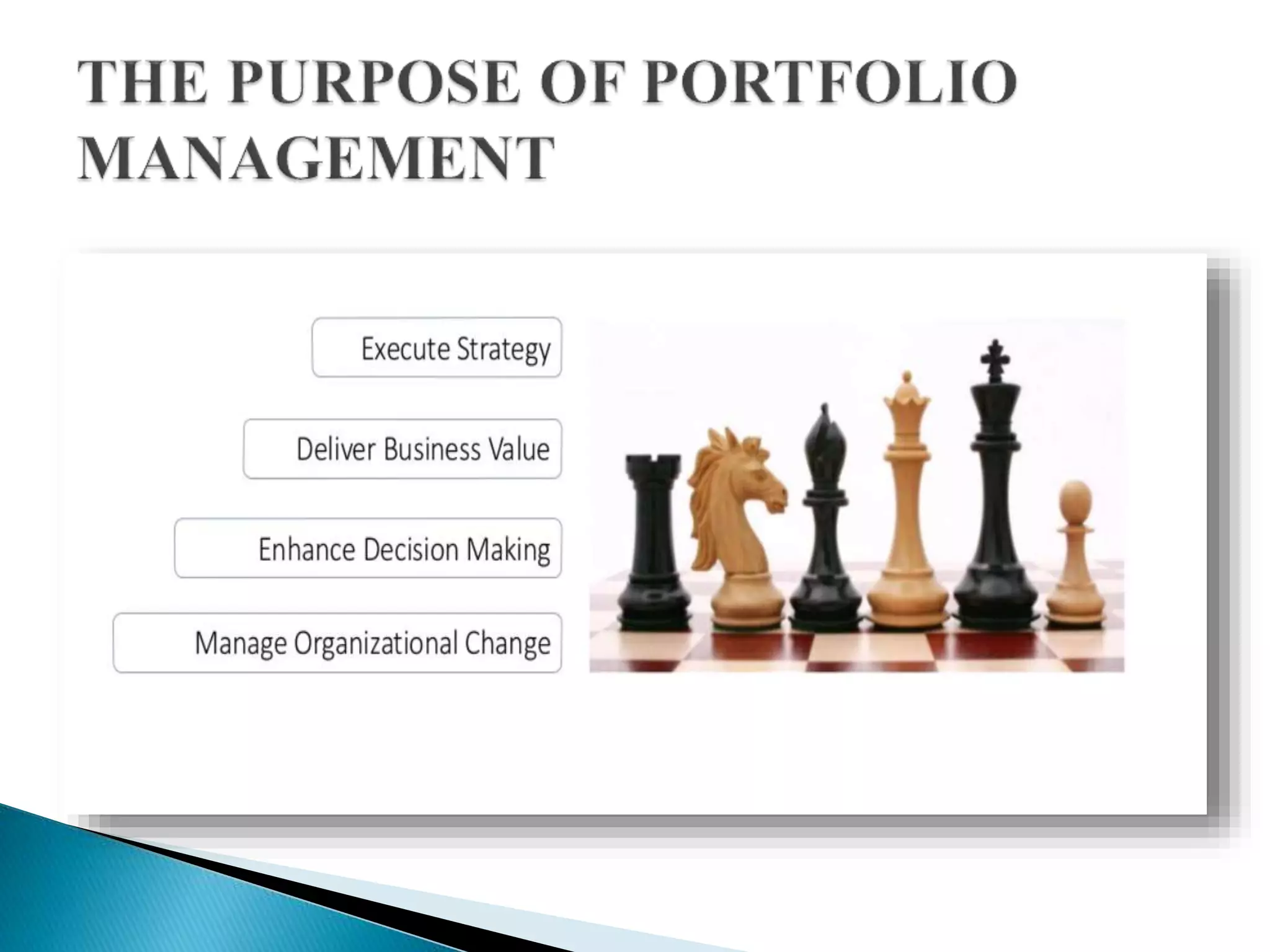
 Portfolio management is the art and science of making
decisions about investment mix and policy, matching
investments to objectives, asset allocation for individuals and
institutions, and balancing risk against performance.
 Portfolio management is all about determining strengths,
weaknesses, opportunities and threats in the choice of debt vs.
equity, domestic vs. international, growth vs. safety, and much
other trade-offs encountered in the attempt to maximize return
at a given appetite for risk.
 Higher return on project investments.
 Lower organizational risk.
 Balanced project portfolio workload.
 Increased project throughput.
 Shorter project cycle times.
 Greater confidence of meeting customer commitments.
 What is diversification?
 How can we diversify our portfolio?
 Advantages of diversification.
 Types of diversification.
 Commit to improving the project system
 Use project management on all projects
 Sponsor individual projects
 Create a project steering process
 Align horizontally
 Apply the new accountability
 Optimize technical processes
 Harry Markowitz is considered the father of modern
portfolio theory, mainly because he is the first person
who gave a mathematical model for portfolio
optimization and diversification.
 Modern Portfolio theory is a theory of finance that
attempts to maximize portfolio expected returns for a
given amount of risk, or minimize the risk for a given
level of expected return
 Markowitz Theory advise investors to invest in
multiple securities rather than pulling all eggs in one
basket.
 Risk of a portfolio is based on the variability of returns
from the said portfolio.
 An investor is risk averse.
 An investor prefers to increase consumption.
 Analysis is based on single period model of investment.
 An investor either maximizes his portfolio return for a
given level of risk or maximizes his return for the
minimum risk.
 An investor is rational in nature.
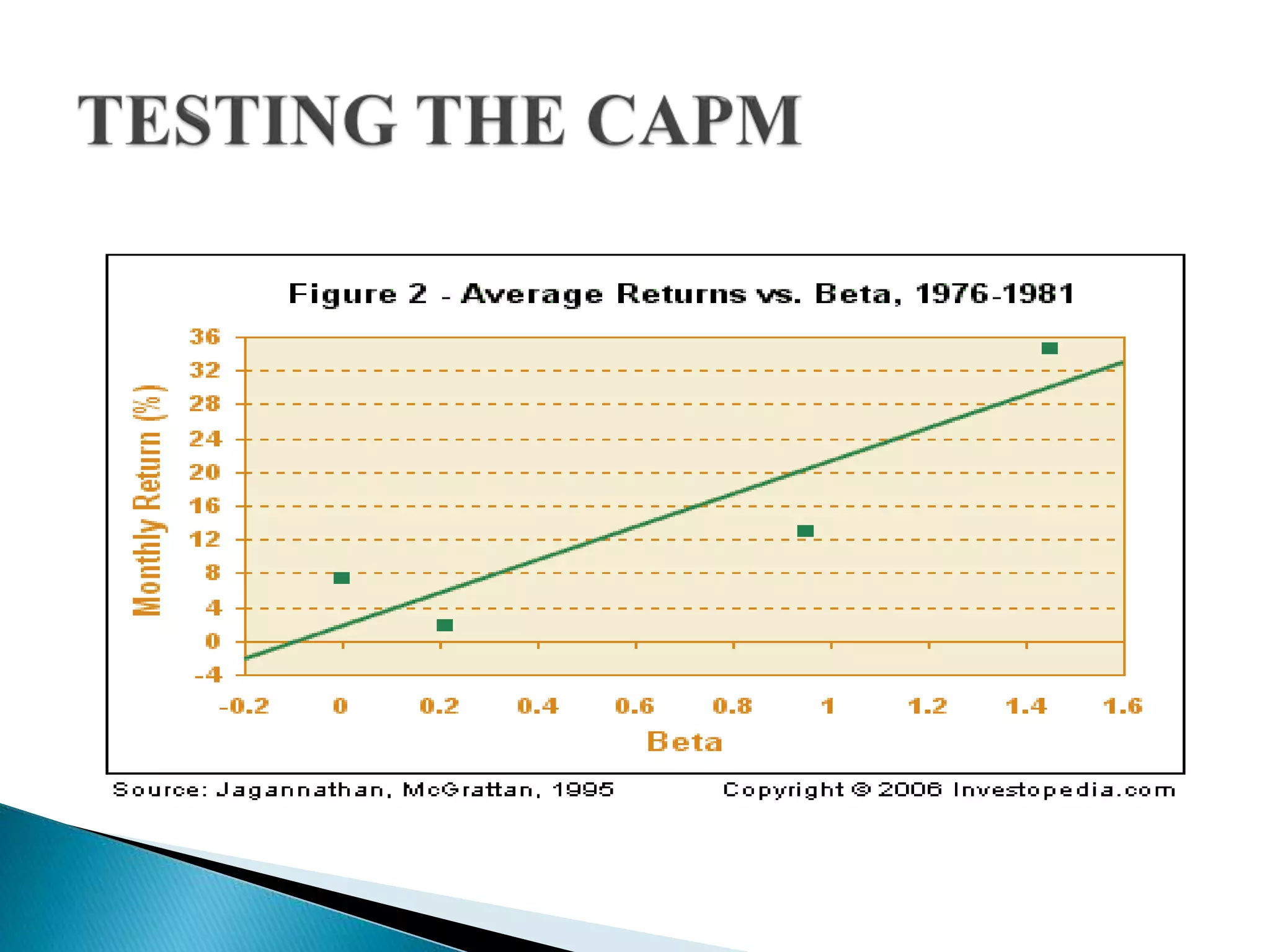
 CAPM is used to determine a theoretically appropriate
require rate of return of an asset, if that asset is to be
added to an already well diversified portfolio, given
that assets non-diversifiable risk.
 Model starts with the idea that individual investment
contains two types of risk.
 Those are as follows:
 Systematic risk:
This are market risk that cannot be diversified away.
Interest rate, recession & wars are example of
systematic risk.
 Un-systematic risk:
Also known as specific risk. This risk is specific to
individual stock and can be diversified away as the
investors increases the number of stocks in his
portfolio. In more technical terms, it represent the
component of a stocks return i.e. not correlated with
general market moves.
 All investors:
 Aim to maximize economic utilities. Are rational and
risk-averse.
 Are broadly diversified across a range of investments.
 Are price takers, i.e., they cannot influence prices.
 Trade without transaction or taxation costs.
 Assume all information is available at the same time to
all investors.
 Can lend and borrow unlimited amounts under the risk
free rate of interest.
Portfolio management ppt

Portfolio management ppt

  • 2.
    NAME ROLL NO HARSHADHIYA 01 KESHAV AGARWAL 02 NEIL GALA 09 ABHISHEK OZA 20 YATIN PRABHU 25 DHAWAL SOLANKI 29
  • 3.
     Portfolio managementis the art and science of making decisions about investment mix and policy, matching investments to objectives, asset allocation for individuals and institutions, and balancing risk against performance.  Portfolio management is all about determining strengths, weaknesses, opportunities and threats in the choice of debt vs. equity, domestic vs. international, growth vs. safety, and much other trade-offs encountered in the attempt to maximize return at a given appetite for risk.
  • 6.
     Higher returnon project investments.  Lower organizational risk.  Balanced project portfolio workload.  Increased project throughput.  Shorter project cycle times.  Greater confidence of meeting customer commitments.
  • 9.
     What isdiversification?  How can we diversify our portfolio?  Advantages of diversification.  Types of diversification.
  • 10.
     Commit toimproving the project system  Use project management on all projects  Sponsor individual projects  Create a project steering process  Align horizontally  Apply the new accountability  Optimize technical processes
  • 13.
     Harry Markowitzis considered the father of modern portfolio theory, mainly because he is the first person who gave a mathematical model for portfolio optimization and diversification.  Modern Portfolio theory is a theory of finance that attempts to maximize portfolio expected returns for a given amount of risk, or minimize the risk for a given level of expected return  Markowitz Theory advise investors to invest in multiple securities rather than pulling all eggs in one basket.
  • 16.
     Risk ofa portfolio is based on the variability of returns from the said portfolio.  An investor is risk averse.  An investor prefers to increase consumption.  Analysis is based on single period model of investment.  An investor either maximizes his portfolio return for a given level of risk or maximizes his return for the minimum risk.  An investor is rational in nature.
  • 18.
     CAPM isused to determine a theoretically appropriate require rate of return of an asset, if that asset is to be added to an already well diversified portfolio, given that assets non-diversifiable risk.  Model starts with the idea that individual investment contains two types of risk.  Those are as follows:
  • 19.
     Systematic risk: Thisare market risk that cannot be diversified away. Interest rate, recession & wars are example of systematic risk.  Un-systematic risk: Also known as specific risk. This risk is specific to individual stock and can be diversified away as the investors increases the number of stocks in his portfolio. In more technical terms, it represent the component of a stocks return i.e. not correlated with general market moves.
  • 24.
     All investors: Aim to maximize economic utilities. Are rational and risk-averse.  Are broadly diversified across a range of investments.  Are price takers, i.e., they cannot influence prices.  Trade without transaction or taxation costs.  Assume all information is available at the same time to all investors.  Can lend and borrow unlimited amounts under the risk free rate of interest.